C h a z z W r i t e s . c o m

See all my books at AllThatChazz.com.

The very nearly here, not quite yet, Post-review World

Once upon a time an author named Hale stalked a book reviewer, wrote about it in The Guardian and…well, things got crazy. I haven’t weighed in on this because you’ve no doubt read plenty about this debacle. Besides, I didn’t have anything new to say. I still don’t have anything new to say about that particular incident. It was a bad idea to respond to a negative review and there’s no need to pile on.

I do understand the urge. Oh, yes, every writer knows that urge to respond and demand an apology or…something. Instead, I stay indoors, never go anywhere, and write scary, funny books. It’s a better use of my time and the right thing to do.

So let’s talk about reviews more generally.

We all want them. We can’t promote our books effectively without a minimum number of happy reviews. But there are problems:

1. If you get a lot of happy reviews, someone who didn’t like your book will accuse you of having lots of friends and family shilling for you. Ha! I wish! It’s very difficult to get any reviews on anything and I don’t speak to my family. The point is, some people (I have no idea how many) think five-star reviews shouldn’t be trusted. However, if you didn’t have any five-star reviews, those same people would slay you for it. Crazy, huh?

2. Some people can’t help themselves. They condemn authors for their books and pedophiles for their despicable actions with nigh equal vehemence. Well…I assume so, anyway. I mean, I’ve read some vitriolic reviews where, once you dial it up to eleven, there’s no place to go, is there? But (silver lining) no one really takes one-star reviews seriously anymore, either. They are, with few exceptions, troglodytic. We read them for sick entertainment value, not for direction as to what to read.

3. Some people put spoilers in reviews without warning. That’s not a review anymore. That’s a spoiler and it’s a shitty thing to do. Just because you don’t like it doesn’t mean others won’t and spoiling a work that was years in the making in one ill-considered paragraph? Yes, that’s bad. What’s worse is Amazon lets it happen and allows those spoilers to remain posted without warning.

4. Likewise, authors have been libelled in reviews. Once again, Amazon does nothing if you complain. Unacceptable, and yet we are, at the moment, powerless. It’s the Internet. We’re supposed to shrug and hope the happy reviews drown out the unhappy ones (and eventually, mostly, they do.)

There’s a study somewhere that shows how unreliable reviews can be in an odd way. If the first review that goes up is negative, ensuing reviews tend to be more negative than they would have been otherwise. That’s less about the book, I suppose, and more piling on, hoping to be seen in agreement with whoever spoke up first. Weird.

5. Here’s where it gets weirder: Authors shouldn’t respond to reviews. Goodreads doesn’t even want authors to thank anyone for a nice review. That strikes me as forcing authors to be rude, but it’s their site policy so I abide by it.

Pretty much everyone accepts the No Response to a Bad Review Policy as a given, but no one knows who established this all-encompassing edict. Other industries routinely respond to reviews, hoping to ease their unsatisfied customers’ fury. We don’t. The argument goes that reviews aren’t for authors (true) but we aren’t even supposed to respond when reviews are misleading. We’re supposed to, as Hugh Howey so aptly put it once, “enjoy the burn.”

But wait. If we’re writers who should be thick-skinned and stoic since we put something out in the world…aren’t reviewers putting stuff out in the world, too? How come their writing is exempt from criticism but mine isn’t? Hm. No. Stop thinking about it. Nothing good can come from following the logical conclusion of that reasoning.

I am not arguing for responding to reviews.

The system is broken when reviews allow spoilers, libel authors or when so many people seem to distrust reviews.

Someone at The Passive Voice recommended we tell people, “If you liked it, please tell a friend,” in lieu of reviews. I kind of like that, but that’s what reviews were supposed to be anyway, right? Telling people what you liked so they can share the experience of an interesting, entertaining or enlightening book. I encourage people happy with my books to review them on Amazon. A review anywhere else (except perhaps a busy book blog) doesn’t really get more people to my books.

When I worked in magazines, we rarely gave negative book reviews (or the negative reviews were significantly shorter) because the point was to direct readers to the good stuff. The prevailing opinion was, the good stuff is too hard to find to waste time talking about the stuff we don’t like. I feel the same way. I may find commonality with reviews that tell me what they liked and why. What they dislike often seems more idiosyncratic (and some reviewers can’t seem to bring themselves to like much of anything.)

Maybe hoping for organic discovery through old-fashioned social networks is the way to go. But not quite yet. The apparatus for book discovery is broken. I still need happy reviews to get a Bookbub promotion going. That’s one of the few book promotion services that seems to have muscle and mojo behind it. I also suspect people don’t talk about books enough. I’m unwilling to rely on chats over fences with neighbors to spread word of my literary heights efficiently. Podcasts might be a better answer.

So what to do?

Stop stressing about reviews. Beat up a punching bag. (Reminder from Mom: human beings are not punching bags.)

If necessary, stop reading reviews. Read more books. Write more reviews.

Keep asking for reviews because, hey, that’s all we can do for now.

Don’t stalk book bloggers or book reviewers. Do not go near their homes or places of employment. And if you do (which you definitely shouldn’t!) don’t tell anyone. Jeez!

Cry quietly and not in public.

Treasure the many good reviewers who don’t mistake snark and disrespect for intelligence.

Read your four and five-star reviews obsessively to get your energy and esteem up. Read the negative reviews once, if you feel you’ll have something to gain from them (a murder plot, perhaps?) But never read them twice. That’s just masochism and revenge fantasies.

But there’s a better reason not to respond to negative reviews:

It takes time and energy that you could use to write your next book. And frankly, if someone hates your book, they won’t change their mind. If you try to use your best politician’s smile and the it’s-all-part-of-the-game clap on the shoulder, they won’t buy it. They know. You hate them. They hate your book and therefore they hate you. People will tell you this is wrong. Shit’s about to get real.

Yes, you’ll read lots of crap about how writers should separate themselves from their books. It’s a book, not a baby. Except it is. It’s the product of your mind and anyone who hates the book is calling you feeble in the brain. Be real. People tell you to be thick-skinned, but nobody really is. Many of the most successful writers, actors and entertainers on the planet confess that they remember every word of every bad review. You’d have to be a robot sociopath to be so far above the fray when someone criticizes something you put so much of yourself into.

However…when you write more books and get some success, it does hurt less. You become less invested in each book because you know you will write many. Just like having children, if you make enough of them, a few start to look expendable. (It’s a joke, for Thor’s sake. Relax.) 

Anyway, when the happy reviews drown out the negative reviews, that one-star review starts to look silly. You can also take some solace in knowing that if a reviewer hates you enough, they won’t feel the need to come back for more and you’ll be rid of them…if they actually read books before they review them, of course. Oh, yeah. There’s another reason so many people don’t trust reviews anymore. Sigh.

So, to sum up:

Write books and pretend you don’t bleed.

Don’t be a dick. Be nice. Play nice. Pretend you’re nice. Fake it and kill offenders in your next book. (I did.) Cover your tracks so they’ll never recognize themselves.

Pretend you’re happy all the time, especially when you’re not. Rant to a friend if you must. (Mental note: get a friend.)

Try to keep some perspective. You won’t, but it’s true that a review is merely one person’s opinion. It is not a scary diagnosis from a stone-faced internist.

We’re in the entertainment business. Entertain. Seek out entertainment. Don’t be so damn serious.

Remember that no matter how good your book is, someone will say they don’t like it. Don’t let them discourage you from following your star and writing, though. If that happened, then a bad review would really matter.

Until a new way to discover genius books is found, this is the way we live now.

Keep having fun. Don’t forget, this is supposed to be fun.

~ I forget sometimes.


Filed under: reviews, web reviews, Writers, , , , , , , , , , , ,

#RT this Raffle: Immortality and 81 #free books, too

close up RUSS IMG_3748My autobiographical crime novel, Intense Violence, Bizarre Themes is, at this moment, getting the full inspection from my most excellent Steel Falcon Beta Read Team. I always make a few changes they don’t see before publication. Aside from changing the last chapter, here’s a big one:

You could get your name in my next crime novel

(and a digital copy of the book.)

You shall be immortal!

Well, immortalized, really. Actually, chances are excellent your namesake will be killed and end up in a barrel in Jersey.

Ah. But what do you have to do to get into the book? It’s staggeringly simple. Spread the word about an excellent cause. My friend, Russ Sawatsky, needs a kidney. 

To enter the draw, simply follow Russ on Twitter and tweet this: 


 A good cause. Follow

I follow everyone who follows him.

MORE PRIZES:

Only one character is available to be named through this draw, but wait, there’s more!

1. Forty randomly selected people who participate in this raffle will get a free e-copy (through Amazon) of Intense Violence, Bizarre Themes.

2. The next forty participants randomly selected from Twitter will receive a free e-copy (through Amazon) of my next book, As Many Rivers to a Dark Sea.

It’s a time travel novel that explores one aspiring comedian’s quest to change the past and alter his future. (And to readers of Murders Among Dead Trees, surprise! Dr. Circe Papua is back!) Think Stephen King meets Kurt Vonnegut.

DEADLINE:

The #DudeNeedsAKidney Raffle ends October 28, 2014.

Tweet, Retweet and Tweet again often.

What else can I do to help, Chazz?

Glad you asked. Please sign your donor card for the day when you aren’t using your organs. Organ donation changes and saves lives. The shorter we can make the line for donations, the better for everyone.

Optimally, Russ is looking for a match with a live donor, but he’s prepared not to be too fussy. We are the rising tide that lifts all boats.

Tweet.

Follow.

Spread the word.

Do the right thing and we’ll all live better and longer.

Filed under: help, , , , , , , , , , , , , ,

Sell More Books Top 10: Variables that build success

We often don’t know for sure which strategies sell more books so we have to fire a lot of bullets into the darkness. Last week, the best advice I heard, repeated from a couple of authors, was about the willingness to experiment.

When it comes to radioactive isotopes, infant juggling and indie publishing, it’s good fun to mess around. Play with the variables to sell more books. What are some of those variables? Here we go:

1. If your cover doesn’t sell the book hard enough, change it.

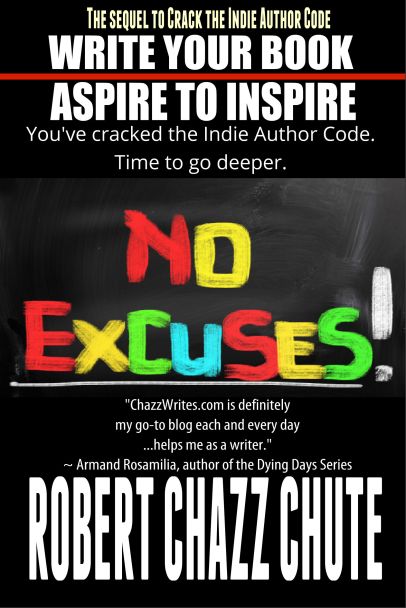
Write Your Book: Aspire to Inspire wasn’t selling the numbers I wanted. I changed the cover.

WYB NEW COVERcover

2. I played with categories for the Hit Man Series.

My funny and luckless assassin is Cuban, so I tried the Hispanic & Latino category. Didn’t work. I switched it back. Each failure is a refinement. It’s not permanent so relax and fire more shots into the dark.

3. I’m experimenting with keywords, too.

Did you know you don’t have to use a single word (i.e. crime, thriller, action, romance) for keywords? You can add up to seven phrases and it can pay to make them less generic. Cater to your niche and, for more on this strategy, listen to Nick Stephenson’s interview on the Rocking Self-Publishing Podcast with host Simon Whistler. It’s called “Quadruple Your Kindle Sales.” That got your attention and turned you into a podcast listener, didn’t it?

Don’t forget to play with changes to your book descriptions, as well. Use keywords where appropriate. Don’t fall into the trap of awkwardly stuffing keywords into the description so it sounds like you’re straining to please search engine robots.

While you’re plugging podcasts into your head, please do listen to my interview on Episode #60 of Rocking Self-publishing. We had a lot of fun talking about how to enjoy marketing your book.

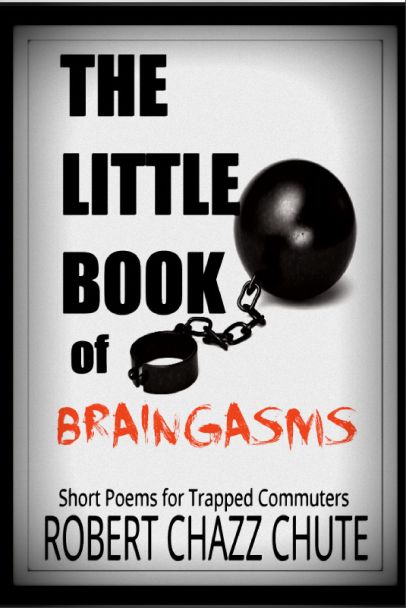
4. I changed the cover for my poetry book, too.

Poetry is hard enough to sell so don’t handicap your efforts with a sad cover like I did. I changed the cover using an image from Pond5 and switching back and forth from two photo editors, Picmonkey and KD Renegade. 

As always, I recommend the awesome cover design work of Kit Foster of KitFosterDesign.com. He wasn’t available this week, so I improvised. It’s an improvement on the original cover (which was my fault, not Kit’s. The original crap cover was my design, too.)

BRAINGASMS FINAL cover

5. My biggest change was long overdue.

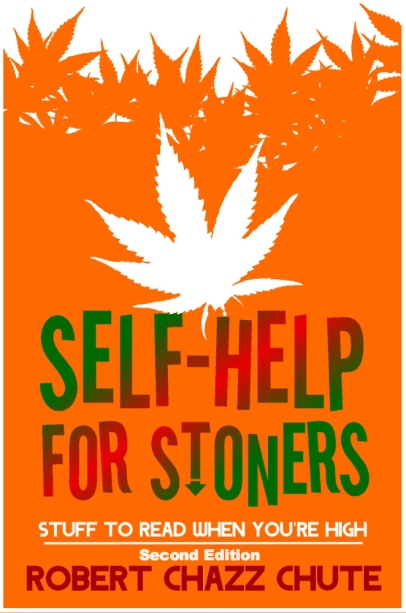
My first book was a fun, funny and thoughtful short story collection to read on the toilet. It’s called Self-help for Stoners. Unfortunately, I uploaded my first indie published foray through an intermediary. To make changes to the text cost a lot of money. It needed another edit so I have reclaimed the book from the intermediary. Huzzah!

I did the edit for the second edition. I added bonus material (big tastes of two of my series) so it could act as an introduction to my kind of crazy. Finally, it’s also a sales funnel to my newer books. 

Self Help for Stoners JPEG

I can do more with this book now, like experiment with variables. I can play with the price, keywords and categories. I can change strategies as needed and put it in KDP Select and try countdown deals etc,….

The print version of the second edition will be for sale again soon so I’ll have more to sell for the Christmas season. Most important, with these changes, I’m delivering a better reading experience along with all that awesome hilarity. It’s a relief to be back in the driver’s seat.

6. Speed.

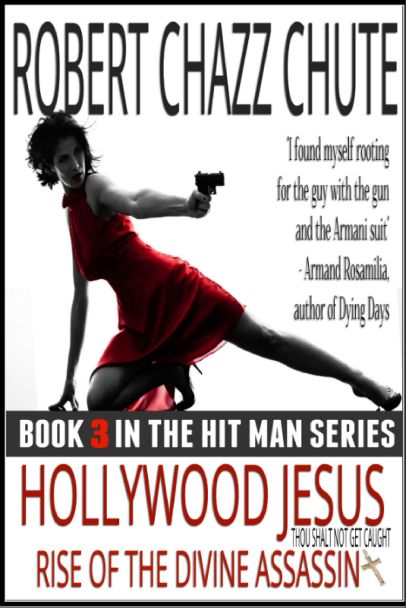
I’ve been thinking a lot about production speed as marketing. I’m changing my production timetable. The third book in the Hit Man Series hits October 1.

HJ COVER FINAL LADY IN RED

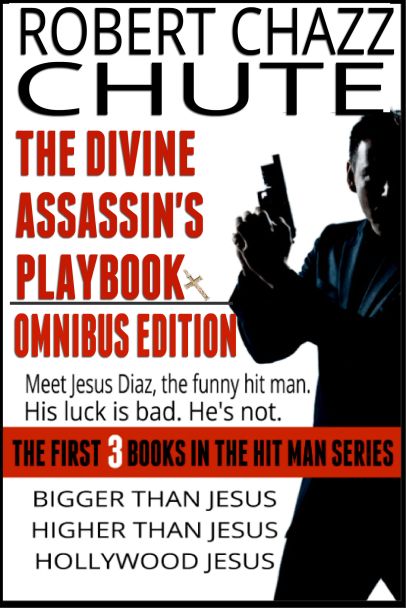
The goal is to put out another crime novel thirty days after that. Thirty days later, the plan is to put out a time travel novel. The books are all written and in the editorial pipeline. I’ll also add an omnibus edition of the first three books in the series.

TWEAKED JESUS OMNIBUS COVER WITH CROSS

The goal is to avoid falling off the cliff. All authors experience the cliff. After a month on Amazon, your beautiful baby is old news and sales tend to begin to slide as you disappear from the list of freshly minted books. Publish a new book more often and all your sales may be buoyed…assuming all the other variables are properly in place. For instance, if the story sucks, nothing can save us.

7. Accept failure as part of the play in the gears.

Please keep in mind that you can put all the sales variables in place, but that does not necessarily mean the book will move. It should move more, but there are too many variables we can’t control. Maybe you’re going head to head against a book with tons of mojo and money behind it. Maybe you’re at the top of a genre that is stone cold. Maybe the book just isn’t that good or you’re an unrecognized genius. (So many of us are. I empathize.)

All we can do is write more books and play with the variables that we can control. I should get a blurb for the Self-help for Stoners cover, for instance. That task is on my list. Blurbs help. More reviews help. Maybe more review copies to book bloggers is something to change up. Or do you need to change the book bloggers on the list you already have?

8. Make plans.

This might be a new idea you want to resist because you’re an artiste, dammit! I know, but work to word count or page count goals and editorial deadlines, anyway. I always get more done when I pretend I’m a grown up.

9. in that vein, establish systems.

When you learn the steps to how to do something once (e.g. putting out a podcast or compiling manuscripts in Scrivener), write what you did right. That way, you don’t have to start at zero knowledge each time you repeat the task. Systems are flow charts of mistakes you corrected. It’s a great way to avoid making the same mistakes with your next project. Put it in a binder within reach of your desk. Update it as you go.

Sure, taking the time to put what you’ve learned into binders sounds like drudgery. However, systems actually make you efficient and eliminate the drudgery of reinventing the wheel each time. Tiny course corrections steal far less from our precious writing time. (Tip: Take screenshots of your winning Scrivener process to make it less tedious.)

10. Speaking of finding efficiencies, track results.

That which is not measured cannot be improved. Repeat the variables that seem to work. Dump what doesn’t work, no matter how much you loved those seemingly brilliant ideas. Old ideas that don’t work can weigh us down as we climb the mountain.

BONUS:
Get better with each book.

This will happen organically. It will happen faster if you organize the variables in that binder.

Pretty soon, you won’t be firing bullets in the dark. You’ll see what hit and become a sharpshooter.


Filed under: author platform, Publicity & Promotion, publishing, , , , , , , , , , , , , , , , , , , , , , ,

TOP 10 in Publishing: What’s changed again? Amazon.

If hope you enjoyed my interview with Simon Whistler on The Rocking Self-publishing Podcast (see the post below this one for details if you missed it.) We recorded the episode on July 4. It didn’t take long at all for some details to change since the interview. Here’s what you need to know:

1. Yes, on too much coffee, I can get pretty manic. Also, some of the interview was edited for excessive Sean Connery impressions.

2. I was in Kobo briefly. I made $27. Finally and at last! I can retire! …Mm…no, actually, I pulled the plug on Kobo except for some short stories.

Everybody agrees. The folks at Kobo are nice people. Then I heard a horror story of someone who couldn’t move books on Kobo even when Kobo promoted them! I was to meet with the good people of Kobo in Toronto. After evaluating the track record and potential, I blew off the meeting so I could stay home and write and edit my next books. The trip literally wasn’t worth the gas. I do hope things will improve in this regard in the near future for Kobo and several other platforms. Amazon needs healthy, not anemic, competition.

3. Kindle Unlimited was introduced soon after the interview. Seeing so little movement on Kobo, I promptly pulled out and slapped my books back into KDP Select. With their value added proposition, suddenly there is more marketing juice to squeeze out of Amazon. 

4. Kindle just announced they will reward early adopters of the program by relaxing the 10%-read-to-get-paid rule on the first round. They also added to the shared fund for borrows. I missed out on the money bump when they introduced KDP Select in the first place. I wasn’t going to miss out again.

5. Since returning to Select, My KU earnings frequently surpass my regular sales. People are taking to the program. This is especially nice because This Plague of Days, Season One is a whole book, the first in the trilogy. It’s selling at just 99 cents. More readers are willing to check it out through the KU program. That pays roughly a couple bucks per borrow instead of 30 cents. Am I a huge success, yet? No. However, I’m getting exposure that other platforms can’t seem to give.

6. This Plague of Days is getting promoted on a couple different lists by Amazon. Seems it’s getting some traction with teens most, science fiction second and fantasy third. (Interesting, yes? Maybe I should revamp the sales descriptions to skew away slightly from horror since its layers and appeal may lie elsewhere.)

7. Amazon just upped the ante in the value added column by opening up the pre-order button to little guys like me. Holy crap! I have some thoughts on how that could be useful, but I’ll save it for another post once I’ve gone through their submission process firsthand.

8. When we recorded the interview, Simon and I discussed whether the Amazon-Hachette debacle would still be a thing by the time the interview aired August 14th. As I recall, neither of us were that optimistic the battle would be over by then and we were right. In an attempt not to bore the audience or appear dated too soon, we largely avoided that discussion. We’re all suffering Amazon versus Hachette fatigue, aren’t we? Looking forward to the titans figuring it out for themselves.

9. We had a great time with that interview and I hope you laughed along with us. There’s some good information sifting through that hour of self-publishing talk. The field is growing and changing so fast — or at least Amazon is changing their game so fast — several things changed in a very short time.

The other platforms? Um. Can anybody name an innovation from any of the other platforms in the last six months? (There must be something, but nothing strong has stuck with me.)

10. What didn’t change? Pretty much everything else. I’m still glad I serialized This Plague of Days but I don’t intend to serialize again (too many gears and pulleys and cons versus pros on that machine.) 

What’s next?

More series (not serialization) and another omnibus edition. 

Stay tuned.

Filed under: Amazon, author platform, self-publishing, , , , , , , , , , , , , , , ,

Laugh Riot: The Rocking Self-publishing Podcast

This Plague of Days OMNIBUS (Large)I’m on Episode #60 of the Rocking Self-publishing Podcast with host Simon Whistler! Hoo-freakin’-HA!

We talk about having fun with book marketing. In fact, the whole interview was really fun. I laughed a lot. Simon edited out all the instances where I made him laugh milk out of his nose (I swear.)

Listen for the jokes, stay for the marketing discussion. Available everywhere!

Here’s the link to The Rocking Self-Publishing Podcast.

Enjoy! I sure did.

(Curious about my blog and podcast network? You’ll find that here at AllThatChazz.com.) 

Follow me on Twitter here. I follow back for writers and readers.

Join me on Facebook here.

Thanks!

Filed under: publishing, , , , , , ,

We are not gambling writers. We are working writers.

I saw it again, today. Too often, people take the extreme end of an argument and generalize back to the middle to suit their worldview. It’s not logical. It’s bubble poppin’ time!

Example 1: Amazon’s trying to tell Hachette that it should sell the next Stephen King ebook for $9.99 or less. 

There are a couple of problems with this statement.

First, Amazon has categorically stated that some ebooks should be priced higher. Though Amazon’s statement on contract negotiations was short, lots of people missed that crucial detail:

“Is it Amazon’s position that all e-books should be $9.99 or less? No, we accept that there will be legitimate reasons for a small number of specialized titles to be above $9.99.”

If an author has lots of fans who won’t wait for a price drop, the exemption for authors at that level of success makes sense. The math will reveal which way to go. For most of us, lower prices are the way to go. Amazon speaks unusually clearly on this point:

“The author is getting a royalty check 16% larger and being read by an audience that’s 74% larger. And that 74% increase in copies sold makes it much more likely that the title will make it onto the national bestseller lists. (Any author who’s trying to get on one of the national bestseller lists should insist to their publisher that their e-book be priced at $9.99 or lower.)”

Amazon beat Hachette’s argument to death with math. Everybody makes more money by charging less than the inflated ebook prices Hachette wants to set. By “everybody”, it’s obvious we mean everybody but Stephen King and a handful of the 1% authors who are doing really well because that’s where the analysis of sales points us.

The default author we should be concerned with is not anyone at the extreme end of success. It’s you and me. There’s hope for us, but probably not the fictional Mansions in Tahiti Level of Hope. Which brings me to the other argument I see far too often…

Example 2: People say, “Hugh Howey is an outlier and most self-published authors will not equal his success.”

Hugh says himself that he’s a lucky outlier. (Talented, smart, likeable and writing solid books helps immensely, too.) Most self-published authors know they won’t become millionaires. That’s an aspiration that non-self-publishers often put on us as they sneer. We’re not stupid. We know the odds. We’re look at our sales stats seven times a day. We know! 

What some of self-publishing’s critics don’t seem to get, though, is that there are many author/publishers who are making a living by selling at lower prices for a 70% return. They aren’t millionaires, but they are meeting their financial obligations, paying mortgages and getting by. Some are doing even better than simply getting by. They are not rich. Few writers of any ilk ever make it to rich. However, writing is their job. They’re frequently doing better financially than traditionally published authors. (I’m not saying this to make anyone feel bad. I am saying I’m tired of all or nothing thinking among the mathphobic and terminally cranky fact-allergic.)

Still, there are those who refuse to acknowledge that, since the creation of the ebook market, the authorpreneur is a growing possibility for those with middle class aspirations. Not a probability, but a possibility. If you doubt that’s possible, I have evidence from The Passive Voice.

The role of writer has rarely paid well, but it’s a better deal for more of us now than it has ever been. We are not hoping to be lottery winners. We’re hoping to sell the next book at reasonable prices for a growing audience of enthusiastic fans. (There’s also never been a better time to be a reader, by the way.)

If I make it to middle class, that’s awesome. But it’s not about the money, Lebowski. It’s about the writing. It’s always been about the writing. I wrote books for years and never submitted them anywhere. I just wrote for me. Writing is an obsession. Obsessions don’t change whether I make seven figures or a single, dirty dime.

I write. So do you. Let’s keep it real out there. We don’t do it for the money. We do it for love.

Filed under: Amazon, author platform, Books, self-publishing, Writers, , , , , , , , , , ,

Kindle Unlimited: Connection and Market Correction?

Kindle Unlimited is up and running at Amazon. For about ten bucks a month, readers can read a lot and authors will get paid if 10% of the book is read. Across the writerverse, we are speculating. Is it good news or bad news?

I suspect it’s good news. Here’s why I’m not worried:

1. There are other subscription services and there wasn’t really much outrage about them. Questions, certainly. Usually the question was, “Is this new thing I’ve never heard of legit?” Since it’s Amazon, the question is often, “Why are they out to destroy the world?”

The answer is, they want to own it, just like every other company. Competition and all that. That’s all of us. We’re all selling something, so let’s keep calm and bang a gong. 

2. Those other subscription services have failed to usher in The End Times. This is one marketing idea among many. Some of the loudest concerns seem to be raised from a section of the marketplace that generates no new ideas. I’m suspicious they are decrying Amazon’s potential for success because they’ve failed to remain agile and open to new ideas. New ideas are always scary, but being scared and playing a defensive game is no way to score. 

3. Amazon often knows what it’s doing. They test and survey ideas and probably didn’t come up with this just last week. They want reader and author participation so they want to make the new service profitable for Amazon and for us. If it doesn’t feel good, too many authors will drop out. A lot of authors left KDP Select’s Clause of Exclusiveness. This will probably bring a bunch back, to test the waters if nothing else.

4. You can limit your participation. It’s just for those titles enrolled in KDP Select so, just like always, any 90-day commitment you may choose today is only 89 days long if you change your mind tomorrow.

5. Anyone who subscribes to this service is a hardcore, enthusiastic reader. Different rules apply to power users.

The parallel to piracy is obvious. Some authors worry about pirates, but there is evidence that pirates are power users. They take a lot, but they also tend to be power buyers. Ultimately, I most want to connect with readers who want to read the next Robert Chazz Chute book. Power readers are more oriented to author brand and less so to particular genres.

To build 10,000 true fans, I need to find those people who say, “I liked the autistic boy versus the apocalypse. But I wonder how that voice shows up in Murders Among Dead Trees or his crime novels?”

6. Subscribers who will go for this deal are a subset of the reading public. It’s not for everybody. Many will stay away because they’re already paying for a gym membership they don’t use. They’ll prefer to buy books one-by-one because they’re already stressed out and guilty about they’re TBR pile.

7. If you’re making money from other platforms, stay diversified. If you’re unknown, this is another avenue to consider to become better known.

If you’ve already got it made, there is an argument that you might make more money if you lived in a plane of existence that doesn’t include Kindle Unlimited. If that’s you, you may need to work your massive email list harder, diversify further, sell direct or use a few dozen other strategies to stay relevant.

However, we have no data on that group yet. The good news is, they’re in a good position to finance adaptation.

8. When Amazon innovates, it makes me more hopeful because it’s more pressure on other platforms to up their game. The market is changing, but once again, it’s Amazon that’s innovating and trying new things to reach readers, not trad publishing or the other sales platforms.

If I were CEO of another sales platform, I wouldn’t be sleeping well. I’d be offering bonuses to my creative teams to be creative. Come up with new tools and plans to boost market share. KU is pressure that may squeeze a diamond out of their competition’s butt.

9. However, I’m not “all in” for Amazon. Some people think that. They don’t know I’m moving more of my books across many platforms and I don’t have anything in KDP Select at the moment.

I am in favor of experimentation.

I’ll have another couple of books ready soon. When they are ready, just as before, they’ll go into KDP Select and therefore into Kindle Unlimited automatically, too. I’ll see how they do and make more decisions from there.

We need more data, but cautious optimism seems reasonable at this point. Let’s try it out, maybe find more readers. Let’s write more, read more and worry less. In the end, it’s all about you, you, you and the readers you have not yet met.

Me B&W~ Robert Chazz Chute is a suspense novelist who does not tend to be Zen about anything so, in light of today’s post, maybe there really is nothing to worry about in this one, tiny regard. Otherwise, we can be sure the universe is indeed out to get us. And it will.

Filed under: author platform, Publicity & Promotion, self-publishing, , , , , , , , , , , , ,

Ha-ha-ha-nope! This post is about you.

This Plague of Days OMNIBUS (Large)It is easy to be cynical and you can spot the practice everywhere. In watching the unfolding developments of the Hachette versus Amazon dispute, some people ascribe motivations to actions even though we’re still working in a low information environment. Support Amazon? Somebody’s going to call you a moron. Support Hachette? Someone will call you a shill.

  • As if you’re saying what they said you said.
  • As if you can’t think critically and everyone must align with one ideology (forever).
  • As if the only choice is a binary, up/down, yes/no.
  • As if standing up and stating your opinion is wrong.
  • As if our opinions will affect the negotiation’s outcome. (Ha-ha-ha-nope!)

Both sides arrive at the same conclusion: Writers will be hurt if the other side wins.

We tend to see the world as we are. We project. People who think, do and say nasty things expect others to react the same way they’d react. Same is true of many optimists. (I don’t have a lot of experience with optimism, but I have seen that happen.)

So let’s consider who we are as writers. I invite you into my warm pool of quiet reflection…

Do you believe in the power of Art?

Do you believe in your Art?

Do you believe you can change people’s minds with your Art and grow a base of readers?

Do you believe readers will find you or are they only interested in hot authors in other genres?

Do you believe in your capacity to improve your chances of success, learn new skills and change the future?

Do you think you can change yourself and your future?

Does your success depend on you or is it only luck? Or is it some luck but you’re the only variable you can control?

Are you hoping one corporation or one business model will make or break your career?

Or do you own the company that will make or break your career?

Do you believe that mistakes are forever or are situations fluid and correctable?

Does the universe arc toward or away from justice?

Are you a helpless leaf on a current or are you prepared to go find your ideal readers? A little bit of both or neither?

Robert Chazz Chute This Plague of Days: Season 3Where are you on this continuum?:

Adapting to change is a

  • catastrophic problem or
  • an inconvenience or
  • possibly an opportunity? 

This post isn’t about supplying answers. Only you can do that. However, I hope you find your answers reflect a confidence in yourself, your books and your readership. Artists should be bold. Writers should feel committed to the fun of what they do, forsaking all others and rejecting panic. Isn’t our work too big for us to act small?

Don’t let an Internet storm blow your authorship off course. Storms rock the boat. Be the writer who rocks harder. 

Robert Chazz Chute Bio Picture~ I’m Robert Chazz Chute. I’m a suspense novelist. Last night I saw my mother for the first time in several years. She’s been dead a while so I was somewhat surprised by the encounter. When I was a teenager, it drove me crazy that she frequently used the word “kooky.” I thought that was terminally uncool and embarrassing.

Last night, I held her and asked her to say the dreaded word. She kept her unblinking gaze fixed on the horizon and refused to even acknowledge me. I begged her to smile and say it one more time. She remained stiff and silent and unmoved.

And I wept.

Kooky.


Filed under: author platform, publishing, Writers, , , , , , , , , ,

You are not an idiot Part II

“Nobody ever went broke underestimating the intelligence of the American public.”

~ H. L. Mencken

“Still! Don’t be that guy!”

~ Robert Chazz Chute

This part is about writing.

If you’re as cynical (or perhaps as realistic) as H.L. Mencken, you’ll dumb down your books to appeal to a wider audience. As Chris Rock observed, “Most people are B and C students.” A critic once told Sly Stallone his movies were for dumb people. Sly’s brilliant answer? “That’s okay. There are lots of them.”

It would be snobby to suggest every book should be “literature”, whatever that means. I like lots of dumb things. (For instance, I’ve seen every ninja movie ever made.) What I write, a lot of people would call “pulp.” They wouldn’t be wrong, either. (Check this link to The Vintage Library to read what pulp was really about. It’s not the pejorative some critics think it is!)

I’m not demanding that anyone write “up” or “down” to their audience. I’m not in the tell-you-what-to-do business. I’m in the brain-tickle business. I will tell you a quick story, though.

I just got a positive review of This Plague of Days by a person who identified themselves as autistic. My protagonist for those books is on the spectrum and, for that reader at least, the hero passed muster. That review is very precious to me for obvious reasons. I wouldn’t have received it if I didn’t reach a little.

This Plague of Days plays with language and expectations. It’s got a lot of Latin proverbs and a tiny bit of poetry amid the evolving carnage. It’s soft sci-fi with zombies and vampires and family dynamics amid disaster. The plot ventures into dark fantasy. Though readers may come in with low expectations because it’s essentially an end of the world dystopian saga about ordinary people facing infected monsters, the narrative never assumes the reader is an idiot. Escapist ≠ dumb.

The problem with stretching out and reaching as a writer is that someone, as a reviewer, will slap your hand for trying too hard. It’s true that some readers won’t read as closely as you’d like. They won’t “get it.” But few one-star reviews are worthy of serious consideration anyway, right?

Those who do grok it will love your work more.

What can I tell you about aiming higher versus what H.L. Mencken would consider “playing it safe”?

This is my 1336th post on this blog. Sift through and you’ll find I’ve frequently implored my fellow writers to “Follow the Art.” By that I mean, write what serves the story.

Today, I’m asking that when you write, be you. Be unique. Whether your goal is to write something fun and silly or earth shattering in its literary aspirations, be real. Whatever we do, our goal is to entertain. I write to entertain myself first, though. If readers dig my trip, cool. I try not to let reviews influence my game.

I’m taking the question away from a debate about whether to aim lower to achieve higher commercial success. I’m suggesting, as always, that we follow the Art. Be you because there’s only one of you. Don’t try to write like other people. Please don’t envy other writers’ success because envy is irrelevant. Please write what only you could write. Ultimately, it’s not about what seems smart and what’s really dumb. It’s about story.

All stories say something about the world and the writer who is the lens to that world.

Be a true lens that delivers clarity. The sights we point to may please the eye and ear and heart. Often the mind, but not necessarily. Lots of Charles Bukowski’s work is pretty dumb, but his lens was honest and I love his stuff. Though I admire their capacity for terrible vengeance, ninjas don’t say much about today’s world. They don’t say much at all. However, American Ninja 2 is still more fun for me than trying to stuff Ulysses in my head. Ooh! And Sho Kusugi in Pray for Death? Genius! Especially the execution with the buzz saw.

Robert Chazz Chute Bio Picture~ Hi. I’m Chazz. I write my variety of suspense. You can find all that stuff on Amazon here.

And now, some of it’s on Kobo.


Filed under: author platform, publishing, What about Chazz?, What about you?, Writers, writing tips, , , , , , , , , , , , , , , , , , , , , ,

Art matters. Writing matters. We matter.

Graphic designers make a big difference to readers and the success of authors. A snarky writer once told me I was a hack, too concerned about the look of my book covers. Once.

Everyone else knows, yes, of course we do indeed judge books by their covers.

You can say it shouldn’t matter all you want, but beautiful people and beautiful things get more attention. I won’t find out if you have a great personality and keen intelligence if, when I spot you from across the room, you appear to be surrounded by flies because you’ve rubbed dog feces in your hair. That’s life. That’s science. 

My graphic designer is the brilliant Kit Foster of KitFosterDesign.com. Check out his portfolio.

Kit is my friend and ally. He helps to make my existence matter. He’s helping me get my message out, subliminal and subtextual. It’s that important. All my books are about escaping who I was. They’re about all of us rising to the higher potential of what we could be. Everything I write is about making our existence — yours and mine — matter. Book covers are the come hither stare that lets me into your brain, to play in the Mindfield, to turn the words, to entertain, laugh and think. That’s what it means and why Art matters.

That’s the why. A book cover with solid art is part of the how.

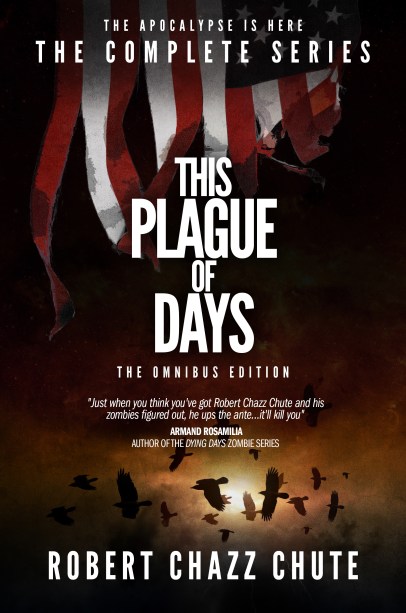
Here is the new cover for the This Plague of Days, Omnibus Edition. It’s not at all what I pictured for the Omnibus cover. It’s better. I just let Kit do what he does best so I can concentrate on what I do best.

This Plague of Days OMNIBUS (Large)

To find out about more about secret video and to get a free ebook with your purchase of the TPOD Omnibus Edition, click here.

~ I am Robert Chazz Chute and, even though I occasionally write books with zombies in them, I am not a hack. It’s not the subject matter that makes the hack. It’s a lack of passion. Ultimately, with every twist, turn, joke and murder, I’m writing about me. And you. 

The suspense is in making our existence matter. Can we do it?

We will.


Filed under: book marketing, self-publishing, This Plague of Days, , , , , , , , , , , , , , , , , , , ,

Bestseller with over 1,000 reviews!
Winner of the North Street Book Prize, Reader's Favorite, the
Literary Titan Award, the Hollywood Book Festival, and the
New York Book Festival.

http://mybook.to/OurZombieHours
A NEW ZOMBIE ANTHOLOGY

Winner of Writer's Digest's 2014 Honorable Mention in Self-published Ebook Awards in Genre

The first 81 lessons to get your Buffy on

More lessons to help you survive Armageddon

"You will laugh your ass off!" ~ Maxwell Cynn, author of Cybergrrl

Available now!

Fast-paced terror, new threats, more twists.

An autistic boy versus our world in free fall

Suspense to melt your face and play with your brain.

Action like a Guy Ritchie film. Funny like Woody Allen when he was funny.

Jesus: Sexier and even more addicted to love.

You can pick this ebook up for free today at this link: http://bit.ly/TheNightMan

Join my inner circle at AllThatChazz.com

See my books, blogs, links and podcasts.

Enter your email address to follow this blog and receive notifications of new posts by email.

Join 2,063 other subscribers