A friend of mine has a strict rule about writing: “Remove it from the manuscript if it sounds like writing.”
Writerly = Bad
Some sentences do call attention to themselves. It’s not supposed to be a good thing, but I don’t think it should be an unbending rule. To me, it’s a guideline reminding me that story always comes first (but we should enjoy ourselves along the way.) It’s up to the creator to make an informed choice about the narrative and the reader will decide if they groove on that choice.
In film, sometimes a director will take you out of the movie’s illusion by putting the camera somewhere unexpected, lingering, shaking or going for some special effect that reminds the observer, “Hey! You’re watching a movie!”
That can happen when you write something in such a way that it reminds the reader,
“Hey! You’re reading a book!”
Maybe the prose is beautiful, but some will accuse you of writing purple prose, being too precious or being maudlin. But many readers aren’t just readers. The best readers are also lovers of language. They want the reading experience to transcend mere delivery of information. When they read your writerly passage, it transports them.
I write a lot of action scenes, but I make sure to balance out the action with pauses so the reader can catch her breath before being thrown into the next chasm.
We’re pushed to begin in the middle of the action and make the pace fast. However, too many beats in too short a time sacrifices character development. Lose that, and we don’t care about the action scene.
Dare to go deeper so the bad guys don’t devolve into “Heavy #1” and “Heavy #2” come through the door with guns. You may or not remember details of the scene in Pulp Fiction where John Travolta and Samuel L. Jackson take down the guys who stole from their boss. However, film buffs can recite the lines from the drive to the shoot out. Remember? “Royale with cheese.”
Take time to build tension. There are scenes (yes, even in novels about the zombie apocalypse) that pause to show how people and their relationships are changing. Sometimes the pause is a great chance to write something for comedic effect. If you can make them laugh on one page and cry on the next, they’ll love the story more.
We can use our words to communicate the power and depth of the ocean and of personalities. We can show happiness and tragedy in a few brush strokes or we can dare to go deeper sometimes, reaching for the uneasy metaphor. Readers appreciate a story that explores emotional range with developed characters they care about.
My friend, the hardliner, says, “Never sound writerly!”
“But dude!” I replied, “Sometimes it’s only the elegant turns of phrase readers remember. It’s the flourish that captures the detail that makes the scene memorable. Without a little reach in description, I feel like I may as well be tapping out the story on a telegraph.”
“You’re just writing a zombie novel,” he said. “That’s not what they’re expecting.”
“No book has to be just anything. Any writing can turn the dial up to eleven and sound epic with the right twist on the expected. We aren’t supposed to give them what they expect. That’s mundane.”
“Okay,” he said, “just don’t make it sound too writerly. You know what I mean.”
“I promise I’ll delete it if it’s too obscure or gets in the way of the story.”
There are many distractions between your bed and your writing desk. Some suggestions to discipline the monkey mind:
1. Well, write in bed then! (Pee bottle or diapers optional.)
2. Work on a computer without Internet access. Unplug the modem or get your pet rat to chew on the wires if necessary.
3. Get your spouse to activate the parental controls (so they have the code). Congratulations! Your distracting porn addiction just vanished.
4. Commit to scheduling writing time just as you would a doctor’s appointment, the gym or any other important job. You know your writing is important work, too, right?
5. Make your commitments public. Failure yields public humiliation. Success gets you a reward. Make a bet with a writing buddy or do writing sprints in social media. Report your progress, or lack of it, so you’ll do better tomorrow.
6. Defend your writing time. Wield dual ice axes, if necessary. A sign on that door you close marking your designated writing time makes a clear stand. Your writing retreat does not have to be an expensive, remote cabin in the Rockies. It’s as nearby as the word, “No.”
7. Get out of the house and write elsewhere: Starbucks, the library or at your day job. (Write on your lunch hour if the boss keeps close tabs on you.)
9. Unplug and go write the first draft by hand. Some writers feel the words come easier when they’re connecting brain to arm to hand to pen to paper.
10. Work with your biorhythms, but find your sweet spot when your focus is best: late at night or early morning often allows you to work without interruption.
11. Got a writing group? Shape it so you can make it do double duty: make it a day care club. When my kids were little, playdates (and their nap time) were opportunities to get work done. Communal babysitting gets the kids entertaining each other and allows the writing to continue when you organize and rotate the playdates from house to house.
12. Protect your brain. This goes beyond time management. For instance, when you notice you need a nap after eating bread, take the hint. Maybe it’s the gluten making you sleepy. Thanks to a helpful reader, I’m trying a couple of products from Onnit.com and I do feel and think better lately. Exercise doesn’t just get blood to your body’s muscles. Better blood supply revs up brain muscle, too. Since dumping processed foods, losing weight and upping exercise, I’m sharper. The walls are alive, I see into souls and I write harder and longer.
13. Just start. You’re full of resistance and distractions and excuses at first, but once you begin, the words and worlds will begin to flow. Set a timer and tell yourself you’ll write for ten minutes. What? You can’t take ten minutes? Sure you can. Don’t be a weak whiner! Take ten minutes. By the time the timer goes off, you won’t want to stop.
14. Write in short, energetic bursts. Like going to the gym, many people feel they can’t do anything worthwhile unless they have big blocks of time to commit to their projects. For many of us who don’t have that luxury (and hardly anyone has that luxury) we’re actually sabotaging ourselves with that attitude. Consistency works better than bingeing in the long-term.
15. Take a course, go to a conference or read a book to energize yourself and get excited about writing again. We moan too much about writing and forget how fun it is until we’re back to doing it. If you aren’t having fun writing, you must be doing it wrong.
BONUS
Most important, remember why you’re doing this. Hold on to the Why so you’ll overcome obstacles to the How. You are not merely a consumer. You’re a productive writer, pursuing your dreams and telling stories for fun and profit. Don’t put your dreams aside only so others can achieve their goals. You’re important, too.
1. We discount one-star reviews because of their typically venomous, dismissive hatred yet we read every one.
2. We strive to get on big media to help sell, but not much media is big anymore and it won’t move the sales needle anyway.
3. We hope to be picked up by old traditional media, but we’d connect with our audiences better and get more time, for free, going after podcasts.
4. We’re putting ourselves out there, daring to dream big, but get discouraged by people who do neither of those things.
5. We get jealous of the success of other authors when we should learn, emulate and be inspired.
6. We say “Don’t judge a book by its cover,” but that’s what covers are for.
7. We spend time thinking about being a writer instead of writing.
8. We all hope to catch fire with our first book, but if success came today, many of us would be unprepared for it and wouldn’t have anything else to sell.
9. We spend months or years on our manuscripts, but many of us aren’t taking a few minutes to make sure our hard work is safely backed up (in two different ways.)
10. We call it self-publishing, but it’s a team effort and the author who truly tries to go it alone is a fool or a monster.
We’re currently inundated with new year’s resolution memes and people are already asking, “Have you broken your resolution yet?”
Jeez! How weak are we? Are we the same species who fled comfy, lice-ridden cities to cross oceans in rickety, wooden boats without valet service to chop down trees and to make room for the I-95? Um…I might have skipped over hundreds of years of slavery, a few assassinations and some other historical events in that brief summary, but you get my point. Be stronger, with the dumb, pioneer spirit and distressing testicular fortitude of your ancestors.
The solutions to broken resolutions are pretty much the same every year.
Here are varieties of bad solutions you might recognize:
1. Tech solutions: Get a Fitbit to lose that weight because that which is not measured doesn’t get changed. Write it all down. (Good start! Keep going!) When you stop writing it down, you’ll look up to find yourself, inexplicably and magically, transported to the pizza parlour. Blink again and you’re in the ice cream parlour. Weird. (Bad end.)
2. Psychological: Love yourself more, because, I mean, like…wow. Think how you’ll look in that hot, red tube top, sir! (Corollary: How about I love me more the way I am right now and eat an entire ham smothered in chocolate and soft serve ice cream? I’ll wear that same tube top, but as a headband.)
3. Political: Let’s form another committee about that. We can get your proposal on the agenda two weeks after the sun explodes, on a Tuesday afternoon, at about the time we table it forever, for the drifting in space holiday.
4. Demented political: Pull yourself up by your bootstraps you moochers and takers! (Even though pulling oneself up by the bootstraps was originally meant ironically since it’s a physical impossibility which, if possible, would deny gravity and allow us all to float.)
5. Philosophical: Why? Why? Why? Why didn’t I choose a major that led to employment?
6. Social work: Don’t ask why, dummy! Ask, Why not?
7. Evangelical: Jesus, by all depictions, was a really chiselled jock. And He wouldn’t eat an ice cream cone. (But how many carbs are in manna?)
8. Journalistic (1960 to 1990): Let me tell you about the obesity epidemic (good) and the glory of low-fat diets that were tried for decades and failed miserably (stupid).
9. Journalistic (1990 – present): Let me scare you to death over the latest food fad while we watch this stooge for the sugar industry debate a squirrel on water skis. (All stupid.)
10. Dream Journaling: I’ll watch The Secret again and again and if I wish really hard and we all clap our hands, Tinkerbell will live and I’ll hate myself a fraction less.
11. Personal trainer logic: You weren’t born with a thin person’s metabolism like me, therefore you’re a lazy slob.
12. Coaching a la The Biggest Loser: I will respect you as a human being, but only after you lose the weight. You losers disgust me! What? You thought “Loser” in the title was ironic?
13. Drama coach: Show us what your new life will look like through the magic of interpretive dance!
14. Medical: I’ll tell you to lose the weight. What? How do you do it? Nobody really knows for sure…but go do that.
15. Systemic solutions: The status quo is All. Go back to sleep. You will be assimilated.
16. Obligatory Stoner cliché: Don’t rock the boat man, cuz nothing changes and The Man is keeping us down. The plaid pattern on this couch is, like, deep, man.
17. Optimistic: We can rise above the status quo. We never have personally, but darn it we will! Just because, that’s why!
18. Pessimistic: If we change for the better, I’ll have to get a whole new personality. That sounds like a lot of work.
19. Educational: Study all the theories about how to change. Write another thesis. We’ll reach a conclusion when you’re quarter past dead, which, to be fair, is much faster than #3.
20. Capitalistic: Irrelevant. Who has money anymore?
21. Socialistic: I can change as soon as I get everyone else on board and get approved through a consensus of a vast number of people who don’t understand my problems.
22. Tyrannical: Do as I say! Oh, crap, I’m shot.
23. Vegan Yogic: I’m already perfect in every way. The enlightened need not change. And you? Still eating food with a face?
24. Nike Vulcan Logic: I do not understand why you do not just do it, you moronic human.
25. Captain Kirk Logic: Screw the Prime Directive again! No consequences! But first, hey, green girl! Do you come to this space bar often?
26. Dr. Who Logic: We’ll fix your current circumstance by going back in time, except that will just make more timestreams and, you being you, I suspect you’ll still be miserable. Worse, at some point my lovely, adoring assistant will age, get married off to some half-wit who isn’t me or be murdered by an alien.
27. Fatalistic: Nothing changes. Why bother? Though…yeah, I would like to get out of my parents’ basement before I’m 40. But that could never work. No one’s ever succeeded at changing anything ever.
28. Pollyanna: Don’t change. You’re beautiful. I’m beautiful. Everything is beautiful. Just keep those red and green pills coming or for the love of god lobotomize me!
29. Good Will Hunting: It’s not your fault. It’s not your fault. It’s not your fault.
30. Irish Mom: It’s your fault. And your father’s.
31. Man Logic: When I look in the mirror, I look pretty good to me.
32. Woman Logic: When he looks in the mirror, he has no &%$@!! idea what I put up with.
33. Internet Logic: Buy this white paper for just $24.95 and you’ll be thin, rich, famous and dating a Kardashian by Tuesday night! (Bonus offer: The surprising secret to whiter teeth and upward mobility through animal husbandry!)
34. Great Santini Dad logic: I’m very disappointed in you. Do you even know how much those cello lessons cost? And where is that cello now? You’re no Yo-Yo Ma. Just a yo-yo, huh? More pushups will fix you, you big baby! You’ll thank me after I’m dead!
35. Mom logic: Have some more substitute love casserole and pay no attention to what your father says. I mean, look at him. Gawd!
36. Bureaucrat logic: I’d be interested in your problem, but my retirement is only, like, thirty years away so fill out these forms…
37. Cop logic: Everybody’s guilty and, as we all know, jail fixes everything so…
38. Surgeon’s logic: If cutting won’t solve your problem, you don’t have a problem.
39. Comedian logic: But if I fix my life, what will I do for an act?
40. Swiss logic: What is wrong with you people? Just stay out of it.
41. Whiner logic: I would change but it’s so hard. I didn’t think it would be this hard. Let me tell you about it over a huge dessert coffee, which I deserve because I must celebrate each tiny triumph or self-medicate my ego for every minuscule setback.
42. Toxic Logic: I knew you’d fail and I can’t tell you how joyous it is to be here to quantify my I told you so in excruciating detail with a heavy dollop of condescension.
43. YouTube Commenter: You suck and this is a colossal waste of time, which was just made more colossal because I’m taking the time to make a hateful comment here. (And, by the way, I’m a raging bigot with no life who hates everyone and everything but me.)
44. Amazon reviewer: Good job! Four stars for a solid effort.
45. Goodreads reviewer: Good job! Three stars for a solid effort.
46. Grammar Nazi: Everything would be great and this post would be funnier if not for the 150 mistakes, both real and imagined.
47. Actual Nazi: I feel zee term “Grammar Nazi” devalues my life’s vork. My life’s terrible, terrible vork.
48. Self-help industry: I can definitely help you change your life. First walk across these coals at my seminar in Fiji, buy all the books which pretty much say the same thing, join the cult and accept the idea that encouraging words + semantics = “new, revolutionary mind technology”.
49. Outsourcing: I can’t get to the gym and take care of the kids and do my job, but there’s this slave in Malaysia. She doesn’t speak English, but she can listen to the kids over the phone while she works out.
50. Life Coach #1: Just say no. It worked when Nancy Reagan told…oh…right.
51. Life Coach #2: Say yes to Life! Cuz when Jim Carrey said yes to everything in Yes Man, he uh…didn’t he help Luis Guzman with a guitar or something?
52. Breaking Bad solutions: “Science, bitch!” And meth. Lots and lots of meth.
53. Chuck Norris: “He doesn’t need a weapon. He is a weapon.” Um…I don’t see how that is a solution to my —” “Because he’s Chuck Norris, that’s why!”
54. SpongeBob Squarepants: Meth, obviously. Lots and lots of meth.
55. Pet cat solutions: When you die because you did not seek to fix your life, I’ll be eating your fat corpse before it’s cold. And don’t think of me as your “pet.” You’ve got it backwards.
56. Glee solutions: Let’s sing about our pain and marry insanely young so we’ll always have lots of pain to sing about.
57. TV exec solutions: We filmed the worst people we could find so your life looks and feels much better, even though we’re paying these awful reality stars more per minute than you make in a year.
58. Podcast solution: We can talk about it. We’ll talk about it again and forget we talked about it before.
59. Talk therapy solution: Pretty much the same as #58.
60. Dr. Phil Solution: Drawl insulting Texan idioms at you until you promise to change just to shut him up.
61. Oprah Solutions: (This snarky remark deleted because, Jesus, she’s Oprah! She comes off soft and spiritual, but she’s Oprah, for God’s sake! She could have me and all of you killed just for reading this!)
62. Bond movie solution: Cool soundtrack, but don’t model your life after a guy who always gets captured by an impossibly rich, cartoonish villain in a cheap suit.
63. Cher in Moonstruck:
Logical solutions:
Make better choices on an ongoing basis. You probably already know what you need to do. You know you need to make a plan and follow it consistently and not quit when you fail. Because you will fail. But if you put more checks in the “did it” column instead of making longer “to-do” lists, you’ll win in the longterm. Commit.
And finally, especially for writers:
Whatever you commit to doing first will get done.
If you aren’t writing, start and do that first,
before all the other demands of the day get in the way.
Set the alarm clock for early. See you at the desk.
I did a reading a while back. I sold a book. Yeah. One. Let’s just take a moment to take that in. Go ahead. I’ll wait.
Okay…here’s what I’ll do differently next time:
1. Advertise and/or promote more and work my network beforehand. Most of my friends are of the cyber variety. I’ve been a nomad/recluse so long that, locally, I don’t have a network. I’m connected to a lot of people who are too far away. Not just Skype calls and a long car ride. I’m talking long plane flights. I’m working on that, mostly through Twitter (#Ldnont) and connecting with local humans within handshake distance. It’s not entirely excruciating.
2. Have a sign. I had brochures, which was a good move. I didn’t have a proper sign that told people the books’ prices. A helpful friend took the money…or would have but, ahem…that turned out to be a non-issue. The forty dollar float in fives proved much more than adequate. (Do make it easy for potential customers by charging round numbers. Nobody wants to search for nickels.)
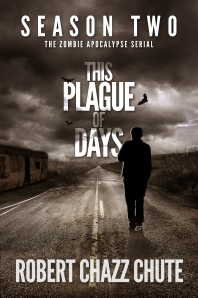
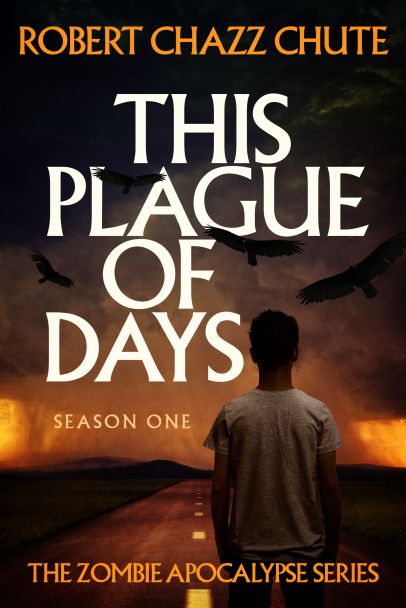
3. Rock the books you came with. I should have talked more about the books at the back of the room while I was at the front of the room. Instead, I rocked a short story that always gets laughs. I’m very confident reading that story to an audience, so I took the easy way out. I can sell that story, Another Day at the Office from Self-help for Stoners, easily. I should have pushed the books I brought instead, and harder. I should have read a piece from my books that sell most now (This Plague of Days) and a chapter from Crack the Indie Author Code (indies were the theme of the event.)
Being confident, instead of looking confident: I’ll figure it out and try it sometime.
4. I gave a good talk about writing and publishing. Actually, it was a great talk. People smiled and laughed in the right places. At one point I sang and even threatened an audience member with a grisly death, mostly for entertainment purposes. People went away smiling and happy…but they did go away.
The main problem was that I should have ended it sooner. We used the whole time allotted for the event. You’d think that would be delivering on expectations and promises. Instead, it gave people no time to shop for books. They ran to get their parking validated before the library closed. Rather than talk at the front of the room (which I enjoyed immensely) I should have mixed with the audience more before the event began and I should have built in more one-on-one chatting/selling/handshake/hip bump/high-five/hula dancing time at the end of the reading.
5. When the reading’s done, don’t get waylaid by the sweet, little old lady sitting in the third row. Push her out of your way and to the ground if necessary. She is killing you. At least, that’s what she did to me. I should have rushed straight to the back and engaged people there. By the time I answered her tangential question about who I might be related to (I wasn’t and oh, sweet Jebus, who cares?), most people had filed out, off to make sure their parking was free. Damn old lady. And damn parking. And damn me.
To the one guy to whom I sold This Plague of Days in paperback, may Thor bless you with smart, stout-thighed, stress-resistant children with perfect teeth. It’s great signing a book for a reader who digs what you’re doing.
Back on the net that night, another audience member hit me up on Twitter to let me know he had a good time and was buying my ebooks, not paper. That was cool and eased my roiling sea of torment. Somewhat.
The WordPress.com stats helper monkeys prepared a 2013 annual report for this blog.
Here’s an excerpt:
The concert hall at the Sydney Opera House holds 2,700 people. This blog was viewed about 31,000 times in 2013. If it were a concert at Sydney Opera House, it would take about 11 sold-out performances for that many people to see it.
It still is, but I’ve got to talk about the author and publisher and our mental and physical health. Without us, there will be no books.
As I write this, I am battling a bad infection. On Tuesday, I find out about some medical test results. In short, things have been tough lately, emotionally and physically. I have a plan to deal with this mortal coil (more on that in a moment) but in the meantime, not much writing is happening. A little, yes, but at George RR Martin speed (i.e. glacial). Once this latest problem gets sorted out, I hope to be free of health scares for a good long time. Sickness and fear is draining. Life, as I have failed to organize it, is draining.
And here’s where the mental game comes in…
This last three weeks has been a series of blows. Most of that problem is mental. I’m not dealing with stress properly. I’m obsessive. I’m negative. I’m focussing on what not to do instead of focussing on what to do. If you spend your energy in the present on what you know you should do, you won’t lose time with regret and anger. I know this because I’ve lost too much time already.
The short story is, I allowed an energy vampire into my lair and he shat in my living room. Two days ago, another energy vampire attacked. I dealt with the problem faster this time, but it still ruined an entire day while I obsessed over what else I wish I’d said to cut him off. When I was younger, I wasted a lot of time being furious. The rage monster is back. I’m not punching walls or anything silly like that. Just seething. That can even be useful when I channel that energy into Misericordia, the beastly vampire in This Plague of Days. It’s less helpful when I argue everything in my head again and again. (At least the revenge fantasy with the torch, the knife and the bag of rats is fun.)
But here’s the paradox:
Writing makes me happy and yet I haven’t been writing enough. A friend asked about my strategies for dealing with negative emotions. For two years, I was free of all this nonsense. Those were the happiest two years of my life. Guess when that was. Yes, it’s when I was at home writing and only writing. Running two struggling businesses at once is a time management problem, though proper use of a calendar and a stopwatch alarm should get that sorted out.
There are many components and variables to health and everyone has to deal with these issues at some point. This is where I make my stand. Turmoil and rage is not a successful life strategy.
Living the way I have been isn’t working.
Underneath the anger is fear, just like Yoda says. I’m afraid of failure and a short life and I’m even more scared of a long life in which my brain and body abandon me. Sometimes, I cry a little and wish I could cry more to let it all out. Mostly, I want to take all the bad in the world into my arms and squeeze until it’s tiny and dead and dust. I want justice and just desserts. I want us to live in a better world and I think, through fiction, we can come at solutions sideways. Even if we can’t save the world through Art, we can save people by giving them harmless vicarious thrills and joyful distractions. Stephen King calls books “escape hatches”. That’s exactly what they are. We write about heroes and heroes affirm our humanity in the face of Darkness. We need these myths as a starting point for our aspirations. There is wisdom and honesty in good writing. With our fiction engines running hot, we can make the hopeful lies true.
I know what to do for myself and these latest health problems are reminders that, yes, I really have to deal with this stuff STAT.
Here are my strategies to protect my brain, body, energy and mood:
1. A diet of plants with some protein on the side. Vegetables are the main thing.
2. Daily movement. It could be dancing or Fight Club or running from bears or chasing criminals through the night in my cape. But keep moving.
3. I built an incredibly cheap treadmill desk ($100) but I find it difficult to compose while walking. A friend gave me a pedal treadmill for Christmas (to use while sitting at my desk). I hope to do better with that.
4. No aspartame. As little processed food as possible. Stevia or xylitol in small measures, okay, but the chemicals I can’t pronounce have to be cleared out.
5. Tracking. The same friend who gave me the desk treadmill gave me a FitBit Flex because (a) he’s awesome and generous and (b) that which is not measured cannot be improved. Everything I eat and do goes into tracking. From graphs and math come course corrections and healthy habits.
6. Closer contact with my doctors. I go for regular physicals, but we’re going to do closer monitoring to make sure I’m on track as I make more lifestyle changes.
7. First drink of choice is water. Then more water. Thankfully, coffee is still in, though less than I have been drinking.
8. More sleep. Early mornings are fine, but the late nights have been too much for too long. I took workaholism as par for the course to get things done. Now I think it’s a stupid ego thing and a result of impatience and poor planning.
9. Be more social with friends and invest in those healthy, positive relationships. Cut rude people off faster and destroy any hope they have of being casually destructive to my energy reserves. Psychopaths don’t lurk behind every rock and tree, but they’re out there. I’m not going to engage these people. I’ll simply delete them or throw them out.
10. Write. For me, it’s as important as exercise, if not more so. When I am writing I am most myself. When I am writing, I disappear from the stresses of this world. In that world there are psychopaths waiting, too, but I know how to deal with them better. I’m very unkind to the bad guys in my fiction. They get to think they’re winning for a while, sure. Then? They burn.
11. Every day in this world, I am kind. I make a point of it. The day isn’t done until I can find a way to do someone a solid if it’s within my power. But I have to be kinder to me, too. That’s why I’ve got 1 – 10. Your strategies may not be identical to mine, but I hope you have some that work for you.
Merry Christmas and happy New Year to all my readers!
My next entry on ChazzWrites.com will be in the New Year. As you can see, I have to take some time off to organize for lifestyle changes, rest, recharge and, of course, write. Let’s all have a healthier and happier 2014. We need each other for the fight.
Be well.
~ Chazz
PS If you have links, books, or green smoothie recipes to share about how you take care of yourself, please leave them in the comment thread. We all need to know.
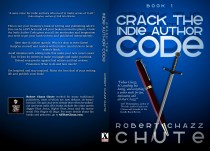
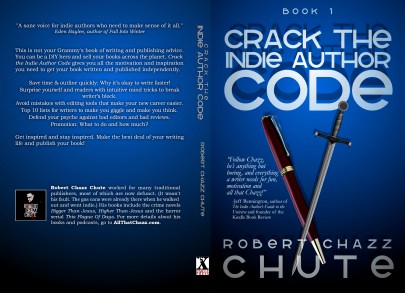
By the way, Crack the Indie Author Code 2nd Edition is out in paperback at $9.99. Smaller format, with jokes.
A fellow writer meant well when she told me that if you can allow anyone to discourage you from writing, you shouldn’t be a writer. That sounds tough-minded and strong, doesn’t it? It would be good advice to take, but unfortunately, I’m still human. Darn the luck, my skin is no thicker or thinner than it ever was. It will surprise no one, given the sort of dark stuff I often write, that I obsess over the negative. I do not remember sunny days. That’s who I am. Maybe I could fix it with some talk therapy, gene manipulation and a personality transplant.
So, yes, rude email hurt can me and my productivity. A bad review can ruin the morning and robs me of a night’s rest. I’m prone to depression and yes, I’m feeling it now. Due to several factors, I haven’t faced the blank screen bravely in days. I’ve been ill and trying to keep up with the demands of my new day job and, not to whine, but the depletion started with one condescending, presumptuous email.
I’m letting a terrorist win. The worry treadmill is running. I’ve written ten books, but the negative cyclotron has kicked in. “How can I be a writer? I can’t even type properly.”
When I observe the disparity between Goodreads ratings and Amazon ratings (work is often valued one star less on GR even if the review sounds equally positive), I have an urge to reevaluate my life choices. If I’d gone to that Second City audition or to film school instead…but that way madness lies. At least until I fix the time machine. But enough about me.
What to do when you’re feeling down and not writing*:
1. Call a friend. Do not talk about your problem. Talk about what your friend wants to talk about.
To shore up your ego defences, you’ve already read and reread your happy reviews. Your friend isn’t going to tell you anything new and you’ve already got your “Atta-boy!”
The point of this phone call is to break the obsessive cycle of repetitive arguments, cutting retorts and vengeful homicide plots running through your head. This is a time for jokes. Ask about your friend’s life.
2. Okay, so, being human, naturally you want another “Atta-boy!” Engage a fan who can’t wait for the next book. A little positive pressure may be all you need to get back to writing the next book in the series.
3. Write a blog post to vent, but only if you must and your friends aren’t answering their phones. (Ooh! Meta!)
4. Remind yourself that this is the firstiest of First World Problems and set the oven timer. How much more wallowing do you plan to allow yourself? More than one more pathetic hour and you’ll burn your life.
The three most powerful words are “I love you.”
The two most powerful? “Begin again.”
~ from Crack the Indie Author Code
5. Read the negative reviews of your favorite books. Choose the classics that you think everyone simply must adore. Realize some people will not be pleased.
Now in paperback!
Ev-er.
Or they’re trolls feeding an emotional need that has nothing to do with literary criticism. Or they’re too stupid to get you. I used to think that all readers, because they can read, must be smarter than average. Read some one-star reviews, especially the ones that bring down an author’s rating because Amazon didn’t deliver the book fast enough or they don’t like reading on a kindle and would have preferred paper. Clearly, my supposition about all readers being intelligent was not true.
6. Help somebody else with something. Shovel the walk and bring in the wood and be productive. Productiveness is a habit. This tip works better is you don’t do it for yourself. Do it for the old neighbor with the bum ticker and the broken leg.
7. Read something good that inspires you. Remember this feeling of transcending the great, dirty world? This delicious escape is why you are a writer.
8. Realize that nothing will be perfect and the critics might have a point about something. Correct errors and move on.
9. But if they’re too harsh and stop you from writing at all, you’ve allowed a rude outlier to rob you, and most readers, of joy. It’s too easy for trolls to throw bombs. You write books, not a few, nasty paragraphs. We’re not allowed to critique reviewers so they’re safe from what you’re feeling now. Don’t let bullies win. Not letting bullies win is another reason you’re a writer.
10. Bing! The oven timer went off.
Start writing again. Anything. Just start. Within five minutes, you’ll be sucked into the other world again. Just get through that first five minutes and write. You aren’t facing a whole book. You don’t have to worry about word count or bad reviews or bruised egos or where to find a Luger, thick rope and kerosene at three in the morning. All you have to do is start writing and get through the first five minutes. Maybe less.
You can gut out five minutes. You don’t even have to act tough to start. Just start. An appreciative audience is out in the future, waiting and hoping you’ll get through the next five minutes. Maybe less.You will fall back into the groove and the word music will begin to play. And a one, and a two and a three…
* If none of these suggestions work, call a doctor. Maybe it’s exercise, kale shakes and an anti-depressant you need to elude the mean reds.
1. The tone of the title should match the genre. If your thriller’s title makes potential readers think of young adult romance, keep brainstorming.
2. Non-fiction titles tend to be linear promises to provide solutions to a problem you have identified. Deliver.
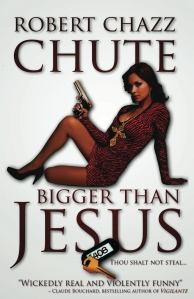
My luckless hit man is a funny guy in big trouble.
3. Intriguing is good. Confusing is not. That’s a fine balance. I loved the titles Bigger Than Jesus and Higher Than Jesus. However, it’s pronounced “Hay-soose” and it’s about a funny, hardboiled Cuban hit man. Titles you (and I) have to explain (endlessly!) are not good titles. The cover treatment by Kit Foster of Kit Foster Design saves me from readers who buy my crime novels thinking they are religious books. Also, I do have another solution to this problem. I’ll explore that next year, after a couple more books are written. In the meantime, I remain an idiot for thinking those titles would serve me better than they did.
What? You thought I write these blog posts because I get everything right the first time? Ha! No.
4. When you’re brainstorming, think in terms of keywords. A short, killer, catchy title can be helped a lot by a more explanatory subtitle. Don’t go overboard with keywords, though. If you run out of breath, forget the rest halfway through, or can’t cram the whole title on the cover, rethink. We’ve got to be able to read the title without squinting, so don’t cram it.
5. Generally try to avoid titles that are very long. After catching the title in a wisp of conversation, the potential customer has to remember it all the way back to their computer or the bookstore so they can order it.
6. What’s the central theme, promise or event that’s crucial to your story? Brainstorm titles out of that.
7. Think in terms of brand and series. Can you connect titles in some way? A is for Alibi is already taken, but think about what might fit. I have two new series planned for the end of next year that connect tangentially to existing books.
8. Come up with a bunch of titles and throw out a bunch. Don’t get too attached to a title early on. Some authors feel they need a title before they can begin to write. Your story may change, so just keep that WIP title tentative and to yourself for now.
9. You can take titles from phrases from the Bible or Shakespeare or be completely original. Go for memorable. However, don’t let the absence of a title stop you from beginning to write. It will probably emerge from the manuscript organically. Use a focus group of trusted friends or fellow writers to save you from your worst impulses.
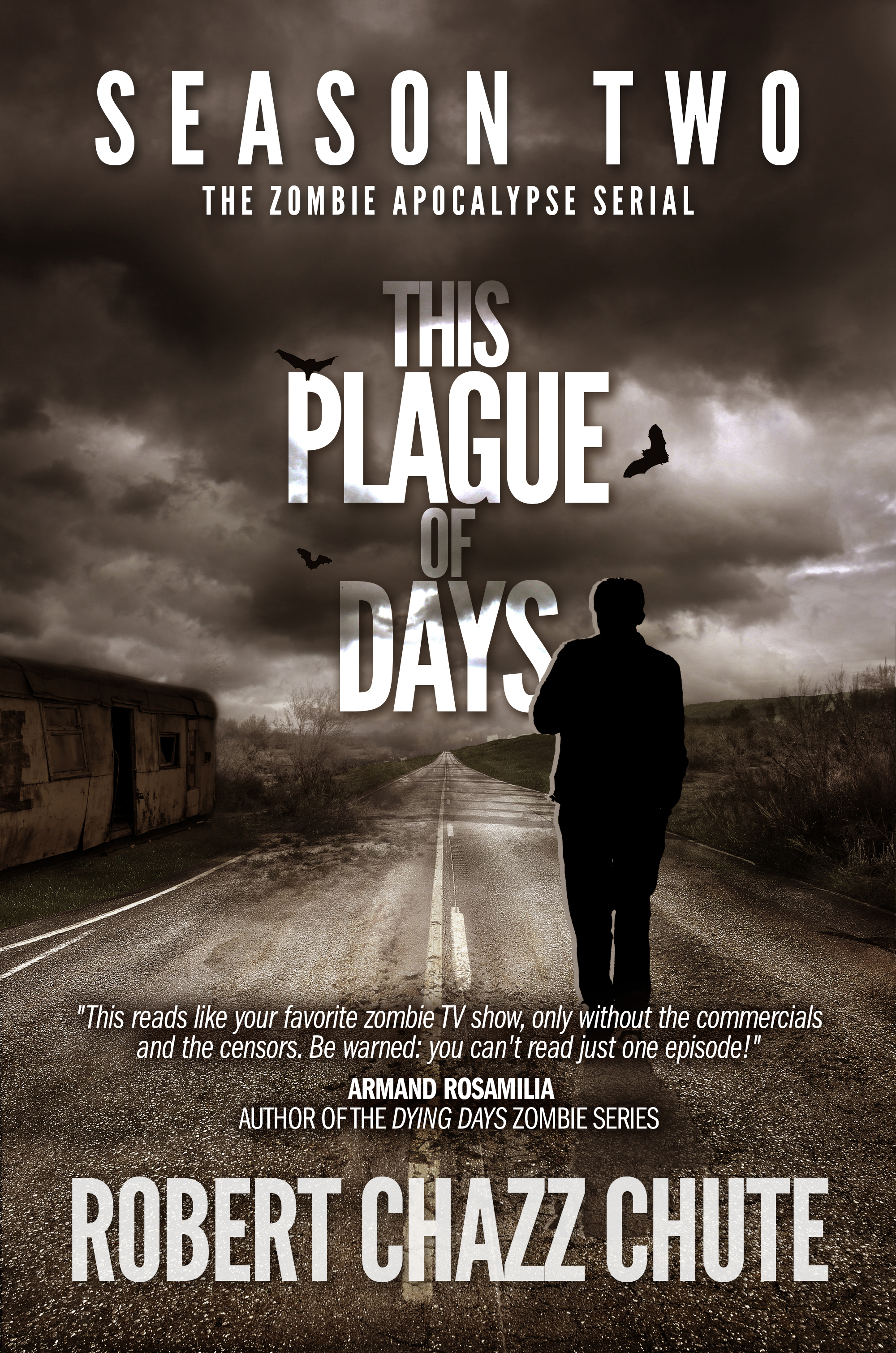
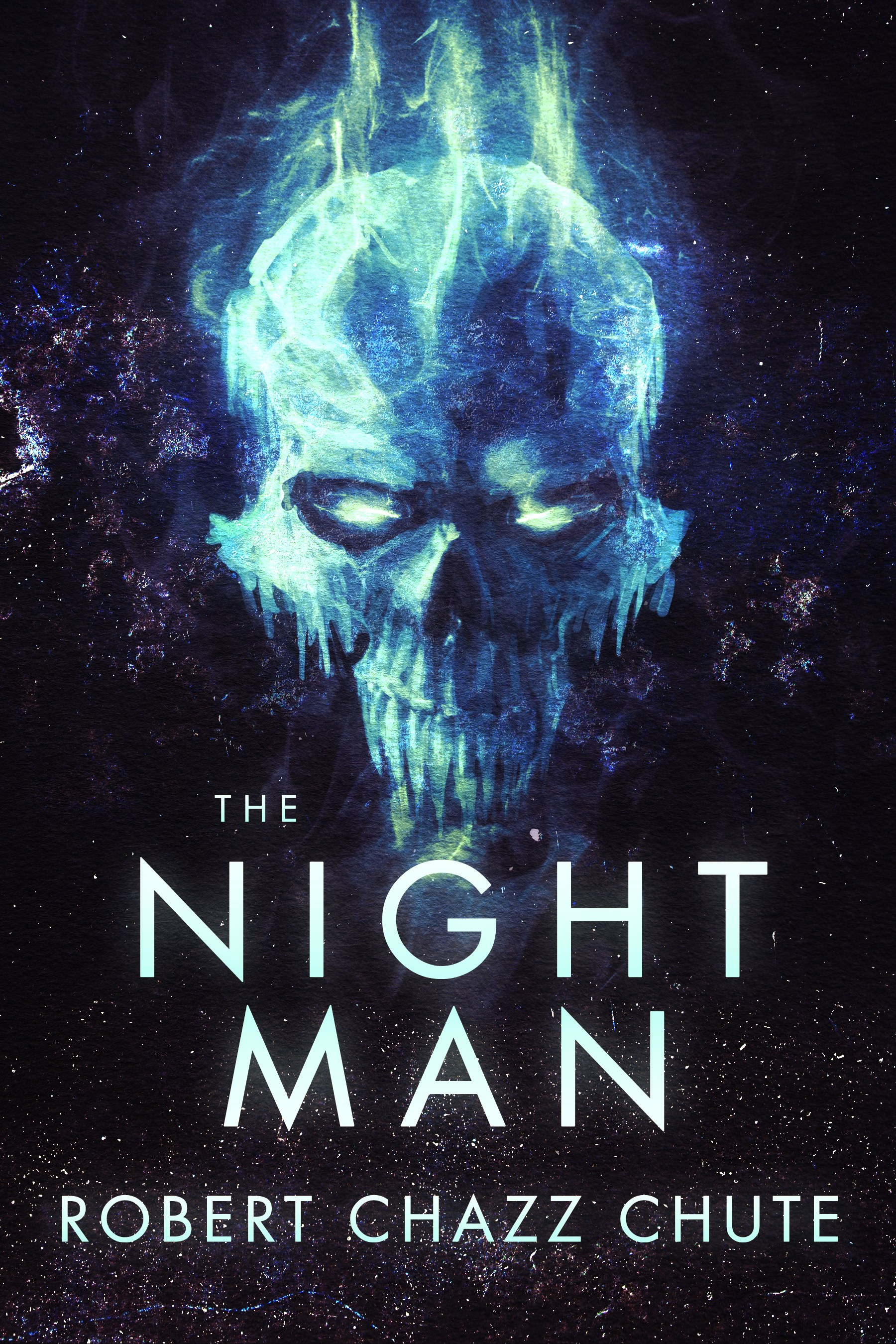
10. Build a brand around your author name, not your title. I don’t want people more excited about my title than they are about me writing another book. That’s why the name “Robert Chazz Chute” is so big on the cover. Make them want to buy the next [insert your name here], not the title. I don’t really like the title, Doctor Sleep, for instance. But it’s Stephen King! Of course I want to read it!
I’m convinced that titles really don’t matter quite as much as we’d like to think.
I can name a lot of titles that shatter these ten well-meant suggestions. It’s like naming a band. Lots of band names sound pretty stupid or obtuse at first, but if the music is any good, people don’t even think about it much. I doubt everyone was enthused about the name The Beatles or Led Zeppelin on their first encounter (before hearing the songs.) I didn’t like the title Fight Club. The book is about so much more than that. However, I got over it quickly.
It’s true for TV shows, too. The first time I heard the name MASH as a little kid, I thought the TV series had something to do with potatoes. The Pink Panther? I didn’t know it was animated, so I pictured an actual pink panther skulking through the jungle. Without seeing it (and hearing its musical theme by Henry Mancini) I had no idea it was destined to become so iconic.
To sell more books, what’s ultimately more important than the title? Your graphic artist.
A good graphic artist can build on an awesome hook. A bad cover can sabotage even your most clever title.
A great title doesn’t matter if no one can see it. Don’t undermine that title you’ve put so much thought into. You need an excellent graphic artist to support your efforts. A great cover maximizes the power of your title and your author name. That’s why I use…wait for the shameless, enthusiastic plug for my Scottish buddy…
By the way, Crack the Indie Author Code 2nd Edition is out in paperback at $9.99. Smaller format, with jokes.
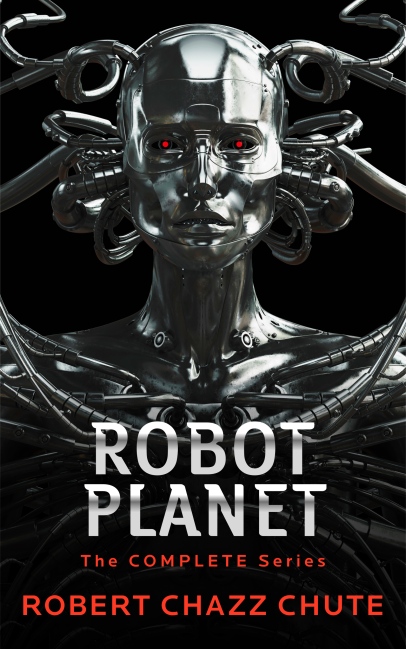
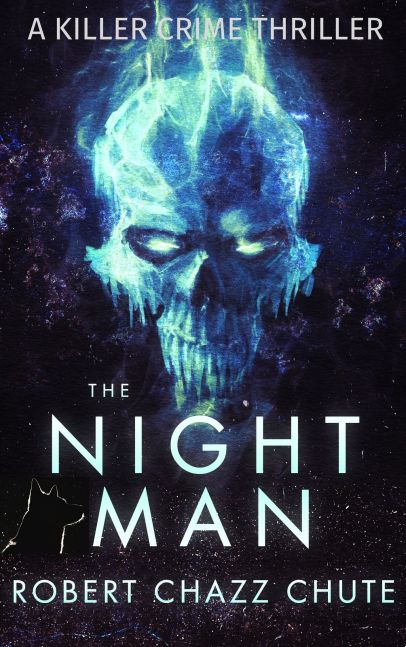
~ I’m Robert Chazz Chute. With my serial, This Plague of Days, I’ve written two bestsellers. However, my catalogue of my inspirational errors in the early going will tell you more about the challenges of being an indie author. Get Crack the Indie Author Code. I don’t scold you and it’s actually pretty funny. The 6 x 9 print version is about ten bucks and Christmas is coming, so get on that or Christmas is cancelled and Santa’s elves will turn into goblins. It’s up to you to save Christmas from rampaging goblins. It’s up to you and you alone. No pressure.













 C h a z z W r i t e s . c o m