C h a z z W r i t e s . c o m

See all my books at AllThatChazz.com.

2014 in review

The WordPress.com stats helper monkeys prepared a 2014 annual report for this blog.

Here’s an excerpt:

The concert hall at the Sydney Opera House holds 2,700 people. This blog was viewed about 25,000 times in 2014. If it were a concert at Sydney Opera House, it would take about 9 sold-out performances for that many people to see it.

Click here to see the complete report.

Filed under: publishing, , , , , , , , , ,

Sanity: Another reason to write more books

Do you ever feel like you’re reaching for success and someone is slapping your hand? Does every Monday feel like Thwart Day?

I just had one of those days that drains energy. I read a review from a guy who apparently thinks I believe in the supernatural because I often write about it. (Fiction, people! Fiction!) A cop stopped me today. He was unnecessarily dickish. That put me in a dark mood. I haven’t been feeling great so I had to go for some medical tests. A nurse was in a panic over my paperwork and apparently trying to panic me, too. I’ve got a big birthday coming up which I’m not excited about. I feel pressure. Sometimes, despite my big plans, it seems time is running out and the news for indie authors seems to be all whoa and woe at the moment.

Therefore, it’s not time to give up.

It’s time to put the hammer down (because I was thinking of doing terrible things with that hammer) and remember what’s working. To review:

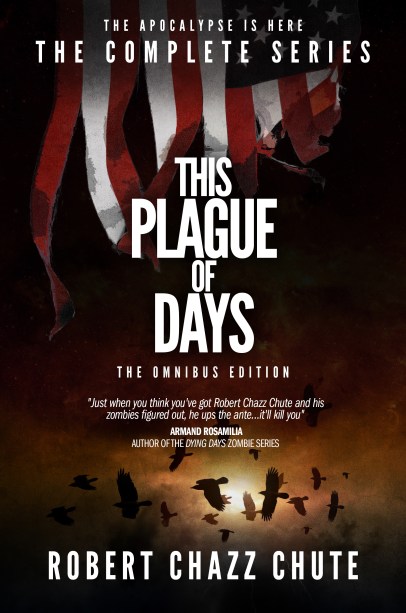
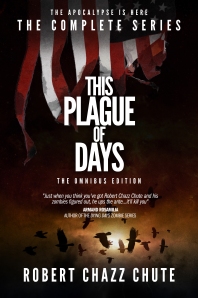
This Plague of Days OMNIBUS (Large)

I got this letter today:

“This Plague of Days, Omnibus Edition was awarded an Honorable Mention for Writer’s Digest’s Self-Published e-Book Awards in Genre.”

Whoo. Also? Hoo!

Check out the Top 100 Kindle Short from my coauthor Holly Pop

Check out the Top 100 Kindle Short from my coauthor Holly Pop

I’m collaborating with several authors and a publisher in 2015. The first was Holly (Pop) Papandreas, author of Ouija

We wrote The Haunting Lessons. In this fun and dark fantasy, a girl from Iowa discovers she has amazing capabilities. The world is a richer and more dangerous place than she ever imagined. Parts of it may remind you of This Plague of Days, but the tone is lighter and the pace is lightning quick. Don’t miss out on 81 lessons to survive Armageddon. I like you and I want you to live.

Just released for Christmas reading!

Just released for Christmas reading!

My friend and author of Butterfly Stitching, Sher Kruse, has invited me to participate in a non-fiction anthology.

51bbcGqD3aL._BO2,204,203,200_PIsitb-sticker-v3-big,TopRight,0,-55_SX278_SY278_PIkin4,BottomRight,1,22_AA300_SH20_OU01_

More on that in 2015.

I’ll be contributing to a horror anthology for a publisher and working with another author friend of mine on a secret book project to take paranormal readers by storm. I also have big plans for several books in the Ghosts and Demons Series, a big standalone book and more Hit Man books.

It’s been a big building year for me. I put together six books in 2014, so Mom and Dad will have to take back those accusations that I’m too lazy to live. 

PLAYBOOK COVER FINAL
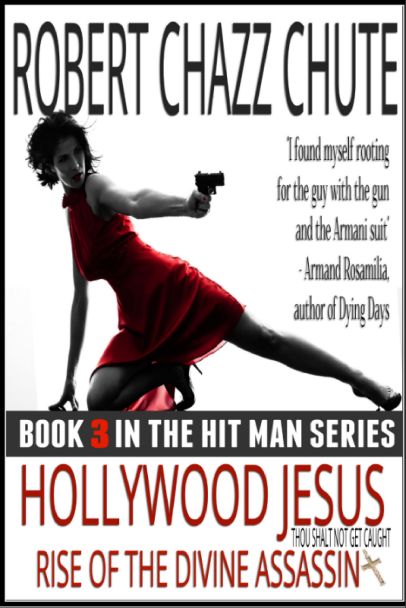
It’s so fun and gritty and fast, I’m very happy with Hollywood Jesus, the third adventure in the Hit Man Series. The John Leguizamo joke alone makes it for me!

"Perhaps the most underrated crime novel of all time." ~ Robert Chazz Chute

“Perhaps the most underrated crime novel of all time.” ~ Robert Chazz Chute


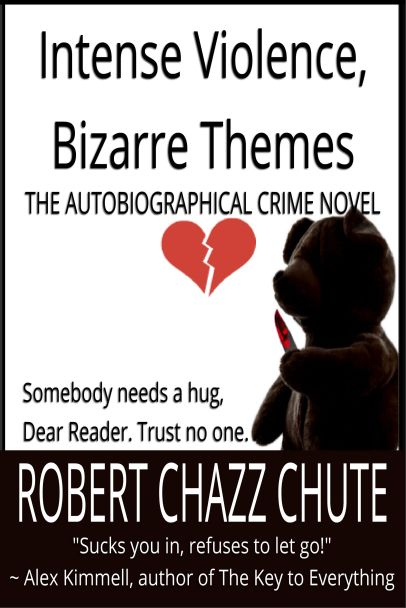
And, maybe best of all, I wrote my criminal autobiography!

That's one adorable bear holding that bloody knife.

That’s one adorable bear holding that bloody knife.

And I’m part of the Horror Within Box Set with some very heavy hitters in horror fiction.

Horror Within Box Set

In other words, it’s been a productive year. It seems I have a lot to live for, after all. I can’t wait to get more of my ebooks into print, too. So stay busy. It will keep you out of trouble. Works for me. When you’re feeling down, write another book. That’s what I do. I’m all nerves a lot of the time, obviously. Writing soothes me and keep me from acting on impulses to hammer things.

Writing works that way for many people. Writing or reading, I hope you find escape, as I do, in imagination.
Merry Christmas.

If you had mixed feelings about 2014, let’s make 2015 better, hm?

Filed under: author platform, Horror, publishing, Writers, writing tips, , , , , , , , , , , , , , , , , , , , , , , , , , ,

What’s next? More. Much more.

In a plot, the question is always, “What’s next?”

Here’s what’s next for me in the publishing business:

1. I’ll be in a horror anthology next spring. 

2. I’ll be in a self-help anthology next spring.

3. I have a new collaborator in an urban fantasy series. The first book in the Ghosts & Demons Series launches later this week. It’s called The Haunting Lessons. It’s a fast and fun supernatural story packed with a powerful female protagonist and lots of jokes. (More on that on launch day!)

4. I’m teaming up with another author for a secret project and I expect big things in 2015.

5. Increased speed of production. I’m getting more help and a larger beta read team so I can focus on a narrower range of tasks. 

6. The focus for the first six months is going to be more paranormal/urban fantasy books. This Plague of Days has become very popular and I need to write more supernatural stories. The new work has a lighter tone with more laughs per page instead of straight horror.

7. I’m diversifying on the non-fiction end of the business doing some author management work in 2015. 

8. More podcasting. I’ve been so busy writing, I haven’t been Skype-social enough with cool people for the Cool People Podcast. I also have more planned for the All That Chazz podcast.

There’s lots to do, but I’m not overwhelmed. I’m excited. I’m using some Tim Ferris sorts of life hacks to focus and manage my time so I can do more through collaborations, competition and coopetition.

What are your plans for world domination in 2015?

Filed under: author platform, , , , , , , , , , , , , , , , , ,

Simon Whistler: How to find your People

[Editor’s note: Today we welcome Simon Whistler of Rocking Self-Publishing Podcast fame. He’s got a nifty and useful mastermind group going, too. Don’t miss checking that out at the end of his post to leverage the power of podcasting for greater success for authors! ~ Chazz]

Eighteen months ago I started a little side project. A podcast called Rocking Self-Publishing.  

Eighteen months later, I’ve talked to over 80 authors, for around 100 hours of interviews. I’ve reached thousands of people though 600,000 podcast downloads. I’ve emailed, Skyped, and met, with a number of people I admire. I’ve even started a small online community for successful and hungry authors; the group of people that I hope my podcast resonates the most with.  

When Chazz asked me to come and do a guest post for his fantastic blog, I knew I didn’t need to write an article, I needed to answer a common question:

Should I start a podcast?

I’m sure Chazz would be the first to agree with me, being a man of many podcasts himself, that podcasting is not “talking to someone and sticking it on iTunes.” It is hard work.

But that’s good news.

Hard is good.

Hard means people don’t do it. Hard means people don’t put in the effort to put out great content week after week. Hard means that if you have grit, you can make it. You can distinguish yourself from the masses, and reap the rewards of being exceptional in the space you carve out for your show.

What space should you carve?

That all depends on what you want to get out of your podcast. What is your perfect end result? I’m going to run with the assumption that you want this podcast to add to your bottom line. And while there are plenty of ways to add to that bottom line, let’s stick with the basics: sell more books, make more money.

Now for the big question, and please, don’t immediately write it off as daft:

Do you want your future listeners to buy your books?

I can hear you thinking: “Simon! I’m not starting this for fun, I thought we covered that?”

Okay fine, we’ll start with the type of show where your listeners will buy your books.

The niche podcast. One that appeals to the readers in your genre.

The process? Work out who is buying (or will buy) your fiction. Create a podcast that appeals to that reader base. Build the listener base. Sell books to them.

What’s awesome about this type of podcast is that you’re probably going to really love doing it! If you write horror, you’re probably into horror, and so are your readers. Let’s break it down:

  1. Who buys your fiction – Survey if you can, there’s nothing better than info from the horses mouth. If you have a mailing list, get on SurveyMonkey, present some podcast options, and ask them! If you don’t have a way to get in touch with your audience directly, check out your Facebook fans, what sort of things are they into?
  2. Create a podcast that appeals – This is more than just the topic. What angle are you going to take? What’s are other, similar, podcasts doing? If there isn’t competition, why not? Also think about tech, quality audio is important, but that’s a discussion for another day.
  3. Build the base – iTunes is important, and audience building through that platform is vital. I really recommend checking out PodcastAnswerMan.com for details on this (and much more about podcasting).
  4. Sell books to them – The good part. Listeners like you, they’ll buy your books, the books were written for people like them (if you did your targeting right).

Super important caveat: Platforms launch books, they don’t continually sell books. Once you’ve hit your audience up a couple of times, everyone who is going to buy has bought.

What about the podcast where your listeners don’t buy your books?

I told you we’d get to this one.

The podcast for writers.

Do you think if I wrote fiction, my audience would buy it? My audience are writers not readers. Yes, there would be some spillover, but if you want to sell fiction to your listeners, don’t start a show about writing. It is inefficient.

If you want to sell fiction to your listeners, you need a listener base who have an interest in your fiction, not your writing process.

Let’s say I put out a spy thriller. The RSP audience might buy it to check out my writing chops (and mock me), but they don’t care about my Jason Bourne wanna-be protagonist.

If you want to sell a book about writing though… well, start a podcast about writing. I myself launched my first book to 80 five-star reviews in the first 10 days. Podcasting in this way can be very effective for non-fiction authors.  

Now, don’t discount the podcast aimed at writers for helping with your fiction sales, I’m about to get to the good part.

Indirect sales.

The most incredible thing about the self-publishing community is the community. When I started RSP, I wondered, “Why would anyone get on the phone with me?” But I wanted to podcast. I wanted to be on the mic. It was going to be fun.

I had less than ten posts on KBoards (the author community a friend told me to check out). Within hours I was setting up digital meetings with people who were selling hundreds of thousands of books.

A niche podcast is a way to “network up.” A way to connect with people who you admire, people you can look to as mentors, people who you might even be able to work with. If you make a quality podcast, it is a ticket to talking to people you admire. I can’t remember where I first heard this, but it has always stuck with me:

“Most successful people you can’t get on the phone for an hour of consultation, even if you pay them. Stick the microphone on, call it a podcast, and you’re in business!”

A network of other authors around you is something that authors at the highest level have. Podcasting is an enjoyable way to build that network, if you are up for a challenge.

But what do you do with this network? Learn from it, work with it, take advantage of the opportunities it presents. Having the ability to call on the expertise of a group of successful people is epic.

It a Wrap

The question, “should I start a podcast?” Pops up in my inbox on the regular.

My reply is usually more succinct when I’m writing an email back to someone, so I should be able to wrap this up nicely:

“Dear Podcast Listener,

Starting a podcast brings many advantages and opportunities, whether you start one for your readers or other writers.

It’s not as easy as we make it sound though, and high quality, regular, podcasts are the ones that make it. So prepare to commit some time. If you can see the return, and will enjoy it, then rock and roll and let me know when you’re live.

Cheers,

Simon

simon@rockingselfpublishing.com

I’m such a proponent of the value of a network that I decided to interconnect mine through an online community. I created a group for the kind of successful authors who come on my podcast. For a limited time, we are looking for outside applications. If you are towards the head of the indie pack, I’d check out the info page at http://writerscircle.rockingselfpublishing.com.  

~ Simon Whistler is a podcaster, author, and audiobook narrator. He podcasts long-form interviews every Thursday at RockingSelfPublishing.com.

Filed under: author platform, podcasts, , , , , , , , , ,

Here’s a different way to engage new readers

There is an alternative to getting feedback through reviews and it’s actually pretty awesome (though we all need the happy reviews, too.) Recently, I did a Bookbub giveaway. About 20,000 people picked up the This Plague of Days, Omnibus Edition. That’s three novels in one big book. Not only am I hearing more from readers who dig my flow, but I’m engaging with them through email plus giving them another free book. I’m thinking long-term and building a readership, but it has helped in the short-term, too. Here’s how:

This Plague of Days OMNIBUS (Large)

At the back of the Omnibus is a link to a video that asks readers a question about a secret revealed in the saga. Once they comment on the secret YouTube link and email me their address, I send them the gift of another book, Intense Violence, Bizarre Themes. I also let them know there’s another book coming at Christmas called The Haunting Lessons. If you liked TPOD, you’ll probably love The Haunting Lessons.

IVBT FINAL 2D cover

You can’t generally engage with reviewers without the risk of being accused of bad author behavior, but these people are coming to me. They’re a happy bunch (only one grump among the many emails I’ve received!) and they’re happy to talk about This Plague of Days. I also take the opportunity in their gift card message to encourage reviews.

Intense Violence, Bizarre Themes (my autobiographical crime novel) also secrets behind the story. The back of that book has a blog post link readers can access with a password on my author site, AllThatChazz.com, so they can get some of their questions answered.

If this seems like a long, expensive process to find new readers, I have three answers: 

1. Long? Not really. I was writing the books anyway. I’m in this for the long haul with many more books on the way.

2. Paying for advertising in the form of gift books to a TARGETED audience is miles cheaper than any other approach I can think of.

3. Contrary to what you may have read from other authors recently, I’m finding that gifting does lift my other book sales. 

This won’t help you much if you don’t have more than a couple of books to sell, but free isn’t a concept to throw away quite yet. I’m happy with this twist on free because I’m making happy readers happier instead of throwing business cards out of moving cars and shouting at annoyed strangers.

I’m loving it most because, unfortunately, there is occasionally a hostile, suspicious or impatient dynamic between reviewers and authors. As a writer, it’s great to hear back from the people who get what you’re doing, are friendly and engaged. The conversations I’ve had over email are delightfully empty of power trips and ego. It’s fantastic to me that people just want to talk about the story’s emotional impact or the philosophy or psychology that form the underlying themes of This Plague of Days. That’s cool. (You know how some reviewers seem to hate reading? Not this crowd. They are so in!)

I think this approach works because:

a. Hey, I understand they read to the end of a long epic saga. It figures they’re more committed than the average bear.

b. People love to know secrets and behind-the-scenes stuff.

c. People love free stuff.

d. When I talk about TPOD on video they’re getting to know me as a human being.

e. When they read the secrets in the secret blog post, they’re invited into my little club. I’m touched that they got involved enough in the thriller to want to know what’s fiction and what’s not.

Your mileage may vary, as they say, but keep experimenting with new approaches. You might even stick a secret link in the back of your next book and watch the happy readers show up in droves.

Filed under: book marketing, , , , , , , , , , , , , , , , , ,

Why are we so worried about failure when it’s so common?

I’ve been reading another round of articles from the usual suspects saying how much indie books suck. I ran into a reader who said one of my masterpieces was pretty good “for an indie book.” Yeah, well, piss on that. He only knew I was indie because I told him so. I now have two questions to wrestle: why am I still reading these biased articles that rely on old news and nostalgia? And why do I bother telling anyone but other indies that I count among their number?

We live in a post-empire world.

Indie and niche is a great place to be now, but the bias of what was once true still carries the heavy weight of lazy inertia. I have had lots of jobs, but it wasn’t until I became a writer that people started asking if I was making any money. (Kinda rude, huh?)

Yet myths continue to abound about indie versus trad.

For instance, some people still believe that big publishers must have more brains than small publishers. I worked for big publishers and I can tell you, some of them are really bright, but no more than the rest of the population. I know what a book costs to make. One in twenty of my former employers might know. No indie of my acquaintance would be dumb enough to try to sell an art book without pictures. (Yes, that happened.)

More money means bigger investors, not more brains.

In fact, when you have more money to sling around, you can find some pretty stupid uses for it, like paying rent in downtown Toronto or New York or throwing money at CEOs while reducing editorial staff drastically. When you’re really profitable, you might even be stupid enough to get your lawyers to cheat your authors out of royalties. (Oh, nickel and dimers will do fine for a while and the big wigs can congratulate each other over a round of golf. But reputations and brands will be damaged and then the authors’ lawyers will come. Peons pushed too far become dangerous so Evil isn’t a smart longterm strategy.)

Are there lots of bad books out there? You bet.

Indie or traditional? It matters not. Ninety percent of anything isn’t so great. Mediocrity is not unique to us. In fact, mediocrity and failure is no big deal. Look around. It’s everywhere. Ninety percent of politicians and agents and naturopaths and plumbers suck. There are no exemptions. Have you ever belonged to a class where everybody got an A+ on everything? 

But that’s the beauty of finding your niche and your tribe.

No matter what we do, somebody’s going to love us. (Charles Manson has a bride now.) Someone will eventually fall in love with your voice even if you sing a little flat.

We must all do our best, of course. This isn’t a call to embrace mediocrity.

It’s a call to do your best without getting overly dramatic when someone doesn’t dig your flavor. It’s a reminder that we will all fail with most of our books. It’s a plea to write the next one anyway. I’m making fewer mistakes. I’m getting better with each book. Everybody improves if they don’t quit. My tribe is getting bigger.

Keep calm and carry on doing your best. Write and enjoy yourself. Chill. Failure is expected. One of these days, you’ll write something that will strike a cord outside your niche and, for a moment, you’ll think you have arrived. There is no arrival. There is only the next book and the Sisyphian joys of the labor itself.

When you write, do you ever make yourself laugh or cry or chortle at your genius?

That’s what to go for. Let’s stop being so precious about winning and losing and relax about the numbers. When the work comes from love and you continue to strive, your aspirations are never hopeless.

~ Speaking of turning the legend of Sisyphus upside down, I wrote over 50,000 words in 20 days and NaNoWriMo helped me do it faster than I would have otherwise. I now have a first draft I love. Take that NaNoWriMo haters. The writing process was full of self-congratulatory chortles and laughter. It’s going to be a lot of fun for readers, too.


Filed under: author platform, publishing, self-publishing, writing tips, , , , , ,

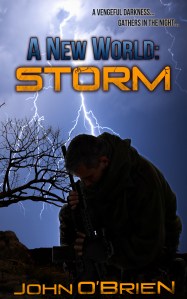
Winter of Zombie Blog Tour 2014: John O’Brien’s New World

1926759_10202903482088672_4630710665427646186_n (1)

The stench of frozen rotted meat is in the air! Welcome to the Winter of Zombie Blog

Tour 2014, with 10 of the best zombie authors spreading the disease in the month of November.

Stop by the event page on Facebook so you don’t miss an interview, guest post or

teaser… and pick up some great swag as well! Giveaways galore from most of the authors as

well as interaction with them! #WinterZombie2014


AND so you don’t miss any of the posts in November, here’s the complete list.
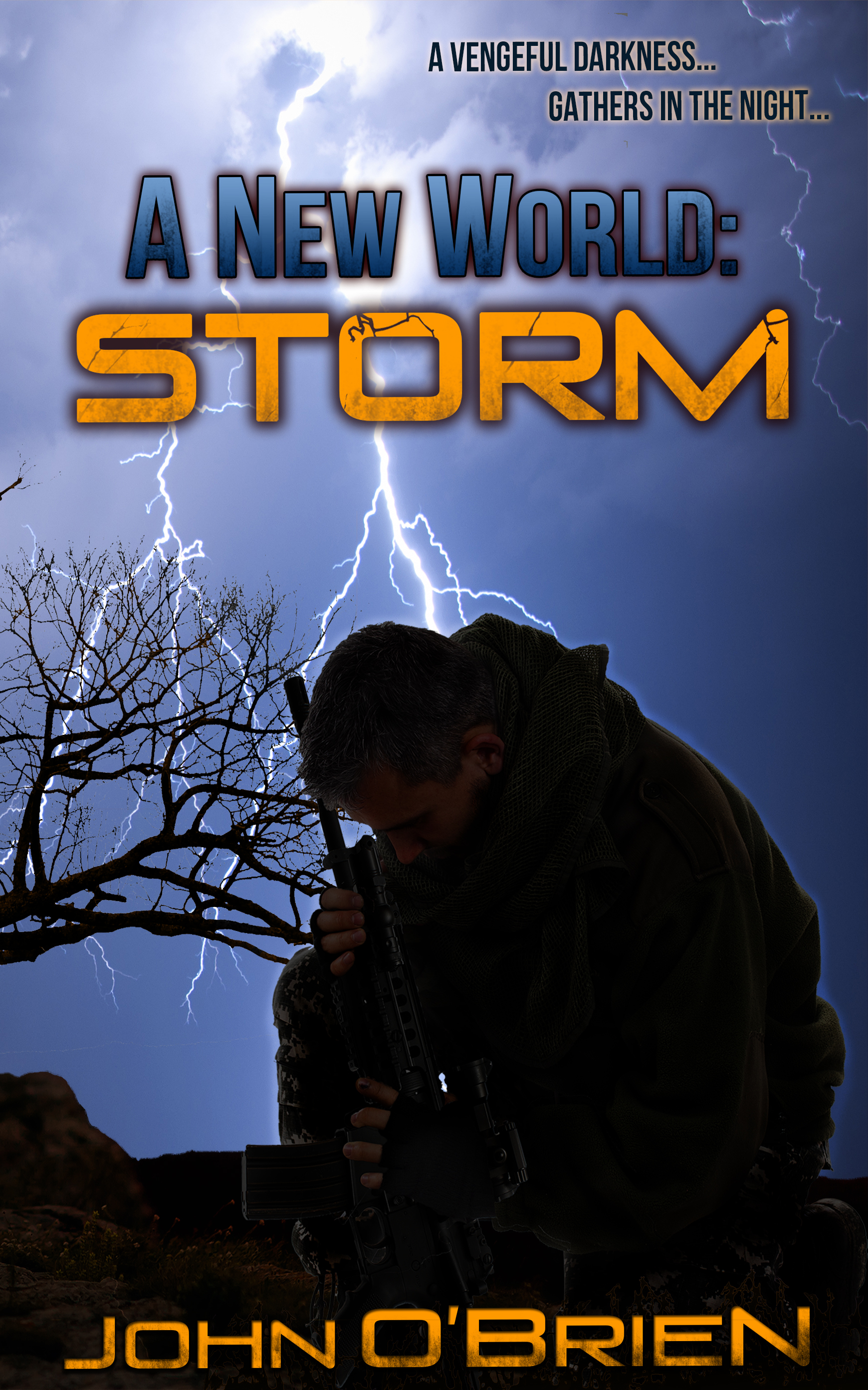
Storm cover large5

 (Editor’s Note: NSFW words to follow in the excerpt, so you may not want to read it aloud at the office…)

Excerpt from A New World: Storm

As we make our way along, several exits lead into darkened interior hallways. Each of

the wall corners are rounded and house nurses’ stations. I look behind one to find a figure on

the floor, clad in the torn remains of scrubs. Dried blood covers the floor and is splattered on the

walls. Staring at the sight, I’m confused. The building entrances and perimeter didn’t show any

evidence of night runners, but the bodies and the other evidence points to the fact that we may

not be alone. I’m not sure how they are getting in and out of the building.

I peel away an escape route plan taped to one of the walls. Sending Red Team to the

next intersection of hallways, I motion Jan forward.

“Where is the lab?” I ask.

She studies the map, and points to a large room in the interior.

Taking the map, I advance to the next hall, where Red Team is standing guard. Looking

down the corridor, I see that it intersects other hallways. The ambient light doesn’t reach far,

leaving the corridors and rooms beyond in a deep gloom. The interior halls will be in the dark.

“Looks like this won’t be the walk in the park it seemed,” I state to Lynn.

“What do you think?” she asks.

“I don’t know. We’ll have to assume that we aren’t alone. We have a safe corridor along

the outer halls, but who knows what we’ll face in the darkened hallways.”

“Do you think the equipment is worth the risk?” Lynn asks.

“I have no idea. Seems that is happening more frequently. I mean, what if we get her

equipment and she finds an answer to the night runners? If she does, then yes, it’s worth almost

any risk. However, I sadly lack the ability to see into the future. Sitting here staring at darkened

halls, and knowing how much I love hospitals, I would say we turn around. But, it’s about the

chance, isn’t it? If we don’t go, then there is zero chance,” I comment.

“Are you having a nice conversation with yourself?”

“No, not really,” I answer.

I stand at the intersection, pondering. It seems that I always knew what to do in the past,

was able to see the right choice. I momentarily wonder if the move hasn’t altered my ability

to choose clearly. I may be thinking too far ahead, to finding a truly safe haven in the midst of

all this chaos. And with that looming possibility, I may be taking the easy route instead of the

right one. If that is truly the case, then I’m in no condition to be making decisions. I’ve second-
guessed decisions in the past, but not my whole reasoning ability.

Shit, even these thoughts bring more doubts.

Taking a deep breath, I shake my head. “Okay, fuck it. We’re going in. Red Team, you’re

at the next intersection covering our six. Lynn, you’re with me. Have Black Team cover Jan like

At the next intersection of hallways, Red Team covers the corners. Although there is a

faint amount of illumination, the area is still cast in a deep gloom. There may be enough residual

light to keep the night runners away from this position. Only a couple of feet into each branching

corridor, the light ends completely, leaving only darkness.

Lynn and I turn the corner. Assuring that my carbine is set to auto, I raise it and creep

into the hall leading to the lab. I sidle near the wall, stepping silently. Slowly, I make my way

down the hallway, Lynn keeping pace on the opposite wall. My heart feels like it’s in my throat

and I slow my breathing to calm my heart rate. Once again, I find myself snaking down a

hospital hallway. The air within is stuffy and cold.

All of the doors along the hall are closed. I pause at the first one, listening. Reaching

down, I slowly push on the handle. It’s unlocked. I’m not sure that night runners have mastered

the art of doors, but I’m not chancing it. It would be my luck that I run into a pack that can

saunter in and out of them with nary a thought. After all, they must be entering and exiting the

building somehow. That is, if they are leaving at all. Perhaps they are feasting on the food within

the hospital. Of course, the evidence I’ve seen could be from weeks ago.

I nod at Lynn, open the door, and step silently into the room. I’m not sure what the room

is used for, as curtains are pulled in places. No shrieks or sudden movements accompany my

entry. I exit and slowly close the door. Lynn checks a door on her side with the same result;

there’s no one inside. We creep down the corridor, checking the rooms but never leaving the

doorways. Black Team follows quietly behind.

Reaching the doors that Jan indicated as housing the lab, Lynn and I stack against the

wall. It would really suck if night runners were inside and we had to start shooting. Knowing my

day, I would put a round into every piece of equipment she needed. Of course, if there are truly

night runners within, we’ll just turn and run for the light.

We check the door and verify that it’s unlocked. On a nod from me, Lynn swings the

door open and I dart in. The room is large, with long counters and stations along the walls and

in the center. I check the dead corner as I make my way along the right hand wall. Lynn follows,

sweeping left. We pause half way down. There’s nothing inside except beakers, vials, and

equipment. We head back to the entrance and motion Black Team forward.

“The room is clear. This has to be done quietly. Don’t disturb anything, and gather the

equipment Jan indicates,” Lynn tells them.

They enter. As Jan passes, I grab her arm. “Do this quickly?”

She nods and enters with the rest of the team. Lynn and I station ourselves in the

corridor. She holds the door open and we both cover farther down the hallway. Even though I’m

on the opposite side of the hall, I still hear very faint whispering coming from inside the room.

Other faint sounds emit as they gather equipment.

Fucking keep it down, I think, hoping there aren’t any night runners nearby that can hear

A little way down is another intersection of hallways. For some reason, the ambient light

that reaches the intersection behind us doesn’t reach there. It could be that the hall doesn’t

reach the outer corridor. Minutes pass that seem like hours. I hear the clang of something

metallic come from within the room. It’s a soft sound and not very loud, but to my ears, it sounds

like a train crashing into a semi. Lynn turns her head sharply to the interior. Shrieks erupt,

coming from a side hallway; they sound close.

Fuck, that doesn’t sound like a night runner shriek, that’s more like a kid screaming, I

think, tightening and pulling my M-4 tight.

“Lynn, get Jan and the equipment out, now!” I sharply whisper. “Head for Red Team and

get to the outer corridor where there’s light. I have our six.”

Lynn calls inside, softly yet sharply. Black Team exits, surrounding Jan, who is pushing a

steel cart loaded with gear.

What the fuck?!

“Go, go, go.”

As they quickly retreat down the corridor, I rise and being backpedaling. Lynn stays with

“Go,” I say, rising. She shakes her head.

“Dammit,” I mutter.
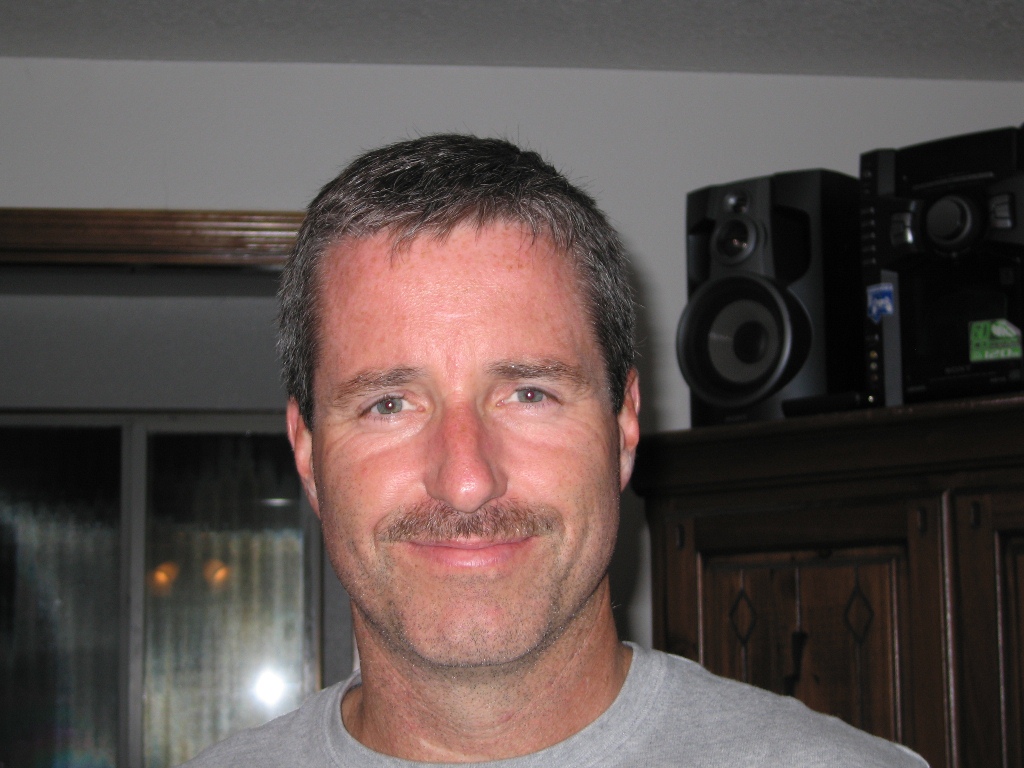
John O'Brien

John O’Brien

Screams fill the interior, echoing down the hallways. Amongst the din, I hear feet

slapping on the linoleum. As I step backward, I have my carbine aimed near the corner where

the night runners should appear. My aimpoint is aimed where their heads should be. They round

the bend in a hurry. As they come into sight, my reticle is above their heads. I lower my barrel a

touch and begin squeezing the trigger. Their ghostly pale faces register.

Fuck, they’re kids.

There are six of them, all dressed in torn and deeply stained hospital gowns, looking to

be about ten or twelve years old. I feel sick to my stomach as I watch, unable to pull the trigger

as they streak down the hall. I am backing up as fast as I can, but they are rapidly closing. For a

split second, I tightly shut my eyes.

Fuck this…dammit!

Placing my glowing crosshair on the nearest one, I fire, almost point blank. The child’s

head snaps to the side as my bullets strike. Blood sprays from the multiple impacts. With

feet flipping into the air, its head hits the hard floor with a whack. Strobes fill the scream-filled

hallway. More kids fall to the ground under the torrent of rounds fired by Lynn and me. In

seconds, six small figures lie bleeding in the hallway. Another shriek rises and a larger night

runner female, dressed in scrubs, appears at the intersection. Upon spotting the young ones

down, she pauses, then screams like I’ve never heard a night runner shriek. Other smaller

figures appear behind her.

Screw this, I think. Lynn and I turn and run.

Racing down the darkened hall, with shrieks sounding behind, I’m reminded of a similar

chase with Lynn. This time though, friends await at hallway intersections. Black Team is

nowhere in sight. I yell to Red Team to pack up and go. Rounding the corner, hard on the heels

of Gonzalez and company, we reach the full light. Behind, the night runners continue shrieking

I feel incredibly sick. The sight of those small faces, pale or not, will haunt me to the end

of my days. My legs feel weak and I sink to my knees.

“That was messed up…I mean, really messed up,” I say, panting.


Filed under: Author profiles, , , , , , , , ,

What Birdman got right (and what it says about writing books)

If you haven’t seen Birdman, starring Michael Keaton and Edward Norton, you’ll find no spoilers here. It’s a very unusual film and there is a lot to love in it, not least of which is the cinematography. It’s also one of those rare films I’ll need to see again before I can figure out how much I like it.  Today, I want to talk about what I loved (and how it might apply to writers and books.)

1. The movie is a tutorial in acting without self-consciousness.

Many of us are too self-conscious to try something bold in our writing. That’s too bad, I think. I like bold choices in books. The expected is too ordinary and easy. The expected is…expected. You’ll also love the instruction on the power of motivation, emotion and brevity.

2. The film is comfortable with ambiguity.

As much as I enjoyed the summer romp that was Guardians of the Galaxy, there was no need to discuss it by the time we got to the parking lot. Birdman leaves so much ambiguity, you’ll find a lot of people arguing over clues in the film. What happened and what did it all mean? That could irritate you, or you could decide it’s finally a film worthy of discussion.

3. Birdman is working on several levels.

You can take it for what it is or you can take it for what it might be and, no doubt about it, this is a story that demands some patience from its audience if they decide to try to decode it. I like books that are doing one thing while you think they’re doing something else. That’s the rich depth I look for in my reading and writing, no matter how superficial an entertainment you might expect. (For instance, shocker: This Plague of Days is less about zombies and more about you.)

4. Birdman is Art (capital A) that defines its audience.

If you’re an optimist, you’re going to want to interpret the story one way. If you’re a pessimist, you may have less fun in the movie but you’ll enjoy the discussion over coffee after the movie.

5. Pop culture references.

The movie is front loaded with some contemporary references that are pretty funny. The movie isn’t afraid to define itself by a particular time with those pop culture references. Publishers have long run screaming from books with such references for fear readers won’t get it and the book will be dated too fast. Here’s what I’ve found (especially from feedback about my crime novels): Lots of readers love pop culture references and readers don’t scare off so easily when you’re showing them a good time. Will it get dated? No. That’s just a label and what you call a thing is not the thing. (Don’t buy that? Okay. How about this: eventually, everything is a period piece.)

6. The movie talks a lot about what it means to make Art and struggle with commerce.

What we all do as artists is kind of a brave thing to do. Maybe not storming-the-beaches-at-Normandy brave, but we’re taking risks and putting ourselves out there. It’s nice to see that affirmed somewhere instead of mocking entertainment as an effete thing to do when you could be out drinking and brawling or doing nothing. I believe Art matters. So does Birdman.

7. The movie criticizes and acknowledges the power of social media.

That’s surprisingly evenhanded and grounds for more discussion about what matters and how to get to what matters. Many of us are divided on the power of Twitter and the distracting lure of YouTube. I don’t think the answer is an either/or binary, so, through the ranting, the movie has a very thoughtful core.

8. Any artist will appreciate the critique of the role of the critic: how easy, risk-free and shallow it can be.

I heard a couple of professional critics mock this aspect of Birdman. Clearly, they weren’t listening closely or their egos got in the way. Whatever else you may dislike about this film, if you’ve written a book, you’ll love that exchange.

9. Birdman is, in part, about legacy and relevance and striving.

We can all relate to that, can’t we? If you can’t, get out. You’re taking a squat in my church.

10. By turns, Birdman looks like a French art film somebody dragged you to in college, one of those movies only film students pretend to like while they’re really thinking about Star Wars.

Then Birdman does something different. In other words, if it were a book, it would be cross-genre. It’s a film that isn’t easy to categorize and define. Therefore, it’s harder to sell. They made it anyway.

Filmgoers have been crying out for films that are refreshing and different. Audiences have been moaning at Hollywood for years, “Oh, for God’s sake, give us something besides another empty sequel and come up with an original thought!” Well, you asked for it and Birdman is what the answer to that request looks like.

You know what? I take it back. Now that I’ve written this list, I can see it now. I did like Birdman a lot. I think I might love it.


Filed under: movies, Writers, writing tips, , , , , , , , , , , , ,

Number One in #SciFi #Free today: All 3 Seasons of This Plague of Days!

This Plague of Days OMNIBUS (Large)

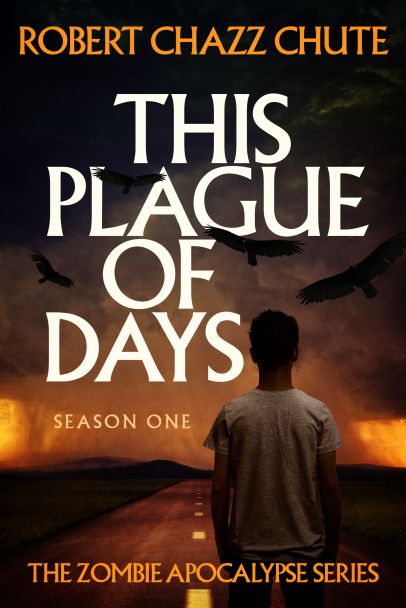
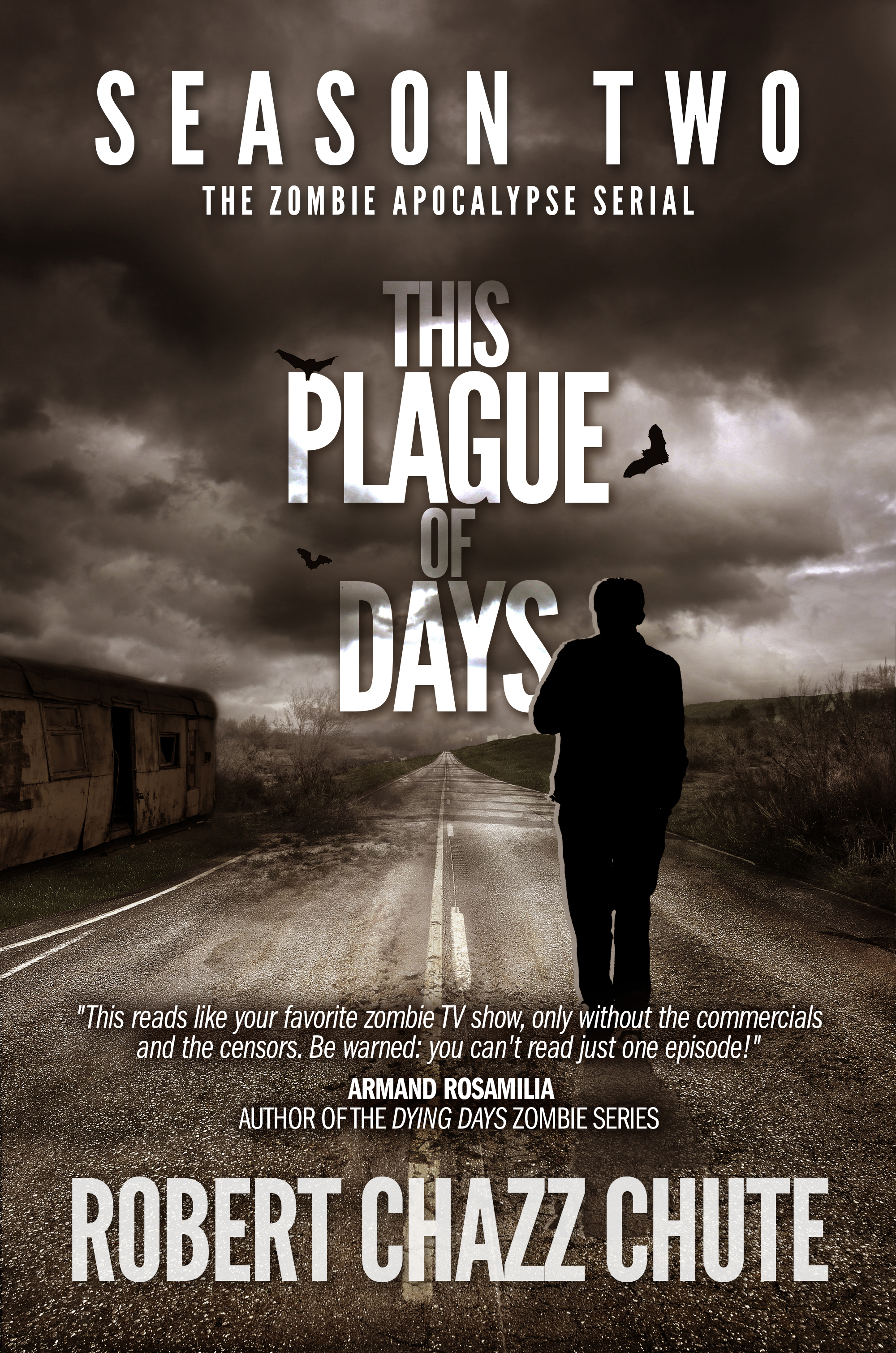
The First Season is The Siege. The Second Season is The Journey. The Third Season is The War.

Think The StandStranger in a Strange Land + The Walking Dead.

That’s the This Plague of Days Omnibus.

Free. 

Today.

You know what to do.

Bravery is not required. Action is.

Filed under: ebooks, , , , , , , , , ,

#NaNoWriMo: How to make writing a novel easier than it looks

I write drafts for my novels at a rate of 1,000 words per hour. I can string more of those hours together if I plan ahead with a general outline, but I usually pants it rather than plot it. 

I think of my writing time in terms of word count and hours. Here’s why:

When I wrote This Plague of Days, I didn’t think in terms of hours then. I didn’t budget my time or work to a word count like it was a job. I just put my head down and wrote and revised many times, stealing time here and there without a real schedule. I can’t tell you how long it took to write that epic saga because I went through so many revisions. Also, because my approach was haphazard, I wrote slower then. Though I worked from an outline, the project took longer than it could have.

I was buying into the meme that slow cooker writing was the only way, despite Stephen King’s suggestion that three months ought to do it (and look at the size of his books!) If I wrote that series now, the first draft would take about 300 hours of actual writing time. That’s less impressive than saying it took me years to write TPOD, but it’s more accurate.

(By the way, I just found out the This Plague of Days, Omnibus Edition has advanced to the second round in the Writer’s Digest Self-published Ebook Awards! Yay!)

When someone says it took them two years to write their first novel, that’s not true.

Two years equals 17,531.62 hours, including time spent sleeping, showering, goofing off, playing with children and pets and holding down a job, and procrastinating etc. Authors can write as fast or as slow as they’d like and each process is unique. However, there is no direct correlation between speed of production and quality. In fact, for the first draft, quality is nigh irrelevant.

Quality comes with subsequent drafts.

I find most of the jokes in the second revision and the plot problems to be fixed become clearer by the third revision.

Take NaNoWriMo, for example…

I’m planning 55,000 words for my current WIP. That means 55 hours for the first draft this month. As my current schedule allows, I’ll be done well before the NaNoWriMo deadline as long as I continue to protect my writing time.

Fifty-five hours sounds much less intimidating and more realistic, doesn’t it? What’s one work week to you? Forty-four hours? I approach my writing like a job. It’s a job I love, but there’s no waiting around for inspiration to come to me. I hunt inspiration down. Inspiration and efficiencies are habits learned by writing more and doing so consistently.

Sometimes the best laid plans go awry.

For my crime novel, Intense Violence, Bizarre Themes, I’d planned on looking for the exit to the book around 50,000 words and topping out at 55,000 words. It took me an extra 17,000 words to wrap it up neatly at 67,000 words. Still, 67 hours to a first draft sounds like much less drama than saying it took me a month. That’s just 16.7 hours per week to come up with a first draft. (For a while in the ’90s, that’s about as much time as I committed to watching television.)

I’d give you a measurement of editing and revision times if I had them, but that varies too widely depending on the book. For instance, I’m putting my time travel novel on hold because I’m not happy enough with it yet to release it. I’ll come back to it in 2015. However, I expect to have my current WIP out in time for Christmas (assuming I still love it when I’m done.) 

Write as slow as you want to or as fast as you can. It doesn’t have to be a job. Hobbies are good, too, so write at the pace you choose.

My point is, we don’t have to be drama kings and queens about the writing process. When you hear of writers putting out a lot of books fast, that’s not really quite as hard as many would lead you to believe. Writing is a time management issue first. The other skills required come into play after we commit to investing the hours.

But it can’t be good because it was written too fast!

Writers who cherish writing slowly have my utmost respect until they insist others write at their pace (and many people write much faster than I do.)

On the Road, Casino Royale, The Gambler, A Clockwork Orange, The Prime of Miss Jean Brodie and As I Lay Dying were written in less than six weeks. I wonder if any of those famous books were actually written in less time than that if the authors had tracked their hours.

Fast writers manage fear because they think about each book project in terms of a formula:

Word count goals + hours x perspiration (divided by distraction)

Prolific writers manage their time, that’s all. No drama. Inspiration usually arrives at the keyboard at about the same time we do.

Write. Revise. Edit. Enjoy throughout. (Now don’t tell anyone how easy it is to get to big word counts or they might start to think that writers aren’t special snowflakes!)

~ I’m Robert Chazz Chute and I just published my 15th book. Imagine how many more I could have written if I hadn’t been sucked into the vortex of “Must See TV” back in the day. 

Filed under: My fiction, publishing, Writers, writing tips, , , , , , , , , , , , , , , , ,

Bestseller with over 1,000 reviews!
Winner of the North Street Book Prize, Reader's Favorite, the
Literary Titan Award, the Hollywood Book Festival, and the
New York Book Festival.

http://mybook.to/OurZombieHours
A NEW ZOMBIE ANTHOLOGY

Winner of Writer's Digest's 2014 Honorable Mention in Self-published Ebook Awards in Genre

The first 81 lessons to get your Buffy on

More lessons to help you survive Armageddon

"You will laugh your ass off!" ~ Maxwell Cynn, author of Cybergrrl

Available now!

Fast-paced terror, new threats, more twists.

An autistic boy versus our world in free fall

Suspense to melt your face and play with your brain.

Action like a Guy Ritchie film. Funny like Woody Allen when he was funny.

Jesus: Sexier and even more addicted to love.

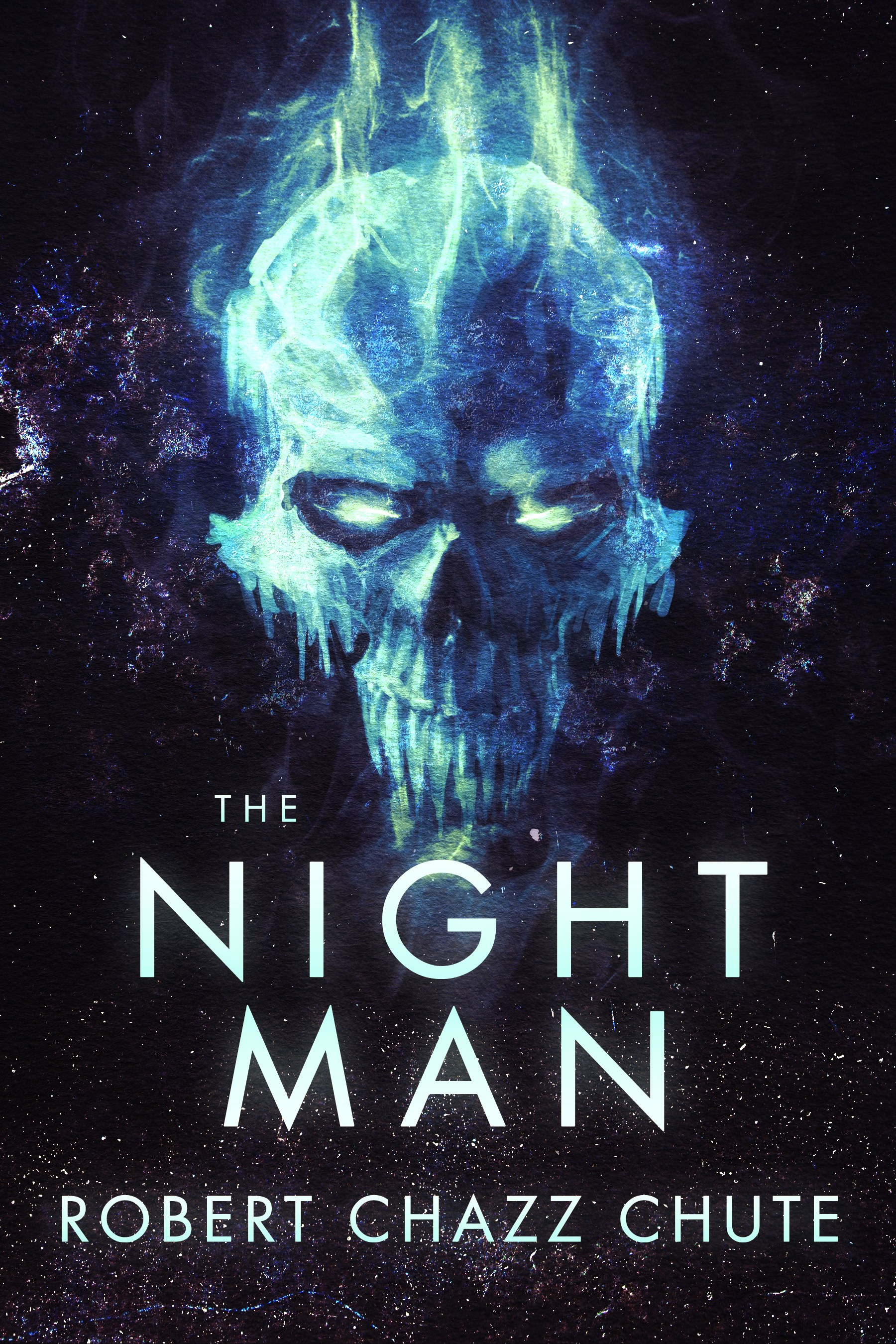
You can pick this ebook up for free today at this link: http://bit.ly/TheNightMan

Join my inner circle at AllThatChazz.com

See my books, blogs, links and podcasts.

Enter your email address to follow this blog and receive notifications of new posts by email.

Join 2,063 other subscribers