C h a z z W r i t e s . c o m

See all my books at AllThatChazz.com.

Quote Art: A new way to promote your books

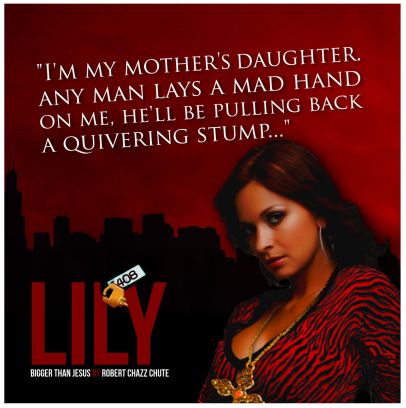
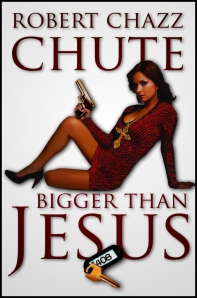
This is not a book cover. It’s Quote Art for my suspense novel, Bigger Than Jesus. The quote is pulled from the book. The art is by Kit Foster of KitFosterDesign.com.

Jesus Diaz is my luckless Cuban hit man in the first of the Hit Man Series: Bigger Than Jesus. (It’s pronounced “Hay-soose”.) Follow his exploits as he tries to escape New York’s Spanish mob with a fortune in stolen mafia money and the lovely Lily Vasquez.

Great book covers sell books. Now picture a quote pulled from your book with another compelling, related image. See it on Facebook, as a Twitpic, on your author site or as a poster at your next book signing. Quote Art is a different way to promote your books to new audiences. It’s a clue about your characters and another chance to intrigue potential readers. Why try to grab them with just one image when you can hold their attention with more using a new, integrated and savvy marketing tool?

Click it to grab the paperback or the ebook. Thanks!

Kit is my graphic designer. If you’re a regular reader, you know I’ve already sung his praises. Now I’m complimenting him for his innovation in doing something a little different to help me spread the word about my books. Thanks again, Kit!

To find out more about his book cover designs and to see samples of his art,

go to KitFosterDesign.com.

Want another marketing tool to build buzz?

I need a couple more volunteers for my Next Big Thing Blog Hop post. If you have a work in progress you want to build some buzz about, I have two more spots available for this event. All you have to do is answer ten quick questions about your WIP and post them on your blog a week from Wednesday. You link back to me and I link to you and the word spreads farther. Volunteer at expartepress@gmail.com and I’ll send you an email with the blog hop specs.

I’m doing another blog hop in the near future, so watch this space.

Filed under: publishing, , , , , , , , , , , , , , , , ,

Amazon: My last stab

GET BIGGER THAN JESUS, FREE ON AMAZON TODAY, TOMORROW AND FRIDAY

Free promotions sure aren’t what they used to be. Last December, with Amazon’s old algorithm, friends of mine made big money. Success on the free list actually translated to success on the paid list. Then everything changed and many of us have been slow to react, me included. I notice that, among my writer friends, many (most?) are selling their books on KDP Select exclusively, five free days and all, for the first three months and then they aren’t renewing with KDP. They’ll continue to sell on Amazon, but there are plenty of other places to sell besides Amazon. After that first three months of trying to take advantage of the Amazon advantage, they put their work up everywhere else, too. That’s what I’m doing with the foundation book of my crime novel series, Bigger Than Jesus.

BY THE WAY: 

Bigger Than Jesus is available for free in ebook form

until Friday, and then that’s it.

As The Hit Man Series continues, I don’t know if I’ll go exclusive at all, even for those first three months. The math just doesn’t seem to add up to a marketing strategy that’s advantageous. In truth, it hasn’t been helpful to many indie authors for some time. I stuck with it because of the timing as my previous books launched. I have three books to release before Christmas and the eggs won’t be going into one basket anymore.

Someone asked me recently, “What’s the latest success strategy for indie authors?” I encountered some resistance when I replied, “There isn’t one.” We’ve had the publicists, advertising, press releases, blogging, podcasting, Twitter (and various  derivative Twitter strategies), Facebook, Pinterest (maybe?), the 99 cent strategy, blog tours, free, Goodreads, book bloggers, etc,…. Some combination of these elements may work for someone. Though they’ve all been effective for someone individually in the past, no one strategy seems to deliver a knock-out punch. When I say there isn’t one, I don’t rule out the possibility of their effectiveness in the plural, if you have the time to do all that. (You don’t. Go write instead.) 

Which brings up the question: Will Amazon change its algorithm again so it makes sense for us to stay exclusive with KDP Select? Who knows? Amazon’s algorithms and their rationale may be deduced, but are never made explicit. That information is solely on a need-to-know basis. (Apparently, we don’t need to know.)

Amazon is good at what they do — or has been — but it’s unreasonable to expect they’ll be right all the time, even with their vast resources. More to the point, Amazon’s looking out for Amazon, not me. My evidence is they aren’t making the exclusivity clause worth it for a lot of authors (even the true believers who, in the past, made a lot of dough.) I’m losing sales on other devices because I’m not selling enough with KDP. The Amazon sales don’t make up for lost sales elsewhere. Listening to my writer buddies, it’s clear I’m not alone in that assessment.

This is a business decision and has nothing to do with damning Amazon. I’m not one of the haters whining about monopolies and painting Amazon as a bully. The market is a competition and Amazon is on top because they made a lot of great decisions early on. However, I’m not looking for a new mom to take care of me, either. Being indie doesn’t mean supplanting one boss with a new boss just because it’s easy to go on inertia and formatting anew is a pain in the ass. Next month, as soon as my three months are up, Bigger Than Jesus will be available more widely (Hello Kobo, Nook, Sony, your smart phone, your iPhone, your iPad…maybe even your toaster.)

As for book marketing’s next knock out punch? People will tell you they know what the next big thing is. Some will even try to sell you books based on giving away one ultimate secret of indie author success. I think those people are often well-intentioned and they give out a lot of good information. I’ve read a bunch about marketing ebooks lately and, frankly, I’m also skeptical about some of those easy, plug-and-play answers.

Only one strategy I know of seems like anything close to a sure thing and (WARNING!) it’s a slow, steady grind. It’s not a popular idea because it’s not easy and quick. 

Write more books.

(Do a great job!)

Put them up.

(Do what promotion you can that doesn’t interfere with your writing schedule.)

Write more books.

(Make sure they are wonderful.)

I aspire to inspire, but as for marketing? Hm. Sorry.

“Write more books” is honestly all I’ve got in stock at the moment.

I’ve said it before and it’s still all I have to say on that subject.

Filed under: publishing, , , , , , , , , , , , , , , , , , , , , , , , , , , ,

Book cover troubles and solutions

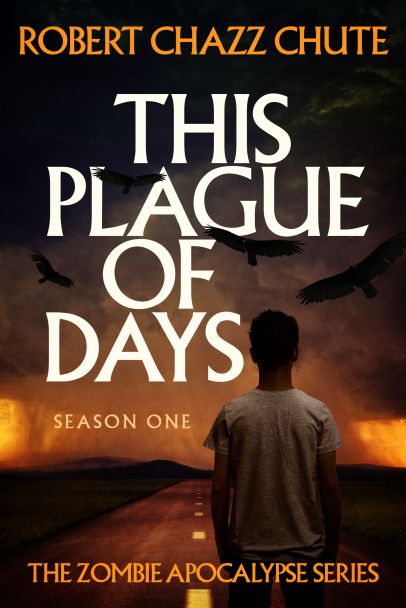
Too many books won’t be read, and not because they aren’t great. They don’t look good enough for a second glance. There are graphic design solutions. I just fired off an email to my solution, author and cover designer Kit Foster of KitFosterDesign.com. He sent me some samples of ideas for the cover of my upcoming plague thriller. One image was particularly strong and we’ll definitely go with some variation of that draft. You want great, not just good. Book covers are not easy. Unless you’re a graphic designer, get professional help with your cover. Maybe even then, you should outsource. Most authors who edit still need editors, so why don’t cover designers need another set of eyes on their book project?

Book art is hard to get right. With his first inkling about my book, Kit has already balanced out two opposing demands: We want readers to be struck by the uniqueness of the image on the one hand (and compelled by graphic design magic to buy, of course). However, the tone of the cover must also be so familiar that the reader will know intuitively and instantly to what genre the book belongs. Unique, yet familiar. Quite a feat, really, isn’t it? I’ve seen some indie authors insist they can do a DIY cover with PowerPoint. Looking at their cover art, I’m sorry, but I can’t agree. I want a cover that’s a delicious chocolate croissant, not a lentil and sewage burrito. I’m glad those writers can succeed despite their covers, but I’m sure they’d sell even more without the self-inflicted handicap of DIY delusion.

My discussion with Kit got me thinking again about what makes a great book cover. A solid title that grabs the

Click to get Bigger Than Jesus here

reader can make a difference. A recognizable name is bigger factor. If you have a bland, soundalike title (change it!) or haven’t broken through (yet), your best hope is a great cover image and hiring a graphic designer create it. As I’ve already confessed in this space, I experimented with DIY and I hurt myself. I’ve sold enough books in trad publishing that I know a good cover when I see one, but actually creating a decent book cover? Ha! No. I’m not the graphic designer. All hail Kit. He’s a book cover solution.

The problem I see with some book covers is they try to do too much at once. Covers are crammed, as if the author hopes the image will tell the whole story instead of giving the reader an intriguing taste and tease. It’s tempting to try that. I’ve almost succumbed myself, which is another reason to have a helmsman with a steady hand on the wheel to keep you from crashing into all those pretty icebergs. It’s tempting because, admit it, we still think we should pull in anybody and everybody who can read. In my opinion, that’s a mistake. I want readers who really love mystery and suspense mixed with witty repartee. All others need not apply because “all others” probably won’t like my books. That’s okay. You don’t like “music”. Our tastes are much more specific than that. You like neo-thrash synth-metal, industrial-Asian jazz fusion and Tom Jones singing It’s Not Unusual in a duet with the ghost of Tupac. Go after whatever your niche is. Instead of taking little bits from all over your plot and compressing them into a graphical soup, more specific, evocative and emotional images make compelling book cover art.

Please avoid a cover that only makes sense after you’ve read the entire book. The purpose of the cover is to seduce innocent virgins. Don’t require Holmesian cryptographic skills from people who aren’t even your readers yet. Before they are your readers, they are disinterested browsers. Convert them to actual readership with book covers that promise a secret revealed, invite them on a journey and make them hope for a braingasm. (Then deliver it when they actually buy it and read it.)

I see a lot of books where the author’s name is too small. That’s not an ego problem. That’s a branding problem. I understand how that happens. Readability is sacrificed so more elements can be crammed on the cover. It’s the Throw Everything at the Wall and Hope Something Sticks Approach. Take that cover down to thumbnail size and it’s not just readability that’s sacrificed, but legibility and sales. Kit goes with powerful, evocative images so we move toward covers that show and sell. I’m proud to be indie, but I want author name recognition in the long term. To do that, the cover has to look like a traditionally published cover. What’s common among trad published covers? Bigger author name tags.

For more on what makes a great cover, check out e-book cover design awards for insightful commentary that helps make better book covers and sells more books. Or just head over to Kit’s website and get going on your new book cover (or revamp an old one that isn’t selling. I did that with my DIY cover.) Kit Foster is a very helpful guy who does so much for authors at very reasonable rates. You’ve put so much work into your book. Give it a fighting chance to be read. Give your book, and all those virgins, a striking cover.

The paperback has arrived. For $9.99. Did you hear that? Distant thunder of the Book Gods mumbling to each other. Oooh, shivers!

Filed under: publishing, , , , , , , , , , , , , , , ,

UBC #28: The zero money approach to book promotion

Small-town terrors and psychological mayhem in Maine.
Reached #18 in shorts on Amazon!

Each morning, author Al Boudreau asks a question about the writing life and publishing on Facebook. This morning, he asked which we preferred: A big launch of our books or a soft launch? Other people have their own answers. Here’s mine, as I wrote it this morning:

My short answer is: Hint and be clever about promotion rather than try to spend our way to success.

Sorry about my long answer, but it could have been even longer: I used to work in trad pub, so I kept all details secret. Now I hint and promote a bit for upcoming books (especially those in a series because, knowing it’s a series, that appeals to readers more.) The hints comprise things like the odd progress report, tweeting love and my Six Words or Less Contest in which the witty and pithy winner will have his or her name in the next book in the series. That’s really selling the foundation novel as it promotes the next one.

[Wanna play? Scroll down the page for the SIX WORDS OR LESS CONTEST. Entry deadline, July 31.>

With respect, I think there’s still a bit of inertia from old to new model with thinking in terms of a big launch. Except for ARCs to media and long lead times on seasonal books, Trad publishing is much about keeping it under wraps and then blasting PR and promotion for a short period of time (in part because they have so many other books to move on to and because the obsession is short tail vending and beating quick return deadlines in bookstores.) We’re kind of like classical music. We don’t get rock star tours and roadies, but we can sell lots in the long term because our books are available until we evolve past the Internet and start reading each other’s minds. (Or heat death and an ugly extinction, whichever comes first.)

With long tail marketing, though we don’t have the resources for a huge launch with cap displays and buying bookstore space, all our energy isn’t spent in a tiny retail window, either. Publishers have largely abandoned big launches anyway. Most midlisters never get that dreamed of release party and all their publicity is really up to authors who thought they’d get more logistical support.

Our books can go up faster with low overhead and they are on sale forever.No returns. Rather than blast potential

“You will laugh your ass off!” ~ Author of Cybrgrrl, Maxwell Cynn

readers, I hint because I wouldn’t want to tire anybody out. “Oh, there’s Chazz talking about Self-help for Stoners and Kevin Smith again,” wears me out, too (hence more books are critical.) That’s okay, though, because we’re better at social media than trad publishing has been. Social media is personality based. Who cares what Random House’s twitter is on about? I want to hear from individual authors, not faceless corporate entities. Corporations are not people, my friend.

Big launches feel like putting all the chips on one roll of the dice, which is an awful way to start your trip to Vegas. I just hint and hope the dribble never becomes an embarrassing orgiastic fit or a drone. Just my opinion as the author of the hilarious crime novel Bigger Than Jesus. (See what I did there? Um…yeah. See, there’s such a fine line between fun promotion and self-loathing.)

Filed under: publishing, , , , , , , , , , , , , , , , , , ,

Ultimate Blog Challenge: Considering free ebooks

July 16, 17, 18

The Dangerous Kind & Other Stories is FREE 

FREE FOR 3 DAYS.
Small-town terrors and psychological mayhem in Maine.

Last week I read a couple of debates about whether free is good or bad. JA Konrath is all for it. Blake Crouch isn’t so sure. There are good points on both sides of the debate. You’ll notice I’m offering one of my short story collections for free for three days this week in the hope that I will gain some readers who wouldn’t otherwise find me. I do so wholeheartedly and hope you’ll go grab it. It helps to get on lists like “Customers Also Viewed…” and so on. This post is about book promotion. I think Free is still a useful tool, though its edge has dulled considerably.

The root of the back and forth on the issue of using free as a promotional tool seems to break down along two main lines:

1. Argument against free from principle (i.e. Art shouldn’t be devalued and lowering readers’ expectations of price is a stupid strategy in the long term.) Argument 1 might be right in the long-term, but if I don’t get into your consciousness now, there may be no long-term for me as a writer. Also, the exclusivity that KDP Select requires — three months at a time — rubs many authors raw. Amazon has certainly lost some of its shine and if you lose too many sales because you aren’t up on Kobo etc.,… as well, free days on Amazon probably don’t make sense past your first three months of offering the book. It’s also argued, often effectively, that free feeds the trolls of the one-star review brigade who review harshly because they didn’t pay attention to what they were “buying.” Or they’re just it in to be mean trolls, I guess. So you can argue that free hurts not only the cause of enlightened literacy generally, but it hurts author’s feelings and review ratings individually.

2. Argument for free because it works (i.e. If you can write, you can sell books, but not if no one knows who you are. Give away to get new readers.) Argument 2 is weakened because, since Amazon changed its algorithms, free doesn’t work nearly as well as it did a few months ago. People are loading up their kindles, but are they ever getting around to reading all that hoarded goodness so they could, theoretically, become a fan and buy the rest of my books? (If you don’t have multiple books for sale, free surely won’t help you now. Have multiple books going before you dive into KDP Select’s free days.)

So here’s my strategy:

A. I try not to confuse an Ought with an Is. The Dangerous Kind & Other Stories is a collection of fun suspense and small-town mayhem in Poeticule Bay, Maine. In the future, I plan a series of suspenseful novels set in Poeticule Bay. Many of my stories have characters who cross-pollinate other stories. (For instance, Jesus Diaz, my luckless Cuban hit man, shows up first in a story in Self-help for Stoners.) There is worthy cross-promotion in this.

B. I added value to this collection. The novella, The Dangerous Kind and several of the stories were previously published individually and sold for 99 cents each. I added two more stories to the collection, including the award winner The Sum of Me (which brought down the house when I gave a reading at a writers conference a few years ago.) The Sum of Me appeals to writers or anyone who has struggled with credit card debt. The usual price of the collection is only $2.99 and for three days, it’s free. Good deal.

C. What I put up on Amazon for free will only be available for a limited time. After my three-month exclusivity contract with KDP Select is over, I’ll put the books up on the other platforms. (As mentioned last week on this blog, Kobo, as one instance, is changing things up and coming on stronger. Keep an eye on them.)

Questions remain: When I read a guru with a big name say we should do this or that to sell our books, I wonder, does the same strategy work for a big name as a small one? Is every bit of advice fungible? Things change. If we were still on Amazon’s old Free List to Paid List formula (and maybe if we weren’t in the middle of a glut of free) I’d already be sitting pretty.

Good strategies are realistic, doable, measurable, timely (and are always declared “good” after the fact and without factoring in luck.) I’ll let you know if this strategy moves the needle.

Free might not be as good as it once was,

but now I don’t know what else to do to get off the bench besides write another book.

I’m already doing that.

PLEASE GRAB THE DANGEROUS KIND & OTHER STORIES HERE

Filed under: publishing, , , , , , , , , , , , , , , , , ,

UBC #14: Smart Free means Give it Away and Bank On It

I was really looking forward to using ACX.com to get my crime novel, Bigger Than Jesus, out there as an audiobook. Unfortunately, ACX isn’t ready to deal with non-US citizens yet. (Dang! Don’t hate me because I’m Canadian!) If you are a US citizen and an indie author, definitely consider ACX. It’s a great set up I learned about through Jeff Bennington.) Until then, I’m going to take the Scott Sigler approach to book promotion and podcast my books.

Scott Sigler was one of the first indie authors to podcast his books, chapter by chapter, and leave it up for free. He found, as he doled it out week by week, that lots of readers couldn’t wait a week for the next instalment. They wanted to buy the whole thing immediately. The strategy works and, despite all his success, Sigler continues to give the books away in audio form even though he’s now published traditionally. This podcast strategy flummoxed his publisher, whose sales force couldn’t understand how his sales kept going and going. Traditional publishing strategies don’t allow for free and expect spikes of sales followed by doldrums. That doesn’t happen with Sigler because he stays out there, available and free to sample and enjoy and building his fan base with, among other things, books as free podcasts. I should add that he’s a clever marketer, but the books are strong. No marketing strategy works if the writing isn’t strong. In fact, if your book is weak, good marketing may hasten its trip down to oblivion. That said, Sigler is a brilliant guy who keeps the free coming, but to maximum advantage. This isn’t Dumb Free: Give It All Away and Hope. This is Smart Free: Give it Away and Bank On It.

There’s another benefit to podcasting your book. The ebook of my crime novel is out now. I plan to release the Bigger Than Jesus paperback at the end of the month. Despite all the editorial eyes on the manuscript, there’s still a bit of tinkering I want to do before the print version is released. Last night, as I recorded another chapter, I realized there were still a couple of minor edits I wanted to address. Nothing that’s a huge deal, but we all want to get a little closer to perfection. Over the next two or three days, I’m doing a podcast marathon so I’ll have the whole book banked in its audio form. If there are any further niggles to tweak, I’ll find them. Reading your book aloud can be a powerful editing tool and, by podcasting the book a chapter at a time, I make the podcast do double duty.

Listen to Chapter 1 of Bigger Than Jesus now.

Filed under: publishing, , , , , , , , , , , , ,

Ultimate Blog Challenge: Top 10 Things I know I don’t know (yet)

THINGS I DON’T KNOW INCLUDE:

1. How to push my stats for my author site (AllThatChazz.com) as high as this writing blog (though spillover should be inevitable.

English: John Leguizamo at the 2007 Toronto In...

English: John Leguizamo at the 2007 Toronto International Film Festival. (Photo credit: Wikipedia)

Or should it? Not so far.)

2. How to get more attention to my podcast (though numbers have gone up since I started reading Bigger Than Jesus a chapter at a time.)

3. Have I put off more readers than I’ve gained with my strange titles?

4. Should I have pushed the title of Self-help for Stoners harder when I met Kevin Smith in a video simulcast, or would that have made me look like a douche?

5. If I’d started writing books seriously twenty years ago, would I be happier now, or trapped in contracts I’d hate?

6. Did John Leguizamo ever read the blog post about casting him in the movie of Bigger Than Jesus? Probably not, but we all go ego surfing from time to time, don’t we?

7. Will I ever get Scrivener to work the way it says it works when I format my books? So far I just play with it until I get incrementally better but so far it’s more like stabbing a keyboard in the dark than arriving at solutions logically.

8. Will Amazon look at the numbers and switch their algorithm back to the way it was in December so giving away a ton of books means something useful in selling books on the paid side? (When an Amazon fan like Joe Konrath says, okay, I’m out of KDP Select until they change terms, we should all take notice.)

9. Will my books take off before I run out of money completely? I am in a race. (I just got some help with this and things might be looking up if a strategy I’m working on takes off. More on that later.)

Get Bigger Than Jesus

10. I don’t know if my gamble/mid-life crisis will pay off. I do know I’m glad I pulled the trigger. I’ll find out. It’s better than not ever knowing and looking back in regret at what might have been.

(UBC #14)

Filed under: publishing, , , , , , , , , , ,

Ultimate Blog Challenge: I am an artist, not a beggar

A forum post out of the cyber-ether really irritated me,

and not just because the person who posted was biased against self-publishing.

She was horribly misinformed and self-centered.

Her complaint is about “all these self-published authors begging for likes on their Facebook pages” and that apparently angered her by…okay, I’m not sure how that could bother her so much. Cluttering up her world, I guess. The strength  of venom I detected is usually found in a rattler’s fangs. Anyway, let’s flesh out the ugly misconception in her deluded subtext:

1. It’s not just indie authors. All authors with a Facebook page ask for “likes”. The more important likes are the like and buy buttons of our Amazon pages, but we all want to be liked. Most traditionally published authors understand that their publisher’s publicists are already stretched too thin, are often less effective than publicity that comes directly from authors and what resources that are channelled toward their books tend to be minuscule and fleeting.

2. It’s not begging. It’s asking politely and you often get something in exchange, like free entertainment, free education (like this post) and books that are much cheaper than what you’d pay a traditional publisher. All my books are currently priced at $2.99. That’s couch change — an impulse buy — for professionally published books. For less than the cost of one Starbucks coffee you get hours of entertainment I am happy to provide. I am an artist, not a beggar.

I’m not asking for loose change in exchange for nothing. I’m offering you a chance at relaxed Sunday afternoon with a book when it’s too hot to go outside; a cozy read on a winter’s night when you can’t sleep; suspense that won’t let you go to sleep;  a euphoric discovery that will delight you and might even change you. Yeah, you betcha that’s a bargain. If you refuse, no hard feelings.

3. Providing you with information or the opportunity to help out is not spam. It’s a question you don’t even have to answer. Get over yourself or turn off your Internet connection and take a break. I’m sorry the world isn’t catering to you. It’s not catering to me, either, but I suspect I hate fewer people than you do. I’d define spam as bombarding people with ads that provide no value, are out to scam you and a steady stream of blaring that gives you no opportunity to opt out. (i.e. You don’t get to complain if you decide for yourself you’re going to read it.)

4. Ignoring  the request takes nothing from you. Simply ignoring a request takes the bare minimum of tolerance. This person must be a nightmare in real life. How would she handle a real problem?

5. Why all the animus toward authors? Helping out costs nothing and I don’t think authors have any bad feelings toward those who don’t bother to “like” their books on Amazon, click “Agree with these tags” button on Amazon (it’s toward the bottom of each sales page) and “like” their Facebook page. (Thanks for helping to spread the word. And if you didn’t, no hard feelings.)

6. Ads are only irritating if you aren’t interested. On the computer, I click away. If assailed by the TV, I ignore it, fast forward, check my email or get up from the couch and get a glass of water. Indie authors (well, everyone) deserve more compassion than the complainer was willing to bestow. Sadly because the complainer might even love our work if she gave it a chance.

7. Despite my frustrated tone here, I know authors are not entitled to sales any more than Wal-mart or Toyota “deserves” your sales. We don’t even “deserve” your attention. That’s the myth of the entitled author I hear so much about. I honestly haven’t met many authors who suffer that delusion.

We get it. It’s a book. To most, “just” a book. We write them and lots of people don’t care. A lot of people don’t even read! Still, we stand behind our work and hope to find our audience. We hope our audience finds us. If I’m speaking to a crowd, I’m not speaking to everyone and I know it. Please be patient and polite while I direct my audience toward my books. I promise I won’t take long doing it and I’ll be as entertaining and quick as I can as I ask these things. You can always opt out.

Whether you’re indie or traditionally published, the promotion for your book really is up to you, your tribe, your followers and your readers. Publishers do very little for most authors. Stephen King gets a big promotional budget. That’s right. The authors who need the promotion least get the biggest boost because it’s a simple business decision: the publisher banks on the biggest title. Big publisher or small, these are the evaluations we all have to make.

I make that same evaluation every week. I have two very new titles just released in June. One is a short story

Get Bigger Than Jesus

collection bundled with a novella, The Dangerous Kind & Other Stories. The other is my crime thriller, Bigger Than Jesusthe first in a series. Which do I spend my limited resources promoting? Obviously, the crime thriller.

No short story collection will sell as well as a thriller. In all likelihood, my short story collections’ sales (there are three collections in all) will come after readers decide they like my flavor by discovering the novel. Some of the stories include characters and references that cross books, so there’s cross-pollination going on, too.  The short story collections are great, but they’re harder to sell (though they will be a valuable long term sales avenue.)

Yes, we have to interact and connect and make connections and help others to be heard.

Endure a little promotion amid all that for art’s sake.

Everybody’s trying to make a living

and civility is the grease to the gears of civilization.

Filed under: publishing, , , , , , , , , , , , , , , , , , , ,

Ultimate Blog Challenge: Writing Books on Writing

Can writing be taught?Sure, but what most people mean by the question is, can anyone write to a professional level? One

On Writing

On Writing (Photo credit: Wikipedia)

newspaper colleague of mine insisted that it was something you were born with or you weren’t. I think the desire to immerse yourself in writing might spring from a quirk of genetics, but after that it’s up to you.

Certainly, anyone’s writing can be improved. Eliminate excess adverbs and don’t strain a metaphor until it breaks and you’re off to a good start. I’ve taught a couple of writing classes now and I suspect that writing skill is self-selecting anyway. If you aren’t interested in writing to begin with — as it is with anything — you probably won’t improve much. The best training in writing I got was first to read extensively early on. In my childhood home, books were a big deal and they still are now that I’m supposed to be a grown-up. Toward the end of journalism school, I think the best training I got in writing was to write copiously for a daily newspaper with feedback from editors.
There are a ton of books on writing advice and I’m sure I’ve read just about all of them. Reading about writing is often less about learning something new (there’s not really that much new to say about craft, is there?) as it is confirming my thoughts, feelings and biases. Sometimes a unique idea will rise out of that reading. Mostly I read writing advice books to enjoy the voice and the company of likeminded writers and to find inspiration. It’s motivating, yet cozy as a warm blanket, to read a book on writing advice and think, “Yes, I agree. I’m doing that. I could try that. I should go write some more now.” I end up reading writing advice for the same reasons I drink coffee. It’s a stimulant that makes you feel warm inside.

That’s ultimately why I decided I will soon add to the tonnage of writing advice books. Some books are very specific and prescriptive about writing. Others give excellent advice and strategies for marketing for the indie author (like Jeff Bennington’s intrepid Indie Author’s Guide to the Universe.)

Mine will be a softer approach for newer writers, like Bird by BirdI’ve gone back to Stephen King’s On Writing again and again. These are the books that told me I wasn’t alone and this wasn’t so hard or crazy if I just pecked away at it. It was simply craft and there isn’t a secret besides sitting down (or getting on my treadmill desk) and doing the work I knew I could do.

The aspiration for this book is more modest than some who take a step-by-step, flow chart approach. My book on writing will be inspiration for the new indie author, much of it drawn from posts on this blog. Early on I linked to others less and wrote more about craft (instead of focusing on marketing the Indie Author Revolution as I seem to do now.) I selected the best and most useful posts from over 900 articles on ChazzWrites.com, then added to them, wrote some new stuff and edited again.

My book won’t be as ambitious as some who (may Thor bless them) give strict advice on what to do and how to do it. My ideal reader will be a writer like me who wants to grab a steaming coffee, curl up in an armchair and read Crack the Indie Author Code: Aspire to Inspire (yes, that’s what I called it and yes, it’s coming soon). Readers will find an ally, inspiration and company on the journey to publication. For me, the work is about the writing first and foremost. The real fun happens in our heads as we write and nurture that spark of inspiration into a flame that throws light and heat. I’m happiest at my keyboard hooked up to the coffee in the intravenous drip.

Do I think writing can be taught? Sure. If you want it enough to bother to go looking for the education, that’s the cardinal sign and symptom that you’re already infected with the writing bug, anyway.

Filed under: publishing, , , , , , , , , , , , ,

Author Blog Challenge 20: What writers owe (and an insider secret is revealed)

Garley the Persian cat

Garley the Persian cat (Photo credit: arash_rk)

I used to dream that when I finally became an author, I’d write a short acknowledgements section to myself. “Screw you all!” I’d scream. “In your face! I did this myself and I don’t owe anyone anything! Ha!” Then I’d retreat to my hermetically sealed office under a volcano within my island fortress guarded my my loyal ninja monkey assassin clones. I’d have a monocle and a white Persian cat to stroke while I ordered Hellfire missile strikes to rain down upon my enemies. As you can only imagine, that’s almost exactly what my life is like except for the thing about acknowledging people who have helped me on my publishing journey. Unexpectedly, I have the attitude of gratitude. I’m happy to have a deep stock of Hellfire missiles to protect my tropic realm and I’m grateful for all those people who have assisted me in putting out my books.

Yesterday, after my big free promo day, I sat down and wrote a little letter to a bunch of people who have been helpful along the way. Somebody slipped me some dough so I could keep going. Someone else helped me with formatting the first time I attacked the beast. Others were consultants about suitable explosives…”Um, for my crime novel’s plot!” he added hastily.

A lot of people have the wrong idea about self-publishing.

They focus on the self part.

Hitchcock said that a painter only needs a brush and a writer, a pen, but a film director needs an army. These days, indie writers need small armies, too, and many of them are volunteers. 

The key thing is: self-publishing is still publishing. You either need a graphic artist or you need to be one. You need to learn a lot about tech and promotion as well as craft. You can write a good book, but if it has a lousy cover, no one will read it. (The converse is also true, of course.) That’s why I prefer the term “indie” to “self-published”, though to the consternation of a few angry people, I do use those terms interchangeably as a concession to common parlance.

My Beta readers are volunteers. I’ll pay them in lollipops, acknowledgements in the book, a copy of the paperback and, when they’re ready to go indie, I’ll be a resource for them, too. I’m confident each of those readers could write a book if they decided to do so. I’ve thanked them all, for what that’s worth. So far all they’ve received is a book they enjoyed for free but I’ll be sure to get those lollipops to them.

I did find an unusual way to make one person’s day though. If you’re writing a book, you may wish to consider doing this (with their permission.) A great buddy of mine is undergoing treatment for cancer. It’s been a scary time that he has handled with a calm and class that I am sure I could never muster. This guy is one brave SOB. As I was writing the first draft of Bigger Than Jesus, I used his name for one of my characters.

Funny story: I called him up on Skype to ask him if I could keep his name in the book. His microphone wasn’t working. He could hear and see me but I could only see him. However, that worked out for the best because he pantomimed his approval. When somebody is that sick and you can make them laugh and smile as much as he did by putting him in your book? Why wouldn’t you? He loved the idea and showed lots of energy in giving me a thumbs up that made me laugh (and, truth to be told, a little weepy, too.)

I talked to him on the phone the other day. Things are looking up and we’re optimistic that one way or the other, he’s beaten it. Not only will he live a long life, but in a way that is tiny and totally useless except for good feelings and a funny exchange on Skype, he’s  immortalized in literature, too. I’m very grateful my buddy will be around to enjoy all the novels in The Hit Man Series and everything else I write. I’m most happy about that.

If you’re reading the Bigger Than Jesus,

my buddy is the guy wielding the SPAS-12.

Sh. Keep it to yourself.

Filed under: publishing, , , , , , , , , , , , , , ,

Bestseller with over 1,000 reviews!
Winner of the North Street Book Prize, Reader's Favorite, the
Literary Titan Award, the Hollywood Book Festival, and the
New York Book Festival.

http://mybook.to/OurZombieHours
A NEW ZOMBIE ANTHOLOGY

Winner of Writer's Digest's 2014 Honorable Mention in Self-published Ebook Awards in Genre

The first 81 lessons to get your Buffy on

More lessons to help you survive Armageddon

"You will laugh your ass off!" ~ Maxwell Cynn, author of Cybergrrl

Available now!

Fast-paced terror, new threats, more twists.

An autistic boy versus our world in free fall

Suspense to melt your face and play with your brain.

Action like a Guy Ritchie film. Funny like Woody Allen when he was funny.

Jesus: Sexier and even more addicted to love.

You can pick this ebook up for free today at this link: http://bit.ly/TheNightMan

Join my inner circle at AllThatChazz.com

See my books, blogs, links and podcasts.

Enter your email address to follow this blog and receive notifications of new posts by email.

Join 2,063 other subscribers