C h a z z W r i t e s . c o m

See all my books at AllThatChazz.com.

Ebook pricing, free promotions and you

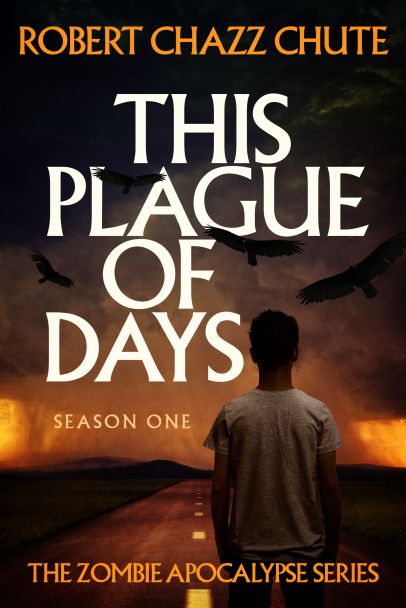
The complete first season is FREE for two days. Click now.

The complete first season is FREE for two days. Click now.

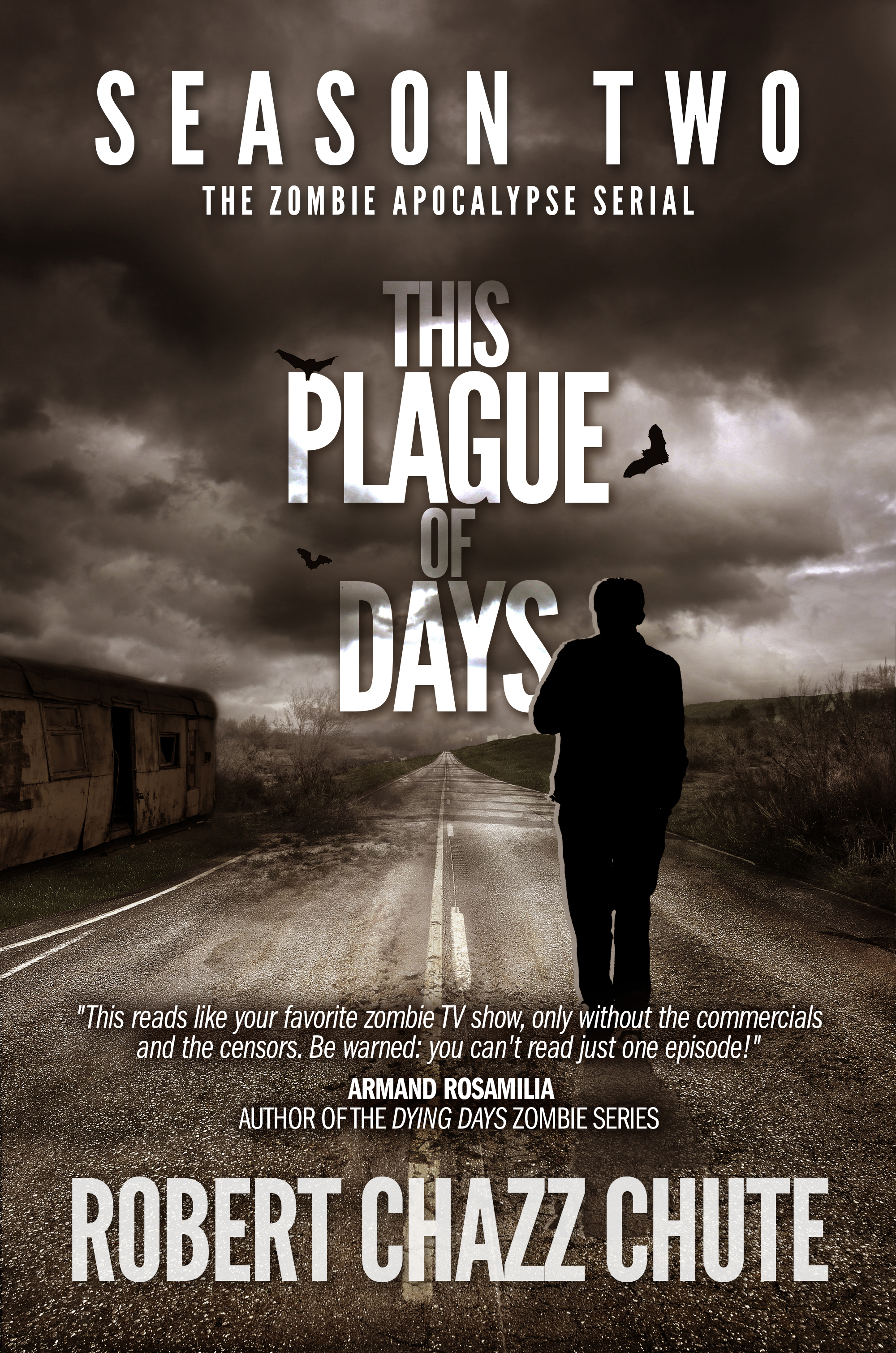
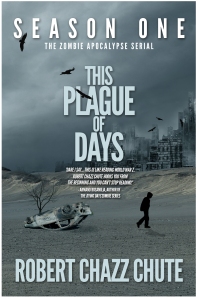
Generosity feels great and, in this incarnation of the book business, generosity is a marketing strategy if done right. Today, a giveaway and a case study in real time. (If you don’t know anything about This Plague of Days, check out ThisPlagueOfDays.com for sneak peeks.)

I released This Plague of Days, Season 1 as a serial. There were many reasons for doing it this way. I wrote it like a television mini-series and serialization opens up marketing opportunities. On the first day of Season One, I published the complete first season and Episode 1. Four more episodes followed each Monday. The episodes sold for 99 cents each or readers could get the whole season for $3.99.

For my initial giveaway, I put the first episode up for free for two days. I don’t believe in long promotions. By the time you’re done more than two days, you’ve exhausted your connections and momentum slows. I gave away about 1500 downloads of Episode 1 and stayed at the top of the Post-apocalyptic and Dystopian charts on the free side of Amazon for those two days. It’s really exciting sitting at #1 and #2 beside Hugh Howey.

An interesting thing happened next:

A bunch of readers liked Episode 1 but they stuck with the individual episodes. I watched my dashboard charts light up green with sales of Episodes 2, 3, 4 and 5 as people who got Episode 1 for free worked their way through the serial. The complete book of the season sold a bit, too, (at $3.99) but it seemed for readers to jump from episodes to the season at once, the discount would have had to be even deeper.

Pros and Cons of This Strategy

Pro: I gained a bunch of reviews for This Plague Of Days. Most readers dug it.

Con: Readers of Episode 1 only see the dad is an atheist and they may not stick around for the sweep of the story’s longer arc. The atheist dad has doubts about his lack of belief and his religious wife has doubts about her faith. I don’t dump it all in Episode 1 so, with serialization, you get judged by what you lead with. I’m not complaining. If you do something similar to what I’m doing, stay true to your vision, but don’t expect everyone to wait patiently for the payoffs later on. I have secret seeds planted in Season One that don’t bloom until Season Three.

Con: You’ll always get your worst reviews from free promotions.

Con: Some people who click free will never click “buy”. (Actually, that’s unfortunate, but it’s not really a “con” per se. I mention it because I anticipate resistance to these tactics. However, it’s not a true deficit in that it’s mostly irrelevant. These readers aren’t in my long-term equation for the same reasons the cobalt industry, Cadillac and Vera Wang don’t target me as a customer. Just as I’ll never be in those businesses’ target demographics, I’m hunting for converts, not free book shelvers.

Pro: All those downloads got me Also-bought listings and Amazon started selling the book for me with their mailing list. That’s a major plus on the brand visibility side of the argument.

Pro: As summer sales of Season One ebbed, I saw the momentum from July evaporate. I did what few say makes sense. I put the price up to $4.99. No one’s buying the episodes now, but they are buying the complete first season at the higher price. That could indicate that Season One was underpriced. Probably, but as I’ll argue below, that’s okay. I’m in this for the long-term. Discoverability is more important than sales for now.

What I’m doing differently for Season Two

In This Plague of Days, I’m trying to give a B movie an A treatment. To get traction for an unknown serial aimed at a smart crowd in an unfamiliar format, I think the starting price was fair and good for Season One. If you didn’t jump aboard before, for two days only, Season One of This Plague of Days is free to download on September 18 and 19th. (If you love it, please review it.) Season Two will also have some bonus material in the back.

Why give away an entire book? Isn’t that evil and the death of literature?

Season One is the gateway drug to Season Two and, for two days only, the first taste is free.

I’m using Freebooksy and Bookbub to let the world know. This publicity does cost money, potentially a few nasty reviews and maybe I’m leaving money on the table. However, it will get my name and Season One into the hands of at least 5,000 people. (If that doesn’t sound like much to you, consider that 5,000 paid sales equals a bestseller in Canada. I expect to hit #1 and #2 again and have some sales momentum behind me as I slide into the October launch of Season Two. This is marketing as an exercise in delayed gratification. I’ll sell more of Season Two because I’ll get more readers in on the ground floor of the serial. Besides, it’s a one-time only sale. Most readers will find the cash for the full price under their couch cushions, so let’s not get too dramatic about the losses or gains.

To put it another way, a la Seth Godin, “Too many people are reading my free ebook is not a problem” (as long as there are other books to sell.) To paraphrase author Cory Doctorow, Free isn’t my problem, “obscurity is my problem.” And finally, I quote myself for emphasis, “Generosity feels great…(and) discoverability is more important than sales for now.”
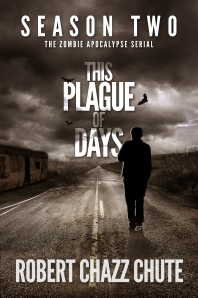
Season 2 launches Oct 1.

Season 2 launches Oct 1.

The Rationale: Season Two of This Plague of Days launches in a couple of weeks.

The story and the virus evolve together. This time out, TPOD has a different pace. Season One was like a television serial. Season Two is the action movie. It gets more paranormal and it’s loaded with surprises, chills and blood spills. Expect new villains and more twists from Ireland to Iceland to the Indianapolis Speedway. You’ll see the invasion of New York, the Midwest and the terrible events at Canada’s border with Michigan. It’ll sell for $4.99 this fall. In a month or so I’ll do a giveaway of Season Two, Episode 1 only.

Eventually I’ll put This Plague Of Days across more platforms and go for a price match so Episode 1 of Season One will be perma-free. I’ll experiment with price points, but the complete Season Two will never go free. The law of diminishing returns kicks in if you’re trying to get people to jump into the middle. (Ironically, you could jump straight into Season Two without reading Season One and you wouldn’t be lost at all. However, people don’t believe that. I never got into Ally McBeal because I missed the first episode.)

About Audiences

People who love zombies were very patient with Season One. The zombies don’t show up immediately but the dread keeps rising so I guess the suspense satisfied them until the heavier horror kicked in. They don’t have to wait for any action in Season Two, so I expect this phase of TPOD will go big all the way to Christmas (especially as other promotions kick in.)

The other thing that surprised me was how readers with family connections to autism, developmental delays and handicaps responded to the story. The protagonist is on the spectrum and those readers enjoyed seeing the world through his eyes. It’s not a long screed (and certainly punchier than this post) but those readers responded well to discussions of what it’s like to be the parent of an autistic kid. The family loves Jaimie, but they don’t romanticize his disabilities and his sister treats him like a normal kid treats a sibling who is often difficult to live with.

About Price Resistance

Selling episodes at 99 cents with 30% to me won’t keep me in cat food, but it did help with visibility. I gather those who started buying episodes in Season One will mostly choose to get the complete second season so they can find out right away what happens to the Spencer family and the British refugees.

It seems the greatest resistance to price increases lay not with the readers, but with yours truly. More readers are discovering my books at higher price points. I guess those higher prices make them confidant I know what I’m doing. So, while I’m still advocating short-term discount promotions, the trend with all my book prices is for them to climb. Done right, with a giveaway of sufficient numbers, free can still work. If I thought I could get more traction on other platforms, I’d try a different strategy. However, regarding promotion, it appears the other platforms are still lacking.

If you’re reading this on September 18 or 19th, 2013,

grab your free copy of the complete first Season of This Plague of Days here.

And please tell a friend. Thanks!


Filed under: author platform, Publicity & Promotion, publishing, , , , , , , , , , , , , , , , , ,

The Secret Alphabet of Independent Publishing

"You will laugh your ass off!" ~ Author of Cybrgrrl, Maxwell Cynn

“You will laugh your ass off!” ~ Author of Cybrgrrl, Maxwell Cynn

A is for All of it, which is what we want. (A used to stand for Agent.)

B is for Book, of course, and ebooks are “real” books, too. Literature is about the content not the container.

C is for Cutting prices. It would be bad for writers, but at 70%, we’re still getting paid more per unit sold than in traditional publishing. Also, price cuts sure make now a great time to be a reader.

D is for Deadlines. Don’t take forever to write your book. More time procrastinating doesn’t make a better book.

E is for E-books on E-readers. But you know your kindle is a transitional device, right? The phones are getting bigger again and tablets are coming down in price. We don’t want a device to do one thing. We want one device to be a web surfer, camera, phone, app catalogue, music box, GPS, ebook reader and best friend on our hip.

F is for Future. It’s the direction to look. If you don’t like it, you can change it whereas the past requires an annoying child named Sherman, a dog named Mister Peabody and a Wayback machine.

G is for Guidelines, because guidelines are malleable. There really aren’t many unbreakable rules worth obsessing over. You already know the rules because they’re obvious or you ignore common sense or you’re a slave to unthinking tyranny. The cool kids prefer more options.

H is for Hope. It’s good to have some, especially in this business. When there’s no reason to have any, that’s when you need it most.

I is for Intermediator. Have as few of these as possible. Upload your books yourself if you can, or get help from an independent contractor. This will allow you more choices of forks down the road.

J is for Just you. The myth and prejudice against independent publishing is that’s it’s just you. You are alone, except for the editors, graphic artist, beta editorial team, volunteers, publicity teams and whoever else you can hire or cajole into helping you get your book discovered. Sure, other than that little cyclone of industry, it’s all you.

K is for Killing characters. Killing someone readers love who they were sure would make it to the end? Delicious. (Note: killing darlings is overrated.)

L is for Love. It’s why we write. If you have other motivations, that’s fine, but releasing dopamine as you create is, like reading, a very rewarding addiction. The biological pharmacy in your brain simulates love. Endorphins won’t land you in a dirty rehab unit with a roommate who won’t stop telling that story about the time he tried to get high on burnt bananas and smoking his own hair.

M is for Money. It can happen, but probably not so don’t write for money. As above, write for love. If money does happen, people will resent you slightly less when you claim you never expected it.

N is for Naysayers. Most of them will never write near as many books as you will. Just say no to naysayers. If you sleep with your naysayer, someone’s in the wrong bed.

O is for the Obsession to know things. It seeps into the writing so you can drench your fiction with non-fiction and trenchant verisimilitude. For instance, This Plague of Days, Season Two weaves the Apocalypse with interesting tidbits about Irish legends, military history and the mortal wounds inflicted by the blue-ringed octopus. Mine is the only zombie/plague/autism story that teaches you Latin in an entertaining way, guaranteed!

P is for Portent. Warnings that something big is about to happen are especially fun when you give readers an earnest warning and they still don’t see it until it coming. They’ll only see the clues in retrospect. Secret trails to revelation and love of language are why people reread books. Do it well and someone might think your book isn’t just suspense, but maybe even “literary” or (praise Thor) “important”.

Q is for Quitting. If the project is wrong, quit. If it’s right and you’re just whining, quit whining and finish it. If you aren’t excited to write this book, find another you will be excited about all the way through or for our sake, please do stop. 

R is for Ripoffs. It’s a minefield out there: Fake agents who try to make money off reading fees; publishers who won’t pay; people who use disreputable business practices and call them policies. (R is also for Research. It’s how to avoid R is for Ripoffs.)

S is for Sustained Action. Promoting your work need not be an exhausting blitz. Dig in for the long game and promote at a slower pace. Don’t promote the same stuff to the same audience all the time lest you exhaust them. Keep writing new books. Don’t pin your hopes to one book. Sure, you might accidentally hitch your wagon to a star, but chances are excellent you’ll hitch your wagon to a stump, especially if this is your first rodeo.

T is for Trying. You’ll hate yourself if you don’t try. Losers will hate you because you did try. That’s why they’re called losers. They work from a different definition of failure than you and I. They confuse boring with winning.

U is for Unpublish. If something isn’t working, take it off the market and replace it with your tweaked story, new cover or new edition. Unlike traditional publishing, you have more options. You can adapt. Ours is a different, more flexible, business model. Use that advantage.

V is for Victory. There is no victory. Banish the concept from your life. There are only ups and downs and we’re all trying to make more ups.

Victory is very useful in fiction, however. Readers want to escape real life’s mundanity so it makes them happier when the protagonist achieves victory at the end of a story.

To go all Conan and see your enemies driven before you and to hear the lamentation of the Evil Mort from Accounting? That’s fiction. Working in a cubicle farm with no hope of retirement while Mort gets promoted and vacations in Brazil? That’s real. The real-life Mort is why we all crave escape into stories.

W is for Wit. They say brevity is wit’s soul, but I can take a pounding of wit in dialogue all day and all night, Mr. Sorkin.

Please note that snark is not quite wit. That’s a blunt tool meant only for peeling the outer layer of flesh. Meanness is the opposite of wit. That’s a blunt fool’s weapon. Wit’s funny and smart. When that sword cuts, we see light flashing down the steel blade. Wit allows the victim to take the hit and nod, “Touché!” with a smile.

X is for X-ray vision. All writers have this power. I can see into purses and pockets and the lives of strangers at the mall. I can work backward or forward to tell you who they are and their story of heartbreak in their senior year of high school. I diagnose disease at a distance. I know what you did last summer. I can give your life history and your death meaning, so do not screw with me.

Z is for Zero. It’s what we’re paid for writing. We are never paid for writing. We write for love, remember? If the money ever arrives, we’re paid for putting up with dehumanizing reviews, pretending to take them well and staying silent about them forever. We’re paid for the sad paperwork at tax time. We’re paid for the sting when someone sneers with casual cruelty, “So, are you a big deal yet?” We’re paid pennies an hour for the sacrifices our loved ones make so we can keep writing. 

Writing a good book is a happy, selfish act for the writer.

We are addicts, helpless in our defiance and desperate to monetize our work so we can have the freedom 

to score more of Creation’s sweet biochemical cascade.

Escape reality. Get high on a story.

~ I am Robert Chazz Chute, the author of Self-help for Stoners and this was the high I was talking about. This Plague of Days, Season Two scintillates brains October 1. Get Season One and check out all my books here. I hope to be your favorite candy man one day.

Filed under: author platform, Publicity & Promotion, publishing, Writers, writing tips, , , , , , , , , , , , , , , , , ,

Writers: Are you sitting on the money?

They call it the Cliff. You can do Author Marketing Club and Bookbub and free promotions and blow giveaways out the digital door. You can even start catching fire and getting traction and selling books for (gasp!) actual money. Then, the fall from grace comes. Sales drop off, often steeply. What happened? You ran off the Cliff. Lots of people do. In this post, we’re going to think about climbing back up and promoting our previous works again (and doing it better this time) because I suspect we’re sitting on money.

I’m rethinking the old marketing paradigm that’s always oriented to what’s new. 

It’s the thing we should question most: accepted wisdom. Despite all my efforts, old wave thinking is still permeating my brain. In traditional publishing, you get a short window to get traction and then the bookstores return your books to the publisherCrack the Indie Author Code for credit. That’s the structure of the short tail market. In long tail marketing, our books are up forever (or at least until the cyber war brings us all low). Still, we tend to think of our books as hitting big (or not) and then the graph points down. We’re mimicking thinking and marketing patterns from traditional wisdom because all old ideas are awesome, right? Oh, wait…

Case #1

I’ve been meaning to do this for a while and by not sleeping, I’m finally getting to it. I pulled Crack the Indie Author Code and Write Your Book, Aspire to Inspire from print. I didn’t like the look of the interior design. I’m fixing them and will make Crack the Indie Author Code available in print again soon. (They’re both still out there as ebooks.)

Self Help for Stoners JPEGCase #2

Self-help for Stoners was my first book. It’s funny and strange and with an intermediary. I used Bookbaby for that collection and I want to get it back at Ex Parte Press and put it out myself. I’m sure I can make it go higher once I have full and instant control of the marketing. I queried Amazon about the process today because I’m afraid of losing the reviews. Either way, I do need to steer my ship and reach out to stoners and non-stoners, alike and anew. (If you’re a Bigger Than Jesus and Higher Than Jesus fan, my luckless Cuban hit man appears first in Self-help for Stoners, by the way.)

This post won’t help you much if you only have one book to sell, but here are my thoughts on renewed marketing efforts: 

If you have one book, write more. No whining,

If you have a backlist, who is to say what’s old and what’s renewable? You’re the one to say.

If you have a bunch of books, I bet you’re a better writer by now. Why not revisit those books and do new editions?

Consider the power of bundling books. You could enliven your Amazon dashboard with more happy green up arrows. Stop sitting on the money.

Lots of people missed your fledgling efforts the first time. You didn’t know what you were doing. Who did? Any book they haven’t read is new to them. 

The most powerful promotions tend to be the first ones. But maybe that’s because we don’t put the same marketing efforts into books we published a couple of years ago. In digital, the term backlist is less relevant. As long as it’s clear it’s a new edition or a new launch or you’ve added material, what’s the problem? 

Maybe those early efforts flopped because you had a lousy cover. Get a new, better cover* and launch it right this time. With all you’ve learned about marketing since your early efforts, it’s bound to do better, right?

Most fiction doesn’t get stale. Our efforts get stale because we want to focus on the new thing. Maybe the old thing is only old in your mind. With some tweaking, a fresh edit and a new campaign, you might have a book people will love and buy. Reuse, recycle, repurpose. Turn short stories into collections. Open up to new possibilities with prequels to your books. Tie books together. Add to your series. Serialize. There’s plenty of fun to be mined in what you’ve already accomplished.

Your problem with these suggestions isn’t necessarily that my head is full of feathers. Your problem is the same as mine. This will take a lot of time and you feel you’ve already covered this ground. But most of us didn’t cover this ground well the first time. There are new promotional tools now. Yes, time management can be tough and we can only do what we can do. But that’s business. We are not special snowflakes, but we’re letting good stuff go cold.

*About good covers, I know a guy. He’s Kit Foster of KitFosterDesign.com. He’s an award-winning graphic artist with an extensive portfolio who works well with indies and traditional publishers. Like my covers? Kit did them all. Check out his site. You’ll be glad you did.

Dark Higher Than Jesus banner ad

Filed under: author platform, Books, ebooks, Publicity & Promotion, publishing, , , , , , , , , , , , , , , , , , , ,

Writers: Are you in the echo chamber?

I love my writing community here. I’ve learned a lot from others and, as indies, we share a lot of information. We’re a generous bunch with each other. I appreciate your comments and participation on my little writing and publishing blog. Because I’m a sweet bunny pooping love everywhere, I have to tell you something with love:

Writers talk to other writers too much. We must talk to readers more.

Let’s make this go down easy by using an example from another industry.

When massage therapists try to figure out their businesses, they ask their peers and senior massage therapists for their opinions. They want to drink from the well of experience. It’s a good notion that frequently goes awry. Their peers are often as clueless as they are and senior therapists either don’t have the same problems or their advice is out of date. Take pricing, for example. They’ll set fees based on what they’d pay. But many massage therapists would never pay for massage. They don’t have enough money or they swap treatments with other therapists. Massage treatment is for people with real jobs and insurance coverage, not us.

Stick with me and hold my hand, because this is about to get uncomfortable.

Writers need to listen to readers more.

Sadly, writers often don’t have much money to spare so we use libraries or search for free a lot. Most of us buy books when we can, but with budgets as tight as they are, we’re often not your audience. As a result, many of our industry’s book prices are artificially depressed. We’re asking the wrong audience what we should do. (I’ve taken this advice. I just raised prices on some of my books and generally, the trend will be up.)

A veteran writer who’s “made it” (whatever that means) often doesn’t know all the variables that contributed to his or her success. If someone coasted to indie success from a high in traditional publishing, they can’t tell you much about the current scene. Precious few people attribute any of their success to luck. It had to be their sheer brilliance. However, many of us are brilliant and we’re still eating boot soup.

So, what not to do?

If you don’t tweet others at all, you may as well be on Mars.

If you rarely check your direct messages, you’re in the bubble.

If you only check your mentions on Twitter, you’re screaming into the echo chamber.

If you follow three people and two of those are your other Twitter accounts, you’re only hearing yourself plus you’re a raging narcissist (and not in a good way).

If you only have conversations with people who don’t buy books, you’re surveying the wrong people.

If you only speak to people who “buy” free books, you’re engaging the wrong audience. (Readers who buy with money instead of a click are often suspicious if your book is priced too low, for instance.)

If you don’t take new information in and seriously consider change, you’re for slavery. (Your own.)

If you do have conversations with readers from time to time and you talk about them, you’re on a smoother path.

If you don’t cultivate supportive friends, you’ll be alone, surrounded by fiends and without a fire ax or holy water.

If you only attend conventions with other writers instead of fans, you’ll have a great time talking to people who agree with you: “Wow, it sure is hard to connect to new readers!”

If you never get out and talk to real people in the real world and only connect with people on a safe and cyber basis, who will you learn to hate so you can kill them in your next novel?

If somebody says, “I prefer paper books,” and you reflexively say, “How Amish of you! Ebooks are the only future!”, that was kind of funny, but you should be listening instead of cracking that same joke open again. It’s rotten on the inside.

If you say all this social engagement is too hard and it takes away from your writing time, I’m sorry. I thought you were writing to be read. Get a calendar or time management software. At least tweet or email during commercials.

If you immediately dismiss everyone with whom you disagree, you’ll never learn the secret to…well, anything really. Plus, you’ll come across as a jerk.

I’m not suggesting you allow me or readers or reviewers or anyone else to run your life. I am saying that if you recognize yourself in this list and it gives you that squirmy squirts feeling, adapt accordingly. Listen.

You should listen to me. I’m a writer.

Filed under: author platform, getting it done, Publicity & Promotion, publishing, Rant, readers, , , , , , , , , , , , , , ,

FAQs: How to write books agents will hate (but readers might love)

My luckless hit man is a funny guy in big trouble.

My luckless hit man is a funny guy in big trouble.

Yesterday I told you how a well-meaning friend with experience in traditional publishing gave me advice I thought was askew. As we struggle to gain traction in the marketplace, we get a lot of well-meaning advice we can’t take. (You’ve probably read that sort of advice here from me.) My friend’s other foray at saving me from myself was to tell me to court agents. “With World War Z, zombies are big this summer! Find horror agents and get traditionally published!” he said.

It’s not that it’s necessarily bad advice. However, it’s bad advice for me. Here’s a list of the things I do in my books that repel agents like fried bat armpits at the wedding feast:

1. Bigger Than Jesus and Higher Than Jesus is written in second person, present tense. Unconventional scares agents away. They’re trying to make money after all. I don’t blame them, but I’m in the Art and Brain Tickle business first. I have this crazy notion that being me will lead to making money. Eventually.

2. The assassin/anti-hero in the Hit Man Series is neurotic and afraid of women. (Name another hardboiled gunner who has that problem. Take your time. I’ll wait.)

3. My hit man suffered childhood sexual abuse. He’s also hilarious. Those elements rarely sit side by side comfortably.

4. Hardboiled isn’t selling hard right now. Or is it humor? Or is it action adventure? Easily classifiable is really important to a lot of people who aren’t me.

5. The titles may offend some Christians, especially since it’s crime fiction with a lot of swearing.

6. The titles are confusing until you understand that the assassin, Jesus Diaz, is Cuban and it’s pronounced “HAY-SOOSE”. In fairness, agents and publishers should be repelled by these titles. It wasn’t the best strategy because any title that requires explanation sucks. After two books, I’m committed and in love. I also have a plan around this problem after the next novel in the series is published early next year.

7. In my zombie series, This Plague of Days, the zombies aren’t “true” and “traditional”. It begins with a flu pandemic. You get to see how society gets to dystopian before the action kicks into ever higher gear. The slow burn requires more buy-in from sophisticated readers. Underestimating readers’ intelligence is an easier bet.

Season One has five episodes. Get each one for 99 cents or get all of Season One at a discount for $3.99.

Season One has five episodes. Get each one for 99 cents or get all of Season One at a discount for $3.99.

8. This Plague of Days has an autistic hero who rarely speaks and whose special interest is dictionaries and Latin phrases. Sounds like sales suicide when I put it like that, huh? That sort of gamble can pay off in a book. It’s death in the tough sell of a query letter.

9. The table of contents is a long, dark poem embedded with clues to the bigger story. Reread that and tell me I’m not silly. I know it.

10. Who will serialize a book unless I do it with my imprint? (Amazon Serials didn’t bite but readers are buying in.) Besides hooking up with Kit Foster of KitFosterDesign.com for his awesome covers, serialization has been my best sales strategy yet. This Plague of Days is a sprawling story tracking action over two continents with a big cast of characters. (At times you may wonder, is Chazz British or American? Split the difference. I’m Canadian.) It was too long to publish as just one book and the serialization model fit best.

When you look at that list, which idea comes across stronger? A or B?

A. All agents are evil, lazy and lack imagination.

B. I am determined to fail.

It pains me to say that all agents are not evil. I’ll save further discussion of agents for my next post.

For more on the why of this post, the writer’s character and how this relates to Joyland by Stephen King

click here for my latest post on ThisPlagueOfDays.com:

Writing Against the Grain: B Movies, A Treatments and the Deceptive Familiar


Filed under: agents, book marketing, Publicity & Promotion, publishing, self-publishing, , , , , , , , , , , , , , , , , ,

FAQs: What book promotion are you paying for?

I sent a close friend the gift of an ebook hoping that he would read it, enjoy it, possibly review it and maybe even spread the word to his vast network of connections. Instead, he sent me a scolding reply: “You’re paying people to read your books!” And by people, he meant him. Ouch. In my defence, I don’t know that he’s read it yet, so that’s my double fail.

Before anybody thinks he’s harsh, a little history and context: I understand that he felt fine paying for the book himself. Also, I got him his first job in book publishing. He’s still thinking about publishing from that perspective. I’m sure he didn’t want to sound mean. I caught him on a bad day. Also, I’m sure he’s worried about me and that’s why he was so undiplomatic and reactive.

However, he’s only thinking of me as a friend and writer. I’m also a publisher.

Publishers have a long history of sending out Advanced Reading Copies (ARCs) to key reviewers, the sales force, bookstores and media. That doesn’t require an apology. That’s business and doing less is hiding your light under a shitstorm called, “Everything else that exists to read, do and enjoy.” Yes, you’re even competing against sex! Clearly, books are doomed!

How many ARCS go out from traditional publishers? Hundreds per book. I can’t afford to do that, but I do send out some that way. I wasn’t paying anyone to read my book. I was paying for advertising and promotion (to teh wrong target, I found out.) You can do the same thing for free by emailing a pdf, though if they can’t instantly stick it on their kindle, most people won’t bother with it. Chances are good they won’t get around to reading it even if you make it very easy for them so avoid handicaps where possible. That’s why I prefer to use Amazon’s gift option where possible and within budget.

About sending copies to book blogs

Check out the book blog first. Review the reviewers and their guidelines before you send anything. Many book blogs are awesome. However, I’ve encountered noobs whose site is nigh-illegible, their traffic is minuscule and their reviews give spoilers without warning. I’d rather let a blindfolded med student practice minor surgery on my tingly bits.

Services to invest in

In the previous post, I mentioned Bookbub is a worthwhile investment. The cost of advertising with BookBub varies depending on genre. Horror and science fiction is $70 to push a free ebook. Find the full range of pricing here.

I also mentioned the Author Marketing Club. That costs $105 per year for an annual membership and it’s worth it for the tools and seminars. My book descriptions look better than ever, for instance. The free submission tool got This Plague of Days at number one in Dystopian and Post-apocalyptic. The book sales widget looks awesome.

Where can you cut corners?

Anyone reading this is probably working on a shoestring budget. To make any money, we have to keep our expenses down to nothing or close to it. We blog and tweet and use Pinterest and Facebook and do Google+ and throw Tumblr in the air and shout out of windows because it’s free and we’re trying to engage new readers. I’ve used Fiverr for videos* (see my video/book promotion strategy here) and free apps from Apple and the Chrome Store. 

We get what services we can for free where and when it makes sense. We swap services and cooperate and consult and promote each other for free. We learn to format books and publish DIY wherever we can so we can keep something of what money might trickle in, knowing the odds are heavily against us. (That sounds bleak, but more indie authors are making a living from their efforts than the traditionally published so it’s not all bad news.)

About ineffective promotion services

Lots of advertising isn’t worth the expense. Some sites say they can promote your books and they’ll do so for a fairly low fee. However, you won’t get even that small fee back. Before you go with another of those sites, review the promoters. Reach out to the indie authors you know. Use your Facebook connections to gather intelligence and ask about other authors’ experiences and results. This is most valuable if their books are similar in genre, quality and look to your own. (In other words, don’t blame the book promotion service when a bad cover sunk the author’s efforts.)

I’m always looking for ways to save money so I can put it into pushing books. The other day I realized I was the only 48-year-old walking around a bookstore in old jeans with ripped up hems. I don’t buy new pants! Think what Bookbub advertising I could buy for the price of a couple of pants! And you know what? I wish I had a bigger budget because however you promote your books, you pay. (And I want new pants. I rocked this look in college but it doesn’t fly now.)

If you don’t pay in money, you pay in time.

Without the cash, you lose time with your family (okay, not always a bad thing). You will lose time going to the gym and end up paying with your health. Time is more important than money because you can make more money but the waking hours are all you get. Worse, if you aren’t careful, marketing cuts into writing time. Be careful. Hemingway was Hemingway, but he never had to share your problems.

Expect to pay something.

Can you go viral and pay nothing and still be successful?  It could happen, but to expect it is stupid. That’s not a strategy. That’s hoping something will happen to you instead of making it happen and that’s not the way to bet. Use AMC and Bookbub now at least. Then be clever and different and promote your brand with long-term strategies that will make a career.

Should I set a budget of $10,000 for a book promotion budget?

I’m not buying new pants. 

*I have a new intro video at AllThatChazz.com, in addition to the intro video at CoolPeoplePodcast.com and of course, here at ChazzWrites.

Filed under: author platform, book marketing, Publicity & Promotion, publishing, , , , , , , , , , , , , , ,

FAQs: Leverage free to move more books

The question comes up constantly: Is the exclusivity of KDP Select and giving away books (“selling” free) worth it? 

Can't have just one chip? Season One has five episodes. Get each one for 99 cents or get all of Season One at a discount for $3.99.

Can’t have just one chip? Season One has five episodes. Get each one for 99 cents or get all of Season One at a discount for $3.99.

For many, it’s not worth it, but maybe that’s because they haven’t combined enrolment in the program with other tools. When the KDP Select program launched, it was lucrative and an excellent tool for discoverability. Now? KDP Select is not easy and perfect certainly. For instance, top free books used to be listed beside top paid books. Now free ebooks are found by clicking a tab. That’s an important difference. It cuts down on happy discoveries by kismet. People who find free ebooks now are searching for free books (and quite possibly are committed to never paying for a book again.)

However, Amazon is where I move and sell books and get traction with new readers.

Some authors seem to have success moving books on Barnes & Noble if they sell romance or science fiction, but generally? The alternative sales platforms are far less helpful than Amazon and KDP Select.

For instance, sometimes I can’t find books on Apple that I know are there! It’s also a pain publishing to Apple at all unless you go through Smashwords or Draft2Digital. (I used to like Smashwords but now I’m past impatient with their failures to upgrade their site.) Meanwhile, I sell little on B&N. Sony isn’t worth the time it takes for me to format for them even though that’s just a click of a button. Kobo does some things well and they’re in many countries. However, Amazon is preferred because it works best for me. (Maybe it’s different for you but if you’re doing better on a platform other than Amazon, statistically you’re an outlier.)

The alternatives usually suck.

The other book sales platforms continue to refuse to steal the best ideas (i.e. promo coupons from Smashwords; user interface and customer focus from Amazon. And they still wonder why the Mighty Zon is the big dog eating their lunch. True, KDP Select is not a flamethrower anymore. It’s a six-gun. However, the competition is still trying to figure out slingshots, so going with Amazon exclusively 90 days at a time is still the best bet.

Yes, be careful of exclusivity.

When you in enroll in KDP Select, do not set it up to automatically renew. Reevaluate whether the program is working for you every three months and change tactics as necessary. If it becomes intolerable for some reason, we can bail out within 90 days.

To make KDP Select work, use the Author Marketing Club and Bookbub wisely to make the promotion go big.

I recommend doing no more than two days of free at a time. Have lots of other books to sell, preferably series or serials. Pump those promo days with the tools at AMC (like the free ebook submission tool.) Bookbub is probably the best PR tool available. It costs, but that’s because it targets readers interested in your genre so it works. You can promote sales of free ebooks or discounted books (under $2.99.)

If your goal is visibility, being in KDP Select is only one tactic in a larger strategy. Brace yourself for bad reviews from the one-star wonders. That tells you you’re reaching new people who don’t get you. Don’t worry. Others will get you and what you’re doing. Giving away books so new fans can find you isn’t the death of literature. Obscurity is our enemy. Get the most you can from KDP Select and use these tools to avoid wasting your promotion days.

I highly recommend serialization.

It’s working for me. Episode One of This Plague of Days promotes all the other episodes in the serial plus sales of my other books. I give away individual episodes. However, I don’t generally give away all of Season One except to book bloggers for reviews. This Plague of Days is a sprawling story that’s my investment in a long-term career so I give away the appetizer but sell the other courses. All my strategies are long-term strategies.

Who shouldn’t use KDP Select to promote their books?

I’d caution anyone with just one book to hold off on great expectations and write more books before waging major campaigns. Once readers discover they love you, have something else ready for them to buy.

Don’t go big if your book isn’t ready for prime time. More publicity for a bad book will make it go down in flames faster. Get back to the keyboard instead, develop, work with your editor or find a new editorial team.

If you already have a huge mailing list and a substantial fan base, you have more options instead of relying on KDP Select and exclusivity could hurt your sales figures (though I’d still consider it for one three-month contract period at KDP Select.)

If you find me unpersuasive and giving books away in the hope of finding new readers offends you, don’t do it. Gifts should be given with a light heart.


Filed under: Publicity & Promotion, publishing, This Plague of Days, , , , , , , , , , , , , , ,

Combat the horrors of self-promotion (with fun)

Recently an article appeared in The Weeklings that was picked up by Salon. It was called The Horrors of Self-promotion by author Sean Beaudoin. I felt sorry for the author and, I admit, a touch of impatience, too. His problem is not unique. Most of us suffer hypothermia from a lack of limelight heat. I have the feeling he doesn’t read this blog. Alas. His best marketing so far was complaining about marketing and getting picked up by Salon. I don’t know how many more times that will work since I’ve seen this kind of story on Salon before. Repeatedly!

So, to solutions:

You know that rule about writing a book that states: If you’re bored, readers are bored? Same goes for self-promotion. Find a way to get them invested. Yes, give stuff away! Reward them for being helpful. Helping others helps you and never hurts. (That link will show you how to get stuff by reposting a video from my author site.)

Joanna Penn calls authors helping authors “coopetition”. That sums up why I do podcasts with authors, for instance. Besides, we’re in a lonely profession. It’s fun to talk to like-minded people like Hugh Howey, Jessica McHugh and Armand Rosamilia.)

If you hate Twitter, you won’t use it right. It’s supposed to be a fun, social discovery tool. If you hate Facebook, maybe it’s not the place for you. Those are supposed to be friends and fans you’re hanging out with. These are platforms to discover cool stuff and have conversations. I often can’t converse for long, so usually I choose to tweet useful information. (Follow me @rchazzchute and I’ll prove it.) However, there are plenty more options, both DIY and getting assistance.

We’re writers! We’re creative people. Find a way to have fun with promotions!

1. I’ve said this many times, but it bears repeating: The writing comes first. Social media is for in-between times that would otherwise be unproductive. Most of my tweeting happens from my iPod for that reason. If I’m at my desktop, I’m writing and revising Season Two.

2. For most authors, working with a publicist doesn’t make sense. However, if you really hate promoting books, maybe you should consider how you can farm it out. Can’t afford a publicist? Start with Fiverr.com. My buddy Jeff Bennington has a post about that here. Need more? Outsource or get an intern with whom you can teach and share. Contact your local college or get on Kijiji and find someone who needs experience in your subject or business.

(Please note: It’s not an internship if they aren’t learning anything. Interns don’t do laundry and are not slaves. They learn writing skills, gain publishing information and an important, perhaps first, entry for their resume. That said, if you’re predisposed to go this route, you’ll probably learn tech skills from them, too.)

3. Work with the platform that suits you best. Every day someone repins the cover to my book Self-help for Stoners on Pinterest. I do no other promotion for that book (since I still don’t have time to get it out from under Bookbaby’s distribution yet.) It’s passive, but the word spreads and it sells despite my lack of effort beyond Pinterest and Vine. (Vine’s discussed in #10.)

4. Some people over-correct and fail to promote at all. Maybe that’s shyness, although most authors who make a point of telling you how awful social media is are snobs. Mostly, they’re really complaining about a personal time management issue. We all have the same amount of time: 24 hours in a day. Use it right, don’t complain and reread Item #1. 

5. Some authors are snobs about social media because they’re tired of all the bad promotion that happens on Twitter. They need to exercise more patience, but they aren’t wrong, either. (See my post below, Book Marketing Top 10: When Less is More and tweet to content, not sales links!)

6. Don’t go into denial. Someone said their readers don’t hang out on social media. One in four people worldwide are on social networks and more than half of North Americans are on social media. That number will only grow. If your readers aren’t on social media (Amish people and older people who frequent Renaissance fairs), you better go to them. Get a booth by the guy who sells beer but calls it mead. Compensate somehow because otherwise you’re hurting your discoverability. Go where readers are, electronically or in person.

Readers have hungry minds. Therefore, they are so on social media!

7. Write another book. Too often I speak to nice people who believe their one book should find its audience organically. However, even organic plants need water. More books give your readers more opportunities to discover your awesomeness. Do not deny them your awesomeness. That way, madness lies.

8. I’ve recently posted about the many advantages of the Author Marketing Club and the tools they make available. With their free submission tool, you can harness the power of book promotion websites without hammering your own audience repeatedly. If you’re only tweeting to your followers, you’re doing it wrong. First, write stuff that’s useful, funny or retweetable. Then get on Triberr and expand your reach.

9. Blog. I have many blogs (all listed here) and reach out to varied audiences (writers, readers, podcast lovers, polymaths, the morbidly obese and schlubs like me, just trying to get their shit together.) However, ChazzWrites is the blog with the highest Alexa score. I do them all for the fun of it. If I hated it, I wouldn’t do it. I suggest ideas and try to be useful and helpful. I often try to be funny. People who get my flavor and like the taste will click the ubiquitous links to my books. Or not. But if you don’t blog, there’s no way for anyone to get what you’re about except unconvincing sales links that mostly sound the same.

Should books sell themselves? Yes, in a perfect world. You saw the news feed this morning. Does this look like a perfect world to you?

Are there exceptions and can you do nothing and still be a hit? Sure. It happened to Hugh Howey. His success is quite organic and, of course, well-deserved. However, that’s not the way to bet. Hugh told me so himself on the Cool People Podcast. Unfortunately, the norm is that many deserving books are ignored. It’s not that many of them aren’t good or even great. It’s that no one has helped readers find them effectively. Yet!

Look, I know all you want to do is write. We all just want to write and be taken care of by legions of adoring loved ones and fans. It would be great if we all had robot butlers, too. We don’t. Grow up and find a way to have fun with your chores so they aren’t chores anymore.

10. Do something different. Twitter isn’t everything. I get love and attention using Vine, for instance. If you don’t know Vine, I wrote a book about it. Basically, it’s six-second video and it’s surprisingly fun and addictive. I can choose to post the videos only to Vine, to Facebook, to Twitter or even embed vines (videos) like these fun and/or disturbing examples. 

Find what works for you. Then go do that as much or as little as you can stand. But please, no more complaining. There’s too much fun to be had and too many options to enjoy to waste time complaining. Unless you get picked up by Salon. Then maybe that worked. Sean Beaudoin! Did that work? Are you feeling better? Let us know!

~ I’m Robert Chazz Chute because “Robert Chute” is already taken by a Native American author and poet who surely wouldn’t want to be confused with a crime novelist and horror author. I was recently challenged about why I wrote a book with zombies in it. (Well…not the Romero kind. More the 28 Days Later variety.) Anyway, I justified my love over at ThisPlagueofDays.com with this saucy post. You might enjoy that post, too. Fewer links, more sass.

Filed under: author platform, book marketing, Publicity & Promotion, publishing, self-publishing, , , , , , , , , , , , , , ,

Book Marketing Top 10: When less is more

Some marketing efforts are hurt by doing too much. Here are 10 examples:

Season One: Sponsor of the Cool People Podcast.  Can't have just one chip? Season One has five episodes. Get each one for 99 cents or get all of Season One at a discount for $3.99. Season Two hits this September.

Season One: Sponsor of the Cool People Podcast.
Can’t have just one chip? Season One has five episodes. Get each one for 99 cents or get all of Season One at a discount for $3.99. Season Two hits this September.

1. First there were big author tours. Then radio. Now, podcast and blogging niches are more effective.

Many marketing efforts benefit from going small, personal and specific. Instead of getting a few minutes on radio (while people are in their cars or having breakfast and definitely not buying) better to get on a podcast. Instead of planes and multi-city tours and paying for plane fare, podcasts yield more exposure to a smaller, targeted and invested audience.

Podcasts are usually easier to access. You’ll get more time and sell more books with a podcast interview than by trying to squeeze in a few words between car ads and the giggling Morning Zoo Crew. 

The same principle applies to blogging. I’d rather be featured by a big book blogger than in a local newspaper. (Ask your dad what a newspaper is. If he’s old enough, he might even still get one.)

2. Curation with commentary from bloggers is valuable. Bots drawing from dozens of tweets are not.

Before I knew what Paper.li was, I emailed someone to thank them for including me in their daily electronic newspaper. I soon realized that there’s nothing special about inclusion by bots in an array of harvested tweets. However, when someone reblogs my posts, that’s a personal recommendation that’s much more effective. (Thanks for all the reblogs, Armand Rosamilia!) When someone gives me the mucho bump of love on Twitter, it means more and helps more. (Thanks for your ongoing support and enthusiasm, Eden Baylee!)

Curation tools like Scoopit! are also valuable, as long as the post includes commentary. The difference is that a human makes those choices. “Set it and forget it” is nice for thermostats, but bleating out content without evaluation and recommendation is craptacular, both for the tweeter, the tweeted and, most importantly, our readers.

3. Too much email contact leads to friction. Ease off.

I have a couple of newsletter subscriptions that hit me daily. They’re too relentless. When I fall behind, the emails pile up in my inbox. I tell myself I’ll get around to reading it all, but deletion is more likely. I do open newsletters that fire at me at a slower rate. Give me a chance to look forward to hearing from you.

How much is too much? Wait until you have something to say, something new to announce or something to offer. Too much rah-rah-rah is so much blah-blah-blah.

Similarly, If you’re relying on book event promotions that arrive in an email blast crammed with other book events, find a way to stand out. My morning Goodreads email feels like a firehose aimed at a teacup. (Sadly, the teacup in this analogy is my brain.) Do something different and approach potential readers in varied ways. When one nail is hit too much, too often, it cracks the wood. (That’s a better analogy!) See Item 5 for what I’m doing differently and Items 7 and 8 for effective e-blast options.

4. Use a professional to get things sorted out.

I was briefly part of an affiliate program on another of my blogs. The product was good, but the program was plagued with technical problems. A day didn’t go by without an update on how said problems were being fixed. Then they weren’t. Again! I dumped the program.

I am an Amazon affiliate on my author site. It’s relatively simple. I get updates from them once a month and each update is relevant to me. That’s what to aim for.

5. Complications make us weary.

Make your offers uncomplicated.

My first draft of my viral video offer (details here) was too complicated. I ran it past a friend who suggested tweaks. I had explained too much and made too many jokes instead of getting right to it. I make a lot of jokes in my books, but when it comes to offers and promotions, people just want to know their rewards and prizes and what they have to do to get them. That’s all.

6. Tweet to content.

I use tweet teams sometimes, but much less than I used to and only for special occasions. We all have book tweet and email fatigue, don’t we? Make your tweets funny or intriguing. Tweet to your blog. Your website is the proper locus of sales. Twitter is not where to sell hard or often. Twitter is a place to help people find good stuff.

This has several positive effects:

Helping people tells them you’re not an ass (and if you are an ass, you can’t hide.)

You build your mailing list on your website, not on Twitter.

Your author site is your public face. Potential readers connect with you there, not through a sales link.

Twitter can still be useful, but when it’s not hooked up to content, readers stop paying attention.

7. Aim at targets.

Bookbub works best as a book promotion service because it doesn’t send out a long list of books to everyone. Bookbub knows what genres subscribers are most interested in. Romance readers don’t get sales copy to horror books. Fewer people receive the message, but those people are more likely to buy and less likely to saddle you with one or two-star reviews because they just aren’t that into you.

in the marketing war for our attention, sniper rifles work at long distances. Shotguns do not.

8. Be choosy.

For the last two days, I’ve done a free promotion of Episode One of This Plague of Days. (The sale ends at midnight and, as I type this, it’s the last few hours of the sale. Grab it free or, if you got this too late, Episode One is only 99 cents so, you know the drill.

I’ve held #1 in Dystopian and #1 in Post-apocalyptic for most of the two-day run. That’s probably mostly due to being chosen as a featured author on Freebooksy. They’re choosy, so their email blasts are taken more seriously than some other book promotion services.

Thanks to everyone who helped me give thousands of copies of Episode One away to spread the word. I appreciate your Facebook entries, tweets and clicks. And I don’t forget who helped me. Sincerely, thank you. I have a lot of friends and allies through this blog and I’m grateful.

9. More text = more confusion.

You’ll notice I have a lot of sales links to the right. This blog has gone through several redesigns over the years and I’ll be renovating again soon. However, the other day as I was researching book promotion services, I ran across a website that was literally like reading a phone book. The crammed type fuzzed the signal to noise. It was nearly unreadable. That’s not a good sign when the blog owners set themselves up as book marketing experts. More white space adds focus and more punch to the text. (See below for my post on blog scanning vs blog reading.)

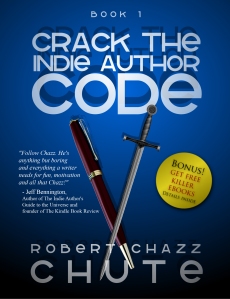
Crack the Indie Author Code10. Small is an attitude that’s easier to relate to.

My writing and publishing guides are journeys through the mud of independent publishing. I chronicled the struggles more than the success. Success teaches less than mistakes can. I was (and continue to be) very honest about my mistakes over the last couple of years of steering the Ex Parte Press imprint. Instead of telling anyone what to do, I did research and gave opinions and examples. I experimented. I tell you what worked for me and what didn’t work. I’m just now beginning to feel like I have a solid idea of what I’m doing. Mostly because now we have more tools at our disposal than we used to have. Independent publishing has matured.

We’re walking together to find our way here. I don’t listen to some experts because their viewpoints come from such a different experience. One indie guru’s solution to marketing problems is to throw money. I don’t know what he’s talking about or to whom. Others are well-established because they came to self-publishing early with trad publishing inertia and lineage mojo. 

They aren’t us. We’re small, but we are getting bigger.

We’re getting traction. We have better tools now and we’re honing them.

No matter what, we’ll remember where we came from and the friends who helped us up and out.


Filed under: blogs & blogging, book marketing, book trailer, Books, getting it done, Publicity & Promotion, publishing, , , , , , , , , , , , , , , , , ,

Another Easy Tech Tool Authors and Publishers Need Part 3

I’ve become quite a fan of the Author Marketing Club.

Another tool in their arsenal is the Amazon Enhanced Description Maker. It’s simple, but effective: Make your Amazon book descriptions easier to read with headlines and lists. Best of all, the html coding is taken care of for you. I’m into anything that simplifies my life while attracting readers.

Yes, Amazon allows this. In fact, here’s a sample of the end product. 

Note what makes it different:

The header (Armand Rosamilia’s blurb); the attention-grabbing subhead; the bullet list; and the call of the “Special Offer”. You can make that a numbered list if you want. 

Highly recommended. See AMC’s demo tutorial here.

Related articles

Filed under: Amazon, author platform, book marketing, Publicity & Promotion, publishing, , , , , , , , , , , , , , , , , ,

Bestseller with over 1,000 reviews!
Winner of the North Street Book Prize, Reader's Favorite, the
Literary Titan Award, the Hollywood Book Festival, and the
New York Book Festival.

http://mybook.to/OurZombieHours
A NEW ZOMBIE ANTHOLOGY

Winner of Writer's Digest's 2014 Honorable Mention in Self-published Ebook Awards in Genre

The first 81 lessons to get your Buffy on

More lessons to help you survive Armageddon

"You will laugh your ass off!" ~ Maxwell Cynn, author of Cybergrrl

Available now!

Fast-paced terror, new threats, more twists.

An autistic boy versus our world in free fall

Suspense to melt your face and play with your brain.

Action like a Guy Ritchie film. Funny like Woody Allen when he was funny.

Jesus: Sexier and even more addicted to love.

You can pick this ebook up for free today at this link: http://bit.ly/TheNightMan

Join my inner circle at AllThatChazz.com

See my books, blogs, links and podcasts.

Enter your email address to follow this blog and receive notifications of new posts by email.

Join 2,061 other subscribers