C h a z z W r i t e s . c o m

See all my books at AllThatChazz.com.

Writers: Are you in the echo chamber?

I love my writing community here. I’ve learned a lot from others and, as indies, we share a lot of information. We’re a generous bunch with each other. I appreciate your comments and participation on my little writing and publishing blog. Because I’m a sweet bunny pooping love everywhere, I have to tell you something with love:

Writers talk to other writers too much. We must talk to readers more.

Let’s make this go down easy by using an example from another industry.

When massage therapists try to figure out their businesses, they ask their peers and senior massage therapists for their opinions. They want to drink from the well of experience. It’s a good notion that frequently goes awry. Their peers are often as clueless as they are and senior therapists either don’t have the same problems or their advice is out of date. Take pricing, for example. They’ll set fees based on what they’d pay. But many massage therapists would never pay for massage. They don’t have enough money or they swap treatments with other therapists. Massage treatment is for people with real jobs and insurance coverage, not us.

Stick with me and hold my hand, because this is about to get uncomfortable.

Writers need to listen to readers more.

Sadly, writers often don’t have much money to spare so we use libraries or search for free a lot. Most of us buy books when we can, but with budgets as tight as they are, we’re often not your audience. As a result, many of our industry’s book prices are artificially depressed. We’re asking the wrong audience what we should do. (I’ve taken this advice. I just raised prices on some of my books and generally, the trend will be up.)

A veteran writer who’s “made it” (whatever that means) often doesn’t know all the variables that contributed to his or her success. If someone coasted to indie success from a high in traditional publishing, they can’t tell you much about the current scene. Precious few people attribute any of their success to luck. It had to be their sheer brilliance. However, many of us are brilliant and we’re still eating boot soup.

So, what not to do?

If you don’t tweet others at all, you may as well be on Mars.

If you rarely check your direct messages, you’re in the bubble.

If you only check your mentions on Twitter, you’re screaming into the echo chamber.

If you follow three people and two of those are your other Twitter accounts, you’re only hearing yourself plus you’re a raging narcissist (and not in a good way).

If you only have conversations with people who don’t buy books, you’re surveying the wrong people.

If you only speak to people who “buy” free books, you’re engaging the wrong audience. (Readers who buy with money instead of a click are often suspicious if your book is priced too low, for instance.)

If you don’t take new information in and seriously consider change, you’re for slavery. (Your own.)

If you do have conversations with readers from time to time and you talk about them, you’re on a smoother path.

If you don’t cultivate supportive friends, you’ll be alone, surrounded by fiends and without a fire ax or holy water.

If you only attend conventions with other writers instead of fans, you’ll have a great time talking to people who agree with you: “Wow, it sure is hard to connect to new readers!”

If you never get out and talk to real people in the real world and only connect with people on a safe and cyber basis, who will you learn to hate so you can kill them in your next novel?

If somebody says, “I prefer paper books,” and you reflexively say, “How Amish of you! Ebooks are the only future!”, that was kind of funny, but you should be listening instead of cracking that same joke open again. It’s rotten on the inside.

If you say all this social engagement is too hard and it takes away from your writing time, I’m sorry. I thought you were writing to be read. Get a calendar or time management software. At least tweet or email during commercials.

If you immediately dismiss everyone with whom you disagree, you’ll never learn the secret to…well, anything really. Plus, you’ll come across as a jerk.

I’m not suggesting you allow me or readers or reviewers or anyone else to run your life. I am saying that if you recognize yourself in this list and it gives you that squirmy squirts feeling, adapt accordingly. Listen.

You should listen to me. I’m a writer.

Filed under: author platform, getting it done, Publicity & Promotion, publishing, Rant, readers, , , , , , , , , , , , , , ,

Books: Ventures, Misadventures, Adventures and Brutal Honesty

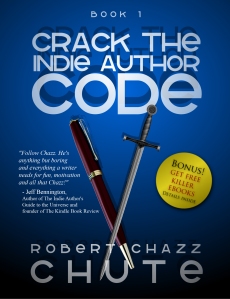
Crack the Indie Author CodeWhen George Lucas screened  Star Wars, most of his fellow filmmakers in the room looked at each other and said, “American Graffiti was awesome, George, but this space opera thing…yuck!” It was Stephen Spielberg who played the contrarian. “You guys don’t get it!” he said. “This is going to be huge!” And of course, Spielberg was right.

My personal Lord and Saviour of The Written Word, William Goldman, famously said of the Hollywood film business, “Nobody knows anything.” It’s true, no one can know what will hit and which will miss. Someone comes up with the somewhat moronic expression YOLO (the idiot’s “Carpe diem”) and it’s suddenly on t-shirts everywhere. True for us, too. You may write a heavy, ambitious tome, but it’s a tiny book like The Little Prince that captures the hearts and imaginations of generations of readers.

So it is with marketing books.

Agents say they can “guide your career”, but if that were true, anyone with a sentient agent would have a fabulous career. No one knows anything in publishing, either. That’s not meant as an insult, but as a reflection of reality. Publishing is famous (or infamous) for placing bets on many horses, hoping the big bets will pay off and cover the losers’ ubiquitous failures. Few industries have a miss rate as high as book publishing (though Hollywood’s screwing up even more than usual lately.)

So it is with my books, too!Self Help for Stoners JPEG

The summer is winding down and I find I must split my mania among many ventures. I’m in a philosophical mood and looking back at what took off, what has not, and why. We at Ex Parte Press are not lounging in the money, chocolate and champagne pool at the moment. (But we still have high hopes.)

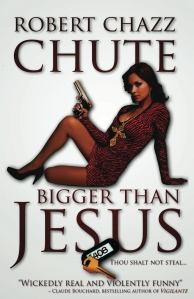
  • Bigger Than Jesus and Higher Than Jesus are critical successes among the few critics who are aware of my funny Cuban hit man and his tragic past. Alas, hardboiled and funny suspense isn’t trending at the moment. Nonetheless, I have more Hit Man books planned. Jesus Diaz will just have to wait a bit longer as I concentrate my efforts where readers have demonstrated more enthusiasm. I love Jesus, and can’t wait to get him back on the warpath in Hollywood. An assassin who can make movie references and quick quips while getting beaten up deserves more books. He’ll get them.
  • My first funny short story collection, Self-help for Stoners, sells just a little but steadily. It’s a tribute to Kit Foster of KitFosterDesign.com that the cover is repinned on Pinterest several times a week, every week. Later this fall I will stop using an intermediary so I can take back control of marketing that book. I have no doubt I can take it much higher once that happens. I’d have done it by now but I’ve been perpetually swamped for months with This Plague of Days.
  • Six Seconds, my book about using the Vine app to market your business was an instant book with lots of great advice. I’ve moved books and marketed my podcasts having fun with mini videos. Though Vine remains the superior product, Instagram changed their app to ape Vine so Instagram has many more users. I bet on the wrong horse, not every at bat is a home-run, insert your metaphor for failure here.
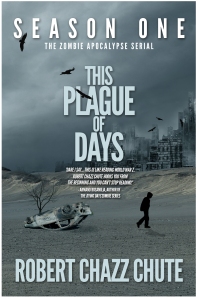
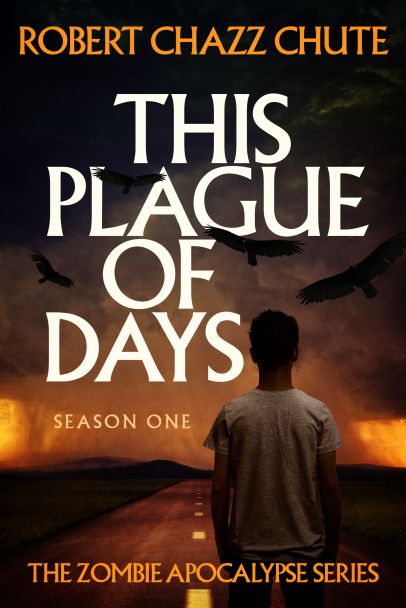
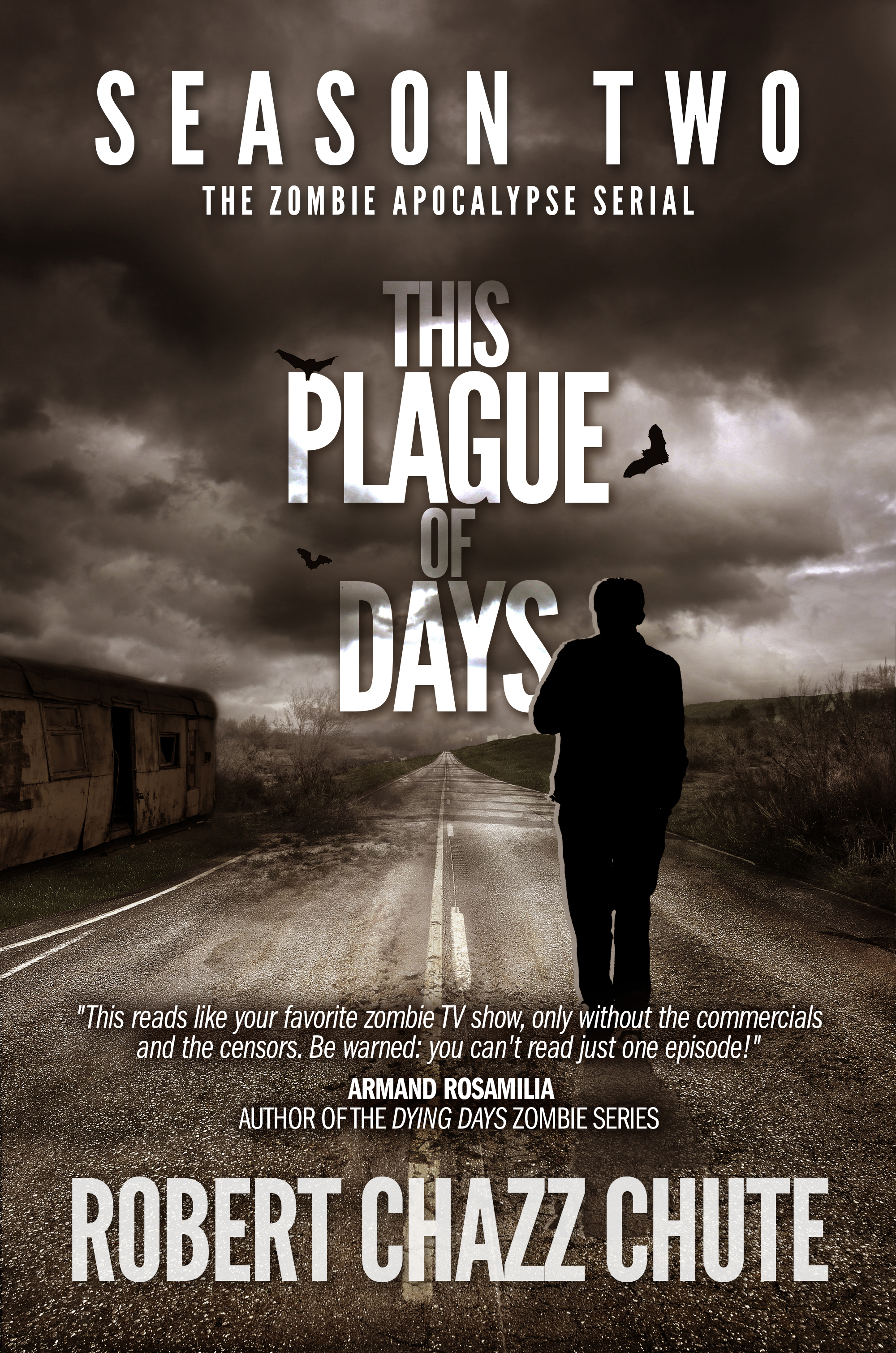
  • This Plague of Days, Season One is getting traction. It might even be on the cusp of taking off. I’ll find out when Season Two hits at the end of September. (Here’s my latest post with hints and expectations for Season Two.) Early feedback is very encouraging. As in this, from the beta team: “Suspense and plot and action – all of them are on steroids in this book…overall impression is you have brought this thing to the next level.”

Mind the towering caveat in the following paragraph:

My luckless hit man is a funny guy in big trouble.

My luckless hit man is a funny guy in big trouble.

So you see, I’m no better (or worse) at stabbing at the imagination of readers than anyone else. I don’t know what will sell buckets of books. No one does. It’s something that happens to you, as long as you pretend your destiny is under your control and do everything you can to get discovered. You can hit the target. We’re all shooting blindfolded in the dark, sure, but if you take enough wild shots, aiming matters less. You write the best book you can and engage more readers and attend some sad, ill-attended bookstore signings and do whatever else you can think of to fire off signal flares without becoming a Twitter pariah.

This is not to say that good advice isn’t out there. It’s just that so much good advice conflicts!

The great Chuck Wendig talks about voice (or the force of personality) being more important than “brand”. Others can’t talk about anything else but brand, stats and system gaming. Hugh Howey is the outlier that didn’t really market anything when he started Wool (though he says Facebook helps him most these days.) Some insist on lots of links to your other work in the back of each book. Others say that’s overkill and intelligent readers will find you easily if they love you enough to bother with a google search. Some book marketers are passive as a policy (or lazy.) Others are so active, it’s pretty close to obnoxious.

And still, nobody knows anything. Not for sure. There are too many variables to success and the situation is fluid. We, writers and publishers all, dance on tightropes while juggling feathers in wind storms and hope readers will cast a glance our way and enjoy the silly monkey dance.

Still, you’ll find advice about tactics everywhere.

Just this week, I pushed the Author Marketing Club and Bookbub. Solid advice I stand behind. But keep in mind, these are tactics. The potency of tactics can wax and wane according to many variables. That’s what’s hot now and into the near future. After that? New tools will emerge because good ideas get copied. Sometimes imitators are new and improved and often the copier doesn’t have enough toner.

Strategy is long-term thinking. Strategy says: Write more. Get more feedback. Write more books. Get better. Higher+than+Jesus+Front+1029

This is the only advice I know that lasts. (You’ll find that and much more about the writing and publishing life in Crack the Indie Author Code and Write Your Book: Aspire to Inspire. Crack sells a bit while the second book hardly moves at all. Why? Who knows? Nobody. Nobody knows anything! My Lord and Saviour told me so.

However, I’ll let you in on a little secret: I have a third book about writing and publishing in the chamber ready to fire. When This Plague of Days hits big, readers will pick up all my books about writing and publishing. After the fact, they’ll say, “Well, no wonder.” 

The Johnny-come-latelies won’t know what you know. My overnight success wasn’t overnight. Success always seems inevitable, but only in retrospect. Until you make it, no one cares about you and your book. Those who do give you any thought probably think you a fool. (Insert an image of your disapproving in-laws here.)

Ah. But, afterwards? You’re a genius.*

~ *Afterwards, You’re a Genius is a wonderful book I recommend for anyone interested in scientists with lyrical sensibilities.

For more on the rising action and scary high stakes in the spiralling weirdness of an autistic boy fighting zombies, read this post at ThisPlagueOfDays.com. 

For more on my adventures in self-pubishing, swallowing bitter pills and my peculiar brain mania, there’s this post on the writing life at my author site. 


Filed under: author platform, getting it done, self-publishing, , , , , , , , , , , , , , , , , , , , ,

FAQs: What book promotion are you paying for?

I sent a close friend the gift of an ebook hoping that he would read it, enjoy it, possibly review it and maybe even spread the word to his vast network of connections. Instead, he sent me a scolding reply: “You’re paying people to read your books!” And by people, he meant him. Ouch. In my defence, I don’t know that he’s read it yet, so that’s my double fail.

Before anybody thinks he’s harsh, a little history and context: I understand that he felt fine paying for the book himself. Also, I got him his first job in book publishing. He’s still thinking about publishing from that perspective. I’m sure he didn’t want to sound mean. I caught him on a bad day. Also, I’m sure he’s worried about me and that’s why he was so undiplomatic and reactive.

However, he’s only thinking of me as a friend and writer. I’m also a publisher.

Publishers have a long history of sending out Advanced Reading Copies (ARCs) to key reviewers, the sales force, bookstores and media. That doesn’t require an apology. That’s business and doing less is hiding your light under a shitstorm called, “Everything else that exists to read, do and enjoy.” Yes, you’re even competing against sex! Clearly, books are doomed!

How many ARCS go out from traditional publishers? Hundreds per book. I can’t afford to do that, but I do send out some that way. I wasn’t paying anyone to read my book. I was paying for advertising and promotion (to teh wrong target, I found out.) You can do the same thing for free by emailing a pdf, though if they can’t instantly stick it on their kindle, most people won’t bother with it. Chances are good they won’t get around to reading it even if you make it very easy for them so avoid handicaps where possible. That’s why I prefer to use Amazon’s gift option where possible and within budget.

About sending copies to book blogs

Check out the book blog first. Review the reviewers and their guidelines before you send anything. Many book blogs are awesome. However, I’ve encountered noobs whose site is nigh-illegible, their traffic is minuscule and their reviews give spoilers without warning. I’d rather let a blindfolded med student practice minor surgery on my tingly bits.

Services to invest in

In the previous post, I mentioned Bookbub is a worthwhile investment. The cost of advertising with BookBub varies depending on genre. Horror and science fiction is $70 to push a free ebook. Find the full range of pricing here.

I also mentioned the Author Marketing Club. That costs $105 per year for an annual membership and it’s worth it for the tools and seminars. My book descriptions look better than ever, for instance. The free submission tool got This Plague of Days at number one in Dystopian and Post-apocalyptic. The book sales widget looks awesome.

Where can you cut corners?

Anyone reading this is probably working on a shoestring budget. To make any money, we have to keep our expenses down to nothing or close to it. We blog and tweet and use Pinterest and Facebook and do Google+ and throw Tumblr in the air and shout out of windows because it’s free and we’re trying to engage new readers. I’ve used Fiverr for videos* (see my video/book promotion strategy here) and free apps from Apple and the Chrome Store. 

We get what services we can for free where and when it makes sense. We swap services and cooperate and consult and promote each other for free. We learn to format books and publish DIY wherever we can so we can keep something of what money might trickle in, knowing the odds are heavily against us. (That sounds bleak, but more indie authors are making a living from their efforts than the traditionally published so it’s not all bad news.)

About ineffective promotion services

Lots of advertising isn’t worth the expense. Some sites say they can promote your books and they’ll do so for a fairly low fee. However, you won’t get even that small fee back. Before you go with another of those sites, review the promoters. Reach out to the indie authors you know. Use your Facebook connections to gather intelligence and ask about other authors’ experiences and results. This is most valuable if their books are similar in genre, quality and look to your own. (In other words, don’t blame the book promotion service when a bad cover sunk the author’s efforts.)

I’m always looking for ways to save money so I can put it into pushing books. The other day I realized I was the only 48-year-old walking around a bookstore in old jeans with ripped up hems. I don’t buy new pants! Think what Bookbub advertising I could buy for the price of a couple of pants! And you know what? I wish I had a bigger budget because however you promote your books, you pay. (And I want new pants. I rocked this look in college but it doesn’t fly now.)

If you don’t pay in money, you pay in time.

Without the cash, you lose time with your family (okay, not always a bad thing). You will lose time going to the gym and end up paying with your health. Time is more important than money because you can make more money but the waking hours are all you get. Worse, if you aren’t careful, marketing cuts into writing time. Be careful. Hemingway was Hemingway, but he never had to share your problems.

Expect to pay something.

Can you go viral and pay nothing and still be successful?  It could happen, but to expect it is stupid. That’s not a strategy. That’s hoping something will happen to you instead of making it happen and that’s not the way to bet. Use AMC and Bookbub now at least. Then be clever and different and promote your brand with long-term strategies that will make a career.

Should I set a budget of $10,000 for a book promotion budget?

I’m not buying new pants. 

*I have a new intro video at AllThatChazz.com, in addition to the intro video at CoolPeoplePodcast.com and of course, here at ChazzWrites.

Filed under: author platform, book marketing, Publicity & Promotion, publishing, , , , , , , , , , , , , , ,

Combat the horrors of self-promotion (with fun)

Recently an article appeared in The Weeklings that was picked up by Salon. It was called The Horrors of Self-promotion by author Sean Beaudoin. I felt sorry for the author and, I admit, a touch of impatience, too. His problem is not unique. Most of us suffer hypothermia from a lack of limelight heat. I have the feeling he doesn’t read this blog. Alas. His best marketing so far was complaining about marketing and getting picked up by Salon. I don’t know how many more times that will work since I’ve seen this kind of story on Salon before. Repeatedly!

So, to solutions:

You know that rule about writing a book that states: If you’re bored, readers are bored? Same goes for self-promotion. Find a way to get them invested. Yes, give stuff away! Reward them for being helpful. Helping others helps you and never hurts. (That link will show you how to get stuff by reposting a video from my author site.)

Joanna Penn calls authors helping authors “coopetition”. That sums up why I do podcasts with authors, for instance. Besides, we’re in a lonely profession. It’s fun to talk to like-minded people like Hugh Howey, Jessica McHugh and Armand Rosamilia.)

If you hate Twitter, you won’t use it right. It’s supposed to be a fun, social discovery tool. If you hate Facebook, maybe it’s not the place for you. Those are supposed to be friends and fans you’re hanging out with. These are platforms to discover cool stuff and have conversations. I often can’t converse for long, so usually I choose to tweet useful information. (Follow me @rchazzchute and I’ll prove it.) However, there are plenty more options, both DIY and getting assistance.

We’re writers! We’re creative people. Find a way to have fun with promotions!

1. I’ve said this many times, but it bears repeating: The writing comes first. Social media is for in-between times that would otherwise be unproductive. Most of my tweeting happens from my iPod for that reason. If I’m at my desktop, I’m writing and revising Season Two.

2. For most authors, working with a publicist doesn’t make sense. However, if you really hate promoting books, maybe you should consider how you can farm it out. Can’t afford a publicist? Start with Fiverr.com. My buddy Jeff Bennington has a post about that here. Need more? Outsource or get an intern with whom you can teach and share. Contact your local college or get on Kijiji and find someone who needs experience in your subject or business.

(Please note: It’s not an internship if they aren’t learning anything. Interns don’t do laundry and are not slaves. They learn writing skills, gain publishing information and an important, perhaps first, entry for their resume. That said, if you’re predisposed to go this route, you’ll probably learn tech skills from them, too.)

3. Work with the platform that suits you best. Every day someone repins the cover to my book Self-help for Stoners on Pinterest. I do no other promotion for that book (since I still don’t have time to get it out from under Bookbaby’s distribution yet.) It’s passive, but the word spreads and it sells despite my lack of effort beyond Pinterest and Vine. (Vine’s discussed in #10.)

4. Some people over-correct and fail to promote at all. Maybe that’s shyness, although most authors who make a point of telling you how awful social media is are snobs. Mostly, they’re really complaining about a personal time management issue. We all have the same amount of time: 24 hours in a day. Use it right, don’t complain and reread Item #1. 

5. Some authors are snobs about social media because they’re tired of all the bad promotion that happens on Twitter. They need to exercise more patience, but they aren’t wrong, either. (See my post below, Book Marketing Top 10: When Less is More and tweet to content, not sales links!)

6. Don’t go into denial. Someone said their readers don’t hang out on social media. One in four people worldwide are on social networks and more than half of North Americans are on social media. That number will only grow. If your readers aren’t on social media (Amish people and older people who frequent Renaissance fairs), you better go to them. Get a booth by the guy who sells beer but calls it mead. Compensate somehow because otherwise you’re hurting your discoverability. Go where readers are, electronically or in person.

Readers have hungry minds. Therefore, they are so on social media!

7. Write another book. Too often I speak to nice people who believe their one book should find its audience organically. However, even organic plants need water. More books give your readers more opportunities to discover your awesomeness. Do not deny them your awesomeness. That way, madness lies.

8. I’ve recently posted about the many advantages of the Author Marketing Club and the tools they make available. With their free submission tool, you can harness the power of book promotion websites without hammering your own audience repeatedly. If you’re only tweeting to your followers, you’re doing it wrong. First, write stuff that’s useful, funny or retweetable. Then get on Triberr and expand your reach.

9. Blog. I have many blogs (all listed here) and reach out to varied audiences (writers, readers, podcast lovers, polymaths, the morbidly obese and schlubs like me, just trying to get their shit together.) However, ChazzWrites is the blog with the highest Alexa score. I do them all for the fun of it. If I hated it, I wouldn’t do it. I suggest ideas and try to be useful and helpful. I often try to be funny. People who get my flavor and like the taste will click the ubiquitous links to my books. Or not. But if you don’t blog, there’s no way for anyone to get what you’re about except unconvincing sales links that mostly sound the same.

Should books sell themselves? Yes, in a perfect world. You saw the news feed this morning. Does this look like a perfect world to you?

Are there exceptions and can you do nothing and still be a hit? Sure. It happened to Hugh Howey. His success is quite organic and, of course, well-deserved. However, that’s not the way to bet. Hugh told me so himself on the Cool People Podcast. Unfortunately, the norm is that many deserving books are ignored. It’s not that many of them aren’t good or even great. It’s that no one has helped readers find them effectively. Yet!

Look, I know all you want to do is write. We all just want to write and be taken care of by legions of adoring loved ones and fans. It would be great if we all had robot butlers, too. We don’t. Grow up and find a way to have fun with your chores so they aren’t chores anymore.

10. Do something different. Twitter isn’t everything. I get love and attention using Vine, for instance. If you don’t know Vine, I wrote a book about it. Basically, it’s six-second video and it’s surprisingly fun and addictive. I can choose to post the videos only to Vine, to Facebook, to Twitter or even embed vines (videos) like these fun and/or disturbing examples. 

Find what works for you. Then go do that as much or as little as you can stand. But please, no more complaining. There’s too much fun to be had and too many options to enjoy to waste time complaining. Unless you get picked up by Salon. Then maybe that worked. Sean Beaudoin! Did that work? Are you feeling better? Let us know!

~ I’m Robert Chazz Chute because “Robert Chute” is already taken by a Native American author and poet who surely wouldn’t want to be confused with a crime novelist and horror author. I was recently challenged about why I wrote a book with zombies in it. (Well…not the Romero kind. More the 28 Days Later variety.) Anyway, I justified my love over at ThisPlagueofDays.com with this saucy post. You might enjoy that post, too. Fewer links, more sass.

Filed under: author platform, book marketing, Publicity & Promotion, publishing, self-publishing, , , , , , , , , , , , , , ,

Authors and Publishers: Six things to do immediately to get more readers and keep them

We are in a battle for attention. Here are three things to consider today to get readers’ attention and keep it:

1. List posts, like this one, are popular because they are easier for readers to scan. (They’re also pretty quick to write.)

2. There’s a good chance your blog posts are too long. Mine often have been. I changed that once I realized how few people give blogs a deep reading. You probably aren’t reading this. You’re scanning this for what you can use.

3. I put the font for this blog in bold after a few readers complained the font was thin. Some readers, either because of their devices or their eyesight, still had problems reading the font. I bumped it up again.

4. When you write a blog post, you often have the option of adding links outside your blog. Click the underlined word and blog readers get whisked away for more on “kerning” and its history. I used to do that within blog posts but not now. Those links are excuses for readers to put their attention elsewhere. If they need something explained, explain it for them. I still provide related articles at the bottom of most posts for added value. New readers often find me through those links.

5. Go to your author profile on whatever sales platforms you use. Shorten it. I wrote a hilarious profile for Amazon. It was funny and informative, but it wasn’t doing its job because it was too long. People want to know enough to have confidence you could write an informative or entertaining book. Leave some mystery and make it an invitation instead of forcing the full bodacious on them all at once. If they want to know more about me, they can visit my author site or (gasp!) purchase my books. We want browsers to read our books, but they’re merely scanning our author profiles, if that.

6. Add video. Your blog is a charging at us too hard on the first date and it’s intimidating.

You’ll notice a new feature at the top of this blog on the main page. A spokesperson tells you about some of my websites and the free ebook promotional offer. I added the text to the video for added punch. Since adding the video a couple of nights ago, traffic to my author site has risen 66 percent.

New visitors will stay if you use video to welcome them and get them acclimated to what you’re about. Regular visitors will discover something about you they didn’t know. We’re visual creatures and people are used to taking in information that way. Too much text all at once puts them off. Text is for books. (I use a spokesperson for the  Cool People Podcast page, too. “What? You have two podcasts, Chazz?” See, somebody found out something new already. Notice, I’m tickling their ears with yet another medium: podcast.) For my author site, I’ll soon add a personal message from me instead of using a spokesperson.

To win eyeballs, hearts and minds, heavy text isn’t the answer. That’s for book readin’!

More white space and YouTube helps readers discover how awesome you are.

Robert Chazz Chute

Robert Chazz Chute

~ Add an author profile, pic or note (like this one) at the end of your blog posts, too, if you want. Glad you found me!

I’m a former journalist and columnist who has worked in all aspects of book and magazine publishing. Have you checked out all the cool videos and excerpts from my book about an autistic boy facing the end of the world? Go to ThisPlagueOfDays.com to learn more about my serial. Looking to lose weight and be healthier? Check out another of my blogs, DescisionToChange.com.

Filed under: author platform, blogs & blogging, book marketing, publishing, , , , , , , , , , , , , , ,

Another Easy Tech Tool Authors and Publishers Need Part 3

I’ve become quite a fan of the Author Marketing Club.

Another tool in their arsenal is the Amazon Enhanced Description Maker. It’s simple, but effective: Make your Amazon book descriptions easier to read with headlines and lists. Best of all, the html coding is taken care of for you. I’m into anything that simplifies my life while attracting readers.

Yes, Amazon allows this. In fact, here’s a sample of the end product. 

Note what makes it different:

The header (Armand Rosamilia’s blurb); the attention-grabbing subhead; the bullet list; and the call of the “Special Offer”. You can make that a numbered list if you want. 

Highly recommended. See AMC’s demo tutorial here.

Related articles

Filed under: Amazon, author platform, book marketing, Publicity & Promotion, publishing, , , , , , , , , , , , , , , , , ,

Fight Club: How 6 Rules of Combat Will Make You a Winning Writer

The mind virus is created. Spread the infection. Each of five episodes is only 99 cents each. Get the whole Season for the discount at $3.99. (And if you already have read it, please review it.) Thanks! ~ Chazz

The mind virus is created. Spread the infection. Each of five episodes is only 99 cents each. Get the whole Season for the discount at $3.99. (And if you already have read it, please review it.) Thanks! ~ Chazz

I’m teaching my son hand-to-hand combat. He’s such a friendly, funny, sweet little guy, I’m sure his character will keep him out of lots of fights. However, there are things to learn that are applicable to the forces you and I combat. For instance, it’s often easy to predict who will win a street fight. Similarly, I can tell you why some authors will win the fight to have their work discovered.

The bigger person usually wins the fight.

The fighting analogy is obvious, but it applies to our book ventures, too. If you have published many books, you’re in more Also boughts. More shelf space means easier discoverability. The longer your book is available, the more sales it will eventually accrue. (My bestseller is still my first book.)

If you aren’t big yet, write more good books.

The person who strikes first usually wins the fight.

I’d rather my son run from any fight, but if threatened with no escape route, hit fast and hit hard and hit first. End it before the drunk gets a head of steam on the courage he got from a bottle.

If you got into self-publishing early (i.e. before the Amazon algorithms changed) or if you were a popular traditionally published author, you have the advantage of experience and legacy. You had a profile. You still have an advantage now. You hit early, hard and first. You’re still feeling the benefits of throwing the first punch.

The person who is better prepared wins the fight.

A trained fighter has an obvious advantage over a novice. The trained fighter will be less likely to panic when things go wrong and will know how to compensate for a temporary reversal of fortune. After losing sparring matches in training, the experienced fighter has knowledge that will allow victory.

Similarly, if a writer has written a long time, he or she will not lose confidence at a temporary setback. Sometimes you have no idea what happens next in your story and you’ve written yourself into a corner. Once you’ve written yourself into a corner many times, you don’t give up so quickly when you meet the problem again. You recognize opportunities or make new ones.

The person who is willing to do what it takes to win, will. 

Most people are unwilling to do the nasty things you do to end a fight decisively. Most fights start when an idiot tries to intimidate someone, but the bully often doesn’t really want to fight. There’s a good reason no one really wants to fight. It hurts. Even if you win, you’ll very likely have tooth marks on your knuckles.

You guessed it. Many people who say they want to write, don’t. Experienced writers get bored when someone complains they don’t have enough time to write or they have writer’s block. In most cases, that’s the sound of someone unwilling to put in the time to write, edit, revise, polish and publish.

Serious writers grapple with issues of craft, marketing and business. Serious writers have much more challenging time management problems than merely beginning to write. We do what we have to do. That always means sacrifice. 

The fighter with more muscle usually wins.

Even a trained, experienced fighter can be taken out by a shot with heft behind it. 

For the writer, skills are our muscle. We know what a gerund is and how it relates to passive voice. We can avoid a lot of problems because we have an ear for dialogue or paid attention to basic grammar rules in school. These skills keep you in the fight for readers’ attention longer.

The first rule of Fight Club is: Do not talk about Fight Club! 

Fighters don’t build up to the fight. That’s macho posturing and a sign of a silly bully, not a fighter. Talking is not where our energies are best employed (unless we’re being kind to each other.)

Fighters fight.

Writers write.

Filed under: author platform, book marketing, publishing, self-publishing, Writers, writing tips, , , , , , , , , , , ,
How Weird Al, Kevin Smith, Hugh Howey and Scott Sigler Succeed

The mind virus is created. Spread the infection.

The mind virus is created. Spread the infection.

Price alone doesn’t get attention anymore. Being an author isn’t so special. To really stand out and sell more books,  you’re going to have to be you. 

We in the brain tickle business have never had so much freedom and opportunity  to talk directly to readers. We’ve also never been so invisible. The essence of our book marketing problem is that readers are flooded with noise but our signal isn’t getting through. A plethora of fractured choices leaves us catering to smaller niches. The world has exploded with feasts for the senses and books are not central to our cultural dining experience.

How do we help readers find us? 

To figure out how to better reach our niches, let’s look at artists who successfully engage their fans: Hugh Howey, Scott Sigler, Weird Al Yankovic and Kevin Smith.

Be famous for something else first.

When director Kevin Smith’s Clerks hit, that movie was his introduction to his niche. He has described the film as as a handshake to America that said, “Hi, How are you? I’m Kevin Smith!” Being famous first isn’t  helpful advice, but it’s so obvious, I had to get this one out of the way first.

Pioneer something new.

When Kevin Smith jumped on the podcast bandwagon, there weren’t many musicians in that band or on that wagon. He’s always up for something new or a twist on something old. He abandoned the big studio promotion model to take his movie, Red State, on tour to his fans. Now he’s taking his Super Groovy Cartoon Movie on the road.

The same willingness to adapt applies to Scott Sigler. When his manuscripts weren’t selling to publishers, he sat in his closet and recorded his books as podcasts. When he went back to the publishers, it was still so early in the game, the publishers replied, “What’s a podcast?” But Sigler’s readers found him through audio and ended up buying his work in digital and paper.

Think it’s too late to get into something new? Podcasting is still new. You probably write a blog, but there are millions of blogs vying for attention. There are only a few hundred thousand podcasts.

POD Chazz 2I have two podcasts and I sell the most books where my podcast is most popular. Also, I’m connecting with cool people on Vine. I don’t know what the next big thing will be, but I’m open to jumping into anything early if it makes sense to test it. Just don’t wait until the new social media platform makes sense to everyone.

Embrace Different and get noticed.

Hugh Howey has taken a contrarian approach to fan fiction. He’s embracing it. Instead of guarding the realm of Wool, he’s invited others to play in his sandbox. That one move has already gained him new fans and more publicity. The fact that Amazon decided to promote fan fic makes me think he’s on to something. (And before we get snotty about it, don’t forget fan fic is where the Fifty Shades of Gray‘s success sprang from.)

Kevin Smith just pressed a new album for his cult of rabid fans. That’s right. As in vinyl. They’ll buy it, too. They love him.

Scott Sigler appeared on The Joe Rogan Experience recently. Lots of fiction authors (like me!) would love to get on that show. He got there because he’s interesting, does tons of research for his books and he’s technologically innovative. Couldn’t happen to a smarter guy.

Meanwhile, Weird Al expanded his empire into our territory. He’s written a children’s book. Couldn’t happen to a nicer guy.

Build a body of work.

After his many movies, Smith has a plethora of podcasts he’s begun, sponsored, abandoned and continued. His motto is, “Monetize.” He monetized conversation and found a way to keep his connection with his fan base between movies. Before podcasts, his ongoing conversation with fans happened through Twitter. Before that, his was one of the first message boards on the Internet. Keep up with innovation.

Weird Al has made music parodies for decades now (and weirdly, he does not appear to be aging.) It might surprise you to discover that half his songs are originals, not parodies of popular music. His fans know every lyric of his extensive musical inventory, though. Weird Al puts on an amazing show and, though many love him as a comedian, he doesn’t get the respect he deserves as a musician. He and his band have incredible range. They have to be great to convincingly parody so many artists of different styles. Keeping up with the music and being brilliant explain his staying power. His fan base renews so parents and their children have grown up loving Al. He didn’t get that status by being a one-hit wonder.

A bigger inventory is key to successful book marketing. Like I said repeatedly in Crack the Indie Author Code, your one sure, long-term strategy is to write plenty of good books. By occupying more digital real estate (like “Also boughts”), we send up a bigger flare to help readers find us.

The more shots you take, the more chances you have to hit. Once one book hits, all your sales rise. Do not bet it all on one spin of the wheel.

Be available.

Cool+People+Podcast+FinalQuite often you will read complaints about social media, particularly from authors. How many more blog posts will bleat, “But I just want to concentrate on writing my book…”? That’s not social media’s problem. That’s your time management problem. Figure it out and do what you enjoy when you can. (For instance, Vine’s a blast, it goes to my Facebook and Twitter, and it takes six seconds.)

Don’t complain about social media. Complaining about having to talk to readers makes you sound like someone potential fans don’t want to know, love and support. Whining doesn’t make you a diva or an auteur. It makes you a pain in the ass. 

Hugh Howey bubbles over with success, but he’s definitely not churlish. He’s friendly and nice. When I asked him about appearing on the Cool People Podcast, he got back to me right away even though he was on the road. (I’m interviewing him for the show next week! Can’t wait! If you have questions you want me to ask him, submit them to expartepress [AT] gmail [DOT] com.) 

Be available where readers congregate.

Smith and Weird Al tour. Scott Sigler is as close as your earbuds for free and when I sent him a tweet, he got back to me. Hugh Howey’s YouTube channel is plenty busy. If you aren’t talking where people are, you’re either praying or talking to yourself. Whether it’s social media or speaking events, go meet new people.

But it’s not just about sending signals out.

You don’t get much love hiding in a hole. To  engage people, be responsive when you can. For instance, Weird Al found himself waiting for a plane. He tweeted a phone number. “Anybody want to chat? I’ve got five minutes to boarding.” All his fans who couldn’t get through undoubtedly appreciated the gesture. It speaks to the sort of person he is (i.e. someone you want to know, love and support.)

When I met Kevin Smith, he couldn’t have been nicer to me. (Same with comedian Mike Schmidt, who has the same knack for remembering the name of everyone he meets and putting them at ease.)

Here’s the key: Be nice and listen to what they’re saying.

When you’re talking to someone, speak to that person as if, for that moment, he or she is the only person in the world. It sounds easy, which is why it’s so crazy more people don’t do it. (I’m confident divulging this open secret because, if you aren’t already genuinely nice, you won’t be able to fake it.)  Also, successful authors are always interesting, intelligent people with diverse interests. To be interesting, be interested in your world and in others.

Social media isn’t working for everyone.  

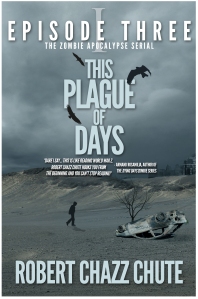
Episode 3 launches today! If you've been holding back on jumping in, now's the time!

Episode 3 launches today! If you’ve been holding back on jumping in, now’s the time!

Maybe that’s because we aren’t loveable, helpful or engaged enough. I’m not saying you have to engage “everyone”. That way madness lies. Besides, the writing has to come first and getting everyone on board isn’t the point. The point is to engage with people who get you and your work. I don’t need millions of readers who can take me or leave me. I need a few thousand die-hard cultists who call themselves an army, build fan clubs, buy books, leave happy reviews and don’t hate. That seems achievable. At least it’s easier than attempting to appeal to everyone (which too many people try to do.)

To the naysayers, I ask, “If social media is a lost cause, what is the alternative? Smoke signals?”

And are you being Weird Al enough?

~ I’m Robert Chazz Chute. I’ve written the Hit Man Series, writing and publishing guides and most recently, This Plague of Days. TPOD is about a flu pandemic that turns into a zombie apocalypse as seen through the eyes of an autistic boy. It’s a serial, so you can gamble 99 cents on Episode One and buy the episodes a bit at a time, or grab the discount and get all of Season One for just $3.99. And by the way, when I’m nice to you, I’m not faking it. I only fake orgasms. In supermarkets.

Filed under: All That Chazz, audiobooks, author platform, book marketing, podcasts, , , , , , , , , , , , ,

How I lost a job over the end of the world (and how I tried to fix it)

Episode 2 of This Plague of Days launches today!

Contagious diseases that threaten to end civilization as we know it have already affected me personally. (You know, besides the Not Wanting to Die Part. We all share that.)

I wrote the bulk of my horror serial, This Plague of Days, two years ago. I was definitely inspired by The Stand. However, the scariest book I’ve ever read is The Hot Zone by Richard Preston (and it’s non-fiction, by the way). That plays a large part in my story’s inception. The Hot Zone became much more personal when its warnings  became real to a family member. My sister-in-law has a very important job in a Toronto hospital. SARS hit Toronto hard and she was in the middle of the crisis in 2003.  

A coronavirus that may cause SARS. (transwikie...

A coronavirus that may cause SARS. (transwikied from en.wikipedia.org) (Photo credit: Wikipedia)

SARS made a huge impression on me. Helplessness came first.

Vancouver could have been hit as badly as Toronto. However, one astute nurse averted a worse disaster. She identified the symptoms of Severe Acute Respiratory Syndrome immediately. She spotted a patient in an ER waiting room and isolated the infected person to avoid an outbreak. You’d hope that best case scenario would happen every time. Toronto wasn’t so lucky.

My sister-in-law and many healthcare workers were in danger. However, they did the job they signed up for and did so bravely. As a result, several of those killed by SARS were health care workers.

Though I’d never worked in a hospital, I was in danger, too.  

Through my research, I knew the agency I worked for planned to facilitate the government’s plan to make me and my colleagues in hospitals in the event of an outbreak. The bureaucrats, without consulting the membership they said they served, were ready to give me up, volunteer me and put me and my family in harm’s way. With two young children at home, they weren’t merely ready to put me in danger. Their emergency plans put my kids in danger. (I’d have to go home sometime after being exposed to contagious diseases against my will.)
Those same bureaucrats plan to hide in their homes during an outbreak while sending me and my colleagues into the thick of it. This is especially egregious when you grok this: Where I live, doctors and nurses refused to pledge that they would report for work during a pandemic. The medical experts understand that when the world flu pandemic arrives, isolation from contagion is the surest way to save the most lives. Staying home is the best chance to avoid an ugly death in an overcrowded hospital. 

You could say I was annoyed by these policies. One bureaucrat in charge of emergency planning told me “This is the government. They can do what they want.” (I thought the point of George Orwell’s Nineteen Eighty-Four was…oh. Never mind. We live there now.)

And yet the doctors’ and nurses’ unions found a spine, maintained their dignity and refused to sign the government’s proposed pledge because (1) their membership at least got consulted, and (2) many felt the government’s plan was stupid at best. 

When humans are in charge, they make mistakes. Some mistakes are deadly.

A chest x-ray showing increased opacity in bot...

A chest x-ray showing increased opacity in both lungs, indicative of pneumonia, in a patient with SARS. (Photo credit: Wikipedia)

Were you aware that with budget cuts in many hospitals, the first to be sacrificed are the people who cost the least money? Expensive upper management is rarely cut, but the cleaning staff has to go first? Those are the people who disinfect the elevator buttons and clean computer keyboards. SARS can survive (and wait for you) a long time on an elevator button.

You know those powerful toilets you’ll find in any hospital? They can aerosolize disease really well when flushed. There’s a factoid to keep you up nights.

During SARS, hospital cafeterias were closed. That sounds like a good idea until you realize medical staff have to eat, too. Nurses ate close together in cramped nursing stations.

Respiratory masks are hot and uncomfortable.

For relief, you drink more coffee. It’s not just to deal with the stress and exhaustion. It’s to get a break from the mask. Worse? A properly fitted hospital mask that’s tested and certified will protect you from many pathogens for maybe 20 minutes to half an hour. When it gets wet, and it does simply with respiration, it doesn’t protect you from possible contagion anymore. You read that right. To screw up most masks, all you have to do is breathe. We don’t all get HAZMAT suits.

I had to go to an ER at the height of the SARS crisis for a health issue.

The medical staff all wore masks and took proper preventive measures. However, when they gathered in a tight huddle to consult each other, they  pulled their masks aside.

How the truth set me free (of a job)

With all this in mind, I attended a meeting with representatives of that governmental agency I alluded to. They told us we’d be safe with any old mask at all. However, a carpenter’s mask keeps out sawdust, not viruses. A hospital-safe mask is fitted individually and tested with noxious smoke. If you cough during the test, the mask doesn’t fit and has to be refitted. (Bonus points for shortsighted and stupid: This test costs money, so it’s often skimped on or not done at all.)

At the meeting, I stood up and objected to the cavalier policy on masks. I thought I was a helpful and worried hero of the people. Nope! I’d become a problem. Problems are things to get rid of.

The next Monday morning my supervisor called to “discuss my contract.” They told me I’d challenged them in a public meeting. (I challenged them, but the meeting was in no way public.) They said I sounded angry. Um, yeah. With me and my family’s health on the line? I was angry. But there’s a difference between righteous indignation and ranting. I thought I hit the right balance. They didn’t agree. (And not for nothing, the highest ranking officer on the phone sounded more angry than I was. I have the tape.)

They said I was free to hold my opinions, but I couldn’t work for them at the same time and express the truth. They didn’t want to risk any “dual messages” getting out.

They questioned my integrity, but I’d done my job well so I guess they couldn’t fire me. They said if I wanted to continue, closer monitoring would be necessary. (I have no idea what that means, but collars make me itch.) I believe it’s simpler than that. They didn’t like me when I wasn’t nodding my head. I wasn’t happy with them anymore, either. I resigned because I thought that was what integrity looked like.

Now I wonder if they took that as some kind of admission of guilt. Then I get angry again. As far as I know, the government’s emergency preparedness plan has not changed an iota. The danger, and loss of personal choice, is no less real.

When you can’t find your opponent’s brain, stab for the heart.

So I wrote a book about the plague that’s coming to kill us. I write about how society reacts to the threat and how civilizations fail. Then 28 Days Later types of zombies show up. Interesting Latin phrases appear for the word nerds and serious lovers of literature get some existential contemplation between zombie attacks. There’s something for everybody.

In Episode 2 of This Plague of Days, released today, I include a chapter that shows exactly how bureaucrats like my former employers could kill someone like me with the same bad decisions. Will the bureaucrats read my demonstration of the worst-case scenario? I don’t know, but I’m sure they’ll keep an open mind. (I crack myself up.) However, maybe an emotional demonstration will resonate more than a defiant lecture. At least those potentially affected by these policies might get and spread the message so next time I won’t be standing up alone.

If you still think it’s a crazy, paranoid and unlikely scenario, have a look at today’s links to real-life events on MERS in “Related Articles” below. Also consider that epidemiologists are clear: we’re long overdue for another terrible disease outbreak.

Read This Plague of Days. And please, wash your hands frequently.

This Plague of Days, Episode One (99 cents)

This Plague of Days, Episode Two (99 cents)

or

just grab

This Plague of Days, Season One

for $3.99.

Filed under: author platform, Books, My fiction, What about Chazz?, What about you?, , , , , , , , , , , , , , , , , , , , , , , ,

Why your interviews don’t work and how to fix the problem

See on Scoop.itWriting and reading fiction

A fun yet uncomfortable author interview: The Questions with Robert Chazz Chute: Writer on dSavannah Rambles

Robert Chazz Chute‘s insight:

Most author interviews don’t get read. If they are read, they are lightly scanned. Too often, the same questions are asked and worse, the same answers squeak out to an audience that does not care. There are people who care about where you get your ideas or how you started writing. Those people are your mom (maybe) and the fans who are already into your books. No conversions for you!

Regular Interviews Don’t Create New Readers

Regular interviews bore old readers. They convert no one. Some author interviews make me wish they’d preserved the mystery and shut up. Mostly, I just delete, ignore and move on to see if the Internet has any playful cat videos (like you). Author interviews as they are generally practiced are lousy promotional tools. If you’re going to bother with an arduoous guest blog tour for your book, break the old paradigm.

The Solution is Umbilical Lint

Writers should avoid cliches, so enough about (slurp) how much coffee we drink. Tell us about the Hunter S Thompson acid trip you took in Juarez at spring break. Tell us about your hilarious colonoscopy (I did on the All That Chazz podcast). Share news. News is new. Be entertaining and don’t go for the standard questions and useless answers.

This week, in my post “Author Armand Rosamilia Hates Canada” we got a lot of hits, retweets and comments. People had a good time with Armand’s fun answers to my silly questions about his secret life as a belly button lint sculptor. We made people laugh and intrigued them. Getting read, whether it’s in your books or for your book tour, starts with getting people interested. Don’t lead with “How long have you been writing?” Who cares? Those sorts of questions are for authors who are already on the NYT bestseller list. (And even them, yech.)

Don’t be Afraid to be Bizarre…or Honest

In my latest interview with dSavannah (at the link below) I give honest answers and some of them are funny but uncomfortable. Some answers involve time travel to save my childhood and career. I give an honest answer that involves my mother’s death. (I didn’t kill her. That’s my story and I’m sticking to it.) Be honest, informative, helpful, make jokes and use more imagination. You do that when you’re writing your books. Do that when you talk about your work, too. Just don’t be so earnest! To sell art, be more artful.

If You Want Nice Fans with a Sense of Humor, Be One of Them

Another example? Listen in to my giggly interview with cool Jessica McHugh at CoolPeoplePodcast.com. You might hate me but you’ll fall in love with her and you’ll want to check out her books. Our books are extensions of our personalities. Have one. That gives a reader hope they’ll like your books.

Read Armand Rosmilia’s audacious Fatty Arbuckle reference in his post here. Armand looks like a death metal biker dude, acts like a teddy bear and is a fun guy. We got such great feedback on “Author Armand Rosamilia Hates Canada”, he told me that in his next interview he plans to bomb Alaska. I think that’s something we can all get behind.

Entertainment is the first step to engagement. Are you not entertained?

If not, the author interview failed.

See on dsavannah.com

Filed under: author platform, author Q&A, authors, My fiction, publishing, , , , , , ,

Bestseller with over 1,000 reviews!
Winner of the North Street Book Prize, Reader's Favorite, the
Literary Titan Award, the Hollywood Book Festival, and the
New York Book Festival.

http://mybook.to/OurZombieHours
A NEW ZOMBIE ANTHOLOGY

Winner of Writer's Digest's 2014 Honorable Mention in Self-published Ebook Awards in Genre

The first 81 lessons to get your Buffy on

More lessons to help you survive Armageddon

"You will laugh your ass off!" ~ Maxwell Cynn, author of Cybergrrl

Available now!

Fast-paced terror, new threats, more twists.

An autistic boy versus our world in free fall

Suspense to melt your face and play with your brain.

Action like a Guy Ritchie film. Funny like Woody Allen when he was funny.

Jesus: Sexier and even more addicted to love.

You can pick this ebook up for free today at this link: http://bit.ly/TheNightMan

Join my inner circle at AllThatChazz.com

See my books, blogs, links and podcasts.

Enter your email address to follow this blog and receive notifications of new posts by email.

Join 2,063 other subscribers