C h a z z W r i t e s . c o m

See all my books at AllThatChazz.com.

Number One in #SciFi #Free today: All 3 Seasons of This Plague of Days!

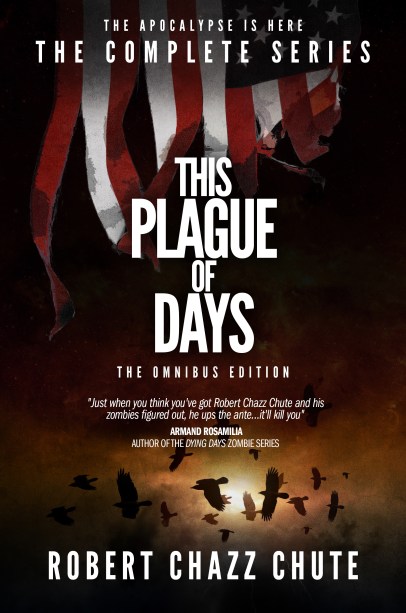
This Plague of Days OMNIBUS (Large)

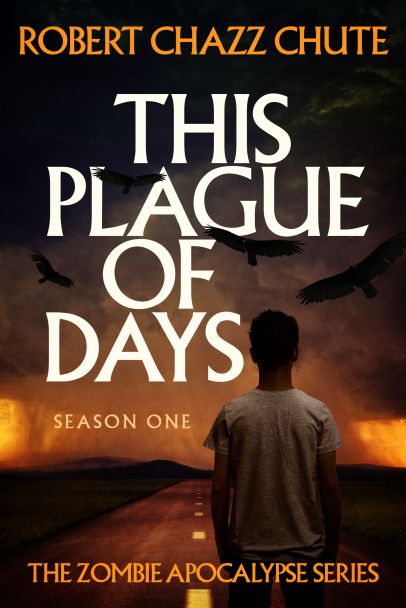
The First Season is The Siege. The Second Season is The Journey. The Third Season is The War.

Think The StandStranger in a Strange Land + The Walking Dead.

That’s the This Plague of Days Omnibus.

Free. 

Today.

You know what to do.

Bravery is not required. Action is.

Filed under: ebooks, , , , , , , , , ,

#NaNoWriMo: How to make writing a novel easier than it looks

I write drafts for my novels at a rate of 1,000 words per hour. I can string more of those hours together if I plan ahead with a general outline, but I usually pants it rather than plot it. 

I think of my writing time in terms of word count and hours. Here’s why:

When I wrote This Plague of Days, I didn’t think in terms of hours then. I didn’t budget my time or work to a word count like it was a job. I just put my head down and wrote and revised many times, stealing time here and there without a real schedule. I can’t tell you how long it took to write that epic saga because I went through so many revisions. Also, because my approach was haphazard, I wrote slower then. Though I worked from an outline, the project took longer than it could have.

I was buying into the meme that slow cooker writing was the only way, despite Stephen King’s suggestion that three months ought to do it (and look at the size of his books!) If I wrote that series now, the first draft would take about 300 hours of actual writing time. That’s less impressive than saying it took me years to write TPOD, but it’s more accurate.

(By the way, I just found out the This Plague of Days, Omnibus Edition has advanced to the second round in the Writer’s Digest Self-published Ebook Awards! Yay!)

When someone says it took them two years to write their first novel, that’s not true.

Two years equals 17,531.62 hours, including time spent sleeping, showering, goofing off, playing with children and pets and holding down a job, and procrastinating etc. Authors can write as fast or as slow as they’d like and each process is unique. However, there is no direct correlation between speed of production and quality. In fact, for the first draft, quality is nigh irrelevant.

Quality comes with subsequent drafts.

I find most of the jokes in the second revision and the plot problems to be fixed become clearer by the third revision.

Take NaNoWriMo, for example…

I’m planning 55,000 words for my current WIP. That means 55 hours for the first draft this month. As my current schedule allows, I’ll be done well before the NaNoWriMo deadline as long as I continue to protect my writing time.

Fifty-five hours sounds much less intimidating and more realistic, doesn’t it? What’s one work week to you? Forty-four hours? I approach my writing like a job. It’s a job I love, but there’s no waiting around for inspiration to come to me. I hunt inspiration down. Inspiration and efficiencies are habits learned by writing more and doing so consistently.

Sometimes the best laid plans go awry.

For my crime novel, Intense Violence, Bizarre Themes, I’d planned on looking for the exit to the book around 50,000 words and topping out at 55,000 words. It took me an extra 17,000 words to wrap it up neatly at 67,000 words. Still, 67 hours to a first draft sounds like much less drama than saying it took me a month. That’s just 16.7 hours per week to come up with a first draft. (For a while in the ’90s, that’s about as much time as I committed to watching television.)

I’d give you a measurement of editing and revision times if I had them, but that varies too widely depending on the book. For instance, I’m putting my time travel novel on hold because I’m not happy enough with it yet to release it. I’ll come back to it in 2015. However, I expect to have my current WIP out in time for Christmas (assuming I still love it when I’m done.) 

Write as slow as you want to or as fast as you can. It doesn’t have to be a job. Hobbies are good, too, so write at the pace you choose.

My point is, we don’t have to be drama kings and queens about the writing process. When you hear of writers putting out a lot of books fast, that’s not really quite as hard as many would lead you to believe. Writing is a time management issue first. The other skills required come into play after we commit to investing the hours.

But it can’t be good because it was written too fast!

Writers who cherish writing slowly have my utmost respect until they insist others write at their pace (and many people write much faster than I do.)

On the Road, Casino Royale, The Gambler, A Clockwork Orange, The Prime of Miss Jean Brodie and As I Lay Dying were written in less than six weeks. I wonder if any of those famous books were actually written in less time than that if the authors had tracked their hours.

Fast writers manage fear because they think about each book project in terms of a formula:

Word count goals + hours x perspiration (divided by distraction)

Prolific writers manage their time, that’s all. No drama. Inspiration usually arrives at the keyboard at about the same time we do.

Write. Revise. Edit. Enjoy throughout. (Now don’t tell anyone how easy it is to get to big word counts or they might start to think that writers aren’t special snowflakes!)

~ I’m Robert Chazz Chute and I just published my 15th book. Imagine how many more I could have written if I hadn’t been sucked into the vortex of “Must See TV” back in the day. 

Filed under: My fiction, publishing, Writers, writing tips, , , , , , , , , , , , , , , , ,

The Chazz Redemption: Course Corrections along the Publishing Way

There is much to do. I wrote the first drafts for three books in two months. If you’ve noticed I’m not posting quite as often here, that’s why. I’m gearing up for Christmas (yeah, I said it!) and trying to catch up on a list of new priorities. Here they are:

1. I’ve got Self-help for Stoners back from BookBaby. It was my first book and I wasn’t confident I could upload it myself way back then. I was so shy. It’s out of the hands of the intermediary so now I can make changes without it costing an organ donation (because all my organs are my favorites.) After a fresh round of edits for the next edition, it’ll be available again.

2. I’m behind on my print editions of This Plague of Days. Catching up with Season 3 fast. The Omnibus will be ready soonish (i.e. a month if the formatting goes as planned.) I’ve developed a list of people I want to send the TPOD Omnibus to. Time to get the series more attention and reviews.

3. I think I’ll make Murders Among Dead Trees available in print, as well. I happen to think it’s one of my best books. Print is mostly a promotional tool for me, but paper versions are also important to some readers. Print is also useful as a price anchor for the ebooks. It lends legitimacy. Plus, I have a book fair coming up.

4. I’ve got to track outgo better than I track income. I want less drama at tax time and I have to trim expenses.

5. The next book in the Hit Man Series is now with the beta team. I’m going to change the title and change how the book ends. I decided to do that as soon as it went out to beta readers. Panic is so creative. These are small but important tweaks because I’m going to rebrand the series. (More on that in another post.)

6. Revise two more books. One novel is in time travel and the other is a crime story. The plan is to come out with a new one about every 30 days to boost my visibility. The cliff we all tend to hit thirty days after a book launch is horrific and I already swing back and forth from depressed to somewhat manic.

7. What’s changing with the new writing? Shorter books, generally. I still have another huge standalone book banging to escape a drawer.

Also ahead? Faster pacing. More jokes. (More on that another time, too.) I have deadlines in my mind. If I don’t meet sales targets with certain books, I’ll be changing genres. I’ll also be embracing pseudonyms. Readers of this blog know I’m averse to pen names generally. However, I reserve the right to change my mind when it suits me and when evidence arises to my first opinion.

8. Get back to podcasting. I’ve taken the summer off for a number of reasons. It’s time to find some guests for the Cool People Podcast (check out the guest page here.) I also need to finish up the Higher Than Jesus read on All That Chazz.

After that read is done, I plan to change the podcast format a bit. It’s time for a revamp with books, too. It took me years to write This Plague of Days. I’m proud of it. It’s my Star Wars. Now I’m focusing on series books that come out faster. 

That’s enough of a list for now. I have more to do, but long to-do lists are just another way to procrastinate. For more fun, write a to-done list. Plan to accomplish something specific and by when. Write it down and cross it off, all in one day. Feels good.

The kids are back in school and I’ve been bone-deep grieving dead friends.

Time to get busy livin’ or get busy dyin’, Red.


Filed under: author platform, What about Chazz?, , , , , , , , , , , ,

The Revolutionary Writer’s Manifesto: Ride that moose!

There is a myth a few really believe. It is the Myth of Originality.

Let’s pop a bubble. There are no new stories. I’ve seen a few stabs at a truly new story, of course. Those experiments are often bloody awful and unrelatable adventures amongst amoebas dwelling in the rings of Saturn. Screw amoebas.

Plots round the same bases all the time:

1. Good versus Evil.

2. Boy gets Girl (and variations thereof).

That’s okay. When a reader complains a story is unoriginal, they probably really mean that it is derivative. Unoriginal and derivative are two different things. It’s derivative if it overshoots homage, feels too much like something familiar while falling short of plagiarism. No story fails on unoriginality alone or all movies of the last few years would be failures.

What readers want is originality in execution, a unique voice and an uncommon angle or viewpoint. You’ll either give it to them or you won’t, but don’t be a weathervane, spun by the whim of the latest review.

This Plague of Days, my apocalyptic saga, has been criticized because it started out in one plausible place and ended in another, rather magical place. That place is not derivative. It is merely unexpected and I make no apologies. I confess, I’m a little flummoxed by folks who find zombies plausible but roll their eyes when vampires show up.

Anyway, why should I apologize? The reasons given why a few don’t like my story choices are the same reasons the majority love it. If, amongst the action, we take a chapter to deal with the origins of good and evil in the universe, that’s my choice. The metaphysics chapter is my favorite…well…that and the many chapters where a horde of the infected attack Wilmington, Vermont.

Write for you, the writer.

If it doesn’t sell, that one was always just for you. At least you’ll be happyish with it. If you write for the crowd you imagine, you’ll often write for no one. Some people manage it well. They make a good living writing similar books and plumb expected veins. If that’s you, you do you and I won’t complain if you’ll let me do my thing, too. In fact, congratulations and good for you!

For instance, I don’t read Dan Brown, but millions do and they love his work. I bet he achieved that by writing for himself. Yes. Let’s not be cynical. He’s not writing by committee and poll and he’s entertained millions. Consider JK Rowling, too. Harry Potter started a copycat industry, but what she was doing wasn’t popular when she began. She wasn’t chasing a market. She was chasing her dreams despite being told by so-called experts that children’s literature would never give her a big payday.

Follow your vision. As we say in the snowbound depths of Canada ten or so months of the year, “Break trail. Ride that moose!”

The Feedback Tightrope

I’m not advocating that anyone operate in an echo chamber. I do get feedback from beta readers and I’ve altered choices because of that valued feedback.

However, some people seem to think they should have more input into those choices. “I wouldn’t have written it that way.” To which I say, “Go write your book. I wasn’t trying to read your mind through a time machine when I wrote mine.”

The Statute of Limitations

I’m not going to give you solid numbers on what or when anyone can use a recognizable device again. There is no number. All I ask is reasonableness.

If This Plague of Days feels too much like The Stand to you, my reply is:

1. Thank you for the compliment! I love The Stand and it’s a big favorite among Stephen King fans. I’m not copying it but I recognize the similar elements, sure. I regret nothing.

2. “Similar elements” does not equal derivative. My characters are unique. It’s a different story in the same genre, that’s all.

3. The Stand was published in 1978. If not now, when am I allowed to write This Plague of Days or any other book that has any commonality with any other book you’ve read? Keep in mind that I’m almost fifty and not as fit as I should be. I can’t wait forever.

About Unconventional Choices

1. My crime novels are written in second person. Recently I read some twit announce that no book written in second person could have literary merit. Ev-er. “Too much you, you, you,” I guess. And yet, first person is all “I, I, I…” Somehow, we manage to soldier on with our lives and no link has yet been found between second person POV and killer tornadoes.

2. Bright Lights, Big City was published in 1984 to great acclaim in second person POV. Another author, (me, for instance) will get permission to use that POV again…when? From the curmudgeons? We’ll never get permission, so I’m not asking.

I need no one’s permission and neither does any writer.

That felt daring and liberating, didn’t it? But really, what’s the point of being in charge of what you publish if you can’t steer the ship where you want to go? Nobody gets into publishing for their health or to be safe. If you want safe, get into an industry that’s too big to fail: guns, drugs, banking, sugar, corn syrup or manufacturing lies for politicians.

The danger

I know this sounds dangerously close to the “I’m not here to make friends,” defense. (That’s what mean people on TV pseudo-reality shows always say. That and, “I’m not a dick, I’m just brutally honest.”)

Not every reader will agree that you should ignore them and simply follow your instincts when you write. They’ll punish you by not buying your next book. But really, is your autonomy and vision for sale for a couple of measly bucks? Is that the whorish vision of yourself you really want to embody? I doubt it. Besides, you’ll flourish when you write what you love. Follow your love and you’ll write more books. Only hacks write what they hate.

I’m not looking for 10,000 true fans by trying to be what they want.

That’s a moving target, and fickle. I’ll be me. Surely, somewhere out there, there are 10,000 people who are enough like me that they’ll dig what I’m doing. Right? Right? Oh, dear gawd! (Shoulda gotten into running guns and drugs for lying politicians!)

Doesn’t matter. I only know my mind. I’ll write for that audience and hope you appreciate my flavor. It’s okay if you don’t, by the way. No one is drafted into my army. I only take volunteers and my people do not clutch pearls or get the vapors easily. We’re here to escape the status quo, take the world and bend it to our will. Or fail. But we’re not here to be pushed around.

If I’m wrong, I’ll be wrong but happyish.

~ With the loss of a treasured friend, I had a tough week last week. It’s not really getting easier. One thing that has provided some solace is the number of people who have wished me peace here and on Facebook and Twitter. In my grief, I wrote. So many readers responded with kindness. I appreciate it so much. Thank you again. 

Filed under: author platform, My fiction, publishing, Writers, writing tips, , , , , , , , ,

Why you’re going to make it

As indie authors, we’re all encouraged to work harder. That’s frustrating to hear because I don’t know any indie authors who aren’t working hard. But I’ve got good news. Your chances of achieving some measure of success are better than we’ve been led to believe. Here’s why:

1. Businesses fail all the time, big and small. But our overhead is so low, we can continue after we fail! When your hardware store goes out of business, you’re done. We get a few kicks in the ass, but authors also get more kicks at the can.

2. Every business that ever made it to sustainable got there because the boss/producer didn’t quit. Many of the biggest success stories come from people who failed and failed and failed at their chosen path but were too dumb to quit. Stubborn is our advantage.

Being a writer isn’t just a job. It’s an identity. It’s a compulsion. How often do you really consider quitting? For many of us, we never seriously consider stepping on the brake. We’re writers and we always will be.

3. We have the right attitude and mindset about what we do. When a software engineer keeps his head down through seventy days straight of boring coding to come up with an amazing game, he’s applauded. Wow! Look at the art he created after all the boring stuff he did! Imagine all the fun stuff he went without to produce all that work!

Coding relentlessly may sound boring to us, but he’s probably into it precisely the same way we’re into books. Everyone has parts of their job they don’t like, of course, but could coding be any more boring than your eighth round of edits on a 100,000 word manuscript where the timeline and logistics still don’t quite work? 

What we admire in entrepreneurs is true of authorpreneurs. We make things happen in our business because we have passion for detail and it never occurs to us to quit. People who don’t quit write more books.

4. People who write more books have a greater chance at rewards, monetary and otherwise. 

Years ago, I met Dick #1 who asked Guy #1 what he did for a living. “I’m into convenience stores,” Guy #1 said.

Later, after Guy #1 walked away, Dick #1 said something disparaging about how little money anyone could make out of a convenience store. 

“You’re a fraction right,” I said. “How much do you think somebody could make out of a convenience store in a year?”

Dick #1 sneered. “Not much. $10,000. $15,000, maybe.”

“Well,” I said, “don’t get too judgy. He makes a lot more than you think he does.”

“Impossible!”

“Guy #1 owns ten convenience stores,” I explained. “And stop being a #1 Dick.”

So it is with books. Publish and somebody will dig your flavor and spread the word. Put a lot out there (improving with each book.) We can do okay in the long run. This isn’t an all or nothing game. It’s just a really long game.

5. The path to success is linear. You know what to do or you can learn what to do. All you have to do is continue.

Years ago, it seemed like the biggest topic was writer’s block and finding time to write. Finding time is still a challenge, but people whine less about writer’s block and I think I know why. They know they will be published now. Your destiny is in your hands and it’s not in anyone else’s. 

We aren’t worried about gatekeepers now. We’re anxious for many reasons, but our entrails don’t go into knots because we could spend years writing a book that no one will have a chance to read. We know we are spending energy toward a realizable goal that will happen: publication. If you knew you were going to the Olympics to stand before the world no matter what, you’d train every day. That’s us. To get to the big show, all we have to do is get on with it. 

6. There is a low bar to success. I’m not talking about becoming a millionaire. Not necessarily, anyway (though that indicates a high level of achievement.) Success is different for everyone, but you’ve got a much better shot at success than anybody daring to open a new yoga studio, hardware store or any other endeavour that requires employees, rent and huge bank loans. So cheer up. Authorpreneur is actually a pretty safe business venture.

Like many businesses, it starts off as a hobby and grows or it doesn’t, but you probably aren’t risking everything to do it. Plus, you get to do what you love. A lot of people are stuck in frustrating businesses where they feel thwarted. I often feel thwarted as a writer. I’m often envious of other people’s success. But I don’t love what I do any less. Loving what you do is perhaps the only immediate success, but it’s powerful.

7. Does finding 1,000 true fans really feel that intimidating? Many gurus say (as a general rule) 1,000 true fans is all we really need to reach sustainability. That’s less than the number of people in the tiny village I’m from. My goal is eventually to find 10,000 true fans. I can picture that. It doesn’t seem unreasonable.

The Staples Centre in Toronto has 19,000 seats and that’s just one city showing up to watch the Raptors play! (Sure, a Canadian invented basketball, but few are that excited about the Raptors. Still, they have enough die hard fans to keep the lights on and the refreshment stands busy.)

Getting half as big as the Raptors at the the writing game seems doable if I live long enough. That’s why I’m drinking more green smoothies, working out and eating less sugar. And writing my ass off.

8. Remember the statistic about how most indies make less than $500? Sure. That’s depressing. But I look at it like mortality stats. We used to die a lot younger, but that was because of the infant mortality rate. It’s a myth that people only lived to thirty a few hundred years ago. Many people lived longer but the infant mortality rate dragged down the average age.

You’ve just read all the way down to Item #8 on a blog post about writing that’s more than a 1,000 words. I’d say you’re pretty serious about this writing thing. Lots of people aren’t. Lots of people weren’t and they could imagine doing something else besides writing. For them it was TL; DR (Too Long; Didn’t Read.) They’re off pornsurfing while you stayed to hear me out to the end. You are not going to let your writing perish due to crib death. You’re in the survivors club and you know what I’m talking about when I talk about the writing life. Your chances of doing better than average are better than average. That’s why you are going to make it.

This Plague of Days OMNIBUS (Large)~ I am Robert Chazz Chute and I’ve written eleven books. I’ll write at least three more this year and they are going to be awesome. I am your happy warrior of the word. Check out my books at the author site, AllThatChazz.com. Find out more about my doomsday book with the autistic hero at ThisPlagueOfDays.com.

If you’ve read, This Plague of Days, Omnibus Edition (pictured and clickable, above), please review it. That would be awesome. Thanks!


Filed under: publishing, self-publishing, What about Chazz?, What about you?, Writers, , , , , , , , , , , , , ,

Writing Moonlighting Top 10: There’s going to be a pie fight!

There are many ways to write and no one can say any are “wrong”. Well, the kitten sacrifice was a little much. Here’s one way to go:

Anybody remember the TV show Moonlighting? It was a comedy that was on TV when Bruce Willis was adorable and Cybill Shepherd was Cybill Shepherd. During production, sometimes the planning seemed haphazard. The lowest guy on the totem pole in the writing room would run down a hall, stick his head in the door at the props department and scream, “There’s going to be a pie fight! Get 500 pies ready!”


That’s writing toward a scene.

They didn’t have everything else filled in yet, but they knew they wanted a big set piece and pie would fly.

From Google: 

set piece
noun
A thing that has been carefully or elaborately planned or composed, in particular.
A self-contained passage or section of a novel, play, film, or piece of music arranged in an elaborate or conventional pattern for maximum effect.

What’s this mean to you and your readers?

Deliver maximum effect.

You’re writing your book. Events happen. Complications ensue. Characters conflict. You know. Story stuff. A set piece is a story beat but not every beat is a set piece. This strategy reverse engineers your novel. You think about the big scenes you want to deliver and sketch those out so you can lay the groundwork and build the ladder or plant the garden. Pick your writing metaphor here. Without that context, it will feel stuck on so be careful to stitch tightly and weave over the seams.

The Big Scene: Put on the Helmet of Imagination!

The Last Evil Clown fights The One Good Mime atop Mt. Rushmore. Or the nuke detonates in Dubuque just as the hero teleports away to the bridge of an exploding starship. Whatever. You could write the context that gets your readers there and excited about it.

Set pieces are big stakes scenes so:

1. Add the ticking clock device. 
2. Kill a major character.
3. See it as the movie scene where the special effects department blows wads of cash.
4. Make it a major turning point.
5. Reveal something huge.
6. Deny the protagonist their easy victory.
7. Award the main character their vengeance.
8. Reward the villain with a huge comeuppance.
9. Pay off the reader with a spectacle, or at least something spectacular.
10. Books are long. Don’t have just one set piece.
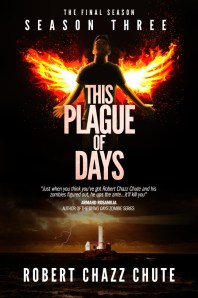
Robert Chazz Chute This Plague of Days: Season 3~ In This Plague of Days, Season 3, the big battles constitute set pieces. Not every set piece has to be a violent cataclysm though. When the big secret is revealed in the library in Season 3, that’s a set piece, too. You’ll know when you get there because you’ll suspect I wrote it high on acid. If you don’t know what I’m talking about, I have something for your TBR pile. 

Filed under: Writing exercise, writing tips, , , , , , , , , , , , , , , , , ,

The Business of Writing Top 10: How to have more fun

Have you ever watched shows like World’s Funniest Commercials?

This Plague of Days OMNIBUS (Large)When the show took a commercial break, did you sit on your couch and watch the regular commercials and wonder why they had to be so bland? Or did you go make a sandwich or run for the bathroom? Commercials don’t have to be as bad as they often are. Think of the annual hype around Superbowl commercials. How is it that the rest of the year, commercials are background noise for making sandwiches and flushing? The ad industry should try harder.

And so should we. Book promotion can be fun. We should take fun more seriously.

When we write our books, we are at our best. We’re witty and play with ideas and irony. We tell stories. We’re in the entertainment business. So why lose all that buoyancy when it comes to promoting our work? Advertising is writing, too. Yes, writing back cover blurbs and advertising copy is a somewhat different skill set, but this is not rocket science. Examples of good and bad sales copy are all around us. Emulate what works on you.

Some copywriters will enthuse that, sure, maybe you can write a book, but leave a couple of paragraphs of sales copy to a professional. That sounds rather convenient and self-serving, doesn’t it? IRobert Chazz Chute This Plague of Days: Season 3 don’t believe it. It’s great to be able to hand off such work to others with confidence, but for most of us, we’re writing our own promotional copy. Let’s loosen up and raise the bar.

If you can write a book, you can promote your work effectively without falling back on the cliché of “Buy my book!” I admit, there are writers who only say “buy my book” on Twitter and they are derided everywhere. I think this happens because no one has given them permission to be as imaginative and bouncy as they are when they write their books. It’s all writing, not a separate challenge. If it feels too different from writing books, it’s probably erring on the side of bland.

This is your permission slip:

1. Have more fun. There’s a reason it’s Rule #1. It’s that important, for you and your readers.

2. Use more pull quotes from your work of genius.

3. Make a joke. Be self-deprecating. Be different. Dare to show some personality. Let the joy leak through from your usual writing.

4. Craft something you’d want to read and act upon as a reader.

5. Relax. This is a marathon, not a sprint. Your sales plan doesn’t have to come together within a week or two of your book launch. Ebooks are forever and there are plenty of kicks at the marketing can ahead.

6. Sell less and interact more. Conversations are good. Blaring at is bad.

7. If you can’t interact, curate.

8. Selling effectively is never about selling. It’s about helping your tribe identify their want and need for you. I’m not here to sell. I’m here to help you buy. Stop being so self-conscious and apologetic about what you’re doing and do what you do in books: Put on a show!

9. Not all books are for everyone. Identify where your readers hang out and go there. Advertising for a niche and to a tribe willing to spread your good word is more important than trying to be all things to all people.

Smile. Rejection is a gift. It relieves you of the stress of dealing with boneheads later.

10. Tell more stories, not just in writing books, but in your promotional efforts, too.

Here’s an example of some fun I had on Facebook today:

Newspaper

“Abandoned to an unfeeling universe, an increasing number of Americans are turning to This Plague of Days to confront ‘the horror of it all,'” an anonymous State Department official said. High-level advisors at the White House confirm, “An autistic boy named Jaimie Spencer, 16, of Kansas City, Missouri, may be key to resolving existential ennui. There are jokes, too, but mostly it freaks us out.”

Senator John McCain stated that Congress still can’t decide if Chute’s book is “literary bull****, zombie bull**** or ‘some other bull****.'” The gridlock continues.

Senator Rand Paul is threatening a filibuster, stating, “This is not horror per se! This is dark fantasy and President Obama knows it!” The secret of This Plague of Days remains classified to all but those who read to the end. Rumors of secret video and an offer of a free ebook are confined to those who read the TPOD Omnibus Edition. While Progressives call that anti-egalitarian and elitist, Secretary of State John Kerry said (in a speech that felt like three hours), “That’s capitalism. Whaddaya gonna do?

Meanwhile, the US Congress approval rating has sunk to a new low of 8%, still above public approval of McDonalds’ fishwich and slightly below mononucleosis as a diet strategy.

However, in a stunning break from party lines in a gracious “hands across the aisle” gesture, Speaker John Boehner and Liberal Senator Harry Reid did come to some concord and issued a joint statement. “The pace really picks up in Season 2 and the gross outs were balanced by some high-minded stuff neither of us really understood. We are all frightened for the Spencer family and keep them in our prayers.”

Robert Chazz Chute Bio Picture~ That was fun. I wrote a post recently answering reader’s questions about This Plague of Days. Find that here.

Filed under: author platform, book marketing, Publicity & Promotion, , , , , , , , , , , , , , , , , , , ,

Art matters. Writing matters. We matter.

Graphic designers make a big difference to readers and the success of authors. A snarky writer once told me I was a hack, too concerned about the look of my book covers. Once.

Everyone else knows, yes, of course we do indeed judge books by their covers.

You can say it shouldn’t matter all you want, but beautiful people and beautiful things get more attention. I won’t find out if you have a great personality and keen intelligence if, when I spot you from across the room, you appear to be surrounded by flies because you’ve rubbed dog feces in your hair. That’s life. That’s science. 

My graphic designer is the brilliant Kit Foster of KitFosterDesign.com. Check out his portfolio.

Kit is my friend and ally. He helps to make my existence matter. He’s helping me get my message out, subliminal and subtextual. It’s that important. All my books are about escaping who I was. They’re about all of us rising to the higher potential of what we could be. Everything I write is about making our existence — yours and mine — matter. Book covers are the come hither stare that lets me into your brain, to play in the Mindfield, to turn the words, to entertain, laugh and think. That’s what it means and why Art matters.

That’s the why. A book cover with solid art is part of the how.

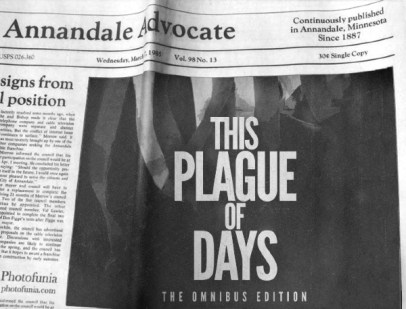
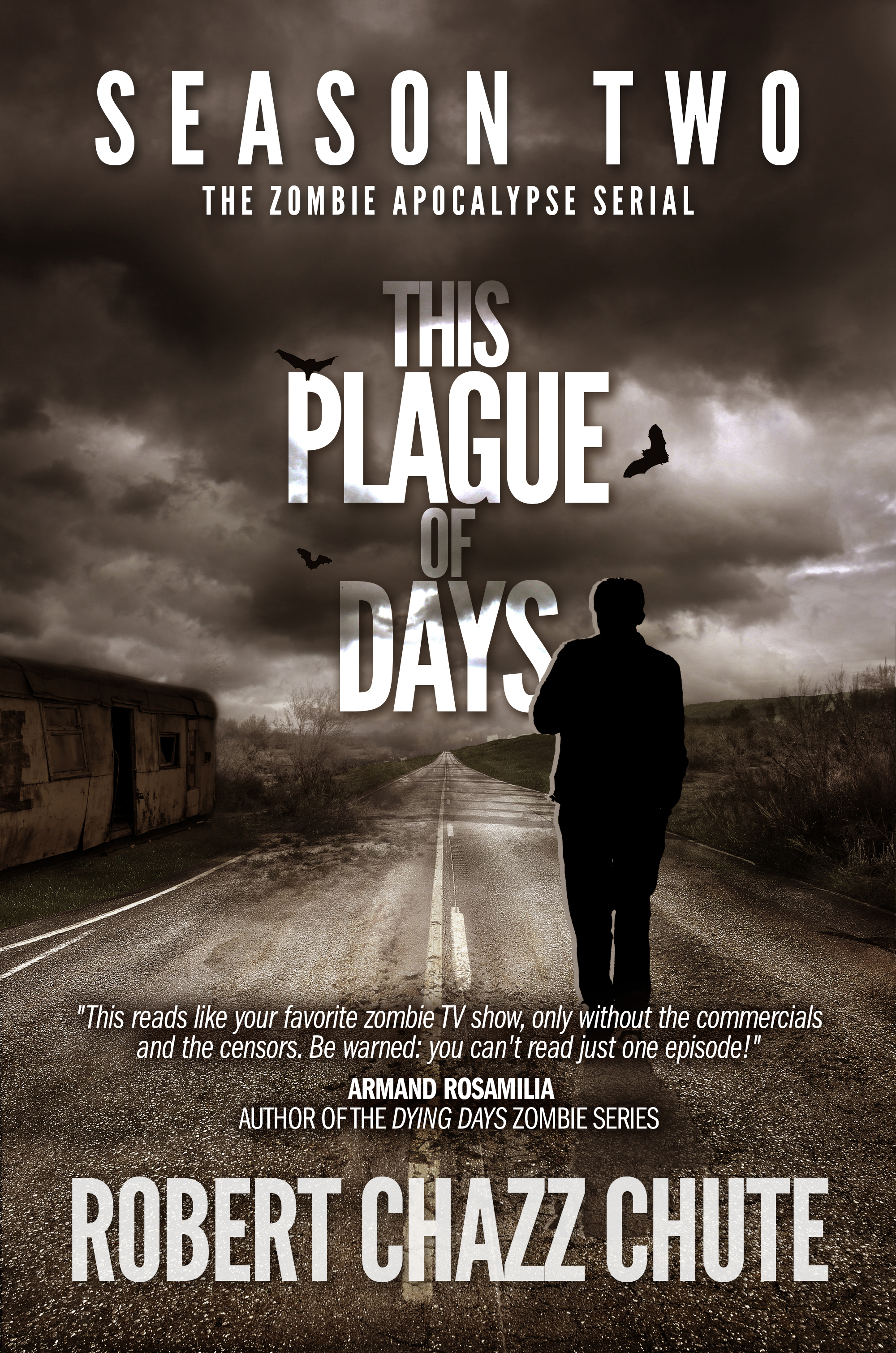
Here is the new cover for the This Plague of Days, Omnibus Edition. It’s not at all what I pictured for the Omnibus cover. It’s better. I just let Kit do what he does best so I can concentrate on what I do best.

This Plague of Days OMNIBUS (Large)

To find out about more about secret video and to get a free ebook with your purchase of the TPOD Omnibus Edition, click here.

~ I am Robert Chazz Chute and, even though I occasionally write books with zombies in them, I am not a hack. It’s not the subject matter that makes the hack. It’s a lack of passion. Ultimately, with every twist, turn, joke and murder, I’m writing about me. And you. 

The suspense is in making our existence matter. Can we do it?

We will.


Filed under: book marketing, self-publishing, This Plague of Days, , , , , , , , , , , , , , , , , , , ,

Sweet Book Pie: Bonuses for readers, a tip for writers

When ebooks first emerged, the goal was to make them appear as much like paper books as possible. Generally, we’re still doing that and that’s a good thing. I’m not a fan of “enhanced” ebooks that pack in distractions. I don’t want the soundtrack to the battle scene as I read. I want to immerse myself in the story. A movie is a movie and the media don’t mix well. The movie we make in our heads from reading is usually superior, anyway.

I did use video in a different way to reach out to readers in This Plague of Days, but it’s a link buried in the back of the TPOD Omnibus, not something to accompany the story. (I told you about that secret video and the free ebook bonus last week, so click here if you missed that.) 

But yet another secret awaits in the This Plague of Days Omnibus.

Many readers may not really be aware of it. This is where thinking about ebooks as ebooks comes in. I did something fun with the Table of Contents, but you have to look for it to see it all at once. The key is, the Table of Contents doesn’t have to go in the front of ebooks.

Go find it Scooby Gang! 

To get the TOC in This Plague of Days, Omnibus Edition, you have to “go to” the TOC (which I placed in the back of the book.) I did this for several reasons. The main one is that it’s another Easter egg for TPOD readers. 

The TPOD TOC is one long, dark poem. It contains veiled hints and clues to the story arc from beginning to end. Much of the poem will make more sense in retrospect. To get all of it at once, it’s in the back of the TPOD Omnibus Edition, but the individual ebooks (Seasons 1, 2 and 3) yield chunks of it, as well. 


Why I love it:

It was fun to create. I like poetry, especially dark and mysterious poetry. I enjoy the fact that readers will see how it all comes together upon finishing the trilogy. I love the fact that I did something different from the expected. That’s my thing. To be perfectly honest, I love that I’ve done something a mainstream publisher probably wouldn’t allow me to do. I don’t consider myself an experimental novelist, at all. I just think it’s a fun add-on in this case.

Sure, readers could skip from chapter head to chapter head to get it, but that’s awkward. Most people won’t do that and you don’t get the full effect reading it piecemeal. Will it gain more readers? Nah, probably not many. I think of it as a little extra for people who are deep into TPOD. Cater to them what dig your grooviness and you’ll get more of those groovy people.

But there’s a much more important reason to put the TOC in the back of your ebook.

It’s about the size of the free sample on your sales page. When readers look at samples, they want to get into the story quickly. With non-fiction, I do want a peek at the TOC up front so I can grok what will be covered. With fiction, the TOC gets in the way of the narrative and cuts down on the sample size. To get readers deeper into the story, we have to get that TOC out of the way so we give the reader a bigger sample of sweet book pie.

Whenever possible, give the readers more pie so they can decide if they like your flavor. I’d rather have thousands read the sample before buying and say no than have dissatisfied readers who were looking for dragon/Big Foot erotica and, inexplicably, bought my book instead. Unread samples are where most bad reviews come from.

Generous samples get people to buy cartloads of stuff from Costco every weekend. Much of it they didn’t know they wanted until somebody said, “Would you like to try a taste?” 

Add value. Add fun. Play with the reader. Give ’em more pie. Always give more pie. Put your next novel’s TOC in the back of the book.


Robert Chazz Chute Bio Picture~ This Plague of Days book bargains continue. Find out about that here. 

Or not. I mean, geez. It’s a low pressure situation, man. Chillax and enjoy as the apocalypse unfolds all around us. You’re already soaking in it so you may as well soak it in.

Filed under: author platform, Books, ebooks, writing tips, , , , , , , , , , , ,

Writing: Where the money is

Everybody wonders what the next big thing will be in our expanding industry. In other words, “Where’s the money?”

As it relates to writing as an industry, money looks sparse at first glance. I mean, banking, drugs and guns is where the big money is. However, for our industry? The big money in writing is in the beams and braces. Infrastructure. The money will go to people who service our needs as indies. So ask yourself, what do we need?
1. Book apps. We don’t really understand book apps. Programmers do. Book apps with a subscription service could work, especially for certain authors who are in traditional publishing now but will soon make the leap to self-publishing.

2. Author cooperatives. Box sets may already be on the way out, but I think more authors will share resources and trade skills, either in small, structured groups or as part of a time bank organization, or both.

3. Organization provision: Many of us cringe at the idea of a union because it reeks of gatekeepers. I’d say that’s only because the writers unions that have been proposed for indies so far stink of more gatekeeping. Innovators out to advocate instead of control could do better than that, for us and for themselves.

4. An alternative to ACX that’s more generous to creators. ACX was awesome. Technically, it’s still awesome though the creator share is down. Have you noticed that, since ACX lowered the pay rate, we aren’t talking about ACX near so much anymore? We’re still using it because audiobooks are our future. For some, they’re our today! We’d like more choices and we’d like to get back to the bigger cut, though. (The obstacle is effective distribution, so that will have to be bankrolled.)

5. Selling direct from websites will become more popular. You can use Gumroad to sell digital products now. The problem is, no one wants to sideload their kindle with a pdf. Find a way around that problem and we’ll all be doing it to some degree. Fewer buttons, one click. That’s key.

6. Discoverability tools are more important than information. Make more discoverability tools (like you’ll find at Author Marketing Club, for instance.) Information is free everywhere, including here. Ways to help readers find us are harder to come by.

7. Services that promote indie authors will make money. Bookbub is at the top of the heap now, but BookGorilla is cheaper. The Fussy Librarian is very low cost. if I recall correctly, the latter was built partially in response to Bookbub’s fees. Bookbub has big lists of subscribers, sure, but they have competition and it’s growing because Bookbub is so hard to get into and can be so expensive.

8. The company that finds a way to make it easier for books to be printed and distributed (cheaper, faster and easier than it can be done at present) and get it to libraries and bookstores will make a lot of money. Be the new Lightning Source, for instance, but make it as easy to deal with as CreateSpace. (LS has improved in this regard, but I’ve checked it out and it still feels like a hassle.)

9. Translation houses. Everybody knows foreign language publishing is going to be huge. What we don’t know is whom to trust to translate our work and whom to ask to make sure the translations are any good. We’ll also need people (formerly known as agents) whose sole occupation is dealing in foreign rights sales. The markets are waiting, but most of us aren’t ready.

10. The next destination website for our readers. We need a destination website that operates as a cool magazine that curates our work to readers. We need to provide a way for readers to find us and vice versa. We don’t need another Writer’s Digest. We need a Reader’s Digest, if you will, for our work but catering to readers. If there aren’t click to buy and click to explore buttons at the end of each story or sample, it will still miss the mark.

You could, of course, simply write the next big thing.

We are writers, after all. We don’t want to think about all this tech stuff. That’s why someone with the skills to fulfill these needs will eventually appear and get paid.

If you’re still bent on writing to make money, the trouble is that no one knows what the next big thing really will be. No one saw Fifty Shades of Gray coming. It’s not like it was the first book of erotica to go on sale, but it went huge. Its imitators didn’t make near as much dough. Breaking out is not something you can chase, exactly. It happens to you and there are too many variables outside your control.

Just write the best book you can. When your book is ready, I really hope those trusty translation houses will be up and running and ready for business.

What are your ideas for the support structure our industry needs?

~ The good news. I’m now in the Top 100 Horror Authors on Amazon! The book launch bargains continue for This Plague of Days here. See what all the fuss is about, see the video and find the secret.

Filed under: author platform, , , , , , , , , , , , , , , , ,

Bestseller with over 1,000 reviews!
Winner of the North Street Book Prize, Reader's Favorite, the
Literary Titan Award, the Hollywood Book Festival, and the
New York Book Festival.

http://mybook.to/OurZombieHours
A NEW ZOMBIE ANTHOLOGY

Winner of Writer's Digest's 2014 Honorable Mention in Self-published Ebook Awards in Genre

The first 81 lessons to get your Buffy on

More lessons to help you survive Armageddon

"You will laugh your ass off!" ~ Maxwell Cynn, author of Cybergrrl

Available now!

Fast-paced terror, new threats, more twists.

An autistic boy versus our world in free fall

Suspense to melt your face and play with your brain.

Action like a Guy Ritchie film. Funny like Woody Allen when he was funny.

Jesus: Sexier and even more addicted to love.

You can pick this ebook up for free today at this link: http://bit.ly/TheNightMan

Join my inner circle at AllThatChazz.com

See my books, blogs, links and podcasts.

Enter your email address to follow this blog and receive notifications of new posts by email.

Join 2,063 other subscribers