C h a z z W r i t e s . c o m

See all my books at AllThatChazz.com.

Author Blog Challenge 10: How to make me want to spread your word

English: A pie chart created in Excel 2007 sho...

English: A pie chart created in Excel 2007 showing the content of tweets on Twitter, based on the data gathered by Pear Analytics in 2009. (Photo credit: Wikipedia)

Regular readers know I use the Scoopit! tool to curate helpful stuff about indie publishing I find around the web. I learn a lot researching blogs, link to good content so you can find it and include my comments on the posts I recommend. Sharing and spreading publishing news is a happy bonus. If I believed in karma, helping strangers for free would be the good kind. Today, let’s talk about what makes your articles, posts and tweets attractive nuggets to link to.

But first, a true story: Anguished Author goes to A+ Agent for a meeting about her book. A+ Agent says, “The contract is signed but you need to build your platform more and you’ve got to make a viral video for the book trailer.”

Two thoughts about this story:

Writing helpful blog content and building back links is one way to build a strong platform. Author sites tend to be too much “Me, me, me,” and a more effective  author site is more about “You, you, you, the reader.” Figuring out what helps people will help you build your platform. (For instance, my author site is plastered with information about my books, yes, but it’s also my fountain of free comedy/fiction/narrative/commentary podcasts to extend my reach beyond fellow writers to the reading public.)

and

Sorry, but you don’t get to make a viral video. You make a book trailer. It will go viral or not according to the whims of other people, unless you pay a bunch of kids and robots to pimp it in chatrooms across the Internet. However, since all book trailers (except this fake one) are lame, that won’t work and you’ll fail to dictate the world’s taste. Cute and funny are your best bets since your budget for movie production is not the same as the Prometheus trailer and the audience is jaded by all that amazing acting and CGI.

So what makes me want to retweet and spread the word about your blog? There are some solid rules that are universally applicable and then there’s my capricious, subjective taste. That kind of makes me sound like a prick, but everybody’s got topics that push their buttons. The words: “how to” are probably the most powerful words in a blog headline for anyone. (See the “how to” title at the top of this post? You clicked it.) Self-publishing is a new world and everyone wants a tour guide.

Here’s what’s going through my head as I decide what to link to and promote:

1. I’m reluctant to post something that is time-limited, such as headlines that say, “Final hours of the giveaway” or “Tuesday Only!” My Twitter followers and blog readers might not get the message right away and I don’t want to annoy them with what they missed.

2. (A) Don’t write too many headlines that are too spammy. (No one knows how many “too many” is.) I don’t mind blog posts that reference your books. I do that myself freely and it makes sense to draw from firsthand experience. However, a headline that says “Buy my book” is only for your hardcore fans who will buy it no matter what. That draws no one new into your tent for the revival meeting.

2. (B) But! A major caveat since this book promotion thing is tricky: If you balance the promotional content with free education, entertainment and jokes about your genitals, that’s reasonable. Blogging is a lot of free entertainment and information provision. If you can find a reasonable balance, that’s fine with most people. Ask people to buy your book on your own blog and your own feed as long as that’s not all you do. (And by the way, just because you don’t want to read it, doesn’t make it spam. Someone else may want to whisk it off to Paris and pledge undying love over cheap red wine and croissants.) Fortune does not favour the timid. Take it from a timid person who has resolved to pretend to be an extrovert.

For instance, I auto-tweet a welcome message when anyone follows me on my twitter accounts (@rchazzchute, @thechazzsays, @expartepress). The fun message (of doom!)  provides links to my books. My guess is, people who hate that — and some really do — were never going to buy my books anyway. Others will either appreciate the heads up or suck it up, buttercup! Since adding the auto-tweets, my sales have gone up. So there. (I also don’t cooperate with the twit validation service thing. It’s slow and painful and if you want me in your feed, you want me. If you don’t, don’t. Don’t be a pansy about Twitter.)

3. No poetry. I wrote a book of poetry. I like it, but it’s too small a niche and outside what people expect when they come to ChazzWrites. It’s sad, but there it is. Margaret Atwood has written nine books of poetry last I checked, but even many of her fans would be surprised by the news that she’s one bad rhymin’ mammerjammer. Here it’s all about self-publishing, book marketing, writing craft, how-to, industry news and the occasional flambé of whimsy in your face.

4. Technical advice with specifics is great. Just this past week I linked to a post with step-by-step stuff about publishing to the Kindle. Hold my hand and I might get a crush on you. I’m easy that way. I might even whisk you off to Paris and pledge my undying love. Well, no. I’m borderline agoraphobic and I’m locked behind a hermetically sealed hatch in a subterranean bunker and you’re out in the real world doing…things. Blech! So we’re not going to Paris. However, I love tech advice and admire those tech-oriented authors from afar. Often I link to something I want to hold on to. Sure, I could just bookmark it on a reading list to get lost in the depths of my computer, but on my blog it’s easily searchable and organized.

5. Be a buddy. Long time readers may notice I mention Kit Foster quite a bit. It’s not just because he is a brilliant graphic designer. He’s also my graphic designer. Another ally in the fight is my friend Dave from the School of Podcasting. My podcast wouldn’t exist without Dave Jackson. We stay in touch on Skype and end up mentioning each other on our podcasts from time to time, too. There are certain bloggers and fellow authors who are my go-to people simply because I know them better than others. They consistently offer advice that is honest, positive and fresh.

Last week, Jeff Bennington posted a great article about working with ACX to produce audiobooks. That’s something I want to do and Jeff is consistently a trailblazer. And no, it doesn’t hurt that I’ve spoken with Jeff. We’re in touch on Twitter and the odd email. He designed my first paperback, Self-help for Stoners, and I’m quoted a couple of times in his book, The Indie Author’s Guide to the Universe. After he read my novella, The Dangerous Kind, he gave me my first cover blurb, too. I’m a shy people pleaser with an inferiority complex spackled over poorly with bravado, so anybody who’s nice and knowledgable gets links from me.

6. Be a thought leader in the industry. I often point my readers to Russell Blake, Dean Wesley Smith, Kathryn Rusch and JA Konrath. They talk real sales numbers and how scary the industry is. They say things I don’t want to hear, but argue their points well. (Also, please allow comments on your blog if you don’t already. I do not always agree with articles I link to, but if the comment thread is lively and informational, I’ll often point readers that way for the instructive debate.)

7. Join Triberr. I retweet my tribe on Triberr. Last week, I liked Caleb Pirtle’s blog post so much I linked to it from here, too. Triberr is one way I become aware of useful stuff.

8. Join a Tweet Team at World Literary Cafe. Book promotion is more effective when someone else is doing it for you and I’ve found great people that way.

9. Write a great book and be a great interview. Occasionally I run interviews with authors. Sometimes I discover authors through their books first, not through their blogs. Somehow Blake Crouch had been merrily successful for some time but, sadly, I didn’t know about him until I stumbled across Run. I subscribed and will be watching his feed for something useful that you’d enjoy. Through a mutual friend, I also just discovered Scott Bakker, author of Disciple of the Dog. It’s a brilliant book. He’s in my home town and we know the same people so I’m sure I’ll meet him at some point. I’ve promoted him on Twitter already and I hope he’ll show up here or on my podcast or both at some point.

10. Reciprocate. (This is #5 with a different angle.) Eden Baylee did a great thing in organizing Indies Unite for Joshua. I supported the campaign and Eden consistently supports my efforts as I support hers. She even interviewed me for her blog (Go ahead and check out that interview. It’s X-rated, fun and wow! I was way took honest!) Eden is a constant friend on Twitter, too, and sometime we’ll chat over coffee when next  I escape the bunker for Toronto. I don’t forget people who are kind. Sadly, I also have an eidetic memory for pinheads, too, but the point is I especially try to help people who help me.

Sometimes I point to a kind of obscure blog. Other times, I say the obvious with, “Have you seen what Joanna Penn is saying?”

Sometimes it’s all “Me! Me! Me!” I try to find the reasonable balance, though.

Filed under: publishing, , , , , , , , , , , , , , , , ,

DAVENPORT DIALOGUES: MARRIED TO THE HIT MAN

See on Scoop.itWriting and reading fiction

A theme is emerging today: Another remarkable story from the trenches. When Kiana Davenport dared to publish a couple of stories on Kindle, things got ugly and Penguin demanded the advance on her novel back. Fascinating post at the link, and frankly, the author comes out the end of the feces storm smelling of roses and lavender. Read on at the link below.

See on kianadavenportdialogues.blogspot.ca

(Tomorrow we’ll go back to being our usual, happy and positive selves in a dimension without conflict, sadness or anxiety. It’s going to be awesome. Of course, we’ll all be on mushrooms, but still…)

Filed under: publishing, , , , ,

The Myth of the Writer’s Thick Skin

I wrote about rating the dreaded one-star review last week (Scan down the page for that). Now let’s delve into the thin-skinned versus the thick-skinned as we deal with genuinely nasty and undeserved critiques. When you put yourself out there, it’s going to happen. People disagree about what’s good and some of them think that if they don’t like it, you should stop what you’re doing and stop breathing, too. (Read some of the uglier one-star reviews on Amazon or the plethora of terrible, even racist, comments on popular YouTube videos and you’ll see what I mean. I’m not talking about the thoughtful critiques you should take seriously to improve. I’m talking boneheads, here.)

Writers are often told that rejection itself is good for them. Somehow, all the bad news from agents and editors is supposed to toughen you for when you earn your right to stand among the pros and get bad reviews. What a buttload that is. Seasoned pros feel anguish over their detractors, too. You’ve heard it gets better? It doesn’t. It gets worse. Unless you have the self-possession of a serial killer, almost all of us are thin-skinned when it comes to nasty reviews. Not that it will necessarily matter to them, but one-star reviewers should know that their unkind words are burned into our brains forever. The Pulitzer and the Nobel prizes? We’ll have to dig out the letters to remember the positive stuff but our memories for nasty is eidetic and forever.

Comedian Jimmy Pardo related a great story on a podcast called The Myoclonic Jerk this week. (Download it from iTunes or Stitcher. There are some great segments on writers dealing with rejection, dejection and writer’s block.) Pardo opens up about his first and last disastrous appearance on The Tonight Show. For reasons that aren’t on him, the set did not go well and it took him years to get over it. “And this,” he points out, ” was before the Internet!” It’s a great point. The same experience today would have been vivisected across the Internet by thousands of snarky, anonymous nasties, critiqued barbarically on YouTube and would live on even now. As it was? It still took him years before he got over the trauma.

Director Kevin Smith has a cult for a fan club. He also has people waiting for him to do anything just so they can pull it apart, sometimes sight unseen. They criticize his weight and his appearance. Some people wouldn’t give him credit for making a smart artistic choice even by accident. Surprise! Surprise! Growing up fat and criticized doesn’t make you any less sensitive to the nasty comments when you grow to adulthood, especially when you get kicked off a plane for being a person of size. Hurtful comments remain hurtful because words matter, even when the losers and wannabes making said comments don’t.

Performer Penn Jillette has some really interesting things to say about criticism. His show, Penn & Teller, actually gets very few criticisms in the run of a year, but he remembers every single ugly one. The unfair critiques still bother him, but he did come to the realization that they shouldn’t. Jillette points out that every snarky criticism he takes too seriously is an insult to all the thousands of fans who take the time to send him praise. He’s right! We should focus on the reviews that can help us. Those won’t all be the five-star kind, but a healthy ego and confidence serves any writer in moving forward. Again, I’m not campaigning for worship, here. Respect will do.

Now if only we could figure out how to not let the bad reviews bother us. As I pointed out in last week’s posts about reviews, the higher you climb in Amazon’s rankings, the more likely you are to attract people who wouldn’t like your work no matter what. As author Russell Blake suggested on his blog, that could be because the one-star reviewers are grabbing up free copies to fill their Kindles indiscriminately and getting books that are outside their preferred genre. Those reviews that say, “This is crap because it isn’t at all what I expected,” are annoying. (As I suggested to all reviewers, both naughty and nice, please check the  sample before clicking the buy button.)

We can try to accentuate the positive and focus on the good. I don’t know how to do that, do you? Really? Do tell! (Seriously, we all want to know. Leave a comment on how you deal with particularly nasty reviews. One idea from last week was simply to look at the nasty reviews for the books you love and recognize you share a commonality with your most favorite writers: doofuses.)

We can grin and bear it, but not many of us can do that without a lot of pretending while we simmer inside, plot our enemies destruction and, in the end, allow a nasty review to ruin an entire morning of what would otherwise be productive time. (Hell, I got into a scuffle over politics on Facebook which slowed me down for an hour and that was with a great friend!)

We can tell ourselves to consider the source and dismiss it. It might be a good idea. It’s never actually been tried in recorded history. That’s just something people tell victims of bullies. We get hung up on that mysterious “dismissing” part of the plan.

We could meditate, which someone once said is better than sitting and doing nothing. I meditated for a long time. I learned something powerful about meditation: It’s boring and not for me.

We could tell ourselves that any critic is only talking about your book, not you. That’s might be right. Maybe it’s more like when a stranger insults your child. We all take that well.

We can theoretically just avoid reading reviews, but no one will do that and even if you did, your mom would call to read the bad review to you over the phone.

We could exercise out stress away. That’s really good advice I’m keep telling myself I should take.

There is one thing that seasoned pros do that’s different from overly delicate dilettantes: Writers keep writing. A nasty review can put a speed bump in your day, but the only remedy I know to assuage the pain of adversity is to pull my WIP up on the screen, put my head a few inches above the keyboard and write. Furiously. Move on to the next. “Next” is a powerful word. “Begin again” are two powerful words. Your people are out there. Your readers will appreciate you. And the ugly one-star reviewers writing undeserved vituperation? Nasty reviews are probably the extent of all the writing they’ll ever do.
Swear under your breath and keep writing, just like the seasoned pros! 

Continuing to write despite it all, not thick skin, is the mark of a professional writer.

If you’ve got thick skin, try a loofah.

Thin skin? That’s okay. If you look closely, writers are almost human, too.

Filed under: publishing, , , , , , , , ,

Who reviews the reviewers? You could.

The second generation Amazon Kindle, showing t...

The second generation Amazon Kindle, showing the book Alice's Adventures in Wonderland (Photo credit: Wikipedia)

Maybe we need to make a concerted effort to review some reviewers so they’ll either change, cheer up or shut up. Allow me to explain before you give this blog post a one-star review.

I’m in the home stretch in completing my crime novel and after a hard day sweating over a hot keyboard, I dip into my Kindle to unwind. As I search for new books to load up on, I find myself drawn to scan Amazon reviews. The sad truth is, I haven’t been reading the five-star or four-star reviews much. I’ve been clicking on the one-star reviews and reading with horror.

There are several reasons for my self-abusive behavior: 

1. I’m looking for mistakes to avoid. Not all one-star reviews are wrong and I’m trying to glean the honest from the brutally honest. Some books are plain bad.

2. Cranky people can be funny sometimes. Sometimes on purpose. Just as villains can be more interesting to write than heroes, a bad review is often more interesting than a positive one…at least to write, possibly to read and, as far as achieving the purpose reviews are meant for? We’ll get to that in a moment. Hang in for the punch.

3. Five-star reviews tend to sound alike while the one-stars should be more interesting. This is the Anna Karenina/book review version of “Happy families are all alike; every unhappy family is unhappy in its own way.”

Generally, reading one-star reviews has proved a mistake because either it’s depressing or annoying. I should probably quit reading them. Or, we could review the reviewers in the hope they might improve just as they supposedly do for our betterment. That is the purpose, isn’t it? Or is it?

Hm. We’re writers. We should be able to do a better job than many reviewers at reviewing. Shouldn’t we?

With regard to point 1: The one-star reviewers often haven’t finished much of the book they’re reading and their criticisms are often inarticulate, too harsh or too vague. “Yuck” doesn’t inform anyone of anything except the reviewer might be a dim seven-year-old with a limited vocabulary and access to their parents’ Amazon account.

As far as point 2 goes, the hate comes through, but there’s not often a lot of creativity in the funny department. The problem is that too brutal a review isn’t a message conveyance system. It’s just a knife slashing from out of the darkness wielded by a bitter, blind assailant. Some reviewers offer such consistent patterns of hatred, I suspect they don’t enjoy reading but reviews are an outlet for problems that are traditionally worked out on a couch with the aid of powerful psychopharmaceuticals.

As for point 3: I was wrong and Anna Karenina was wrong. The hate sounds more alike than the all-out loving reviews. People love different aspects of a book but they repeat the same stuff that bothers them, often within the same one-paragraph review.

The Internet is mean because it’s anonymous. Some people mistake mean for being intelligent or funny. Nah, it’s often just mean and dumb. We keep hearing the rule “Don’t say anything on the Internet you wouldn’t say within bitch slapping distance.” It’s good advice crazy people don’t take.

Recently one of my books, Self-help for Stoners, got its first three-star review. (The others were four and five stars and wow did those make me happy!) The reviewer who gave that book three stars wasn’t in love with the drug use aspect of the book. Instead, he winced and I don’t think he meant metaphorically. I’m always intrigued how people react to that book because some have told me it’s anti-drug (Get off your ass, stoner!) and most assume it’s pro (What a wonderful world it could be. [insert trill of violins rising here] ) When people ask me straight out, I say it’s anti-censorship and pro-freedom but mostly it’s stories of suspense that challenge readers to draw their own conclusions.

Though it was a three-star review, the reviewer found a lot to love and respected the work enough to give it very thoughtful consideration that I appreciated. It was largely complimentary despite the aspects he disapproved of. That’s pretty decent and open-minded of him, don’t you think? Lots of people have three settings: love, hate and apathy. The mark of a good book review is an appreciation for nuance. Would I prefer unmitigated bouquets and cyber kisses? Of course, but it was still a good review from him and a good review for me. (In retrospect, I wish I’d sent him Sex, Death & Mind Control. He probably would have enjoyed that book more. The style has similarities and the subject matter is still suspenseful fun but there’s nothing there that could be considered advice.)

Which brings us back to those hateful one-star reviews. You know those little boxes that say: x number of y customers found this review helpful? Yes? No? I’ve been clicking “No” a lot lately. Too many of them are just too mean or uninformative or uninformed. If you think a review breaks the bitch-slapping guideline, click No. (Or click Yes if it was disapproving but helpful, funny, clever, civil or anything non-hateful and crazy.)

Suggestions:

If you only gave the book five minutes or a few pages, you aren’t qualified to review it. Move on. (I don’t know how much of a book you have to read before you’re qualified to review it. 50%? 75% 100% including the ISBN? Hence the Question of the Day at the bottom of this post.)

If you couldn’t wait to delete it because it’s somehow digitally sullying your Kindle, okay, but very often these folks are really mad at a book that was free. I’m not suggesting a free book should be bad. I’m saying, let’s keep our rage in check and our world in perspective. You tried something and it cost you nothing but time and you didn’t really give it much of that, did you? I don’t waste time finishing a book that I don’t like. There are too many good books out there and life is too short to get all OCD with, “But I got it so I’m committed to this living hell now!” C’mon. Let it go.

Please read a sample before you buy: “I thought by the title that it would be a summer romance and it turned out to be borderline porn about a war between foot-fetishistic elves and fairy vampires! I’m pissed!” We are all the star of our own movie, but just because you hated it doesn’t mean the extras milling around at the back of your set wouldn’t enjoy it. Leave it for those foot-loving peons and weirdos. Stars should be gracious with the supporting cast.

Nastiness is forever, so please check yourself before you wreck somebody else. An ill-intentioned review could  have real-world consequences. At best, you could dissuade someone from something that they could enjoy or maybe even love though you didn’t. At worst, you’re the one taking money away from some poor sod whose only crime is using too many adverbs. Ease up on the stick and don’t overshoot the runway.

What’s your motivation behind a bad review? A friend of mine has mentioned that once his book hit high rankings on Amazon, the nasty reviewers boiled out of the woodwork as if to make a point of taking him down a peg or two for having the audacity to do something that pleased a lot of other, happier people. Another author got a nasty review on her book which she suspected was payback from a writer who had asked for an honest critique and got one she didn’t like. (Warning to the petty and petulant: You don’t get help or even civility in the future if the word gets around that you’re a nit. This is the Internet. Word will get around.)

When you make a big deal about the book being a sub-standard work from an indie press, you’re smearing all hard-working, low-resource indies and dreamers with the same acid-tipped brush who are providing some grateful people with very inexpensive information and entertainment. That’s an ad hominem argument which is Latin for “Shut the $#@! up.”

Are you counting typos as you read? I recently mentioned a reviewer who said he liked a book but started off his review with the fact that he found five typos. If you can’t handle a book with five typos over 250 pages, we have a tank lined with cotton waiting that will protect you from the world. You’re too fragile for earth’s atmosphere. Once again, ease up, man! Many of us (most?) are doing all we can to prevent typos and as much as it may annoy you to find a mistake in someone else’s work, it kills writers to find it in our own books. (You can read a traditionally published book with as many typos. Lots of people hate that argument, so let’s try this tac: You can have a traditionally published book  with (what you perceive) as no typos! Yay! You will, however, have to pay ten times more money for it. Deal? Deal.)

Authors: Please read the whole review and weigh it with due consideration. Just as we hope book reviewers will be civil, gentle and thoughtful and read enough to have a reasonably informed opinion, we should assess reviews individually before clicking that dismissive “No” button. Let’s not let our egos impair our journey to improvement. (If you figure out how to do this, please write me explaining how. I’ll do anything short of meditation, a word whose language root comes from a Latin phrase meaning “Boring as $#@!”

I do thank people for decent reviews. I don’t encourage anyone replying to a nasty review. We can legitimately use the “Was this review helpful?” buttons as they were intended without getting sucked into a black hole of bitterness. If you find yourself explaining why someone should love your book — my baby! my baby! — either you wrote something incomprehensible or they’re kind of dim. Either way, arguing is a waste of time. Use that time to instead write another (great!) book and accept that no one book is for everyone.

Try this: Take a book you love. Look up the best book you ever read! Read the reviews. See all those one-star reviews? Yeah, that’s what I mean.

Question of the Day: How much of a book do you read before you feel you can honestly review it? I welcome your (helpful) comments.

Filed under: publishing, , , , , , , ,

Indie publishing is getting better

Grammar police

Grammar police (Photo credit: the_munificent_sasquatch)

First bold statement:

The quality of indie books has improved.

We’re maturing. Ludicrously, readers expected the indie ebook revolution to produce immediate perfection, some even demanding a higher quality than they get from trad publishing. As soon as I post this, I expect a deluge of naysayers racing to come up with examples to disprove my assertion. That’s a misguided instinct, by the way. Yes, you could come up with lots of examples both tragic and comedic and I’d counter with a plethora of examples in favour of the indies. So let’s skip that and settle on this: I have over 200 books on my Kindle and my impression is that there aren’t nearly so many grammatical errors or typos as one might expect if you believe all those rabid grammarians moaning over on the Kindle boards.

Recently, I read an Amazon book review where some bonehead’s  first observation was that he’d counted five grammatical errors. Note that this was a book that he liked, but he went straight for that in his review’s first sentence. He criticized not as a book lover interested in story (which most readers are) but as a raging grammarian who couldn’t bear five errors in 250 pages. (I clicked the “non-helpful” button after I read that review.)

Second bold statement:

Most readers aren’t nearly as sensitive to typos as some would have us believe. 

As a writer, I hate errors in my books when they occur.

As a reader, I notice errors but my world doesn’t explode when I see them, either. 

In traditional publishing in the late ’80s, editorial departments were swollen with employees. Mistakes still crept in. They still do, trad or indie. We can’t afford eight levels of defence against errors. No one can hire that many editors and proofreaders. Errors will occur. But you know what?  When I get a book for $2.99 or less (or free), expecting perfection seems petty and silly, like angrily demanding lower taxes yet more services. We do need many eyes on our manuscripts. Everyone tells you to hire an editor and well you should. However, the edit and suggested corrections will also introduce errors, so comb it again. If you’ve gone through a major edit using Track Changes, for instance, you know the maddening confusion of figuring out what’s underlined and what’s not, making the changes and going cross-eyed after a few hours of peering at comma placement and comment boxes.

Most grammatical errors don’t obscure meaning so much you don’t get what the author was going for. No, this is not a call to publish your first draft, damn of consequences to readers’ understanding and comfort and ease up on yourself as a writer. This is a call for us  to celebrate the many authors who are obviously working hard to write well. Many of us are getting help to catch us when we trip.

Don’t mind the naysayers. Most of those rabid grammarians aren’t writers and I’m not even sure a bunch of them even enjoy reading that much. It’s like they take a book as a test and each typo is some kind of moral victory. That’s the Internet for you: perfectionism as a weapon to make haters feel better. But perfection is unreachable. (I just started a sentence with the word “but”! Oh, no! Yes, some people are still clinging to that.)

Perfectionism is a sign of self-loathing. Instead, go for excellence.

And lighten up. We’re getting better!

Filed under: publishing, , , , , , , , ,

Free eBooks – Get Used To It

Via Scoop.itWriting and reading fiction

Giving away the books you have written seems to defy logic. Why give away all your hard work for nothing?

(Continuing this week with the free ebook issue, Derek Haines of The Vandal points out that many of our generous ebook giveaways will languish unread. Well…darn. Click the link to get the scoop. ~ Chazz)
Via www.derekhaines.ch

Filed under: ebooks, Publicity & Promotion, publishing, self-publishing, Useful writing links, , , , , ,

Scott Nicholson: Generosity marketing is not marketing

Via Scoop.itWriting and reading fiction

Let’s continue with our exploration of generosity as marketing (not marketing? Un-marketing?) with this great post by Scott Nicholson talking about free books. I recently downloaded a lot of free books. If they weren’t digital, they’d weigh half a ton. Those books led me to download other books which ranged from 99 cents to $2.99. Free worked for someone, though not necessarily the author who gave away his book. Now…when will I get a chance to read your book with 93 books on my Kindle? Uh-oh. I think I just found another problem for authors with “free” approach. Please click the Scoopit! link below to plug Mr. Nicholson’s observations about free into your head. Good stuff to ponder. ~ Chazz
Via hauntedcomputer.blogspot.com

Filed under: ebooks, Publicity & Promotion, publishing, self-publishing, Writers, , , , , , , ,

Sex Alert! It’s here to take you away

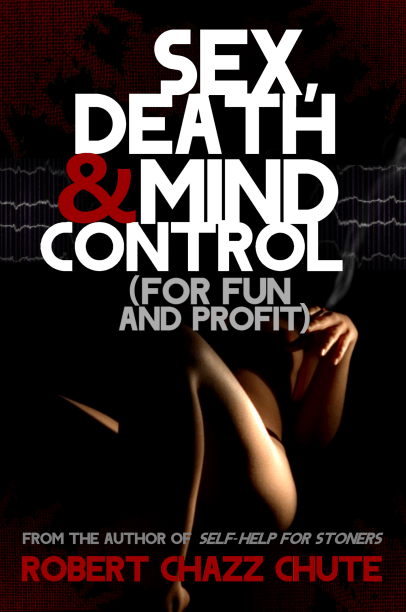
Sex, Death & Mind Control (for fun and profit), a collection of short fiction about our three favourite things, went up on Amazon just last night! Hurray!

Please check it out by clicking the cover below. 

(I love them all and there are even a couple of award-winners in the mix.)

Also, note that you don’t have to own a Kindle to read anything from Amazon. Get your free reading app for your screen here.

Sex, Death and Mind Control

Now available at Amazon!

Filed under: My fiction, What about Chazz?, , , , , , , , ,

Merry Christmas from Chazz!

Wherever you are, I hope Santa brought you the perfect giftmerry_christmas

that you didn’t think you needed

and would never have bought

for yourself but it turned out to be amazing!


Yes, I’m saying I hope you got an e-reader for Christmas.

Have a happy and a merry!

And thanks for reading.

See you Monday.

Filed under: ebooks, , , , , , , ,

Just added to the blogroll: Kindle Homepage

The back of the Kindle 1 (Left) and Kindle 2 (...

Image via Wikipedia

Kindle Homepage: The Inside Scoop on all things Kindle.

Filed under: ebooks, ,

Bestseller with over 1,000 reviews!
Winner of the North Street Book Prize, Reader's Favorite, the
Literary Titan Award, the Hollywood Book Festival, and the
New York Book Festival.

http://mybook.to/OurZombieHours
A NEW ZOMBIE ANTHOLOGY

Winner of Writer's Digest's 2014 Honorable Mention in Self-published Ebook Awards in Genre

The first 81 lessons to get your Buffy on

More lessons to help you survive Armageddon

"You will laugh your ass off!" ~ Maxwell Cynn, author of Cybergrrl

Available now!

Fast-paced terror, new threats, more twists.

An autistic boy versus our world in free fall

Suspense to melt your face and play with your brain.

Action like a Guy Ritchie film. Funny like Woody Allen when he was funny.

Jesus: Sexier and even more addicted to love.

You can pick this ebook up for free today at this link: http://bit.ly/TheNightMan

Join my inner circle at AllThatChazz.com

See my books, blogs, links and podcasts.

Enter your email address to follow this blog and receive notifications of new posts by email.

Join 2,061 other subscribers