C h a z z W r i t e s . c o m

See all my books at AllThatChazz.com.

Author Blog Challenge 14: Eleven ways writers get surprised

Gremlins will push you 'round^ Look where you'...

Gremlins will push you ’round^ Look where you’re going^ Back up our battleskies^ – NARA – 535380 (Photo credit: Wikipedia)

Some surprises you’re in for when you publish your book

Please note: This list of surprises for writers is not meant to be comprehensive. The worst surprises, like dying by flaming harpoon attack to the forehead (before you finish your novel) or a hard drive exploding and taking out two floors of your house are not included. Those circumstances just aren’t lighthearted enough for my intent here. Oops. Well, I guess you’re worried about that stuff now, too.

1. You thought your manuscript was clean and it was, it was! Gremlins went in and put those ugly typos in there! That’s the only reasonable explanation.

2. Publishing your book is a huge event in your life. Remember when you had a baby and you expected the world to pause to acknowledge your contribution to, and sacrifice for, the human race? Wars should stop and the earth’s rotation should cease for a moment, if only so we can all bow. Sadly, it’s not a huge event in everyone’s else’s life. Many people are indifferent and it’s just not efficient to go out and kill all of them with a rusty axe.

3. The people you thought would love your book? They don’t. My dad still hasn’t read anything I’ve written. He’s waiting for me to write about him. (What he doesn’t know is that he really doesn’t want that!)

4. Lots of people are readers but they do not write reviews. You’ll expect reviews. Eventually you probably beg for reviews. Worse? You still won’t get them, even from friends and family! I thought about it, but there is no joke I can tag on this item that will soothe the sting. It’s more tragic than a flaming harpoon to the crotch.

5. Someone will object to something you wrote. What will surprise you is what they object to. For example, some people get riled up about which font you chose for your cover. You’ll assume that joke your main character made about religion was, at most, funny. At worst? Somewhat innocuous. Some blogger, somewhere, will call you the Anti-Christ and call on Jesus to smite you because, apparently, Jesus loved capital punishment. Oh, wait… (At least outrage and threats of censorship increase sales, so there’s that.)

6. Some people will treat you better, briefly, because you’re an author. Then they’ll treat you worse when they find out you’re a self-published author. For some reason, you have to answer for every grammatical mistake and every (so-called) undeserved success of your breed. Corollary: If you become a very successful traditionally published author, some people will hate you because lots of people read your books. Or the haters will hate because they aren’t you. Suggestion: A dog is reliably faithful. Definitely buy a dog. They can’t read so they’re blameless.

7. Formatting will be tough the first time. The first time, you’re a dim-witted chimpanzee with a keyboard. The second time you do it, you’ll be surprised how easy it is. You will have evolved to a very intelligent Rhesus monkey.

8. By the time you’re through revisions and formatting, you and your editorial team will have gone through the manuscript so many times you’ll be sick of it. This is the story you loved so much. Now your cute baby has grown into an angry, gangly, acne-scarred teenager and you just want them out of the house they can go make money and so you can make room for a sweet new baby who loves to cuddle.

9. Actual publication won’t be quite as momentous as you anticipated. How could it equal all those dreams you’ve had since childhood? You pictured a limo and an elegant cocktail party. Instead, it’s you in sweats, late at night and a little drunk on weighty potential and rum and Coke, debating if you’ve done everything you can before pushing a button. It will feel more like pulling a trigger. You may be filled with more dread of bloody failure than anticipation of success. I’m about to push that button and I’ve had stress headaches all week. I just want to sleep instead of poking around Scrivener‘s bowels to prep the manuscript for Amazon and CreateSpace. You’re not alone in the struggle, but that’s of little solace because you are alone in the room.

10. Getting someone to read your book is harder than writing your book. You’ll spend more time marketing than you ever dreamed necessary, even if you figured it would take a lot of time. Triple your marketing expectations and get a treadmill desk so your ass won’t get as big and wide as your hopes and dreams for your writing career.

11. But here’s the biggest surprise: Though you will get luckier the harder you work, it’s still a lot about luck and timing and some happenstance. Nobody admits this variable. When you win, it’s all attributable your meteoric wisdom. When you succeed, you’ll figure it’s because you made all the right moves and you knew what you were doing with every step. Revising history and shining up the truth is natural. Everybody does that. It keeps us from running away screaming from that “Click to Publish” button.

Filed under: publishing, , , , , , , , , , , , , ,

Author Blog Challenge 10: How to make me want to spread your word

English: A pie chart created in Excel 2007 sho...

English: A pie chart created in Excel 2007 showing the content of tweets on Twitter, based on the data gathered by Pear Analytics in 2009. (Photo credit: Wikipedia)

Regular readers know I use the Scoopit! tool to curate helpful stuff about indie publishing I find around the web. I learn a lot researching blogs, link to good content so you can find it and include my comments on the posts I recommend. Sharing and spreading publishing news is a happy bonus. If I believed in karma, helping strangers for free would be the good kind. Today, let’s talk about what makes your articles, posts and tweets attractive nuggets to link to.

But first, a true story: Anguished Author goes to A+ Agent for a meeting about her book. A+ Agent says, “The contract is signed but you need to build your platform more and you’ve got to make a viral video for the book trailer.”

Two thoughts about this story:

Writing helpful blog content and building back links is one way to build a strong platform. Author sites tend to be too much “Me, me, me,” and a more effective  author site is more about “You, you, you, the reader.” Figuring out what helps people will help you build your platform. (For instance, my author site is plastered with information about my books, yes, but it’s also my fountain of free comedy/fiction/narrative/commentary podcasts to extend my reach beyond fellow writers to the reading public.)

and

Sorry, but you don’t get to make a viral video. You make a book trailer. It will go viral or not according to the whims of other people, unless you pay a bunch of kids and robots to pimp it in chatrooms across the Internet. However, since all book trailers (except this fake one) are lame, that won’t work and you’ll fail to dictate the world’s taste. Cute and funny are your best bets since your budget for movie production is not the same as the Prometheus trailer and the audience is jaded by all that amazing acting and CGI.

So what makes me want to retweet and spread the word about your blog? There are some solid rules that are universally applicable and then there’s my capricious, subjective taste. That kind of makes me sound like a prick, but everybody’s got topics that push their buttons. The words: “how to” are probably the most powerful words in a blog headline for anyone. (See the “how to” title at the top of this post? You clicked it.) Self-publishing is a new world and everyone wants a tour guide.

Here’s what’s going through my head as I decide what to link to and promote:

1. I’m reluctant to post something that is time-limited, such as headlines that say, “Final hours of the giveaway” or “Tuesday Only!” My Twitter followers and blog readers might not get the message right away and I don’t want to annoy them with what they missed.

2. (A) Don’t write too many headlines that are too spammy. (No one knows how many “too many” is.) I don’t mind blog posts that reference your books. I do that myself freely and it makes sense to draw from firsthand experience. However, a headline that says “Buy my book” is only for your hardcore fans who will buy it no matter what. That draws no one new into your tent for the revival meeting.

2. (B) But! A major caveat since this book promotion thing is tricky: If you balance the promotional content with free education, entertainment and jokes about your genitals, that’s reasonable. Blogging is a lot of free entertainment and information provision. If you can find a reasonable balance, that’s fine with most people. Ask people to buy your book on your own blog and your own feed as long as that’s not all you do. (And by the way, just because you don’t want to read it, doesn’t make it spam. Someone else may want to whisk it off to Paris and pledge undying love over cheap red wine and croissants.) Fortune does not favour the timid. Take it from a timid person who has resolved to pretend to be an extrovert.

For instance, I auto-tweet a welcome message when anyone follows me on my twitter accounts (@rchazzchute, @thechazzsays, @expartepress). The fun message (of doom!)  provides links to my books. My guess is, people who hate that — and some really do — were never going to buy my books anyway. Others will either appreciate the heads up or suck it up, buttercup! Since adding the auto-tweets, my sales have gone up. So there. (I also don’t cooperate with the twit validation service thing. It’s slow and painful and if you want me in your feed, you want me. If you don’t, don’t. Don’t be a pansy about Twitter.)

3. No poetry. I wrote a book of poetry. I like it, but it’s too small a niche and outside what people expect when they come to ChazzWrites. It’s sad, but there it is. Margaret Atwood has written nine books of poetry last I checked, but even many of her fans would be surprised by the news that she’s one bad rhymin’ mammerjammer. Here it’s all about self-publishing, book marketing, writing craft, how-to, industry news and the occasional flambé of whimsy in your face.

4. Technical advice with specifics is great. Just this past week I linked to a post with step-by-step stuff about publishing to the Kindle. Hold my hand and I might get a crush on you. I’m easy that way. I might even whisk you off to Paris and pledge my undying love. Well, no. I’m borderline agoraphobic and I’m locked behind a hermetically sealed hatch in a subterranean bunker and you’re out in the real world doing…things. Blech! So we’re not going to Paris. However, I love tech advice and admire those tech-oriented authors from afar. Often I link to something I want to hold on to. Sure, I could just bookmark it on a reading list to get lost in the depths of my computer, but on my blog it’s easily searchable and organized.

5. Be a buddy. Long time readers may notice I mention Kit Foster quite a bit. It’s not just because he is a brilliant graphic designer. He’s also my graphic designer. Another ally in the fight is my friend Dave from the School of Podcasting. My podcast wouldn’t exist without Dave Jackson. We stay in touch on Skype and end up mentioning each other on our podcasts from time to time, too. There are certain bloggers and fellow authors who are my go-to people simply because I know them better than others. They consistently offer advice that is honest, positive and fresh.

Last week, Jeff Bennington posted a great article about working with ACX to produce audiobooks. That’s something I want to do and Jeff is consistently a trailblazer. And no, it doesn’t hurt that I’ve spoken with Jeff. We’re in touch on Twitter and the odd email. He designed my first paperback, Self-help for Stoners, and I’m quoted a couple of times in his book, The Indie Author’s Guide to the Universe. After he read my novella, The Dangerous Kind, he gave me my first cover blurb, too. I’m a shy people pleaser with an inferiority complex spackled over poorly with bravado, so anybody who’s nice and knowledgable gets links from me.

6. Be a thought leader in the industry. I often point my readers to Russell Blake, Dean Wesley Smith, Kathryn Rusch and JA Konrath. They talk real sales numbers and how scary the industry is. They say things I don’t want to hear, but argue their points well. (Also, please allow comments on your blog if you don’t already. I do not always agree with articles I link to, but if the comment thread is lively and informational, I’ll often point readers that way for the instructive debate.)

7. Join Triberr. I retweet my tribe on Triberr. Last week, I liked Caleb Pirtle’s blog post so much I linked to it from here, too. Triberr is one way I become aware of useful stuff.

8. Join a Tweet Team at World Literary Cafe. Book promotion is more effective when someone else is doing it for you and I’ve found great people that way.

9. Write a great book and be a great interview. Occasionally I run interviews with authors. Sometimes I discover authors through their books first, not through their blogs. Somehow Blake Crouch had been merrily successful for some time but, sadly, I didn’t know about him until I stumbled across Run. I subscribed and will be watching his feed for something useful that you’d enjoy. Through a mutual friend, I also just discovered Scott Bakker, author of Disciple of the Dog. It’s a brilliant book. He’s in my home town and we know the same people so I’m sure I’ll meet him at some point. I’ve promoted him on Twitter already and I hope he’ll show up here or on my podcast or both at some point.

10. Reciprocate. (This is #5 with a different angle.) Eden Baylee did a great thing in organizing Indies Unite for Joshua. I supported the campaign and Eden consistently supports my efforts as I support hers. She even interviewed me for her blog (Go ahead and check out that interview. It’s X-rated, fun and wow! I was way took honest!) Eden is a constant friend on Twitter, too, and sometime we’ll chat over coffee when next  I escape the bunker for Toronto. I don’t forget people who are kind. Sadly, I also have an eidetic memory for pinheads, too, but the point is I especially try to help people who help me.

Sometimes I point to a kind of obscure blog. Other times, I say the obvious with, “Have you seen what Joanna Penn is saying?”

Sometimes it’s all “Me! Me! Me!” I try to find the reasonable balance, though.

Filed under: publishing, , , , , , , , , , , , , , , , ,

Author Blog Challenge (plus a sneak peek podcast*): Outlining, pantsing, spilling & sprinting

If you just popped in for the suspenseful sneak peek podcast, click here to hear The First Fiction Friday Edition of my podcast.

The Author Blog Challenge prompt asked how I stay organized as I write. My methods have changed over time. I used to come up with plots on the fly early on. Then I got scared off from that strategy when I got deep into a dreadfully long novel and found I had to backtrack fifty pages. Hitting a dead end is, well, death. It’s a waste of time and energy and I hate it.

I started outlining because I was writing big books and I didn’t want to lose whole sections of my book in which I was already invested. When you write 80 – 100,000 words or (ye gods!) more, an outline helps. I didn’t write an outline with Roman numerals and all that formal, high school nonsense. Instead, I planned the book one cogent sentence at a time. I described the actions in each chapter to plot the arcs of A and B stories. I looked for where those paths would logically cross, discover the beats and suss out the high and low points. Index cards got to be too much to keep track of, so in the end my outline was just three pages with a numbered list. I read and reread the outline and then I didn’t look at it again. That got me through the big books pretty well.
Recently I read Run by Blake Crouch, and as Blair Warner used to say on The Facts of Life,

“I just had another one of my brilliant ideas!”

It’s about speed. I resolved to write a crime novel with the same furious pace as Run — a book I couldn’t put down. Yeah. I know it’s a cliché, but this cliché is both apt and true in the case of Run. (Great book. Buy it.)

I resolved to do the thing I love with stories. The chapters would be relatively short. They would skip along. There would be lots of twists and turns to my racetrack. I wrote Bigger Than Jesus in about a month, one chapter a day, roughly 2,000 words each. There was no outline. Instead, I wrote with the expectation that I’d get my hero into a troubling cliffhanger at the end of each chapter. If I wrote myself into a corner in the process, too bad. I’d be clever and write my way out of it and keep moving forward. Writing like this is as fresh and as exciting as walking a tightrope naked in a high wind over a crowd of angry TSA agents with a new shipment of polar mint rubber gloves.

Many nights I went to bed thinking that I had no idea what I would write in the morning, but I trusted that I could figure it out. I believed in lightning strikes. The juice kept flowing and with it came a high level of complexity. It’s a crime novel so people lie a lot. If I’d taken longer to write it, it would have necessarily been less complex because I’d be afraid of losing track of the threads. There’s shocking emotional depth, too. Nobody, including me, foresaw the strange and sad angle on my main character’s childhood. It sneaks up.

Why did this work?

1. I knew the opening chapter and the last line so I had a target at which to aim. I’m also a more confident writer than I was with those early attempts, I suppose.

2. If I didn’t know what was going to happen next, the reader wouldn’t be able to guess, either.

3. Speed. The book is not especially long and I wrote it all in a short space of time so I could keep it all in my head at once without getting lost.

How else do I keep organized? 

In the Point File, I note things like street names I’ll use twice and aspects like eye colour so they don’t change from the beginning of the book to the end. I did mess up in having twin brothers as bad guys with names that were awfully similar. I had to go back to make sure I was talking about the right brother at the correct stage of the book.

I always have a Spill File handy so if I do write something that I end up dumping, I save it for later. I might change my mind about how useless it is or I might use it another time in another story. In Bigger Than Jesus, the writing went so quickly and breezily that I never had anything to pour much into the Spill File. I wrote fast and then went back to the stage of writing where I’m always sure I’m a deluded idiot: revisions. I cut, prune and delve. More of the jokes come clear on the second pass, too. Typically, by the third pass, I begin to feel good about the book again. Bigger Than Jesus was just about as easy as writing a blog post a day, actually. Maybe easier sometimes because what dictated the action was logic and surprise. When in doubt, surprise!

Some writers labor under a notion that I once shared: To be good, you must write slowly, perhaps even at a glacial pace, and the serifs are where your heart and soul get squeezed in and choked for blood. There are books I have tinkered with for years. One short story went through many incarnations over a year before I felt I nailed the landing and deserved 10s from all the judges. However, Self-help for Stoners came together quickly and everything worked out well with that.

Bigger Than Jesus will be released in the next week or so and all the feedback I’m getting from the editorial team tells me I’m glad I didn’t buy into the idea that it had to come slowly to be worthy. I think that’s true sometimes, but not always — not for every book and not for every writer. That’s good news because I’m using the same strategy with the next book in the series. It’s coming fast and well and I do enjoy the danger of not knowing what happens in the next chapter. Those angry TSA agents are actually spurring me to succeed.

*BONUS:

Please take a few minutes to enjoy my latest podcast on the author site. It’s The First Fiction Friday Edition! 

It’s a sneak peek at Chapter 8 from my first novel in the Poeticule Bay Series:

An old woman is lost with her tiny dog in the Maine woods and snow is on the way.

Related articles

Filed under: publishing, , , , , , , , , , , , , , , , , , , ,

Who reviews the reviewers? You could.

The second generation Amazon Kindle, showing t...

The second generation Amazon Kindle, showing the book Alice's Adventures in Wonderland (Photo credit: Wikipedia)

Maybe we need to make a concerted effort to review some reviewers so they’ll either change, cheer up or shut up. Allow me to explain before you give this blog post a one-star review.

I’m in the home stretch in completing my crime novel and after a hard day sweating over a hot keyboard, I dip into my Kindle to unwind. As I search for new books to load up on, I find myself drawn to scan Amazon reviews. The sad truth is, I haven’t been reading the five-star or four-star reviews much. I’ve been clicking on the one-star reviews and reading with horror.

There are several reasons for my self-abusive behavior: 

1. I’m looking for mistakes to avoid. Not all one-star reviews are wrong and I’m trying to glean the honest from the brutally honest. Some books are plain bad.

2. Cranky people can be funny sometimes. Sometimes on purpose. Just as villains can be more interesting to write than heroes, a bad review is often more interesting than a positive one…at least to write, possibly to read and, as far as achieving the purpose reviews are meant for? We’ll get to that in a moment. Hang in for the punch.

3. Five-star reviews tend to sound alike while the one-stars should be more interesting. This is the Anna Karenina/book review version of “Happy families are all alike; every unhappy family is unhappy in its own way.”

Generally, reading one-star reviews has proved a mistake because either it’s depressing or annoying. I should probably quit reading them. Or, we could review the reviewers in the hope they might improve just as they supposedly do for our betterment. That is the purpose, isn’t it? Or is it?

Hm. We’re writers. We should be able to do a better job than many reviewers at reviewing. Shouldn’t we?

With regard to point 1: The one-star reviewers often haven’t finished much of the book they’re reading and their criticisms are often inarticulate, too harsh or too vague. “Yuck” doesn’t inform anyone of anything except the reviewer might be a dim seven-year-old with a limited vocabulary and access to their parents’ Amazon account.

As far as point 2 goes, the hate comes through, but there’s not often a lot of creativity in the funny department. The problem is that too brutal a review isn’t a message conveyance system. It’s just a knife slashing from out of the darkness wielded by a bitter, blind assailant. Some reviewers offer such consistent patterns of hatred, I suspect they don’t enjoy reading but reviews are an outlet for problems that are traditionally worked out on a couch with the aid of powerful psychopharmaceuticals.

As for point 3: I was wrong and Anna Karenina was wrong. The hate sounds more alike than the all-out loving reviews. People love different aspects of a book but they repeat the same stuff that bothers them, often within the same one-paragraph review.

The Internet is mean because it’s anonymous. Some people mistake mean for being intelligent or funny. Nah, it’s often just mean and dumb. We keep hearing the rule “Don’t say anything on the Internet you wouldn’t say within bitch slapping distance.” It’s good advice crazy people don’t take.

Recently one of my books, Self-help for Stoners, got its first three-star review. (The others were four and five stars and wow did those make me happy!) The reviewer who gave that book three stars wasn’t in love with the drug use aspect of the book. Instead, he winced and I don’t think he meant metaphorically. I’m always intrigued how people react to that book because some have told me it’s anti-drug (Get off your ass, stoner!) and most assume it’s pro (What a wonderful world it could be. [insert trill of violins rising here] ) When people ask me straight out, I say it’s anti-censorship and pro-freedom but mostly it’s stories of suspense that challenge readers to draw their own conclusions.

Though it was a three-star review, the reviewer found a lot to love and respected the work enough to give it very thoughtful consideration that I appreciated. It was largely complimentary despite the aspects he disapproved of. That’s pretty decent and open-minded of him, don’t you think? Lots of people have three settings: love, hate and apathy. The mark of a good book review is an appreciation for nuance. Would I prefer unmitigated bouquets and cyber kisses? Of course, but it was still a good review from him and a good review for me. (In retrospect, I wish I’d sent him Sex, Death & Mind Control. He probably would have enjoyed that book more. The style has similarities and the subject matter is still suspenseful fun but there’s nothing there that could be considered advice.)

Which brings us back to those hateful one-star reviews. You know those little boxes that say: x number of y customers found this review helpful? Yes? No? I’ve been clicking “No” a lot lately. Too many of them are just too mean or uninformative or uninformed. If you think a review breaks the bitch-slapping guideline, click No. (Or click Yes if it was disapproving but helpful, funny, clever, civil or anything non-hateful and crazy.)

Suggestions:

If you only gave the book five minutes or a few pages, you aren’t qualified to review it. Move on. (I don’t know how much of a book you have to read before you’re qualified to review it. 50%? 75% 100% including the ISBN? Hence the Question of the Day at the bottom of this post.)

If you couldn’t wait to delete it because it’s somehow digitally sullying your Kindle, okay, but very often these folks are really mad at a book that was free. I’m not suggesting a free book should be bad. I’m saying, let’s keep our rage in check and our world in perspective. You tried something and it cost you nothing but time and you didn’t really give it much of that, did you? I don’t waste time finishing a book that I don’t like. There are too many good books out there and life is too short to get all OCD with, “But I got it so I’m committed to this living hell now!” C’mon. Let it go.

Please read a sample before you buy: “I thought by the title that it would be a summer romance and it turned out to be borderline porn about a war between foot-fetishistic elves and fairy vampires! I’m pissed!” We are all the star of our own movie, but just because you hated it doesn’t mean the extras milling around at the back of your set wouldn’t enjoy it. Leave it for those foot-loving peons and weirdos. Stars should be gracious with the supporting cast.

Nastiness is forever, so please check yourself before you wreck somebody else. An ill-intentioned review could  have real-world consequences. At best, you could dissuade someone from something that they could enjoy or maybe even love though you didn’t. At worst, you’re the one taking money away from some poor sod whose only crime is using too many adverbs. Ease up on the stick and don’t overshoot the runway.

What’s your motivation behind a bad review? A friend of mine has mentioned that once his book hit high rankings on Amazon, the nasty reviewers boiled out of the woodwork as if to make a point of taking him down a peg or two for having the audacity to do something that pleased a lot of other, happier people. Another author got a nasty review on her book which she suspected was payback from a writer who had asked for an honest critique and got one she didn’t like. (Warning to the petty and petulant: You don’t get help or even civility in the future if the word gets around that you’re a nit. This is the Internet. Word will get around.)

When you make a big deal about the book being a sub-standard work from an indie press, you’re smearing all hard-working, low-resource indies and dreamers with the same acid-tipped brush who are providing some grateful people with very inexpensive information and entertainment. That’s an ad hominem argument which is Latin for “Shut the $#@! up.”

Are you counting typos as you read? I recently mentioned a reviewer who said he liked a book but started off his review with the fact that he found five typos. If you can’t handle a book with five typos over 250 pages, we have a tank lined with cotton waiting that will protect you from the world. You’re too fragile for earth’s atmosphere. Once again, ease up, man! Many of us (most?) are doing all we can to prevent typos and as much as it may annoy you to find a mistake in someone else’s work, it kills writers to find it in our own books. (You can read a traditionally published book with as many typos. Lots of people hate that argument, so let’s try this tac: You can have a traditionally published book  with (what you perceive) as no typos! Yay! You will, however, have to pay ten times more money for it. Deal? Deal.)

Authors: Please read the whole review and weigh it with due consideration. Just as we hope book reviewers will be civil, gentle and thoughtful and read enough to have a reasonably informed opinion, we should assess reviews individually before clicking that dismissive “No” button. Let’s not let our egos impair our journey to improvement. (If you figure out how to do this, please write me explaining how. I’ll do anything short of meditation, a word whose language root comes from a Latin phrase meaning “Boring as $#@!”

I do thank people for decent reviews. I don’t encourage anyone replying to a nasty review. We can legitimately use the “Was this review helpful?” buttons as they were intended without getting sucked into a black hole of bitterness. If you find yourself explaining why someone should love your book — my baby! my baby! — either you wrote something incomprehensible or they’re kind of dim. Either way, arguing is a waste of time. Use that time to instead write another (great!) book and accept that no one book is for everyone.

Try this: Take a book you love. Look up the best book you ever read! Read the reviews. See all those one-star reviews? Yeah, that’s what I mean.

Question of the Day: How much of a book do you read before you feel you can honestly review it? I welcome your (helpful) comments.

Filed under: publishing, , , , , , , ,

Indie publishing is getting better

Grammar police

Grammar police (Photo credit: the_munificent_sasquatch)

First bold statement:

The quality of indie books has improved.

We’re maturing. Ludicrously, readers expected the indie ebook revolution to produce immediate perfection, some even demanding a higher quality than they get from trad publishing. As soon as I post this, I expect a deluge of naysayers racing to come up with examples to disprove my assertion. That’s a misguided instinct, by the way. Yes, you could come up with lots of examples both tragic and comedic and I’d counter with a plethora of examples in favour of the indies. So let’s skip that and settle on this: I have over 200 books on my Kindle and my impression is that there aren’t nearly so many grammatical errors or typos as one might expect if you believe all those rabid grammarians moaning over on the Kindle boards.

Recently, I read an Amazon book review where some bonehead’s  first observation was that he’d counted five grammatical errors. Note that this was a book that he liked, but he went straight for that in his review’s first sentence. He criticized not as a book lover interested in story (which most readers are) but as a raging grammarian who couldn’t bear five errors in 250 pages. (I clicked the “non-helpful” button after I read that review.)

Second bold statement:

Most readers aren’t nearly as sensitive to typos as some would have us believe. 

As a writer, I hate errors in my books when they occur.

As a reader, I notice errors but my world doesn’t explode when I see them, either. 

In traditional publishing in the late ’80s, editorial departments were swollen with employees. Mistakes still crept in. They still do, trad or indie. We can’t afford eight levels of defence against errors. No one can hire that many editors and proofreaders. Errors will occur. But you know what?  When I get a book for $2.99 or less (or free), expecting perfection seems petty and silly, like angrily demanding lower taxes yet more services. We do need many eyes on our manuscripts. Everyone tells you to hire an editor and well you should. However, the edit and suggested corrections will also introduce errors, so comb it again. If you’ve gone through a major edit using Track Changes, for instance, you know the maddening confusion of figuring out what’s underlined and what’s not, making the changes and going cross-eyed after a few hours of peering at comma placement and comment boxes.

Most grammatical errors don’t obscure meaning so much you don’t get what the author was going for. No, this is not a call to publish your first draft, damn of consequences to readers’ understanding and comfort and ease up on yourself as a writer. This is a call for us  to celebrate the many authors who are obviously working hard to write well. Many of us are getting help to catch us when we trip.

Don’t mind the naysayers. Most of those rabid grammarians aren’t writers and I’m not even sure a bunch of them even enjoy reading that much. It’s like they take a book as a test and each typo is some kind of moral victory. That’s the Internet for you: perfectionism as a weapon to make haters feel better. But perfection is unreachable. (I just started a sentence with the word “but”! Oh, no! Yes, some people are still clinging to that.)

Perfectionism is a sign of self-loathing. Instead, go for excellence.

And lighten up. We’re getting better!

Filed under: publishing, , , , , , , , ,

How I Failed My Way Into A Book Deal – Guest Post by Matt Ellis

Via Scoop.itWriting and reading fiction

We rarely travel off the self-publishing road on this blog. All the more reason to vary from the usual map occasionally. Here’s a link to an interesting guest post about an alternative route to traditional publishing on David Gaughran’s blog. (His is a great blog. Bookmark it!)

Via davidgaughran.wordpress.com

Filed under: publishing, , , ,

What Is a Literary Novel? | Jane Friedman

Via Scoop.itWriting and reading fiction

Click it to get it.

Does this book qualify as "literary" fiction? I don't know.

I reject the distinction many people make between literary writing and fiction. I think good writing is good writing.

Is literary fiction a different genre? Perhaps, but since all good fiction has depth, style and character and can be intellectual, the boundaries are fuzzy. Still, the arguments people make for those distinctions are no less interesting.

Maybe the literary novel is like pornography: undefinable but you recognize it when you see it. I don’t necessarily recognize it, though. Is my book Self-help for Stoners literary fiction? It has all the elements listed in the link, but I really don’t know. I just call it suspense. If you figure out if Self-help for Stoners is “literary” or not, please email me. I’d love to know! Click Jane Friedman’s link below to see if you can puzzle it out. ~ Chazz

Via janefriedman.com

Filed under: publishing, , , , , ,

Quote Trailers vs. Book Trailers: What’s a Quote Trailer?

Don’t feel bad if you’ve never heard the term “quote trailer”.

I just made up that term up yesterday at about the same time I created my first one.

What’s a quote trailer? See the post below this one for my example, but basically it’s a short trailer that hooks new readers with intriguing quotes from your book. You could add in a short description of what the book is about if you like. Do more of that and you push the book promotion spectrum toward a book trailer. I’m not saying you shouldn’t try making a book trailer, but book trailers are notoriously difficult to do well.

My problem with most book trailers is that they are almost always too long and underproduced. We are a cynical audience, accustomed to slick Hollywood graphics created by professionals. When we see a cheap book trailer, it’s usually a long commercial. If it were on TV, you’d change the channel or you’d hang in there just to laugh at the clunky acting and low production values. Occasionally, some book trailers rise above average. Scott Sigler made a competition out his book trailers. Amateur and student filmmakers rose to the call at no cost to Sigler. Better, all the contest submissions went up on YouTube so readers and new readers could vote for the winning book trailer. The contest became a free book promotion proliferation tool.

A quote trailer sets your Unconscious Expectations Bar (I just made that up, too) back down  to limbo level so you can easily step over it. Take a look at the post below this one and you’ll see what I mean. Nothing fancy. It was quick and fun to put together and if the words whiz by a little too quickly for anyone, they can always pause it. Better too fast than too slow. I don’t go into too much detail because this is just an invitation to go to my author site to learn more. I’m not getting sucked into a big pitch for one book on this video project. It’s designed to tickle your brain to check out all my books. Please, resist the urge to put up ten minutes of quotes. I dared to go as long as one minute in my first quote trailer. Instead of hoping someone will sit still for a long video, I’ll create a bunch of short ones for all my books over time. You may want to consider doing the same.

Filed under: book trailer, Books, Publicity & Promotion, What about Chazz?, What about you?, Writers, writing tips, , , , , , , ,

Mad as Hell! Huge Problem with the Book Pricing Options!

Via Scoop.itWriting and reading fiction
We’re always talking about self-publishing ebooks here, but what about paper books published independently. At WDLady’s The Nightmare Never Ends blog, she details her trials in dealing with CreateSpace and paperbook pricing. Check this link for more (and some cool illustrative cartoons.) ~ Chazz    

This is me calling the Createspace Support Representative about my book pricing options…This is me finding out that I’m going to be making -$2.13 for a book that’s $4.99…

Via wdlady.wordpress.com

Filed under: publishing, self-publishing, Useful writing links, Writers, , , , , ,

What moves books? And what is ‘Parketing’ anyway?

Successful book marketing campaigns often do a lot of things at once, especially at first, before awareness of your book grows. Author Jeff Bennington, for instance, has noticed that online marketing of his books takes an hour out of each day or sales begin to dip. (More on getting you and your books’ global fame in a minute, but first let’s talk attitudes, parketing and my terrible personal deficiencies as a book marketer.)

Someone’s already saying, “An hour a day? Who has that kind of time? When will I have time to write?” You’re an artist, but you’re an artist in business. Businesses need to advertise. You’d make time to send out invoices, so make time to make people aware of your books unless you’re content writing for yourself and your kids. (Fortunately, lots of online marketing is cheap, free and fun, so there’s that.) Down the road, once you reach critical mass, maybe you’ll be able to get away with doing less marketing, but I doubt it. Coke still advertises. Manage your time and make it work.

Here’s one cheap way to promote local awareness of your books: I first heard of parketing (though it wasn’t called that then) at a writers’ conference three years ago. The marketing guru fired lots of ideas at us: blogging, tweeting, podcasts…the usual, though it was all newer, scarier stuff then. Then the guru asked, “How many of you have a car magnet advertising the cover of your book?” Not a single hand was raised, of course. The marketing guru snarked, “Yeah, why would you want to let anyone know you have a book for sale?” Park your car where lots of people will see it with your lovely book cover on it and voilà! That’s parketing.

It’s a digital world, so old-school attempts to market a book are often overlooked, often with justification. However, you may want to consider parketing in certain circumstances. This is one of those advertising strategies that has “short term” written all over it. It could work for the short term because no one is doing it. No one is doing it because your first reaction is that it sounds silly or maybe even naive or worse, beneath your dignity. If you habitually park your car in a high-visibility area (say, outside a bookstore at the mall) it sounds a little less silly. When you consider the number of businesses that do advertise this way, successfully, it sounds even less nuts. If your pockets are shallow, you can still do this. I got my car magnet from Vistaprint for less than $20.

Parketing works much better if you’re prepared to ask a bunch of friends to put car magnets on their vehicles, too. If your pockets are very deep, you could even go for the full paint job. Do that and you’ve got a marketing campaign started in your city and the basis for a press release to local newspapers and magazines. Sure, we market our ebooks globally, but we shouldn’t turn up our noses at getting noticed locally. That’s one way to get critical mass going. People in your own city, especially media, are more interested in local authors because they have a sense of ownership and familiarity with local authors. There’s a business in my city that seems to be everywhere because each employee gets a free paint job on their vehicle advertising the business. Everywhere they drive, they are advertising. It’s not that large a company (or even a particularly good one), but their ad-plastered cars seem ubiquitous, reminding everyone daily, “Here we are!”

The ad on my van gets attention because it’s just so damn weird. There is surely not another author advertising his or her book with a car magnet for hundreds of miles, so people slow down to read it. I’ve watched them slow down to look. Has it translated to sales? I don’t know. It’s just one car magnet for one book, but I do know people are reading the ad. For me, this little strategy is really  just about promoting awareness so I get my name familiar. For what I spent, I’m okay with that. We gravitate toward the familiar, buying name brands instead of the unknown product (which could be just as good or better but you don’t recognize the label.) When I shop the local Asian food market, I’m actually physically uncomfortable with the cans of unknown weird stuff even though I know it’s not weird. It’s merely different. (I’m weird.)

It’s all the other stuff I do that will make the difference in the long term. There is no one way to move books. Online marketing is going to do much more  because it’s everywhere. For instance, I’ve been on the air, or talked about, on six different podcasts recently (besides my own weekly podcast). That will go a lot further toward gaining some vague familiarity with my name as an author than a car magnet will for one book. Plus, I love podcasting, so I’ll always have that.

Have you guessed this post is not really about putting a magnet on your car? It’s about using multiple strategies to get attention to your books. Marketing campaigns that are single-pronged attacks do not move books. Try a lot of things, even the weird ideas if they make sense to you. Experiment and have fun with it if you can. Try to get your name out there, arriving from several places, preferably at once. We must reach outside of our circles of family and friends to move books.

I’m often reluctant to try new book marketing  strategies until I see them tested by others. That’s why I missed out on the benefit of KDP Select while some others made whacko cash last December. I haven’t jumped on Pinterest because I read one blog about their scary terms of service. These are my deficiencies. I’m often too timid about doing things that are good for me. Everything new feels weird at first. Unfamiliar doesn’t mean wrong. Unfamiliar simply means unfamiliar. In our marketing efforts, should we proceed with caution? Sure. Don’t get taken,  but do proceed and make progress.

What are the book marketing basics? Write a good book. Get it edited. Get a great cover design. Price it right. Yeah, yeah, yeah. You know all that.

What then? Then go buy my buddy Jeff Bennington’s new book, The Indie Author’s Guide to the Universe. I’m reading it right now and I especially like the things you can do to sell your books that are free. Let him show you the way forward. The best marketing strategies are not static. They come and go and rise and fall so we have to stay current and open to experimentation with new opportunities as they arise.

That’s what I’m trying to do, anyway, and that’s what this blog is about.

~ Robert Chazz Chute is the author of a bunch of great ebooks of suspense with titles he now realizes generally repel you. He podcasts a comedy/narrative show, Self-help for Stoners, every Thursday night. To learn more, go to AllThatChazz.com.

Filed under: ebooks, Media, My fiction, podcasts, Publicity & Promotion, publishing, Useful writing links, web reviews, What about Chazz?, What about you?, writing tips, , , , , , , , , , , , , , , , ,

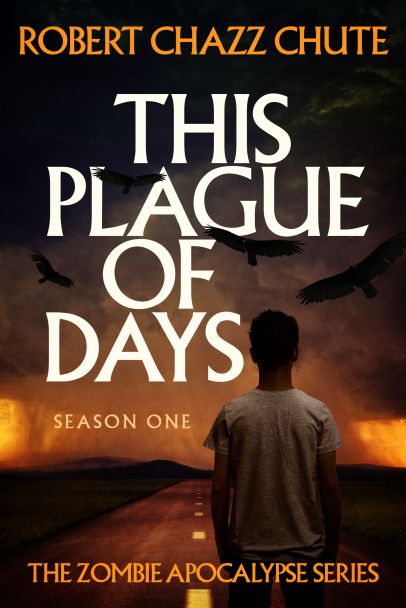
Bestseller with over 1,000 reviews!
Winner of the North Street Book Prize, Reader's Favorite, the
Literary Titan Award, the Hollywood Book Festival, and the
New York Book Festival.

http://mybook.to/OurZombieHours
A NEW ZOMBIE ANTHOLOGY

Winner of Writer's Digest's 2014 Honorable Mention in Self-published Ebook Awards in Genre

The first 81 lessons to get your Buffy on

More lessons to help you survive Armageddon

"You will laugh your ass off!" ~ Maxwell Cynn, author of Cybergrrl

Available now!

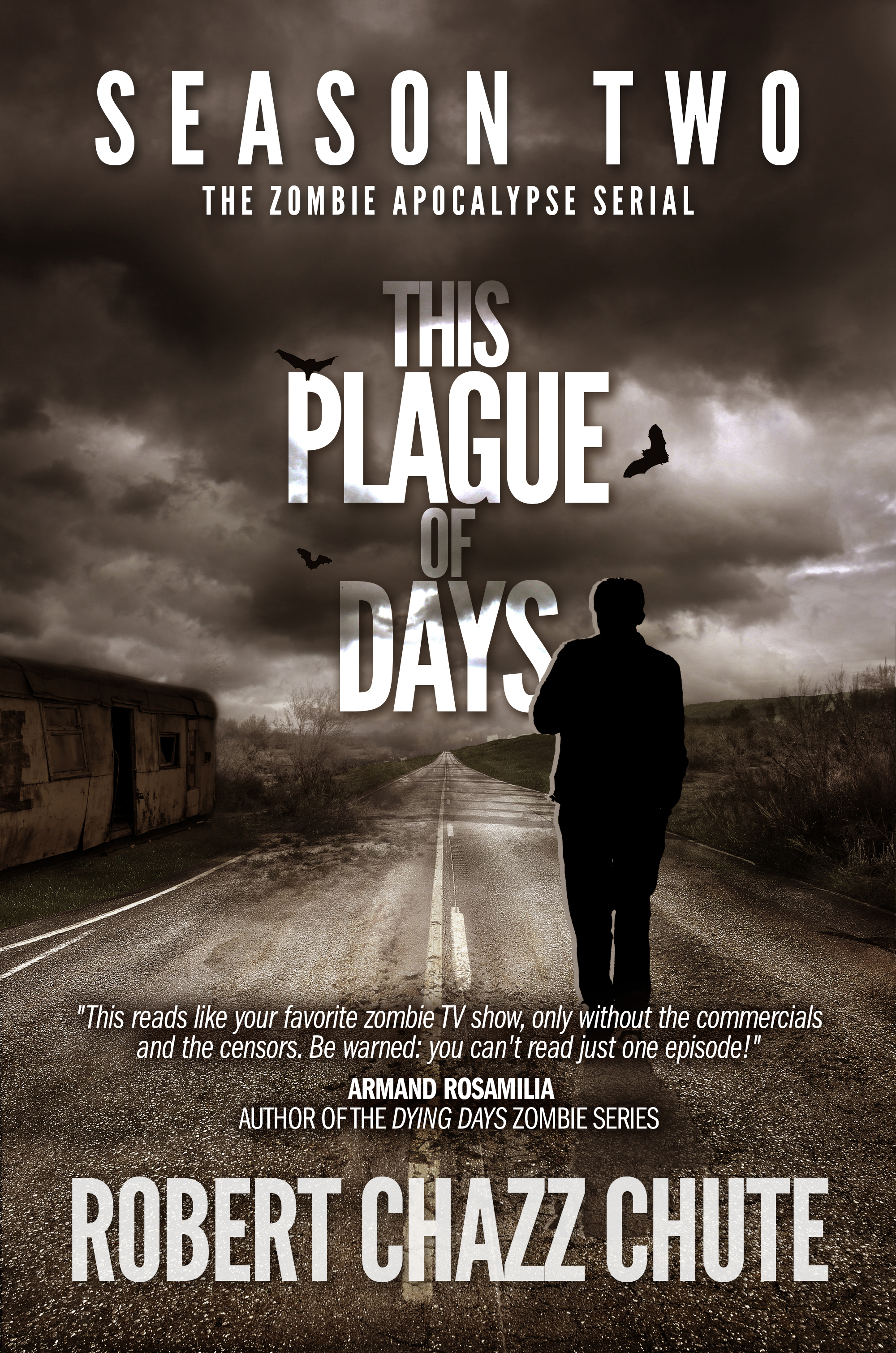
Fast-paced terror, new threats, more twists.

An autistic boy versus our world in free fall

Suspense to melt your face and play with your brain.

Action like a Guy Ritchie film. Funny like Woody Allen when he was funny.

Jesus: Sexier and even more addicted to love.

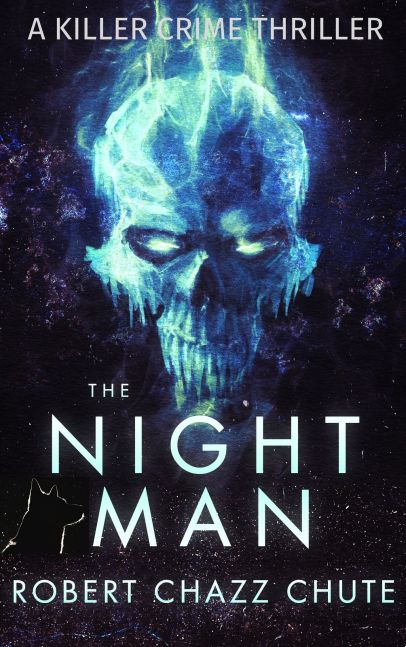
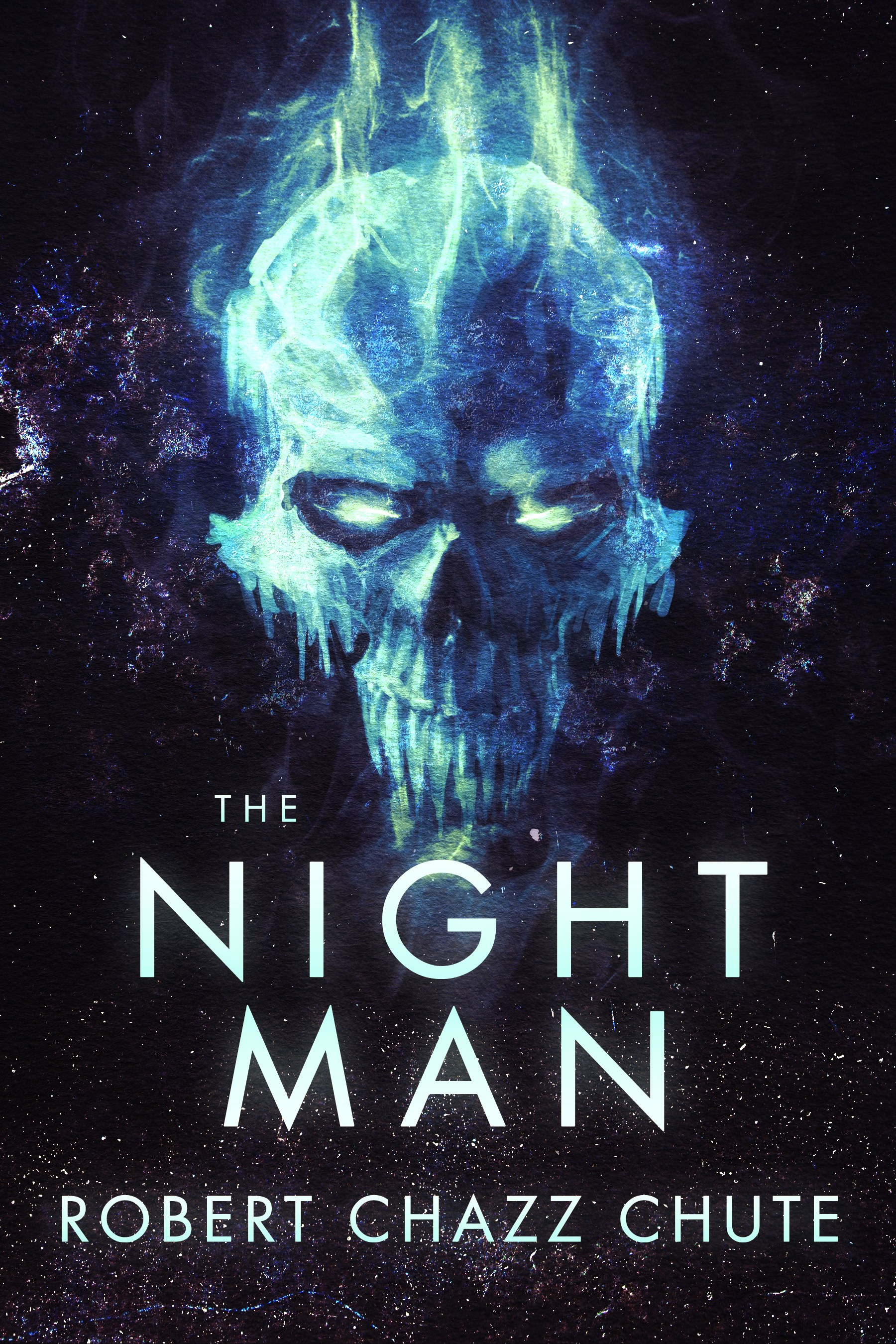
You can pick this ebook up for free today at this link: http://bit.ly/TheNightMan

Join my inner circle at AllThatChazz.com

See my books, blogs, links and podcasts.

Enter your email address to follow this blog and receive notifications of new posts by email.

Join 2,063 other subscribers