C h a z z W r i t e s . c o m

See all my books at AllThatChazz.com.

TOP TEN: Reach more readers with these blog tweaks

Tips and inspiration for the indie author's journey to publication.

Tips and inspiration for the indie author’s journey to publication.

Besides writing more books (I am), I’m always looking for ways to improve so I can reach a larger audience. Here are a few things I’m doing to help my audience find me. To reach more readers, consider these improvements for your blog, if you aren’t already doing them.

1. Scannable posts.

I tend to write long posts. If I’m going to do that, I need subheadings so readers can find the information they want quickly. The average amount of time readers spend on anyone’s blog is somewhere between two blinks and a click.

2. List posts (like this one.)

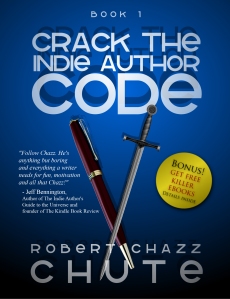
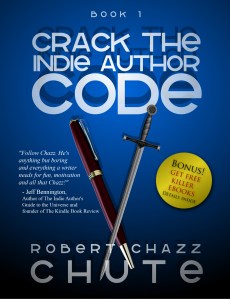
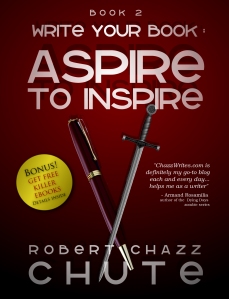
If it’s going to be long, make it a list if it’s logical to do so. Everybody loves list posts and the Top Tens in Crack the Indie Author Code and Write Your Book: Aspire to Inspire are among the most read and most popular chapters.

3. Shorter posts. 

Funny is great, but I should use it to make a point memorable. Otherwise it delays getting to the point. Shutting up about that now.

4. More internal links.

Readers love certain posts more than others. They should get links to similar posts so they can fall in love more deeply…er, I mean…um, get better informed.
Chazz 25. Speakpipe.

Some readers want to connect more. Now they can leave me a voicemail on my author site. Check it out and leave me a message to see how it works. It’s the tab off to the side on the right. You can do this, too. Speakpipe is easy to sign up for and yup, it’s free.

6. Upping my verbal game.

Regular readers know I broadcast the All That Chazz podcast once a week. It’s fun, but it needs more punch. Brace yourself for the new episode airing Jan. 1. It’s full of testicular fortitude (or brass ovarian fortitude, if you prefer) and explores the subject of changing our lives and New Year’s resolutions in a way that will blow your mind. I can expand my audience to even more strangers if I podcast better.

2013 will also bring more interviews (maybe you!) for fresh energy to the podcast. My elocution is much better and my stammer less pronounced when I’m in conversation. Or when I do my Hannibal Lecter impression. The serial, week-by-week reading of Higher Than Jesus is coming, too.
Bigger Than Jesus Final 96dpi7. Serialization on the author site.

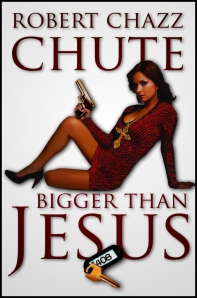
I’ve already podcast Bigger Than Jesus. I’ll soon post a new chapter on the author site weekly. Serialization seems to be working well for other authors and, since I have a long series planned for my Cuban hit man, I want as many readers as possible to get the opportunity to get hooked on Jesus (Diaz, that is.) That’s also why the Hit Man Series introductory book is only 99 cents at the moment.

8. Embedded book samples on the author site.

I will soon include more pages so you can check out each book as a kindle sample. You can do this too. India Drummond explains how here. 

9. Expansion to new platforms.

After signing on to KDP Select, I’ve acted as if Amazon is the only game in town. At the end of January, my exclusivity clause runs out the clock and I’ll expand to all other platforms so expect more download options and links for whatever your tablet or e-reader of choice is. Kobo and Apple are not as big as Amazon, sure, but they are in more markets and are coming up. With an eye to the long-term, I’ll be everywhere.

Each new book will still get its first shot at Amazon in 2013, but after that first three months, I’ll give readers everywhere a man-hug, no matter their device. Yes, I know you can read any book on Amazon with a free reading app for any device, but even if you’ve got a crappy Sony e-reader, that’s what you want to use. 

10. I’ve got to make sure I reply to every comment.

This should be a no-brainer. It’s a time management issue. I appreciate it when people leave comments. However, I don’t necessarily acknowledge them all and I have to do better at that to encourage interaction and affirm I’m fully engaged. (That’s a dickish, marketing-speak way of saying, “I care. Thank you.”) When you comment somewhere and it’s not acknowledged in some way, it feels like your hand got slapped when you were going for a friendly handshake. 

BONUS

I’ve got to do more guest posts on other blogs and I must do more with my author site.

ChazzWrites gets a lot of traffic. I need to make sure there’s more discoverability among strangers, spillage and funneling to more great content for those interested in my work. Hence, more links to the author site for more opportunities for us to fall in love with each other (in a platonic, non-creepy, man-hug sort of way.)
More tips and tricks to steer your authorship.

More tips and tricks to steer your authorship.

 ~ Robert Chazz Chute is…does this little bio at the end of posts make me look like a douchebag who takes himself too seriously? Does this bio make me look phat or just fat? Check out the All That Chazz podcast at AllThatChazz.com. For not much longer, you can find all my books of suspense and hardboiled action here.

Filed under: publishing, , , , , , , , , , , , , , , , , , , , , , , , ,

Book promotion: Don’t trust the ferryman Part 1

Tips and inspiration for the indie author's journey to publication.

Tips and inspiration for the indie author’s journey to publication.

The Bigger Than Jesus Finale is up on the All That Chazz podcast. It’s the last two chapters of Bigger Than Jesus in which Jesus does battle with Salvador Dali and the FBI.

Advice doesn’t last. Yesterday someone said how sick he was of Rafflecopter giveaways. It seems it wasn’t so long ago that Rafflecopter was a new promotional tool. Many reading this are asking, “What’s Rafflecopter?” It’s still new to many, but for this expert, it’s over. At least, he thinks so.

You can argue that many giveaways aren’t big enough to bother with or you can argue that a giveaway doesn’t make anyone read a book. However, I do think proclaiming a popular promotional tool dead is premature. Everything does go away, though: It looks like free isn’t so effective anymore and may hurt  paid books this season. Remember when MySpace and Friendster were, briefly, the new thing? Remember when 99 cents was a huge deal? Nothing lasts. What conclusions can we draw about book promotion from this knowledge? Let’s mull:

1. Not everything works forever, so keep your eyes open for the next new thing. Yesterday’s post mulled the question of adapting books to your audience. I’m also trying a reward program where I give more free books to the people who read my books and free advertising on my podcast for signing up for a free newsletter. Free may be out, but generosity and interaction haven’t given up their place among vital promotional tools yet.

2. Not everything works. Some authors are sure Pinterest is an excellent promotional tool. I think it’s been big for crafters and it’s certainly fun, but most people are just there for fun, not shopping for books. Personally, I’m doubtful of Pinterest’s power to help me that way. (Still love it.)

3. Not everything works right away. A fellow did an Amazon KDP Select giveaway for a few days. He didn’t really give away that many books. He failed to promote the promotion. In my opinion, he’s declaring KDP Select free days dead for the wrong reason. He took one sample and he didn’t let enough people know he was doing it. He wasted his free days because he expected the free days to do all the work on their own. A one-prong attack is betting big on one roll of the dice. Bad strategy in Vegas and a bad bounce for authors.

More tips and tricks to steer your authorship.

More tips and tricks to steer your authorship.

4. One promotional approach doesn’t work for everyone. One of my points in Crack the Indie Author Code is that no one really knows The Answer to selling gigabytes of books. There is no one answer and, if there is, it never lasts long. There are many ways up the mountain, but you can’t necessarily take the same route twice. What worked for one author won’t necessarily work for you now. For instance, many of the authors who do very well now were traditionally published first. Their cult followed them into self-publishing. They didn’t start from scratch and you can’t duplicate their career highs. Learn, yes. Copy, no.

5. Promotional strategies change fast. Last year at this time, before the change to Amazon’s algorithm, if you managed to do big giveaways of books, you were rewarded handsomely. Less than twelve months and it’s a new game with few rules.

~ In tomorrow’s post, I’ll lay out #6 to #13 on more book promotion options. In the meantime, please check out the samples from Crack the Indie Author Code and Write Your Book: Aspire to Inspire. The first three reviews are in on the former and they’re happy. (I wonder if, despite my protests that there is no one way, people are still looking for a book promotion panacea. Tomorrow I’ll tell you why I’m so suspicious of panaceas.)

Related articles

Filed under: publishing, , , , , , , , , , , , ,

Amazon Overboard: Further thoughts

Crack the Indie Author Code and Write Your Book: Aspire to Inspire both have bonus offers of free ebooks. Buy two books and you get four! Just released, so no reviews yet, but any second now….any second…Amazon’s doing what?! I’ve gotta sit down on a stump and think about this!

Publishing blogs will be burning up about Amazon’s new review policy tonight. Here’s my soothing balm: I think the idea of clamping down on authors reviewing their “competition” is so nuts, somebody on Amazon’s end will step in and say, “Sorry! Never mind. It was Todd’s first day and he locked himself on the bridge and took the helm and we almost crashed into that small moon.”

(Everybody all together now: “That’s no moon!”)

This is such a classic overcorrection to the comparatively minor problem of sock puppetry that I have to believe cooler, smarter heads will prevail. This is Amazon. They’re smart! (“…right?” said a small, nervous voice.)

In case they aren’t smart about this issue, here are my thoughts and predictions for what might happen if they don’t break past the locked door to the bridge and wrestle Ensign Todd to the deck.  

1. Following this logic, if Steven King were to step out of a pillar of literary white light, lay his sword upon my shoulders and give The

Steven King! Click here! Small-town terrors and psychological mayhem in Maine.

Dangerous Kind & Other Stories his blessing, Amazon wouldn’t want a share in my ensuing windfall? (I choose that book because, hey, comparisons have been made and, ahem, Steve, if you’re reading this…)

Okay, that’s not going to happen, but the principle strikes at the heart of the problem. If Steven King — or any other writer who springs to mind — says a book is good, that recommendation is given more weight in the real world, not less. We’re writers and we’re serious. We might know a little something about craft. I wrote two guides to writing and publishing and used to work in traditional publishing. For that reason, I should get less of a voice and opportunity to exercise free speech? To put it less eruditely but more succinctly: Um…huh?!

2. She Who Must Be Obeyed pointed out that the Oscars would have to be closed down by this policy’s logic. In that group, only directors can vote for directors and cinematographers vote for cinematographers. No one questions their moral fortitude and how honest their opinions are. Amazon’s giving me less credit for honesty than Hollywood people?! Again: What?!

If the core issue is trust — and we do want to trust that the review system works despite some evidence to the contrary — that trust is tested in two directions, not one.

3. Amazon’s great at a lot of things. If they keep this review policy, they will give their competitors a chance to be good at something at which Amazon, at present, suckeths. It doesn’t help that the policy is an insult aimed right at us. Most people can be trusted to write an honest review. My fear is that this move enables a lot of bad reviewers (who happen not to be authors) to go rogue and unchecked. Without balance, we all fall down.

4. I’m concerned that there’s a bunch of fear cropping up around this issue. As someone on Twitter told me today, it doesn’t help that they threaten to pull the book down if you argue with them. In dealing with artists, authors and content providers, threats are a tactical error. We’re all adults here, so let’s take this as an opportunity to solve problems. I’ve already been told, not unkindly, that I should watch what I say for fear of punishment. JA Konrath has mentioned that he’s got so many reviews, he’s above the fray. I have few enough, I’m beneath it. Take me down and I’ll get more publicity from the capricious attack. 

5. The Law of Unintended Consequences is one of my favorite laws. It rules throughout my plots. In fact, as Konrath has pointed out, it’s this bitch of a law that got us into this mess. If this policy stands I predict:

A. Fewer reviews on Amazon. Well, d’uh. If they just take them down, why bother?

B. Bad reviews stay up, depressing our star ratings. What many readers suspicious of reviews don’t understand is how incredibly difficult it is to get any reviews at all. That’s especially frustrating because many sites won’t help us promote our books until we have at least 10 reviews that yield a ranking above four stars. Put up another barrier to our livelihood and hopes and dreams and you get…

C. More paid reviews will rear up from clever, shady companies who will get around the system. Put desperate authors in a game they can’t win and more will cheat (only this time they’ll feel justified instead of furtive.)

D. Reviews will matter less than they do now. Many would say “even” less, and I repeat my oft-repeated plea: Read the sample and base your buying decisions on that, please.

E. Competitors and book review sites and book bloggers will rise higher as this policy change makes reviews less relevant. In many cases, authors will have to pay for those reviews, too, just to get to the head of the line.

Sigh. Okay…it’s off my chest. Now  what? 

My suggestions:

Sign the Change.org petition asking Amazon to please stop taking down reviews arbitrarily.

Get back to NaNoWriMo and have some fun being awesome.

Get back to reading something great and review it.

By the time you do so, this mess will probably be sorted out and Todd will be safely stowed in the brig.

*Geek test: Yes, I’m aware I mixed allusions to Star Trek and Star Wars in this post. Climb down off my back. It was a joke.

Free to download Nov 5 to Nov 9, 2012. Grab it now!

FRESH UPDATE: My crime novel, Bigger Than Jesus just reached #1 in Hardboiled and #9 in Action/Adventure. That’s an example of something Amazon does very well. Click it to grab it free until November 9!

Filed under: publishing, , , , , , , , , , , , , , , , ,

We’re Indie. We don’t lie down.

I’m revising Crack the Indie Author Code: Aspire to Inspire, a book I’ll soon release that is basically the best posts, chosen from over 1,000 articles on this blog. As I edit, rewrite, add and subtract, I’m struck by how I return to a certain theme of independence among indie writers. We need that stubborn streak. The voice in my head asks others to take the risks I take. I encourage other writers to follow their dreams. Encouraging others is part of my dream, too. My tone is sometimes matter of fact and, at other times, defiant. Sometimes the advice is contrarian. If that doesn’t suit your taste, at least sometimes it’s whimsical and I kill a mime.

It’s not easy being indie. We’re still largely ignored by mainstream media. It’s hard to get reviews. Bookstore managers tend to look at us with nail heads for eyes. But I’m doing the thing I always wanted to do and no one stands over me telling me how to do it. That’s worth a lot to me. The writers and publishers who read this blog are a very helpful group. I appreciate that.

It’s Thanksgiving in Canada. I’m thankful for my family of believers, the people who support my campaign and the suspense lovers who read my books. Crack the Indie Author Code will be available very soon, but the blog will continue after publication. I will continue to aspire to inspire. (To the doubters: You ain’t seen nothin’ yet!)

Thanks for reading ChazzWrites.com. 

Filed under: publishing, , , , , , , , , , , , , , ,

My Kindlegraph adventures: a little more tech helps

Last week I posted about using the kindlegraph, a neato tool for autographing ebooks. Soon after I blogged about it, I made my books available on kindlegraph. (Simple. All they need is the ASIN for each of your books and you’re set.) Soon after that, the nice man at kindlegraph informed me that I had received my first request for an autographed ebook. When someone asks for an autograph in person, I feel weird about it. Dealing with people over the Internet, though? That’s inside my comfort zone, along with the hot almond milk, the crackling fire in the wood stove, my blankey and teddy. I mean I’m wearing a very comfortable teddy.

Small-town terrors and psychological mayhem in Maine.
These are the foundation stories of the coming Poeticule Bay Series of suspense  novels.

You can type in a message or choose a font and enter that for your signature. That felt like kind of a cheat to me. A reader had requested my signature on their copy of The Dangerous Kind & Other Stories. It didn’t seem right just to type my name and say, “See ya!”

I tried writing my signature with the mouse. It looked like I’d written my signature drunk, with my eyes closed, in kindergarten. (That brought back some memories of Scotch breath and reciting my ABCs, I can tell you.) At one point I actually did close my eyes to try to get a closer approximation of my signature through pure muscle memory. My penmanship approaches Level: Wicked Awesome, but no matter what I did, the scrawl looked just as bad. Unconvinced by my writing, my new loyal reader was sure to think I was a clumsy  idiot. I simply can’t write with a mouse.

Fortunately, every time you screw up your signature, you have the option of clearing the field and beginning again. It’s very frustrating to get two-thirds through your signature, almost make it and then screw it up hideously. I felt like Batman attempting to climb out of Bane’s prison, only I had the good sense to give up.

Then I got out my Bamboo tablet and plugged it in. I should have gone with that from the start. The Bamboo comes with a pen so you can write your name like a human. Without the tablet and pen, I felt like a dull rhesus monkey with a full bladder and hives, wearing an extra thick Hazmat suit while trying to figure out the safety catch on a machine gun and balancing on a spiked ball while testy penguins are thrown at him by taunting, white-coated, angry grandmas. Uh…that was a tad hyperbolic.

Anyway, Kindlegraph is cool and I’m always ridiculously pleased to sign my books (with the burnt end of a stick if necessary.) Any of my books. In fact, I’ll sign other authors’ books, tag a subway car and sign somebody’s tits if asked nicely.

Not you, sir. Let’s just stick with the kindlegraph for you.

Filed under: publishing, , , , , , , , , , , , , , , , , ,

The Great Review Controversy, Take 2

From The Telegraph: A best-selling British crime writer, RJ Ellory, used pseudonyms to pen fake glowing reviews about his “magnificent genius” online while simultaneously criticising his rivals.

Read the link? Wasn’t that frustrating?

This time it’s a writer from the traditional side of publishing who has disappointed and embarrassed himself. As bad and individual as the act is, I’m relieved he’s not an indie author. Blame has been spread  around like confetti at a clown rally lately and I don’t want any more glitter in my jock. Will the fact that he’s traditionally published buy indies any more slack? No, but it probably won’t make things much worse for us. It’s so difficult to get reviews and build an audience that I find it disheartening to be painted with mile-wide brushes. I’m trying to make a living as a suspense novelist here!

Instead of distrusting five-star reviews — or automatically believing one-star reviews — I wish more people paid attention to reading samples. I encourage everyone to read book samples before clicking “buy” (even when, perhaps especially when, it’s “free”).

Reviews get too much weight in some people’s minds. My tastes aren’t necessarily yours, so why give so much power away to another when making reading choices? I read book samples to avoid unpleasant surprises. The first chapter usually gives me a glimpse of the quality and tone of what’s to come. Some people fail to exercise the reading sample option and then blame the author. “I wanted romance and this is fantasy! How dare she?” That’s like getting angry because the drugstore doesn’t sell coconuts.

Is Amazon really “Spamazon”? It’s the Internet. Is the fault in our tools or in ourselves? To confront the problem of bad reviews, fake reviews and attack reviews, we need to grow up, do our due diligence and keep things in perspective. You don’t believe everything you’re told. Fine. Enjoy those free reading samples and make better informed choices before the too-easy click.

Indies are mostly beautiful dreamers and bold, generous storytellers. We are not all evil scammers out to fool readers. Many of us tell entertaining stories with few resources and we perform this service for the equivalent of couch change. It’s churlish to make all authors collateral damage for the offences of others.

When the NY Times story about paid-for reviews broke last week, I was initially forgiving and didn’t take it so seriously. John Locke, for instance, may have paid for reviews, but he said he was open to honest opinions as well and he still wrote all his books which, nicely reviewed or not, a lot of people like. I wished he’d mentioned the paid-for-review strategy in his how-to book in the interest of full disclosure, but at first I figured his tactic just sped up his trip on the success train. However, when I saw so much negative reaction from potential buyers, I got sad. Unfairly or not, it hurt our reputation.

Then I realized I couldn’t approach Locke to ask for a cover blurb for my next book in The Hit Man Series. He was on my short list of authors I planned to ask for an endorsement. I’m not assuming he would have gone for it. I’m just terribly disappointed because of the damage done. (That cry of “I’ll never read indie again!” really got to me, silly as it is.) I read a few of Locke’s books and enjoyed them, but now his name is tainted with the “Paid for Reviews” badge. He’ll recover from this. Locke has a huge fan base who don’t care about this controversy. It’s probably too inside baseball for most and for people who are already fans, why would they care?

It hurt me and fellow indies, though (and we don’t have that big cash cushion to ride out the bad weather.) You know that saying, “Save a horse, ride a cowboy”? Indies need a bumper sticker, too: “Save an author, buy a book.”

Hm. That’s not near as sexy and catchy. Suggestions?

Filed under: publishing, , , , , , , , , , , , , , , , , , , ,

Writers: Who do you want to be?

Ever been to a writer’s conference or a Comi-Con? Both kinds of conventions have something in common: Lots of people who wish they were someone else. The exhibitionist dresses as Poison Ivy (and has very close friends willing to paint her ass green.) The twenty-something is dressed up as a sad Autobot made of cardboard. The writer wants to be an author. Of these three examples, it’s the writer who can do something more concrete and lasting about his or her ambition. 

I feel self-conscious, uncomfortable and sometimes a little claustrophobic at these events. Mainly, I’m acutely aware of the Us and Them aspect of the relationship. The “celebrities” are over there, with security, publicists, handlers and an aura of wary separation. We “wannabes” and fans are in the pit, reaching up, grasping at the edges of dark holes, daring to touch the light in search of heat.

We yearn. We have not attained.

As writers, we want recognition of our work. We want privileges and respect, too. That power is illusory, sure. Knowing intellectually how fleeting and useless it is doesn’t make that goal any less tantalizing. As powerless as writers are in so many ways, the indie author feels his or her potential most. That’s the power of seething delusion transmuted into hope by our next great idea for a book. Art seduces its creator first. Indie authors have few barriers to publication and little time to wait. All that kinetic potential can make you high. Unrealized potential can make you angry.

It’s not jealousy that gives me this grim face. My annoyance is at myself. I’m bothered that I didn’t plan out my life in such a way that I am who and where I want to be. I’m not a “wannabe.” I’m a “shouldabeenbynow”. I want to be comfortable being me. I don’t want to stand on the outside of that metaphorical velvet rope, wishing I were someone suffering the problems that success brings. I want it all and, as Queen sang, I want it now.

Someone will tell me I should be happy with who I am. Bullshit. From where, then, would my ambition come? Needing to escape makes me try. I yearn for that addictive, dopamine-fueled floating sensation that comes with the composition of new life. I long for happy readers extolling me for aping God. Sharing entertaining stories with huge numbers of readers gives me stamina for the late night attack on that difficult, late middle in my manuscript. Greed and ego give me patience for solving seemingly endless formatting problems.

Let’s be clear: Wanting things is not the path to enlightenment. That’s okay. I’m not on the path to enlightenment. I’m on the path to publication. 

Some people say greed and ego and recognition are unworthy stimulants to propel you on your course. I say, take your motivation where you find it and go forward, self-aware and honest. Clearly, I’m not in the spirit of these events. I’ll go to these things again when the organizers ask me to sit on a panel. I’ll enjoy it much more when there’s someone excited to speak with me, not the other way around.

Meanwhile, my place is at the keyboard

dreaming up the lies

that make me who I am supposed to be.

Filed under: publishing, , , , , , , , , , , , , , ,

Book cover troubles and solutions

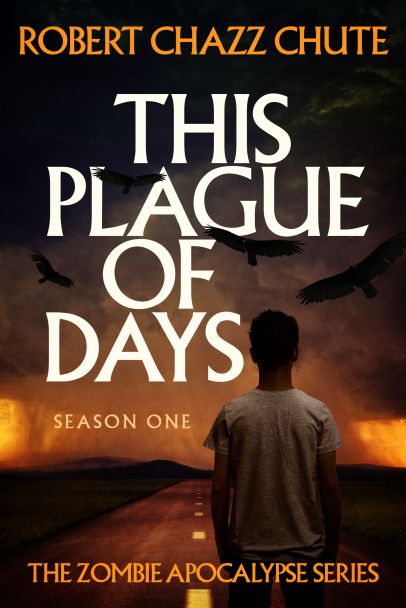
Too many books won’t be read, and not because they aren’t great. They don’t look good enough for a second glance. There are graphic design solutions. I just fired off an email to my solution, author and cover designer Kit Foster of KitFosterDesign.com. He sent me some samples of ideas for the cover of my upcoming plague thriller. One image was particularly strong and we’ll definitely go with some variation of that draft. You want great, not just good. Book covers are not easy. Unless you’re a graphic designer, get professional help with your cover. Maybe even then, you should outsource. Most authors who edit still need editors, so why don’t cover designers need another set of eyes on their book project?

Book art is hard to get right. With his first inkling about my book, Kit has already balanced out two opposing demands: We want readers to be struck by the uniqueness of the image on the one hand (and compelled by graphic design magic to buy, of course). However, the tone of the cover must also be so familiar that the reader will know intuitively and instantly to what genre the book belongs. Unique, yet familiar. Quite a feat, really, isn’t it? I’ve seen some indie authors insist they can do a DIY cover with PowerPoint. Looking at their cover art, I’m sorry, but I can’t agree. I want a cover that’s a delicious chocolate croissant, not a lentil and sewage burrito. I’m glad those writers can succeed despite their covers, but I’m sure they’d sell even more without the self-inflicted handicap of DIY delusion.

My discussion with Kit got me thinking again about what makes a great book cover. A solid title that grabs the

Click to get Bigger Than Jesus here

reader can make a difference. A recognizable name is bigger factor. If you have a bland, soundalike title (change it!) or haven’t broken through (yet), your best hope is a great cover image and hiring a graphic designer create it. As I’ve already confessed in this space, I experimented with DIY and I hurt myself. I’ve sold enough books in trad publishing that I know a good cover when I see one, but actually creating a decent book cover? Ha! No. I’m not the graphic designer. All hail Kit. He’s a book cover solution.

The problem I see with some book covers is they try to do too much at once. Covers are crammed, as if the author hopes the image will tell the whole story instead of giving the reader an intriguing taste and tease. It’s tempting to try that. I’ve almost succumbed myself, which is another reason to have a helmsman with a steady hand on the wheel to keep you from crashing into all those pretty icebergs. It’s tempting because, admit it, we still think we should pull in anybody and everybody who can read. In my opinion, that’s a mistake. I want readers who really love mystery and suspense mixed with witty repartee. All others need not apply because “all others” probably won’t like my books. That’s okay. You don’t like “music”. Our tastes are much more specific than that. You like neo-thrash synth-metal, industrial-Asian jazz fusion and Tom Jones singing It’s Not Unusual in a duet with the ghost of Tupac. Go after whatever your niche is. Instead of taking little bits from all over your plot and compressing them into a graphical soup, more specific, evocative and emotional images make compelling book cover art.

Please avoid a cover that only makes sense after you’ve read the entire book. The purpose of the cover is to seduce innocent virgins. Don’t require Holmesian cryptographic skills from people who aren’t even your readers yet. Before they are your readers, they are disinterested browsers. Convert them to actual readership with book covers that promise a secret revealed, invite them on a journey and make them hope for a braingasm. (Then deliver it when they actually buy it and read it.)

I see a lot of books where the author’s name is too small. That’s not an ego problem. That’s a branding problem. I understand how that happens. Readability is sacrificed so more elements can be crammed on the cover. It’s the Throw Everything at the Wall and Hope Something Sticks Approach. Take that cover down to thumbnail size and it’s not just readability that’s sacrificed, but legibility and sales. Kit goes with powerful, evocative images so we move toward covers that show and sell. I’m proud to be indie, but I want author name recognition in the long term. To do that, the cover has to look like a traditionally published cover. What’s common among trad published covers? Bigger author name tags.

For more on what makes a great cover, check out e-book cover design awards for insightful commentary that helps make better book covers and sells more books. Or just head over to Kit’s website and get going on your new book cover (or revamp an old one that isn’t selling. I did that with my DIY cover.) Kit Foster is a very helpful guy who does so much for authors at very reasonable rates. You’ve put so much work into your book. Give it a fighting chance to be read. Give your book, and all those virgins, a striking cover.

The paperback has arrived. For $9.99. Did you hear that? Distant thunder of the Book Gods mumbling to each other. Oooh, shivers!

Filed under: publishing, , , , , , , , , , , , , , , ,

UBC #28: The zero money approach to book promotion

Small-town terrors and psychological mayhem in Maine.
Reached #18 in shorts on Amazon!

Each morning, author Al Boudreau asks a question about the writing life and publishing on Facebook. This morning, he asked which we preferred: A big launch of our books or a soft launch? Other people have their own answers. Here’s mine, as I wrote it this morning:

My short answer is: Hint and be clever about promotion rather than try to spend our way to success.

Sorry about my long answer, but it could have been even longer: I used to work in trad pub, so I kept all details secret. Now I hint and promote a bit for upcoming books (especially those in a series because, knowing it’s a series, that appeals to readers more.) The hints comprise things like the odd progress report, tweeting love and my Six Words or Less Contest in which the witty and pithy winner will have his or her name in the next book in the series. That’s really selling the foundation novel as it promotes the next one.

[Wanna play? Scroll down the page for the SIX WORDS OR LESS CONTEST. Entry deadline, July 31.>

With respect, I think there’s still a bit of inertia from old to new model with thinking in terms of a big launch. Except for ARCs to media and long lead times on seasonal books, Trad publishing is much about keeping it under wraps and then blasting PR and promotion for a short period of time (in part because they have so many other books to move on to and because the obsession is short tail vending and beating quick return deadlines in bookstores.) We’re kind of like classical music. We don’t get rock star tours and roadies, but we can sell lots in the long term because our books are available until we evolve past the Internet and start reading each other’s minds. (Or heat death and an ugly extinction, whichever comes first.)

With long tail marketing, though we don’t have the resources for a huge launch with cap displays and buying bookstore space, all our energy isn’t spent in a tiny retail window, either. Publishers have largely abandoned big launches anyway. Most midlisters never get that dreamed of release party and all their publicity is really up to authors who thought they’d get more logistical support.

Our books can go up faster with low overhead and they are on sale forever.No returns. Rather than blast potential

“You will laugh your ass off!” ~ Author of Cybrgrrl, Maxwell Cynn

readers, I hint because I wouldn’t want to tire anybody out. “Oh, there’s Chazz talking about Self-help for Stoners and Kevin Smith again,” wears me out, too (hence more books are critical.) That’s okay, though, because we’re better at social media than trad publishing has been. Social media is personality based. Who cares what Random House’s twitter is on about? I want to hear from individual authors, not faceless corporate entities. Corporations are not people, my friend.

Big launches feel like putting all the chips on one roll of the dice, which is an awful way to start your trip to Vegas. I just hint and hope the dribble never becomes an embarrassing orgiastic fit or a drone. Just my opinion as the author of the hilarious crime novel Bigger Than Jesus. (See what I did there? Um…yeah. See, there’s such a fine line between fun promotion and self-loathing.)

Filed under: publishing, , , , , , , , , , , , , , , , , , ,

Ultimate Blog Challenge: I am an artist, not a beggar

A forum post out of the cyber-ether really irritated me,

and not just because the person who posted was biased against self-publishing.

She was horribly misinformed and self-centered.

Her complaint is about “all these self-published authors begging for likes on their Facebook pages” and that apparently angered her by…okay, I’m not sure how that could bother her so much. Cluttering up her world, I guess. The strength  of venom I detected is usually found in a rattler’s fangs. Anyway, let’s flesh out the ugly misconception in her deluded subtext:

1. It’s not just indie authors. All authors with a Facebook page ask for “likes”. The more important likes are the like and buy buttons of our Amazon pages, but we all want to be liked. Most traditionally published authors understand that their publisher’s publicists are already stretched too thin, are often less effective than publicity that comes directly from authors and what resources that are channelled toward their books tend to be minuscule and fleeting.

2. It’s not begging. It’s asking politely and you often get something in exchange, like free entertainment, free education (like this post) and books that are much cheaper than what you’d pay a traditional publisher. All my books are currently priced at $2.99. That’s couch change — an impulse buy — for professionally published books. For less than the cost of one Starbucks coffee you get hours of entertainment I am happy to provide. I am an artist, not a beggar.

I’m not asking for loose change in exchange for nothing. I’m offering you a chance at relaxed Sunday afternoon with a book when it’s too hot to go outside; a cozy read on a winter’s night when you can’t sleep; suspense that won’t let you go to sleep;  a euphoric discovery that will delight you and might even change you. Yeah, you betcha that’s a bargain. If you refuse, no hard feelings.

3. Providing you with information or the opportunity to help out is not spam. It’s a question you don’t even have to answer. Get over yourself or turn off your Internet connection and take a break. I’m sorry the world isn’t catering to you. It’s not catering to me, either, but I suspect I hate fewer people than you do. I’d define spam as bombarding people with ads that provide no value, are out to scam you and a steady stream of blaring that gives you no opportunity to opt out. (i.e. You don’t get to complain if you decide for yourself you’re going to read it.)

4. Ignoring  the request takes nothing from you. Simply ignoring a request takes the bare minimum of tolerance. This person must be a nightmare in real life. How would she handle a real problem?

5. Why all the animus toward authors? Helping out costs nothing and I don’t think authors have any bad feelings toward those who don’t bother to “like” their books on Amazon, click “Agree with these tags” button on Amazon (it’s toward the bottom of each sales page) and “like” their Facebook page. (Thanks for helping to spread the word. And if you didn’t, no hard feelings.)

6. Ads are only irritating if you aren’t interested. On the computer, I click away. If assailed by the TV, I ignore it, fast forward, check my email or get up from the couch and get a glass of water. Indie authors (well, everyone) deserve more compassion than the complainer was willing to bestow. Sadly because the complainer might even love our work if she gave it a chance.

7. Despite my frustrated tone here, I know authors are not entitled to sales any more than Wal-mart or Toyota “deserves” your sales. We don’t even “deserve” your attention. That’s the myth of the entitled author I hear so much about. I honestly haven’t met many authors who suffer that delusion.

We get it. It’s a book. To most, “just” a book. We write them and lots of people don’t care. A lot of people don’t even read! Still, we stand behind our work and hope to find our audience. We hope our audience finds us. If I’m speaking to a crowd, I’m not speaking to everyone and I know it. Please be patient and polite while I direct my audience toward my books. I promise I won’t take long doing it and I’ll be as entertaining and quick as I can as I ask these things. You can always opt out.

Whether you’re indie or traditionally published, the promotion for your book really is up to you, your tribe, your followers and your readers. Publishers do very little for most authors. Stephen King gets a big promotional budget. That’s right. The authors who need the promotion least get the biggest boost because it’s a simple business decision: the publisher banks on the biggest title. Big publisher or small, these are the evaluations we all have to make.

I make that same evaluation every week. I have two very new titles just released in June. One is a short story

Get Bigger Than Jesus

collection bundled with a novella, The Dangerous Kind & Other Stories. The other is my crime thriller, Bigger Than Jesusthe first in a series. Which do I spend my limited resources promoting? Obviously, the crime thriller.

No short story collection will sell as well as a thriller. In all likelihood, my short story collections’ sales (there are three collections in all) will come after readers decide they like my flavor by discovering the novel. Some of the stories include characters and references that cross books, so there’s cross-pollination going on, too.  The short story collections are great, but they’re harder to sell (though they will be a valuable long term sales avenue.)

Yes, we have to interact and connect and make connections and help others to be heard.

Endure a little promotion amid all that for art’s sake.

Everybody’s trying to make a living

and civility is the grease to the gears of civilization.

Filed under: publishing, , , , , , , , , , , , , , , , , , , ,

Bestseller with over 1,000 reviews!
Winner of the North Street Book Prize, Reader's Favorite, the
Literary Titan Award, the Hollywood Book Festival, and the
New York Book Festival.

http://mybook.to/OurZombieHours
A NEW ZOMBIE ANTHOLOGY

Winner of Writer's Digest's 2014 Honorable Mention in Self-published Ebook Awards in Genre

The first 81 lessons to get your Buffy on

More lessons to help you survive Armageddon

"You will laugh your ass off!" ~ Maxwell Cynn, author of Cybergrrl

Available now!

Fast-paced terror, new threats, more twists.

An autistic boy versus our world in free fall

Suspense to melt your face and play with your brain.

Action like a Guy Ritchie film. Funny like Woody Allen when he was funny.

Jesus: Sexier and even more addicted to love.

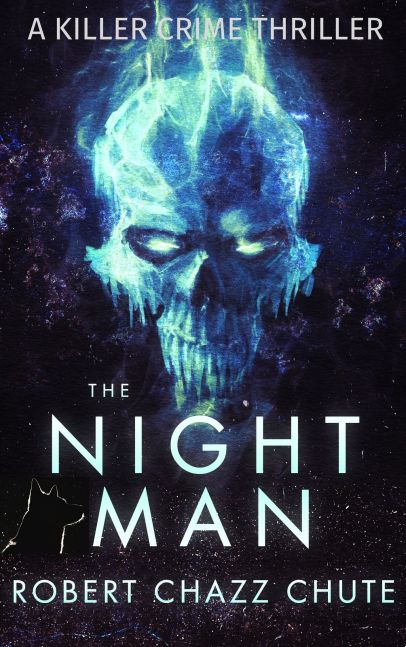
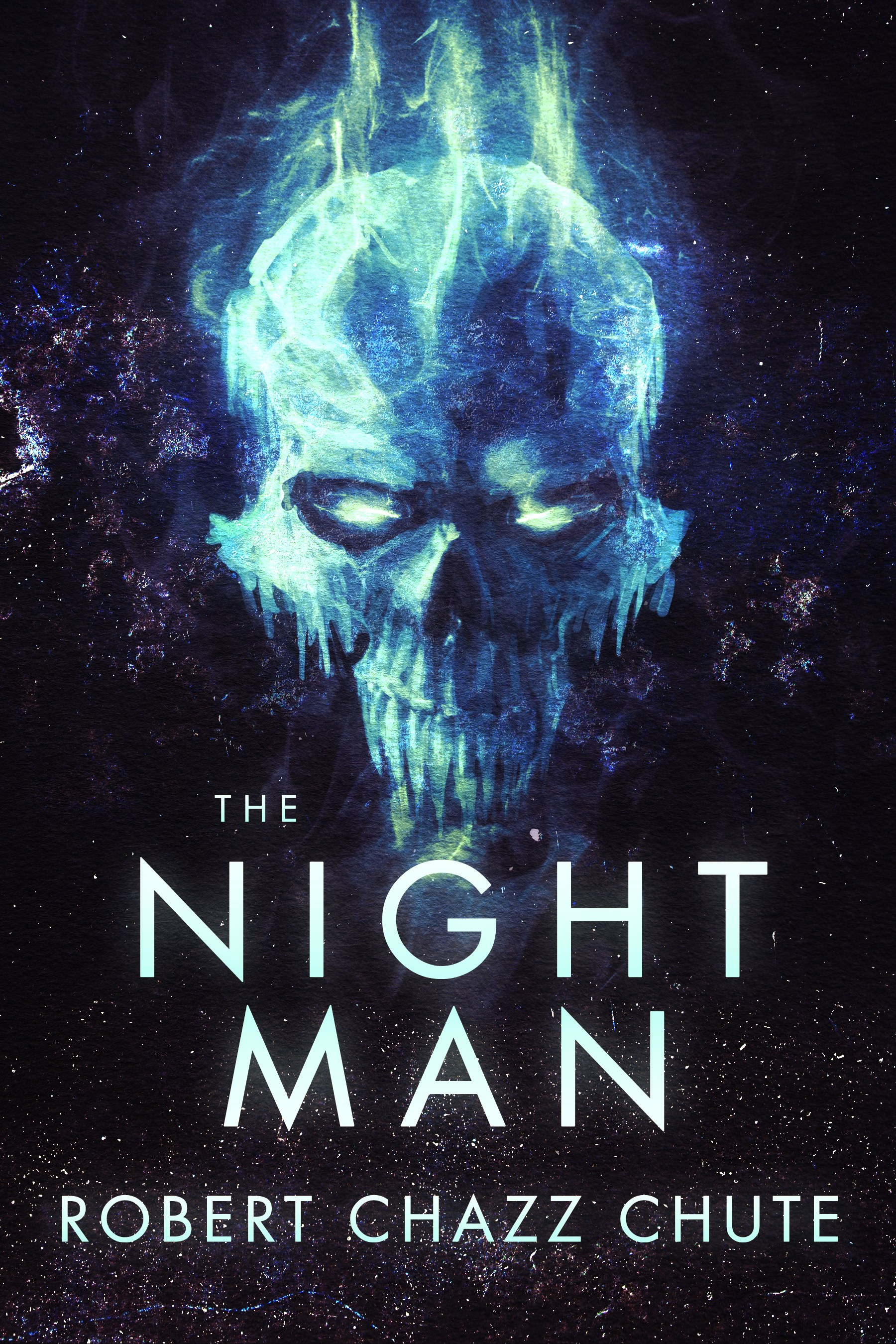
You can pick this ebook up for free today at this link: http://bit.ly/TheNightMan

Join my inner circle at AllThatChazz.com

See my books, blogs, links and podcasts.

Enter your email address to follow this blog and receive notifications of new posts by email.

Join 2,061 other subscribers