C h a z z W r i t e s . c o m

See all my books at AllThatChazz.com.

Et tu, Kobo? Anger and the Cost-benefit Analysis

By now, most authors know about Kobo’s rash move to yank all indie authors from its platform. Today, we talk about Kobo and reevaluating our marketing strategies so we can manage time and energy and make more money.

If you came in late to the debacle, here’s what started it:

They condemned indie authors in an over-reaction to a news story about pornographic ebooks invading WH Smith through Kobo. Instead of weeding out individual books they deemed offensive, they painted us all with the same brush and pulled a digital-ton of indie ebooks.  They didn’t just hit indie porn and erotica titles. They hit all of us, the tall and the small, and legal. (For more details, check “Related articles” below).

Hitting the big, red nuke button was a major tactical error. Failing to open lines of communication also didn’t help. Kobo was put in a tough position because of their relationship with WH Smith. Kobo did announce the bulk removal was temporary and they’d review books before putting them up for sale. How long that could take, we have no idea. Kobo probably doesn’t know, either. Sounds like a gargantuan task. Better filters would have served them well.

Two of my crime novels were pulled from Kobo.

Bigger Than Jesus and Higher Than Jesus disappeared from the store. Bigger Than Jesus is now back, but not for long. I’m pulling it from Kobo and everywhere else, except Amazon and CreateSpace. I’ll also begin selling paperbacks from my website (but more on that another time.)

Some authors are (or were) making money with Kobo. Amazon is not the only game to play, so you’ll see the same advice everywhere: “Don’t put all your eggs in one basket! Put your books across all platforms! Amazon’s free books scheme with KDP Select doesn’t work anymore.”

Today, I’m going to challenge the egg basket wisdom. First, let’s talk Kobo beef.

1. Kobo’s platform is flawed. Where are the reviews? And (I’ve said this many times) why aren’t they stealing the best ideas from the other platforms? Amazon is the model they aren’t emulating. Kobo isn’t alone in this regard. Over at Smashwords, the website is still very ’90s. Still!

2. Instead of taking the time and energy to spread ourselves across many platforms, I suggest you look where books are actually moving. This won’t help you if you have one book, but after a few, you know which platforms butter your bread and which poop in your cereal bowl. My books sell on Amazon, Barnes and Noble and in print. That’s it. Avengers, assemble! Activate the 80/20 rule! 

3. Some people love Kobo. They’re in a lot of markets and there are nice people there. I’ve spoken to someone from the company and she couldn’t have been nicer. I’ve heard interviews on the Self Publishing Podcast. Kobo has awesome representatives who communicate their respect for authors and care about what we’re doing. I want to love them! But the company screwed up all that good will in one big, bad move that was not thought through.

4. Then I got this email this morning from Draft2Digital, informing me that a book I published to Amazon (within 24 hours) back in February 2013 was finally on, you guessed it, Kobo.
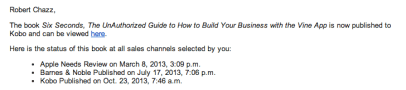
Screen Shot 2013-10-23 at 9.27.16 AM

Barnes and Noble published Six Seconds in July and Kobo’s right on the case, finally getting my book about marketing with the Vine app out into the world today? What the bloody hell? It’s been so long, I’d forgotten I’d even selected them as a sales channel.

Trying to publish this book with Apple is also a hassle. That’s two of Amazon’s competitors failing the cost-benefit analysis. The tragedy is that Amazon doesn’t have to be perfect to dominate. It just has to avoid the razor wire and landmines its suicidal competitors throw themselves upon. In a healthier market, the competition would be smarter and closer on Amazon’s heels.

5. Then there’s the hypocrisy. Kobo says they aren’t for censorship as they pull indie authors. They’re free to publish and not publish what they want, but this was a blanket condemnation of indies. That no doubt pleased traditional publishers. It must have been particularly gleeful for the legacy publishers of erotica who were immune from the cull.

It has to be said, there are all kinds of works of literature that contain intense violence. Many of my books contain violence, but not all were pulled. I’m arguing none should be pulled because, if you want to protect children from pornographic ebooks, it’s your job to make sure your kids don’t buy them. Kobo is a company. Parents are parents.

I don’t want media companies to act like parents, especially when we’re talking about fiction. I had parents already and look how that turned out. I’m nobody’s kid anymore and I’ll make my choices for me and my kids, thanks. (As all preachers’ kids know, it’s the suppressed and repressed ones that go too wild once they hit Frosh Week, anyway.)

6. Okay, so that’s enough spanking Kobo. Let’s talk book marketing strategy and rethink it.

As far as KDP Select goes, it’s true it doesn’t work as well as it did. However, does it not work for so many authors because they’re expecting it to work on its own? The book has to be strong and the cover art must be awesome. We all know that, but are author-publishers stopping short, assuming those variables are enough gas for their sales engine? How many oft-referenced cases of KDP Select “failures of free” are actually KDP failures? Are authors doing enough to promote those free days?

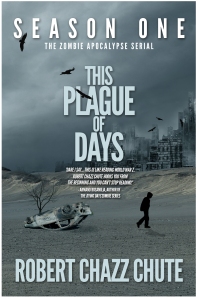
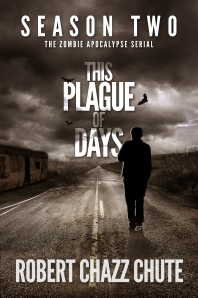
Using Author Marketing Club tools and Bookbub, Freebooksy and other advertising and promotion services in combination with free promo days through the exclusive Select program, This Plague of Days, Seasons One and Two became bestsellers. This was long after many authors abandoned KDP Select because “free doesn’t work anymore” became common currency among us.

Your cost-benefit analysis may be different, but I urge you to do a cost-benefit analysis.

As pressures mount, spreading ourselves everywhere takes time and energy we could be using more profitably. If you sell books on Kobo, keep them. If you’re that one author who makes cash selling on Sony or Diesel, go for it. The only platform I’d say everyone should to be on is Amazon because they’re the bus that’s gassed up.

“But what if Amazon makes the same mistake Kobo did? They’ve pulled books willy-nilly before! Isn’t Kobo’s fiasco an example of why we have to spread our books to all platforms to minimize risk?”

After the hoopla Kobo’s decision caused, I don’t think Amazon would be or could be that stupid. Besides, it’s not about allegiance to a platform or blind tribalism. It’s going with what works for you. At worst, if you really can’t stand being in Amazon’s exclusive contract, you can reevaluate and bail at 90 days.

True, spreading everywhere insulates us from dumb mistakes, but it would also minimize potential profit drastically. Unsuccessful businesses play not to lose.  Play to win. I mentioned I sell some books on B&N, but the return is so low, it’s not even a factor. Until the other platforms come up with better ways to market us, Amazon is my puddin’. 

This is math. Look at where your books are selling.

Put your time and energy into getting more books into those channels and leveraging that advantage with books like Let’s Get Visible by David Gaughran. (And if you haven’t published yet, buy Crack the Indie Author Code by some thoughtful and encouraging idiot.)

Are you selling even a little bit on Kobo? Who cares? Use the 80/20 rule. Focus your energy where it does the most good. That’s why I’m pulling my crime novels from Kobo. I had other plans to market the Hit Man Series. Now I’m going to pull them back to KDP Select and leverage that series better than I did the first time. I wasn’t in the Author Marketing Club when Bigger Than Jesus came out. I only have two series, so I must reevaluate non-Amazon successes and failures and act accordingly.

This is also emotion.

I admit it, emotion plays a role. Nothing’s broken so I’m not in a rage. I am annoyed. Kobo made their decision for short-term reasons that did not respect indie authors. We are the publishing revolution, remember? They pulled our books without warning. We don’t matter to them and I’m hurt. It’s not just the principle. It’s the money.

I’m sure I don’t matter to Amazon, either, but at least Amazon can publish my books in a timely manner and move them. Ultimately, I’m not leaving because of Kobo’s instability. My annoyance led me to reevaluate what Kobo was doing for me. I’m not punishing Kobo at all, but the fact that I can pull my crime novels and not hurt myself tells me I should refocus my energies.

I’ll go back to Kobo one day, if they’re still around by then. Who knows? Maybe this debacle is just what they needed to reevaluate their platform and marketing strategies, too.
Tips and inspiration for the indie author's journey to publication.

Tips and inspiration for the indie author’s journey to publication.

~ Hi. My name is Chazz and I’m much nicer than I appear here. I’m usually pretty sweet and funny unless I’m writing suspense. Then the serrated knives come out and things get twisty. I love people, though books give me less back sass. I’m a contrarian, but not for the sake of being contrary. I just don’t understand how the world works. There are so many example of how it doesn’t work, I get distracted easily.

I believe in love and readers and curiosity and the written word’s power to release dopamine. I’m in the brain tickle business and I’m grateful for that every day. Find all my books here for the foreseeable future.

Filed under: author platform, Books, , , , , , , , , , , , , , , ,

Writing and the Day Job: When dreams don’t come true on schedule

Let’s get a myth out of the way immediately.

Some writers say it’s a rule that a day job keeps writers in touch with the real world and, to be good, writers need real world interactions to draw upon for their fiction. Maybe that’s true for them and their process. I had enough drama to draw from before I left home as a teenager. I deal in fiction. Imagination and Google are more useful to me than interactions with actual humans in Meat Space.

Meat Space humans are difficult for me to deal with. I see the world differently and they don’t all get my sense of humor. I’m a little weird and sometimes I have to make myself shut up so all the weirdness doesn’t escape at once and scare people away. In books, it’s easier. I’m supposed to be strange when I write. If you’re reading this blog, there’s a good chance you relate to that. When we go corporate, no one’s supposed to suspect our minds are active.

Even when I’m lying, I try to tell the truth.

I lie to myself about a few things, but I’m honest for readers, sometimes painfully so. That’s why I’m unveiling some vulnerability and complexity here. I wrote a post last night about going back to a day job. Fourteen years ago, I was in the same office, doing sort of the same thing. (Long story.) The point is, in the post I wrote to readers, I was emphasizing the positive. It wasn’t a lie when I wrote it. It’s not a lie as I type this.

However, sometimes my enthusiasm for my return to the real world is a lie. Starting up yet another business is creative and exciting and stressful. When my enthusiasm is down and my pride is butt-hurt, there’s a reason for that. It’s called Entitlement. As in “False sense of”. I have that affliction sometimes. I’m not proud of it. In down moments, I do feel bad about needing to return to work.

But I feel worse about the sacrifices my family has had to make to support my dream. There’s tension when the bills come in. We don’t talk about it, but we know. We don’t take vacations like all the kids’ friends do. Every purchase feels like a commitment to a serious investment. How long will this coat last? Is the van’s muffler a ghost yet? The living room rug absolutely must be burned and replaced. As mentioned in my previous post, poverty sucks.

The Revealing Question

I ran into a friend and former client who got the news I was returning to my old workplace. “Are you okay with that?” he asked.

The question was gentle and well-meaning. He knows that, for me, the last two years dedicated to writing have been the best two years of my life. When I’m at the keyboard, I’m home and having fun creating chaos. I’ve used those two years (mostly) wisely. Ah, but the question. “Are you okay with that?” Depending on my mood, it’s loaded with should haves and what ifs and worries about dealing with an unknown public.

If This Plague of Days wasn’t taking off, I’d have a huge problem with my return. It would feel like capitulation and a backwards step. I’d feel like a loser if not for the seeds of success very slowly budding. I’ve also published ten books in two years. My readership is growing. The timing would have been ideal if the growth I see now happened a year or so ago. But having a hit isn’t like that and hits don’t last, either. There are too many variables and they aren’t all under my control. To pay the bills, I have to do what I did two years ago. I’m risking starting another business.

I’m not quitting writing.

To take things to the next level, I need to have more money coming in to support my family and my imprint, Ex Parte Press. The schools seem to request more cash for projects, school trips and class support almost weekly. Bookbub promotions are not cheap. And yeah, that living room rug is a bio-hazard that no carpet cleaner can cure. Back to work I go.

The Good News

The day job isn’t so demanding in the number of hours it takes.

I can write between clients and still be very productive. In many ways, my day job will be an ideal complement. I can control my time and I still work for myself. I’ll have two businesses. That will undoubtedly diminish some book productivity, but I’ll still have more time than most writers so I should not, must not, whine.

It must also be said that in my other, newer business, I’m really good at it. There are much worse things to be doing with my time. It’s noble work that helps people and yes, I am expert. If not for that expertise and writing, I’d be looking on Monster.com for “Hired assassin”. I’ve considered dog-walking, but only if it was 1980 when nobody had to pick up after their dogs.

We do what we must. We move forward. We make what fun we can from whatever we do. That sense of entitlement with which I am sometimes afflicted? It doesn’t serve me. It doesn’t help any of us. I’m earning my readers, one at a time. Though it is deep and dark, we are finding each other in the forest. It’s going to be fine.

~ These are my books. This is the new business. Tonight, as I write this, I feel no chagrin.

Filed under: author platform, authors and money, book marketing, getting it done, self-publishing, Writers, writing tips, , , , , , , , , , , , ,

Writers: Saving Money and Making It (Part 1)

This week we’re going to talk about writers and money.

Mostly, we’ll talk about not having any because that’s reality for most of us.

Forget the clichés about how writing in a garret or a ditch lined with beer-vomit fuels us creatively. Poverty sucks. Worrying about income and outgo all the time drains us creatively. As a guy who’s basically been unemployed for two years, I have a lot to say on this subject, but let’s start by saving you $1,200 a year or more with one phone call.

You use the Internet for research (I hope). Call whoever supplies you with TV, Internet and your phone. I did this last week. I started the conversation with, “When I leave Bell, do you guys come get the satellite dish and leave holes in my shingles or how does that work exactly?”

“Why would you want to leave Bell, sir?”

“Because I just found out a buddy of mine in the same neighborhood with roughly the same services is paying $100 less a month than I am!”

This is true, by the way. This isn’t about scamming any company. It’s about solving the problem of being overcharged.

The guy I spoke to in Billing was befuddled as to what to do with me so I took the direct approach and said, “You want to transfer me to the Retention Department now.” That’s where the magic happens. The people in Retention are authorized to massage your bill and squeeze out money and happiness for you. The communications market is becoming more competitive and they don’t want to lose a customer.

Next I spoke with a helpful fellow who went through my communications package with me. I was paying for ten features on my landline. I don’t even know what those ten features could be. I dumped all but voicemail and caller ID.

If it were up to me, I’d dump the landline altogether, but we have to keep it so obnoxious telemarketers can harass us about buying gold and cleaning our air ducts. I also dropped my long distance plan. Use Skype for long distance. Skype is free. 

We’re on the net constantly so there were no services to reduce. However, Retention guy “put a promo on it”. That means he knocked $6/month off the price because I bothered to call. That’s $72 a year on one component of the monthly bill, just because I said my bill was too high (which it was.) We also edited down the satellite package. Everybody gets a lot of channels they don’t watch. Kill them.

We haven’t noticed any loss of services or channels, but that one phone call (which took about half an hour) knocked those bills down precipitously. I haven’t got the first bill yet, but I will save about $1,600 in the next 12 months. Your mileage will vary, depending on how much you’re getting screwed to the wall by your service providers already.

In Canada, we no longer have pennies. Sure, a penny saved is a penny earned, but I’m talking about a significant amount of dough. I “earned” $1,600 in half an hour. Make the call.

Part 2 of this week’s series for writers will be about Writing and The Day Job. Stay tuned.

For an article about gratitude, readers and sneak peeks of This Plague of Days, click here.

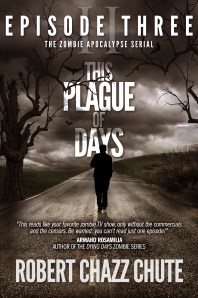
Meanwhile, if you’re reading This Plague of Days as a serial, Episode 3 is out now!

Episode 3 of Season 2 (not Season 3 yet!) is now available. Click on the right sidebar to grab the complete Season One and Two.

Episode 3 of Season 2 (not Season 3 yet!) is now available. Click on the right sidebar to grab the complete Season One and Two.

Photo on 12-05-23 at 4.39 PM~ I’m Robert Chazz Chute. I wrote a couple of books about an autistic kid versus the zombie apocalypse. Sure, that sounds ridiculous, until you understand that it’s also an international thriller and a Latin primer. This Plague of Days, Seasons One and Two have both achieved bestseller status. I’m still broke, but that will change.

Filed under: authors and money, Rant, What about Chazz?, What about you?, Writers, , , , , , , , , , ,

Top Ten for Writers: What matters?

1. Don’t take a paragraph (or a whole post!) to apologize for not posting to your blog recently. They didn’t notice your absence. You have their eyeballs for a few seconds now. Don’t waste their time with throat-clearing or they’ll click away because you don’t have anything to say.

2. “Cover reveals” don’t attract anyone but the people who are already into you. They might not hurt. I’m saying they don’t help. Find a topic that matters to you and your readers instead. To spin an old quote, mere familiarity breeds contempt, but commonality makes friends.

3. Character interviews may be interesting to a few people, but only after they’ve read your book. It gets no new readers. Character is revealed through dialogue and action within the book. In promoting a book, it’s boring without narrative content and context.

A better suggestion:

Soon I’ll interview author Mark Rayner for the Cool People Podcast. When I asked him what he’d like to talk about, he didn’t say his characters, publishing or his writing process. He wants to talk about the themes of his book. I’m looking forward to a cool interview about the singularity and how technology affects all our lives, for good and bad. It’ll be less about him and and his book and more about readers. Then they’ll want to buy The Fridgularity, his funny, smart, entertaining novel.

4. Lose long dedications in ebooks. I’ve done this because I have much for which to be grateful, but it cuts into the online sample. Stick it in the back or put a link to it on your author site. Active links to your websites and other books will expand your circle. Your inner circle will understand.

5. The Table of Contents in your ebook doesn’t have to be in the front. That’s inertial thinking from paper publishing. For fiction, at least, stick it in the rear of the book. They can get to it on their e-reader, if they want it, by hitting “Go to”.

This is especially egregious when you have a long, dark poem as a TOC (as I do in This Plague of Days). It’s something else that cuts into the length of the online sample if it’s up front.

6. Do not complain about the demands of marketing your books. That’s telling readers that trying to reach them is a burden and they are unworthy of your time.

I’m still seeing this. Any potential reader who’s done manual labor, worked retail, been unemployed and/or worked for a boss? Yeah, they all hate you when you complain about being a writer. We have the best job on earth. Even if we aren’t getting paid for it yet, it’s still that awesome.

Instead, do what’s fun for you in otherwise unproductive time, after you’ve hit your word count for the day. If a Twitter account in the voice of your character is fun for you, try that. Unless your character is amazingly funny, profound, unique or wanted for spying by the NSA, it probably won’t pay dividends, but at least you’ll be having fun.

Connect on Facebook with people. My most meaningful interactions probably happen there. Since a reader helped me identify how my Facebook settings shut people out, I’m interacting with more people.

You can even go out and meet people in the real world. I understand non-virtual, human interaction is still a thing. I read about it on the Internet. It sounds dangerous, but you can sell paper books that way.

7. The demands of the work drain our energies so we talk too much about being a writer knocking back coffee. I’ve done it, too, and it’s cliche. Time to say something new. Something about wrestling elementary school teacher-dragons naked maybe. Hm. Gotta work on that metaphor so it sounds less fun.

8. Cramming too much information on your business card doesn’t work. Trying to cram the whole story on your book cover doesn’t work. Any promotional stuff that is too long doesn’t get read. Get your graphic design and white space to do more of the work for you.

The British Special Boat Service’s former motto was “Not by strength but by guile.” Good news! We’re writers! We have the resources to use guile. Writers and small publishers don’t have enough money to attack with strength.

9. Speak with. Engage with readers. Do not talk at readers so much. Talk less about you. Talk more about them. (Nice jammies you’re wearing today, by the way, and I especially like the lacy, red bustier…sir. Better turn off that laptop cam.)

10. Talk more about what you love and less about what you hate.

People enjoy reading about what people hate, but they don’t like the hater or even believe them. For readers to get to know you, they want to know what you’re for and what you read and what you think. Or that you think. Talk about what matters, both to you and to them.

Some writers steer clear of religion and politics for fear of offending.

Sounds like a quick way to be irrelevant and bland.

As a writer, your ability to communicate makes you important to any heavy discussion. You can even contribute as a human being. Your thoughts on violence, poverty and all the ills of the world are far more important than your little writing career. If someone doesn’t read your book because you’re a vegan, for instance, do you really think you’re missing out on a thoughtful and fair review from that person?

Kids are starving and you’re really worried about losing a few reactive sci-fi readers because you’re for X and they’re for Y? Really? Surely the kids are worth losing a few bucks, aren’t they?

I’d rather express my politics on Facebook from time to time. I’d rather win more readers I like. I don’t have to have readers who agree with me about everything. However, I don’t write books for dumb people. Trying to be liked by everyone is chasing a goose into an acid factory that’s on fire. We may be poor and desperate for readers. That doesn’t mean we have to be pathetic.

But yes, it does matter that reasonable readers generally like you. (So follow the Wil Wheaton edict and “Don’t be a dick.”)

I don’t want people to be excited to read the next This Plague of Days. I want them excited to read the next book by Robert Chazz Chute, no matter if I’m writing about zombies or Shakespeare or my funny assassin. Most readers tastes are very genre-specific, but if they like you, they’ll try your other stuff.

I’ve read all of Stephen King’s work except for The Dark Tower stuff. But I did try it. That’s all anyone can ask. After that, it’s down to individual tastes.

So be nice. Be authentic. Be committed to The Good.

And write good stories. Tell the truth through lies. Bypass prejudice and reach their minds by making them laugh first.

Writing good stories will get you more readers. Write great stories and that will come. Or maybe it won’t, but the writing and the stories matter. It matters much less than starving children and nuclear proliferation, but be fully in this world as you create better worlds.

To be heard, we must have something to say that matters to readers.

Filed under: author platform, Writers, writing tips, , , , , , , , , , , , , , , , ,

Top 10 How to be happy (oddly, this will infuriate people it’s meant to help)

This is probably the sort of topic where, if you get it, you don’t need it. If you don’t see it, you probably never will. (Then why blog about it? Because I don’t see any windmills! Now gimme that lance! Let’s go tilting!)

Change can happen though.

A bureaucracy, that shall remain nameless, gave off a lot of bad hoodoo. They’re infamous for holding the people they serve in contempt. The way they related to people led, in part, to the installation of bulletproof glass in their place of business. (I’m not kidding.)

Recently, they responded to the wails from those who paid their salaries. The video they sent out stopped short of an apology, but they did acknowledge they needed to set a new tone. They promised to work on changing their corporate culture.

I was one of their most strident critics. If they’re sincere, I’m surprised how willing I am to forgive and forget. The changes I see so far are free and subtle. I dealt with them again recently and a few pleases and thank yous was all it took to ease my wariness. It seemed, in the span of a few short paragraphs, that they weren’t trying to make me feel like a dirtbag. Refreshing.

Which brings us to blogging and relating to people.

I’ve found myself skipping past the blog titles that say, “Here are X number of reasons your blog sucks.” Maybe there’s good information in there, but I’m an author with an Irish family on one flank and teenagers closing in on the other. I’ve got enough negativity in my life. I already have a dim view of the world and I enjoy it in fiction. Less so, when someone harangues me.

I attended a webinar that made me sad.

The guy was knowledgeable, but the way he communicates needs to soften. The louder he talked, the less we heard. He then confessed that a big business opportunity fell through because of “conflicting styles and interpersonal stuff.”

I think I know the problem. It was the abrasive guy. “Go-getter” and “jerk” don’t have to be synonymous. The adage is not that you get more flies with corpses.

Which brings us to Kit Foster of KitFosterDesign.com.

My friend, supporter and sounding board, Kit’s a graphic artist who is a great resource for any publisher. He works with all of us, big and small. But that’s the least of why you should do business with him.

He knew I was feeling down the other day. He took the time to write a kind note that hit me at just the right time. Clearly, if you’re an author or publisher, this is the sort of person with whom you want to work. He does great work and his portfolio is impressive. You’ll get great covers and he’s not done until you’re happy. Work with Kit Foster and you’ll sell more books.

But many people can deliver book covers at a reasonable price, right?

Sure, I guess. But how many will bother to send you an email that makes you feel better when you’re down?

For a lot of people, anytime they see you’re down is when they start kicking.

How can we make more people like Kit?

1. Go back in time and get nicer parents, smoke helpful medicines or be Scottish, I suppose. I’m not sure what makes Kit the way he is.

2. Some medical schools use actors to teach doctors what compassion looks like so they can fake it. I don’t know if that sticks. I’ve often said the only thing I learned from Survivor was that jerks and psychotics can’t fake being nice for a month, even for a million dollars.

3. We can practice random acts of kindness and see if that elevates our mood. Happier people are nicer people. This doesn’t apply to people who get happy for the wrong reasons. If you’re one of those psychos, seek professional help before the rest of us rise up and throttle you.

4. We can practice gratitude (I guess I’m doing that now.) It sounds kind of hippie, but there’s science that shows the more thankful you are for what you already have, the happier you will be.

5. If you can’t manage these suggestions, professional scuba diving limits your ability to damage the rest of us, so take one for the team and go scream at fish. 

6. Use Kit’s services at KitFosterDesign.com. Maybe exposure helps by osmosis.

7. If you’re angry at somebody, make sure you know why you’re really angry.

Here’s how you’ll know you’re angry or sad about something else besides the target of your ire: You should have a range of emotional responses. If you review a book with the same level of vitriol that should be reserved for skinning live puppies? You’re Monty Burns and you have a problem, no matter how catchy the tune you sing about making fur coats.


8. If you’re already happy, spread it like fertilizer. Maybe it will grow. A bookstore employee told me she didn’t aim for happy. She aimed for contentment. Ironically, that suggestion made me happier.

9. Exercise. Meds to treat depression and disorder. Talk therapy. Total gene and personality transplant or personal tragedy that leads to an unlikely transformation. I don’t recommend leaving the problem so long that the solution is that last option.

10. Take Joe Rogan’s suggestion and pretend a documentary film crew is following you around, recording the lost time, outbursts and ill temper. Do that for one day and you might decide it’s time to change all your other days.

When you look up to find you’re surrounded by happy, creative, productive people and you don’t resent them for it?

You’ll know then you’re on the right track.

~ I’m Robert Chazz Chute. I am not happy all the time. I am working on improvement. Check out my books and podcasts at AllThatChazz.com.

Filed under: author platform, getting it done, publishing, , , , , , , , , , , , , , , , ,

Are readers changing and what does that mean to writers?

A friend of mine is an old-school, English major sort of guy. He was extolling the virtues of literature as we once knew it: contemplative novels; long treatises on the nature of the human condition; and “serious” novels chosen by a small cabal of unknown gatekeepers. His eyes gleamed for the nostalgia of MFA glories, tiny lit mag aspirations and the New York Times bestseller lists of old world, analog publishing.

This is the sort of conversation that takes me places I didn’t expect to go. Only in talking it out, and writing it out here, have I discovered and understood what I think about New versus Old writing, reading and publishing.

The “issue” is, have readers’ tastes changed?

All generalizations weaken questions and answers, but there’s validity waiting down there in the dark. Let’s delve.

Pre-WWII, many schools in the first world taught Latin and Greek. Long recitations of poetry were valued. My mom was an excellent example of that brand of scholarship. Two days before she died, riddled with cancer and taken low by the drugs meant to ease her pain, she recited, “The Village Blacksmith” by Henry Wadsworth Longfellow. My father listened, tears in his eyes, as her voice came, suddenly strong. “Under the spreading chestnut tree, the village smithy stands…”

Latin’s gone and Greek’s forgotten, unless you’re Greek. Rote recitation has ebbed. Penmanship as a skill is dismissed as obsolete. With the economy what it is and university fees rising, majoring in English is quite a luxury. I’m sure there aren’t as many women’s studies or Medieval studies programs as there were when I was in university. There’s a greater emphasis on job prep now. If you’re some kind of doctor or engineer, you can still make university pay. It seems we have less time to think about big issues, though. Like what happens when the doctor fails and what awaits us in the Abyss?

I guess, for that, there’s idiotic YouTube distractions and warm, fuzzy Facebook memes.

The rest is up to us, the writers.

Some curricula we’ll miss and others we’re glad to let go.

I feel very lucky to have received the one course in university I relished most. The Foundation Year Program at the University of King’s College was the history of philosophy and the philosophy of history. Best course ever. They called it a “programme” because they were the sort of Canadians who aspired to reek of British universities’ plummy pretension. Those Brit professors they emulated would look on us as snow-shoed colonials, but where else in Canada could you ask “what is the soul” and watch duelling professors fight over the answer for half an hour?

It was a great opportunity. Job skills were approached somewhat tangentially for many of us. We don’t know how to weld or split the genes for Monsanto that will kill us. With the death of newspapers, our journalism degrees are largely quaint and useless, but damn, we’re great conversationalists.

But that’s more nostalgia. What about now?

Many high school students and their families are seriously challenging the value of a university degree given that no jobs are waiting. Add  in the costs of paying off that bill for most of the rest of their lives. Or never.

University fees have put on a lot of weight and are suddenly much less sexy. As the middle class shrinks down to the working poor, the dream marriage of career and long, happy retirement is doomed.

The generations who dressed up for air travel and studied Greek laid the groundwork and built the infrastructure for our modern civilization. They were sharp enough to use slide rules to deliver humans to the moon and back and dumb enough to invent the atomic bomb.

From what I’ve observed, “kids today” are probably up for the great and bad challenges, too. However, our politicians suck and so bridges and highways crumble and kids starve.

All civilizations that manage to rise, fall. We’re on the slide. As writers, we can help slow the inevitable, discourage idiots from hastening the collapse and/or entertain everybody on the way down.

What are the “classics” going to be for students now?

To Kill a Mockingbird? The Old Man and the Sea? Romeo and Juliet? Goethe?

I don’t think so. What students across North America and beyond will have in common as adults are these new classics: Breaking Bad, The Walking Dead, and Glee. These are our culture’s touchstones at the moment. 

And get used to a much more transient definition of “classic”.

Lucy crying at Desi for a job at the club is classic comedy for today’s waiting-to-die-on-a-ventilator-in-a-few-minutes generation.

For us? I’m not sure they make funny sit-coms anymore. And I don’t think I’ll be in an old age home some day screaming deafly, “Anybody remember that Frasier episode where Niles had heart surgery?”

This year’s college freshmen aren’t talking about their common love of Tolstoy. Take any pair of well-educated, first year roommates and, if and when they talk culture, they’ll be talking about the good old days of The Sopranos and The Wire. They’ll speak of Hollywood all the way back one decade, when the movie machine didn’t suck like Dyson vacuum cleaners. That’s if they aren’t talking sports.

Pop culture, not Euclid, is our commonality now. When you’re looking to make new friends on a bus trip, don’t ask what your sexy seat-mate loved about Dante’s Inferno. (Trust me, I tried it. It’s not the touchstone I’d hoped for.)

The habit of reading is established (or not) in our early years or in jail. But it’s not all on parents and educators and the prison industry. The market has changed, too. Our attention is fractured by so many choices. Writers are competing with Grand Theft Auto and free Internet porn. Talk about quixotic aspirations!

What does this mean to writers? I’ll tell you what I told my friend about writing and publishing:

1. Authors are expected to produce more books faster to gain readerships and hold them.

2. Series and serials are in. Writing books like a TV season (as someone complained of This Plague of Days recently) is in. No, I mean to say it’s IN! As in, that’s what I meant to do!

3. Pop culture references are in. They light up the cozy familiarity cells of the brain. Trying to make books “eternal” with zero pop references? Out.

4. More genre mash-ups are in. I sure didn’t see zombie erotica coming, so slice that mash as thin as you want. Keywords are relevant. Bookshelf labels are much less relevant.

5. Pulp. We can push back the walls of what readers expect from pulp, too. The Cuban assassin in my crime novels is politically aware and has a lot to say about drug addiction. My latest work tackles global warming, US foreign policy and the nature of God, though the recipe’s nutrients are hidden in the neuro-fudge cake of zombies versus vampires.

6. Niches are in. Appealing to a deep niche is achievable. Trying to appeal to wide audiences is out, or at least it’s something that happens to you. It’s probably not something you can make happen.

7. Ebooks are here to stay. Seems obvious, but there’s still some resistance from publishers on the remote island of Manhattan who don’t know the war is over.

8. Shorter books are in. I once thought that meant short stories are coming back, but by my sales stats, either I was wrong then or I’m impatient now. The economics and timelines of more books, faster, demand shorter books.

9. Intermediators will return with honor. The more books you write, the more you wish you had help. This week I lost four hours of writing to formatting a print book. We, the relentless writers and publishers, need help. We’ll be looking for more minions and partners, though, not publishers. After months of sixteen hour days, I am exhausted. Viva la outsourcing!

10. Hybrid authorship is becoming more appealing, as long as we retain our e-rights and audio rights. Once the Big Five stop chiseling their contracts in stone, call me.

11. Book prices will still be all over the place, charging what the market will bear.

12. Jonathan Franzen will still complain about social media comprising the end of the world, but Huffington Post will give up publishing his rants. The Amish aren’t Huffpo‘s demographic. The irony of complaining about social media on the Internet will swallow itself whole and disappear in a flash of yin quantum, pixelated justice, balancing out Franzen’s Neo-Luddite yang. Gee, I hope media starts ignoring Anne Coulter sometime soon, too.

13. Blog posts like this one won’t survive. Too Long To Read and too snooty by half. Unless you’re deep in my niche, who’s got the time for these presumptuous pronouncements about my betters?

Relax.

Breaking Bad taught as much or more about the dangers of hubris than any Greek tragedy.

Everyone’s reflex to hate the future is just resistance to change away from the comfortable. Nostalgia is not thinking. It supplants thinking. It’s an old blanket that’s getting ratty.

We will adapt until the grid collapses and we start eating rats and insects to survive. Then we’ll have more time to devote to those deep conversations we’re not having. Those end of the world stories around campfires are going to be awesome.

~ Find out more about my books and podcasts at AllThatChazz.com and ThisPlagueOfDays.com. Defy expectations and love me for me, because I miss Heavy D.

Filed under: publishing, Writers, writing tips, , , , , , , , , , , , , ,

#VIDEO: Jumping into the Plague of Days serial?

This Plague of Days 2 E1 0918 AMAZONSeason Two, Episode 1 is now out for 99 cents. There are five episodes in each season, released one week apart.

Or, grab the complete Season Two for just $3.99 until November, 2013. (There’s a chapter that fills

Season 2 is the quest.

Season 2 is the quest.

you in: “Previously in Season One“.)

Season One of This Plague of Days is the siege.

Season One of This Plague of Days is the siege.

You can also get Season One of This Plague of Days here.

It’s kind of like writing for TV, but the imagination’s budget has no limit.

 ~ To learn more about This Plague of Days, check out ThisPlagueOfDays.com.

Filed under: This Plague of Days, , , , , , , , , , , , , , ,

How to ignore your blog and still get lots of traffic

Season One of This Plague of Days is the siege.

Season One of This Plague of Days is the siege.

I have six blogs and two podcasts. I admit that’s insane, but let’s move on from that briskly and let me tell you about the nice surprise that spurred this post.

I did something that, in the podcast world, is frowned upon. Until last week I hadn’t put out a new show since August. (Letting a show dwindle like that is called “pod fade”.) When I looked at my time management issues in the prep for the launch of This Plague of Days, something had to be deleted from my schedule. I pulled back the throttle on podcasting temporarily.

Just like with blogging, the less you put out into the universe, the less you get back. It’s smart to send up flares and broadcast signals frequently so we can escape anonymity and indifference.

Here’s the surprise.

When I published my All That Chazz podcast last week, I didn’t want to look at the numbers. I clicked on my stats, prepared to wince. Listenership had dropped, but it wasn’t the dreaded flatline I expected. I also know why.

Here are the usual tools for signal amplification for any blog:

Season 2 is the quest.

Season 2 is the quest.

1. Write great headlines.

The words “how to” and “review” are particularly strong link bait. Have a look through my blog for headline ideas. They aren’t all killers, but generally I think they’re pretty sexy.

2. Write great content.

Everybody says this, but it’s not very valuable advice. Lots of gurus in the “content is king” crowd don’t write great content. Nobody sits at their keyboard planning to write lousy posts. My suggestion is more specific: Be useful or be funny. If you can do both? Even better.

3. Triberr.

Being on Triberr definitely helps me get the word out. I know there are detractors. The detractors typically get less traffic. It doesn’t pay to be too shy and helping others always helps you, even if you don’t grok the kind karma connection immediately.

4. Overshare from the heart and get lucky. 

It’s better to write more, of course. When you fire more shots, sometimes you get lucky and hit a distant target.

I wrote a post about the frustrations of publishing and the joys of writing that got picked up by The Passive Voice last week. When a big site reblogs your work, you’re introduced to people who have never heard of you. I got my best stats on that blog by writing this post: This is the post I shouldn’t write. I shouldn’t, therefore I must.

5. Give people what they came for.

Posts that are too short feel like a cheat. Posts that are too long aren’t read. Posts that drag out the suspense too long are irritating, so here’s what you came for:

Tweet Old Post is a plug-in that works while I’m sleeping. There are over 1200 posts on ChazzWrites alone. The plug-in pulls old posts up and tweets them to the universe. That’s how my podcast was still alive when I came back to it. I had 81 episodes of All That Chazz still firing through Twitter and getting retweeted because of my headlines. (I’ve also got a lot of really nice followers on Twitter. Join us @rchazzchute.)

With this plug-in, you can post by category. Sometimes dated content slips through my filter.  (Try tweaking your categories so the evergreen content gets fed to Tweet Old Post.) More people find me because of this plug-in. If you have a lot of posts on your blog, they can still keep working for you long after you’ve forgotten about them.

Here’s the description of Tweet Old Post:

“This plugin helps you to keeps your old posts alive by tweeting about them and driving more traffic to them from twitter. It also helps you to promote your content. You can set time and number of tweets to post to drive more traffic.”

Go to your blog dashboard, search the plug-ins for “Tweet Old Post” and install it. Ta-da!

I wrote a post about book formatting frustrations and time management any writer who follows this blog will want to read. For that rant and my time management strategy, click here now.

This Plague of Days 2 E1 0918 AMAZON~ I am Robert Chazz Chute. I write suspense and horror. Episode One of Season Two of This Plague of Days is available at Amazon. You can begin eating this delicious serialized story of an autistic boy versus the end of the world with Ep. 1.

I recommend you cave to my charm and guile and just grab the complete seasons of Season One and Two, but whatever. I will possess your minds, my pretties. I love you for your minds, among other things. No one wants to be loved for their minds alone.

Filed under: author platform, , , , , , , , , , , , , , , , ,

One to read. One to hear. One to love.

“This is the post I shouldn’t write. I shouldn’t therefore I must.”

You know that post I just wrote about being contrary? Sometimes something catches fire when you say what you aren’t supposed to say out loud. It just happened on one of my other blogs, ThisPlagueOfDays.com. It was picked up by the Passive Voice and spread hither and thither. So far I’ve received two stern talking-tos (one of which I didn’t understand), appreciative notes and emails and offers of Prozac. The piece is about writing: the frustrations, the joys and the braingasms. You’re invited to have a look at my heart under the klieg lights.

And the All That Chazz podcast is finally back.

Have a listen if you dare. It’s not safe for work. I touch on control issues, the joys of colonoscopies, and get to an overdue reading from my crime novel Higher Than Jesus.

Oh, and Season Two of This Plague of Days is going great. If you’ve read it but haven’t reviewed it yet, please do. Thanks!

October’s mandates are stacked higher than September’s to-do list, but I’m dancing as fast as I can.

“Have you ever danced with the devil in the pale moonlight? I ask that of all my prey.”

Filed under: author platform, Author profiles, ebooks, Useful writing links, Writers, , , , , , , , , , , , , , , , , ,

Defying expectations: When going the other way works.

Season Two is out today! To learn more about This Plague of Days, please head over to ThisPlagueOfDays.com. 

To order the book from Amazon, please click the affiliate links in the right sidebar at AllThatChazz.com. Thanks.

Now, on to some wicked confessions of incompetence, poor judgment and a sad lifetime of reflexive defiance.

Defying expectations has not, in general, worked well for me.

At an old job, I was joking with office staff one day. I’m a funny guy. I thought I was killing. Then I looked up and a waiting room full of clients gave me that look. You know that mean look? I smiled and said, “I’m sorry. I was showing too much personality again, wasn’t I?” I wandered away wondering why boring people get to control everything. Yeah. Bad attitude, I’m sure, but don’t boring people run the world? And look what they did with it!

And so it is with books. I have a defiant streak I’d probably do much better without.

Self-help for Stoners is a funny little book of short stories with a few preachy moments. I might have sold more books if I’d ditched that title. But I might have sold less, too. My thinking was, at least I’ll hit an identifiable niche. Try it, for stoners and non-stoners alike.

I was so flummoxed that Self-help didn’t sell more, I compiled my big book of short stories. I put together my award winning stories and, desperate to be taken seriously, made some “serious” fiction. Pathetic lack of confidence on my part. Murders Among Dead Trees has a lot of gems in it. I’m especially proud of the three-star review that acknowledged the great writing but said it’s full of violence and “bizarre themes.” Sounds like a winner to me! It sells worse than “the stoner book.”

With crime fiction, I called the books Bigger Than Jesus and Higher Than Jesus.

In crime fiction, titles that have to be explained! (It’s pronounced Hay-soose.) Worse? Funny crime fiction! Worse than that? The hero is a Cuban hit man, not a detective. Readers tend to have certain expectations and I defied them with quirky titles that may offend some people at first glance. We usually don’t get a second glance.

I still think those books are fun, fast-paced thrill rides and the people who like them, like them a lot. A pity there aren’t more of those readers, but I’m sure the charm of Jesus Diaz will be discovered over time. In fact, I have several more books planned in the Hit Man Series because apparently I don’t know when to cut my losses. (Try them. They’re damn funny.)

But it turns out having trouble with Authority isn’t bad all the time.

I lost/resigned from another job because I would not bow my head. It’s okay. It was a lousy job and that incident became fodder for Season One of This Plague of Days.

I switched to suspenseful horror with an unconventional zombie serial and lost some rebel cred.

Zombie fans might have hated it because it wasn’t what they expected. Instead, it became a bestseller on Amazon. I made it a serial to further handicap myself, but serialization seems to have worked for me.

A comedian I love by the name of Mike Schmidt named one of his enterprises “The Success is Not An Option Tour”. I love a guy who’s the underdog and Mike’s turned “underdog” into a profession with The 40-year-old Boy Podcast, a CD and flying across the continent to perform his one-man show to a loyal fan base.

I’m not as brave as Mike. I’m make stuff up in a bunker, afraid to go outside. I didn’t set out to proclaim that success is not an option, spit Life in the eye and try to make a living out of attracting chaos and making fine comedy out of it. When I wrote my books, my reasoning was, “That’s weird and different enough to grab eyeballs.”

How weird and different? In Season One, it’s a slow build. I didn’t start in the middle of the action. I showed how the plague began and developed and it didn’t even start with a zombie virus. It started with a world flu pandemic. All the zombie action remains in Europe until Season Two! (Out now. Did I mention that? Right. Good.)

You want weirder? I’ll give you weirder.

The protagonist is a boy on the autism spectrum. Most heroes in zombie books are gun-totin’ ex-military types. Instead, Jaimie Spencer is a selective mute who’s fascinated with words and dictionaries, especially Latin dictionaries! Also, all the chapter titles? They make up one long, dark poem with twisted clues to the future of the story. Poetry! In a zombie book! The survivors argue about God and struggle with finding compassion and worry about losing their humanity. Not much gun totin’ in Season One.

Hm. Maybe I was setting out to fail and screwed it up. That premise sounds ridiculous!

And yet…writing something unconventional worked this time.

Which takes us back to novelist and screenwriter William Goldman who said of Hollywood, “Nobody knows anything.”

I sure don’t. I was just being me. I was just writing the story that pleased me. I followed the Art.

What readers want?

That’s too nebulous, has too many variables and it’s a moving target. I write for me first. I could try to play it safe, but I really don’t know how. Until they perfect personality transplants, I gotta be me. I’m not bragging. I think it would be easier being somebody else.

Filed under: This Plague of Days, What about Chazz?, What about you?, , , , , , , , , , , , , , , ,

Bestseller with over 1,000 reviews!
Winner of the North Street Book Prize, Reader's Favorite, the
Literary Titan Award, the Hollywood Book Festival, and the
New York Book Festival.

http://mybook.to/OurZombieHours
A NEW ZOMBIE ANTHOLOGY

Winner of Writer's Digest's 2014 Honorable Mention in Self-published Ebook Awards in Genre

The first 81 lessons to get your Buffy on

More lessons to help you survive Armageddon

"You will laugh your ass off!" ~ Maxwell Cynn, author of Cybergrrl

Available now!

Fast-paced terror, new threats, more twists.

An autistic boy versus our world in free fall

Suspense to melt your face and play with your brain.

Action like a Guy Ritchie film. Funny like Woody Allen when he was funny.

Jesus: Sexier and even more addicted to love.

You can pick this ebook up for free today at this link: http://bit.ly/TheNightMan

Join my inner circle at AllThatChazz.com

See my books, blogs, links and podcasts.

Enter your email address to follow this blog and receive notifications of new posts by email.

Join 2,063 other subscribers