C h a z z W r i t e s . c o m

See all my books at AllThatChazz.com.

Why I no longer swear in my books

Pageflex Persona [document: PRS0000039_00004]When I wrote my crime novels, I wanted verisimilitude. I’d watched Goodfellas repeatedly, The Sopranos religiously and, of course, I’d been through high school. Naturally, I’m acquainted with an impressive list of swear words and they don’t bother me.

Swearing seemed like a good idea at the time.

Bigger Than Jesus is about a Cuban hit man who, after a very rough childhood and military service, ends up working for New York’s Spanish mob. The subtext is sad but the jokes and movie references come fast. The language reflects reality. In other words, the characters swear quite a bit.

(And the sex scene in Higher Than Jesus? It’s so steamy and frank, that scene was all my dad wanted to talk about after he read it. Sigh. That’s a different post.)

When I wrote the crime novels, I thought any dialogue that reflected the way people really speak was the only way to go for me. I thought that if readers didn’t accept swear words in fiction, they were reality-impaired. Suck it up or don’t read my books, was my policy.

I don’t feel that way anymore.

Well, I do still think people who don’t accept appropriate use of swear words in fiction (and author autonomy to write what they want to) are reality-impaired and intolerant.

But “Suck it up or be shunned,” made me intolerant, too.

Swearing will alienate some readers.

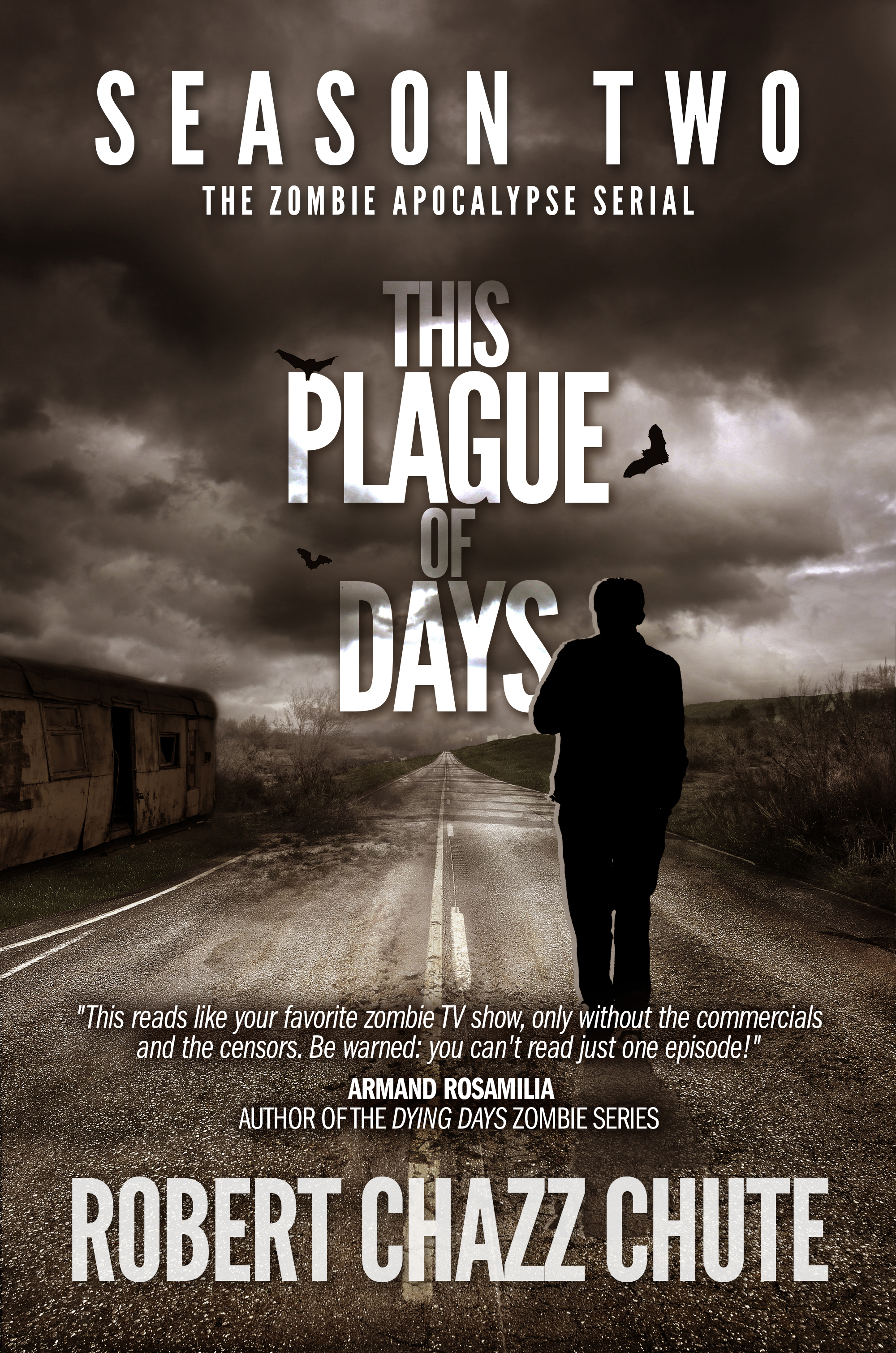
I knew that, of course, but I thought verisimilitude was more important. Now, after two volumes of This Plague of Days — which is devoid of such strong language — I’ve decided I’ve lost nothing by omitting obscenities. Those who aren’t offended by swearing don’t seem to miss it if it’s not there. There’s just no value added, or at least not enough value added, to keep the swearing in. I think I can attribute many of my happy reviews of This Plague of Days to the fact that I did without (though I do skirt it a bit. More on that in a minute.) 

Is my self-censorship a (possibly pathetic) bid to gain more readers?

The short answer is, yes.

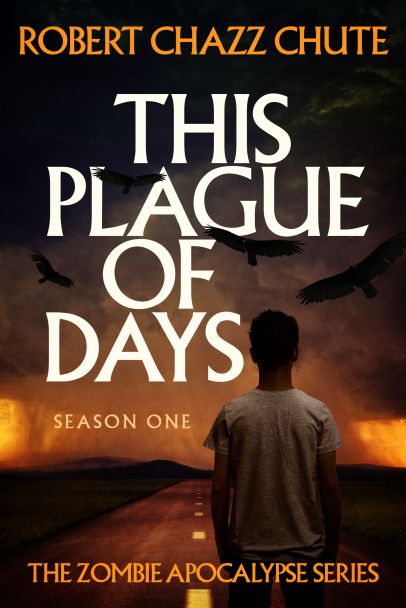
Pageflex Persona [document: PRS0000039_00004]The longer answer is, it didn’t start out that way. Jaimie Spencer, the hero of This Plague of Days, is autistic. He’s seventeen, but he’s a sensitive kid. A book that included a lot of swearing just didn’t feel right for the tone of the piece. Much of the drama happens around the Spencer family in Missouri and somehow, zombies or no zombies, peppering the text with f-bombs just didn’t fit this story or the readers likely to enjoy it. I salted it with Latin phrases, instead.

The really long answer is that it saddens me that some readers are so sensitive to curse words. I hate that they wouldn’t read some of my earlier work because of that sensitivity. However, my writing is about much more than swearing. I can do without it and not hurt the dialogue or the story. This Plague of Days is effective suspense and horror and this stylistic choice doesn’t affect that. Many of the people who love This Plague of Days are related to people on the autistic spectrum. They’re more comfortable spreading the word about the serial and sharing it with family members and friends because I changed my policy on swearing.

The f-word can be a crutch.

Use it too much and dialogue risks a feeling of laziness and sameness. Increase the frequency and the impact suffers. Working around that obstacle has proved so minor, I wish I’d done without cursing from the beginning. “She cursed him as she sliced his throat,” can serve just as well, or better, than a string of expletives.

We all know the words. My kids knew the words when they were quite little. Amazingly, they didn’t learn those words from me. They had to go to school for that. There’s no shock to it and sometimes it just gets in the way and the reader’s eye skips over it. I want all my words to count. I insist on delivering impacts to brainpans and adrenal glands. Swearing doesn’t do the job.

I have not suddenly become a prude.

My daily vocabulary reflects the full range of human experience, though the monologue in my head contains much more swearing. (I get points for holding back, right?)

In This Plague of Days, a “damn” might squeak in from time to time. My mother said that was okay since that was her swear of choice. North Americans tend to find British people saying, “shite” kind of charming. I use that. However, even that little is very sparse in This Plague of Days. 

I’m not claiming that no one could possibly be offended by something I wrote. I’m sure someone will clutch their pearls over the discussions between the religious wife and the atheist husband. That’s sure to annoy both sides, in fact. Reviewers have described the story as “creepy”, “scary” and “terrifying.” Well, I should hope so. Swearing or not, it is still very much horror and suspense.

I haven’t gone soft and I’m not writing children’s books.

This Plague of Days contains many scenes that are descriptive of the gore of war. There are some whimsical touches, but much of the story feels real enough you might worry I’m not a horror writer, but a futurist. However, like Twitter’s 140-character limit, the omission of cursing in my zombie apocalypse has forced me to be more clever. Sometimes the omission of swear words has even opened up new avenues for character expression. By that, I mean that there are some really good jokes in This Plague of Days that hinge on the power of irony and understatement, not f-bombs.

Conclusions

1. This doesn’t mean I’m saying you shouldn’t swear in your books. I’m not here to tell anyone what to do so stop feeling threatened.

2. This doesn’t stop me from writing books with so-called “bad words” in the future, though I think I’ll continue to do without. This bears repeating: Those who aren’t offended by swearing don’t seem to miss it if it’s not there. I don’t miss it. Anybody read any Vonnegut and think, This isn’t bad, but it would be so much better with a bunch more f-bombs? (I did, however, note that Norman Mailer could have cut back by half and helped Tough Guys Don’t Dance.)

3. This doesn’t mean that I think swearing is bad. It might be right for your books and I admit that, when done right, a string of obscenities certainly has its place.

4. I also have to admit that I think doing without swearing (in the text!) has made me a better writer.

5. This isn’t a moral stand. It was a solid artistic choice that stumbled into a good business decision. I confess. I want to be read by a wider audience. This is one of the ways I’m accomplishing that.

Filed under: author platform, book marketing, Horror, readers, writing tips, , , , , , , , , , , , , , ,

TOP TEN: Publishing paradoxes and problems

1. We discount one-star reviews because of their typically venomous, dismissive hatred yet we read every one.

2. We strive to get on big media to help sell, but not much media is big anymore and it won’t move the sales needle anyway.

3. We hope to be picked up by old traditional media, but we’d connect with our audiences better and get more time, for free, going after podcasts.

4. We’re putting ourselves out there, daring to dream big, but get discouraged by people who do neither of those things.

5. We get jealous of the success of other authors when we should learn, emulate and be inspired.

6. We say “Don’t judge a book by its cover,” but that’s what covers are for.

7. We spend time thinking about being a writer instead of writing.

8. We all hope to catch fire with our first book, but if success came today, many of us would be unprepared for it and wouldn’t have anything else to sell.

9. We spend months or years on our manuscripts, but many of us aren’t taking a few minutes to make sure our hard work is safely backed up (in two different ways.)

10. We call it self-publishing, but it’s a team effort and the author who truly tries to go it alone is a fool or a monster.

Filed under: author platform, Writers, writing tips, , , , , , , ,

How NOT to sell books at a reading

I did a reading a while back. I sold a book. Yeah. One. Let’s just take a moment to take that in. Go ahead. I’ll wait.

Okay…here’s what I’ll do differently next time:

1. Advertise and/or promote more and work my network beforehand. Most of my friends are of the cyber variety. I’ve been a nomad/recluse so long that, locally, I don’t have a network. I’m connected to a lot of people who are too far away. Not just Skype calls and a long car ride. I’m talking long plane flights. I’m working on that, mostly through Twitter (#Ldnont) and connecting with local humans within handshake distance. It’s not entirely excruciating.

2. Have a sign. I had brochures, which was a good move. I didn’t have a proper sign that told people the books’ prices. A helpful friend took the money…or would have but, ahem…that turned out to be a non-issue. The forty dollar float in fives proved much more than adequate. (Do make it easy for potential customers by charging round numbers. Nobody wants to search for nickels.)

3. Rock the books you came with. I should have talked more about the books at the back of the room while I was at the front of the room. Instead, I rocked a short story that always gets laughs. I’m very confident reading that story to an audience, so I took the easy way out. I can sell that story, Another Day at the Office from Self-help for Stoners, easily. I should have pushed the books I brought instead, and harder. I should have read a piece from my books that sell most now (This Plague of Days) and a chapter from Crack the Indie Author Code (indies were the theme of the event.)

Being confident, instead of looking confident: I’ll figure it out and try it sometime.

4. I gave a good talk about writing and publishing. Actually, it was a great talk. People smiled and laughed in the right places. At one point I sang and even threatened an audience member with a grisly death, mostly for entertainment purposes. People went away smiling and happy…but they did go away.

The main problem was that I should have ended it sooner. We used the whole time allotted for the event. You’d think that would be delivering on expectations and promises. Instead, it gave people no time to shop for books. They ran to get their parking validated before the library closed. Rather than talk at the front of the room (which I enjoyed immensely) I should have mixed with the audience more before the event began and I should have built in more one-on-one chatting/selling/handshake/hip bump/high-five/hula dancing time at the end of the reading.

5. When the reading’s done, don’t get waylaid by the sweet, little old lady sitting in the third row. Push her out of your way and to the ground if necessary. She is killing you. At least, that’s what she did to me. I should have rushed straight to the back and engaged people there. By the time I answered her tangential question about who I might be related to (I wasn’t and oh, sweet Jebus, who cares?), most people had filed out, off to make sure their parking was free. Damn old lady. And damn parking. And damn me. 

To the one guy to whom I sold This Plague of Days in paperback, may Thor bless you with smart, stout-thighed, stress-resistant children with perfect teeth. It’s great signing a book for a reader who digs what you’re doing.

Back on the net that night, another audience member hit me up on Twitter to let me know he had a good time and was buying my ebooks, not paper. That was cool and eased my roiling sea of torment. Somewhat. 

I’ll do better next time.

Filed under: author platform, book marketing, writing tips, , , , , , , , , , , , , , ,

ChazzWrites.com: 2013 in review

The WordPress.com stats helper monkeys prepared a 2013 annual report for this blog.

Here’s an excerpt:

The concert hall at the Sydney Opera House holds 2,700 people. This blog was viewed about 31,000 times in 2013. If it were a concert at Sydney Opera House, it would take about 11 sold-out performances for that many people to see it.

Click here to see the complete report.

Filed under: author platform, , , , , , ,

Brainstorming better book titles (and what can kill a good one)

1. The tone of the title should match the genre. If your thriller’s title makes potential readers think of young adult romance, keep brainstorming.

2. Non-fiction titles tend to be linear promises to provide solutions to a problem you have identified. Deliver.

My luckless hit man is a funny guy in big trouble.

My luckless hit man is a funny guy in big trouble.

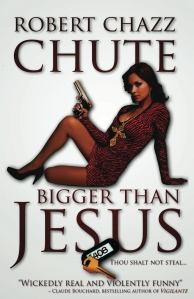
3. Intriguing is good. Confusing is not. That’s a fine balance. I loved the titles Bigger Than Jesus and Higher Than Jesus. However, it’s pronounced “Hay-soose” and it’s about a funny, hardboiled Cuban hit man. Titles you (and I) have to explain (endlessly!) are not good titles. The cover treatment by Kit Foster of Kit Foster Design saves me from readers who buy my crime novels thinking they are religious books. Also, I do have another solution to this problem. I’ll explore that next year, after a couple more books are written. In the meantime, I remain an idiot for thinking those titles would serve me better than they did.

What? You thought I write these blog posts because I get everything right the first time? Ha! No.

4. When you’re brainstorming, think in terms of keywords. A short, killer, catchy title can be helped a lot by a more explanatory subtitle. Don’t go overboard with keywords, though. If you run out of breath, forget the rest halfway through, or can’t cram the whole title on the cover, rethink. We’ve got to be able to read the title without squinting, so don’t cram it.

5. Generally try to avoid titles that are very long. After catching the title in a wisp of conversation, the potential customer has to remember it all the way back to their computer or the bookstore so they can order it.

6. What’s the central theme, promise or event that’s crucial to your story? Brainstorm titles out of that.

7. Think in terms of brand and series. Can you connect titles in some way? A is for Alibi is already taken, but think about what might fit. I have two new series planned for the end of next year that connect tangentially to existing books.

8. Come up with a bunch of titles and throw out a bunch. Don’t get too attached to a title early on. Some authors feel they need a title before they can begin to write. Your story may change, so just keep that WIP title tentative and to yourself for now.

9. You can take titles from phrases from the Bible or Shakespeare or be completely original. Go for memorable. However, don’t let the absence of a title stop you from beginning to write. It will probably emerge from the manuscript organically. Use a focus group of trusted friends or fellow writers to save you from your worst impulses.

10. Build a brand around your author name, not your title. I don’t want people more excited about my title than they are about me writing another book. That’s why the name “Robert Chazz Chute” is so big on the cover. Make them want to buy the next [insert your name here], not the title. I don’t really like the title, Doctor Sleep, for instance. But it’s Stephen King! Of course I want to read it!

I’m convinced that titles really don’t matter quite as much as we’d like to think.

I can name a lot of titles that shatter these ten well-meant suggestions. It’s like naming a band. Lots of band names sound pretty stupid or obtuse at first, but if the music is any good, people don’t even think about it much. I doubt everyone was enthused about the name The Beatles or Led Zeppelin on their first encounter (before hearing the songs.) I didn’t like the title Fight Club. The book is about so much more than that. However, I got over it quickly.

It’s true for TV shows, too. The first time I heard the name MASH as a little kid, I thought the TV series had something to do with potatoes. The Pink Panther? I didn’t know it was animated, so I pictured an actual pink panther skulking through the jungle. Without seeing it (and hearing its musical theme by Henry Mancini) I had no idea it was destined to become so iconic.

To sell more books, what’s ultimately more important than the title? Your graphic artist.

A good graphic artist can build on an awesome hook. A bad cover can sabotage even your most clever title.

A great title doesn’t matter if no one can see it. Don’t undermine that title you’ve put so much thought into. You need an excellent graphic artist to support your efforts. A great cover maximizes the power of your title and your author name. That’s why I use…wait for the shameless, enthusiastic plug for my Scottish buddy…

Kit Foster of KitFosterDesign.com

Check out his portfolio for powerful images

that pump up all the authors he serves.

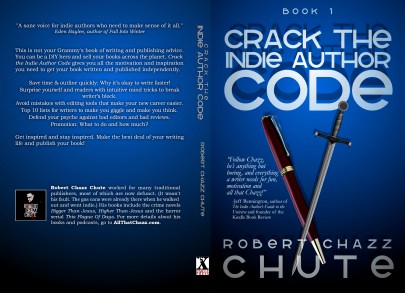
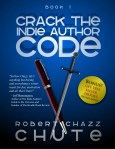
By the way, Crack the Indie Author Code 2nd Edition is out in paperback at $9.99. Smaller format, with jokes.

By the way, Crack the Indie Author Code 2nd Edition is out in paperback at $9.99. Smaller format, with jokes.

~ I’m Robert Chazz Chute. With my serial, This Plague of Days, I’ve written two bestsellers. However, my catalogue of my inspirational errors in the early going will tell you more about the challenges of being an indie author. Get Crack the Indie Author Code. I don’t scold you and it’s actually pretty funny. The 6 x 9 print version is about ten bucks and Christmas is coming, so get on that or Christmas is cancelled and Santa’s elves will turn into goblins. It’s up to you to save Christmas from rampaging goblins. It’s up to you and you alone. No pressure.

Filed under: author platform, Publicity & Promotion, publishing, , , , , , , , , , , , , , , , , , , ,

Top Ten: Make your writing count

braingasm cover1. One is the loneliest number. It’s you, the author, facing the blank page. There’s no one with whom to share responsibility to write and no one to share the blame for when you get it wrong. You are alone in here until you allow the ghosts to come forward and their voices to speak.

2. Two is you and your reader. You become invisible. The reader disappears. That leaves the story as the bridge, hanging in the air between two indefinite points and reaching through time. If the story is strong, the ethereal is made real and two indefinite points connect in mutual imagination. This is the only magic I know.

3. Three, as in “Rule of”. No one knows why the Rule of Three works. It just does. Lists of two feel insufficient and weak. A list of more than three feels pedantic, overblown, overly long, simply too much and see what I’m doing here? If you do, then you are paying attention, astute and onboard.

4. Four is the number of years you were in university, supposedly learning how to write. If you fell for that, well…I did, too. We would have spent all that money better had we hit the road, read a lot and just wrote. You may want one, but you don’t need an MFA. You need a little recklessness and exposure to the world and curiosity to lead you to what you need to know. I learned more about writing in my first two weeks as a newspaperman than I did in four years of a journalism degree. 

5. Five is age five, as in when you start to remember things you can use against your parents in your first novel. Wherever a remembered childhood begins is where you begin collecting fodder, drama and trauma (see? Rule of Three!) that you will cannibalize until the Alzheimer’s gets its hooks in deep.

6. Six times three is the Number of the Beast and it sounds like “sex” and it was my lucky number when I believed in lucky numbers. Six is the number of degrees of separation and Kevin Bacon. Six represents the tentative connections upon which all fiction is built. Less than six is too linear. Six means you’re making fragile neural connections between ideas to construct something new and fresh and interesting. Shore up that spider web against high winds and less imaginative minds with facts and a realistic context that supports the suspension of disbelief.

7. Seven is the number of things scientists say we can do at one time. Don’t do that. Do one thing at one time. Do not multi-task. When you are writing, write. Until you can make the world go away, there’s no chance of building that bridge over the fog to reach readers.

8. Eight is a good number of beta readers and proofers. Chances are you can’t find eight excellent pre-publication readers willing to comb your manuscript. However, try for half that and use the others for specific skill sets. My survival expert and cartographer, for instance, knows where Saint-Louis-du-Ha! Ha! is.

9. Nine is the number of relatives you were sure would buy your book. At the family Christmas party, they will be disappointingly vague, clueless and heartless about your literary endeavours. Or worse, they will have read it and will shrug off the experience in crushing silence. Or worse still, they’ll ask you to ship them a free copy.

10. Ten is the top ten list you pray you’ll get on even if you don’t believe in God. Ten is the number of good reviews you need to get on many promotional lists. Ten is how you remember the date you took to the prom. Ten is a number representing what’s best. Ten is the number of digits on the hand that pulls you up from anonymity with a tweet of endorsement, a clap on the back and a congratulatory handshake. Ten equals Hope.

Today, you are one.

Write often, boldly and well.

Your writing will count.

Your readers will be innumerable.

~ I’m Robert Chazz Chute. I have a large Irish family and a large Japanese family. I wish they liked me enough to buy my books. Fortunately, #5.


Filed under: author platform, Top Ten, Writers, writing tips, , , , , , , , ,

When Readers Wander Away

Readers wander away.

There’s so much new and shiny stuff out there. There are new word confections to smell and taste, luring readers away from The Magic That is You. Let’s talk about reader attrition and how to combat it because keeping an old reader, fan, friend, client or spouse is easier (and less expensive) than gaining a new one.

I used to listen to all of the Smodcast podcast network religiously. Then I wandered away to get lost in the labyrinth of choice. I subscribe to more than 100 podcasts. Smodcast had some funny stuff, but I’m more into news and politics as the world blows up in slow motion, so I moved on to the plethora.

Almost everybody moves on.

Crack the Indie Author CodeAudiences are fluid. In my first book on writing and publishing, I said ten percent of people love you no matter what you do and ten percent hate you no matter what you do. The remaining eighty percent are consumers who may enjoy what you offer them, but they aren’t committing to the long haul. The passengers you have on the Crazy Train now won’t be aboard at the last station.

Confession Time

This week I went through boxes of files looking up addresses of former clients for my new business venture. It felt like cavorting in the Huge Catalogue of My Carnival of Past Failures. I had names in there I didn’t recognize. There were a bunch of clients I saw, once, years ago. Another group saw me a few times and they felt that was plenty. People move, lose jobs, get new ones, divorce, move again, remarry, forget about us and die. I probably pushed a few away by not nodding on cue, too. I’m lousy at that. I wonder how many of those addresses aren’t dead and stale?

In the end, I came up with a minute mailing list of hardcore fans and a few fringe possibilities. Twenty years in the business and to count the letters I’m sending out? You could count them all on your fingers and toes…but not all your toes.

Nurture the readers who think of themselves as fans.

The people who dig what you do? We all dig them back. Fans are awesome. They’re helpful and they’re motivated to leave reviews and they get us. Engage them. And why wouldn’t you? They’re fun and they know where you’re coming from so you have lots to talk about.

Fans are the people who are most like you. Our minds connect.

Be tolerant of people who don’t get you. 

You can even welcome these folks because most of them don’t hate you.* These people can change their minds. They might take you or they might leave you. They aren’t invested in you, but they might buy what you’re selling.

Ignore haters

They won’t change their minds because they hate everything. Hate is all they have and most of them can’t even be funny about it because they’re serotonin-disenfranchised. Haters are in no one’s demographic and they’re already cursed enough. They’re unhappy and it’s not really about you. The poor things can’t seem to enjoy anything. Move on quickly and don’t let them get any of their default setting on you. 

Own a genre

If I had to do it all again, I’d focus on one genre and write only that. That’s not how my mind works, but that’s my problem. I’d also write series exclusively. Preferably I’d set out to claim a beachhead in a big, well-read genre. (Read: Hardboiled with jokes wasn’t a big enough genre.) 

My luckless hit man is a funny guy in big trouble.

My luckless hit man is a funny guy in big trouble.

When you get lost in the woods, experts tell you to stay in one spot so you can be found. Same with literature. Moving targets, unless you’re Isaac Asimov forty years ago, are harder to find.

Go out of your way to find new readers and maybe even fans.

Facebook is the place to nurture community. Twitter is the place to find new people, discover new things and begin conversations. LinkedIn is where you go for people to talk at each other and say how everyone’s doing everything wrong in order to impress potential employers. (Sorry. That was my experience.)

Bookbub is hot. Author Marketing Club is hot. Publicists with small lists or lists that are too general and unsegmented** are cold. 

Write more quality books.

With each book, we get better. We refine our style and process. Write more. Be better. Build a bigger fire so the rescuers can find you.

Be different enough that you stand out.

People love identifiable genres that challenge expectations. Everyone loves “same thing only different.” It makes them comfortable, and you discoverable, without boring them. I’ve already said enough about this in previous posts, and this post is too long, so…

Go where readers are.

Writers are excited to meet with other writers. Meeting readers often freaks us out. Feel the fear and poop your pants anyway. It’ll make a great story. Do signings, readings, conventions (for readers) and get a business card with your hottest book cover on it. Everyone has hot and cold runs. Make sure readers get a chance to remember you at the top of the hill so you have some inertia to get up the next hill.

Be honest, but be nice. Be a person.

From the I-shouldn’t-have-to-say-this Department: Jerks around the world try to justify the jerkiness with, “I’m just being honest.” Probably a lie. Chances are, they’re just being mean to make themselves feel better.

A blogger I’ve followed a long time lost me today. I detected a mean tone in something they wrote that didn’t sit right and gave me indigestion. It didn’t sound like they were trying to be helpful and the smart and funny didn’t outweigh the nastiness. I need more positivity in my life. I’m a bit low on serotonin, too. Goodbye, blogger.

You’re supposed to lose some readers.

The only thing you can depend on is Change. As you progress as an artist, a bunch who did like you won’t be along for the whole trip. Maybe you switched to a genre they don’t read. Maybe they’re the sort of people who prefer bands “before they sell out.” (Read: “…before they become popular” or “before they repeat themselves too much.”) Maybe they only love underdogs or you squeaked out too much happiness when your book took off and now they feel resentment. Maybe they outgrew you or vice versa. Perhaps we aren’t so awesome after all and don’t deserve them. Not every book is going to be a home run and that’s where some readers will step off.

I lost a reader recently who loved Season One of This Plague of Days but didn’t like where Season Two took them. I’m helpless in this regard. I followed where the Art took me and Season Two is markedly different in some aspects. However, for the characters and story to evolve and do things and go places, I had to use different gas in the narrative engine. I promised something different from the usual zombie apocalypse and I’m delivering. Most people dig it. However, it pains me most to lose a reader who loved the first iteration but was less enthused about the next. It saddens me they won’t see the big payoffs on the way in Season Three.
I’m the literary engineer and the conductor, but I’m also a passenger on the Crazy Train. I go where the train takes me to the end of the line. I wonder how many fellow passengers I’ll have at the last stop?

This is why we all need those fans to nurture us in return.

People will buy your stories or not, but most readers will never say a word to you. As a writer working alone, driving the train through the night? It’s lonely work. We go through long, black tunnels between books. In the dark, every engineer looks back into the quiet train and wonders, Is anyone really still back there?

*Note: It’s not you, the writer, who should be hated. It’s a book, not genocide, though some people come on so strong in their negative reviews, you’d think babies were being slaughtered with each chapter.

It is legitimate to dislike a book, of course. But readers don’t generally distinguish a book from its author. Neither do authors. When we see a bad review, we don’t think, Oh, they didn’t like that book. We think, She hates me. She probably does. A lot of people are that harsh, for one thing. Also, since your book is a product of your mind, so naturally we identify with our work.

**Unsegmented refers to mailing lists where the subscriber doesn’t identify which genres they’re interested in hearing about. Send your romance sample out to everyone and a bunch of readers will grab it and dislike it because they signed up for steampunk and wouldn’t read a romance with a gun to their head.

~ I’m Robert Chazz Chute. I write a bunch of stuff that’s funny and suspenseful and strange. I’d tell you more, but I have to dash off to be ignored and invisible in a totally different field. See my books here. Buy them, even. Thanks.

Filed under: author platform, book marketing, publishing, , , , , , , , , ,

Writers, Readers, Nonsense and the Perpetual War on Anonymity

I have secrets to reveal about the true source of my fearsome power. And jokes. And weird East Coast expressions. Click the cover to get that article.

I have secrets to reveal about the true source of my fearsome power. And jokes. And weird East Coast expressions. Click the cover to get that article.

We complain about having to market our books. It is tough and I wish there were more and better missiles for the War on Anonymity. A few things to keep in mind:

1. Traditional or self-published, you’re still stuck doing most of your own publicity. No one will save you. You’ll have to save yourself. If you’re in the right mood, that statement can, theoretically, feel empowering.

2. Some strategies won’t work. Dump them and move on. You will, however, have to make some forays and investments here and there. Don’t let holding on to a little money now hold you back from making more money later. The risk-averse always arrive late to the party after all the daring, beautiful people have gone home with each other for a Chess Orgy…or whatever it is the beautiful people do.

3. You are not above marketing. I mean, unless you don’t care if anyone reads your work. Hm…actually, that would be quite freeing.

4. Everybody can and should do something to sell their books. Too shy does not serve you. Bookbub costs money, sure, but it’s effective. There’s also a lot you can do that costs nothing but time. I’m doing it right now and you’re watching. Is it hot in here, or is it just you?

5. When something is less effective than it used to be (Bookbub, KDP Select, pleading for sex) that doesn’t mean it’s not at all effective. You may have to spank your rump harder to get going, that’s all. 

6. When I see those tweets from collectives trying to sell books for authors, more often than not, I’m turned off.

By the way, Crack the Indie Author Code 2nd Edition is out in paperback at $9.99. Smaller format, same old information if you need a NaNoWriMo kick in the inspiration. With jokes.

By the way, Crack the Indie Author Code 2nd Edition is out in paperback at $9.99. Smaller format, same old information if you need a NaNoWriMo kick in the inspiration. With jokes.

Sorry, it’s a visceral thing that is not routed through my brain. I’m not saying they’re all bad or that you shouldn’t use those services. It’s that image of one person acting relentlessly enthusiastic about the constant steam of recommended books that bothers me. Equally enthusiastic and paid to be so. It doesn’t feel organic.

I would say that if outsourcing to others is your only strategy, your rocket needs more fuel.

7. The best is when an actual reader loves your neuro-fudge book mojo so much, she has to spread the word to share the adventure to her friends so she will, in turn, gain love, respect and immortal life. Word of mouth is the hardest cake to find, but it’s the tastiest. You start by asking friends to read your book. If you’re like me, you run out of friends fast, so you have to get used to engaging strangers. I’ve made a lot of friends out of strangers lately. I like it. I wish I’d known how to chat in high school.

Facebook is your friend (except, of course, when Facebook is evil.)

8. Stop just looking for mentions of your Twitter handle and go discover more people through Twitter.

Blogs lie there, hoping to be discovered. Blogs used to be so come-hither and stick your tongue in my…um…ear. Now blogs are feeling entitled to the attention they no longer receive, getting drunk and screaming at the DJ to play Copacabana. (See, this is a blog and you’re losing interest now, but I’ll mention Silver Surfer, Klingon and a date gone bad soon, so read to the end.)

With Twitter, you go find people who are talking about your areas of interest. I’m fascinated by neurology, psychology, brutish and funny poetry, autism, comedians, alternative health, weird facts, pathology, writing, publishing and righteous vengeance as a lifestyle choice. I will never run out of new strangers who might become friends. You won’t, either. We’re writers. We’re at least a little interested in lots of things. (Search hashtag #zombies and #vampires and #agoraphobia, #writing, #insomnia, #anxiety, #depression and #headaches, slam-bam-boom…the info-cornucopia only ends when the EEG is a flat line and your heirs start arguing over your Hummel figurines.)

Aren't you sick to death of me telling you what to do? Click the cover to read jokes and confessions about my life in Not-Maine.

Aren’t you sick to death of me telling you what to do? Click the cover to read jokes and confessions about my life in Not-Maine.

9. Big-time authors who have an assistant tweet for them? Nobody’s “big-time” enough for that. Galactus could write a book and (even though he’s his herald!), if the Silver Surfer tweets about Eating Planets for Fun and Profit, we riot and unfollow.

10. There are dozens of technological solutions to most of your marketing problems, but you have to get out there. I appear, at times, curmudgeonly and a contrarian. The jokes make that easier to take…in short bursts. No technological solutions can help you if you’re a pain all the time. Don’t do that.

Do this: Be friendly. The more readers you gain, the easier it is to be friendly. Get out on Twitter and meet people. Learn about them. I like learning things. That’s an excellent place to start, and think of all the high school trauma I could have avoided if I’d known how to talk to humans.

Also, get off Twitter and meet real people at book signings, fairs, conventions and readings. Be the best you that you can attain and all that rah-rah Anthony Giant Within Robbins stuff. (Hey, that works for some cult members!)

I rush in where devils fear to tread.

On November 14 at 7 pm I’ll be interacting with actual humans in the Meatspace of London, Ontario’s Central Library. Author Mark Rayner and I will give readings and answer questions about publishing, writing and discuss the people of Whoville and how we can fight The Great Suessian Nostril Menace.

I will drink champagne from an old lady’s boot while doing a ventriloquist act with Mark on my knee. Then he’ll breakdance for about two hours straight while I recite Klingon love poetry. We work without a net, so if you’re in the area and want to see me stammer while being bludgeoned, this is the best blunt force trauma event of the night. (Lesser blunt force trauma will be at play after the show at Joe Kool’s.)

Last chance to read the blog post about Not-Maine. People with ten toes will want to check this out. Unless all the toes are on one foot. Those freaks need to move out from under the power lines and then click the link and get a few grim laughs at ThisPlagueOfDays.com.

~ Not to be too forward, but you’re very attractive and I’m feeling very drawn to you. Feeling down and vulnerable and mad at your dad? Oh, good! I thought you looked like the sort of adventurous person who needs something special tonight. The way that dress clings…I mean…wow, have you even tried fabric softener? How about you come with me? You can lie down, put some Nina Simone on low so she won’t burn, and have a sweet, hot book. C’mon back to my place. The drinks are on the bar and the books are in the sidebar. I’m Robert, by the way. Robert Chazz Chute…Isn’t that last name quite unfortunate? Buy my nonsense! Hold my books! Ease the pain…sir? It’s one night early for Halloween. I didn’t recognize you in that dress…dad. Well, this got awkward fast.

Filed under: author platform, , , , , , , , , , , , , , , , , , , ,

I like you more when your dog dies: Niches, conversations, dead blogs and a contest.

We don’t sell anything unless we tell stories. To sell stories, we must have stories about our books.

Seth Godin’s blog and books sell because they’re short, pithy, smart and he owns his niche. To own a niche now, you’d do better define a new one. Don’t try to take Seth’s purple cow, tribe or incisive observations about case studies. (Note: “Case studies” is the more scientific word for “stories.”)

Define your own niche and you’ve got a better shot at selling more books.

For instance, my next book is about Romeo in a drug-infested, coming-of-age thriller in New York. Shakespeare plays a role in finding the modern Juliet. Coming-of-age and thriller aren’t normally such cozy neighbors. My last book was a zombie apocalypse with an autistic hero and Latin proverbs. Not a lot of competition in that end of the zombie market.

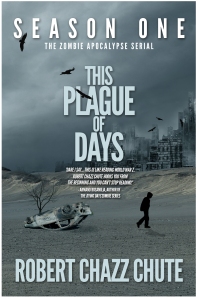
Season One of This Plague of Days is the siege.

Season One of This Plague of Days is the siege.

Familiarity is overdone. Differences define us in the market. (e.g. Bookstores are still crammed with Harry Potter knock-offs, but there’s only one JK Rowling.) Take something familiar and find a way to make it original again and you’ve got something.

Story is the most important thing. Story works.

Podcasts don’t sell unless they’re rich in content and tell stories. From business success to how-to and gee-whiz science, podcasts don’t work as sales engines unless they tell aspirational stories. From the startlingly different (Welcome to Night Vale) to personal confession (Marc Maron’s WTF) stories must be told and be relatable.

I’ve noticed more authors seem to be shifting their cyber-presence to Facebook and away from Twitter. They’re all Twittered out. Tweets are solid tools of discovery and live-tweeting makes the Oscars watchable, but Twitter tends to be less about story and connection. We need a little more space to achieve resonance.

Facebook offers more opportunity for personal connection. FB’s post length helps, but it’s also subtext. On Facebook, you have friends

Twitter is less friendly and more competitive. On Twitter, people have followers and people pay attention to numbers gained and lost. On Twitter you use ManageFlitter and WhoUnfollowedMe. On Facebook, if crazy Aunt Sadie unfriends you, you’re relieved you can swear again and her abandonment confirms your politics are sane.

Personal stories help us plug into each other’s pleasure centres.

The mind often fails to make distinctions among what’s real and illusory, cyber and real world. On Facebook, Story is the carrier wave of connection: “This is my child, my dog, my life!” we tell each other.

Since we don’t know what the hell we’re doing and we’re all scared, our connections reassure us. “Maybe I’ve screwed everything up, but at least I’m making the same mistakes as everyone else in our journey toward a better tomorrow.”

That’s why your photo catalogue of a glorious tropical vacation on Facebook doesn’t fit into the brain’s three-prong plug of connection. People love shared stories of failure, vulnerability and happiness, but only after that happiness is earned by failure and vulnerability. We root for the underdog and rags-to-riches stories, not Donald Trump. Your new car is nice for you, but I like you more when your dog dies. My dog died. Commonality is currency. Because I want to be loved, I love you when you’re suffering insomnia from worry, too. Misery doesn’t just love company. It insists on it.

Though we are each mysteries, we like to imagine we are each other.

Each of us is just as challenged and sad and lonely, but we hope to be rich some day, too. When the money and success roll in, we tend to forget all this stuff about connection. We blame the poor for their poverty, give luck no credit for our rise and trumpet all our hard work to the exclusion of any variable that does not bow to our big ol’ brains.

No wonder the rich and poor hate each other (except the poor want to join the resented rich, too.) Meanwhile, the rich would rip out their own throats with car keys from their repossessed Lexus if they had to get by on less than $100,000 a year.

Our class boundaries break connections. That’s why celebrities seem so otherworldly in person. They lost their shock collars and passed the invisible electric fence! They made it, so we can, too! Unless they’re the children of celebrities. Those lucky devils get a sneer and a Barry Bonds asterisk beside their fame.

Our stories about who we are become who we are.

That quest for privacy? Quaint. Adorable. Amish.

Jonathan Franzen worries about our attention spans, the death of literature and loss of privacy. He worries about the horrors of the Internet, just about every week it seems, in the Huffington Post. Horrors.

Blogs are dead sales platforms.

You have to have an author site, but you’ll get more juice from connecting on Facebook. Twitter will serve you better than a blog because it serves more people.

A blog is too much of a commitment for the reader. Too few blogs are “appointment reading”. A blog is a magazine at the doctor’s office. You only pick it up when there’s nothing else to do and you’d rather be doing something else.

I am subscribed to many blogs. They’re up there somewhere, forgotten in an RSS reader, added to a long reading list I will never get to. The blogs I actually read daily don’t have to be stuck in my bottomless bookmark bin. I go to them.

Blogs fail because signals go out but they don’t connect. Like this post, a bad blog post pontificates. I’m doing it now, connecting less, to fewer people. Still here? You’re already hoping the meta will stop and I’ll somehow pull out of the dive and land a punch and a point in the final sentence. How will I bring us home after such a depressing, meandering trip? I’ll show you. Indulge, a moment more, before the doctor calls you in to talk about those test results.

There are exceptional blogs, still breathing.

You can tell which blogs still have a heartbeat. They have a large and active comment community who aren’t just there to fight. (The Passive Voice is necessary to indie writers, for instance, as is David Gaughran’s blog.) Their lure is a story of aspirational subtext: Read this and you will succeed as we analyze the mistakes and triumphs of others.

And what are comments but the back from the forth? The best comments are more stories, resonating and rising up in conversation.

Commenting as a sales tool is less effective than it once was, back when people still asked, “What’s a blog?” Commenting doesn’t sell, though it can hurt you if you’re a dick. Some commenters never communicate human warmth. They think their intellect and snark will win people over and drag eyeballs back to their own dead blogs. They’re wrong. We only go back to their blogs to see if they’re rude to everyone (yes, always, yes) and make mental notes of what books not to buy.

Living sales platforms are conversations.

Facebook is a bigger sales engine at the moment, coming at you sideways, fun and friendly and under your defences.  We tell stories in conversation with friends. That’s where the connection lies, even if it’s a lie. We share our failures and hopes and dreams and we don’t look at our watch when we’re on Facebook. (That’s how the wasted hours slip away and books don’t get written, too.)

Facebook falls short in some ways, but that’s where I can talk with Hugh Howey or Chuck Wendig or Robert J. Sawyer. Facebook is alive with conversation. That’s the hot, three-pronged brain plug of connection we crave.

So who cares about this shit? Too long to read. Meet me on Facebook and maybe we’ll connect in a conversation. Blogs are dead. I killed it. Just now. I regret nothing.

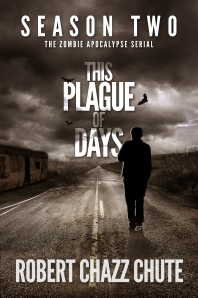
Season 2 is the quest.

Season 2 is the quest.

~ There is a secret in This Plague of Days. You’ve already read it. No one has guessed it yet. If you suspect you know, DM me on Facebook or DM me on Twitter. Praise and adulation will be heaped upon those who guess correctly. First prize is a signed paperback. Three winners will appear in my next book. Adulation for all will happen on the All That Chazz podcast.

Filed under: author platform, , , , , , , , , , , , , , , , , ,

Et tu, Kobo? Anger and the Cost-benefit Analysis

By now, most authors know about Kobo’s rash move to yank all indie authors from its platform. Today, we talk about Kobo and reevaluating our marketing strategies so we can manage time and energy and make more money.

If you came in late to the debacle, here’s what started it:

They condemned indie authors in an over-reaction to a news story about pornographic ebooks invading WH Smith through Kobo. Instead of weeding out individual books they deemed offensive, they painted us all with the same brush and pulled a digital-ton of indie ebooks.  They didn’t just hit indie porn and erotica titles. They hit all of us, the tall and the small, and legal. (For more details, check “Related articles” below).

Hitting the big, red nuke button was a major tactical error. Failing to open lines of communication also didn’t help. Kobo was put in a tough position because of their relationship with WH Smith. Kobo did announce the bulk removal was temporary and they’d review books before putting them up for sale. How long that could take, we have no idea. Kobo probably doesn’t know, either. Sounds like a gargantuan task. Better filters would have served them well.

Two of my crime novels were pulled from Kobo.

Bigger Than Jesus and Higher Than Jesus disappeared from the store. Bigger Than Jesus is now back, but not for long. I’m pulling it from Kobo and everywhere else, except Amazon and CreateSpace. I’ll also begin selling paperbacks from my website (but more on that another time.)

Some authors are (or were) making money with Kobo. Amazon is not the only game to play, so you’ll see the same advice everywhere: “Don’t put all your eggs in one basket! Put your books across all platforms! Amazon’s free books scheme with KDP Select doesn’t work anymore.”

Today, I’m going to challenge the egg basket wisdom. First, let’s talk Kobo beef.

1. Kobo’s platform is flawed. Where are the reviews? And (I’ve said this many times) why aren’t they stealing the best ideas from the other platforms? Amazon is the model they aren’t emulating. Kobo isn’t alone in this regard. Over at Smashwords, the website is still very ’90s. Still!

2. Instead of taking the time and energy to spread ourselves across many platforms, I suggest you look where books are actually moving. This won’t help you if you have one book, but after a few, you know which platforms butter your bread and which poop in your cereal bowl. My books sell on Amazon, Barnes and Noble and in print. That’s it. Avengers, assemble! Activate the 80/20 rule! 

3. Some people love Kobo. They’re in a lot of markets and there are nice people there. I’ve spoken to someone from the company and she couldn’t have been nicer. I’ve heard interviews on the Self Publishing Podcast. Kobo has awesome representatives who communicate their respect for authors and care about what we’re doing. I want to love them! But the company screwed up all that good will in one big, bad move that was not thought through.

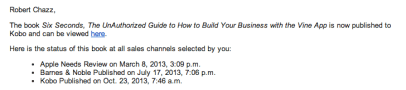
4. Then I got this email this morning from Draft2Digital, informing me that a book I published to Amazon (within 24 hours) back in February 2013 was finally on, you guessed it, Kobo.

Screen Shot 2013-10-23 at 9.27.16 AM

Barnes and Noble published Six Seconds in July and Kobo’s right on the case, finally getting my book about marketing with the Vine app out into the world today? What the bloody hell? It’s been so long, I’d forgotten I’d even selected them as a sales channel.

Trying to publish this book with Apple is also a hassle. That’s two of Amazon’s competitors failing the cost-benefit analysis. The tragedy is that Amazon doesn’t have to be perfect to dominate. It just has to avoid the razor wire and landmines its suicidal competitors throw themselves upon. In a healthier market, the competition would be smarter and closer on Amazon’s heels.

5. Then there’s the hypocrisy. Kobo says they aren’t for censorship as they pull indie authors. They’re free to publish and not publish what they want, but this was a blanket condemnation of indies. That no doubt pleased traditional publishers. It must have been particularly gleeful for the legacy publishers of erotica who were immune from the cull.

It has to be said, there are all kinds of works of literature that contain intense violence. Many of my books contain violence, but not all were pulled. I’m arguing none should be pulled because, if you want to protect children from pornographic ebooks, it’s your job to make sure your kids don’t buy them. Kobo is a company. Parents are parents.

I don’t want media companies to act like parents, especially when we’re talking about fiction. I had parents already and look how that turned out. I’m nobody’s kid anymore and I’ll make my choices for me and my kids, thanks. (As all preachers’ kids know, it’s the suppressed and repressed ones that go too wild once they hit Frosh Week, anyway.)

6. Okay, so that’s enough spanking Kobo. Let’s talk book marketing strategy and rethink it.

As far as KDP Select goes, it’s true it doesn’t work as well as it did. However, does it not work for so many authors because they’re expecting it to work on its own? The book has to be strong and the cover art must be awesome. We all know that, but are author-publishers stopping short, assuming those variables are enough gas for their sales engine? How many oft-referenced cases of KDP Select “failures of free” are actually KDP failures? Are authors doing enough to promote those free days?

Using Author Marketing Club tools and Bookbub, Freebooksy and other advertising and promotion services in combination with free promo days through the exclusive Select program, This Plague of Days, Seasons One and Two became bestsellers. This was long after many authors abandoned KDP Select because “free doesn’t work anymore” became common currency among us.

Your cost-benefit analysis may be different, but I urge you to do a cost-benefit analysis.

As pressures mount, spreading ourselves everywhere takes time and energy we could be using more profitably. If you sell books on Kobo, keep them. If you’re that one author who makes cash selling on Sony or Diesel, go for it. The only platform I’d say everyone should to be on is Amazon because they’re the bus that’s gassed up.

“But what if Amazon makes the same mistake Kobo did? They’ve pulled books willy-nilly before! Isn’t Kobo’s fiasco an example of why we have to spread our books to all platforms to minimize risk?”

After the hoopla Kobo’s decision caused, I don’t think Amazon would be or could be that stupid. Besides, it’s not about allegiance to a platform or blind tribalism. It’s going with what works for you. At worst, if you really can’t stand being in Amazon’s exclusive contract, you can reevaluate and bail at 90 days.

True, spreading everywhere insulates us from dumb mistakes, but it would also minimize potential profit drastically. Unsuccessful businesses play not to lose.  Play to win. I mentioned I sell some books on B&N, but the return is so low, it’s not even a factor. Until the other platforms come up with better ways to market us, Amazon is my puddin’. 

This is math. Look at where your books are selling.

Put your time and energy into getting more books into those channels and leveraging that advantage with books like Let’s Get Visible by David Gaughran. (And if you haven’t published yet, buy Crack the Indie Author Code by some thoughtful and encouraging idiot.)

Are you selling even a little bit on Kobo? Who cares? Use the 80/20 rule. Focus your energy where it does the most good. That’s why I’m pulling my crime novels from Kobo. I had other plans to market the Hit Man Series. Now I’m going to pull them back to KDP Select and leverage that series better than I did the first time. I wasn’t in the Author Marketing Club when Bigger Than Jesus came out. I only have two series, so I must reevaluate non-Amazon successes and failures and act accordingly.

This is also emotion.

I admit it, emotion plays a role. Nothing’s broken so I’m not in a rage. I am annoyed. Kobo made their decision for short-term reasons that did not respect indie authors. We are the publishing revolution, remember? They pulled our books without warning. We don’t matter to them and I’m hurt. It’s not just the principle. It’s the money.

I’m sure I don’t matter to Amazon, either, but at least Amazon can publish my books in a timely manner and move them. Ultimately, I’m not leaving because of Kobo’s instability. My annoyance led me to reevaluate what Kobo was doing for me. I’m not punishing Kobo at all, but the fact that I can pull my crime novels and not hurt myself tells me I should refocus my energies.

I’ll go back to Kobo one day, if they’re still around by then. Who knows? Maybe this debacle is just what they needed to reevaluate their platform and marketing strategies, too.

Tips and inspiration for the indie author's journey to publication.

Tips and inspiration for the indie author’s journey to publication.

~ Hi. My name is Chazz and I’m much nicer than I appear here. I’m usually pretty sweet and funny unless I’m writing suspense. Then the serrated knives come out and things get twisty. I love people, though books give me less back sass. I’m a contrarian, but not for the sake of being contrary. I just don’t understand how the world works. There are so many example of how it doesn’t work, I get distracted easily.

I believe in love and readers and curiosity and the written word’s power to release dopamine. I’m in the brain tickle business and I’m grateful for that every day. Find all my books here for the foreseeable future.

Filed under: author platform, Books, , , , , , , , , , , , , , , ,

Bestseller with over 1,000 reviews!
Winner of the North Street Book Prize, Reader's Favorite, the
Literary Titan Award, the Hollywood Book Festival, and the
New York Book Festival.

http://mybook.to/OurZombieHours
A NEW ZOMBIE ANTHOLOGY

Winner of Writer's Digest's 2014 Honorable Mention in Self-published Ebook Awards in Genre

The first 81 lessons to get your Buffy on

More lessons to help you survive Armageddon

"You will laugh your ass off!" ~ Maxwell Cynn, author of Cybergrrl

Available now!

Fast-paced terror, new threats, more twists.

An autistic boy versus our world in free fall

Suspense to melt your face and play with your brain.

Action like a Guy Ritchie film. Funny like Woody Allen when he was funny.

Jesus: Sexier and even more addicted to love.

You can pick this ebook up for free today at this link: http://bit.ly/TheNightMan

Join my inner circle at AllThatChazz.com

See my books, blogs, links and podcasts.

Enter your email address to follow this blog and receive notifications of new posts by email.

Join 2,063 other subscribers