C h a z z W r i t e s . c o m

See all my books at AllThatChazz.com.

The Way of the Hack: Writers, you might be a hack if… (plus death threats from space)

Long before computers, a hack was a worn-out horse used for pulling tourists around parks. You know, because before you propose marriage to your sweetie in Central Park, you need to build up your courage by bathing in elderly equestrian flatulence. Then unimaginative comedians were dubbed hacks in the fifties, after a decade of tired jokes (mostly about hateful mothers-in-law.) I wish it stopped there. Writers get called hacks, too. Let’s dodge that fate (and, as you’ll see, you’ll also get one last chance to avoid dying by giant rock). Those two things seem equally important, so read on.

For writers, “hack” is a pretty bad insult.

Recently, on a podcast I’ll never listen to again, the host asked, “So, do you write about zombies or are you a serious writer?” Dude! Dangers, betrayal, and ordinary people facing grim existences and horrific mortality? That (and rampant, grisly cannibalism in line at the post office) is what we’re all facing every day! A book’s subject matter doesn’t make the author a hack. Failure of execution makes the hack.

To avoid becoming a hack, do not follow The Way of the Hack:

1. Tired subjects with no fresh takes. Ever read a book and somehow you’re reminded of a disappointing salad, measly on the croutons with brown lettuce? You might have been reading a hacky book.
On sale now for just $2.99. I mean, c'mon!

On sale now for just $2.99. I mean, c’mon!

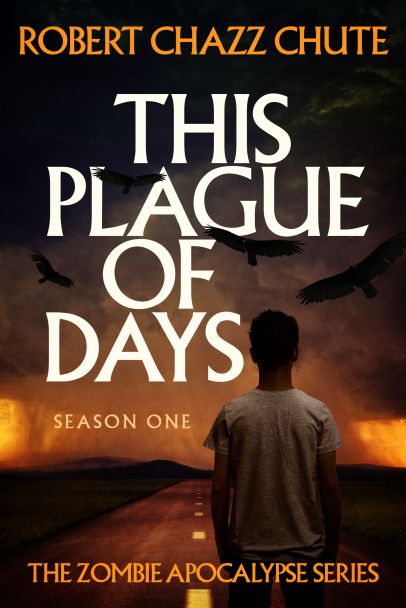
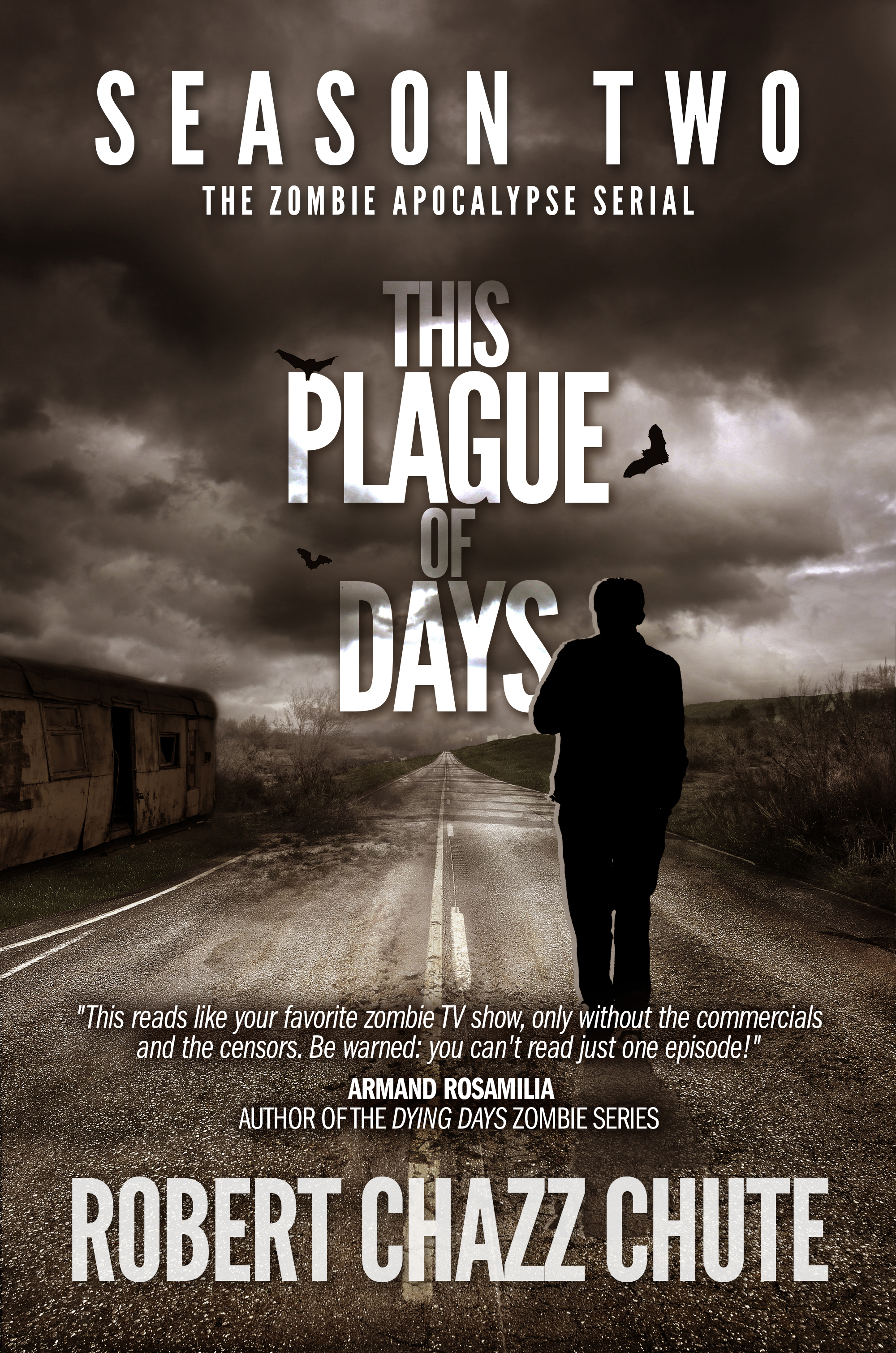
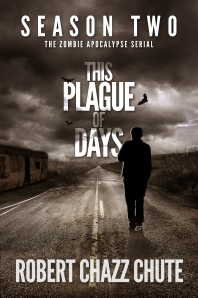
On the other hand, ever read a zombie story with an autistic hero, whales, evolutions of numerous cannibalistic species and Shakespearian trees, all in three books called This Plague of Days? I think you see where I’m going here: this is a blatant plug so you’ll buy This Plague of Days, Seasons One and Two. Season Three, and the conclusion of the serial, hits this spring. Very well, on with the helpful, preachy bits…

2. Don’t write stories that look, feel and sound like a ton of other stories. Sometimes you can spot a hack book by its cover. You want your cover to convey what genre it’s in, but you don’t want potential readers to think they must have already read it. That’s why you should consider the services of my buddy Kit Foster of KitFosterDesign.com. Your book needs a distinctive cover. Okay, no more sweet little commercials for my friends and me (today).

My point is, there are no new stories, but there are still plenty of ways to surprise readers, even the jaded ones. Hit your readers in the brainpan and adrenals. Read any novel by William Goldman if you aren’t sure how. (Okay, that was sort of a plug, but he’s not a friend. I just wish the most underrated, living American novelist was a drinking buddy, that’s all.)

3. Clichés. Hacks love them. Don’t. And why would you? It’s so easy to take a familiar cliché and give it a new twist. Don’t avoid clichés “like the plague.” Avoid them “like a stampede of zombie office workers, oddly indistinguishable from non-zombie office workers.”

4. Hacks lack complexity in plotting. If the story is too easy, the subtle message to the reader is the author is too stupid to create something more interesting. Or possibly the subtext you convey is, the author is a smart, lazy hack who thinks readers are stupid. Either way, readers won’t like the book and they’ll really hate you. So be like Batman — always be Batman — and be complex.

5. Villains who are just bad because they’re bad are hacky. Everybody, even psychos, have reasons and rationalizations and justifications. Don’t be lazy about their motivations. Writers who aren’t hacks take the time to construct origins and context so we understand why they broke bad.

6. Heroes who lack any flaw are hackneyed, boring cartoons. Or Superman. (But I repeat myself.) Protagonists without flaws and weaknesses have it too easy.

For a better example, watch the movie The Rainmaker. It’s about a young lawyer taking on what should be impossible odds and…things go incredibly smoothly for him. You’ll think, that’s it? He just had to show up and obstacle after obstacle falls down and his path is cleared? Really? It may be a good book. I haven’t read it. The movie appeared to be written by a hack who had one eye on the clock and the other on a ham on rye. 

For contrast, a great courtroom drama is 12 Angry Men. You’ve no doubt seen it. Watch it again. Henry Fonda slowly convinces eleven other jurors there is room for doubt. It seems such an unlikely outcome, but every minute of that film is riveting as you watch the dominoes fall.

7. The free online dictionary defines a hack as “One who undertakes unpleasant or distasteful tasks for money or reward; a hireling.” (Whoa! That’s most anybody with a regular job, isn’t it? But I digress.)

If you aren’t finding any joy in the writing, you might be a hack. No fun for you? None for the reader.

8. Some snobs conflate “hack” with “commercial.” Wrong. Those are two separate issues. A book can be commercial and not be the work of a hack. JK RowlingThis Plague of Days Season 2 is one of the most successful writers ever. Who but the most dedicated troll would dare to call her a hack?
Also, just because a book fails commercially doesn’t mean it was hacky writing. Moby Dick was never a commercial success in Herman Melville’s lifetime. Lots of good books fail. Don’t let The Way of the Hack be the reason for your book’s commercial failure.

I’m hoping the reason for my books’ commercial failure is everybody dies when a rogue asteroid hits Earth…but don’t worry, there’s still time. Just click here and buy my books so I can succeed and we avoid the grisly alternative near-future where the world’s population chokes to death in fire as the planet’s oxygen burns away in the ugly celestial calamity to come. Hey, it’s all on you now. Please don’t think of this as an ultimatum. It is, but please don’t think of it that way. And thanks for contributing to the Arts. Congratulations on having children and grandchildren and having another February.

9. Lack of research. If you’re banging out your manuscript to make a word count without care for details, you might be a hack.

10. Lack of humor. When a book has one unrelenting, dour tone, I begin to suspect the author just put his or her head down and said to themselves through gritted teeth, “By all that is unholy, I will get through this and grind it out.” You miss opportunities for non-linear thinking when you’re rushing to a deadline like that. Slow down, Speed Racer! Enjoy the ride more. Give it another read and look for new angles, holes and opportunities to deepen and lighten the tone and give that prose roller coaster more hills and valleys. Take the time to threaten your readers with certain death once in a while. Carpe noctem!
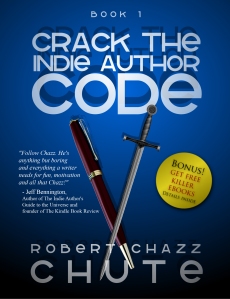
Get this one, too, just to be safe. Post holiday sale: just $4.99.

Get this one, too, just to be safe. Post holiday sale: only $4.99. Shake out the couch change.

~ I’m Robert Chazz Chute. Today I have plugged my books, garishly, but I tried so very hard to be polite about it. Later on I threatened genocide by giant burning rock from space. Clearly, you need to buy Murders Among Dead Trees, The Little Book of Braingasms, Bigger Than Jesus, Higher Than Jesus and, of course, This Plague of Days, Seasons One and Two. They are each on sale at a special low price for January 2014. Now is the time. Or an asteroid kills us all. Those are the only two possible outcomes. But, like I said, It’s up to you, killer. Yeah, let’s just click here, ‘kay? Again, thanks so much.

If more than 70 happy reviews don’t convince you, learn more about This Plague of Days and how a boy on the autism spectrum could possibly fit into the plot, at ThisPlagueOfDays.com.

For podcasts and more about the books and the author, check out AllThatChazz.com. I’m starting to feel needy now, so I’ll stop.

Filed under: Amazon, What about Chazz?, What about you?, Writers, writing tips, , , , , , , , , , , , , , , , , , , , , , , ,

Pulp fiction doesn’t have to sound like pulp fiction

A friend of mine has a strict rule about writing: “Remove it from the manuscript if it sounds like writing.”

Writerly = Bad

Some sentences do call attention to themselves. It’s not supposed to be a good thing, but I don’t think it should be an unbending rule. To me, it’s a guideline reminding me that story always comes first (but we should enjoy ourselves along the way.) It’s up to the creator to make an informed choice about the narrative and the reader will decide if they groove on that choice.

In film, sometimes a director will take you out of the movie’s illusion by putting the camera somewhere unexpected, lingering, shaking or going for some special effect that reminds the observer, “Hey! You’re watching a movie!”

That can happen when you write something in such a way that it reminds the reader,

“Hey! You’re reading a book!”

Maybe the prose is beautiful, but some will accuse you of writing purple prose, being too precious or being maudlin. But many readers aren’t just readers. The best readers are also lovers of language. They want the reading experience to transcend mere delivery of information. When they read your writerly passage, it transports them.

I write a lot of action scenes, but I make sure to balance out the action with pauses so the reader can catch her breath before being thrown into the next chasm.

We’re pushed to begin in the middle of the action and make the pace fast. However, too many beats in too short a time sacrifices character development. Lose that, and we don’t care about the action scene.

Dare to go deeper so the bad guys don’t devolve into “Heavy #1” and “Heavy #2” come through the door with guns. You may or not remember details of the scene in Pulp Fiction where John Travolta and Samuel L. Jackson take down the guys who stole from their boss. However, film buffs can recite the lines from the drive to the shoot out. Remember? “Royale with cheese.”

Take time to build tension. There are scenes (yes, even in novels about the zombie apocalypse) that pause to show how people and their relationships are changing. Sometimes the pause is a great chance to write something for comedic effect. If you can make them laugh on one page and cry on the next, they’ll love the story more.

We can use our words to communicate the power and depth of the ocean and of personalities. We can show happiness and tragedy in a few brush strokes or we can dare to go deeper sometimes, reaching for the uneasy metaphor. Readers appreciate a story that explores emotional range with developed characters they care about.

My friend, the hardliner, says, “Never sound writerly!”

“But dude!” I replied, “Sometimes it’s only the elegant turns of phrase readers remember. It’s the flourish that captures the detail that makes the scene memorable. Without a little reach in description, I feel like I may as well be tapping out the story on a telegraph.”

“You’re just writing a zombie novel,” he said. “That’s not what they’re expecting.”

“No book has to be just anything. Any writing can turn the dial up to eleven and sound epic with the right twist on the expected. We aren’t supposed to give them what they expect. That’s mundane.”

“Okay,” he said, “just don’t make it sound too writerly. You know what I mean.”

“I promise I’ll delete it if it’s too obscure or gets in the way of the story.”

Mostly, I keep my promises.

Filed under: writing tips, , , , , , , , , , , , ,

How to crack writer’s block. No whining. No excuses.

There are many distractions between your bed and your writing desk. Some suggestions to discipline the monkey mind:

1. Well, write in bed then! (Pee bottle or diapers optional.)

2. Work on a computer without Internet access. Unplug the modem or get your pet rat to chew on the wires if necessary.

3. Get your spouse to activate the parental controls (so they have the code). Congratulations! Your distracting porn addiction just vanished. 

4. Commit to scheduling writing time just as you would a doctor’s appointment, the gym or any other important job. You know your writing is important work, too, right?

5. Make your commitments public. Failure yields public humiliation. Success gets you a reward. Make a bet with a writing buddy or do writing sprints in social media. Report your progress, or lack of it, so you’ll do better tomorrow.

6. Defend your writing time. Wield dual ice axes, if necessary. A sign on that door you close marking your designated writing time makes a clear stand. Your writing retreat does not have to be an expensive, remote cabin in the Rockies. It’s as nearby as the word, “No.”

7. Get out of the house and write elsewhere: Starbucks, the library or at your day job. (Write on your lunch hour if the boss keeps close tabs on you.)

8. Wear headphones and use the Brainwave apps that help you focus. Or pump nothing into your headphones. Or be like Stephen King and rock out to Grand Funk Railroad as you compose. Use WriteRoom. Whatever works for you.

9. Unplug and go write the first draft by hand. Some writers feel the words come easier when they’re connecting brain to arm to hand to pen to paper.

10. Work with your biorhythms, but find your sweet spot when your focus is best: late at night or early morning often allows you to work without interruption.

11. Got a writing group? Shape it so you can make it do double duty: make it a day care club. When my kids were little, playdates (and their nap time) were opportunities to get work done. Communal babysitting gets the kids entertaining each other and allows the writing to continue when you organize and rotate the playdates from house to house.

12. Protect your brain. This goes beyond time management. For instance, when you notice you need a nap after eating bread, take the hint. Maybe it’s the gluten making you sleepy. Thanks to a helpful reader, I’m trying a couple of products from Onnit.com and I do feel and think better lately. Exercise doesn’t just get blood to your body’s muscles. Better blood supply revs up brain muscle, too. Since dumping processed foods, losing weight and upping exercise, I’m sharper. The walls are alive, I see into souls and I write harder and longer.

13. Just start. You’re full of resistance and distractions and excuses at first, but once you begin, the words and worlds will begin to flow. Set a timer and tell yourself you’ll write for ten minutes. What? You can’t take ten minutes? Sure you can. Don’t be a weak whiner! Take ten minutes. By the time the timer goes off, you won’t want to stop.

14. Write in short, energetic bursts. Like going to the gym, many people feel they can’t do anything worthwhile unless they have big blocks of time to commit to their projects. For many of us who don’t have that luxury (and hardly anyone has that luxury) we’re actually sabotaging ourselves with that attitude. Consistency works better than bingeing in the long-term.

15. Take a course, go to a conference or read a book to energize yourself and get excited about writing again. We moan too much about writing and forget how fun it is until we’re back to doing it. If you aren’t having fun writing, you must be doing it wrong.

BONUS

Most important, remember why you’re doing this. Hold on to the Why so you’ll overcome obstacles to the How. You are not merely a consumer. You’re a productive writer, pursuing your dreams and telling stories for fun and profit. Don’t put your dreams aside only so others can achieve their goals. You’re important, too.

Filed under: getting it done, Writers, writing tips, , , , , , , , ,

How NOT to sell books at a reading

I did a reading a while back. I sold a book. Yeah. One. Let’s just take a moment to take that in. Go ahead. I’ll wait.

Okay…here’s what I’ll do differently next time:

1. Advertise and/or promote more and work my network beforehand. Most of my friends are of the cyber variety. I’ve been a nomad/recluse so long that, locally, I don’t have a network. I’m connected to a lot of people who are too far away. Not just Skype calls and a long car ride. I’m talking long plane flights. I’m working on that, mostly through Twitter (#Ldnont) and connecting with local humans within handshake distance. It’s not entirely excruciating.

2. Have a sign. I had brochures, which was a good move. I didn’t have a proper sign that told people the books’ prices. A helpful friend took the money…or would have but, ahem…that turned out to be a non-issue. The forty dollar float in fives proved much more than adequate. (Do make it easy for potential customers by charging round numbers. Nobody wants to search for nickels.)

3. Rock the books you came with. I should have talked more about the books at the back of the room while I was at the front of the room. Instead, I rocked a short story that always gets laughs. I’m very confident reading that story to an audience, so I took the easy way out. I can sell that story, Another Day at the Office from Self-help for Stoners, easily. I should have pushed the books I brought instead, and harder. I should have read a piece from my books that sell most now (This Plague of Days) and a chapter from Crack the Indie Author Code (indies were the theme of the event.)

Being confident, instead of looking confident: I’ll figure it out and try it sometime.

4. I gave a good talk about writing and publishing. Actually, it was a great talk. People smiled and laughed in the right places. At one point I sang and even threatened an audience member with a grisly death, mostly for entertainment purposes. People went away smiling and happy…but they did go away.

The main problem was that I should have ended it sooner. We used the whole time allotted for the event. You’d think that would be delivering on expectations and promises. Instead, it gave people no time to shop for books. They ran to get their parking validated before the library closed. Rather than talk at the front of the room (which I enjoyed immensely) I should have mixed with the audience more before the event began and I should have built in more one-on-one chatting/selling/handshake/hip bump/high-five/hula dancing time at the end of the reading.

5. When the reading’s done, don’t get waylaid by the sweet, little old lady sitting in the third row. Push her out of your way and to the ground if necessary. She is killing you. At least, that’s what she did to me. I should have rushed straight to the back and engaged people there. By the time I answered her tangential question about who I might be related to (I wasn’t and oh, sweet Jebus, who cares?), most people had filed out, off to make sure their parking was free. Damn old lady. And damn parking. And damn me. 

To the one guy to whom I sold This Plague of Days in paperback, may Thor bless you with smart, stout-thighed, stress-resistant children with perfect teeth. It’s great signing a book for a reader who digs what you’re doing.

Back on the net that night, another audience member hit me up on Twitter to let me know he had a good time and was buying my ebooks, not paper. That was cool and eased my roiling sea of torment. Somewhat. 

I’ll do better next time.

Filed under: author platform, book marketing, writing tips, , , , , , , , , , , , , , ,

#NaNoWriMo: Take a chance. Deliver.

I’ve finally begun reading Stephen King’s 11/22/63: A Novel.

Feeling a bit burnt out, I reached for an old reliable author to get me into relaxed creativity mode. The fire in the wood

Stephen King at the Harvard Book Store.

Stephen King at the Harvard Book Store. (Photo credit: Wikipedia)

stove is burning bright and hot as a cold blizzard’s squalls pull at the house. Under my wool blanket, I’m cozy and this book feels comfortable, too. Different story, same old friend in King. I’m one of his Constant Readers. To my delight, King has an Easter egg for writers right off the top. 

His hero, a teacher grading essays, complains about his students “writing like little old ladies and little old men.” Heh. Yeah, I know exactly what he means: Grammar and spelling correct, but boring. Tried and true narrative, but too safe. I want surprises. The development of the story has to be logical, sure, but please, take a chance! Dare to take the reader by the hand and shove them on the roller coaster they didn’t plan to get on. Give them the adventure they didn’t know they wanted.

For instance, in Season One of This Plague of Days, I did a lot of plausible things with strange characters (and I put the implausible in a context that makes it believable.) In Season One, you see a kid on the autistic spectrum operating in our world (i.e. at the end of it.) That was cool, but to heat up the narrative and quicken the pace, I had to go deeper into the implausible and still attempt to make it as believable as it was fanciful. 

In Season Two, the story takes some new turns and we’re in Jaimie Spencer’s world more than he is in ours. Though many people loved Jaimie in Season One, I wasn’t interested in making Two a copy of One. If One is a siege and Two is basically The Road, I had to take the crazy train to places people hadn’t seen before in an apocalypse. The virus that came to kill humanity keeps evolving and that takes us down unfamiliar roads. The Plaguers and I are happy with it.

People love Same Thing Only Different. Too different is a gamble, but some gambles pay off.

Changing a character people love is uncomfortable at times, but certainly do it if the story demands it. (By the way, nobody loves Jaimie more than I do, but he ends up doing a lot of questionable things for a Christlike figure.) I demanded development and change, so I got dreams, a touch of magic and some big questions for the surviving humans caught in the teeth of the gears of existence. If Sartre could read my apocalypse over a lunch of cold milk, ham sandwiches and angst, I think it would spark an interesting discussion about the existential subtext of ambition versus chaos theory. You know…sliding in the thin spaces amongst the bloody zombie attacks, scary new species and terrorized, grieving humans.

Dare to be wrong and, surprise! You’re right.

Sometimes it’s just simple mechanics where writers wimp out and opt for their grammar book over Art with a capital A. In Higher Than Jesus, for instance, a character uses the non-word “father-in-laws”. The correct plural is “fathers-in-law,” of course. Trust your readers to figure out that you know when you’re wrong. Better to stick with what’s true rather than what’s correct. The speaker of “father-in-laws” is an old, homeless guy whose education isn’t terrific. Talking like a Harvard law professor does not fit, so wrong is right.

Most readers will go along and the very few who will think you’re an idiot were never going to like your work, anyway. Grammar fascists don’t read for the enjoyment of reading, so relax and focus on the readers who are with you for the right reason. That reason is Story (and to forget we’re all going to die, and maybe soon, in Death’s razor claws and unforgiving, crushing jaws.)

I like prose that is edgy. Lots of book lovers love it when we’re gutsy.

I like Chuck Palahniuk a lot, perhaps especially when he cruises the experimental. I like much of Norman Mailer’s work for its simplicity. However, I love Stephen King. The narrative is straight A to B. Snobby readers might call it “muscular” or “workmanlike.” That’s old code for not “literary” enough or too pulpy by half. But who do you want telling you a story? An arid auteur who tells it correctly or a writer who get it across right? The writing I’m talking about is visceral. It affects you. It makes you think but it doesn’t have to call attention to itself too much. Have something to say and mean it. Lofty’s fine if your feet stay on the ground. 

Don’t give me fancy writing tricks. Tell me the story, please.

You know all those New Yorker short stories with the super-opaque endings where it’s so very arty you can’t figure out what the hell the last paragraph is supposed to mean? Where they try to trick you into thinking vague ends equal powerful conclusions? You’ve surely read those stories so bathed in antiseptic that they have no honest feeling or real humor. The words are all in the right order but they can’t make you care. It’s hard to define, but when a book has no heart, you know it. 

I suggest you do the opposite of all that empty scribbling and I’ll try to do the same.

A good short story, or a solid book, should deliver a punch and satisfaction (or at least anticipation of the next book in the series) with its last line. It should not generate a confused look on the face of an intelligent reader. 

A great story can be read aloud in the flicker of a dying campfire. If the story’s solid, your rapt audience will worry about the characters in the book. They will be blissfully unaware of the starving bear watching from the woods behind them, sniffing the air, drooling, and measuring the distance to the fading circle of light.

~ I’m Robert Chazz Chute: author, podcaster, perpetually worried. If you want to learn more about This Plague of Days, go to ThisPlagueOfDays.com. Or just zip over to AllThatChazz.com and buy some books. That would be good. Also, Season One of This Plague of Days is in paperback and Christmas is coming. I’ll let you connect the dots from there. Thanks!

Filed under: NanNoWriMo, Writers, writing tips, , , , , , , , , , , , , , , , , , , , , , , , , , ,

Breaking Bad and making better storytelling choices

Season One has five episodes. Get each one for 99 cents or get all of Season One at a discount for $3.99.

When you’re in the trenches (and by that I mean when you’re at your keyboard) you must stay true to your vision. There are artistic choices to be made that will challenge some readers’ expectations. Choose more conflict and damn the torpedoes.

For instance, at the beginning of This Plague of Days, the protagonist’s sister, Anna Spencer, isn’t particularly likeable. She’s not over the top, but she is a hormonal teenager whose brother is on the autism spectrum. She calls him Ears because he has big ears. She loves her brother, but she can be mean. She’s jealous of the extra attention he gets because of his challenges. She treats him the same way many siblings treat each other in their formative years. If you’ve ever had a sister, or been one, you’ll recognize her turmoil as she matures. Now add the plague apocalypse (and later, scary, infected cannibals) and you’ve got tense family relationships facing a storm of trouble raining down evil doers and crazy cakes.

Readers who only read Episode One might not care for Anna much.

Impatient readers will never get to see how badass she gets. (I’m revising Season Two now and she’s nicer, but still working her way to badass.) If they quit reading at Episode One, they’ll never find out how circumstances and time transform her into an interesting, brave and responsible woman. Anna Spencer has an arc. All my characters have arcs and their own stories to tell. To have those stories, and the complexity I insist upon as a storyteller, the characters can’t begin as static, happy stereotypes.

This Plague of Days has nuance. Some characters you think are good now may surprise you with what they’re willing to do later. Characters you assume are bad may have altruistic motives that aren’t clear up front. Some writers say we shouldn’t even write “characters”. We should write people in all their complexity. The people you write about have to transform, and I don’t mean from likeable and nice to slightly more so.

Think how ineffective Breaking Bad would be if you didn’t watch Walter White’s transformation through the show’s seasons.

He starts off as a nebbish who reached for the brass ring and fell short. A cancer diagnosis turns him from an ordinary Chemistry teacher into a cold and calculating drug kingpin desperate for respect and safety. The cool thing about Breaking Bad is, today’s solution is always tomorrow’s problem. His character arc is entirely logical each step of the way. Throw in a fatal flaw and a few reversals and he ends up in an insane place that is believable over time. 

If Walter White had started out evil, you don’t get grim fun and complexity. You get another stupid, failed TV show (starring cast members who used to be on Baywatch) cancelled and forgotten after half a season.

Another example: Points of view must change.

In This Plague of Days, I made choices to introduce more family strain. This Plague of Days isn’t just about viruses, zombies, fires and firepower. It’s about people under pressure.

The mom is a Christian. The father is an atheist.

Faced with mortality, the mom becomes a Christian with doubts and the dad becomes an atheist with doubts. I believe in readers and I follow the story wherever it leads (i.e. toward more conflict.)

Issues of atheism versus faith are not presented all at once. This isn’t a college seminar. Near the beginning of Season One, the atheist has his say. That may repel some readers who won’t stick around for his confession, feelings of abandonment and transcendence. Too bad those same readers won’t hear the mom’s counterpoint, either. Impatient readers might seize on one aspect in the early going (for or against God, depending on when they stop reading.) I feel it’s an honest, necessary exploration woven into the fabric of a much larger story. (Not that it should matter, I’ve been a believer and an atheist but not at the same time.) I’m not pushing an agenda. I’m pushing for brain tickles. If you want to be pulled into warm marshmallow, read Chicken Soup for Something or Other. I write suspense. Not everything is for everybody.

Readers will draw their own conclusions about religion (or ignore that small aspect of the story completely.) Zombies turn some people to God. For others, zombies turns them away from faith. Put a wife and husband at the edge of the end of the world and I guarantee religion’s going to come up. It’s not my job to make up anyone’s mind. It’s my job to tickle brains and make the debate honest and interesting while the struggle for survival gets harder. Context is everything.

Don’t pander. Follow the Art and the Conflict

People will draw conclusions about you from what you write. Don’t be afraid of that or your story will suffer. You’re a writer, so we already know you’re brave and have an unreasonably high estimation and expectation of the human race. Live up to that commitment with every chapter.

Respecting the reader doesn’t mean that you try to make them like everything they read. However, most readers stay longer with stories that challenge them, make them think and make them laugh. Don’t let it come out as an info dump or a teaching moment. Let it come out naturally. Don’t make your story a seminar on your beliefs. Do let characters have strong, conflicting points of view. Have a spine, but don’t force conclusions. Let the reader do that work for themselves. Always leave room for doubt.

For the Readers

I guarantee, when you read This Plague of Days, you’ll read things you’ve never read before. You’ll learn things you probably didn’t know. (I did!) And you don’t have to agree to anything. It’s a book. It’s not a threat to the tenets of your existence.  

A fun book is a ride at the carnival, an exorcism of fears, a voyeuristic pleasure, an extended brain tickle and a happy distraction, first class on the Crazy Train. All aboard to the end of the line.

Filed under: publishing, writing tips, , , , , , , , , , , , , , , , , , , , , ,

How to End a Chapter: Shorter chapters, better books?

"You will laugh your ass off!" ~ Author of Cybrgrrl, Maxwell Cynn

“You will laugh your ass off!” ~ Author of Cybrgrrl, Maxwell Cynn

I wrote at length recently about how smart it is to write short. (Wow, that got meta-ironic fast.) I was talking about the length of books, the allure of serialization and the benefits to both writers and readers. Today, I’m talking about chapters.

I’m currently revising the book I wrote while wearing my big-boy underpants. This Plague of Days took a little under a year to write back when I wrote part-time. Every day, I’d go to a coffee shop to get away from distractions. I got sucked into the point of view of a boy with Aspergers Syndrome during the coming plague apocalypse. His family hides out in suburbia while much of the world dies. The longer the book goes on, day by day, things get worse around his Christlike figure. When I wrote it, I wasn’t concerned about chapter length. I’d sketched an outline packed with beats and I put my head down and plunged into the story.

As I revise This Plague of Days now, I see how I was writing to the beats and each file folder was a chapter. Each writing session often yielded more than 5,000 words, all in one file/chapter! I’m breaking that up, obviously. As I look for logical places to split the file into more chapters, the logical spots are easy to find. I go out on a beat.

It’s a principle of podcasting, stand-up comedy and entertainment generally that you go out on a high note. Cliffhangers, twists, teasers and aha moments belong at the end of the chapter to seduce readers to turn the page and go for the next chapter. The more of those special moments, peaks or beats you have, the faster the pace of the book. Make the chapters short and those peaks are closer together. More beats close together equals momentum.

Don’t overdo.

If you don’t slow down to develop character, a hundred awful, exciting things may happen but no one will care. Here’s an ugly example of a pace that’s too fast:

Emma’s fiance, Rollo, dies in a skywriting accident when he tries to put the dot under the question mark as he pens “Emma! Will you marry me?” in the sky and ends up flying too low into the meat grinder of nearby chicken factory. Grief-stricken, Emma attends the funeral where Rollo’s mother tries to kill her in a rage. Terrified, Emma escapes to Italy where she falls in love with sculpture and decides to rebuild her life around art. Then, Phillipe, a very handsome and wealthy art connoisseur takes her under his wing, but how does he know Rollo’s mother and is he, in fact, an assassin assigned to murder her after their first night of passion? THEN, ON THE SECOND PAGE…

More spikes aren’t better if the characters are undeveloped. Readers don’t care for whiplash. However, you could take a page from Mary Higgins Clark. Her short chapters skip along. The closer the reader gets to the climax, the shorter the chapters become. This heightens the sense of forward momentum and keeps my wife, She Who Must Be Obeyed, awake much past her optimal bedtime as she powers toward the end of those thrillers.

We have a strange attachment to symmetry, don’t we though? Maybe that’s why more authors do not vary the length of their chapters. I’ve even heard of one author taking perverse pride in hitting an arbitrary word count so each chapter was the same length. That sort of peculiarity may serve someone’s OCD, but your OCD is supposed to serve the story above all else. (He must have been crushed when it came back from the editor with varying word counts.)


Don’t under do

If all the chapters are too short, it can feel to the reader that the author was skimping. For instance, while I generally admire James Sallis’s neo-noir novel Driven, some later chapters are so short and light on detail that I felt like I was missing something. He was painting a great picture overall, but here and there he didn’t have enough paint on his brush. I had to check to make sure I hadn’t skipped pages. Don’t make readers dizzy and fill them with self-doubt.

In a book of short stories, you can get away with stories so brief they could be non-rhyming poems. I have a few short chapters in Self-help for Stoners but I don’t worry about it because I’m not fragmenting a larger narrative with a short jolt. Or you can ape Faulkner and write, “My mother is a fish” and leave it at that, I suppose, but I wouldn’t recommend it.

Find the right length

You can delight readers with shorter books and shorter chapters as long as they aren’t confused. For instance, a lot of short chapters with multiple points of view can confuse the casual reader. They might accuse you of head-hopping. It wouldn’t technically be true, but that’s how your narrative might feel to them. Stephen King’s It and The Stand manage large casts, but the chapters are longer. Just about the time you’re thinking, Enough of him, what’s happening with so-and-so, you’re switching to another character’s plight.

A warning and a hope

You’ll find the break points for chapters easily and intuitively if you have enough beats. If you don’t have enough beats, you may be writing something of great literary value but it’s probably too slow to be of commercial value. And by slow, yes, I mean boring. Not every story has to drive forward with breakneck speed or maintain an even pace throughout. However, if the way stations of chapter breaks are too far apart, you aren’t giving your readers confidence that they are moving toward a destination. That’s the death of a lot of books. Give us action, engagement, obstacles, reversals, rising action, higher stakes and make us care.

If a comedy like The Big Bang Theory can make me cry over a single line uttered about a letter from Howard Wolowitz’s absent father (it did), you can make us care about your characters. Do it at a good speed.

~ I mentioned how I’d write about marketing in my next post. This is the next post so it turns out I lied. However, I’ll try to get back to that in my next post. I’m experimenting with building buzz about upcoming books with inexpensive strategies. I’ll tell you more about that in my next post. Or I’ll write about unreliable narrators. There’s that pesky meta-irony again. 

Here’s a marketing hint to tide you over:

I’m promoting two books by reading one on Vine. I’m doing it with a contest. Check out the details on that contest at AllThatChazz.com.

Have a peek at ThisPlagueofDays.com for some flavor of what’s to come.

Filed under: Writers, writing tips, , , , , , , , , , , , ,

#NaNoWriMo: Tools to get you back on track & stay inspired

Right about now, if you’re doing National Novel Writing Month, you’re feeling a little tired and you have two complaints: Where do I take my story from here and how can I better manage my time to meet my writing goals?

I can help. First, here’s a link to my guest post on Masquerade Crew today. This excerpt from my book, Crack the Indie Author Code, is an easy, fun and  genuinely intuitive exercise that will turbocharge your NaNoWriMo efforts and make your manuscript fresh. I call the strategy my Trio approach to story creation. You’ll love it and your readers will, too.

And now your free time management tool: The SlimTimer. I found it through The Nerdist Way by Chris Hardwick. (With all those Star Wars jokes and references in my books, you must have guessed my nerd secret, huh?) This tool will help you track your activities and find time. Only what is measured can be improved. Measure your day with this timer.  Then make time you didn’t know you had, get back on track and stay on track.

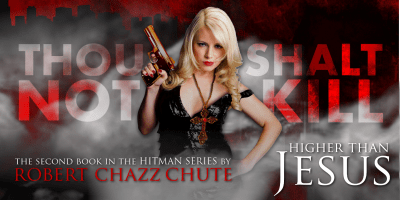
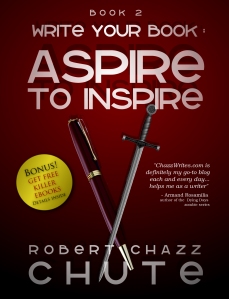
Crack the Indie Author Code is Book One. Write Your Book: Aspire to Inspire is Book Two in my series on writing and publishing. For fresh inspiration, I offer this uber cool image to motivate you to persist with writing your book so you, too, can have a cool ad like this!

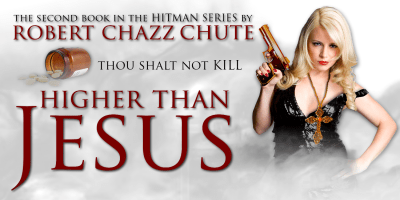
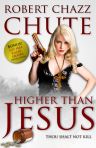
Click the image to get Higher Than Jesus

Often when we think of graphic designers, we only think about book covers. Kit Foster from KitFosterDesign.com sent me this ad this morning. I’m using the white variation above in the Orangeberry book tour. Pretty cool, huh? Kit is not only an author and the sponsor of the All That Chazz podcast, he’s also an amazing designer. He does book covers, web banners, Quote Art and much more. If you have a podcast, you need art. If you need an ad, check out Kit’s portfolio and go get help. Great images grab eyeballs.

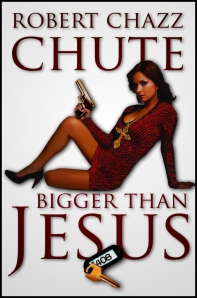
Graphic designers can do more than just book covers. Kit is a great consultant. For instance, it was he who suggested that I add a tag line to my covers using the ten commandments to reflect some aspect of the plots through the series. In Bigger Than Jesus, it was “Thou shalt not steal.” In Higher Than Jesus, it’s “Thou shalt not kill.” In the next book, Hollywood Jesus, it’s “Thou shalt not covet.” That tweak added a lot to the look and tone I wanted to achieve. Tweak your covers. Don’t let them lie there, weak and ugly.

I’m so excited about how my books are turning out (which explains how linktastic I am today), I want you to be excited about your books, too. Go write one.

Filed under: publishing, , , , , , , , , , , , , , , , , , , , , , , , , , , , , ,

#NaNoWriMo Tip: How to blast out of the gate

Find tons more tips and inspiration here.

As you write your manuscript, grab your readers by the eyeballs right away. Here’s how:

Crack the Indie Author Code and Write Your Book: Aspire to Inspire both have bonus offers of free ebooks. Buy two books and you get four!

1. Start late and bait the hook. When writing guides say, “Come in late,” they mean to bring the reader into the action quickly without throat clearing. Stick your media in the res.

2. “Throat clearing” means  focussing the back story and distractions more than the action. (Usually weak first draft paragraphs tarry too long over the weather, flora and fauna.)

3. Instead of taking too long to set the scene, let character be revealed through action and dialogue.

4. Look for the unusual and strong verbs in to give your hook strong bait.

5. Preserve mystery to pull readers in. Don’t give it all away at once. For instance, if your protagonist is chasing someone through a dark warehouse in your opening paragraph, don’t tell me she is FBI right away. Focus on the pursuit and the danger around the next corner. Let the details leak through. It’s much more intriguing to have a woman chasing a bad guy when you don’t know right away that she’s on the righteous side of justice, has a ton of training and resources and her back up is on the way.

Free to download Nov 5 to Nov 9, 2012.

Here’s my opening to Bigger Than Jesus (which, ahem, happens to be free to download here from Monday, November 5 to Friday Nov. 9.)

Water drips from the soot-black gargoyle’s tongue like thin saliva, as if the grotesque statue is mocking you and eager for blood. Panama Bob Lima clings to the gargoyle, using it as a shield. You are on a thin ledge on the side of a very high building and for once you wish you wore your Nikes instead of twelve-hundred dollar Tanino Crisci shoes. So far, this job is not going at all as planned.

Rationale: A mood is set in an unusual situation. Weather (the water through the gargoyle) is mentioned because it’s relevant to the danger the protagonist faces and we get a taste of the crazy to come. The second-person, present tense brings the reader into the middle of the action and provides immediacy. The second-person present tense and reference to the ominous gargoyle is purposely disorienting in the first sentence, just as the threat of the long fall is dizzying. It’s an opening that poses questions: What is the job and why the pricey shoes? The protagonist is probably not there to help since Panama Bob uses the gargoyle as a “shield”. The opening tells the reader they can expect a fast pace and the ironic last line is a clue that the story won’t be told straight. Dry humor is ahead.

6. Open every chapter with a baited hook and action. Give readers action that propels and compels and you’re on your way to a better book.

Higher Than Jesus, the follow-up to Bigger Than Jesus, is available here.

~ Robert Chazz Chute is the author of five books of suspense and two writing guides that, if you’re reading this far into this blog, you obviously need. They are Crack the Indie Author Code and Write Your Book: Aspire to Inspire. Check out all of Chazz’s books here.

Filed under: publishing, , , , , , , , , , , , , , , , , , , , , , , , , , , ,

#NanoWriMo Tip: How to finish with a flourish

Jodi McMaster asked a great question: Got any tips on how to approach endings? As a matter of fact, I do! I talk about story arcs and related whatnot in the writing guides, but here’s my take:

Crack the Indie Author Code and Write Your Book: Aspire to Inspire both have bonus offers of free ebooks. Buy two books and you get four!

1. Some people think you have to have happy endings. I prefer satisfying endings. A satisfying ending isn’t necessarily a happy one, but it should be generally perceived as an inevitable ending in retrospect. Surprising, yet logical and inevitable when you look back on it. That’s the ticket to reader happiness. It’s a tough order to fill, but it works every time when you do it right.

2. I love surprise endings. Twist endings are shunned in some literary circles, but the readers in those circles are squares. I once read a literary critic sneer at surprise endings as “too, too O. Henry.” Oh, please. “Too” O. Henry? As in the guy who wrote some of the most memorable, popular and enjoyed fiction of his time and beyond? It’s not a cheap ending if it’s logical and entertaining. Do that and nobody minds a surprise ending.

3. No cheap tricks, such as “And then the little girl fell out of bed and realized it was all a dream.” A really bad movie called Wisdom with Emilio Estevez did something like that. It was not wise and that’s why you’ve never heard of that movie, unless some unfortunate movie goer was speaking about lousy films on which to spit.

4. Readers should not be puzzled with your ending. If you’ve read a bunch of winning short story contest entries at some pretentious lit mag, you’ve read this sort of ending. It’s the nebulous ending favored by some very expensive MFA programs. It’s the sort of ending that’s so vague, it’s unsatisfying or downright opaque. You read it and reread and wonder if there’s any meaning behind that poetic last paragraph? Then you wonder if you just had a stroke and that’s why you can’t figure out what the heck the author is trying to say. Annoying. You can have intriguing endings. You can’t have loose ends that read like a quantum physics equation.

For Higher Than Jesus, my first ending was clear-ish. One of my beta team told me to make it more explicit and less poetic because that’s the last impression the reader gets before they go write a review. He was right so I rewrote the last paragraph for more of a punch between the eyes.

5. It should be an ending but you can hint that there’s more to come. I love leaving the door open a little. When readers invest themselves in a character, it kind of hurts to say goodbye to them. Characters should be so rich that the reader feels that the heroine’s and hero’s story will continue beyond the life recorded in the book. Hope for more from your characters in the future is uplifting. It can also uplift your sales when you turn one book into a series.

6. If you’ve got a too-easy ending, think about it longer. At the end of Casablanca — a movie I love — there aren’t any Nazis at the plane checking travel documents, the point the structure of the movie turned on. They could have wrung a little more tension out of that final plot point if there was some question of an external factor keeping Ilsa and Victor from getting on the plane, too.

7. Don’t stay too long saying goodbye. This is the dreaded viscous ending. Think of the last Lord of the Rings movie. It didn’t have one ending. It had five endings that dragged on and on. This was meant to appease lovers of the book. It made my butt numb in the movie theatre. Instead, hit your last power peak in the story and opt for the short dénouement. (Note that the end of the trilogy had a little of Casablanca’s plot niggle, too: Why all the walking when you can ride a giant eagle and zip back to the Shire in no time?)

8. Be very careful about killing off your protagonist. It’s a lot to ask of a reader to go through a whole book cheering for a character and killing them off at the end anyway. (See Point #1 again.) Remember how everybody hated Alien 3? There was lots to hate, but consider (spoiler alert) that after rooting for the little girl to live all through Alien 2, she dies in her cryotube at the beginning of Alien 3. It wasn’t a great start and it did not get better. Why? Because the audience was cheated of their earlier victory. It’s not that you can’t kill off a protagonist, but be smart about it and give the reader a payoff to make the sacrifice worth it. If you’re going to kill off Bruce Willis on an asteroid in Armageddon,  for instance, it better serve the cause of saving the planet from said asteroid. (This was back when Bruce Willis was more popular. We’re okay with killing him off earlier in the show now.)

9. More specifically to Jodi’s question: Great endings and great books spring from character. What does the protagonist want? Are they  worthy of that goal? As we make the reader care and amp up the tension along the way, the story is all about the obstacles in the protagonist’s way. When we’re through the obstacles, failures and reversals of fortune, have they won the day? Does the hero or heroine mourn the sacrifice it took to get them to end of the story but at least reach a higher level (e.g. wiser, stronger, redemption, making the family unit whole, saving the world, saving themselves, vanquishing their enemies, winning love etc.,…)? The protagonist doesn’t have to meet all their goals to provide a satisfying ending, but for the reader to be satisfied, they should feel that the trip was worth the time and the stakes were high enough.

Another example from movies  (and a spoiler alert ahead): Michael Keaton is awesome in the film Clean and Sober. However, as good as Keaton is in the drama, the ending is unsatisfying. It ends with Keaton declaring his first days of sobriety, but it doesn’t feel like he’s really earned the achievement. He goes through a lot, yes, but it seems like he gets sober through an unlikely inability to get his hands on any drugs rather than an act of will and discipline. Sobriety is something that happens to him, not something he went out and did or didn’t do. Heroes own the locus of control. That’s why everyone’s a sucker for a training montage in any sports movie.

10. The clue to a great ending is often hinted at in the beginning of the book. Your opening is a statement of the core problems the protagonist faces. Your ending is the solution to whatever that problem is. At the opening of Higher Than Jesus, I’ve got my hit man, Jesus Diaz, about to kill a guy in a sleazy after-hours joint in Chicago on Christmas Day. Jesus needs money and he has to get rid of the bad guy. I won’t spoil anything, but I will say that at the end of Higher Than Jesus, he’s clearer about his own character and why he does what he does. The payoff is wisdom and growth and…much more I can’t tell you.

My first clues to great endings were in reading Esquire magazine. Any great magazine article saves a little punch at the end. (Newspapers use the inverse pyramid model, so all the good stuff it’s up top and they edit coarsely by cutting from the bottom.) Magazine pieces always end on a strong note. It can be ironic or funny or powerful or triumphant or geared to make you cry. Read a bunch of those articles and then compare that feeling to the feeling you get at the end of your book. If you have a similar tickle in your brain and pull at your heart, you’ve got a memorable ending with punch.

~ Robert Chazz Chute is the author of two writing guides: Crack the Indie Author Code and Write Your Book: Aspire to Inspire. They aren’t your Grampy’s and Grammy’s guides to writing and publishing. Lots more inspiration, zero scolding and tons of ideas and motivation for writing your books to completion. (“To completion” is not an orgasm joke. That’s a terrible euphemism. Don’t use that!)


Filed under: publishing, , , , , , , , , , , , , , , , ,

Bestseller with over 1,000 reviews!
Winner of the North Street Book Prize, Reader's Favorite, the
Literary Titan Award, the Hollywood Book Festival, and the
New York Book Festival.

http://mybook.to/OurZombieHours
A NEW ZOMBIE ANTHOLOGY

Winner of Writer's Digest's 2014 Honorable Mention in Self-published Ebook Awards in Genre

The first 81 lessons to get your Buffy on

More lessons to help you survive Armageddon

"You will laugh your ass off!" ~ Maxwell Cynn, author of Cybergrrl

Available now!

Fast-paced terror, new threats, more twists.

An autistic boy versus our world in free fall

Suspense to melt your face and play with your brain.

Action like a Guy Ritchie film. Funny like Woody Allen when he was funny.

Jesus: Sexier and even more addicted to love.

You can pick this ebook up for free today at this link: http://bit.ly/TheNightMan

Join my inner circle at AllThatChazz.com

See my books, blogs, links and podcasts.

Enter your email address to follow this blog and receive notifications of new posts by email.

Join 2,063 other subscribers