C h a z z W r i t e s . c o m

See all my books at AllThatChazz.com.

Writers: Shorter is better

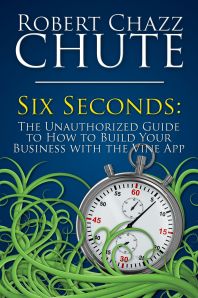
Six+Seconds+copyI found a way to get more traction selling books. The short story is, write shorter books for greater success. The long story? I’ll try to keep it short.

Last week I wrote a book, Six Seconds, The Unauthorized Guide to How to Build Your Business with the Vine App. It’s a long subtitle for an 18,000 word ebook, but it’s SEO-friendly and therefore easy to find. Six Seconds is breezy and fun, but it’s also a useful book that achieves the task I set for it: To get people on Vine (the new video Twitter). It helps them use the toy and tool to its greatest promotional potential. It took me a week to write, from concept to completion. That little book is selling and helping my other books’ sales.

Readers can choose from many lengths of text, but for you, the writers, I hope you’ll begin writing shorter books for your greater success.

Here’s more about why:

1. With ebooks, length matters less. There are no page numbers. Get over that Amish worrying. It’s hurting you.Higher than Jesus Final NEW copy
2. One of my favorite books, The Stranger by Albert Camus, is a short book (around 50,000 words or so). That length wasn’t uncommon in the ’40s and ’50s. Book length is fashion and convention. Fashion and convention are not static conditions. You can change them. Do.
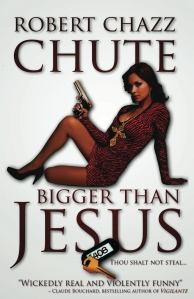
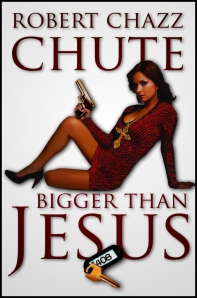
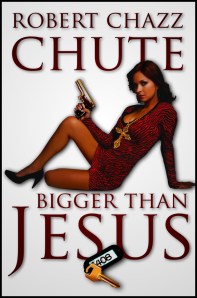
Bigger_Than_Jesus_Cover_for_Kindle3. My crime fiction in the Hit Man Series is 60 – 65,000 words. That’s fine. One reviewer thought Bigger Than Jesus was a “short, humorous novel”, but that range isn’t so short. (The story just seemed short because it powered along so fast with swift Awesomeness, so there.) Readers pop genre fiction, especially hardboiled sex and violence with quirky, noble anti-heroes, like a fat guy tosses back chocolate croissants. (Ooh, that simile hit a little too close to home.) If I can deliver a steady supply, I might have an actual career on my hands. You, too.

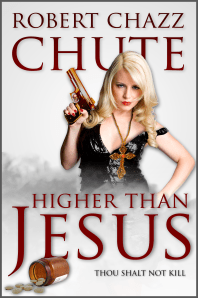
4. Series sell better than stand-alone books. The audience knows the characters and become invested in them. For instance, in Bigger Than Jesus, we learn about tragic events in Jesus Diaz’s childhood. In Higher Than Jesus, readers learn new things about what they thought they knew. My loveable hit man gives an adult perspective on his family history. That changes the meaning of those events and how we view his father, Marco Diaz. It’s fun to flesh out characters and play with the audience this way. It’s fun for the reader, too. They join the The Special Club of the Knowing and become as gods!

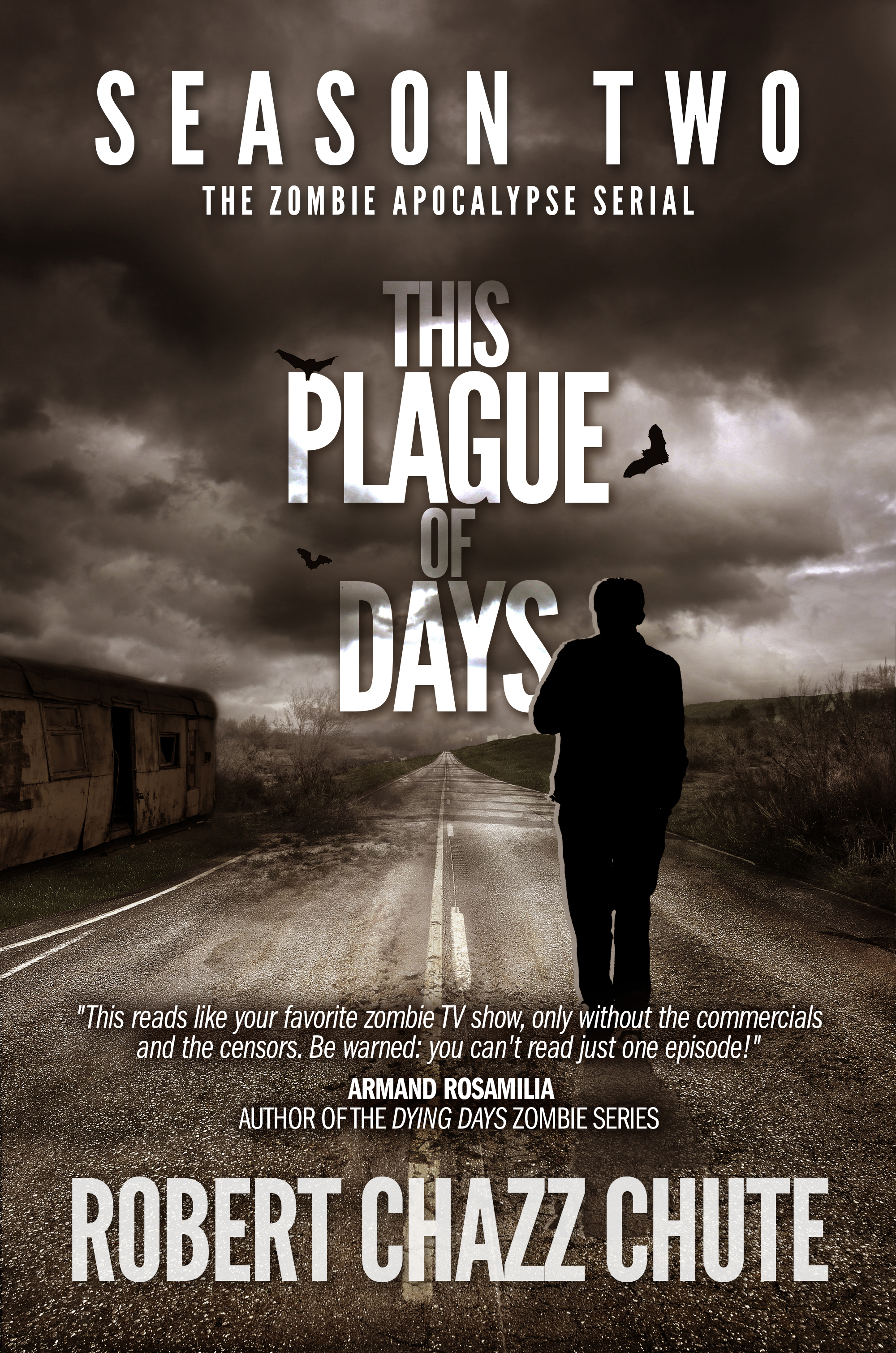
5. Some authors experiment with serialization of longer books. I’ll be one those experimenters soon. My post-apocalyptic plague tome weighs in at 125,000 words. I’m going to break that up and sell it in four or five episodes (depending on the logical break points that appear in the revision stage.) Eventually, I’ll sell it as one huge collection, I suppose. In the meantime, four or five ebooks serialized is a cheap way to feed a growing addiction.

6. More books on your electronic bookshelf give more chances for your readership to discover you. Give them more chances to discover you! Write more books.

7. Don’t pin your hopes on one book, especially if it’s your first book. That way lies Death. Well…at least Disappointment. You’ll make more selling two shorter books than one big brick, especially in the early going when you’re still finding a readership and earning their trust.

8. My biggest surprise is that selling Six Seconds is not necessarily a big boost to my other non-fiction books. It’s helping the fiction!

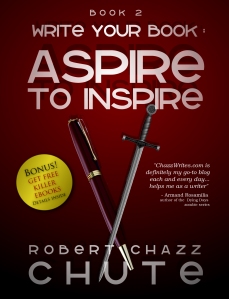
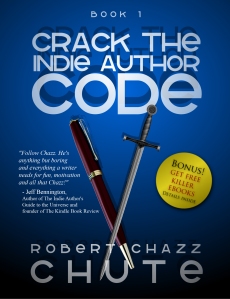
Crack the Indie Author CodeAspire to Inspire eBook JPGCrack the Indie Author Code and Write Your Book: Aspire to Inspire haven’t moved much this week. Don’t ask me to make sense of that. I even included sample chapters from Crack the Indie Author Code at the end of Six Seconds. Despite having much of the same breezy, jokey tone as Six Seconds, it’s the fiction that got the happy green arrow bump.

My working theory is that I don’t understand people’s buying behaviors; they’re crazy; I’m crazy; we’re all crazy.

~I’m launching yet another podcast soon. It’s called the Cool People Podcast. Want a sneak  peek? Click here. It’s airing soon. Meanwhile, you can listen to “The Unknown Man Edition” of the All That Chazz podcast here.

Filed under: author platform, book marketing, Books, Publicity & Promotion, publishing, Vine, , , , , , , , , , , , , , , , , , , , , ,

What gets clicks

You could check your blog’s site stats and wring your hands over SEO keywords, but no one really wants to do that. The most fun thing about Aspire to Inspire eBook JPGblog stats is discovering the creepy search words people use to stumble upon your blog. (For me, it’s often “Cheryl Ladd”.) You could ask your readers what they like, but that probably won’t give you a representative sample with hard numbers. The easiest way to figure out what lights up your blog’s readers? Triberr.

Go to your  Tribal Stream page. At the top, click on “My Posts”. Naturally, you’ll see a list of your blog posts. Each post will show stats for Shares, Clicks, Comments, Up Votes and Reblogs. Go down the list and see which sorts of posts got the most clicks, shares and up votes. Those were the most successful posts.

If you’ve got enough of a track record, you’ve just defined your blog’s current niche. The sorts of posts that get the most shares and clicks on ChazzWrites.com include: book marketing and promotion advice; posts about the micro-publishing experience gone wrong; tech tools to assist writers and publishers. Stuff on writing and editing is popular, too. This tells me that I’m on target with the audience I shoot for here. Like you, I want to achieve two things with my blogs: I want to write what I’m passionate about and I want to be effective.

My posts about blogging better to reach more readers also do well, so this post just got meta. For more posts that smack you between the eyes and hit your brain’s  dopamine lever of happiness, check out the “Related Articles” below. They’re the most popular recent posts on Chazzwrites.com.

Filed under: blogs & blogging, book marketing, Writers, , , , , , , , , , , , , , , , , ,

Writers, Readers and the Blame We Get

Dark Higher Than Jesus banner adI know a couple of erotica authors well enough to tell you that their private lives are not a full schedule of whips, naked gymnastics and ropes with elaborate knots. They’ve never had sex at the top of the Eiffel Tower with multiple hunky Norwegians. They’re ordinary moms who share your concerns about life. They have vivid imaginations that stay busy while they’re stuck in traffic as they chauffeur their children to play dates. Some readers draw conclusions about the character of the writer from the books they write. Unless it’s an autobiography, that’s an annoying habit.

When I wrote Self-help for Stoners, some readers assumed I was a drug addict. Never mind my liberal stance on unwinnable drug wars and the hypocrisy and sadism of sanctions against marijuana users. My addictions are sovereignty, choice and chocolate croissants. The drug I toss back most? Caffeine, just like you. When I wrote Sex, Death & Mind Control, some people thought I dabbled in the occult. Not so. I am not in a cult, either, (though I wouldn’t be averse to leading one for those awesome tax perks.) My work is fiction and my brain makes odd neural connections. Ideas get put together in new and exciting ways. That’s writing and that’s all.

When I gave my dad Higher Than Jesus for Christmas, he felt self-conscious about reading a crime novel written by his son that included sex. I know that because he tried to make me feel self-conscious about it. Yes, there’s a particularly blushworthy chapter, but I told him when I gave it to him that he never complained about the violence in my books, so he didn’t get to object to the sex. Here’s that fun phone conversation:

Me: Merry Christmas, Dad!

Him: I’m almost finished reading Higher Than Jesus. It’s quite the book.

Me (catching the tone): Uh-huh.

Him: I think you have fantasies about long legs —

Me: Stop! It’s fiction, Dad. I’m a writer. You’re an adult. I’m treating you like one.

Him (apparently unconvinced of points one through four): Mm, yeah. Well, I did enjoy it.

Me (deadpan): Imagine my relief.

Worse? Now I’m a bit worried. Since the gut-wrenching horror of the tragedy and loss in Newtown, Connecticut, even I’m becoming concerned that my fiction might intersect with real life. Part of the plot of Higher Than Jesus turns on a gun control issue and the actions of a fanatical group. Real life events have turned since I wrote that novel. Congruence make me think that my fiction and conjecture could actually line up with plots in reality. If something in particular (a very bad thing) happens in January, will some reader try to make that connection to my funny, sexy crime novel? They won’t call me prescient. They’ll wonder if a nut read my book!  

I hope law enforcement officers will foil any real life plots. Jesus Diaz is an interesting character, but I don’t think issues of national security and international peace should be left to my goofy, conflicted, love-obsessed, Vicodin-addicted hit man. He foils plots, too, but never in an easy, linear way. Our world has lots of tough problems, but fiction isn’t the problem. If anything, it’s a solution. Fiction is a safe outlet for revenge fantasies. Art yields entertainment, not sorrow. (Yes, I believe this is true about video games, too. Penn & Teller did an episode about the safety of video games. Here’s a link to that vulgar, NSFW video on my author site. This video is not for the easily offended or anyone who refuses to even consider that video games might not cause horrible school shootings.)

To readers: Please don’t ascribe words on the page to the character of the author. We’re just tap dancing to entertain you and most of us prefer to keep our violence where it can be safely managed: In fiction. Yes, my revenge fantasies are rooted in a deep dark place, but I learned to sublimate my rage with humour. If you’re going to make assumptions about me from my books, please assume I’m better than I am, not worse.

"Worthy of Elmore Leonard with shades of Thomas Harris..."

“Worthy of Elmore Leonard with shades of Thomas Harris…”

~ Robert Chazz Chute writes suspense and crime novels. He’s not Cuban. He’s not a hit man. He’s close to the same height as his Cuban hit man, though, so clearly he’s exactly like his fictional killer. Hear the All That Chazz podcast and check out his books at the links at AllThatChazz.com.

Filed under: publishing, , , , , , , , , , , , , , , , ,

#NaNoWriMo: How to make reading like cardio

A quick-moving plot with lots of surprises and a clear-eyed examination of addiction.

 Get all the details of the Seven Words or Less Contest and enter here.

Last night I wrote two more chapters for my next crime novel, Hollywood Jesus, starring my Cuban hit man, Jesus Diaz. The first chapter worked very well, but the second needs tinkering right away. Here’s what happened and my rationale for how I’m dealing with it.

The first chapter of the day was a fast-paced and clever chase (even if I say so myself). Good guy* chases bad guy/reversal/good guy’s now at a disadvantage and, as they say, the hunter becomes the hunted. The tension cranked higher when I put the good guy in a seemingly impossible situation. He’s either dead or going to federal prison or maybe even Gitmo if he’s caught. The latest police tools, tactics and technology are used against him and Diaz has to figure out a solution.

Actually, it would be awesome if my hit man figured out the solution himself, but I wrote him into a corner and I had to find a plausible way to write him out of that trap. Whenever I stick him in a bad situation, he’s looking at me going, “Get me out of here, you sadist!” I did get him off the meat hook again and it was both funny and sweat-inducing. Yay, me. Now what about the next, problem chapter?

The tension has to be cranked down from that high a little bit so there’s some kind of emotional range for the reader. However, I messed up. I cranked the tension down too far with a transitional chapter. I hate that. In the transitional chapter, I had too much exposition with not enough events occurring. After a daring escape, my hero gets picked up by his Sancho Panza with fresh clothes and a new mission to add to his growing pile of trouble. The chapter is devoted to explaining to Diaz what happened in his absence.

There’s a lot to fill in for Diaz and for the reader: A friend and an enemy are in hospital, the ultra-bad guy is on the loose and the cops are investigating the violent and creepy events of the night before. The hit man has to find these things out, but changing clothes while going for a ride in the back of a van slows the pace too much. I want the reader to have a breather for a moment, but I don’t want the reader to actually recover. For cardio and thrillers to work, you have to keep the heart rate up.

The Fix: After the perilous escape, Jesus Diaz will be picked up by his aide. However, the chapter must start at the next beat where, aside from being a fugitive from the LAPD and the FBI, he’s got a new client thrust upon him by the old client. Both are beautiful, intelligent women in danger and at the moment, both hate the hit man’s guts. I’m sticking with the conflict instead of allowing the congenial conversation with the buddy who gives him a safe, friendly ride.

But why not plunge forward, blow up the word count for the day and “fix it in post”? I see the problem now so I’m fixing it now. Dealing with the problem immediately saves me revision time later. When I go into full revision mode, I want little puzzle pieces that have to fit, not big chunks that throw off the trajectory of the story, kill the fast pacing and make me go all the way back in order to move forward.

Besides, I was already well past the word count for the day with the previous chapter. On those days I’m productive, I sleep well. The sleepless nights after a non-productive day are torture. There are only so many days.

Speaking of the next book, have you entered for a chance to get your name in Hollywood Jesus yet? Get all the details of the Seven Words or Less Contest and enter here.

* I use “good” guy here loosely. Jesus Diaz is a killer, but funny and ultimately, a sympathetic vigilante. I think of my books as Bad versus Evil.

~ The sweetest  fig Chazz ever loved was the one he stole from a tree in the former Yugoslavia. Robert Chazz Chute is the author of Bigger Than Jesus, Higher Than Jesus, The Dangerous Kind & Other Stories, Self-help for Stoners and Sex, Death & Mind Control as well as the guides for writers and self-publishers, Crack the Indie Author Code (free until Friday) and Write Your Book: Aspire to Inspire. For links to all the books and to hear the latest All That Chazz podcast, slip over to AllThatChazz.com.

Free until Nov. 30, 2012. Click it to grab it now!

Filed under: publishing, , , , , , , , , , , , , , , , , , , , , , , , ,

#NaNoWriMo: 50,000 words isn’t the end. Learn from my mistake.

Free to you Nov. 26 – 30, 2012

Crack the Indie Author Code is free to you as an ebook, Monday to Friday, Nov. 26 – Nov 30 at midnight. As National Novel Writing Month draws to a close this week, please consider picking up the book and its  follow-up, Write Your Book: Aspire to Inspire. Both books are packed with information and inspiration for what lies ahead, no matter where you are in your writing and publishing journey. That’s the ad, but there’s more you need to know. Learn from my mistake: Don’t stop there.

Some say there are too many books. I’m a huge fan of choice, so I say there are too many books still in drawers and forgotten on thumb drives after NaNoWriMo is complete. Sure, let it sit in a drawer so you can be realistic when you get back to it. (Have a rest and relearn your children’s names.) However, please don’t let your trip to publication end at 50,000 words.

I believe many of the books that languish after NaNoWriMo can be salvaged with revisions and editing. Okay, maybe not all of them, but many. NaNoWriMo is a fun challenge to begin the process, like a hard swim in the ocean. In braving the waves and heading straight out to sea, you complete 50,000 words or more. That’s certainly an achievement, but it’s not the finish line. You have to swim back and make it to shore. Otherwise, all your hard work is written on water. 

An incomplete manuscript niggles, doesn’t it? I know. I have several manuscripts waiting for me. I wrote for years before I began writing full-time, so I built a bank of manuscripts to return to. It’s easier to keep your head in the game when you see one manuscript through to completion. Those big books I’ve written are awfully intimidating when I go back to them to tinker. I’m afraid to lose the thread. It helps my process to be in media res, not just for the characters but for me as I write and rewrite. I will get to those books, of course. I’ll immerse myself again and get back into it, but at first it sure feels like trying to do the butterfly stroke after a long absence from swim practice. I’m always most excited about the newest project, so those books, as worthy as they will be, get pushed farther back in the drawer.

In stopping and starting, I’ve lost energy, time and money. Please learn from my mistake and see NaNoWriMo through to its logical conclusion. Keep swimming.

UPDATES

When I wrote Crack the Indie Author Code, there was a Big Six. Now, with the merger of Penguin and Random House, it’s the Big Five. As

Find tons of tips and inspiration here.

I wrote Write Your Book: Aspire to Inspire, Kindlegraph was the tool to autograph ebooks. Now authors can write inscriptions across publishing platforms using the update, Authorgraph. I mention these two updates not just because I want you to know the latest. I mention it because I published those two books on writing and publishing very recently. Publishing’s landscape is changing so fast, even ebooks updating before anyone can click the “Publish” button. Bookmark ChazzWrites, hit follow and keep coming back for the latest.

Speaking of the latest on changes in the publishing industry, you will certainly want to hear: the latest episode of the podcast, On The Media, from NPR. It’s called Adapt or Die. It’s an excellent summation about the year in publishing. Topics include: The myth of piracy, Amazon versus everyone, getting around Amazon, knockoff books, the bookstore battle over the Tim Ferris’s The 4-Hour Chef and the future of the industry.

~ Robert Chazz Chute was a martial artist when his life was still ruled by macho BS. He writes about writing and publishing, suspense and escape while making jokes to distract readers from the existential abyss that will consume us all. He likes puppies. See his author page and listen to his podcast at AllThatChazz.com.


Filed under: publishing, , , , , , , , , , , , , , , , , , , , , , , ,

#NaNoWriMo Tip: How to blast out of the gate

Find tons more tips and inspiration here.

As you write your manuscript, grab your readers by the eyeballs right away. Here’s how:

Crack the Indie Author Code and Write Your Book: Aspire to Inspire both have bonus offers of free ebooks. Buy two books and you get four!

1. Start late and bait the hook. When writing guides say, “Come in late,” they mean to bring the reader into the action quickly without throat clearing. Stick your media in the res.

2. “Throat clearing” means  focussing the back story and distractions more than the action. (Usually weak first draft paragraphs tarry too long over the weather, flora and fauna.)

3. Instead of taking too long to set the scene, let character be revealed through action and dialogue.

4. Look for the unusual and strong verbs in to give your hook strong bait.

5. Preserve mystery to pull readers in. Don’t give it all away at once. For instance, if your protagonist is chasing someone through a dark warehouse in your opening paragraph, don’t tell me she is FBI right away. Focus on the pursuit and the danger around the next corner. Let the details leak through. It’s much more intriguing to have a woman chasing a bad guy when you don’t know right away that she’s on the righteous side of justice, has a ton of training and resources and her back up is on the way.

Free to download Nov 5 to Nov 9, 2012.

Here’s my opening to Bigger Than Jesus (which, ahem, happens to be free to download here from Monday, November 5 to Friday Nov. 9.)

Water drips from the soot-black gargoyle’s tongue like thin saliva, as if the grotesque statue is mocking you and eager for blood. Panama Bob Lima clings to the gargoyle, using it as a shield. You are on a thin ledge on the side of a very high building and for once you wish you wore your Nikes instead of twelve-hundred dollar Tanino Crisci shoes. So far, this job is not going at all as planned.

Rationale: A mood is set in an unusual situation. Weather (the water through the gargoyle) is mentioned because it’s relevant to the danger the protagonist faces and we get a taste of the crazy to come. The second-person, present tense brings the reader into the middle of the action and provides immediacy. The second-person present tense and reference to the ominous gargoyle is purposely disorienting in the first sentence, just as the threat of the long fall is dizzying. It’s an opening that poses questions: What is the job and why the pricey shoes? The protagonist is probably not there to help since Panama Bob uses the gargoyle as a “shield”. The opening tells the reader they can expect a fast pace and the ironic last line is a clue that the story won’t be told straight. Dry humor is ahead.

6. Open every chapter with a baited hook and action. Give readers action that propels and compels and you’re on your way to a better book.

Higher Than Jesus, the follow-up to Bigger Than Jesus, is available here.

~ Robert Chazz Chute is the author of five books of suspense and two writing guides that, if you’re reading this far into this blog, you obviously need. They are Crack the Indie Author Code and Write Your Book: Aspire to Inspire. Check out all of Chazz’s books here.

Filed under: publishing, , , , , , , , , , , , , , , , , , , , , , , , , , , ,

#NaNoWriMo: The key tip to write a much better book

When we plunge into writing a book, there’s lots of enthusiasm on the front end of the challenge. But how will we fill all those pages, especially in that saggy middle where we really don’t know exactly what’s going to happen? How will we give our story verisimilitude? How will we make readers care about our characters and give the book depth? Where will all the conflict come from? How will we sustain our enthusiasm all the way to the end of NaNoWriMo?

There is a solution that many writers shy away from to their detriment. They want their protagonists to be likeable so they make them Christlike figures. This saps a lot of juice from your book. Here’s why you must make your characters more flawed:
1. With flawed characters, there’s much more to write about. A former writer on Seinfeld said recently that stories that focussed on Jerry were always the hardest to write because he had the fewest flaws. George and Kramer and Elaine had plenty of neuroses and quirks, so that allowed the writers plenty of material with which to play. Give your detective an obsession or a hobby that doesn’t help him. Nero Wolfe had the orchids upstairs. Monk has OCD. Everybody has a blind spot or maybe even a fatal flaw that your plot can turn on.

2. Flawed characters have an interesting past that has a bearing on the present and future. My hit man in Bigger Than Jesus and Higher Then Jesus was abducted and abused as a child. Those scars interfere with his love life now. He wears very expensive suits and can’t stand to have sex without his clothes on because he has emotional scars. He also doesn’t want a lover to see the physical scars across his chest. His psychological quirks go deep, dealing with PTSD, addiction and his relationships with women. He falls in love too quickly always searching for a woman he can idolize and worship. Or is he really looking for mom?One of my favorite chapters in Higher Than Jesus is the one in which my hit man goes to group therapy (and fails miserably at it.)

You don’t want to stop your narrative cold with flashbacks too often, but if you can weave those flashbacks into the story well — and if those flashbacks are compelling enough — you’ve got a tool to give your readers a much richer story.

3. Flawed characters create tension. Your plot should spring from character. For instance, Jesus Diaz is prideful. If there’s a problem, he feels he has to handle it. Other circumstances conspire to make him feel he can’t simply call the police to handle his issues, but his resolve is key to that plot point. Higher Than Jesus would be at least a third shorter if Jesus solved problems the same way normal people solve problems.

4. Flawed characters have more conflict with their world. Jesus has a hard time relating to anyone else as a “boss”, for instance. He’s not a guy who is meant for the 9 – 5 world, especially with his limited skill sets in finding people, his inability to work in law enforcement because of his shady history and the creative uses he finds for super glue. Tension and heat increase from friction so be mean to your protagonist and make at least some of his problems his own damn fault.

Crack the Indie Author Code and Write Your Book: Aspire to Inspire both have bonus offers of free ebooks. Buy two books and you get four!

5. Readers relate to flawed characters. A novice writer asked me to read a chapter from her paranormal romance. The hero was very heroic — blandly so — and had an impossibly heroic name. The heroine was everything you’d expect from a heroine and more. They’d never done anything wrong and never would. They were always right, always predictable and always relatively safe because they were amazingly capable. Meanwhile, most readers think they should get to the gym today and most of us won’t make it. When you write your hero as if he’s Superman, he’s boring and you have a book the length of a comic book with just as much believability. Go Batman. In the ’60s comics, he was written as The World’s Greatest Detective, kind of Sherlock Holmes in a cowl with a cool car. The character’s real surge came when writer Frank Miller tuned into the underlying subtext of Batman’s vibe: He’s a billionaire with Daddy issues who trains himself to become a psychotic badass vigilante who won’t kill, but he’s no boy scout, either. That’s much more interesting than relentless virtue.

My hit man is obsessed with movies (just like me). Movies are our society’s touchstone, so Jesus has seen the same movies you’ve seen and sees the world through that Hollywood prism. He not only wants the Happily Ever After ending; he thinks he deserves it. Through movies, I make readers share a common interest and knowledge base with a hit man.

Consider Elmore Leonard’s characters: They’re often a bunch of criminals doing crazy things you’d never do, but some of their traits remind you of your crazy, racist Uncle Larry or that nutty girl you shared a room with in second semester before she dropped out to go to Art School. Flawed characters are people we know and believe because we’re surrounded by people who are flawed.

Resist the urge to make your characters better than human. In fact, we’ll like and believe them more if they aren’t perfect.

For more tips, inspiration and motivation for National Novel Writing Month, check out Crack the Indie Author Code and Write Your Book: Aspire to Inspire, on sale now.

~ Robert Chazz Chute is the author of Crack the Indie Author Code, Write Your Book: Aspire to Inspire, Self-help for Stoners, The Dangerous Kind & Other Stories, Bigger Than Jesus, Higher Than Jesus and Sex, Death & Mind Control (for fun and profit).

BONUS:

A fresh podcast is up at AllThatChazz.com which explains how you can get free ebooks. 

Filed under: publishing, , , , , , , , , , , , , , , , , , , , , , , , , , , , , ,

#NanoWriMo Tip: How to finish with a flourish

Jodi McMaster asked a great question: Got any tips on how to approach endings? As a matter of fact, I do! I talk about story arcs and related whatnot in the writing guides, but here’s my take:

Crack the Indie Author Code and Write Your Book: Aspire to Inspire both have bonus offers of free ebooks. Buy two books and you get four!

1. Some people think you have to have happy endings. I prefer satisfying endings. A satisfying ending isn’t necessarily a happy one, but it should be generally perceived as an inevitable ending in retrospect. Surprising, yet logical and inevitable when you look back on it. That’s the ticket to reader happiness. It’s a tough order to fill, but it works every time when you do it right.

2. I love surprise endings. Twist endings are shunned in some literary circles, but the readers in those circles are squares. I once read a literary critic sneer at surprise endings as “too, too O. Henry.” Oh, please. “Too” O. Henry? As in the guy who wrote some of the most memorable, popular and enjoyed fiction of his time and beyond? It’s not a cheap ending if it’s logical and entertaining. Do that and nobody minds a surprise ending.

3. No cheap tricks, such as “And then the little girl fell out of bed and realized it was all a dream.” A really bad movie called Wisdom with Emilio Estevez did something like that. It was not wise and that’s why you’ve never heard of that movie, unless some unfortunate movie goer was speaking about lousy films on which to spit.

4. Readers should not be puzzled with your ending. If you’ve read a bunch of winning short story contest entries at some pretentious lit mag, you’ve read this sort of ending. It’s the nebulous ending favored by some very expensive MFA programs. It’s the sort of ending that’s so vague, it’s unsatisfying or downright opaque. You read it and reread and wonder if there’s any meaning behind that poetic last paragraph? Then you wonder if you just had a stroke and that’s why you can’t figure out what the heck the author is trying to say. Annoying. You can have intriguing endings. You can’t have loose ends that read like a quantum physics equation.

For Higher Than Jesus, my first ending was clear-ish. One of my beta team told me to make it more explicit and less poetic because that’s the last impression the reader gets before they go write a review. He was right so I rewrote the last paragraph for more of a punch between the eyes.

5. It should be an ending but you can hint that there’s more to come. I love leaving the door open a little. When readers invest themselves in a character, it kind of hurts to say goodbye to them. Characters should be so rich that the reader feels that the heroine’s and hero’s story will continue beyond the life recorded in the book. Hope for more from your characters in the future is uplifting. It can also uplift your sales when you turn one book into a series.

6. If you’ve got a too-easy ending, think about it longer. At the end of Casablanca — a movie I love — there aren’t any Nazis at the plane checking travel documents, the point the structure of the movie turned on. They could have wrung a little more tension out of that final plot point if there was some question of an external factor keeping Ilsa and Victor from getting on the plane, too.

7. Don’t stay too long saying goodbye. This is the dreaded viscous ending. Think of the last Lord of the Rings movie. It didn’t have one ending. It had five endings that dragged on and on. This was meant to appease lovers of the book. It made my butt numb in the movie theatre. Instead, hit your last power peak in the story and opt for the short dénouement. (Note that the end of the trilogy had a little of Casablanca’s plot niggle, too: Why all the walking when you can ride a giant eagle and zip back to the Shire in no time?)

8. Be very careful about killing off your protagonist. It’s a lot to ask of a reader to go through a whole book cheering for a character and killing them off at the end anyway. (See Point #1 again.) Remember how everybody hated Alien 3? There was lots to hate, but consider (spoiler alert) that after rooting for the little girl to live all through Alien 2, she dies in her cryotube at the beginning of Alien 3. It wasn’t a great start and it did not get better. Why? Because the audience was cheated of their earlier victory. It’s not that you can’t kill off a protagonist, but be smart about it and give the reader a payoff to make the sacrifice worth it. If you’re going to kill off Bruce Willis on an asteroid in Armageddon,  for instance, it better serve the cause of saving the planet from said asteroid. (This was back when Bruce Willis was more popular. We’re okay with killing him off earlier in the show now.)

9. More specifically to Jodi’s question: Great endings and great books spring from character. What does the protagonist want? Are they  worthy of that goal? As we make the reader care and amp up the tension along the way, the story is all about the obstacles in the protagonist’s way. When we’re through the obstacles, failures and reversals of fortune, have they won the day? Does the hero or heroine mourn the sacrifice it took to get them to end of the story but at least reach a higher level (e.g. wiser, stronger, redemption, making the family unit whole, saving the world, saving themselves, vanquishing their enemies, winning love etc.,…)? The protagonist doesn’t have to meet all their goals to provide a satisfying ending, but for the reader to be satisfied, they should feel that the trip was worth the time and the stakes were high enough.

Another example from movies  (and a spoiler alert ahead): Michael Keaton is awesome in the film Clean and Sober. However, as good as Keaton is in the drama, the ending is unsatisfying. It ends with Keaton declaring his first days of sobriety, but it doesn’t feel like he’s really earned the achievement. He goes through a lot, yes, but it seems like he gets sober through an unlikely inability to get his hands on any drugs rather than an act of will and discipline. Sobriety is something that happens to him, not something he went out and did or didn’t do. Heroes own the locus of control. That’s why everyone’s a sucker for a training montage in any sports movie.

10. The clue to a great ending is often hinted at in the beginning of the book. Your opening is a statement of the core problems the protagonist faces. Your ending is the solution to whatever that problem is. At the opening of Higher Than Jesus, I’ve got my hit man, Jesus Diaz, about to kill a guy in a sleazy after-hours joint in Chicago on Christmas Day. Jesus needs money and he has to get rid of the bad guy. I won’t spoil anything, but I will say that at the end of Higher Than Jesus, he’s clearer about his own character and why he does what he does. The payoff is wisdom and growth and…much more I can’t tell you.

My first clues to great endings were in reading Esquire magazine. Any great magazine article saves a little punch at the end. (Newspapers use the inverse pyramid model, so all the good stuff it’s up top and they edit coarsely by cutting from the bottom.) Magazine pieces always end on a strong note. It can be ironic or funny or powerful or triumphant or geared to make you cry. Read a bunch of those articles and then compare that feeling to the feeling you get at the end of your book. If you have a similar tickle in your brain and pull at your heart, you’ve got a memorable ending with punch.

~ Robert Chazz Chute is the author of two writing guides: Crack the Indie Author Code and Write Your Book: Aspire to Inspire. They aren’t your Grampy’s and Grammy’s guides to writing and publishing. Lots more inspiration, zero scolding and tons of ideas and motivation for writing your books to completion. (“To completion” is not an orgasm joke. That’s a terrible euphemism. Don’t use that!)


Filed under: publishing, , , , , , , , , , , , , , , , ,

NaNoWriMo: My crucial mistake

The first time I tried National Novel Writing Month, I did a lot right but I did one crucial thing wrong. 

What went right:

1. I created a loose outline before NaNoWriMo started so I wouldn’t write myself into too many corners and dead ends.

2. I planned my calendar and even reserved babysitters to make sure I had enough time to write.

3. I wrote more than the bare minimum each day (1,666 words) so I got ahead of my word count goal early. You don’t want to derail your NaNoWriMo challenge just because you had the flu for a few days or other work demands pulled you away unexpectedly. 

The crucial mistake:

It’s okay to paste in the broad strokes to fill in later (e.g. “insert awesome sex scene here” or “this is the chapter where little Bobby discovers he can crush badger skulls with the power of his mind.”)

However, as I reached 50,000 words, I stopped short. I didn’t write the last scene before typing “The End”. Later, when I returned to my manuscript to revise and edit, the magic momentum was gone. The missing end sucked my enthusiasm for the project. NaNoWriMo is a sprint and it feels great to cross that finish line. Fifty-thousand words isn’t the only finish line. Build the skeleton of the entire book and you’ll have something more solid to work with when you’re done.

For more on National Novel Writing Month and brainstorming tips, tricks and inspiration to carry you to the end, get my new book, Crack the Indie Author Code.

Crack the Indie Author Code and Write Your Book: Aspire to Inspire both have bonus offers of free ebooks. Buy two books and you get four!

Filed under: publishing, , , , , , , , , , , , , , , , , ,

One happy line can get you in my books


Aspiring writers and published authors interested in self-publishing read ChazzWrites.com. If you are a regular reader of this blog and find it helpful, I’m going to ask a favour. I need a happy quote from you about this blog, please. Those quotes I use will be in two books about writing I’ll release this fall. One happy line and your name is all I need. If you’re already an author, then please add the title of your latest book to your recommendation.

I’m boiling down the blog to the best of my posts from over 1,000 articles on ChazzWrites, revising and adding new material. It was originally going to be one book, but that changed at 5 a.m. today (and that story is a different blog post.) Happy and snappy quotes from regular blog readers will go into the front matter. Something along the lines of “ChazzWrites.com helped me with…” or “I read ChazzWrites because…” or “I like…” Something like that. Drooling in ecstasy is optional but appreciated.

Whether you’re just published (trad or indie), aspiring to write a book one day or have published dozens of books, I’d love to hear from you. 

Please email your reviews to expartepress@gmail.com

(within the next seven days).  

Help me out with this and not only will you be in the front of the books, I’ll also mention you (and your book) on the AllThatChazz podcast.

Thanks very much for your help.


Filed under: publishing, , , , , , , , , , , , , , , , ,

Bestseller with over 1,000 reviews!
Winner of the North Street Book Prize, Reader's Favorite, the
Literary Titan Award, the Hollywood Book Festival, and the
New York Book Festival.

http://mybook.to/OurZombieHours
A NEW ZOMBIE ANTHOLOGY

Winner of Writer's Digest's 2014 Honorable Mention in Self-published Ebook Awards in Genre

The first 81 lessons to get your Buffy on

More lessons to help you survive Armageddon

"You will laugh your ass off!" ~ Maxwell Cynn, author of Cybergrrl

Available now!

Fast-paced terror, new threats, more twists.

An autistic boy versus our world in free fall

Suspense to melt your face and play with your brain.

Action like a Guy Ritchie film. Funny like Woody Allen when he was funny.

Jesus: Sexier and even more addicted to love.

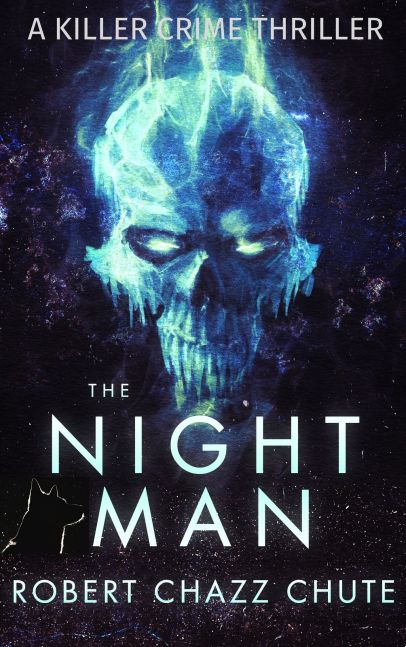
You can pick this ebook up for free today at this link: http://bit.ly/TheNightMan

Join my inner circle at AllThatChazz.com

See my books, blogs, links and podcasts.

Enter your email address to follow this blog and receive notifications of new posts by email.

Join 2,063 other subscribers