C h a z z W r i t e s . c o m

See all my books at AllThatChazz.com.

Writers: Please dare to be different

I’m sick as a very sick dog, so this will be brief and a little truculent. We should try harder. Far be it from me to tell anyone else what to do. However, I want more and better books to read. What am I ranting about? I’m angry at writing “by the numbers.”

I once got into a discussion where a fellow writer challenged me to define what I meant. I replied that he already knew what I meant and he had the grace to say, “Well, yeah.”

However, in case anyone is unclear, I’m talking about books that are too predictable and the tread is gone on their plots.

I’m talking about writing that is too safe. It can race along, but feels like it’s on the Indianapolis oval, always that predictable left turn. Race that car through the woods and duck some trees and crash through the stands!

When I see a cover that looks like all the other covers of a genre and read a sample that seems interchangeable with a dozen other books, I admit, I don’t go in with high expectations (or I don’t look further). Different gets eyeballs, if it’s good different. You don’t find good different without risking bad different.

No one sets out to write a bad book. There aren’t any really bad books because every author can find a raging fan for anything. There are only books that are not to your particular taste. What’s death to art is catering to one bland taste. That’s the lowest common denominator. There’s room for that and lots of people will buy it, sure, but is bland why you wanted to be a writer? It’s certainly not why I’m a reader.

Here’s what isn’t to my taste:

If the title is indistinguishable from six other titles in the genre and the plot sounds too much like all the others, it’s possible the manuscript emerged not from a printer, but from a hamburger grinder.

Take a damn risk!

Make an unpopular or forbidden artistic choice once in a while! Cross a genre boundary. Use poetic language instead of one steady drone of minimalism. Don’t kill someone when it’s the easy way to solve a plot problem. Then kill a beloved character. Do something in your art that isn’t easily defined. Try something new instead of writing the same book over and over. 

Yes, I know many authors write the same book again and again to great success. Yes, I know some (dumb) readers won’t be receptive to you taking chances. They’ll say “I don’t get it,” or “This wasn’t what I expected and I’m uncomfortable with how the story strayed.”

The story never strays. The story goes where it’s supposed to go. It’s where the author wrote it. Maybe the author didn’t write enough small words. Or maybe the author failed to make a satisfying end or a believable context or a dozen other variables that are the author’s fault. But please, dare to be different somehow.

Don’t aspire to be Hemingway or King or anybody else. Strive to develop your unique voice.

My friend, author Shermin Kruse, risks being branded “experimental” by allocating a part of her debut novel, Butterfly Stitching, to the form of a screenplay. It’s not experimental or dense. It’s cool. (I’ll let you know when the book comes out.)

Follow her lead. Do something unexpected. Some writers will say you shouldn’t. Most readers will appreciate that you did.

Now go write. And REACH!

Filed under: Books, writing tips, , , , , , , ,

Top Ten: Renew your readers’ interest between books

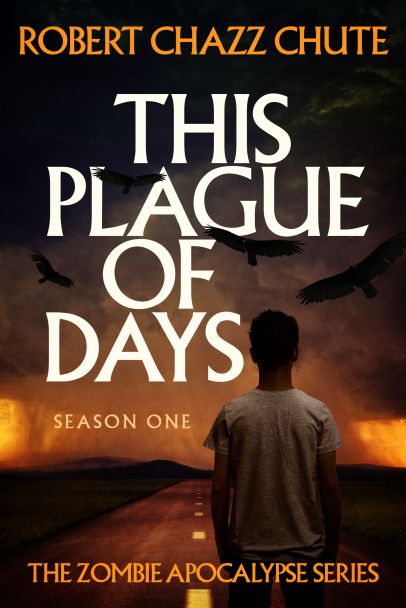
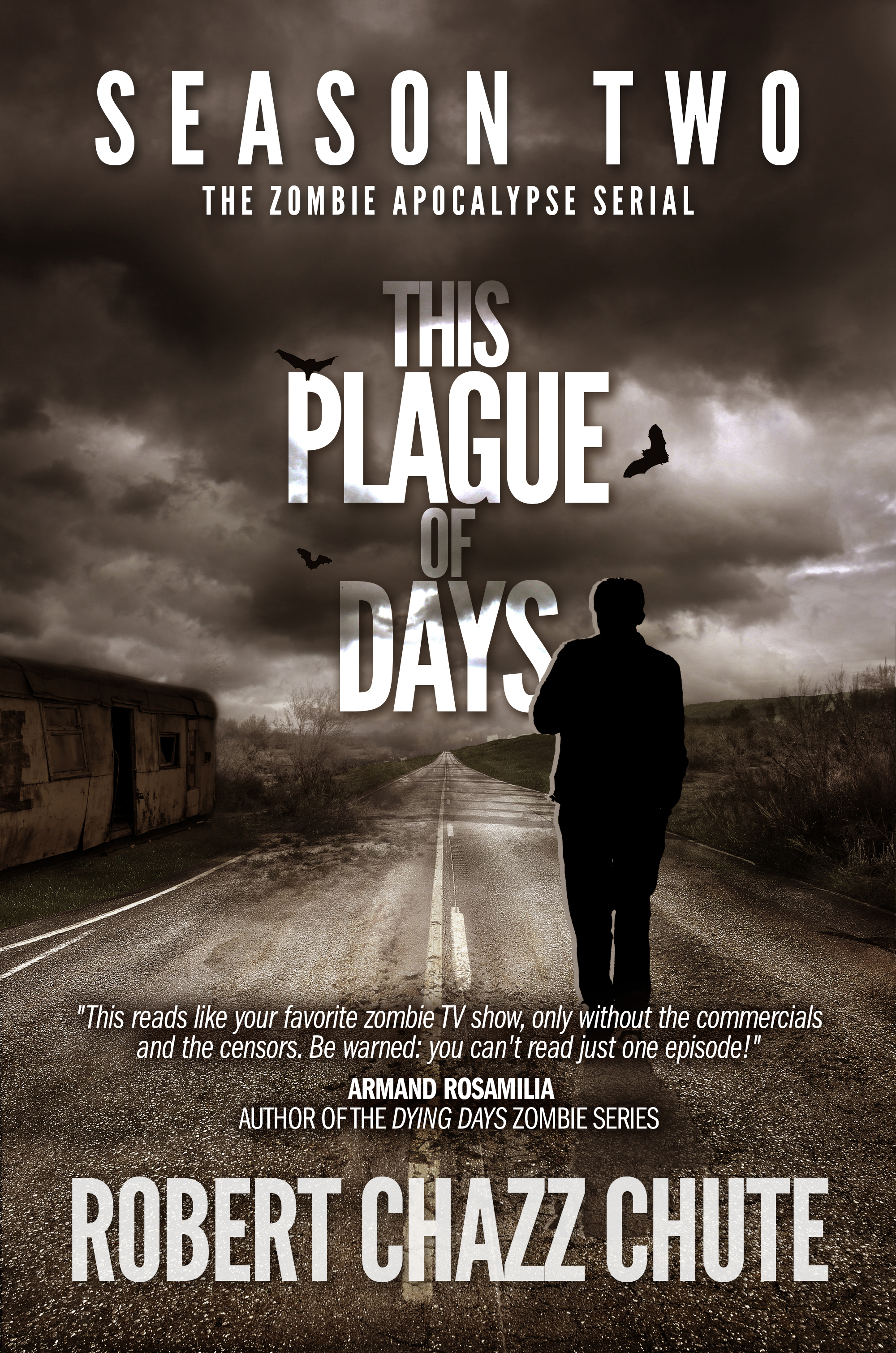
As I finish revisions to the finale of This Plague of Days, I’m entering that crazy time between the writing and the publishing. We all go through it. There’s still editing and proofreading to do and you aren’t done until you’re sick of it and not even then. But I am excited!

Today, I had my first back and forth with Kit Foster, my graphic designer. We talked cover designs. Out of context, my description of what I had in mind was pretty dumb or nigh-impossible, but through the magic of his art, Kit will transform that raw material into something awesome that makes browsers into buyers.

But how do you keep the sales going between books?

Sales always drop off. They call Day 30 after your book launch “The Cliff” because you lose attention from readers as you disappear from the bright, shiny new thing list. Interest can be buoyed and sustained, however. You don’t have to try all the strategies from this list (or any), but I do suggest you try at least one. Experiment and let me know what works for you.

Here are some ideas to extend your influence with all your books.

1. Write more than one book because your next book helps promote the last one. At a book event, authors talk about the next book, but readers talk about the last book.

2. Write more books. The bigger the stable, the more horses you have in the race, cross-promoting each other.

3. Write (slightly) shorter books. Sadly, my next tome (after TPOD) will (again!) be more than 100,000 words. I’m writing huge books. Many will see this as over-delivering and they’ll love it. It can also intimidate those less invested. The main problem is it makes you appear less prolific even if you’re very productive. It’s #2’s horse and stable issue.

I’m not saying you should shortchange anyone, but keep it reasonable. Few reviewers complain about a quick read. If you’ve got that much to say in a single book and you can’t make it shorter, make it a series.

The complete series for This Plague of Days will be over 300,000 words. The first draft took ten months and then I doubled its size in another eight months. Down the line, I’ll put out more books by keeping them down around 60,000 – 70,000 words.

My crime novels took 3 months each, for instance, from concept to completion. That length is what I’ll be aiming for in the future. Feeling more productive and hitting more milestones also feeds my excitement between books and keeps energy high. Less time between books also gives readers less time to forget about you.

4. Write in one genre. If you can dominate one list, you’ll be more effective in focussed marketing efforts and provide consistent branding. (I should have done this, but it’s not how my mind works.)

5. Collaborate. Writing with another author can expand your influence to each other’s audience and, if you work it correctly with the right person, you’ll get more done faster. Some people think writing with a partner is more work for half the money, but actually you have more people helping with the load, increasing productivity. The guys at Self-Publishing Podcast have proved it over and over, so there you go.

6. Cooperate. Soon, a new horror anthology will be released and I’m in it. My bit will be a sampler of Episode 1 of This Plague of Days. In joining forces with other authors, we’ll co-promote and raise each other up.

7. Have more to give away. I serialized the first two seasons of This Plague of Days. In the run up to the launch of Season 3 and the stand alone (This Plague of Days, The Complete Series), I’m using KDP Select to give away episodes as samples. Those giveaways always bump up my sales in between books when I would otherwise be in the doldrums. I’m a big believer in pulse sales to help new readers find me.

8. Diversify. To sell more between books, have more to sell in different media. There’s interest in turning This Plague of Days into a TV series. (It helps that I wrote the story like an HBO or Netflix dramatic series in the first place.) However, I’d love to see it as a graphic novel, too. I want to sell it as an audiobook. Each iteration feeds the potential for another opportunity.

9. Repackage. Converting This Plague of Days from serialized episodes into seasons, and then into one, big book that stands alone? That’s one example of repackaging. It’ll also give a new crew of readers what they wanted since quite a few people seem to misunderstand the cliffhangers and twists of a serial or they hate serials on principle. (I don’t know what that principle is, but I recognize it and I’m listening.)

Taking different books and selling them as one bundle is another way to go. (I’ll be doing this with the Hit Man Series by turning three books into a bundled trilogy with a new and better name for the whole.)

10. Stay in touch with readers between books. I don’t have a large mailing list, but I do connect with a lot of readers on Facebook and through podcasts. I also have a blog dedicated to This Plague of Days.

Recently, when I needed to add more beta readers to my team, I went to Facebook first because I knew I’d find people who are already into what I’m doing. I’ve got three new, enthusiastic volunteers now.

Staying in touch with readers keeps projects alive for authors, too. When I get another tweet or email asking when the next book is coming out, it helps drive me to get to the keyboard as fast as I can to oil the roller coaster. I know my readers and I can’t wait to make them scream.

Filed under: author platform, book marketing, writing tips, , , , , , , , , , , , , , , , , , , , , , , , , , , , , , , ,

Writers, Stress and, of course, Iron Man

We’re poor, starving artists. Of course, we’re stressed out. Why wouldn’t we be? I’ve often given lectures on stress management, so I’m going to give you a quick summary of what we’re normally told about getting all zenny. Then I’ll tell you the one useful trick you’ll remember and maybe even use.

Round One: 

Exercise, eat right, manage your time, use positive self-talk, deep breathing, be social with your support network, get lots of sleep, meditate, unplug more and say no more often.

Round Two:

For any stress, there are four responses: avoid it, alter it, accept it or act on it head on and solve that damn problem.

Round Three (and what you can really do, most of the time):

As suggested in Rounds One and Two, we can do everything that’s right for ourselves and go all goop.com and become perfect Gwyneth Paltrows, but you probably don’t have enough time, money and/or servants for that. In fact, trying to be Gwyneth Paltrow would add more stress to my life. I don’t look as good when I go blonde, for one thing. Also, I’m not a top Hollywood actress. I’m not even a bottom Hollywood actress working at Hooters. I confess, I’ll never play Pepper Potts. 

The answer, obviously, is: Be Iron Man.

Many people have the idea that the goal of life is to be relaxed all the time. You know what? Relaxation is great. It’s also bullshit. It comes in fits and spurts. Being relaxed all the time isn’t achievable for most mortals. Relaxation is often fleeting and, when it’s achieved, it can be shattered by a single bill, a phone call or a missile attack by the Mandarin. Not all stress is negative. Some sense of urgency is needed to ever get a book written, for instance. 

Yes, certainly take care of yourself and do the best you can, but stress-free is a high bar. Stress-resistance is armour in a troubled world.

Stress-resistant is more doable.

Think of Robert Downey Jr.’s character, Tony Stark, after he beat the booze (and Robert Downey Jr., the actor, post-drugs). In stressful situations (say…alien invasion) his reaction in the moment is to:

1. Crack a joke.

2. Think his way out of his circumstance.

And how do you Avoid, Alter, Accept or Act? Find the funny (subverting your rage with humor) and think your way out. When we panic or get angry, we get stupid and make things worse for ourselves. Do not catastrophize. Pause. Joke. Attack the problem with your brain. Attacking problems with your heart is a prescription for heart disease.

Thinking about the problem and holding on to your sense of humor might even keep you from strangling the door-to-door con artist who won’t leave your doorstep. That happened to me today and the twerp in question got to slink away without me denting his forehead on my “No soliciting” sign. Why? Because I kept my head and made jokes at his expense until he went away. 

Gee, I hope that jerk reads this. I think I stressed him out.

~ Robert Chazz Chute is nicer in person than you’d expect. Read the suspense and horror here. Listen to the All That Chazz podcast and the Cool People Podcast here. Nah, just buy and read the books. That would be cool. And if you’re Robert Downey Jr? Please have Jarvis contact me. You’d be great as the dad in This Plague of Days.

Filed under: Writers, , , , , , , , , , , , , , , , ,

“Writing a book by committee is a great idea in every way!” said everyone but the writer.

Imagine all the people from all the classes you’ve ever taken in one room. Each group has its own character, but today we’re going to focus on the outliers and oddball characters with whom you’ve gone to school. I’m not talking about those who stand out for their smarts and sweetness. I’m talking about the girl who, just before the last bell rang, reminded the teacher about extra homework for the class just before the long weekend. Remember the annoying guy who always had another question or inane comment to add long after a subject was beaten to death? And don’t forget the person who was really stupid, but for some reason thought he should speak a lot. Worse, he was smug about it.

Now put all those people you didn’t like in school and put them in charge of your work in progress.

That pressure behind your eardrums is your brain trying to escape.

This scenario isn’t entirely theoretical.

Recently, I listened to two different podcasts about two of the most successful television shows that exist. These were true fans…but:

1. On several points, they seemed determined to be confused about plot points even though the answers were readily available on screen, if only they’d looked.

2. Several weenies missed subtleties that weren’t really that subtle. It’s not the fault of the show’s writers if you aren’t paying attention. If you’re missing something, stop tweeting while you watch The Walking Dead

3. Someone objected to issues within the shows that are non-issues. e.g. Is Leonard’s mom on The Big Bang Theory really a licensed psychiatrist? If true, she’s terrible! Answer: it’s a comedy and you aren’t supposed to like that character and it’s a comedy and it’s a comedy and oh, for the love of Thor! Stop!

4. These dedicated amateurs had one or two good suggestions (I’m guessing by accident.) The rest of their requests for changes were objectively terrible, like dumping beloved characters that made the shows work, for instance.

There’s a reason we don’t write by committee.

It’s good that writing is a lonely job. You don’t get book ideas and plot points from other people. The elements develop organically, rising up from character and logic and by answering the question, “What’s next?” And then answering it again and again until you stop writing or die. The writing grows from the act of writing.

Input is helpful after you’ve done the work, sure, but don’t even ask a trusted friend what to do when you’re still in the second draft. He doesn’t know. How can he? You wouldn’t ask if you should turn left or right when all he knows is that you’re somewhere in New Mexico.

“Is this the right direction? Should the Mom die in the middle of the book?” A good friend will tell you to keep writing and hang up on you so you can get back to it. Finish something before you show it to anyone. You’re in command. Steer your ship solo. Lots of people will have their say later.

Everyone has an opinion on everything, even more so when they know less about the subject.

Once upon a time at a writing conference, an author asked me about the book I was writing. I gave him the broad strokes and he said, without hesitation, that my second act was “wrong”. If there’s a high school suicide in the first act, then the main character has to be torn up about it.

“Not if he hated the suicidal kid’s guts to begin with,” I replied. 

“Dude!” he said without a microbe of doubt, “High school kids don’t act that way. They shouldn’t act that way!”

“In my book they do.”

Summarily dismissed, I slunk away and have since dedicated my life to hating Stephen King with the fiery heat of a thousand suns. (No! I’m kidding! The offending author was not Stephen King. I love Steve! Him, I would have believed.)

Here’s the crux:

There are few rules in writing, but one I’m sure of is this, “If it plays, it plays.” You can make anything work in context. You can sell anything if the story sells it.

My luckless hit man is a funny guy in big trouble.

My luckless hit man is a funny guy in big trouble.

People doubted me, but I created a sympathetic hit man named Jesus (in second-person throughout, no less.) I create a lot of anti-heroes and no, I don’t care if readers love and agree with all my characters. Loving and agreeing with characters is overrated. Interesting is more important than loving.

Many of my stories don’t yield an easy happy ending but give unexpected, yet satisfying endings instead. I rarely do happily ever after, but you’ll often find transcendence there.

My main character in This Plague of Days is on the autistic spectrum and hardly ever speaks (and when he does, it’s often in Latin phrases.) When Doubting Tommy asks, “How the heck are you going to make that work?”, the answer is, “Watch me.”

My mission isn’t to write something easy that entertains. My mission is to write something different that entertains. Too much consultation, especially early on, would squelch my process. We don’t write by committee because committees are how most things don’t get done. Committees are where good ideas go to die. Committees are where you’ll find three reasonable, intelligent and helpful people compromising with one insane fascist to arrive at something closer to crazy than good.

Choose your beta readers, editors and allies carefully and don’t show them anything too early in your process. The book is only yours as long as you’re writing it. After that, it goes out to the world and it’s up to thousands of readers to decide if your vision pleases them. 

Make sure that, whatever you write, it pleases you.

~ The latest All That Chazz podcast is up at AllThatChazz.com. You’ll also find helpful affiliate links to my books there so you can buy them, which is quite a happy coincidence, isn’t it? Thanks. For a topic sort of related to this one, you can also get the latest update on Season 3 of This Plague of Days here.

Filed under: All That Chazz, publishing, Writers, writing tips, , , , , , , , , , , , , , , , , , , , , , , , , , ,

To all writers: A Call to End Hostilities (and focus on writing)

I should be writing my book and not blogging, so I’ll try to make this brief. This week someone I like very much called for self-publishers to stop pooping on traditional publishers for their choice to be awesome with the Big Five, agents and brick and mortar bookstores. There is a perception by some, possibly fuelled by the release of the Author Earnings Report, that indies hate writers who aren’t indie. Not true of anyone I know, by the way. It’s largely a myth. No one’s mad at traditional authors. What we often object to are contract terms from traditional publishers. Many of us consider Big Five ebook royalties egregious, for instance. Many of the authors trapped within the tight confines of those contracts feel much more grumpy about it and take it personally, so no controversy there.

Hugh Howey is calling for publishers to amend their contracts for ebook royalties that better reflect reality. Not so long ago, a famous agent claimed that ebooks were priced as high as paper books because they cost as much to produce and deliver. The fact that this statement was clearly nonsense didn’t seem to perforate the screen of what Romanian Canadians call “bool-sheet.” However, said agent is no longer an agent so maybe the dizzying cognitive dissonance corrected that person’s career path.

The debates and finger pointing comes in cycles.

I’d hoped the internecine vitriol had died down but it’s back, wearing tap shoes and has gone from acoustic and unplugged to plugged in, amped up and cranked up to eleven. The shite is stirred and the reaction to Hugh’s numbers, by some, is to complain those numbers aren’t accurate. Oddly, admissions to those mathematical vagaries are already in the report, but why discuss the truth of the big picture when you can argue over details that will eventually be revealed as more data pours in.

Amid this fracas, the call went out not to allow the pro-indie rhetoric to get out of hand.

Indie publishing is not, I’m told, a religion. Agreed. Good. As an atheist, I’m allergic. I was also told self-publishing is not a revolution but a disruption. With that, I do respectfully disagree. “Disruption” suggests impermanence to me. After self-publishing, how are you going to keep us down on the farm now that we’ve seen Paris? Contrary to what you may have heard, not all indies are hoping to be picked up by a “real” publisher. Some sure are hoping for that and good luck and bless them, too. (Me? I’d rather get a graphic novel going, or a series with Netflix, HBO or AMC or a movie contract or a video game deal or domination of zee vorld!…but that’s another post.)

Some (many?) traditionally published authors are going indie and others straddle the fence and opt for the hybrid sweet spot. All excellent choices as long as we go in eyes open with informed consent. As I’ve stated many times, this blog is about indie publishing, but I love all writers: aspiring, published, unpublished, indie, hybrid and mutant. The only writers I don’t care for are the ones who talk more than they type.

When I heard the call for indies to behave themselves, I nodded. Frankly, I’m tired of the indie versus trad argument. Having gone through this news cycle several times before in its various incarnations, I’m done. Nothing wrong with saying, “Let’s all play nice.” It’s about the least controversial thing anyone could say, surely!

Then the other shoe dropped through the glass coffee table.

In the very same thread that called for indies to be nice (ahem, to our betters) shots were fired the other way and several commenters took the call for indie authors to mind our manners as license to tell us how much we all suck. I don’t think that’s in the spirit of the peace treaty. I respect your choices. Please do not make assumptions about why I’m an indie author. Please do not generalize about why we’re “all” anything. No one has to justify their life choices to anyone who isn’t a business partner, spouse, federally appointed judge or priest, okay? And maybe not even then. I’m not fighting you, so why are you still fighting?

Repeat after me: We are all individuals! We are all individuals! If you write or read, by all that is unholy and wrapped in bacon, I love you all more than a basket of puppies and kittens slathered in chocolate sauce under a pile of thousand dollar bills.

Go in peace to your pad of paper or laptop or rock and chisel.

Write a book.

Read a book.

Love a book.


Filed under: author platform, publishing, self-publishing, , , , , , , , , , ,

What authors should stick in their ears and eyes to succeed

The following is a list of resources for anyone interested in writing and publishing. I’m going to head off any rancour immediately and tell you this is neither meant to be a comprehensive list nor is it in any particular order. Okay? Okay. Read on.

1. Joe Konrath’s blog: Arguments are made. Elucidation ensues. Many writers have become author/publishers after reading Konrath’s blog.

2. Self-Publishing Podcast: The guys behind Write, Publish, Repeat often have great guests, but it’s co-host David Wright who is the soulless soul of the show. Always NSFW. New episodes every Thursday. Joanna Penn appears this coming Thursday. (i.e. week of Valentine’s Day, 2014.)

3. The Creative Penn (podcast): Joanna Penn talks to movers and thumpers in self-publishing. Expect a plethora of brilliant pieces on book marketing. Joanna is very innovative so you’ll no doubt discover resources here you didn’t know you needed. 

4. Dead Robots Society (podcast): They recently had a really good discussion of the business of writing and publishing. Each week when they talk about the word count they’ve achieved (or not) the listener gets the distinct impression these guys are in it for the long haul, head down and bulling their way through no matter what.

5. Kristine Kathryn Rusch’s blog on publishing is a must. She pulls the fire alarm on bad contracts and often pokes holes in the bad thinking going on in publishing big and small.

6. The Passive Voice: A must-read. Sign up for the Passive Guy’s daily picks of stories from around the web about the state of publishing. He’s even featured a couple of my posts from this blog and from ThisPlagueOfDays.com.

7. I Should Be Writing (podcast): Author Mur Lafferty monologues and answers questions from listeners. Honest and no-nonsense.

8. Terribleminds: Chuck Wendig is your fun uncle who swears a lot. He’s informative and just might get you writing if you’ve been coquettish about it thus far. Read his blog.

9. The Self-publishing Roundtable is fun and filled with facts and you can see it on video. It’s a panel with many guests so you get diversity in opinion and experience.

10. The Rocking Self-publishing Podcast: Simon Whistler interviews a new author every Thursday. For the depth of his research and his listening skills, he’s easily the best interviewer among all the podcasts on self-publishing. I’m not sucking up, but yes, I’m scheduled to be on the show in late spring or early summer to coincide with the release of This Plague of Days, Season 3.

11. Renee Pawlish is a bestselling novelist (and, ahem, a former guest on the Cool People Podcast) who does some serious reportage about indie publishing. Don’t miss her analysis of the utility of and pricing at Bookbub.

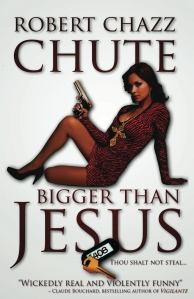
~ A new episode of the All That Chazz podcast is finally up! First I dealt with an energy vampire and then I had to balance the demands of managing two businesses. I talk about that, exhaustively, for the first 30 minutes or so. Were I you, I’d skip my talk therapy and listen to the reading from my crime novel, Higher Than Jesus. This chapter is Some Like It Hot. Or you could just go ahead and discover the joys of knowing my funny Cuban hit man by buying Bigger Than Jesus and Higher Than Jesus. Yeah. Please do.


Filed under: publishing, writing tips, , , , , , , , , , , , , , , , , , , , , , , , , , , , , , ,

Radio Show Reminder: What Not to Say to a Writer

You know that radio show I recommended in the last post?

Friday Night Writes is on tonight (Friday February 7, 2014) and every Friday night at 8 p.m. EST. The topic is “Stupid Things People Say to Writers.” There’s a deep, rich well.

The show is on Surf 1700 Flagler Beach Radio (FlaglerBeachRadio.com.) I listen in on the TuneIn Radio app. It’s not a podcast so you can’t listen to it later. 

What’s my favorite Stupid Thing recently?

I have several to choose from, but I bristled when someone said, “I can’t imagine doing all that by oneself.” The implication of the tone and context was it couldn’t be done or be any good.

Answer: I don’t do it alone. I have a lot of help.

Unlike most podcasts, this is live radio with an active forum so you can comment and ask questions in real time. In that way, it’s a social media thing, too. Authors Tim Baker and Armand Rosamilia will answer questions in between busting each other’s — so, hey! See you tonight!

You’ll get a lot out of it, plus laughs. Don’t forget to bring your own Stupid Things suggestions.

Filed under: Media, publishing, , , , , , , , , , , , , , ,

Proving Dead Moms Wrong: Writing a book is among the least cynical things you can do.

The term “hack”, as discussed in this space recently, usually refers to someone, typically writing to tight deadlines, who is churning out words with no love for his or her work. I don’t think that applies any writer I’ve ever met, no matter the project. Every writer is optimistic as they begin a new book. We tell our spouses and girlfriends and boyfriends and basset hounds, “This will be the one that will really wow ’em. If you leave me now, you’ll miss out on all the glory, my accolades and a mention on the Acknowledgments page, so you better stick around.”

Here’s why “hack” is a poor term:

In This Plague of Days, I write about a zombie apocalypse. Maybe that sounds silly to you, but I fell in love with the characters and there are genuine emotional, serious and thoughtful moments. It’s complex and it’s not what you expect. Just as I attempted to do with my hardboiled hit man in Bigger Than Jesus, I played outside the expected conventions. I tried to do something different with the genre.

But here’s the thing: That doesn’t make me unique.

Every writer I know is reaching to the best of their ability to write something awesome, different and engaging, no matter what they’re writing. We try to write the best tweets we can, for Thor’s sake! Certainly we’re aiming for at least that clever when constructing a narrative beyond 140 characters. 

We’re all looking for a special turn of phrase or a new twist on an old cliché no matter what we’re writing. We’re searching for ways to entice and delight readers. We love language. We tell stories. I’ll leave it to readers to decide the degree to which we succeed, of course. However, when a reviewer dismisses any writer out of hand, based on their choice of subject, as a “hack”? I reserve the right to dismiss that review. I don’t think the term elucidates anything. A book takes too much work and time for us to aim low.

Say it with me and feel it: “Writing a book is among the least cynical things you can do.”

As a person who, more than once, has been dubbed “Mr. Cynical”, I speak with expertise. We may fall short, but we’re all shooting for the outer moons of Andromeda and to prove our dead moms wrong. Even if the reader thinks they’ve read it all before. Especially when that niggling voice of doubt in our heads tells us, “Some people are really going to underestimate what I can do with this material. I’m going to melt their eyeballs with my fair-bitchin’ prose.”

I suggest we all take each book on its own merits instead of painting with push brooms (and read the sample before you buy to avoid disappointed expectations.) Please don’t say this or that writer is a hack. That’s insulting and too easy, for starters. Besides, like plague viruses, authors evolve, too. Maybe you dismissed Stephen King’s Pet Sematery, but if from that judgment you dismiss all of his work, including The Long Walk, you haven’t read The Long Walk.

It is fair to say a particular plot device is hackneyed, but don’t generalize about all our work. Every author I know, me included, gets better with each new book. Disastrous experience beats the weakness out of us.

What other terms should we be careful about using? To the jargonator!

1. “Commercial”: Does that mean you liked it but felt you shouldn’t? (This is the worst, most disingenuous reaction, last spotted on The Slate Culture Gabfest. That’s right! I’m calling you out, Metcalfe. You’re so meta-snarky, you might be David Plotz.)

Does commercial really mean mass market paperback? With the advent of ebooks, that seems a dated reference.

By commercial fiction, do you mean it tells a ripping story that’s less based on character? Hm.  All writers want to make readers care about their characters, so that seems a tad empty.

By commercial, does the critic mean the author wants to sell a lot of books? “How base and singular! No person of character wants that! Are you not of independent means, Monsieur Writer Peasant?”

2. “Muscular” prose: The author is a minimalist, idolizes Hemingway and probably does not possess a MFA from the last thirty years. An obvious attempt to damn with faint praise.

3. “Workmanlike”: Same as #2, but with even fewer syllables in word choice. The critic thinks they’re getting away with being snooty, but we can read the code and the classism isn’t that subtle. Both #2 and #3 are really authorial choices, not burdens to grow past.

4. “Literary”: This means less plot and more exploration of inner worlds when not used as a euphemism for “pretentious.” Certainly this indicates that you’ll leave the book out on the coffee table to prove to the in-laws or tonight’s date that you’re deeper than you seem.

But all authors strive for literary flourishes at the very least. When we’re in composition mode, no premise sounds so tired that we can’t hit it at a different angle, make it great and spin it fresh. I know of no writer, no matter how tight the deadline or how little they are paid, who sets out to write crap. You might say it’s not to your taste. The author might even call it crap…later, after a few more books. But as we write? We’re all Hunter S. Thompson and Margaret Atwood and Kurt Vonnegut rolled up in Shakespearian dreams of legacy, love and respect.

We may fail, but we are artists.

Our hearts are in the right place.

Are you reading with an open mind?

Is your heart in the right place?

Have you dismissed something you haven’t read without even reading the sample?

Well, no, not you, of course, Gentle Reader of this Blog.

But, you know…them other jerks what don’t respect us none.


Filed under: book reviews, publishing, , , , , , , , , , , , , , , , , , , ,

Top Ten: Some things no one tells you about writing

1. Nobody cares about your book at first, even if you think they should. Even if you think they care about you, they’re indifferent. It’s maddening. For you, each book is a magical dream made real. For them, “Nice hobby, but so what?” 

2. Since typing looks a lot like writing to the casual observer, you don’t get extra respect for being a writer from a lot of people. Anybody can type, so don’t think you’re special. “Who do you think you are, anyway? You think you’re better than me?” Oh, they won’t really say that. That’s silly. But some may as well say that by the way they’ll treat you.

3. A lot of people can read, but don’t. They care even less than the casual observers in Items #1 and #2. I don’t understand these people. Why live? It’s a mystery.

4. Some people do read, but they’re jealous of those who write. Read any one-star review that seethes with the venom usually reserved for a pedophile’s first night in prison or a family reunion. Yeah. Those people.

5. You and your family will make sacrifices for Art. Your kids’ friends will be able to afford nice vacations, cool stuff and the latest technology. Your kids won’t get that stuff, though they will get an in-house example of someone daring to follow their dream and buck conventional expectations. At least cover the basics somehow: food, shelter, clothing and good minds.

6. To paraphrase Kurt Vonnegut, pursuing the arts is a great way to disappoint your parents. Don’t expect them to understand. That’s presumptuous and unfair to them since they (probably) love you. It’s not that they don’t want you to succeed as a writer. They want you to take that accounting job because they don’t want to see you suffer. They don’t understand that the safe job they want you to take will hurt you in ways that last, too.

7. The first book that consumes your energy and attention which you poured your heart into? Odds are, first attempts aren’t that great. But no matter how many books you write and no matter how big you get, someone will say you can’t write. In fact, the bigger you are, the more negative messages you’ll get. (If so, congratulations! You’re reaching a wider audience.) That cost-benefit analysis works in your favor, but at some point you might still consider antidepressants, booze or illegal substances or too many brownies. Avoid self-medicating. Write more instead.

8. Sometimes betrayal arrives from unexpected sources within your circle of friends or family. This will hurt most and saps your creative energies. These incidents often lead to divorce or more heated arguments at family reunions. The alternative is you’ll quit and hate yourself because you are no longer being you. Anyone who forces you to choose between them and your passion is gangrenous. Amputate.

Another thing I learned just today:

If you’re being a dick, that doesn’t mean I’m thin-skinned.

9. Writing is harder than it looks, especially before you start. It’s more fun than it looks after you start. Begin.

10. Somehow, at least some readers will find you. You probably won’t even know what you did right, exactly. But there will be readers and even fans. Super-uber-robo fans that so get you, so love your work? Well…you’ll wish those negative friends and family understood you as well as these strangers. Don’t sweat it. You’re making new friends through your fiction.

Treasure your readers. Love them. Inspire them. Nurture them. Entertain. Make them laugh and cry and hit them with love and surprises. 

When you succeed, make sure everyone who tried to put you down on your way up finds out. You’ll care less about how they hurt you by then, of course, but not so little that your vengeance won’t be delicious.

~ I am Robert Chazz Chute. I write about funny hit men, autistic teens and humans versus zombies versus vampires. But mostly I write about the caprice of vengeful gods. I create gods in my own image.

Filed under: getting it done, publishing, Rant, readers, Writers, writing tips, , , , , , , , , , , ,

Why I no longer swear in my books

Pageflex Persona [document: PRS0000039_00004]When I wrote my crime novels, I wanted verisimilitude. I’d watched Goodfellas repeatedly, The Sopranos religiously and, of course, I’d been through high school. Naturally, I’m acquainted with an impressive list of swear words and they don’t bother me.

Swearing seemed like a good idea at the time.

Bigger Than Jesus is about a Cuban hit man who, after a very rough childhood and military service, ends up working for New York’s Spanish mob. The subtext is sad but the jokes and movie references come fast. The language reflects reality. In other words, the characters swear quite a bit.

(And the sex scene in Higher Than Jesus? It’s so steamy and frank, that scene was all my dad wanted to talk about after he read it. Sigh. That’s a different post.)

When I wrote the crime novels, I thought any dialogue that reflected the way people really speak was the only way to go for me. I thought that if readers didn’t accept swear words in fiction, they were reality-impaired. Suck it up or don’t read my books, was my policy.

I don’t feel that way anymore.

Well, I do still think people who don’t accept appropriate use of swear words in fiction (and author autonomy to write what they want to) are reality-impaired and intolerant.

But “Suck it up or be shunned,” made me intolerant, too.

Swearing will alienate some readers.

I knew that, of course, but I thought verisimilitude was more important. Now, after two volumes of This Plague of Days — which is devoid of such strong language — I’ve decided I’ve lost nothing by omitting obscenities. Those who aren’t offended by swearing don’t seem to miss it if it’s not there. There’s just no value added, or at least not enough value added, to keep the swearing in. I think I can attribute many of my happy reviews of This Plague of Days to the fact that I did without (though I do skirt it a bit. More on that in a minute.) 

Is my self-censorship a (possibly pathetic) bid to gain more readers?

The short answer is, yes.

Pageflex Persona [document: PRS0000039_00004]The longer answer is, it didn’t start out that way. Jaimie Spencer, the hero of This Plague of Days, is autistic. He’s seventeen, but he’s a sensitive kid. A book that included a lot of swearing just didn’t feel right for the tone of the piece. Much of the drama happens around the Spencer family in Missouri and somehow, zombies or no zombies, peppering the text with f-bombs just didn’t fit this story or the readers likely to enjoy it. I salted it with Latin phrases, instead.

The really long answer is that it saddens me that some readers are so sensitive to curse words. I hate that they wouldn’t read some of my earlier work because of that sensitivity. However, my writing is about much more than swearing. I can do without it and not hurt the dialogue or the story. This Plague of Days is effective suspense and horror and this stylistic choice doesn’t affect that. Many of the people who love This Plague of Days are related to people on the autistic spectrum. They’re more comfortable spreading the word about the serial and sharing it with family members and friends because I changed my policy on swearing.

The f-word can be a crutch.

Use it too much and dialogue risks a feeling of laziness and sameness. Increase the frequency and the impact suffers. Working around that obstacle has proved so minor, I wish I’d done without cursing from the beginning. “She cursed him as she sliced his throat,” can serve just as well, or better, than a string of expletives.

We all know the words. My kids knew the words when they were quite little. Amazingly, they didn’t learn those words from me. They had to go to school for that. There’s no shock to it and sometimes it just gets in the way and the reader’s eye skips over it. I want all my words to count. I insist on delivering impacts to brainpans and adrenal glands. Swearing doesn’t do the job.

I have not suddenly become a prude.

My daily vocabulary reflects the full range of human experience, though the monologue in my head contains much more swearing. (I get points for holding back, right?)

In This Plague of Days, a “damn” might squeak in from time to time. My mother said that was okay since that was her swear of choice. North Americans tend to find British people saying, “shite” kind of charming. I use that. However, even that little is very sparse in This Plague of Days. 

I’m not claiming that no one could possibly be offended by something I wrote. I’m sure someone will clutch their pearls over the discussions between the religious wife and the atheist husband. That’s sure to annoy both sides, in fact. Reviewers have described the story as “creepy”, “scary” and “terrifying.” Well, I should hope so. Swearing or not, it is still very much horror and suspense.

I haven’t gone soft and I’m not writing children’s books.

This Plague of Days contains many scenes that are descriptive of the gore of war. There are some whimsical touches, but much of the story feels real enough you might worry I’m not a horror writer, but a futurist. However, like Twitter’s 140-character limit, the omission of cursing in my zombie apocalypse has forced me to be more clever. Sometimes the omission of swear words has even opened up new avenues for character expression. By that, I mean that there are some really good jokes in This Plague of Days that hinge on the power of irony and understatement, not f-bombs.

Conclusions

1. This doesn’t mean I’m saying you shouldn’t swear in your books. I’m not here to tell anyone what to do so stop feeling threatened.

2. This doesn’t stop me from writing books with so-called “bad words” in the future, though I think I’ll continue to do without. This bears repeating: Those who aren’t offended by swearing don’t seem to miss it if it’s not there. I don’t miss it. Anybody read any Vonnegut and think, This isn’t bad, but it would be so much better with a bunch more f-bombs? (I did, however, note that Norman Mailer could have cut back by half and helped Tough Guys Don’t Dance.)

3. This doesn’t mean that I think swearing is bad. It might be right for your books and I admit that, when done right, a string of obscenities certainly has its place.

4. I also have to admit that I think doing without swearing (in the text!) has made me a better writer.

5. This isn’t a moral stand. It was a solid artistic choice that stumbled into a good business decision. I confess. I want to be read by a wider audience. This is one of the ways I’m accomplishing that.

Filed under: author platform, book marketing, Horror, readers, writing tips, , , , , , , , , , , , , , ,

Bestseller with over 1,000 reviews!
Winner of the North Street Book Prize, Reader's Favorite, the
Literary Titan Award, the Hollywood Book Festival, and the
New York Book Festival.

http://mybook.to/OurZombieHours
A NEW ZOMBIE ANTHOLOGY

Winner of Writer's Digest's 2014 Honorable Mention in Self-published Ebook Awards in Genre

The first 81 lessons to get your Buffy on

More lessons to help you survive Armageddon

"You will laugh your ass off!" ~ Maxwell Cynn, author of Cybergrrl

Available now!

Fast-paced terror, new threats, more twists.

An autistic boy versus our world in free fall

Suspense to melt your face and play with your brain.

Action like a Guy Ritchie film. Funny like Woody Allen when he was funny.

Jesus: Sexier and even more addicted to love.

You can pick this ebook up for free today at this link: http://bit.ly/TheNightMan

Join my inner circle at AllThatChazz.com

See my books, blogs, links and podcasts.

Enter your email address to follow this blog and receive notifications of new posts by email.

Join 2,063 other subscribers