C h a z z W r i t e s . c o m

See all my books at AllThatChazz.com.

Further thoughts on the challenges and solutions around free book promotions

1. Problem: Annoyance when free stops

The beta version of my next book, The Haunting Lessons is on Wattpad for free. However, Christmas is here and I’ve got bills to pay and children who expect presents on Christmas morning. Odd, huh? Greedy little creatures.

I can’t leave it on Wattpad for free while I’m selling it elsewhere. Naturally, my first worry is that I’ll annoy Wattpad readers when I pull it on December 15th. I once saw a Wattpad reader characterize a writer’s move from free to paid as “a cash grab.” Ye gods! Alfred! My cape! My cowl! Polish my batarangs! Tonight I hunt Entitlement to its lair!

So, yeah. That’s a problem, but let’s not overstate it. It’s probably a minor quibble. Most people are reasonable. They’ll take an inch, but that doesn’t really mean they’ll take your shirt and your shoes, too.

Solution: Make concessions

I have warned readers on Wattpad that THL won’t be there long (though some will miss that warning.)

When I pull it and publish on Amazon, I could put the book into KDP Select and offer it for free for a couple of my five free days. That’s one way to get more reviews faster. However, that ambition will be hampered because I won’t be able to promote it anywhere (except my network). We can’t promote effectively without a bunch of reviews.

Question: Anybody know of an effective book promotion service that really moves books on the first day without requiring 10-15+ reviews? Anybody want to invent one?

Alternate solution: Expand beta read team.

Also send out more ARCs to avoid this conundrum.

2. Problem: Time

Though The Haunting Lessons is the first book in a series, the next books are not yet written. Many authors find making the first book free in a series attracts the power of discovery, gets true fans and raises sales of the books. Yes, but that’s not helpful until I have at least three books in the Ghosts and Demons Series.

Confession: I’m uncomfortable with perma-free.

Making a book perma-free is an unreliable and unpredictable process. It can be reversed, but that’s also unreliable and unpredictable. It all takes time and, of course, every book is a massive investment of energy. Perma-free does feel like lost sales no matter how much I tell myself it’s an investment in advertising and promotion. (More on those feelings below.)

Solution to the Time Problem: Compose, produce, ship

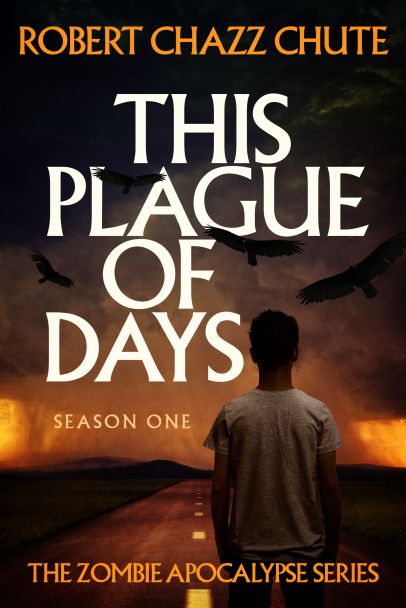
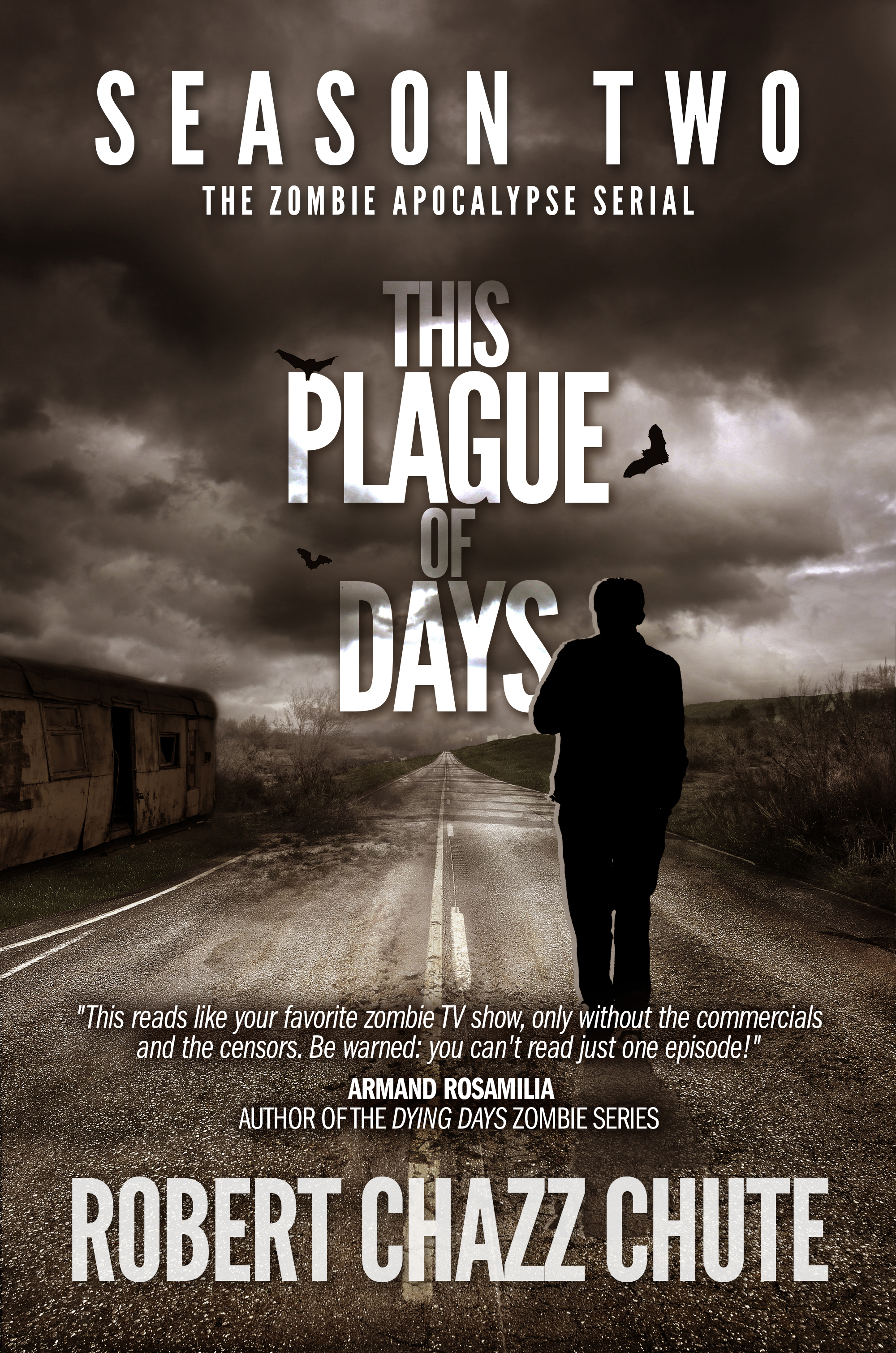
I’ll write the next books in the series fast and include a CTA (Call to Action) for similar books in my list. People who liked This Plague of Days will have a great time with The Haunting Lessons and vice versa.

This dovetails with a strategy that is long overdue for me: stop being stubborn and write a lot of books in one genre. Expect more horror/urban fantasy from me in 2015 and fewer crime thrillers.

Alternate solution: Invent a time machine. 

Write the entire series ten years ago. Mental note: invest in Google, Facebook and Apple.

3. Problem: Logistics

Coordinating giveaways is a logistical nightmare if you’re on multiple platforms. Change a price on Amazon in the morning and the price change takes effect the same day. On other platforms (and especially if you publish through Smashwords), price drops and rises can take days to weeks and you’re never even sure when the new price will take effect.

Solution: Improvement by the competition

It helps if you publish to those multiple platforms directly instead of going through an intermediator. Uploading individually instead of going through Smashwords or Draft2Digital will also take time, so there’s always a caveat and a corollary. That’s about all we can do, though.

The solution is not in our hands. It’s up to the other sales platforms to match Amazon’s response time. Those platforms also have to work on their problems with discoverability. I tried to find a friend’s book on Barnes & Noble and Kobo the other day. It took two searches. For searchability and discoverability, Apple is probably the worst. They are also the least user-friendly for uploading and publishing.

4. Problem: When free is worth nothing

A lot of people will snap up free but they’re hoarding. They never get around to reading the book. I do that myself.

Though it still kind of sucks, I prefer 99 cents as an introductory price for a series (Season One of This Plague of Days is set at 99 cents.) It’s not about the 30 cents I might get for selling a 100,000-word book. It’s that people are more likely to actually read it if they make that minimal investment. It’s the shopping cart analogy from my previous post: just a quarter is enough to stop a lot of people from walking off with shopping carts.

Solution: Reach the masses

Free is used best when it’s leveraged by the power of promotional platforms like Bookbub. There are many more such services but Bookbub is still the big dog at the moment. You can argue Bookbub is hard to get into and provides less value than it once did, but it does appear to reach more readers than any other service.

Go to AuthorMarketingClub.com to use the free submission tool for multiple ebook marketing sites. They’re great additions to a Bookbub promotion and, failing that, might be an alternative. Most of these sites are free or inexpensive. They require application time and a varying number of reviews and ratings. Author Marketing Club tools reduce application time and can even help you get more reviews.

5. Problem: Perception

Some readers think that if it’s free it must be a bad book.

Solution: Over-deliver

Surprise them with a good book and we may even be rewarded in the reviews for overcoming their low expectations. It’s not their fault they don’t understand the problems of indie authors trying to grow our readership. It’s not their problem that they mistake price for value. It’s our problem.

Additional solution: Ignore Mr. and Mrs. Crankypants.

Recently I read a comment in a review where a vituperative minority cast aspersions on indies for daring to write series. If it was a series, it couldn’t possibly be any good. That was an odd and new prejudice to me. But so what? That’s not a reader who’s going to become anyone’s true fan. That’s a bomb thrower and all they love is the sound of their own voice. Forget it. (And if you figure out how to forget it, tell me how you do that. I’m still a boiling cauldron of rage at any injustice and slight.)

6. Problem: The Devaluation Argument

Literature hurts to produce. Squeezing out a novel is excruciating. Surely, we should never gift our books to anyone, even temporarily, in the dim hope we’ll gain new readers who have never heard of us. We’ll send the message that our work is worthless to Mr. and Mrs. Crankypants.

Solution: Get off the fainting couch and get over yourself, Butch.

This is a neurosis writers commit on themselves before any nasty reviewer gets a chance to sneer at us for being entrepreneurial artists and independent publishers. Sure, writing books is hard, but it’s not that hard. If it is that hard, maybe you aren’t enjoying the writing process enough. (I hear crocheting is calming for the sensitive neo-hippie plus you get garish hangers for your potted ferns when you’re done.)

The Devaluation Argument might not be all wrong. I’ve already confessed my discomfort with perma-free. (Yes, there’s the math of it. Math doesn’t stop me from feeling what I feel.) But to cut off the most effective tool for discovery that I know of? That smacks of Self-aggrandizement calling itself But What About the Pricelessness of Literature? Let’s not be so precious about the writing process that we write good books too few ever get to read.

Writers need to promote to be read. Most sales platforms suck at promoting and advertising our work successfully. Until they improve, this is our lot and the value of discovery and growing our readership is going to cost us. We have to suck it up.

Alternate Solution 1: Reframe the problem

When you give your book away, that’s generous. A lot of people don’t have money for an entertainment budget and you’re helping them out. That feels good doesn’t it?

Alternate Solution 2: Go back to the math despite how you feel

This week I consulted with an author whose ebook was priced at $9.99. I suggested he drop the price.

The author frowned so we went to Amazon’s pricing tool. It’s in beta but it’s interesting and can be useful. I don’t set all my prices by it, but I do pay attention to it. You’ll find it on the Rights and Pricing page of your KDP Select Dashboard.

At $3.99, the tool predicts that his profits will rise by over 400%. How do they do it? Volume. Free promotions create volume and inertia, too. Better than doing nothing, right?

Alternate Solution 3: Know that many people are price sensitive for good reasons

One guy told me recently, “I don’t pay attention to price. If I want a book, I buy it.” 

I nodded. What I didn’t say was, “Yeah, but, dude! You’re rich. You didn’t ask the salesperson what your new car would cost.”

Some of those same price-sensitive people will become true fans, and buyers, once you demonstrate that you and your work are worth their time and investment. Without free, a lot of them won’t give you the chance to prove your writing’s worth. Think long-term.

Give coy readers a chance to fall in love with what you do. And why wouldn’t they? You’re adorable.

~ The Christmas thing is happening. You’ll find all my ebooks and paperbacks here. I’d appreciate it if you bought a book or fifteen. Thanks!


Filed under: author platform, free ebooks, Publicity & Promotion, publishing, readers, , , , , , , , , , , , , , , , , , , ,

Why are we so worried about failure when it’s so common?

I’ve been reading another round of articles from the usual suspects saying how much indie books suck. I ran into a reader who said one of my masterpieces was pretty good “for an indie book.” Yeah, well, piss on that. He only knew I was indie because I told him so. I now have two questions to wrestle: why am I still reading these biased articles that rely on old news and nostalgia? And why do I bother telling anyone but other indies that I count among their number?

We live in a post-empire world.

Indie and niche is a great place to be now, but the bias of what was once true still carries the heavy weight of lazy inertia. I have had lots of jobs, but it wasn’t until I became a writer that people started asking if I was making any money. (Kinda rude, huh?)

Yet myths continue to abound about indie versus trad.

For instance, some people still believe that big publishers must have more brains than small publishers. I worked for big publishers and I can tell you, some of them are really bright, but no more than the rest of the population. I know what a book costs to make. One in twenty of my former employers might know. No indie of my acquaintance would be dumb enough to try to sell an art book without pictures. (Yes, that happened.)

More money means bigger investors, not more brains.

In fact, when you have more money to sling around, you can find some pretty stupid uses for it, like paying rent in downtown Toronto or New York or throwing money at CEOs while reducing editorial staff drastically. When you’re really profitable, you might even be stupid enough to get your lawyers to cheat your authors out of royalties. (Oh, nickel and dimers will do fine for a while and the big wigs can congratulate each other over a round of golf. But reputations and brands will be damaged and then the authors’ lawyers will come. Peons pushed too far become dangerous so Evil isn’t a smart longterm strategy.)

Are there lots of bad books out there? You bet.

Indie or traditional? It matters not. Ninety percent of anything isn’t so great. Mediocrity is not unique to us. In fact, mediocrity and failure is no big deal. Look around. It’s everywhere. Ninety percent of politicians and agents and naturopaths and plumbers suck. There are no exemptions. Have you ever belonged to a class where everybody got an A+ on everything? 

But that’s the beauty of finding your niche and your tribe.

No matter what we do, somebody’s going to love us. (Charles Manson has a bride now.) Someone will eventually fall in love with your voice even if you sing a little flat.

We must all do our best, of course. This isn’t a call to embrace mediocrity.

It’s a call to do your best without getting overly dramatic when someone doesn’t dig your flavor. It’s a reminder that we will all fail with most of our books. It’s a plea to write the next one anyway. I’m making fewer mistakes. I’m getting better with each book. Everybody improves if they don’t quit. My tribe is getting bigger.

Keep calm and carry on doing your best. Write and enjoy yourself. Chill. Failure is expected. One of these days, you’ll write something that will strike a cord outside your niche and, for a moment, you’ll think you have arrived. There is no arrival. There is only the next book and the Sisyphian joys of the labor itself.

When you write, do you ever make yourself laugh or cry or chortle at your genius?

That’s what to go for. Let’s stop being so precious about winning and losing and relax about the numbers. When the work comes from love and you continue to strive, your aspirations are never hopeless.

~ Speaking of turning the legend of Sisyphus upside down, I wrote over 50,000 words in 20 days and NaNoWriMo helped me do it faster than I would have otherwise. I now have a first draft I love. Take that NaNoWriMo haters. The writing process was full of self-congratulatory chortles and laughter. It’s going to be a lot of fun for readers, too.


Filed under: author platform, publishing, self-publishing, writing tips, , , , , ,

What Birdman got right (and what it says about writing books)

If you haven’t seen Birdman, starring Michael Keaton and Edward Norton, you’ll find no spoilers here. It’s a very unusual film and there is a lot to love in it, not least of which is the cinematography. It’s also one of those rare films I’ll need to see again before I can figure out how much I like it.  Today, I want to talk about what I loved (and how it might apply to writers and books.)

1. The movie is a tutorial in acting without self-consciousness.

Many of us are too self-conscious to try something bold in our writing. That’s too bad, I think. I like bold choices in books. The expected is too ordinary and easy. The expected is…expected. You’ll also love the instruction on the power of motivation, emotion and brevity.

2. The film is comfortable with ambiguity.

As much as I enjoyed the summer romp that was Guardians of the Galaxy, there was no need to discuss it by the time we got to the parking lot. Birdman leaves so much ambiguity, you’ll find a lot of people arguing over clues in the film. What happened and what did it all mean? That could irritate you, or you could decide it’s finally a film worthy of discussion.

3. Birdman is working on several levels.

You can take it for what it is or you can take it for what it might be and, no doubt about it, this is a story that demands some patience from its audience if they decide to try to decode it. I like books that are doing one thing while you think they’re doing something else. That’s the rich depth I look for in my reading and writing, no matter how superficial an entertainment you might expect. (For instance, shocker: This Plague of Days is less about zombies and more about you.)

4. Birdman is Art (capital A) that defines its audience.

If you’re an optimist, you’re going to want to interpret the story one way. If you’re a pessimist, you may have less fun in the movie but you’ll enjoy the discussion over coffee after the movie.

5. Pop culture references.

The movie is front loaded with some contemporary references that are pretty funny. The movie isn’t afraid to define itself by a particular time with those pop culture references. Publishers have long run screaming from books with such references for fear readers won’t get it and the book will be dated too fast. Here’s what I’ve found (especially from feedback about my crime novels): Lots of readers love pop culture references and readers don’t scare off so easily when you’re showing them a good time. Will it get dated? No. That’s just a label and what you call a thing is not the thing. (Don’t buy that? Okay. How about this: eventually, everything is a period piece.)

6. The movie talks a lot about what it means to make Art and struggle with commerce.

What we all do as artists is kind of a brave thing to do. Maybe not storming-the-beaches-at-Normandy brave, but we’re taking risks and putting ourselves out there. It’s nice to see that affirmed somewhere instead of mocking entertainment as an effete thing to do when you could be out drinking and brawling or doing nothing. I believe Art matters. So does Birdman.

7. The movie criticizes and acknowledges the power of social media.

That’s surprisingly evenhanded and grounds for more discussion about what matters and how to get to what matters. Many of us are divided on the power of Twitter and the distracting lure of YouTube. I don’t think the answer is an either/or binary, so, through the ranting, the movie has a very thoughtful core.

8. Any artist will appreciate the critique of the role of the critic: how easy, risk-free and shallow it can be.

I heard a couple of professional critics mock this aspect of Birdman. Clearly, they weren’t listening closely or their egos got in the way. Whatever else you may dislike about this film, if you’ve written a book, you’ll love that exchange.

9. Birdman is, in part, about legacy and relevance and striving.

We can all relate to that, can’t we? If you can’t, get out. You’re taking a squat in my church.

10. By turns, Birdman looks like a French art film somebody dragged you to in college, one of those movies only film students pretend to like while they’re really thinking about Star Wars.

Then Birdman does something different. In other words, if it were a book, it would be cross-genre. It’s a film that isn’t easy to categorize and define. Therefore, it’s harder to sell. They made it anyway.

Filmgoers have been crying out for films that are refreshing and different. Audiences have been moaning at Hollywood for years, “Oh, for God’s sake, give us something besides another empty sequel and come up with an original thought!” Well, you asked for it and Birdman is what the answer to that request looks like.

You know what? I take it back. Now that I’ve written this list, I can see it now. I did like Birdman a lot. I think I might love it.


Filed under: movies, Writers, writing tips, , , , , , , , , , , , ,

#NaNoWriMo: How to make writing a novel easier than it looks

I write drafts for my novels at a rate of 1,000 words per hour. I can string more of those hours together if I plan ahead with a general outline, but I usually pants it rather than plot it. 

I think of my writing time in terms of word count and hours. Here’s why:

When I wrote This Plague of Days, I didn’t think in terms of hours then. I didn’t budget my time or work to a word count like it was a job. I just put my head down and wrote and revised many times, stealing time here and there without a real schedule. I can’t tell you how long it took to write that epic saga because I went through so many revisions. Also, because my approach was haphazard, I wrote slower then. Though I worked from an outline, the project took longer than it could have.

I was buying into the meme that slow cooker writing was the only way, despite Stephen King’s suggestion that three months ought to do it (and look at the size of his books!) If I wrote that series now, the first draft would take about 300 hours of actual writing time. That’s less impressive than saying it took me years to write TPOD, but it’s more accurate.

(By the way, I just found out the This Plague of Days, Omnibus Edition has advanced to the second round in the Writer’s Digest Self-published Ebook Awards! Yay!)

When someone says it took them two years to write their first novel, that’s not true.

Two years equals 17,531.62 hours, including time spent sleeping, showering, goofing off, playing with children and pets and holding down a job, and procrastinating etc. Authors can write as fast or as slow as they’d like and each process is unique. However, there is no direct correlation between speed of production and quality. In fact, for the first draft, quality is nigh irrelevant.

Quality comes with subsequent drafts.

I find most of the jokes in the second revision and the plot problems to be fixed become clearer by the third revision.

Take NaNoWriMo, for example…

I’m planning 55,000 words for my current WIP. That means 55 hours for the first draft this month. As my current schedule allows, I’ll be done well before the NaNoWriMo deadline as long as I continue to protect my writing time.

Fifty-five hours sounds much less intimidating and more realistic, doesn’t it? What’s one work week to you? Forty-four hours? I approach my writing like a job. It’s a job I love, but there’s no waiting around for inspiration to come to me. I hunt inspiration down. Inspiration and efficiencies are habits learned by writing more and doing so consistently.

Sometimes the best laid plans go awry.

For my crime novel, Intense Violence, Bizarre Themes, I’d planned on looking for the exit to the book around 50,000 words and topping out at 55,000 words. It took me an extra 17,000 words to wrap it up neatly at 67,000 words. Still, 67 hours to a first draft sounds like much less drama than saying it took me a month. That’s just 16.7 hours per week to come up with a first draft. (For a while in the ’90s, that’s about as much time as I committed to watching television.)

I’d give you a measurement of editing and revision times if I had them, but that varies too widely depending on the book. For instance, I’m putting my time travel novel on hold because I’m not happy enough with it yet to release it. I’ll come back to it in 2015. However, I expect to have my current WIP out in time for Christmas (assuming I still love it when I’m done.) 

Write as slow as you want to or as fast as you can. It doesn’t have to be a job. Hobbies are good, too, so write at the pace you choose.

My point is, we don’t have to be drama kings and queens about the writing process. When you hear of writers putting out a lot of books fast, that’s not really quite as hard as many would lead you to believe. Writing is a time management issue first. The other skills required come into play after we commit to investing the hours.

But it can’t be good because it was written too fast!

Writers who cherish writing slowly have my utmost respect until they insist others write at their pace (and many people write much faster than I do.)

On the Road, Casino Royale, The Gambler, A Clockwork Orange, The Prime of Miss Jean Brodie and As I Lay Dying were written in less than six weeks. I wonder if any of those famous books were actually written in less time than that if the authors had tracked their hours.

Fast writers manage fear because they think about each book project in terms of a formula:

Word count goals + hours x perspiration (divided by distraction)

Prolific writers manage their time, that’s all. No drama. Inspiration usually arrives at the keyboard at about the same time we do.

Write. Revise. Edit. Enjoy throughout. (Now don’t tell anyone how easy it is to get to big word counts or they might start to think that writers aren’t special snowflakes!)

~ I’m Robert Chazz Chute and I just published my 15th book. Imagine how many more I could have written if I hadn’t been sucked into the vortex of “Must See TV” back in the day. 

Filed under: My fiction, publishing, Writers, writing tips, , , , , , , , , , , , , , , , ,
The very nearly here, not quite yet, Post-review World

Once upon a time an author named Hale stalked a book reviewer, wrote about it in The Guardian and…well, things got crazy. I haven’t weighed in on this because you’ve no doubt read plenty about this debacle. Besides, I didn’t have anything new to say. I still don’t have anything new to say about that particular incident. It was a bad idea to respond to a negative review and there’s no need to pile on.

I do understand the urge. Oh, yes, every writer knows that urge to respond and demand an apology or…something. Instead, I stay indoors, never go anywhere, and write scary, funny books. It’s a better use of my time and the right thing to do.

So let’s talk about reviews more generally.

We all want them. We can’t promote our books effectively without a minimum number of happy reviews. But there are problems:

1. If you get a lot of happy reviews, someone who didn’t like your book will accuse you of having lots of friends and family shilling for you. Ha! I wish! It’s very difficult to get any reviews on anything and I don’t speak to my family. The point is, some people (I have no idea how many) think five-star reviews shouldn’t be trusted. However, if you didn’t have any five-star reviews, those same people would slay you for it. Crazy, huh?

2. Some people can’t help themselves. They condemn authors for their books and pedophiles for their despicable actions with nigh equal vehemence. Well…I assume so, anyway. I mean, I’ve read some vitriolic reviews where, once you dial it up to eleven, there’s no place to go, is there? But (silver lining) no one really takes one-star reviews seriously anymore, either. They are, with few exceptions, troglodytic. We read them for sick entertainment value, not for direction as to what to read.

3. Some people put spoilers in reviews without warning. That’s not a review anymore. That’s a spoiler and it’s a shitty thing to do. Just because you don’t like it doesn’t mean others won’t and spoiling a work that was years in the making in one ill-considered paragraph? Yes, that’s bad. What’s worse is Amazon lets it happen and allows those spoilers to remain posted without warning.

4. Likewise, authors have been libelled in reviews. Once again, Amazon does nothing if you complain. Unacceptable, and yet we are, at the moment, powerless. It’s the Internet. We’re supposed to shrug and hope the happy reviews drown out the unhappy ones (and eventually, mostly, they do.)

There’s a study somewhere that shows how unreliable reviews can be in an odd way. If the first review that goes up is negative, ensuing reviews tend to be more negative than they would have been otherwise. That’s less about the book, I suppose, and more piling on, hoping to be seen in agreement with whoever spoke up first. Weird.

5. Here’s where it gets weirder: Authors shouldn’t respond to reviews. Goodreads doesn’t even want authors to thank anyone for a nice review. That strikes me as forcing authors to be rude, but it’s their site policy so I abide by it.

Pretty much everyone accepts the No Response to a Bad Review Policy as a given, but no one knows who established this all-encompassing edict. Other industries routinely respond to reviews, hoping to ease their unsatisfied customers’ fury. We don’t. The argument goes that reviews aren’t for authors (true) but we aren’t even supposed to respond when reviews are misleading. We’re supposed to, as Hugh Howey so aptly put it once, “enjoy the burn.”

But wait. If we’re writers who should be thick-skinned and stoic since we put something out in the world…aren’t reviewers putting stuff out in the world, too? How come their writing is exempt from criticism but mine isn’t? Hm. No. Stop thinking about it. Nothing good can come from following the logical conclusion of that reasoning.

I am not arguing for responding to reviews.

The system is broken when reviews allow spoilers, libel authors or when so many people seem to distrust reviews.

Someone at The Passive Voice recommended we tell people, “If you liked it, please tell a friend,” in lieu of reviews. I kind of like that, but that’s what reviews were supposed to be anyway, right? Telling people what you liked so they can share the experience of an interesting, entertaining or enlightening book. I encourage people happy with my books to review them on Amazon. A review anywhere else (except perhaps a busy book blog) doesn’t really get more people to my books.

When I worked in magazines, we rarely gave negative book reviews (or the negative reviews were significantly shorter) because the point was to direct readers to the good stuff. The prevailing opinion was, the good stuff is too hard to find to waste time talking about the stuff we don’t like. I feel the same way. I may find commonality with reviews that tell me what they liked and why. What they dislike often seems more idiosyncratic (and some reviewers can’t seem to bring themselves to like much of anything.)

Maybe hoping for organic discovery through old-fashioned social networks is the way to go. But not quite yet. The apparatus for book discovery is broken. I still need happy reviews to get a Bookbub promotion going. That’s one of the few book promotion services that seems to have muscle and mojo behind it. I also suspect people don’t talk about books enough. I’m unwilling to rely on chats over fences with neighbors to spread word of my literary heights efficiently. Podcasts might be a better answer.

So what to do?

Stop stressing about reviews. Beat up a punching bag. (Reminder from Mom: human beings are not punching bags.)

If necessary, stop reading reviews. Read more books. Write more reviews.

Keep asking for reviews because, hey, that’s all we can do for now.

Don’t stalk book bloggers or book reviewers. Do not go near their homes or places of employment. And if you do (which you definitely shouldn’t!) don’t tell anyone. Jeez!

Cry quietly and not in public.

Treasure the many good reviewers who don’t mistake snark and disrespect for intelligence.

Read your four and five-star reviews obsessively to get your energy and esteem up. Read the negative reviews once, if you feel you’ll have something to gain from them (a murder plot, perhaps?) But never read them twice. That’s just masochism and revenge fantasies.

But there’s a better reason not to respond to negative reviews:

It takes time and energy that you could use to write your next book. And frankly, if someone hates your book, they won’t change their mind. If you try to use your best politician’s smile and the it’s-all-part-of-the-game clap on the shoulder, they won’t buy it. They know. You hate them. They hate your book and therefore they hate you. People will tell you this is wrong. Shit’s about to get real.

Yes, you’ll read lots of crap about how writers should separate themselves from their books. It’s a book, not a baby. Except it is. It’s the product of your mind and anyone who hates the book is calling you feeble in the brain. Be real. People tell you to be thick-skinned, but nobody really is. Many of the most successful writers, actors and entertainers on the planet confess that they remember every word of every bad review. You’d have to be a robot sociopath to be so far above the fray when someone criticizes something you put so much of yourself into.

However…when you write more books and get some success, it does hurt less. You become less invested in each book because you know you will write many. Just like having children, if you make enough of them, a few start to look expendable. (It’s a joke, for Thor’s sake. Relax.) 

Anyway, when the happy reviews drown out the negative reviews, that one-star review starts to look silly. You can also take some solace in knowing that if a reviewer hates you enough, they won’t feel the need to come back for more and you’ll be rid of them…if they actually read books before they review them, of course. Oh, yeah. There’s another reason so many people don’t trust reviews anymore. Sigh.

So, to sum up:

Write books and pretend you don’t bleed.

Don’t be a dick. Be nice. Play nice. Pretend you’re nice. Fake it and kill offenders in your next book. (I did.) Cover your tracks so they’ll never recognize themselves.

Pretend you’re happy all the time, especially when you’re not. Rant to a friend if you must. (Mental note: get a friend.)

Try to keep some perspective. You won’t, but it’s true that a review is merely one person’s opinion. It is not a scary diagnosis from a stone-faced internist.

We’re in the entertainment business. Entertain. Seek out entertainment. Don’t be so damn serious.

Remember that no matter how good your book is, someone will say they don’t like it. Don’t let them discourage you from following your star and writing, though. If that happened, then a bad review would really matter.

Until a new way to discover genius books is found, this is the way we live now.

Keep having fun. Don’t forget, this is supposed to be fun.

~ I forget sometimes.


Filed under: reviews, web reviews, Writers, , , , , , , , , , , ,

As a writer, what’s optional? What’s necessary? What’s real?

1. I think charity, political action and social justice is important. Let’s not lose sight of what’s important.

(For instance, I’m trying to help a guy find a kidney.) 

This post is about doing what’s necessary and managing our time better as writers and publishers. Don’t click away. It’ll be fun. You’re going to like this post a lot, trust me, but before we proceed, please consider that at least one good kidney is what’s really necessary. Please sign your donor card. Follow @RSawatsky and retweet him. #DudeNeedsAKidney! Spread the word to change and save lives. Thank you.

We now return to your regularly scheduled programming…

Organ donation matters to all of us but Amazon and Hachette’s machinations really don’t much. I try not to get too caught up in industry debates that don’t affect me and hurt my productivity if I give them too much energy. I’ve commented on Amazon versus Hachette, but I don’t live and breathe that debate because I feel no agency in changing the outcome. Amazon and Hachette are gonna do what they’re gonna do.

Meanwhile, I’m publishing my fifteenth book at the end of the month. (That averages out to five a year, so clearly I’m a slacker.) My point is, it’s better that I spend time telling stories instead of scurrying around the ankles of giants.  

2. If you can’t afford to pay an editor, you can swap services, use your writing group or crowdsource. Finding a good editor is hard. Harnessing the hive mind, if you have enough solid people on your side, is easier in some ways. If you can afford to hire an editor, don’t stop there. You probably still need to crowdsource to get a lot of eyes on your manuscript before you release it. More proofreaders in your beta team now mean fewer problems later.

Beware of people who approach you about editing your next book. Better not to answer them. Best to depend on the team you develop and choose. Finding help gets easier as you go along. Don’t despair and take the time you need. Also, there’s zero shame in taking that job you need to pay for the professional assistance you need. You’re a full-time author if you put in a lot of hours, no matter what job is listed on your tax form.

3. I got a bill. As a result, I have never been so focussed as I am now on the famous 80/20 rule. That which does not advance my writing career in some tangible way is a waste of my time and I am ruthless. Priorities are: family and friends, exercise, writing, a certain degree of social interaction and the pursuit of happiness along career lines.

I write and exercise early in the day to make sure that gets done. Everything has a schedule and I am plugged into it.

Why exercise? Because we’re sitters and sitting is the new smoking. Self-care puts the oxygen mask on yourself before assisting other passengers in need. Do that or we’re all gonna die.

4. Experiments are conducted. That which works, stays. That which does not is jettisoned. Bookbub and BookGorilla and Freebooksy are still in. I try smaller services sequentially (separating promotions) to see if they have an effect on daily sales. They don’t (for now) so they’re out. I’ll revisit them periodically to see if they’ve grown their subscriber lists substantially, especially if they’re free services.

If I can spend an afternoon at some kind of author event and if I’ve just reached one new reader and touched their hearts? I’ve wasted that afternoon. 

I’m not playing small ball, anymore. I don’t hang out hoping for individual conversions. I make alliances with my fellow author army for mass mind invasions. I experiment with keywords and categorization. I give sermons to the masses. Scalable stuff. I don’t want twelve disciples. I want a vast cult of love that spreads among strangers by word of mouth in airport lounges and through the matrix as fast as the newly converted can warble at each other excitedly about my last book and my next book. I am a happy infection.

Don’t get me wrong. I love every reader who gets me. I’m not trying to sound harsh. I’m trying to maximize my time because I’m not immortal (yet.) Only the willing are drafted. I’m prepared to sell my books and ideas but it’s an invitation, not a hard sell that makes me hate myself and lose psychic energy.

If I have to spend time convincing them to take my book into their hands? They aren’t ready for me. They’re ready for James Patterson. Godspeed.

5. It’s best to hire someone to do your graphic design. I always recommend Kit Foster of KitFosterDesign.com. He is awesome and if you employ his talents you’ll undoubtedly sell more books.

If you can’t do that (due to financial emergency or scheduling issues), kdrenegade and picmonkey are options that work best together. There are many editing programs. Whatever we do won’t be as good as what a professional can do for us, but it might do until we can redo those covers with the pros.

Do do your best or you’ll rue your doo doo book covers.

6. Book formatters can make your work look great and elevate your art with their art and sensibility. Pay them if you can afford to do so. Otherwise, let’s not be quite so hard on amateur formatting attempts as long as it’s functional.

For instance, book formatters will insist that your print book must begin on the right. The people who care about this are book formatters. They can be hypercritical of details no one else notices. Also, unlike the formatting experts, I prefer seeing the title at the top of each screen of an ebook. I tend to read ten books at a time and the header they disparage as unprofessional reminds me which book I’m looking at instantly. (Did I mention I don’t have a lot of time to spare? Yeah.)

If you don’t care about certain details, you can do it yourself without expense or worry you’re doing too much that is wrong. Experts love to tell you you’re wrong. Non-experts, too. Especially non-experts.

There is much to obsess over. This is not one of those things. Prioritize what matters to you.

7. I blog when I have something to say. Otherwise, I write books.

Chasing the dragon by posting to a blog twice daily (or more) in an effort to boost blog traffic is so 2004.

8. YouTube videos of cats freaking out = a gravity well from which no one escapes. Don’t go there. If you do, you’ll write one less book this year.

You can’t feed your cat by watching cats on YouTube unless you film your own cat to make money on YouTube. You didn’t think all those crazy situations caught on video were accidents, did you? No. That’s a conscious plan to monetize cute (and steal your writing time.)

9. Don’t complain. Never explain. 

Someone at Thanksgiving dinner and on Christmas Day is caught up in outdated misconceptions of what you do. This is an energy suck. Do you really want to have that same conversation about how ebooks aren’t real books, the smell of paper blah-de-blah and your publishing venture is not legit unless a trad publisher pays you a pittance and abuses you with ferocious contract terms? 

Don’t get sucked in. Instead, agree with the Uncle Bozo. Tell him he’s absolutely right. He hasn’t changed his mind about anything ever, anyway, so stop butting foreheads. Your aspirations don’t matter and books don’t pay. Tell him what he wants to hear.

Then tell him, “Fortunately, you can remedy that.” Thank him for his concern as you say, “I’ve got my books in the trunk of the car. You can buy them right now! Thanks again! Be right back!” Don’t wait for his reply.

Bring them all. Before he can protest, tell him you have change for big bills. (With Square, you can also take his credit card.) Refuse to leave until those boxes are empty and his trunk is full. His choice is to buy your stuff or admit he was being a prick and trying to make you feel bad about your aspirations.

Uncle Bozo will never bother you again.

10. Look to others’ successes to figure out how to proceed and what practices to copy.

Don’t waste a minute worrying that everyone else is playing this game better and getting luckier and selling more books than you.

They are all doing much better (often succeeding by accident while you try guile!) They’re all doing great and thinking about buying a boat. You suck. I suck, too. I know! I know! But worry doesn’t help that. Writing the next book helps that.

You’re going to write that next book, anyway, no matter what the “market conditions” are. So go do that. No bullshit.

And stop checking your sales dashboard stats for green arrows ten times a day!

~ This post was briefly titled, “As an authorpreneur…” Then I changed it to “As an writer…” and it went out like that. Oh, for God’s sake! We now return to our regularly scheduled self-loathing….


Filed under: author platform, publishing, Rant, , , , , , , , , , , , , , , , , , , , , ,

Reviews Part 1: This publishing train isn’t going where I thought it was going

I read a review of a friend’s book that bothered me. The reviewer objected to his use of the second person. It’s actually a common objection and, in my view, kind of a silly one. The common objection is the reader couldn’t “get past” all that “you, you, you.” And yet the ubiquitous use of “I, I, I” in first person narration is no problem.

What bothered me more is that reviewer seemed to address the author in a way that made the negative review more personal. “I’m sorry, NAME OF AUTHOR, but nobody does it.”

Nobody does it? Really?

I do in my crime novels and it’s part of the psychology of the hit man’s character. Jay McInerney did so famously in Bright Lights, Big City. There are plenty of novels that challenge convention.

But I’ve blogged about the use of second person before and I don’t want to repeat myself. The above is a reiteration for new visitors to this blog.

And here’s what this post is really about:

Convention. Art challenges it.

This is not to argue that anything is Art simply because it’s weird. “Weird” is a word that stands in for, “outside the reader’s experience.” This is to say that I enjoy books that are uncommon, that challenge the status quo, that defy expectations. This Plague of Days has a subtext of psychology and philosophy underlying the action. Its design is unusual and that’s done on purpose. 

That was the other thing I objected to when I read some reviews of my friend’s book. The writing was executed in such a way that it played with readers’ expectations. It was well done though it left some readers off-balance. Then a couple of reviewers complained that they didn’t know if it was the author’s skill that accomplished that feat or if he merely missed the mark.

I have an answer for them:

The author knew exactly what he was doing. He did it on purpose and it took skill. It takes a lot of skill to propel a narrative across the expanse of a book. They are entitled to their opinion, of course, but perhaps a more careful reading by the reviewers was in order. All the elements were there and it wasn’t the author’s fault that a couple of readers missed it. I was irritated that a couple of people took the time to review my pal’s book, but they didn’t seem to pay attention in the first place. Worse, despite staying with his story to the end, they opted to question his intelligence in their reviews.

A fluke doesn’t keep going for 250 pages. Writers know this. Perhaps that’s one reason why our reviews tend to be kinder.

In Part II of this essay, I’ll discuss why it’s becoming more difficult to sell books the way some of us used to write them. My suspicion is that next time, perhaps my friend won’t write such a brilliant book and, sadly, he’ll probably sell more of them.

That’s a down note to end a post on, isn’t it? It’ll probably get worse in Part II.

Filed under: author platform, Rant, readers, Writers, writing tips, , , , , , , , , , ,

Sell More Books Top 10: Variables that build success

We often don’t know for sure which strategies sell more books so we have to fire a lot of bullets into the darkness. Last week, the best advice I heard, repeated from a couple of authors, was about the willingness to experiment.

When it comes to radioactive isotopes, infant juggling and indie publishing, it’s good fun to mess around. Play with the variables to sell more books. What are some of those variables? Here we go:

1. If your cover doesn’t sell the book hard enough, change it.

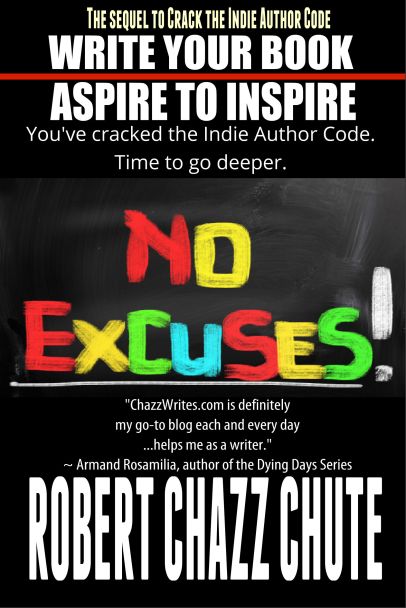
Write Your Book: Aspire to Inspire wasn’t selling the numbers I wanted. I changed the cover.

WYB NEW COVERcover

2. I played with categories for the Hit Man Series.

My funny and luckless assassin is Cuban, so I tried the Hispanic & Latino category. Didn’t work. I switched it back. Each failure is a refinement. It’s not permanent so relax and fire more shots into the dark.

3. I’m experimenting with keywords, too.

Did you know you don’t have to use a single word (i.e. crime, thriller, action, romance) for keywords? You can add up to seven phrases and it can pay to make them less generic. Cater to your niche and, for more on this strategy, listen to Nick Stephenson’s interview on the Rocking Self-Publishing Podcast with host Simon Whistler. It’s called “Quadruple Your Kindle Sales.” That got your attention and turned you into a podcast listener, didn’t it?

Don’t forget to play with changes to your book descriptions, as well. Use keywords where appropriate. Don’t fall into the trap of awkwardly stuffing keywords into the description so it sounds like you’re straining to please search engine robots.

While you’re plugging podcasts into your head, please do listen to my interview on Episode #60 of Rocking Self-publishing. We had a lot of fun talking about how to enjoy marketing your book.

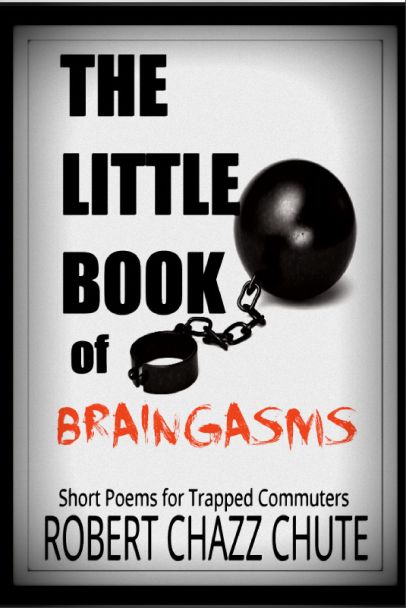
4. I changed the cover for my poetry book, too.

Poetry is hard enough to sell so don’t handicap your efforts with a sad cover like I did. I changed the cover using an image from Pond5 and switching back and forth from two photo editors, Picmonkey and KD Renegade. 

As always, I recommend the awesome cover design work of Kit Foster of KitFosterDesign.com. He wasn’t available this week, so I improvised. It’s an improvement on the original cover (which was my fault, not Kit’s. The original crap cover was my design, too.)

BRAINGASMS FINAL cover

5. My biggest change was long overdue.

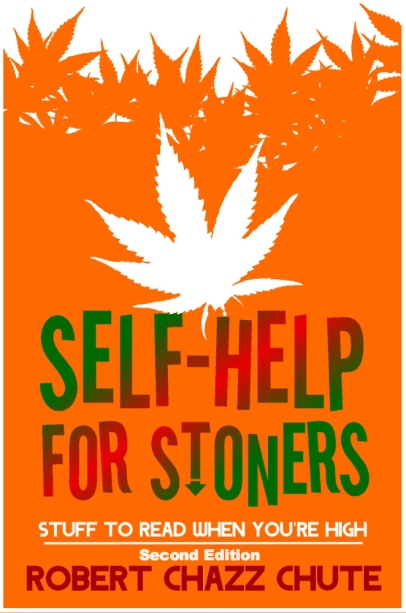
My first book was a fun, funny and thoughtful short story collection to read on the toilet. It’s called Self-help for Stoners. Unfortunately, I uploaded my first indie published foray through an intermediary. To make changes to the text cost a lot of money. It needed another edit so I have reclaimed the book from the intermediary. Huzzah!

I did the edit for the second edition. I added bonus material (big tastes of two of my series) so it could act as an introduction to my kind of crazy. Finally, it’s also a sales funnel to my newer books. 

Self Help for Stoners JPEG

I can do more with this book now, like experiment with variables. I can play with the price, keywords and categories. I can change strategies as needed and put it in KDP Select and try countdown deals etc,….

The print version of the second edition will be for sale again soon so I’ll have more to sell for the Christmas season. Most important, with these changes, I’m delivering a better reading experience along with all that awesome hilarity. It’s a relief to be back in the driver’s seat.

6. Speed.

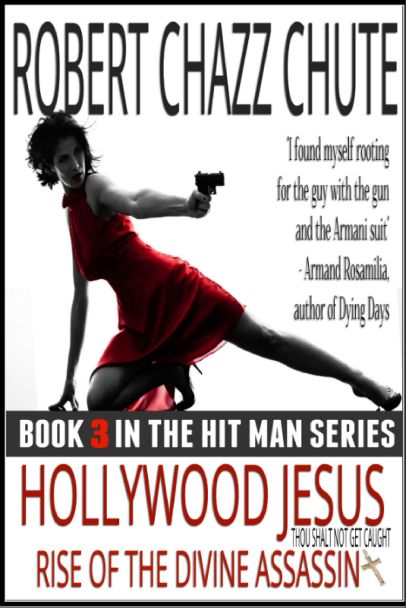
I’ve been thinking a lot about production speed as marketing. I’m changing my production timetable. The third book in the Hit Man Series hits October 1.

HJ COVER FINAL LADY IN RED

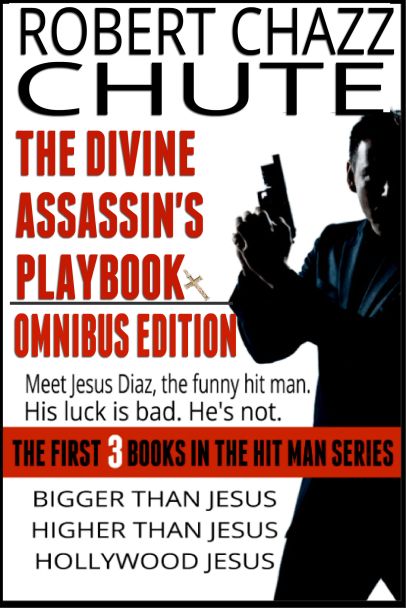
The goal is to put out another crime novel thirty days after that. Thirty days later, the plan is to put out a time travel novel. The books are all written and in the editorial pipeline. I’ll also add an omnibus edition of the first three books in the series.

TWEAKED JESUS OMNIBUS COVER WITH CROSS

The goal is to avoid falling off the cliff. All authors experience the cliff. After a month on Amazon, your beautiful baby is old news and sales tend to begin to slide as you disappear from the list of freshly minted books. Publish a new book more often and all your sales may be buoyed…assuming all the other variables are properly in place. For instance, if the story sucks, nothing can save us.

7. Accept failure as part of the play in the gears.

Please keep in mind that you can put all the sales variables in place, but that does not necessarily mean the book will move. It should move more, but there are too many variables we can’t control. Maybe you’re going head to head against a book with tons of mojo and money behind it. Maybe you’re at the top of a genre that is stone cold. Maybe the book just isn’t that good or you’re an unrecognized genius. (So many of us are. I empathize.)

All we can do is write more books and play with the variables that we can control. I should get a blurb for the Self-help for Stoners cover, for instance. That task is on my list. Blurbs help. More reviews help. Maybe more review copies to book bloggers is something to change up. Or do you need to change the book bloggers on the list you already have?

8. Make plans.

This might be a new idea you want to resist because you’re an artiste, dammit! I know, but work to word count or page count goals and editorial deadlines, anyway. I always get more done when I pretend I’m a grown up.

9. in that vein, establish systems.

When you learn the steps to how to do something once (e.g. putting out a podcast or compiling manuscripts in Scrivener), write what you did right. That way, you don’t have to start at zero knowledge each time you repeat the task. Systems are flow charts of mistakes you corrected. It’s a great way to avoid making the same mistakes with your next project. Put it in a binder within reach of your desk. Update it as you go.

Sure, taking the time to put what you’ve learned into binders sounds like drudgery. However, systems actually make you efficient and eliminate the drudgery of reinventing the wheel each time. Tiny course corrections steal far less from our precious writing time. (Tip: Take screenshots of your winning Scrivener process to make it less tedious.)

10. Speaking of finding efficiencies, track results.

That which is not measured cannot be improved. Repeat the variables that seem to work. Dump what doesn’t work, no matter how much you loved those seemingly brilliant ideas. Old ideas that don’t work can weigh us down as we climb the mountain.

BONUS:
Get better with each book.

This will happen organically. It will happen faster if you organize the variables in that binder.

Pretty soon, you won’t be firing bullets in the dark. You’ll see what hit and become a sharpshooter.


Filed under: author platform, Publicity & Promotion, publishing, , , , , , , , , , , , , , , , , , , , , , ,

A Quick Top Ten: Make revisions painless

Books in progress litter my desk. As I revise manuscripts, there are certain words I watch for. When I see them I ask, “Who cares and who needs it?”

Here are some of those watch words and cautions:

1. Sentences that begin with “And…” (It’s not that it’s wrong or bad, but it’s often not necessary.)

2. Sentences that begin with “And then…” Sentences are sequences and usually work without this tip to the reader.

3. He felt, she heard, he sensed, she saw… Just describe the scene. Not “She saw a crocodile rise from the swamp.” Instead, “A crocodile rose from the swamp.”

4. Was. This crops up a lot in most writers’ first drafts. “She was fighting,” becomes “she fought.”

Gerunds are passive and they are not our friends, especially when overused. I don’t use adverbs much, though I don’t ban them. It’s a novel, not a telegram. Besides, I’m suggesting crafty guidelines here, not edicts about what not to do.

5. Look out for: just, own, up, down, so, it. These are words that we add to sentences that sometimes fail to add meaning. 

Just surfaces a lot. We can often do without “just.” Or we might use only or merely. 

“He sat down in the chair,” becomes “He sat in the chair.”

“So, he murdered the butler,” becomes “He murdered the butler.”

“Their own boat,” becomes “Their boat.”

“It” often replaces the noun you should probably use. “It’s up to you,” could be, “This caper is up to you,” or “The fate of guinea pigs everywhere is up to you.” See how it’s better? I mean, see how specificity improves clarity?

6. Careful of exclamation points that hype excitement that does not exist.

7. Semi-colons have fallen so far out of use that they now stop readers cold. Punctuation should be visible, yet not visible. Punctuation marks are the life-preserver under your seat on the plane. You know it’s there, but you don’t want to pause a moment to think about why it’s there. 

8. Use dialogue tags besides “said” sparingly. Let what is said carry the weight of the message.

9. Empty pleasantries are death.

“Hi.”

“Hi.”

“How are you?”

“Good.”

This trite exchange is what we do every day. In a book, it’s a waste of time. Also note that those four lines possess no conflict. A better way to go would be to answer “How are you?” with “You’re late.”

Or try, “He greeted her at the conference room door with an officious sneer and ushered to her seat without a word.” 

If the dialogue isn’t clever or funny, or if the exchange fails to reveal character or advance the plot, skip it and go to the action.

Don’t count on readers’ patience. Tell the story.

10. Everyone watches for run-on sentences. We break those up, of course. Also consider varying sentence length.

Sentence length is not something many readers will register consciously, but lots of short sentences together can feel stilted and staccato. (This device can be used to great effect in an action sequence or to make a point, however.) Many long sentences in a row tire the reader and can feel like a drone.

This problem is easier to recognize when you read your manuscript aloud. If you run out of breath before the end of a sentence, it might be too long. Or you need to do more cardio.

Me B&W~ Robert Chazz Chute hates to tell anyone what to do. Ever. He’s also a fan of the sentence fragment, so this isn’t about being the grammar police. It’s about helping writers and editors make books more readable. These are guidelines. The only rule is, if it plays, it plays.

FYI, the third book in the Hit Man Series is Hollywood Jesus, Rise of the Divine Assassin. This funny, gripping crime novel launches October 1, 2014. Early feedback says it’s the fastest pace to an adventure since you fell off your bike and got road rash when you were a kid.

HJ COVER FINAL LADY IN RED

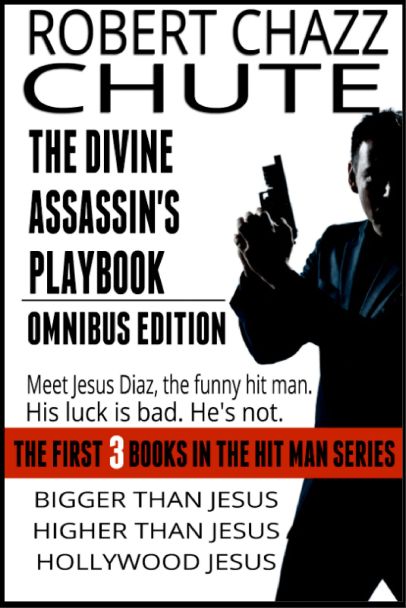
The Omnibus will be launched at the same time.

PLAYBOOK COVER FINAL


Filed under: Editing, manuscript evaluation, Writers, writing tips, , , , , , , , , , , , , ,

The Chazz Redemption: Course Corrections along the Publishing Way

There is much to do. I wrote the first drafts for three books in two months. If you’ve noticed I’m not posting quite as often here, that’s why. I’m gearing up for Christmas (yeah, I said it!) and trying to catch up on a list of new priorities. Here they are:

1. I’ve got Self-help for Stoners back from BookBaby. It was my first book and I wasn’t confident I could upload it myself way back then. I was so shy. It’s out of the hands of the intermediary so now I can make changes without it costing an organ donation (because all my organs are my favorites.) After a fresh round of edits for the next edition, it’ll be available again.

2. I’m behind on my print editions of This Plague of Days. Catching up with Season 3 fast. The Omnibus will be ready soonish (i.e. a month if the formatting goes as planned.) I’ve developed a list of people I want to send the TPOD Omnibus to. Time to get the series more attention and reviews.

3. I think I’ll make Murders Among Dead Trees available in print, as well. I happen to think it’s one of my best books. Print is mostly a promotional tool for me, but paper versions are also important to some readers. Print is also useful as a price anchor for the ebooks. It lends legitimacy. Plus, I have a book fair coming up.

4. I’ve got to track outgo better than I track income. I want less drama at tax time and I have to trim expenses.

5. The next book in the Hit Man Series is now with the beta team. I’m going to change the title and change how the book ends. I decided to do that as soon as it went out to beta readers. Panic is so creative. These are small but important tweaks because I’m going to rebrand the series. (More on that in another post.)

6. Revise two more books. One novel is in time travel and the other is a crime story. The plan is to come out with a new one about every 30 days to boost my visibility. The cliff we all tend to hit thirty days after a book launch is horrific and I already swing back and forth from depressed to somewhat manic.

7. What’s changing with the new writing? Shorter books, generally. I still have another huge standalone book banging to escape a drawer.

Also ahead? Faster pacing. More jokes. (More on that another time, too.) I have deadlines in my mind. If I don’t meet sales targets with certain books, I’ll be changing genres. I’ll also be embracing pseudonyms. Readers of this blog know I’m averse to pen names generally. However, I reserve the right to change my mind when it suits me and when evidence arises to my first opinion.

8. Get back to podcasting. I’ve taken the summer off for a number of reasons. It’s time to find some guests for the Cool People Podcast (check out the guest page here.) I also need to finish up the Higher Than Jesus read on All That Chazz.

After that read is done, I plan to change the podcast format a bit. It’s time for a revamp with books, too. It took me years to write This Plague of Days. I’m proud of it. It’s my Star Wars. Now I’m focusing on series books that come out faster. 

That’s enough of a list for now. I have more to do, but long to-do lists are just another way to procrastinate. For more fun, write a to-done list. Plan to accomplish something specific and by when. Write it down and cross it off, all in one day. Feels good.

The kids are back in school and I’ve been bone-deep grieving dead friends.

Time to get busy livin’ or get busy dyin’, Red.


Filed under: author platform, What about Chazz?, , , , , , , , , , , ,

Bestseller with over 1,000 reviews!
Winner of the North Street Book Prize, Reader's Favorite, the
Literary Titan Award, the Hollywood Book Festival, and the
New York Book Festival.

http://mybook.to/OurZombieHours
A NEW ZOMBIE ANTHOLOGY

Winner of Writer's Digest's 2014 Honorable Mention in Self-published Ebook Awards in Genre

The first 81 lessons to get your Buffy on

More lessons to help you survive Armageddon

"You will laugh your ass off!" ~ Maxwell Cynn, author of Cybergrrl

Available now!

Fast-paced terror, new threats, more twists.

An autistic boy versus our world in free fall

Suspense to melt your face and play with your brain.

Action like a Guy Ritchie film. Funny like Woody Allen when he was funny.

Jesus: Sexier and even more addicted to love.

You can pick this ebook up for free today at this link: http://bit.ly/TheNightMan

Join my inner circle at AllThatChazz.com

See my books, blogs, links and podcasts.

Enter your email address to follow this blog and receive notifications of new posts by email.

Join 2,063 other subscribers