C h a z z W r i t e s . c o m

See all my books at AllThatChazz.com.

So you want to be the next big thing?

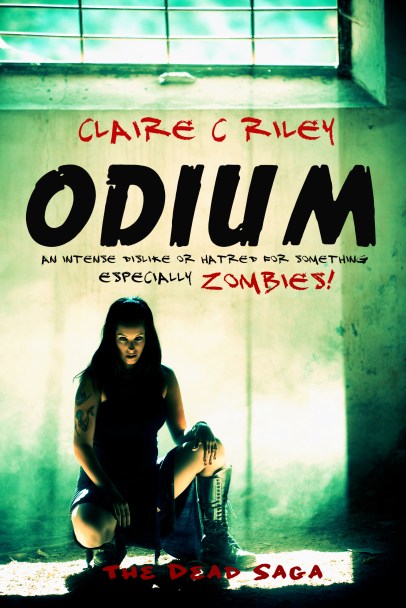
Odium The Dead Saga cover

~ Guest post by Claire C Riley

Most writers start out on this crazy train wreck of a journey with one thing in their mind: to tell a story. Okay, so maybe they have two things on their mind.

Tell a story, and have people read it.

Oh, wait. Maybe three things if they are feeling especially ambitious.

Tell a story, have people read it, and maybe, if they dare to dream…earn a living doing it.

Throughout my journey, I’ve met many different types of writers, all with different ambitions when it comes to their words/books/stories/novels whatever. Some dream big. They write a great novel and wait for it to be snapped up and make them their millions. Others write a great novel, work their socks off to get it traditionally published, and sit back and wait for their millions to roll in.

And then there are those who are more realistic about it all.

They write a great book. They want it to be read by people, and maybe they pimp it out to the big five, maybe they don’t, either way, that book gets published. And then they…write the next damn book!

Because to be a writer, that’s what it takes. Not one great book, but several. Readers don’t like investing in one book, because that’s a shoddy investment, and it’s not the book that they are investing in—it’s you, the author. They want to know that if they fall in love with your work that there is more to come. More ready for them to buy, more for them to look forward to. Just more.

I’ve met a lot of authors who are waiting.

Waiting for sales, waiting for fans, waiting for…who the hell knows what they’re waiting for, and there’s nothing wrong with that, but don’t sit up at night wondering when the big bucks are going to roll in.

As a reader I like to know that there’s more after I turn that final page—or slide the final page if I’m reading with my kindle. And I hate waiting for a year for a sequel.

So as a writer, I don’t. I try to get out several novels a year, both full length and novellas, and in between I like to write short stories in anthologies. That way I get to keep drip-feeding my readers my words, to keep them interested and hungry for more, and yes, invested in me. Because surely I owe them that much? After all, they took a punt on me by reading my book. And in return the more they read my stories, the more they talk about them, and the more word spreads, thus increasing my reach to potential new readers.

So for me being the next big thing isn’t about that traditional publishing contract, or making a million on my first book (though, of course that would have been nice.) It’s about continuously moving forwards, listening to feedback and improving with each book, making my readers happy, and maybe, just maybe, the next book will be the next big thing.

But I’m not waiting around to see, I’m too busy writing my next book.

Claire C Riley profile photo~ Claire C Riley is the author of “Limerence,” “Odium. The Dead Saga,” “Odium Origins. A Dead Saga Novella Part One,” “Odium II The Dead Saga” “Odium Origins A Dead Saga Novella Part Two” a contributor to several zombie apocalypse anthologies, including the upcoming ‘Fading Hope’, ‘State of Horror Illinois’ and a proud contributor to the charity anthology “Let’s Scare Cancer to Death.”

Odium. The Dead Saga is a top #100 dystopian selling book on Amazon.com for 2013, ‘Indie book of the day’ winner December 2013 and ‘Indie Author Land 50 best self-published books worth reading 2013/14’

Limerence was a featured book in the ‘Guardian newspaper for best Indie novel 2013’ and is currently a finalist for the eFestival of Words ‘best novel’ category.

Odium II The Dead Saga is a #1 Best Selling British Horror book.

She can be stalked at any of the following.

http://www.clairecriley.com

https://www.facebook.com/ClaireCRileyAuthor

http://bit.ly/clairecrileyamazon/

https://twitter.com/ClaireCRiley

https://www.google.com/+ClaireCRiley

Filed under: author platform, Books, publishing, Writers, writing tips, , , , , , , ,

Why I Went Into Podcasting

Guest post by author Armand Rosamilia

Armand            I know the general consensus for doing something is because you see or hear someone else do it and think (in your infinite wisdom and arrogance) that you can do it better. I am here to tell you, at least with me, it was not the case. I went into podcasting because it was my next challenge.

            I’m a blessed man. I am truly living the dream, being able to write full-time and stay home in my Big Bang Theory sleep-pants and drink coffee and get even fatter (almost at will, that last one). I do two music radio shows from the comfort of said home as well. I have a wonderful fiancé and great kids and I keep doing what I want to do: write books.

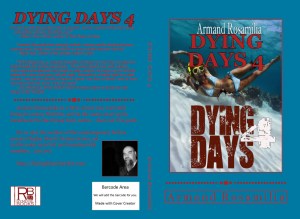
            In fact, let’s get the heavy-handed plug out of the way right now. I have a new book out, Dying Days 4, which is amazing. And I’m not just saying it because I wrote it and I want you to buy a copy. I’m saying it because our gracious host had this to say about it:

“Level up with Rosamilia’s take on smarter, scarier zombies! They don’t sleep and neither will you. Read this now!” ~ Robert Chazz Chute, author of This Plague of Days

            I’m sure our gracious host will now add a direct link to the Amazon page to purchase the book so I can keep living this dream. (Editor’s note: Yeah, yeah. Here’s the link! Darn, that Armand is subtle.)

Dying Days 4 Print 2

Click the cover for the Amazon UK link.

But onto other things…

Arm Cast

            I started a new podcast a couple of weeks ago. As you read this, the second episode went live last Friday. Conveniently, it features Robert Chazz Chute (this is getting to be quite the lovefest, I know) in an interview that went almost an hour. Because once my Mighty Canadian Author Friend and I get together on Skype, we don’t shut up.

            The first episode of Arm Cast: Dead Sexy Horror Podcast (I know, brilliant name all around) had interviews with zombie authors Mark Tufo and John O’Brien, two great authors and great guys.

            And that was my only goal for doing the podcast: to get to chat with horror authors, filmmakers, podcasters, editors, artists, heavy metal and punk bands, and anyone else I was interested in. I not only wanted an excuse to talk with them but wanted to record it and share for posterity.

            No written questions, no fancy opening jingle, and I’m not even killing myself in edits. In fact, so far I’ve just kept everything in and let the listener hear what really happened. The goal is to have two interviews per week. Yes, this is a weekly, and new episodes will be released via my rss feed on http://armcastpodcast.com and through iTunes and Stitcher, so subscribe and don’t miss an episode. Every Friday you’ll be treated to a new one.

            Upcoming guests will include authors TS Alan, Thomas M. Malafarina, Jack Wallen, filmmaker David Karner, and a bunch more people I wanted to hang out with. I have a wish list of people I want to interview, so more will be added once I get confirmation they actually want to talk to me. And I love finding new authors and podcasters and anyone else interested in horror to chat with, so don’t be a stranger… get in touch.

            As long as Robert Chazz Chute and I aren’t on a marathon Skype chit-chat, I’ll interview you, too.

            Oh, and here’s the Amazon link to Dying Days 4… just because you know you want to buy it and read it while listening to my podcast and wearing matching Big Bang Theory sleep-pants and eating M&M’s…

~ To find out more about Armand and his many books, check out his blog at ArmandRosamilia.com.


Filed under: author platform, podcasts, , , , , , , , , ,

The Business of Writing Top 10: How to have more fun

Have you ever watched shows like World’s Funniest Commercials?

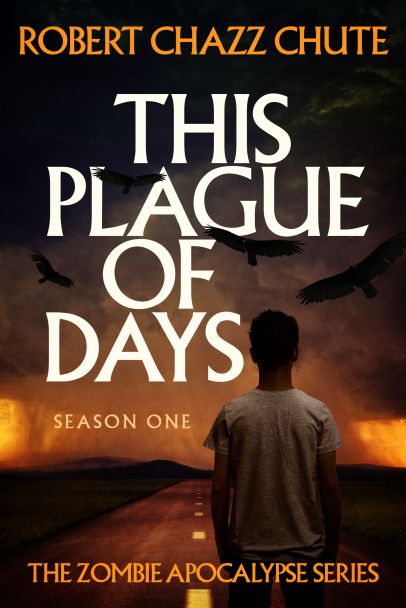
This Plague of Days OMNIBUS (Large)When the show took a commercial break, did you sit on your couch and watch the regular commercials and wonder why they had to be so bland? Or did you go make a sandwich or run for the bathroom? Commercials don’t have to be as bad as they often are. Think of the annual hype around Superbowl commercials. How is it that the rest of the year, commercials are background noise for making sandwiches and flushing? The ad industry should try harder.

And so should we. Book promotion can be fun. We should take fun more seriously.

When we write our books, we are at our best. We’re witty and play with ideas and irony. We tell stories. We’re in the entertainment business. So why lose all that buoyancy when it comes to promoting our work? Advertising is writing, too. Yes, writing back cover blurbs and advertising copy is a somewhat different skill set, but this is not rocket science. Examples of good and bad sales copy are all around us. Emulate what works on you.

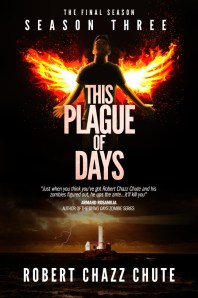
Some copywriters will enthuse that, sure, maybe you can write a book, but leave a couple of paragraphs of sales copy to a professional. That sounds rather convenient and self-serving, doesn’t it? IRobert Chazz Chute This Plague of Days: Season 3 don’t believe it. It’s great to be able to hand off such work to others with confidence, but for most of us, we’re writing our own promotional copy. Let’s loosen up and raise the bar.

If you can write a book, you can promote your work effectively without falling back on the cliché of “Buy my book!” I admit, there are writers who only say “buy my book” on Twitter and they are derided everywhere. I think this happens because no one has given them permission to be as imaginative and bouncy as they are when they write their books. It’s all writing, not a separate challenge. If it feels too different from writing books, it’s probably erring on the side of bland.

This is your permission slip:

1. Have more fun. There’s a reason it’s Rule #1. It’s that important, for you and your readers.

2. Use more pull quotes from your work of genius.

3. Make a joke. Be self-deprecating. Be different. Dare to show some personality. Let the joy leak through from your usual writing.

4. Craft something you’d want to read and act upon as a reader.

5. Relax. This is a marathon, not a sprint. Your sales plan doesn’t have to come together within a week or two of your book launch. Ebooks are forever and there are plenty of kicks at the marketing can ahead.

6. Sell less and interact more. Conversations are good. Blaring at is bad.

7. If you can’t interact, curate.

8. Selling effectively is never about selling. It’s about helping your tribe identify their want and need for you. I’m not here to sell. I’m here to help you buy. Stop being so self-conscious and apologetic about what you’re doing and do what you do in books: Put on a show!

9. Not all books are for everyone. Identify where your readers hang out and go there. Advertising for a niche and to a tribe willing to spread your good word is more important than trying to be all things to all people.

Smile. Rejection is a gift. It relieves you of the stress of dealing with boneheads later.

10. Tell more stories, not just in writing books, but in your promotional efforts, too.

Here’s an example of some fun I had on Facebook today:

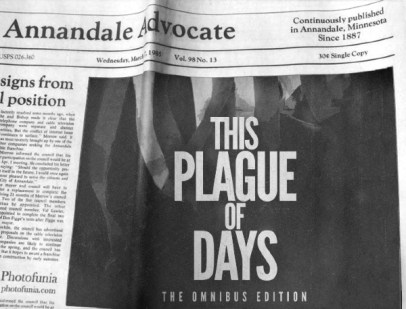
Newspaper

“Abandoned to an unfeeling universe, an increasing number of Americans are turning to This Plague of Days to confront ‘the horror of it all,'” an anonymous State Department official said. High-level advisors at the White House confirm, “An autistic boy named Jaimie Spencer, 16, of Kansas City, Missouri, may be key to resolving existential ennui. There are jokes, too, but mostly it freaks us out.”

Senator John McCain stated that Congress still can’t decide if Chute’s book is “literary bull****, zombie bull**** or ‘some other bull****.'” The gridlock continues.

Senator Rand Paul is threatening a filibuster, stating, “This is not horror per se! This is dark fantasy and President Obama knows it!” The secret of This Plague of Days remains classified to all but those who read to the end. Rumors of secret video and an offer of a free ebook are confined to those who read the TPOD Omnibus Edition. While Progressives call that anti-egalitarian and elitist, Secretary of State John Kerry said (in a speech that felt like three hours), “That’s capitalism. Whaddaya gonna do?

Meanwhile, the US Congress approval rating has sunk to a new low of 8%, still above public approval of McDonalds’ fishwich and slightly below mononucleosis as a diet strategy.

However, in a stunning break from party lines in a gracious “hands across the aisle” gesture, Speaker John Boehner and Liberal Senator Harry Reid did come to some concord and issued a joint statement. “The pace really picks up in Season 2 and the gross outs were balanced by some high-minded stuff neither of us really understood. We are all frightened for the Spencer family and keep them in our prayers.”

Robert Chazz Chute Bio Picture~ That was fun. I wrote a post recently answering reader’s questions about This Plague of Days. Find that here.

Filed under: author platform, book marketing, Publicity & Promotion, , , , , , , , , , , , , , , , , , , ,

Art matters. Writing matters. We matter.

Graphic designers make a big difference to readers and the success of authors. A snarky writer once told me I was a hack, too concerned about the look of my book covers. Once.

Everyone else knows, yes, of course we do indeed judge books by their covers.

You can say it shouldn’t matter all you want, but beautiful people and beautiful things get more attention. I won’t find out if you have a great personality and keen intelligence if, when I spot you from across the room, you appear to be surrounded by flies because you’ve rubbed dog feces in your hair. That’s life. That’s science. 

My graphic designer is the brilliant Kit Foster of KitFosterDesign.com. Check out his portfolio.

Kit is my friend and ally. He helps to make my existence matter. He’s helping me get my message out, subliminal and subtextual. It’s that important. All my books are about escaping who I was. They’re about all of us rising to the higher potential of what we could be. Everything I write is about making our existence — yours and mine — matter. Book covers are the come hither stare that lets me into your brain, to play in the Mindfield, to turn the words, to entertain, laugh and think. That’s what it means and why Art matters.

That’s the why. A book cover with solid art is part of the how.

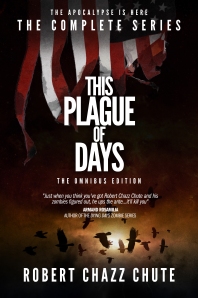
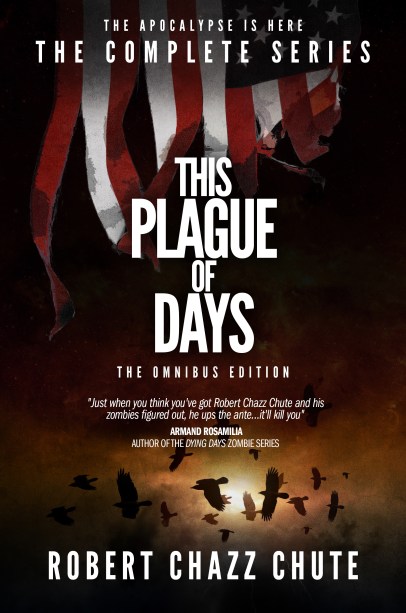
Here is the new cover for the This Plague of Days, Omnibus Edition. It’s not at all what I pictured for the Omnibus cover. It’s better. I just let Kit do what he does best so I can concentrate on what I do best.

This Plague of Days OMNIBUS (Large)

To find out about more about secret video and to get a free ebook with your purchase of the TPOD Omnibus Edition, click here.

~ I am Robert Chazz Chute and, even though I occasionally write books with zombies in them, I am not a hack. It’s not the subject matter that makes the hack. It’s a lack of passion. Ultimately, with every twist, turn, joke and murder, I’m writing about me. And you. 

The suspense is in making our existence matter. Can we do it?

We will.


Filed under: book marketing, self-publishing, This Plague of Days, , , , , , , , , , , , , , , , , , , ,

Sweet Book Pie: Bonuses for readers, a tip for writers

When ebooks first emerged, the goal was to make them appear as much like paper books as possible. Generally, we’re still doing that and that’s a good thing. I’m not a fan of “enhanced” ebooks that pack in distractions. I don’t want the soundtrack to the battle scene as I read. I want to immerse myself in the story. A movie is a movie and the media don’t mix well. The movie we make in our heads from reading is usually superior, anyway.

I did use video in a different way to reach out to readers in This Plague of Days, but it’s a link buried in the back of the TPOD Omnibus, not something to accompany the story. (I told you about that secret video and the free ebook bonus last week, so click here if you missed that.) 

But yet another secret awaits in the This Plague of Days Omnibus.

Many readers may not really be aware of it. This is where thinking about ebooks as ebooks comes in. I did something fun with the Table of Contents, but you have to look for it to see it all at once. The key is, the Table of Contents doesn’t have to go in the front of ebooks.

Go find it Scooby Gang! 

To get the TOC in This Plague of Days, Omnibus Edition, you have to “go to” the TOC (which I placed in the back of the book.) I did this for several reasons. The main one is that it’s another Easter egg for TPOD readers. 

The TPOD TOC is one long, dark poem. It contains veiled hints and clues to the story arc from beginning to end. Much of the poem will make more sense in retrospect. To get all of it at once, it’s in the back of the TPOD Omnibus Edition, but the individual ebooks (Seasons 1, 2 and 3) yield chunks of it, as well. 


Why I love it:

It was fun to create. I like poetry, especially dark and mysterious poetry. I enjoy the fact that readers will see how it all comes together upon finishing the trilogy. I love the fact that I did something different from the expected. That’s my thing. To be perfectly honest, I love that I’ve done something a mainstream publisher probably wouldn’t allow me to do. I don’t consider myself an experimental novelist, at all. I just think it’s a fun add-on in this case.

Sure, readers could skip from chapter head to chapter head to get it, but that’s awkward. Most people won’t do that and you don’t get the full effect reading it piecemeal. Will it gain more readers? Nah, probably not many. I think of it as a little extra for people who are deep into TPOD. Cater to them what dig your grooviness and you’ll get more of those groovy people.

But there’s a much more important reason to put the TOC in the back of your ebook.

It’s about the size of the free sample on your sales page. When readers look at samples, they want to get into the story quickly. With non-fiction, I do want a peek at the TOC up front so I can grok what will be covered. With fiction, the TOC gets in the way of the narrative and cuts down on the sample size. To get readers deeper into the story, we have to get that TOC out of the way so we give the reader a bigger sample of sweet book pie.

Whenever possible, give the readers more pie so they can decide if they like your flavor. I’d rather have thousands read the sample before buying and say no than have dissatisfied readers who were looking for dragon/Big Foot erotica and, inexplicably, bought my book instead. Unread samples are where most bad reviews come from.

Generous samples get people to buy cartloads of stuff from Costco every weekend. Much of it they didn’t know they wanted until somebody said, “Would you like to try a taste?” 

Add value. Add fun. Play with the reader. Give ’em more pie. Always give more pie. Put your next novel’s TOC in the back of the book.


Robert Chazz Chute Bio Picture~ This Plague of Days book bargains continue. Find out about that here. 

Or not. I mean, geez. It’s a low pressure situation, man. Chillax and enjoy as the apocalypse unfolds all around us. You’re already soaking in it so you may as well soak it in.

Filed under: author platform, Books, ebooks, writing tips, , , , , , , , , , , ,

Writing: Where the money is

Everybody wonders what the next big thing will be in our expanding industry. In other words, “Where’s the money?”

As it relates to writing as an industry, money looks sparse at first glance. I mean, banking, drugs and guns is where the big money is. However, for our industry? The big money in writing is in the beams and braces. Infrastructure. The money will go to people who service our needs as indies. So ask yourself, what do we need?

1. Book apps. We don’t really understand book apps. Programmers do. Book apps with a subscription service could work, especially for certain authors who are in traditional publishing now but will soon make the leap to self-publishing.

2. Author cooperatives. Box sets may already be on the way out, but I think more authors will share resources and trade skills, either in small, structured groups or as part of a time bank organization, or both.

3. Organization provision: Many of us cringe at the idea of a union because it reeks of gatekeepers. I’d say that’s only because the writers unions that have been proposed for indies so far stink of more gatekeeping. Innovators out to advocate instead of control could do better than that, for us and for themselves.

4. An alternative to ACX that’s more generous to creators. ACX was awesome. Technically, it’s still awesome though the creator share is down. Have you noticed that, since ACX lowered the pay rate, we aren’t talking about ACX near so much anymore? We’re still using it because audiobooks are our future. For some, they’re our today! We’d like more choices and we’d like to get back to the bigger cut, though. (The obstacle is effective distribution, so that will have to be bankrolled.)

5. Selling direct from websites will become more popular. You can use Gumroad to sell digital products now. The problem is, no one wants to sideload their kindle with a pdf. Find a way around that problem and we’ll all be doing it to some degree. Fewer buttons, one click. That’s key.

6. Discoverability tools are more important than information. Make more discoverability tools (like you’ll find at Author Marketing Club, for instance.) Information is free everywhere, including here. Ways to help readers find us are harder to come by.

7. Services that promote indie authors will make money. Bookbub is at the top of the heap now, but BookGorilla is cheaper. The Fussy Librarian is very low cost. if I recall correctly, the latter was built partially in response to Bookbub’s fees. Bookbub has big lists of subscribers, sure, but they have competition and it’s growing because Bookbub is so hard to get into and can be so expensive.

8. The company that finds a way to make it easier for books to be printed and distributed (cheaper, faster and easier than it can be done at present) and get it to libraries and bookstores will make a lot of money. Be the new Lightning Source, for instance, but make it as easy to deal with as CreateSpace. (LS has improved in this regard, but I’ve checked it out and it still feels like a hassle.)

9. Translation houses. Everybody knows foreign language publishing is going to be huge. What we don’t know is whom to trust to translate our work and whom to ask to make sure the translations are any good. We’ll also need people (formerly known as agents) whose sole occupation is dealing in foreign rights sales. The markets are waiting, but most of us aren’t ready.

10. The next destination website for our readers. We need a destination website that operates as a cool magazine that curates our work to readers. We need to provide a way for readers to find us and vice versa. We don’t need another Writer’s Digest. We need a Reader’s Digest, if you will, for our work but catering to readers. If there aren’t click to buy and click to explore buttons at the end of each story or sample, it will still miss the mark.

You could, of course, simply write the next big thing.

We are writers, after all. We don’t want to think about all this tech stuff. That’s why someone with the skills to fulfill these needs will eventually appear and get paid.

If you’re still bent on writing to make money, the trouble is that no one knows what the next big thing really will be. No one saw Fifty Shades of Gray coming. It’s not like it was the first book of erotica to go on sale, but it went huge. Its imitators didn’t make near as much dough. Breaking out is not something you can chase, exactly. It happens to you and there are too many variables outside your control.

Just write the best book you can. When your book is ready, I really hope those trusty translation houses will be up and running and ready for business.

What are your ideas for the support structure our industry needs?

~ The good news. I’m now in the Top 100 Horror Authors on Amazon! The book launch bargains continue for This Plague of Days here. See what all the fuss is about, see the video and find the secret.

Filed under: author platform, , , , , , , , , , , , , , , , ,

Why I unpublished from Amazon (it’s about sales pages, not Hachette)

This isn’t a story about getting away from Amazon. It’s about sales page management, and you need to be aware, sales pages are not something you can just “set and forget.” You have to keep an eye on them for glitches. A glitch just happened to me.

Today, I had a shock.

In the middle of my book launch for This Plague of Days, Season 3 and the TPOD Omnibus Edition, the Omnibus suddenly wasn’t on my Amazon sales page anymore! I checked and that’s the only reason I knew it had disappeared.

Gone! Oh, no! Not now!

I refreshed the page and knocked back a vodka.

Still gone!

I cursed my fate and invoked Thor’s intervention.

Still nothing. Dammit, Thor!

Naturally, after those early strategies failed, I contacted Amazon. They said they’d get back to me within 24 hours. If this had been my first rodeo, I would have pooped kittens. However, they generally get back faster than that and, in this case, I had the fastest response I’ve ever had.

The email assured me there was a “slight glitch” that deleted the book from my sales page. Maybe a slight glitch to them, but I just launched! My interviews are appearing across various blogs promoting my latest books. It was a big deal to me. The email further assured me that the problem would be corrected within “one to three days.”

One to three days?

Vomit.

No, not really. Like I said, this ain’t my first time on a horse. Those emails always allow a long time for their fixes, but the Amazonian techs have, invariably, acted much faster than that. And so it was. This Plague of Days, Omnibus Edition featuring the complete three seasons of the apocalyptic saga with the autistic protagonist trying to save the world? We’re back, baby!

They fixed it within a couple of hours. I have it on good authority other sales platforms don’t swoop in to fix problems nearly so quickly.

Check your pages and make sure all your books are there from time to time.

Further thoughts on sales pages and serialization

After I brought out Season 3 in my series, I had a problem. The sales page looked cluttered and my work is not displayed in the order I’d prefer for greatest sales advantage. What to do? I skipped calling on Thor since he doesn’t show up unless I dress up as a hot chick. (I’m still carrying some winter weight and can’t sell the hotpants.) I sent another email to Amazon:

Could I, perhaps, edit my sales page to make it less cluttered and show my wares to greatest advantage? 

The reply was, for now, a polite no. My Amazon contact did agree that mine was actually a good idea and they would pass the suggestion up the line. Currently, the order of book display is based on sales figures. Self-help for Stoners has been on sale longest, so it’s up top. That’s not the problem. Serial episodes are. 

My Serialization Problem. 

Season One of This Plague of Days was released as one book, but also as five episodes (and each episode’s price was 99 cents.) My Season One episodes sat there, clogging the page and confusing customers. 

I came up with a solution that fit my longer game plan.

I unpublished the five episodes from the first book and set the price for Season One at just 99 cents.

This presents several advantages:

1. At 99 cents, Season One is a low barrier to entry into the series.

2. It gives readers a break on price. 

3. It promotes my visibility and my other books. Sales are up, author rank is up.

4. It avoids (I hope) angry reviews from people mistakenly purchasing Episode IV and V at 99 cents each when they could have had all of Season One (which contains all five episodes) for one incredibly low price. It’s couch change, yes, but some reviewers go nuclear over such things and outrage is rarely expressed with a sense of proportionality. Angry? Burn down somebody’s house! Mildly annoyed? Burn down somebody’s house! See what I mean?

A note about the trouble with serialization.

Serialization certainly has its advantages and helped Season One  and Season Two get more attention. However, no matter how much you might explain it and lay it out in the descriptions and vary the cover art, some readers seem determined to confuse Seasons and Episodes despite a lifetime of watching television. Quick to click, I guess.

I’m very sensitive to criticism (so yes, wow! I know! I am in the wrong business!) Anyway, the last thing I want is for readers to be confused or feel ripped off. That’s another reason Season Three is one huge book instead of broken into episodes. Serialization put me on the map, but the Law of Diminishing Returns has kicked in.

I still have episodes of Season Two on Amazon obstructing the view on my sales page. It is, as it has always been, cheaper to buy the season than to buy the episodes. I can’t let it go at 99 cents, though, so those episodes are going to stay up for a long time. Until Amazon changes its policy and allows me to control title placement, they stay and Season Two is priced as low as I will make it. When I do get control, the eps will go to the back of the sales page. I could just unpublish them, but I don’t want to leave the few who just bought Season 2, Episode III in the lurch.

How long is long enough to wait for those readers to catch up and complete their S2 episode purchases? A year? Two? I don’t know.

~ The TPOD book launch bargains continue.


Tell me when you discovered the secret of the TPOD Omnibus and I’ll send you my next thriller as an ebook. Details here.

Filed under: author platform, Books, free ebooks, self-publishing, , , , , , , , , , , , , , , , , ,

Guest Post: Ian McClellan’s One Undead Step

SoZBanner


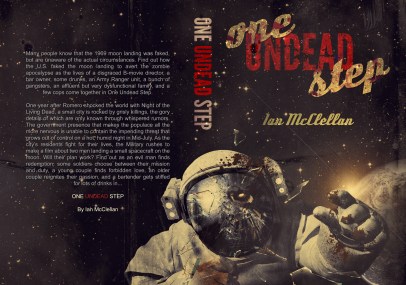
One Undead Step full cover

Today, as part of the Summer of Zombie 2014 Blog Tour, we get a peek at Ian McClellan’s work:

Many people know that the 1969 moon landing was faked, but are unaware of the actual circumstances surrounding the event. Find out how the United States faked the moon landing to avert the zombie apocalypse as the lives of a disgraced B-movie director, a bar owner, some drunks, an Army Ranger unit, a bunch of gangsters, an affluent but very dysfunctional family, and a few cops come together in One Undead Step.

Just one year after George Romero shocked the world with his masterpiece Night of the Living Dead, a small city in the Midwest is rocked by grisly, random killings, the gory details of which are only known through hushed whispers and secondhand rumors. The government presence that makes the populace all the more nervous is unable to contain the impending threat that grows out of control on a hot, humid night in Mid-July. As the city’s residents barricade their doors and fight for their lives, the American Military rushes to make a film about two men landing a small spacecraft on the moon. Will their plan work? Will the infection spread throughout the rest of the country? Will it be enough to save the world from the burgeoning threat of the undead? Find out as an evil man finds redemption, some special forces soldiers choose between their mission and their duty, a young couple finds a forbidden love, an older couple reignites their passion, and a bartender gets stiffed for a lot of drinks in One Undead Step.

One Undead Step contains some bad language, many scenes of violence and gore, and a graphic but oddly amusing sex scene.

One Undead Step: A Zombie Novel

Ian McClellan

Excerpt (Explicit language follows.)

1. On the Set

Saturday, 19 July 1969

Christ, Mark Mathews thought to himself, how the hell did I ever get myself into this mess?

Drugs and statutory rape, his know-it-all subconscious answered. Mark was a fun guy, but his subconscious was kind of a blunt asshole. Of course it was right. If he hadn’t gotten obliterated that night and slept with that sixteen year old girl he wouldn’t be on a poorly constructed set on a military base in Nevada filming the greatest hoax in history with a bunch of guys who may be able to shoot rifles really well, but were total amateurs when it came to making movies.

When the detectives came to arrest him they’d found a smorgasbord of drugs in his home. Pot, uppers, downers, cocaine, L.S.D., mushrooms, and even some heroin. He never touched the smack, but there was a girl who came by from time to time who loved the stuff, and she made it worth his while to always keep a little on hand. The cops knew about the drugs. They knew about the parties, too. A successful b-movie director could get away with a lot in Hollywood, but you had to be A-list with a capital A to go deflowering underage girls and not see the inside of a prison.

It had been a typical hot and sunny summer day in southern California when the police came to his door. The two detectives in their cheap, off-the-rack suits and ties were sweating bullets, as were the officers donned in dark, city-issued uniforms who’d accompanied them. Mark had begged and pleaded with them and tried to state his case. “I’m not a bad guy, really. I just like to have a little fun. Who doesn’t? How the hell was I supposed to know that little slut was only sixteen? She had no business being at that party. You guys oughtta go arrest her parents!” He was told to tell it to the judge. He should have seen that one coming- he’d thrown the old cliché into a couple of his movies.

Bribery didn’t work, either. “Look, I’ve got ten grand in a bag upstairs. Take it. There’s more where that came from.” The detectives exchanged odd smiles that Mark would come to understand later, but they didn’t bite on his offer. What they did do was handcuff him and take him downtown in the back of a police car.

Mark was thinking of that car ride- the only time he’d ever been in the back of a police car- and how frightened and humiliated he was at the time, when something on the set got his attention.

“That’s one tiny step for a man…” the one fellow was saying. Nick or Neil or whatever the hell his name was. The one who just had to be the star despite the fact that he couldn’t take direction for shit. He just had to be the first one out. He just had to have the big line in the script. Of course he wanted it so badly, but couldn’t say it right for all the whiskey in Ireland.

Mark rubbed his temples and looked back beyond the “lunar module” that the fellow had just stepped out of. There was a hand emerging from one of the craters. His first thought was that it was some drunk key grip or janitor (it happens more than you’d think) until his brain registered the decay of the skin. “Christ Almighty!” he yelled. “Cut! Cut, God damn it. One of those fucking things is in here. Is this a military base or a fucking public library?”

A young man with a rifle ran up and shot the zombie between the eyes as it was hoisting itself out of the crater. It fell back in the hole and landed with a thud. He got on a radio and informed someone of a ‘security breach’ that was now ‘code eleven’ which Mark assumed meant that its brains were now scattered all over his set.

“Get that shit cleaned off my set,” Mark told his assistant as he rubbed his temples. “And get me a damn drink.”

About the author: Ian McClellan was born in a small harbor town in southwest Ireland. In an effort to be cliché his parents moved the family to New York when he was thirteen. Once a promising up-and-comer in the world of competitive eating, his career was cut short by an ACL injury. He now resides in Florida with his dogs and drives a truck for a living, but is crossing his fingers and hoping his writing career will earn him enough money that he can tell his boss where to stick it.

Digital Camera

http://politicalhorrorstory.weebly.com/

https://www.facebook.com/politicalhorrorstory

https://twitter.com/@ianmcc2010

The stench of rotting flesh is in the air! Welcome to the Summer of Zombie Blog Tour 2014, with 33 of the best zombie authors spreading the disease in the month of June.

Stop by the event page on Facebook so you don’t miss an interview, guest post or teaser… and pick up some great swag as well! Giveaways galore from most of the authors as well as interaction with them! #SummerZombie

https://www.facebook.com/events/286215754875261/?ref_newsfeed_story_type=regular&source=1

AND so you don’t miss any of the posts in June, here’s the complete list, updated daily:

http://armandrosamilia.com/2014/06/01/summer-of-zombie-blog-tour-2014-post-links/


Filed under: Author profiles, Writers, , , , , , , , , , , , , , , ,

Another way your cover can promote your book (and who to hire)

We are all struggling to find new ways to get readers interested and invested in our books. How do you promote reader engagement and launch your book higher? By engaging them in your process, I suppose. Here’s one way I’m doing that for the launch of two books this weekend.

Short story:

I’m giving away an ebook of the Plague of Days compendium to one random commenter on the Plague of Days website.

To enter the draw for three free ebooks in one, all you need is an opinion, so click here to see the cover choices. 

Okay, now here’s what you need to know and who you really need to hire for your next book cover:

To be clear, the covers you’ll see at the link are my designs, not those of my graphic artist. Anybody who reads this blog knows my graphic artist is the great Kit Foster of KitFosterDesign.com. He’s the sweet, book art genius. I came up with this idea because I already have Kit working on other designs. 

If you don’t already love his work, when I unveil This Plague of Days, Season 3, you’re going to want to check out the rest of his professional portfolio, for sure. He’s a joy to work with at very reasonable prices. Kit’s done almost all my covers. If the cover’s crappy, it’s not Kit’s work, it’s my design for The Little Book of Braingasms. Now, compare that to this cover of gorgeousness in Murders Among Dead Trees. Look at those flames! POW!

Kit also does the web banners for my websites. Those spruce up any blog and really give readers the idea (illusion?) you know what you’re doing.

Kit has even done Quote Art for me to promote my books. Don’t know Quote Art? See it here and on my Amazon author profile. It’s another way to stand out from the crowd. Quote Art would make a great poster for your next convention, too.

Kit is working on my TPOD print covers in addition to keeping all his many clients happy. When does this man sleep? He doesn’t. While he’s helping me with other stuff, I’m pitching in with the draw. It’s a new way of getting readers involved in feedback on covers for This Plague of Days, The Complete Three Seasons.

My books about the autistic zombie apocalypse that will soon kill us all launches on Father’s Day and, because of the draw, I’m sure I’ll have a few more eyeballs for the release. Because of Kit’s TPOD3 cover, they’ll keep looking and check it out.

Eventually I’ll call in Kit for a much better cover for the compendium (because he’s the sweet, book art genius, that’s why, and, yes, you’ll find my efforts sad by comparison.) In the meantime, help me move more books through your input at ThisPlagueOfDays.com. You might be the one chosen to win a free book. So there’s that.

Reader engagement is often fun but it doesn’t have to be a one-to-one thing all the time. It feels great when people are curious enough to come find you. A for a nice prize and asking for an opinion is a solid way to do that.

Filed under: author platform, Publicity & Promotion, publishing, , , , , , , , , , , , , , , ,

How to write more, faster, now

After I publish a book, I tend to fall into a mild bout of postpartum depression. To head that off, I’m writing a new crime novel as I prepare to launch the finale to This Plague of Days. This new one has a very fast pace and I’m also writing it fast. This isn’t going to fall into a plotting versus pantsing discussion because, Thor knows, we’ve all hit that gong plenty hard already. Today, let’s talk about how to discover your story.

Here’s four writers to pay attention to, in case you don’t care what I think:

1. Anthony Burgess had a cool trick I’ve used. Pick three words at random. Those words will appear in your next chapter.

Go! You’ll find gooey, fudge brownie richness with that one tool alone.

2. E.L. Doctorow said writing a book is, “like driving a car at night. You never see further than your headlights, but you can make the whole trip that way.”

When I wrote my first crime novel, Bigger Than Jesus, I knew the last line of the book, but I had no idea from one night to the next what tomorrow’s chapter might bring. It worked out in a really peachy way.

3. Stephen King talks about excavating the story, discovering and unearthing dinosaur bones.

Some people start with character. I often find my brush and trowel to dig the dirt away is conflict. Everybody wants something. It’s more interesting if everyone’s competing for the same thing but use different methods to get what they want. (Game of Thrones, anyone?) Through conflict, character and snappy dialogue often emerge. Direction and velocity will reveal themselves as you discover how the story evolves. It may divert from your outline. That’s okay. Follow the drama. It might lead you off the map to a beautiful place.

4. Chuck Palahniuk suggests writing each chapter as a short story.

As each story connects to the next until the end, this process cuts down on a lot of intimidation. It also lessens the danger of a saggy middle because you’re demanding more of each story element instead of relying on the reader’s patience. Each chapter is a pillar. Don’t build a weak one and depend on it to hold up the structure.

I’m going to suggest the writing process as an exercise in free association.

Free association emerged as a counselling approach in Freudian analysis. The core of the therapy was to let the mind wander and for the patient to tell his or her own story rather than take on the worldview of the therapist. This was resolution by exploration.

The key is to let ideas bubble up and connect unhampered by the choke valve of self-criticism. Criticism is for later. In the creative process, let it go and flow. You’ll go faster and arrive in places that aren’t mundane and expected. Using these methods, you’re going to cut down on procrastination, too. You’ll write more because you’re having more fun. Stop agonizing. This is entertaining fiction you’re writing, not a eulogy.

In This Plague of Days, the autistic hero of my zompoc epic (Season 3 coming June 15!) is Jaimie Spencer. He’s obsessed with the dictionary. That’s me. I collect odd factoids. I let one Wikipedia entry lead me to another and to another until I free associate my way to new plot developments. The world is made of details and small components build bigger things. That’s also true if your world is fictional. The dictionary and Wikipedia are full of the atoms of your next story.

For instance, take a swig of Doctorow.

In my current WIP, I know the destination and I have a hastily drawn outline of how to get there. It’s not deep in details. I came up with most of it while watching my son’s soccer game. The first atom was a small conceit. The idea exploded when I had my hook. More on this later this summer.

Enjoy a tall, cold glass of Burgess.

Take a random fact from Wikipedia and see where that leads you. Your foundation is already getting poured.

In the crime story I’m working on, I needed to show the love interest’s character. She’s an underdog determined to win. That led me to a story from Wikipedia she could identify with. By showing the tragic, yet heroic story that guided her life, we understand her better and we like her immediately. (Me? I’m big on pathology. Give a character a medical problem and I can use that, for them and against them. Desmoid tumors saved the life of one character in This Plague of Days, for instance. Read the books. You’ll get that reference.)

Free association comes faster from good questions.

Quick! What are the hits playing on the radio in 1974? Which manager was first to get kicked out of a baseball game twice in the same day? What was happening to your protagonist that day in 1974 when he was thinking about baseball and listening to the radio? What song titles spoke to his state of mind? These are the connections I made to write a chapter (a pillar, if you will) that could stand on its own as a short story. Hello, Mr. Palahniuk!

As the factoids build and scenes connect into a river of stories that collect and flow into one ocean of words, new connections are made. New developments float to the surface. You’ll discover new intersections in the network of your story you didn’t suspect were there when you began to write.

That’s Stephen King’s story archeology.

Good stories aren’t written. They are discovered. It is the nuance we find in the depths of free association that contribute to verisimilitude and character interplay. It’s nuance that builds, not just a book, but a believable world.

Those details you’ll use through free association? It’s not the only key to Creativity’s lock, but it’s a good one. Try it.

~ I wrote Crack the Indie Author Code and Write Your Book, Aspire to inspire. Check out AllThatChazz.com for affiliate links to all my fiction. That would be double plus cool. Thanks.

Filed under: Writers, Writing exercise, writing tips, , , , , , , , , , , , , , , , , , , , , , , ,

Bestseller with over 1,000 reviews!
Winner of the North Street Book Prize, Reader's Favorite, the
Literary Titan Award, the Hollywood Book Festival, and the
New York Book Festival.

http://mybook.to/OurZombieHours
A NEW ZOMBIE ANTHOLOGY

Winner of Writer's Digest's 2014 Honorable Mention in Self-published Ebook Awards in Genre

The first 81 lessons to get your Buffy on

More lessons to help you survive Armageddon

"You will laugh your ass off!" ~ Maxwell Cynn, author of Cybergrrl

Available now!

Fast-paced terror, new threats, more twists.

An autistic boy versus our world in free fall

Suspense to melt your face and play with your brain.

Action like a Guy Ritchie film. Funny like Woody Allen when he was funny.

Jesus: Sexier and even more addicted to love.

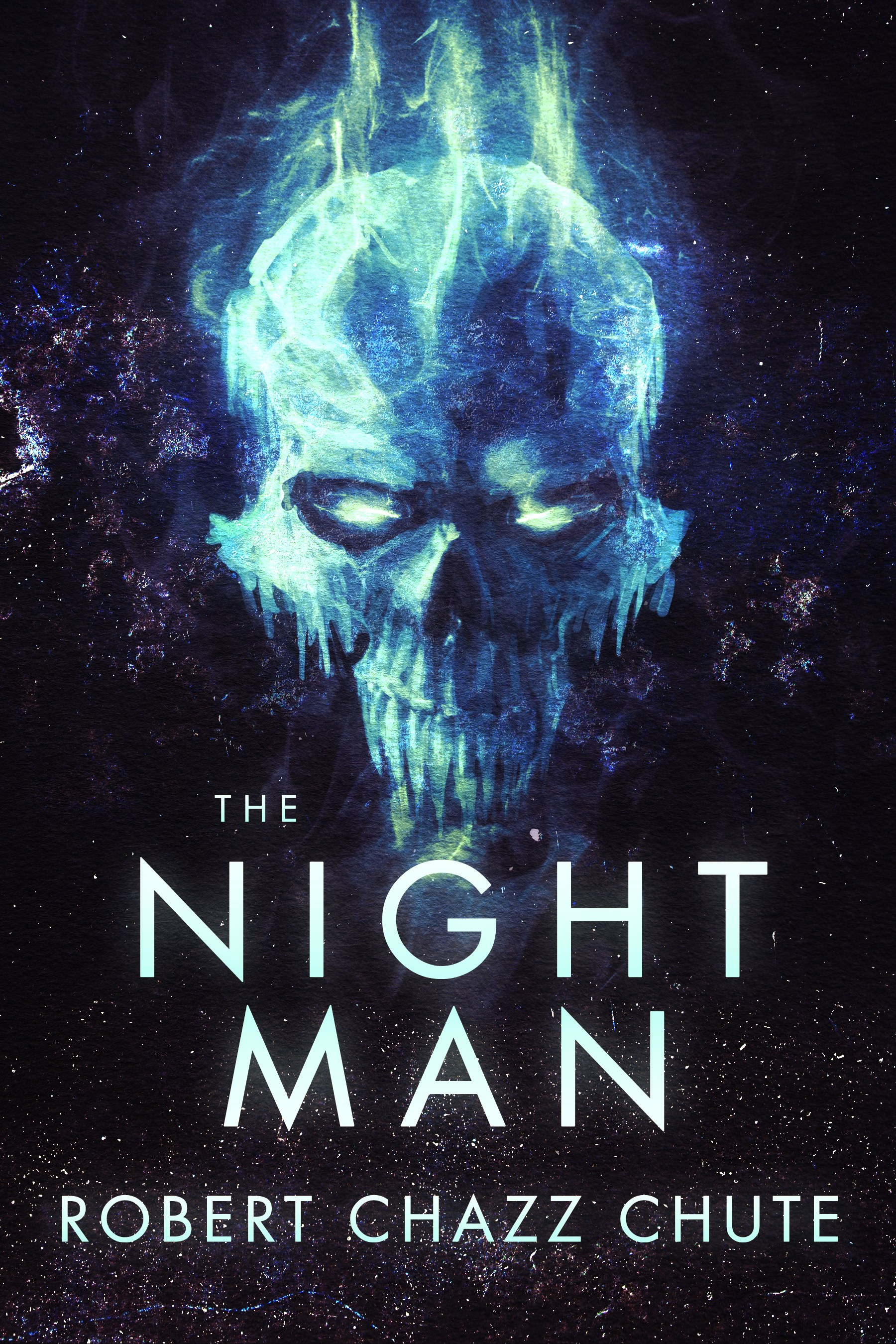
You can pick this ebook up for free today at this link: http://bit.ly/TheNightMan

Join my inner circle at AllThatChazz.com

See my books, blogs, links and podcasts.

Enter your email address to follow this blog and receive notifications of new posts by email.

Join 2,061 other subscribers