C h a z z W r i t e s . c o m

See all my books at AllThatChazz.com.

Writing: Where the money is

Everybody wonders what the next big thing will be in our expanding industry. In other words, “Where’s the money?”

As it relates to writing as an industry, money looks sparse at first glance. I mean, banking, drugs and guns is where the big money is. However, for our industry? The big money in writing is in the beams and braces. Infrastructure. The money will go to people who service our needs as indies. So ask yourself, what do we need?

1. Book apps. We don’t really understand book apps. Programmers do. Book apps with a subscription service could work, especially for certain authors who are in traditional publishing now but will soon make the leap to self-publishing.

2. Author cooperatives. Box sets may already be on the way out, but I think more authors will share resources and trade skills, either in small, structured groups or as part of a time bank organization, or both.

3. Organization provision: Many of us cringe at the idea of a union because it reeks of gatekeepers. I’d say that’s only because the writers unions that have been proposed for indies so far stink of more gatekeeping. Innovators out to advocate instead of control could do better than that, for us and for themselves.

4. An alternative to ACX that’s more generous to creators. ACX was awesome. Technically, it’s still awesome though the creator share is down. Have you noticed that, since ACX lowered the pay rate, we aren’t talking about ACX near so much anymore? We’re still using it because audiobooks are our future. For some, they’re our today! We’d like more choices and we’d like to get back to the bigger cut, though. (The obstacle is effective distribution, so that will have to be bankrolled.)

5. Selling direct from websites will become more popular. You can use Gumroad to sell digital products now. The problem is, no one wants to sideload their kindle with a pdf. Find a way around that problem and we’ll all be doing it to some degree. Fewer buttons, one click. That’s key.

6. Discoverability tools are more important than information. Make more discoverability tools (like you’ll find at Author Marketing Club, for instance.) Information is free everywhere, including here. Ways to help readers find us are harder to come by.

7. Services that promote indie authors will make money. Bookbub is at the top of the heap now, but BookGorilla is cheaper. The Fussy Librarian is very low cost. if I recall correctly, the latter was built partially in response to Bookbub’s fees. Bookbub has big lists of subscribers, sure, but they have competition and it’s growing because Bookbub is so hard to get into and can be so expensive.

8. The company that finds a way to make it easier for books to be printed and distributed (cheaper, faster and easier than it can be done at present) and get it to libraries and bookstores will make a lot of money. Be the new Lightning Source, for instance, but make it as easy to deal with as CreateSpace. (LS has improved in this regard, but I’ve checked it out and it still feels like a hassle.)

9. Translation houses. Everybody knows foreign language publishing is going to be huge. What we don’t know is whom to trust to translate our work and whom to ask to make sure the translations are any good. We’ll also need people (formerly known as agents) whose sole occupation is dealing in foreign rights sales. The markets are waiting, but most of us aren’t ready.

10. The next destination website for our readers. We need a destination website that operates as a cool magazine that curates our work to readers. We need to provide a way for readers to find us and vice versa. We don’t need another Writer’s Digest. We need a Reader’s Digest, if you will, for our work but catering to readers. If there aren’t click to buy and click to explore buttons at the end of each story or sample, it will still miss the mark.

You could, of course, simply write the next big thing.

We are writers, after all. We don’t want to think about all this tech stuff. That’s why someone with the skills to fulfill these needs will eventually appear and get paid.

If you’re still bent on writing to make money, the trouble is that no one knows what the next big thing really will be. No one saw Fifty Shades of Gray coming. It’s not like it was the first book of erotica to go on sale, but it went huge. Its imitators didn’t make near as much dough. Breaking out is not something you can chase, exactly. It happens to you and there are too many variables outside your control.

Just write the best book you can. When your book is ready, I really hope those trusty translation houses will be up and running and ready for business.

What are your ideas for the support structure our industry needs?

~ The good news. I’m now in the Top 100 Horror Authors on Amazon! The book launch bargains continue for This Plague of Days here. See what all the fuss is about, see the video and find the secret.

Filed under: author platform, , , , , , , , , , , , , , , , ,

Why I unpublished from Amazon (it’s about sales pages, not Hachette)

This isn’t a story about getting away from Amazon. It’s about sales page management, and you need to be aware, sales pages are not something you can just “set and forget.” You have to keep an eye on them for glitches. A glitch just happened to me.

Today, I had a shock.

In the middle of my book launch for This Plague of Days, Season 3 and the TPOD Omnibus Edition, the Omnibus suddenly wasn’t on my Amazon sales page anymore! I checked and that’s the only reason I knew it had disappeared.

Gone! Oh, no! Not now!

I refreshed the page and knocked back a vodka.

Still gone!

I cursed my fate and invoked Thor’s intervention.

Still nothing. Dammit, Thor!

Naturally, after those early strategies failed, I contacted Amazon. They said they’d get back to me within 24 hours. If this had been my first rodeo, I would have pooped kittens. However, they generally get back faster than that and, in this case, I had the fastest response I’ve ever had.

The email assured me there was a “slight glitch” that deleted the book from my sales page. Maybe a slight glitch to them, but I just launched! My interviews are appearing across various blogs promoting my latest books. It was a big deal to me. The email further assured me that the problem would be corrected within “one to three days.”

One to three days?

Vomit.

No, not really. Like I said, this ain’t my first time on a horse. Those emails always allow a long time for their fixes, but the Amazonian techs have, invariably, acted much faster than that. And so it was. This Plague of Days, Omnibus Edition featuring the complete three seasons of the apocalyptic saga with the autistic protagonist trying to save the world? We’re back, baby!

They fixed it within a couple of hours. I have it on good authority other sales platforms don’t swoop in to fix problems nearly so quickly.

Check your pages and make sure all your books are there from time to time.

Further thoughts on sales pages and serialization

After I brought out Season 3 in my series, I had a problem. The sales page looked cluttered and my work is not displayed in the order I’d prefer for greatest sales advantage. What to do? I skipped calling on Thor since he doesn’t show up unless I dress up as a hot chick. (I’m still carrying some winter weight and can’t sell the hotpants.) I sent another email to Amazon:

Could I, perhaps, edit my sales page to make it less cluttered and show my wares to greatest advantage? 

The reply was, for now, a polite no. My Amazon contact did agree that mine was actually a good idea and they would pass the suggestion up the line. Currently, the order of book display is based on sales figures. Self-help for Stoners has been on sale longest, so it’s up top. That’s not the problem. Serial episodes are. 

My Serialization Problem. 

Season One of This Plague of Days was released as one book, but also as five episodes (and each episode’s price was 99 cents.) My Season One episodes sat there, clogging the page and confusing customers. 

I came up with a solution that fit my longer game plan.

I unpublished the five episodes from the first book and set the price for Season One at just 99 cents.

This presents several advantages:

1. At 99 cents, Season One is a low barrier to entry into the series.

2. It gives readers a break on price. 

3. It promotes my visibility and my other books. Sales are up, author rank is up.

4. It avoids (I hope) angry reviews from people mistakenly purchasing Episode IV and V at 99 cents each when they could have had all of Season One (which contains all five episodes) for one incredibly low price. It’s couch change, yes, but some reviewers go nuclear over such things and outrage is rarely expressed with a sense of proportionality. Angry? Burn down somebody’s house! Mildly annoyed? Burn down somebody’s house! See what I mean?

A note about the trouble with serialization.

Serialization certainly has its advantages and helped Season One  and Season Two get more attention. However, no matter how much you might explain it and lay it out in the descriptions and vary the cover art, some readers seem determined to confuse Seasons and Episodes despite a lifetime of watching television. Quick to click, I guess.

I’m very sensitive to criticism (so yes, wow! I know! I am in the wrong business!) Anyway, the last thing I want is for readers to be confused or feel ripped off. That’s another reason Season Three is one huge book instead of broken into episodes. Serialization put me on the map, but the Law of Diminishing Returns has kicked in.

I still have episodes of Season Two on Amazon obstructing the view on my sales page. It is, as it has always been, cheaper to buy the season than to buy the episodes. I can’t let it go at 99 cents, though, so those episodes are going to stay up for a long time. Until Amazon changes its policy and allows me to control title placement, they stay and Season Two is priced as low as I will make it. When I do get control, the eps will go to the back of the sales page. I could just unpublish them, but I don’t want to leave the few who just bought Season 2, Episode III in the lurch.

How long is long enough to wait for those readers to catch up and complete their S2 episode purchases? A year? Two? I don’t know.

~ The TPOD book launch bargains continue.


Tell me when you discovered the secret of the TPOD Omnibus and I’ll send you my next thriller as an ebook. Details here.

Filed under: author platform, Books, free ebooks, self-publishing, , , , , , , , , , , , , , , , , ,

Publishing Advice: Don’t Believe a Word

The writing and publishing business is full of, “On the one hand, this. Oh, yeah, but on the other foot, what about this BS?” Here’s the conflicting advice on my mind this week, to and fro, pro and con:

1. People complain about marketing on Twitter, “What can I say of value in 140 characters?”

It gets worse. It’s better if you say it in 100 characters. Say more with less and it’s more likely to be read and retweeted. Leaving more room allows for additions, links and commentary from enthusiastic retweeters. So be pithier. You’re a writer. You can handle that. 

2. More blog posts, daily, equals more traffic to your blog.

Unless you’re blogging a book, you’re losing time you could be using to write your next book. There are still many writers who struggle with time management and discipline. The writing — the book writing — has to come first. Promotion is secondary because you aren’t in the promotion business. You’re in the writing business. Promotion is for the stolen time that would otherwise be unproductive.

Hint: If you’re still flogging the same book, and you only have one book, and that was published over a year ago? You aren’t in the writing business. Finish something new.

3. Some people say we should begin promoting the book as soon we conceptualize what it will be….someday.

However, you’re going to change the title before you publish it at the very least and if you take too long, someone will steal that great title. Promoting too soon is an exercise in chicken counting that could just as easily wear out potential readers if you talk about the potential book, too much, forever. 

Corollary: Don’t write your blog or push your book until you have something solid to say.

And don’t repeat yourself too often, please. If I see one more blog post with the title proclaiming “Content is king!” I might have to shoot somebody with a water pistol full of skunk juice. And then kill them. (Note: Don’t swing sledgehammers in small rooms. Ice picks to brain stems are efficient. A disposable raincoat and a friend who gives alibis without asking questions is essential. Ask a mystery writer for best strategies…though you might have to wipe them out, too, just to cover your tracks.)

4. We all look forward to being discovered by a huge audience.

That’s where the negative reviews come from, too. Brace yourself.

My quest isn’t for a huge audience. It’s for 50,000 true fans. Yes, I know people usually say 1,000 true fans, but I’m ambitious and we all need to stretch and reach. (Plus 50,000 true fans fits my budget better. Daddy’s got bills!)

5. We aren’t supposed to respond to reviews.

It is a bad idea, generally….which means the false and misleading reviews stay up, uncorrected. This one isn’t about the conflict in the advice. It’s about the conflict that arises in you. You crave justice for your innocent book babies.

This one? Live with it. It’s not worth it. It’s annoying, but the Authors Behaving Badly meme is much stronger than the Reviewers Behaving Badly meme. We’re outnumbered.

Unless they’re threatening you physically, forget it. If they are threatening you physically, revisit #3 for helpful, murderous suggestions if you’re not into dialling 911. And click the Report Abuse button with gusto.

6. Everybody wants to write the great American novel.

It’s been written and it’s probably The Great Gatsby. The problem here is some writers get caught up in what they think they should write and how that ideal should look and sound. Don’t be the serious guy who takes himself too seriously. He is tiring to be around and his shoulds are misplaced.

Originate, do not emulate. If someone else did it better, we’ll go read the original. Of the hundred Harry Potter clones, how many do you really want to read? Do not chase trends. A trend is so fast, it runs you over and leaves you far behind at the same time.

7. Everyone says social media marketing is about having Internet “presence.”

Presence is weak. It says, “I’m here. I hope you find me.” Hunters don’t wait for deer to come to their house, knock on the door, peel some potatoes and conveniently slip into the oven. Hunters go hunting.

We’ll find more readers if we’re active and proactive. Go find book bloggers. Go where readers are. Make a list and follow people on Twitter as a planned approach. There are people out there who already proclaim their love of Steampunk in their Twitter profiles. If you write Steampunk, why haven’t you introduced yourself already? Stop waiting for them to come to you.

8. Gurus say, “Be everywhere.”

Maybe “everywhere” isn’t for you. Is LinkedIn really helping you as an author or is that medium best built for job searches? Unless there are forums there you love, maybe that’s wasted energy. What about Tumblr? It might be an excellent spot for you, but Tumblr’s users tend to be young, hip and artistic. Is pushing historical fiction about railway trains of the Klondike really the best use of your time there? Choose a platform or two or three you love. Focus.

Almost everyone says we should dump the exclusivity of KDP Select and be on all sales platforms. Maybe not or maybe not yet. I’ve written extensively on this issue in the past so I won’t beat that zebra into a coma again. However, when you do make that decision, don’t jump (or not jump) because someone told you to do so. Have a plan how you’re going to move those books on those other platforms (because, with few exceptions, those platforms don’t have tools you can use to raise that crop of readers.)

Don’t believe a word. Test suggestions instead.

9. When publishing gurus have nothing else to offer, they say, “Work harder.”

I don’t know a single author who isn’t working hard. Writing despite kids, day jobs, lost sleep, and long hours? Check, check, check, check. “Work harder,” for most of us, does not add value. It’s a bad math teacher telling a student staring, clueless, at an algebraic equation on the blackboard: “Stare harder and you’ll solve for X.”

Excuse me, sir, but your pants are on fire. With napalm.

“I will work harder,” is the horse that gets carted off for meat and glue in Animal Farm. What we need is to test strategies, first on a small scale. If Slideshare works for you and gets more clicks to your author site and conversions to your newsletter, do more of that. If one lure to your mailing list doesn’t work, add value and try again. Always focus on what works instead of trying everything at once. Eighty percent of results come from twenty percent of your efforts. Find your twenty percent.

Also, please, please, don’t work harder. We’re already sitting too much and worrying ourselves into an early grave while some consultants are actually making money off poor writers by yelling, “Work harder!” That damn whip arm never seems to tire. Screw those guys. We’re already putting in the time. We need smarter tools, not louder barking from the water boys.

Instead of working harder, when you’re writing, please write more joyously. Take chances. Have more fun. You can even enjoy the creative aspects of marketing, believe it or not. Joy translates to all your work. Readers won’t necessarily know why they love the joyous writer more, but they’ll feel it and respond.

10. We’re told to market to readers only.

Don’t bother writing a writing blog. There’s too much of that already and writers don’t buy books. They’re too busy writing them. Forget writers!

Hm. If true, that’s worrisome. Writers should read a lot. I think, generally, we do read plenty. I’m a voracious reader. I wrote two books about writing that emerged from this blog, so there’s that. But more important, the friends I’ve made through blogging to writers and podcasting with writers? They’ve been an immense help to me. I’ve connected with allies who’ve blurbed my books and been my beta readers and helped me expand my reach in many ways. The indie writing community is a very supportive group.

Through this blog and my podcasts, there are literally dozens of people who have helped me publish and publicize. I started to write a list of helpful fellow authors and fans, but the list got too long and I worried I’d forget somebody. Connecting with allies here, not aiming exclusively at readers, has delivered great opportunities. 

I hope I’ve helped my allies plenty, too.

Thank you all. Much love.

~ Robert Chazz Chute isn’t as mean as he sometimes sounds. His next books are This Plague of Days, Season 3 and This Plague of Days, The Complete Series. They’ll launch June 15th. For more on This Plague of Days, the international zombie thriller with an autistic hero, go to ThisPlagueOfDays.com.

Filed under: author platform, Publicity & Promotion, publishing, Writers, writing tips, , , , , , , , , , , , , , ,

Helpful Mother’s Day Advice plus what’s tiring me out in publishing this week

At the end of this post, we’re going to find the happy. You’ll feel the height and breadth of the contrast to the rest of the article when we bring this post in for a landing. Also, at the bottom, you’ll get some excellent Mother’s Day advice. Now, here’s ten things that suck:

1. Relentless Facebook group “marketing.”

How can I miss you if you don’t go away? Spread that stuff out! Give me some space instead of pummeling me with spam. I am begging you.

2. Publishing gurus saying (smugly) that ebook sales are slowing down.

Slowing down from a rocket launch still gets us to high orbit. Nobody said we’d grow 800% every year. Slow down from that a bit and the growth curve still exceeds any reasonable expectations. E-publishing is a young industry and it’s doing great.

3. Certain players in traditional publishing complaining about Amazon’s “monopoly.”

It is not, by any definition, a monopoly. Amazon dominates the market because in most areas of marketing and innovation, they’re ahead of their competitors. I want Amazon to have healthy competition. If other platforms happen to suck, that’s not Amazon’s fault. Attention other platforms: up your game. Complaining about Amazon is not solving your problems. Consider emulating best practices instead of bitching about them.

4. Bagging on box sets.

I’m in on a box set with seven other awesome horror authors. Together, we’re amping up our discoverability and finding new readers with what Joanna Penn calls “coopetition.” It doesn’t devalue my books to charge 99 cents. It’s a valuable investment in new readers. It’s one strategy that says, “I value readers.” Generosity is one worthwhile strategy for any author who isn’t out to make a quick buck. We’re in this for the long game and we stand proud.

5. Libel in book reviews.

A friend of mine, whom I shall not name so she draws no further ire, has been insulted personally, maligned and called a fraud on Amazon. Her bio has been questioned. Go ahead and hit the “Report abuse” button. Many people have done so and pointed out to Amazon that this is libel. The review remains. Still! That sucks.

6. Spoilers in reviews.

Please don’t tell the whole story in a review. That’s what reading the book is for. I was further outraged recently to find that a review of a new author’s book (which is great) contained a spoiler. Worse, that three-star spoiler was ranked “most helpful.”

7. The fun police.

Popularity, and pendulums, swing back and forth. Today’s fans can have a strange propensity to turn into tomorrow’s haters if an artist dares to change. It’s not selling out, dude. It’s growing. If you now hate a superstar author you used to love, please examine why you’d venture into “hate” territory over a piece of entertainment. Maybe this book isn’t you. That doesn’t mean it’s bad. It means it’s not to your taste. Everybody’s had food poisoning a few times but we all keep eating. Chill.

8. All or nothing.

Don’t quit after one book because that book didn’t win the sales lottery. We focus too much on rare outliers and not enough on the people who are merely doing well. As if good isn’t good enough. This life is about the journey, not the dead stop at the end. It’s about the writing and the joy of creation. If someone else finds joy in your creation, fantastic! (Be assured, no matter how bad your early attempts are, someone will love it.) Relax.

People ask why billionaires keep trying to make money after so many millions or billions are already in the bank. How many homes do you need? But I think it’s more than just smelly greed. There’s a clue in the mentality of the writer: this is simply what we do. That’s where the fun is. We would do this for free. Many of us already write for free or are in debt because of our obsession for the written word. Enjoy the process and stop thinking in terms of winning and losing.

Think in terms of doing.

9. Fake outrage.

Despite the tone of this post, I’m a nice guy. But when one writer calls another a “hack” on the Internet, I have to ask a question or two: You do realize the object of your casual derision is a human being doing the best they can, right? Do you think you’d walk away unbloodied if you treated people in person the way you do when you’re safe behind a keyboard? Right.

So don’t be a troll. And if you’re trying to sabotage another author to make yourself look or feel good, you know that won’t work, right? We know the truth and you know trashing other authors with fake reviews doesn’t advance your books, right? You want fan love? Earn it. You aren’t climbing over anybody’s body any other way. And what if those nasty tactics actually did work? You’d always know you earned nothing. That angry, fake review from a fake account just makes you look angry and dumb and we all know it’s not real. Be real.

10. “It’s been done.”

Everything has been done. However, not everything has been explored in quite the unique way only you, Mr./Ms./Mrs./Dr./Whatever Author, can write it.

“It’s been done,” is a lazy agent’s way of saying no. “It’s been done,” is the dismissive wave of a critic who doesn’t bother to look deeper. “It’s been done,” is the casual cruelty of a dream crusher. These people aren’t your readers. They’re incurious, boring people. Don’t believe them. You can make anything fresh. Some will say there are only twelve plots, or ten, or five. I say there are two: Good versus Evil (and variations thereof) and Boy gets Girl (and variations thereof.)

Maybe the next trend will be westerns. These things go in cycles and westerns haven’t been hot for a while. Maybe you will be the pioneer to break new ground in the genre and spawn a thousand vacuous imitators who will spur critics to, once again, proclaim the genre dead. All genres are proclaimed dead at some point and every critic who says so is (almost) always proven wrong. Genres get resurrected and everything runs how and cold. Don’t chase these trends. Heat them up again in new ways.

You be you. Have a blast. We’ve stepped through the darkness with this post. Now let’s go be lights. Blow them away with what you can do. Let’s flounce out on to the field, put ourselves out there, karma-positive and ready to write amazing fiction so hot we melt fans’ faces.

I already love you. Know why? Because you aren’t done. You’re a writer. You’ll always be a writer and nobody’s pulling down your flag.

~ To find out more about my books, go to AllThatChazz.com. To see Spiderman 2, go to a theater. For a nice, cool drink, squeeze some limes into some cold water from the fridge. To hear cool interviews with cool people, try CoolPeoplePodcast.com. To stay in the will, call you Mom on Sunday. It’s Mother’s Day. Forgive her for what she said about your boobs in front of your friends that time in grade 9.


Filed under: Amazon, Writers, , , , , , ,

How Amazon’s new sales dashboard got me moving (plus Art that sells books)

Lily BG-1

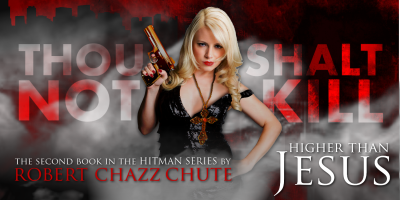
Click here to get Bigger Than Jesus

Click here to get Bigger Than Jesus

I wasn’t going to blog about the new Amazon sales dashboard.

Then I gave it a second look. The quick, detailed analysis is interesting and sometimes disheartening. Seeing all the outcomes across various countries at one glance is great. (Thanks, Australia. This Plague of Days is gaining ground Down Under.) I suspect the new dashboard will be an obsession to which we can lose a lot of time. The clarity delivered is better than what other retailers offer and absolutely crushes mainstream publishers for their lack of transparency. 

More information (or at least data that informs more easily) can change behavior. It just did that for me. Knowledge of weaknesses is more useful than knowing strengths. I checked through which books were moving and which weren’t. I asked myself which books could move better than they do. 

The ebook is also available in paperback for $9.99.

I settled on my funny crime novel, Bigger Than Jesus.

I’d just received three more fantastic reviews recently, so the book is sitting, highly rated, with 17 reviews. But it’s not selling. Several people have told me Bigger Than Jesus is my best book. It’s a fast read with a careening plot and there’s a follow-up with Higher Than Jesus

So why no love for Jesus?

There’s an issue with the title (you can guess) which I plan to remedy with the third installment in the Hit Man Series. Meanwhile,Bigger_Than_Jesus_Cover_for_Kindle I’ve failed to market it well enough. I think of myself as a suspense novelist, but most of my sales are coming from the horror side of the equation with This Plague of Days. Because I was letting Bigger Than Jesus sell “organically” (translation: not doing anything) I wasn’t paying attention to promoting my luckless Cuban hit man.

Bigger Than Jesus is not getting the visibility it deserves, so I must make it visible.

There are many complicated and expensive ways to do that. I’m opting for the easiest vector. This morning, through the Author Marketing Club website, I set up various free ebook sites to give the book away next week. I’ve applied to BookBub and paid a visit to The Fussy Librarian. More visibility and reviews will translate into more love, and more buyers, down the line. 

Dark Higher Than Jesus banner ad

I wouldn’t have changed my strategy if not for the change in the sales dashboard.

The changes make it easier to identify where the ball is not bouncing. Since my crime novel is well placed to fly higher, I’m attaching a booster rocket to it. 

~ Now you’re wondering about the art, right? That’s awesome work done by my buddy, Kit Foster of Kit Foster Design. More than just awesome covers, he can do ads and web banners, too. Spruce up your author sites and campaigns to sell books. He’s a very nice guy and his rates are very reasonable. You’ll be glad you did. Tell Kit that Chazz sent you.

Filed under: Amazon, book marketing, , , , , , , , , , , , , , , , ,

Solopreneur Writers: 10 Nitty Gritty Pickies

Thousands of little details afflict us as artisanal publisher-authorpreneurial Han Solo writer-heroes. A couple of authors publishing books for the first time have asked me about nitty-gritty details to watch for. Here are ten that came up in our discussions of new book launches.

1. When you set your price on Amazon, the calculator will automatically set comparable prices in other countries. Set it lower for India. The “comparable” price would actually buy three books in India (and so, is too expensive.)

2. If you have a list of book bloggers to whom you wish to send Advanced Reading Copies, check their guidelines carefully to see their preferred reading mode. PDFs are free to email but some people don’t want to sideload their e-reader or read on their computer.

The easiest solution is to gift the book to your list of reviewers, preferably during a pulse sale at 99 cents to minimize the cost of promotion. You get credit for the sales and potential reviewers are more likely to check it out with Amazon’s happy, one-click experience.

Smashwords has a solution that’s free: Promo codes. Send the code to potential reviewers so they can redeem it for a complimentary copy. Inexplicably, no other platform has stolen this idea yet. Still!

3. Services like Smashwords and Draft2Digital can upload to multiple platforms at once. However, there is often a delay if you want to change your prices across retailers. This makes a BookBub promotion, for instance, a logistical problem. And by “problem,” I mean a red-hot skewer in the gluteus maximus.

I’ve noticed the worst delays seem to happen between Smashwords and Apple. One of my books took more than six months to show up on Apple. Draft2Digital had problems with Kobo. Those issues are fixed now.

4. KDP Select’s five days of giving your book away for free isn’t the great tool it once was, though other platforms still seem at a loss as to how to promote effectively and boost discoverability. The commitment to exclusivity with KDP Select is five days out of ninety. 

If you are using free day promotions, I suggest you don’t promote for more than two days at a time. Better to stop while sales are still coming in and visibility is high rather than allow the sale to lose steam over an extended period.

Use Author Marketing Club to identify sites that will promote your promotions so you maximize promotion power.

5. Some intermediaries charge much more to upload your book to various platforms. Avoid them. More important than the fee they charge, you’ll sacrifice power over your book and flexibility to promote.

If you don’t have the technical skills to do it yourself, get someone else to help you for a fraction of the cost (and a one-time fee instead of bleeding cash on an ongoing basis.)

6. Box sets are the latest tool for discoverability. I’m involved in one now and, though we’re still at the very early stages, my visibility on Amazon has already gone up.

How it works is, several authors get together. After a cage match, the Alpha who has the most resources and the one they all trust, publishes a sampler. They might give away whole books. Everybody promotes the box set at 99 cents and bam, the tide raises all boats and more readers find you. 

Some people are sneering at box sets, but I think it’s because they misunderstand the intent. It’s not about making money, particularly. This is us playing the long game and working with allies to fire off flares. It’s about raising your rank, giving strangers a chance to fall in love with your work and selling your other books. (So write more books.)

7. Publishing is a business and, despite the fact that we’re all cybering and telecommuting from our worldwide basement headquarters, you’ll still have to run errands. The thing you track least for tax time is mileage. Keep a notebook in the car and track it. Canadians, use a pencil because you know that pen will freeze each winter (August to June).

It might not add up to much, but it’s a lot when you’re making nothing. You wouldn’t burn cash just for fun, would you? Then keep your receipts and track the little things. Claiming a home office may be all that justifies your new publishing venture to your accountant, and your spouse, for the first couple of years.

8. Word was built for office use. Scrivener was built for writers. The program allows you to bounce around your manuscript with ease and format for publication. Get Scrivener. If you’ve already written your text in Word, importing to Scrivener is not a big deal. Yes, there is a learning curve, but it’s worth it.

9. Before you publish and make all the other edits you’re going to make, search the text for two spaces. Those extra spaces sneak in if you don’t scrub them out.

10. Yes, you need an author website, but a simple WordPress site (preferably with your own name) will do. Eventually, with more books under your belt and future changes in the publishing landscape, you may choose to sell books straight from your site. It’s a cool idea that doesn’t really have elegant delivery solutions for the reader (yet).

You can switch your author site to a more complex configuration later, if need be. Don’t worry about that for now. Now is the time to build a base of readers. You could sell straight from your website, but most authors would prefer not to sacrifice their visibility and reviews across the current sales platforms. 

~ There are many more details to attend to, but that’s a start. Hi, by the way. I’m Robert Chazz Chute. Good to meet you. Find me on Twitter @rchazzchute. Connect with me on Facebook here.

Filed under: author platform, DIY, publishing, self-publishing, , , , , , , , , , , , , , , ,

Top Ten: Renew your readers’ interest between books

As I finish revisions to the finale of This Plague of Days, I’m entering that crazy time between the writing and the publishing. We all go through it. There’s still editing and proofreading to do and you aren’t done until you’re sick of it and not even then. But I am excited!

Today, I had my first back and forth with Kit Foster, my graphic designer. We talked cover designs. Out of context, my description of what I had in mind was pretty dumb or nigh-impossible, but through the magic of his art, Kit will transform that raw material into something awesome that makes browsers into buyers.

But how do you keep the sales going between books?

Sales always drop off. They call Day 30 after your book launch “The Cliff” because you lose attention from readers as you disappear from the bright, shiny new thing list. Interest can be buoyed and sustained, however. You don’t have to try all the strategies from this list (or any), but I do suggest you try at least one. Experiment and let me know what works for you.

Here are some ideas to extend your influence with all your books.

1. Write more than one book because your next book helps promote the last one. At a book event, authors talk about the next book, but readers talk about the last book.

2. Write more books. The bigger the stable, the more horses you have in the race, cross-promoting each other.

3. Write (slightly) shorter books. Sadly, my next tome (after TPOD) will (again!) be more than 100,000 words. I’m writing huge books. Many will see this as over-delivering and they’ll love it. It can also intimidate those less invested. The main problem is it makes you appear less prolific even if you’re very productive. It’s #2’s horse and stable issue.

I’m not saying you should shortchange anyone, but keep it reasonable. Few reviewers complain about a quick read. If you’ve got that much to say in a single book and you can’t make it shorter, make it a series.

The complete series for This Plague of Days will be over 300,000 words. The first draft took ten months and then I doubled its size in another eight months. Down the line, I’ll put out more books by keeping them down around 60,000 – 70,000 words.

My crime novels took 3 months each, for instance, from concept to completion. That length is what I’ll be aiming for in the future. Feeling more productive and hitting more milestones also feeds my excitement between books and keeps energy high. Less time between books also gives readers less time to forget about you.

4. Write in one genre. If you can dominate one list, you’ll be more effective in focussed marketing efforts and provide consistent branding. (I should have done this, but it’s not how my mind works.)

5. Collaborate. Writing with another author can expand your influence to each other’s audience and, if you work it correctly with the right person, you’ll get more done faster. Some people think writing with a partner is more work for half the money, but actually you have more people helping with the load, increasing productivity. The guys at Self-Publishing Podcast have proved it over and over, so there you go.

6. Cooperate. Soon, a new horror anthology will be released and I’m in it. My bit will be a sampler of Episode 1 of This Plague of Days. In joining forces with other authors, we’ll co-promote and raise each other up.

7. Have more to give away. I serialized the first two seasons of This Plague of Days. In the run up to the launch of Season 3 and the stand alone (This Plague of Days, The Complete Series), I’m using KDP Select to give away episodes as samples. Those giveaways always bump up my sales in between books when I would otherwise be in the doldrums. I’m a big believer in pulse sales to help new readers find me.

8. Diversify. To sell more between books, have more to sell in different media. There’s interest in turning This Plague of Days into a TV series. (It helps that I wrote the story like an HBO or Netflix dramatic series in the first place.) However, I’d love to see it as a graphic novel, too. I want to sell it as an audiobook. Each iteration feeds the potential for another opportunity.

9. Repackage. Converting This Plague of Days from serialized episodes into seasons, and then into one, big book that stands alone? That’s one example of repackaging. It’ll also give a new crew of readers what they wanted since quite a few people seem to misunderstand the cliffhangers and twists of a serial or they hate serials on principle. (I don’t know what that principle is, but I recognize it and I’m listening.)

Taking different books and selling them as one bundle is another way to go. (I’ll be doing this with the Hit Man Series by turning three books into a bundled trilogy with a new and better name for the whole.)

10. Stay in touch with readers between books. I don’t have a large mailing list, but I do connect with a lot of readers on Facebook and through podcasts. I also have a blog dedicated to This Plague of Days.

Recently, when I needed to add more beta readers to my team, I went to Facebook first because I knew I’d find people who are already into what I’m doing. I’ve got three new, enthusiastic volunteers now.

Staying in touch with readers keeps projects alive for authors, too. When I get another tweet or email asking when the next book is coming out, it helps drive me to get to the keyboard as fast as I can to oil the roller coaster. I know my readers and I can’t wait to make them scream.

Filed under: author platform, book marketing, writing tips, , , , , , , , , , , , , , , , , , , , , , , , , , , , , , , ,

Writers and Readers: Cutting the pie so you get the right slice

Imagine we’re speed dating.

Between awkward pauses and wondering if my cow lick is showing, I ask, “So, do you like music?”

“Sure! I love music!”

“Great! What kind of music? Jazz, something heavy you can groove to or…?”

“Oh, you know…just…I don’t know…music.”

“Um…okay…how do you feel about comedy?”

“Love it!”

“Carlin or Hedberg? Stewart or Colbert?”

“Oh, you know…comedy.”

The little speed dating bell rings signalling our time is up. We both collapse onto the tabletop. “Oh, thank god! Next!”

I’ve set up something that doesn’t happen in this cute little scenario, of course.

People don’t go out for a night of music. They go out to dance to a beat or to listen to music or they want it played low and far away so they can talk.

People who love comedian Joe Rogan might just storm the stage if an improv troupe shows up. If that same improv troupe makes all their jokes through the magic of interpretive dance, the audience might just murder the performers and not a judge in the land would convict.

And so it is with books.

Some people (not enough) love reading, but there’s more to it than that.

I write across genres, but people who love my take on our collective dystopian future (killer pandemic starting any day now) won’t necessarily snap up my crime novels. I’d argue the sensibility and voice are similar and the jokes are still there. However, (a) nobody argues their way into a sale, and (b) even the most avid readers are often specific about which genres they will and will not read.

If I had to do it all again, I’d try to focus on writing in one genre and try to dominate that field. However, that’s not really how my mind works and plays. I should say, if I were a different person, I would have done things differently. D’uh. Useless!

But even within a genre, there’s plenty of variability.

If you want a zombie apocalypse with a lot of military action, This Plague of Days probably isn’t for you. There are military elements, sure, but there aren’t any robo-Rambo zombie-killing machines in This Plague of Days.

Instead, the series features three strains of the Sutr virus, each with different effects. The zombies aren’t your classic rise-from-the-dead variety. They’re infected bio-weapons. Instead, ordinary people gain some supernormal capacities and it’s humans versus zombies versus Maybe That’s God versus the crazy stuff that comes next.

Mostly, the story is about what underdogs do under pressure when all appears lost. As for Jaimie Spencer, my protagonist on the autistic spectrum from Kansas City, Missouri? I guess I’ve dominated the autism/zombie niche. You won’t find a lot of Aspergers in this genre.

I always set out to be entertaining, but different.

My Cuban assassin, Jesus Diaz, was kidnapped as a child and abused. Now he’s a hit man who loves movies and makes a lot of jokes to cope with pain. He wants to escape into a Hollywood daydream the same way we dream of winning the lottery. Even though both of them were military policemen, Jesus is not Jack Reacher, not that there’s anything wrong with Jack Reacher. Bigger Than Jesus is different, that’s all. (Somewhere, comfortably ensconced in a platinum writing palace, Lee Child is chortling and happy not to be me.)

So, dear readers, please read the sample provided before you click. I want you to be happy with your purchase. If you purchased anything in error, Amazon is great about refunds.

That’s fair, right?

~ Want a sneak peek of Season 3 of This Plague of Days? Read the Prelude to the next season here. It’s horrific, possibly in the right ways, and possibly for you.

Filed under: Genre, publishing, readers, , , , , , , , , , , , , , , , , , , , , , , , , , ,

Writer’s A, B, C: Free tools for finding happy new readers

1. Anonymity is the problem.

2. Discoverability is the issue.

3. Being broke is the obstacle.

4. Prolificacy is the strategy.

5. Generosity is the solution.

Today, I’ll give you three strategies I’m using to sell more books. First, there’s this:

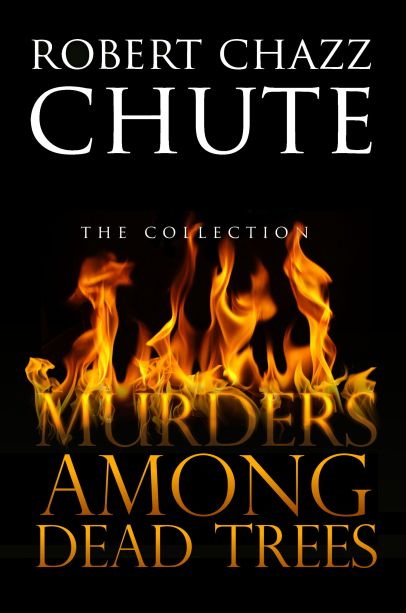
Murders+Among+Dead+Trees+1121-1

This book of suspense is FREE until midnight, March 7, 2014. Have a look, if only to read my favorite three-star review of all time. You might also enjoy it so see for yourself. 

Okay, we all know we can do giveaways to increase our visibility by lowering the risk to new readers, but how to promote it? Here’s what I’m doing:

A. Stop ignoring Facebook groups.

I didn’t mean to ignore anyone. In fact, I’m quite active on Facebook and have made new friends there. After the release of a new book, there’s often a flurry of new friend requests and it’s great fun to interact with readers there because they’re enthused and friendly.

Over time, I’ve joined several relevant Facebook groups. If I had a spare moment (more rare these days) I’d lurk more than I’d participate. Mostly, I’d concentrate on the main news feed. That’s what draws the eye. However, there are plenty of groups to join where you can connect with like-minded people. I’m paying more attention now, making new friends and finding potential readers there.

B. I’m using Wattpad.

It’s a free platform for interaction, improvement, encouragement, feedback, sharing and promotion. Best of all, writers are welcome. Wattpad is not new, but I’ve pretty much been ignoring it. That stops now. It could be a great addition to your platform, too.

Several authors I’ve spoken to have not felt that Wattpad led to conversions. However, like me, they weren’t really active on the site nor did they promote it. To build an audience for the long-term, go where the readers are. Since these readers are also writers, you can expect respect there. It’s a friendly atmosphere.

So, for instance, you can get a sneak peek at my new book now. It doesn’t come out until spring, but I’ve put up the first chapter (The Prelude) of Season Three on Wattpad. It’s not for the faint of heart. Click here to get the link to see the big opening and you’ll also find out what Batman has to do with the apocalypse.

Wattpad’s membership is young and vibrant. I joined early but I wasn’t over there enough. I’m paying better attention now and encouraging my readers, new and old, to get that free sample there. But remember, it’s a social platform. Follow people. Read their stuff. Interact. If you find yourself having fun, congratulations. You’ve just discovered another social medium that’s for you.

I plan to use Wattpad for developing book ideas and finding new authors to read. It would be fun to write short stories as prequels and sequels. Best of all for me and for readers, I’m interested in writing more stories within the worlds I create. 

For instance, This Plague of Days takes place across continents. It’s a vast and sweeping story of the fall of our civilization. Beyond the books, there are many facets I couldn’t tell within the stream of the serial. I’d like to try out Wattpad for stories about minor characters. What happened to Brandy before Jack finds her at the opening of Season 2? What happened at the Joint Air Base in Charleston, before we get to it in Season 3 of This Plague of Days? Stories like that are fun and lead new readers back to all the work you’re selling. (Mental note: Write more books.)

But Chazz, I hate free. Free is evil.

Pre-sold readers are the best audience for any work. Free short stories are a powerful way to find them. If you hate free, write them on Wattpad and, when you’re ready, delete them from Wattpad. Then put your book up for sale as you normally would. That way, your work is doing more work for you while you’re creating it! You might even get valuable feedback through the process as you gain new potential readers for the rest of your books. Considering all that, do you still hate free?

C. Find your audience with more coopetition.

Horror authors Armand Rosamilia and Tim Baker put their talents together in a scary pack two novellas for only 99 cents. Click here to check out Dying Days: Siege 1 and 2. Working together, these guys are louder and reach more readers. That statement about being loud is also affirmed by their weekly radio show, Friday Night Writes. See you in the forum there tonight. Don’t forget to tune in at 8 pm EST. (I use the TuneIn app so you can listen to Surf 17 in Flagler Beach, Florida no matter where you are.)

Next logical question:

Got a novella or some short stories? Who are you going to team up with so you and another author or authors can get more visible?

Triberr is free, too.

I’ve already suggested Triberr as a way for authors to promote each other more effectively and systematically. This week I was invited to join a new tribe that targeted my readers. It’s a good fit because the niche is more specific and my tribe mates are all really strong bloggers.

This is coopetition (a phrase coined by author Joanna Penn, I believe.) The bloggers with whom I’m cross-promoting share similar interests so, as we tweet together, we expand our reach. Blogs generally aren’t very powerful tools, but Triberr is a fulcrum to gain leverage.

Do it right.

Lately I’ve noticed that a few “gurus” in the business are coming off…well…a tad dickish. “Prideful” my Baptist minister grandfather would say. The barrage of narcissism is off-putting and surely hurting them in the long run. I’m worried they might break their arms clapping themselves on the back that hard. That’s why this is such a great time to be generous and humble.

This isn’t about cheap marketing strategies. It’s an attitude that will make you happier. It’s about being the sort of person who elevates their circumstance by helping others instead of stomping them down and standing on their necks. To quote Patrick Swayze as Dalton from Roadhouse (again!), “It’s nice to be nice.”

Better Twitter.

Every day I scan my Twitter stream for people doing cool stuff. It might be an enthusiastic book review or a factoid or a joke. I don’t care what it is as long as it’s cool, fun or helpful. Retweet freely. Too often, I think we’re looking at Twitter’s “Interactions” stream. That’s a mirror. Look out the window instead. Look at what other people are doing and promote them to your followers to expand your view and your visibility. Your followers will appreciate the curation effort and you’ll have more fun with Twitter.

I’ve also made a conscious effort to go find new cool people I want to get to know. How do we find cool readers who are hot for our work? Hashtags are search handles. Use key words to find and follow avid readers of your genre. Active is faster than passive.

By sharing more, we all get to eat and have a more enjoyable meal. 

~ You read all the way down here? Oh, Sweetie, Baby, Cookie, Honey! For your endurance alone, you deserve Murders Among Dead Trees by Robert Chazz Chute. Click!

Filed under: author platform, Publicity & Promotion, publishing, self-publishing, , , , , , , , , , , , , , , , , , , , , ,

Writers, Stress and, of course, Iron Man

We’re poor, starving artists. Of course, we’re stressed out. Why wouldn’t we be? I’ve often given lectures on stress management, so I’m going to give you a quick summary of what we’re normally told about getting all zenny. Then I’ll tell you the one useful trick you’ll remember and maybe even use.

Round One: 

Exercise, eat right, manage your time, use positive self-talk, deep breathing, be social with your support network, get lots of sleep, meditate, unplug more and say no more often.

Round Two:

For any stress, there are four responses: avoid it, alter it, accept it or act on it head on and solve that damn problem.

Round Three (and what you can really do, most of the time):

As suggested in Rounds One and Two, we can do everything that’s right for ourselves and go all goop.com and become perfect Gwyneth Paltrows, but you probably don’t have enough time, money and/or servants for that. In fact, trying to be Gwyneth Paltrow would add more stress to my life. I don’t look as good when I go blonde, for one thing. Also, I’m not a top Hollywood actress. I’m not even a bottom Hollywood actress working at Hooters. I confess, I’ll never play Pepper Potts. 

The answer, obviously, is: Be Iron Man.

Many people have the idea that the goal of life is to be relaxed all the time. You know what? Relaxation is great. It’s also bullshit. It comes in fits and spurts. Being relaxed all the time isn’t achievable for most mortals. Relaxation is often fleeting and, when it’s achieved, it can be shattered by a single bill, a phone call or a missile attack by the Mandarin. Not all stress is negative. Some sense of urgency is needed to ever get a book written, for instance. 

Yes, certainly take care of yourself and do the best you can, but stress-free is a high bar. Stress-resistance is armour in a troubled world.

Stress-resistant is more doable.

Think of Robert Downey Jr.’s character, Tony Stark, after he beat the booze (and Robert Downey Jr., the actor, post-drugs). In stressful situations (say…alien invasion) his reaction in the moment is to:

1. Crack a joke.

2. Think his way out of his circumstance.

And how do you Avoid, Alter, Accept or Act? Find the funny (subverting your rage with humor) and think your way out. When we panic or get angry, we get stupid and make things worse for ourselves. Do not catastrophize. Pause. Joke. Attack the problem with your brain. Attacking problems with your heart is a prescription for heart disease.

Thinking about the problem and holding on to your sense of humor might even keep you from strangling the door-to-door con artist who won’t leave your doorstep. That happened to me today and the twerp in question got to slink away without me denting his forehead on my “No soliciting” sign. Why? Because I kept my head and made jokes at his expense until he went away. 

Gee, I hope that jerk reads this. I think I stressed him out.

~ Robert Chazz Chute is nicer in person than you’d expect. Read the suspense and horror here. Listen to the All That Chazz podcast and the Cool People Podcast here. Nah, just buy and read the books. That would be cool. And if you’re Robert Downey Jr? Please have Jarvis contact me. You’d be great as the dad in This Plague of Days.

Filed under: Writers, , , , , , , , , , , , , , , , ,

Bestseller with over 1,000 reviews!
Winner of the North Street Book Prize, Reader's Favorite, the
Literary Titan Award, the Hollywood Book Festival, and the
New York Book Festival.

http://mybook.to/OurZombieHours
A NEW ZOMBIE ANTHOLOGY

Winner of Writer's Digest's 2014 Honorable Mention in Self-published Ebook Awards in Genre

The first 81 lessons to get your Buffy on

More lessons to help you survive Armageddon

"You will laugh your ass off!" ~ Maxwell Cynn, author of Cybergrrl

Available now!

Fast-paced terror, new threats, more twists.

An autistic boy versus our world in free fall

Suspense to melt your face and play with your brain.

Action like a Guy Ritchie film. Funny like Woody Allen when he was funny.

Jesus: Sexier and even more addicted to love.

You can pick this ebook up for free today at this link: http://bit.ly/TheNightMan

Join my inner circle at AllThatChazz.com

See my books, blogs, links and podcasts.

Enter your email address to follow this blog and receive notifications of new posts by email.

Join 2,063 other subscribers