C h a z z W r i t e s . c o m

See all my books at AllThatChazz.com.

We’re Indie. We don’t lie down.

I’m revising Crack the Indie Author Code: Aspire to Inspire, a book I’ll soon release that is basically the best posts, chosen from over 1,000 articles on this blog. As I edit, rewrite, add and subtract, I’m struck by how I return to a certain theme of independence among indie writers. We need that stubborn streak. The voice in my head asks others to take the risks I take. I encourage other writers to follow their dreams. Encouraging others is part of my dream, too. My tone is sometimes matter of fact and, at other times, defiant. Sometimes the advice is contrarian. If that doesn’t suit your taste, at least sometimes it’s whimsical and I kill a mime.

It’s not easy being indie. We’re still largely ignored by mainstream media. It’s hard to get reviews. Bookstore managers tend to look at us with nail heads for eyes. But I’m doing the thing I always wanted to do and no one stands over me telling me how to do it. That’s worth a lot to me. The writers and publishers who read this blog are a very helpful group. I appreciate that.

It’s Thanksgiving in Canada. I’m thankful for my family of believers, the people who support my campaign and the suspense lovers who read my books. Crack the Indie Author Code will be available very soon, but the blog will continue after publication. I will continue to aspire to inspire. (To the doubters: You ain’t seen nothin’ yet!)

Thanks for reading ChazzWrites.com. 

Filed under: publishing, , , , , , , , , , , , , , ,

My Kindlegraph adventures: a little more tech helps

Last week I posted about using the kindlegraph, a neato tool for autographing ebooks. Soon after I blogged about it, I made my books available on kindlegraph. (Simple. All they need is the ASIN for each of your books and you’re set.) Soon after that, the nice man at kindlegraph informed me that I had received my first request for an autographed ebook. When someone asks for an autograph in person, I feel weird about it. Dealing with people over the Internet, though? That’s inside my comfort zone, along with the hot almond milk, the crackling fire in the wood stove, my blankey and teddy. I mean I’m wearing a very comfortable teddy.

Small-town terrors and psychological mayhem in Maine.
These are the foundation stories of the coming Poeticule Bay Series of suspense  novels.

You can type in a message or choose a font and enter that for your signature. That felt like kind of a cheat to me. A reader had requested my signature on their copy of The Dangerous Kind & Other Stories. It didn’t seem right just to type my name and say, “See ya!”

I tried writing my signature with the mouse. It looked like I’d written my signature drunk, with my eyes closed, in kindergarten. (That brought back some memories of Scotch breath and reciting my ABCs, I can tell you.) At one point I actually did close my eyes to try to get a closer approximation of my signature through pure muscle memory. My penmanship approaches Level: Wicked Awesome, but no matter what I did, the scrawl looked just as bad. Unconvinced by my writing, my new loyal reader was sure to think I was a clumsy  idiot. I simply can’t write with a mouse.

Fortunately, every time you screw up your signature, you have the option of clearing the field and beginning again. It’s very frustrating to get two-thirds through your signature, almost make it and then screw it up hideously. I felt like Batman attempting to climb out of Bane’s prison, only I had the good sense to give up.

Then I got out my Bamboo tablet and plugged it in. I should have gone with that from the start. The Bamboo comes with a pen so you can write your name like a human. Without the tablet and pen, I felt like a dull rhesus monkey with a full bladder and hives, wearing an extra thick Hazmat suit while trying to figure out the safety catch on a machine gun and balancing on a spiked ball while testy penguins are thrown at him by taunting, white-coated, angry grandmas. Uh…that was a tad hyperbolic.

Anyway, Kindlegraph is cool and I’m always ridiculously pleased to sign my books (with the burnt end of a stick if necessary.) Any of my books. In fact, I’ll sign other authors’ books, tag a subway car and sign somebody’s tits if asked nicely.

Not you, sir. Let’s just stick with the kindlegraph for you.

Filed under: publishing, , , , , , , , , , , , , , , , , ,

Free tech tools to help you edit and proofread

Proofing and revising can be fun, especially if you have sharper tools to help you do the job better. I now have a new tech tool in my editing arsenal that’s a huge help: free text to speech (tts) software.

I’m in the last stages of revising Higher Than Jesus, the next instalment in The Hit Man Series. I had plot problems to review and choices to make about how fast the action would evolve for my Cuban hit man. Then there are the typos to catch, Chicago street names and geographical logistics to marry up and more jokes to make.

Necessary aside: The tech tool I’m about to recommend is not Scrivener, it’s text to speech software. However, if you aren’t already using Scrivener, I recommend it, not least because Scrivener already has tts built in. (Click speech on the Edit menu.) Last night I needed to know if I’d revealed a name in an earlier chapter. With Scrivener, it was easy. With Word, it would have been a time-consuming pain. Writing Higher Than Jesus is like putting together a puzzle and using Scrivener helped me make sure I wasn’t screwing up. Scrivener is $45 USD and compiles your book for manuscript, print or any ebook platform. This concludes the Scrivener PSA.

As I podcast Bigger Than Jesus, chapter by chapter, I find things that I’d like to change (and do so as I record.) At the microphone, some edits are clearer, especially when you have to speak them. Yes, I know editing never ends, but still, I find things that bug me. Finding those niggles on the mic, I make a note to edit the print and ebook edition. (That’s the beauty of ebook and print-on-demand publishing. I can go back and make those minor adjustments quite easily.)

One way people edit is to go through a draft reading backwards. That’s very tiring and I don’t know anyone who has actually accomplished that for a work of any length. For short stories, that’s reasonable. Another way is to read your book aloud. I do that, but one chapter at a time, one podcast at a time. When I read too long aloud, my throat gives out. TTS helps me catch problems by getting the computer to read the book to me and saves my vocal cords. 

I catch much more than I thought I would. As I prepare to hand the book off to my editorial team, I’m saving them a lot of time by giving them a more polished draft. I really don’t want to waste the team’s time. Perfection is impossible, but excellence we can reach.

The Read4Me app is free software that can read you your story, for instance. With tts apps you can, of course, control the speed of the narration. For editing, let it read slow. I listen at 141 – 149 words per minute and follow along as the highlighted text lights up.

One problem is the available voices can sound a bit too much like Stephen Hawking (who still hasn’t updated his speech software! I’d love to hear him talk about black holes as gateways to other universes in a Texas drawl, wouldn’t you?) I tried “Alex’s” voice. Alex is familiar to all Mac users as the computer voice that cuts in and says, “Excuse me,” when a program you don’t want to deal with now requires your attention. I switched to one of the female voices because it punched me in the ears less over time. If you’ve got a long book to read, you want a pleasant voice in your head.

I found another option that’s available free to Microsoft users: NaturalReaders.com. The voices are pleasant and you can easily test out that assertion on the landing page. I’m very impressed with what NaturalReaders.com offers, but here’s a much more extensive list of tts products on Squidoo for your evaluation. And yes, they’re all free.

Filed under: publishing, , , , , , , , , , , , , , , , , , , , , ,

Video book reviews, secrets and policies


LMB stars

LMB stars (Photo credit: Wikipedia)


Recently I posted a video review on Amazon. If you can do it to help a book, I recommend it. Novelty gets attention (even with my ugly mug.) Since posting the video review, more authors have contacted me to read and review their books. My TBR pile is taller than I am and my kindle is just about full, so it’s not easy to get to it all (nor even physically possible.) That’s not a complaint. I’m excited at the possibility of discovering a book that pulls me in and makes me think or laugh. I prefer both. I love books. Of course I want to read everything. Since I can’t and now that I’m getting more of these requests, herein lie the secrets that make me want to review your book favorably:


1. I have writing deadlines for my own books and I have a lot to read, so please be patient. I don’t guarantee when I’ll get to it. As you’ll see, I might never get to it, but you’ll prefer my reasoning for not reviewing your book.


2. I don’t give one, two or even three-star reviews. Somebody reading this just threw up their hands or their lunch, but bear with me. This goes beyond the fact that I find most one-star reviews mean-spirited, often nonsensical, sometimes borderline illiterate and they usually treat writers of bad books like their crime is genocide. Even though they probably got it free or for less change than sits under their couch cushions, you won’t find much forgiveness, wit or transcendence in most one-stars.


But it’s not just that I couldn’t bring myself to do that to another writer unless the title actually is Mein Kampf. It’s simpler than all that. If a book is not to my taste, I don’t finish it and I don’t review what I haven’t read. Life is too short and reading something that’s not for me takes too much time. Pointing out good books is more of a service to readers, and a better use of our time, than warning people away from books we don’t care for.


Reviews that are dire warnings are kind of like taking the time to tell me what’s awful on the menu when I’m hungry and anxious to order. I want to hear about your few extra-delicious recommendations and get on with the dining experience, not a litany of what the cook screws up. Or have you ever tried to schedule an appointment with somebody who only tells you when they can’t make it? I want to kill those people. (Okay, I admit it. I have killed those people.)


On a related note: Books that aren’t to my liking will be the best book someone else has ever read. Really. Go check on reviews of books you love on any popular site. See those books that whisked you off to magic realms and changed your life? Now see all those reviews warning you off them? Corollary: Try clicking on a book you despise. See all that five-star, hyperbolic love? Nope, they can’t all be friends and family. Families aren’t that big and writers don’t have friends. We have ex-friends we betrayed and cannibalized to put into our books. All those reviews you disagree with are simply people who are different from you. Weird, isn’t it? I mean, you’re awesome. Why doesn’t everyone want to be exactly like you? Inexplicable! I’ll ponder the problem. In the interim, let’s not take reviews too seriously then, shall we? 


3. If you gift me the copy on kindle to review, you get credit for the sale and it’s also easier for me to wirelessly download it. Easier is better. (Yes, I have Calibre but frankly, not a big fan.)


4. I’m primarily a suspense writer, so mostly I read non-fiction that feeds my other obsessions, mystery, thrillers and some horror. I’ve read a good sampling of many genres, but not everything is for everybody. I don’t and can’t read everything (at least until I get the time machine fixed or become immortal) so please don’t be upset that I must refuse to read your steampunk novel. Even though it’s great, but I haven’t read enough steampunk to create an informed review.


I enjoy William Goldman, Chuck Palahniuk, Thomas Harris, Mickey Spillane, Rex Stout, Lawrence Block, Cormac McCarthy and (swoon!) Elmore Leonard. I’m not into Wodehouse. I’ve probably read more romance than you (my first jobs in publishing were at Harlequin in the Canadian Gigolo Department) but that was for pay and I’ve had my fill of impossibly handsome, rich and capable heroes named Rollo seducing women who are, despite their age, curiously sexually innocent.


5. A four-star review is a compliment, too, and, with all the distrust of five-star reviews, a happy four-star review may be even more useful to you than a five-star. However, I also believe that all that distrust is now way overhyped. If I’m that high on your fiction, you’ll get a five-star review. Ratings should reflect the tone of the review. It’s weird and confusing when the review is full of superlatives but the rating doesn’t show that same enthusiasm, isn’t it? Also, to hold back on a five-star rating for credibility’s sake alone cheats the author and that would be gaming the system, too, wouldn’t it? No one’s talking about that. Some readers within the echo chamber are afraid they’ll get fooled by fraudulent reviews when they could be reading a sample to alleviate those unbearable terrors.


6. I’m nice. I’m acting as a reviewer, not an editor. The review is not about me and this is not a teaching opportunity. I do not scold or lecture authors.

Some bad review habits are egregious. I don’t do things like this: “I wish the story had gone in a different direction,”; “I would have done it differently,” (of course everyone would do it differently!); “Too much swearing!” (that’s usually the realism leaking out); “The level of sex bothered me” (unless it’s BDSM in a children’s book, someone else enjoyed it); tiny grammar niggles; minor factual quibbles; and, finally, rest assured that my world doesn’t collapse when I spot a few typos. I don’t count them in a review. I find that petty and off the mark.


Also fitting under this category, let’s walk through what I think is on the mark: Some readers worry that writers are too nice to other writers. Sometimes the opposite is true simply because writers read as writers. We’re not enjoying the flight and looking at the clouds. We’re thinking about the workings of the engines that bear us aloft and how that knocking we hear is going to make the plane crash into the ocean. That attitude can suck a lot of joy from the reading experience, as any enlightened first-year English Lit students will tell you. Most readers don’t read like that! They aren’t as stringent nor are they strident. Most people really just want a good story and that’s what I’m looking for when I read a book to review it.


7. What does bother me: Fiction that requires the characters act like idiots for the story to work (e.g. incompetent henchmen and goals too easily achieved); stories that don’t work within their worlds unless I’m an idiot; deus ex machina; not enough conflict and tension; fiction without non-fiction ideas (your grade eight teacher called them themes); and clichés that aren’t twisted. (A twisted cliché makes something new and unexpected out of something worn out and expected.) 


8. What I like: I enjoy snappy dialogue and a sense of humor if it suits what you’re trying to achieve. Often at least some levity is exactly what even the most sinister stuff needs to switch up the mood and avoid the drone of a monotone. Try to induce a range of emotion. Ups and downs make roller coasters.

For example, one of my WIPs is a dystopian novel about an autistic child in the middle of a plague that kills most people on earth. That doesn’t mean I don’t make some jokes. For a slightly better known example (ha!), The Dark Knight Rises, as good as it was at times, needed a little more of Joss Whedon’s lighter touch from The Avengers. DKR had elements of opera at its high points and long funeral lows. I prefer stories with more range.


I enjoy fiction that achieves what it set out to achieve. For instance, you won’t hear something silly from me, like a complaint that Abraham Lincoln, Vampire Hunter is “not historically accurate.” Yes, even a professional reviewer did that and, oh my Thor, if I have to explain why that’s upside down, please stop reading now and go watch Honey Boo Boo. Please!


9. I do not include spoilers. A good review doesn’t recount the plot and suck the joy of surprise and discovery out of the work for potential readers. I say what I liked and how I reacted to the characters and setting. I say how the story affected me emotionally or intellectually. I react to the experience of reading the book and what makes it interesting to me and unique. (Unique often doesn’t work, but when it works, swoon!)


10. Most reviews will be pretty short. A video review longer than a minute is not watched. If I review a book, I’m sharing my enthusiasm and yes, I’m unabashedly trying to sell your book to potential readers. I made it through the reading and reviewed it, so naturally I’m sharing and spreading the joy of your work with readers who enjoy your genre.


For me, reviews are about finding the like-minded. There are plenty of good and even great books out there. Let’s go find the good ones and focus our energies on spreading that good news. 


Filed under: publishing, , , , , , , , , , , , , , , , ,

The Great Review Controversy, Take 2

From The Telegraph: A best-selling British crime writer, RJ Ellory, used pseudonyms to pen fake glowing reviews about his “magnificent genius” online while simultaneously criticising his rivals.

Read the link? Wasn’t that frustrating?

This time it’s a writer from the traditional side of publishing who has disappointed and embarrassed himself. As bad and individual as the act is, I’m relieved he’s not an indie author. Blame has been spread  around like confetti at a clown rally lately and I don’t want any more glitter in my jock. Will the fact that he’s traditionally published buy indies any more slack? No, but it probably won’t make things much worse for us. It’s so difficult to get reviews and build an audience that I find it disheartening to be painted with mile-wide brushes. I’m trying to make a living as a suspense novelist here!

Instead of distrusting five-star reviews — or automatically believing one-star reviews — I wish more people paid attention to reading samples. I encourage everyone to read book samples before clicking “buy” (even when, perhaps especially when, it’s “free”).

Reviews get too much weight in some people’s minds. My tastes aren’t necessarily yours, so why give so much power away to another when making reading choices? I read book samples to avoid unpleasant surprises. The first chapter usually gives me a glimpse of the quality and tone of what’s to come. Some people fail to exercise the reading sample option and then blame the author. “I wanted romance and this is fantasy! How dare she?” That’s like getting angry because the drugstore doesn’t sell coconuts.

Is Amazon really “Spamazon”? It’s the Internet. Is the fault in our tools or in ourselves? To confront the problem of bad reviews, fake reviews and attack reviews, we need to grow up, do our due diligence and keep things in perspective. You don’t believe everything you’re told. Fine. Enjoy those free reading samples and make better informed choices before the too-easy click.

Indies are mostly beautiful dreamers and bold, generous storytellers. We are not all evil scammers out to fool readers. Many of us tell entertaining stories with few resources and we perform this service for the equivalent of couch change. It’s churlish to make all authors collateral damage for the offences of others.

When the NY Times story about paid-for reviews broke last week, I was initially forgiving and didn’t take it so seriously. John Locke, for instance, may have paid for reviews, but he said he was open to honest opinions as well and he still wrote all his books which, nicely reviewed or not, a lot of people like. I wished he’d mentioned the paid-for-review strategy in his how-to book in the interest of full disclosure, but at first I figured his tactic just sped up his trip on the success train. However, when I saw so much negative reaction from potential buyers, I got sad. Unfairly or not, it hurt our reputation.

Then I realized I couldn’t approach Locke to ask for a cover blurb for my next book in The Hit Man Series. He was on my short list of authors I planned to ask for an endorsement. I’m not assuming he would have gone for it. I’m just terribly disappointed because of the damage done. (That cry of “I’ll never read indie again!” really got to me, silly as it is.) I read a few of Locke’s books and enjoyed them, but now his name is tainted with the “Paid for Reviews” badge. He’ll recover from this. Locke has a huge fan base who don’t care about this controversy. It’s probably too inside baseball for most and for people who are already fans, why would they care?

It hurt me and fellow indies, though (and we don’t have that big cash cushion to ride out the bad weather.) You know that saying, “Save a horse, ride a cowboy”? Indies need a bumper sticker, too: “Save an author, buy a book.”

Hm. That’s not near as sexy and catchy. Suggestions?

Filed under: publishing, , , , , , , , , , , , , , , , , , , ,

Author Blog Challenge 23: Free sex and the value of an ebook

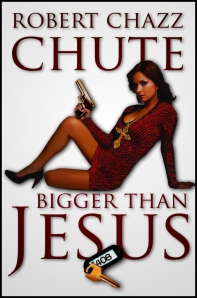
GET BIGGER THAN JESUS

Why should he pay for the cow when he can get the milk for free? If you’re unfamiliar with this distasteful euphemism, it’s meant to control and shame women so they defy their biological needs and get married too young to the first doofus* who comes along so they won’t risk being called sluts by a repressed and repressive patriarchy and said patriarchy’s agents. It’s the same misogyny behind, “For birth control, hold an aspirin between your knees,” and “Good cowgirls keep their calves together!” It’s kind of funny the first time you hear it. Then you realize it’s a power grab meant to squelch the joys of life and your humanness. (I do love a breakdown of social constructs so the deviant subtext in revealed.) What, you ask, does that have to do with ebooks? Everything.

Yesterday began a little after 5 a.m. It continued until 3 a.m. I hasten to add there were distractions. I did stop to shower and eat. There’s a shower hose over my desk chair by the IV pole. The IV bags are full of double espresso. The desk chair is a toilet. It’s like the helpful chairs in WALL-e, before that evil little robot screwed everything up for everybody and made them get up and move around outside. Mostly, I formatted my new book. For all the work, I wonder if people will buy it when they can have it for free?

Crack the Indie Author Code: Aspire to Inspire (by Robert Chazz Chute, coming in early July!) is a book based on the best of this blog. I’m creeping up on 1,000 posts and I thought it was time I made something more concrete of it. It’ll be my favorite posts in one convenient, pithy, humorous, inspirational package. I’m editing again and updating as I go, of course. At over 90,000 words, it will be my comprehensive take on what the newbie needs to know and what the self-publishing veterans’ choir likes to sing. I wrote a note in the front matter about who the book is for. I made sure to say: Hey, if you want the milk for free, feel free to sift through the blog. ChazzWrites is free. All the podcasts at AllThatChazz are free, too. Everything I sell is so close to free in price, you’d tip the pizza guy what you’d pay for my books. Enjoy! I give freely, without remorse or hesitation or hard feelings. Surprising, because, as a cheap writer who can pinch a Canadian quarter until the moose screams (that’s “eagle screams” if you’re in the United States), I’m actually a terrible tipper.

There is a lot of information that’s free on the Internet so I try to keep ChazzWrites.com fresh and a little different — even contrarian. I think I convey that information with a certain flair, but my hairdresser thinks he’s funny, too. Meanwhile, I just wish he’d never learned to speak english. I’m not going deep  into ever-changing information, either. Crack the Indie Author Code isn’t about the latest marketing theory for self-publishing. It’s evergreen stuff — old-fashioned from a new angle —  about writing craft as seen through my lens and as told to any writer who is more eager for cozy inspiration than ebook marketing advice. (With the changes at Amazon, a lot of marketing theory is still up in the air, but if you want a solid marketing book that’s user-friendly, buy my friend Jeff Bennington’s book, The Indie Author’s Guide to the Universe and check his site for updates.)

Since my new book is hidden right here within nigh 1,000 posts, why buy it to put it on your e-reader? What’s the unique selling point? What’s the value to the customer? I’d say: ease of use; improved readability; improved searchability; updates; new content; improved content; my moral support and your grasping consumerism. I make better jokes as I make another pass at the content, too.

As I go through Crack the Indie Author Code, I can see how some of my ideas have changed over time. When I started this blog, I talked a lot more about craft and writing mechanics. Self-publishing needed more cheerleaders then.  Now we need more leaders. Early on there was more, “Rah! Rah! Rah! Those guys in trad pub don’t get it and don’t see what’s coming!” I omitted some of those posts even though I was right. They were appropriate at the time, but it’s time to mature (the jokes are still less than mature.) Self-publishing’s next step is simply to call it publishing. We need to get past hang-ups about trad versus indie. Yes, of course, there’s still value in traditional publishing. It’s not going away. It’s just changing radically. The new paradigm is not necessarily either/or. Depending on business cases, multiple variables and your temperament, you may choose to do both and only the terminally crank y will fault you. Meanwhile, successful revolutions establish regimes.

But, will anyone bother to buy another writing book? Don’t we have enough?  The broad answer is, can you get enough of whatever your passion is? More particular to my writing book, those who like my flavor will buy it. Those who won’t, won’t.  That’s all beside the point, anyway. I know it’s a business, but I don’t write for you because I can’t anticipate all your  variables and idiosyncrasies. I can only write to my taste. I write for your adulation, sure, but first, I write to entertain myself. I’m hoping you’ll say, “Oh, Chazz, how clever you are! I’ll buy umpteen copies for all my friends!” But before you ever get a chance to evaluate, that’s me sitting at my keyboard enjoying the dopamine trickling and tickling my neo-cortex. That’s me saying, “Oh, Chazz, how clever you are!” We write for ourselves first, not the reader. The act of writing is primary, sometimes even primal. The point is to form the thoughts, think through your typing fingers and transcend the blank page until you’re high on the creative rush.

Will Free beat out $3.99 in the cost-benefit analysis? No. You’ll buy my cow for convenience or for other variables, not least of which is, to have and to hold. And, to answer the ugly metaphor that began this piece? Most  people enjoy free premarital sex and yet most people still marry (some to dark and very costly ends.) At $3.99, the risk is microscopic compared to marrying someone.

To win your $3.99, I just have to create something I’ll love.

If you’re of the same mind, I have a sale.

Back to the espresso drip. I’m off to make that dopamine gush!

* Generalizations aren’t fair. Sometimes the first doofus is the right doofus, but most people these days test out several to many doofuses before selecting the one doofus they can love (and be most angry at without opting for murder) for the length of their marriage and possibly the rest of their lives.

Filed under: publishing, , , , , , , , , , , , , , , , , , , , , ,

Author Blog Challenge 21: My Top 20 Best (Worst?) Advice for Authors

Обкладинка книги "Над прірвою у житі"

Обкладинка книги “Над прірвою у житі” (Photo credit: Wikipedia)

1. Be weird. Draw outside the lines. Live larger. Be different. If you can’t dare to be a little strange, or stranger, you sound too much like everyone else and there’s quite enough of that. Does your book’s title sound like all the other titles in its genre? Yes? You’re already boring me, mate, and I say that with love. Be three times more daring and ten times more clever.

2. Don’t write what you know. If we all did that, where would science fantasy be? Instead, write what you care about. You’ll get enough research to fill in the holes if you care enough to give your story verisimilitude. It’s always more about relationships, characters and action than it is about the guts of your ship’s stardrive engines, anyway.

3. Lose your thesaurus. You don’t need more words to tell me the story. The right words are the ones that come to you right away. If you use the word “epigonation”, you’re showing off and annoying your reader. A stupid thing to do, especially when you wanted to sound more intelligent. That must have been your aim because, unless you are sending your books back through a time tunnel to the time of Christ, you certainly weren’t trying for clarity in your reader’s mind.

4. Spam me. I don’t mind you telling me about your books one bit. I might be interested and I like to know what my options are. If you hit me over the head too much, of course I’ll ignore or unfollow you, but that doesn’t mean you should be silent. That means be clever and funny and engaging and giving most of the time. Lights are not for hiding under bushels. Light that bushel on fire and throw illumination.

5. Get into fights on the Internet. If you are getting along with everyone all the time, you’ve either got nothing to say or you’ve got no spine. Neither attribute attracts me to what else you might have to say within your book. I’m not advocating douchebaggery or fighting for fighting’s sake. Instead, have the courage to disagree with idiots while pretending to be civil and acting as if you don’t want them dead. We all know the truth.

6. Tell, don’t show. I know, I know. Somebody’s head just exploded and no amount of repainting ever covers up that mess. However, in grown up writing class, we encounter circumstances where telling is sometimes more appropriate. It saves the reader time and skips over stuff the reader doesn’t care about so we can get to the good stuff. Be more Elmore Leonard. Be less mime. Tell when you need to. Show when you need to. There aren’t rules, only guidelines. Learning all the rules before you break them? Sounds like a waste of time on a detour, doesn’t it? Instead, just write what works and stop mucking about.

7. Strangle your strict inner grammarian. If you write for clarity, that will cover most grammar rules, anyway. Some people are still holding on to stuff from eighth grade simply because it’s what they learned in eighth grade. The rest of us are splitting infinitives with wild, naked abandon, ending sentences with prepositions and using the word “hopefully” like a normal human (i.e. technically historically wrong) — and we don’t care. And sentence fragments? Rock! Common parlance trumps grammar. If it didn’t, none of us would communicate the way we do now. Strict grammarians fantasize about a language that isn’t organic and instead is frozen in amber from Dickensian England. They’re nuts. If language could freeze (and therefore die), we’d all still be angry cave people, grunting and pointing like New Yorkers in a Brooklyn deli.

8. Stop rewriting. I’m talking about your first chapter. You’re never going to get your book finished that way. Plunge! Get your atomic turbines to speed, Batman! Write and keep moving forward. Write like I’ll chase you in my Mustang with a twelve-gauge full of rock salt if you don’t finish two chapters tonight. (Because I will.) Rewriting is for later. A first chapter, endlessly written  and rewritten to perfection, does not a book make. Rewriting too soon is a formula for you, drooling on your deathbed, wondering if you should have taken out that comma on page three, and then put it back one more time before all trace of your existence is erased and there’s no book as evidence you ever were, you zero legacy stiff!

9. Stop reading old classics and start watching more movies and reading more comic books. Your english professor thinks Hemingway is the shit because that’s what he was taught in 1980. This is generational data lag. If you insist on classics, read: Crime and Punishment (so dates will think you’re deeper than you are); Hemingway’s short stories (not his novels); Portnoy’s Complaint to instil the value of a sense of humour in literature (a rare thing, that); A Confederacy of Dunces (for douchebag cred with hot Lit. majors at the dean’s cocktail parties and the nerdy chick at the bookstore) and Catcher in the Rye (in case the writing thing doesn’t work out and you turn to the next logical career choice: serial killer.) And nothing at all from Ayn Rand. Nothing! You have nothing to learn from her unless you’re going for what not to write, do, think or be.

Why movies and comic books? Because you need to make your storytelling more visual. (Hint: If most of your “action” takes place in a suburban living room much like your own, think harder. If you’re writing a certain kind of literary fiction that demands domestic ennui and the reader’s patience (yes, the reader — as in one reader — your mom), at least spice it up somehow. Make your main character do their sensitive contemplation by the river (so they can fall in or throw themselves in or get thrown in by a helpful plot enhancer). Or put them in the kitchen, next to the handy knife block so we get a sense that something might actually happen. Events must occur!

10. Stop writing huge, ambitious books. Write shorter books and make it a series so you have hope of making some money.

11. Write for the money. You think love and passion will get you through a whole book? No. There will come a time when you hit a wall, figuratively and literally, with your manuscript. Maybe you won’t want to do one more draft or you won’t have the energy to get up early and write another chapter. Screw that weak, loser talk. If you’re writing with the hope you’ll make some money some day, you get up. You’ll go the extra clichéd mile to yank out the clichés from your manuscript like black, seething tumours. Your kid wants to see Disney before she’s too tall for the rides. Your other kid wants to finally get an iPod for his birthday since he’s the last of his friends to get one. (Ooh, that one hits close to home.) Write for money because you need it. Write for money because, if it’s just a pleasant hobby, what’s at stake when the going gets rough?

12. Pay attention to how much better every other indie author is doing than you. Get angry, envious and jealous of those talentless, lucky hacks. The reasons are similar to #11. Take your ugly motivation wherever you can find it. (Notice I just told instead of showed — #6 — and you didn’t mind.)

13. Put references to popular culture in your books. Traditional publishers always eschewed that in manuscripts.  That’s why you have to infer so much about pop culture from old novels instead of knowing specifically what people paid attention to. The worry was that contemporary references to movies and issues would date the book. I can’t imagine why. What’s modern now will be a period piece in the future. So what? They might sell more books if they paid attention to what served the story and what was most entertaining instead of sticking to rules from from Lit. 101. (See #9) It works for John Locke’s readership.

14. Stop confusing process with product (Part 1). Neo-Luddites who wax poetic about the feel of a paper book are fetishizing the medium of dead trees over the book’s content and are possibly high on glue from all that sniffing. For people who claim they value the written word so much,  they seem overly concerned about the package it’s wrapped in. It’s fine to prefer a paperback to an ebook, but expect to pay more for the privilege and, by Thor’s hammer, stop whining to authors of ebooks about your fetish! When’s the last time you went out of your way to tell a used car salesman you think he’s shifty even though you weren’t buying a car from him anyway? What purpose does complaining serve if you never intend to buy our books? If you don’t want ebooks, then don’t buy them and don’t feel you have to tell me about it. We’re getting creeped out. (Alternative: buy my paperbacks, too.)

15. Stop confusing process with product (Part 2). Last week somebody called someone else a hack because he advocated writing fast. (No, it wasn’t me who was called out, though I have advocated writing faster if you’re up for it.) It’s the writing snob’s equivalent to a George Carlin joke: “Anybody driving slower than you is an idiot and anyone driving faster is a maniac!”

The mistaken subtext here is to think that anyone writing more quantity than you must be suffering in the Quality Assurance Department of the Writer’s Brain. Consider that A. Slow writing is no guarantee of quality, either. B. What counts is the end product, not the speed with which it arrived. (The slow writing advocate in this case admitted she hadn’t actually read any of The Speedy Author’s books, so she was letting her ass talk too much, wasn’t she? C. If someone else can write faster than you and you resent them for it, that might be jealousy talking. (See #12) Or D. Maybe you just aren’t as smart as The Speedy Author, you prejudiced dummy.

16. Wait for inspiration before you write because less competition would be great for me. Oh. For you? Not so much.

17. Offend your family. Disguise them, but use them. If they didn’t want you to use all of that useful childhood trauma, they should have been nicer when they had the chance. That time you got locked in the closet after the unjust beating? That’s rich writerly soil, right there. Rename your brother Larry so he’s Harry in the book. That ought to do it. Larry’s a moron.

18. Start building your author platform long before you need it and don’t whine that it’s hard. Your book is a loudspeaker. Without a platform, your loudspeaker is pointed at empty stands in a cavernous stadium. You don’t want to do this. Why do you think that matters?

19. In fact, hey, that’s another rule! No whining, period! Nothing worth doing is going to be easy. Besides, it’s unattractive. I once stopped watching a blog because a writer felt people weren’t grateful enough for her words. Gratitude is great (see yesterday’s author blog challenge post, below) but demanding unending thanks when you really haven’t done that much in the first place is petty narcissism. Writing professionally is about generous narcissism.

20. Stop reading Writers Digest and Publishers Weekly. There’s nothing in a paper magazine you can’t get in pixels faster and cheaper. WD is a holdover from traditional publishing and that’s why their advice is still weighted toward agents and the New York cadre. Those are lengthy pursuits with questionable ends that eat up your life. It’s procrastination in the guise of relevance and productivity. It’s patriarchal, systemic paralysis by matriarchal, editorial analysis. Chasing slush pile dreams is what my friend, author Al Boudreau, refers to as “dinosaur hunting”. (Brilliant, yes?)

As for all that crap in Publishers Weekly that spouts everything you need to know about traditional publishing? That’s all stuff you never need to know before you have a book written and probably not even then. What possible difference could knowing the industry make when they only ever talk to themselves? They talk too much about trad publishing because that’s where the ads come from. It’s incestuous, out of date and out of touch. If you want to know something about publishing that’s not out of date, read Konrath and Dean Wesley Smith and Passive Guy and Russell Blake and Jeff Bennington or even (for the love of Thor) this blog’s curations for that matter.

BONUS TIP: Instead of listening to the dinosaurs who refuse to see the meteor coming, be a contrarian. Contrarians are more interesting.

Wait.

What do you mean, you agree? What kind of contrarian are you, listening to some twit you don’t even know telling you, “My Top Twenty Best (Worst?) Advice for Authors”? As if I’m preaching the bloody sermon on the Mount! What kind of nonsense is that? Go ahead and write and make your own mistakes and write your own rules.

This blog post was for, as they say, “entertainment purposes only.”

Does anybody really learn anything much from another person’s mistakes?

For anything that really matters, you have to make those life altering mistakes for yourself.

I’m not your dad. I’m another writer, tap dancing for change.

Filed under: publishing, , , , , , , , , , , , , , , , ,

Author Blog Challenge 10: How to make me want to spread your word

English: A pie chart created in Excel 2007 sho...

English: A pie chart created in Excel 2007 showing the content of tweets on Twitter, based on the data gathered by Pear Analytics in 2009. (Photo credit: Wikipedia)

Regular readers know I use the Scoopit! tool to curate helpful stuff about indie publishing I find around the web. I learn a lot researching blogs, link to good content so you can find it and include my comments on the posts I recommend. Sharing and spreading publishing news is a happy bonus. If I believed in karma, helping strangers for free would be the good kind. Today, let’s talk about what makes your articles, posts and tweets attractive nuggets to link to.

But first, a true story: Anguished Author goes to A+ Agent for a meeting about her book. A+ Agent says, “The contract is signed but you need to build your platform more and you’ve got to make a viral video for the book trailer.”

Two thoughts about this story:

Writing helpful blog content and building back links is one way to build a strong platform. Author sites tend to be too much “Me, me, me,” and a more effective  author site is more about “You, you, you, the reader.” Figuring out what helps people will help you build your platform. (For instance, my author site is plastered with information about my books, yes, but it’s also my fountain of free comedy/fiction/narrative/commentary podcasts to extend my reach beyond fellow writers to the reading public.)

and

Sorry, but you don’t get to make a viral video. You make a book trailer. It will go viral or not according to the whims of other people, unless you pay a bunch of kids and robots to pimp it in chatrooms across the Internet. However, since all book trailers (except this fake one) are lame, that won’t work and you’ll fail to dictate the world’s taste. Cute and funny are your best bets since your budget for movie production is not the same as the Prometheus trailer and the audience is jaded by all that amazing acting and CGI.

So what makes me want to retweet and spread the word about your blog? There are some solid rules that are universally applicable and then there’s my capricious, subjective taste. That kind of makes me sound like a prick, but everybody’s got topics that push their buttons. The words: “how to” are probably the most powerful words in a blog headline for anyone. (See the “how to” title at the top of this post? You clicked it.) Self-publishing is a new world and everyone wants a tour guide.

Here’s what’s going through my head as I decide what to link to and promote:

1. I’m reluctant to post something that is time-limited, such as headlines that say, “Final hours of the giveaway” or “Tuesday Only!” My Twitter followers and blog readers might not get the message right away and I don’t want to annoy them with what they missed.

2. (A) Don’t write too many headlines that are too spammy. (No one knows how many “too many” is.) I don’t mind blog posts that reference your books. I do that myself freely and it makes sense to draw from firsthand experience. However, a headline that says “Buy my book” is only for your hardcore fans who will buy it no matter what. That draws no one new into your tent for the revival meeting.

2. (B) But! A major caveat since this book promotion thing is tricky: If you balance the promotional content with free education, entertainment and jokes about your genitals, that’s reasonable. Blogging is a lot of free entertainment and information provision. If you can find a reasonable balance, that’s fine with most people. Ask people to buy your book on your own blog and your own feed as long as that’s not all you do. (And by the way, just because you don’t want to read it, doesn’t make it spam. Someone else may want to whisk it off to Paris and pledge undying love over cheap red wine and croissants.) Fortune does not favour the timid. Take it from a timid person who has resolved to pretend to be an extrovert.

For instance, I auto-tweet a welcome message when anyone follows me on my twitter accounts (@rchazzchute, @thechazzsays, @expartepress). The fun message (of doom!)  provides links to my books. My guess is, people who hate that — and some really do — were never going to buy my books anyway. Others will either appreciate the heads up or suck it up, buttercup! Since adding the auto-tweets, my sales have gone up. So there. (I also don’t cooperate with the twit validation service thing. It’s slow and painful and if you want me in your feed, you want me. If you don’t, don’t. Don’t be a pansy about Twitter.)

3. No poetry. I wrote a book of poetry. I like it, but it’s too small a niche and outside what people expect when they come to ChazzWrites. It’s sad, but there it is. Margaret Atwood has written nine books of poetry last I checked, but even many of her fans would be surprised by the news that she’s one bad rhymin’ mammerjammer. Here it’s all about self-publishing, book marketing, writing craft, how-to, industry news and the occasional flambé of whimsy in your face.

4. Technical advice with specifics is great. Just this past week I linked to a post with step-by-step stuff about publishing to the Kindle. Hold my hand and I might get a crush on you. I’m easy that way. I might even whisk you off to Paris and pledge my undying love. Well, no. I’m borderline agoraphobic and I’m locked behind a hermetically sealed hatch in a subterranean bunker and you’re out in the real world doing…things. Blech! So we’re not going to Paris. However, I love tech advice and admire those tech-oriented authors from afar. Often I link to something I want to hold on to. Sure, I could just bookmark it on a reading list to get lost in the depths of my computer, but on my blog it’s easily searchable and organized.

5. Be a buddy. Long time readers may notice I mention Kit Foster quite a bit. It’s not just because he is a brilliant graphic designer. He’s also my graphic designer. Another ally in the fight is my friend Dave from the School of Podcasting. My podcast wouldn’t exist without Dave Jackson. We stay in touch on Skype and end up mentioning each other on our podcasts from time to time, too. There are certain bloggers and fellow authors who are my go-to people simply because I know them better than others. They consistently offer advice that is honest, positive and fresh.

Last week, Jeff Bennington posted a great article about working with ACX to produce audiobooks. That’s something I want to do and Jeff is consistently a trailblazer. And no, it doesn’t hurt that I’ve spoken with Jeff. We’re in touch on Twitter and the odd email. He designed my first paperback, Self-help for Stoners, and I’m quoted a couple of times in his book, The Indie Author’s Guide to the Universe. After he read my novella, The Dangerous Kind, he gave me my first cover blurb, too. I’m a shy people pleaser with an inferiority complex spackled over poorly with bravado, so anybody who’s nice and knowledgable gets links from me.

6. Be a thought leader in the industry. I often point my readers to Russell Blake, Dean Wesley Smith, Kathryn Rusch and JA Konrath. They talk real sales numbers and how scary the industry is. They say things I don’t want to hear, but argue their points well. (Also, please allow comments on your blog if you don’t already. I do not always agree with articles I link to, but if the comment thread is lively and informational, I’ll often point readers that way for the instructive debate.)

7. Join Triberr. I retweet my tribe on Triberr. Last week, I liked Caleb Pirtle’s blog post so much I linked to it from here, too. Triberr is one way I become aware of useful stuff.

8. Join a Tweet Team at World Literary Cafe. Book promotion is more effective when someone else is doing it for you and I’ve found great people that way.

9. Write a great book and be a great interview. Occasionally I run interviews with authors. Sometimes I discover authors through their books first, not through their blogs. Somehow Blake Crouch had been merrily successful for some time but, sadly, I didn’t know about him until I stumbled across Run. I subscribed and will be watching his feed for something useful that you’d enjoy. Through a mutual friend, I also just discovered Scott Bakker, author of Disciple of the Dog. It’s a brilliant book. He’s in my home town and we know the same people so I’m sure I’ll meet him at some point. I’ve promoted him on Twitter already and I hope he’ll show up here or on my podcast or both at some point.

10. Reciprocate. (This is #5 with a different angle.) Eden Baylee did a great thing in organizing Indies Unite for Joshua. I supported the campaign and Eden consistently supports my efforts as I support hers. She even interviewed me for her blog (Go ahead and check out that interview. It’s X-rated, fun and wow! I was way took honest!) Eden is a constant friend on Twitter, too, and sometime we’ll chat over coffee when next  I escape the bunker for Toronto. I don’t forget people who are kind. Sadly, I also have an eidetic memory for pinheads, too, but the point is I especially try to help people who help me.

Sometimes I point to a kind of obscure blog. Other times, I say the obvious with, “Have you seen what Joanna Penn is saying?”

Sometimes it’s all “Me! Me! Me!” I try to find the reasonable balance, though.

Filed under: publishing, , , , , , , , , , , , , , , , ,

Author Blog Challenge Writing Prompt: Describe how the idea for your book first came to you

English: The entertitle of Buffy made on Paint.

English: The entertitle of Buffy made on Paint. (Photo credit: Wikipedia)

My books come to me in different ways:

With Self-help for Stoners, I saw that I could fit stories of suspense into a framework of a self-help book made of fiction. When Director Kevin Smith inspired me to quit my day job and pursue my writing dreams, I realized that I could put together a fun, genre-bending bathroom book that would defy expectations. It came together quickly as a wild mix of the unexpected melded with observations, parables and exhortations (to get off the couch.) It’s a book that’s very different but somehow familiar. The feedback has been great, though I’m often surprised when people debate, is this pro-drug or anti-drug? I tell them it’s neither. It’s suspense that asks you to draw conclusions about your compulsions. It’s pro-freedom and freedom of speech. Yes, it’s important to have a label so people can find you and your book, but in this case, pigeon holes are for pigeons. It was quite a thrill for me to hand Kevin Smith his own autographed copy of the book and he was happy about it, too.

Sex, Death & Mind Control is the book that came so slowly, it’s appropriate to use the word evolution. I wrote short stories over several years before attempting longer fiction. Two award winners are included in this collection and it’s suspense that can be creepy and surprising. I don’t care for gore and it’s not at all pornographic, but sex and death are outcomes of the key factor through all the stories: various forms of mind control (magic, persuasion, mind games, coercion, trickery and self-delusion) form the book’s theme.

I’m fascinated by mind control. When powerful forces use it on us, we are in danger.

When we gain control of our minds, we will win.

The Dangerous Kind is closest to my heart. It’s a novella about escape. The place it is set (Poeticule Bay, Maine) is fictional, but the setting draws on places I lived when I was a kid and the town is almost a character in the plot. Anyone who has felt small-town claustrophobia will recognize and feel the resonance. There’s a deer hunt, intrigue and an inheritance between brothers on the line, but it’s really about complex relationships and the friction that comes from people who live too close together and only think they know each other. That certainly reflects my small-town experience.

I wrote several stories where I found myself drawn back to run over the same demon roadkill on the back roads around Poeticule Bay so one of my WIPs is all about the place. I’ll run those demons down, exorcise them or make them dance for my pleasure.

Finally, Bigger Than Jesus, my crime series, springs from my dim world-view. I commented on another fiction writer’s blog recently that the criminal world is so like the world of Buffy the Vampire Slayer. In Joss Whedon‘s series, vampires and monsters run amok, but the normies somehow look past all the mayhem to maintain the illusion of stability in their lives. Vampires attack the school and the principal says it was druggies on PCP. Victims suffer and die by night as people go about their business in sunlight. Organized and disorganized crime is just like that. I’ve spent some time hanging out in courtrooms as a reporter and researcher and the stories that unfold there are by turns tragic, comedic and horrific. Homelessness, drugs, violence, confrontation and small, surprising acts of mercy: People would be amazed what happens in cities across the world, much of the stuff bubbling from underneath is never reported in the media. When I’m writing this stuff, I’m often reminded how the Cohen brothers and Elmore Leonard have it right. A lot of bad things can happen on the easy and wide route out of town.

I don’t know if twisted and dim world views and angry childhoods are required for all writers,

but those elements help me come up with my ideas for my books. 

Filed under: publishing, , , , , , , , , , , ,

VIDEO: Confrontation over copyright infringement & CYA

Caricature of Gregory House Italiano: Caricatu...

Caricature of Gregory House Italiano: Caricatura di Gregory House (Photo credit: Wikipedia)

This week, the theme that emerged on the blog is: Writers in Conflict with People Who Undervalue the Work and Try to Take Advantage of Them. In this tense video, a writer whose work has been stolen gets recompense from a newspaper. (Well done for keeping it civil and still getting paid.) I can’t help but wonder how this would have gone down differently without the camera running. Got a problem? Take a camera.

Failing that, keep all your emails and the paper trail so when people cross you, you can crush them if you need to. Don’t crush them if you don’t need to, of course, but be assured that at some point it will come up. Recently I felt I had to use a digital voice recorder when forced to chase someone over a bill. Even though I ended up only leaving a voicemail, I kept the recording to show how unfailingly polite I was if I needed to show the transgressor what reality looks like. It saddens me that these things are sometimes necessary, but after getting harassed by someone once, I now keep the recorder by the phone should anyone ever make the same mistake. When people get nasty, they inevitably hang themselves with their own rope.

What a downer. So we should also affirm that mostly? Things work out. Most people in the industry have good intentions. Most people deal in common, solid business practices. Very few people set out to be unkind. Usually, the problem is in a miscommunication, a misunderstanding or the person who is in the wrong is only wrong. A mistake is not the same thing as a sin. Also? When people are unkind, it often catches up with them. (Just yesterday, an old enemy fell due to the atrocity that is her personality. Am I unkind to taste the delicious schadenfreude? Yes, a little, I suppose. However, despite my efforts to stay pure and innocent, I’m still human so I have to point out that karma is a bitch and so was she.)

We have to believe that most people are doing the best they can. We have to believe that most people are good. To keep moving forward through our days, we have to believe it.

Believe it, even if it’s not true.

You don’t really want to be Dr. Gregory House.

Filed under: publishing, , , , , , , , , , ,

Bestseller with over 1,000 reviews!
Winner of the North Street Book Prize, Reader's Favorite, the
Literary Titan Award, the Hollywood Book Festival, and the
New York Book Festival.

http://mybook.to/OurZombieHours
A NEW ZOMBIE ANTHOLOGY

Winner of Writer's Digest's 2014 Honorable Mention in Self-published Ebook Awards in Genre

The first 81 lessons to get your Buffy on

More lessons to help you survive Armageddon

"You will laugh your ass off!" ~ Maxwell Cynn, author of Cybergrrl

Available now!

Fast-paced terror, new threats, more twists.

An autistic boy versus our world in free fall

Suspense to melt your face and play with your brain.

Action like a Guy Ritchie film. Funny like Woody Allen when he was funny.

Jesus: Sexier and even more addicted to love.

You can pick this ebook up for free today at this link: http://bit.ly/TheNightMan

Join my inner circle at AllThatChazz.com

See my books, blogs, links and podcasts.

Enter your email address to follow this blog and receive notifications of new posts by email.

Join 2,063 other subscribers