C h a z z W r i t e s . c o m

See all my books at AllThatChazz.com.

Sprinkle the misery and you, too, can turn your kids into writers

When I was in elementary school, we were forced to write stories to themes that were never of my choosing. I remember using the cliché, “If not for bad luck, I’d have no luck at all,” repeatedly. Then I used a pun on the words “mourning” and “morning”. Twice. My teacher didn’t have a lot of hope for my literary ambitions. Yes, those were dark days growing up in the village. 

Flash forward.

I’ve written ten books and Season 3 of This Plague of Days is in the works. What happened so this became possible? How did all my writing days get bright? If you had a happy childhood (Editor’s note: Is that possible or are you just being sarcastic?), I suppose you could foster the writer’s mindset by using your imagination.

Failing that, grow a writer like this:

1. Mom read to me. I don’t remember it, but she was insistent that if I had any success with words whatsoever, I had her to thank. 

2. Mom was a stickler about language and wasn’t shy about correcting us in front of company. Yes, it added another dimension of nastiness to Thanksgiving and Christmas. The only respite came from shutting up or getting it right. Since I couldn’t seem to shut up….

3. Mom loved crossword puzzles and we did them together. A crossword puzzle was like half-time at the Superbowl for us. It let us take a necessary breather from all the fighting. (We’re Irish.)

4. There were always books all over the house and my parents read voraciously. Love of reading must be osmotic because I rebelled against everything else they thought valuable. Fortunately, the town wasn’t so small we missed out on a library. That would have been barbaric.

5. My parents helped me appreciate books so much because, seriously, childhood in rural Nova Scotia? Brimstone. Sulphur. Country music.

Later, while reading Dante’s Inferno in university, I looked for the circle of Hell where bad children crawl under the bed covers and cry because they don’t have books into which they can escape. If you concentrate on the words on the page, I learned you can block out the twangin’ and a-fiddlin’.

6. My parents owned a video rental store. I watched a staggering number of movies of all sorts (not just porn.) Movies teach storytelling, especially when they’re bad. Poorly executed movies stir the writer’s imagination as to how you could have saved the film if only you worked in Hollywood. For instance, what if the guy who comes to the door isn’t a plumber or a pizza delivery guy, just to change things up?

7. Needing a break from me, my parents gleefully sent me off to a good school with a good program where I studied the history of philosophy and the philosophy of history. I was in the Foundation Year Program at the University of King’s College where I learned to appreciate how much I didn’t know. It’s the sort of education where you get to read classics voraciously. Who can afford the tuition for this sort of thing anymore? They’re focussed on getting a job, instead. I don’t blame anyone for that, but it is a loss.

I also studied journalism in university. I can’t say that really helped my writing all that much, but it did fuel my outrage and sadness indirectly, so that’s helpful.

8. My father is a storyteller. Some of the facts about the tough life he’s lived migrated into Murders Among Dead Trees (now on sale for a limited time for just 99 cents!) and This Plague of Days. Poeticule Bay, Maine is fictional, but it’s drawn from my experience and his life, growing up on the east coast. It’s a deep well of sorrows from which to draw.

9. My father loves language, but without my mother’s more conventional take on proper English usage. Instead, conversation is peppered with creative idioms only he seems to use. “You’re jumpin’ around like a fart in a mitten,” for one instance. That’s pretty creative. Dad does not use clichés. Good policy.

10. Growing up in a small town, everybody knows everyone else’s business. It’s one of the things I hate about small towns, but in that microcosm is enough material, weirdness and human friction to fill a lifetime of book writing. 

That same small-town claustrophobia informs the stories in Murders Among Dead Trees. Gossip threw lives open, baring truths that are hidden when you have the comfort of not knowing your neighbors. Despite close proximity, there were still adulterers who dared to mess around without the courtesy or smarts to carry their affairs down the road into the next town. Everyone’s family medical histories were fair game and everybody was pretty damn judgmental about everything. Nothing was happening, so teasing was a team sport. Unsolicited advice was rampant. Violence was common at school and bullying couldn’t exist because “it’s the second punch that starts the fight.” If you were too polite, you must be weak. No weakness was left unprobed.

In cities, people die in repetitive ways. Where I grew up, mortal dangers were less predictable: farm equipment chomp with metal teeth and sea caves fill with fast, icy, tidal water. And then there were the hunting accidents.

In high school, the guy who sat next to me in grade nine math was mistaken for a bear. Up a tree. Wearing hunter orange. If he’d been murdered in an urban drive-by scenario, at least we could have blamed stupid gang violence. Instead, an excitable hunter killed him. One good thing about a developing writer in a small town: you get all the details about the guts and gore. From the drunken car accident that crushed my childhood playmate to blow-by-blow descriptions of every fight, somebody always tells one person. Then it’s all over town.
Tips and inspiration for the writer's journey to publication.

Tips and inspiration for the writer’s journey to publication.

An unhappy childhood in a small town is an excellent incubator for a mouthy brat who dreams of escaping to the big city one day and leaving it all behind. 

Except, in my fiction, I never managed to leave it behind. I’m still there, righting wrongs, writing vengeance, and dreaming.

~ Robert Chazz Chute writes horror and suspense. Now you can guess why. See all his books here.

Filed under: writing tips, , , , , , , , ,

The writer, depression and getting the word music to play again

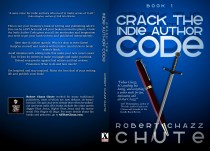
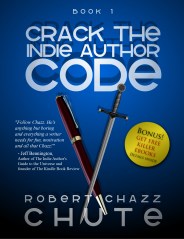
By the way, Crack the Indie Author Code 2nd Edition is out in paperback at $9.99. Smaller format, with jokes.

By the way, Crack the Indie Author Code 2nd Edition is out in paperback at $9.99. Smaller format, with jokes.

A fellow writer meant well when she told me that if you can allow anyone to discourage you from writing, you shouldn’t be a writer. That sounds tough-minded and strong, doesn’t it? It would be good advice to take, but unfortunately, I’m still human. Darn the luck, my skin is no thicker or thinner than it ever was. It will surprise no one, given the sort of dark stuff I often write, that I obsess over the negative. I do not remember sunny days. That’s who I am. Maybe I could fix it with some talk therapy, gene manipulation and a personality transplant.

So, yes, rude email hurt can me and my productivity. A bad review can ruin the morning and robs me of a night’s rest. I’m prone to depression and yes, I’m feeling it now. Due to several factors, I haven’t faced the blank screen bravely in days. I’ve been ill and trying to keep up with the demands of my new day job and, not to whine, but the depletion started with one condescending, presumptuous email. 

I’m letting a terrorist win. The worry treadmill is running. I’ve written ten books, but the negative cyclotron has kicked in. “How can I be a writer? I can’t even type properly.”

When I observe the disparity between Goodreads ratings and Amazon ratings (work is often valued one star less on GR even if the review sounds equally positive), I have an urge to reevaluate my life choices. If I’d gone to that Second City audition or to film school instead…but that way madness lies. At least until I fix the time machine. But enough about me.

Murders+Among+Dead+Trees+1121-1

What to do when you’re feeling down and not writing*:

1. Call a friend. Do not talk about your problem. Talk about what your friend wants to talk about.

To shore up your ego defences, you’ve already read and reread your happy reviews. Your friend isn’t going to tell you anything new and you’ve already got your “Atta-boy!”

The point of this phone call is to break the obsessive cycle of repetitive arguments, cutting retorts and vengeful homicide plots running through your head. This is a time for jokes. Ask about your friend’s life. 

2. Okay, so, being human, naturally you want another “Atta-boy!” Engage a fan who can’t wait for the next book. A little positive pressure may be all you need to get back to writing the next book in the series.

3. Write a blog post to vent, but only if you must and your friends aren’t answering their phones. (Ooh! Meta!)

4. Remind yourself that this is the firstiest of First World Problems and set the oven timer. How much more wallowing do you plan to allow yourself? More than one more pathetic hour and you’ll burn your life.

The three most powerful words are “I love you.”

The two most powerful? “Begin again.”

~ from Crack the Indie Author Code

5. Read the negative reviews of your favorite books. Choose the classics that you think everyone simply must adore. Realize some people will not be pleased.

Now in paperback!

Now in paperback!

Ev-er.

Or they’re trolls feeding an emotional need that has nothing to do with literary criticism. Or they’re too stupid to get you. I used to think that all readers, because they can read, must be smarter than average. Read some one-star reviews, especially the ones that bring down an author’s rating because Amazon didn’t deliver the book fast enough or they don’t like reading on a kindle and would have preferred paper. Clearly, my supposition about all readers being intelligent was not true.

6. Help somebody else with something. Shovel the walk and bring in the wood and be productive. Productiveness is a habit. This tip works better is you don’t do it for yourself. Do it for the old neighbor with the bum ticker and the broken leg.

7. Read something good that inspires you. Remember this feeling of transcending the great, dirty world? This delicious escape is why you are a writer. 

8. Realize that nothing will be perfect and the critics might have a point about something. Correct errors and move on.

9. But if they’re too harsh and stop you from writing at all, you’ve allowed a rude outlier to rob you, and most readers, of joy. It’s too easy for trolls to throw bombs. You write books, not a few, nasty paragraphs. We’re not allowed to critique reviewers so they’re safe from what you’re feeling now. Don’t let bullies win. Not letting bullies win is another reason you’re a writer.

10. Bing! The oven timer went off.

Start writing again. Anything. Just start. Within five minutes, you’ll be sucked into the other world again. Just get through that first five minutes and write. You aren’t facing a whole book. You don’t have to worry about word count or bad reviews or bruised egos or where to find a Luger, thick rope and kerosene at three in the morning. All you have to do is start writing and get through the first five minutes. Maybe less.

You can gut out five minutes. You don’t even have to act tough to start. Just start. An appreciative audience is out in the future, waiting and hoping you’ll get through the next five minutes. Maybe less.You will fall back into the groove and the word music will begin to play. And a one, and a two and a three…

If none of these suggestions work, call a doctor. Maybe it’s exercise, kale shakes and an anti-depressant you need to elude the mean reds.


Filed under: book reviews, publishing, web reviews, Writers, writing tips, , , , , , , , , , , , , , , , , ,

#NaNoWriMo: Story stuck and stalled? Try this.

You’ll probably get stuck from time to time. Most everyone does, so don’t panic.

If you get stuck often, outline more to save writing time and stay on track. Keep in mind that outlines are merely guidelines. You’re just dating your outline casually. It’s not serious and you don’t have to marry it. With the shadow of commitment gone, you still have your free and fun, bright and shiny creative mojo working for you.

I’m a pantser, but I do have an idea where my stories are headed. We may take a winding trip to get to our destination, but we will get there, hoping we won’t get stuck and be forced to back up thirty pages or so before we can move forward again. I’ve had to do that. It sucks, sucks away forward momentum and saps confidence. So let’s crash through that mental block and get unstuck.

Solutions to get out of the ditch

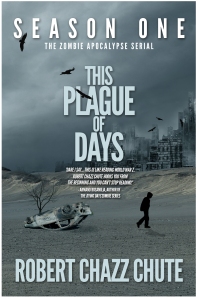
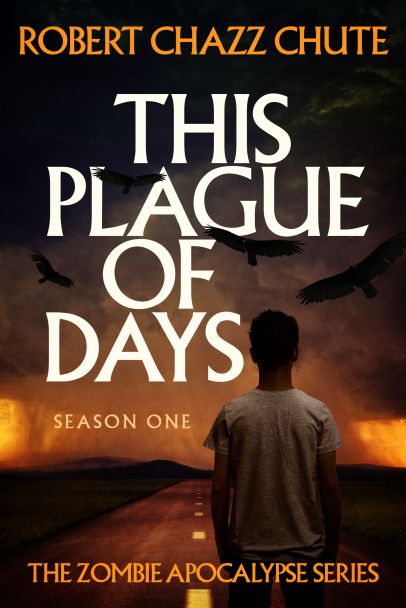
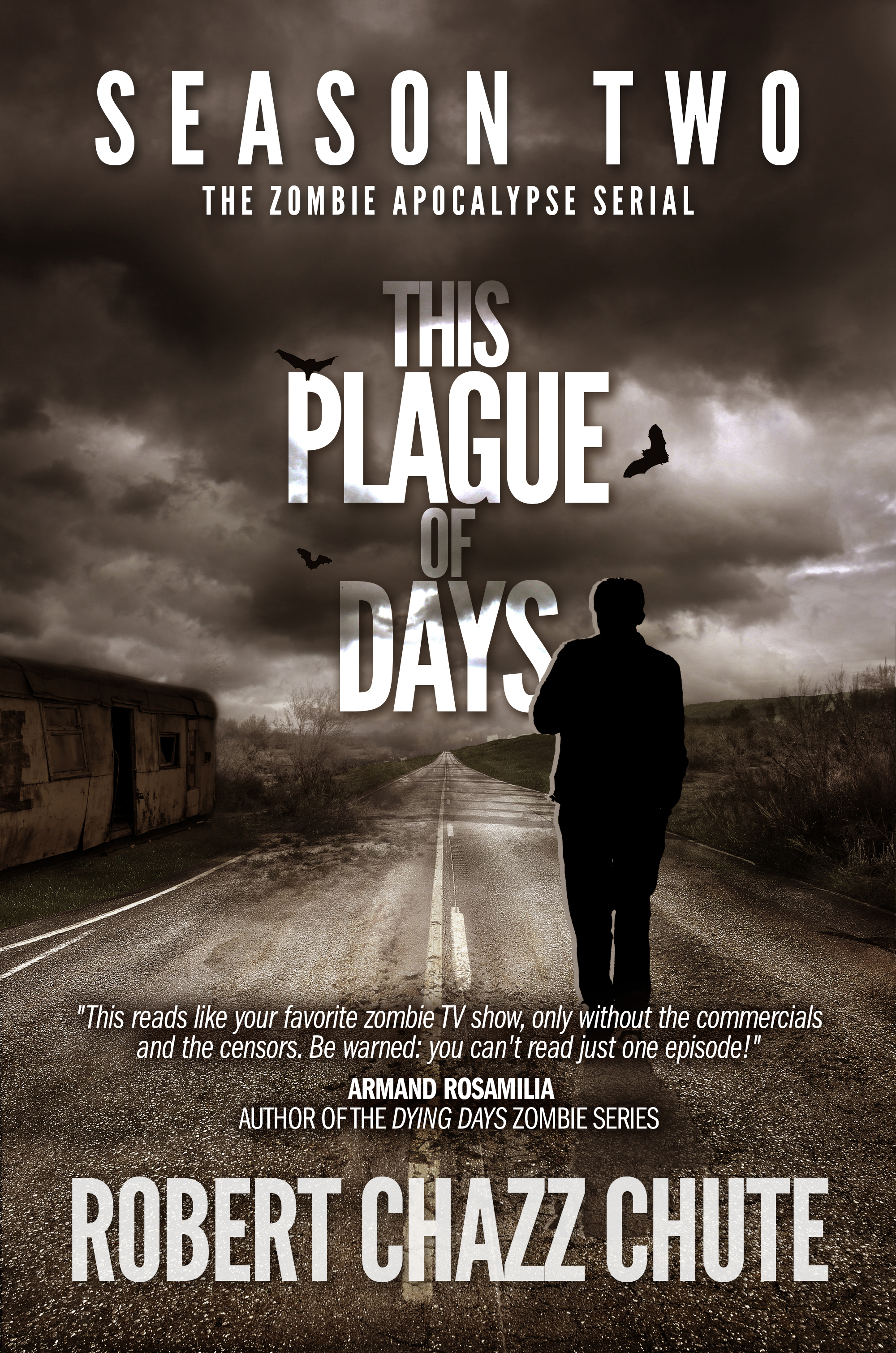
Season One of This Plague of Days is the siege. Sutr-X was the pandemic. Sutr-Z's next and it's coming for you and the Queen's corgis, among others.

Season One of This Plague of Days is the siege. Sutr-X was the pandemic. Sutr-Z’s next and it’s coming for you and the Queen’s corgis, among others.

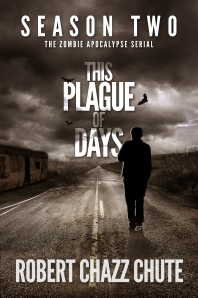
A random, alluring word, place, fact or event can give spinning wheels traction. For instance, the word “chiroptera” gave me a new direction when I wrote Season 2 of This Plague of Days. Sometimes I choose words, events or facts at random and noodle with them to see how they might fit into the narrative. Or I’ll draw from mythology, philosophy, politics or religion to discover new dimensions in the narrative.

Here’s the surprise: I always find a way to make those intriguing things fit naturally into my story.

I bet you can, too. Don’t load up on $10 words when a nickel word will do, of course…or at least don’t do it for its own sake or to show off. However, if something seemingly random can serve your story, use it (or dump it if it fails.) Readers like learning things as much as you do. They like characters with depth and to discover hidden significance behind meaning.

Get random

Autism, Latin, the Existential Abyss and references to Superman. That's pretty random, but it all fits.

Autism, Latin, the Existential Abyss and references to Superman. That’s pretty random, but it all fits.

This exercise in the writing process is about bouncing new electrical flashes through the writer’s brain, making new connections and getting synapses firing to see nonlinear possibilities. Frequently, you can find something new that influences the story simply by opening a dictionary and pointing. An atlas and a Wikipedia search might give you a random fact that sparks something. I found Gas City, for instance. The name alone captured my imagination and got me thinking about a new track to follow in Season 2. New characters and furious battles evolved from the way that slapped my brain.

If you’ve got an area of interest (baseball, plumbing, woodwork, salmon fishing, animal husbandry, whatever) work it in to give your characters depth. I’ve got a sensitive soldier with expertise in military history who shows up in the zombie apocalypse. I’ve also got an Irish cop from a tiny Irish resort. The place informs the character. These are the sort of factors that make the people on the page real. Jack (Jacqueline) Spencer majored in Elizabethan poetry. That makes her feel pretty useless when society collapses, but her development now has an arc. Up from zero, she gains experience on the road east to a hoped for haven from the apocalypse.

For me? It’s pathology that fascinates.

I studied anatomy first and was awed by our biological complexity. Then I studied Merck’s Manual and I’ve been a hypochondriac ever since. It’s startling how fragile we are, so pathology often finds its way into my books, one way or another. I know a lot about how the body breaks, so I’m sure you can guess how that might play into a crime novel.

I know a lot about migraines (and the many variations of headaches.) His inability to act shows up in one of my WIPs and becomes crucial to the protagonist’s predicament when the cops come calling, asking for an alibi. My protagonist in This Plague of Days is autistic which, naturally, gives him a unique point of view on the end of the world. Another character has Desmoid tumours. This is a rare condition, but it turns out to be very relevant to the story. Her disease saves her from a worse fate than Desmoid tumours (in a way I can’t divulge yet, of course. That’s Season 3 stuff.)

Take a fragment and build your next chapter around it. Make the fragment an element.

These general suggestions are random sparks. If an atlas or a dictionary or a quick Google search can make your story catch fire, and if you can make these new variables seamless, you’ll find their inclusion can get you unstuck.

Therefore:

a summer camp in Columbus, Ohio with too many mosquitoes

the ruins of a castle hidden under heavy snow

a rusted can opener, forgotten in the kitchen’s junk drawer

a tippy chair with one short leg

angina

Captain Cooke’s death

her mother’s wedding ring inscription

Try one of some of those for a start. How might they fit in your narrative? Keep going and don’t worry if you get stuck. The next step will come to you and, if not, go find that next step. Finish your story.

Tips and inspiration for the writer's journey to publication.

Tips and inspiration for the writer’s journey to publication.

~ Hi. I’m Robert Chazz Chute. I wrote a couple of books full of inspiration to get writers to get their books done. I also write about a kid on the autistic spectrum facing the end of the world, zombies who aren’t really zombies and vampires who aren’t really vampires. There are also jokes and Latin proverbs. It’s…oddly engaging and does not suck. See all the books here.

I also host the All That Chazz podcast and the Cool People Podcast. To learn more about This Plague of Days, go to ThisPlagueOfDays.com.

Filed under: NanNoWriMo, Writers, Writing exercise, writing tips, , , , , , , , , , , , , , , , , , , , , , ,

The Secret Alphabet of Independent Publishing

"You will laugh your ass off!" ~ Author of Cybrgrrl, Maxwell Cynn

“You will laugh your ass off!” ~ Author of Cybrgrrl, Maxwell Cynn

A is for All of it, which is what we want. (A used to stand for Agent.)

B is for Book, of course, and ebooks are “real” books, too. Literature is about the content not the container.

C is for Cutting prices. It would be bad for writers, but at 70%, we’re still getting paid more per unit sold than in traditional publishing. Also, price cuts sure make now a great time to be a reader.

D is for Deadlines. Don’t take forever to write your book. More time procrastinating doesn’t make a better book.

E is for E-books on E-readers. But you know your kindle is a transitional device, right? The phones are getting bigger again and tablets are coming down in price. We don’t want a device to do one thing. We want one device to be a web surfer, camera, phone, app catalogue, music box, GPS, ebook reader and best friend on our hip.

F is for Future. It’s the direction to look. If you don’t like it, you can change it whereas the past requires an annoying child named Sherman, a dog named Mister Peabody and a Wayback machine.

G is for Guidelines, because guidelines are malleable. There really aren’t many unbreakable rules worth obsessing over. You already know the rules because they’re obvious or you ignore common sense or you’re a slave to unthinking tyranny. The cool kids prefer more options.

H is for Hope. It’s good to have some, especially in this business. When there’s no reason to have any, that’s when you need it most.

I is for Intermediator. Have as few of these as possible. Upload your books yourself if you can, or get help from an independent contractor. This will allow you more choices of forks down the road.

J is for Just you. The myth and prejudice against independent publishing is that’s it’s just you. You are alone, except for the editors, graphic artist, beta editorial team, volunteers, publicity teams and whoever else you can hire or cajole into helping you get your book discovered. Sure, other than that little cyclone of industry, it’s all you.

K is for Killing characters. Killing someone readers love who they were sure would make it to the end? Delicious. (Note: killing darlings is overrated.)

L is for Love. It’s why we write. If you have other motivations, that’s fine, but releasing dopamine as you create is, like reading, a very rewarding addiction. The biological pharmacy in your brain simulates love. Endorphins won’t land you in a dirty rehab unit with a roommate who won’t stop telling that story about the time he tried to get high on burnt bananas and smoking his own hair.

M is for Money. It can happen, but probably not so don’t write for money. As above, write for love. If money does happen, people will resent you slightly less when you claim you never expected it.

N is for Naysayers. Most of them will never write near as many books as you will. Just say no to naysayers. If you sleep with your naysayer, someone’s in the wrong bed.

O is for the Obsession to know things. It seeps into the writing so you can drench your fiction with non-fiction and trenchant verisimilitude. For instance, This Plague of Days, Season Two weaves the Apocalypse with interesting tidbits about Irish legends, military history and the mortal wounds inflicted by the blue-ringed octopus. Mine is the only zombie/plague/autism story that teaches you Latin in an entertaining way, guaranteed!

P is for Portent. Warnings that something big is about to happen are especially fun when you give readers an earnest warning and they still don’t see it until it coming. They’ll only see the clues in retrospect. Secret trails to revelation and love of language are why people reread books. Do it well and someone might think your book isn’t just suspense, but maybe even “literary” or (praise Thor) “important”.

Q is for Quitting. If the project is wrong, quit. If it’s right and you’re just whining, quit whining and finish it. If you aren’t excited to write this book, find another you will be excited about all the way through or for our sake, please do stop. 

R is for Ripoffs. It’s a minefield out there: Fake agents who try to make money off reading fees; publishers who won’t pay; people who use disreputable business practices and call them policies. (R is also for Research. It’s how to avoid R is for Ripoffs.)

S is for Sustained Action. Promoting your work need not be an exhausting blitz. Dig in for the long game and promote at a slower pace. Don’t promote the same stuff to the same audience all the time lest you exhaust them. Keep writing new books. Don’t pin your hopes to one book. Sure, you might accidentally hitch your wagon to a star, but chances are excellent you’ll hitch your wagon to a stump, especially if this is your first rodeo.

T is for Trying. You’ll hate yourself if you don’t try. Losers will hate you because you did try. That’s why they’re called losers. They work from a different definition of failure than you and I. They confuse boring with winning.

U is for Unpublish. If something isn’t working, take it off the market and replace it with your tweaked story, new cover or new edition. Unlike traditional publishing, you have more options. You can adapt. Ours is a different, more flexible, business model. Use that advantage.

V is for Victory. There is no victory. Banish the concept from your life. There are only ups and downs and we’re all trying to make more ups.

Victory is very useful in fiction, however. Readers want to escape real life’s mundanity so it makes them happier when the protagonist achieves victory at the end of a story.

To go all Conan and see your enemies driven before you and to hear the lamentation of the Evil Mort from Accounting? That’s fiction. Working in a cubicle farm with no hope of retirement while Mort gets promoted and vacations in Brazil? That’s real. The real-life Mort is why we all crave escape into stories.

W is for Wit. They say brevity is wit’s soul, but I can take a pounding of wit in dialogue all day and all night, Mr. Sorkin.

Please note that snark is not quite wit. That’s a blunt tool meant only for peeling the outer layer of flesh. Meanness is the opposite of wit. That’s a blunt fool’s weapon. Wit’s funny and smart. When that sword cuts, we see light flashing down the steel blade. Wit allows the victim to take the hit and nod, “Touché!” with a smile.

X is for X-ray vision. All writers have this power. I can see into purses and pockets and the lives of strangers at the mall. I can work backward or forward to tell you who they are and their story of heartbreak in their senior year of high school. I diagnose disease at a distance. I know what you did last summer. I can give your life history and your death meaning, so do not screw with me.

Z is for Zero. It’s what we’re paid for writing. We are never paid for writing. We write for love, remember? If the money ever arrives, we’re paid for putting up with dehumanizing reviews, pretending to take them well and staying silent about them forever. We’re paid for the sad paperwork at tax time. We’re paid for the sting when someone sneers with casual cruelty, “So, are you a big deal yet?” We’re paid pennies an hour for the sacrifices our loved ones make so we can keep writing. 

Writing a good book is a happy, selfish act for the writer.

We are addicts, helpless in our defiance and desperate to monetize our work so we can have the freedom 

to score more of Creation’s sweet biochemical cascade.

Escape reality. Get high on a story.

~ I am Robert Chazz Chute, the author of Self-help for Stoners and this was the high I was talking about. This Plague of Days, Season Two scintillates brains October 1. Get Season One and check out all my books here. I hope to be your favorite candy man one day.

Filed under: author platform, Publicity & Promotion, publishing, Writers, writing tips, , , , , , , , , , , , , , , , , ,

Video, Audio and Pixels: Hugh Howey hits and This Plague of Days launches Episode 5

And here, folks, are the announcements as promised. It’s a cornucopia of fun stuff to feed your hungry, hungry hippocampus:

See the rest of the interview on my YouTube channel here, or subscribe at CoolPeoplePodcast.com.

Also available on iTunes (or on Stitcher through the show link to the All That Chazz podcast.)

This Plague of Days: The first zombie thriller on the autism spectrum.

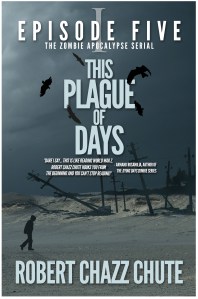
Episode 5 is now available! Get each ep for just 99 cents or get the discount deal and get all of Season One for just $3.99.

Episode 5 is now available! Get each ep for just 99 cents or get the discount deal and get all of Season One for just $3.99.

In Episode 5 of This Plague of Days, it’s all action as the Spencer family faces great loss in the Midwest and Dr. Sinjin-Smythe runs for his life in London. Dump your expectations of what a zombie apocalypse can deliver. The survivors of the plagues can be just as dangerous as any horde of rampaging zombies.

From the latest review on Amazon…

“The final episode of Season One did exactly what it was supposed to do. It twisted your stomach in knots, let go slightly, then snatched your stomach away until the second season is available.

All the immediate conflicts were resolved in a satisfying way, not rushed, not unrealistic. There’s plenty of ground to cover next season, and the last few lines will leave you guessing. Well done, Chute. You’ve crafted a high-brow zombie thriller that stands out from the rest.” ~ Ava Easterby

Coming late to the Apocalypse? No problem! 

This Plague of Days scares me to death! I just can’t put it down; I have to see what happens next.

A review from Victor Morin

The mind virus is created. Spread the infection. If you already have read it, please review it.Thanks! ~ Chazz

The mind virus is created. Spread the infection. If you already have read it, please review it.Thanks! ~ Chazz


Filed under: book trailer, Books, Horror, podcasts, This Plague of Days, , , , , , , , , , , , , , , , , , , , , , ,

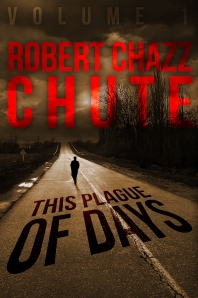
This Plague of Days: You will be infected

The mind virus is created. Spread the infection.

The mind virus is created. Spread the infection. Click the image to purchase.

Welcome to young Jaimie Spencer’s world.

See the collapse of America’s heartland through the eyes of a boy on the autism spectrum. Watch the rise of the zombies destroy London. Two forces. One collision course.

This Plague of Days, Season 1 is like two books in one.

Terrorists release a deadly virus: Sutr-X kills 60% of the world’s population. It mutates. Now Sutr-Z is coming for all of us. Watch how ordinary people react when everything they thought they knew is ripped away.

Look around.

Your power? Your conveniences? The gasoline for your car and all that food to choose from? Gone.

The food chain is changing. The virus is spreading. Your world is falling apart and you are meat if you can’t run, fight or hide.

This Plague of Days is a horror serial that will surprise you.

Latin phrases, contemplations on the nature of God, cannibals in the streets and a strange boy who is a selective mute with an obsession for words. Don’t miss this one.

You can get five episodes for 99 cents each week by week for a summer of grim fun or you can get all of Season 1 at a discount for just $3.99. You’re going to love it.


Related articles

Filed under: Books, My fiction, Publicity & Promotion, publishing, This Plague of Days, , , , , , , , , , , , , , , ,

#Giveaway: The Free Download Experiment

I’m conducting an experiment with my blogs and Vine account with this giveaway.

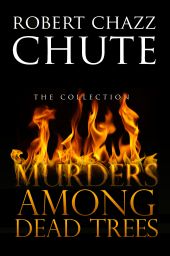
I’m giving Murders Among Dead Trees to you for free until midnight May 13th on Amazon (assuming that you might like weird suspense with 57 flavors.)

This gift is coming and going fast (that’s part of the experiment), so please act now and click the pretty cover. Hope you love it.


Free until midnight May 13!

Free until midnight May 13!

There’s lot of strangeness in Murders Among Dead Trees.

It’s huge, so if you don’t like the flavor of one story, the next one might appeal to the inner demon you’re pretending isn’t there. (That’s adorable, by the way.)

If you like the book, please review it.

Thanks! Enjoy!

Filed under: book marketing, Books, self-publishing, Vine, , , , , , , , , , , ,

My Indie Author Mistake

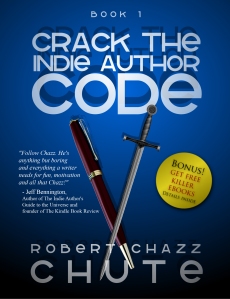
Crack the Indie Author CodeIf I had to do it again, I wouldn’t call my first writing guide Crack the Indie Author Code. It’s on my sales page and proclaims to everyone I’m indie. Don’t get me wrong. I’m proud to be indie! I make lots of friends here who are indie authors or are aspiring indie authors. I buy inde books and feature indie authors. I’ve learned and gained so much from being part of the indie community.

However, we shouldn’t look indie.

When someone picks up our books, it should not occur to them that it doesn’t come from a traditional (read: huge) publishing house.

A bookstore clerk looked at my books and loved them, adding that they obviously weren’t from CreateSpace. The logo on the spines for my publishing EP IIcompany is Ex Parte Press, but yes, the print copies are done by CreateSpace.  His perception of where it came from affected his expectations.

To a lot of people, indie means amateurish. I know, it sucks and indie musicians and filmmakers don’t have this stigma. Lots of traditionally published books suck yadda yadda. We know. I’m not happy about unfair comparisons, either.

However, let’s help prejudiced people overcome those prejudices by fooling them. Make sure your cover is awesome, your writing is sharp and standards are high. Once they turn from readers to fans, let your indie freak flag fly.

Crack the Indie Author Code will be disappearing from my sales pages soon. It will still be for sale, but it will be pushed down the page by my This Plague of Days serial. It’s eight books plus the print version plus secret variations to come. That will take up a lot of real estate on my Amazon page.

Go here for sneak peaks of This Plague of Days. It’s horror, with twists from Latin dictionaries. 

And GO INDIE! (Sh…Stealth indie.)

Filed under: ebooks, publishing, , , , , , , , , , , , , , , ,

Odd and unfamiliar literary genres

My luckless hit man is a funny guy in big trouble.

My luckless hit man is a funny guy in big trouble.

People argue plenty about genres. Is Literary Fiction just another genre or The Standard? In an age of ebooks and fewer bookstores, must we be so strict about classifying genre? When is cross-genre going to get more respect? When will hardboiled come back? Why isn’t funny neo-noir bigger?

Okay, those last two are more personal to me because of my crime fiction friction (and the first question is a snob test. If you answered “The Standard”, get out.)

Let’s talk about literary genres you probably don’t think about much (yet): 

Boomer lit

Claude Nougat introduced me to Boomer Lit with A Hook in the Sky. Tailoring fiction to an age-related niche is an interesting idea. Can Zoomer Lit be far behind?

I picture further fragmentations: Debt Lit for the trials of our depressed global economy; Sandwich Lit for the generation stuck between supporting their parents and their children; Hack Lit for needful cottage-dwellers in the cottage industry of electro-self-help in an e-commute/quasi-agoraphobic Internet world without trees.

This is worth considering:

If you can identify an audience, you can create a genre. If you can create a genre, or at least put your stamp on it, you could sell more books.

Click it to get it.

Click for suspense and hilarious frivolity in Self-help for Stoners.

Case in point: Self-help for Stoners.

Zombie Erotica

Warm Bodies introduced this idea to me. Jay Wilburn discusses this genre  further on Armand Rosamilia’s blog. Creeps me out, though I guess The Corpse Bride gave it juice and Frankenstein originated it. We romanticize the dead  all the time (Marilyn Monroe, Jack Kennedy, Marty Feldman.) 

Cropped screenshot of Marilyn Monroe from the ...

Cropped screenshot of Marilyn Monroe from the trailer for the film Gentlemen Prefer Blondes (Photo credit: Wikipedia)

But sexualizing zombies? Hm. Could be a tough sell to a broad audience (depending on initial hotness, location of mortal wound and room temperature). However, we don’t need a broad audience. We need an identifiable and reachable niche of fans, fanatics and possibly freaks.

New Adult

For post-adolescent readers aged 18 to 30 or 18 to 26 (depending on whom you ask), this is mostly for those readers who are finding their way to their quarter-century life crisis. (Don’t wait for a mid-life crisis! Get started young when you don’t understand how little you really have to complain about! You still have so many crises to look forward to!) Click here for a list of popular New Adult reads on Goodreads.

New Adult is a very welcoming genre in that you can stick zombies or aliens in there, too, if you want. It’s typified by its target age-range and less by its subject. A popular misconception is that New Adult is for sub-literate people who don’t like to read. That’s not how people who write New Adult describe their work, so we shouldn’t, either.

Lad lit

Not a new genre but under-appreciated and not near as popular as Chick lit. This is fiction about young men and their lives, sex lives, failures and aspirations. It would be bigger if more men read books. Nick Hornby was crowned King of Lad Lit (by someone or other) with High Fidelity. I like High Fidelity the book, but I love High Fidelity, the movie. FYI: John Cusack is a demi-god. Also, we watched the credits to find out who that awesome young unknown was. It was Jack Black. His singing at the end of the movie was so awesome, we thought he must be lip-syncing. Nope! And that’s how I became a Tenacious D fanboy.

Dystopian versus Apocalyptic and post-apocalyptic:

A cross-genre flurry about  society's collapse under the crush of the Sutr Virus combined with a boy's love for odd words, Latin dictionaries and his father.

A cross-genre flurry about society’s collapse under the crush of the Sutr Virus combined with a boy’s love for odd words, Latin dictionaries and his father.

I include these three not because they are new or all that odd, but because they are often confused.

Apocalyptic is The Big Bad Thing that’s coming to kill us.

Post-Apocalyptic is how the few survivors deal with The Big Bad Thing. 

Dystopian comes after the fallout from The Big Bad Thing, when it becomes The New Normal. Like George Orwell’s 1984. Or getting felt up by the TSA.

~ The events in This Plague of Days, my coming coming-of-age Aspergers plague thriller, occur as society collapses. Things go from apocalyptic to post-apocalyptic. If the series sells enough books, we’ll get to see how the world devolves into a dystopia. I’m looking forward to finding out, assuming the real world flu pandemic doesn’t kill us all first. This Plague of Days launches at the end of May. To find out more, go to ThisPlagueofDays.com.

Filed under: author platform, book marketing, Publicity & Promotion, publishing, readers, This Plague of Days, , , , , , , , , , , , , , , , , ,

On Writing Well: Openings, Distractions and the next Million Dollar Idea

The Challenge of the Slow Open

Crack the Indie Author CodeAs I work on revising my coming-of-age, love story cleverly disguised as an apocalyptic plague thriller, I worry about the beginning most. (I’ll give you a minute to digest that first sentence.)

This is a long book I will serialize (soon). The story unfolds largely through the eyes of a boy with Aspergers Syndrome, sixteen-year-old Jaimie Spencer. He’s a selective mute. I wanted to impress upon the reader how different he is from the first page. The story starts with the boy observing the plague as it infects his next-door neighbor. The neighbor is a pilot who happens to be having sex with a flight attendant at the time, but Jaimie is detached about such things. He’s asexual. His point of view is an interesting hook, but it’s not really an action hook. It reads like a character hook.

I’m going for intrigue and showing this book is more serious than much of my other work. I’m satisfied it’s a good start, but it’s a risk because of that slow start. I’m starting the novel with a long lit fuse instead of an explosion. That could be a problem and I will have to revisit this issue several more times before I commit to the slow burn open. There are plenty of explosions, strained family dynamics, obstacles, reversals, betrayals, realizations, death and a long journey  ahead. Amid the chaos, Jaimie is a detached, almost Christlike figure. The world is falling apart and he’s fascinated with dictionaries. (Expect Latin phrases, weird words and an amusing annoyance over homonyms.) The boy perceives the world as an alien might. His peculiar point of view questions how everyone else sees the world.

My luckless hit man is a funny guy in big trouble.

My luckless hit man is a funny guy in big trouble.

Big openings hook more readers faster. For instance, is it a cheap ploy to kill somebody off in the first paragraph? Many critics, both amateur and professional, seem to think so. However, I suspect the average reader doesn’t think that way at all. Some lit snobs say they shouldn’t think that way. Irrelevant. Many readers do think that way.

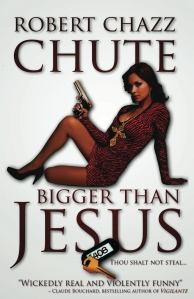
Every story should jump right in without throat-clearing, of course. (Don’t start your book with a weather report, as a baffling number of novels still do.) But how late should you enter the action? Bigger Than Jesus starts in media res with my loveable hit man out on a slippery ledge high over Tribeca with the bad guy hiding behind a gargoyle. Higher Than Jesus starts with a slower open in a dive bar, but right from the start, you know Jesus Diaz is there to kill someone on Christmas Day. Crime fiction should start with action. But can Jaimie Spencer do it?

Distractions

I’m confident in the writing for those who stick around for the show. However, we, as writers, are not competing with other books in our genre. We’re competing with Call of Duty, Game of Thrones (on TV), people working second and third jobs to earn enough to live, laughing babies on YouTube, the gym, the laundry, and all the other paperwork of life. Readers have so many distractions, it almost makes me yearn for a time when books were much more central to our culture. The good news is, if you survive the coming world flu pandemic that will wipe out billions, there will be fewer distractions and a bit more reading time.

Solutions and Opportunities

Jesus is resurrected in Chicago. Sex with the Queen of Giants. Violence with Very Bad Men.

Jesus is resurrected in Chicago. Sex with the Queen of Giants. Violence with Very Bad Men.

I have a suggestion to help combat The Distraction Problem. It’s not really open to me at the moment* but you might be able to use this suggestion: If you’re American, make audiobooks on ACX part of your publishing platform so people will be able to consume your goodness while they do the laundry, commute to their second job, run on a treadmill or play Call of Duty. Publish an audiobook on ACX and it goes to Amazon, iTunes and Audible. Audio is the future. That, and the massive killer virus thingy.

*I encouraged writers to go for ACX in Crack the Indie Author Code and Write Your Book: Aspire to Inspire. Since I’m a Canuck, they aren’t set up to deal with me yet. That creates a huge hole in the market for audiobooks worldwide. If I had the money, I’d start a company to compete with ACX and deal with all them foreigners immediately.

Click it to grab it. Just 99 cents!

Click it to grab it. Just 99 cents!

~ Earlier today I published an article on ChazzWrites.com that was meant for my website about Six Seconds, The Unauthorized Guide to How to Build Your Business with the Vine App. Apologies for the mix-up and a suggestion: If you’re on WordPress, don’t ever use the Quick post feature. Any problems I’ve ever had posting to WordPress started there. I decided to leave it up since it automatically shot out to subscribers and I never did announce a page dedicated to that book, so…yeah, I’ve got a web page just about Vine and the useful glory that is Six Seconds. If you’re interested in checking out Vine and promoting your books with it, here’s the link to onlysixseconds.

If you’re on Vine and would like to hear a reading from Self-help for Stoners, find “Robert Chazz Chute” on Vine. I’m doing the first author reading on the Vine app. Interested in winning a signed copy of Bigger Than Jesus? I’m running a contest with that reading. Get the details on how you could win from this link to AllThatChazz.

Filed under: audiobooks, blogs & blogging, book marketing, Editing, My fiction, publishing, Vine, Writers, writing tips, , , , , , , , , , , , , , , , , , , , ,

Bestseller with over 1,000 reviews!
Winner of the North Street Book Prize, Reader's Favorite, the
Literary Titan Award, the Hollywood Book Festival, and the
New York Book Festival.

http://mybook.to/OurZombieHours
A NEW ZOMBIE ANTHOLOGY

Winner of Writer's Digest's 2014 Honorable Mention in Self-published Ebook Awards in Genre

The first 81 lessons to get your Buffy on

More lessons to help you survive Armageddon

"You will laugh your ass off!" ~ Maxwell Cynn, author of Cybergrrl

Available now!

Fast-paced terror, new threats, more twists.

An autistic boy versus our world in free fall

Suspense to melt your face and play with your brain.

Action like a Guy Ritchie film. Funny like Woody Allen when he was funny.

Jesus: Sexier and even more addicted to love.

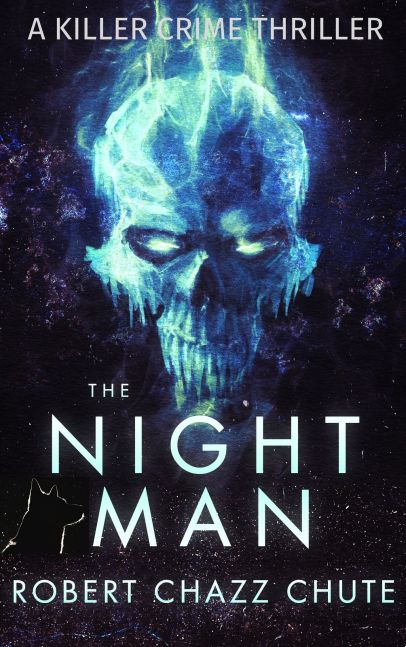
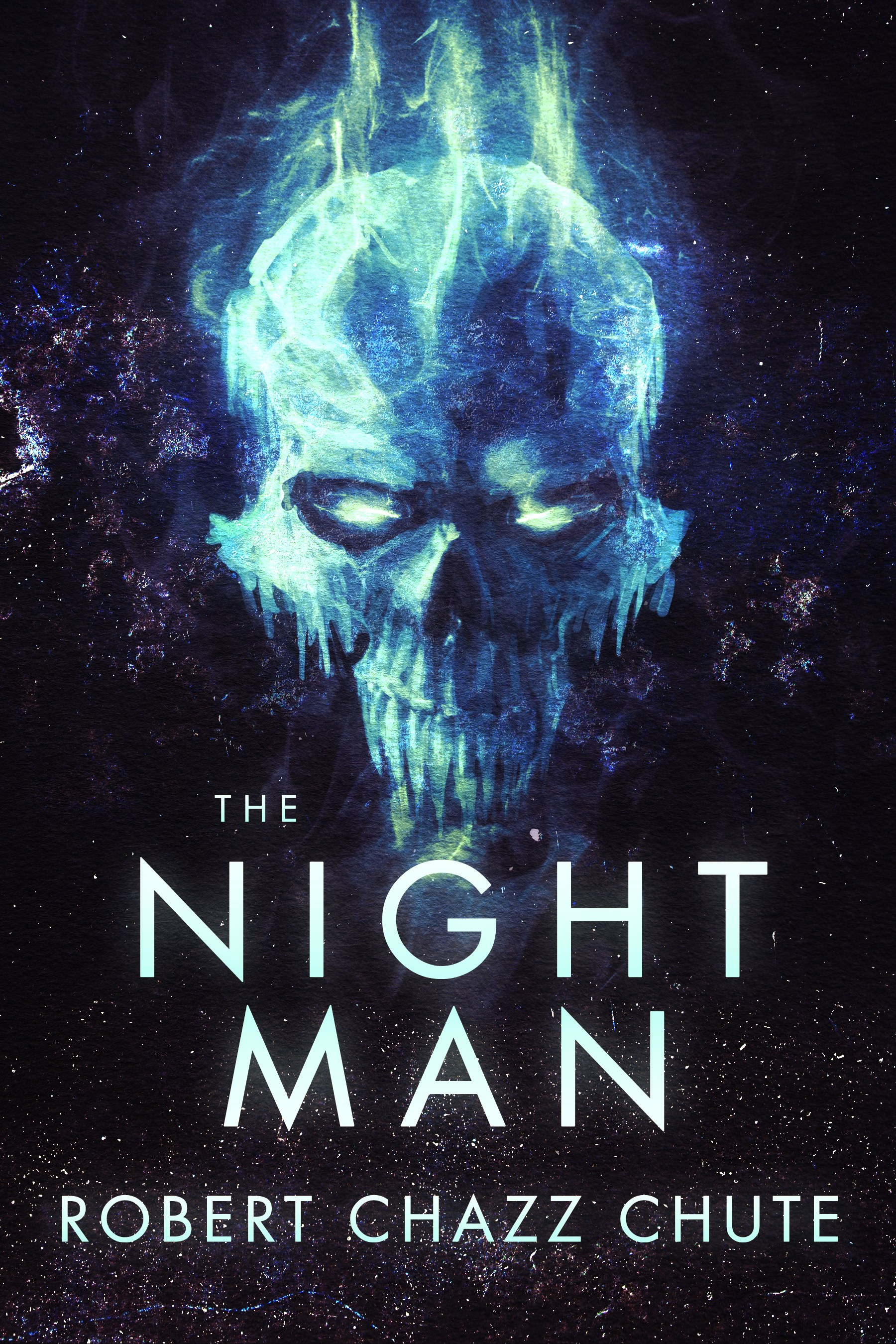
You can pick this ebook up for free today at this link: http://bit.ly/TheNightMan

Join my inner circle at AllThatChazz.com

See my books, blogs, links and podcasts.

Enter your email address to follow this blog and receive notifications of new posts by email.

Join 2,063 other subscribers