C h a z z W r i t e s . c o m

See all my books at AllThatChazz.com.

My Indie Author Mistake

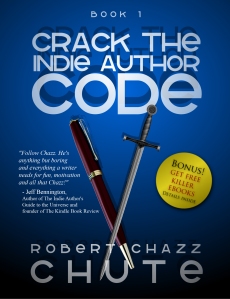
Crack the Indie Author CodeIf I had to do it again, I wouldn’t call my first writing guide Crack the Indie Author Code. It’s on my sales page and proclaims to everyone I’m indie. Don’t get me wrong. I’m proud to be indie! I make lots of friends here who are indie authors or are aspiring indie authors. I buy inde books and feature indie authors. I’ve learned and gained so much from being part of the indie community.
However, we shouldn’t look indie.

When someone picks up our books, it should not occur to them that it doesn’t come from a traditional (read: huge) publishing house.

A bookstore clerk looked at my books and loved them, adding that they obviously weren’t from CreateSpace. The logo on the spines for my publishing EP IIcompany is Ex Parte Press, but yes, the print copies are done by CreateSpace.  His perception of where it came from affected his expectations.
To a lot of people, indie means amateurish. I know, it sucks and indie musicians and filmmakers don’t have this stigma. Lots of traditionally published books suck yadda yadda. We know. I’m not happy about unfair comparisons, either.

However, let’s help prejudiced people overcome those prejudices by fooling them. Make sure your cover is awesome, your writing is sharp and standards are high. Once they turn from readers to fans, let your indie freak flag fly.

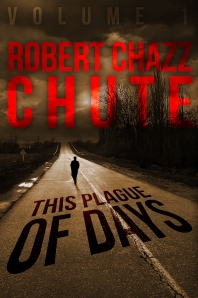
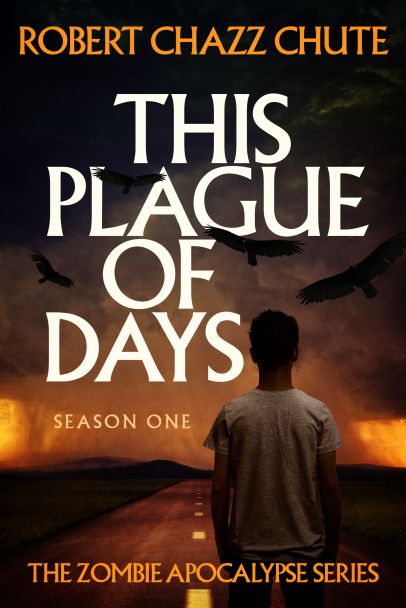
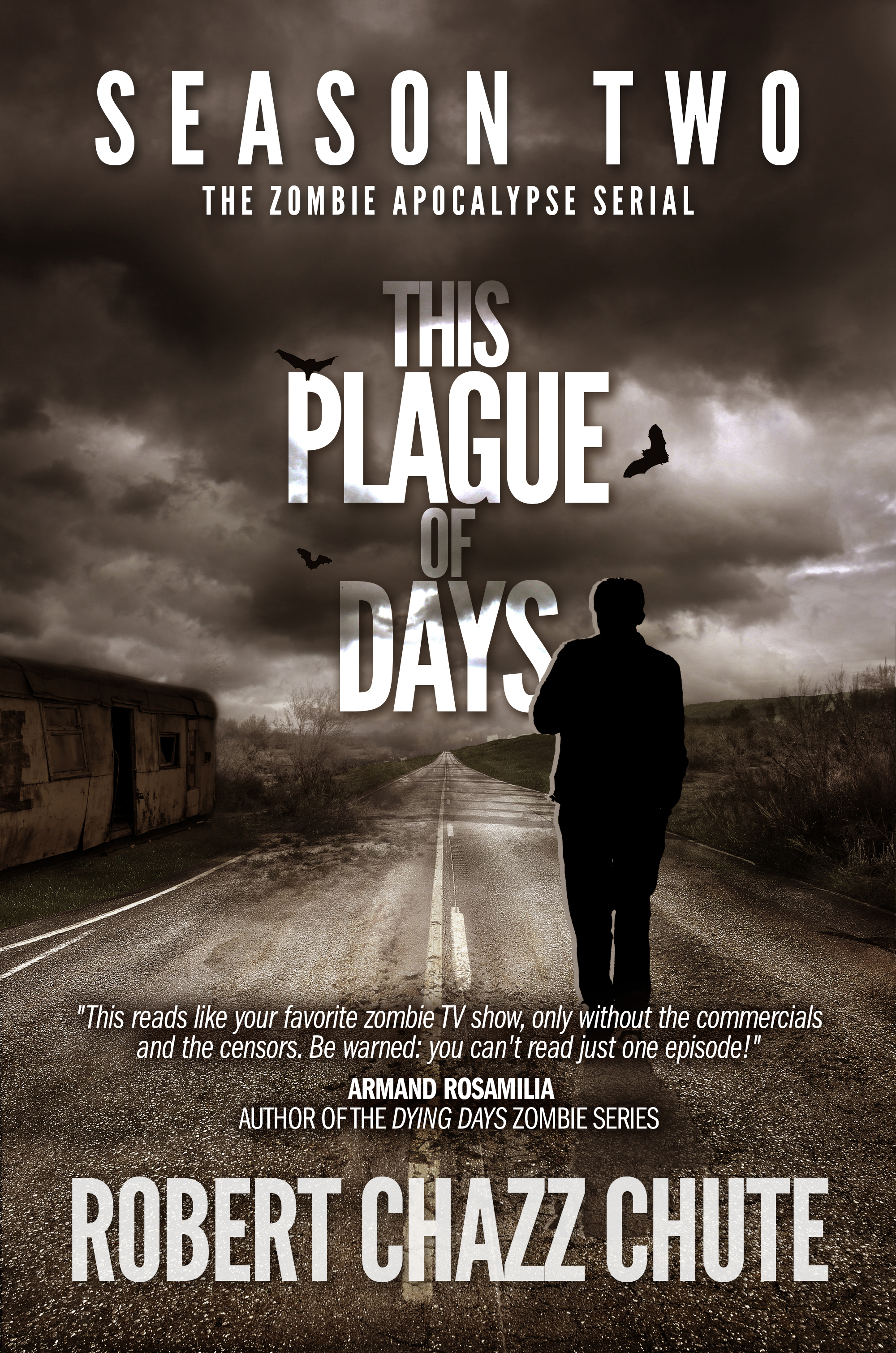
Crack the Indie Author Code will be disappearing from my sales pages soon. It will still be for sale, but it will be pushed down the page by my This Plague of Days serial. It’s eight books plus the print version plus secret variations to come. That will take up a lot of real estate on my Amazon page.

Go here for sneak peaks of This Plague of Days. It’s horror, with twists from Latin dictionaries. 

And GO INDIE! (Sh…Stealth indie.)

Filed under: ebooks, publishing, , , , , , , , , , , , , , , ,

Writers: Was this post helpful to you?

I bought a book today by an author previously unknown to me. At six bucks plus, it was the most expensive ebook I’ve purchased in a long time. (Usually my ebook purchases are from indies, not trad publishers.) I bought this ebook because of one of its reviews. I did not buy because the review raved. The book caught my attention because the review’s tone was so damnably condescending, I had to make the purchase. This wasn’t a case of pitying the author. There were good reviews, too. Also, it helped that I suspected this was a book I would enjoy. It sounded smart and sure and people who liked it said it elevated and challenged its genre.

Whatever the book’s merits will be, the key component for the purchase was that the reviewer was too much of a jerk. What is it about bad reviews that so often reveal more about the reviewer than the book being reviewed? I emailed the author to tell him I bought his book. It sounded interesting and I wished him success with it. I look forward to reading it, but what can the rest of us take from this?

Take this post as a small salve to authors’ bruised egos.

People will love your work and others will hate it, but I want you to know that readers are generally intelligent people. They often see through the reviewer’s veil more than you might think. Readers divine intent when they read over-the-top malice and subtract value from a nasty review. Yea or nay, readers like thoughtful reviews. They get it when a reviewer sounds disrespectful or less than literate. Good readers (people who buy a lot of books!) aren’t easily impressed by cheap shots and snarky remarks. When a review is especially egregious, you might even get a sale out of it. 

I’m not saying bad reviews are better than happy ones, but don’t take the bad ones too much to heart. Also, when you spot a really nasty one that goes at the author personally instead of the book? Be sure to click “No” beside the question, “Was this review helpful to you?”

Filed under: reviews, , , , , , , , , , , , ,

Great ebook cover design: More on what to look for

Our book covers must not sucketh.

But how do we make covers that blow readers away?

You don’t have to know how to make a cover to recognize a good one, but it helps to be guided in the principles of solid design by experts. Fortunately, I know a couple people whose art and instruction are incredibly helpful to authors and publishers.

Joel Friedlander’s ebook Cover Design Awards are here! 

Regular readers know my covers are magically manifested by Kit Foster of KitFosterDesign.com. Incredibly, Kit won another non-fiction design award for the second month in a row.

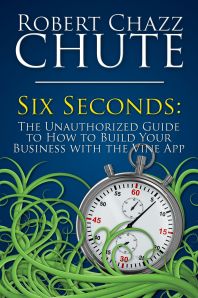
His previous winner was this little guide to Vine marketing by someone or other:

Click it to grab it. Just 99 cents!

How deliciously self-serving.

Congratulations to Kit, of course. Make sure you read all the comments on Joel’s site to cram all that good art learnin’ inside your brain box.

Filed under: awards, book marketing, ebooks, , , , , , , , , , , ,

Triberr: Problems and Solutions

A kronosaurus, the prehistoric sea monster, ate my blog traffic. Many blog subscribers will already have seen the wonderful and helpful posts listed below (even if I say so,

Kronosaurus queenslandicus

Kronosaurus queenslandicus (Photo credit: Wikipedia)

my own damn self). However, due to some technical glitch with Triberr, a lot of people missed these ChazzWrites.com posts (and crucial extras, like links to my new book sites, ThisPlagueofDays.com and onlysixseconds.wordpress.com or tap the grooviness at CoolPeoplePodcast.com or hear a reading at AllThatChazz.com).

Disaster

I discovered the other day that my Triberr marketing teams haven’t been retweeting my blog posts for quite some time. Curses! Foiled again! What to do? And why is Triberr so important for bloggers, marketers, authors and, ultimately, readers?

Woe

My blog traffic and Twitter mentions had slowed remarkably. I blamed myself for a lack of awesomeness at first, of course. I mean, self-loathing? That’s just what I do! However, I put my head down, close to the keyboard, and tried to double up on the awesome. When that didn’t work, I began to look for other reasons for the aching distance between me and the popularity of Dos Equis’ Most Interesting Man in the World. Perhaps the new cologne wasn’t working out? Then I discovered the Triberr problem.

Frustration

I’d been diligently retweeting the best of the tweets from my tribes (and I’m in awesome tribes with wonderful bloggers and writers). However, my blog posts weren’t getting sent out to their followers in turn.

As soon as I discovered the problem was somewhere in Triberr settings, I tried to solve it myself. Result: Failure.

Then I asked for tech support from Triberr. I received no response.

I waited several days, became impatient, sent another plea for help and…still didn’t hear from tech support.

Then I figured out what was missing and finally fixed it myself yesterday.

However, I come to praise Triberr, not to bury it.

This is not an indictment of Triberr, but when it didn’t work recently, the social media marketing tool certainly showed me its value. Good posts get more hits, anyway, but they get even more traffic with a boost from Triberr. Without Triberr, I’m not spreading the word as effectively. With Triberr, my reach is, theoretically, 6 million people plus whoever the 6 million retweets to. That’s a lot of eyeballs coming here to taste my flavor, fall in like, buy some books and tumble into full-force love. 

Now that the problem is fixed, my traffic stats are bouncing back up. My Twitter connections are ablaze again. Soon, this very post will be sent out through the cyber-ether by my tribes and who knows where it will land, or how many new subscribers and Twitter followers I’ll gain? (Crosses fingers, strangles a mime for good luck.)

People appreciate value and boy, do I try to give it. However, hiding our lights under  cliched bushels and waiting for it to happen magically and organically doesn’t help new readers discover us quickly. Triberr gives more people the chance to fall in love with what we can provide. Where else are you going to read about publishing and mime-stangling? See? I’m so unique.

Triberr helps.

And usually? Triberr works

.

In case you missed my redesign of this blog, thoughts on optimizing books and sales, podcasts, announcements and changes in publishing strategies, here are some those articles. Also, please enjoy the odd mime-strangling. (Don’t do it every day, though. If it’s every day, it’s not a treat.)

Odd and Unfamiliar Literary Genres

Book Marketing Problems and Solutions

Amazon Goodreads. Mostly? So What? 

How to End a Chapter: Shorter Chapters, Better Books

On Writing Well: The Challenge of the Slow Open

Ebook: What Makes a Good Cover? What Makes a Bad One?

Rebelmouse: How I got all my blogs and podcast on one glorious page

The All That Chazz Podcast: More Fury

Amazon Throttled

Getting a Bigger Boat: Adapting to be a More Effective Publisher

Writers: Shorter is Better

Blog Comment Rules and How to Become Batman

What Jedis Know About Fear

Author Platform: Problems, Solutions and Stuffed Speedos

Filed under: blogs & blogging, book marketing, ebooks, publishing, Rant, Triberr, Writers, writing tips, , , , , , , , , , , , , , , , , ,

Travesty: The Slate Culture Gabfest “bludgeoned” by books

Bad news

Some people have committed to never buying another book again. Their e-readers are stuffed full of all the free books they could load. They’ll probably never get to most of them. Downloads do not equate to reading. When they do give your book a chance, some nasties are predisposed to one-star reviews. They’ll give your books less of a chance than you dare hope. They’re far less invested in reading it because they’ve got way too much to read already. And “How dare you attempt to entertain me for free!”

It gets worse…

From several literate sources, I’ve heard intellectual folks complain about having a book recommended to them. On the Book Fight podcast (which I generally enjoy), the hosts — who honestly love literature! — talked about recommendation fatigue. Attempts to share the glory of a good story might be viewed with a cynical eye over there. Instead of an open hand of welcome for a recommendation, book boosters can expect to be seen as mindless parrots and promoters. Holy crapballs! These guys write and teach writing. Maybe they’re tired. One host yearned to have a job fixing cars instead of writing for a living. Somebody needs a vacation, or to remember how much hard labor can suck. This? From people who love literature?

But it gets much worse…

The Slate Culture Gabfest, a podcast you’d hope wouldn’t have room for cynicism, is not a safe space for books. You’d think people who talk about culture professionally wouldn’t be so disengaged and full of resentment when book recommendations come their way. One of the hosts even said they were less likely to read a book because someone suggested he should. I guess host Stephen “I hate everything but the counter-intuitive” Metcalf is past the giddy burble some of us feel as we read a book that genuinely excites us.

You know that feeling, right? When you consciously slow your reading to make the experience last longer? Remember those books that disappoint, not because they’re bad? Remember those books that, as you close them, it feels like the last roller coaster ride of the day is over and the amusement park’s closing up for the night?

Someone’s forgotten that wistful love. The three Slate podcasters felt “bludgeoned” because they got too many recommendations. (From here, that sounds like they’re complaining they get too many valentines.)

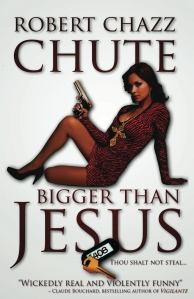
How’s their wariness and weariness working out for them? So far, they’ve successfully avoided A Visit from the Good Squad by Jennifer Egan, or any Barbara Kingsolver or any Alice Munro. This, from culture critics. Culture is their business, but I guess that’s no reason to get too bookish about it. Let’s nerd out over Michael Cimino’s Heaven’s Gate, instead. Lord knows that poor director never had his proper shot at fame and fortune. I guess I won’t hold my breath for them to give Bigger Than Jesus a go.

Where does that leave authors who don’t get to meet Stephen Colbert on their fabulous press junket?

(Hat tip to Slate’s Emily Bazelon. I still love you, Emily.)

Stuck in the desert with a cactus in our ass is where that leaves us. You can pump your books on Triberr and Twitter and Facebook and pay for all the advertising you can afford, but some people who review books are overstimulated and it seems to have soured their milk. One of the Book Fight guys suggested that if you hardly ever recommend a book and then you finally do, he’d give that recommendation more weight. That paradigm doesn’t fit into most authors’ promotional campaigns very well, does it?

That last point struck me as particularly disagreeable this week when I ran across a brilliant author who does no promotion. I won’t embarrass him here (but I’ll promote him later). For the purposes of this post, I’ll simply say that being brilliant might get you readers in the long-term, but he isn’t getting the attention he deserves without promotion. A good marketer who writes will outpace a better writer who fails to market well.

Slate’s jaundiced eye toward any recommendation I could make suggests his brilliance will stay a secret. The gatekeepers to publishing have been sent into the forest to learn other trades and reinvent themselves, but there are still gatekeepers to publicity and attention. And they are sick of us, no matter how casually and sidelong our book recommendations.

How am I going to pull this post out of its dive into a dark, hard place?

This has been a test of the emergency broadcast system. If this were a real emergency, everybody would feel this way about book recommendations. However, there are still plenty of readers who are not fatigued and may even thank you for reviewing and sharing. They might love our books. I sure hope they love mine. When you get depressed about people who seem predisposed to ignoring our efforts (or even despise us, our silly dreams and possibly even our dogs) focus your energy elsewhere. Continue with the quixotic! Quixotic is the most noble category of quests.

Now please go write something the critics can’t possibly ignore.

Or go write something someone will dare to recommend to someone, with shamefaced humility,

in a passive way that somehow won’t erect some critics’ inborn defences against a kind suggestion.

(And don’t tell them what kind of day to have.)

Filed under: book marketing, Media, Publicity & Promotion, publishing, readers, , , , , , , , , , , , , , , , , , ,

Odd and unfamiliar literary genres

My luckless hit man is a funny guy in big trouble.

My luckless hit man is a funny guy in big trouble.

People argue plenty about genres. Is Literary Fiction just another genre or The Standard? In an age of ebooks and fewer bookstores, must we be so strict about classifying genre? When is cross-genre going to get more respect? When will hardboiled come back? Why isn’t funny neo-noir bigger?

Okay, those last two are more personal to me because of my crime fiction friction (and the first question is a snob test. If you answered “The Standard”, get out.)

Let’s talk about literary genres you probably don’t think about much (yet): 

Boomer lit

Claude Nougat introduced me to Boomer Lit with A Hook in the Sky. Tailoring fiction to an age-related niche is an interesting idea. Can Zoomer Lit be far behind?

I picture further fragmentations: Debt Lit for the trials of our depressed global economy; Sandwich Lit for the generation stuck between supporting their parents and their children; Hack Lit for needful cottage-dwellers in the cottage industry of electro-self-help in an e-commute/quasi-agoraphobic Internet world without trees.

This is worth considering:

If you can identify an audience, you can create a genre. If you can create a genre, or at least put your stamp on it, you could sell more books.

Click it to get it.

Click for suspense and hilarious frivolity in Self-help for Stoners.

Case in point: Self-help for Stoners.

Zombie Erotica

Warm Bodies introduced this idea to me. Jay Wilburn discusses this genre  further on Armand Rosamilia’s blog. Creeps me out, though I guess The Corpse Bride gave it juice and Frankenstein originated it. We romanticize the dead  all the time (Marilyn Monroe, Jack Kennedy, Marty Feldman.) 

Cropped screenshot of Marilyn Monroe from the ...

Cropped screenshot of Marilyn Monroe from the trailer for the film Gentlemen Prefer Blondes (Photo credit: Wikipedia)

But sexualizing zombies? Hm. Could be a tough sell to a broad audience (depending on initial hotness, location of mortal wound and room temperature). However, we don’t need a broad audience. We need an identifiable and reachable niche of fans, fanatics and possibly freaks.

New Adult

For post-adolescent readers aged 18 to 30 or 18 to 26 (depending on whom you ask), this is mostly for those readers who are finding their way to their quarter-century life crisis. (Don’t wait for a mid-life crisis! Get started young when you don’t understand how little you really have to complain about! You still have so many crises to look forward to!) Click here for a list of popular New Adult reads on Goodreads.

New Adult is a very welcoming genre in that you can stick zombies or aliens in there, too, if you want. It’s typified by its target age-range and less by its subject. A popular misconception is that New Adult is for sub-literate people who don’t like to read. That’s not how people who write New Adult describe their work, so we shouldn’t, either.

Lad lit

Not a new genre but under-appreciated and not near as popular as Chick lit. This is fiction about young men and their lives, sex lives, failures and aspirations. It would be bigger if more men read books. Nick Hornby was crowned King of Lad Lit (by someone or other) with High Fidelity. I like High Fidelity the book, but I love High Fidelity, the movie. FYI: John Cusack is a demi-god. Also, we watched the credits to find out who that awesome young unknown was. It was Jack Black. His singing at the end of the movie was so awesome, we thought he must be lip-syncing. Nope! And that’s how I became a Tenacious D fanboy.

Dystopian versus Apocalyptic and post-apocalyptic:

A cross-genre flurry about  society's collapse under the crush of the Sutr Virus combined with a boy's love for odd words, Latin dictionaries and his father.

A cross-genre flurry about society’s collapse under the crush of the Sutr Virus combined with a boy’s love for odd words, Latin dictionaries and his father.

I include these three not because they are new or all that odd, but because they are often confused.

Apocalyptic is The Big Bad Thing that’s coming to kill us.

Post-Apocalyptic is how the few survivors deal with The Big Bad Thing. 

Dystopian comes after the fallout from The Big Bad Thing, when it becomes The New Normal. Like George Orwell’s 1984. Or getting felt up by the TSA.

~ The events in This Plague of Days, my coming coming-of-age Aspergers plague thriller, occur as society collapses. Things go from apocalyptic to post-apocalyptic. If the series sells enough books, we’ll get to see how the world devolves into a dystopia. I’m looking forward to finding out, assuming the real world flu pandemic doesn’t kill us all first. This Plague of Days launches at the end of May. To find out more, go to ThisPlagueofDays.com.

Filed under: author platform, book marketing, Publicity & Promotion, publishing, readers, This Plague of Days, , , , , , , , , , , , , , , , , ,

How to End a Chapter: Shorter chapters, better books?

"You will laugh your ass off!" ~ Author of Cybrgrrl, Maxwell Cynn

“You will laugh your ass off!” ~ Author of Cybrgrrl, Maxwell Cynn

I wrote at length recently about how smart it is to write short. (Wow, that got meta-ironic fast.) I was talking about the length of books, the allure of serialization and the benefits to both writers and readers. Today, I’m talking about chapters.

I’m currently revising the book I wrote while wearing my big-boy underpants. This Plague of Days took a little under a year to write back when I wrote part-time. Every day, I’d go to a coffee shop to get away from distractions. I got sucked into the point of view of a boy with Aspergers Syndrome during the coming plague apocalypse. His family hides out in suburbia while much of the world dies. The longer the book goes on, day by day, things get worse around his Christlike figure. When I wrote it, I wasn’t concerned about chapter length. I’d sketched an outline packed with beats and I put my head down and plunged into the story.

As I revise This Plague of Days now, I see how I was writing to the beats and each file folder was a chapter. Each writing session often yielded more than 5,000 words, all in one file/chapter! I’m breaking that up, obviously. As I look for logical places to split the file into more chapters, the logical spots are easy to find. I go out on a beat.

It’s a principle of podcasting, stand-up comedy and entertainment generally that you go out on a high note. Cliffhangers, twists, teasers and aha moments belong at the end of the chapter to seduce readers to turn the page and go for the next chapter. The more of those special moments, peaks or beats you have, the faster the pace of the book. Make the chapters short and those peaks are closer together. More beats close together equals momentum.

Don’t overdo.

If you don’t slow down to develop character, a hundred awful, exciting things may happen but no one will care. Here’s an ugly example of a pace that’s too fast:

Emma’s fiance, Rollo, dies in a skywriting accident when he tries to put the dot under the question mark as he pens “Emma! Will you marry me?” in the sky and ends up flying too low into the meat grinder of nearby chicken factory. Grief-stricken, Emma attends the funeral where Rollo’s mother tries to kill her in a rage. Terrified, Emma escapes to Italy where she falls in love with sculpture and decides to rebuild her life around art. Then, Phillipe, a very handsome and wealthy art connoisseur takes her under his wing, but how does he know Rollo’s mother and is he, in fact, an assassin assigned to murder her after their first night of passion? THEN, ON THE SECOND PAGE…

More spikes aren’t better if the characters are undeveloped. Readers don’t care for whiplash. However, you could take a page from Mary Higgins Clark. Her short chapters skip along. The closer the reader gets to the climax, the shorter the chapters become. This heightens the sense of forward momentum and keeps my wife, She Who Must Be Obeyed, awake much past her optimal bedtime as she powers toward the end of those thrillers.

We have a strange attachment to symmetry, don’t we though? Maybe that’s why more authors do not vary the length of their chapters. I’ve even heard of one author taking perverse pride in hitting an arbitrary word count so each chapter was the same length. That sort of peculiarity may serve someone’s OCD, but your OCD is supposed to serve the story above all else. (He must have been crushed when it came back from the editor with varying word counts.)


Don’t under do

If all the chapters are too short, it can feel to the reader that the author was skimping. For instance, while I generally admire James Sallis’s neo-noir novel Driven, some later chapters are so short and light on detail that I felt like I was missing something. He was painting a great picture overall, but here and there he didn’t have enough paint on his brush. I had to check to make sure I hadn’t skipped pages. Don’t make readers dizzy and fill them with self-doubt.

In a book of short stories, you can get away with stories so brief they could be non-rhyming poems. I have a few short chapters in Self-help for Stoners but I don’t worry about it because I’m not fragmenting a larger narrative with a short jolt. Or you can ape Faulkner and write, “My mother is a fish” and leave it at that, I suppose, but I wouldn’t recommend it.

Find the right length

You can delight readers with shorter books and shorter chapters as long as they aren’t confused. For instance, a lot of short chapters with multiple points of view can confuse the casual reader. They might accuse you of head-hopping. It wouldn’t technically be true, but that’s how your narrative might feel to them. Stephen King’s It and The Stand manage large casts, but the chapters are longer. Just about the time you’re thinking, Enough of him, what’s happening with so-and-so, you’re switching to another character’s plight.

A warning and a hope

You’ll find the break points for chapters easily and intuitively if you have enough beats. If you don’t have enough beats, you may be writing something of great literary value but it’s probably too slow to be of commercial value. And by slow, yes, I mean boring. Not every story has to drive forward with breakneck speed or maintain an even pace throughout. However, if the way stations of chapter breaks are too far apart, you aren’t giving your readers confidence that they are moving toward a destination. That’s the death of a lot of books. Give us action, engagement, obstacles, reversals, rising action, higher stakes and make us care.

If a comedy like The Big Bang Theory can make me cry over a single line uttered about a letter from Howard Wolowitz’s absent father (it did), you can make us care about your characters. Do it at a good speed.

~ I mentioned how I’d write about marketing in my next post. This is the next post so it turns out I lied. However, I’ll try to get back to that in my next post. I’m experimenting with building buzz about upcoming books with inexpensive strategies. I’ll tell you more about that in my next post. Or I’ll write about unreliable narrators. There’s that pesky meta-irony again. 

Here’s a marketing hint to tide you over:

I’m promoting two books by reading one on Vine. I’m doing it with a contest. Check out the details on that contest at AllThatChazz.com.

Have a peek at ThisPlagueofDays.com for some flavor of what’s to come.

Filed under: Writers, writing tips, , , , , , , , , , , , ,

On Writing Well: Openings, Distractions and the next Million Dollar Idea

The Challenge of the Slow Open

Crack the Indie Author CodeAs I work on revising my coming-of-age, love story cleverly disguised as an apocalyptic plague thriller, I worry about the beginning most. (I’ll give you a minute to digest that first sentence.)

This is a long book I will serialize (soon). The story unfolds largely through the eyes of a boy with Aspergers Syndrome, sixteen-year-old Jaimie Spencer. He’s a selective mute. I wanted to impress upon the reader how different he is from the first page. The story starts with the boy observing the plague as it infects his next-door neighbor. The neighbor is a pilot who happens to be having sex with a flight attendant at the time, but Jaimie is detached about such things. He’s asexual. His point of view is an interesting hook, but it’s not really an action hook. It reads like a character hook.

I’m going for intrigue and showing this book is more serious than much of my other work. I’m satisfied it’s a good start, but it’s a risk because of that slow start. I’m starting the novel with a long lit fuse instead of an explosion. That could be a problem and I will have to revisit this issue several more times before I commit to the slow burn open. There are plenty of explosions, strained family dynamics, obstacles, reversals, betrayals, realizations, death and a long journey  ahead. Amid the chaos, Jaimie is a detached, almost Christlike figure. The world is falling apart and he’s fascinated with dictionaries. (Expect Latin phrases, weird words and an amusing annoyance over homonyms.) The boy perceives the world as an alien might. His peculiar point of view questions how everyone else sees the world.

My luckless hit man is a funny guy in big trouble.

My luckless hit man is a funny guy in big trouble.

Big openings hook more readers faster. For instance, is it a cheap ploy to kill somebody off in the first paragraph? Many critics, both amateur and professional, seem to think so. However, I suspect the average reader doesn’t think that way at all. Some lit snobs say they shouldn’t think that way. Irrelevant. Many readers do think that way.

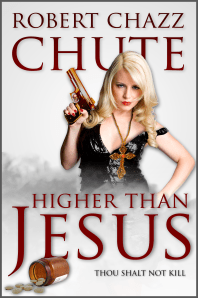
Every story should jump right in without throat-clearing, of course. (Don’t start your book with a weather report, as a baffling number of novels still do.) But how late should you enter the action? Bigger Than Jesus starts in media res with my loveable hit man out on a slippery ledge high over Tribeca with the bad guy hiding behind a gargoyle. Higher Than Jesus starts with a slower open in a dive bar, but right from the start, you know Jesus Diaz is there to kill someone on Christmas Day. Crime fiction should start with action. But can Jaimie Spencer do it?

Distractions

I’m confident in the writing for those who stick around for the show. However, we, as writers, are not competing with other books in our genre. We’re competing with Call of Duty, Game of Thrones (on TV), people working second and third jobs to earn enough to live, laughing babies on YouTube, the gym, the laundry, and all the other paperwork of life. Readers have so many distractions, it almost makes me yearn for a time when books were much more central to our culture. The good news is, if you survive the coming world flu pandemic that will wipe out billions, there will be fewer distractions and a bit more reading time.

Solutions and Opportunities

Jesus is resurrected in Chicago. Sex with the Queen of Giants. Violence with Very Bad Men.

Jesus is resurrected in Chicago. Sex with the Queen of Giants. Violence with Very Bad Men.

I have a suggestion to help combat The Distraction Problem. It’s not really open to me at the moment* but you might be able to use this suggestion: If you’re American, make audiobooks on ACX part of your publishing platform so people will be able to consume your goodness while they do the laundry, commute to their second job, run on a treadmill or play Call of Duty. Publish an audiobook on ACX and it goes to Amazon, iTunes and Audible. Audio is the future. That, and the massive killer virus thingy.

*I encouraged writers to go for ACX in Crack the Indie Author Code and Write Your Book: Aspire to Inspire. Since I’m a Canuck, they aren’t set up to deal with me yet. That creates a huge hole in the market for audiobooks worldwide. If I had the money, I’d start a company to compete with ACX and deal with all them foreigners immediately.

Click it to grab it. Just 99 cents!

Click it to grab it. Just 99 cents!

~ Earlier today I published an article on ChazzWrites.com that was meant for my website about Six Seconds, The Unauthorized Guide to How to Build Your Business with the Vine App. Apologies for the mix-up and a suggestion: If you’re on WordPress, don’t ever use the Quick post feature. Any problems I’ve ever had posting to WordPress started there. I decided to leave it up since it automatically shot out to subscribers and I never did announce a page dedicated to that book, so…yeah, I’ve got a web page just about Vine and the useful glory that is Six Seconds. If you’re interested in checking out Vine and promoting your books with it, here’s the link to onlysixseconds.

If you’re on Vine and would like to hear a reading from Self-help for Stoners, find “Robert Chazz Chute” on Vine. I’m doing the first author reading on the Vine app. Interested in winning a signed copy of Bigger Than Jesus? I’m running a contest with that reading. Get the details on how you could win from this link to AllThatChazz.

Filed under: audiobooks, blogs & blogging, book marketing, Editing, My fiction, publishing, Vine, Writers, writing tips, , , , , , , , , , , , , , , , , , , , ,

50 Reasons You Should Be A Bookworm

50 Reasons You Should Be A Bookworm.

This is a fun piece from Qwiklit. Click the link to the library we all should have read by now and enjoy.

Proud to say I’ve read most of these books and that made the breakdown doubly awesome. I went to school when wasting your parents’ money on a liberal arts education was still fashionable and relatively affordable (1877).

Sorry to say, I’ll never make it through Ulysses. That puts a dent in my bookworm cred, but I guess I could start lying and just declare I’ve read all of Ulysses. That’s what most people do.

Filed under: Books, , , ,

More Fury: Haters, Taxes, #Readings, #Podcasts

Higher than Jesus Final NEW copy

FYI: The new edition of the All That Chazz Podcast is up at AllThatChazz.com and it includes:

1. Waiting in shivering anticipation for Liberace.

2. A short, crazed rant on haters and my unreasonable sensitivity.

3. Jesus explains and forgives plus Stitcher issues.

4. Bradley Manning and awesome podcast recommendations. 

5. Scott Sigler on the Joe Rogan Experience (and self-loathing.)

6. Two readings: Chapters 9 and 10 of Higher Than Jesus: Hollow Man and Fight Club.

7. Whining about taxes and railing against my accountant.


Listen to the new podcast, More Fury: The Hollow Man Edition. If the show tickled your fancy, please leave a happy review on iTunes because that helps. If you don’t care for All That Chazz, try the Cool People Podcast. Cheers!

~Chazz

PS What am I doing? Editing the same way I do everything: Furiously.

Filed under: podcasts, , , , , , , , , , , , , , , , , , , ,

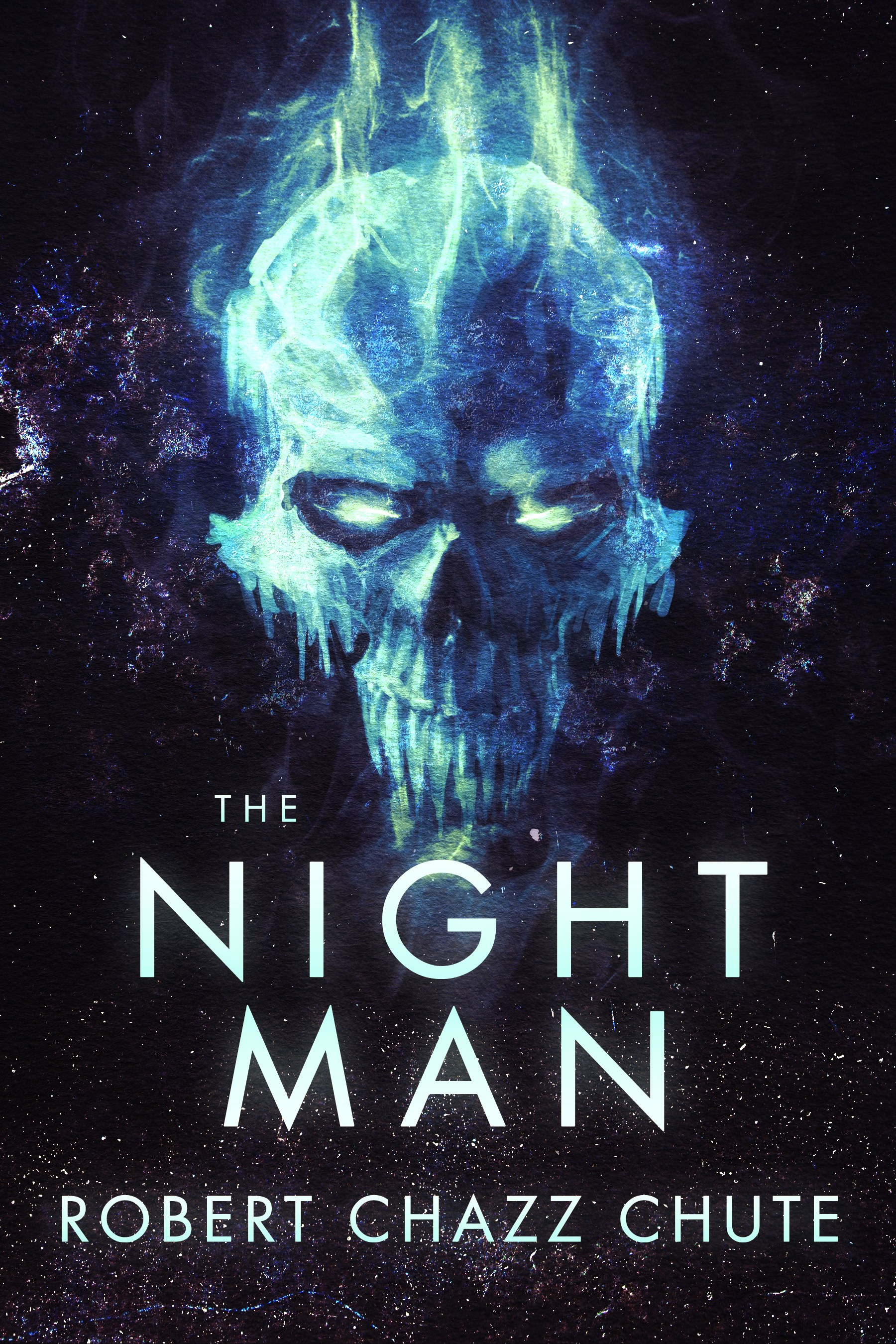
Bestseller with over 1,000 reviews!
Winner of the North Street Book Prize, Reader's Favorite, the
Literary Titan Award, the Hollywood Book Festival, and the
New York Book Festival.

http://mybook.to/OurZombieHours
A NEW ZOMBIE ANTHOLOGY

Winner of Writer's Digest's 2014 Honorable Mention in Self-published Ebook Awards in Genre

The first 81 lessons to get your Buffy on

More lessons to help you survive Armageddon

"You will laugh your ass off!" ~ Maxwell Cynn, author of Cybergrrl

Available now!

Fast-paced terror, new threats, more twists.

An autistic boy versus our world in free fall

Suspense to melt your face and play with your brain.

Action like a Guy Ritchie film. Funny like Woody Allen when he was funny.

Jesus: Sexier and even more addicted to love.

You can pick this ebook up for free today at this link: http://bit.ly/TheNightMan

Join my inner circle at AllThatChazz.com

See my books, blogs, links and podcasts.

Enter your email address to follow this blog and receive notifications of new posts by email.

Join 2,063 other subscribers