C h a z z W r i t e s . c o m

See all my books at AllThatChazz.com.

#NaNoWriMo: How to make writing a novel easier than it looks

I write drafts for my novels at a rate of 1,000 words per hour. I can string more of those hours together if I plan ahead with a general outline, but I usually pants it rather than plot it. 

I think of my writing time in terms of word count and hours. Here’s why:

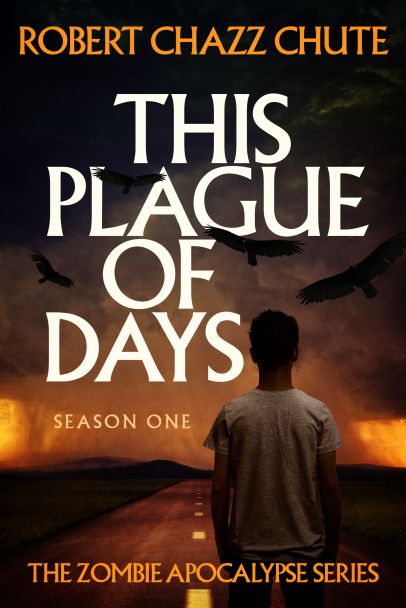
When I wrote This Plague of Days, I didn’t think in terms of hours then. I didn’t budget my time or work to a word count like it was a job. I just put my head down and wrote and revised many times, stealing time here and there without a real schedule. I can’t tell you how long it took to write that epic saga because I went through so many revisions. Also, because my approach was haphazard, I wrote slower then. Though I worked from an outline, the project took longer than it could have.

I was buying into the meme that slow cooker writing was the only way, despite Stephen King’s suggestion that three months ought to do it (and look at the size of his books!) If I wrote that series now, the first draft would take about 300 hours of actual writing time. That’s less impressive than saying it took me years to write TPOD, but it’s more accurate.

(By the way, I just found out the This Plague of Days, Omnibus Edition has advanced to the second round in the Writer’s Digest Self-published Ebook Awards! Yay!)

When someone says it took them two years to write their first novel, that’s not true.

Two years equals 17,531.62 hours, including time spent sleeping, showering, goofing off, playing with children and pets and holding down a job, and procrastinating etc. Authors can write as fast or as slow as they’d like and each process is unique. However, there is no direct correlation between speed of production and quality. In fact, for the first draft, quality is nigh irrelevant.

Quality comes with subsequent drafts.

I find most of the jokes in the second revision and the plot problems to be fixed become clearer by the third revision.

Take NaNoWriMo, for example…

I’m planning 55,000 words for my current WIP. That means 55 hours for the first draft this month. As my current schedule allows, I’ll be done well before the NaNoWriMo deadline as long as I continue to protect my writing time.

Fifty-five hours sounds much less intimidating and more realistic, doesn’t it? What’s one work week to you? Forty-four hours? I approach my writing like a job. It’s a job I love, but there’s no waiting around for inspiration to come to me. I hunt inspiration down. Inspiration and efficiencies are habits learned by writing more and doing so consistently.

Sometimes the best laid plans go awry.

For my crime novel, Intense Violence, Bizarre Themes, I’d planned on looking for the exit to the book around 50,000 words and topping out at 55,000 words. It took me an extra 17,000 words to wrap it up neatly at 67,000 words. Still, 67 hours to a first draft sounds like much less drama than saying it took me a month. That’s just 16.7 hours per week to come up with a first draft. (For a while in the ’90s, that’s about as much time as I committed to watching television.)

I’d give you a measurement of editing and revision times if I had them, but that varies too widely depending on the book. For instance, I’m putting my time travel novel on hold because I’m not happy enough with it yet to release it. I’ll come back to it in 2015. However, I expect to have my current WIP out in time for Christmas (assuming I still love it when I’m done.) 

Write as slow as you want to or as fast as you can. It doesn’t have to be a job. Hobbies are good, too, so write at the pace you choose.

My point is, we don’t have to be drama kings and queens about the writing process. When you hear of writers putting out a lot of books fast, that’s not really quite as hard as many would lead you to believe. Writing is a time management issue first. The other skills required come into play after we commit to investing the hours.

But it can’t be good because it was written too fast!

Writers who cherish writing slowly have my utmost respect until they insist others write at their pace (and many people write much faster than I do.)

On the Road, Casino Royale, The Gambler, A Clockwork Orange, The Prime of Miss Jean Brodie and As I Lay Dying were written in less than six weeks. I wonder if any of those famous books were actually written in less time than that if the authors had tracked their hours.

Fast writers manage fear because they think about each book project in terms of a formula:

Word count goals + hours x perspiration (divided by distraction)

Prolific writers manage their time, that’s all. No drama. Inspiration usually arrives at the keyboard at about the same time we do.

Write. Revise. Edit. Enjoy throughout. (Now don’t tell anyone how easy it is to get to big word counts or they might start to think that writers aren’t special snowflakes!)

~ I’m Robert Chazz Chute and I just published my 15th book. Imagine how many more I could have written if I hadn’t been sucked into the vortex of “Must See TV” back in the day. 

Filed under: My fiction, publishing, Writers, writing tips, , , , , , , , , , , , , , , , ,

What if What We Think We Know About Writing, Publishing & Promotion is Wrong?

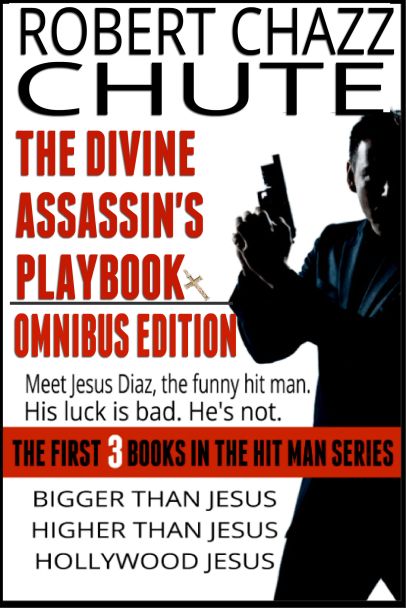
TWEAKED JESUS OMNIBUS COVER WITH CROSS

Problem:

Blogging is dead. I’ve been spinning out gold here for years. Maybe I should have spent more time writing books instead because my blog stats are fairly static. This site gets pretty decent traffic when I post, but it’s not growing as I’d hoped. Still glad to do it because it’s a compulsion, but I don’t do it as often and I don’t do it to sell books. I’m here to gain allies, share information and rant when the pressure builds too high.

My book sales come through Amazon promoting me, perhaps the occasional ad, pulse sales and, most important, word of mouth. I experiment with categorization and keywords and KDP Select. I write surprising books with many twists and turns and emotional gut punches. Sometimes it feels like I’ve been teetering on the cusp of success a long time and sometimes that’s lonely and sad. That’s when I stalk around the house naked, overcompensate for my doubt, pour a stiff coffee and start shouting, “Tonight I shall drink from the Chalice of Glory!” 

Solution:

We all need an author page, but do we really need to blog? Instead, go where it’s easier for consumers of information to consume. Twitter, when used well, is one option and less time-consuming.

Note, too, there are far fewer podcasts than there are blogs. I’m back podcasting after taking a hiatus. My podcast stats not only bounced up nicely with one new episode this past week, but the numbers were pretty steady in my absence. To catch the latest All That Chazz podcast (The Hit Man Edition) click here.

The Oft-repeated Wisdom May be a Lie.

Gird your loins because this is going to get scary. Here’s what we think we all know for sure:

Market your books by writing more books.

Well, yes and no. If you have a hit, your new adoring readers may want to read everything you write and then it finally will pay to have a huge back list. However, it amazes me how many readers are very genre-specific in their tastes. More books doesn’t necessarily translate to more sales.

I know this goes against everything you’ve read and it goes against what I believed until recently. But, as Tucker Max said on the Self-Publishing Podcast recently, “Book discovery is broken.”

My Evidence: 

1. Some authors are making good money writing fairly crappy books, and fairly few. (So much for the “Make-it-great-and-it-will-certainly-sell meme.”) What makes them hot? Genre choice is one major factor, I suspect.

2. It’s surprising how many authors seem to do okay with their first book or two. Or they get featured on podcasts and whatnot despite being relative novices. Is it their marketing machine, their genre of choice or luck? (More about the touchy subject of luck in a moment.)

3. It’s disheartening to find (in my informal and unscientific survey) that there are solid, experienced authors who:

(A) appear to be great at marketing,

(B) have an impressive number of books to sell, and yet,

(C) one of their series is actually selling and just about everything else is not. Read (C) again. Aren’t you glad your girded your loins? I know it’s counterintuitive, but it’s what I’ve been told by authors with a lot of books out there (as in more than thirty).

Some authors are blaming cannibalization from Kindle Unlimited for their recent sales dip. Or is it that the recession still rolls on in too many places? Or is it that readers already have too many free books to read? Can we blame our sales platforms? The narrow availability of Bookbub and the ineffectiveness of non-Bookbub sales tools? As a last resort, I suppose we could blame ourselves, but don’t wallow. I’m here to open the Box of Depression, not stuff you in deeper.

The Lie We All Need to Believe

On a recent publishing podcast, somebody who is making many thousands of dollars a month said something like: “Any author with persistence will make it big.”

Math says that’s not true. We won’t all make it big. Many of us won’t make it at all. Like the stock market, everybody can’t ride high by sheer force of will. If persistence alone were the issue, I’d have fewer writer friends constantly worried about money. I think some of us have to work smarter, but many of us are certainly working very hard. Telling us to bear down even more isn’t really helpful and may be damaging to our health, our relationships and our self-esteem.

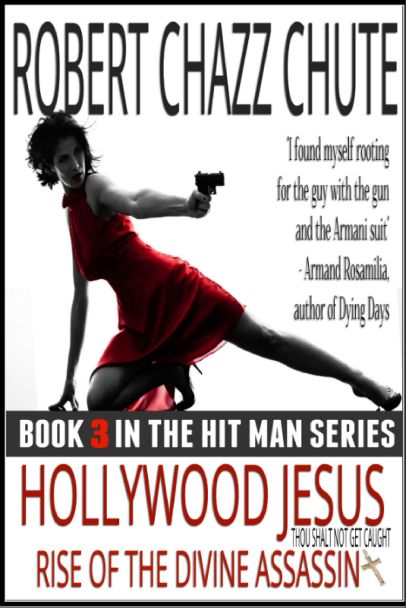
HJ COVER FINAL LADY IN RED

About luck

People who do make it big will usually say something humble about being lucky. Then they’ll detail the strategies to which they attribute their success. They might be right or they may be rationalizing. They might not attribute enough of their success to luck and organic growth. But more important, can their experience translate to ours? If you’re not in the same genre and working in the same time frame with the same resources, can you replicate what they did to earn readers?

My strategies going forward:

1. Still blogging, but less so. Podcasting more. Worrying less.

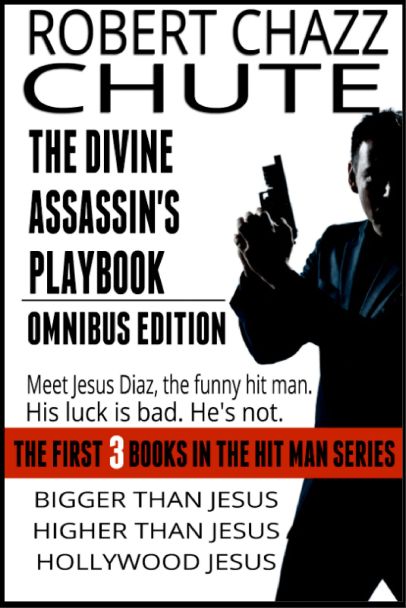
2. I’m holding off on the spin-off of the Hit Man Series I’d planned. Common wisdom is that many thriller series don’t seem to take off until you’re at book #5 or above. Hollywood Jesus and The Divine Assassin’s Playbook, Omnibus Edition just launched and I’m at Book #3. I hope to bring the sales of my crime novels up as the charms of my funny Cuban assassin, Jesus Diaz, are discovered. Therefore, I’ll write more of the Hit Man Series, faster. Come for the action and stay for the jokes as he falls out of the frying pan and into the napalm.

3. Work in popular genres. I’m not talking about chasing trends so much as acknowledging that I can write in more genres than I’ve allowed myself in the past. To get where I need to go so I can write more on a full-time basis, the work needs to pay.

Choosing more popular genres first is the equivalent of choosing to paddle the white water to get where I need to be (and get there faster.) I can still make any book a labor of love without throwing away profitability.

For instance, I love my upcoming time travel book. I’ve been stunned to discover there are a lot of fans of time travel who are asking me to hurry up and put that one out. My next book is another crime novel, but I’ll get to it all. I am putting books out faster now, but it may be speed of production within a genre (not necessarily flat numbers of books) that helps me avoid the infamous Cliff of Visibility from which we drop after thirty days on the market.

I also produce more books because, as with this blog, it’s about doing what I love. Produce as much as you want, but don’t pin all your hopes on any one book. Just write because you want and need to.

Opening up to New Possibilities is Another Way Forward

Recently, a publisher approached me about writing a ghost story for an anthology. It’s an honor to be asked, but that genre doesn’t appeal to me. Or rather, it didn’t appeal to me.

I noodled with a few ideas. Then I started losing sleep over it. Unless we’re talking Poltergeist, my problem with ghosts is their lack of agency. What does a ghost want? How are they a threat? How could I make readers care? Did I really want to write this at all?

The key question I ask for all my book ideas persisted:

How could I transform an old idea into a fresh and cool story?

She Who Must Be Obeyed doesn’t ask about my insomnia, anymore. She just meets me at the breakfast table with, “Busy brain?” The insomnia finally paid off. I found the hook and the angle I needed to get into the story. I want to write for that anthology now because I found the key to the main character. I also want to write a series of books on that foundation.

I never looked down on ghost stories. I just figured they were for other writers to write. Now I know I can still write whatever I want. The difference is now I’m going to let myself play in a much larger playground.

Excuse me. I have to go write a metric crap-ton of books now. For the love of it.


Filed under: Publicity & Promotion, publishing, self-publishing, What about Chazz?, What about you?, writing tips, , , , , , , , , , , , , , ,

Reviews Part 1: This publishing train isn’t going where I thought it was going

I read a review of a friend’s book that bothered me. The reviewer objected to his use of the second person. It’s actually a common objection and, in my view, kind of a silly one. The common objection is the reader couldn’t “get past” all that “you, you, you.” And yet the ubiquitous use of “I, I, I” in first person narration is no problem.

What bothered me more is that reviewer seemed to address the author in a way that made the negative review more personal. “I’m sorry, NAME OF AUTHOR, but nobody does it.”

Nobody does it? Really?

I do in my crime novels and it’s part of the psychology of the hit man’s character. Jay McInerney did so famously in Bright Lights, Big City. There are plenty of novels that challenge convention.

But I’ve blogged about the use of second person before and I don’t want to repeat myself. The above is a reiteration for new visitors to this blog.

And here’s what this post is really about:

Convention. Art challenges it.

This is not to argue that anything is Art simply because it’s weird. “Weird” is a word that stands in for, “outside the reader’s experience.” This is to say that I enjoy books that are uncommon, that challenge the status quo, that defy expectations. This Plague of Days has a subtext of psychology and philosophy underlying the action. Its design is unusual and that’s done on purpose. 

That was the other thing I objected to when I read some reviews of my friend’s book. The writing was executed in such a way that it played with readers’ expectations. It was well done though it left some readers off-balance. Then a couple of reviewers complained that they didn’t know if it was the author’s skill that accomplished that feat or if he merely missed the mark.

I have an answer for them:

The author knew exactly what he was doing. He did it on purpose and it took skill. It takes a lot of skill to propel a narrative across the expanse of a book. They are entitled to their opinion, of course, but perhaps a more careful reading by the reviewers was in order. All the elements were there and it wasn’t the author’s fault that a couple of readers missed it. I was irritated that a couple of people took the time to review my pal’s book, but they didn’t seem to pay attention in the first place. Worse, despite staying with his story to the end, they opted to question his intelligence in their reviews.

A fluke doesn’t keep going for 250 pages. Writers know this. Perhaps that’s one reason why our reviews tend to be kinder.

In Part II of this essay, I’ll discuss why it’s becoming more difficult to sell books the way some of us used to write them. My suspicion is that next time, perhaps my friend won’t write such a brilliant book and, sadly, he’ll probably sell more of them.

That’s a down note to end a post on, isn’t it? It’ll probably get worse in Part II.

Filed under: author platform, Rant, readers, Writers, writing tips, , , , , , , , , , ,

A Quick Top Ten: Make revisions painless

Books in progress litter my desk. As I revise manuscripts, there are certain words I watch for. When I see them I ask, “Who cares and who needs it?”

Here are some of those watch words and cautions:

1. Sentences that begin with “And…” (It’s not that it’s wrong or bad, but it’s often not necessary.)

2. Sentences that begin with “And then…” Sentences are sequences and usually work without this tip to the reader.

3. He felt, she heard, he sensed, she saw… Just describe the scene. Not “She saw a crocodile rise from the swamp.” Instead, “A crocodile rose from the swamp.”

4. Was. This crops up a lot in most writers’ first drafts. “She was fighting,” becomes “she fought.”

Gerunds are passive and they are not our friends, especially when overused. I don’t use adverbs much, though I don’t ban them. It’s a novel, not a telegram. Besides, I’m suggesting crafty guidelines here, not edicts about what not to do.

5. Look out for: just, own, up, down, so, it. These are words that we add to sentences that sometimes fail to add meaning. 

Just surfaces a lot. We can often do without “just.” Or we might use only or merely. 

“He sat down in the chair,” becomes “He sat in the chair.”

“So, he murdered the butler,” becomes “He murdered the butler.”

“Their own boat,” becomes “Their boat.”

“It” often replaces the noun you should probably use. “It’s up to you,” could be, “This caper is up to you,” or “The fate of guinea pigs everywhere is up to you.” See how it’s better? I mean, see how specificity improves clarity?

6. Careful of exclamation points that hype excitement that does not exist.

7. Semi-colons have fallen so far out of use that they now stop readers cold. Punctuation should be visible, yet not visible. Punctuation marks are the life-preserver under your seat on the plane. You know it’s there, but you don’t want to pause a moment to think about why it’s there. 

8. Use dialogue tags besides “said” sparingly. Let what is said carry the weight of the message.

9. Empty pleasantries are death.

“Hi.”

“Hi.”

“How are you?”

“Good.”

This trite exchange is what we do every day. In a book, it’s a waste of time. Also note that those four lines possess no conflict. A better way to go would be to answer “How are you?” with “You’re late.”

Or try, “He greeted her at the conference room door with an officious sneer and ushered to her seat without a word.” 

If the dialogue isn’t clever or funny, or if the exchange fails to reveal character or advance the plot, skip it and go to the action.

Don’t count on readers’ patience. Tell the story.

10. Everyone watches for run-on sentences. We break those up, of course. Also consider varying sentence length.

Sentence length is not something many readers will register consciously, but lots of short sentences together can feel stilted and staccato. (This device can be used to great effect in an action sequence or to make a point, however.) Many long sentences in a row tire the reader and can feel like a drone.

This problem is easier to recognize when you read your manuscript aloud. If you run out of breath before the end of a sentence, it might be too long. Or you need to do more cardio.

Me B&W~ Robert Chazz Chute hates to tell anyone what to do. Ever. He’s also a fan of the sentence fragment, so this isn’t about being the grammar police. It’s about helping writers and editors make books more readable. These are guidelines. The only rule is, if it plays, it plays.

FYI, the third book in the Hit Man Series is Hollywood Jesus, Rise of the Divine Assassin. This funny, gripping crime novel launches October 1, 2014. Early feedback says it’s the fastest pace to an adventure since you fell off your bike and got road rash when you were a kid.

HJ COVER FINAL LADY IN RED

The Omnibus will be launched at the same time.

PLAYBOOK COVER FINAL


Filed under: Editing, manuscript evaluation, Writers, writing tips, , , , , , , , , , , , , ,

Beat the World’s Plot Against You

Life happens. It’s time for me to happen to life, not the other way around.

In the last few days, someone stole from my family and made my daughter cry. A close friend’s child died. Frustrations dot the landscape. I thought I’d be done another book by now but life keeps getting in the way. Clearly, it’s time for a pattern break.

“Rise up and take the power back.” ~ Muse from The Resistance

I am not a flake, but I speak it fluently. Once upon a time, someone told me to pick up every penny (back when Canada had pennies.) The act of picking up pennies in the street was supposed to be a message to the universe: “I am open to abundance!”

After picking up a filthy penny in the rain, it occurred to me the message I was sending the universe was, “I’ll take whatever crumbs you choose to send me.” Worse, I was sending myself a message: “This is all you’re worth.” Screw that hippie bullshit.

1. Everybody feels pushed around sometimes. Push back by doing a kindness to someone else. Transmute the energy into something positive.

2. Tonight I spotted an author’s comment on a troll’s review, thanking them for the mean review. Authors: Cherish your fans. Set trolls to ignore. You do not have to pretend to love the whip. Stop being grateful for crap. I didn’t think the author was classy and above it all for petting and encouraging the troll. It looked more like grovelling for a penny covered in dog crap.

3. Exercise. Don’t feel like taking out frustrations on weights and ellipticals? Find your jam. Dance. Make love. Make sex. Rock on. Get happy. When we act happy, we fool our bodies and brains. No? Not yet? Dance harder.

4. Get enough sleep. Black out your room. Sleep naked. Fewer blankets are better. Can’t sleep? Revisit #3, points 5 & 6.

5. Phone a friend. Complain, but not for longer than three minutes. Then ask about them. Get out of your own head. Help them solve their problem.

6. You don’t need advice. Hardly anybody does. Just give yourself the same advice you’d give a friend in the same predicament.

7. Write. Not your book. Not yet. Write what you will do (not to do. Will do.)

Choose the two top priorities. Everything else on a long list won’t get done. Mark what time you will do these things. Keep that appointment.

8. Write. Make it the first thing you do. If not that, write at your high energy time.

9. Eat something that’s good for Future You. Don’t eat what Now You wants. Now You wants a hot fudge sundae on acid. Future You wishes you’d eaten a salad.

10. Do it all again until your are out of the unproductive funk. Then keep doing it. Write on. Write harder. Can’t make happy art? Fine. Fierce art is awesome, too.

Or do what you want. This is what I’m doing.

Damn it.

One day soon, we’ll all be brilliant together….

Filed under: getting it done, writing tips, , , , , , , , , , , , , ,

The Revolutionary Writer’s Manifesto: Ride that moose!

There is a myth a few really believe. It is the Myth of Originality.

Let’s pop a bubble. There are no new stories. I’ve seen a few stabs at a truly new story, of course. Those experiments are often bloody awful and unrelatable adventures amongst amoebas dwelling in the rings of Saturn. Screw amoebas.

Plots round the same bases all the time:

1. Good versus Evil.

2. Boy gets Girl (and variations thereof).

That’s okay. When a reader complains a story is unoriginal, they probably really mean that it is derivative. Unoriginal and derivative are two different things. It’s derivative if it overshoots homage, feels too much like something familiar while falling short of plagiarism. No story fails on unoriginality alone or all movies of the last few years would be failures.

What readers want is originality in execution, a unique voice and an uncommon angle or viewpoint. You’ll either give it to them or you won’t, but don’t be a weathervane, spun by the whim of the latest review.

This Plague of Days, my apocalyptic saga, has been criticized because it started out in one plausible place and ended in another, rather magical place. That place is not derivative. It is merely unexpected and I make no apologies. I confess, I’m a little flummoxed by folks who find zombies plausible but roll their eyes when vampires show up.

Anyway, why should I apologize? The reasons given why a few don’t like my story choices are the same reasons the majority love it. If, amongst the action, we take a chapter to deal with the origins of good and evil in the universe, that’s my choice. The metaphysics chapter is my favorite…well…that and the many chapters where a horde of the infected attack Wilmington, Vermont.

Write for you, the writer.

If it doesn’t sell, that one was always just for you. At least you’ll be happyish with it. If you write for the crowd you imagine, you’ll often write for no one. Some people manage it well. They make a good living writing similar books and plumb expected veins. If that’s you, you do you and I won’t complain if you’ll let me do my thing, too. In fact, congratulations and good for you!

For instance, I don’t read Dan Brown, but millions do and they love his work. I bet he achieved that by writing for himself. Yes. Let’s not be cynical. He’s not writing by committee and poll and he’s entertained millions. Consider JK Rowling, too. Harry Potter started a copycat industry, but what she was doing wasn’t popular when she began. She wasn’t chasing a market. She was chasing her dreams despite being told by so-called experts that children’s literature would never give her a big payday.

Follow your vision. As we say in the snowbound depths of Canada ten or so months of the year, “Break trail. Ride that moose!”

The Feedback Tightrope

I’m not advocating that anyone operate in an echo chamber. I do get feedback from beta readers and I’ve altered choices because of that valued feedback.

However, some people seem to think they should have more input into those choices. “I wouldn’t have written it that way.” To which I say, “Go write your book. I wasn’t trying to read your mind through a time machine when I wrote mine.”

The Statute of Limitations

I’m not going to give you solid numbers on what or when anyone can use a recognizable device again. There is no number. All I ask is reasonableness.

If This Plague of Days feels too much like The Stand to you, my reply is:

1. Thank you for the compliment! I love The Stand and it’s a big favorite among Stephen King fans. I’m not copying it but I recognize the similar elements, sure. I regret nothing.

2. “Similar elements” does not equal derivative. My characters are unique. It’s a different story in the same genre, that’s all.

3. The Stand was published in 1978. If not now, when am I allowed to write This Plague of Days or any other book that has any commonality with any other book you’ve read? Keep in mind that I’m almost fifty and not as fit as I should be. I can’t wait forever.

About Unconventional Choices

1. My crime novels are written in second person. Recently I read some twit announce that no book written in second person could have literary merit. Ev-er. “Too much you, you, you,” I guess. And yet, first person is all “I, I, I…” Somehow, we manage to soldier on with our lives and no link has yet been found between second person POV and killer tornadoes.

2. Bright Lights, Big City was published in 1984 to great acclaim in second person POV. Another author, (me, for instance) will get permission to use that POV again…when? From the curmudgeons? We’ll never get permission, so I’m not asking.

I need no one’s permission and neither does any writer.

That felt daring and liberating, didn’t it? But really, what’s the point of being in charge of what you publish if you can’t steer the ship where you want to go? Nobody gets into publishing for their health or to be safe. If you want safe, get into an industry that’s too big to fail: guns, drugs, banking, sugar, corn syrup or manufacturing lies for politicians.

The danger

I know this sounds dangerously close to the “I’m not here to make friends,” defense. (That’s what mean people on TV pseudo-reality shows always say. That and, “I’m not a dick, I’m just brutally honest.”)

Not every reader will agree that you should ignore them and simply follow your instincts when you write. They’ll punish you by not buying your next book. But really, is your autonomy and vision for sale for a couple of measly bucks? Is that the whorish vision of yourself you really want to embody? I doubt it. Besides, you’ll flourish when you write what you love. Follow your love and you’ll write more books. Only hacks write what they hate.

I’m not looking for 10,000 true fans by trying to be what they want.

That’s a moving target, and fickle. I’ll be me. Surely, somewhere out there, there are 10,000 people who are enough like me that they’ll dig what I’m doing. Right? Right? Oh, dear gawd! (Shoulda gotten into running guns and drugs for lying politicians!)

Doesn’t matter. I only know my mind. I’ll write for that audience and hope you appreciate my flavor. It’s okay if you don’t, by the way. No one is drafted into my army. I only take volunteers and my people do not clutch pearls or get the vapors easily. We’re here to escape the status quo, take the world and bend it to our will. Or fail. But we’re not here to be pushed around.

If I’m wrong, I’ll be wrong but happyish.

~ With the loss of a treasured friend, I had a tough week last week. It’s not really getting easier. One thing that has provided some solace is the number of people who have wished me peace here and on Facebook and Twitter. In my grief, I wrote. So many readers responded with kindness. I appreciate it so much. Thank you again. 

Filed under: author platform, My fiction, publishing, Writers, writing tips, , , , , , , , ,

In each chest a clock, its spring wearing

Tonight I thanked a friend and said goodbye for the last time.

It is a grim ritual, this business of the last goodbye. My friend didn’t look like the man I knew. He appeared as a sleeping wax figure, an ill-conceived doll imitating the man, the fingers too long and too thin. He was a poor approximation of the funny, vibrant, fit fellow named Wayne. He brought joy wherever he went and now he is dead at 56. Fifty-six used to seem old, but I was very young then.

I write horror that is an escape and a distraction. This is real life and it is often horrific in the end. When such good people disappear from our lives so suddenly and unexpectedly, this is the Slow Rapture of the Taken Too Soon. I’d be furious if I didn’t feel so empty.

By now you’re wondering why on Earth I’m telling you this.

Wayne was a bucket list man. Beside his open casket, there were many pictures: Wayne in marathons; Wayne playing golf, canoeing, cycling; Wayne with his loved ones on trips and fishing with his boys. He was immune to stress. He laughed easily. He made others laugh often and strangers soon became friends.

The visitation was a huge crowd as impressive and varied as the photos from his short life. I was privileged to know Wayne well. He was a positive force for good in the universe whose heart suddenly shut down without warning a couple of days ago and I am utterly devastated.

When I’m stuck for a plot point or searching for the hidden joke, I close my eyes and I wait for the right question. When I have that, the right answer will appear. So…why am I telling you this? Does this belong here? Maybe not…

But then the answers flood in:

Because I wish Wayne was a writer so I could open a book and still have his cheery voice in my head.

Because Wayne did a lot of good things with the time he had.

Because my friend knew the power of the bucket list.

Because if you’re waiting to do something, like fulfilling your dream of writing and publishing a book, I need to ask you to stop waiting. Please.

When I told Wayne I was taking a leave from my day job to dedicate all my time to writing, he smiled and said, “It’s your bucket list.” Wayne knew men in his family often didn’t make it out of their 50s. He knew the value of time.

There isn’t time to procrastinate. That’s why I’m telling you this. Do what you need to do. Your life is more important than your writer’s block. Push through. Every clock is ticking down, some fast, some slow, but there is always less time.

This is not a threat or useless fury or powerless sympathy card verse. This is me, in grief, searching for the meaning and the inspiration to move forward. Last night, I wept for the loss of my friend. I did not write. Wayne would not have approved.

Tonight, I’m back to writing my book about a guy with a time machine trying to correct the mess he’s made of his life. Sadly, it’s fiction. We can’t go back. The clock ticks in one direction. Wayne’s clock has wound down, but if he were here, he’d tell me to get on with my obsession. He’d smile again. I so wish I could see his easy smile again.

Each book we write is that time machine, taking us closer to what and when and where we need to be. That’s one place we can often make strangers smile. Through intelligence and imagination and creativity, together we’ll find the answers to all those desperate wishes, whether it’s writing stories to distract readers from pain or breaking cruel diseases’ grip on our mortality.

Today, for you, do more than the dishes. Work in the bucket list. Work on your bucket list.

Goodbye, Wayne. Thank you so much for being you. I’m changed because you came this way. I won’t forget.

My screen is a watery blur now.

And we write on.


Filed under: Books, What about Chazz?, What about you?, Writers, writing tips, , , , , , , , ,

TOP TEN: What you were waiting for…THE THONG OF COURAGE!

Ten Rules About Everyone:

1. We’re all scared. The ones who say they aren’t haven’t experienced loss yet or they’re afraid of appearing weak. It’s okay to be afraid. Fear can be wise, but not so useful it should take over your life. Feel that fear and wear The Thong of Courage!, anyway.

2. We’re all frightened of being wrong or looking stupid. Worse, some graceless people are hoping to catch us making one wrong move. Worse still, at some point, we will all be caught. 

What do we do next?

We snap The Thong of Courage! to remind us we are not defined by our mistakes if we learn from them. Forward! Down the Catwalk of Begin Again! Work it!

3. Everyone thinks they’re right all the time. Statistically impossible. Never happens. However, no matter what you do, someone is sure you’re wrong because you didn’t do it their way.

That’s okay. They think their subjective opinion cancels out yours. Maybe it would have yesterday, but today? Today you’re wearing The Thong of Courage! Behold, The Power of Thong!

4. We are all dependent on each other. Our stories are often about the one person who makes all the difference that saves the world. That’s almost always false.*

*Notable exception: a Russian officer defied military command protocol when the computers in his bunker told him US ICBMs were on the way. While his peers demanded a decision, he remained calm and thought it through. He averted global thermonuclear war by ignoring all the warnings on his screen. He determined that the attack was a computer malfunction and, of course, he was right. There was no “of course” about it at the time, though. We came so incredibly close to not being here and most people don’t even know it happened. His name is Petrov and that day he was wearing two Thongs of Courage!

5. We all envy people without knowing their struggles.

An author who is incredibly fortunate and gifted discovered that someone who had been a friend would not attend the launch party for her book. The friend was envious. What the friend did not understand was, even with all those blessings, nothing comes easy. It’s all work. There is no one clear path forward.

One person’s success takes nothing from another’s potential. When we slip The Thong of Courage! up our thighs and give a little wiggle, we feel inspired, not thwarted, by what others have achieved.

6. We are all humans. That means weakness. That means strength. To be human is a special thing, but too often we fall in with tribalism and blind nationalism. We choose teams and sides and brands. We see other people as The Other and distrust too easily.

“When we only seek enemies, we only find enemies.” That quote is from Superman in a Justice League of America cartoon I watched when I was eight. Often true, too. Superman is so thonged up, his underwear looks too thick to be a thong.

7. When we operate from fear, we often make bad decisions. (Bad news considering Items #1 and #2, eh?)

We’re scared we’ll get screwed over by Kindle Unlimited. We’re afraid of what Amazon might do someday, like change the royalty to two pennies. However, there’s not enough data yet in the first case and we’re worrying over a hypothetical in the latter.

But Thongers? We unite in the Now of the Isness of This Moment. Feel the raw psychosexual power of The Thong of Courage!

8. Worries about hypotheticals will still sneak under the Thong sometimes. What if we don’t have enough money to pay the bills if we get sick? Will we have enough money to get an education to get a good job? What if the roof leaks? There are infinite negative hypotheticals. 

Projecting negative possibilities into the future isn’t as useful as it once was. If you’re reading this on a computer (as opposed to psychically), you probably aren’t in a survival situation where you have to figure out how to cure meat in case the crops fail.

What might be more useful is to use our imaginations to attack problems and be proactive about the future. Instead of getting stuck in paranoia, try pronoia. (That’s the state of suspecting the world could be a positive place and not everything is terrible and out to stab you in the eye with an icicle.) Pronoia is the magic stuff The Thong of Courage! is made of.

9. We are all more alike than we’d like to think. 

I met a macho guy from another culture. He spoke in familiar, aggressive rhythms. He was forceful, but a nice guy. If I heard that same tone in another language, I might suspect he wasn’t a nice guy. However, as I listened to him in English conversation, I wanted to laugh at my foolish preconceptions. The guy only sounded angry. He was pontificating about pop culture to his friends.

As writers, our tool is imagination. When we aren’t writing, many of us use our imaginations as a weapon against ourselves. We fuel worry and create stress and that tears at the fabric of the Thong of Courage! True Thongers depend on evidence, not irrational, fearful maybes. We can use our imaginations for good. Start with pronoia. (#8)

10. We all seek validation. Too much, I think. We hope readers recognize our brilliance. We want Someone Else We Respect (and may not even know) to give us the nod and let us into the Successful People Club. There is no club. Worse, luck is more involved than we’d like to think in success. Worse still, if it existed, membership in that club would often be temporary.

Most of us won’t get such public validation. The outliers — those few, stellar successes — will be chosen for acknowledgement, adoration and jealousy, yes. Mid-list authors who do reasonably well will toil on, keeping the size of their checks secret. They’ll shut up about making $40 ~ $60,000 a year in part because it’s more than most get but also because it’s not as much as they’d hoped and they’re embarrassed by arbitrary expectations. Someone won’t approve. Always, someone won’t approve.

Most of us will fail by the usual monetary measures and chances are excellent Mom and Dad will lose sleep over the lawyer you could have been.

So don’t write for validation. Seeking other’s approval is not The Way of the Thong! Don’t wait for your parents to give your writing career their blessing. Stop expecting everyone to understand your obsessions. Do the work. Write. Write for the joy of creating and what comes will come. Or it won’t. Doesn’t matter. You’re a writer in an awesome thong, for God’s sake!

We talk about writer’s block too much. Write through the fear to create joy in yourself and possibly in others. It’s supposed to be fun for you and the reader, you know? It’s not really all that hard, either.

You know who really needs The Thong of Courage!? Roofers in the hot sun and sweaty ditch diggers and worried caregivers and people with real problems who don’t have the joy of being writers. We are so lucky to do what we do. When we understand that, we won’t even need The Thong of Courage! anymore. We’ll go commando, naked and unafraid.

You are the answer you’ve been waiting for.

Do it.

~ My name is Robert Chazz Chute. I write stuff. Pantsless.

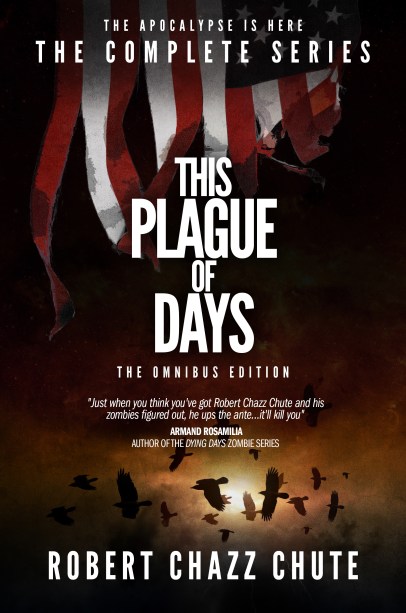
This Plague of Days OMNIBUS (Large)


Filed under: getting it done, What about Chazz?, What about you?, writing tips, , , , , , , , , , , , , , , , ,

So you want to be the next big thing?

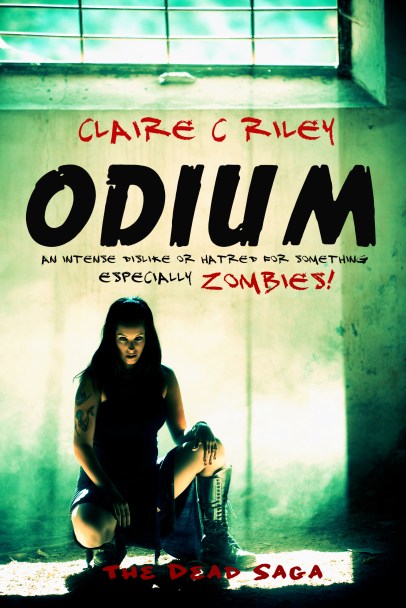
Odium The Dead Saga cover

~ Guest post by Claire C Riley

Most writers start out on this crazy train wreck of a journey with one thing in their mind: to tell a story. Okay, so maybe they have two things on their mind.

Tell a story, and have people read it.

Oh, wait. Maybe three things if they are feeling especially ambitious.

Tell a story, have people read it, and maybe, if they dare to dream…earn a living doing it.

Throughout my journey, I’ve met many different types of writers, all with different ambitions when it comes to their words/books/stories/novels whatever. Some dream big. They write a great novel and wait for it to be snapped up and make them their millions. Others write a great novel, work their socks off to get it traditionally published, and sit back and wait for their millions to roll in.

And then there are those who are more realistic about it all.

They write a great book. They want it to be read by people, and maybe they pimp it out to the big five, maybe they don’t, either way, that book gets published. And then they…write the next damn book!

Because to be a writer, that’s what it takes. Not one great book, but several. Readers don’t like investing in one book, because that’s a shoddy investment, and it’s not the book that they are investing in—it’s you, the author. They want to know that if they fall in love with your work that there is more to come. More ready for them to buy, more for them to look forward to. Just more.

I’ve met a lot of authors who are waiting.

Waiting for sales, waiting for fans, waiting for…who the hell knows what they’re waiting for, and there’s nothing wrong with that, but don’t sit up at night wondering when the big bucks are going to roll in.

As a reader I like to know that there’s more after I turn that final page—or slide the final page if I’m reading with my kindle. And I hate waiting for a year for a sequel.

So as a writer, I don’t. I try to get out several novels a year, both full length and novellas, and in between I like to write short stories in anthologies. That way I get to keep drip-feeding my readers my words, to keep them interested and hungry for more, and yes, invested in me. Because surely I owe them that much? After all, they took a punt on me by reading my book. And in return the more they read my stories, the more they talk about them, and the more word spreads, thus increasing my reach to potential new readers.

So for me being the next big thing isn’t about that traditional publishing contract, or making a million on my first book (though, of course that would have been nice.) It’s about continuously moving forwards, listening to feedback and improving with each book, making my readers happy, and maybe, just maybe, the next book will be the next big thing.

But I’m not waiting around to see, I’m too busy writing my next book.

Claire C Riley profile photo~ Claire C Riley is the author of “Limerence,” “Odium. The Dead Saga,” “Odium Origins. A Dead Saga Novella Part One,” “Odium II The Dead Saga” “Odium Origins A Dead Saga Novella Part Two” a contributor to several zombie apocalypse anthologies, including the upcoming ‘Fading Hope’, ‘State of Horror Illinois’ and a proud contributor to the charity anthology “Let’s Scare Cancer to Death.”

Odium. The Dead Saga is a top #100 dystopian selling book on Amazon.com for 2013, ‘Indie book of the day’ winner December 2013 and ‘Indie Author Land 50 best self-published books worth reading 2013/14’

Limerence was a featured book in the ‘Guardian newspaper for best Indie novel 2013’ and is currently a finalist for the eFestival of Words ‘best novel’ category.

Odium II The Dead Saga is a #1 Best Selling British Horror book.

She can be stalked at any of the following.

http://www.clairecriley.com

https://www.facebook.com/ClaireCRileyAuthor

http://bit.ly/clairecrileyamazon/

https://twitter.com/ClaireCRiley

https://www.google.com/+ClaireCRiley

Filed under: author platform, Books, publishing, Writers, writing tips, , , , , , , ,

Writing Moonlighting Top 10: There’s going to be a pie fight!

There are many ways to write and no one can say any are “wrong”. Well, the kitten sacrifice was a little much. Here’s one way to go:

Anybody remember the TV show Moonlighting? It was a comedy that was on TV when Bruce Willis was adorable and Cybill Shepherd was Cybill Shepherd. During production, sometimes the planning seemed haphazard. The lowest guy on the totem pole in the writing room would run down a hall, stick his head in the door at the props department and scream, “There’s going to be a pie fight! Get 500 pies ready!”


That’s writing toward a scene.

They didn’t have everything else filled in yet, but they knew they wanted a big set piece and pie would fly.

From Google: 

set piece
noun
A thing that has been carefully or elaborately planned or composed, in particular.
A self-contained passage or section of a novel, play, film, or piece of music arranged in an elaborate or conventional pattern for maximum effect.

What’s this mean to you and your readers?

Deliver maximum effect.

You’re writing your book. Events happen. Complications ensue. Characters conflict. You know. Story stuff. A set piece is a story beat but not every beat is a set piece. This strategy reverse engineers your novel. You think about the big scenes you want to deliver and sketch those out so you can lay the groundwork and build the ladder or plant the garden. Pick your writing metaphor here. Without that context, it will feel stuck on so be careful to stitch tightly and weave over the seams.

The Big Scene: Put on the Helmet of Imagination!

The Last Evil Clown fights The One Good Mime atop Mt. Rushmore. Or the nuke detonates in Dubuque just as the hero teleports away to the bridge of an exploding starship. Whatever. You could write the context that gets your readers there and excited about it.

Set pieces are big stakes scenes so:

1. Add the ticking clock device. 
2. Kill a major character.
3. See it as the movie scene where the special effects department blows wads of cash.
4. Make it a major turning point.
5. Reveal something huge.
6. Deny the protagonist their easy victory.
7. Award the main character their vengeance.
8. Reward the villain with a huge comeuppance.
9. Pay off the reader with a spectacle, or at least something spectacular.
10. Books are long. Don’t have just one set piece.
Robert Chazz Chute This Plague of Days: Season 3~ In This Plague of Days, Season 3, the big battles constitute set pieces. Not every set piece has to be a violent cataclysm though. When the big secret is revealed in the library in Season 3, that’s a set piece, too. You’ll know when you get there because you’ll suspect I wrote it high on acid. If you don’t know what I’m talking about, I have something for your TBR pile. 

Filed under: Writing exercise, writing tips, , , , , , , , , , , , , , , , , ,

Bestseller with over 1,000 reviews!
Winner of the North Street Book Prize, Reader's Favorite, the
Literary Titan Award, the Hollywood Book Festival, and the
New York Book Festival.

http://mybook.to/OurZombieHours
A NEW ZOMBIE ANTHOLOGY

Winner of Writer's Digest's 2014 Honorable Mention in Self-published Ebook Awards in Genre

The first 81 lessons to get your Buffy on

More lessons to help you survive Armageddon

"You will laugh your ass off!" ~ Maxwell Cynn, author of Cybergrrl

Available now!

Fast-paced terror, new threats, more twists.

An autistic boy versus our world in free fall

Suspense to melt your face and play with your brain.

Action like a Guy Ritchie film. Funny like Woody Allen when he was funny.

Jesus: Sexier and even more addicted to love.

You can pick this ebook up for free today at this link: http://bit.ly/TheNightMan

Join my inner circle at AllThatChazz.com

See my books, blogs, links and podcasts.

Enter your email address to follow this blog and receive notifications of new posts by email.

Join 2,061 other subscribers