C h a z z W r i t e s . c o m

See all my books at AllThatChazz.com.

5 self-publishing truths few authors talk about

Brace yourself. Someone said that, in independent publishing, 2015 will be the Year of the Quitter. I hope it’s the Year of New Solutions. Still, we have to know the challenge before we can meet it, so…

Dylan Hearn's avatarSuffolk Scribblings

writing-is-hard

One of the hardest thing to watch on social media is an author, usually a debut author, getting excited about their upcoming book launch and knowing they are about to get hit around the head with a hard dose of reality.

They’ve done the right things, built up a twitter or Facebook following, blogged about the book, sent copies out for review, told all their friends about the upcoming launch, pulled together a promo video and graphic, maybe taken out some adverts. The first few days after launch are filled with excited tweets, mentions of early positive reviews and chart rankings. Then, after a few days, maybe a few weeks, the positive tweets stop and an air of desperation sets in as the reality of life as an indie author hits home.

Part of the problem is that the authors most vocal on social media are those that have already seen self-publishing…

View original post 835 more words

Filed under: publishing

5 Tricks to Keep a Modern Reader Interested

Roger Colby, Novelist's avatarWriting Is Hard Work

modern readerI can’t count the amount of indie books I’ve started but haven’t finished.  I read everything on Kindle now save a few of my favorites like those in my Tolkien collection (I have all hard-bound editions of those).  If I want to figure out whether I want to read a new book, I download a sample from Amazon and then if I can get interested in the first few pages, I’ll stick with it through the sample, and then if I can read the entire sample and want more, I buy the book.

The thing is, most readers today are reading on phones or Kindles or iPads.  It’s not just the young.  My mother is in her 70’s and reads all of her books on her iPad…and she’s an avid reader.

So how can a modern writer write their novel so that it has that un-put-downable quality that forces the…

View original post 665 more words

Filed under: publishing

Getting Past The ‘Bookstore Barrier’: Freethy And Ingram Go Into Print

Filed under: publishing

2014 in review

The WordPress.com stats helper monkeys prepared a 2014 annual report for this blog.

Here’s an excerpt:

The concert hall at the Sydney Opera House holds 2,700 people. This blog was viewed about 25,000 times in 2014. If it were a concert at Sydney Opera House, it would take about 9 sold-out performances for that many people to see it.

Click here to see the complete report.

Filed under: publishing, , , , , , , , , ,

Sanity: Another reason to write more books

Do you ever feel like you’re reaching for success and someone is slapping your hand? Does every Monday feel like Thwart Day?

I just had one of those days that drains energy. I read a review from a guy who apparently thinks I believe in the supernatural because I often write about it. (Fiction, people! Fiction!) A cop stopped me today. He was unnecessarily dickish. That put me in a dark mood. I haven’t been feeling great so I had to go for some medical tests. A nurse was in a panic over my paperwork and apparently trying to panic me, too. I’ve got a big birthday coming up which I’m not excited about. I feel pressure. Sometimes, despite my big plans, it seems time is running out and the news for indie authors seems to be all whoa and woe at the moment.

Therefore, it’s not time to give up.

It’s time to put the hammer down (because I was thinking of doing terrible things with that hammer) and remember what’s working. To review:

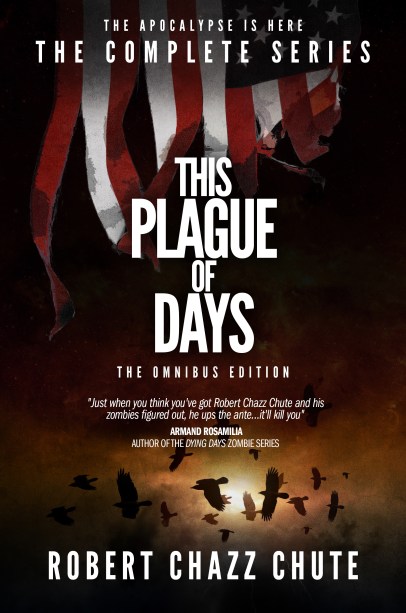
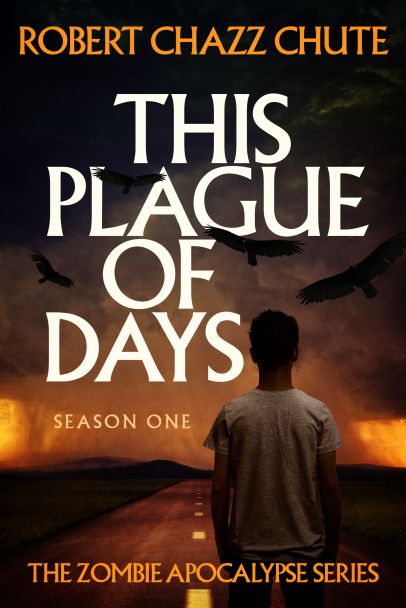
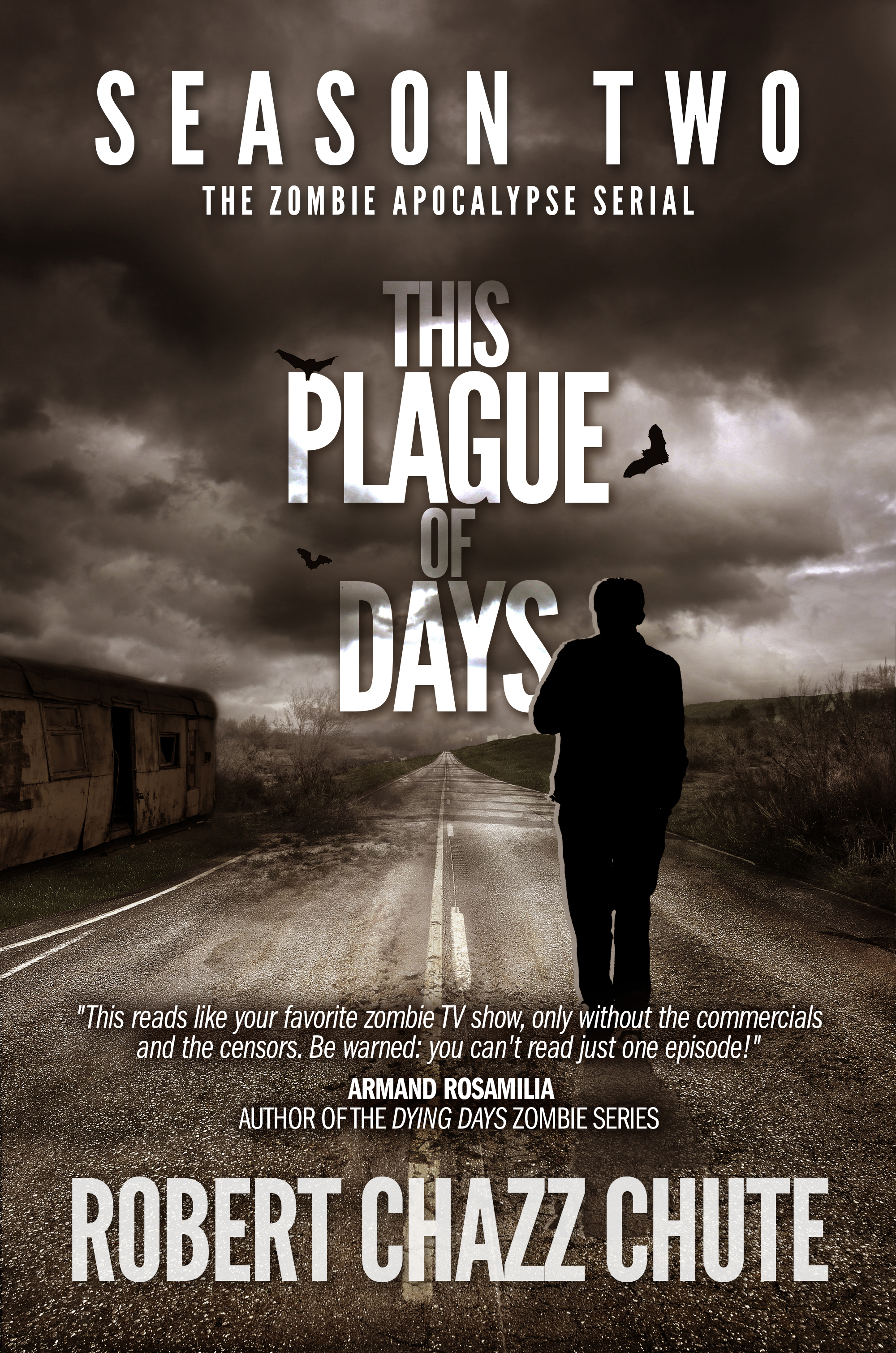
This Plague of Days OMNIBUS (Large)

I got this letter today:

“This Plague of Days, Omnibus Edition was awarded an Honorable Mention for Writer’s Digest’s Self-Published e-Book Awards in Genre.”

Whoo. Also? Hoo!

Check out the Top 100 Kindle Short from my coauthor Holly Pop

Check out the Top 100 Kindle Short from my coauthor Holly Pop

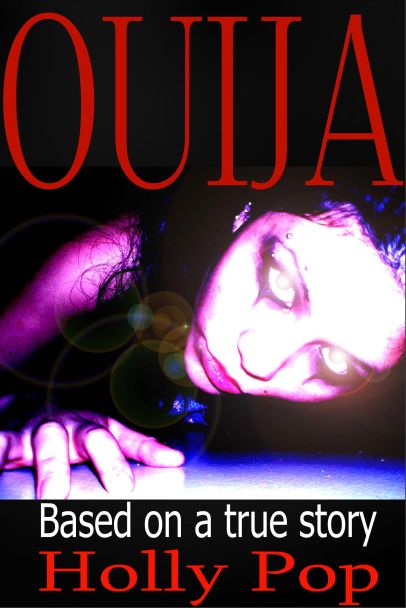
I’m collaborating with several authors and a publisher in 2015. The first was Holly (Pop) Papandreas, author of Ouija

We wrote The Haunting Lessons. In this fun and dark fantasy, a girl from Iowa discovers she has amazing capabilities. The world is a richer and more dangerous place than she ever imagined. Parts of it may remind you of This Plague of Days, but the tone is lighter and the pace is lightning quick. Don’t miss out on 81 lessons to survive Armageddon. I like you and I want you to live.

Just released for Christmas reading!

Just released for Christmas reading!

My friend and author of Butterfly Stitching, Sher Kruse, has invited me to participate in a non-fiction anthology.

51bbcGqD3aL._BO2,204,203,200_PIsitb-sticker-v3-big,TopRight,0,-55_SX278_SY278_PIkin4,BottomRight,1,22_AA300_SH20_OU01_

More on that in 2015.

I’ll be contributing to a horror anthology for a publisher and working with another author friend of mine on a secret book project to take paranormal readers by storm. I also have big plans for several books in the Ghosts and Demons Series, a big standalone book and more Hit Man books.

It’s been a big building year for me. I put together six books in 2014, so Mom and Dad will have to take back those accusations that I’m too lazy to live. 

PLAYBOOK COVER FINAL
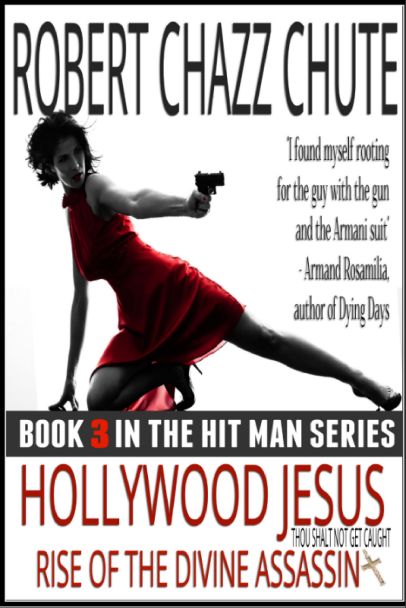
It’s so fun and gritty and fast, I’m very happy with Hollywood Jesus, the third adventure in the Hit Man Series. The John Leguizamo joke alone makes it for me!

"Perhaps the most underrated crime novel of all time." ~ Robert Chazz Chute

“Perhaps the most underrated crime novel of all time.” ~ Robert Chazz Chute


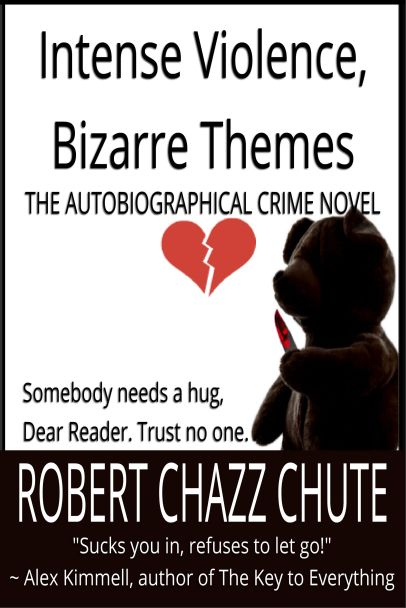
And, maybe best of all, I wrote my criminal autobiography!

That's one adorable bear holding that bloody knife.

That’s one adorable bear holding that bloody knife.

And I’m part of the Horror Within Box Set with some very heavy hitters in horror fiction.

Horror Within Box Set

In other words, it’s been a productive year. It seems I have a lot to live for, after all. I can’t wait to get more of my ebooks into print, too. So stay busy. It will keep you out of trouble. Works for me. When you’re feeling down, write another book. That’s what I do. I’m all nerves a lot of the time, obviously. Writing soothes me and keep me from acting on impulses to hammer things.

Writing works that way for many people. Writing or reading, I hope you find escape, as I do, in imagination.
Merry Christmas.

If you had mixed feelings about 2014, let’s make 2015 better, hm?

Filed under: author platform, Horror, publishing, Writers, writing tips, , , , , , , , , , , , , , , , , , , , , , , , , , ,

2014 – The best books I read this year!

I can’t fault Susan’s taste.

islandeditions's avatarBooks: Publishing, Reading, Writing

I don’t normally do this – recap what I’ve read during the year and choose which have been the best books, but I was tired of scanning the Best of 2014 lists that media and book sites produce, seldom seeing anything at all I’ve read. So I decided to come up with my own list.

If an author has been featured on my blog, Reading Recommendations, I have linked to their promotion. And the benefit of writing this promotion blog is I have discovered and met so many great authors this past year! As well, I’ve heard from a friend, a reader, who has been following my recommendations – and reading many of them! Here’s what Violet has to say: I love to read. I read for pleasure but if I learn something, it’s a bonus. With thousands of books to choose from, it can be a challenge finding…

View original post 804 more words

Filed under: publishing

What’s the right price for a book?

When discussing book marketing, writers often debate free versus cheap versus charging what a book is worth. “What a book is worth” can be a moving target, depending on who you ask and when. Here are some factors to consider:

1. Length of the book.

My friend and co-author, Holly Pop, wrote a novella, Ouija: Based on a True Story. It charted at 99 cents, but since going up to $2.99, it’s still charting and doing well. Short doesn’t have to mean 99 cents. It’s around 8,000 words and people still want it. Pick it up. It’s really compelling.

2. Genre.

Some genres, like epic fantasy or historical romance, seem to have readers who expect higher word counts. They often want more than 100,000 words.

I think many readers are becoming less sensitive to word count. That’s good. What should matter to us, as readers and writers, is providing value for money. My books are getting shorter. I start looking for the exit around 50,000 words and I generally find it north of 60,000 words. Still a good-sized book that doesn’t feel to the reader like it’s full of shortcuts. Consider that a lot of people are grooving on shorter, fast-paced books, too. They don’t feel they have time for very long books. (I think that trend will continue.)

3. Intent and timing.

Is this book a loss leader? Is it meant to be an introduction and sales funnel for a series? You might put it at perma-free or you might decide to offer an introductory price of 99 cents. You might also choose to put it at whatever you consider full price and hold a sale once in a while to move more books (and include a call to action to your other, similar, books.) You might even just write the bloody book, slap on the price you think is fair, never drop the price ever. You might start high and slowly drop (the traditional approach) or you might start low to get more attention and reviews and slowly raise the price.

4. Is it time to reevaluate your book prices? 

Here’s my little case study:

I had the first Season of This Plague of Days set at 99 cents for a long time. I don’t personally like that price — not much sense having a pulse sale on a 99 cent book — but it got people looking at it who might have passed me by otherwise. It’s at 100 reviews now and more people are opting for the This Plague of DaysOmnibus Edition (greater value for the price and it contains all three books for an epic saga many compare favorably to The Stand.) All things considered, time to assert worth, right?

I put the price up to $3.99 today. According to Amazon’s price estimation tool, I should be charging $5.99 for a revenue increase of 451% and a drop in unit sales by half. However, Season One is the first in the series and the other books are also $3.99 each (while the TPOD Omnibus is at $6.99 and around 300,000 words.) No reasonable reader could say I’m trying to gouge them by keeping the price to $3.99. Arguably, I priced the first book in the series too low for too long. In the long-term, price should reflect value, but value is not the lone factor.

5. You.

Another consideration when setting prices is your sensibility and your confidence in the value of your product. Do you feel you’re well-known enough to set a higher price or are you still stuck enticing them with a low price? (Note: that strategy may well be deep in the Law of Diminishing Returns since competing on price is far less effective now.)

Also: Is the quality high? Do the reviews back that up for someone happening across your author page for the first time? Are you marketing your work well? What does “full price” mean to you, anyway? If you get a complaint about a price point, comparing it unfavorably to a low word count, for instance, will that send you reeling into a rage and/or depression?

Here’s one thing you don’t have to worry about: history.

If you priced a book too low or too high, you can always change it. You can experiment with price until you find the price that moves books effectively but still pays. Some writers worry that readers will complain about cost, comparing it to what it has been priced in the past. That’s rare. If I hadn’t just given you the history of a couple of my book prices, how many of you would really know what I charged yesterday? A few to none. Feel free to experiment.

6. Don’t discount free unnecessarily, either.

The truth is this: I think my crime novels rock. The Hit Man Series is a fun and funny romp with some serious power and punch behind it. (My fave is Hollywood Jesus, for the John Leguizamo joke alone.) However, it’s one of those best kept secrets that needs to get out there and mingle. I’m not seeing enough movement nor enough reviews on those titles. To get more readers to take a chance on my funny Cuban hit man, Jesus Diaz, I’m going to make the first novel in the series perma-free or at least tempo-free. Bigger Than Jesus is already on Kobo for free and I’m hoping Amazon will price match soon.

(Let Amazon know it’s free on Kobo here.)

If a series isn’t moving the way it should, consider doing a giveaway so you draw more readers into the fold. It’s not necessarily that your book series is ugly. It could be that Book #1 hasn’t gone on enough dates yet. Those who know it, love it, so eventually, everybody is going to love Jesus.

7. Stay flexible.

It may take a lot of experimentation and experience before you find the price move that’s right for you. Then you’ll have the same journey of discovery when you publish the next book, too. I’m on that journey, still experimenting. I don’t think that experimentation ever really stops. It’s just forgotten for a while until we figure it’s time to reassess sales and marketing and pricing again.

~ Robert Chazz Chute will publish his next novel (with co-author Holly Pop) later this week. It’s called The Haunting Lessons, an urban fantasy about a young woman from Iowa who, when tragedy strikes, discovers she has powers she never suspected. It’s the beginning of a fun series packed with jokes and disaster. If you want to join the fight and survive Armageddon, look for it on Amazon this weekend.

Filed under: Amazon, author platform, publishing, , , , , , , , , , , , , , , , , , , , ,

Further thoughts on the challenges and solutions around free book promotions

1. Problem: Annoyance when free stops

The beta version of my next book, The Haunting Lessons is on Wattpad for free. However, Christmas is here and I’ve got bills to pay and children who expect presents on Christmas morning. Odd, huh? Greedy little creatures.

I can’t leave it on Wattpad for free while I’m selling it elsewhere. Naturally, my first worry is that I’ll annoy Wattpad readers when I pull it on December 15th. I once saw a Wattpad reader characterize a writer’s move from free to paid as “a cash grab.” Ye gods! Alfred! My cape! My cowl! Polish my batarangs! Tonight I hunt Entitlement to its lair!

So, yeah. That’s a problem, but let’s not overstate it. It’s probably a minor quibble. Most people are reasonable. They’ll take an inch, but that doesn’t really mean they’ll take your shirt and your shoes, too.

Solution: Make concessions

I have warned readers on Wattpad that THL won’t be there long (though some will miss that warning.)

When I pull it and publish on Amazon, I could put the book into KDP Select and offer it for free for a couple of my five free days. That’s one way to get more reviews faster. However, that ambition will be hampered because I won’t be able to promote it anywhere (except my network). We can’t promote effectively without a bunch of reviews.

Question: Anybody know of an effective book promotion service that really moves books on the first day without requiring 10-15+ reviews? Anybody want to invent one?

Alternate solution: Expand beta read team.

Also send out more ARCs to avoid this conundrum.

2. Problem: Time

Though The Haunting Lessons is the first book in a series, the next books are not yet written. Many authors find making the first book free in a series attracts the power of discovery, gets true fans and raises sales of the books. Yes, but that’s not helpful until I have at least three books in the Ghosts and Demons Series.

Confession: I’m uncomfortable with perma-free.

Making a book perma-free is an unreliable and unpredictable process. It can be reversed, but that’s also unreliable and unpredictable. It all takes time and, of course, every book is a massive investment of energy. Perma-free does feel like lost sales no matter how much I tell myself it’s an investment in advertising and promotion. (More on those feelings below.)

Solution to the Time Problem: Compose, produce, ship

I’ll write the next books in the series fast and include a CTA (Call to Action) for similar books in my list. People who liked This Plague of Days will have a great time with The Haunting Lessons and vice versa.

This dovetails with a strategy that is long overdue for me: stop being stubborn and write a lot of books in one genre. Expect more horror/urban fantasy from me in 2015 and fewer crime thrillers.

Alternate solution: Invent a time machine. 

Write the entire series ten years ago. Mental note: invest in Google, Facebook and Apple.

3. Problem: Logistics

Coordinating giveaways is a logistical nightmare if you’re on multiple platforms. Change a price on Amazon in the morning and the price change takes effect the same day. On other platforms (and especially if you publish through Smashwords), price drops and rises can take days to weeks and you’re never even sure when the new price will take effect.

Solution: Improvement by the competition

It helps if you publish to those multiple platforms directly instead of going through an intermediator. Uploading individually instead of going through Smashwords or Draft2Digital will also take time, so there’s always a caveat and a corollary. That’s about all we can do, though.

The solution is not in our hands. It’s up to the other sales platforms to match Amazon’s response time. Those platforms also have to work on their problems with discoverability. I tried to find a friend’s book on Barnes & Noble and Kobo the other day. It took two searches. For searchability and discoverability, Apple is probably the worst. They are also the least user-friendly for uploading and publishing.

4. Problem: When free is worth nothing

A lot of people will snap up free but they’re hoarding. They never get around to reading the book. I do that myself.

Though it still kind of sucks, I prefer 99 cents as an introductory price for a series (Season One of This Plague of Days is set at 99 cents.) It’s not about the 30 cents I might get for selling a 100,000-word book. It’s that people are more likely to actually read it if they make that minimal investment. It’s the shopping cart analogy from my previous post: just a quarter is enough to stop a lot of people from walking off with shopping carts.

Solution: Reach the masses

Free is used best when it’s leveraged by the power of promotional platforms like Bookbub. There are many more such services but Bookbub is still the big dog at the moment. You can argue Bookbub is hard to get into and provides less value than it once did, but it does appear to reach more readers than any other service.

Go to AuthorMarketingClub.com to use the free submission tool for multiple ebook marketing sites. They’re great additions to a Bookbub promotion and, failing that, might be an alternative. Most of these sites are free or inexpensive. They require application time and a varying number of reviews and ratings. Author Marketing Club tools reduce application time and can even help you get more reviews.

5. Problem: Perception

Some readers think that if it’s free it must be a bad book.

Solution: Over-deliver

Surprise them with a good book and we may even be rewarded in the reviews for overcoming their low expectations. It’s not their fault they don’t understand the problems of indie authors trying to grow our readership. It’s not their problem that they mistake price for value. It’s our problem.

Additional solution: Ignore Mr. and Mrs. Crankypants.

Recently I read a comment in a review where a vituperative minority cast aspersions on indies for daring to write series. If it was a series, it couldn’t possibly be any good. That was an odd and new prejudice to me. But so what? That’s not a reader who’s going to become anyone’s true fan. That’s a bomb thrower and all they love is the sound of their own voice. Forget it. (And if you figure out how to forget it, tell me how you do that. I’m still a boiling cauldron of rage at any injustice and slight.)

6. Problem: The Devaluation Argument

Literature hurts to produce. Squeezing out a novel is excruciating. Surely, we should never gift our books to anyone, even temporarily, in the dim hope we’ll gain new readers who have never heard of us. We’ll send the message that our work is worthless to Mr. and Mrs. Crankypants.

Solution: Get off the fainting couch and get over yourself, Butch.

This is a neurosis writers commit on themselves before any nasty reviewer gets a chance to sneer at us for being entrepreneurial artists and independent publishers. Sure, writing books is hard, but it’s not that hard. If it is that hard, maybe you aren’t enjoying the writing process enough. (I hear crocheting is calming for the sensitive neo-hippie plus you get garish hangers for your potted ferns when you’re done.)

The Devaluation Argument might not be all wrong. I’ve already confessed my discomfort with perma-free. (Yes, there’s the math of it. Math doesn’t stop me from feeling what I feel.) But to cut off the most effective tool for discovery that I know of? That smacks of Self-aggrandizement calling itself But What About the Pricelessness of Literature? Let’s not be so precious about the writing process that we write good books too few ever get to read.

Writers need to promote to be read. Most sales platforms suck at promoting and advertising our work successfully. Until they improve, this is our lot and the value of discovery and growing our readership is going to cost us. We have to suck it up.

Alternate Solution 1: Reframe the problem

When you give your book away, that’s generous. A lot of people don’t have money for an entertainment budget and you’re helping them out. That feels good doesn’t it?

Alternate Solution 2: Go back to the math despite how you feel

This week I consulted with an author whose ebook was priced at $9.99. I suggested he drop the price.

The author frowned so we went to Amazon’s pricing tool. It’s in beta but it’s interesting and can be useful. I don’t set all my prices by it, but I do pay attention to it. You’ll find it on the Rights and Pricing page of your KDP Select Dashboard.

At $3.99, the tool predicts that his profits will rise by over 400%. How do they do it? Volume. Free promotions create volume and inertia, too. Better than doing nothing, right?

Alternate Solution 3: Know that many people are price sensitive for good reasons

One guy told me recently, “I don’t pay attention to price. If I want a book, I buy it.” 

I nodded. What I didn’t say was, “Yeah, but, dude! You’re rich. You didn’t ask the salesperson what your new car would cost.”

Some of those same price-sensitive people will become true fans, and buyers, once you demonstrate that you and your work are worth their time and investment. Without free, a lot of them won’t give you the chance to prove your writing’s worth. Think long-term.

Give coy readers a chance to fall in love with what you do. And why wouldn’t they? You’re adorable.

~ The Christmas thing is happening. You’ll find all my ebooks and paperbacks here. I’d appreciate it if you bought a book or fifteen. Thanks!


Filed under: author platform, free ebooks, Publicity & Promotion, publishing, readers, , , , , , , , , , , , , , , , , , , ,

Why are we so worried about failure when it’s so common?

I’ve been reading another round of articles from the usual suspects saying how much indie books suck. I ran into a reader who said one of my masterpieces was pretty good “for an indie book.” Yeah, well, piss on that. He only knew I was indie because I told him so. I now have two questions to wrestle: why am I still reading these biased articles that rely on old news and nostalgia? And why do I bother telling anyone but other indies that I count among their number?

We live in a post-empire world.

Indie and niche is a great place to be now, but the bias of what was once true still carries the heavy weight of lazy inertia. I have had lots of jobs, but it wasn’t until I became a writer that people started asking if I was making any money. (Kinda rude, huh?)

Yet myths continue to abound about indie versus trad.

For instance, some people still believe that big publishers must have more brains than small publishers. I worked for big publishers and I can tell you, some of them are really bright, but no more than the rest of the population. I know what a book costs to make. One in twenty of my former employers might know. No indie of my acquaintance would be dumb enough to try to sell an art book without pictures. (Yes, that happened.)

More money means bigger investors, not more brains.

In fact, when you have more money to sling around, you can find some pretty stupid uses for it, like paying rent in downtown Toronto or New York or throwing money at CEOs while reducing editorial staff drastically. When you’re really profitable, you might even be stupid enough to get your lawyers to cheat your authors out of royalties. (Oh, nickel and dimers will do fine for a while and the big wigs can congratulate each other over a round of golf. But reputations and brands will be damaged and then the authors’ lawyers will come. Peons pushed too far become dangerous so Evil isn’t a smart longterm strategy.)

Are there lots of bad books out there? You bet.

Indie or traditional? It matters not. Ninety percent of anything isn’t so great. Mediocrity is not unique to us. In fact, mediocrity and failure is no big deal. Look around. It’s everywhere. Ninety percent of politicians and agents and naturopaths and plumbers suck. There are no exemptions. Have you ever belonged to a class where everybody got an A+ on everything? 

But that’s the beauty of finding your niche and your tribe.

No matter what we do, somebody’s going to love us. (Charles Manson has a bride now.) Someone will eventually fall in love with your voice even if you sing a little flat.

We must all do our best, of course. This isn’t a call to embrace mediocrity.

It’s a call to do your best without getting overly dramatic when someone doesn’t dig your flavor. It’s a reminder that we will all fail with most of our books. It’s a plea to write the next one anyway. I’m making fewer mistakes. I’m getting better with each book. Everybody improves if they don’t quit. My tribe is getting bigger.

Keep calm and carry on doing your best. Write and enjoy yourself. Chill. Failure is expected. One of these days, you’ll write something that will strike a cord outside your niche and, for a moment, you’ll think you have arrived. There is no arrival. There is only the next book and the Sisyphian joys of the labor itself.

When you write, do you ever make yourself laugh or cry or chortle at your genius?

That’s what to go for. Let’s stop being so precious about winning and losing and relax about the numbers. When the work comes from love and you continue to strive, your aspirations are never hopeless.

~ Speaking of turning the legend of Sisyphus upside down, I wrote over 50,000 words in 20 days and NaNoWriMo helped me do it faster than I would have otherwise. I now have a first draft I love. Take that NaNoWriMo haters. The writing process was full of self-congratulatory chortles and laughter. It’s going to be a lot of fun for readers, too.


Filed under: author platform, publishing, self-publishing, writing tips, , , , , ,

#NaNoWriMo: How to make writing a novel easier than it looks

I write drafts for my novels at a rate of 1,000 words per hour. I can string more of those hours together if I plan ahead with a general outline, but I usually pants it rather than plot it. 

I think of my writing time in terms of word count and hours. Here’s why:

When I wrote This Plague of Days, I didn’t think in terms of hours then. I didn’t budget my time or work to a word count like it was a job. I just put my head down and wrote and revised many times, stealing time here and there without a real schedule. I can’t tell you how long it took to write that epic saga because I went through so many revisions. Also, because my approach was haphazard, I wrote slower then. Though I worked from an outline, the project took longer than it could have.

I was buying into the meme that slow cooker writing was the only way, despite Stephen King’s suggestion that three months ought to do it (and look at the size of his books!) If I wrote that series now, the first draft would take about 300 hours of actual writing time. That’s less impressive than saying it took me years to write TPOD, but it’s more accurate.

(By the way, I just found out the This Plague of Days, Omnibus Edition has advanced to the second round in the Writer’s Digest Self-published Ebook Awards! Yay!)

When someone says it took them two years to write their first novel, that’s not true.

Two years equals 17,531.62 hours, including time spent sleeping, showering, goofing off, playing with children and pets and holding down a job, and procrastinating etc. Authors can write as fast or as slow as they’d like and each process is unique. However, there is no direct correlation between speed of production and quality. In fact, for the first draft, quality is nigh irrelevant.

Quality comes with subsequent drafts.

I find most of the jokes in the second revision and the plot problems to be fixed become clearer by the third revision.

Take NaNoWriMo, for example…

I’m planning 55,000 words for my current WIP. That means 55 hours for the first draft this month. As my current schedule allows, I’ll be done well before the NaNoWriMo deadline as long as I continue to protect my writing time.

Fifty-five hours sounds much less intimidating and more realistic, doesn’t it? What’s one work week to you? Forty-four hours? I approach my writing like a job. It’s a job I love, but there’s no waiting around for inspiration to come to me. I hunt inspiration down. Inspiration and efficiencies are habits learned by writing more and doing so consistently.

Sometimes the best laid plans go awry.

For my crime novel, Intense Violence, Bizarre Themes, I’d planned on looking for the exit to the book around 50,000 words and topping out at 55,000 words. It took me an extra 17,000 words to wrap it up neatly at 67,000 words. Still, 67 hours to a first draft sounds like much less drama than saying it took me a month. That’s just 16.7 hours per week to come up with a first draft. (For a while in the ’90s, that’s about as much time as I committed to watching television.)

I’d give you a measurement of editing and revision times if I had them, but that varies too widely depending on the book. For instance, I’m putting my time travel novel on hold because I’m not happy enough with it yet to release it. I’ll come back to it in 2015. However, I expect to have my current WIP out in time for Christmas (assuming I still love it when I’m done.) 

Write as slow as you want to or as fast as you can. It doesn’t have to be a job. Hobbies are good, too, so write at the pace you choose.

My point is, we don’t have to be drama kings and queens about the writing process. When you hear of writers putting out a lot of books fast, that’s not really quite as hard as many would lead you to believe. Writing is a time management issue first. The other skills required come into play after we commit to investing the hours.

But it can’t be good because it was written too fast!

Writers who cherish writing slowly have my utmost respect until they insist others write at their pace (and many people write much faster than I do.)

On the Road, Casino Royale, The Gambler, A Clockwork Orange, The Prime of Miss Jean Brodie and As I Lay Dying were written in less than six weeks. I wonder if any of those famous books were actually written in less time than that if the authors had tracked their hours.

Fast writers manage fear because they think about each book project in terms of a formula:

Word count goals + hours x perspiration (divided by distraction)

Prolific writers manage their time, that’s all. No drama. Inspiration usually arrives at the keyboard at about the same time we do.

Write. Revise. Edit. Enjoy throughout. (Now don’t tell anyone how easy it is to get to big word counts or they might start to think that writers aren’t special snowflakes!)

~ I’m Robert Chazz Chute and I just published my 15th book. Imagine how many more I could have written if I hadn’t been sucked into the vortex of “Must See TV” back in the day. 

Filed under: My fiction, publishing, Writers, writing tips, , , , , , , , , , , , , , , , ,

Bestseller with over 1,000 reviews!
Winner of the North Street Book Prize, Reader's Favorite, the
Literary Titan Award, the Hollywood Book Festival, and the
New York Book Festival.

http://mybook.to/OurZombieHours
A NEW ZOMBIE ANTHOLOGY

Winner of Writer's Digest's 2014 Honorable Mention in Self-published Ebook Awards in Genre

The first 81 lessons to get your Buffy on

More lessons to help you survive Armageddon

"You will laugh your ass off!" ~ Maxwell Cynn, author of Cybergrrl

Available now!

Fast-paced terror, new threats, more twists.

An autistic boy versus our world in free fall

Suspense to melt your face and play with your brain.

Action like a Guy Ritchie film. Funny like Woody Allen when he was funny.

Jesus: Sexier and even more addicted to love.

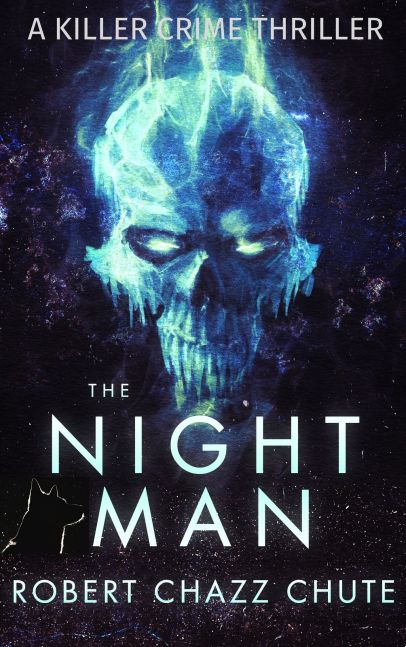
You can pick this ebook up for free today at this link: http://bit.ly/TheNightMan

Join my inner circle at AllThatChazz.com

See my books, blogs, links and podcasts.

Enter your email address to follow this blog and receive notifications of new posts by email.

Join 2,063 other subscribers