C h a z z W r i t e s . c o m

See all my books at AllThatChazz.com.

Twitter: The Cull and The Call

Click here to get Bigger Than Jesus

Click here to get Bigger Than Jesus

This morning I unfollowed a couple of hundred people on Twitter. They didn’t do anything wrong, but they weren’t following back after I followed them for a long time. I feel like I’m asserting my worth. Every few minutes, someone retweets articles from this blog and I really appreciate that. I try to be helpful and (sometimes in theory, often in practice) spreading the word helps readers.

But what does following and unfollowing on Twitter mean for you?

1. Fellow crime fictioneer Claude Bouchard built a huge Twitter following by unfollowing anyone who didn’t follow him (after giving them a few days to get around to it.) Then he follows new people. He’s gathered a group of readers and fans who have discovered he’s one of the good guys who writes about bad guys. (He also gave me a great review and cover blurb for Bigger Than Jesus, so clearly, he’s an adorable genius.) Unfollowing makes room for people who are into you.

2. There’s dignity in not chasing. I recently let a business deal slide because I felt I was dealing with someone who wanted to be chased but not necessarily caught. If I’m the one who always has to initiate, they just aren’t that into me. I don’t do business with people who aren’t into me, even if it costs me money in the short term. Finding a business partner is like finding a life partner. If it doesn’t start with love, there’s a much greater than 50/50 chance that you’ll be sitting across from them at a conference table someday looking sad. When they screw you over, they’ll say, “Thank you for your years of service. This isn’t personal. It’s just business.” If you’re friends, too, they won’t have the “just business” excuse.

3. Some people on Twitter demand “engagement”, as in personally. Yet they never initiate engagement themselves. “Engaging” everyone on a follow list of decent length is bad math. I’m happy to answer questions and talk to people, but there aren’t enough hours in the day to cater to every prince and princess’s self-centered whim. Twitter is a conversation at its best, but nothing is at its best all the time. That’s feel-good advice masquerading as good advice. If Twitter were really a conversation, none of us would have had time to write or read any books or go to the bathroom. (Okay, we could go to the bathroom and be on Twitter, but it’s icky. Don’t!)

4. Following people who aren’t into you is a self-inflicted wound. I should have unfollowed  a bunch of people a long time ago. They didn’t succumb to my charms so I’m not asking them to junior prom anymore. It’s embarrassing. However, if they do that thing where they announce who unfollowed them or get pissy about being unfollowed, that’s ego and entitlement talking.

5. The TrueTwit validation thing? Please stop it. If I want to follow you, I don’t want to jump through hoops. It’s much easier for you to block the odd spammer than it is for me to “apply”. I work for myself. One of the reasons I work for myself is I don’t want to apply for a job, especially the non-paying job of following people on Twitter. It’s supposed to be the Internet. That means no arbitrary rules and fun! Don’t be Dean Wormer putting us on double secret probation.

What’s the easiest way to reclaim your dignity, grow your Twitter following and find people who are into you? Manageflitter. It’s free and details who is inactive and who isn’t following you. There are plenty of other metrics but those are the ones I use most. That and if anyone has an egg for a profile pic, they’re purged.

BONUS

Every day is be independence day here. Here comes the stirring call to action.

There are people who automatically don’t like indie authors because they’re indie. They come in suspicious and paint everyone with nasty broad brushes. I believe these curmudgeons are a vocal minority and I refuse to chase them or worry about them. People who insist classical music is the only real music aren’t into my taste no matter how hard I sell the joys of Green Day, Everlast and the Pixies. I am an independent author with an independent mind. To form a beachhead, I must find readers with independent minds. I’m an indie author. Are you an indie reader? Follow me @rchazzchute. Or unfollow me @rchazzchute.

A quick-moving plot with lots of surprises and a clear-eyed examination of addiction.

A quick-moving plot with lots of surprises and a clear-eyed examination of addiction.

~ Robert Chazz Chute is a nice guy, despite the grumpy tone of this post. To hear the All That Chazz podcast, go to AllThatChazz.com. You’ll also find links to his books of suspense and very quirky crime novels there. Whatever you do, do it with dignity. 

Filed under: publishing, , , , , , , , , , , , , ,

Book Marketing: World Literary Cafe Tweet Teams and how to tweet more effectively

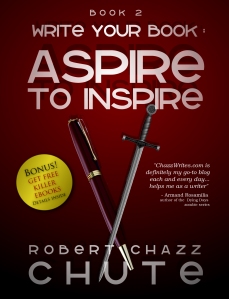
More tips and tricks to steer your authorship. This book is free to you until Saturday! Please click to get it now.

More tips and tricks to steer your authorship. This book is free to you until Saturday! Please click to get it now.

 You can now vote for the funniest and bestest entry in the Seven Words or Less Contest to determine who gets their name in my next thriller, Hollywood Jesus. Just take a look at the comment thread here and email your vote for the best entry to expartepress AT gmail DOT com. Enjoy!

Do you use World Literary Cafe Tweet Teams? It’s a free promotional tool for authors and, with Christmas approaching, I see a lot of new faces over there today. To use the tool, go to the Tweet Teams menu at World Literary Cafe. Each team has ten members, so you’ll tweet nine others through the day and they’ll tweet you in return. Here’s how it works to spread your word:

1. You will input two Twitter-friendly messages, so make sure you stay under 140 characters. (When people don’t, it’s annoying and I feel bad editing the author’s tweet to make it fit.)

2. Your message must begin with RT @yourtwittername and end with #WLCAuthor

3. Tweet all your team members the same day. Use TweetDeck or some other tweet scheduling program so you don’t beat your Twitter following over the head too hard.

4. You must also tweet the WLC daily tweets as a payment and courtesy to the folks at WLC. They provide and maintain this service free, so do that. They do a lot for authors at World Literary Cafe, so check out all their services. They’re useful for lots more besides Tweet Teams.

5. Please read and reread the instructions carefully to make sure you’re compliant with the rules. Daily tweets are randomly audited to make sure everybody plays fair.

Those are the basics, but I’d like to add something more: Add something more to your tweets besides, “Here’s my book + Amazon link.” I understand doing it that way. I’m not saying don’t. I’m saying do something more and different. If that’s all you tweet, it’s not seductive. I see some curmudgeons handwring over how much Christmas book spam clots our Twitter feeds. As I’ve said before, I’m not some tweet narc telling you what to do. However, there’s stuff you can do to tweet more effectively. For instance: 

People like gifts. Do a giveaway so you’re giving them a sample of what you’re about:

RT @rchazzchute FREEBIE! Write Your Book: Aspire to Inspire Jedi mind tricks to get it all done + much more http://amzn.to/TuXSxB #WLCAuthor 

RT @rchazzchute Free to download Write Your Book Top 10s so writers become authors, #promotip tools http://amzn.to/TuXSxB #WLCAuthor #inspire

RT @rchazzchute #GIVEAWAY Write Your Book: Aspire to Inspire For anyone who wants to #publish http://amzn.to/TuXSxB #WLCAuthor #Amazon #free

Instead of just tweeting “Orangeberry Book Tour”, make it funny or informative: 

RT @rchazzchute Author interview for the #crime thriller Higher Than Jesus  at http://www.ravinaandreakurian.com #WLCAuthor #hardboiled #sex & #violence

 Or send them to a useful link on your blog or a podcast:

 RT @rchazzchute #PODCAST The Death by Ewok Edition #Unicycling is cool http://bit.ly/UQOLYK #WLCAuthor + free book @ #writing & #publishing

 RT @rchazzchute Marketing Your Book: #11 is really harsh. Sorry. http://bit.ly/X2QAzw #WLCAuthor plus a #free book @ #writing & #publishing

Sure, it powers your tweet if you’ve got a podcast or your free Amazon days are on, but you’ve got a blog so bring them back there a bit  instead of just shooting out the sales link without context. Give people a chance to fall in love with you a little. If they like your tone, your information, book covers or even your amazing eyebrows in your author photo, that’s a better shot at a sale.

Some of those curmudgeons I mentioned don’t like quotes from books showing up in tweets. So what? I love quotes. If you love it (and have compelling quotes that nab eyeballs, hearts and minds) then go ahead and do that. And if you don’t love it, don’t do it and unsubscribe. This is the Internet. There aren’t many rules, only guidelines. That’s why I love the Internet. 

Think about what works on you. What compels you to click a link? Then do that.

How about it? Really. What does make you click a link? Does it all come down to the title of the book, area of interest or mentions of sloth genitalia? Today I mentioned that the book that I’m giving away cures bad breath, pigeon toes and athlete’s genitalia. That worked.

"You will laugh your ass off!" ~ Author of Cybrgrrl, Maxwell Cynn

“You will laugh your ass off!” ~ Author of Cybrgrrl, Maxwell Cynn

~ Robert Chazz Chute is the author of books about writing and publishing, the Hit Man Series, suspense and very quirky self-help. Write Your Book: Aspire to Inspire is free until Saturday. Since you’ve endured reading all the way down here, you’ll no doubt grok it. Grab the giveaway here and if you love it, please review it. Cheers!

Filed under: publishing, , , , , , , , , , , , , , ,

Book sales on Twitter: One click doesn’t work

I’ve changed the way I use Twitter. I’m not about making rules for how people use social media. Twitter Narcs are

English: A pie chart created in Excel 2007 sho...

English: A pie chart created in Excel 2007 showing the content of tweets on Twitter, based on the data gathered by Pear Analytics in 2009. (Photo credit: Wikipedia)

annoying. However, by the end of this post, I hope you’ll vary the way you try to sell your books. We’re drowning in the sameness of “Buy my books!” We have to sex up our tweeting.

Most book sales tweets have a crippling weakness that’s hurting sales. Twitter is so awesome everyone is using it to sell books in the same way. That makes it anti-awesome for your book sales. Using a one-click approach, sending me straight to Amazon without providing enough information or value, is not working. 

What doesn’t work well:

Title of book. Go buy it. Here’s the link.

What’s only microscopically better:

Title of book. Review: “Scintillating!” Here’s the link.

The problem:

Too many tweets are trying to make sales by just telling us to buy.

We’re so flooded with ugly tweets, it’s too easy to ignore them all.

What I’m suggesting:

Be more clever and change up the ask. Sure, promote however you want, but give me more to go on than generic messages like: “Great book!” “New post!” “Another new post!”

We need more showing, not telling, in those 140 characters. Give me a clue or hashtag the genre. I want to like you, but dress up a little and show me you care about me. It’s not about you. It’s about us.

Best:

Please pull me back to your blog and seduce me.

I’ll buy, but I need more to go on to make that first click toward falling in love with you.

On World Literary Cafe Tweet Teams this week, I didn’t try to send people straight to Amazon. I provided links to my blog posts, a cool graphic, and my podcast (where I’m giving Bigger Than Jesus away for free one chapter at a time). There’s added value to my audience that way.

Examples:

RT RChazzChute Hear the #thriller Bigger Than Jesus as a #podcast. http://bit.ly/TkBSGs #WLCAuthor (Or buy the book http://amzn.to/Nm6xj4)

RT @rchazzchute It’s a meme, baby! Self-help for Stoners #excerpt & #inspiration http://bit.ly/NNhBDI #suspense #fiction #WLCAuthor   

RT @rchazzchute Hear all the suspenseful #fiction & #comedy #podcasts http://bit.ly/OBRMeT #WLCAuthor #whatwaitsinlocker408

RT @rchazzchute #Thought for the Day: #Creation. http://bit.ly/TUTtVX and The Value of #Writing & #Reading http://bit.ly/Pd1JfN #WLCAuthor

RT @rchazzchute Just working on the next instalment in The Hit Man Series. (Excerpt of the hook to Chap.6) http://bit.ly/SPU7on #WLCAuthor

RT @rchazzchute Did Han shoot first? Catch 2 chapters of Bigger Than Jesus for the explanation. http://bit.ly/S8JgDm #suspense #WLCAuthor

RT @RChazzChute WIP Sneak peek! 1st there was Bigger Than Jesus. Next comes Higher Than Jesus. http://bit.ly/S5dHGT #crime #novel #WLCAuthor

RT @rchazzchute Quote Trailers http://bit.ly/OF1YPp & Quote Art http://bit.ly/NlwJM1 promote your books. #WLCAuthor 

More content and seduction is why Triberr works:

On Triberr, everyone on your tribe retweets your blog post summary (assuming they’ve read your post and have no objections.) Information spreads. Something in the summary captures the tweetosphere’s interest so they come to your blog. They find you helpful, funny, sexy or useful. Do that enough and maybe they’ll get smitten, click on a book link to the “Buy with one click” button.

True, if you don’t send me straight to Amazon, it’s more than one click to buy. However, too many tweets that look the same get ignored because it’s an overload of data without enough information or value. Will there be exceptions? Sure. I don’t think there’s anything wrong with announcements of book launches. I’m what you call, “pro-reading.”

But, please, join me in the campaign against Bland. Bland is so Beige and, as we all know, Beige is the Mitt Romney of the colour spectrum. It seems to be everywhere, but no one’s excited about it.

Filed under: publishing, , , , , , , , , , , , , , , ,

Amazon: My last stab

GET BIGGER THAN JESUS, FREE ON AMAZON TODAY, TOMORROW AND FRIDAY

Free promotions sure aren’t what they used to be. Last December, with Amazon’s old algorithm, friends of mine made big money. Success on the free list actually translated to success on the paid list. Then everything changed and many of us have been slow to react, me included. I notice that, among my writer friends, many (most?) are selling their books on KDP Select exclusively, five free days and all, for the first three months and then they aren’t renewing with KDP. They’ll continue to sell on Amazon, but there are plenty of other places to sell besides Amazon. After that first three months of trying to take advantage of the Amazon advantage, they put their work up everywhere else, too. That’s what I’m doing with the foundation book of my crime novel series, Bigger Than Jesus.

BY THE WAY: 

Bigger Than Jesus is available for free in ebook form

until Friday, and then that’s it.

As The Hit Man Series continues, I don’t know if I’ll go exclusive at all, even for those first three months. The math just doesn’t seem to add up to a marketing strategy that’s advantageous. In truth, it hasn’t been helpful to many indie authors for some time. I stuck with it because of the timing as my previous books launched. I have three books to release before Christmas and the eggs won’t be going into one basket anymore.

Someone asked me recently, “What’s the latest success strategy for indie authors?” I encountered some resistance when I replied, “There isn’t one.” We’ve had the publicists, advertising, press releases, blogging, podcasting, Twitter (and various  derivative Twitter strategies), Facebook, Pinterest (maybe?), the 99 cent strategy, blog tours, free, Goodreads, book bloggers, etc,…. Some combination of these elements may work for someone. Though they’ve all been effective for someone individually in the past, no one strategy seems to deliver a knock-out punch. When I say there isn’t one, I don’t rule out the possibility of their effectiveness in the plural, if you have the time to do all that. (You don’t. Go write instead.) 

Which brings up the question: Will Amazon change its algorithm again so it makes sense for us to stay exclusive with KDP Select? Who knows? Amazon’s algorithms and their rationale may be deduced, but are never made explicit. That information is solely on a need-to-know basis. (Apparently, we don’t need to know.)

Amazon is good at what they do — or has been — but it’s unreasonable to expect they’ll be right all the time, even with their vast resources. More to the point, Amazon’s looking out for Amazon, not me. My evidence is they aren’t making the exclusivity clause worth it for a lot of authors (even the true believers who, in the past, made a lot of dough.) I’m losing sales on other devices because I’m not selling enough with KDP. The Amazon sales don’t make up for lost sales elsewhere. Listening to my writer buddies, it’s clear I’m not alone in that assessment.

This is a business decision and has nothing to do with damning Amazon. I’m not one of the haters whining about monopolies and painting Amazon as a bully. The market is a competition and Amazon is on top because they made a lot of great decisions early on. However, I’m not looking for a new mom to take care of me, either. Being indie doesn’t mean supplanting one boss with a new boss just because it’s easy to go on inertia and formatting anew is a pain in the ass. Next month, as soon as my three months are up, Bigger Than Jesus will be available more widely (Hello Kobo, Nook, Sony, your smart phone, your iPhone, your iPad…maybe even your toaster.)

As for book marketing’s next knock out punch? People will tell you they know what the next big thing is. Some will even try to sell you books based on giving away one ultimate secret of indie author success. I think those people are often well-intentioned and they give out a lot of good information. I’ve read a bunch about marketing ebooks lately and, frankly, I’m also skeptical about some of those easy, plug-and-play answers.

Only one strategy I know of seems like anything close to a sure thing and (WARNING!) it’s a slow, steady grind. It’s not a popular idea because it’s not easy and quick. 

Write more books.

(Do a great job!)

Put them up.

(Do what promotion you can that doesn’t interfere with your writing schedule.)

Write more books.

(Make sure they are wonderful.)

I aspire to inspire, but as for marketing? Hm. Sorry.

“Write more books” is honestly all I’ve got in stock at the moment.

I’ve said it before and it’s still all I have to say on that subject.

Filed under: publishing, , , , , , , , , , , , , , , , , , , , , , , , , , , ,

Your blog does not matter


“Writers should not write blogs for writers!” some expert declared.

Instead, write for readers!

Small-town terrors and psychological mayhem in Maine.
These are the foundation stories of the coming Poeticule Bay Series of suspense novels.

I understand the argument, but what about writing about where your passion lies? I’ve written about writing for years now, drawing on my experience first as a journalist, publishing insider, freelancer, then as an editor and finally as an independent author who publishes his own work. I’ll be coming out with a book about writing later this year, so that’s one solution to the problem of writing for writers. But I keep thinking about that advice to write your blog for readers. I think I just figured out why it doesn’t matter.

Blog marketing does not matter. An author’s blog is usually something you discover after you’ve already found the author. Seth Godin’s blog is popular, but I found out about him through media first. Despite his high traffic, JA Konrath is sure that A Newbie’s Guide to Publishing doesn’t net him any new readers. He writes for writers and they come for his opinions and information, not his books. The readers of his blog and the readers of his books are two subsets of his readership with very little overlap. True, I read voraciously, but I still haven’t got around to reading any of his books. (Or John Scalzi’s or Chuck Wendig’s, either, though I love their blogs.) And what of all those successful novelists who blog little or not at all?

John Locke came up with a blogging strategy that helped him sell a lot of books, but he didn’t blog every day to do it. In fact, Locke blogged sparingly. He crafted each blog so he could leave it up for months and, using keyword searches and Twitter, drive traffic to his blog by going out and getting potentially interested parties. (Read Locke’s book on marketing to find out more about that.)

“You will laugh your ass off!” ~ Author of Cybrgrrl, Maxwell Cynn

There is a caveat to these grand pronouncements. I’m not saying don’t blog. I’m saying that it’s unreasonable to expect a tiny engine to move that mountain. You need a website, but fairly static pages might do. Yes, I know (we all know by now, don’t we?) that a blog that changes often and has a lot of posts is smiled upon by search engine spiders and that boosts rankings. But that website you love so much isn’t the burning bush that’s converting believers. That website is where you send readers when you attract them by other means.

What should you spend more time on (and by you, I mean me)? Well, tomorrow night (Sunday at 9 PM) I’m going to have a chat on Blogtalk Radio with Sandi’s Tuttle. Tune in here. So there’s that.

Have a podcast, make personal appearances, show up on other people’s podcasts, do campus radio, do press releases (and make follow-up calls when they ignore you.)

Time for an angry tangent: A reader on a forum called on indie authors to send out press releases because she didn’t think we were brave enough or bothering to do so. She didn’t know what the heck she was talking about. Traditional media has a history of ignoring us because they don’t realize there are no gates to keep anymore. They’ll get over that. Too late, but they’ll get it. In the meantime, I’d love to sit down with that reader who thought we don’t do enough to help our cause and let her know all the things we do any given day, many of us after the full-time job is done. As if sending out a press release was a brilliant and heretofore unknown marketing strategy. She does not know the struggle. Indie authors are some of the bravest people I know in business. That grenade-thrower didn’t understand that just because you can read doesn’t mean you know anything about the writing biz.

Paranormal persuasion and scary stories (including two award winners.)

There are plenty of things you can do that could help your career more than writing a blog: Optimize your sales page on Amazon so readers can find you, for instance. Play with Amazon categories to get listed in the top ten of a subcategory to get traction. According to Klout, Twitter and Facebook help me reach more people than my blogs do (and my Goodreads blog presence doesn’t make a dent.) Becoming a star on YouTube could help more than a blog. If I’d starred on SCTV and become rich and famous at 22, I’d be better off now. (Time machine’s broken, so I’ll have to fix this the old-fashioned way: I’m going to need a DeLorean, a broken town clock and a bolt of lightning.)

What else can you do? You can do all the things you’ve heard about (or have already done): guest post, blog hop, do giveaways, comment up a storm, use free day promotions (to less and less effect), hold contests, pay for ads (though I rarely recommend that), send out more copies to reviewers, contact book bloggers, do signings, approach bookstores, make an app, cultivate powerful friends, save the life of a celebrity or write a book about cute cats.

Click to get Bigger Than Jesus here

So why blog? To serve the burning passion of a thousand stars going nova, I suppose. To express. To help. To have an active site for readers where I can send people who are interested in finding out more about me and my books and my process. On this site, I write for writers. On my author site, yes, there are plenty of links to my books, but mostly I talk to readers directly through my podcast. (Every week this summer and fall, I read a new chapter of my crime thriller Bigger Than Jesus for free. Those who can’t wait for the next instalment can get it all at once here.) Most of all, I write my blogs to discover what I think about things. (Like today.)

Do I expect any writers will convert to my book readership? A precious few, if they like my voice here because there’s some transfer of style in my other writing. No matter what I write, I’m a fan of twisting expectations, sneaky surprises and lots of jokes. I’ll expect most conversions will come when I publish the non-fiction books about writing. There are also niche blogging opportunities. For instance, I think if you’re a crime novelist and you blog about forensics in depth, you might gain interested readers from your blog to your books. Niche marketing is a buzzword, yes, but it does mean something.

The single most important thing you can do to help your career is write your next book.

If your blog is getting in the way of your book, then it’s time to take another look at your priorities.

And by “your”, I mean “my”*

To check out all the books by Robert Chazz Chute, click here.

*More on this tomorrow…


Filed under: publishing, , , , , , , , , , , , , , , , , , , ,

Twitter Etiquette, Book Promotion & the Narcissist Inversion

How much should authors tweet to promote our books? Buckle up, because I’m about to get a little contrarian on your brain. We are told that Twitter is a conversation and if all we do is promote our books, we deserve to be unfollowed. Agreed! Let’s be clear about that. I agree. Okay? We get it!

But…there’s always a but… it’s tough to find the balance. If all you get from an author is “BUY MY BOOK!” then, yes, absolutely, the complainers are right. That’s too much. I’m not sure how they feel about all the promotion I do of other people’s books. Maybe that’s offensive to somebody, too. Anyway, work out your own cost/benefit analysis and do that UNFOLLOW math.

Now comes the contrarian counter programming: You want me to find the balance? I’m trying.

But is your view balanced?

I’m going to turn the narcissism charge around on the accusers and usual suspects for a change.

1. One person’s sensibility isn’t everyone’s sensibility. We’re taught in school to never start a rant, argument or sentence with the words, “I think.” This programs our brains to think they aren’t subjective machines. We mistake our words for universal law. I call this “King (or Queen) of the Universe Syndrome.” K(orQ)US is a common affliction which makes the afflicted think everyone should share their opinion. For example, I’m infected right now. (The only antidote I know is to go for a walk at night and look at stars.)

2. You’re telling me what to do. I don’t like to be told what to do. I’m interested in what other people think, but I like to decide things for myself. I don’t wear a collar well — everybody gets the devil’s advocate thing — but there’s a larger point: There are no rules. It’s the Internet. The only rules are in service contracts. Etiquette changes. Etiquette is not universal. Aside from the blogs of hyper-marketing gurus and scolds, we can do what we want. It’s the Old West and that’s what we love about the Internet. You and your tin badge don’t have no jurisdiction outside of town, Sheriff.

3. Twitter is a microblogging platform. People use it in all sorts of ways: to search out new customers, to find new friends, to discover grisly pictures of weird roadkill and cute baby animals. Some use it like it’s Instant Messenger. To some, a blog; to others, a flog. There’s a lot more diversity to our choices than simply insisting that people “engage” you all the time.

4. If I’m filling up your feed, you’re the narcissist for not following enough people. My incoming tweet stream is a roaring river of information, diversity and neural input. I love that. Even the most verbose can’t dominate my stream for long because I’ve got so much input coming at me from so many cool people.

5. What’s your problem? It’s free. Twitter is free and opting into someone’s stream is free. Complaining about something you got for free is beyond the “First World Problem” category. It seems rude to me.

6. The agony I’m putting you through is voluntary and your safe word is UNFOLLOW. If you are following anyone against your will, please call the police and take jujitsu so no one can snatch your autonomy from you again.

7. Just because you’re not interested, it’s not necessarily spam. It might just mean that you’re not interested. That doesn’t make all authors spammers. That makes you a Lookie-Lou. You’re a browser who has no intent to buy. What good am I doing you? What good are you doing me? What is this “Some pigs are more equal than others” con you’re trying to pull on me?

8. You’re a delicate doily. With Netflix, PVR and DVDs, the populace is trained not to sit through commercials to get to the good stuff. We used to have to sit through ads and now we don’t. (Tangent: Have ad rates come down significantly to reflect this fact?) But Twitter is not Netflix, PVR, or DVDs. It’s live people and a bunch of them are offering you the opportunity to sample their wares and delight you for hours for less than the cost of a Starbucks coffee. And it’s not killing you. Ignoring stuff is easy. The people who are delicate doilies stopped reading after the first paragraph of this post, for instance. They only read stuff they agree with. Hm. I should try that. It sounds peaceful.

9. You’re limiting my creativity. One morning I watched Kevin Smith’s Twitter feed fill up as he wrote a long treatise on art and aspiration. I loved it and couldn’t wait for the next tweet of argumentation and inspiration. However, some people complained he was filling up their feed. His answer was, “I’m expressing myself here! If you don’t want to read it, don’t.” That unfollow button is so darn handy.

Some people take a dim view of following too many people, but I think that means your interested in your world. However, if you’re really not interested in what someone has to say on Twitter and it offends you in some way, maybe you’re meant to follow only those for whom you’re a true fan. And if you’re a true narcissist (or weak-minded or insecure in your convictions) I suspect you follow no one on Twitter because this is Sparta and following is for sheep! Or some such macho BS.

10. To write, narcissism is necessary. It takes a truckload of delusion to write and allow the words outside of your house for others to read. Why should anyone care? Most won’t. Writing is a quixotic affliction. If we had a choice before birth, the smart babies would choose to be better at math so they could get a paying gig. Writers don’t choose writing. It chooses us. The crazy narcissism of expecting a readership to discover us? That’s what keeps us writing (and from stepping off that high ledge.)

11. We are all narcissists. All social media taps into the secret we keep from ourselves. We are all the stars of our own movies and the little people are waiting for our grand pronouncements. Let the extras eat after me. Deliver the pheasant under glass to my trailer.

12. I won’t miss you. I’m not into making rules for others, just the odd argument that is hopeless in the face of cultural entrenchment. However, if pressed for a rule it would be: When clicking unfollow, don’t tell anyone. “I don’t like what you’re saying, so I’m announcing to everyone that I’m leaving! I’m taking my marbles and going home!” How petty. That’s the ultimate douchey, narcissist move.

There once was a guy who was very rude to me on Twitter. I unfollowed. I never listened to his podcast again, either, but I will never name him. I’m sure he didn’t notice my absence or care. We’re both better off.

13. You’re not engaging me in conversation, either. That’s what Facebook is for. Seriously, I have noticed that the people who insist the loudest that they be “engaged” in conversation, are waiting for me to come to them. They’ve never tried to “engage” me with anything. They don’t retweet anyone. They wouldn’t pee on me if I were on fire. They are princesses, sitting on pillows, waiting to be asked so they can experience the delight of pointing their noses at the ceiling and saying no.

14. There are too many people on Twitter to have a conversation with everyone. That’s a silly, unrealistic requirement. That’s math. If you insist I engage you constantly and personally you, who’s the narcissist?

That’s the equivalent of requiring authors to go door-to-door…and…and…hey! Waitaminute! That’s the answer! I could sell my crime novels door to door! Excuse me. Gotta run.

No, before I go pound on strangers’ doors, one more:

15. Somebody I kind of like said that the only way to sell is by not selling. To me? That seems like a slap in Art’s face. Maybe that’s shame and fear masquerading as etiquette and high-mindedness. Whenever we tweet about our books, yes, we risk turning someone off. That’s focusing on the wrong end of the equation. What about all the people turned on to our books? Don’t focus on the I Hate Everything Cult. (There’s a clue. They hate everything! They only download books for free so they can crap on the dreams we are fulfilling!)

What about readers who actually enjoy reading a good book? What about your fan base, out there somewhere, searching for you? You’ve got a Twitter beacon but they can’t find you because you’re being so darn polite, you won’t risk a shout into the darkness. You don’t want to risk annoying people who don’t care about you, anyway! Grow a spine and tweet. Yes, for the love of all that’s chocolate, balance it out as best you can, but go ahead and tweet about your book without all the worry. You won’t kill anyone. And if you do, call me. I know a guy who’s good about making bodies disappear.

Does beating Twitter followers over the head with sales offers work? No. But keeping our magnificence a secret shame sure won’t do the job, either. Authors: toughen up and find your balance. Twitter etiquette fascists: for the sake of Art and your own enjoyment, ease up and toughen up. Or get out.

~ I’m Robert Chazz Chute, the award-winning writer and author of the world’s first bathroom/marijuana/suspense/humor book Self-help for Stoners and the twistiest, funniest crime novel Bigger Than Jesus (among other things.) 

Follow me on Twitter @rchazzchute.

Or unfollow me on Twitter @rchazzchute.


Filed under: publishing, , , , , , , , , , , , , , , , , , , , , ,

Find out if you win the great popularity contest

Imagine how perplexed I was when I discovered this website is most popular in Wichita.What? According to

Fisherman's Wharf sign

Fisherman’s Wharf sign (Photo credit: Wikipedia)

Alexa.com, “the global leader of analytics”, it’s true. Before you plug in your URL into Alexa’s Popularity Contest Scanner, brace yourself for a stake through your ego. But it’s also fascinating. More women read this website and a bunch of readers here have grad school education.

You can actually get a breakdown of your audience for free using Alexa. Just plug in your URL and you’ll get a lot of clues about SEO. You can find out how people found you with these analysis categories: Search, Audience, Reviews, Clickstream (indicating for percentage of unique visitors) and Traffic stats. Be sure to click for details. That’s how I found out I’m popular in Wichita. (Hello, Wichita! Never been there. Don’t know anyone there. Thanks for reading! Keep clicking!)

Another site to consider is Klout. It’s really a data farm, but it’s no less fascinating and measures your overall influence, not just your websites. (Just resist tweeting your laudatory notes from all your new friends.) Through Klout I learned that my Facebook marketing extends my reach and influence more than my three Twitter accounts. That amazed me. I got my cool new business cards (from Moo) as a perk through Klout, so there’s that. Also, Klout allows me to give a note of acknowledgement and gratitude to people who contribute to my neural net. I especially enjoy seeing how influencers are classified. I’m an expert in a niche according to Klout. One day, maybe there will be fame and riches, too, but Klout says, “Not yet!”

I wrote about starting up a podcast of your very own (below). Libsyn shows me, not only the numbers, but where my podcasts are consumed and on what platforms. My podcast, Self-help for Stoners, is most popular in San Francisco — way to hold up the brand’s stoner cliche, Frisco! (Hey! Pick up your feet, Wichita!) Chicago, New York and Alberta count among heavy listeners to the podcast, too. What does it mean? I don’t think anything. Hm. Except…maybe in a future book in The Hit Man Series, Jesus Salvador Diaz will wreak some entertaining mayhem in Wichita on his way to San Francisco. (Actually, in Higher Than Jesus — coming soon — Jesus already admits to a visit to San Francisco’s Fisherman’s Wharf and Alcatraz (as a tourist.) I wasn’t pandering when I wrote that, though. It was relevant because I spent some time there and everything I do is research. I am looking forward to pandering to my audience, though.

These are the dubious rewards of the flip side of the great popularity contest.

Filed under: publishing, , , , , , , , , , , , , , , ,

Ultimate Blog Challenge: I was on CBC Radio’s Cross Country Checkup yesterday

Yesterday I spoke on national radio in Canada. The show is Cross Country Checkup on CBC Radio. I reference the show in my

English: Lion's mane jellyfish Español: Medusa...

English: Lion’s mane jellyfish Español: Medusa melena de león ártica (Photo credit: Wikipedia)

book Self-help for Stoners (it’s the last story, called Context.) I did get to plug my latest book, but I didn’t mention Context on the show, though. It wasn’t the same host. The topic was basically, Social Media: Good or Bad?

They tried to finesse it, but that was the basic, kind of clunky, out-of-date, black and white question. Thing is, I think I was in the minority in extolling the virtues of social media! I was a bit shocked about how many people called in to say how terrible social media was for the children, the zombified masses and the fate of our doomed society. After I hung up I realized that, though they did have a few social media experts to balance things out, the demographic of listeners to CBC Radio on a Sunday afternoon aren’t exactly social media mavens.

For all the hand wringing, most of the objections people raised about social media seem to come down to poor time management and either/or thinking. They couldn’t say no to their kids. They couldn’t turn it off or they were nostalgic for a time that never was.

Here’s what I said on the show (and a couple of points I didn’t get a chance to add):

1. Social media allows me to have the business I do. (Yes, here’s where the plug for Bigger Than Jesus came in.)

2. I like what social media does to my brain. More neural input leads to more complex neural output.

3. Social media allows me to meet people I never would. And I wasn’t at all social in person before. I pretend to be an extrovert here. In real life, I’m one long beard and a pack of chewing tobacco away from being a recluse.

4. My neighbours are fine people, but our relationships are infrequent and accidents of proximity. Social media gives me the tribe, followers and conversationalists I choose.

5. Get used to it. Social media is spatial displacement. I don’t have to be there to be there. Physical presence is not required. This should be obvious since I was speaking on a national phone-in show that’s broadcast around the world.

6. We are social animals. (If we weren’t, we’d be extinct.) Social media is the new place to be social. Wring your hands all you want. We aren’t going backwards. Is it just for narcissists? I’d say we are all so subjective, we are all narcissists. However, the guy who extolled the virtues of cutting himself off from the noise of social media so he could explore only what his brain could come up with? That jerk sounded like the King of the Narcissists.

7. With Twitter and Facebook, I get information pushed at me that I wouldn’t think to search for. The other day I saw a Lion’s Mane Jellyfish for the first time. (See the picture above? That’s one.) It’s amazing. It predates the dinosaurs and they are still floating around in the Arctic Ocean. Oh, yeah. Did I mention they are about the size of a huge cube van? They’re a-MAZ-ing! I ended up using a reference to the Lion’s Mane Jellyfish in my new crime thriller. (I know that sounds crazy, but you’ll get the metaphor when you read Higher Than Jesus this fall.)

8. People worry social media takes too much time. The founding fathers of the United States wrote reams and reams of letters in their lifetimes that must have taken hours out of every day. They still got a few things done, don’t you think? (You could argue that the founding fathers had slaves. True, though I read somewhere that all our modern conveniences which automate our lives so much actually replace the work of fifty slaves, so everything evens out except for the awful horror of slavery.)

9. Someone argued that social media reduces us to selling ourselves all the time. How is that different from always except we now have a more efficient way to do it? We sell ourselves, our time, our personalities to get a job, get a mate, keep a job, keep a mate and to avoid being disowned by our parents and children. Tools change quickly. We evolve slowly.

10. Social media has a tremendous power for good and just because the critics can’t handle it doesn’t mean the rest of us can’t love it and use it responsibly. Through social media I sell my books. Without social media I wouldn’t know all the cool people I know. Were it not for social media, I would not have been privileged to participate in a campaign to help a young man suffering leukaemia with his medical bills. (I wouldn’t even have known about his struggle in the first place.)

I probably irritated some CBC listeners because

Get Bigger Than Jesus

I was one of the few who weren’t worried about the damage social media can do.

It will make them feel better to know that my appearance didn’t help me sell a single book.

So much for moving that needle.

(UBC #13 of 31)

Filed under: publishing, , , , , , , , , , , , ,

Ultimate Blog Challenge: How to avoid signal fade on your blog and in your books

Authors, podcasters, bloggers, bloviators and cultural icons of all kinds: Everyone is subject to signal fade.

Encoding the MP3 after the Memorial Day podcast

Encoding the MP3 after the Memorial Day podcast (Photo credit: rbieber)

Signal fade equals audience entropy. Most people stop reading and listening over time because there are so many new things that demand our attention. Most of the fans and followers you have now will not be your fans and followers in the future. You might make one wrong move on Twitter and insult irradiated Japanese disaster victims like Gilbert Gottfried did. Maybe your fans will jump ship to the new simply because we’re programmed to seek out fresh experiences. They’ll get bored of your schtick. If you’re Jay Leno or Dennis Miller, it’s over, but for the rest of us, there’s still hope. What to do?

1. Don’t fall into schtick. Keep your writing and your words fresh. The person the masses will listen to the longest and with the most interest will be the one who says the unexpected. When I write a Facebook post or have some fun on Twitter, there’s probably a joke coming. Ah. But how will I arrive at that twisted coda? “Expect the unexpected.” That’s what my wife says when I tickle her. I didn’t take the threat seriously until I woke up in the middle of the night with her braining me with a frying pan. (See? Twisted coda sneak attack!) A better example is Chuck Palahniuk. He didn’t write Fight Club and then keep writing the same book again and again (as many authors do). He dipped into experimental fiction and several of his books are a jazz fiction fusion. It’s not all the same. You don’t have to change your unique voice, but be flexible how you use it.

2. Grow your base. This is tricky, because you don’t want to waste energy chasing down people who won’t dig you. Director Kevin Smith, for instance, was flummoxed to learn that one of his movies was advertised at great expense in The Ladies Home Journal. There’s not a chance that advertising paid for itself. That magazine’s readers probably couldn’t abide his penchant for profanity and Star Wars-obsessed dialogue. Instead, be you but in more places, so people can find you. Do guest blogs, grow your twitter following, appear on podcasts or whatever other book promotion you do. Most important on this to-do list, and the only one that is critical, is write more books. Be prolific. If your bookshelf and your base isn’t growing, it’s shrinking and dying faster than grandma.

3. Add to the mix. Host guest posts on your blog. Do interviews to get out of your head and into someone else’s. Link to a variety of blogs using Scoopit! to give your readers a smorgasbord. Bring more minds into your mix. Co-author a book. Have a guest on your podcast or play off your stooge of a brother. Try joining a writing group. Try a writing partner. Add a new voice to your old formula.

4. Set your mind free. This step is one way to accomplish #1. Too many people have the same thoughts because they’re talking to the same people all the time. Check out a book, a topic, a podcast or a blog you wouldn’t ordinarily read to get some fresh input to fuel your output. Go to court and watch arraignments for a couple of mornings this week. Get a tour of a morgue. Read this for a change of worldview instead of watching regular news. Take a language class and hang out with your fellow students. Learn the piano. Buy a homeless guy a coffee and talk to him. Go to a different church or hang out at a gay bar. Do something different from what you’ve done.

5. Step away from the keyboard. If it were up to me, I’d never go anywhere and never take a vacation. However, She Who Must Be Obeyed insists on vacations once a year at least. I hate leaving my writing bunker. I’m always here! Why try to alter my agoraphobic tendencies? However, every time I come back, I have fresh insights, more energy and new, aired-out ideas. You need a reboot, too.

Small-town terrors and psychological mayhem in Maine.

6. Write in more than one genre. If you’re into different types of fiction or want to branch out into non-fiction, do that. Cross-pollination will feed both grafted branches on your tree. More new people will have another way to discover The Magic That is You. Aside from my crime novels, I’ll publish a book on writing and I just published another fiction collection of suspense recently. Don’t just sit there. Juggling is energizing.

7. Or narrow your focus. The alternative is to own a topic so much, to be so unique, that anyone interested in a particular topic will have to read you. Certain names spring to mind for this rarified stratum of writer: Malcolm Gladwell, Seth Godin, and Matt Taibbi of Rolling Stone. Of course, these guys take on big topics like economics and entrepreneurship and how to achieve success, but maybe you’re the master storm drain coupler of the Midwest. If you can drill down deep and achieve mastery of a subject to the degree that it makes you a specialist, your audience will have to read you to know what’s up. Whatever you do, own your category or aspire to own it.

8. Expand your outlets. You write, say, books of horror. What about podcasting about it as well as writing it? What about audiobooks? What about t-shirt sales on Cafe Press or Zazzle.com? How about graphic novels of your existing work? What about serious speaking engagements or stand-up comedy? How else can you not just monetize, but be different? Different and more is good. Different boosts your signal to a wider audience. More is more. Some people say less is more, but those people flunked math.

9. Change your process. So you’ve always outlined and plotted your books in great OCD detail? Instead, start pulling it out of your butt and see what surprises you’ve got stuffed up there. Or vice versa. Do you write one book a year or one book every three years? Resolve to write your next book in one month and then hold yourself to that promise. Do you write longhand in a library? Go to the coffee shop opposite the men’s mission and get a window seat and write there. Surprise yourself not just in what you write, but how you write it.

10. Change your support system. For my crime novel, Bigger Than Jesus, I added an ex-military buddy to my beta read team. I didn’t know he’d be interested in the book, but on a whim, I asked because of his military expertise. He read it in a day and was very enthusiastic. When he came over with the marked up manuscript, we talked for three hours. Not only did he give me helpful ideas for the current book, I got great ideas for future books in the series. For my next book, I’m hiring a new editor to add fresh insight and plan to mix and match my beta read team.

Your signal won’t fade so fast if you vary its energy, amplitude and range. New people will tune in to replace the fans who wandered away. As for the fans that stay with you through all your books, podcasts and creative incarnations? They’re the ones on your mailing list you should pay particular attention to. Encourage conversation with them. They may even hang in long enough to warn you when you are getting stale, selling out or losing your freaking mind.

Filed under: publishing, , , , , , , , , , , , , ,

Ultimate Blog Challenge: Top 10 things I wish I didn’t know about readers

Small-town terrors and psychological mayhem in Maine.

1. They get bored too easily. We used to have writers who were flavours of the month. With Amazon rankings, you can be the flavour of the hour and then disappear into obscurity unless you fight the death spiral and/or get lucky.

2. Readers are too busy. With the proliferation of “free” we all have huge To Be Read piles. Sadly, as with to-do lists, many of us never get to the bottom of those piles.

3. Many people prefer a genre I don’t write. Romance is much more popular. I used to read romances professionally when I worked for Harlequin. My books have a key romantic element, but they are not romances, so de facto, I am not on the radar of a large group of very dedicated readers.

4. The readers who love me might get sick of me trying to reach the readers who don’t know me. I’m very careful on Twitter to promote others, not just me. Still, I need to kick back and tweet a little joke here and there and say hello. It’s difficult to find the balance.

Paranormal persuasion and scary stories.

5. I’m not reaching some readers because I made some choices in titles that were challenging. (I almost wrote “unfortunate”, but that would put the onus on me and I’m not ready to own that yet.) The thing is, Sex, Death & Mind Control is one of the best things I’ve written but it has the lowest sales. It’s not sexy enough for those searching for erotica. It’s paranormal suspense (with award winners!), but when you see that always-interesting “What Else Customers Viewed” list, it’s almost all erotica on the Sex, Death & Mind Control sales page. “End of the Line” is probably the best short story I’ve ever written, but it  remains a hidden treasure because I turned readers off with a title I thought would get more attention, not less.

6. Ditto Self-help for Stoners. It was a clue for me when one of the reviewers who loved it added, “Don’t let the title scare you off.” It’s a weird mix of War of Art self-help and suspense. Strange, I know, but not really all that transgressive. (Should have called it Self-help for Surrealists to pull in readers who are also painters!) My strategy going in was to have an identifiable group to market to instead of saying it was for anybody who loved suspenseful fiction. To some extent that worked, but not as well as I’d hoped. (It still outsells Sex, Death & Mind Control four to one. I can’t say the Self-help for Stoners strategy was a failure, just that it could do better.)

You don’t have to be high to enjoy it. Sure, it would make you a better audience but…
7. Readers have less patience now. I changed my plotting and pacing with Bigger Than Jesus to cater to that lack of patience. I see it in myself. Maybe the Internet did it to our brains, I don’t know. That’s not even be a bad thing per se, but expect more Blake Crouch pacing and less Annie Proulx meandering. There used to be more room for both approaches.

8. There are still prejudices against anything labeled “experimental”. I wrote Bigger than Jesus in present tense, second-person. That alone is reason enough for some readers to run screaming. I can tell them all day that it worked. Won’t matter. That’s okay, but it’s still a prejudice.

I wanted to do something that some people thought couldn’t or shouldn’t be done and I wanted to do it so well they’d either quickly forget their prejudice or give me more credit for doing it so well. Blanket pronouncements of “You can’t do that!” are one of the reasons I did it. I don’t like being told what I can’t do. In fact, it makes me want to do it all the more. (I admit this attitude is not something that serves me well all the time. Having a job in the regular world, for instance, is uh…a problem.)

9. Readers look for ties to your real life. This is a byproduct of increased author/reader interaction. However, the Internet isn’t to blame for this one. This was very much the rage in English departments across the world years ago. Students were taught they couldn’t understand the fullness of the fiction without making judgments about the author, his or his gender, origin and life experience. They shouldn’t have done that. No one truly knows the inside of someone else’s skull. (I’ve even opened it up and had a look. Trust me, nobody really knows.) Besides, it’s fiction. Take it on its own merit. Please don’t make assumptions about the author from what you read in a book of fiction. Don’t make me kill again. (See what I mean?)

10. Readers fade. Even if they love your work, they move on. They get hungry for something new and different unless you keep feeding them. I don’t think anyone should race to publication if they aren’t up to the schedule and you do have to build in editorial time to make the book better. However, they are hungry and it is a race. People will tell you it isn’t. They’re wrong. It is. It’s a race against time. We don’t live forever and we have books in us and a readership to find and a readership we hope finds us. William Styron came out with a nice juicy thick book every ten years, but he was William Styron and that was before ebooks and our shiny,  new demand-per-click culture.

I love readers. People who don’t read creep me out. I can say that because how would they know I’ve insulted them? What do non-readers have to contribute? Those dummies!

Ha! Wait. You aren’t reading this aloud to someone are you?

~ Like my flavor? Listen to the first chapter of my crime thriller, Bigger Than Jesus. I’m podcasting the book through the summer. Enjoy! (Or be a hero and just click the cover to grab it. Thanks for reading!)

Filed under: publishing, , , , , , , , , , , , , , , , , ,

Bestseller with over 1,000 reviews!
Winner of the North Street Book Prize, Reader's Favorite, the
Literary Titan Award, the Hollywood Book Festival, and the
New York Book Festival.

http://mybook.to/OurZombieHours
A NEW ZOMBIE ANTHOLOGY

Winner of Writer's Digest's 2014 Honorable Mention in Self-published Ebook Awards in Genre

The first 81 lessons to get your Buffy on

More lessons to help you survive Armageddon

"You will laugh your ass off!" ~ Maxwell Cynn, author of Cybergrrl

Available now!

Fast-paced terror, new threats, more twists.

An autistic boy versus our world in free fall

Suspense to melt your face and play with your brain.

Action like a Guy Ritchie film. Funny like Woody Allen when he was funny.

Jesus: Sexier and even more addicted to love.

You can pick this ebook up for free today at this link: http://bit.ly/TheNightMan

Join my inner circle at AllThatChazz.com

See my books, blogs, links and podcasts.

Enter your email address to follow this blog and receive notifications of new posts by email.

Join 2,063 other subscribers