1. Nobody cares about your book at first, even if you think they should. Even if you think they care about you, they’re indifferent. It’s maddening. For you, each book is a magical dream made real. For them, “Nice hobby, but so what?”
2. Since typing looks a lot like writing to the casual observer, you don’t get extra respect for being a writer from a lot of people. Anybody can type, so don’t think you’re special. “Who do you think you are, anyway? You think you’re better than me?” Oh, they won’t really say that. That’s silly. But some may as well say that by the way they’ll treat you.
3. A lot of people can read, but don’t. They care even less than the casual observers in Items #1 and #2. I don’t understand these people. Why live? It’s a mystery.
4. Some people do read, but they’re jealous of those who write. Read any one-star review that seethes with the venom usually reserved for a pedophile’s first night in prison or a family reunion. Yeah. Those people.
5. You and your family will make sacrifices for Art. Your kids’ friends will be able to afford nice vacations, cool stuff and the latest technology. Your kids won’t get that stuff, though they will get an in-house example of someone daring to follow their dream and buck conventional expectations. At least cover the basics somehow: food, shelter, clothing and good minds.
6. To paraphrase Kurt Vonnegut, pursuing the arts is a great way to disappoint your parents. Don’t expect them to understand. That’s presumptuous and unfair to them since they (probably) love you. It’s not that they don’t want you to succeed as a writer. They want you to take that accounting job because they don’t want to see you suffer. They don’t understand that the safe job they want you to take will hurt you in ways that last, too.
7. The first book that consumes your energy and attention which you poured your heart into? Odds are, first attempts aren’t that great. But no matter how many books you write and no matter how big you get, someone will say you can’t write. In fact, the bigger you are, the more negative messages you’ll get. (If so, congratulations! You’re reaching a wider audience.) That cost-benefit analysis works in your favor, but at some point you might still consider antidepressants, booze or illegal substances or too many brownies. Avoid self-medicating. Write more instead.
8. Sometimes betrayal arrives from unexpected sources within your circle of friends or family. This will hurt most and saps your creative energies. These incidents often lead to divorce or more heated arguments at family reunions. The alternative is you’ll quit and hate yourself because you are no longer being you. Anyone who forces you to choose between them and your passion is gangrenous. Amputate.
Another thing I learned just today:
If you’re being a dick, that doesn’t mean I’m thin-skinned.
9. Writing is harder than it looks, especially before you start. It’s more fun than it looks after you start. Begin.
10. Somehow, at least some readers will find you. You probably won’t even know what you did right, exactly. But there will be readers and even fans. Super-uber-robo fans that so get you, so love your work? Well…you’ll wish those negative friends and family understood you as well as these strangers. Don’t sweat it. You’re making new friends through your fiction.
Treasure your readers. Love them. Inspire them. Nurture them. Entertain. Make them laugh and cry and hit them with love and surprises.
When you succeed, make sure everyone who tried to put you down on your way up finds out. You’ll care less about how they hurt you by then, of course, but not so little that your vengeance won’t be delicious.
~ I am Robert Chazz Chute. I write about funny hit men, autistic teens and humans versus zombies versus vampires. But mostly I write about the caprice of vengeful gods. I create gods in my own image.
When I wrote my crime novels, I wanted verisimilitude. I’d watched Goodfellas repeatedly, The Sopranos religiously and, of course, I’d been through high school. Naturally, I’m acquainted with an impressive list of swear words and they don’t bother me.
Swearing seemed like a good idea at the time.
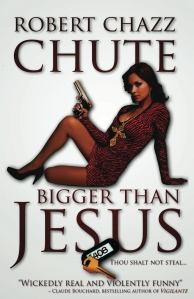
Bigger Than Jesus is about a Cuban hit man who, after a very rough childhood and military service, ends up working for New York’s Spanish mob. The subtext is sad but the jokes and movie references come fast. The language reflects reality. In other words, the characters swear quite a bit.
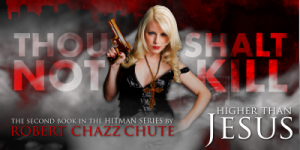
(And the sex scene in Higher Than Jesus? It’s so steamy and frank, that scene was all my dad wanted to talk about after he read it. Sigh. That’s a different post.)
When I wrote the crime novels, I thought any dialogue that reflected the way people really speak was the only way to go for me. I thought that if readers didn’t accept swear words in fiction, they were reality-impaired. Suck it up or don’t read my books, was my policy.
I don’t feel that way anymore.
Well, I do still think people who don’t accept appropriate use of swear words in fiction (and author autonomy to write what they want to) are reality-impaired and intolerant.
But “Suck it up or be shunned,” made me intolerant, too.
Swearing will alienate some readers.
I knew that, of course, but I thought verisimilitude was more important. Now, after two volumes of This Plague of Days — which is devoid of such strong language — I’ve decided I’ve lost nothing by omitting obscenities. Those who aren’t offended by swearing don’t seem to miss it if it’s not there. There’s just no value added, or at least not enough value added, to keep the swearing in. I think I can attribute many of my happy reviews of This Plague of Days to the fact that I did without (though I do skirt it a bit. More on that in a minute.)
Is my self-censorship a (possibly pathetic) bid to gain more readers?
The short answer is, yes.
The longer answer is, it didn’t start out that way. Jaimie Spencer, the hero of This Plague of Days, is autistic. He’s seventeen, but he’s a sensitive kid. A book that included a lot of swearing just didn’t feel right for the tone of the piece. Much of the drama happens around the Spencer family in Missouri and somehow, zombies or no zombies, peppering the text with f-bombs just didn’t fit this story or the readers likely to enjoy it. I salted it with Latin phrases, instead.
The really long answer is that it saddens me that some readers are so sensitive to curse words. I hate that they wouldn’t read some of my earlier work because of that sensitivity. However, my writing is about much more than swearing. I can do without it and not hurt the dialogue or the story. This Plague of Days is effective suspense and horror and this stylistic choice doesn’t affect that. Many of the people who love This Plague of Days are related to people on the autistic spectrum. They’re more comfortable spreading the word about the serial and sharing it with family members and friends because I changed my policy on swearing.
The f-word can be a crutch.
Use it too much and dialogue risks a feeling of laziness and sameness. Increase the frequency and the impact suffers. Working around that obstacle has proved so minor, I wish I’d done without cursing from the beginning. “She cursed him as she sliced his throat,” can serve just as well, or better, than a string of expletives.
We all know the words. My kids knew the words when they were quite little. Amazingly, they didn’t learn those words from me. They had to go to school for that. There’s no shock to it and sometimes it just gets in the way and the reader’s eye skips over it. I want all my words to count. I insist on delivering impacts to brainpans and adrenal glands. Swearing doesn’t do the job.
I have not suddenly become a prude.
My daily vocabulary reflects the full range of human experience, though the monologue in my head contains much more swearing. (I get points for holding back, right?)
In This Plague of Days, a “damn” might squeak in from time to time. My mother said that was okay since that was her swear of choice. North Americans tend to find British people saying, “shite” kind of charming. I use that. However, even that little is very sparse in This Plague of Days.
I’m not claiming that no one could possibly be offended by something I wrote. I’m sure someone will clutch their pearls over the discussions between the religious wife and the atheist husband. That’s sure to annoy both sides, in fact. Reviewers have described the story as “creepy”, “scary” and “terrifying.” Well, I should hope so. Swearing or not, it is still very much horror and suspense.
I haven’t gone soft and I’m not writing children’s books.
This Plague of Days contains many scenes that are descriptive of the gore of war. There are some whimsical touches, but much of the story feels real enough you might worry I’m not a horror writer, but a futurist. However, like Twitter’s 140-character limit, the omission of cursing in my zombie apocalypse has forced me to be more clever. Sometimes the omission of swear words has even opened up new avenues for character expression. By that, I mean that there are some really good jokes in This Plague of Days that hinge on the power of irony and understatement, not f-bombs.
Conclusions
1. This doesn’t mean I’m saying you shouldn’t swear in your books. I’m not here to tell anyone what to do so stop feeling threatened.
2. This doesn’t stop me from writing books with so-called “bad words” in the future, though I think I’ll continue to do without. This bears repeating: Those who aren’t offended by swearing don’t seem to miss it if it’s not there. I don’t miss it. Anybody read any Vonnegut and think, This isn’t bad, but it would be so much better with a bunch more f-bombs? (I did, however, note that Norman Mailer could have cut back by half and helped Tough Guys Don’t Dance.)
3. This doesn’t mean that I think swearing is bad. It might be right for your books and I admit that, when done right, a string of obscenities certainly has its place.
4. I also have to admit that I think doing without swearing (in the text!) has made me a better writer.
5. This isn’t a moral stand. It was a solid artistic choice that stumbled into a good business decision. I confess. I want to be read by a wider audience. This is one of the ways I’m accomplishing that.
Long before computers, a hack was a worn-out horse used for pulling tourists around parks. You know, because before you propose marriage to your sweetie in Central Park, you need to build up your courage by bathing in elderly equestrian flatulence. Then unimaginative comedians were dubbed hacks in the fifties, after a decade of tired jokes (mostly about hateful mothers-in-law.) I wish it stopped there. Writers get called hacks, too. Let’s dodge that fate (and, as you’ll see, you’ll also get one last chance to avoid dyingby giant rock). Those two things seem equally important, so read on.
For writers, “hack” is a pretty bad insult.
Recently, on a podcast I’ll never listen to again, the host asked, “So, do you write about zombies or are you a serious writer?” Dude! Dangers, betrayal, and ordinary people facing grim existences and horrific mortality? That (and rampant, grisly cannibalism in line at the post office) is what we’re all facing every day! A book’s subject matter doesn’t make the author a hack. Failure of execution makes the hack.
To avoid becoming a hack, do not follow The Way of the Hack:
1. Tired subjects with no fresh takes. Ever read a book and somehow you’re reminded of a disappointing salad, measly on the croutons with brown lettuce? You might have been reading a hacky book.
2. Don’t write stories that look, feel and sound like a ton of other stories. Sometimes you can spot a hack book by its cover. You want your cover to convey what genre it’s in, but you don’t want potential readers to think they must have already read it. That’s why you should consider the services of my buddy Kit Foster of KitFosterDesign.com. Your book needs a distinctive cover. Okay, no more sweet little commercials for my friends and me (today).
My point is, there are no new stories, but there are still plenty of ways to surprise readers, even the jaded ones. Hit your readers in the brainpan and adrenals. Read any novel by William Goldman if you aren’t sure how. (Okay, that was sort of a plug, but he’s not a friend. I just wish the most underrated, living American novelist was a drinking buddy, that’s all.)
3. Clichés. Hacks love them. Don’t. And why would you? It’s so easy to take a familiar cliché and give it a new twist. Don’t avoid clichés “like the plague.” Avoid them “like a stampede of zombie office workers, oddly indistinguishable from non-zombie office workers.”
4. Hacks lack complexity in plotting. If the story is too easy, the subtle message to the reader is the author is too stupid to create something more interesting. Or possibly the subtext you convey is, the author is a smart, lazy hack who thinks readers are stupid. Either way, readers won’t like the book and they’ll really hate you. So be like Batman — always be Batman — and be complex.
5. Villains who are just bad because they’re bad are hacky. Everybody, even psychos, have reasons and rationalizations and justifications. Don’t be lazy about their motivations. Writers who aren’t hacks take the time to construct origins and context so we understand why they broke bad.
6. Heroes who lack any flaw are hackneyed, boring cartoons. Or Superman. (But I repeat myself.) Protagonists without flaws and weaknesses have it too easy.
For a better example, watch the movie The Rainmaker. It’s about a young lawyer taking on what should be impossible odds and…things go incredibly smoothly for him. You’ll think, that’s it? He just had to show up and obstacle after obstacle falls down and his path is cleared? Really? It may be a good book. I haven’t read it. The movie appeared to be written by a hack who had one eye on the clock and the other on a ham on rye.
For contrast, a great courtroom drama is 12 Angry Men. You’ve no doubt seen it. Watch it again. Henry Fonda slowly convinces eleven other jurors there is room for doubt. It seems such an unlikely outcome, but every minute of that film is riveting as you watch the dominoes fall.
7. The free online dictionary defines a hack as “One who undertakes unpleasant or distasteful tasks for money or reward; a hireling.” (Whoa! That’s most anybody with a regular job, isn’t it? But I digress.)
If you aren’t finding any joy in the writing, you might be a hack. No fun for you? None for the reader.
8. Some snobs conflate “hack” with “commercial.” Wrong. Those are two separate issues. A book can be commercial and not be the work of a hack. JK Rowling is one of the most successful writers ever. Who but the most dedicated troll would dare to call her a hack?
Also, just because a book fails commercially doesn’t mean it was hacky writing. Moby Dick was never a commercial success in Herman Melville’s lifetime. Lots of good books fail. Don’t let The Way of the Hack be the reason for your book’s commercial failure.
9. Lack of research. If you’re banging out your manuscript to make a word count without care for details, you might be a hack.
10. Lack of humor. When a book has one unrelenting, dour tone, I begin to suspect the author just put his or her head down and said to themselves through gritted teeth, “By all that is unholy, I will get through this and grind it out.” You miss opportunities for non-linear thinking when you’re rushing to a deadline like that. Slow down, Speed Racer! Enjoy the ride more. Give it another read and look for new angles, holes and opportunities to deepen and lighten the tone and give that prose roller coaster more hills and valleys. Take the time to threaten your readers with certain death once in a while. Carpe noctem!
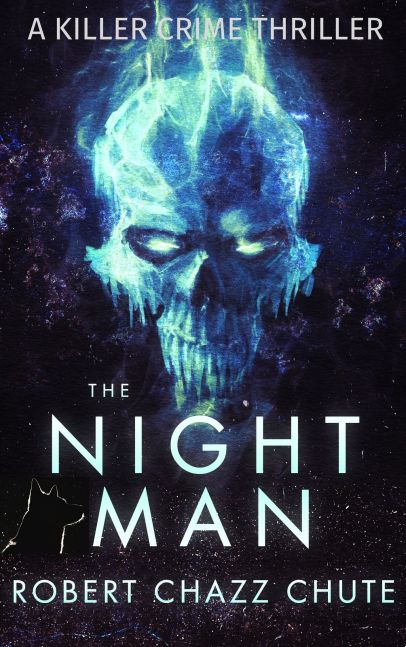
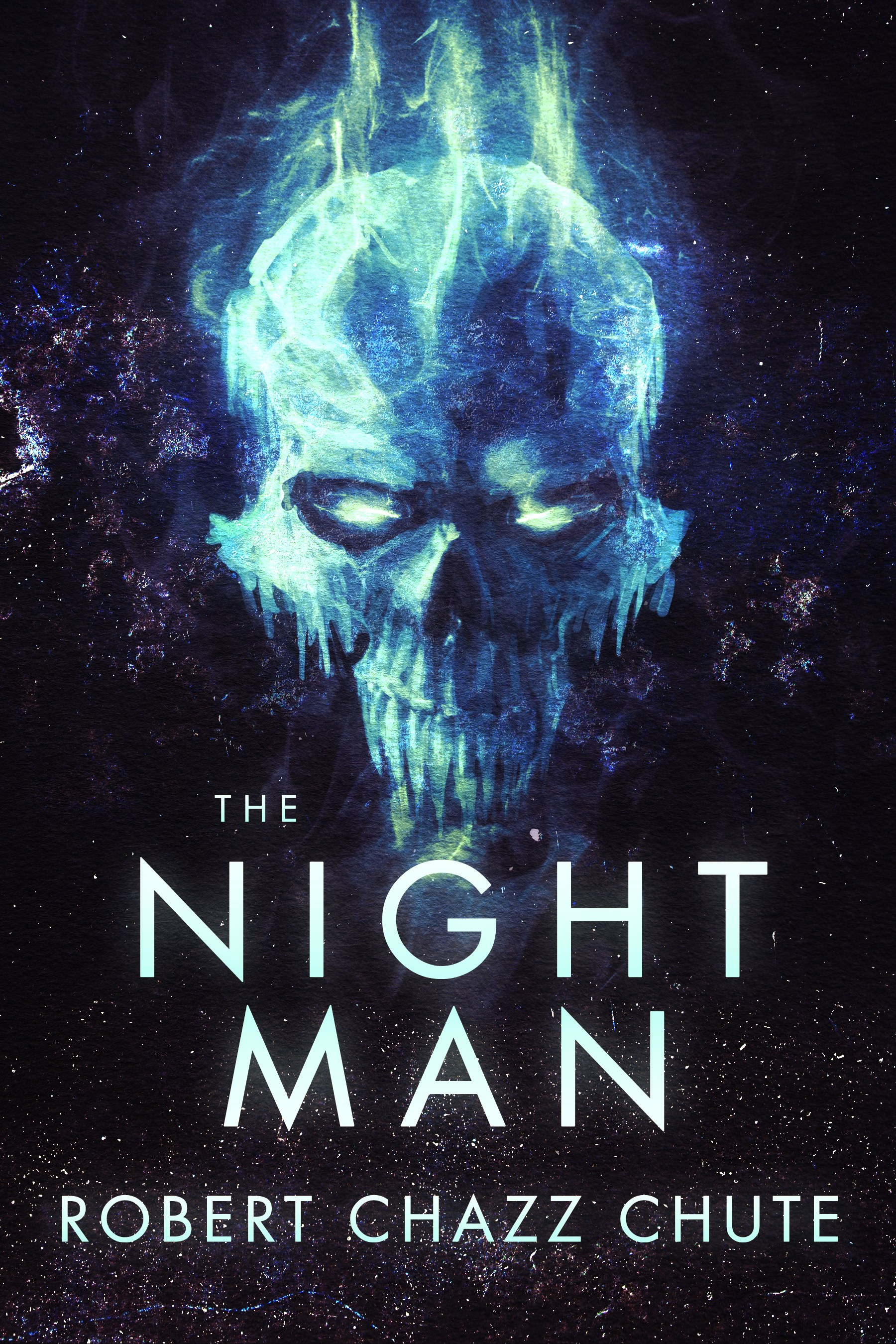
Get this one, too, just to be safe. Post holiday sale: only $4.99. Shake out the couch change.
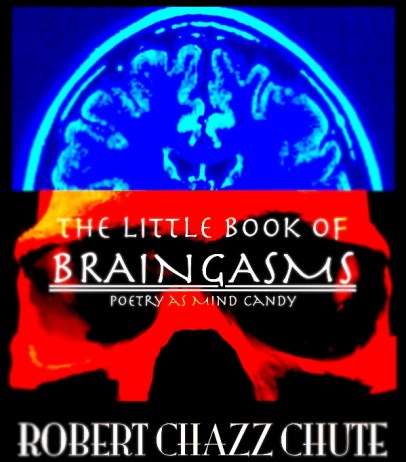
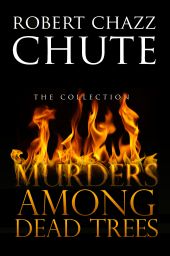
~ I’m Robert Chazz Chute. Today I have plugged my books, garishly, but I tried so very hard to be polite about it. Later on I threatened genocide by giant burning rock from space. Clearly, you need to buy Murders Among Dead Trees, The Little Book of Braingasms, Bigger Than Jesus, Higher Than Jesus and, of course, This Plague of Days, Seasons One and Two. They are each on sale at a special low price for January 2014. Now is the time. Or an asteroid kills us all. Those are the only two possible outcomes. But, like I said, It’s up to you, killer. Yeah, let’s just click here, ‘kay? Again, thanks so much.
If more than 70 happy reviews don’t convince you, learn more about This Plague of Days and how a boy on the autism spectrum could possibly fit into the plot, at ThisPlagueOfDays.com.
For podcasts and more about the books and the author, check out AllThatChazz.com. I’m starting to feel needy now, so I’ll stop.
How does poetry help your prose? Why is poetry still important even though so few people buy it? Here’s why:
1. To paraphrase comedian Greg Proops: “Because George Bush and Dick Cheney. That’s why.” Poetry is a salve for our minds and times.
2. To take off on the Coleridge quote: Poetry is the least words in the best order. Capture a scene with fewer brush strokes and the reader will appreciate the efficiency of your storytelling.
3. From “A Late Walk” by Robert Frost:
And when I come to the garden ground, The whir of sober birds Up from the tangle of withered weeds Is sadder than any words.
To capture images with imaginative language that illuminates the scene in the reader’s mind, practice by reading and writing more poetry. So much prose is linear to the point of telegraphic minimalism. I love a spare writing style, too, but there’s room for art as long as the story remains unobscured. The point is not to make the reader work harder to see the picture you’re painting, but to grasp it all in a pleasing way. Many readers won’t notice how you’re doing it, but they’ll feel what you’re doing. Prose shows, true, but poetry engages.
4. I have a penchant for dark poetry. It’s fun and I found a way to integrate it into my zombie apocalypse. Sure that sounds insane, sure, but here’s what I did:
All the chapter titles in This Plague of Days make up a long, dark poem with clues to the plot. There’s a secret in This Plague of Days no one has yet guessed. I’ve offered to name characters after the first three people who guess right. So far, the secret remains undiscovered. (To see the entire poem for each season, you can find all the verses in the paperbacks. In the ebooks, search “Table of Contents”. If you care to guess, DM me on twitter @rchazzchute and keep the secret so Season 3 remains spoiler-free.) Here’s a piece:
Miles away in the Last Cafe,
We count every cost, each rueful day,
But knowing will not lessen the surprise
when you see the truth beneath the guise.
The puzzle is not Death, but Life Neverlasting.
The answer is under the stars and moon shadows casting
Now in paperback!
Light, revelation and fearful truth
The stuff of old age and disappointed youth.
In dreams we find the connection to what will last,
what won’t survive and what’s best left in the past.
~ from Season 2, Episode 2 of This Plague of Days
5. Read poetry for the pure love of language.
The more you read, the more sensitive you become to the sound of rhyme and the beat of meter. Power lies where the syllables fall and ring. Poetry doesn’t have to be dense, flowery or meaning-adjacent, communicating only by approximation. Poetry’s gift is in its precision. Poets choose their words carefully. Writers of prose can, and should, choose their words carefully, too. Do it right and even a grisly dismemberment can reach high lyricism.
6. Play with words because it’s fun. Unless you insist, poetry doesn’t have to rhyme.
Work it right and find the time
to light up your readers’ minds.
With a little poetry to your prose,
fans will love the words you chose.
7. Poetry doesn’t have to be dusty and academic.
Check out a poetry slam on YouTube sometime. You’ll see, hear and feel raw emotion communicating points and pictures. When I want to hear a modern poet who writes imaginative rhymes that fit together, tight and smooth as puzzle pieces, I listen to Eminem rap.
That’s the sort of poetry that still sells, but I love it all no less.
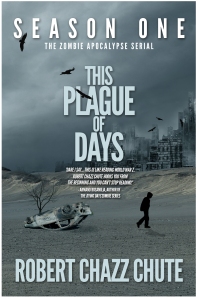
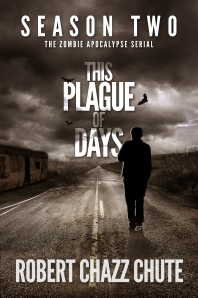
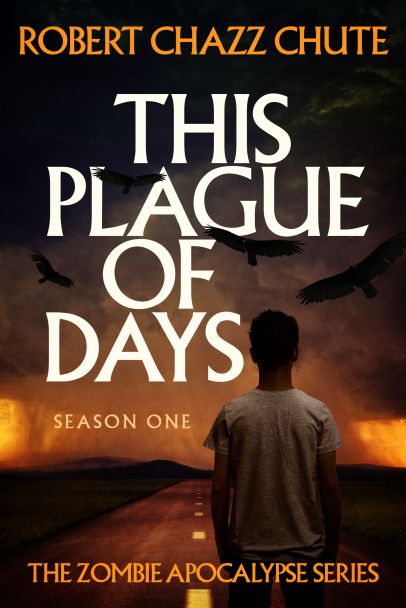
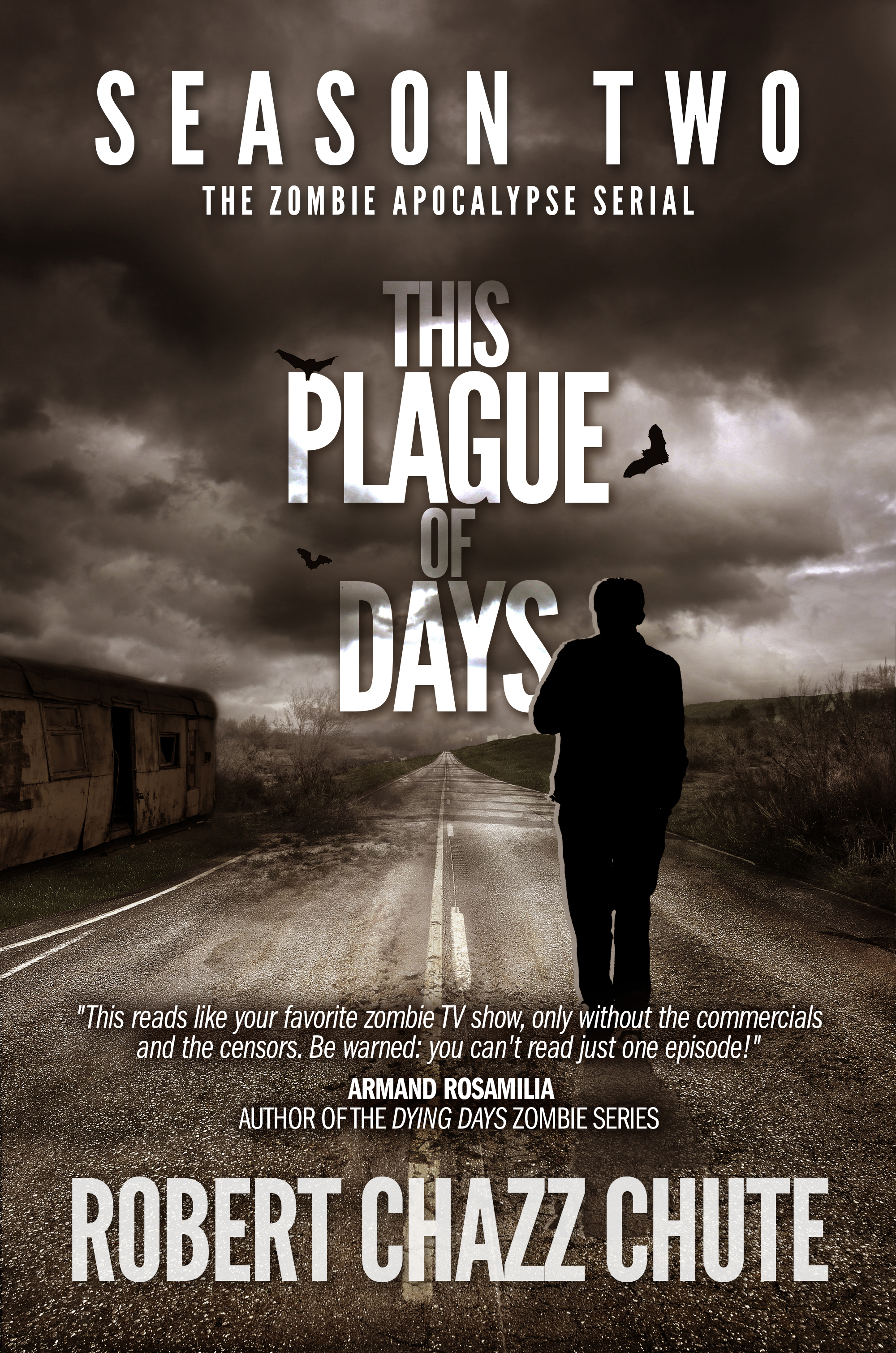
Season One of This Plague of Days is the siege. Sutr-X was the pandemic. Sutr-Z’s next and it’s coming for you and the Queen’s corgis.
1. Good characters have secrets they are trying to keep from the other characters. For instance, there is no major character in my zombie apocalypse, This Plague of Days, who does not guard a secret that’s contributing to the hullabaloo. Plenty of room for conflict there. Secrets are hard to keep and the longer they’re kept, the bigger the explosion when the secrets are revealed.
2. Good characters do not get along. In This Plague of Days, the matriarch is a Christian. The patriarch is atheist. They love each other, despite their differences, but it makes for some friction and they cope with problems much differently. They also begin to come closer to the other’s position, so rather than getting preachy, it’s an exploration of how people cope in a crisis. These details make them relatable so readers care about them.
3. Good characters have competing motivations. In Bigger Than Jesus, my Cuban hit man kills for love. Competing characters want power, sex, money and vengeance. All those characters are after the same thing for different reasons, so tension is built as allegiances are broken.
4. Good minor characters don’t know they’re minor characters. Everyone is the star of their own movie. If your henchmen might as well have the labels “Heavy #1 and #2”, give them more life history. I have a bad guy, a drunken marauder, in Season One of This Plague of Days you don’t really get to know. He wears a wedding dress into battle (stolen from the protagonist’s mother.) It’s a brief brush stroke that lets the reader figure out the rest as to where that guy is coming from while fuelling reader outrage.
Now in paperback!
5. Good characters are conflicted and can change. Sometimes, real people do in fact do something uncharacteristic. That makes them interesting. To make this believable, give them good reasons to change their behavior. With enough correct and detailed context, you can make the reader believe an out of character choice is logical at the time. Let a bad guy aspire to be a hero. Let a hero do something petty, just for spite (and the joke.) People who are too sure of themselves are often boring, unimaginative, predictable. I hate predictable choices in plots, don’t you?
6. Good characters, even heroes, make bad decisions that make them more interesting. As with #5, context makes this work. The reincarnation of Battlestar Galactica is a perfect example. You were probably rooting for the human heroes in the show, but they made terrible decisions all the time. Overall, that didn’t make them bad per se. It made them less predictable, more interesting and more human.
So, for instance, victims who are chronically bullied are tragic figures. Push that victim too far and they can fight back believably. If the bullied person overcorrects and becomes a bully or a killer, or fights back and fails, that’s even more interesting. The reader will expect them to triumph. You could give them that happy ending, but don’t deliver it too quickly or in a way they can anticipate.
Click it now to get a huge short story collection of dark fun. On sale now for only 99 cents. Love it? Give it a review, please.
7. Good characters have conversations. I’m already mentioned Tarantino recently as the apex writer of tangential dialogue, but there are many examples. Think of Tony Soprano’s conversations with his therapist or all the geeky arguments about Star Wars and comics stuffed into Kevin Smith movies.
Bigger Than Jesus, for instance, is stuffed with movie references. I didn’t do that just for the jokes. I did it so readers who were uncomfortable rooting for an assassin would discover they shared a lot of common ground with my luckless Cuban hit man. The Hit Man Series works because, despite what he does for a living, Jesus is always trying to escape his life in the Spanish mafia. He’s actually very funny and loveable. Throw in a tragic childhood and all those little conversations really aren’t tangential at all. They’re the key to the character’s choices. That connects him to readers.
8. Good characters have depth. Anybody can write a scene with two hit men disposing of a body. I’d write that scene with the details you’d expect, I suppose, but I’d have the assassins argue over the Obamacare while pouring concrete.
In This Plague of Days, we learn how a deadly octopus leads to Dayo’s migration to England. When the Sutr virus outbreak hits and Buckingham Palace is attacked by zombies. I want you to know who Dayo is and why she got that way. You don’t have to do a ton of research to give every character a rich family history (and if you do, I don’t suggest you use it all.) Give us just enough to make them feel real and just enough for us to feel like we’re witnessing a friend’s death when you murder them horrifically. (Attention Plaguers: I’m not saying Dayo will die in Season 3. I’m not saying she won’t. I’m not saying. You will find out her last name in Season 3, but that’s all I’ll promise.)
My luckless hit man is a funny guy in big trouble.
9. Good characters have physical problems. Most heroes in action movies get a scratch high on the forehead, even after a couple of hours of near misses, crashes and mortal combat. Picture wounds in most any old movie with Bruce Willis and Harrison Ford. All that fighting and not one chipped tooth? Really? Not one broken hand after all those haymakers? That’s why everyone remembers Jack Nicholson’s cut nose in Chinatown. He dared to look bad for the camera.
In Bigger Than Jesus, Jesus Diaz has the snot beaten out of him from the beginning. I’m trained in pathology, so physical ills turn up a lot as I give characters more barriers to their goals. I made the hero of This Plague of Days an autistic selective mute. In Vertigo, Jimmy Stewart’s goals wouldn’t be so tough to deal with if he didn’t have…you guessed it…vertigo. In Rear Window, he’s got a leg in a cast when the villain comes to kill him. Mo’ problems = mo’ thrills.
10. Good characters are familiar, but not necessarily archetypal.
Shiva, in This Plague of Days, is the Snidely Whiplash of the story. She’s a big character who, in the movie, will be played by Helena Bonham Carter or some dark beauty from Bollywood who isn’t afraid to chew the scenery. The whole moustache-twirling bit is archetypal. However, when her secret is revealed, we understand why she wiped out a major chunk of the world’s population and why she thinks she’s doing the right thing as a bio-terrorist. Her motivations are pure even though any sane observer sees her as pure evil. Before we’re done with This Plague of Days, you may even feel sorry for her. Sure, she’s a vain bitch, but so’s your sister and deep down, you still love her.
Here’s the thing about familiarity.
I don’t suggest you do as Larry David did, modelling the character of Cosmo Kramer on Seinfeld on an actual person. That sounds like a lawsuit in the making. However, take your crazy Aunt Sadie’s Red Rose Tea figurine collection and make it the fancy of the brutish pro wrestler you saw on TV once. Take information, life experience, Wikipedia and expertise you possess and put it in the blender of your imagination. Find their combinations and permutations. Come up with something new, familiar, yet not clichéd. Don’t make your character recognizable as a family member because Aunt Sadie will sue. She’s crazy, remember?
We are surrounded by fascinating characters. Write them and build something fresh.
Click here to get Higher Than Jesus, #2 in The Hit Man Series
~ Robert Chazz Chute is a complex character, better suited to minimal human interaction. However, I’m friendly on Twitter. Follow me @rchazzchute. I tweet about writing, books and publishing.
When I was in elementary school, we were forced to write stories to themes that were never of my choosing. I remember using the cliché, “If not for bad luck, I’d have no luck at all,” repeatedly. Then I used a pun on the words “mourning” and “morning”. Twice. My teacher didn’t have a lot of hope for my literary ambitions. Yes, those were dark days growing up in the village.
Flash forward.
I’ve written ten books and Season 3 of This Plague of Days is in the works. What happened so this became possible? How did all my writing days get bright? If you had a happy childhood (Editor’s note: Is that possible or are you just being sarcastic?), I suppose you could foster the writer’s mindset by using your imagination.
Failing that, grow a writer like this:
1. Mom read to me. I don’t remember it, but she was insistent that if I had any success with words whatsoever, I had her to thank.
2. Mom was a stickler about language and wasn’t shy about correcting us in front of company. Yes, it added another dimension of nastiness to Thanksgiving and Christmas. The only respite came from shutting up or getting it right. Since I couldn’t seem to shut up….
3. Mom loved crossword puzzles and we did them together. A crossword puzzle was like half-time at the Superbowl for us. It let us take a necessary breather from all the fighting. (We’re Irish.)
4. There were always books all over the house and my parents read voraciously. Love of reading must be osmotic because I rebelled against everything else they thought valuable. Fortunately, the town wasn’t so small we missed out on a library. That would have been barbaric.
5. My parents helped me appreciate books so much because, seriously, childhood in rural Nova Scotia? Brimstone. Sulphur. Country music.
Later, while reading Dante’s Inferno in university, I looked for the circle of Hell where bad children crawl under the bed covers and cry because they don’t have books into which they can escape. If you concentrate on the words on the page, I learned you can block out the twangin’ and a-fiddlin’.
6. My parents owned a video rental store. I watched a staggering number of movies of all sorts (not just porn.) Movies teach storytelling, especially when they’re bad. Poorly executed movies stir the writer’s imagination as to how you could have saved the film if only you worked in Hollywood. For instance, what if the guy who comes to the door isn’t a plumber or a pizza delivery guy, just to change things up?
7. Needing a break from me, my parents gleefully sent me off to a good school with a good program where I studied the history of philosophy and the philosophy of history. I was in the Foundation Year Program at the University of King’s College where I learned to appreciate how much I didn’t know. It’s the sort of education where you get to read classics voraciously. Who can afford the tuition for this sort of thing anymore? They’re focussed on getting a job, instead. I don’t blame anyone for that, but it is a loss.
I also studied journalism in university. I can’t say that really helped my writing all that much, but it did fuel my outrage and sadness indirectly, so that’s helpful.
9. My father loves language, but without my mother’s more conventional take on proper English usage. Instead, conversation is peppered with creative idioms only he seems to use. “You’re jumpin’ around like a fart in a mitten,” for one instance. That’s pretty creative. Dad does not use clichés. Good policy.
10. Growing up in a small town, everybody knows everyone else’s business. It’s one of the things I hate about small towns, but in that microcosm is enough material, weirdness and human friction to fill a lifetime of book writing.
That same small-town claustrophobia informs the stories in Murders Among Dead Trees. Gossip threw lives open, baring truths that are hidden when you have the comfort of not knowing your neighbors. Despite close proximity, there were still adulterers who dared to mess around without the courtesy or smarts to carry their affairs down the road into the next town. Everyone’s family medical histories were fair game and everybody was pretty damn judgmental about everything. Nothing was happening, so teasing was a team sport. Unsolicited advice was rampant. Violence was common at school and bullying couldn’t exist because “it’s the second punch that starts the fight.” If you were too polite, you must be weak. No weakness was left unprobed.
In cities, people die in repetitive ways. Where I grew up, mortal dangers were less predictable: farm equipment chomp with metal teeth and sea caves fill with fast, icy, tidal water. And then there were the hunting accidents.
In high school, the guy who sat next to me in grade nine math was mistaken for a bear. Up a tree. Wearing hunter orange. If he’d been murdered in an urban drive-by scenario, at least we could have blamed stupid gang violence. Instead, an excitable hunter killed him. One good thing about a developing writer in a small town: you get all the details about the guts and gore. From the drunken car accident that crushed my childhood playmate to blow-by-blow descriptions of every fight, somebody always tells one person. Then it’s all over town.
Tips and inspiration for the writer’s journey to publication.
An unhappy childhood in a small town is an excellent incubator for a mouthy brat who dreams of escaping to the big city one day and leaving it all behind.
Except, in my fiction, I never managed to leave it behind. I’m still there, righting wrongs, writing vengeance, and dreaming.
~ Robert Chazz Chute writes horror and suspense. Now you can guess why. See all his books here.
A friend of mine has a strict rule about writing: “Remove it from the manuscript if it sounds like writing.”
Writerly = Bad
Some sentences do call attention to themselves. It’s not supposed to be a good thing, but I don’t think it should be an unbending rule. To me, it’s a guideline reminding me that story always comes first (but we should enjoy ourselves along the way.) It’s up to the creator to make an informed choice about the narrative and the reader will decide if they groove on that choice.
In film, sometimes a director will take you out of the movie’s illusion by putting the camera somewhere unexpected, lingering, shaking or going for some special effect that reminds the observer, “Hey! You’re watching a movie!”
That can happen when you write something in such a way that it reminds the reader,
“Hey! You’re reading a book!”
Maybe the prose is beautiful, but some will accuse you of writing purple prose, being too precious or being maudlin. But many readers aren’t just readers. The best readers are also lovers of language. They want the reading experience to transcend mere delivery of information. When they read your writerly passage, it transports them.
I write a lot of action scenes, but I make sure to balance out the action with pauses so the reader can catch her breath before being thrown into the next chasm.
We’re pushed to begin in the middle of the action and make the pace fast. However, too many beats in too short a time sacrifices character development. Lose that, and we don’t care about the action scene.
Dare to go deeper so the bad guys don’t devolve into “Heavy #1” and “Heavy #2” come through the door with guns. You may or not remember details of the scene in Pulp Fiction where John Travolta and Samuel L. Jackson take down the guys who stole from their boss. However, film buffs can recite the lines from the drive to the shoot out. Remember? “Royale with cheese.”
Take time to build tension. There are scenes (yes, even in novels about the zombie apocalypse) that pause to show how people and their relationships are changing. Sometimes the pause is a great chance to write something for comedic effect. If you can make them laugh on one page and cry on the next, they’ll love the story more.
We can use our words to communicate the power and depth of the ocean and of personalities. We can show happiness and tragedy in a few brush strokes or we can dare to go deeper sometimes, reaching for the uneasy metaphor. Readers appreciate a story that explores emotional range with developed characters they care about.
My friend, the hardliner, says, “Never sound writerly!”
“But dude!” I replied, “Sometimes it’s only the elegant turns of phrase readers remember. It’s the flourish that captures the detail that makes the scene memorable. Without a little reach in description, I feel like I may as well be tapping out the story on a telegraph.”
“You’re just writing a zombie novel,” he said. “That’s not what they’re expecting.”
“No book has to be just anything. Any writing can turn the dial up to eleven and sound epic with the right twist on the expected. We aren’t supposed to give them what they expect. That’s mundane.”
“Okay,” he said, “just don’t make it sound too writerly. You know what I mean.”
“I promise I’ll delete it if it’s too obscure or gets in the way of the story.”
It still is, but I’ve got to talk about the author and publisher and our mental and physical health. Without us, there will be no books.
As I write this, I am battling a bad infection. On Tuesday, I find out about some medical test results. In short, things have been tough lately, emotionally and physically. I have a plan to deal with this mortal coil (more on that in a moment) but in the meantime, not much writing is happening. A little, yes, but at George RR Martin speed (i.e. glacial). Once this latest problem gets sorted out, I hope to be free of health scares for a good long time. Sickness and fear is draining. Life, as I have failed to organize it, is draining.
And here’s where the mental game comes in…
This last three weeks has been a series of blows. Most of that problem is mental. I’m not dealing with stress properly. I’m obsessive. I’m negative. I’m focussing on what not to do instead of focussing on what to do. If you spend your energy in the present on what you know you should do, you won’t lose time with regret and anger. I know this because I’ve lost too much time already.
The short story is, I allowed an energy vampire into my lair and he shat in my living room. Two days ago, another energy vampire attacked. I dealt with the problem faster this time, but it still ruined an entire day while I obsessed over what else I wish I’d said to cut him off. When I was younger, I wasted a lot of time being furious. The rage monster is back. I’m not punching walls or anything silly like that. Just seething. That can even be useful when I channel that energy into Misericordia, the beastly vampire in This Plague of Days. It’s less helpful when I argue everything in my head again and again. (At least the revenge fantasy with the torch, the knife and the bag of rats is fun.)
But here’s the paradox:
Writing makes me happy and yet I haven’t been writing enough. A friend asked about my strategies for dealing with negative emotions. For two years, I was free of all this nonsense. Those were the happiest two years of my life. Guess when that was. Yes, it’s when I was at home writing and only writing. Running two struggling businesses at once is a time management problem, though proper use of a calendar and a stopwatch alarm should get that sorted out.
There are many components and variables to health and everyone has to deal with these issues at some point. This is where I make my stand. Turmoil and rage is not a successful life strategy.
Living the way I have been isn’t working.
Underneath the anger is fear, just like Yoda says. I’m afraid of failure and a short life and I’m even more scared of a long life in which my brain and body abandon me. Sometimes, I cry a little and wish I could cry more to let it all out. Mostly, I want to take all the bad in the world into my arms and squeeze until it’s tiny and dead and dust. I want justice and just desserts. I want us to live in a better world and I think, through fiction, we can come at solutions sideways. Even if we can’t save the world through Art, we can save people by giving them harmless vicarious thrills and joyful distractions. Stephen King calls books “escape hatches”. That’s exactly what they are. We write about heroes and heroes affirm our humanity in the face of Darkness. We need these myths as a starting point for our aspirations. There is wisdom and honesty in good writing. With our fiction engines running hot, we can make the hopeful lies true.
I know what to do for myself and these latest health problems are reminders that, yes, I really have to deal with this stuff STAT.
Here are my strategies to protect my brain, body, energy and mood:
1. A diet of plants with some protein on the side. Vegetables are the main thing.
2. Daily movement. It could be dancing or Fight Club or running from bears or chasing criminals through the night in my cape. But keep moving.
3. I built an incredibly cheap treadmill desk ($100) but I find it difficult to compose while walking. A friend gave me a pedal treadmill for Christmas (to use while sitting at my desk). I hope to do better with that.
4. No aspartame. As little processed food as possible. Stevia or xylitol in small measures, okay, but the chemicals I can’t pronounce have to be cleared out.
5. Tracking. The same friend who gave me the desk treadmill gave me a FitBit Flex because (a) he’s awesome and generous and (b) that which is not measured cannot be improved. Everything I eat and do goes into tracking. From graphs and math come course corrections and healthy habits.
6. Closer contact with my doctors. I go for regular physicals, but we’re going to do closer monitoring to make sure I’m on track as I make more lifestyle changes.
7. First drink of choice is water. Then more water. Thankfully, coffee is still in, though less than I have been drinking.
8. More sleep. Early mornings are fine, but the late nights have been too much for too long. I took workaholism as par for the course to get things done. Now I think it’s a stupid ego thing and a result of impatience and poor planning.
9. Be more social with friends and invest in those healthy, positive relationships. Cut rude people off faster and destroy any hope they have of being casually destructive to my energy reserves. Psychopaths don’t lurk behind every rock and tree, but they’re out there. I’m not going to engage these people. I’ll simply delete them or throw them out.
10. Write. For me, it’s as important as exercise, if not more so. When I am writing I am most myself. When I am writing, I disappear from the stresses of this world. In that world there are psychopaths waiting, too, but I know how to deal with them better. I’m very unkind to the bad guys in my fiction. They get to think they’re winning for a while, sure. Then? They burn.
11. Every day in this world, I am kind. I make a point of it. The day isn’t done until I can find a way to do someone a solid if it’s within my power. But I have to be kinder to me, too. That’s why I’ve got 1 – 10. Your strategies may not be identical to mine, but I hope you have some that work for you.
Merry Christmas and happy New Year to all my readers!
My next entry on ChazzWrites.com will be in the New Year. As you can see, I have to take some time off to organize for lifestyle changes, rest, recharge and, of course, write. Let’s all have a healthier and happier 2014. We need each other for the fight.
Be well.
~ Chazz
PS If you have links, books, or green smoothie recipes to share about how you take care of yourself, please leave them in the comment thread. We all need to know.
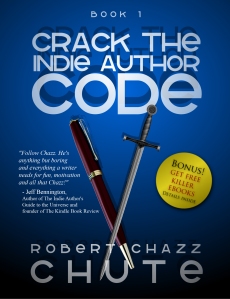
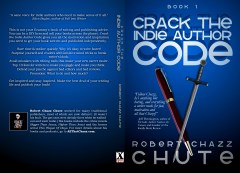
By the way, Crack the Indie Author Code 2nd Edition is out in paperback at $9.99. Smaller format, with jokes.
A fellow writer meant well when she told me that if you can allow anyone to discourage you from writing, you shouldn’t be a writer. That sounds tough-minded and strong, doesn’t it? It would be good advice to take, but unfortunately, I’m still human. Darn the luck, my skin is no thicker or thinner than it ever was. It will surprise no one, given the sort of dark stuff I often write, that I obsess over the negative. I do not remember sunny days. That’s who I am. Maybe I could fix it with some talk therapy, gene manipulation and a personality transplant.
So, yes, rude email hurt can me and my productivity. A bad review can ruin the morning and robs me of a night’s rest. I’m prone to depression and yes, I’m feeling it now. Due to several factors, I haven’t faced the blank screen bravely in days. I’ve been ill and trying to keep up with the demands of my new day job and, not to whine, but the depletion started with one condescending, presumptuous email.
I’m letting a terrorist win. The worry treadmill is running. I’ve written ten books, but the negative cyclotron has kicked in. “How can I be a writer? I can’t even type properly.”
When I observe the disparity between Goodreads ratings and Amazon ratings (work is often valued one star less on GR even if the review sounds equally positive), I have an urge to reevaluate my life choices. If I’d gone to that Second City audition or to film school instead…but that way madness lies. At least until I fix the time machine. But enough about me.
What to do when you’re feeling down and not writing*:
1. Call a friend. Do not talk about your problem. Talk about what your friend wants to talk about.
To shore up your ego defences, you’ve already read and reread your happy reviews. Your friend isn’t going to tell you anything new and you’ve already got your “Atta-boy!”
The point of this phone call is to break the obsessive cycle of repetitive arguments, cutting retorts and vengeful homicide plots running through your head. This is a time for jokes. Ask about your friend’s life.
2. Okay, so, being human, naturally you want another “Atta-boy!” Engage a fan who can’t wait for the next book. A little positive pressure may be all you need to get back to writing the next book in the series.
3. Write a blog post to vent, but only if you must and your friends aren’t answering their phones. (Ooh! Meta!)
4. Remind yourself that this is the firstiest of First World Problems and set the oven timer. How much more wallowing do you plan to allow yourself? More than one more pathetic hour and you’ll burn your life.
The three most powerful words are “I love you.”
The two most powerful? “Begin again.”
~ from Crack the Indie Author Code
5. Read the negative reviews of your favorite books. Choose the classics that you think everyone simply must adore. Realize some people will not be pleased.
Now in paperback!
Ev-er.
Or they’re trolls feeding an emotional need that has nothing to do with literary criticism. Or they’re too stupid to get you. I used to think that all readers, because they can read, must be smarter than average. Read some one-star reviews, especially the ones that bring down an author’s rating because Amazon didn’t deliver the book fast enough or they don’t like reading on a kindle and would have preferred paper. Clearly, my supposition about all readers being intelligent was not true.
6. Help somebody else with something. Shovel the walk and bring in the wood and be productive. Productiveness is a habit. This tip works better is you don’t do it for yourself. Do it for the old neighbor with the bum ticker and the broken leg.
7. Read something good that inspires you. Remember this feeling of transcending the great, dirty world? This delicious escape is why you are a writer.
8. Realize that nothing will be perfect and the critics might have a point about something. Correct errors and move on.
9. But if they’re too harsh and stop you from writing at all, you’ve allowed a rude outlier to rob you, and most readers, of joy. It’s too easy for trolls to throw bombs. You write books, not a few, nasty paragraphs. We’re not allowed to critique reviewers so they’re safe from what you’re feeling now. Don’t let bullies win. Not letting bullies win is another reason you’re a writer.
10. Bing! The oven timer went off.
Start writing again. Anything. Just start. Within five minutes, you’ll be sucked into the other world again. Just get through that first five minutes and write. You aren’t facing a whole book. You don’t have to worry about word count or bad reviews or bruised egos or where to find a Luger, thick rope and kerosene at three in the morning. All you have to do is start writing and get through the first five minutes. Maybe less.
You can gut out five minutes. You don’t even have to act tough to start. Just start. An appreciative audience is out in the future, waiting and hoping you’ll get through the next five minutes. Maybe less.You will fall back into the groove and the word music will begin to play. And a one, and a two and a three…
* If none of these suggestions work, call a doctor. Maybe it’s exercise, kale shakes and an anti-depressant you need to elude the mean reds.
By the way, Crack the Indie Author Code 2nd Edition is out in paperback at $9.99. Smaller format, but still has lots of jokes.
Start another book. Brainstorm or sketch out another book outline or write a short story or just sit down and see where else you can go at the keyboard. Keep that feather pen scratching. Keep going.
People will tell you to celebrate. Writers (because we aren’t “people”) will ask, “What else ya got?”
You could take a break, sure. But now that you’ve done NaNoWriMo, don’t you feel you’ve got a good habit going? Habits are hard to break into. To get into the daily writing habit takes practice, just like you’ve been doing all this month. Why stop now? To publish, you must write a lot, rewrite, revise and edit. Good habits are too easy to drop for you to waste all that behavioural inertia you have steaming in your skull engine.
Now isn’t the time to put your feet up.
If you still have some scenes from your NaNoWriMo project that you didn’t fill in right away, you can do those now. Now is the perfect time. The context is still fresh in your mind. Tackle any empty spaces you’ve left behind so when you come back to it, you won’t become perplexed and stymied later. Otherwise, leave your NaNoWriMo manuscript alone.
Why am I telling you to start a new project as quickly as you can?
Because someone might be tempted to dive right back in so they have a novel by Christmas. You know you need some time to cogitate while the manuscript rests for a bit. Otherwise, the Nano haters will run in circles with their hands over their ears screaming, “I told you so!” None of us wants those killjoys to be right.
Besides, if you go back too soon, you might be discouraged at how much work the book needs. Or worse, some might think their rush job is still brilliant. That’s lethal to ever having anyone tell you they’re a fan of your work.
And now for the tough stuff. I’m asking that you hold two contradictory ideas in your mind at one time and act accordingly.
1. Congratulations! You beat NaNo! Good on you! I bet there were days when the words came quickly and days where it felt like your brain was full of molasses. However, you faced down time management problems and got it done anyway. Sometimes it wasn’t easy, yet, you got past 50,000 words! You did it! This is a huge accomplishment!
and
2. Writing a little less than a couple of thousand words a day is no big deal.
Yes, some writers are more precious about their word count and make a great show of how slow they can produce. Mostly? I suspect they’re counting procrastination time as writing time. Screw that. I come from a journalistic background where deadlines are not livelines. We slam it in and knock it out and we’re good.
At least take that attitude with the first draft so you’ll have something to gut and edit. Blank screens have no atoms and pixels bouncing off each other to create new neural pathways and fresh angles to feed reader rapture. The first draft is usually simple, straight narrative. I always find the jokes, dialogue and theme in the second pass.
Professional writers write to deadlines all the time and they do so consistently.
You know that now, so it’s not about what “they”, the writers, do anymore. It’s what you do because you’re a writer. Keep going.
We’re creative. Writing’s what we do to wield god powers and get back at our brothers and sisters. We do it because it’s much cooler at the Christmas party to answer “What do you do?” with, “I write.” Say that and you’ve got a conversation. (Try explaining your wage ape existence in middle management to a hapless stranger and they’ll run for the punch bowl.)
We do it for play, for love and money and hope and for readers. It’s fantastic to find a scene to write that, even as you’re knocking it out, you say, “This! This will melt their faces and make them want to read me for the rest of their lives and tell all their friends! Ta-freakin’-da!“
Mostly, writing is what we do because it is who we are.*
*If you didn’t carry out NanoWriMo’s challenge this November, what better testament to your mettle than to do it on your own? Now. You’ll feel more smug and self-righteous this time around. There are twelve months in a year. You don’t have to risk waiting another year for the next party bus to take you to your life’s to-do list.
See you in the trenches in the morning
with 3,000 more words. If it’s a bad day.
Yes, you may stop writing
when you’re out of blood.
Season One of This Plague of Days is the siege. Sutr-X was the pandemic. Sutr-Z’s next and it’s coming for you and the Queen’s corgis.


![Pageflex Persona [document: PRS0000039_00004]](https://chazzwrites.com/wp-content/uploads/2013/10/tpod-pb-2.jpg?w=406&h=288)
![Pageflex Persona [document: PRS0000039_00004]](https://chazzwrites.com/wp-content/uploads/2014/01/tpod-2-pb-1211.jpg?w=406&h=285)











 C h a z z W r i t e s . c o m