C h a z z W r i t e s . c o m

See all my books at AllThatChazz.com.

Top Ten for Writers: What matters?

1. Don’t take a paragraph (or a whole post!) to apologize for not posting to your blog recently. They didn’t notice your absence. You have their eyeballs for a few seconds now. Don’t waste their time with throat-clearing or they’ll click away because you don’t have anything to say.

2. “Cover reveals” don’t attract anyone but the people who are already into you. They might not hurt. I’m saying they don’t help. Find a topic that matters to you and your readers instead. To spin an old quote, mere familiarity breeds contempt, but commonality makes friends.

3. Character interviews may be interesting to a few people, but only after they’ve read your book. It gets no new readers. Character is revealed through dialogue and action within the book. In promoting a book, it’s boring without narrative content and context.

A better suggestion:

Soon I’ll interview author Mark Rayner for the Cool People Podcast. When I asked him what he’d like to talk about, he didn’t say his characters, publishing or his writing process. He wants to talk about the themes of his book. I’m looking forward to a cool interview about the singularity and how technology affects all our lives, for good and bad. It’ll be less about him and and his book and more about readers. Then they’ll want to buy The Fridgularity, his funny, smart, entertaining novel.

4. Lose long dedications in ebooks. I’ve done this because I have much for which to be grateful, but it cuts into the online sample. Stick it in the back or put a link to it on your author site. Active links to your websites and other books will expand your circle. Your inner circle will understand.

5. The Table of Contents in your ebook doesn’t have to be in the front. That’s inertial thinking from paper publishing. For fiction, at least, stick it in the rear of the book. They can get to it on their e-reader, if they want it, by hitting “Go to”.

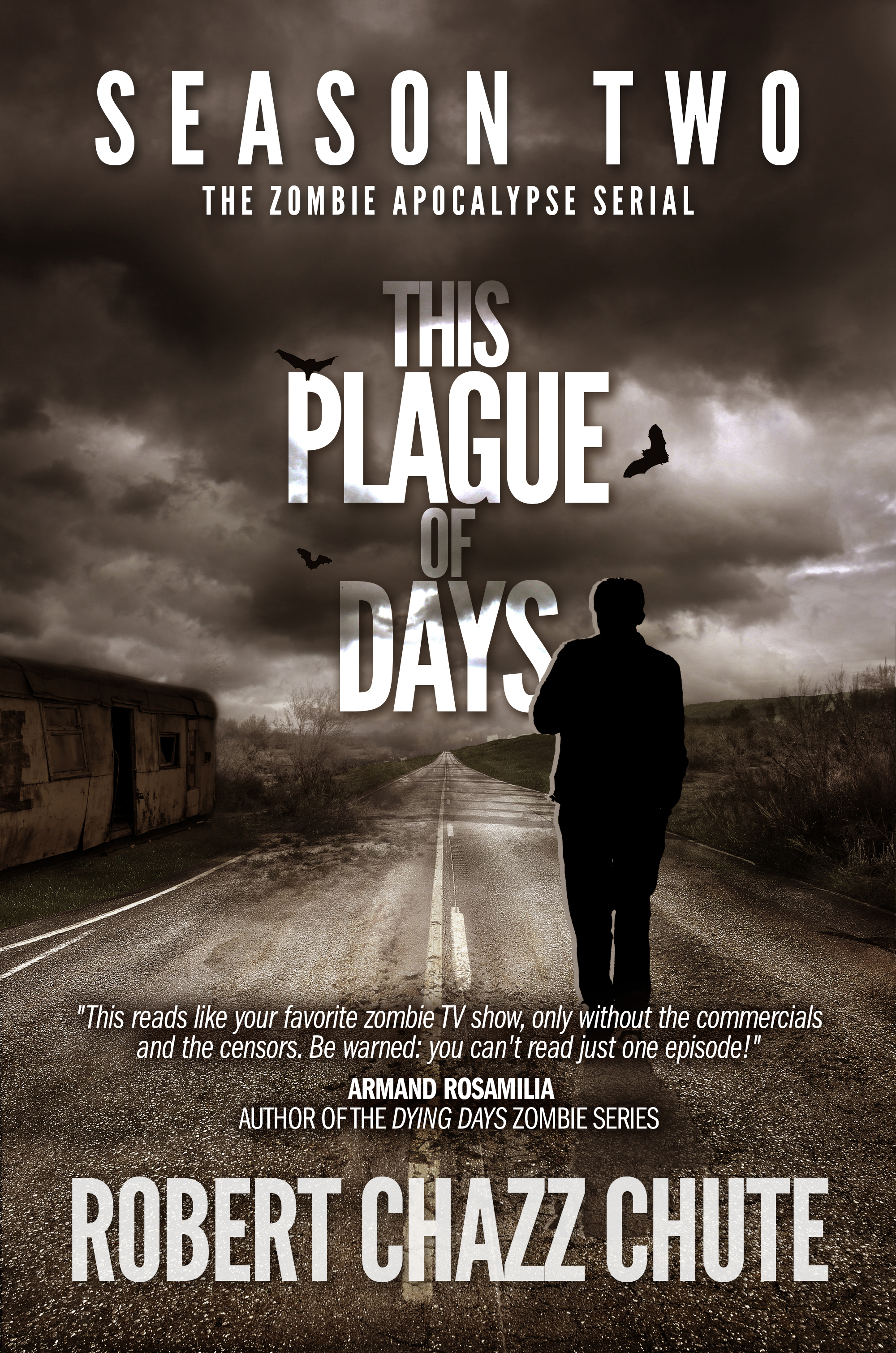
This is especially egregious when you have a long, dark poem as a TOC (as I do in This Plague of Days). It’s something else that cuts into the length of the online sample if it’s up front.

6. Do not complain about the demands of marketing your books. That’s telling readers that trying to reach them is a burden and they are unworthy of your time.

I’m still seeing this. Any potential reader who’s done manual labor, worked retail, been unemployed and/or worked for a boss? Yeah, they all hate you when you complain about being a writer. We have the best job on earth. Even if we aren’t getting paid for it yet, it’s still that awesome.

Instead, do what’s fun for you in otherwise unproductive time, after you’ve hit your word count for the day. If a Twitter account in the voice of your character is fun for you, try that. Unless your character is amazingly funny, profound, unique or wanted for spying by the NSA, it probably won’t pay dividends, but at least you’ll be having fun.

Connect on Facebook with people. My most meaningful interactions probably happen there. Since a reader helped me identify how my Facebook settings shut people out, I’m interacting with more people.

You can even go out and meet people in the real world. I understand non-virtual, human interaction is still a thing. I read about it on the Internet. It sounds dangerous, but you can sell paper books that way.

7. The demands of the work drain our energies so we talk too much about being a writer knocking back coffee. I’ve done it, too, and it’s cliche. Time to say something new. Something about wrestling elementary school teacher-dragons naked maybe. Hm. Gotta work on that metaphor so it sounds less fun.

8. Cramming too much information on your business card doesn’t work. Trying to cram the whole story on your book cover doesn’t work. Any promotional stuff that is too long doesn’t get read. Get your graphic design and white space to do more of the work for you.

The British Special Boat Service’s former motto was “Not by strength but by guile.” Good news! We’re writers! We have the resources to use guile. Writers and small publishers don’t have enough money to attack with strength.

9. Speak with. Engage with readers. Do not talk at readers so much. Talk less about you. Talk more about them. (Nice jammies you’re wearing today, by the way, and I especially like the lacy, red bustier…sir. Better turn off that laptop cam.)

10. Talk more about what you love and less about what you hate.

People enjoy reading about what people hate, but they don’t like the hater or even believe them. For readers to get to know you, they want to know what you’re for and what you read and what you think. Or that you think. Talk about what matters, both to you and to them.

Some writers steer clear of religion and politics for fear of offending.

Sounds like a quick way to be irrelevant and bland.

As a writer, your ability to communicate makes you important to any heavy discussion. You can even contribute as a human being. Your thoughts on violence, poverty and all the ills of the world are far more important than your little writing career. If someone doesn’t read your book because you’re a vegan, for instance, do you really think you’re missing out on a thoughtful and fair review from that person?

Kids are starving and you’re really worried about losing a few reactive sci-fi readers because you’re for X and they’re for Y? Really? Surely the kids are worth losing a few bucks, aren’t they?

I’d rather express my politics on Facebook from time to time. I’d rather win more readers I like. I don’t have to have readers who agree with me about everything. However, I don’t write books for dumb people. Trying to be liked by everyone is chasing a goose into an acid factory that’s on fire. We may be poor and desperate for readers. That doesn’t mean we have to be pathetic.

But yes, it does matter that reasonable readers generally like you. (So follow the Wil Wheaton edict and “Don’t be a dick.”)

I don’t want people to be excited to read the next This Plague of Days. I want them excited to read the next book by Robert Chazz Chute, no matter if I’m writing about zombies or Shakespeare or my funny assassin. Most readers tastes are very genre-specific, but if they like you, they’ll try your other stuff.

I’ve read all of Stephen King’s work except for The Dark Tower stuff. But I did try it. That’s all anyone can ask. After that, it’s down to individual tastes.

So be nice. Be authentic. Be committed to The Good.

And write good stories. Tell the truth through lies. Bypass prejudice and reach their minds by making them laugh first.

Writing good stories will get you more readers. Write great stories and that will come. Or maybe it won’t, but the writing and the stories matter. It matters much less than starving children and nuclear proliferation, but be fully in this world as you create better worlds.

To be heard, we must have something to say that matters to readers.

Filed under: author platform, Writers, writing tips, , , , , , , , , , , , , , , , ,

FAQs: How to write books agents will hate (but readers might love)

My luckless hit man is a funny guy in big trouble.

My luckless hit man is a funny guy in big trouble.

Yesterday I told you how a well-meaning friend with experience in traditional publishing gave me advice I thought was askew. As we struggle to gain traction in the marketplace, we get a lot of well-meaning advice we can’t take. (You’ve probably read that sort of advice here from me.) My friend’s other foray at saving me from myself was to tell me to court agents. “With World War Z, zombies are big this summer! Find horror agents and get traditionally published!” he said.

It’s not that it’s necessarily bad advice. However, it’s bad advice for me. Here’s a list of the things I do in my books that repel agents like fried bat armpits at the wedding feast:

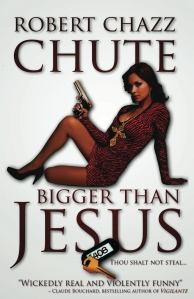
1. Bigger Than Jesus and Higher Than Jesus is written in second person, present tense. Unconventional scares agents away. They’re trying to make money after all. I don’t blame them, but I’m in the Art and Brain Tickle business first. I have this crazy notion that being me will lead to making money. Eventually.

2. The assassin/anti-hero in the Hit Man Series is neurotic and afraid of women. (Name another hardboiled gunner who has that problem. Take your time. I’ll wait.)

3. My hit man suffered childhood sexual abuse. He’s also hilarious. Those elements rarely sit side by side comfortably.

4. Hardboiled isn’t selling hard right now. Or is it humor? Or is it action adventure? Easily classifiable is really important to a lot of people who aren’t me.

5. The titles may offend some Christians, especially since it’s crime fiction with a lot of swearing.

6. The titles are confusing until you understand that the assassin, Jesus Diaz, is Cuban and it’s pronounced “HAY-SOOSE”. In fairness, agents and publishers should be repelled by these titles. It wasn’t the best strategy because any title that requires explanation sucks. After two books, I’m committed and in love. I also have a plan around this problem after the next novel in the series is published early next year.

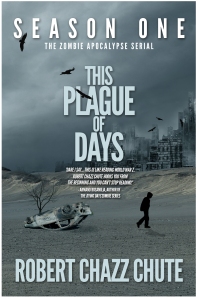
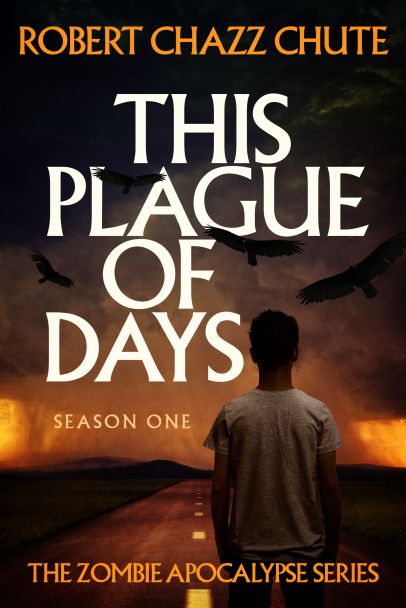
7. In my zombie series, This Plague of Days, the zombies aren’t “true” and “traditional”. It begins with a flu pandemic. You get to see how society gets to dystopian before the action kicks into ever higher gear. The slow burn requires more buy-in from sophisticated readers. Underestimating readers’ intelligence is an easier bet.

Season One has five episodes. Get each one for 99 cents or get all of Season One at a discount for $3.99.

Season One has five episodes. Get each one for 99 cents or get all of Season One at a discount for $3.99.

8. This Plague of Days has an autistic hero who rarely speaks and whose special interest is dictionaries and Latin phrases. Sounds like sales suicide when I put it like that, huh? That sort of gamble can pay off in a book. It’s death in the tough sell of a query letter.

9. The table of contents is a long, dark poem embedded with clues to the bigger story. Reread that and tell me I’m not silly. I know it.

10. Who will serialize a book unless I do it with my imprint? (Amazon Serials didn’t bite but readers are buying in.) Besides hooking up with Kit Foster of KitFosterDesign.com for his awesome covers, serialization has been my best sales strategy yet. This Plague of Days is a sprawling story tracking action over two continents with a big cast of characters. (At times you may wonder, is Chazz British or American? Split the difference. I’m Canadian.) It was too long to publish as just one book and the serialization model fit best.

When you look at that list, which idea comes across stronger? A or B?

A. All agents are evil, lazy and lack imagination.

B. I am determined to fail.

It pains me to say that all agents are not evil. I’ll save further discussion of agents for my next post.

For more on the why of this post, the writer’s character and how this relates to Joyland by Stephen King

click here for my latest post on ThisPlagueOfDays.com:

Writing Against the Grain: B Movies, A Treatments and the Deceptive Familiar


Filed under: agents, book marketing, Publicity & Promotion, publishing, self-publishing, , , , , , , , , , , , , , , , , ,

Author Armand Rosamilia hates Canada

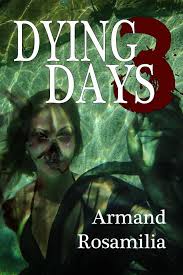
Dying Days 3Let’s not talk about Armand Rosamilia and the horror books everyone knows. Let’s talk about the secret Armand Rosamilia no one knows.

1. What’s the scariest movie you ever saw and why?

I always tell everyone Beaches with Bette Midler, but it’s really Breakin’ 2: Electric Bugaloo.

2. Why do you write about horror when you could be writing about unicorn and puppy erotica?

Who says I don’t use a pen-name for that stuff? But I hate puppies so I don’t write that crap.

3. What’s your secret to being so damn sexy and does that get in the way of your writing career or help your fame grow?

Being so damn sexy is actually a curse. I can’t even go through the McDonald’s drive-thru and order three McDoubles (plain, please) without someone asking for my autograph on the credit card receipt.

4. If you could remake a horror movie with two iconic monsters, which ones would you put together on screen and who would win? 

This might be my first serious answer… hmm. Tom Cruise (with creepy smile) against the C.H.U.D.’s. I would like to see the Cannibalistic Humanoid Underground

Armand Rosamilia

Armand Rosamilia

Dwellers win.

5. What stars would you cast in the movie of Dying Days (note: Not all characters can be Richard Simmons.)

Since you took the obvious answer away from me… Alyssa Milano as Darlene Bobich, even though she doesn’t look like her… I just want to finally meet my next ex-wife. And then a bunch of dudes I have no use for. Like the dreamy Drew Carey and Orlando Bloom (who people mistake me for all the time).

6. Celebrity author death match: Dean Koontz versus Stephen King in a cage at the Superbowl half-time show. The soundtrack is the fight music from the original Star Trek Spock versus Shatner fight to the death. What weapons do Koontz and King use? How does the fight go down and who wins?

Koontz uses his toupee as a secret weapon, using it at the last minute to break off King’s giant choppers and forcing them down his throat. King’s Ramones t-shirt is ineffective against Koontz.

7. In your spare time I understand you’re an internationally recognized belly button lint sculptor. How did you get into that and what’s your favorite piece of lint art?

My Abraham Lincoln is frighteningly life-like, but my Mel Gibson sculpture of his belly button lint from Lethal Weapon 2: Electric Bugaloo is also amazing.

dying days cover8. What was your personal, secret, behind-the-scenes role in bringing down Mitt Romney in the last US election?

I actually went out for a few banana bread beers with him and told him, truthfully, ‘Westeros will have an election next year. Hold out for there, or Margaritaville. Either place could use you.’ Then he got into his spaceship with Bigfoot and they went to hang out with Elvis and Fatty Arbuckle.

9. What does “Rosamilia” translate to?

In Italian the literal translation is ‘Man with Giant Penis Who Knows How To Use It’. Or thousand roses. I forget which one.

10. If you weren’t a horror author, obviously you’d be bent on world domination. What would your plan to become our overlord be?

First thing I would do would be to sink Canada (sorry, Chazz) back into the Hudson River, and then destroy the New York Yankees with a meteor (sorry, um… idiot Yanks fans) and then all radio stations would only be allowed to play Steel Panther or Bloodhound Gang songs. Then I would ban all literature except my books and Watership Down. And then we’d turn the pyramids upside down and make them giant swimming pools and I’d charge $5 per swim. And then… OK, I got nothing. 

Filed under: Author profiles, , , , , , , , ,

Not Free Much Longer: The Dangerous Kind & Other Stories

The Dangerous Kind & Other Stories (2nd Edition) is free for the last time for just a bit longer.

Here’s an excerpt I’m sure many writers can relate to.

Grab The Dangerous Kind & Other Stories here.

Stay-at-home dad.

40.

Broke.

This is not the future I did not plan. The future I did not plan, but thought somehow would take care of itself, is not taking care of itself. Squeegee kids aren’t broke like me. They aren’t still paying for a vacuüm they bought on credit last Christmas. Credit card debt is kicking my ass, or was, until my dad intervened and I discovered there are prices to be paid which are much higher than the interest on VISA.

I have no excuses and, like the rest of my generation, no clue. My wife, Cecelia, has a nursing job at an old folk’s home and I take little freelance editing jobs here and there. My main occupation is to watch our two boys and rub Cecilia’s feet when she gets home after a long shift. We have her tiny retirement investment plan. The statements go unread because neither of us read Bewilder, an alphanumeric language only understood by people in the financial services industry. We hope it works out.

My father learned his financial skills from his parents during the Depression. Grandpa was an Episcopalian preacher in Poeticule Bay before the roads were paved, when everything arrived by boat. The congregation often fed the minister’s family with cod and lobsters rather than feed the collection plate a few coins. Dad scraped up a little money here and there and somehow became what it seems no one can be anymore: The mythic Self-made Man.

Dad would lie in bed and plot his escape from poverty while his brother counted pennies into a mason jar each night. Childhood was so short then, it was almost imperceptible. They did escape. My father’s generation had smaller dreams and the discipline and savvy to make those lies true. They made something of themselves and I have no idea what that might feel like. Instead of selling things, my wife and I had kids and bought stuff off the TV because that was our little slice of the American dream. We trusted the Future, but the banks killed it and the government never arrested anyone for Future’s murder.

My uncle is still alive, too. He gambles his ample retirement fund with various Vegas casinos and heart by-pass specialists. Dad and Mum were snowbirds. After she died, he gave up on Poeticule Bay, Maine permanently and moved to Boca. He watches the sunrise and the sunset, takes pictures of pelicans wheeling over the water like pterodactyls and ponders his only son’s squandered potential.

“We never needed much, certainly not near as much as kids today think they need. I still don’t need much,” Dad says. “If it comes down to it, I could live off a greased rag for a month.”

Dad’s speaking to me over the phone, but he sounds like he could be talking to himself. I guess that’s true since, while he talks, I’m thinking of my boys and how all their friends have iPods now. The technological future is finally here and the party rages on without my kids.

Dad graduated from pennies to folding money, mason jars to stock portfolios. When I was a kid asking for a few dollars to buy something, his answer was always the same. “Why do you think you need that, boy?”

I was not deprived exactly. Dad provided clothes, food and shelter. But my wants? My wants eclipsed the sun. I wanted to fill my room with books and toys and music because that is how you buy happiness. Less is not more. Less is less.

My father wanted my childhood to be as short as his was and my room to be as bare as a monk’s meditation chamber. I denied him that satisfaction so long, I still don’t feel like a man. And yes, he still calls me “Boy.”

In this book, people are desperate to escape small-town Maine and maybe even elude themselves. The novella, The Dangerous Kind, is psychological mayhem and my tribute to Stephen King’s suspense.

Dad owned Poeticule Bay’s only hardware store. Early each morning he went off to work freshly shaved and optimistic. Each night he shambled home to supper, miserable. By the last spoonful of dessert he resolved that tomorrow would be better. What I did not understand then was that the tomorrow he was thinking about was the far-off tomorrow, the arthritic future wandering Floridian beaches alone collecting shells.

Retirement is not in my future. I have fitful dreams of being a writer. That is the same retreating mirage I saw on the distant horizon when I was eight. There are haphazard moments of clarity when I compose eagerly. Then I turn on the TV and fall asleep. Words with promise have died. Clever lines form skeins of sentences. I reach in spasms. I worry I’m already too late. The bills mark time.

Awake and rubbing my eyes, I am smack in middle age on the brink of last chances. I am halfway between those early promises and the sum of me. That distant horizon still recedes. I am not a bestselling author whose book is soon to be a major motion picture. I’m not even a grown-up.

Yet.

In this frame of mind, I made excuses to Dad why I could not load the whole family in a jet and wing off south for a visit. I let slip that I could not come because my wife and I had to pay off credit cards. I said too damn much.

Dad called back at seven the next morning. My debt had been gnawing at him through the night. The kids were still in bed so I was, too. “Time you got up, boy! I suppose Cecilia was at work an hour ago!”

He’s not big on preambles. Why don’t I have call display on the phone by the bed?

I didn’t tell him I was up till three last night writing. That would just be another mistake to hold on to and bring up at Christmas. “Is the book done yet? When do we see it in stores and how much will you be paid? How much, boy? That doesn’t sound like much.”

I thought about telling him the kids were painting each other with glue again and that I had to hang up. I didn’t, though. I listened because he was talking about giving me money. His was a generous offer of an interest-free loan to kill the credit cards and raise the possibility of a future without debt.

I’ll owe him.

Instead.

Again.

I said I’d think about it, like I still had a choice and pride.

Later, when I looked upon my innocent boys’ debt-free faces, I had to remember how to build a smile. Each grim facial reconstruction soon fell from my lips and I had to rearrange my face again. When they want the latest robot dinosaur, will my card be maxed out again? Will their memory of me be The Failure Who Always Said No? How different is that from the Self-made Man who says, “Why do you think you need that, boy?”

What will happen when they grow up? When they go to college and fall into the same — or a deeper — debt trap, I will pull them out of that hole if I have a rope. No money? No rope. No hope. There lies the soul of shame’s pain.

Each New Year’s Eve, Cecilia and I say this will be the year we “get some breathing room.” We’ll save money…somehow. We’ll win the lottery or I’ll sell my novel or…something. What’s likely to change since we aren’t doing anything different? We never speak of this secret aloud for fear that, like some magic curse, the danger will only be made real in the speaking.

I’m worried about the slow, spreading stain in the bedroom ceiling. Will roofers even accept a credit card? How much will new eaves troughs cost? Will the furnace die this winter?

“How much?” Dad asked.

“Ten thousand,” I said. I braced myself but he did not say anything. The weight of the silence on the phone line stretched out. His disappointment was that heavy. My scalp burned and my body felt skinned by rusty carrot scrapers. “Five hundred a month okay?” I ventured.

“Yeah,” he said. “Promise you’ll cut up your credit cards?”

The next pause was mine, the startled kind.

“Yes,” I lied. What if I have to rent a car or get a hotel room for some ugly, unforeseen reason? I think about the roof, the furnace, the eaves troughs, the latest dinosaur robot and the look on my boys’ faces when a classmate gets a new computer. My father will not understand why I will never cut up my credit cards.

I must have that safety net for emergencies, even if it could hang me. I could try to explain my situation, what my real life is like. That’s definitely what I should do.

“Um…Dad?”

Go ahead, I say to myself, sweating and now out of my body. Tell him! Tell him that the best things in life aren’t free! Tell him iPods buy love and happiness. Explain how you’re asking for $10,000 because that’s all your stupid pride can bear to ask but you could ask for twice as much and still not cover your debt! Tell him there’s little hope but you wish he shared your dreams for success, anyway. Give him another reason to call you “Boy.”

“Yeah?” he says.

All he’s got waiting for you is the sucker punch of a loan, judgement and condemnation.

“Thanks, Dad.”

“Yeah.”

I hang up the phone, my head hot and pounding. The kids are watching a SpongeBob rerun. My wife won’t be back from work for another hour. I could steal a nap.

Instead, I sit down. I dream big.

I write.

Grab The Dangerous Kind & Other Stories here.


Filed under: publishing, , , , , , , , , , , , , , , , , , ,

Ultimate Blog Challenge: Writing Books on Writing

Can writing be taught?Sure, but what most people mean by the question is, can anyone write to a professional level? One

On Writing

On Writing (Photo credit: Wikipedia)

newspaper colleague of mine insisted that it was something you were born with or you weren’t. I think the desire to immerse yourself in writing might spring from a quirk of genetics, but after that it’s up to you.

Certainly, anyone’s writing can be improved. Eliminate excess adverbs and don’t strain a metaphor until it breaks and you’re off to a good start. I’ve taught a couple of writing classes now and I suspect that writing skill is self-selecting anyway. If you aren’t interested in writing to begin with — as it is with anything — you probably won’t improve much. The best training in writing I got was first to read extensively early on. In my childhood home, books were a big deal and they still are now that I’m supposed to be a grown-up. Toward the end of journalism school, I think the best training I got in writing was to write copiously for a daily newspaper with feedback from editors.

There are a ton of books on writing advice and I’m sure I’ve read just about all of them. Reading about writing is often less about learning something new (there’s not really that much new to say about craft, is there?) as it is confirming my thoughts, feelings and biases. Sometimes a unique idea will rise out of that reading. Mostly I read writing advice books to enjoy the voice and the company of likeminded writers and to find inspiration. It’s motivating, yet cozy as a warm blanket, to read a book on writing advice and think, “Yes, I agree. I’m doing that. I could try that. I should go write some more now.” I end up reading writing advice for the same reasons I drink coffee. It’s a stimulant that makes you feel warm inside.

That’s ultimately why I decided I will soon add to the tonnage of writing advice books. Some books are very specific and prescriptive about writing. Others give excellent advice and strategies for marketing for the indie author (like Jeff Bennington’s intrepid Indie Author’s Guide to the Universe.)

Mine will be a softer approach for newer writers, like Bird by BirdI’ve gone back to Stephen King’s On Writing again and again. These are the books that told me I wasn’t alone and this wasn’t so hard or crazy if I just pecked away at it. It was simply craft and there isn’t a secret besides sitting down (or getting on my treadmill desk) and doing the work I knew I could do.

The aspiration for this book is more modest than some who take a step-by-step, flow chart approach. My book on writing will be inspiration for the new indie author, much of it drawn from posts on this blog. Early on I linked to others less and wrote more about craft (instead of focusing on marketing the Indie Author Revolution as I seem to do now.) I selected the best and most useful posts from over 900 articles on ChazzWrites.com, then added to them, wrote some new stuff and edited again.

My book won’t be as ambitious as some who (may Thor bless them) give strict advice on what to do and how to do it. My ideal reader will be a writer like me who wants to grab a steaming coffee, curl up in an armchair and read Crack the Indie Author Code: Aspire to Inspire (yes, that’s what I called it and yes, it’s coming soon). Readers will find an ally, inspiration and company on the journey to publication. For me, the work is about the writing first and foremost. The real fun happens in our heads as we write and nurture that spark of inspiration into a flame that throws light and heat. I’m happiest at my keyboard hooked up to the coffee in the intravenous drip.

Do I think writing can be taught? Sure. If you want it enough to bother to go looking for the education, that’s the cardinal sign and symptom that you’re already infected with the writing bug, anyway.

Filed under: publishing, , , , , , , , , , , , ,

Author Blog Challenge: Writers to adore

The Princess Bride writer William Goldman His ...

The Princess Bride writer William Goldman His Q&A closed the Expo and included the largest audience of the Expo. (Photo credit: Wikipedia)

Another writing prompt for the Author Blog Challenge is: Which writers do you most admire? In a week or so I’ll release Bigger Than Jesus, my first crime novel in a series. In part, the book is dedicated to William Goldman. You know the movies he has written: The Princess Bride, Marathon Man, Butch Cassidy and the Sundance Kid. But you probably don’t know his many novels: Edged Weapons became the movie, Heat with Burt Reynolds; Brothers (a sequel to Marathon Man); and my beloved The Color of Light. What sets Goldman apart is his plotting, his humour and his enormous capacity to surprise the reader. Just when you think you know what happens next, he sucker punches you. I’m all about surprises, too, so I love that.

Who else? Stephen King gets a nod for telling a story straight and well and for sheer output. Chuck Palahniuk is another favorite because we share an interest in the weird but true. Also, Chuck does not rest on his laurels. He takes chances with his books. He’s not trying to do Fight Club over and over and he has even jumped boldly into experimental fiction here and there (like Pygmy and Rant.) What distinguishes his style is that he does not judge his characters. Things happen. Morals are for readers to come up with (or not). There are traits from Goldman, King and Palahniuk I either came by one my own or absorbed. I don’t really believe in emulation of other writers, but I recognize similarities in process.

Recently, someone on a podcast reported that fiction is dead. They said people don’t have time for novels anymore. They want it short and then? Make it shorter than that. The death of the novel has been predicted almost as many times and with as much certitude as “Vampires are so over, man.” I’d worry about the state of fiction, but then I read Run by Blake Crouch and I don’t think we have to worry. Write a great book and tell the story in such a way that the reader can’t put it down. Make them laugh. Make them cringe. Sucker punch them with surprise. The novel will survive. I hope so, anyway, because I am otherwise unemployable.

With each opening, with each beat, with every chapter that ends with a cliffhanger:

BOOM! BOOM! BOOM!

When Bigger Than Jesus comes out, you’ll see exactly what I mean.

Filed under: publishing, , , , , , , , , ,

How to sell cross-genre books in The Land of The Easy No

Picture this:

You walk into a store and can’t find what you’re looking for. You ask the clerk behind the counter, “Have you got moldy bat wing party favors hiding somewhere in the back of the loading dock?”

Far too quickly, without looking up from his coffee, he says, “Nope! We’re out of the entire line of moldy bat wing party favors.”

You walk out empty-handed, but you’re thinking, “I bet there might be some left in the back if the clerk had just bothered to take the time to check.”

 You’ve still got your moldy bat wing party favor deficit, but as soon as the clerk said no, their problem was over.

It’s easier to say no than to say yes. “Yes” means more work.

This is the downfall of living in The Land of The Easy No.

Which brings us to the business of selling books… As a sales rep for numerous publishers, I had a lot of catalogues to get through. Appointments could take two or even three hours, depending on how much hemming and hawing the bookseller went through to complete an order. I had to power through those catalogues, talking fast, to fit three appointments into a day. Traveling between bookstores took time away from selling, so efficiency was not a trivial issue.

Each book received a few seconds of attention and — surprise!— not all books get equal attention. A “credibility book” is a book from the backlist that a sales rep steers a bookseller away from. “You don’t have to worry about that one,” is code for, “If you buy that book you’ll be returning it as quick as you can and you won’t believe a word I say when I tell you to go heavy with your order on another title.” When you have seconds to sell a title, you go with the high points. Selling an author who has sold well before is the easiest thing to do. When I sat down with booksellers, there was a shorthand with popular authors. Other pitches focused on publisher support or celebrity. Getting them excited over a story was usually (but not always) the last choice in the hierarchy of what made a sale quick and easy.

Easy sell: “How about you double the order on that romance author you’ve already sold a ton of? It’s the same unchallenging book her fans want over and over, and sure, the quality has slipped, but it’s about branding and a following.”

Fast and easy sell: “How many of the new Stephen King do you want?” (Note the “how many?” not whether and if.) Whenever you can talk about big name authors instead of covers, content or media coverage, the easier the sale.

Difficult sell: “Here’s a new author you’ve never heard of but it’s a great story.”

Better: “Here’s a new author you’ve never heard of, but it’s a great story, and she’s getting major media and we’re really pushing it and it’s so much like Lee Child and we’ve got great advance reviews and Bill Clinton will provide a cover quote and Bill O’Reilly will write the introduction.”

Much better: And did I mention this Lee Child-toned story is about a sexy woman who commits grisly sex murders who escapes from jail and the sexy female FBI agent who brings her to justice? Did I mention it’s based on a true story and it will be a major motion picture just in time for your Christmas season…and did I mention Brad Pitt will play the roles of both sexy women and he makes out with himself? Think Fight Club, but with more lingerie and slow panning shots of Brad Pitt’s legs in ripped nylons.”

Tough sell: “Let me tell you about this quirky one with a niche hook that’s going to be a slow build but a cult hit over time.” 

META ANALYSIS: That, I think, is a great description of Self-help for Stoners, Stuff to Read When You’re High (though I am biased.) The trouble with this pitch: It’s a short story collection (ouch!) that’s a self-help (Oh! Good and hopeful!) in fictional form (huh? Like parables? Like in the Bible?) and no, you don’t have to be a stoner to enjoy it. (Slow down. I think I have to be high to get all of that at once!)

Note the language: quirky, niche, slow build, cult hit, time. That’s too many caveats and double backs for a quick and easy sale because it sits across genres, squatting there in its damnable uniqueness.

Short shorthand sale: When I sell my post-apocalyptic and suspense novels, the sales pitch will be much quicker: Think Stephen King. Done.

CHECK OUT ALL THE BOOKS HERE

Publishers’ sales forces have diminished immensely since I was driving around with a car so heavy with books it ran low on the axles. Times have changed. When publishers talk about authors giving authors a big push now, what they really mean is the author is tech savvy and not shy. The author will do most of the publicity work, though that’s been true since the birth of the Internet, anyway.

Where have the big publicity opportunities gone? They went away when Oprah went away. She was the the book industry’s angel. Now the big angel is Jon Stewart, but that won’t help you if you sell fiction. The Daily Show is only for non-fiction. (The last fiction author on The Daily Show was Kurt Vonnegut, shortly before his death, and he talked mostly about his non-fiction book Man Without a Country.)

Forget big publicity.

Look for small publicity opportunities.

Radio is still a good publicity opportunity and you don’t have to travel anywhere. Contact radio show producers and pitch them, but remember fiction is still tough so to succeed, you’ll need an angle. (The easiest? I lost my job and now I’m a hometown start-up business and my book is set in this town and I kill hobos for sport…The Most Dangerous Game!) Morning radio is topical and lends itself to non-fiction books. Consider going after shows that are not radio prime time  (i.e. the drive time slots.) Book a show that is a book show. You’ll find it easier to get on air with a university radio station.

The “push” comes from authors now. It’s up to you. Authors don’t just write anymore. We sell ourselves. I’ve got three blogs, a podcast and three twitter accounts. And that’s not nearly all the publicity I do or plan to do. I’ll be expanding in social media and beyond social media in the new year (TBA). And I really have to start chasing down reviewers for my books. (If you’re a book blogger or book reviewer and like suspense, let me know at expartepress@gmail.com.) All that social media is a lot to maintain while I’m getting a new novel written and revising the already-written novels. That’s three eight-hour shifts by my reckoning. Set up that intravenous by my desk! And make my new desk chair a toilet!

Can you pay for media coverage to increase sales? Ads are expensive and often ineffective, though I’ll give you some strategies to consider. You’ve already got an author page on Goodreads and you’re doing a book giveaway or a contest or guest blogging. You’ve considered paying for a Goodreads  promotion, Amazon ads, the exclusive-to-Amazon offer and advertising with banners on websites. Those are all digital strategies that are already covered elsewhere ubiquitously, so let’s think about some retro, analog approaches for a change. We don’t think old school much, but it can be less expensive than some of the usual options if we’re creative.

Start thinking local, like the tiniest newspaper in town, not the big one. Contact the columnist who does the odd interview. Send a press release. Send a copy. Give him a hook. Maybe the story isn’t your book. Maybe the story is that you have three jobs and are near homeless but you’re still writing the Great American Novel. Or you were published in paper and switched to ebooks. The great ebook versus traditional publishing debate is pasted across the web, but it might be new to the columnist. (We forget what we’ve been soaking in for two or three years is outside the awareness of non-publishing civilians.) Maybe you make your own glue and paper to create your own books to sell from your website. Maybe your book promotion is tied in with a charity. Maybe you didn’t read until you were twenty-six and now you’re an author. Find a hook and be interesting. There’s often a way in if you’re clever.

Then think smaller. Instead of radio, start thinking about podcasts (either producing one yourself as a companion to the book like I did — Self-help for Stoners is on iTunes weekly and will soon be on Stitcher, as well — or sponsor a podcast.) Podcasts are cheaper and usually more targeted or more personal than regular radio.

Now think even smaller. What could be smaller? A newsletter. Just today an opportunity landed in my lap. A friend has a busy business and a newsletter to go with it. He offered me free space in his newsletter. It will go out to 2,000 of his clients with his personal recommendation. That sort of help is precious to me. Who do you know who has a newsletter? How can you expand your sphere of influence by thinking small? Even if you have to pay for the privilege, newsletter ad rates are cheaper than newspaper or magazines ads and are often better read.

Traditional wisdom is that cross-genre books have been a challenge to market to bookstores. But remember? A tough sell is not an impossible sell. Remember the store clerk in The Land of The Easy No? He is the enemy of innovation, profit and expanding minds and experiences. As small publishers, we can invest the time to convince others to try books that aren’t easy to sell. I have just three books on sale. I don’t have the constraints of a huge list where each book has mere seconds to hit or miss. I can take the time to connect with people and tell them more about the book and build enthusiasm.

In the big picture, I have more time and long tail sales opportunities. Now that my books are up for sale on the web, they’ll be up  forever. I don’t have to worry about the bookstore packing them up and sending them back for credit six weeks from now. I don’t have a short sales window. I have a sales vista that stretches out, positively prairie-like. I have the time to find readers and for my readers to find my books. We can make quick decisions and invest time rather than cash.

Small companies have flexibility and enthusiasm that big companies do not. Big publishers have a distribution system (which diminishes steadily) and bigger budgets…but in many ways their promotion isn’t that much different from mine with most of their books. I’m selling my books so I care about each precious baby so much more.

How does a small publisher survive in The Land of the Easy No? Flexibility. Enthusiasm. Creative thinking. Innovation. And not falling for saying no too easily.

A difficult sale is not an impossible sale, and sometimes when a difficult book catches on, it catches fire. Too often a sales force mistakes a difficult sell in the short-term for an impossible sell. That’s why the first Harry Potter book was so hard for JK Rowling’s agent to sell to publishers. Rowling didn’t want it to even be a children’s book per se. From the beginning, she saw it as a cross-genre book for adults and children. That’s what it soon turned out to be despite all those editors and sales reps saying, “I can’t sell this.” Maybe what they really meant was, “Selling this will take more than a few seconds, so forget it. Make my job easier by giving me a book to sell that’s an easy yes.” A “Yes” means more work. A “No” means the problem is easily solved by missing a huge opportunity.

Big publishers depend heavily on the opinions of non-editorial staff. Salespeople I worked with thought of books as “products” and “brands” rather than “experiences”, “journeys” and “ideas.” They decided which products were quick, easy packages to sell. That’s why they miss out on opportunities to sell cross-genre books. It’s the same facile mistake as passing up selling Vivaldi for the latest boy band. The Vivaldi will sell more, for a longer time. Short-term thinking left a lot of publishers cutting the same sales force that so influenced their sales.

They lost out because they lived in The Land of The Easy No.

~ Robert Chazz Chute is the author of Self-help for Stoners, Stuff to Read When You’re High, Sex, Death & Mind Control (for fun and profit) and The Dangerous Kind. Download to your smartphone or e-reader. For more information on the book or the podcast, go to AllThatChazz.com.

Filed under: Publicity & Promotion, publishing, What about Chazz?, , , , , , , , , , , ,

Save Your Darlings

“In writing, you must kill all your darlings.”

~ William Faulkner

There’s lots of writing advice out there. I never worry about giving anyone advice that is incorrect because experience tells me people will only take the advice that appeals to them anyway. That said, save you darlings. Resuscitate them. William Faulkner’s darlings are not your darlings. Maybe that suited him, but that doesn’t mean it suits you and your book.

For instance, I once read Famous Agent’s argument that killing your darlings equates to getting rid of the stuff that is “too clever.” Oh, Jesus, no! We wouldn’t want anything in there that’s too clever! Make it all bland and uniform. Or waitaminute! Why don’t we want it clever again? In fact, wouldn’t it be great if you published a book that only contained your darlings? Wouldn’t it be great to have a book that was so clever that it was the common ideas that stood out for deletion and not the clever ones? I’m not arguing for self-conscious writing that sounds “writerly.” I am arguing for writing that takes a chance, challenges a reader once in a while and becomes distinctive art.

Chuck Palahniuk’s Fight Club is packed with clever ideas, for instance. The interesting thing is, Fight Club was a reaction to the rejection. Palahniuk submitted something else first and got negative comments. His solution? Go even further and stay true to his voice. What I’m saying is, killing your darlings sounds like clever advice until you think about it a moment longer. Killing your darlings could lead to a lot of bland writing. I like intellectual engagement in my reading. I prefer surprises. Give me a ranty sprinkles of philosophy. Ladle in the new and different. I’ll love you for it. You can take a foray into something that doesn’t move the plot forward. If you make it entertaining, it will work. (Stephen King has also urged young authors to kill their darlings, but I don’t believe him. His fiction often goes off into side tracks and detailed forays that don’t necessarily advance the plot.)

Worse? I accuse William Faulkner of fraud. He didn’t kill his darlings. Faulkner is one of the greats precisely because he didn’t kill his darlings. Had he taken his own advice, As I Lay Dying wouldn’t have this:

“My mother is a fish.” 

Mr. Faulkner? J’accuse!

Filed under: authors, Writers, writing tips, , , , , ,

Writers: Why you should read John Dies at the End

Sometimes I see manuscripts where there’s a lot going on. That’s good. The problem is that the protagonist is always around the action, but isn’t initiating any actions. Heroes are self-starters.

It’s okay to have your hero or heroine gobsmacked when zombie terrorists attack the city. However, if things are still happening to the protagonist rather than him or her being proactive, your protagonist will soon annoy the reader.

It happens more often than you’d think. I suspect it’s a plotting problem. If the hero runs around in circles while everyone around him knows more than he does, it’s easier to get him into trouble.

There’s a place for weak-willed characters. They’re called secondary characters. Your protagonist can do the wrong thing or draw stupid conclusions, but notice the words “do” and “draw.” Protagonists are verb-oriented.  Yes, the hero can be fooled. The hero can have room to grow as a person. But he can’t be an idiot who grows into a genius unless his name is Charlie and his pet mouse is named Algernon.

For instance, I’m reading a great book now called John Dies at The End by David Wong. Aside from managing to be a clever mixture of Stephen King and Douglas Adams, I noticed Wong’s protagonist makes decisions that are perfectly reasonable in context. And he acts immediately.

So many books allow villains to do what they made of fun of in The Incredibles: Monologuing. (Example: “I expect you to die, Mr. Bond! But first, let me give you a tour of the complex and explain my evil plan to corner the world’s teddy bear market.”)

When Wong’s hero confronts Big E Evil, he doesn’t let the Big Bad lay out plans for world domination. He  pulls out his pistol and fires immediately, no warning shots. The results may not be what you expect, of course, but his hero isn’t dumb. The effect of this narrative efficiency is so powerful you’ll find yourself asking, “Wait, what was the evil plan? Oh, nevermind. I guess I’ll find out later.”

Don’t worry. You will. But I won’t spoil anything for you. Just go buy John Dies at the End by David Wong. You’ll be glad you did. It’s the best book I’ve read in quite some time.

 Related articles

Filed under: authors, book reviews, Writers, writing tips, , , , , , , , , , ,

The Writer Rejection Scam

Stephen King signature.

Image via Wikipedia

Sometimes I hear writers take pride in the number of rejections in their file cabinets. The idea is that they compete with writer friends to pile up the rejection slips. The person with the most number of rejections by a certain date…er…”wins.” Riiiight. I don’t know how this myth got started but it’s a popular one.

It’s not that this is a totally useless strategy (and I’ll review the advantages in a moment) but first, let’s burst the rejection scam bubble:

If you are writing fast without second drafts or third or umpteenth drafts in order to pump up your submission rate, you’re losing. More rejection slips? That’s no measure of how close you are to publication. If that were true, the worst writers in the world submitting the most illiterate crap across the planet are all just on the cusp of bestsellerdom.

If you get a lot of rejection slips that don’t actually include personal notes on how the writing didn’t work for the reviewer, you’re losing.

It’s also very hard to get any personal notes on your work, by the way. Many agents and editors don’t believe in detailing the reasons for rejection. There are so many variables to evaluate writing that are idiosyncratic and peculiar to the editor, it doesn’t profit you to hear they rejected you for subjective reasons.

Neither does it profit them to take the time to give you a heads up that you were a near miss. Many editors have so many submissions on their desk that they really don’t want to encourage more people to resubmit. The mailbox will be full tomorrow regardless and your persistence is expected without free coaching and hand holding. (And just because you submitted a manuscript, no editor owes you free manuscript evaluations, feedback or reasons for rejection.)

If you’re clearing an alley of bad guys, use the twelve gauge with the .00 load. With manuscript submission, however, scatter shot is less effective than picking and aiming at your targets.

Submit everywhere without careful thought on how to target your market? Then you’re losing. It’s time you’re losing primarily, though the loss of confidence and self-esteem can’t be glossed over. It takes a lot of ego to put yourself out there, so choose carefully how you put yourself out there. Artists need all the narcissistic hope and unreasonable aspirations of a lottery player.

If you’re submitting everywhere in the slim hope that an agent or editor will take the time to take you under their wing, build you a nest and show you where you went wrong with your flightless novel, you’re losing. When dealing with mass submissions, editors and agents get impatient with bad writing, or even writing that isn’t bad but doesn’t suit them. I’ve seen it personally. Behind closed doors there’s even a lot of laughter at published writers’ work that’s bound for publication. (Oh, yeah, that’s right! I said it! I’ve seen it and endured it!)

If it’s feedback you’re after, alpha readers, beta readers, hired editors, writing and critique groups will get you more feedback than can be fit on a tiny rejection slip. Plus, you’ll be getting much more careful evaluation.

People going through a slush pile aren’t there to help the writer. They are there to evaluate whether your manuscript is a good bet for a business deal that suits their purposes and interests.

Much is made of Stephen King‘s pile of rejection slips. I think too much has been made of the rejection slips impaled on that spike in King’s attic. It’s not that some magic kicks in once you hit a special number of slips. It is, instead, what the rejection slips symbolize: sweat equity and time invested in improving craft. I’m not suggesting you submit fewer manuscripts per se. I’m saying, offer your work wisely.

A higher number of rejection slips is not an achievement to be celebrated any more than failing to complete every race you enter makes you a better runner. It might make you a noble aspirant. Or maybe you’re too bull-headed to train properly and learn. Either possibility has validity.

It was all the writing and reading King did while the slips piled up that mattered

It was the feedback he got from a newspaper editor that mattered

That editor sat down with King and went over a story about a high school basketball game. He showed King how to tighten his writing. A little mark up, some rearranging and red pen work et voilà!: The magic of editing improved the writer’s craft. (If you haven’t read Stephen King’s On Writing yet…well, just go do that and thank me later.) 

What are the advantages of piling up rejection slips? If you need to compete with a friend to get you to write, I don’t see anything wrong with that. Everybody needs some gentle  motivation (or a kick in the bum) sometimes. (Okay, maybe you don’t ever need a writing crutch, but that makes you an inhuman freak, Trollope!)

If you get personal feedback and encouragement from editors and agents, that’s a good sign you’re on the right track. If you just get a note or two though, that doesn’t constitute a trend you should necessarily heed. Editors and agents have their own agendas that may reflect very little on your writing and you’ll never know what’s in their minds.

Don’t rush to produce writing at the expense of quality. As Truman Capote said of Jack Kerouac‘s On the Road, “That’s not writing. That’s typing!”  (Granted, Capote could be a bitch and lots of people like On the Road.)

Still, getting a big pile of rejection slips is not the end game. Writing extensively (and well), reading broadly (and well) and getting righteous feedback will get you where you want to go.

Yes, I know: Rejection is part of the process. But neither should rejection be fetishized and assumed useful. Some lucky few writers are a hit right out of the gate. Are they still bad writers because they haven’t “paid their dues” and “jumped through hoops”?

That thick skin some say you’re supposed to develop through rejection would be used more effectively if you  got a manuscript evaluation or joined a critique group. (And thick skin is another thing that’s overrated and fetishized. Thick skin helps you take writing advice, yes. But when the reviews come in and someone writes something nasty in a comment about your book —your baby!—on Amazon, veteran author or newbie, you’ll be just as pissed.

Now, how do you target your submissions to likely editors and agents? 

Well, that’s a post for another day. Another day that will come soon.

Stay tuned. 

Filed under: Books, manuscript evaluation, publishing, Writers, writing tips, , , , , , , , , , , , , ,

Bestseller with over 1,000 reviews!
Winner of the North Street Book Prize, Reader's Favorite, the
Literary Titan Award, the Hollywood Book Festival, and the
New York Book Festival.

http://mybook.to/OurZombieHours
A NEW ZOMBIE ANTHOLOGY

Winner of Writer's Digest's 2014 Honorable Mention in Self-published Ebook Awards in Genre

The first 81 lessons to get your Buffy on

More lessons to help you survive Armageddon

"You will laugh your ass off!" ~ Maxwell Cynn, author of Cybergrrl

Available now!

Fast-paced terror, new threats, more twists.

An autistic boy versus our world in free fall

Suspense to melt your face and play with your brain.

Action like a Guy Ritchie film. Funny like Woody Allen when he was funny.

Jesus: Sexier and even more addicted to love.

You can pick this ebook up for free today at this link: http://bit.ly/TheNightMan

Join my inner circle at AllThatChazz.com

See my books, blogs, links and podcasts.

Enter your email address to follow this blog and receive notifications of new posts by email.

Join 2,063 other subscribers