C h a z z W r i t e s . c o m

See all my books at AllThatChazz.com.

Are readers changing and what does that mean to writers?

A friend of mine is an old-school, English major sort of guy. He was extolling the virtues of literature as we once knew it: contemplative novels; long treatises on the nature of the human condition; and “serious” novels chosen by a small cabal of unknown gatekeepers. His eyes gleamed for the nostalgia of MFA glories, tiny lit mag aspirations and the New York Times bestseller lists of old world, analog publishing.

This is the sort of conversation that takes me places I didn’t expect to go. Only in talking it out, and writing it out here, have I discovered and understood what I think about New versus Old writing, reading and publishing.

The “issue” is, have readers’ tastes changed?

All generalizations weaken questions and answers, but there’s validity waiting down there in the dark. Let’s delve.

Pre-WWII, many schools in the first world taught Latin and Greek. Long recitations of poetry were valued. My mom was an excellent example of that brand of scholarship. Two days before she died, riddled with cancer and taken low by the drugs meant to ease her pain, she recited, “The Village Blacksmith” by Henry Wadsworth Longfellow. My father listened, tears in his eyes, as her voice came, suddenly strong. “Under the spreading chestnut tree, the village smithy stands…”

Latin’s gone and Greek’s forgotten, unless you’re Greek. Rote recitation has ebbed. Penmanship as a skill is dismissed as obsolete. With the economy what it is and university fees rising, majoring in English is quite a luxury. I’m sure there aren’t as many women’s studies or Medieval studies programs as there were when I was in university. There’s a greater emphasis on job prep now. If you’re some kind of doctor or engineer, you can still make university pay. It seems we have less time to think about big issues, though. Like what happens when the doctor fails and what awaits us in the Abyss?

I guess, for that, there’s idiotic YouTube distractions and warm, fuzzy Facebook memes.

The rest is up to us, the writers.

Some curricula we’ll miss and others we’re glad to let go.

I feel very lucky to have received the one course in university I relished most. The Foundation Year Program at the University of King’s College was the history of philosophy and the philosophy of history. Best course ever. They called it a “programme” because they were the sort of Canadians who aspired to reek of British universities’ plummy pretension. Those Brit professors they emulated would look on us as snow-shoed colonials, but where else in Canada could you ask “what is the soul” and watch duelling professors fight over the answer for half an hour?

It was a great opportunity. Job skills were approached somewhat tangentially for many of us. We don’t know how to weld or split the genes for Monsanto that will kill us. With the death of newspapers, our journalism degrees are largely quaint and useless, but damn, we’re great conversationalists.

But that’s more nostalgia. What about now?

Many high school students and their families are seriously challenging the value of a university degree given that no jobs are waiting. Add  in the costs of paying off that bill for most of the rest of their lives. Or never.

University fees have put on a lot of weight and are suddenly much less sexy. As the middle class shrinks down to the working poor, the dream marriage of career and long, happy retirement is doomed.

The generations who dressed up for air travel and studied Greek laid the groundwork and built the infrastructure for our modern civilization. They were sharp enough to use slide rules to deliver humans to the moon and back and dumb enough to invent the atomic bomb.

From what I’ve observed, “kids today” are probably up for the great and bad challenges, too. However, our politicians suck and so bridges and highways crumble and kids starve.

All civilizations that manage to rise, fall. We’re on the slide. As writers, we can help slow the inevitable, discourage idiots from hastening the collapse and/or entertain everybody on the way down.

What are the “classics” going to be for students now?

To Kill a Mockingbird? The Old Man and the Sea? Romeo and Juliet? Goethe?

I don’t think so. What students across North America and beyond will have in common as adults are these new classics: Breaking Bad, The Walking Dead, and Glee. These are our culture’s touchstones at the moment. 

And get used to a much more transient definition of “classic”.

Lucy crying at Desi for a job at the club is classic comedy for today’s waiting-to-die-on-a-ventilator-in-a-few-minutes generation.

For us? I’m not sure they make funny sit-coms anymore. And I don’t think I’ll be in an old age home some day screaming deafly, “Anybody remember that Frasier episode where Niles had heart surgery?”

This year’s college freshmen aren’t talking about their common love of Tolstoy. Take any pair of well-educated, first year roommates and, if and when they talk culture, they’ll be talking about the good old days of The Sopranos and The Wire. They’ll speak of Hollywood all the way back one decade, when the movie machine didn’t suck like Dyson vacuum cleaners. That’s if they aren’t talking sports.

Pop culture, not Euclid, is our commonality now. When you’re looking to make new friends on a bus trip, don’t ask what your sexy seat-mate loved about Dante’s Inferno. (Trust me, I tried it. It’s not the touchstone I’d hoped for.)

The habit of reading is established (or not) in our early years or in jail. But it’s not all on parents and educators and the prison industry. The market has changed, too. Our attention is fractured by so many choices. Writers are competing with Grand Theft Auto and free Internet porn. Talk about quixotic aspirations!

What does this mean to writers? I’ll tell you what I told my friend about writing and publishing:

1. Authors are expected to produce more books faster to gain readerships and hold them.

2. Series and serials are in. Writing books like a TV season (as someone complained of This Plague of Days recently) is in. No, I mean to say it’s IN! As in, that’s what I meant to do!

3. Pop culture references are in. They light up the cozy familiarity cells of the brain. Trying to make books “eternal” with zero pop references? Out.

4. More genre mash-ups are in. I sure didn’t see zombie erotica coming, so slice that mash as thin as you want. Keywords are relevant. Bookshelf labels are much less relevant.

5. Pulp. We can push back the walls of what readers expect from pulp, too. The Cuban assassin in my crime novels is politically aware and has a lot to say about drug addiction. My latest work tackles global warming, US foreign policy and the nature of God, though the recipe’s nutrients are hidden in the neuro-fudge cake of zombies versus vampires.

6. Niches are in. Appealing to a deep niche is achievable. Trying to appeal to wide audiences is out, or at least it’s something that happens to you. It’s probably not something you can make happen.

7. Ebooks are here to stay. Seems obvious, but there’s still some resistance from publishers on the remote island of Manhattan who don’t know the war is over.

8. Shorter books are in. I once thought that meant short stories are coming back, but by my sales stats, either I was wrong then or I’m impatient now. The economics and timelines of more books, faster, demand shorter books.

9. Intermediators will return with honor. The more books you write, the more you wish you had help. This week I lost four hours of writing to formatting a print book. We, the relentless writers and publishers, need help. We’ll be looking for more minions and partners, though, not publishers. After months of sixteen hour days, I am exhausted. Viva la outsourcing!

10. Hybrid authorship is becoming more appealing, as long as we retain our e-rights and audio rights. Once the Big Five stop chiseling their contracts in stone, call me.

11. Book prices will still be all over the place, charging what the market will bear.

12. Jonathan Franzen will still complain about social media comprising the end of the world, but Huffington Post will give up publishing his rants. The Amish aren’t Huffpo‘s demographic. The irony of complaining about social media on the Internet will swallow itself whole and disappear in a flash of yin quantum, pixelated justice, balancing out Franzen’s Neo-Luddite yang. Gee, I hope media starts ignoring Anne Coulter sometime soon, too.

13. Blog posts like this one won’t survive. Too Long To Read and too snooty by half. Unless you’re deep in my niche, who’s got the time for these presumptuous pronouncements about my betters?

Relax.

Breaking Bad taught as much or more about the dangers of hubris than any Greek tragedy.

Everyone’s reflex to hate the future is just resistance to change away from the comfortable. Nostalgia is not thinking. It supplants thinking. It’s an old blanket that’s getting ratty.

We will adapt until the grid collapses and we start eating rats and insects to survive. Then we’ll have more time to devote to those deep conversations we’re not having. Those end of the world stories around campfires are going to be awesome.

~ Find out more about my books and podcasts at AllThatChazz.com and ThisPlagueOfDays.com. Defy expectations and love me for me, because I miss Heavy D.

Filed under: publishing, Writers, writing tips, , , , , , , , , , , , , ,

#VIDEO: Jumping into the Plague of Days serial?

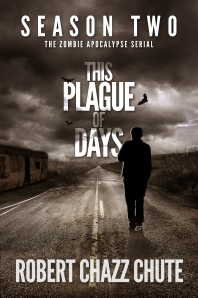
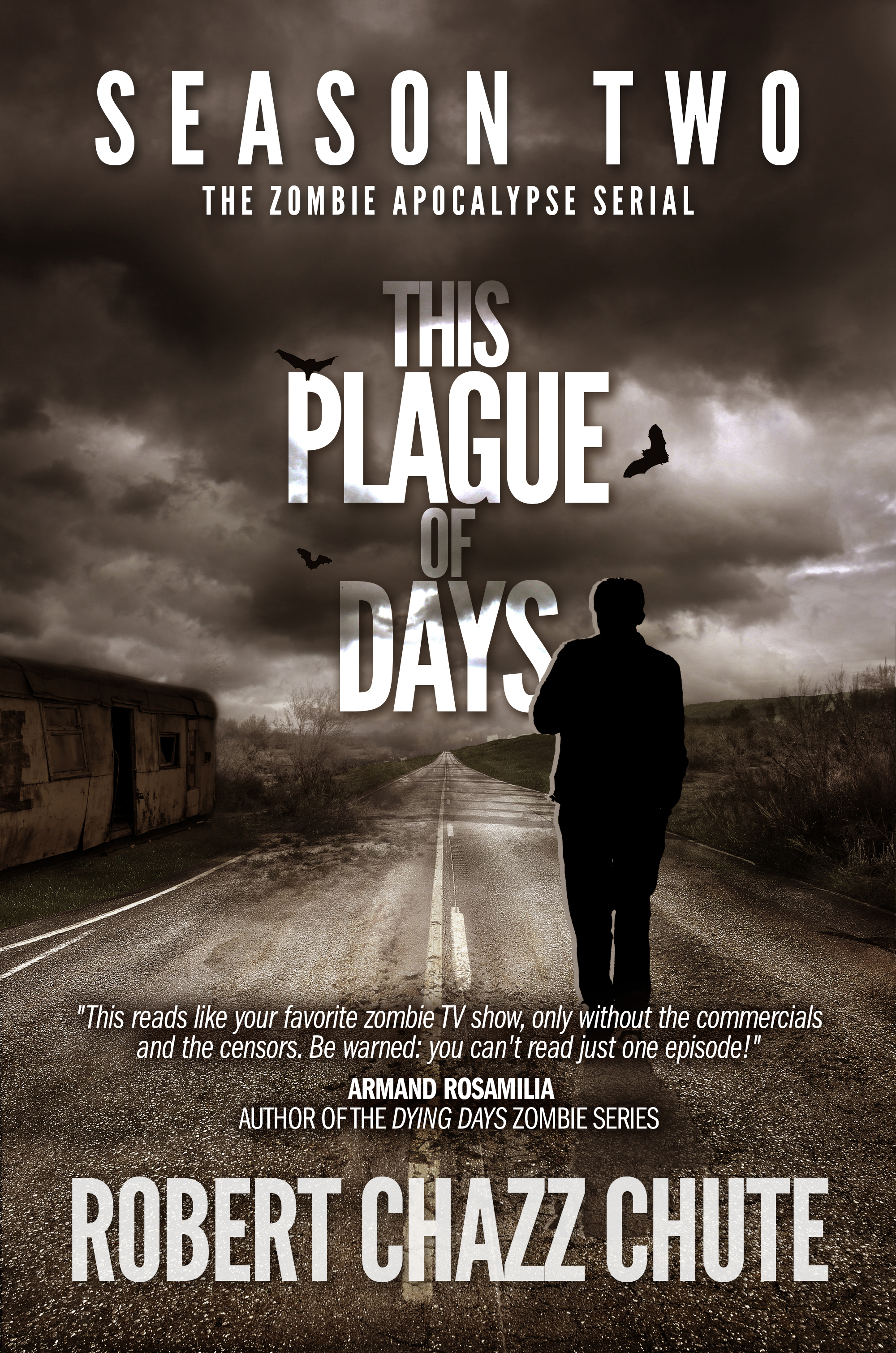
This Plague of Days 2 E1 0918 AMAZONSeason Two, Episode 1 is now out for 99 cents. There are five episodes in each season, released one week apart.

Or, grab the complete Season Two for just $3.99 until November, 2013. (There’s a chapter that fills

Season 2 is the quest.

Season 2 is the quest.

you in: “Previously in Season One“.)

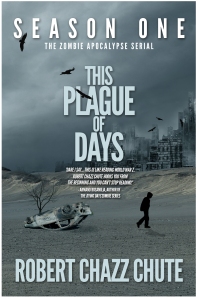
Season One of This Plague of Days is the siege.

Season One of This Plague of Days is the siege.

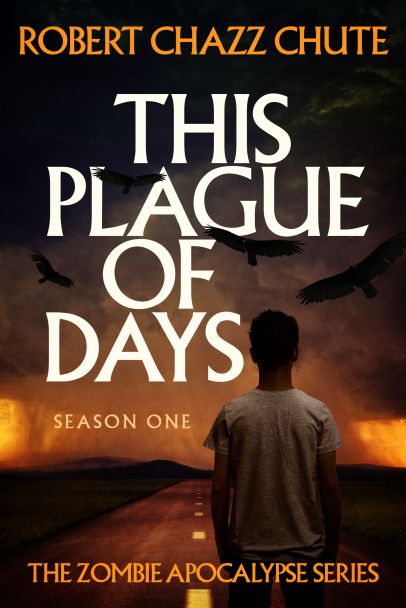
You can also get Season One of This Plague of Days here.

It’s kind of like writing for TV, but the imagination’s budget has no limit.

 ~ To learn more about This Plague of Days, check out ThisPlagueOfDays.com.

Filed under: This Plague of Days, , , , , , , , , , , , , , ,

How to ignore your blog and still get lots of traffic

Season One of This Plague of Days is the siege.

Season One of This Plague of Days is the siege.

I have six blogs and two podcasts. I admit that’s insane, but let’s move on from that briskly and let me tell you about the nice surprise that spurred this post.

I did something that, in the podcast world, is frowned upon. Until last week I hadn’t put out a new show since August. (Letting a show dwindle like that is called “pod fade”.) When I looked at my time management issues in the prep for the launch of This Plague of Days, something had to be deleted from my schedule. I pulled back the throttle on podcasting temporarily.

Just like with blogging, the less you put out into the universe, the less you get back. It’s smart to send up flares and broadcast signals frequently so we can escape anonymity and indifference.

Here’s the surprise.

When I published my All That Chazz podcast last week, I didn’t want to look at the numbers. I clicked on my stats, prepared to wince. Listenership had dropped, but it wasn’t the dreaded flatline I expected. I also know why.

Here are the usual tools for signal amplification for any blog:

Season 2 is the quest.

Season 2 is the quest.

1. Write great headlines.

The words “how to” and “review” are particularly strong link bait. Have a look through my blog for headline ideas. They aren’t all killers, but generally I think they’re pretty sexy.

2. Write great content.

Everybody says this, but it’s not very valuable advice. Lots of gurus in the “content is king” crowd don’t write great content. Nobody sits at their keyboard planning to write lousy posts. My suggestion is more specific: Be useful or be funny. If you can do both? Even better.

3. Triberr.

Being on Triberr definitely helps me get the word out. I know there are detractors. The detractors typically get less traffic. It doesn’t pay to be too shy and helping others always helps you, even if you don’t grok the kind karma connection immediately.

4. Overshare from the heart and get lucky. 

It’s better to write more, of course. When you fire more shots, sometimes you get lucky and hit a distant target.

I wrote a post about the frustrations of publishing and the joys of writing that got picked up by The Passive Voice last week. When a big site reblogs your work, you’re introduced to people who have never heard of you. I got my best stats on that blog by writing this post: This is the post I shouldn’t write. I shouldn’t, therefore I must.

5. Give people what they came for.

Posts that are too short feel like a cheat. Posts that are too long aren’t read. Posts that drag out the suspense too long are irritating, so here’s what you came for:

Tweet Old Post is a plug-in that works while I’m sleeping. There are over 1200 posts on ChazzWrites alone. The plug-in pulls old posts up and tweets them to the universe. That’s how my podcast was still alive when I came back to it. I had 81 episodes of All That Chazz still firing through Twitter and getting retweeted because of my headlines. (I’ve also got a lot of really nice followers on Twitter. Join us @rchazzchute.)

With this plug-in, you can post by category. Sometimes dated content slips through my filter.  (Try tweaking your categories so the evergreen content gets fed to Tweet Old Post.) More people find me because of this plug-in. If you have a lot of posts on your blog, they can still keep working for you long after you’ve forgotten about them.

Here’s the description of Tweet Old Post:

“This plugin helps you to keeps your old posts alive by tweeting about them and driving more traffic to them from twitter. It also helps you to promote your content. You can set time and number of tweets to post to drive more traffic.”

Go to your blog dashboard, search the plug-ins for “Tweet Old Post” and install it. Ta-da!

I wrote a post about book formatting frustrations and time management any writer who follows this blog will want to read. For that rant and my time management strategy, click here now.

This Plague of Days 2 E1 0918 AMAZON~ I am Robert Chazz Chute. I write suspense and horror. Episode One of Season Two of This Plague of Days is available at Amazon. You can begin eating this delicious serialized story of an autistic boy versus the end of the world with Ep. 1.

I recommend you cave to my charm and guile and just grab the complete seasons of Season One and Two, but whatever. I will possess your minds, my pretties. I love you for your minds, among other things. No one wants to be loved for their minds alone.

Filed under: author platform, , , , , , , , , , , , , , , , ,

One to read. One to hear. One to love.

“This is the post I shouldn’t write. I shouldn’t therefore I must.”

You know that post I just wrote about being contrary? Sometimes something catches fire when you say what you aren’t supposed to say out loud. It just happened on one of my other blogs, ThisPlagueOfDays.com. It was picked up by the Passive Voice and spread hither and thither. So far I’ve received two stern talking-tos (one of which I didn’t understand), appreciative notes and emails and offers of Prozac. The piece is about writing: the frustrations, the joys and the braingasms. You’re invited to have a look at my heart under the klieg lights.

And the All That Chazz podcast is finally back.

Have a listen if you dare. It’s not safe for work. I touch on control issues, the joys of colonoscopies, and get to an overdue reading from my crime novel Higher Than Jesus.

Oh, and Season Two of This Plague of Days is going great. If you’ve read it but haven’t reviewed it yet, please do. Thanks!

October’s mandates are stacked higher than September’s to-do list, but I’m dancing as fast as I can.

“Have you ever danced with the devil in the pale moonlight? I ask that of all my prey.”

Filed under: author platform, Author profiles, ebooks, Useful writing links, Writers, , , , , , , , , , , , , , , , , ,

Defying expectations: When going the other way works.

Season Two is out today! To learn more about This Plague of Days, please head over to ThisPlagueOfDays.com. 

To order the book from Amazon, please click the affiliate links in the right sidebar at AllThatChazz.com. Thanks.

Now, on to some wicked confessions of incompetence, poor judgment and a sad lifetime of reflexive defiance.

Defying expectations has not, in general, worked well for me.

At an old job, I was joking with office staff one day. I’m a funny guy. I thought I was killing. Then I looked up and a waiting room full of clients gave me that look. You know that mean look? I smiled and said, “I’m sorry. I was showing too much personality again, wasn’t I?” I wandered away wondering why boring people get to control everything. Yeah. Bad attitude, I’m sure, but don’t boring people run the world? And look what they did with it!

And so it is with books. I have a defiant streak I’d probably do much better without.

Self-help for Stoners is a funny little book of short stories with a few preachy moments. I might have sold more books if I’d ditched that title. But I might have sold less, too. My thinking was, at least I’ll hit an identifiable niche. Try it, for stoners and non-stoners alike.

I was so flummoxed that Self-help didn’t sell more, I compiled my big book of short stories. I put together my award winning stories and, desperate to be taken seriously, made some “serious” fiction. Pathetic lack of confidence on my part. Murders Among Dead Trees has a lot of gems in it. I’m especially proud of the three-star review that acknowledged the great writing but said it’s full of violence and “bizarre themes.” Sounds like a winner to me! It sells worse than “the stoner book.”

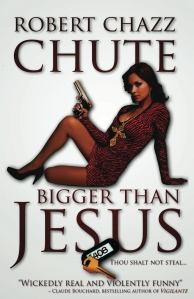
With crime fiction, I called the books Bigger Than Jesus and Higher Than Jesus.

In crime fiction, titles that have to be explained! (It’s pronounced Hay-soose.) Worse? Funny crime fiction! Worse than that? The hero is a Cuban hit man, not a detective. Readers tend to have certain expectations and I defied them with quirky titles that may offend some people at first glance. We usually don’t get a second glance.

I still think those books are fun, fast-paced thrill rides and the people who like them, like them a lot. A pity there aren’t more of those readers, but I’m sure the charm of Jesus Diaz will be discovered over time. In fact, I have several more books planned in the Hit Man Series because apparently I don’t know when to cut my losses. (Try them. They’re damn funny.)

But it turns out having trouble with Authority isn’t bad all the time.

I lost/resigned from another job because I would not bow my head. It’s okay. It was a lousy job and that incident became fodder for Season One of This Plague of Days.

I switched to suspenseful horror with an unconventional zombie serial and lost some rebel cred.

Zombie fans might have hated it because it wasn’t what they expected. Instead, it became a bestseller on Amazon. I made it a serial to further handicap myself, but serialization seems to have worked for me.

A comedian I love by the name of Mike Schmidt named one of his enterprises “The Success is Not An Option Tour”. I love a guy who’s the underdog and Mike’s turned “underdog” into a profession with The 40-year-old Boy Podcast, a CD and flying across the continent to perform his one-man show to a loyal fan base.

I’m not as brave as Mike. I’m make stuff up in a bunker, afraid to go outside. I didn’t set out to proclaim that success is not an option, spit Life in the eye and try to make a living out of attracting chaos and making fine comedy out of it. When I wrote my books, my reasoning was, “That’s weird and different enough to grab eyeballs.”

How weird and different? In Season One, it’s a slow build. I didn’t start in the middle of the action. I showed how the plague began and developed and it didn’t even start with a zombie virus. It started with a world flu pandemic. All the zombie action remains in Europe until Season Two! (Out now. Did I mention that? Right. Good.)

You want weirder? I’ll give you weirder.

The protagonist is a boy on the autism spectrum. Most heroes in zombie books are gun-totin’ ex-military types. Instead, Jaimie Spencer is a selective mute who’s fascinated with words and dictionaries, especially Latin dictionaries! Also, all the chapter titles? They make up one long, dark poem with twisted clues to the future of the story. Poetry! In a zombie book! The survivors argue about God and struggle with finding compassion and worry about losing their humanity. Not much gun totin’ in Season One.

Hm. Maybe I was setting out to fail and screwed it up. That premise sounds ridiculous!

And yet…writing something unconventional worked this time.

Which takes us back to novelist and screenwriter William Goldman who said of Hollywood, “Nobody knows anything.”

I sure don’t. I was just being me. I was just writing the story that pleased me. I followed the Art.

What readers want?

That’s too nebulous, has too many variables and it’s a moving target. I write for me first. I could try to play it safe, but I really don’t know how. Until they perfect personality transplants, I gotta be me. I’m not bragging. I think it would be easier being somebody else.

Filed under: This Plague of Days, What about Chazz?, What about you?, , , , , , , , , , , , , , , ,

Ebook pricing, free promotions and you

The complete first season is FREE for two days. Click now.

The complete first season is FREE for two days. Click now.

Generosity feels great and, in this incarnation of the book business, generosity is a marketing strategy if done right. Today, a giveaway and a case study in real time. (If you don’t know anything about This Plague of Days, check out ThisPlagueOfDays.com for sneak peeks.)

I released This Plague of Days, Season 1 as a serial. There were many reasons for doing it this way. I wrote it like a television mini-series and serialization opens up marketing opportunities. On the first day of Season One, I published the complete first season and Episode 1. Four more episodes followed each Monday. The episodes sold for 99 cents each or readers could get the whole season for $3.99.

For my initial giveaway, I put the first episode up for free for two days. I don’t believe in long promotions. By the time you’re done more than two days, you’ve exhausted your connections and momentum slows. I gave away about 1500 downloads of Episode 1 and stayed at the top of the Post-apocalyptic and Dystopian charts on the free side of Amazon for those two days. It’s really exciting sitting at #1 and #2 beside Hugh Howey.

An interesting thing happened next:

A bunch of readers liked Episode 1 but they stuck with the individual episodes. I watched my dashboard charts light up green with sales of Episodes 2, 3, 4 and 5 as people who got Episode 1 for free worked their way through the serial. The complete book of the season sold a bit, too, (at $3.99) but it seemed for readers to jump from episodes to the season at once, the discount would have had to be even deeper.

Pros and Cons of This Strategy

Pro: I gained a bunch of reviews for This Plague Of Days. Most readers dug it.

Con: Readers of Episode 1 only see the dad is an atheist and they may not stick around for the sweep of the story’s longer arc. The atheist dad has doubts about his lack of belief and his religious wife has doubts about her faith. I don’t dump it all in Episode 1 so, with serialization, you get judged by what you lead with. I’m not complaining. If you do something similar to what I’m doing, stay true to your vision, but don’t expect everyone to wait patiently for the payoffs later on. I have secret seeds planted in Season One that don’t bloom until Season Three.

Con: You’ll always get your worst reviews from free promotions.

Con: Some people who click free will never click “buy”. (Actually, that’s unfortunate, but it’s not really a “con” per se. I mention it because I anticipate resistance to these tactics. However, it’s not a true deficit in that it’s mostly irrelevant. These readers aren’t in my long-term equation for the same reasons the cobalt industry, Cadillac and Vera Wang don’t target me as a customer. Just as I’ll never be in those businesses’ target demographics, I’m hunting for converts, not free book shelvers.

Pro: All those downloads got me Also-bought listings and Amazon started selling the book for me with their mailing list. That’s a major plus on the brand visibility side of the argument.

Pro: As summer sales of Season One ebbed, I saw the momentum from July evaporate. I did what few say makes sense. I put the price up to $4.99. No one’s buying the episodes now, but they are buying the complete first season at the higher price. That could indicate that Season One was underpriced. Probably, but as I’ll argue below, that’s okay. I’m in this for the long-term. Discoverability is more important than sales for now.

What I’m doing differently for Season Two

In This Plague of Days, I’m trying to give a B movie an A treatment. To get traction for an unknown serial aimed at a smart crowd in an unfamiliar format, I think the starting price was fair and good for Season One. If you didn’t jump aboard before, for two days only, Season One of This Plague of Days is free to download on September 18 and 19th. (If you love it, please review it.) Season Two will also have some bonus material in the back.

Why give away an entire book? Isn’t that evil and the death of literature?

Season One is the gateway drug to Season Two and, for two days only, the first taste is free.

I’m using Freebooksy and Bookbub to let the world know. This publicity does cost money, potentially a few nasty reviews and maybe I’m leaving money on the table. However, it will get my name and Season One into the hands of at least 5,000 people. (If that doesn’t sound like much to you, consider that 5,000 paid sales equals a bestseller in Canada. I expect to hit #1 and #2 again and have some sales momentum behind me as I slide into the October launch of Season Two. This is marketing as an exercise in delayed gratification. I’ll sell more of Season Two because I’ll get more readers in on the ground floor of the serial. Besides, it’s a one-time only sale. Most readers will find the cash for the full price under their couch cushions, so let’s not get too dramatic about the losses or gains.

To put it another way, a la Seth Godin, “Too many people are reading my free ebook is not a problem” (as long as there are other books to sell.) To paraphrase author Cory Doctorow, Free isn’t my problem, “obscurity is my problem.” And finally, I quote myself for emphasis, “Generosity feels great…(and) discoverability is more important than sales for now.”

Season 2 launches Oct 1.

Season 2 launches Oct 1.

The Rationale: Season Two of This Plague of Days launches in a couple of weeks.

The story and the virus evolve together. This time out, TPOD has a different pace. Season One was like a television serial. Season Two is the action movie. It gets more paranormal and it’s loaded with surprises, chills and blood spills. Expect new villains and more twists from Ireland to Iceland to the Indianapolis Speedway. You’ll see the invasion of New York, the Midwest and the terrible events at Canada’s border with Michigan. It’ll sell for $4.99 this fall. In a month or so I’ll do a giveaway of Season Two, Episode 1 only.

Eventually I’ll put This Plague Of Days across more platforms and go for a price match so Episode 1 of Season One will be perma-free. I’ll experiment with price points, but the complete Season Two will never go free. The law of diminishing returns kicks in if you’re trying to get people to jump into the middle. (Ironically, you could jump straight into Season Two without reading Season One and you wouldn’t be lost at all. However, people don’t believe that. I never got into Ally McBeal because I missed the first episode.)

About Audiences

People who love zombies were very patient with Season One. The zombies don’t show up immediately but the dread keeps rising so I guess the suspense satisfied them until the heavier horror kicked in. They don’t have to wait for any action in Season Two, so I expect this phase of TPOD will go big all the way to Christmas (especially as other promotions kick in.)

The other thing that surprised me was how readers with family connections to autism, developmental delays and handicaps responded to the story. The protagonist is on the spectrum and those readers enjoyed seeing the world through his eyes. It’s not a long screed (and certainly punchier than this post) but those readers responded well to discussions of what it’s like to be the parent of an autistic kid. The family loves Jaimie, but they don’t romanticize his disabilities and his sister treats him like a normal kid treats a sibling who is often difficult to live with.

About Price Resistance

Selling episodes at 99 cents with 30% to me won’t keep me in cat food, but it did help with visibility. I gather those who started buying episodes in Season One will mostly choose to get the complete second season so they can find out right away what happens to the Spencer family and the British refugees.

It seems the greatest resistance to price increases lay not with the readers, but with yours truly. More readers are discovering my books at higher price points. I guess those higher prices make them confidant I know what I’m doing. So, while I’m still advocating short-term discount promotions, the trend with all my book prices is for them to climb. Done right, with a giveaway of sufficient numbers, free can still work. If I thought I could get more traction on other platforms, I’d try a different strategy. However, regarding promotion, it appears the other platforms are still lacking.

If you’re reading this on September 18 or 19th, 2013,

grab your free copy of the complete first Season of This Plague of Days here.

And please tell a friend. Thanks!


Filed under: author platform, Publicity & Promotion, publishing, , , , , , , , , , , , , , , , , ,

The Secret Alphabet of Independent Publishing

"You will laugh your ass off!" ~ Author of Cybrgrrl, Maxwell Cynn

“You will laugh your ass off!” ~ Author of Cybrgrrl, Maxwell Cynn

A is for All of it, which is what we want. (A used to stand for Agent.)

B is for Book, of course, and ebooks are “real” books, too. Literature is about the content not the container.

C is for Cutting prices. It would be bad for writers, but at 70%, we’re still getting paid more per unit sold than in traditional publishing. Also, price cuts sure make now a great time to be a reader.

D is for Deadlines. Don’t take forever to write your book. More time procrastinating doesn’t make a better book.

E is for E-books on E-readers. But you know your kindle is a transitional device, right? The phones are getting bigger again and tablets are coming down in price. We don’t want a device to do one thing. We want one device to be a web surfer, camera, phone, app catalogue, music box, GPS, ebook reader and best friend on our hip.

F is for Future. It’s the direction to look. If you don’t like it, you can change it whereas the past requires an annoying child named Sherman, a dog named Mister Peabody and a Wayback machine.

G is for Guidelines, because guidelines are malleable. There really aren’t many unbreakable rules worth obsessing over. You already know the rules because they’re obvious or you ignore common sense or you’re a slave to unthinking tyranny. The cool kids prefer more options.

H is for Hope. It’s good to have some, especially in this business. When there’s no reason to have any, that’s when you need it most.

I is for Intermediator. Have as few of these as possible. Upload your books yourself if you can, or get help from an independent contractor. This will allow you more choices of forks down the road.

J is for Just you. The myth and prejudice against independent publishing is that’s it’s just you. You are alone, except for the editors, graphic artist, beta editorial team, volunteers, publicity teams and whoever else you can hire or cajole into helping you get your book discovered. Sure, other than that little cyclone of industry, it’s all you.

K is for Killing characters. Killing someone readers love who they were sure would make it to the end? Delicious. (Note: killing darlings is overrated.)

L is for Love. It’s why we write. If you have other motivations, that’s fine, but releasing dopamine as you create is, like reading, a very rewarding addiction. The biological pharmacy in your brain simulates love. Endorphins won’t land you in a dirty rehab unit with a roommate who won’t stop telling that story about the time he tried to get high on burnt bananas and smoking his own hair.

M is for Money. It can happen, but probably not so don’t write for money. As above, write for love. If money does happen, people will resent you slightly less when you claim you never expected it.

N is for Naysayers. Most of them will never write near as many books as you will. Just say no to naysayers. If you sleep with your naysayer, someone’s in the wrong bed.

O is for the Obsession to know things. It seeps into the writing so you can drench your fiction with non-fiction and trenchant verisimilitude. For instance, This Plague of Days, Season Two weaves the Apocalypse with interesting tidbits about Irish legends, military history and the mortal wounds inflicted by the blue-ringed octopus. Mine is the only zombie/plague/autism story that teaches you Latin in an entertaining way, guaranteed!

P is for Portent. Warnings that something big is about to happen are especially fun when you give readers an earnest warning and they still don’t see it until it coming. They’ll only see the clues in retrospect. Secret trails to revelation and love of language are why people reread books. Do it well and someone might think your book isn’t just suspense, but maybe even “literary” or (praise Thor) “important”.

Q is for Quitting. If the project is wrong, quit. If it’s right and you’re just whining, quit whining and finish it. If you aren’t excited to write this book, find another you will be excited about all the way through or for our sake, please do stop. 

R is for Ripoffs. It’s a minefield out there: Fake agents who try to make money off reading fees; publishers who won’t pay; people who use disreputable business practices and call them policies. (R is also for Research. It’s how to avoid R is for Ripoffs.)

S is for Sustained Action. Promoting your work need not be an exhausting blitz. Dig in for the long game and promote at a slower pace. Don’t promote the same stuff to the same audience all the time lest you exhaust them. Keep writing new books. Don’t pin your hopes to one book. Sure, you might accidentally hitch your wagon to a star, but chances are excellent you’ll hitch your wagon to a stump, especially if this is your first rodeo.

T is for Trying. You’ll hate yourself if you don’t try. Losers will hate you because you did try. That’s why they’re called losers. They work from a different definition of failure than you and I. They confuse boring with winning.

U is for Unpublish. If something isn’t working, take it off the market and replace it with your tweaked story, new cover or new edition. Unlike traditional publishing, you have more options. You can adapt. Ours is a different, more flexible, business model. Use that advantage.

V is for Victory. There is no victory. Banish the concept from your life. There are only ups and downs and we’re all trying to make more ups.

Victory is very useful in fiction, however. Readers want to escape real life’s mundanity so it makes them happier when the protagonist achieves victory at the end of a story.

To go all Conan and see your enemies driven before you and to hear the lamentation of the Evil Mort from Accounting? That’s fiction. Working in a cubicle farm with no hope of retirement while Mort gets promoted and vacations in Brazil? That’s real. The real-life Mort is why we all crave escape into stories.

W is for Wit. They say brevity is wit’s soul, but I can take a pounding of wit in dialogue all day and all night, Mr. Sorkin.

Please note that snark is not quite wit. That’s a blunt tool meant only for peeling the outer layer of flesh. Meanness is the opposite of wit. That’s a blunt fool’s weapon. Wit’s funny and smart. When that sword cuts, we see light flashing down the steel blade. Wit allows the victim to take the hit and nod, “Touché!” with a smile.

X is for X-ray vision. All writers have this power. I can see into purses and pockets and the lives of strangers at the mall. I can work backward or forward to tell you who they are and their story of heartbreak in their senior year of high school. I diagnose disease at a distance. I know what you did last summer. I can give your life history and your death meaning, so do not screw with me.

Z is for Zero. It’s what we’re paid for writing. We are never paid for writing. We write for love, remember? If the money ever arrives, we’re paid for putting up with dehumanizing reviews, pretending to take them well and staying silent about them forever. We’re paid for the sad paperwork at tax time. We’re paid for the sting when someone sneers with casual cruelty, “So, are you a big deal yet?” We’re paid pennies an hour for the sacrifices our loved ones make so we can keep writing. 

Writing a good book is a happy, selfish act for the writer.

We are addicts, helpless in our defiance and desperate to monetize our work so we can have the freedom 

to score more of Creation’s sweet biochemical cascade.

Escape reality. Get high on a story.

~ I am Robert Chazz Chute, the author of Self-help for Stoners and this was the high I was talking about. This Plague of Days, Season Two scintillates brains October 1. Get Season One and check out all my books here. I hope to be your favorite candy man one day.

Filed under: author platform, Publicity & Promotion, publishing, Writers, writing tips, , , , , , , , , , , , , , , , , ,

Writers: Are you sitting on the money?

They call it the Cliff. You can do Author Marketing Club and Bookbub and free promotions and blow giveaways out the digital door. You can even start catching fire and getting traction and selling books for (gasp!) actual money. Then, the fall from grace comes. Sales drop off, often steeply. What happened? You ran off the Cliff. Lots of people do. In this post, we’re going to think about climbing back up and promoting our previous works again (and doing it better this time) because I suspect we’re sitting on money.

I’m rethinking the old marketing paradigm that’s always oriented to what’s new. 

It’s the thing we should question most: accepted wisdom. Despite all my efforts, old wave thinking is still permeating my brain. In traditional publishing, you get a short window to get traction and then the bookstores return your books to the publisherCrack the Indie Author Code for credit. That’s the structure of the short tail market. In long tail marketing, our books are up forever (or at least until the cyber war brings us all low). Still, we tend to think of our books as hitting big (or not) and then the graph points down. We’re mimicking thinking and marketing patterns from traditional wisdom because all old ideas are awesome, right? Oh, wait…

Case #1

I’ve been meaning to do this for a while and by not sleeping, I’m finally getting to it. I pulled Crack the Indie Author Code and Write Your Book, Aspire to Inspire from print. I didn’t like the look of the interior design. I’m fixing them and will make Crack the Indie Author Code available in print again soon. (They’re both still out there as ebooks.)

Self Help for Stoners JPEGCase #2

Self-help for Stoners was my first book. It’s funny and strange and with an intermediary. I used Bookbaby for that collection and I want to get it back at Ex Parte Press and put it out myself. I’m sure I can make it go higher once I have full and instant control of the marketing. I queried Amazon about the process today because I’m afraid of losing the reviews. Either way, I do need to steer my ship and reach out to stoners and non-stoners, alike and anew. (If you’re a Bigger Than Jesus and Higher Than Jesus fan, my luckless Cuban hit man appears first in Self-help for Stoners, by the way.)

This post won’t help you much if you only have one book to sell, but here are my thoughts on renewed marketing efforts: 

If you have one book, write more. No whining,

If you have a backlist, who is to say what’s old and what’s renewable? You’re the one to say.

If you have a bunch of books, I bet you’re a better writer by now. Why not revisit those books and do new editions?

Consider the power of bundling books. You could enliven your Amazon dashboard with more happy green up arrows. Stop sitting on the money.

Lots of people missed your fledgling efforts the first time. You didn’t know what you were doing. Who did? Any book they haven’t read is new to them. 

The most powerful promotions tend to be the first ones. But maybe that’s because we don’t put the same marketing efforts into books we published a couple of years ago. In digital, the term backlist is less relevant. As long as it’s clear it’s a new edition or a new launch or you’ve added material, what’s the problem? 

Maybe those early efforts flopped because you had a lousy cover. Get a new, better cover* and launch it right this time. With all you’ve learned about marketing since your early efforts, it’s bound to do better, right?

Most fiction doesn’t get stale. Our efforts get stale because we want to focus on the new thing. Maybe the old thing is only old in your mind. With some tweaking, a fresh edit and a new campaign, you might have a book people will love and buy. Reuse, recycle, repurpose. Turn short stories into collections. Open up to new possibilities with prequels to your books. Tie books together. Add to your series. Serialize. There’s plenty of fun to be mined in what you’ve already accomplished.

Your problem with these suggestions isn’t necessarily that my head is full of feathers. Your problem is the same as mine. This will take a lot of time and you feel you’ve already covered this ground. But most of us didn’t cover this ground well the first time. There are new promotional tools now. Yes, time management can be tough and we can only do what we can do. But that’s business. We are not special snowflakes, but we’re letting good stuff go cold.

*About good covers, I know a guy. He’s Kit Foster of KitFosterDesign.com. He’s an award-winning graphic artist with an extensive portfolio who works well with indies and traditional publishers. Like my covers? Kit did them all. Check out his site. You’ll be glad you did.

Dark Higher Than Jesus banner ad

Filed under: author platform, Books, ebooks, Publicity & Promotion, publishing, , , , , , , , , , , , , , , , , , , ,

Books: Ventures, Misadventures, Adventures and Brutal Honesty

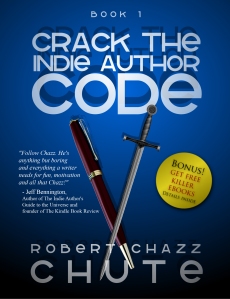
Crack the Indie Author CodeWhen George Lucas screened  Star Wars, most of his fellow filmmakers in the room looked at each other and said, “American Graffiti was awesome, George, but this space opera thing…yuck!” It was Stephen Spielberg who played the contrarian. “You guys don’t get it!” he said. “This is going to be huge!” And of course, Spielberg was right.

My personal Lord and Saviour of The Written Word, William Goldman, famously said of the Hollywood film business, “Nobody knows anything.” It’s true, no one can know what will hit and which will miss. Someone comes up with the somewhat moronic expression YOLO (the idiot’s “Carpe diem”) and it’s suddenly on t-shirts everywhere. True for us, too. You may write a heavy, ambitious tome, but it’s a tiny book like The Little Prince that captures the hearts and imaginations of generations of readers.

So it is with marketing books.

Agents say they can “guide your career”, but if that were true, anyone with a sentient agent would have a fabulous career. No one knows anything in publishing, either. That’s not meant as an insult, but as a reflection of reality. Publishing is famous (or infamous) for placing bets on many horses, hoping the big bets will pay off and cover the losers’ ubiquitous failures. Few industries have a miss rate as high as book publishing (though Hollywood’s screwing up even more than usual lately.)

So it is with my books, too!Self Help for Stoners JPEG

The summer is winding down and I find I must split my mania among many ventures. I’m in a philosophical mood and looking back at what took off, what has not, and why. We at Ex Parte Press are not lounging in the money, chocolate and champagne pool at the moment. (But we still have high hopes.)

  • Bigger Than Jesus and Higher Than Jesus are critical successes among the few critics who are aware of my funny Cuban hit man and his tragic past. Alas, hardboiled and funny suspense isn’t trending at the moment. Nonetheless, I have more Hit Man books planned. Jesus Diaz will just have to wait a bit longer as I concentrate my efforts where readers have demonstrated more enthusiasm. I love Jesus, and can’t wait to get him back on the warpath in Hollywood. An assassin who can make movie references and quick quips while getting beaten up deserves more books. He’ll get them.
  • My first funny short story collection, Self-help for Stoners, sells just a little but steadily. It’s a tribute to Kit Foster of KitFosterDesign.com that the cover is repinned on Pinterest several times a week, every week. Later this fall I will stop using an intermediary so I can take back control of marketing that book. I have no doubt I can take it much higher once that happens. I’d have done it by now but I’ve been perpetually swamped for months with This Plague of Days.
  • Six Seconds, my book about using the Vine app to market your business was an instant book with lots of great advice. I’ve moved books and marketed my podcasts having fun with mini videos. Though Vine remains the superior product, Instagram changed their app to ape Vine so Instagram has many more users. I bet on the wrong horse, not every at bat is a home-run, insert your metaphor for failure here.
  • This Plague of Days, Season One is getting traction. It might even be on the cusp of taking off. I’ll find out when Season Two hits at the end of September. (Here’s my latest post with hints and expectations for Season Two.) Early feedback is very encouraging. As in this, from the beta team: “Suspense and plot and action – all of them are on steroids in this book…overall impression is you have brought this thing to the next level.”

Mind the towering caveat in the following paragraph:

My luckless hit man is a funny guy in big trouble.

My luckless hit man is a funny guy in big trouble.

So you see, I’m no better (or worse) at stabbing at the imagination of readers than anyone else. I don’t know what will sell buckets of books. No one does. It’s something that happens to you, as long as you pretend your destiny is under your control and do everything you can to get discovered. You can hit the target. We’re all shooting blindfolded in the dark, sure, but if you take enough wild shots, aiming matters less. You write the best book you can and engage more readers and attend some sad, ill-attended bookstore signings and do whatever else you can think of to fire off signal flares without becoming a Twitter pariah.

This is not to say that good advice isn’t out there. It’s just that so much good advice conflicts!

The great Chuck Wendig talks about voice (or the force of personality) being more important than “brand”. Others can’t talk about anything else but brand, stats and system gaming. Hugh Howey is the outlier that didn’t really market anything when he started Wool (though he says Facebook helps him most these days.) Some insist on lots of links to your other work in the back of each book. Others say that’s overkill and intelligent readers will find you easily if they love you enough to bother with a google search. Some book marketers are passive as a policy (or lazy.) Others are so active, it’s pretty close to obnoxious.

And still, nobody knows anything. Not for sure. There are too many variables to success and the situation is fluid. We, writers and publishers all, dance on tightropes while juggling feathers in wind storms and hope readers will cast a glance our way and enjoy the silly monkey dance.

Still, you’ll find advice about tactics everywhere.

Just this week, I pushed the Author Marketing Club and Bookbub. Solid advice I stand behind. But keep in mind, these are tactics. The potency of tactics can wax and wane according to many variables. That’s what’s hot now and into the near future. After that? New tools will emerge because good ideas get copied. Sometimes imitators are new and improved and often the copier doesn’t have enough toner.

Strategy is long-term thinking. Strategy says: Write more. Get more feedback. Write more books. Get better. Higher+than+Jesus+Front+1029

This is the only advice I know that lasts. (You’ll find that and much more about the writing and publishing life in Crack the Indie Author Code and Write Your Book: Aspire to Inspire. Crack sells a bit while the second book hardly moves at all. Why? Who knows? Nobody. Nobody knows anything! My Lord and Saviour told me so.

However, I’ll let you in on a little secret: I have a third book about writing and publishing in the chamber ready to fire. When This Plague of Days hits big, readers will pick up all my books about writing and publishing. After the fact, they’ll say, “Well, no wonder.” 

The Johnny-come-latelies won’t know what you know. My overnight success wasn’t overnight. Success always seems inevitable, but only in retrospect. Until you make it, no one cares about you and your book. Those who do give you any thought probably think you a fool. (Insert an image of your disapproving in-laws here.)

Ah. But, afterwards? You’re a genius.*

~ *Afterwards, You’re a Genius is a wonderful book I recommend for anyone interested in scientists with lyrical sensibilities.

For more on the rising action and scary high stakes in the spiralling weirdness of an autistic boy fighting zombies, read this post at ThisPlagueOfDays.com. 

For more on my adventures in self-pubishing, swallowing bitter pills and my peculiar brain mania, there’s this post on the writing life at my author site. 


Filed under: author platform, getting it done, self-publishing, , , , , , , , , , , , , , , , , , , , ,

Book Marketing Top 10: When less is more

Some marketing efforts are hurt by doing too much. Here are 10 examples:

Season One: Sponsor of the Cool People Podcast.  Can't have just one chip? Season One has five episodes. Get each one for 99 cents or get all of Season One at a discount for $3.99. Season Two hits this September.

Season One: Sponsor of the Cool People Podcast.
Can’t have just one chip? Season One has five episodes. Get each one for 99 cents or get all of Season One at a discount for $3.99. Season Two hits this September.

1. First there were big author tours. Then radio. Now, podcast and blogging niches are more effective.

Many marketing efforts benefit from going small, personal and specific. Instead of getting a few minutes on radio (while people are in their cars or having breakfast and definitely not buying) better to get on a podcast. Instead of planes and multi-city tours and paying for plane fare, podcasts yield more exposure to a smaller, targeted and invested audience.

Podcasts are usually easier to access. You’ll get more time and sell more books with a podcast interview than by trying to squeeze in a few words between car ads and the giggling Morning Zoo Crew. 

The same principle applies to blogging. I’d rather be featured by a big book blogger than in a local newspaper. (Ask your dad what a newspaper is. If he’s old enough, he might even still get one.)

2. Curation with commentary from bloggers is valuable. Bots drawing from dozens of tweets are not.

Before I knew what Paper.li was, I emailed someone to thank them for including me in their daily electronic newspaper. I soon realized that there’s nothing special about inclusion by bots in an array of harvested tweets. However, when someone reblogs my posts, that’s a personal recommendation that’s much more effective. (Thanks for all the reblogs, Armand Rosamilia!) When someone gives me the mucho bump of love on Twitter, it means more and helps more. (Thanks for your ongoing support and enthusiasm, Eden Baylee!)

Curation tools like Scoopit! are also valuable, as long as the post includes commentary. The difference is that a human makes those choices. “Set it and forget it” is nice for thermostats, but bleating out content without evaluation and recommendation is craptacular, both for the tweeter, the tweeted and, most importantly, our readers.

3. Too much email contact leads to friction. Ease off.

I have a couple of newsletter subscriptions that hit me daily. They’re too relentless. When I fall behind, the emails pile up in my inbox. I tell myself I’ll get around to reading it all, but deletion is more likely. I do open newsletters that fire at me at a slower rate. Give me a chance to look forward to hearing from you.

How much is too much? Wait until you have something to say, something new to announce or something to offer. Too much rah-rah-rah is so much blah-blah-blah.

Similarly, If you’re relying on book event promotions that arrive in an email blast crammed with other book events, find a way to stand out. My morning Goodreads email feels like a firehose aimed at a teacup. (Sadly, the teacup in this analogy is my brain.) Do something different and approach potential readers in varied ways. When one nail is hit too much, too often, it cracks the wood. (That’s a better analogy!) See Item 5 for what I’m doing differently and Items 7 and 8 for effective e-blast options.

4. Use a professional to get things sorted out.

I was briefly part of an affiliate program on another of my blogs. The product was good, but the program was plagued with technical problems. A day didn’t go by without an update on how said problems were being fixed. Then they weren’t. Again! I dumped the program.

I am an Amazon affiliate on my author site. It’s relatively simple. I get updates from them once a month and each update is relevant to me. That’s what to aim for.

5. Complications make us weary.

Make your offers uncomplicated.

My first draft of my viral video offer (details here) was too complicated. I ran it past a friend who suggested tweaks. I had explained too much and made too many jokes instead of getting right to it. I make a lot of jokes in my books, but when it comes to offers and promotions, people just want to know their rewards and prizes and what they have to do to get them. That’s all.

6. Tweet to content.

I use tweet teams sometimes, but much less than I used to and only for special occasions. We all have book tweet and email fatigue, don’t we? Make your tweets funny or intriguing. Tweet to your blog. Your website is the proper locus of sales. Twitter is not where to sell hard or often. Twitter is a place to help people find good stuff.

This has several positive effects:

Helping people tells them you’re not an ass (and if you are an ass, you can’t hide.)

You build your mailing list on your website, not on Twitter.

Your author site is your public face. Potential readers connect with you there, not through a sales link.

Twitter can still be useful, but when it’s not hooked up to content, readers stop paying attention.

7. Aim at targets.

Bookbub works best as a book promotion service because it doesn’t send out a long list of books to everyone. Bookbub knows what genres subscribers are most interested in. Romance readers don’t get sales copy to horror books. Fewer people receive the message, but those people are more likely to buy and less likely to saddle you with one or two-star reviews because they just aren’t that into you.

in the marketing war for our attention, sniper rifles work at long distances. Shotguns do not.

8. Be choosy.

For the last two days, I’ve done a free promotion of Episode One of This Plague of Days. (The sale ends at midnight and, as I type this, it’s the last few hours of the sale. Grab it free or, if you got this too late, Episode One is only 99 cents so, you know the drill.

I’ve held #1 in Dystopian and #1 in Post-apocalyptic for most of the two-day run. That’s probably mostly due to being chosen as a featured author on Freebooksy. They’re choosy, so their email blasts are taken more seriously than some other book promotion services.

Thanks to everyone who helped me give thousands of copies of Episode One away to spread the word. I appreciate your Facebook entries, tweets and clicks. And I don’t forget who helped me. Sincerely, thank you. I have a lot of friends and allies through this blog and I’m grateful.

9. More text = more confusion.

You’ll notice I have a lot of sales links to the right. This blog has gone through several redesigns over the years and I’ll be renovating again soon. However, the other day as I was researching book promotion services, I ran across a website that was literally like reading a phone book. The crammed type fuzzed the signal to noise. It was nearly unreadable. That’s not a good sign when the blog owners set themselves up as book marketing experts. More white space adds focus and more punch to the text. (See below for my post on blog scanning vs blog reading.)

Crack the Indie Author Code10. Small is an attitude that’s easier to relate to.

My writing and publishing guides are journeys through the mud of independent publishing. I chronicled the struggles more than the success. Success teaches less than mistakes can. I was (and continue to be) very honest about my mistakes over the last couple of years of steering the Ex Parte Press imprint. Instead of telling anyone what to do, I did research and gave opinions and examples. I experimented. I tell you what worked for me and what didn’t work. I’m just now beginning to feel like I have a solid idea of what I’m doing. Mostly because now we have more tools at our disposal than we used to have. Independent publishing has matured.

We’re walking together to find our way here. I don’t listen to some experts because their viewpoints come from such a different experience. One indie guru’s solution to marketing problems is to throw money. I don’t know what he’s talking about or to whom. Others are well-established because they came to self-publishing early with trad publishing inertia and lineage mojo. 

They aren’t us. We’re small, but we are getting bigger.

We’re getting traction. We have better tools now and we’re honing them.

No matter what, we’ll remember where we came from and the friends who helped us up and out.


Filed under: blogs & blogging, book marketing, book trailer, Books, getting it done, Publicity & Promotion, publishing, , , , , , , , , , , , , , , , , ,

Bestseller with over 1,000 reviews!
Winner of the North Street Book Prize, Reader's Favorite, the
Literary Titan Award, the Hollywood Book Festival, and the
New York Book Festival.

http://mybook.to/OurZombieHours
A NEW ZOMBIE ANTHOLOGY

Winner of Writer's Digest's 2014 Honorable Mention in Self-published Ebook Awards in Genre

The first 81 lessons to get your Buffy on

More lessons to help you survive Armageddon

"You will laugh your ass off!" ~ Maxwell Cynn, author of Cybergrrl

Available now!

Fast-paced terror, new threats, more twists.

An autistic boy versus our world in free fall

Suspense to melt your face and play with your brain.

Action like a Guy Ritchie film. Funny like Woody Allen when he was funny.

Jesus: Sexier and even more addicted to love.

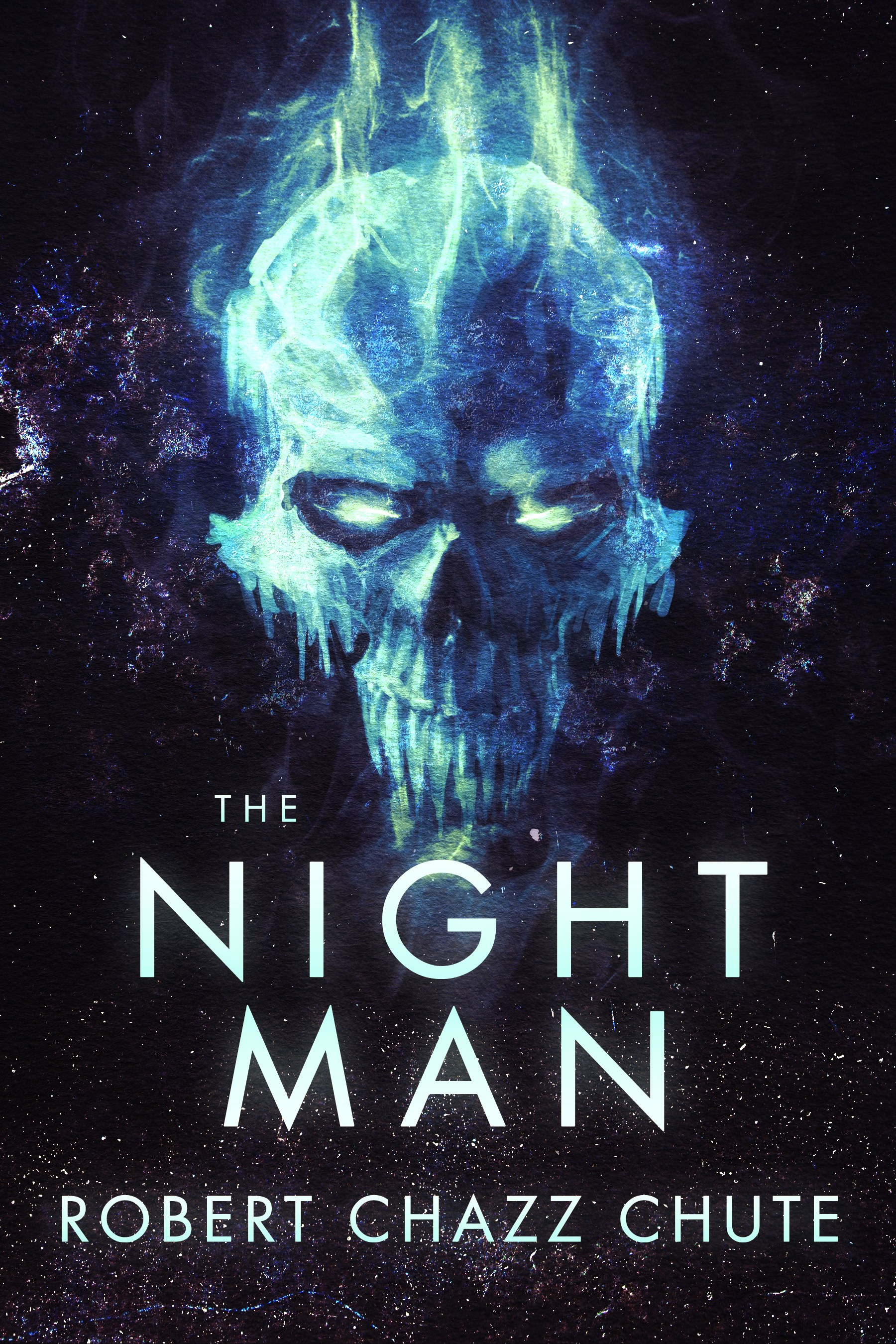
You can pick this ebook up for free today at this link: http://bit.ly/TheNightMan

Join my inner circle at AllThatChazz.com

See my books, blogs, links and podcasts.

Enter your email address to follow this blog and receive notifications of new posts by email.

Join 2,063 other subscribers