C h a z z W r i t e s . c o m

See all my books at AllThatChazz.com.

What to do when the wheels fly off

Between illness and trying to bounce back from Amazon sabotaging my book launch, December has been rough. However, I’m making the effort to look on the bright side even when things are damn dark. My outlook tends to be grim and all the news events confirm that bias. However, giving up isn’t an option and pessimism isn’t a great strategy. Optimists may be wrong often, but they get more done so they get more chances to score. In my defense, at least I’m usually funny about my grim worldview. (That’s right, Rob! Sublimate your rage with humor.)

One Quick Parable

I was riding a tandem bike with my wife when the road we were on suddenly turned to dirt and then nothing. Dead end. Trying to find our way back in unfamiliar surroundings, we crossed a large property with a mansion on it. A couple of the curious workers looked at us askance but we pedaled by quickly. Then the bike’s front wheel fell off. One of the seats flew off in the crash, too. My wife and I weren’t really hurt, but we found ourselves lost, far from home, and carrying the parts to a broken bike.

The mansion’s owner came out and asked if we were okay. Then he asked how he could help. I was embarrassed and felt like a trespasser. The homeowner, Cyrus, didn’t treat us that way, though. He must have had better things to do than to cater to a couple of forlorn strangers. Instead of shooing us away, he asked us to follow him to the workshop in his huge garage. Together, we worked on putting the bike back together. That wasn’t what pulled my attention, though. What got me was how relentlessly positive Cyrus was. He was both kind and eager to problem-solve.

And all the while, I thought, I wish I could be more like you, you beautiful sunny bastard.

But I could. It does require forming new habits to rewire my neural network. Fortunately, a full personality transplant isn’t necessary. Mindset sets the tone for whatever comes next.

Unfortunately, cynicism is often associated with intelligence.

Skepticism is valuable, and it’s not the same as cynicism. Being mean isn’t smart and being mean to ourselves is downright dumb. I want to be more like Ted Lasso, but I resonate more with Dexter.

My encounter with Cyrus reminded me of three people. There’s Dan, a friend who seems immune to worry. Wayne was a relentlessly positive guy whose presence elevated everyone around him. Then there was the guy who worked at one of the dining room stations at a resort in Cuba. These are people with genuine smiles who are pretty sure things are going to work out okay. If things don’t work out the way they want, they hold on to their sunny attitudes, secure in the belief they can at least make things better.

I don’t always make things better or easier for myself. Anxiety is always ready in my pocket. What I wrote about Ovid Fairweather in Endemic comes straight out of my brain. “When I say, ‘I love me,’ I mean the opposite.'”

Solutions, not Resolutions

I’m very aware that it’s easy to fall back into my old habits of thinking. Between the pandemic and… (gestures everywhere), I can be downright sour. With Cyrus in mind, I’m working on putting things back together. Recently, I ran into someone else who has a lot of that positive Ted Lasso energy. I need that. Besides continuing to watch Ted Lasso, I have to reinforce my optimism with:

  1. Positive self-talk.
  2. Self-care (e.g. healthier lifestyle, more water and vegetables, exercise).
  3. Interacting with positive people more.
  4. Avoid too much negative reinforcement (AKA the dark side of social media).
  5. Avoid overdosing on the news.
  6. Problem-solving.
  7. Fewer side missions, more purpose.
  8. Setting boundaries so I’m not stuck trying to be rational with irrational people.
  9. Especially avoid comment sections on the internet, because trolls used to live under bridges but now they’re coming for our minds.
  10. Focus on what I can control and letting go of the variables I can’t control.

The wheels flew off my metaphorical bike. I’m not a big believer in New Year’s resolutions, so this is just my commitment. Not for 2022. Right now. Nothing metaphorical about that.

We all pretty much know what to do already. That’s not the challenge. The challenge is to be consistent in the application of what we know.

Filed under: mindset, the writing life, , , , , , , , , , , , , ,

When I get up, you better watch out

First comes the whining

Anyone remember the fight music from the original Star Trek? Na-na, na! Na! Na! Na! Na! Na-na, na! Na! That’s the soundtrack in my head right now.

November was about fighting Amazon over an unjust review freeze (see the post How Amazon killed My Book.)

December started with a terrible head cold. The subsequent inner ear infection is persistent and has knocked me flat. I’ve got antibiotics going and I think I might be on the mend, but not nearly fast enough to suit me. As soon as the ear infection clears, I’m off to get my booster in the hope that Omicron won’t kill me. I’ll have to choose which of the remaining days of 2021 I will ruin because, though I’m glad to take the booster, each one has made me achy and shaky for days.

Not going to lie, Amazon tanking the launch of Endemic was a harsh blow. The only terrible event I could compare it to would be losing a complete manuscript.

Then comes the winning. I’m looking at solutions.

  • Endemic‘s launch was sabotaged by its own sales platform, so revenue from my masterpiece must depend on the long tail of retail. It’s disappointing, but I’m pointing my nose forward and refusing to look in the rearview mirror. No point in obsessing over that loss now. There’s too much to do.
  • I joined a mastermind group for writers in 2021. They are a good group. The people are encouraging and supportive. The writing room alone got me writing more and more often. Kind hearts help.
  • I successfully completed NaNoWriMo and have an alien anthology to edit because I harnessed the power of friendly competition, consistency, and metrics.
  • I have plans for a non-fiction podcast with a partner. She’s an expert ghostwriter. I’m there to tell jokes and pick her brain on behalf of the audience. Various tech issues and sickness slowed the start on that podcast. We’ve been thwarted at every turn, but the new year is looking good.
  • I have plans for a fiction podcast I’m excited about.
  • A prequel to This Plague of Days is two-thirds written.
  • I have covers in the chamber ready to fire off more projects.
  • I’m looking forward to getting back to my exercise program and joined an on-line group whose focus is healthy living.

The Gist

I’m going to stop there because I learned my lesson about exhaustive to-do lists in 2020. Too many to-dos and not enough to-don’ts can rob us of focus. Overwhelm is dangerous to productivity.

The Commitment

Years ago, I moved to a new city where I knew no one. I started up a business from a cold start with no clients and no allies. A guy I met my first week in the city made it clear he was skeptical of my prospects for success. He ended his list of my disadvantages with, “Aren’t you afraid?”

“No,” I replied. “I’m excited.” (You dick!)

Once I get past this illness, I’ll get excited again. There’s plenty to do to right my ship. I’m looking forward to the challenge.

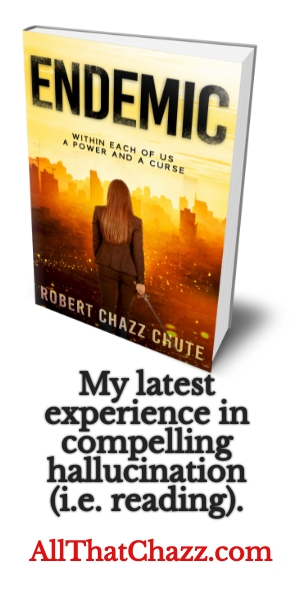
http://mybook.to/MakeEndemicGoViral
NEW from ROBERT CHAZZ CHUTE

Filed under: book marketing, , , , , , , ,

Writing Easy, Advertising Hard

Authors, be especially careful with advertising your books at this time. It’s the Christmas season, so every writer, particularly those with deep pockets, is flogging their wares. I was about to put up another Amazon ad for my latest book. Then I looked at the suggested bids and, boy howdy, I was discouraged from even running that experiment. The suggested bids were simply too high. You don’t have to go with the suggested bids, of course. However, cut down too much and your ad will be invisible.

Depending on the popularity of your genre, you may find it takes way too much money to

(a) get your ad delivered at all, and

(b) make a profit on the sale.

Watch your math and consider saving your advertising dollars for the new year rather than competing head to head with Big Trad.

I have changed my advertising strategy and returned to experiments with to Facebook. My experience with Facebook was that they can burn through your advertising budget very quickly.

Please keep in mind, no advertising strategy is safe enough to gamble on set it and forget it.

However, I do like the granular targeting I can do with Facebook. With a keen eye for monitoring the ad spend, I’m hoping to find new readers for Endemic.

UNIVERSAL LINK TO YOUR AMAZON STORE:
mybook.to/MakeEndemicGoViral

What happens if the pandemic never ends?

~ I’m Robert Chazz Chute. Check out all my apocalyptic epics and killer crime thrillers on my author site, AllThatChazz.com.

Filed under: publishing, , , , , , , , , , ,

Dexter, My Panic Attack, and You

Michael C. Hall is reprising his most famous role in Dexter, New Blood. That this limited series is back is remarkable. The original series ended in 2013 and it did not end well. A bit about that, then let’s talk about The Bounce and how it applies to you and me.

In 2013, I listened to a podcast that was all about Dexter. This pod went deep, right down to the music cues. This was for hardcore fans who obviously loved the series. Most viewers agree that the show peaked at the end of the season with John Lithgow (no spoilers here.) This podcast was for fans who stuck with it to the bitter end. Count me among that hardy crew of diehards.

That so stipulated, the podcast had two letters shows wherein fans wrote to express their final thoughts. The overwhelming evidence was that most people were terribly disappointed. Let’s be real about this: endings are hard.

Evidence

  1. Kim’s Convenience’s end was anticlimactic and seemed mostly pointless, as if they didn’t know what to do with it. And don’t get me started on the end of the second-last season, where I thought my TV cut out prematurely.
  2. The Sopranos end is memorable for the wrong reasons. I thought the bartender Tony beat up several times should have come back to kill him for personal beef, not mob business. That end seems fitting since he was such a shitty person.
  3. Breaking Bad was fantastic, but they missed an opportunity when he meets his end without ever sampling his own product. That’s my only complaint there.
  4. I didn’t see the final season of Game of Thrones for a while. I heard it was terrible. When I finally did see it, honestly, I couldn’t figure out what everyone was complaining about. Was the end really that bad. I found it quite consistent. It seems bad is the consensus since so many fans have disavowed it and GOT disappeared from pop culture so thoroughly.
  5. How I Met Your Mother met with outrage at the end. They tried something and I applaud the experiment. The problem with the execution was it was a comedy that managed to land as a downer rather than achieving romance. That’s not why fans tuned in for so many years.

    Let’s first acknowledge there is such a thing as toxic fandom. If you’ve written a book, eventually some reviewer who thinks they’re helpful will try educate you on how you should have done it better. Even though the longest thing they ever wrote was three paragraphs of a sour review, they’re very confident they could have saved you if only they’d sat on your shoulder and told you what to do. Note to those reviewers: better not to do that. Like it or don’t like it. Write your own. You’ll probably find it’s not as easy as you think.

The Triumph of Hope Over Experience

Most famously, the fans brought Star Trek back to become a fantastic franchise with so many iterations it’s a disappointment again. Firefly returned as a movie because fans campaigned for it. It is generally acknowledged that the space western got short shrift from network execs who couldn’t find their ass with both hands. Similar story with Family Guy. The network canceled the series, but after three million DVD sales, brought it back to great success. FOX cancelled twenty-nine other shows in the meantime, so when it came back from its hiatus, Family Guy mocked them for it. Twenty-nine! The Winston Churchill joke comes to mind: “You can always count on the Americans to do the right thing after they’ve tried everything else.”

Finding the Way Back

The return of Dexter is a little different from other risings from the grave. They’re coming back to fix it. The final episode was so ill-conceived and ill-received, it was not relegated to the dustbin of TV trivia. It failed so hard, they’re getting another kick at the can. That’s what I call The Bounce. And you know what? It’s a good thing. We can learn from this,

I know it can be frustrating to see old ideas get recycled. It often seems like there are no original ideas in Hollywood. Perhaps your book should be made into a movie or a popular TV series. I know several of my books deserve to be made into films to stir the soul and make boffo box office. However, Dexter was very good before it went sour and it was always watchable. It’s taken a weird circuitous route to get to this place, but I think it deserves another chance to entertain us. Let’s be happy about it. Skepticism is understandable, but cynicism isn’t fun and hey, stay real. The stakes are low.

I miss Dexter living in Miami. I miss Angel Batista being sweet and kind and utterly oblivious to Dexter’s serial killer ways. Masuka was hilarious as comic relief in the original series. But there are new and fun characters to enjoy in this new iteration. I’m glad Dexter is back, and I enjoyed the first episode.
Welcome back, buddy!

What does The Bounce have to do with us?

As writers, you are the studio. If a book fails, you can kill the series or resurrect it in a new iteration. You have the freedom to edit it again, to add or delete chapters, to relaunch it. You don’t have to appeal to a network or suck up to a committee. You’re free to bounce back as many times as you can stand.

Last night, I had a panic attack. Those Bookbub ads I was experimenting with only worked on the first-in-series of AFTER Life, the one I give away for free. Three or four problems hit me all at once and I spiraled down. I couldn’t catch my breath. Caught up in catastrophizing, I felt like I was drowning and maybe dying.

This morning, I’m back to writing. I’m in NaNoWriMo and the word count is on track. I’m happy with what I’m creating. I am committed to bouncing back.

Lots of things fall apart for many reasons. You can’t control all the variables that lead to failure or success. As a writer, you are positioned to steer your own ship. If you steered into the rocks, you can fix the hull or jump onto another ship. It’s okay. We’re going to be okay.

The old joke is that a second marriage is the triumph of hope over experience. Art is a different story. Every book launch is full of hope. Every writer tends some small fire that signals they’ll “make it” (whatever that means to you.)

Make art. Just make art. Try not to panic.

Filed under: writing, writing advice, , , , , , , , , , , , , , , , , , , , , ,

Canuck Versus Yank Spelling


Someone asked, why do you use American spelling in your books even though you’re Canadian?

About 2% of my book sales come from Canada and 85%+ come from the United States. There is a small minority of readers who are very vocal about spelling color with u.

Colour? That’s not what I was taught in school!”

Using American spelling, I’m catering to the bulk of my readership. I want to optimize the chance I’ll make the most people happy.

Think I’m exaggerating about reader response? Step on the Oxford comma landmine. Some people get so heated about their pro-Oxford comma stance, I caved to their demands.

Someone reading this right now is thinking, “Well, yeah, but that’s only because always using the Oxford comma is the one true way. It’s not my way, it’s the right way, every time, all the time! Without the Oxford comma, my world makes no sense. We must have order!”

Sigh. I said I’d do it and I did it, okay?
Lord liftin’, ease off ya jeezly big bullies! Sorry!

(Don’t come at me. I’m only exaggerating a little. I’m sure they’re plenty fun at parties as long as the Oxford comma doesn’t come up in conversation…but they do bring it up.)

Where was I? Oh, yeah. American spelling.

When I worked at Harlequin, one of their historical romance lines was British and the style guide reflected that fact. The company got an irate letter from a reader who took the time to point out every “mistake” in a novel. Anything other than American spelling was wrong in her eyes. The letter concluded with, “A company of your size shouldn’t allow this many mistakes to get into a book. Hire me and fire all your stupid editors.”

The letter was passed around the editorial department. We dedicated and underpaid professionals had a good chuckle and went back to producing 80 titles a month in two shifts, 9 a.m. to 5 p.m., and 5 – 1 a.m.

Canadians don’t blink at American spelling, probably because, with the exception of Schitt’s Creek, American culture floods north, not south. Because of our relatively small population, the Canadian book market doesn’t pay enough to keep me in snacks. I’m happy to make readers comfortable and tell stories in ways that reduce any distraction.

On the other hand, there was the 60-something podcast host out of New York who expressed shock and surprise there is such a thing as a Canadian English dictionary. I mean, my guy, it’s almost as if we’re a different country. Sorry, eh?

I’ve just released my latest post-apocalyptic/dystopian epic. Curiously enough, I humbly suggest you buy it, please.

Reviews of Endemic so far:

If you’re tired of the formulaic schlock that clutters dystopian literature, then you need to read Endemic. The author has created a unique tale that serves up the best of deep characterization, nuanced plot, and emotional impact. Read this and you’ll soon be looking for other books by Robert Chazz Chute. ~ RF Kacy

What if COVID-19 never lets go of our world? What would happen to society? Robert Chazz Chute does not write escapist literature. He extrapolates the present into plausible but decidedly unwanted futures. The story centres on Ovid Fairweather, a 30-ish editor turned gardener, trying to survive in a New York City that is most definitely not a tourist destination. Betrayed and besieged at every turn, Ovid’s resilience and determination in the face of impossible circumstances drew me in. This is dystopian fiction at its finest. ~ Russell Sawatsky

Endemic takes us on a journey of the mind of an unassuming survivor who must learn to cope with a collapsed environment. Not unlike the current reactions to our contemporary pandemic, Endemic illustrates that diverse choices can lead to survival or a slow demise as a ‘thirder’. The sudden jolts as the narrative swiftly changes course ensure that the reader keeps on their toes, adapting as quickly as the protagonist must in the search for safe refuge. Thanks Robert Chazz Chute for another innovative ride and a tale well told. ~ Janice Bull

~ Check out all my apocalyptic epics and killer crime thrillers at AllThatChazz.com.


Filed under: writing advice, , , , , , , , , , , ,

How to Make Short Stories Pay

First, You Have to Write Shorts that Do Not Fizzle

One of the books I’m planning is aliens versus humans so I thought I’d check out The Invasion (new on Apple+). Inspiration comes from everywhere. Well, everywhere but The Invasion.

I respect bold choices in storytelling. I love the building tension to be found in a slow burn. However, what’s on display in The Invasion is big budget, overstuffed with melodrama, gratuitous titillation, and a lot of irrelevance. Worst of all? No aliens! It’s as if they set out to construct an alien invasion that none of the supermodel/actors notice for a long time. Whatever the producers are doing, it’s not getting to the point. I’m three episodes in. This show is beautifully shot, but they have yet to light the fuse. Any Mission Impossible script lights the fuse fast. The Invasion fizzles and fails to launch.

I’ve toyed with scriptwriting, but more of my experience that’s a close parallel comes from writing short stories. Short stories used to be so much more popular and magazines paid good money for them. Kurt Vonnegut did well with selling short stories before moving on to novels. Stephen King published shorts in porn magazines before Carrie hit. One of the joys of my childhood was reading sci-fi in Omni. If I could bring one magazine back, it would be Omni, but even then the mag was financed by the success of Penthouse. Omni was a gorgeous magazine with stunning prints of spaceships, but the business model wasn’t sustainable.

Like a Good TV or Movie Script, Short Stories are Economical

The challenge of writing short stories is to get where you’re going fast without sacrificing character development. You’ve got to paint a picture with fewer brushstrokes. The writing is tight with no room for flab.

I started out writing short stories and have won some awards for them. However, I got to a place where I thought I’d never write short stories again. There’s too little money in it and I must keep the lights on. However, I relented. My novel release schedule got punctuated by anthologies because it’s a joy. I do love writing long form, of course, but each novel is a marathon. Short stories deliver the boost of adrenaline you get from sprinting around the track.

Possible Platforms for Short Fiction

If you enjoy writing short, I’d encourage you to do so. If you want to make them pay like they did in the old days, it’s not going to be like that.

Let’s get past the age of the dinosaurs: Ignore small literary publications. They take forever, competition is stiff, they pay in bird cage lining, and their circulations are tiny. Your blog can reach more of your audience directly and immediately. Once a great thing, they’re now a pretentious holdover from a lost era. If you write genre fiction, it’s especially wasteful. If your short story is really good, you could get a sneering rejection from an MFA who attended the Iowa Workshop. So…yay? Nay.

Already got a following and a big list of subscribers? Make Patreon work for you. But really, your newsletter list better be huge because you’re going to have to promote it effectively. Patreon can be a lot of work to maintain, so set your expectations accordingly.

You could write short on Medium. Some writers enjoy that very much, but it’s not an ideal outlet for fiction.
For more on the challenges and strategies of writing fiction on Medium, read this informative blog post.

You could also try serializing your work by writing short and fast for Amazon’s new venture: Vella. However, given all I’ve read and heard about the challenges of writing and promoting on Vella, I do not recommend it at this time. It’s an interesting idea, and I did serialize some of my fiction when I started out. However, my assessment is that Vella is not ready for Primetime.

For more on the pros and cons of Vella, read this article on Medium.

Or read this writer’s experience on Vella.

If Vella still intrigues you and you want to try it out, get some help navigating it by joining a Vella Facebook group.


Before anyone complains, I must also note that there is a difference between writing serialized fiction and penning self-contained short stories. We’re already deep in the weeds here, so I’ll save that for another post.

Cool, Rob, but how do you make short stories pay?

Write novels, preferably in series, and use short stories as a way in for new readers.

You could write a short story prequel to your full-length novels and give that away everywhere (with links to your first-in-series).

I’m Your Candy Man

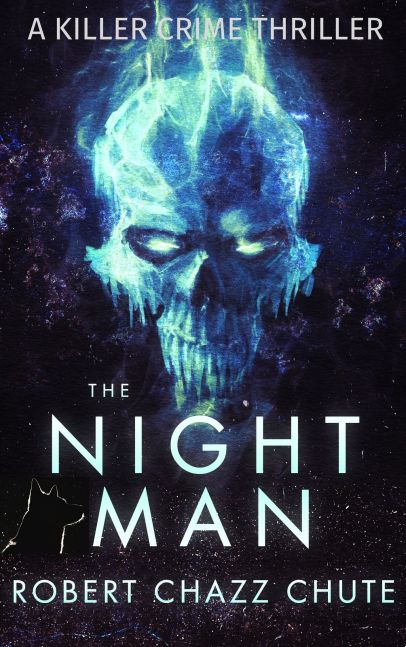
If you dig thrillers but you’ve never heard of The Night Man, you might not want to take a chance on me. However, my suspense anthology (Sometime Soon, Somewhere Close) isn’t the time commitment of reading a full-length thriller. It’s also cheaper. I write apocalyptic and dystopian thrillers, too, so All Empires Fall serves as a gateway drug to my novels.

Reading fiction is a lovely addiction. Give readers a taste they enjoy and they will come back for more. Whether you use short stories as a cheap entry point or as a free reader magnet for newsletter subscribers, the monetary payoff is unlikely to be immediate. It can be incredibly satisfying, though.

If you want to release rapidly to stay top of mind among your fan base, writing short can ease your stress immensely. It takes me far less time to write an anthology of short stories than it does to craft the complexity of a full-length novel. Hitting publish more often is fun and you’re throwing more spaghetti against the wall to see what sticks. In publishing, big or small, that counts as market research.

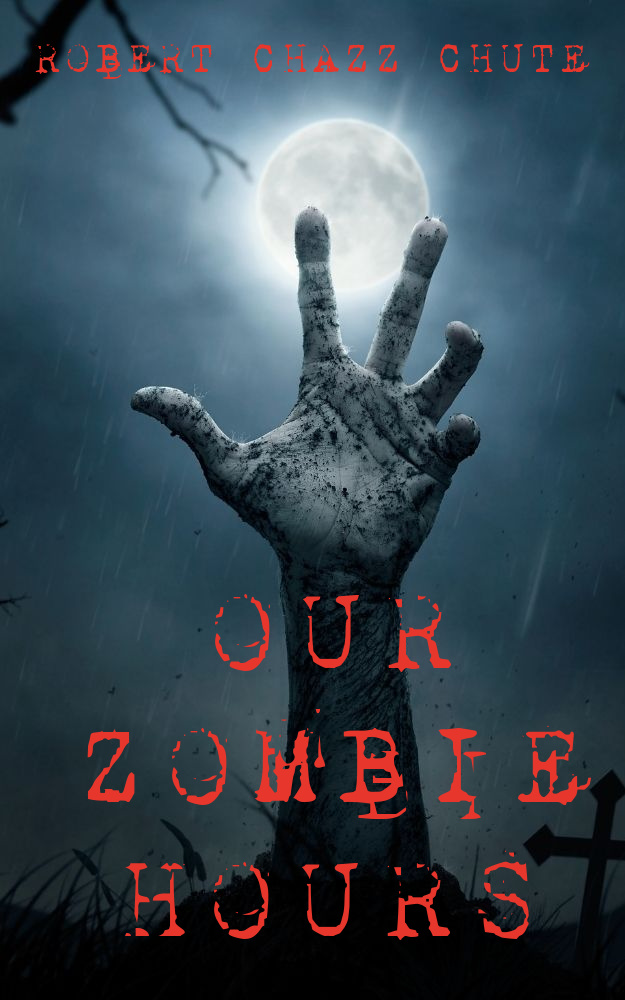
My newest anthology is Our Zombie Hours. It’s a bit of horror for the purists, just in time for Halloween (and it’s free until midnight tonight).

Take a blurb to the face:

From the author of This Plague of Days, AFTER Life, and Endemic comes five adventures from the front line of the zombie apocalypse. As society collapses, humans often prove themselves more dangerous than the infected. Enjoy these fresh stories that explore survival, heroism, and betrayal in a world gone mad. A fun night of horror awaits. 

PICK UP Our Zombie hours, NOW ON AMAZON

Today is Saturday, October 23. Get Our Zombie Hours by midnight, and it’s free. After that, the anthology is astoundingly inexpensive. I’m hoping you’re an addict looking for a word fix. I want to be your Candy Man for life.

See all my drugs at my author site, AllThatChazz.com.

Filed under: short stories, , , , , , , , , , , , , , , , , , , , , ,

The Real Writing Life

To be an author requires a lot of patience and not a little audacity. You spend many hours working alone, charting your own course and assuming someone will want your art. Of course, to bring your creation to market, you’ll need help from editors, proofreaders, beta readers, and graphic artists. I’m speaking here of all the time you face the blinking cursor and the blank page. I was reminded this week of the joys and frustrations of sailing solo.

The Obstacles in Your Way

The Movies That Made Us (on Netflix) has a great behind-the-scenes breakdown of what it took to get Elf made. When the primaries were brought together to create a modern Christmas classic, none of them were considered bankable. Even Will Ferrell wasn’t considered leading man material. The amazingly talented director, Jon Favreau, wasn’t money yet. The writer was unknown, but what they did have was vision. Film is a collaborative medium, and in this case, the creative team were all on the same page. It was the studio that stood in the way, even going so far as to try to edit it down to something it wasn’t. The higher-ups just didn’t “get it.”

Fortunately, a more ambitious artistic vision won out over the cynical studio execs. Favreau’s vision won out and commerce was served without compromising a film with real heart. Working by committee is difficult. Hollywood is full of stories of great scripts that got squashed, derided, or ignored for years before somehow making it to the screen and becoming a triumph. There’s a great book titled Afterwards, You’re a Genius. Looking back, everybody says, “Of course, it’s a success!” Going forward, people aren’t so sure.

Do anything, and plenty of naysayers will emerge to helpfully inform you what you’re attempting won’t work. Often, the people who say they’d do it differently don’t do anything at all. Sometimes I wonder how anything great makes it to the big screen.

And then there’s Paterson

The tiniest movie I’ve watched in a long time is Paterson, starring Adam Driver. It’s so low-key, you’ll watch it thinking, Where is this going? It’s a small, meditative film that flirts with the surreal. It’s a fairly uneventful week in the life of a bus driver who loves poetry. That’s it. No explosions. No action sequences. I can’t even say there’s a plot per se. However, it does have charm, and it offers an experience where the quotidian is the point. If you’re a Fast & Furious devotee, you might find this one soporific. I found something to love, though.

First, it’s kind of amazing this movie exists. No matter how small the movie is, big money and an army of participants are needed. Remember when a movie only required one production company? Now, movies are so expensive, I get tired and irritated just slogging through the opening credits as we get a slew of title cards and logos. (For example: A production of A Working Title Films, in association with Armchair Studios, a film by Lawrence Blahdiblah, with Fade in Innovators, and The Super8 Incubator and oh my God, get to it, I’m already out of popcorn!)

Second, Paterson is about an artist trying to create while dealing with the day-to-day struggle to survive. He writes poetry for the experience itself. Money must be made, and that’s what the day job is for. However, passions must be fostered and he draws on the mundane to create something beautiful.

The bus driver steals precious moments from the beginning of his shift to jot down a few lines in his notebook. His partner stays at home, painting everything while dreaming of becoming a country music star who’s also hoping to become a cupcake entrepreneur. The bartender aspires to win a chess tournament while a rapper works on spitting rhymes in a laundromat.

Meeting the rapper, the bus driver looks around the empty laundromat and says, “This is your lab?”

“Wherever I am,” the rapper replies, “that’s where it happens.”

That’s the creative spirit, always on duty, always practicing and perfecting, taking in everything to feed the muse.

Despite the surreal undertones, Paterson does not happen in an alternative universe. This is the world of any artist in our world. We create because something within urges us to do so. Most of those efforts will go unheralded. There is only one Jon Favreau, but we’re all out here, doing our thing. Most of us couldn’t tell you why. We just love words and stories. We’re trapped in the amber of the everyday, but we dream of more. We create worlds.

This sounds like a romantic notion, but it’s not. Yesterday, I completed final edits on my next big book. I think I’ve created an apocalyptic classic in Endemic (to be released early November). At 390 pages and 100,000 words, it’s an ambitious story about a neurotic book nerd facing down marauders in a plague-ravaged New York City. I was elated to send out the ARCs and excited to finally get the graphics set up for the hardcover and paperback. This has been two years in the making, so I could barely contain myself as my ARC team replied with their excitement and congratulations.

Pop the champagne, right? Um, no.

While still in the throes of self-congratulation, I had to go get winter tires on my car. Due to a miscommunication on my part, my son had taken the car to work. I stepped onto an empty driveway and panicked a little. I had to run to his workplace to pick up the car. Meanwhile, my laptop has failed and my desktop is iffy, too, so I’m struggling with how to afford to buy a new dream machine.

And that, my friends, is the writing life. Toil in obscurity, do the dishes, get your ass back in the chair in front of the keyboard. Maybe you’ll win an award, but that’s one night and then it’s back to work. Maybe you’ll make it big and have assistants to fetch you scones and coffee one day, but probably not. There’s only one Jon Favreau, but there are millions of writers across the world doing their thing because…I don’t know. Just because, man. We have to.

~ Check out my apocalyptic epics and killer crime thrillers at my author site, AllThatChazz.com.

Filed under: the writing life, , , , , , ,

Finding the Genre Vibe

When you’re writing, understand the tropes of your genre even if you don’t adhere to them closely. Lean into those and you’ll make your readers feel comfortable that they’re getting what they expected when they clicked the buy button. It’s a truism: People want the same thing, only different. Avoid cliches, sure, but tropes are often helpful in getting a reader and keeping a reader.

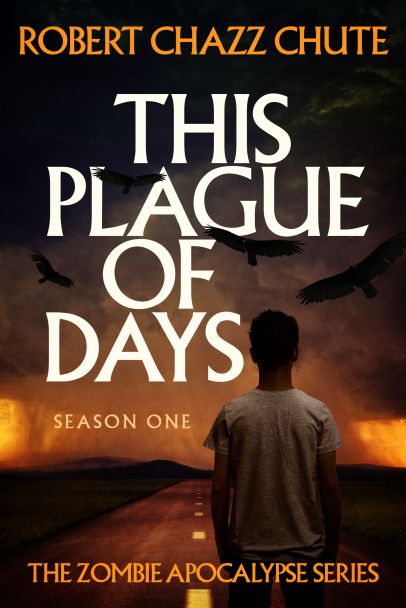
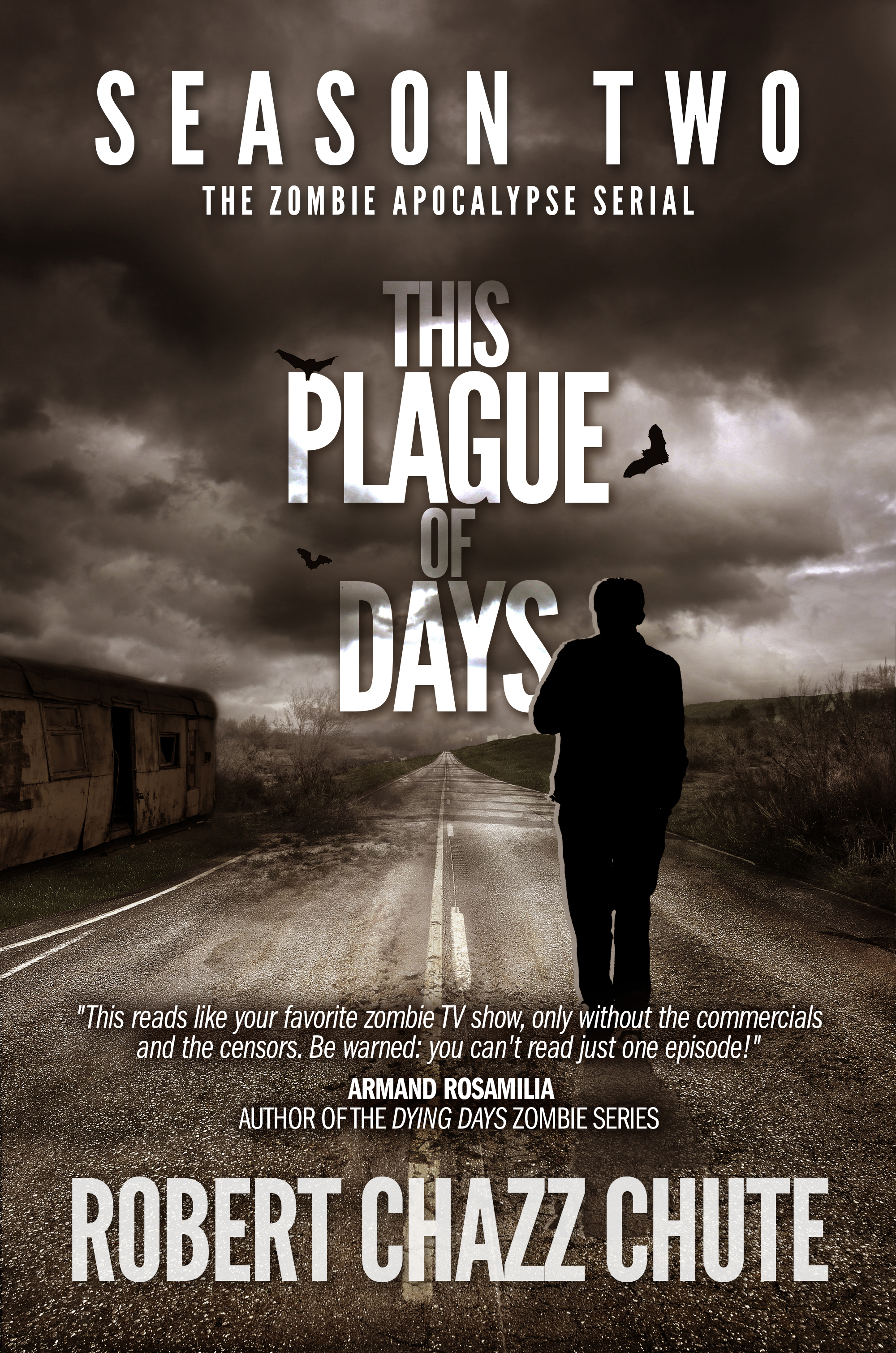
I must admit, I have not always stuck with what’s expected. My two zombie trilogies colored outside the lines. This Plague of Days is vastly different from a lot of books with “Zombie Apocalypse” in the subtitle. It’s a slow burn that builds and builds and relies heavily on supernatural elements and a mute hero on the spectrum. AFTER Life has plenty of zombie action, but the nanotechnology involved places the trilogy firmly in the techno thriller and least science fiction categories.

It may seem simple, but there are plenty of niches to drill down to and you don’t always know. When I published This Plague of Days, I thought I was writing straight horror. Then I got a Bookbub, and their marketing experts helpfully informed me I was writing science fiction. I suspect the success I had with TPOD was in part because of its contrast with other zombie books.

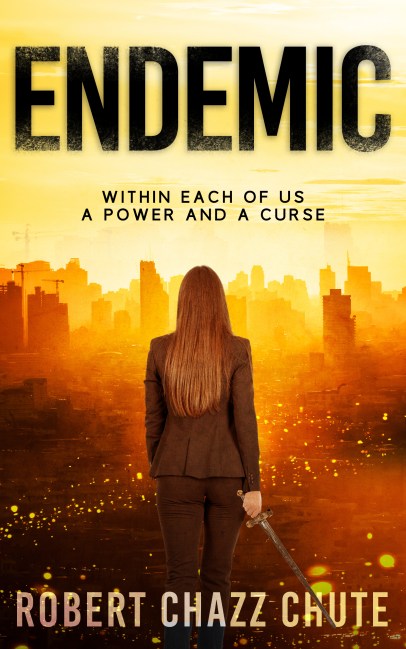
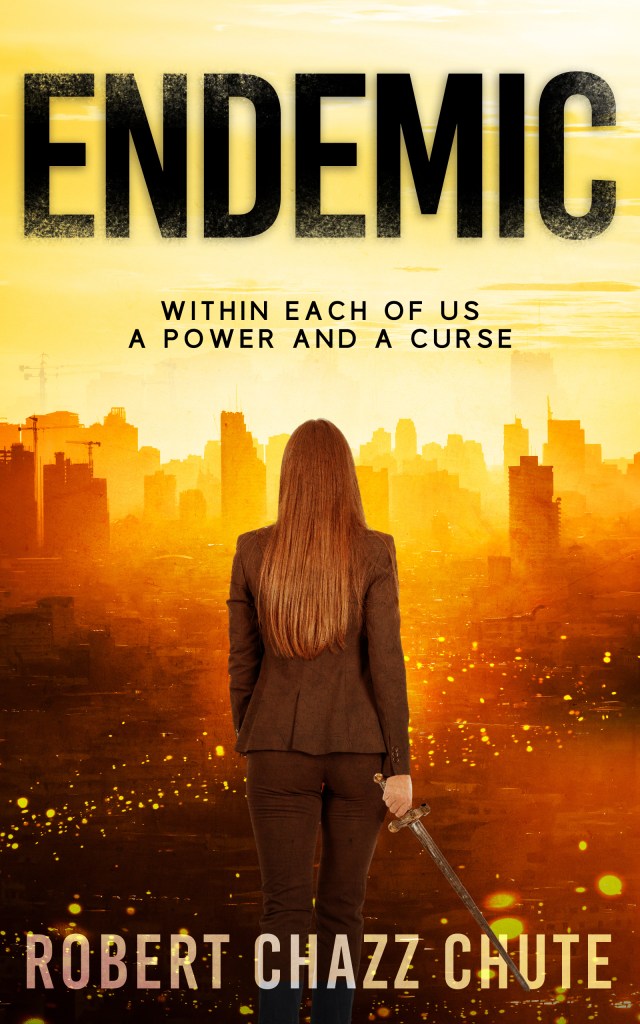
Now, when someone asks, I follow Stephen King’s example and say I’m a suspense writer. Mostly my backlist is suspenseful sci-fi. Other times, it’s crime fiction, but it’s all suspenseful. I’m a big fan of twists and turns. As I write this, my trusty Editrix Supreme, Gari Strawn of strawnediting.com, is working on my newest big book. It’s called Endemic, a survivalist thriller set in New York during the viral apocalypse. It does not have zombies in it, but there are infected people who are zombie-adjacent. The protagonist is a 38-year-old woman who is a very unlikely heroine. I like unlikely protagonists. If someone is prepared for their mission, the stakes are lowered. Will Endemic be different enough, or too different? We’ll see.

In the Meantime

While I wait for the final edits of Endemic, I cranked out a pop-up anthology. There was a time when I thought I was done writing short stories. However, I can produce them quickly and I enjoy writing them. Anthologies don’t sell as well as full novels, but I can use it for other purposes, such as creating an IP that leads to other IPs. Need a reader magnet to boost your newsletter? Short stories can give subscribers a sense of your style without the time commitment of a full free novel.

Leaning In

I’ve been reading a couple of gurus who are very deep into writing the same thing, only different. It can be profitable catering to a particular niche. If you’ve read X author and had a good time, you’ll probably read the rest of her books to get a similarly joyful experience. Browsing around, you’ll find successful authors who do this and their branding shows it. They have no shortage of entertaining stories their readership loves. Perhaps their biggest worry is burnout or that their graphic designer will die and they’ll have to find another who can create the same style of cover art. It is a good strategy and I do not disparage it.

For this coming anthology, I’m doing something I haven’t done before. I’m leaning into the zombie/horror tropes and giving readers more what they expect from the genre. That is not to say there won’t be twists and turns. I still offer plenty of those. However, there are no sci-fi elements. I just want to scare people for Halloween (and beyond).

Meaning

For all my writing, I look for meaning. The characters have to be relatable. Even if the good guys and bad guys are wading into the Wondrous Pool of the Fantastic, it’s important that readers find resonance. We all understand jealousy, anger, and fear. Tapping into our common human experience triggers the empathic parts of our brain. That’s when the world of the book envelops the reader.

You can accomplish that state by telling an entertaining story readers expect, or you can do it while pushing at the boundaries of their expectations. The trick is to do it in such a way that you reel them in instead of freaking them out.

Please note: Some minority of readers will always freak out.

Example: This Plague of Days has zombies and vampires in it. Some readers will never accept those genres colliding. They’ll take zombies, but introduce a smarter bloodthirsty killer, and suddenly they’re breaking the spine of the book and yelling, “Bullshit!” My thought was, what’s a sentient zombie? A vampire. Never mind that evolution, and never mind if you get a few reviewers who kick back against any genre-bending. That’s okay. Everybody gets an opinion. Relax and write your book.

There’s always someone who will say, “I would have done x, y, and zombie differently.” To which I reply, “Great! Go write that. Express yourself! Then somebody can try to educate you as to what they would have done differently. Then you’ll understand me better. Heh-heh-heh!

To put it crudely, meeting reader expectations does not make any writer a hack. Ideas are cheap. It’s the execution of the story you choose to tell that will elevate the work in readers’ minds or fall short of their expectations. I like blowing through their expectations, but it can be fun to play the game within restrictions, too. As Hitchcock said, a limited budget makes one more creative.

Endemic is a big book that will defy expectations because the protagonist is older, nerdy, and neurotic. She and I share several of the same neuroses, in fact. Our Zombie Hours is a small anthology playing to readers’ expectations of the horror genre. I’m oddly optimistic each book will find a readership.

To go deeper on writing, reading, and marketing that resonates with more readers, I suggest you check out 7 Figure Fiction: How to Use Universal Fantasy to Sell Your Books to Anyone by T. Taylor. It’s an enjoyable, quick read that will get you thinking about adding butter to your writing recipe and boost reader engagement with your words.

It’s all about resonance. Do you dig my vibe?

~ Robert Chazz Chute occasionally writes about himself in the third person (like right now) to encourage you to read his books. He writes apocalyptic epics and killer crime thrillers. Browse them all at his author site, AllThatChazz.com.

Filed under: book marketing, This Plague of Days, writing, writing advice, writing tips, , , , , , , , , , , , , , , , , , , , , ,

War Stories from Trad Publishing

When I moved to Toronto to enter the heady field of publishing, I had romanticized the profession. Profession, see? I didn’t know yet that it is mostly an industry. I dreamed that, surrounded by the glittering literati, it would be all wonderful words, sharp wit, and too many cocktails at book launches. Here are a few things I learned in short order:

1. If you’re looking for opportunities to trade bon mots, people in publishing don’t have a monopoly on that skill. They might have cornered the market on a false sense of superiority and condescension, but funny? Nope! Most of us were poor. Trying to survive in one of the most expensive cities in the world does tend to dampen one’s spirits.

2. If you’re new to the industry, anyone who’s been at it for two years longer will step back to see if you’re wearing shoes. At my first cocktail party, someone held forth on the strife of the former Yugoslavia and denigrated my opinion. She may have thought me a young hick, but I was the only one in the room who had actually traveled there and witnessed the damage bullets can do.

Snobs tend to gravitate to the profession. Stephen King left a publisher who profited well off his books because, despite his early success, they couldn’t seem to remember his name when they passed in the hallway. “Only a genre author, you know.”

3. After working in traditional publishing for five years, I can assure you that they don’t have a disproportionate number of smarter people than any other industry. I was chronically underwhelmed by many of my colleagues. There were a few gems, of course, but plenty of folks whose job was to make judgments had lousy judgment. One publisher I worked for ran himself out of business because he only wanted to put out “important” books. He may have briefly impressed his friends on the Rosedale circuit, but his list did not sell enough to sustain. I remember telling my sales manager, “Another sodbuster? Fine, but would it kill him to put out a cookbook people will actually buy this Christmas?”

4. People on the editorial side, mostly women, are infamously underpaid. They do not share the wealth. The moolah all funnels up. (And don’t get me started on the unpaid intern scam.)

5. Some editors and not a few salespeople denigrate authors’ efforts. Publishing companies buy manuscripts to sell books, but their respect for those who produce those manuscripts varies widely.

Hey! Want to break free of the blank page and work inside trad publishing? If you were impressed by the dismissive speech Meryl Streep gives Anne Hathaway in The Devil Wears Prada, this might be the job for you! If, on the other hand, you have self-respect and intolerance for workplace abuse, at least work at a firm big enough for an HR department.
(I put a bad boss in a hammerlock once. That fucker still owes me $5,000.)

6. Perhaps driven by desperation, some authors are pills, too. For instance, Bookstore X refused to sell books by a particular author who had a bad reputation. Bookstore X stood just down the street from the publishing house, so naturally, when the author got taken to a liquid lunch, they stopped in. The author discovered Bookstore X did not carry any of his books. “But I’m a literary icon!” the author wheedled.

Embarrassed, the publisher blamed the sales rep (i.e. me) and sent a memo to my boss. “What’s going on?” she wailed. It wasn’t a conspiracy. What was going on was the bookstore owner didn’t like the author personally. Nobody liked either of them, in fact. In hurting himself, the author tried to hurt me. (That writer is dead now. I claim to have had nothing to do with it.)

7. Speaking of bookstore owners, I liked most of them, but they had romantic ideas getting into their business, too. They thought they’d be reading books constantly, maybe even hobnobbing with famous authors. Instead, they were often saddled with businesses pushed out and pushed down by big box retail and online stores. Calculating GST payments all day and worrying about impending doom does make one surly.

One guy made a big deal out of the fact a sales rep didn’t want to get up at 4 in the morning and travel up from Toronto to pay a visit at 5:30 a.m. to a little bookstore in the back of the beyond. (Wasn’t me, but I felt bad for the sales rep from another house.) Another bookstore owner got very pissy that I dared to use the word comedy instead of humor. That person is now out of business, but I assume she’s yelling at some retail worker somewhere on Instagram.

I was tasked with presenting an extensive list for 16 publishers to a board of librarians. There were more than a
dozen people around the table as I went into my spiel. One guy thought the enthusiasm I had for my list made me stupid. I made a joke and he rolled his eyes. “Ba-dum-bump!”

I was young and full of blue piss, so I stopped my show and pushed back. “You don’t want me to be funny and energetic in my sales pitch? Fine. I. Can. Deliver. The. Entire. List. In. Robotic.
Fashion. If. You. Want. You wanna stop busting my balls now?” Everyone laughed but the guy I called out, but how can badly behaving customers learn if we don’t teach them?

8. Not everyone has romanticized ideas about what they do. My first two publishing jobs were at Harlequin. An exec struck up a conversation with me in the company cafeteria. “Why did you come here?” he asked. I told him my background was in journalism, but I loved books so I got into publishing.


“We’re not really publishers, though,” he said. “We’re book packagers.”

Meeting him, I vowed to escape before my innocence and light of aspiration in my eyes went dead.
You do want to keep some of your beginner’s mind as you move through your career. Otherwise, the days are long and sad.

9. A wannabe novelist and poet who worked as a copy editor told me, “Many people who want to write gravitate to this industry.” Then he cackled on at length about an author whose typo mixed up desert and dessert.
Maybe he wouldn’t have been so mean to actual writers if he didn’t still have a novel of his own trapped in his head. Frustrated writers make the most truculent editors.

You used to see this kind of behavior on social media, and the worst offenders were snotty agents. I don’t know if there are still high-profile agents making sport of the authors and unsolicited manuscripts in their slush piles. There are fewer agents now, perhaps for good reason.

10. This may be the worst one: Plenty of authors betting big on their first book have a romanticized idea of what New York or Toronto can do for them. They think if they get a traditional pub contract, they’re set for life. They won’t have to do a thing but write. Most authors don’t make much, and there are quite a few independent authors who do better financially. Either way, most of the marketing is on you. Some marketing requirements will feel onerous and still come to naught.

Unless you’re a controversial political figure or a hot celebrity, your advance will be lower than it was thirty years ago (and it wasn’t great then.) You may never earn out your advance and get royalties. Promotional opportunities that independent authors routinely use are denied you by traditional publishers. You don’t have the flexibility. If your first book fails to clear the bar, a trad publisher is unlikely to bet on you twice. Organize your own company, editorial team, and marketing, and you’ll get as many kicks on goal as you want.


Trying to negotiate a trad contract? Your publisher will inform you all contracts are boilerplate. Ignore them and have an IP lawyer negotiate for you before you sign your rights away. Nobody’s looking out for you but you. The acquiring editor is not your enemy, but this is the business part, not the art part.

About trad pub transparency: Your advance will come slowly, in stages, and you’ll have to rely on accounting reports from the publisher that obfuscate reality. At best, you’ll find out how your book is doing a couple of times a year, too late to respond in a timely manner.


FULL DISCLOSURE:

I’ve been independent since 2010, but I’m not saying you shouldn’t try your luck, talent, and skill in the traditional publishing arena. I am saying you should go in with your eyes open. Entrepreneurship is not for everyone.

Last year, a NY publisher approached me about submissions. I admit, I was excited. I sent an outline for a thriller. I haven’t heard anything from them since. I would still consider going hybrid, for sure. Any chance to expand my readership is an alluring thing. On the other hand, knowing what I know about all the variables, I’m not into chasing after anyone, either. (Cue Cheap Trick singing, “I Want You to Want Me!”)


BONUS MYTHS:

Some writers believe they are bound to get treated better by a boutique publishing house. At small operations, whoever answers the phone is more likely to know your name. However, a business on the brink is not more likely to treat you better. They don’t have the budget for that. They are more likely to go out of business.

Big versus little isn’t the issue. It’s about the people. It’s nice to work with nice, competent people who love what they do and share a sense of urgency about your work and concerns. But there’s another fly in the ointment. Editorial staffs have been downsized for years in favor of cheaper outsourcing. That editor at Big Publishing House who loved you and your work last year may not be there this year. She’s selling alpacas in Arizona now, and she’s much happier.


~ My next novel launches this September. In the meantime, please do check out links to my killer crime thrillers and apocalyptic epics at AllThatChazz.com.

Filed under: publishing, , , , , , , , , , , , ,

The Honest Get Rich Quick Scheme

Sometimes writers spend so much time writing, they read much less or not at all. Try not to fall into that trap. I was reminded how important it is to make time for both reading and writing recently. Somewhat ironically, the reminder came in the form of a movie.

There aren’t many good movies about writing. Finding Forrester is my go-to, but I found another gem. 84 Charing Cross Road is a plotless yet charming period piece starring Anne Bancroft and Anthony Hopkins. The 1987 film of Helene Hanff’s book is about her decades-long correspondence with an antiquarian bookseller in London. A writer in New York, she was obsessed with English books that were difficult to obtain. She goes to great lengths to get the old tomes she desires. Bless her.

The movie is less about writing and more about a quirky character and her love affair with books. As the world transforms through the late ’40s to 1971, Hanff smokes, drinks, writes Ellery Queen TV scripts, and reads obsessively. God, I love people who read. Sometimes it feels like they’re an endangered species that should be protected, doesn’t it?

The experience made me long for a time when books were so much more important to the culture and didn’t have to compete with social media and video games. Still, there are readers out there waiting for something special. Maybe your next creation is what they don’t know they’re waiting for.

Often, those movies the masses come to love spring from literature. Maybe getting a book made into a movie is our best shot at riches, but that’s debatable. The book usually has to hit big before a movie gets made years or even decades later. So, what to do? While you’re waiting for fame and fortune to find you…oh, no, I’m kidding. You don’t actually wait for those things that may never come. You gotta go hunting.

Aspiring heavy hitters wade through podcasts and courses about the tactics of segmenting mailing lists to grow their readership. The details of advertising and newsletter marketing aren’t sexy, but the gurus aren’t wrong. I’m annoyed by some of the requirements of modern publishing, especially since Facebook ads can be such a recalcitrant bitch these days. But this is the business side of the art we’re in.

I’m more obsessed with craft than marketing, a position which in today’s media consumption landscape makes me sound stupid and quaint, or at least naive. None of that is true. I’m just a bit tired. Though I’m glad to have received my second vaccine, it knocked the stuffing out of me for a few days.
Now that I’m vertical again, it’s back to the brain tickle business.

In sum, you became a writer for the love of books, so don’t just write them. Reading more will improve your writing, but do it all for the love of books. We may never become wealthy or even recognized, but reading makes our lives richer in the here and now.


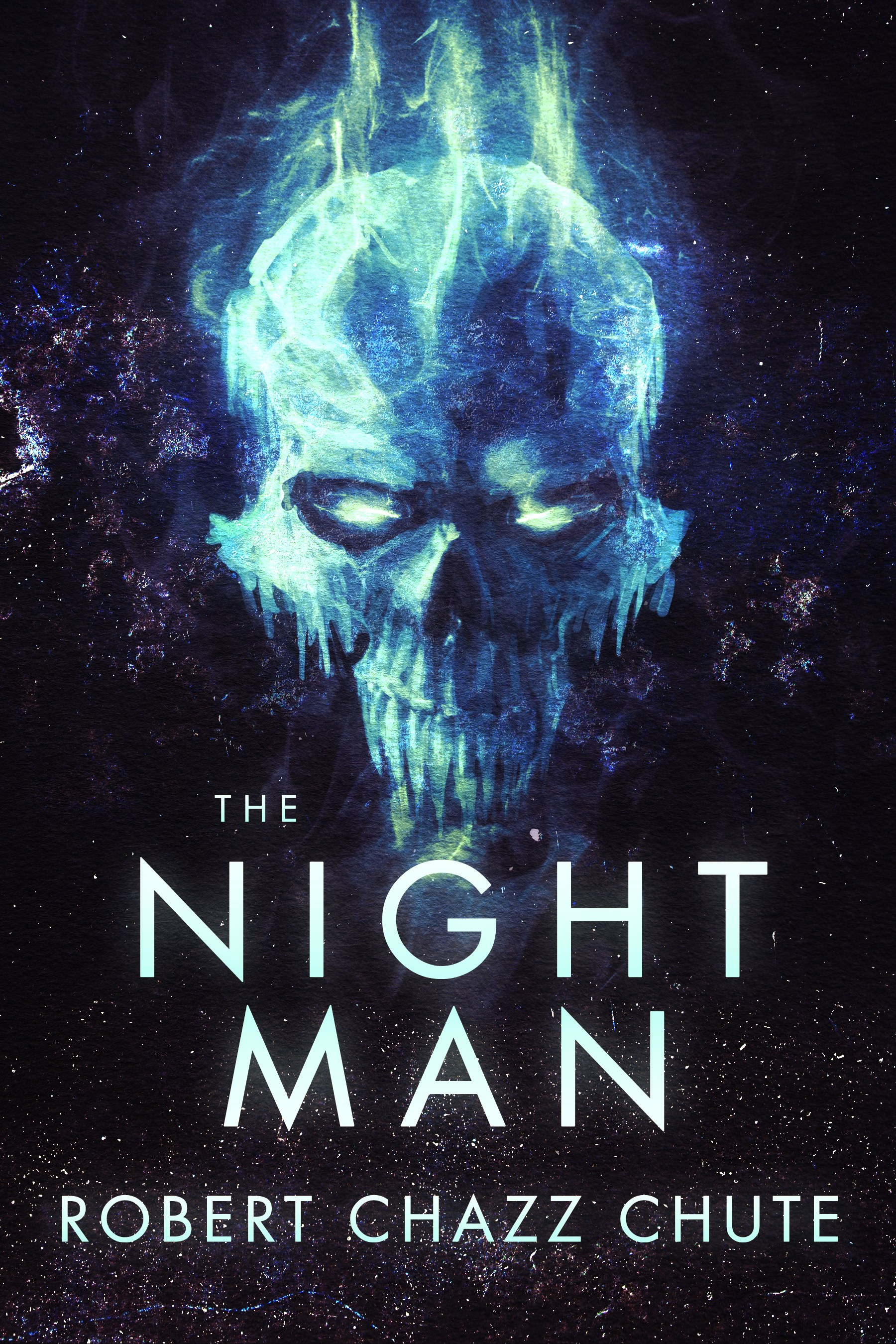
~ Get richer in the here and now. I’m Robert Chazz Chute and I write killer crime thrillers (try The Night Man) and apocalyptic epics (read AFTER Life right now!) You’ll find links to all my books on my author site, AllThatChazz.com. And thanks, that’s super cool of you, you sexy undistracted butterfly.

Filed under: movies, publishing, reading, , , , , , , , , , ,

Bestseller with over 1,000 reviews!
Winner of the North Street Book Prize, Reader's Favorite, the
Literary Titan Award, the Hollywood Book Festival, and the
New York Book Festival.

http://mybook.to/OurZombieHours
A NEW ZOMBIE ANTHOLOGY

Winner of Writer's Digest's 2014 Honorable Mention in Self-published Ebook Awards in Genre

The first 81 lessons to get your Buffy on

More lessons to help you survive Armageddon

"You will laugh your ass off!" ~ Maxwell Cynn, author of Cybergrrl

Available now!

Fast-paced terror, new threats, more twists.

An autistic boy versus our world in free fall

Suspense to melt your face and play with your brain.

Action like a Guy Ritchie film. Funny like Woody Allen when he was funny.

Jesus: Sexier and even more addicted to love.

You can pick this ebook up for free today at this link: http://bit.ly/TheNightMan

Join my inner circle at AllThatChazz.com

See my books, blogs, links and podcasts.

Enter your email address to follow this blog and receive notifications of new posts by email.

Join 2,063 other subscribers