C h a z z W r i t e s . c o m

See all my books at AllThatChazz.com.

Amazon sales secrets you’re probably missing

When you scan your book sales page and stats, it can be pretty dry, depressing and really not tell you much except what happened in the past. I’m more interested in what will happen and how I can make it so. There’s more information on Amazon than you’re currently using, but it’s all right there if you look. You can use this data to become more profitable. Delve deeper to divine what’s really going on with your readers. Here are some ideas about discovering who your readership is and how to reach them:

1. Categorize for Visibility

Yesterday I mentioned optimizing your books’ visibility by examining your sales and how your books are categorized. You may be invisible in a large genre category, but if you can drill down and pinpoint an appropriate category you could make your book a bigger fish in a smaller pond. In a category that is too general, you’re in a sea of books and harder to find. But don’t just look at the stats and numbers Amazon supplies at Author Central. There’s much more you can do. Let’s go further than the usual cursory glance at graphs, numbers, green up and red down arrows.

2. Surprise: Paperbacks versus Ebooks Revisited

"You will laugh your ass off!" ~ Author of Cybrgrrl, Maxwell Cynn

“You will laugh your ass off!” ~ Author of Cybrgrrl, Maxwell Cynn

Micro-publishers are often told that ebooks are the crux of our business and that’s where our focus should be. I agree that’s true in general but that doesn’t hold true for all books.

Naturally, we often compare sales of one book to another. Each of us probably has a good handle on which of our  books sells most and least, if only for curiosity’s sake. Now compare each ebook against its brother in paper. I discovered one of my books in paperback, Self-help for Stoners, outsells the ebook version. I’ll hold back on making easy jokes about why this would be (Okay: Paper makes for good rolling after you read it. Happy, Stoner Stereotype Brigade?)

The why is just guessing and doesn’t matter, but the what is significant to me. It tells me the revamp and reload I’m planning for Self-help for Stoners (also discussed in yesterday’s post) is worth my time. A new edition in paper will be worth the effort.

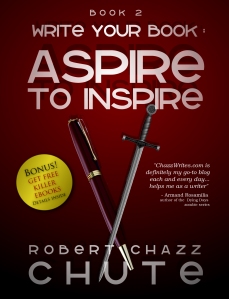
The same thing is happening with my writing and publishing guides. I’m sure this is so because they are reference books. According to a recent study, students still prefer paper reference books to ebook texts. Since they sell better in paper than ebook form, I plan to reformat Crack the Indie Author Code and Write Your Book: Aspire to Inspire

When I revamp these paperbacks, I’ll sell them in a smaller size. They’re currently huge honking trade paperbacks. I couldn’t get them down in size on my first attempt, but the next edition will be more like a thick 5 x 9. If the software won’t cooperate, I’ll call on a friend who is a book designer to help. With a smaller format, I’ll be able to bring the price down and sell more paperbacks. (Expect the format change at the end of summer to coincide with release of my next guide on writing and publishing. Don’t wait! Get them now or grab the ebooks. People are loving them.)

3. “Frequently bought together”
Crack the Indie Author CodeFrom your sales page topped with your author bio, click through to see what’s selling under the “Customers Also Bought” list.

We spend a lot of time, energy and free giveaway days trying to get on this list on other author’s sales pages to increase our books’ visibility. When Self-help for Stoners came out, over time it became clear that readers found me through my connection with director Kevin Smith. On the Self-help for Stoners sales page, Amazon still has my book paired with his book, Tough Sh*t, under “Frequently bought together.” However, on my main sales page, Kevin’s not on the author list anymore (discussed in #4). I noticed him dropping away as other authors took his place.

If your book is paired with another author’s, you could work together to promote both books, either through advertising together or doing a podcast for mutual benefit, for instance. 

4. “Customers Also Bought Items By” 

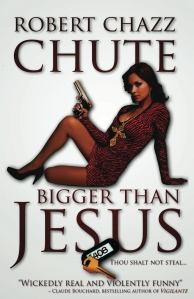
On your main sales page on Amazon, look at the list of authors under this category, down the right sidebar. Number one for me as of this writing is John Locke. That makes sense since Bigger Than Jesus and Higher Than Jesus are funny and fast-paced crime novels with contemporary references. (I’m suddenly self-conscious about constantly plugging my books here, but since it’s my damn blog and I’m drawing on case study experience — poof! — I’m over that self-consciousness. I’ll hold on to all the other neuroses, though.)

Here’s the current screenshot from my sales page:
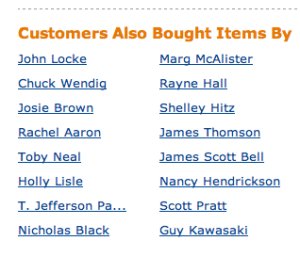
Screen Shot 2013-01-21 at 3.07.29 PM

If the same authors turn up consistently over time, that’s a stronger indication you share a common niche and audience. The Guy Kawasaki occurrence here is no doubt because he just came out with APE and that’s the identical reader demographic who would go for my Crack the Indie Author Code and Write Your Book: Aspire to Inspire.

How is this useful and what does it tell you?
Aspire to Inspire eBook JPGThinking about the authors on your page could give you an idea where your readers are coming from. For instance, if you did a blog tour and soon noticed a familiar author on your sales page list, it would serve you well to guest blog for them again or host them on your blog.

It’s rare in book marketing that we can identify a causative marketing solution. That’s positive feedback that is actionable. (Is “actionable” too jargony?) Usually, when we see our sales go up and down, we can’t link it to a particular event. For instance, maybe your sales today came about because of a recent press release or maybe it was that giveaway you held two months ago. Who knows? Establishing causal relationships between promotion, publicity and sales is rare unless you’re doing a measurable campaign (like a rewards program, for instance.) Whenever you can identify something that worked, do it again!

I know a couple of authors on my “Customers Also Bought Items By” list personally. I suspect they show up here because they’ve been kind enough to promote me. I’m especially pleased to see Chuck Wendig on this list. I don’t know him. All we’ve exchanged are a couple of funny tweets and I’ve read a couple of his books. However, we both wrote funny writing advice books, so that’s undoubtedly the common audience.

From what I know of the other authors, it suggests to me that I’m hitting male readers somewhat. I reach writers who read about writing and publishing, of course. However, from that list, I suspect most of my readers are female, between thirty and fifty-six, well-educated and into suspense with romantic elements. It’s my crime novels in the Hit Man Series that will make the splash with most of them.

What this analysis could reveal

I want to know who reads my stuff so I get more ideas about how to reach them. That helps me target bookBigger_Than_Jesus_Cover_for_Kindle reviewers who have demonstrated that they tend to like similar work by authors on my “Customers Also Bought Items By” list. It might also help me choose which blogs to apply to for a guest post. If the authors on this list have already guest blogged there, that’s a clue. I might also request guest blog spots from some of the authors on the list directly since we already have readers in common.
This awareness is most helpful by finding those authors most like you. Watch success and emulate it. What might I learn from these authors whose audience overlaps with mine? I could learn a lot from figuring out where my fellow authors appear, which book reviewers adore their flavor of madness, how they handle their blogs, their book releases etc.,….

I loved Stephen King’s On Writing, but as much as my Maine town has in common with Derry, I can’t learn much from him about reaching new readers with a shoestring book promotion budget in the New World Ebook Order. In the author hierarchy, Mr. King is on a distant planet from little old me. Authors closest to me talk my language and we can relate to each other’s problems.

What this analysis shouldn’t tell you

Don’t avoid engaging your audience by relying on numbers and conjecture. The real fans will tell you what they like best (and, if polite, let you figure out what they liked less by simple deduction.) I don’t write what I’m told to write, but I listen. Readers have told me that, after reading the Poeticule Bay short stories, they want full novels about the creepy town in Maine everyone wants to escape. That bumped it up on my priority list. Others have emailed to request that I please get to that dystopian thriller with the autistic protagonist I mentioned once. I’m on it. Thank you for your encouragement and support as I prioritize what comes next from Ex Parte Press.

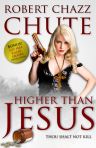
Love acknowledged and that said, I write what I’m inspired to write. This analysis is to figure out how to be found by more people, not to figure out what to Higher+than+Jesus+Front+1029produce before I’m found. I’m not interested in identifying my audience so I can try to write for, or pander to, any one demographic. That’s artificial and would yield sub par results (at least in my case.) I write for myself first and hope others enjoy what I enjoy. The writing, insulated from any audience but one, comes first.

This analysis gives me ideas about how to help readers discover my books once I unleash my mind viruses upon the world. In art (or Art, if you prefer) the customer always comes second. I don’t chase markets. I stay true to my vision. The market will chase me…eventually.

Me B&W~Robert Chazz Chute writes blog posts that are way too long. He even (by Thor!) writes about himself in the third person in that little bio thingy at the end of blog posts. He’s also the nut behind the All That Chazz Podcast. But perhaps, if you aren’t allergic, he’s your kind of nut. Find out at AllThatChazz.com.

Filed under: Amazon, ebooks, Publicity & Promotion, publishing, , , , , , , , , , , , , , , ,

Micro-publishing is publishing: Tools, tech and committing to change

Crack the Indie Author CodeWordPress Widget: Milestone

Your greatest tool is your mind, but your armoury doesn’t stop there. There’s that baseball bat under your driver’s seat. Oh, and glance to the left for my new deadlines, on display for Thor and everybody. I’ve struggled a bit with two works-in-progress. I had a false start and have to backtrack a bit with one (for the greater good). The other book is in revisions. It’s a huge project. It’s so secret, a team of kidnapped international scientists are working on it in a fortified base under a volcano guarded by an army of cloned ninja monkeys.

Projects need deadlines and production schedules. Successfully meeting those goals requires that I broadcast those commitment to my peers. That’s you, and that’s where the time trackers to the left come in. It’s a countdown to the launch of my metaphorical rockets. The timers are created with a WordPress widget you can use, too. On the Widgets menu of your WordPress dashboard, it’s called Milestone. Easy-peasy-here’s-a-reminder-to-stay-on-track.

Use Animoto for quick and easy video messages 

The second tool for spreading the word is Animoto. Videos get more attention than text. That’s our world. Deal with it. Many readers will click the video without reading these words. That’s okay. I just wanted to point out that a couple of months ago, I made a loud declarative statement that I would soon have all my books available everywhere. After polling a number of fellow authors and chatting with friends and allies through this blog, it’s apparent to me that I’m not ready to ditch KDP Select entirely just yet. The migration to other  platforms will be slower than I anticipated because the consensus is that exclusivity with Amazon is still the better bet overall. My forays into other platforms will be experiments, measured and evaluated.

Here’s a link to my first Animoto video.

Make a video of your own at Animoto.

Aspire to Inspire eBook JPGDitching intermediators

The beauty of micropublishing is that we can be flexible and change our minds without calling a meeting or paying extra fees for each detail. In the spirit of taking full control of my books, I’m ditching BookBaby. For my first book, Self-help for Stoners, I used their service to publish the ebook. It might even have been the right choice for me then. I was too intimidated by the details of dealing with formatting and taxes and I  wanted to get my book published faster.

Now I’ve got it together eight or so books later, it’s apparent I’ve sacrificed too much flexibility in giving up Self-help for Stoners to an intermediator. Any minor change in strategy costs more money, takes more time and, frankly, they’ve been slow to respond to my requests in the past. I like when the check arrives, but with a little more effort, I can cut costs, regain control and optimize the book. Once I withdraw it and republish, I can make those changes quickly and easily. I’ll release Self-help for Stoners as a new edition with new material. This baby’s growing up. No more hesitation or excuses, hoping things will get better. I’ll make them better.

Book category Bingo

Speaking of switching tactics easily, readers may find you by your book categories. They may not discover your awesomeness for the same reason. When is the last time you revisited your book’s categories?

I reviewed all my books’ assigned categories yesterday. For my writing and publishing guides, I changed to “Editing and proofreading” for the first book and “Authorship” for the second. You are allowed two categories per book. Choose wisely. For Bigger Than Jesus and Higher Than Jesus, I switched from “Hardboiled” to “Crime” and from “Suspense” to “Crime” respectively. I’ll give that some time and if there’s no improvement, I might try switching to “Men’s Adventure” and see how that flies. It’s free to experiment when it’s all under your direct control.

Experimentation, improvement and getting it right is fun when it’s under your control. 

Higher+than+Jesus+Front+1029~Robert Chazz Chute is that guy who thinks like a hit man but has learned to sublimate his rage with humor, usually. Hear the first chapter of Higher Than Jesus, in which his hit man, Jesus Diaz, looks for love in all the wrong places (and Vicodin and bombs in Chicago.) It’s on the All That Chazz Podcast, broadcast chapter by chapter once a week. Or just go read the book. It’s fun and funny.

Filed under: publishing, , , , , , , , , , , , , , , , ,

UBC #31: Ebooks are the new slush pile. Are they the new blog, too?

To check out all the books by Robert Chazz Chute, click here.

I once had a business meeting to attend in Toronto and, despite a snowstorm that put a lot of cars off the road, I kept going after it was clear I should turn back. After three hours of white-knuckling the steering wheel, I made it to the meeting on time only to find that I’d risked my life for nothing. The meeting was cancelled because everyone else who was to attend had their priorities straight. Clearly, I have a stupid character flaw. Once I commit to something that isn’t working, I often don’t abandon the task, even when it’s obvious it isn’t working. 

It’s time to examine priorities, not just for me but for you.

What are we doing that helps us get closer to our goals?

What needs to change? I have a cool idea.

First, let’s talk blogging. Lots of people are interested in yesterday’s blog: Your Blog Does Not Matter. I learn a lot from research and it’s fun, but the Law of Diminishing Returns is a knee in the groin. If I’m right that our blogs don’t matter as marketing tools, why blog? I should clarify that it’s not that I think writers don’t read. May Thor help them if they don’t. But a lot of power readers love books — and buy them to read copiously — without a thought to ever writing books themselves. That frees up a lot of time to read and buy more books. Writers are logophiles, but, to be read more widely, we need to reach bibliophiles and plenty of them.

We need to reach out to book reviewers and book bloggers to get word of mouth going, yes, but I think there’s a way for our blogs to matter more to the general book buyer, especially if your blog is information-oriented.* I’m going to have to try a different blogging strategy because, blogging the way I am, just for the love of it, isn’t helping my writing career. Whenever you choose choice, you choose freedom. That’s good, but, even with the old blog heater running full blast, it’s snowing so hard my windshield wipers can’t keep up and there are too many indie authors in the ditch.

Case in point: I’ve blogged a fresh entry on this blog every day for the last two months. June was the Author Blog Challenge. My blog traffic shot high consistently. I made new friends, gained subscribers and have fresh contacts. July was the Ultimate Blog Challenge (and this is my last post, #31, for that challenge.) The former had under 100 participants and I’m told the latter has five to ten times that. Still, I earned far more traffic during the Author Blog Challenge. It doesn’t take too long to figure out why the ABC was so successful for me. I talked to my audience rather than a more diverse, disinterested crowd and that crowd had to come to me. Not many did. They were into blogging qua blogging, as my old philosophy prof would say. They weren’t necessarily into suspense or the intense indie book reading proliferation experiment I promote here. I’m not blaming the Ultimate Blog Challenge. Nobody owes me their patronage. This isn’t about that. It’s about finding strategies that actually help me (and you) get discovered by new readers who care about what we write (and might even — egad! — pay for our work.)

The only strategy for growing a readership that anyone seems to be sure of is: WRITE MORE BOOKS! So, first, spend more time on your books than your blogs. The core writing has to be scheduled before any other writing you do. I haven’t been as good at this as I should be lately because I was too focussed on the Ultimate Blog Challenge. That’s stupid, stubborn me, driving through a snowstorm again. I knew the latest challenge wasn’t garnering more traffic a couple of weeks ago, but I’d made a commitment. I learned something more, though. I can blog like crazy and still not matter because I’m not publishing my blog posts where new readers and book buyers gather.

There’s an alternative marketing strategy that makes more sense. 

There’s a way to go to where readers are and

build more ebook presence on the web

instead of hoping readers will somehow discover our blogs.

Small-town terrors and psychological mayhem in Maine.
These are the foundation stories of the coming Poeticule Bay Series of suspense novels.

Here’s how: In time I’d otherwise use for blogging, I can put together a micro ebook to increase the size of my cyber bookshelf and build name recognition. It’s already been observed that Amazon is the new slush pile for traditional publishing. Maybe self-publishing isn’t just the new slush pile. Maybe ebooks are the new blog, and vice versa. I’ve already noted that I intend to make a book out of blog posts, distilling down the sweetness and goodness for indie authors. I’ve been missing out on other opportunities to expand my bookshelf for new  readers.

For instance, today, I noticed a free book on iBooks that was 10 Strategies to Something or Other. Regular readers know I have a fondness for top ten formats for blog posts and they’re pretty popular, quick and fun to write. That’s really not so different from many of the offerings on Amazon, Kobo, iBooks and so on. Why not blog for free where it can do me (and you) more good? On those platforms. You know. Where the readers are. 

CLICK: You can already publish your blog to kindle here. Or check out any top free lists to see the sort of things you can write about that hits readers where they live. In the back of every ebook/blog you publish, link to your paid books. Depending on what you write, you could even write the equivalent of a few blog posts and (gasp!) actually get reimbursed for your time, trouble and expertise. Imagine the possibilities.

Click to get Bigger Than Jesus here

Publishing our blogs on self-publishing platforms is one way, largely unexplored, we can make more sales because we’re reaching people who are already in the book marketing venue. I know most of us don’t think of blogging as publishing, even though we write our blogs and hit a button that says “Publish” every day. It’s time to slow down, turn on the GPS and figure the alternative routes out of this blinding snowstorm. It’s time to get flexible and find what works so I can find my readership, help them find me and sell more books. Maybe you, too, if you’re interested.

No, I’m not discontinuing blogging here. Now that the blog challenge is over, though, I’ll do a little more curation via Scoopit! and post a little less. I’ll prioritize better than I have done and maybe get outside while it’s still summer. I still have podcasts coming out every week and three books in the editorial pipe this year plus Bigger Than Jesus coming out in print soon so…yeah. Lots to do and, like everyone, our waking, working hours are limited. Now that I’m through the blog frenzy of the last two months, I will concentrate more of that time on coming out with more books…and maybe a few blog posts/ebooks on iBooks and Kindle. I’ll let you know how that experiment works out. 

~ BONUS: I had a fun interview on Sandi Tuttle’s show last night. We talked blogs, the publishing revolution, being indie, inspiration and ritual goat sacrifice. Have a listen here.

*Publishing more short stories could help you, but I doubt it. That might double down on getting ignored, but that’s a different post for another day.

Filed under: publishing, , , , , , , , , , , , , , , , , , , , ,

Your blog does not matter


“Writers should not write blogs for writers!” some expert declared.

Instead, write for readers!

Small-town terrors and psychological mayhem in Maine.
These are the foundation stories of the coming Poeticule Bay Series of suspense novels.

I understand the argument, but what about writing about where your passion lies? I’ve written about writing for years now, drawing on my experience first as a journalist, publishing insider, freelancer, then as an editor and finally as an independent author who publishes his own work. I’ll be coming out with a book about writing later this year, so that’s one solution to the problem of writing for writers. But I keep thinking about that advice to write your blog for readers. I think I just figured out why it doesn’t matter.

Blog marketing does not matter. An author’s blog is usually something you discover after you’ve already found the author. Seth Godin’s blog is popular, but I found out about him through media first. Despite his high traffic, JA Konrath is sure that A Newbie’s Guide to Publishing doesn’t net him any new readers. He writes for writers and they come for his opinions and information, not his books. The readers of his blog and the readers of his books are two subsets of his readership with very little overlap. True, I read voraciously, but I still haven’t got around to reading any of his books. (Or John Scalzi’s or Chuck Wendig’s, either, though I love their blogs.) And what of all those successful novelists who blog little or not at all?

John Locke came up with a blogging strategy that helped him sell a lot of books, but he didn’t blog every day to do it. In fact, Locke blogged sparingly. He crafted each blog so he could leave it up for months and, using keyword searches and Twitter, drive traffic to his blog by going out and getting potentially interested parties. (Read Locke’s book on marketing to find out more about that.)

“You will laugh your ass off!” ~ Author of Cybrgrrl, Maxwell Cynn

There is a caveat to these grand pronouncements. I’m not saying don’t blog. I’m saying that it’s unreasonable to expect a tiny engine to move that mountain. You need a website, but fairly static pages might do. Yes, I know (we all know by now, don’t we?) that a blog that changes often and has a lot of posts is smiled upon by search engine spiders and that boosts rankings. But that website you love so much isn’t the burning bush that’s converting believers. That website is where you send readers when you attract them by other means.

What should you spend more time on (and by you, I mean me)? Well, tomorrow night (Sunday at 9 PM) I’m going to have a chat on Blogtalk Radio with Sandi’s Tuttle. Tune in here. So there’s that.

Have a podcast, make personal appearances, show up on other people’s podcasts, do campus radio, do press releases (and make follow-up calls when they ignore you.)

Time for an angry tangent: A reader on a forum called on indie authors to send out press releases because she didn’t think we were brave enough or bothering to do so. She didn’t know what the heck she was talking about. Traditional media has a history of ignoring us because they don’t realize there are no gates to keep anymore. They’ll get over that. Too late, but they’ll get it. In the meantime, I’d love to sit down with that reader who thought we don’t do enough to help our cause and let her know all the things we do any given day, many of us after the full-time job is done. As if sending out a press release was a brilliant and heretofore unknown marketing strategy. She does not know the struggle. Indie authors are some of the bravest people I know in business. That grenade-thrower didn’t understand that just because you can read doesn’t mean you know anything about the writing biz.

Paranormal persuasion and scary stories (including two award winners.)

There are plenty of things you can do that could help your career more than writing a blog: Optimize your sales page on Amazon so readers can find you, for instance. Play with Amazon categories to get listed in the top ten of a subcategory to get traction. According to Klout, Twitter and Facebook help me reach more people than my blogs do (and my Goodreads blog presence doesn’t make a dent.) Becoming a star on YouTube could help more than a blog. If I’d starred on SCTV and become rich and famous at 22, I’d be better off now. (Time machine’s broken, so I’ll have to fix this the old-fashioned way: I’m going to need a DeLorean, a broken town clock and a bolt of lightning.)

What else can you do? You can do all the things you’ve heard about (or have already done): guest post, blog hop, do giveaways, comment up a storm, use free day promotions (to less and less effect), hold contests, pay for ads (though I rarely recommend that), send out more copies to reviewers, contact book bloggers, do signings, approach bookstores, make an app, cultivate powerful friends, save the life of a celebrity or write a book about cute cats.

Click to get Bigger Than Jesus here

So why blog? To serve the burning passion of a thousand stars going nova, I suppose. To express. To help. To have an active site for readers where I can send people who are interested in finding out more about me and my books and my process. On this site, I write for writers. On my author site, yes, there are plenty of links to my books, but mostly I talk to readers directly through my podcast. (Every week this summer and fall, I read a new chapter of my crime thriller Bigger Than Jesus for free. Those who can’t wait for the next instalment can get it all at once here.) Most of all, I write my blogs to discover what I think about things. (Like today.)

Do I expect any writers will convert to my book readership? A precious few, if they like my voice here because there’s some transfer of style in my other writing. No matter what I write, I’m a fan of twisting expectations, sneaky surprises and lots of jokes. I’ll expect most conversions will come when I publish the non-fiction books about writing. There are also niche blogging opportunities. For instance, I think if you’re a crime novelist and you blog about forensics in depth, you might gain interested readers from your blog to your books. Niche marketing is a buzzword, yes, but it does mean something.

The single most important thing you can do to help your career is write your next book.

If your blog is getting in the way of your book, then it’s time to take another look at your priorities.

And by “your”, I mean “my”*

To check out all the books by Robert Chazz Chute, click here.

*More on this tomorrow…


Filed under: publishing, , , , , , , , , , , , , , , , , , , ,

UBC #28: The zero money approach to book promotion

Small-town terrors and psychological mayhem in Maine.
Reached #18 in shorts on Amazon!

Each morning, author Al Boudreau asks a question about the writing life and publishing on Facebook. This morning, he asked which we preferred: A big launch of our books or a soft launch? Other people have their own answers. Here’s mine, as I wrote it this morning:

My short answer is: Hint and be clever about promotion rather than try to spend our way to success.

Sorry about my long answer, but it could have been even longer: I used to work in trad pub, so I kept all details secret. Now I hint and promote a bit for upcoming books (especially those in a series because, knowing it’s a series, that appeals to readers more.) The hints comprise things like the odd progress report, tweeting love and my Six Words or Less Contest in which the witty and pithy winner will have his or her name in the next book in the series. That’s really selling the foundation novel as it promotes the next one.

[Wanna play? Scroll down the page for the SIX WORDS OR LESS CONTEST. Entry deadline, July 31.>

With respect, I think there’s still a bit of inertia from old to new model with thinking in terms of a big launch. Except for ARCs to media and long lead times on seasonal books, Trad publishing is much about keeping it under wraps and then blasting PR and promotion for a short period of time (in part because they have so many other books to move on to and because the obsession is short tail vending and beating quick return deadlines in bookstores.) We’re kind of like classical music. We don’t get rock star tours and roadies, but we can sell lots in the long term because our books are available until we evolve past the Internet and start reading each other’s minds. (Or heat death and an ugly extinction, whichever comes first.)

With long tail marketing, though we don’t have the resources for a huge launch with cap displays and buying bookstore space, all our energy isn’t spent in a tiny retail window, either. Publishers have largely abandoned big launches anyway. Most midlisters never get that dreamed of release party and all their publicity is really up to authors who thought they’d get more logistical support.

Our books can go up faster with low overhead and they are on sale forever.No returns. Rather than blast potential

“You will laugh your ass off!” ~ Author of Cybrgrrl, Maxwell Cynn

readers, I hint because I wouldn’t want to tire anybody out. “Oh, there’s Chazz talking about Self-help for Stoners and Kevin Smith again,” wears me out, too (hence more books are critical.) That’s okay, though, because we’re better at social media than trad publishing has been. Social media is personality based. Who cares what Random House’s twitter is on about? I want to hear from individual authors, not faceless corporate entities. Corporations are not people, my friend.

Big launches feel like putting all the chips on one roll of the dice, which is an awful way to start your trip to Vegas. I just hint and hope the dribble never becomes an embarrassing orgiastic fit or a drone. Just my opinion as the author of the hilarious crime novel Bigger Than Jesus. (See what I did there? Um…yeah. See, there’s such a fine line between fun promotion and self-loathing.)

Filed under: publishing, , , , , , , , , , , , , , , , , , ,

UBC #15: What’s missing from this thriller’s back matter?

Something is missing from the following back matter from Bigger Than Jesus.

Pop quiz, hotshot! What’s missing?

About the Author

After several years working in the publishing industry, I took a long hiatus and then founded Ex Parte Press. I was a journalist and magazine columnist and now write in a lead-lined bunker full-time. I’m happily chained to my writing desk by an intravenous line feeding me espresso. My desk chair is a toilet and I’m writing as fast and as well as I can.

Thank you so much for reading Bigger Than Jesus. If you liked it, it will help Jesus Diaz and me immensely if you could please leave a happy review on Goodreads or Amazon or wherever you bought this book. Watch for the next instalment in this series: Higher Than Jesus, coming soon. Five books are planned for this series so far. If you’d like to get a glimpse of Jesus as a mature, more professional, hit man, you can find the story that started his character in my collection of short stories, Self-help for Stoners. You’ll find he’s more polished, but things still go awry. All the latest updates about my books can be found at AllThatChazz.com.

After this note I have a list of my other titles and notes on how to contact me through my websites, email, media inquiries and a note about my podcast and Twitter.

Steady…ready…go!

Here’s my answer about what’s missing:

In its current incarnation, I haven’t loaded up the first chapter of the follow-up book in The Hit Man Series.

Click to get Bigger Than Jesus

It’s written and I should include it. People like a sneak peek and, after spending so much time with my clever, funny and scarred protagonist, they will probably want to get a hint at where Jesus Diaz goes next. I think I really need to include a chapter from Higher Than Jesus. His story continues in unexpected ways, means and places in a plot that includes Neo-nazis, a street gang, drugs, arms, a very tall blonde and a plot to assassinate the President of the United States.

Fortunately, since I can upload at any time, it’s never too late for an afterthought, an improvement or a tweak.

Next question:

What else do you want to see in the back matter of a book you’ve enjoyed?

Related articles

Filed under: publishing, , , , , , , , , , , , , , , , , , , ,

UBC #14: Smart Free means Give it Away and Bank On It

I was really looking forward to using ACX.com to get my crime novel, Bigger Than Jesus, out there as an audiobook. Unfortunately, ACX isn’t ready to deal with non-US citizens yet. (Dang! Don’t hate me because I’m Canadian!) If you are a US citizen and an indie author, definitely consider ACX. It’s a great set up I learned about through Jeff Bennington.) Until then, I’m going to take the Scott Sigler approach to book promotion and podcast my books.

Scott Sigler was one of the first indie authors to podcast his books, chapter by chapter, and leave it up for free. He found, as he doled it out week by week, that lots of readers couldn’t wait a week for the next instalment. They wanted to buy the whole thing immediately. The strategy works and, despite all his success, Sigler continues to give the books away in audio form even though he’s now published traditionally. This podcast strategy flummoxed his publisher, whose sales force couldn’t understand how his sales kept going and going. Traditional publishing strategies don’t allow for free and expect spikes of sales followed by doldrums. That doesn’t happen with Sigler because he stays out there, available and free to sample and enjoy and building his fan base with, among other things, books as free podcasts. I should add that he’s a clever marketer, but the books are strong. No marketing strategy works if the writing isn’t strong. In fact, if your book is weak, good marketing may hasten its trip down to oblivion. That said, Sigler is a brilliant guy who keeps the free coming, but to maximum advantage. This isn’t Dumb Free: Give It All Away and Hope. This is Smart Free: Give it Away and Bank On It.

There’s another benefit to podcasting your book. The ebook of my crime novel is out now. I plan to release the Bigger Than Jesus paperback at the end of the month. Despite all the editorial eyes on the manuscript, there’s still a bit of tinkering I want to do before the print version is released. Last night, as I recorded another chapter, I realized there were still a couple of minor edits I wanted to address. Nothing that’s a huge deal, but we all want to get a little closer to perfection. Over the next two or three days, I’m doing a podcast marathon so I’ll have the whole book banked in its audio form. If there are any further niggles to tweak, I’ll find them. Reading your book aloud can be a powerful editing tool and, by podcasting the book a chapter at a time, I make the podcast do double duty.

Listen to Chapter 1 of Bigger Than Jesus now.

Filed under: publishing, , , , , , , , , , , , ,

Ultimate Blog Challenge: I am an artist, not a beggar

A forum post out of the cyber-ether really irritated me,

and not just because the person who posted was biased against self-publishing.

She was horribly misinformed and self-centered.

Her complaint is about “all these self-published authors begging for likes on their Facebook pages” and that apparently angered her by…okay, I’m not sure how that could bother her so much. Cluttering up her world, I guess. The strength  of venom I detected is usually found in a rattler’s fangs. Anyway, let’s flesh out the ugly misconception in her deluded subtext:

1. It’s not just indie authors. All authors with a Facebook page ask for “likes”. The more important likes are the like and buy buttons of our Amazon pages, but we all want to be liked. Most traditionally published authors understand that their publisher’s publicists are already stretched too thin, are often less effective than publicity that comes directly from authors and what resources that are channelled toward their books tend to be minuscule and fleeting.

2. It’s not begging. It’s asking politely and you often get something in exchange, like free entertainment, free education (like this post) and books that are much cheaper than what you’d pay a traditional publisher. All my books are currently priced at $2.99. That’s couch change — an impulse buy — for professionally published books. For less than the cost of one Starbucks coffee you get hours of entertainment I am happy to provide. I am an artist, not a beggar.

I’m not asking for loose change in exchange for nothing. I’m offering you a chance at relaxed Sunday afternoon with a book when it’s too hot to go outside; a cozy read on a winter’s night when you can’t sleep; suspense that won’t let you go to sleep;  a euphoric discovery that will delight you and might even change you. Yeah, you betcha that’s a bargain. If you refuse, no hard feelings.

3. Providing you with information or the opportunity to help out is not spam. It’s a question you don’t even have to answer. Get over yourself or turn off your Internet connection and take a break. I’m sorry the world isn’t catering to you. It’s not catering to me, either, but I suspect I hate fewer people than you do. I’d define spam as bombarding people with ads that provide no value, are out to scam you and a steady stream of blaring that gives you no opportunity to opt out. (i.e. You don’t get to complain if you decide for yourself you’re going to read it.)

4. Ignoring  the request takes nothing from you. Simply ignoring a request takes the bare minimum of tolerance. This person must be a nightmare in real life. How would she handle a real problem?

5. Why all the animus toward authors? Helping out costs nothing and I don’t think authors have any bad feelings toward those who don’t bother to “like” their books on Amazon, click “Agree with these tags” button on Amazon (it’s toward the bottom of each sales page) and “like” their Facebook page. (Thanks for helping to spread the word. And if you didn’t, no hard feelings.)

6. Ads are only irritating if you aren’t interested. On the computer, I click away. If assailed by the TV, I ignore it, fast forward, check my email or get up from the couch and get a glass of water. Indie authors (well, everyone) deserve more compassion than the complainer was willing to bestow. Sadly because the complainer might even love our work if she gave it a chance.

7. Despite my frustrated tone here, I know authors are not entitled to sales any more than Wal-mart or Toyota “deserves” your sales. We don’t even “deserve” your attention. That’s the myth of the entitled author I hear so much about. I honestly haven’t met many authors who suffer that delusion.

We get it. It’s a book. To most, “just” a book. We write them and lots of people don’t care. A lot of people don’t even read! Still, we stand behind our work and hope to find our audience. We hope our audience finds us. If I’m speaking to a crowd, I’m not speaking to everyone and I know it. Please be patient and polite while I direct my audience toward my books. I promise I won’t take long doing it and I’ll be as entertaining and quick as I can as I ask these things. You can always opt out.

Whether you’re indie or traditionally published, the promotion for your book really is up to you, your tribe, your followers and your readers. Publishers do very little for most authors. Stephen King gets a big promotional budget. That’s right. The authors who need the promotion least get the biggest boost because it’s a simple business decision: the publisher banks on the biggest title. Big publisher or small, these are the evaluations we all have to make.

I make that same evaluation every week. I have two very new titles just released in June. One is a short story

Get Bigger Than Jesus

collection bundled with a novella, The Dangerous Kind & Other Stories. The other is my crime thriller, Bigger Than Jesusthe first in a series. Which do I spend my limited resources promoting? Obviously, the crime thriller.

No short story collection will sell as well as a thriller. In all likelihood, my short story collections’ sales (there are three collections in all) will come after readers decide they like my flavor by discovering the novel. Some of the stories include characters and references that cross books, so there’s cross-pollination going on, too.  The short story collections are great, but they’re harder to sell (though they will be a valuable long term sales avenue.)

Yes, we have to interact and connect and make connections and help others to be heard.

Endure a little promotion amid all that for art’s sake.

Everybody’s trying to make a living

and civility is the grease to the gears of civilization.

Filed under: publishing, , , , , , , , , , , , , , , , , , , ,

Ultimate Blog Challenge: Indies Versus Committees

The Senate Committee on Budget (ca.1997-2001).

The Senate Committee on Budget (ca.1997-2001). (Photo credit: Wikipedia)

The common wisdom is that all of us together are smarter than any one of us. Combine a group’s brains and their solutions will overcome that of a genius. That’s not my experience. Here’s why one head is often better than several:

1. The smartest person in a group is not the one who gets to talk in a committee. The loudest person does all the talking and steers the ship, often into the rocks. Stupid people are always the most confident and the less a person knows about a subject, the more certain they are of their opinions. That’s called leadership.

2. Take any group and there’s always one wacko*. Said wacko will espouse insane ideas. The rest of the group will then compromise with the wacko, thus arriving at terrible ideas that only seem more sane within the room in which the committee meets. Half wacko is still wacko.

3. People vote for the lesser of two evils, so they still vote for evil.

4. Committees search for reasons to justify their existence. They don’t complete a task and disband. They say, what can we do next? How can we extend our power, budget and egos? I call this committee creep. It’s for creeps.

5. A committee is a team. It becomes an expression of our genetic gravitation to tribalism. Committees become Us Versus Those Peons over there. (For the Latin derivation of the word “peon”, break it down into syllables.)

6. A committee is a way to spread responsibility around. If an individual says, “I made this decision,” he or she will have to live with it. Put it on a group label and everybody’s hiding behind the responsibility diffusion.

7. When I make a decision about my publishing company, a book cover, a sales platform or an editorial choice, it happens immediately. I may consult my friends with expertise or bat ideas around with my graphic designer, but the decisions come fast. I’ve waited long enough. I’m not waiting anymore and I’m certainly not asking for permission. I can screw up on my own easily without help.

8. I mentioned that, without a committee, the fault gets assigned to me for bad, independent decisions. The rewards come straight back to me, too. Then I dance with naked abandon, so it’s good I’m alone at the time.

9. Without a committee, I am in control of my destiny as much as any human is. Sure, there are a lot of whims and variables beyond my control. One of those variables isn’t a pinhead named Mort from Middle Management who’s telling me what to do. Screw Mort.

10. Committees are cooperative ventures that require a lot of socializing, neckties and appropriate office behaviour. I do not share toys. I do not play well with others. I’m writing this in my underwear. There might even be a naked abandon dance party later.

I  AM INDIE AND PROUD

*If your group has no wacko, the wacko is you.

And yes, I am qualified to diagnose under the It Takes One to Know One Rule.

Get Bigger Than Jesus

~ Like my flavor? Listen to the first chapter of my crime thriller, Bigger Than Jesus. I’m podcasting the book through the summer. Enjoy!

Filed under: publishing, , , , , , , , , , , , , , , ,

Ultimate Blog Challenge: Can you blog a book? Sure you can.

A special welcome to new readers from the Ultimate Blog Challenge! Today, since there are so many new readers pouring in, I should give a little introduction and make an announcement, just to spice things up.

Ancient History:  My first blog, way back when, was mostly about politics. My second blog was devoted to writing (back when I thought I wanted someone else to publish my fiction.) I dumped that blog because someone else was managing it poorly and I needed to get my own sites: ChazzWrites.com and AllThatChazz.com. That was two and a half years ago. Now I blog about writing and self-publishing daily here and keep the political rants confined to my podcast when the spirit (and rage) move me.

Modern History: As I researched self-publishing, I found I had a lot to think about. Since I discover what I think about something by writing about it, my blog grew. I curated a bunch of useful information and that’s still an important part of what I do here: helping fellow authors and writers. My posts grew, matured and got tall as I deepened my involvement, made allies and learned and shared more.

The Current Era: Last November I quit my day job and published a strange book of self-help and inspiration expressed through suspense fiction. I know! Crazy! I wish that I had called it Self-help for Surrealists. As it is, every day for the rest of my life I will say to someone, somewhere, “No, you don’t have to be a stoner to love Self-help for Stoners.” I published two short story collections and a bunch of short stories and marketed them like mad, but the best marketing is to put up another book for sale. Last month, after a long trip through the editorial pipe, I published two more.

The Future’s So Bright, I Had to Cut it in Two: As a result of all this blogging, I realized just this weekend (this is the announcement part) that I have not just one book for new indie authors, but two. As the word count climbed toward 100,000 words on my non-fiction book (Crack the Indie Author Code: Aspire to Inspire) I discovered that it would make more sense, and be less overwhelming, to break up the information into two books.

Alternative Futures: Can you blog a book? Absolutely. There are programs devoted to that very thing, though I suggest caution. Go as slow as you dare. You have to go back in and revise carefully. Omit links and images, for instance. Stuff that works for a blog doesn’t necessarily read well as a book. I’m editing it now and it’s coming soon, promise. It’s a tragic time management issue since I’m also working on the follow-up to my first crime novel Bigger Than Jesus. But that’s a separate blog post and different announcement for another day. Happy blogging!

COMING SOON: 

CRACK THE INDIE AUTHOR CODE: ASPIRE TO INSPIRE (YEAR ONE)

BY ROBERT CHAZZ CHUTE

*2

Filed under: publishing, , , , , , , , , , , , , , , , ,

Bestseller with over 1,000 reviews!
Winner of the North Street Book Prize, Reader's Favorite, the
Literary Titan Award, the Hollywood Book Festival, and the
New York Book Festival.

http://mybook.to/OurZombieHours
A NEW ZOMBIE ANTHOLOGY

Winner of Writer's Digest's 2014 Honorable Mention in Self-published Ebook Awards in Genre

The first 81 lessons to get your Buffy on

More lessons to help you survive Armageddon

"You will laugh your ass off!" ~ Maxwell Cynn, author of Cybergrrl

Available now!

Fast-paced terror, new threats, more twists.

An autistic boy versus our world in free fall

Suspense to melt your face and play with your brain.

Action like a Guy Ritchie film. Funny like Woody Allen when he was funny.

Jesus: Sexier and even more addicted to love.

You can pick this ebook up for free today at this link: http://bit.ly/TheNightMan

Join my inner circle at AllThatChazz.com

See my books, blogs, links and podcasts.

Enter your email address to follow this blog and receive notifications of new posts by email.

Join 2,063 other subscribers