C h a z z W r i t e s . c o m

See all my books at AllThatChazz.com.

Free eBooks – Get Used To It

Via Scoop.itWriting and reading fiction

Giving away the books you have written seems to defy logic. Why give away all your hard work for nothing?

(Continuing this week with the free ebook issue, Derek Haines of The Vandal points out that many of our generous ebook giveaways will languish unread. Well…darn. Click the link to get the scoop. ~ Chazz)
Via www.derekhaines.ch

Filed under: ebooks, Publicity & Promotion, publishing, self-publishing, Useful writing links, , , , , ,

Review: The highs and lows of a book promotion campaign. What works?

Suspense, parables, inspiration, surprise.

Last week I wrote about my campaign to drag Self-help for Stoners into the world’s consciousness. If you’re new to the blog, long story short: I wrote a book of suspenseful fiction with a self-help twist dedicated to director Kevin Smith. When I had the honour of handing the book to my DIY hero at a comedy event simulcast to theatres across the US and Canada, I felt I had to take advantage of this unique opportunity. I tried an experiment with a press release distribution service called PR Web. For more on that review of the troubles I had getting the press release accepted for wide distribution, check out the original post here. 

Soon after the press release went into wide distribution, I got a small increase in traffic, but not, it seemed, in the way I’d hoped. 

The Dangerous Kind

Murder might solve your problems. Two brothers go hunting. Only one will see home again.

A fellow on Google+ was complimentary to me (I have balls!) but thought the money ($240) was wasted. He wasn’t being unkind…at least I don’t think he meant to be. He just thought there were better uses of my time and newer, more innovative ways to spread the word about my book’s existence. I’m always interested in learning more and I’m particularly interested when people have ideas about what to do instead of what not to do. (More on that in another post after I conduct more field research.)

Imagine my chagrin when I read a post by Dead Wesley Smith who decreed that spending money on book promotion is a waste of time and money until you have 50 books for sale. That’s right. Fifty! I double-checked to make sure it wasn’t the cloying cloud of depression and stress headaches obscuring my vision misleading me. Kurt Vonnegut only wrote fourteen novels in his lifetime. If Dean Wesley Smith is right, is there any place for book promotion for most of us? Maybe I struck the iron too early, but given the scope of the simulcast, my press release appeared to be a now-or-never opportunity.

My speed of production isn’t near as quick as Dean Wesley Smith, but how many of us can write (good) books that fast? Maybe I should write faster, but even at once every three months, I wouldn’t be gambling a promotional penny to let the world know I exist until 2024. Will I even live long enough to ever have to bother with book promotion at that rate? Hm. That would be a great solution except for  the part about me being dead. I do agree with Dean on one point thoroughly and I’ve said it many times myself: your best book promotion idea is to get to work on the next book and I’m certainly doing that. I’ll be coming out with three books this year (so that’s one every four months, though I confess that two and half are already written and I’m mostly in the revision stage.) I’m not as skilled as Dean Wesley Smith because I’m not up to the pace he’s setting. I honestly wouldn’t have confidence in the end product if I pushed that fast. No worries or apologies on that score. We’re all just doing the best we can. (For more on what indie production actually costs, check out Dean Wesley Smith’s post here.)

But what you’re wondering is, what did the PR Web press release actually do and could that work for your book? It’s too early to tell, so once again, my results are

Don't argue over parking spots with strangers. Or else.

preliminary. The cycle of Google analytics is 28 days long, and what follows is just the first week of results. (However, isn’t it already old news now that the event is over a week stale?) I can tell you that PR Web’s marketing guy sounded very pleased. He phoned me yesterday morning to say that I’d worked the SEO right (five links maximum was how it worked out with my word count) and he said the response to the press release was “great.”

“How do I quantify ‘great’?” I asked. I’m sure I whacked him with a heavy note of skepticism but he seemed no less bouncy at my glorious prospects. He told me how to get the analytics for the press release. Apparently, the number of people who read the release, liked the headline and read to the end of the article was impressive, perhaps even unusual. Nice, though I wish I liked the press release more. (For more on that, once again, refer to the original post.)

8,027 media deliveries boiled down to 49 “interactions” (where a link was clicked or a pdf was downloaded) and eight “pickups”. The report contains a sample of Web sites that picked up or syndicated my story. It’s apparently not the full list, but media outlets included: Hollywood Industry, Mac DVD Pro, Digital Journal, San Francisco Chronicle, Corporate Media News, Yahoo! News, and Consumer Electronics Net.

But these aren’t the numbers you really want to know. Has this press release helped sales? Sadly, not much so far that is measurable. I saw a bit of a bounce up on my Amazon sales, but that settled quickly. And the truth is, since I’m doing several other things, I could easily attribute that blip to the success of other marketing tactics. But before I draw conclusions in this review, see if you can follow the roller coaster of author thrust and bureaucratic parry that has brought me to my sad current state.

Here are the highs and lows and forays

of my marketing campaign for Self-help for Stoners:

High: I sent out several press releases about meeting Kevin Smith to CBC shows and to my local paper. These forays cost me nothing.

Low: CBC didn’t call back. The local columnist who showed enthusiasm seems to have lost my number. Or he’s sick and not at work. Gee, I hope he’s sick.

What if God gives you what you want? What if you win an argument against God?

High: Kevin Smith has a cult and for a shining moment I was in front of them. I paid $200 for a one-minute ad to run on Smith’s Smodcast network the day he got back on the mic. I figured since he hadn’t been on the mic for such a long time, the first day he got back on the show would have high ratings and many downloads. And maybe they’d remember said shining moment from the broadcast of the Live from Behind Show in Toronto.

Low: The ad didn’t run on schedule. There was a communication breakdown. Despite my best efforts at keeping in touch with the ad guy at Smod, it didn’t happen. It’s supposed to run today (February 14th on Smodcast Internet Radio. I’m sacrificing a goat to Thor, hoping it happens this time. Don’t worry about the goat. He’s suicidal.)

High: I did two podcasts about my Kevin Smith experience, before and after. They’ve been well-received by those who have heard them. “One and a quarter hours of narrative gold,” said one, Thor bless him. Bliss. (See all the podcasts here.)

Low: Though they may catch on in the long term, not many people have actually heard them! I screwed up the metadata so, on Stitcher, the first words that show up in the tiny window that give the podcast summary are not Chazz Meets Kevin Smith and Jay Mewes. Instead it reads: Show notes and podcast details… That won’t get anybody new to check out my filthy jokes and stream of consciousness trips in order to find me utterly delightful and worthy of their love and bucks.

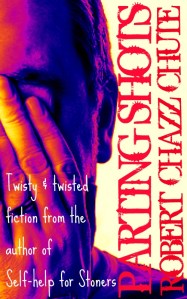
Twisty and twisted. Click the pic for more.

High: I thought KDP Select might be my salvation to really get things going. Amazon told me all I’d have to do was tell Bookbaby to withdraw from all other platforms to meet the exclusivity caveat. Any other action might risk duplication on Amazon’s site.

Low: BookBaby disagrees. I got a nice email (eventually—BookBaby seems awfully slow to respond to me of late) saying that they would have to withdraw the books from all channels, it would be permanent, and I’d have to enter my books into KDP Select myself. With no confidence in how long that might take, I don’t want to risk not having any books for sale anywhere, especially with all the promotion work I’ve done. I replied to BookBaby that rather than risk a screw up and no availability of my books for an indeterminate amount of time, I’d keep my books where they were through BookBaby and just get the new books straight into KDP Select without them next time. That’s a loss all around, I’d say, but I’m the one who will feel it most.

There are a lot of tragic starts and stops to this tale, aren’t there?

The word “thwarted” is pushing into the centre of my brain like the capricious thumb of an angry god.

High: I tried to organize a Buy X Get Y promotion for my book on Amazon.

Low: Amazon Advantage said they couldn’t do it because fulfilment for my paperback is through CreateSpace, which is POD and they’d need stock on hand. After a light scolding, they told me to go to CreateSpace for a similar promotion program.

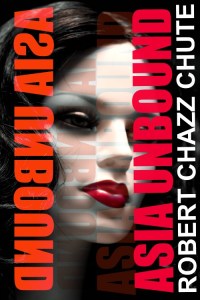
Asia_Unbound

Are we ever free from our secrets? Find out here.

Lower: CreateSpace said they’d call back. Then they sent me an email instead saying they have no idea what Amazon is talking about. (Note that CreateSpace is owned by Amazon, too, but never the twain shall meet, I guess, even if the plan would have made a buttload of money.) Once again, Chazz hurts moms. So much so, he begins to write about himself in the third person. With loathing,

Lowest: As I write this, I’m feeling a bit emotional and teary. The sum of the message so far is: Nobody knows me, I don’t matter and as good as the book is, it still doesn’t matter if I can’t convince anyone to try it out. And a fresh pile of bills arrived yesterday. There isn’t an author on earth who hasn’t felt this way, yet the lash feels equally new for every person every time.

Clawing and climbing out of the mire: So there are a few things I am doing which I’m more positive about. Writing and revising the new stuff is going well. (Three new novels this year! Whoo, and also hoo!) The Writing World will run an interview with me in early March. My friend Eden Baylee will also run a saucy little interview with me soon. I’ve sent out a couple more copies for book reviewers and will continue to seek out reviewers for all my books. The Self-help for Stoners podcast continues weekly and I had a clip broadcast on Succotash, a popular comedy clip show. I think I’ll have an excerpt from Self-help appear on the next The Word Count Podcast, in support of #IndiesUnite4Joshua (fun and a great cause.) I’m also getting quite a few nice mentions on other podcasts, like Logical Weightloss and The School of Podcasting.

But wait, Chazz! How do you account for that blip where sales came up a bit? It could be my promise on my podcast to gain converts individually by tying each new reader up and torturing them with sexual delights to gain converts. It could be that some new people I met lately have checked out my books or some found me through the Kevin Smith event when I was on

Get Vengeance and get surprised.

camera. Maybe the press release had some effect, but I tend to doubt it, at least until more evidence arrives through Google analytics.

So what have we learned about promoting our books? So far? We need more data.

I’d say I’ve learned this much:

1. Triberr has helped me get more new traffic to my blogs than anything else. I can see that clearly in my stats and my Twitter feed.

2. I have to find more innovative ways to get the word out. I’m working on that. (More later.)

3. I have to get more reviews. I have had excellent feedback on much of my work, but even when people are enthused, it doesn’t necessarily translate to reviews. I am soliciting reviews as my writing schedule allows.

4. I have to remember how much I believe in my books, because in the beginning, no matter who you are and no matter your experience, you’re just another schmo until you’re discovered. After you’ve made it, you’re a genius. Until then? Schmo. The writing awards and all the experience don’t matter. Yet.

Most important?

Did I mention I have more books coming out?

That will be what counts more than anything.

I have to provide a larger target for my readership to find me. 

My people are out there. I will find them. They will find me.

UPDATE: In keeping with the theme of getting thwarted, the Smashwords website is down at the moment, so the links from the short story covers are directed back to the author site until Smashwords is back up. The links in the The Dangerous Kind, Self-help for Stoners and Sex, Death & Mind Control (for fun & profit) covers work fine. You can still get everything I write across most digital book platforms, of course, (i.e. search Kobo and there they are) but as long as Smashwords is down, you can’t grab the short stories directly from that site. I will update as soon as the Smashwords server is back up. It’s all very…consistent with today’s theme, isn’t it?

LATEST UPDATE: SMASHWORDS IS NOW BACK ONLINE AND THE SHORT STORY COVERS NOW LINK BACK TO THAT SITE. Find out more about these short stories here.

~ Robert Chazz Chute is the author of Sex, Death & Mind Control (for fun and profit), the novella The Dangerous Kind, Self-help for Stoners and several suspenseful short stories with gut-punch endings, available at Smashwords. He’s in suspense, figuratively and literally and his comedy podcast, Self-help for Stoners, airs each Friday on Stitcher and iTunes. Visit the author site, AllThatChazz.com,  for updates on Chazz’s fiction and to download the podcast.

page10image5960
page10image6232
page10image6504

Filed under: Publicity & Promotion, publishing, Rejection, reviews, web reviews, What about Chazz?, What about you?, Writers, , , , , , , , , , , , , , , , , , , , , ,

Why Your Publishing Dreams Don’t Matter: Jabs & Counterpunches

A comedian once said, “You know who cares about your problems more than you do? Nobody.”

I’ve opened and closed two alternative medicine practices. The first time I shut it down because I moved far away. The second time was November 1, to write and publish full-time (and here we are!) With each experience I learned this: It is stupefying how unimportant I am. When a business is over, it’s over. People with whom I’d developed long relationships moved on, disappeared and, for them, I no longer exist. They came for a service and they have no interest in checking out what I’m doing now. For most, you have one role that fulfills their needs and just because you’re interested in something new means nothing. I’m not bitter. (Really!) But I was…inexplicably…surprised. On my last day of work, there were no fireworks. Just a little second-guessing: What have I done?! And rum. I toasted my wall certificates and twenty years of service now behind me.

I had a similar surprise with the birth of our first child. I thought the universe should stop, leave us alone and just send in the checks, thank you very much. And shouldn’t every child born in a hospital receive a plaque that stays up forever? (True story: as I stood by She Who Must Be Obeyed while she was in scary labour, a client walked into my office and complained to my secretary that I wasn’t available. And she was really angry about it. As an accomplished massage therapist, even I couldn’t pull said client’s head out of an ass that deep.)

Diagnosis?

Silly Narcissism and Advanced Entitlement Syndrome.

The disease is a pandemic, a silent killer of your hopes and dreams of literary legacy.

And so we come to your dreams in publishing. I have dreams, too. And they don’t matter, either. No one owes us a chance. The only way to develop an audience is to give people a reason to pay for your book with your unique voice, your twisted plot, your different take, your soaring prose, your quirky charm and wit. Or at least have a sexy cover and write a book blurb that makes them suspect you might be capable of these talents. People pay for books because they read your amazing blurb or someone they trust recommended it or you got a good review or a great intro from a celebrity or won a major contest or they received a free excerpt and (this is critical) you entranced and engaged them. 

Jab:

Your friends and family? They’re already tired of you going on about your book.

(Don’t feel bad. It happens to everyone. I’ve already exhausted my friends, too. And I have so few.)

Counterpunch:

Extend your reach somehow.

Get into Goodreads, do a podcast, hold a contest, do a give away, do press, make an event.

In short, do something that engages strangers with your work. That’s right. Scary strangers who may hate you. Your mom can only buy so many copies.

There’s a parallel in stand up comedy. It’s really hard to get a start in stand up. First, you have to be funny and you need to write a lot. The hard part is the on the job training where you get onstage at open mics and start impressing people or humiliating yourself horribly in ways you never really forget and hardly ever live down without therapy.

Some comedians start out with “Bringers.” A Bringer is where a club manager will let you on his stage to do your act as long as you bring a bunch of friends to fill seats and pay for the two-drink minimum on a Monday night at 11:30 PM. It’s scuzzy. You perform (a bad act) for free, the club gets paid on an otherwise off night and, you hope, your friends laugh. They’re your buddies so they probably will laugh. And that’s the problem. It’s safe and you won’t know what’s really working and worse? You probably paid for half their drinks and their tickets. Instead, perform in front of dangerous strangers.

Artists must write and paint and dance and sculpt and perform for strangers. It’s not really working unless people—who could hate your work—love your work.* Your publishing dream is a nightmare until people you don’t know start a buzz about your books.

This is not to say that friends can’t help you in your publishing journey. I am saying friends can’t carry you all the way around the track. You must somehow figure out how to expand your network beyond the people you know and the immediate few contacts of the people you know. We must all write for strangers. After they decide they like what you write, maybe you could be Facebook friends.

Don’t give up on your dreams. Do wake up to make them happen. 

Yes, that sounds like the platitude pasted under a sunset in one of those inspirational posters people routinely ignore.

*”It’s not really working unless people—who could hate your work—love your work.” Please note: Many of your critics make no distinction between you and your work and you certainly won’t, either. I was being coy. Art, especially now, is a business of personality. This business couldn’t be more personal. Those strangers who hate your work will actually hate you and they all want to cut you with rusty spoons.**

**This point is only mildly overstated for full effect. Have a nice, productive day.

Filed under: ebooks, getting it done, Publicity & Promotion, self-publishing, writing tips, , , , , , , , , , , ,

On judging books by their covers

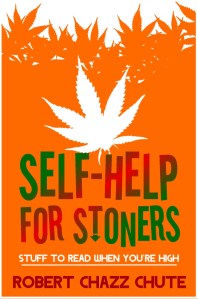
Thank you to everyone for your input on the covers for my book, Self-help for Stoners, Stuff to Read When You’re High (available on all e-readers Nov. 1, cha-cha-cha!)

The input has been put in. By a huge majority, the votes are for the bright orange cover (below). When it’s on a shelf, digital or wooden, it will stand out. It was an interesting experiment to see how people reacted to the covers. The happy thing is that, even among people who weren’t so sure about the orange cover, most of them still thought that cover could be effective. The other aspect about book cover colors is a little more inside baseball: The rule of thumb is that, unless it’s a golf or gardening book, green covers don’t sell very well.  (It’s one of those weird little details I learned from the Banff Publishing Workshop. It was reinforced by years of selling books for multiple publishers. I’m not sure about much, but that tidbit is pretty consistent except for The Celestine Prophecy.) 

Soon you’ll be hearing from my graphic designer, Kit Foster of www.kitfosterdesign.com. Kit’s a novelist, too, and very talented. Someone told me the other day how impressed he was with Kit’s covers. They do look like they’re from a large publishing house, not my tiny kingdom of Ex Parte Press. We’re all told we shouldn’t judge a book by its cover, but we all do. Without a solid cover, no one will pick it up or click on it to discover the tasty treats inside.

The process of working with a graphic designer: When Kit and I started a dialogue about book covers, the arrangement evolved organically. I described what I had in mind and sent him a sample of the manuscript. He suggested a few things and I saw his wisdom and asked for some tweaks. He sent me a cover and we narrowed it down with another round or two or three of tweaks. His input was invaluable. I have no idea how he does what he does and I bowed to his experience with graphics. Even though I have a deep background in selling books, my focus was the words. Kit came up with the images to sell the words. With Sex, Drugs & Romeo, the final graphic is very close to his original proposal. With Sex, Death and Mind Control (for fun and profit), we went back and forth a bit more, but Kit was always patient and helpful. The only element I knew I wanted to keep was the author tag. I wanted it to be consistent across the bottom in cherry red on all the covers so my books would be instantly identifiable for cross-promotion purposes.

Kit’s great at what he does and a photographer friend of mine is also awesome. I’m going to ask them to guest post and drop some science on us about the art of book cover creation. In the meantime, rethink your green cover and ask for a poll from your network of writer friends and readers. People will often help if you dare to ask.

Filed under: Books, ebooks, self-publishing, What about Chazz?, , , , , , , , , , , ,

TOP TEN: What used to be cool

I used to think people don’t change, but we do, around the edges.

Here’s my list of what used to impress me…overly.

1. Movie memory: My wife remembers where we were on vacations. She recalls the restaurants, the sights and the good times. I can’t remember any of that. My memory box is stuffed with movie dialogue. In fact, that’s my super power. My parents owned a video store and I watched at least two movies a day for years. If you’re watching a movie with me and I feel the urge to show off —a sad, dependable occurrence — I’ll jump in and tell you the next line before the  actor can deliver it. It doesn’t have to be a great movie like The Karate Kid. It could even be The Karate Kid 3.

I’m briefly, ridiculously, proud when this happens and She Who Must Be Obeyed smiles tolerantly. But it’s not a super power that saves babies from house fires. I can’t monetize it. Any memory that’s at all useful, and much that isn’t, can be found on the web. Every time I hear a podcast where the host and guest speculate about what happened, which movie was what and who was Miss October 1993, I think: Look it up! We don’t need our pitiful brains anymore for trivia!We’ve got Wikipedia and the hive mind! Google it!

If our experience makes us what we are and all I’ve got is movie dialogue?

I. Am. Screwed.

2. Unguarded moment memory: Yesterday I chatted with a college buddy on Facebook. We have a strange friendship because: on the political spectrum, I’m Lefty Lefterson, he’s to the right; he loves debate and I love people who agree with me too easily; and we weren’t that tight in college. We even came close to getting into fisticuffs once. And what’s more? He doesn’t remember it. I have joked with him, somewhat passive aggressively, that I remember all his unguarded moments. We spent very little time together at school, but for some reason, as soon as I was around him, my brain box was wired in to his every utterance as if he were on film. (See #1)

One incident in particular became a source of hilarity: In the journalism school newsroom, he looked at me and then he ogled my girlfriend (who years later became my wife.) “How could a guy like you get a girl like that?” he asked, genuinely dumbfounded. I was a tad sandpapered by that at the time. Now, as I write this, I’m suppressing a giggle. He’s a supportive, funny guy who manages to think and smile, often at the same time. I don’t have that capacity and I admire it. But my wife’s still hot.

When I bring up unguarded moments from the past, my buddy has a certain lopsided smile of chagrin. I confessed to him yesterday that I have an eidetic memory for everything he said or did in college whenever I was within ten feet of him. (No, Marvel Studios won’t be making a superhero movie about this mutant power, either.) I told him that if I were him, I’d kill me.

But we’ve found transcendence. We laugh a lot. And I’d rather laugh than remember #2 sandpaper moments from the dead past.

(I’m an asshole for carnivoring yesterday’s conversation and bringing this up at all, so this was the last time.)

3. Domination: I used to watch Bruce Lee, Chuck Norris, Jackie Chan and a host of Hong Kong martial arts movies obsessively. The idea that one man could dominate others with precise kicking skills was attractive. Now it strikes me as silly, simplistic and repetitive. Back then, I aspired to — this is really embarrassing — a whole whack of macho bullshit. As I edit my books, the theme that macho doesn’t mean mucho comes up a lot. Many of my stories explore how men relate to men, how men relate to women and how to be a man without devolving into a bully or a pussy.

I’ve figured out that my need for domination wasn’t rooted in strength.

That bullshit was all about fear.

4. Being a loner: I grew up in the ’70s and ’80s, so I wasn’t brought up by parents, but by movies. And what do all cool movie gods have in common? They’re alone.

Dirty Harry didn’t have to pick up the kids from daycare. Except for Casablanca, even bulldog-faced Bogey got the girl. The movie was about the getting, never about enjoying the having. Bachelors are available and open to romantic and adventurous opportunity. They don’t have to arrange a babysitter before they go on safari or take up a mission. Martin Sheen wasn’t on screen debating about who left a ring in the tub after the crazy caper to tunnel into the bank vault in Loophole. Heroes were alone and liked it until they chose, at the end of the story, to start a new, more mundane, domestic story. The few female heroes of that era were largely  indistinguishable from men. The glamorous life was not a life that included children. All movie heroes (who aren’t superheroes) were, and are, marvellously egocentric.

Since I’m not-so-marvellously egocentric, emulating The Loner with a Mysterious Past or The Last Honest Man seemed a good thing. I need space and a buffer zone and time to myself, too! I’m a writer. Of course being a loner was the key to happiness!

But I was confusing fiction and reality. 

Being a loner in real life isn’t glamorous. It’s lonely. 

5. My library: I’ve been getting rid of a lot of books, but I still have a lot of books. My collection not only conveys to visitors that I’m bookish. It says, I’ve found an alternative way to further insulate my home. Look at all those books! See? I must be smart. Please love me! Respect me even though I prefer books to interacting with people!

SAT question:

A doughy guy in a midlife crisis is to an expensive red sports car

as you are to…?

Choose one:

A. The hypotenuse of the square

B. John Adams

C. the Bill of Rights

or D. books.

Yes, D was the correct answer.

As my e-readers fill up, the walls of books look less like a personal statement of integrity and more like (Krom forgive me) clutter.

My new policy with paper books is to sell them or give them away once I’m done with them.

If all that macho bullshit was about fear,

my hoarding is about low self-esteem.

6. Anger: I mistake self-righteousness for being right. Often.

I always loved that line from Dr. Bruce Banner just before he turned into the Hulk: “Don’t make me angry. You wouldn’t like me when I’m angry.”

You know what I’ve figured out about readership with all the blogging I do?

People don’t like me when I’m angry.

People like me when I’m honest and authentic.

Well…most people. Fuck those trolls.

(See what I mean?)

7. Heroes: My daughter asked me who my heroes are. Her first guess was, “Kevin Smith, right?” A few glib, funny answers sprang to mind, but she had that earnest look on her face, so I went serious and gave her the true, complicated answer.

I like Kevin Smith a lot for his independent spirit, wit and smarts. We agree on a lot. He’s definitely Top 10 material, though I get the feeling he’s also a mercurial god who can be moody. Maybe that’s why I relate to him. But I’m lucky because I know my top heroes personally. They aren’t nationally known, but they should be.

My heroes are celebrities in small circles who lead by example:

Anne is the bravest woman I’ve ever known. She suffered greatly from a terrible disease, nearly died several times, and overcame it all to rise again from her electric wheelchair and walk again. She remade her life long after most of us would have given up.

The late, great Reverend Johnny T. Collins was the single best Christian I’ve ever known. My love and respect for him hasn’t changed a bit though I became an atheist after his death. It would grieve him enormously to discover that I became an atheist largely because of his death.

One of my best friends (I’ve mentioned several times in this blog) is Peter. He has a super power that’s much more useful than mine: Peter makes friends easily and unselfconsciously. Few people have so deep a capacity for joie de vivre. He’s forever the Big Man on Campus no one can hate. (As opposed to the other Big Man on Campus, the smug bastard who led the football team and everyone secretly hoped would get leprosy.) Everyone is richer who has Pete in their lives.

And number one? I’m a very lucky man because my wife is hero number one. She’s the single most kind and generous person I know. (Also, as previously, pervilly mentioned, hot. Really can’t go without mentioning that.) It makes sense that the woman I’m married to must be a paragon of patience.

The heroes I know as individuals are beyond cool. But heroes as a class of people to look up to? No. Heroes as a group are overrated. Kevin Smith, for instance, idolized Brice Willis until he worked with him. I’ll never forget Kevin’s look of regret and disappointment when he stared at the floor and said, “Never meet your heroes, man.”

My heroes are stellar people who are my friends and family. They are people I can rise to be among and still belong. Any hero worth the title empowers you, assuring you that you can be a hero, too.

Don’t just watch heroes. Be one. 


8. Greatness: Perfectionism is self-hatred or, as writer Mur Lafferty says, “It’s okay to suck.” I write books. I’ll begin making them available to the universe this fall. The universe may or may not notice. That’s okay because this is what I do now, whether it goes big or stays small. Of course I want all my books to be made into movies and checks in the mail, but that sort of all-or-nothing thinking will hurt and hold me back. Last night I was up until two finishing a draft of my third book. I had stamina because I was excited about what I was creating. I wasn’t living in the future, thinking about accolades from strangers from whom I desperately want love, respect and money. I do want those things. But writing is about how to make the story more clever, more funny and more surprising. I get brain tickles from the dopamine kick of doing my thing.
Enjoying the journey is the only way to get to the destination.

BONUS:

We learned in The Matrix “There is no spoon.” There’s also no destination. It’s all a journey.

CHAZZ PARADOX:

Knowing there is no destination allows you the chance to get to the destination

(Yup, I have a minor in philosophy, studied Zen and yes, that was annoying!)

9. Ego: When I started out as a therapist, I put on my ID badge and my shoulders went up and my chest went out, much the same way Erik Estrada always substituted posing for acting on CHIPS. I walked into my clinic, “The Expert.” I didn’t know it at the time, but this was self-aggrandizing bullshit I used to meet challenges I wasn’t sure I equal to.

Ego can make you do stupid things. Longer. Everybody needs self-esteem, but too much ego pushes people away and makes you a prick. As a prick in rehab, I know.

Ego leads to stupid shit, like planking. All over the web you can see pictures of people doing the latest thing: Somebody had the balls to stand up and call it planking. Or, as we used to call it, “Lying down.”

Too much ego betrays the truth about ourselves:

NOT. ENOUGH. SUBSTANCE.

10. Certainty: I used to want to know exactly how things will turn out. That’s part of the whole, living-in-the-future disease. I thought that if I could just get this one thing right, everything else would fall into place and success would be mine. Certainty is poison, though. Success comes from doing a lot of little things right along the way, not from sweeping mission statements (like this.) A need for certainty can lead you to avoid tackling those little things.

For instance, I don’t know how to format my manuscripts for ebook formats. Yet. If I had to know it all before I could start, I’d never get it done. Instead I’m learning as I go and nibbling away at it. I’ll never know it all and get it “perfect”, but eventually I’ll be able to digest enough to get my ebooks done and out there.

Recently I listened to a podcast about how to podcast. There is a staggering amount of trivia to know about podcasting. But you don’t have to know it all to begin. You just have to begin. A need for certainty can give you paralysis by analysis (a confident, oft-spouted aphorisms which must be true because it rhymes.)

George Bush elevated certainty as a virtue over intelligence. (Obama doesn’t convey any certainty, so the culture may have over-corrected on that one. Oops.)

Certainty is a conceptual synonym to dangerous things like patriotism and zero tolerance. When someone comes at me with too much certainty, my bullshit detector rings an alarm. Absolute certainty tells me there’s a loss of nuance, somebody’s a quart low on compassion and probably suffering a dearth of thinking.

And I’m sure of that.

Filed under: Books, ebooks, self-publishing, What about Chazz?, , , , , , , , , , , , ,

TOP TEN: The divide between the published and the self-published

At a recent writers’ conference, I was in grand company. I met a lot of cool people. Almost all of them were traditionally published authors. I watched them ask questions of panels of publishers, agents and editors.

Here’s what I noticed:

1. They don’t want to change along with the rest of the publishing landscape.
Inertia is powerful, even in broken systems. And why should they want to change? Things haven’t actually been good, but they didn’t have to worry about things they have to worry about now with the DIY route. It used to be that they were expected to write, mostly to the exclusion of all else. That was job #1 and everything else was supposed to be, in theory, someone else’s job. However, many authors have already felt this pressure change because more and more book promotion and publicity duties have been unloaded on them by publishers.

2. Some of them are excited to self-publish. Either they had bad experiences with agents and traditional publishers or they simply want more control of their books. Their out-of-print books and their unpublished books may have new life as self-published works. The digital revolution, to these authors, is an opportunity. (Also, some DIY authors see self-publishing as their way into legacy publishing.)

3. Some are still wringing their hands, aggressively…as if that will turn back time. Like the music industry, Blockbuster, milk men, buggy whips and enjoyable air travel, there was a lot of nostalgia in that room. But nostalgia isn’t an argument against the proliferation of ebooks. It’s sadness at loss and change. They mourn the loss of some of the perks. Though many authors complained about the six city book tour and hanging out in bookstores ignored and unnoticed, admit it: all those bookstore signings had cachet. Book signings were part of the dream of being published and it was nice to rely on the publisher to pay for the trip.

4. Some traditionally published authors denigrate indie authors.
That’s understandable. I admit, many self-published books are, at the very least, utter crap. Not just to my taste! Crap! If careless authors call themselves authors, their old world club is no longer quite as special in the new world. However, blanket condemnations are pretty silly. Writers on either side of the divide are amorphous and as unified as a herd of cats. That’s part of our charm.

5. I found many authors I listened to weren’t angry at indies. They weren’t pointing fingers with nonsense “pay your dues like I did” rhetoric. Instead, they were worried that they themselves couldn’t adapt. Look at the demands on the self-published: write, revise, edit, review, format, upload, distribute, promote, market, repeat, improve and next time so it all faster. So much for self-publishing being the lazy way to get published. The mantra is, “When will I have time to write in this environment?” Indies worry about this, too. Though more books will be published digitally, somewhat fewer may be produced per author. As my self-published author friend Jeff Bennington observed recently, half of his time is spent writing and the other half is spent marketing. Somewhere in there, Jeff mixes in a job and probably eats and sleeps a little, too. There’s simply so much authors have to do to have a chance at getting noticed (and perhaps even getting their books bought.)

6. Some view digital publishing as part of the decline of literature. Hm. That’s an interesting one. The digital revolution propagates more books conveniently therefore there are many more books out there. If you are very concerned about the difference between low brow fiction and vaunted literature (say “literature” with a royal British accent), then go write some literature, you big baby. If it can’t be found amid the din, that doesn’t mean it’s not available. It’s means you can’t sell it. If the argument is that you don’t like the taste of the hoi polloi, that’s not digital publishing’s fault. That’s your fault. Or maybe it’s the educational system’s fault. Or the human brain isn’t as good as you’d like. You can blame readers, I suppose, but that’s a rather unprofessional stance. Most people who claim their stuff is good but out of step with their fellow humans are really just writing stuff that can’t connect. On the other hand, lots of people (well…English majors) will love you high-lit writers after you’re dead. So there’s that.

7. Some traditional authors are very concerned about the change in gatekeepers.
It’s not a small group of editors anymore. The market is the gatekeeper. Democracy can be scary because the group may go where you don’t want it to go. There’s still a very strong market for vampire books and bodice-ripper romances and yes, even the Jersey Shore, for instance. If actual readers don’t want your fiction, there might still be a market for it with traditional publishing (which, by the way, isn’t disappearing completely) but traditional publishing is less adventurous the bigger the press. You’ll have better luck with a small press or DIY. It’s as if the kids who ran the chess club suddenly had to contend with a bunch of dumb jocks getting a voting membership…and the lunkheads want a kegger.

8. Authors want reassurance that bookstores will survive. What am I? A freaking miracle worker? You want a combination of Harry Potter and Merlin to fix it so more bookstores won’t die? Magicians are on film, TV and in books. Hey! I love bookstores, too! But that’s more nostalgia. (See point #3.)

9. Many authors will carry on with their traditional publishers. They got in early and they got in good and they’re going to ride that train right to the end of the line and hope the fuel doesn’t run out. Yes, they wonder about the pittance publishers are throwing them with regards to ebook royalties (or wonder how well those sales are recorded.) Yes, they’ve had spats with their agents. But a broken system isn’t a dead system and there is…eh, has been…much to recommend it.

10. Indies and the traditionally published agree: its about the writing.
We all love good books. We may be dubious about how it’s delivered, but the core product is no less valued on either side of the divide. The concerns about the delivery and quality may vary, but we’re all writers and readers.

It used to take a powerful store of hope to be a self-published author. Now more faith is demanded of my traditionally published friends.

Filed under: authors, DIY, e-reader, ebooks, Publicity & Promotion, publishing, Rant, self-publishing, Top Ten, Writing Conferences, , , , , ,

Shocked yet not surprised: Indigo halves its bookshelf space

Here’s the link to Five Rivers publisher Lorina Stephens’ excellent post on how Indigo is changing its returns policy (45 days and you’re out!) and cutting its space for books in half. So much for anybody whose name isn’t Rowling, King, Meyer and whoever the guy is who came up with Go the F**k to Sleep. This stirs up a lot of questions for people whose names are not those names. For instance, how many scented candles does anyone really need to buy in one lifetime? And how will traditional publishing cope?

For me personally, this is not a big deal because I am not in the least surprised. As I’ve been saying, this is not an if. It’s just about when. Blockbuster is battered senseless and HMVs are shrunk to nubs. I am so the opposite of an early adopter of new tech I’m nearly Amish and I don’t go near the Busted Block nor do I buy CDs anymore (though I understand some people still make them, everybody’s just picking the songs they want off iTunes.) I anticipated this boostore shift and consider it to be The Half-Measure of Doom on the Road to Bookstore Apocalypse.

Ahem. Pardon the hyperbole, but I’ve encountered a bunch of resistance from people who are convinced that my sole focus on ebooks was career suicide. No matter what I said, the doubters were sure a book had to be in a bookstore to be “real” and “worthy” and “made of paper and stuff.”

And I said, “What’s a bookstore?” Now I’m doing my “Told you so” dance and though I should be ashamed of myself, to be honest, I’m not feeling it.

But seriously, bookstores are literally farther and fewer between. As they cut down on shelf space to make room for doodads to dust, yo-yos and novelty pens, there will be no shelf for indies. You want choice, variety and a taste of the new? Go look online because you won’t find it in a bricks and mortar chain store.

But enough from me and my reactionary delusions of grandeur. Lorina says it all in detail in her usual reasonable, convincing tone, so do go read what she has to say. 

Filed under: authors, Books, ebooks, Useful writing links, , , , , , , , ,

JK Rowling will finally sell Harry Potter e-books

Filed under: ebooks, , , ,

Publishing: Ownership

Ever see the follow-up to Get Shorty? It was Be Cool with Uma Thurman and John Travolta. While generally entertaining, there was a sour note and just didn’t feel at all right. It’s a problem with a lot of artistic gestation.

Uma’s character confesses her life’s ambition. She wants to turn on the radio and hear one of her songs. She says, “A song I produced.”  But she’s not talking about a song she wrote or sang or drummed or strummed. She’s talking about the bureaucracy that brings the art out and to the masses.

Producers talk about “their” films, “their” writers, “their” stable of talent. Like they own that talent, or at least rent it. When I hear an editor or agent refer to “their” writers, entitlement and ownership creeps into their tone. “I tell my writers…” “My books….”

But they aren’t your books, films and music, are they? Bureaucrats, like the rest of us, are each the star of their own movie. Money and access has been the root of that uneven power relationship.

Key words: Has been. Now agents and publishers are struggling harder to justify their roles. Why do you need an agent for access to digital publishing when you can DIY? Why should an author only get 25% for ebooks? (Or Harlequin’s egregious offer of 8%!) Meanwhile, some agents are morphing into writing coach services, expanding their offerings to stay in the role of taking care of authors. Some authors want to be taken care of. That’s fine, as long as they know their options.

The writer has been the last to get the cash. The writer has written on spec and often been a “speck” in the way they’re treated. It’s upside down. Writers are content providers. We make up things from nothing.

If you still feel powerless before the system, a small cog in a great machine, a serf among lords, a peon The Man pees on—now you’re just doing it to yourself. Take ownership of your ambitions and destiny.

Don’t blame them.

If you want power, don’t ask permission.

Just go take it.

I did. I’m now president and chief bottle washer, turd polisher and executive in charge of toilet paper replacement and Creative Arts at Ex Parte Press. Boo-ya!

Filed under: agents, authors, Books, DIY, ebooks, Editors, getting it done, Useful writing links, Writers, writing tips, , , , , , , , ,

Writers: What are you worth?

At last week’s Writer’s Union of Canada conference in Toronto, an author asked the head of ECW Press: “Why should authors should get a royalty of 25% (of net) when they could get 70%  publishing on their own digitally?”

Good question. 

The question rose from a discussion of ECW’s new ebook imprint. The replies from the panel were interesting. First there was the assertion of the value of editorial input, an advance of $500 and a promotion budget of $800. Production cost was $1600. So, the publisher’s risk up front was $2,900. The ebook price was set at $9.95 (though Amazon dropped the price to $7.96.)

The publisher emphasized his risk, saying that most of these ebooks haven’t been runaway successes and, because they are solely digital, it’s difficult (or impossible) to get them reviewed in traditional venues. The Globe & Mail refuses to review ebooks, even though ECW is a traditional publisher. (Insert your own joke about the fragility of newspapers’  relevance here.)

By now, my objections to these answers are pretty obvious: 70% is more, the publisher’s price point is too high for the competition, hire your own editor (edit and hire a graphic designer for less than $1600 and format it yourself), $800 for promotion* , $500 advance and giving up e-rights  frankly doesn’t make me swoon.

Am I missing something here? And, as a writer, what about your risk? What about all your time and energy invested as a writer? It takes much more of your finite resources to produce a book out of nothing than it does to shepherd it through to publication. Right?

What do you think? I welcome your comments.

Next post: Promoting your book. 

Filed under: DIY, ebooks, publishing, self-publishing, Writing Conferences, , , , , , , , ,

Bestseller with over 1,000 reviews!
Winner of the North Street Book Prize, Reader's Favorite, the
Literary Titan Award, the Hollywood Book Festival, and the
New York Book Festival.

http://mybook.to/OurZombieHours
A NEW ZOMBIE ANTHOLOGY

Winner of Writer's Digest's 2014 Honorable Mention in Self-published Ebook Awards in Genre

The first 81 lessons to get your Buffy on

More lessons to help you survive Armageddon

"You will laugh your ass off!" ~ Maxwell Cynn, author of Cybergrrl

Available now!

Fast-paced terror, new threats, more twists.

An autistic boy versus our world in free fall

Suspense to melt your face and play with your brain.

Action like a Guy Ritchie film. Funny like Woody Allen when he was funny.

Jesus: Sexier and even more addicted to love.

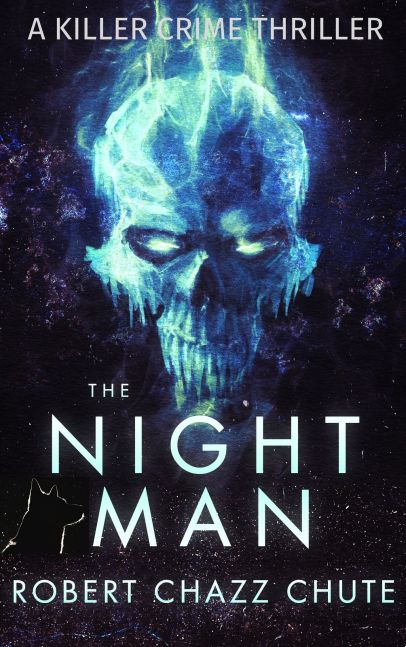
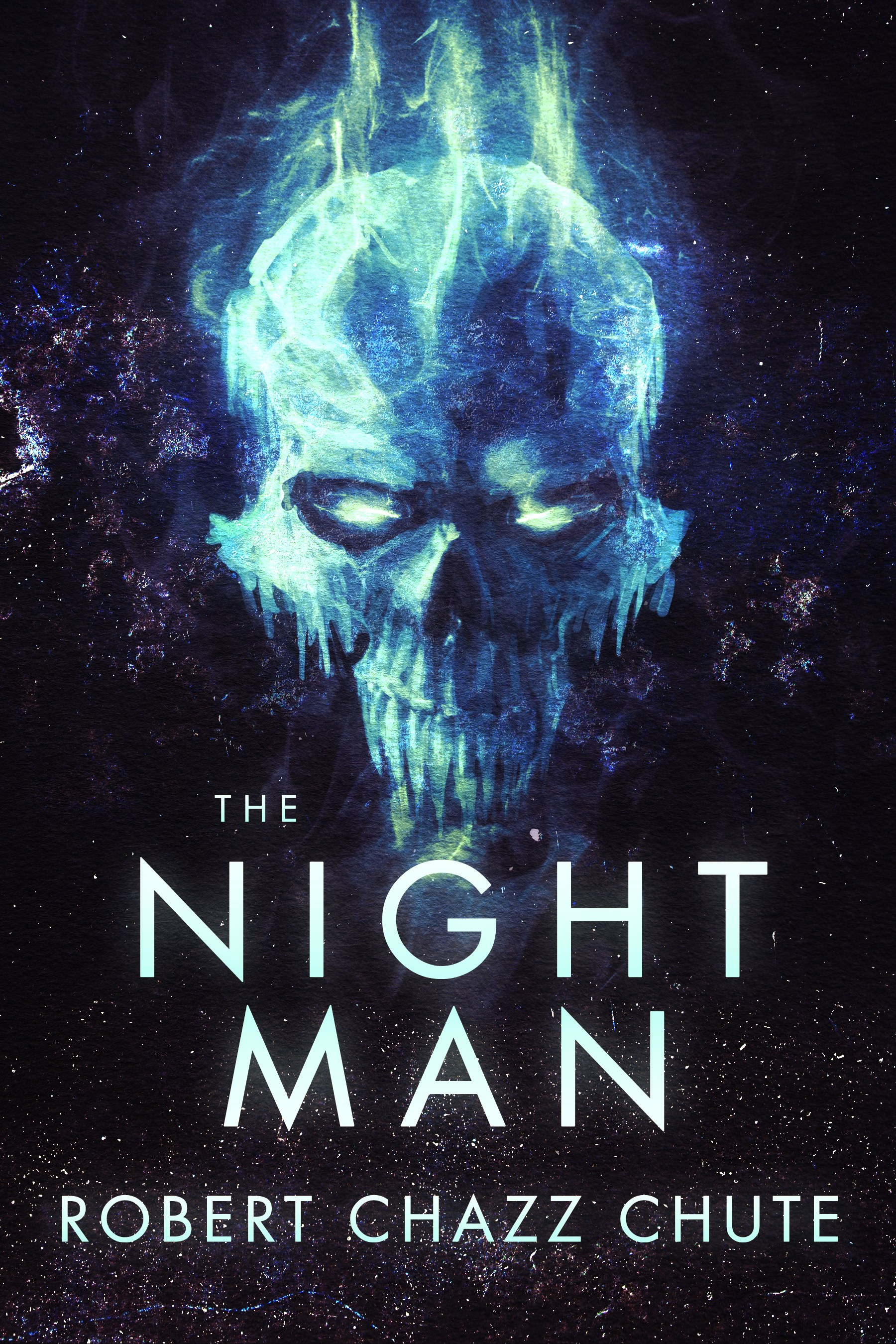
You can pick this ebook up for free today at this link: http://bit.ly/TheNightMan

Join my inner circle at AllThatChazz.com

See my books, blogs, links and podcasts.

Enter your email address to follow this blog and receive notifications of new posts by email.

Join 2,063 other subscribers