C h a z z W r i t e s . c o m

See all my books at AllThatChazz.com.

Writers: Who do you want to be?

Ever been to a writer’s conference or a Comi-Con? Both kinds of conventions have something in common: Lots of people who wish they were someone else. The exhibitionist dresses as Poison Ivy (and has very close friends willing to paint her ass green.) The twenty-something is dressed up as a sad Autobot made of cardboard. The writer wants to be an author. Of these three examples, it’s the writer who can do something more concrete and lasting about his or her ambition. 

I feel self-conscious, uncomfortable and sometimes a little claustrophobic at these events. Mainly, I’m acutely aware of the Us and Them aspect of the relationship. The “celebrities” are over there, with security, publicists, handlers and an aura of wary separation. We “wannabes” and fans are in the pit, reaching up, grasping at the edges of dark holes, daring to touch the light in search of heat.

We yearn. We have not attained.

As writers, we want recognition of our work. We want privileges and respect, too. That power is illusory, sure. Knowing intellectually how fleeting and useless it is doesn’t make that goal any less tantalizing. As powerless as writers are in so many ways, the indie author feels his or her potential most. That’s the power of seething delusion transmuted into hope by our next great idea for a book. Art seduces its creator first. Indie authors have few barriers to publication and little time to wait. All that kinetic potential can make you high. Unrealized potential can make you angry.

It’s not jealousy that gives me this grim face. My annoyance is at myself. I’m bothered that I didn’t plan out my life in such a way that I am who and where I want to be. I’m not a “wannabe.” I’m a “shouldabeenbynow”. I want to be comfortable being me. I don’t want to stand on the outside of that metaphorical velvet rope, wishing I were someone suffering the problems that success brings. I want it all and, as Queen sang, I want it now.

Someone will tell me I should be happy with who I am. Bullshit. From where, then, would my ambition come? Needing to escape makes me try. I yearn for that addictive, dopamine-fueled floating sensation that comes with the composition of new life. I long for happy readers extolling me for aping God. Sharing entertaining stories with huge numbers of readers gives me stamina for the late night attack on that difficult, late middle in my manuscript. Greed and ego give me patience for solving seemingly endless formatting problems.

Let’s be clear: Wanting things is not the path to enlightenment. That’s okay. I’m not on the path to enlightenment. I’m on the path to publication. 

Some people say greed and ego and recognition are unworthy stimulants to propel you on your course. I say, take your motivation where you find it and go forward, self-aware and honest. Clearly, I’m not in the spirit of these events. I’ll go to these things again when the organizers ask me to sit on a panel. I’ll enjoy it much more when there’s someone excited to speak with me, not the other way around.

Meanwhile, my place is at the keyboard

dreaming up the lies

that make me who I am supposed to be.

Filed under: publishing, , , , , , , , , , , , , , ,

Enter now: It’s the LAST DAY of the Six Words or Less Contest


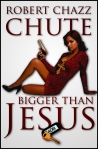
Click to get Bigger Than Jesus here

Enter the Six Words or Less Contest and get your name in Higher Than Jesus, my next crime thriller in The Hit Man Series

The grand prize winner gets a copy of the print book, the ebook, their name on a character and promotion of their book, business, podcast, charity or website on my podcast.

POST YOUR ENTRIES ON THE CONTEST THREAD HERE.

VOTE FOR YOUR FAVORITE ENTRY AUGUST 1 TO AUGUST 10 BY EMAILING: EXPARTEPRESS   GMAIL COM


Filed under: publishing, , , , , , , , , , ,

AB Challenge 24: More on Free Books. Moron Free Books.

Yesterday, we talked about free ebooks and me. Now let’s talk about you, too. Recently we said, “Free is the new 99 cents!” Now free is fraught with diminished opportunity and all that lousy freeness. Let’s delve into pricing ebooks for promotions and try to figure out for ourselves if this is a time to rest and recover or should we double down on ebook marketing?

History: Last year, selling at 99 cents still moved some books and gained new readers. The royalty wasn’t great but it was a loss leader. Now 99 cents just seems to be a loss. I had my novella, The Dangerous Kind, up for 99 cents. It’s a great story that slides the steel home at around 10,000 words. After analysing the sales (took two seconds) I’ve taken it down. Later this week it will be back on Amazon for $2.99, bundled in with some Poeticule Bay short stories. My short story collections sell, but offering a deal on a shorter work didn’t attract readers and my short stories on Smashwords (each priced at 99 cents) aren’t moving as is so they’ll all be in one collection: The Dangerous Kind and Other Stories.

Part of the problem was the old cover for my novella. I’ve blogged about this issue before so I won’t rehash it. I’ll only say: Be indie if you want, but make sure your covers don’t look indie. (My graphic designer, Kit Foster can help you with that at a very reasonable price for a very professional look.)
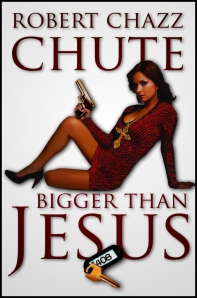
GET BIGGER THAN JESUS

The Loss Leader Pricing Paradox: You’re pricing your work inexpensively to attract new readers. You’re hoping new people will find you, take a chance on you, dig your flavour, buy all your books and spread your holy word. However, going cheap actually repels some browsers because they associate a cheap price with a bad book. So many times I’ve read in comment threads, “If the author values their work so little, why should I?” There’s someone who doesn’t appreciate the indie author’s bind. I’ll save your life for free. Does that make your life worth less? (Ooh, he’s cranky today!)

Which brings us to the Opportunity/Problem Paradox: The same browsers who think 99 cents cheapens the inherent value of the book often think no less of an author who offers their work for free. All ebooks have free samples, of course, but I don’t think very many potential buyers look at them. They go by genre, the author’s rep, the cover and the description (not necessarily in the that order.) Free is easy and no risk and I haven’t seen many people casting aspersions on authors offering free entertainment. Free is so ubiquitous, it’s considered the norm. It’s an opportunity for the reader and the writer. Free is so ubiquitous, it’s a problem because of the glut of free ebooks on e-readers. We’re drowning in free.

The Perceived Value Corollary: There are so many free books filling up e-readers that readers have no commitment to what they download. (Amazon says, “Click to buy”, but if it’s free, it really means “Click to download”, doesn’t it?) Many of those free books will go unread. When you can click and get, click and get, click and get, there’s no investment on the reader’s part in individual books. Instead, the hoarder mentality rises. What this means for writers is, the minute you’ve dared to slow down your narrative, the quicker the reader is to dump you for another free ebook. We’ve already seen evidence of this trend: there’s less of a market for literary fiction that demands more of the reader.

PV Corollary Case study: A buddy of mine was a sales rep for Margaret Atwood and loved her to bits. I told him I couldn’t get into The Handmaid’s Tale. I bailed out after too many slow pages examining the scratchings of previous handmaids in the rear of the bedroom closet. “Chazz,” he said,”What you’ve got to learn to do when a story slows down too much is grab a few pages and flip forward.” I’m a bit OCD about reading every word so I was a bit shocked. Skipping a page  had never occurred to me. “So…” I said, “You haven’t read it, either!”

The Hidden Unintended Consequence: On an e-reader, no one knows what you’re reading on the bus to work. Sales of erotica have risen because we don’t have to hide our actual taste or pay at a bookstore register manned by a silver-haired woman who looks exactly like Baptist Grammy. Only Homeland Security and the computers that record everything know all you really want is Fifty Shades of Grey. However, it’s not just about erotica. The market has ruled and so-called “downmarket” fiction is what people buy. The readers disagree with the historic arbiters of taste about what’s important. (Did you hear that pop? Somebody’s head exploded again. Clean up, aisle three!)

The Value Addition: When you buy a book — not just download it for free — you show commitment. You’re trusting the author to show you a good time and if you throw it aside, you aren’t just tossing the book. You’re throwing away the bucks you put into it, too.

The Cost-benefit Analysis: For readers, free books are great because choice is awesome. For the writer, providing free books is a way to gain the trust of the reader at no risk (to the reader.) It’s about exposure so you get ranked on lists. Many readers don’t trust reviews (often unfairly) so free is one  avenue into their hearts and minds. We’re making a short-term sacrifice to get our work read, to get on “also viewed and also bought lists” and to get our share of that sweet lending pot of gold from Amazon. Giving our precious away for free is an advertising cost that doesn’t show up as a debit in our bank accounts, but it’s still a cost.

The Cost-benefit Caveat: Since Amazon changed their algorithm, it’s not as happy a story as it was last December. Unless you wrote Fifty Shades of Grey, sales have slumped across the board since March and we’re now into the summer doldrums of the book buying year. The market is as cyclical as the sea. The wind will come back in our sails. The readers will return as free diminishes. Some authors are opting out of KDP Select, or opting in for one three-month cycle for the promotion and then opting out to stop the exclusivity clause and give other sales outlets a chance.

The Irrational Variable Conundrum: Does free devalue literature? Will our prices be chronically depressed because of free? As an indie writer, this isn’t a question that affects me. The higher prices traditional publishers charge for ebooks doesn’t mean that their authors are getting more dough. It’s going to the publishers for their high overheads. I only have to pay me so the 70% royalty rate on my books still looks pretty sweet to me. Like they used to say in cheesy, local car commercials on cable, “How do we do it? Volume!” I’m glad traditional publishers keep their ebook prices high. It gives a guy like me a chance at being discovered.

Will these short-term sacrifices mean long-term financial pain? No, yes and maybe. Who knows? I’m suspicious of too much certainty. Your answer may vary because the fulcrum for this heavy conundrum rests of an irrational variable: How high were your expectations to begin with? Is this side money, the size, say, of the little Swiss Chalet side salad? Did you want the comfort of the double leg dinner as an income? Or did you want the richness of the full Swiss Chalet Family pack with the coconut cream pie for desert? Input your variable and solve for X.

Conclusions: Given the free ebook glut, do you market even harder now that we’re into summer’s slow days? I think I’ll just stay the course. It feels like trying to run up the down escalator and I already flog hard enough as it is. Instead, I’m focusing my energies on putting up more of the work I’ve prepared and I’m writing new stuff. I’m giving the market more time to recover so I’ll be ready with more books to sell.

Putting up more books is the only sure way I know of selling more books.

Predictions:  New strategies will emerge, but no one seems sure what The Answer is. It might not be one answer and it might not be as dramatic and sweeping as the free ebook boom that hit the market when Amazon’s KDP Select algorithms benefited us so much back in December. I suspect we’ll be actively spending more money on advertising and promotion for our books in the near future. I’m aware of a few new and clever-sounding strategies, but they are as yet untested by the market’s searing flame. I’ll revisit said strategies in a future post, but today’s post is already too long and don’t we have some serious writing to do?

Filed under: publishing, , , , , , , , , , , , , , , , , ,

Author Blog Challenge 16: Why ebooks?

One of the writing prompts for the Author Blog Challenge questions how we came to choose ebooks. Did you ever see the movie Annie Hall? Woody Allen gets stopped by a cop after crashing into several cars. He drops his license and the cop says, “Pick that up.” Woody tells him he has to ask nicely because he has a problem with authority. The cops sighs and says, “Please.” Woody picks up the license. “I just have a thing about authority,” he says, “don’t take it personally,” as he tears the license to bits and lets the wind carry the shreds away.

Cut to a few years ago: I was at a writing conference in Victoria, British Columbia. There I met the first person I’d ever met who had given up on paper books completely. It was ebooks or nothing for her. It was the early days of early adopters and missionary zeal. It all seems evident to most of us now, but at the time, the self-publishing revolution was still new to many. Naysayers and doubters noted that Stephen King had tried an ebook and it hadn’t achieved flight. Actually, what hurt that venture was a lack of convenient reading technology and he said he wouldn’t continue the story instalments if there was an insufficient audience of subscribers. It wasn’t the death knell to ebooks. Mr. King was just a little ahead of the audience. Seeing the future at that writing conference was the moment I’d been waiting for: the technology was catching up with my anti-authoritarian temperament.

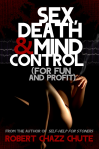
Sex_Death_&_Mind_ControlFor me, the revolution was less about ebooks per se and more about the potential for achieving autonomy. I began to prepare in earnest. I stopped buying Writers Digest and started researching the net for all the latest information. I didn’t want to read the old guard’s bias toward so-called “real” publishing still evident in industry magazines. The web was full of what I needed: new friends and DIY information.

Go back farther for a little history: Before Amazon, ebooks and CreateSpace, there were vanity publishers and scandals and writers defrauded, writers ignored by the establishment and a market that was very much a buyer’s market. By “buyers” I don’t mean actual readers like now. I mean agents and editors who were reluctant to take a chance on new authors. I didn’t even bother knocking on the palace door.

I had worked in traditional publishing for five years in a variety of capacities and I wasn’t that impressed with most of my colleagues. Almost all of the publishers I worked with from those days are gone. Harlequin (where I got my first publishing job) is still around. So is Douglas & McIntyre. That’s about it. Cannon Book Distributors, Lester & Orpen Dennys, The Canadian Book Information Centre, and numerous publishers I repped are all bankrupt and gone.

Instead, I wrote for myself, not a nameless agent’s whims. I went away and did other things: magazine columns and editing. I dabbled and freelanced. I wrote short stories and entered contests and several of those ended up winning awards. Eventually those stories found their way into my collections (Self-help for Stoners and Sex, Death & Mind Control.) I wrote several books, but given my experience with traditional publishing, I was averse to even trying to get my work published. I just wasn’t interested in going anywhere to a gatekeeper on bended knee. Let the palace burn. My practice was to write a book and then, before I could even think of sending it anywhere, I wrote the next one. That sounds silly, doesn’t it? Like Woody Allen in Annie Hall, I was headed to jail and I didn’t care. Jail was preferable to being a cog in a machine. I hate having a boss so much, I haven’t worked for anyone else since 1991.

With self-publishing, finally what some considered a flaw in my character can be a virtue. I approach the work not as a self-publisher, but as a publisher. I have higher hopes and lower overhead than all those companies I worked for so long ago. It’s not a question of whether founding Ex Parte Press and doing the DIY thing is a good idea. My personality allows nothing else: Does not share toys, does not play well with others. Many are familiar with “ex parte” from watching Law & Order. The strict Latin definition means “from one.” Sure, I still hire out jobs I need done that other people can do better, but basically, Ex Parte Press is “from one.” Is it scary? Sure. But then, this morning, I got two beautiful reviews, one for my new crime novel, Bigger Than Jesus and the other for Self-help for Stoners. I get all the blame and all the credit and I didn’t have to ask permission from The Man. I haven’t felt this free since I was twelve when I didn’t have to work at all. I am Spartacus. I am Woody Allen in Annie Hall. I am a child again. I am a free man.

Filed under: publishing, , , , , , , , , , ,

The Writer’s Challenge in 4 Simple Steps

Keeping with the theme that’s emerged this week, I just read an agent blog espousing why we should want to be traditionally published. I found myself rejecting most of her points easily. Validation? I can get that straight from readers. Marketing? Unless you’re Stephen King, very little is spent on marketing and I can do the promotion myself, just as they’d expect me to do with a trad contract (for free.) Partnership? Working in traditional publishing is not a partnership. Editors? I can hire editors. I can do just about everything a regular publisher can do because I am a regular publisher! (Get it?) I just happen to publish myself. Yes, I wish I had more resources, interns and more time in each day and it would be great to have the help, but I don’t have to give up the rights to my books forever to do that.

The article went on and some of the comments were misinformed and dismissive. I became exasperated because all this stuff is too familiar. I heard it in my twenties when I worked inside traditional publishing: Pay your dues, make your bones, and wait, wait, wait! We’ll value your opinion some day. Maybe.

I’ve promoted indies and traditionally published authors. I know going indie isn’t for everybody just as trad publishing isn’t for everybody. Circumstances change so we do switch back and forth. We’re all writers. We should strive to support each other because it’s a harsh world and we can each share information to become the tide that raises all boats. We are undervalued but we can value each other, respect the craft, respect the reader and respect ourselves. At least some of the people who say, “Wait, wait, wait,” are self-serving or past their “best before” date. Fortunately the world has changed and we don’t have to let someone else drive this bus and go where others want us to go. We can drive now, too.

And then I thought how tired I am of the trad vs. indie discussion and whom does it serve? I’ll do no more research today. I will not wallow in negativity. I’ll go write something great, work on my books, be the example and prove the naysayers wrong.

Trad or indie, that’s my challenge to you today:

1. Go write something great.

2. Work on your books.

3. Be the example.

4. Prove the naysayers wrong.

Filed under: publishing, , , , , ,

Indie publishing is getting better

Grammar police

Grammar police (Photo credit: the_munificent_sasquatch)

First bold statement:

The quality of indie books has improved.

We’re maturing. Ludicrously, readers expected the indie ebook revolution to produce immediate perfection, some even demanding a higher quality than they get from trad publishing. As soon as I post this, I expect a deluge of naysayers racing to come up with examples to disprove my assertion. That’s a misguided instinct, by the way. Yes, you could come up with lots of examples both tragic and comedic and I’d counter with a plethora of examples in favour of the indies. So let’s skip that and settle on this: I have over 200 books on my Kindle and my impression is that there aren’t nearly so many grammatical errors or typos as one might expect if you believe all those rabid grammarians moaning over on the Kindle boards.

Recently, I read an Amazon book review where some bonehead’s  first observation was that he’d counted five grammatical errors. Note that this was a book that he liked, but he went straight for that in his review’s first sentence. He criticized not as a book lover interested in story (which most readers are) but as a raging grammarian who couldn’t bear five errors in 250 pages. (I clicked the “non-helpful” button after I read that review.)

Second bold statement:

Most readers aren’t nearly as sensitive to typos as some would have us believe. 

As a writer, I hate errors in my books when they occur.

As a reader, I notice errors but my world doesn’t explode when I see them, either. 

In traditional publishing in the late ’80s, editorial departments were swollen with employees. Mistakes still crept in. They still do, trad or indie. We can’t afford eight levels of defence against errors. No one can hire that many editors and proofreaders. Errors will occur. But you know what?  When I get a book for $2.99 or less (or free), expecting perfection seems petty and silly, like angrily demanding lower taxes yet more services. We do need many eyes on our manuscripts. Everyone tells you to hire an editor and well you should. However, the edit and suggested corrections will also introduce errors, so comb it again. If you’ve gone through a major edit using Track Changes, for instance, you know the maddening confusion of figuring out what’s underlined and what’s not, making the changes and going cross-eyed after a few hours of peering at comma placement and comment boxes.

Most grammatical errors don’t obscure meaning so much you don’t get what the author was going for. No, this is not a call to publish your first draft, damn of consequences to readers’ understanding and comfort and ease up on yourself as a writer. This is a call for us  to celebrate the many authors who are obviously working hard to write well. Many of us are getting help to catch us when we trip.

Don’t mind the naysayers. Most of those rabid grammarians aren’t writers and I’m not even sure a bunch of them even enjoy reading that much. It’s like they take a book as a test and each typo is some kind of moral victory. That’s the Internet for you: perfectionism as a weapon to make haters feel better. But perfection is unreachable. (I just started a sentence with the word “but”! Oh, no! Yes, some people are still clinging to that.)

Perfectionism is a sign of self-loathing. Instead, go for excellence.

And lighten up. We’re getting better!

Filed under: publishing, , , , , , , , ,

Kit Foster Fiction: Robert Chazz Chute explains how to raise an army of assassins

Via Scoop.itWriting and reading fiction

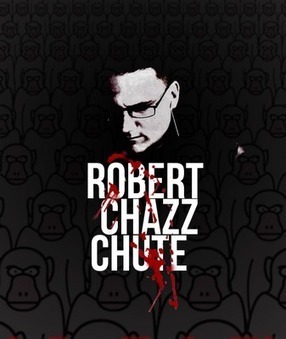
Fun author interviews come from fun questions. Kit Foster interviewed me at his blog. Swing by at the link below. (Kit’s an author and a great graphic designer, too!) Great graphic of my monkey army of ninja assassins! ~ Chazz

Via kitfosterfiction.blogspot.co.uk

Filed under: publishing, , , , , , ,

The mistake I made with my book cover (and how I fixed it)

Here's the new cover design for my novella. The graphic designer is Kit Foster of kitfosterdesign.com. IF YOU CAN'T SEE THIS IMAGE IN YOUR BROWSER, you can get the new cover image here: https://www.smashwords.com/books/view/83426

The Dangerous Kind is a top-notch, heart-wrenching novella of suspense (and I don’t just say so myself). Happy with the guts of the story, I put a bad cover on a good book. My reasoning at the time was that I didn’t want to spend money on any book that wasn’t a full-length work. I priced The Dangerous Kind at just 99 cents to introduce my flavor  to new readers. I did not consider that you can’t sell a gorgeous mansion if the front of the house looks condemned.

I created the first cover for my novella using picnik and morguefiles.com. I’m actually happy with some of the short story ebook covers I created, but with The Dangerous Kind? I made a mistake. The original cover makes sense to readers only after they’ve read the story. If I were a freakish hybrid with Bones McCoy after an unfortunate transporter accident, I might say, “Dammit, Jim! I’m a writer, not a graphic designer!” I should have asked for professional help instead of trying to do it on the cheap. I can recognize a good cover, but there’s a big gap between flying the plane and riding in back.

I was shortsighted. Once an ebook is for sale, you get to sell it forever. Why not make the best first impression you can? It will make a better return with a pretty face and you have forever to make back the investment. That’s what a good cover is: an investment, not a cost. My graphic designer is Kit Foster of kitfosterdesign.com (great guy!) so the cost was reasonable, too.

The other good move I made (finally!) was to ask for a cover endorsement from a fellow suspense novelist. I got one from a bestselling author: Jeff Bennington, author of Twisted Vengeance (and more). Jeff read The Dangerous Kind and gave me some nice quotes for the cover. Cover endorsements give readers courage to make that first click to buy our work and get sucked into our worlds.

Thanks Kit and Jeff. I may find new mistakes to make, but I don’t think I’ll be repeating this one moving forward.

Filed under: All That Chazz, authors, Books, ebooks, Publicity & Promotion, self-publishing, writing tips, , , , , , , , ,

VIDEO: Brace yourself for my eyes afire. Yeah, that’s just a little disturbing.

Last week I talked quote trailers. Here’s a fresh one for a different book: Sex, Death & Mind Control. If I had to do it again, I’d change the title. Why? Because I’ve run into a startling number of people who expect it to be porn or too violent for them (not that there’s necessarily anything wrong with that, but it’s not porn and it’s not even gory.) It’s twisty and weird and fun and you don’t see the groin punches coming. I ran into similar problems with another title, Self-help for Stoners. I write suspense, but my titles are obviously missing that mark.

I blame myself because I don’t have an intern around the office to accuse of incompetence and inadequate pencil sharpening. Oooh, but if I did…er…anyway, perhaps the quote trailers will change potential readers’ expectations. Download a sample from Amazon here or from Smashwords. I’m everywhere, and yet nowhere. I’m a riddle inside a paradox wrapped in a burrito. Which is a problem from a sales perspective but I’m confident my readership will find me. And if not, I’ll just have to suit up in my cape and cowl and go hunt them. By night. In a car with a jet engine that can turn into a submarine. The usual lengths authors have to go to find readers.

Now off to interview some intern candidates to see how tolerant they are to screaming fits, being called Alfred and cleaning up bat guano. The lair is looking untidy.

Filed under: book trailer, ebooks, Publicity & Promotion, publishing, What about Chazz?, , , , , , , ,

Ebook sales are being driven by downmarket genre fiction

Via Scoop.itWriting and reading fiction

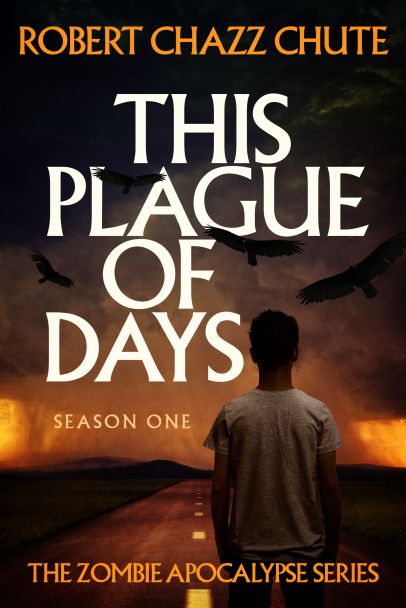
Somebody’s going to find this piece insulting even if it’s right. Especially if it’s right. My favorite quote from this piece from the Guardian is, “The reading public in private is lazy and smutty.”   This article does raise the question, “Am I busting my brains too hard writing a literary apocalyptic novel from the point of view of an autistic child with a fondness for Latin phrases?” Or should I relax my literary aspirations and ape The Road Warrior instead?   Doesn’t matter this time. I’m already in love with my book and it’s almost done. But how much should we consider the market before we start out? I mean, baby’s gotta eat, too. Click the Scoopit! link below to check out the Guardian piece and let the outrage mixed withplacid agreement commence.~ Chazz
Via www.guardian.co.uk

Filed under: publishing, self-publishing, , , , , , , , , , , , ,

Bestseller with over 1,000 reviews!
Winner of the North Street Book Prize, Reader's Favorite, the
Literary Titan Award, the Hollywood Book Festival, and the
New York Book Festival.

http://mybook.to/OurZombieHours
A NEW ZOMBIE ANTHOLOGY

Winner of Writer's Digest's 2014 Honorable Mention in Self-published Ebook Awards in Genre

The first 81 lessons to get your Buffy on

More lessons to help you survive Armageddon

"You will laugh your ass off!" ~ Maxwell Cynn, author of Cybergrrl

Available now!

Fast-paced terror, new threats, more twists.

An autistic boy versus our world in free fall

Suspense to melt your face and play with your brain.

Action like a Guy Ritchie film. Funny like Woody Allen when he was funny.

Jesus: Sexier and even more addicted to love.

You can pick this ebook up for free today at this link: http://bit.ly/TheNightMan

Join my inner circle at AllThatChazz.com

See my books, blogs, links and podcasts.

Enter your email address to follow this blog and receive notifications of new posts by email.

Join 2,063 other subscribers