C h a z z W r i t e s . c o m

See all my books at AllThatChazz.com.

We are not gambling writers. We are working writers.

I saw it again, today. Too often, people take the extreme end of an argument and generalize back to the middle to suit their worldview. It’s not logical. It’s bubble poppin’ time!

Example 1: Amazon’s trying to tell Hachette that it should sell the next Stephen King ebook for $9.99 or less. 

There are a couple of problems with this statement.

First, Amazon has categorically stated that some ebooks should be priced higher. Though Amazon’s statement on contract negotiations was short, lots of people missed that crucial detail:

“Is it Amazon’s position that all e-books should be $9.99 or less? No, we accept that there will be legitimate reasons for a small number of specialized titles to be above $9.99.”

If an author has lots of fans who won’t wait for a price drop, the exemption for authors at that level of success makes sense. The math will reveal which way to go. For most of us, lower prices are the way to go. Amazon speaks unusually clearly on this point:

“The author is getting a royalty check 16% larger and being read by an audience that’s 74% larger. And that 74% increase in copies sold makes it much more likely that the title will make it onto the national bestseller lists. (Any author who’s trying to get on one of the national bestseller lists should insist to their publisher that their e-book be priced at $9.99 or lower.)”

Amazon beat Hachette’s argument to death with math. Everybody makes more money by charging less than the inflated ebook prices Hachette wants to set. By “everybody”, it’s obvious we mean everybody but Stephen King and a handful of the 1% authors who are doing really well because that’s where the analysis of sales points us.

The default author we should be concerned with is not anyone at the extreme end of success. It’s you and me. There’s hope for us, but probably not the fictional Mansions in Tahiti Level of Hope. Which brings me to the other argument I see far too often…

Example 2: People say, “Hugh Howey is an outlier and most self-published authors will not equal his success.”

Hugh says himself that he’s a lucky outlier. (Talented, smart, likeable and writing solid books helps immensely, too.) Most self-published authors know they won’t become millionaires. That’s an aspiration that non-self-publishers often put on us as they sneer. We’re not stupid. We know the odds. We’re look at our sales stats seven times a day. We know! 

What some of self-publishing’s critics don’t seem to get, though, is that there are many author/publishers who are making a living by selling at lower prices for a 70% return. They aren’t millionaires, but they are meeting their financial obligations, paying mortgages and getting by. Some are doing even better than simply getting by. They are not rich. Few writers of any ilk ever make it to rich. However, writing is their job. They’re frequently doing better financially than traditionally published authors. (I’m not saying this to make anyone feel bad. I am saying I’m tired of all or nothing thinking among the mathphobic and terminally cranky fact-allergic.)

Still, there are those who refuse to acknowledge that, since the creation of the ebook market, the authorpreneur is a growing possibility for those with middle class aspirations. Not a probability, but a possibility. If you doubt that’s possible, I have evidence from The Passive Voice.

The role of writer has rarely paid well, but it’s a better deal for more of us now than it has ever been. We are not hoping to be lottery winners. We’re hoping to sell the next book at reasonable prices for a growing audience of enthusiastic fans. (There’s also never been a better time to be a reader, by the way.)

If I make it to middle class, that’s awesome. But it’s not about the money, Lebowski. It’s about the writing. It’s always been about the writing. I wrote books for years and never submitted them anywhere. I just wrote for me. Writing is an obsession. Obsessions don’t change whether I make seven figures or a single, dirty dime.

I write. So do you. Let’s keep it real out there. We don’t do it for the money. We do it for love.

Filed under: Amazon, author platform, Books, self-publishing, Writers, , , , , , , , , , ,

The Revolutionary Writer’s Manifesto: Ride that moose!

There is a myth a few really believe. It is the Myth of Originality.

Let’s pop a bubble. There are no new stories. I’ve seen a few stabs at a truly new story, of course. Those experiments are often bloody awful and unrelatable adventures amongst amoebas dwelling in the rings of Saturn. Screw amoebas.

Plots round the same bases all the time:

1. Good versus Evil.

2. Boy gets Girl (and variations thereof).

That’s okay. When a reader complains a story is unoriginal, they probably really mean that it is derivative. Unoriginal and derivative are two different things. It’s derivative if it overshoots homage, feels too much like something familiar while falling short of plagiarism. No story fails on unoriginality alone or all movies of the last few years would be failures.

What readers want is originality in execution, a unique voice and an uncommon angle or viewpoint. You’ll either give it to them or you won’t, but don’t be a weathervane, spun by the whim of the latest review.

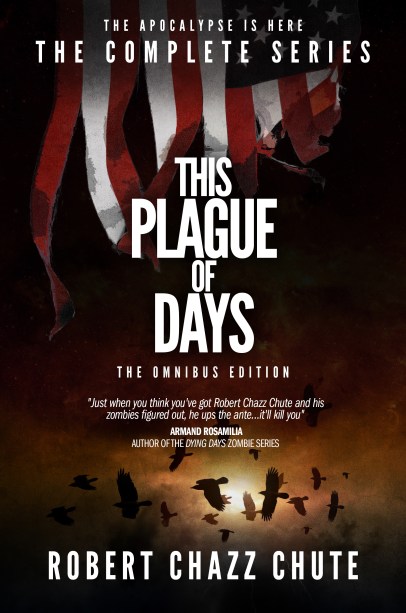
This Plague of Days, my apocalyptic saga, has been criticized because it started out in one plausible place and ended in another, rather magical place. That place is not derivative. It is merely unexpected and I make no apologies. I confess, I’m a little flummoxed by folks who find zombies plausible but roll their eyes when vampires show up.

Anyway, why should I apologize? The reasons given why a few don’t like my story choices are the same reasons the majority love it. If, amongst the action, we take a chapter to deal with the origins of good and evil in the universe, that’s my choice. The metaphysics chapter is my favorite…well…that and the many chapters where a horde of the infected attack Wilmington, Vermont.

Write for you, the writer.

If it doesn’t sell, that one was always just for you. At least you’ll be happyish with it. If you write for the crowd you imagine, you’ll often write for no one. Some people manage it well. They make a good living writing similar books and plumb expected veins. If that’s you, you do you and I won’t complain if you’ll let me do my thing, too. In fact, congratulations and good for you!

For instance, I don’t read Dan Brown, but millions do and they love his work. I bet he achieved that by writing for himself. Yes. Let’s not be cynical. He’s not writing by committee and poll and he’s entertained millions. Consider JK Rowling, too. Harry Potter started a copycat industry, but what she was doing wasn’t popular when she began. She wasn’t chasing a market. She was chasing her dreams despite being told by so-called experts that children’s literature would never give her a big payday.

Follow your vision. As we say in the snowbound depths of Canada ten or so months of the year, “Break trail. Ride that moose!”

The Feedback Tightrope

I’m not advocating that anyone operate in an echo chamber. I do get feedback from beta readers and I’ve altered choices because of that valued feedback.

However, some people seem to think they should have more input into those choices. “I wouldn’t have written it that way.” To which I say, “Go write your book. I wasn’t trying to read your mind through a time machine when I wrote mine.”

The Statute of Limitations

I’m not going to give you solid numbers on what or when anyone can use a recognizable device again. There is no number. All I ask is reasonableness.

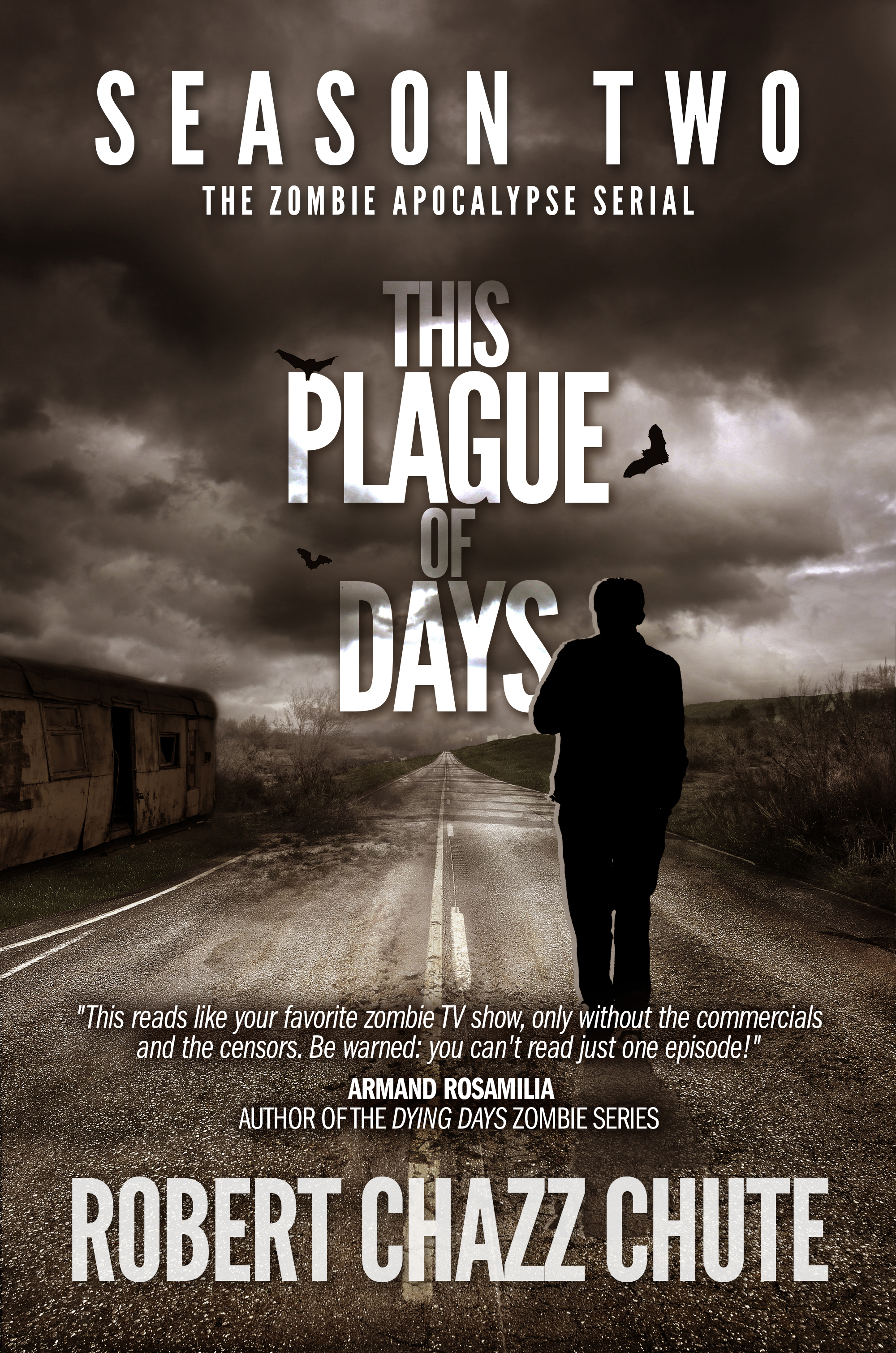
If This Plague of Days feels too much like The Stand to you, my reply is:

1. Thank you for the compliment! I love The Stand and it’s a big favorite among Stephen King fans. I’m not copying it but I recognize the similar elements, sure. I regret nothing.

2. “Similar elements” does not equal derivative. My characters are unique. It’s a different story in the same genre, that’s all.

3. The Stand was published in 1978. If not now, when am I allowed to write This Plague of Days or any other book that has any commonality with any other book you’ve read? Keep in mind that I’m almost fifty and not as fit as I should be. I can’t wait forever.

About Unconventional Choices

1. My crime novels are written in second person. Recently I read some twit announce that no book written in second person could have literary merit. Ev-er. “Too much you, you, you,” I guess. And yet, first person is all “I, I, I…” Somehow, we manage to soldier on with our lives and no link has yet been found between second person POV and killer tornadoes.

2. Bright Lights, Big City was published in 1984 to great acclaim in second person POV. Another author, (me, for instance) will get permission to use that POV again…when? From the curmudgeons? We’ll never get permission, so I’m not asking.

I need no one’s permission and neither does any writer.

That felt daring and liberating, didn’t it? But really, what’s the point of being in charge of what you publish if you can’t steer the ship where you want to go? Nobody gets into publishing for their health or to be safe. If you want safe, get into an industry that’s too big to fail: guns, drugs, banking, sugar, corn syrup or manufacturing lies for politicians.

The danger

I know this sounds dangerously close to the “I’m not here to make friends,” defense. (That’s what mean people on TV pseudo-reality shows always say. That and, “I’m not a dick, I’m just brutally honest.”)

Not every reader will agree that you should ignore them and simply follow your instincts when you write. They’ll punish you by not buying your next book. But really, is your autonomy and vision for sale for a couple of measly bucks? Is that the whorish vision of yourself you really want to embody? I doubt it. Besides, you’ll flourish when you write what you love. Follow your love and you’ll write more books. Only hacks write what they hate.

I’m not looking for 10,000 true fans by trying to be what they want.

That’s a moving target, and fickle. I’ll be me. Surely, somewhere out there, there are 10,000 people who are enough like me that they’ll dig what I’m doing. Right? Right? Oh, dear gawd! (Shoulda gotten into running guns and drugs for lying politicians!)

Doesn’t matter. I only know my mind. I’ll write for that audience and hope you appreciate my flavor. It’s okay if you don’t, by the way. No one is drafted into my army. I only take volunteers and my people do not clutch pearls or get the vapors easily. We’re here to escape the status quo, take the world and bend it to our will. Or fail. But we’re not here to be pushed around.

If I’m wrong, I’ll be wrong but happyish.

~ With the loss of a treasured friend, I had a tough week last week. It’s not really getting easier. One thing that has provided some solace is the number of people who have wished me peace here and on Facebook and Twitter. In my grief, I wrote. So many readers responded with kindness. I appreciate it so much. Thank you again. 

Filed under: author platform, My fiction, publishing, Writers, writing tips, , , , , , , , ,
TOP TEN: What you were waiting for…THE THONG OF COURAGE!

Ten Rules About Everyone:

1. We’re all scared. The ones who say they aren’t haven’t experienced loss yet or they’re afraid of appearing weak. It’s okay to be afraid. Fear can be wise, but not so useful it should take over your life. Feel that fear and wear The Thong of Courage!, anyway.

2. We’re all frightened of being wrong or looking stupid. Worse, some graceless people are hoping to catch us making one wrong move. Worse still, at some point, we will all be caught. 

What do we do next?

We snap The Thong of Courage! to remind us we are not defined by our mistakes if we learn from them. Forward! Down the Catwalk of Begin Again! Work it!

3. Everyone thinks they’re right all the time. Statistically impossible. Never happens. However, no matter what you do, someone is sure you’re wrong because you didn’t do it their way.

That’s okay. They think their subjective opinion cancels out yours. Maybe it would have yesterday, but today? Today you’re wearing The Thong of Courage! Behold, The Power of Thong!

4. We are all dependent on each other. Our stories are often about the one person who makes all the difference that saves the world. That’s almost always false.*

*Notable exception: a Russian officer defied military command protocol when the computers in his bunker told him US ICBMs were on the way. While his peers demanded a decision, he remained calm and thought it through. He averted global thermonuclear war by ignoring all the warnings on his screen. He determined that the attack was a computer malfunction and, of course, he was right. There was no “of course” about it at the time, though. We came so incredibly close to not being here and most people don’t even know it happened. His name is Petrov and that day he was wearing two Thongs of Courage!

5. We all envy people without knowing their struggles.

An author who is incredibly fortunate and gifted discovered that someone who had been a friend would not attend the launch party for her book. The friend was envious. What the friend did not understand was, even with all those blessings, nothing comes easy. It’s all work. There is no one clear path forward.

One person’s success takes nothing from another’s potential. When we slip The Thong of Courage! up our thighs and give a little wiggle, we feel inspired, not thwarted, by what others have achieved.

6. We are all humans. That means weakness. That means strength. To be human is a special thing, but too often we fall in with tribalism and blind nationalism. We choose teams and sides and brands. We see other people as The Other and distrust too easily.

“When we only seek enemies, we only find enemies.” That quote is from Superman in a Justice League of America cartoon I watched when I was eight. Often true, too. Superman is so thonged up, his underwear looks too thick to be a thong.

7. When we operate from fear, we often make bad decisions. (Bad news considering Items #1 and #2, eh?)

We’re scared we’ll get screwed over by Kindle Unlimited. We’re afraid of what Amazon might do someday, like change the royalty to two pennies. However, there’s not enough data yet in the first case and we’re worrying over a hypothetical in the latter.

But Thongers? We unite in the Now of the Isness of This Moment. Feel the raw psychosexual power of The Thong of Courage!

8. Worries about hypotheticals will still sneak under the Thong sometimes. What if we don’t have enough money to pay the bills if we get sick? Will we have enough money to get an education to get a good job? What if the roof leaks? There are infinite negative hypotheticals. 

Projecting negative possibilities into the future isn’t as useful as it once was. If you’re reading this on a computer (as opposed to psychically), you probably aren’t in a survival situation where you have to figure out how to cure meat in case the crops fail.

What might be more useful is to use our imaginations to attack problems and be proactive about the future. Instead of getting stuck in paranoia, try pronoia. (That’s the state of suspecting the world could be a positive place and not everything is terrible and out to stab you in the eye with an icicle.) Pronoia is the magic stuff The Thong of Courage! is made of.

9. We are all more alike than we’d like to think. 

I met a macho guy from another culture. He spoke in familiar, aggressive rhythms. He was forceful, but a nice guy. If I heard that same tone in another language, I might suspect he wasn’t a nice guy. However, as I listened to him in English conversation, I wanted to laugh at my foolish preconceptions. The guy only sounded angry. He was pontificating about pop culture to his friends.

As writers, our tool is imagination. When we aren’t writing, many of us use our imaginations as a weapon against ourselves. We fuel worry and create stress and that tears at the fabric of the Thong of Courage! True Thongers depend on evidence, not irrational, fearful maybes. We can use our imaginations for good. Start with pronoia. (#8)

10. We all seek validation. Too much, I think. We hope readers recognize our brilliance. We want Someone Else We Respect (and may not even know) to give us the nod and let us into the Successful People Club. There is no club. Worse, luck is more involved than we’d like to think in success. Worse still, if it existed, membership in that club would often be temporary.

Most of us won’t get such public validation. The outliers — those few, stellar successes — will be chosen for acknowledgement, adoration and jealousy, yes. Mid-list authors who do reasonably well will toil on, keeping the size of their checks secret. They’ll shut up about making $40 ~ $60,000 a year in part because it’s more than most get but also because it’s not as much as they’d hoped and they’re embarrassed by arbitrary expectations. Someone won’t approve. Always, someone won’t approve.

Most of us will fail by the usual monetary measures and chances are excellent Mom and Dad will lose sleep over the lawyer you could have been.

So don’t write for validation. Seeking other’s approval is not The Way of the Thong! Don’t wait for your parents to give your writing career their blessing. Stop expecting everyone to understand your obsessions. Do the work. Write. Write for the joy of creating and what comes will come. Or it won’t. Doesn’t matter. You’re a writer in an awesome thong, for God’s sake!

We talk about writer’s block too much. Write through the fear to create joy in yourself and possibly in others. It’s supposed to be fun for you and the reader, you know? It’s not really all that hard, either.

You know who really needs The Thong of Courage!? Roofers in the hot sun and sweaty ditch diggers and worried caregivers and people with real problems who don’t have the joy of being writers. We are so lucky to do what we do. When we understand that, we won’t even need The Thong of Courage! anymore. We’ll go commando, naked and unafraid.

You are the answer you’ve been waiting for.

Do it.

~ My name is Robert Chazz Chute. I write stuff. Pantsless.

This Plague of Days OMNIBUS (Large)


Filed under: getting it done, What about Chazz?, What about you?, writing tips, , , , , , , , , , , , , , , , ,

What are you waiting for?

Here are Ten Rules About No One:

1. No one is waiting for you to get your life together. They want results, not excuses.

2. No one is waiting for your next book. They say they are, but they will forget you soon and they have plenty of other things to do. Be memorable and come back quickly.

3. No one is waiting for your next blog post, so don’t apologize when you miss a day or three. Get to the topic instead.

4. No one is waiting for you to organize or self-actualize. That’s your business. Organize to build your business. If business is good, you’ll get closer to self-actualization, too.

5. No one is waiting for you to get past your procrastination, so write now.

6. No one is waiting to rescue you. If you need help, ask. Otherwise, everyone assumes you’re fine. Chances are good you’ll still have to pull off your own rescue, though. We are all struggling.

7. No one is trying to hurt you…probably. What’s more likely is they’re taking a verbal or written swing at you because of their own crap issues. You did nothing wrong. You’re just the nearest target. Or they’re wrong. Or they’re just too stupid to see (or care) what you’re doing. Or, worst case scenario, they’re right. 

Never mind. We are sharks. To live, we move forward or we die.

By the way, if it’s a physical swing they’re taking at you, be brutal enough to get away, smart enough to stay away and strong enough to call the police.

8. No one is an extra in the movie that is your life. Each is the star of their own movie.

9. No one remembers what you said. They remember what it’s like to be around you. Give them a reason to come back for more.

10. No one needs you to succeed and some would prefer you didn’t. You need to succeed and you won’t succeed with everyone. You can succeed with someone, though. Start with you.

What are you waiting for?

~ Robert Chazz Chute is a suspense novelist. And tonight? He is pissed at himself and others. Make him happier. Buy a book. Thank you.

Now off to get some more writing done, because Chazz DOES NOT WAIT. WAITING IS OVER. Happy Monday!


Filed under: author platform, What about Chazz?, What about you?, , , , , , , , , , ,

So you want to be the next big thing?

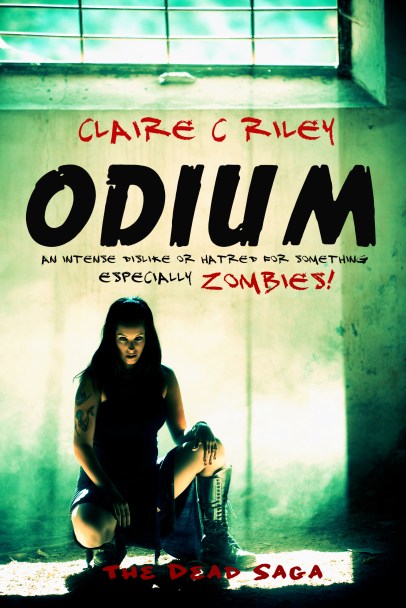
Odium The Dead Saga cover

~ Guest post by Claire C Riley

Most writers start out on this crazy train wreck of a journey with one thing in their mind: to tell a story. Okay, so maybe they have two things on their mind.

Tell a story, and have people read it.

Oh, wait. Maybe three things if they are feeling especially ambitious.

Tell a story, have people read it, and maybe, if they dare to dream…earn a living doing it.

Throughout my journey, I’ve met many different types of writers, all with different ambitions when it comes to their words/books/stories/novels whatever. Some dream big. They write a great novel and wait for it to be snapped up and make them their millions. Others write a great novel, work their socks off to get it traditionally published, and sit back and wait for their millions to roll in.

And then there are those who are more realistic about it all.

They write a great book. They want it to be read by people, and maybe they pimp it out to the big five, maybe they don’t, either way, that book gets published. And then they…write the next damn book!

Because to be a writer, that’s what it takes. Not one great book, but several. Readers don’t like investing in one book, because that’s a shoddy investment, and it’s not the book that they are investing in—it’s you, the author. They want to know that if they fall in love with your work that there is more to come. More ready for them to buy, more for them to look forward to. Just more.

I’ve met a lot of authors who are waiting.

Waiting for sales, waiting for fans, waiting for…who the hell knows what they’re waiting for, and there’s nothing wrong with that, but don’t sit up at night wondering when the big bucks are going to roll in.

As a reader I like to know that there’s more after I turn that final page—or slide the final page if I’m reading with my kindle. And I hate waiting for a year for a sequel.

So as a writer, I don’t. I try to get out several novels a year, both full length and novellas, and in between I like to write short stories in anthologies. That way I get to keep drip-feeding my readers my words, to keep them interested and hungry for more, and yes, invested in me. Because surely I owe them that much? After all, they took a punt on me by reading my book. And in return the more they read my stories, the more they talk about them, and the more word spreads, thus increasing my reach to potential new readers.

So for me being the next big thing isn’t about that traditional publishing contract, or making a million on my first book (though, of course that would have been nice.) It’s about continuously moving forwards, listening to feedback and improving with each book, making my readers happy, and maybe, just maybe, the next book will be the next big thing.

But I’m not waiting around to see, I’m too busy writing my next book.

Claire C Riley profile photo~ Claire C Riley is the author of “Limerence,” “Odium. The Dead Saga,” “Odium Origins. A Dead Saga Novella Part One,” “Odium II The Dead Saga” “Odium Origins A Dead Saga Novella Part Two” a contributor to several zombie apocalypse anthologies, including the upcoming ‘Fading Hope’, ‘State of Horror Illinois’ and a proud contributor to the charity anthology “Let’s Scare Cancer to Death.”

Odium. The Dead Saga is a top #100 dystopian selling book on Amazon.com for 2013, ‘Indie book of the day’ winner December 2013 and ‘Indie Author Land 50 best self-published books worth reading 2013/14’

Limerence was a featured book in the ‘Guardian newspaper for best Indie novel 2013’ and is currently a finalist for the eFestival of Words ‘best novel’ category.

Odium II The Dead Saga is a #1 Best Selling British Horror book.

She can be stalked at any of the following.

http://www.clairecriley.com

https://www.facebook.com/ClaireCRileyAuthor

http://bit.ly/clairecrileyamazon/

https://twitter.com/ClaireCRiley

https://www.google.com/+ClaireCRiley

Filed under: author platform, Books, publishing, Writers, writing tips, , , , , , , ,

Why I Went Into Podcasting

Guest post by author Armand Rosamilia

Armand            I know the general consensus for doing something is because you see or hear someone else do it and think (in your infinite wisdom and arrogance) that you can do it better. I am here to tell you, at least with me, it was not the case. I went into podcasting because it was my next challenge.

            I’m a blessed man. I am truly living the dream, being able to write full-time and stay home in my Big Bang Theory sleep-pants and drink coffee and get even fatter (almost at will, that last one). I do two music radio shows from the comfort of said home as well. I have a wonderful fiancé and great kids and I keep doing what I want to do: write books.

            In fact, let’s get the heavy-handed plug out of the way right now. I have a new book out, Dying Days 4, which is amazing. And I’m not just saying it because I wrote it and I want you to buy a copy. I’m saying it because our gracious host had this to say about it:

“Level up with Rosamilia’s take on smarter, scarier zombies! They don’t sleep and neither will you. Read this now!” ~ Robert Chazz Chute, author of This Plague of Days

            I’m sure our gracious host will now add a direct link to the Amazon page to purchase the book so I can keep living this dream. (Editor’s note: Yeah, yeah. Here’s the link! Darn, that Armand is subtle.)

Dying Days 4 Print 2

Click the cover for the Amazon UK link.

But onto other things…

Arm Cast

            I started a new podcast a couple of weeks ago. As you read this, the second episode went live last Friday. Conveniently, it features Robert Chazz Chute (this is getting to be quite the lovefest, I know) in an interview that went almost an hour. Because once my Mighty Canadian Author Friend and I get together on Skype, we don’t shut up.

            The first episode of Arm Cast: Dead Sexy Horror Podcast (I know, brilliant name all around) had interviews with zombie authors Mark Tufo and John O’Brien, two great authors and great guys.

            And that was my only goal for doing the podcast: to get to chat with horror authors, filmmakers, podcasters, editors, artists, heavy metal and punk bands, and anyone else I was interested in. I not only wanted an excuse to talk with them but wanted to record it and share for posterity.

            No written questions, no fancy opening jingle, and I’m not even killing myself in edits. In fact, so far I’ve just kept everything in and let the listener hear what really happened. The goal is to have two interviews per week. Yes, this is a weekly, and new episodes will be released via my rss feed on http://armcastpodcast.com and through iTunes and Stitcher, so subscribe and don’t miss an episode. Every Friday you’ll be treated to a new one.

            Upcoming guests will include authors TS Alan, Thomas M. Malafarina, Jack Wallen, filmmaker David Karner, and a bunch more people I wanted to hang out with. I have a wish list of people I want to interview, so more will be added once I get confirmation they actually want to talk to me. And I love finding new authors and podcasters and anyone else interested in horror to chat with, so don’t be a stranger… get in touch.

            As long as Robert Chazz Chute and I aren’t on a marathon Skype chit-chat, I’ll interview you, too.

            Oh, and here’s the Amazon link to Dying Days 4… just because you know you want to buy it and read it while listening to my podcast and wearing matching Big Bang Theory sleep-pants and eating M&M’s…

~ To find out more about Armand and his many books, check out his blog at ArmandRosamilia.com.


Filed under: author platform, podcasts, , , , , , , , , ,

Ha-ha-ha-nope! This post is about you.

This Plague of Days OMNIBUS (Large)It is easy to be cynical and you can spot the practice everywhere. In watching the unfolding developments of the Hachette versus Amazon dispute, some people ascribe motivations to actions even though we’re still working in a low information environment. Support Amazon? Somebody’s going to call you a moron. Support Hachette? Someone will call you a shill.

  • As if you’re saying what they said you said.
  • As if you can’t think critically and everyone must align with one ideology (forever).
  • As if the only choice is a binary, up/down, yes/no.
  • As if standing up and stating your opinion is wrong.
  • As if our opinions will affect the negotiation’s outcome. (Ha-ha-ha-nope!)

Both sides arrive at the same conclusion: Writers will be hurt if the other side wins.

We tend to see the world as we are. We project. People who think, do and say nasty things expect others to react the same way they’d react. Same is true of many optimists. (I don’t have a lot of experience with optimism, but I have seen that happen.)

So let’s consider who we are as writers. I invite you into my warm pool of quiet reflection…

Do you believe in the power of Art?

Do you believe in your Art?

Do you believe you can change people’s minds with your Art and grow a base of readers?

Do you believe readers will find you or are they only interested in hot authors in other genres?

Do you believe in your capacity to improve your chances of success, learn new skills and change the future?

Do you think you can change yourself and your future?

Does your success depend on you or is it only luck? Or is it some luck but you’re the only variable you can control?

Are you hoping one corporation or one business model will make or break your career?

Or do you own the company that will make or break your career?

Do you believe that mistakes are forever or are situations fluid and correctable?

Does the universe arc toward or away from justice?

Are you a helpless leaf on a current or are you prepared to go find your ideal readers? A little bit of both or neither?

Robert Chazz Chute This Plague of Days: Season 3Where are you on this continuum?:

Adapting to change is a

  • catastrophic problem or
  • an inconvenience or
  • possibly an opportunity? 

This post isn’t about supplying answers. Only you can do that. However, I hope you find your answers reflect a confidence in yourself, your books and your readership. Artists should be bold. Writers should feel committed to the fun of what they do, forsaking all others and rejecting panic. Isn’t our work too big for us to act small?

Don’t let an Internet storm blow your authorship off course. Storms rock the boat. Be the writer who rocks harder. 

Robert Chazz Chute Bio Picture~ I’m Robert Chazz Chute. I’m a suspense novelist. Last night I saw my mother for the first time in several years. She’s been dead a while so I was somewhat surprised by the encounter. When I was a teenager, it drove me crazy that she frequently used the word “kooky.” I thought that was terminally uncool and embarrassing.

Last night, I held her and asked her to say the dreaded word. She kept her unblinking gaze fixed on the horizon and refused to even acknowledge me. I begged her to smile and say it one more time. She remained stiff and silent and unmoved.

And I wept.

Kooky.


Filed under: author platform, publishing, Writers, , , , , , , , , ,

Why you’re going to make it

As indie authors, we’re all encouraged to work harder. That’s frustrating to hear because I don’t know any indie authors who aren’t working hard. But I’ve got good news. Your chances of achieving some measure of success are better than we’ve been led to believe. Here’s why:

1. Businesses fail all the time, big and small. But our overhead is so low, we can continue after we fail! When your hardware store goes out of business, you’re done. We get a few kicks in the ass, but authors also get more kicks at the can.

2. Every business that ever made it to sustainable got there because the boss/producer didn’t quit. Many of the biggest success stories come from people who failed and failed and failed at their chosen path but were too dumb to quit. Stubborn is our advantage.

Being a writer isn’t just a job. It’s an identity. It’s a compulsion. How often do you really consider quitting? For many of us, we never seriously consider stepping on the brake. We’re writers and we always will be.

3. We have the right attitude and mindset about what we do. When a software engineer keeps his head down through seventy days straight of boring coding to come up with an amazing game, he’s applauded. Wow! Look at the art he created after all the boring stuff he did! Imagine all the fun stuff he went without to produce all that work!

Coding relentlessly may sound boring to us, but he’s probably into it precisely the same way we’re into books. Everyone has parts of their job they don’t like, of course, but could coding be any more boring than your eighth round of edits on a 100,000 word manuscript where the timeline and logistics still don’t quite work? 

What we admire in entrepreneurs is true of authorpreneurs. We make things happen in our business because we have passion for detail and it never occurs to us to quit. People who don’t quit write more books.

4. People who write more books have a greater chance at rewards, monetary and otherwise. 

Years ago, I met Dick #1 who asked Guy #1 what he did for a living. “I’m into convenience stores,” Guy #1 said.

Later, after Guy #1 walked away, Dick #1 said something disparaging about how little money anyone could make out of a convenience store. 

“You’re a fraction right,” I said. “How much do you think somebody could make out of a convenience store in a year?”

Dick #1 sneered. “Not much. $10,000. $15,000, maybe.”

“Well,” I said, “don’t get too judgy. He makes a lot more than you think he does.”

“Impossible!”

“Guy #1 owns ten convenience stores,” I explained. “And stop being a #1 Dick.”

So it is with books. Publish and somebody will dig your flavor and spread the word. Put a lot out there (improving with each book.) We can do okay in the long run. This isn’t an all or nothing game. It’s just a really long game.

5. The path to success is linear. You know what to do or you can learn what to do. All you have to do is continue.

Years ago, it seemed like the biggest topic was writer’s block and finding time to write. Finding time is still a challenge, but people whine less about writer’s block and I think I know why. They know they will be published now. Your destiny is in your hands and it’s not in anyone else’s. 

We aren’t worried about gatekeepers now. We’re anxious for many reasons, but our entrails don’t go into knots because we could spend years writing a book that no one will have a chance to read. We know we are spending energy toward a realizable goal that will happen: publication. If you knew you were going to the Olympics to stand before the world no matter what, you’d train every day. That’s us. To get to the big show, all we have to do is get on with it. 
6. There is a low bar to success. I’m not talking about becoming a millionaire. Not necessarily, anyway (though that indicates a high level of achievement.) Success is different for everyone, but you’ve got a much better shot at success than anybody daring to open a new yoga studio, hardware store or any other endeavour that requires employees, rent and huge bank loans. So cheer up. Authorpreneur is actually a pretty safe business venture.

Like many businesses, it starts off as a hobby and grows or it doesn’t, but you probably aren’t risking everything to do it. Plus, you get to do what you love. A lot of people are stuck in frustrating businesses where they feel thwarted. I often feel thwarted as a writer. I’m often envious of other people’s success. But I don’t love what I do any less. Loving what you do is perhaps the only immediate success, but it’s powerful.

7. Does finding 1,000 true fans really feel that intimidating? Many gurus say (as a general rule) 1,000 true fans is all we really need to reach sustainability. That’s less than the number of people in the tiny village I’m from. My goal is eventually to find 10,000 true fans. I can picture that. It doesn’t seem unreasonable.

The Staples Centre in Toronto has 19,000 seats and that’s just one city showing up to watch the Raptors play! (Sure, a Canadian invented basketball, but few are that excited about the Raptors. Still, they have enough die hard fans to keep the lights on and the refreshment stands busy.)

Getting half as big as the Raptors at the the writing game seems doable if I live long enough. That’s why I’m drinking more green smoothies, working out and eating less sugar. And writing my ass off.

8. Remember the statistic about how most indies make less than $500? Sure. That’s depressing. But I look at it like mortality stats. We used to die a lot younger, but that was because of the infant mortality rate. It’s a myth that people only lived to thirty a few hundred years ago. Many people lived longer but the infant mortality rate dragged down the average age.

You’ve just read all the way down to Item #8 on a blog post about writing that’s more than a 1,000 words. I’d say you’re pretty serious about this writing thing. Lots of people aren’t. Lots of people weren’t and they could imagine doing something else besides writing. For them it was TL; DR (Too Long; Didn’t Read.) They’re off pornsurfing while you stayed to hear me out to the end. You are not going to let your writing perish due to crib death. You’re in the survivors club and you know what I’m talking about when I talk about the writing life. Your chances of doing better than average are better than average. That’s why you are going to make it.

This Plague of Days OMNIBUS (Large)~ I am Robert Chazz Chute and I’ve written eleven books. I’ll write at least three more this year and they are going to be awesome. I am your happy warrior of the word. Check out my books at the author site, AllThatChazz.com. Find out more about my doomsday book with the autistic hero at ThisPlagueOfDays.com.

If you’ve read, This Plague of Days, Omnibus Edition (pictured and clickable, above), please review it. That would be awesome. Thanks!


Filed under: publishing, self-publishing, What about Chazz?, What about you?, Writers, , , , , , , , , , , , , ,

Writing Moonlighting Top 10: There’s going to be a pie fight!

There are many ways to write and no one can say any are “wrong”. Well, the kitten sacrifice was a little much. Here’s one way to go:

Anybody remember the TV show Moonlighting? It was a comedy that was on TV when Bruce Willis was adorable and Cybill Shepherd was Cybill Shepherd. During production, sometimes the planning seemed haphazard. The lowest guy on the totem pole in the writing room would run down a hall, stick his head in the door at the props department and scream, “There’s going to be a pie fight! Get 500 pies ready!”


That’s writing toward a scene.

They didn’t have everything else filled in yet, but they knew they wanted a big set piece and pie would fly.

From Google: 

set piece
noun
A thing that has been carefully or elaborately planned or composed, in particular.
A self-contained passage or section of a novel, play, film, or piece of music arranged in an elaborate or conventional pattern for maximum effect.

What’s this mean to you and your readers?

Deliver maximum effect.

You’re writing your book. Events happen. Complications ensue. Characters conflict. You know. Story stuff. A set piece is a story beat but not every beat is a set piece. This strategy reverse engineers your novel. You think about the big scenes you want to deliver and sketch those out so you can lay the groundwork and build the ladder or plant the garden. Pick your writing metaphor here. Without that context, it will feel stuck on so be careful to stitch tightly and weave over the seams.

The Big Scene: Put on the Helmet of Imagination!

The Last Evil Clown fights The One Good Mime atop Mt. Rushmore. Or the nuke detonates in Dubuque just as the hero teleports away to the bridge of an exploding starship. Whatever. You could write the context that gets your readers there and excited about it.

Set pieces are big stakes scenes so:

1. Add the ticking clock device. 
2. Kill a major character.
3. See it as the movie scene where the special effects department blows wads of cash.
4. Make it a major turning point.
5. Reveal something huge.
6. Deny the protagonist their easy victory.
7. Award the main character their vengeance.
8. Reward the villain with a huge comeuppance.
9. Pay off the reader with a spectacle, or at least something spectacular.
10. Books are long. Don’t have just one set piece.
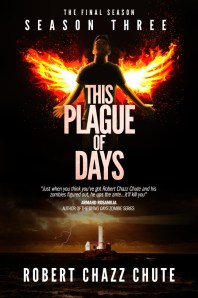
Robert Chazz Chute This Plague of Days: Season 3~ In This Plague of Days, Season 3, the big battles constitute set pieces. Not every set piece has to be a violent cataclysm though. When the big secret is revealed in the library in Season 3, that’s a set piece, too. You’ll know when you get there because you’ll suspect I wrote it high on acid. If you don’t know what I’m talking about, I have something for your TBR pile. 

Filed under: Writing exercise, writing tips, , , , , , , , , , , , , , , , , ,

You are not an idiot Part II

“Nobody ever went broke underestimating the intelligence of the American public.”

~ H. L. Mencken

“Still! Don’t be that guy!”

~ Robert Chazz Chute

This part is about writing.

If you’re as cynical (or perhaps as realistic) as H.L. Mencken, you’ll dumb down your books to appeal to a wider audience. As Chris Rock observed, “Most people are B and C students.” A critic once told Sly Stallone his movies were for dumb people. Sly’s brilliant answer? “That’s okay. There are lots of them.”

It would be snobby to suggest every book should be “literature”, whatever that means. I like lots of dumb things. (For instance, I’ve seen every ninja movie ever made.) What I write, a lot of people would call “pulp.” They wouldn’t be wrong, either. (Check this link to The Vintage Library to read what pulp was really about. It’s not the pejorative some critics think it is!)

I’m not demanding that anyone write “up” or “down” to their audience. I’m not in the tell-you-what-to-do business. I’m in the brain-tickle business. I will tell you a quick story, though.

I just got a positive review of This Plague of Days by a person who identified themselves as autistic. My protagonist for those books is on the spectrum and, for that reader at least, the hero passed muster. That review is very precious to me for obvious reasons. I wouldn’t have received it if I didn’t reach a little.

This Plague of Days plays with language and expectations. It’s got a lot of Latin proverbs and a tiny bit of poetry amid the evolving carnage. It’s soft sci-fi with zombies and vampires and family dynamics amid disaster. The plot ventures into dark fantasy. Though readers may come in with low expectations because it’s essentially an end of the world dystopian saga about ordinary people facing infected monsters, the narrative never assumes the reader is an idiot. Escapist ≠ dumb.

The problem with stretching out and reaching as a writer is that someone, as a reviewer, will slap your hand for trying too hard. It’s true that some readers won’t read as closely as you’d like. They won’t “get it.” But few one-star reviews are worthy of serious consideration anyway, right?

Those who do grok it will love your work more.

What can I tell you about aiming higher versus what H.L. Mencken would consider “playing it safe”?

This is my 1336th post on this blog. Sift through and you’ll find I’ve frequently implored my fellow writers to “Follow the Art.” By that I mean, write what serves the story.

Today, I’m asking that when you write, be you. Be unique. Whether your goal is to write something fun and silly or earth shattering in its literary aspirations, be real. Whatever we do, our goal is to entertain. I write to entertain myself first, though. If readers dig my trip, cool. I try not to let reviews influence my game.

I’m taking the question away from a debate about whether to aim lower to achieve higher commercial success. I’m suggesting, as always, that we follow the Art. Be you because there’s only one of you. Don’t try to write like other people. Please don’t envy other writers’ success because envy is irrelevant. Please write what only you could write. Ultimately, it’s not about what seems smart and what’s really dumb. It’s about story.

All stories say something about the world and the writer who is the lens to that world.

Be a true lens that delivers clarity. The sights we point to may please the eye and ear and heart. Often the mind, but not necessarily. Lots of Charles Bukowski’s work is pretty dumb, but his lens was honest and I love his stuff. Though I admire their capacity for terrible vengeance, ninjas don’t say much about today’s world. They don’t say much at all. However, American Ninja 2 is still more fun for me than trying to stuff Ulysses in my head. Ooh! And Sho Kusugi in Pray for Death? Genius! Especially the execution with the buzz saw.

Robert Chazz Chute Bio Picture~ Hi. I’m Chazz. I write my variety of suspense. You can find all that stuff on Amazon here.

And now, some of it’s on Kobo.


Filed under: author platform, publishing, What about Chazz?, What about you?, Writers, writing tips, , , , , , , , , , , , , , , , , , , , , ,

Bestseller with over 1,000 reviews!
Winner of the North Street Book Prize, Reader's Favorite, the
Literary Titan Award, the Hollywood Book Festival, and the
New York Book Festival.

http://mybook.to/OurZombieHours
A NEW ZOMBIE ANTHOLOGY

Winner of Writer's Digest's 2014 Honorable Mention in Self-published Ebook Awards in Genre

The first 81 lessons to get your Buffy on

More lessons to help you survive Armageddon

"You will laugh your ass off!" ~ Maxwell Cynn, author of Cybergrrl

Available now!

Fast-paced terror, new threats, more twists.

An autistic boy versus our world in free fall

Suspense to melt your face and play with your brain.

Action like a Guy Ritchie film. Funny like Woody Allen when he was funny.

Jesus: Sexier and even more addicted to love.

You can pick this ebook up for free today at this link: http://bit.ly/TheNightMan

Join my inner circle at AllThatChazz.com

See my books, blogs, links and podcasts.

Enter your email address to follow this blog and receive notifications of new posts by email.

Join 2,063 other subscribers