C h a z z W r i t e s . c o m

See all my books at AllThatChazz.com.

Top Ten: Make your writing count

braingasm cover1. One is the loneliest number. It’s you, the author, facing the blank page. There’s no one with whom to share responsibility to write and no one to share the blame for when you get it wrong. You are alone in here until you allow the ghosts to come forward and their voices to speak.

2. Two is you and your reader. You become invisible. The reader disappears. That leaves the story as the bridge, hanging in the air between two indefinite points and reaching through time. If the story is strong, the ethereal is made real and two indefinite points connect in mutual imagination. This is the only magic I know.

3. Three, as in “Rule of”. No one knows why the Rule of Three works. It just does. Lists of two feel insufficient and weak. A list of more than three feels pedantic, overblown, overly long, simply too much and see what I’m doing here? If you do, then you are paying attention, astute and onboard.

4. Four is the number of years you were in university, supposedly learning how to write. If you fell for that, well…I did, too. We would have spent all that money better had we hit the road, read a lot and just wrote. You may want one, but you don’t need an MFA. You need a little recklessness and exposure to the world and curiosity to lead you to what you need to know. I learned more about writing in my first two weeks as a newspaperman than I did in four years of a journalism degree. 

5. Five is age five, as in when you start to remember things you can use against your parents in your first novel. Wherever a remembered childhood begins is where you begin collecting fodder, drama and trauma (see? Rule of Three!) that you will cannibalize until the Alzheimer’s gets its hooks in deep.

6. Six times three is the Number of the Beast and it sounds like “sex” and it was my lucky number when I believed in lucky numbers. Six is the number of degrees of separation and Kevin Bacon. Six represents the tentative connections upon which all fiction is built. Less than six is too linear. Six means you’re making fragile neural connections between ideas to construct something new and fresh and interesting. Shore up that spider web against high winds and less imaginative minds with facts and a realistic context that supports the suspension of disbelief.

7. Seven is the number of things scientists say we can do at one time. Don’t do that. Do one thing at one time. Do not multi-task. When you are writing, write. Until you can make the world go away, there’s no chance of building that bridge over the fog to reach readers.

8. Eight is a good number of beta readers and proofers. Chances are you can’t find eight excellent pre-publication readers willing to comb your manuscript. However, try for half that and use the others for specific skill sets. My survival expert and cartographer, for instance, knows where Saint-Louis-du-Ha! Ha! is.

9. Nine is the number of relatives you were sure would buy your book. At the family Christmas party, they will be disappointingly vague, clueless and heartless about your literary endeavours. Or worse, they will have read it and will shrug off the experience in crushing silence. Or worse still, they’ll ask you to ship them a free copy.

10. Ten is the top ten list you pray you’ll get on even if you don’t believe in God. Ten is the number of good reviews you need to get on many promotional lists. Ten is how you remember the date you took to the prom. Ten is a number representing what’s best. Ten is the number of digits on the hand that pulls you up from anonymity with a tweet of endorsement, a clap on the back and a congratulatory handshake. Ten equals Hope.

Today, you are one.

Write often, boldly and well.

Your writing will count.

Your readers will be innumerable.

~ I’m Robert Chazz Chute. I have a large Irish family and a large Japanese family. I wish they liked me enough to buy my books. Fortunately, #5.


Filed under: author platform, Top Ten, Writers, writing tips, , , , , , , , ,

What to do now that #NaNoWriMo is done

By the way, Crack the Indie Author Code 2nd Edition is out in paperback at $9.99. Smaller format, with jokes.

By the way, Crack the Indie Author Code 2nd Edition is out in paperback at $9.99. Smaller format, but still has lots of jokes.

Start another book. Brainstorm or sketch out another book outline or write a short story or just sit down and see where else you can go at the keyboard. Keep that feather pen scratching. Keep going. 

People will tell you to celebrate. Writers (because we aren’t “people”) will ask, “What else ya got?”

You could take a break, sure. But now that you’ve done NaNoWriMo, don’t you feel you’ve got a good habit going? Habits are hard to break into. To get into the daily writing habit takes practice, just like you’ve been doing all this month. Why stop now? To publish, you must write a lot, rewrite, revise and edit. Good habits are too easy to drop for you to waste all that behavioural inertia you have steaming in your skull engine.

Now isn’t the time to put your feet up.

If you still have some scenes from your NaNoWriMo project that you didn’t fill in right away, you can do those now. Now is the perfect time. The context is still fresh in your mind. Tackle any empty spaces you’ve left behind so when you come back to it, you won’t become perplexed and stymied later. Otherwise, leave your NaNoWriMo manuscript alone.

Why am I telling you to start a new project as quickly as you can?

Because someone might be tempted to dive right back in so they have a novel by Christmas. You know you need some time to cogitate while the manuscript rests for a bit. Otherwise, the Nano haters will run in circles with their hands over their ears screaming, “I told you so!” None of us wants those killjoys to be right.

Besides, if you go back too soon, you might be discouraged at how much work the book needs. Or worse, some might think their rush job is still brilliant. That’s lethal to ever having anyone tell you they’re a fan of your work.

And now for the tough stuff. I’m asking that you hold two contradictory ideas in your mind at one time and act accordingly.

1. Congratulations! You beat NaNo! Good on you! I bet there were days when the words came quickly and days where it felt like your brain was full of molasses. However, you faced down time management problems and got it done anyway. Sometimes it wasn’t easy, yet, you got past 50,000 words! You did it! This is a huge accomplishment!

and

2. Writing a little less than a couple of thousand words a day is no big deal.

Yes, some writers are more precious about their word count and make a great show of how slow they can produce. Mostly? I suspect they’re counting procrastination time as writing time. Screw that. I come from a journalistic background where deadlines are not livelines. We slam it in and knock it out and we’re good.

At least take that attitude with the first draft so you’ll have something to gut and edit. Blank screens have no atoms and pixels bouncing off each other to create new neural pathways and fresh angles to feed reader rapture. The first draft is usually simple, straight narrative. I always find the jokes, dialogue and theme in the second pass.

Professional writers write to deadlines all the time and they do so consistently.

You know that now, so it’s not about what “they”, the writers, do anymore. It’s what you do because you’re a writer. Keep going.

We’re creative. Writing’s what we do to wield god powers and get back at our brothers and sisters. We do it because it’s much cooler at the Christmas party to answer “What do you do?” with, “I write.” Say that and you’ve got a conversation. (Try explaining your wage ape existence in middle management to a hapless stranger and they’ll run for the punch bowl.)

We do it for play, for love and money and hope and for readers. It’s fantastic to find a scene to write that, even as you’re knocking it out, you say, “This! This will melt their faces and make them want to read me for the rest of their lives and tell all their friends! Ta-freakin’-da!

Mostly, writing is what we do because it is who we are.*

*If you didn’t carry out NanoWriMo’s challenge this November, what better testament to your mettle than to do it on your own? Now. You’ll feel more smug and self-righteous this time around. There are twelve months in a year. You don’t have to risk waiting another year for the next party bus to take you to your life’s to-do list.

See you in the trenches in the morning

with 3,000 more words. If it’s a bad day.

Yes, you may stop writing

when you’re out of blood.

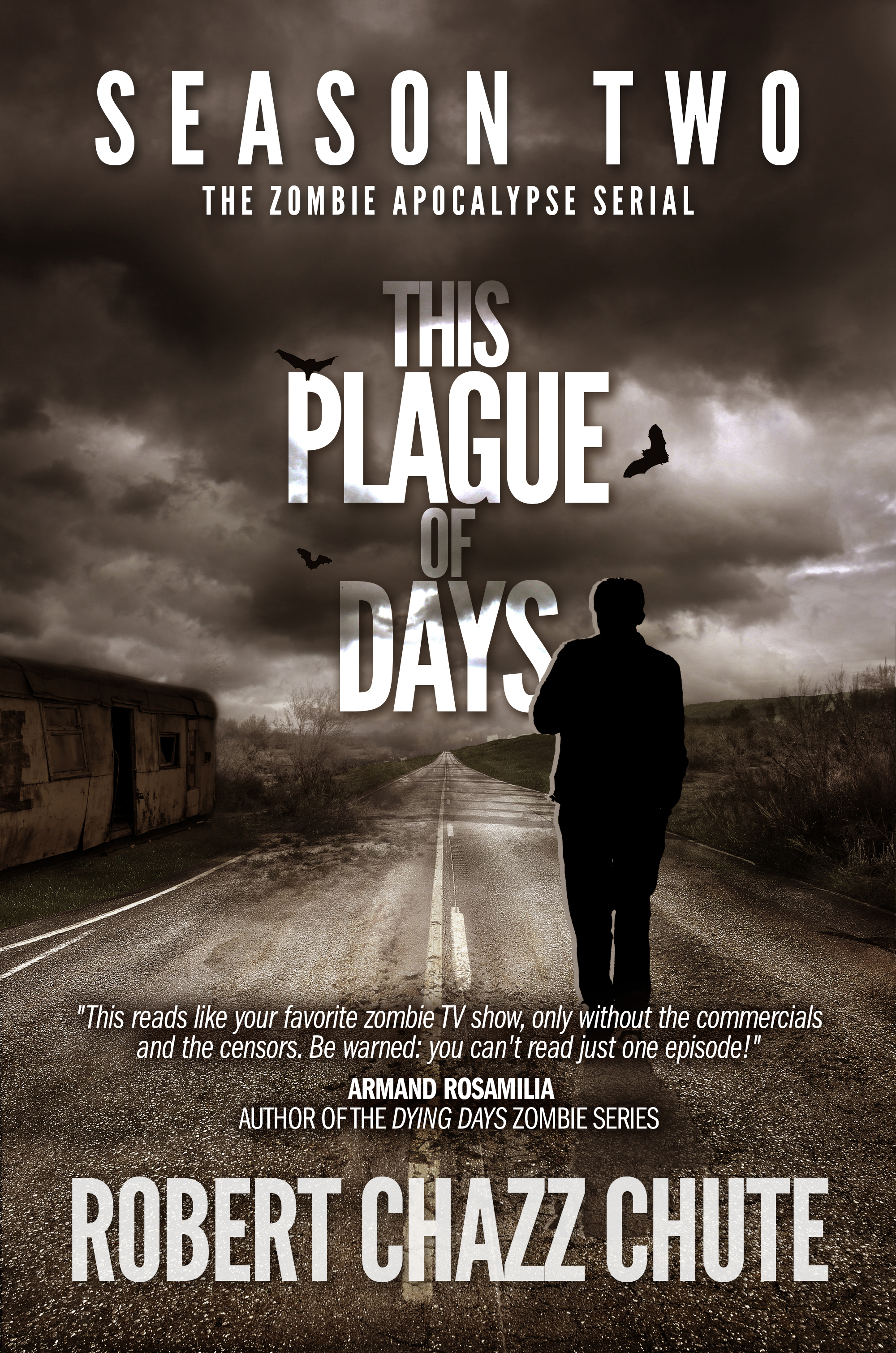
Season One of This Plague of Days is the siege. Sutr-X was the pandemic. Sutr-Z's next and it's coming for you and the Queen's corgis.

Season One of This Plague of Days is the siege. Sutr-X was the pandemic. Sutr-Z’s next and it’s coming for you and the Queen’s corgis.

~ Robert Chazz Chute wrote a bunch of beastly books, including This Plague of Days. Season One’s in paperback. If you’re a writer looking for more inspiration, Robert also recommends Crack the Indie Author Code. But he would say that since he is me and we’re all about inspiring writers not to be weak. We’re all about the conquering and hefting the bale and writerly whatnot. And writing about ourselves in the third person apparently.

What? Still waffling? Still? After all that? Holy Jebus! Read this review of Crack the Indie Author Code then, for the love of Thor and for the love of the sweet consumer that is you and your writing career! And your family’s writing career. Don’t forget to get Mom one for Christmas, too.

Filed under: NanNoWriMo, , , , , , , , , , , , , , , , , , ,

#NaNoWriMo: Take a chance. Deliver.

I’ve finally begun reading Stephen King’s 11/22/63: A Novel.

Feeling a bit burnt out, I reached for an old reliable author to get me into relaxed creativity mode. The fire in the wood

Stephen King at the Harvard Book Store.

Stephen King at the Harvard Book Store. (Photo credit: Wikipedia)

stove is burning bright and hot as a cold blizzard’s squalls pull at the house. Under my wool blanket, I’m cozy and this book feels comfortable, too. Different story, same old friend in King. I’m one of his Constant Readers. To my delight, King has an Easter egg for writers right off the top. 

His hero, a teacher grading essays, complains about his students “writing like little old ladies and little old men.” Heh. Yeah, I know exactly what he means: Grammar and spelling correct, but boring. Tried and true narrative, but too safe. I want surprises. The development of the story has to be logical, sure, but please, take a chance! Dare to take the reader by the hand and shove them on the roller coaster they didn’t plan to get on. Give them the adventure they didn’t know they wanted.

For instance, in Season One of This Plague of Days, I did a lot of plausible things with strange characters (and I put the implausible in a context that makes it believable.) In Season One, you see a kid on the autistic spectrum operating in our world (i.e. at the end of it.) That was cool, but to heat up the narrative and quicken the pace, I had to go deeper into the implausible and still attempt to make it as believable as it was fanciful. 

In Season Two, the story takes some new turns and we’re in Jaimie Spencer’s world more than he is in ours. Though many people loved Jaimie in Season One, I wasn’t interested in making Two a copy of One. If One is a siege and Two is basically The Road, I had to take the crazy train to places people hadn’t seen before in an apocalypse. The virus that came to kill humanity keeps evolving and that takes us down unfamiliar roads. The Plaguers and I are happy with it.

People love Same Thing Only Different. Too different is a gamble, but some gambles pay off.

Changing a character people love is uncomfortable at times, but certainly do it if the story demands it. (By the way, nobody loves Jaimie more than I do, but he ends up doing a lot of questionable things for a Christlike figure.) I demanded development and change, so I got dreams, a touch of magic and some big questions for the surviving humans caught in the teeth of the gears of existence. If Sartre could read my apocalypse over a lunch of cold milk, ham sandwiches and angst, I think it would spark an interesting discussion about the existential subtext of ambition versus chaos theory. You know…sliding in the thin spaces amongst the bloody zombie attacks, scary new species and terrorized, grieving humans.

Dare to be wrong and, surprise! You’re right.

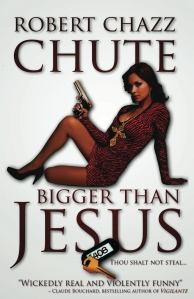
Sometimes it’s just simple mechanics where writers wimp out and opt for their grammar book over Art with a capital A. In Higher Than Jesus, for instance, a character uses the non-word “father-in-laws”. The correct plural is “fathers-in-law,” of course. Trust your readers to figure out that you know when you’re wrong. Better to stick with what’s true rather than what’s correct. The speaker of “father-in-laws” is an old, homeless guy whose education isn’t terrific. Talking like a Harvard law professor does not fit, so wrong is right.

Most readers will go along and the very few who will think you’re an idiot were never going to like your work, anyway. Grammar fascists don’t read for the enjoyment of reading, so relax and focus on the readers who are with you for the right reason. That reason is Story (and to forget we’re all going to die, and maybe soon, in Death’s razor claws and unforgiving, crushing jaws.)

I like prose that is edgy. Lots of book lovers love it when we’re gutsy.

I like Chuck Palahniuk a lot, perhaps especially when he cruises the experimental. I like much of Norman Mailer’s work for its simplicity. However, I love Stephen King. The narrative is straight A to B. Snobby readers might call it “muscular” or “workmanlike.” That’s old code for not “literary” enough or too pulpy by half. But who do you want telling you a story? An arid auteur who tells it correctly or a writer who get it across right? The writing I’m talking about is visceral. It affects you. It makes you think but it doesn’t have to call attention to itself too much. Have something to say and mean it. Lofty’s fine if your feet stay on the ground. 

Don’t give me fancy writing tricks. Tell me the story, please.

You know all those New Yorker short stories with the super-opaque endings where it’s so very arty you can’t figure out what the hell the last paragraph is supposed to mean? Where they try to trick you into thinking vague ends equal powerful conclusions? You’ve surely read those stories so bathed in antiseptic that they have no honest feeling or real humor. The words are all in the right order but they can’t make you care. It’s hard to define, but when a book has no heart, you know it. 

I suggest you do the opposite of all that empty scribbling and I’ll try to do the same.

A good short story, or a solid book, should deliver a punch and satisfaction (or at least anticipation of the next book in the series) with its last line. It should not generate a confused look on the face of an intelligent reader. 

A great story can be read aloud in the flicker of a dying campfire. If the story’s solid, your rapt audience will worry about the characters in the book. They will be blissfully unaware of the starving bear watching from the woods behind them, sniffing the air, drooling, and measuring the distance to the fading circle of light.

~ I’m Robert Chazz Chute: author, podcaster, perpetually worried. If you want to learn more about This Plague of Days, go to ThisPlagueOfDays.com. Or just zip over to AllThatChazz.com and buy some books. That would be good. Also, Season One of This Plague of Days is in paperback and Christmas is coming. I’ll let you connect the dots from there. Thanks!

Filed under: NanNoWriMo, Writers, writing tips, , , , , , , , , , , , , , , , , , , , , , , , , , ,

#Nanowrimo: You do not have Writer’s Block

This week I found inspiration for a new character. I got it from the Latin word “occubus”, meaning to rest (especially in the grave.) I love my Latin dictionaries and will miss them when I move on to projects beyond This Plague of Days. A blind stab, a finger pointing on a random page and wham! Something new to play with! A new chapter! That’s the joy of discovery in writing. The ideas don’t always flow so easily, but if you’re in a good place, the words always come.

Readers ask us where we get our ideas.

If you’ve made it out of the horrors of high school (or perhaps even more so if you didn’t), you’ve got enough material to start writing. That supply of disappointment, embarrassment and angst will last for your career.

Conflicts, fisticuffs and the world news are all fodder for the mind mill. Family, relationships, lack of relationships? Cannibalize! Books you read will feed books you’ll write. Whether you’re a monk on a mountain or a suburban wage slave, you are surrounded with input for your output.

An afternoon walk can spark an idea, especially if that walk takes you to the local courthouse. Arraignment hearings are best. One long court trial might yield a book. Bearing witness to the parade of arrests from last night will give you all the books you can write and make you wish you had the ability to type faster.

We are all dreamers, putting information together in new ways for new takes on ancient stories. If there is such a thing as writer’s block, it is not because of a lack of ideas to play with.

Writer’s block comes from a loss of enjoyment of play.

That sounds more like depression, doesn’t it? Or laziness that springs from too much sugar and wheat and not enough kale. If you think you’re suffering writer’s block, don’t complain about a muse deficiency. You can’t fight that, but you could fight an amusement deficiency.

A long time ago, I stopped writing for several years.

My “block” was really about rage. A co-worker annoyed me mightily. I went home and began to write a short story that was basically a tantrum on the page. I got about four lines into the revenge fantasy and realized, I don’t want to feel this way and I don’t want to write this. I didn’t write again until I fixed my life (or at least repaired my lifeboat.) I was unhappy with what I was doing and, instead of rage on the page, I resolved to change the underlying problem (i.e. working with twits.)

We often romanticize the miserable writer working in poverty as the creativity bubbles out of all that sadness. Mostly nonsense. You don’t get a book written when you’re so depressed you can’t face picking up a pencil. I mean that literally. I remember lying atop my unmade bed (a grubby futon on the floor, actually) and thinking, I can’t. I just can’t. The pencil stayed on the floor.

Depression sucks energy away and writing demands we put energy out. You can’t give what you don’t have.

Writer’s block is a vague, disempowering notion that, ironically, is a dangerous fiction. Instead, focus on concrete variables you can change: income, time management, who’s sleeping beside you, what goes down your throat, the exercise you do and what you allow into your mind.

Sure, inspiration is everywhere.

But maybe you need a doctor.


Filed under: NanNoWriMo, What about you?, writing tips, , , , , , , ,

#NaNoWriMo: Story stuck and stalled? Try this.

You’ll probably get stuck from time to time. Most everyone does, so don’t panic.

If you get stuck often, outline more to save writing time and stay on track. Keep in mind that outlines are merely guidelines. You’re just dating your outline casually. It’s not serious and you don’t have to marry it. With the shadow of commitment gone, you still have your free and fun, bright and shiny creative mojo working for you.

I’m a pantser, but I do have an idea where my stories are headed. We may take a winding trip to get to our destination, but we will get there, hoping we won’t get stuck and be forced to back up thirty pages or so before we can move forward again. I’ve had to do that. It sucks, sucks away forward momentum and saps confidence. So let’s crash through that mental block and get unstuck.

Solutions to get out of the ditch

Season One of This Plague of Days is the siege. Sutr-X was the pandemic. Sutr-Z's next and it's coming for you and the Queen's corgis, among others.

Season One of This Plague of Days is the siege. Sutr-X was the pandemic. Sutr-Z’s next and it’s coming for you and the Queen’s corgis, among others.

A random, alluring word, place, fact or event can give spinning wheels traction. For instance, the word “chiroptera” gave me a new direction when I wrote Season 2 of This Plague of Days. Sometimes I choose words, events or facts at random and noodle with them to see how they might fit into the narrative. Or I’ll draw from mythology, philosophy, politics or religion to discover new dimensions in the narrative.

Here’s the surprise: I always find a way to make those intriguing things fit naturally into my story.

I bet you can, too. Don’t load up on $10 words when a nickel word will do, of course…or at least don’t do it for its own sake or to show off. However, if something seemingly random can serve your story, use it (or dump it if it fails.) Readers like learning things as much as you do. They like characters with depth and to discover hidden significance behind meaning.

Get random

Autism, Latin, the Existential Abyss and references to Superman. That's pretty random, but it all fits.

Autism, Latin, the Existential Abyss and references to Superman. That’s pretty random, but it all fits.

This exercise in the writing process is about bouncing new electrical flashes through the writer’s brain, making new connections and getting synapses firing to see nonlinear possibilities. Frequently, you can find something new that influences the story simply by opening a dictionary and pointing. An atlas and a Wikipedia search might give you a random fact that sparks something. I found Gas City, for instance. The name alone captured my imagination and got me thinking about a new track to follow in Season 2. New characters and furious battles evolved from the way that slapped my brain.

If you’ve got an area of interest (baseball, plumbing, woodwork, salmon fishing, animal husbandry, whatever) work it in to give your characters depth. I’ve got a sensitive soldier with expertise in military history who shows up in the zombie apocalypse. I’ve also got an Irish cop from a tiny Irish resort. The place informs the character. These are the sort of factors that make the people on the page real. Jack (Jacqueline) Spencer majored in Elizabethan poetry. That makes her feel pretty useless when society collapses, but her development now has an arc. Up from zero, she gains experience on the road east to a hoped for haven from the apocalypse.

For me? It’s pathology that fascinates.

I studied anatomy first and was awed by our biological complexity. Then I studied Merck’s Manual and I’ve been a hypochondriac ever since. It’s startling how fragile we are, so pathology often finds its way into my books, one way or another. I know a lot about how the body breaks, so I’m sure you can guess how that might play into a crime novel.

I know a lot about migraines (and the many variations of headaches.) His inability to act shows up in one of my WIPs and becomes crucial to the protagonist’s predicament when the cops come calling, asking for an alibi. My protagonist in This Plague of Days is autistic which, naturally, gives him a unique point of view on the end of the world. Another character has Desmoid tumours. This is a rare condition, but it turns out to be very relevant to the story. Her disease saves her from a worse fate than Desmoid tumours (in a way I can’t divulge yet, of course. That’s Season 3 stuff.)

Take a fragment and build your next chapter around it. Make the fragment an element.

These general suggestions are random sparks. If an atlas or a dictionary or a quick Google search can make your story catch fire, and if you can make these new variables seamless, you’ll find their inclusion can get you unstuck.

Therefore:

a summer camp in Columbus, Ohio with too many mosquitoes

the ruins of a castle hidden under heavy snow

a rusted can opener, forgotten in the kitchen’s junk drawer

a tippy chair with one short leg

angina

Captain Cooke’s death

her mother’s wedding ring inscription

Try one of some of those for a start. How might they fit in your narrative? Keep going and don’t worry if you get stuck. The next step will come to you and, if not, go find that next step. Finish your story.

Tips and inspiration for the writer's journey to publication.

Tips and inspiration for the writer’s journey to publication.

~ Hi. I’m Robert Chazz Chute. I wrote a couple of books full of inspiration to get writers to get their books done. I also write about a kid on the autistic spectrum facing the end of the world, zombies who aren’t really zombies and vampires who aren’t really vampires. There are also jokes and Latin proverbs. It’s…oddly engaging and does not suck. See all the books here.

I also host the All That Chazz podcast and the Cool People Podcast. To learn more about This Plague of Days, go to ThisPlagueOfDays.com.

Filed under: NanNoWriMo, Writers, Writing exercise, writing tips, , , , , , , , , , , , , , , , , , , , , , ,

When Readers Wander Away

Readers wander away.

There’s so much new and shiny stuff out there. There are new word confections to smell and taste, luring readers away from The Magic That is You. Let’s talk about reader attrition and how to combat it because keeping an old reader, fan, friend, client or spouse is easier (and less expensive) than gaining a new one.

I used to listen to all of the Smodcast podcast network religiously. Then I wandered away to get lost in the labyrinth of choice. I subscribe to more than 100 podcasts. Smodcast had some funny stuff, but I’m more into news and politics as the world blows up in slow motion, so I moved on to the plethora.

Almost everybody moves on.

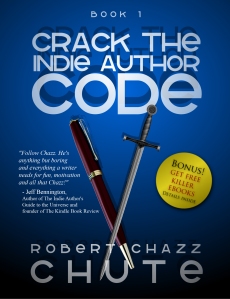
Crack the Indie Author CodeAudiences are fluid. In my first book on writing and publishing, I said ten percent of people love you no matter what you do and ten percent hate you no matter what you do. The remaining eighty percent are consumers who may enjoy what you offer them, but they aren’t committing to the long haul. The passengers you have on the Crazy Train now won’t be aboard at the last station.

Confession Time

This week I went through boxes of files looking up addresses of former clients for my new business venture. It felt like cavorting in the Huge Catalogue of My Carnival of Past Failures. I had names in there I didn’t recognize. There were a bunch of clients I saw, once, years ago. Another group saw me a few times and they felt that was plenty. People move, lose jobs, get new ones, divorce, move again, remarry, forget about us and die. I probably pushed a few away by not nodding on cue, too. I’m lousy at that. I wonder how many of those addresses aren’t dead and stale?

In the end, I came up with a minute mailing list of hardcore fans and a few fringe possibilities. Twenty years in the business and to count the letters I’m sending out? You could count them all on your fingers and toes…but not all your toes.

Nurture the readers who think of themselves as fans.

The people who dig what you do? We all dig them back. Fans are awesome. They’re helpful and they’re motivated to leave reviews and they get us. Engage them. And why wouldn’t you? They’re fun and they know where you’re coming from so you have lots to talk about.

Fans are the people who are most like you. Our minds connect.

Be tolerant of people who don’t get you. 

You can even welcome these folks because most of them don’t hate you.* These people can change their minds. They might take you or they might leave you. They aren’t invested in you, but they might buy what you’re selling.

Ignore haters

They won’t change their minds because they hate everything. Hate is all they have and most of them can’t even be funny about it because they’re serotonin-disenfranchised. Haters are in no one’s demographic and they’re already cursed enough. They’re unhappy and it’s not really about you. The poor things can’t seem to enjoy anything. Move on quickly and don’t let them get any of their default setting on you. 

Own a genre

If I had to do it all again, I’d focus on one genre and write only that. That’s not how my mind works, but that’s my problem. I’d also write series exclusively. Preferably I’d set out to claim a beachhead in a big, well-read genre. (Read: Hardboiled with jokes wasn’t a big enough genre.) 

My luckless hit man is a funny guy in big trouble.

My luckless hit man is a funny guy in big trouble.

When you get lost in the woods, experts tell you to stay in one spot so you can be found. Same with literature. Moving targets, unless you’re Isaac Asimov forty years ago, are harder to find.

Go out of your way to find new readers and maybe even fans.

Facebook is the place to nurture community. Twitter is the place to find new people, discover new things and begin conversations. LinkedIn is where you go for people to talk at each other and say how everyone’s doing everything wrong in order to impress potential employers. (Sorry. That was my experience.)

Bookbub is hot. Author Marketing Club is hot. Publicists with small lists or lists that are too general and unsegmented** are cold. 

Write more quality books.

With each book, we get better. We refine our style and process. Write more. Be better. Build a bigger fire so the rescuers can find you.

Be different enough that you stand out.

People love identifiable genres that challenge expectations. Everyone loves “same thing only different.” It makes them comfortable, and you discoverable, without boring them. I’ve already said enough about this in previous posts, and this post is too long, so…

Go where readers are.

Writers are excited to meet with other writers. Meeting readers often freaks us out. Feel the fear and poop your pants anyway. It’ll make a great story. Do signings, readings, conventions (for readers) and get a business card with your hottest book cover on it. Everyone has hot and cold runs. Make sure readers get a chance to remember you at the top of the hill so you have some inertia to get up the next hill.

Be honest, but be nice. Be a person.

From the I-shouldn’t-have-to-say-this Department: Jerks around the world try to justify the jerkiness with, “I’m just being honest.” Probably a lie. Chances are, they’re just being mean to make themselves feel better.

A blogger I’ve followed a long time lost me today. I detected a mean tone in something they wrote that didn’t sit right and gave me indigestion. It didn’t sound like they were trying to be helpful and the smart and funny didn’t outweigh the nastiness. I need more positivity in my life. I’m a bit low on serotonin, too. Goodbye, blogger.

You’re supposed to lose some readers.

The only thing you can depend on is Change. As you progress as an artist, a bunch who did like you won’t be along for the whole trip. Maybe you switched to a genre they don’t read. Maybe they’re the sort of people who prefer bands “before they sell out.” (Read: “…before they become popular” or “before they repeat themselves too much.”) Maybe they only love underdogs or you squeaked out too much happiness when your book took off and now they feel resentment. Maybe they outgrew you or vice versa. Perhaps we aren’t so awesome after all and don’t deserve them. Not every book is going to be a home run and that’s where some readers will step off.

I lost a reader recently who loved Season One of This Plague of Days but didn’t like where Season Two took them. I’m helpless in this regard. I followed where the Art took me and Season Two is markedly different in some aspects. However, for the characters and story to evolve and do things and go places, I had to use different gas in the narrative engine. I promised something different from the usual zombie apocalypse and I’m delivering. Most people dig it. However, it pains me most to lose a reader who loved the first iteration but was less enthused about the next. It saddens me they won’t see the big payoffs on the way in Season Three.

I’m the literary engineer and the conductor, but I’m also a passenger on the Crazy Train. I go where the train takes me to the end of the line. I wonder how many fellow passengers I’ll have at the last stop?

This is why we all need those fans to nurture us in return.

People will buy your stories or not, but most readers will never say a word to you. As a writer working alone, driving the train through the night? It’s lonely work. We go through long, black tunnels between books. In the dark, every engineer looks back into the quiet train and wonders, Is anyone really still back there?

*Note: It’s not you, the writer, who should be hated. It’s a book, not genocide, though some people come on so strong in their negative reviews, you’d think babies were being slaughtered with each chapter.

It is legitimate to dislike a book, of course. But readers don’t generally distinguish a book from its author. Neither do authors. When we see a bad review, we don’t think, Oh, they didn’t like that book. We think, She hates me. She probably does. A lot of people are that harsh, for one thing. Also, since your book is a product of your mind, so naturally we identify with our work.

**Unsegmented refers to mailing lists where the subscriber doesn’t identify which genres they’re interested in hearing about. Send your romance sample out to everyone and a bunch of readers will grab it and dislike it because they signed up for steampunk and wouldn’t read a romance with a gun to their head.

~ I’m Robert Chazz Chute. I write a bunch of stuff that’s funny and suspenseful and strange. I’d tell you more, but I have to dash off to be ignored and invisible in a totally different field. See my books here. Buy them, even. Thanks.

Filed under: author platform, book marketing, publishing, , , , , , , , , ,

NaNoWriMo isn’t bad. You are.

One neurotic fellow worried, in public, about National Novel Writing Month (NaNoWriMo.) 

Worry 1

“If it goes really well, I’d be embarrassed to admit the published book started with NaNoWriMo.”

Yes, this was actually a concern. That sounds silly to me, but putting aside the snobby subtext, let’s answer that. More than 100 published novels have emerged from NaNoWriMo beginnings and I’m sure the authors are grateful for the kick start NaNo supplied. If you need a kick in the pants, NaNoWriMo can help make a solitary pursuit feel more gentle with the support of an enthusiastic community. Whatever helps you get past the time management hump and into actually writing is peachy with me. Starting is hard.

I’m working on a novel that emerged from a short story in Murders Among Dead Trees. That happens a lot. Bigger Than Jesus and Higher Than Jesus were born from a short story in Self-help for Stoners.

Book ideas come from lots of places. We shouldn’t be embarrassed about process. Instead, embrace what works for you. Otherwise, you get lost chasing your tail. If you must be embarrassed about something, worry about how much autobiographical source material you’re using from that series of bad decisions you made in Vegas.

Or, how about this answer? Don’t be a poo.

Worry 2

“The problem with NaNoWriMo is people think they’ll have a novel at the end of it.”

No, they don’t. NaNoWriMo has warned about this syndrome from the beginning. Most people write to join in the fun and to share support they have no other month of the year. Most people know what these moralizing purists refuse to acknowledge: 

A. Non-writers, novices and aspiring writers are often (oh my Thor!) just as smart as any purist.

B. Writing is the opposite of rocket science. It’s an associative process of making neural connections in new ways that expresses a basic human capacity for creativity. There are good writers and unskilled writers, but ignorance does not equal stupidity. Take the Art seriously, sure, but writers should not take themselves so seriously. It’s supposed to be fun and engaging and many people can do it.

C. Critics of NaNo poop on the participants and say they’re wasting their time. Are all the hobbyist painters wasting their time, too? It’s their time to enjoy wasting. Stop being nasty to NaNoWriMo. You don’t sound noble and professional. You sound insecure about competition from upstarts who dare to pick up a pen, just like you must have done once. 

D. We all know this is just a quick, first draft that will later be expanded, rewritten, pummelled and edited. In most cases, it won’t be submitted or published anywhere, ever. It’s just a start, a challenge, an experiment. Its value is that you can’t edit and improve what isn’t on the page.

This straw man is trotted out for burning each November when oh-so-serious people who write in one way (i.e. like they’re constipated and too fascinated with their leavings) insist that everybody have the same process.*

Yes, some people refuse to acknowledge that their first draft is not great. I’m sure there are even a few people who fire off their first draft of 50,001 words to an agent. But so many people participate in NaNoWriMo, there are bound to be a few novices too sure of their greatness who refuse to follow instructions.

Let’s stop being mean, have a laugh and have a go if you want.

The first time I attempted NaNoWriMo, I didn’t make it to 50,000 words and I was left with a partial manuscript I didn’t like. The second time, I did complete the challenge. Now I don’t do NaNoWriMo because I write no matter what, at least 2,000 words a day. Nothing against NaNo. It’s simply that participating fully would add a stovepipe to my outhouse and the days are short.

Now, on to more troubling questions:

What’s with all the toilet analogies, Chazz?

*This post is based on actual objections to NaNoWriMo. Not all critics of NaNoWriMo deserve the thrashing I’m pointing at one particular critic. If it’s simply not for you, that’s peachy, too. In defence of NaNo, I wrote the inspired imagery with the word “constipated” in it the first time, without revising a word.

Filed under: NanNoWriMo, Writers, writing tips, , , , , ,

Writers, Readers, Nonsense and the Perpetual War on Anonymity

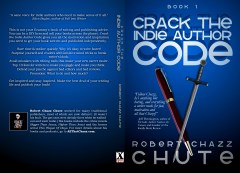
I have secrets to reveal about the true source of my fearsome power. And jokes. And weird East Coast expressions. Click the cover to get that article.

I have secrets to reveal about the true source of my fearsome power. And jokes. And weird East Coast expressions. Click the cover to get that article.

We complain about having to market our books. It is tough and I wish there were more and better missiles for the War on Anonymity. A few things to keep in mind:

1. Traditional or self-published, you’re still stuck doing most of your own publicity. No one will save you. You’ll have to save yourself. If you’re in the right mood, that statement can, theoretically, feel empowering.

2. Some strategies won’t work. Dump them and move on. You will, however, have to make some forays and investments here and there. Don’t let holding on to a little money now hold you back from making more money later. The risk-averse always arrive late to the party after all the daring, beautiful people have gone home with each other for a Chess Orgy…or whatever it is the beautiful people do.

3. You are not above marketing. I mean, unless you don’t care if anyone reads your work. Hm…actually, that would be quite freeing.

4. Everybody can and should do something to sell their books. Too shy does not serve you. Bookbub costs money, sure, but it’s effective. There’s also a lot you can do that costs nothing but time. I’m doing it right now and you’re watching. Is it hot in here, or is it just you?

5. When something is less effective than it used to be (Bookbub, KDP Select, pleading for sex) that doesn’t mean it’s not at all effective. You may have to spank your rump harder to get going, that’s all. 

6. When I see those tweets from collectives trying to sell books for authors, more often than not, I’m turned off.

By the way, Crack the Indie Author Code 2nd Edition is out in paperback at $9.99. Smaller format, same old information if you need a NaNoWriMo kick in the inspiration. With jokes.

By the way, Crack the Indie Author Code 2nd Edition is out in paperback at $9.99. Smaller format, same old information if you need a NaNoWriMo kick in the inspiration. With jokes.

Sorry, it’s a visceral thing that is not routed through my brain. I’m not saying they’re all bad or that you shouldn’t use those services. It’s that image of one person acting relentlessly enthusiastic about the constant steam of recommended books that bothers me. Equally enthusiastic and paid to be so. It doesn’t feel organic.

I would say that if outsourcing to others is your only strategy, your rocket needs more fuel.

7. The best is when an actual reader loves your neuro-fudge book mojo so much, she has to spread the word to share the adventure to her friends so she will, in turn, gain love, respect and immortal life. Word of mouth is the hardest cake to find, but it’s the tastiest. You start by asking friends to read your book. If you’re like me, you run out of friends fast, so you have to get used to engaging strangers. I’ve made a lot of friends out of strangers lately. I like it. I wish I’d known how to chat in high school.

Facebook is your friend (except, of course, when Facebook is evil.)

8. Stop just looking for mentions of your Twitter handle and go discover more people through Twitter.

Blogs lie there, hoping to be discovered. Blogs used to be so come-hither and stick your tongue in my…um…ear. Now blogs are feeling entitled to the attention they no longer receive, getting drunk and screaming at the DJ to play Copacabana. (See, this is a blog and you’re losing interest now, but I’ll mention Silver Surfer, Klingon and a date gone bad soon, so read to the end.)

With Twitter, you go find people who are talking about your areas of interest. I’m fascinated by neurology, psychology, brutish and funny poetry, autism, comedians, alternative health, weird facts, pathology, writing, publishing and righteous vengeance as a lifestyle choice. I will never run out of new strangers who might become friends. You won’t, either. We’re writers. We’re at least a little interested in lots of things. (Search hashtag #zombies and #vampires and #agoraphobia, #writing, #insomnia, #anxiety, #depression and #headaches, slam-bam-boom…the info-cornucopia only ends when the EEG is a flat line and your heirs start arguing over your Hummel figurines.)

Aren't you sick to death of me telling you what to do? Click the cover to read jokes and confessions about my life in Not-Maine.

Aren’t you sick to death of me telling you what to do? Click the cover to read jokes and confessions about my life in Not-Maine.

9. Big-time authors who have an assistant tweet for them? Nobody’s “big-time” enough for that. Galactus could write a book and (even though he’s his herald!), if the Silver Surfer tweets about Eating Planets for Fun and Profit, we riot and unfollow.

10. There are dozens of technological solutions to most of your marketing problems, but you have to get out there. I appear, at times, curmudgeonly and a contrarian. The jokes make that easier to take…in short bursts. No technological solutions can help you if you’re a pain all the time. Don’t do that.

Do this: Be friendly. The more readers you gain, the easier it is to be friendly. Get out on Twitter and meet people. Learn about them. I like learning things. That’s an excellent place to start, and think of all the high school trauma I could have avoided if I’d known how to talk to humans.

Also, get off Twitter and meet real people at book signings, fairs, conventions and readings. Be the best you that you can attain and all that rah-rah Anthony Giant Within Robbins stuff. (Hey, that works for some cult members!)

I rush in where devils fear to tread.

On November 14 at 7 pm I’ll be interacting with actual humans in the Meatspace of London, Ontario’s Central Library. Author Mark Rayner and I will give readings and answer questions about publishing, writing and discuss the people of Whoville and how we can fight The Great Suessian Nostril Menace.

I will drink champagne from an old lady’s boot while doing a ventriloquist act with Mark on my knee. Then he’ll breakdance for about two hours straight while I recite Klingon love poetry. We work without a net, so if you’re in the area and want to see me stammer while being bludgeoned, this is the best blunt force trauma event of the night. (Lesser blunt force trauma will be at play after the show at Joe Kool’s.)

Last chance to read the blog post about Not-Maine. People with ten toes will want to check this out. Unless all the toes are on one foot. Those freaks need to move out from under the power lines and then click the link and get a few grim laughs at ThisPlagueOfDays.com.

~ Not to be too forward, but you’re very attractive and I’m feeling very drawn to you. Feeling down and vulnerable and mad at your dad? Oh, good! I thought you looked like the sort of adventurous person who needs something special tonight. The way that dress clings…I mean…wow, have you even tried fabric softener? How about you come with me? You can lie down, put some Nina Simone on low so she won’t burn, and have a sweet, hot book. C’mon back to my place. The drinks are on the bar and the books are in the sidebar. I’m Robert, by the way. Robert Chazz Chute…Isn’t that last name quite unfortunate? Buy my nonsense! Hold my books! Ease the pain…sir? It’s one night early for Halloween. I didn’t recognize you in that dress…dad. Well, this got awkward fast.

Filed under: author platform, , , , , , , , , , , , , , , , , , , ,

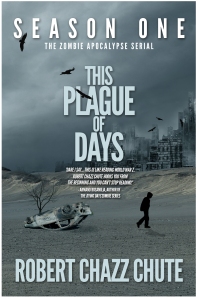
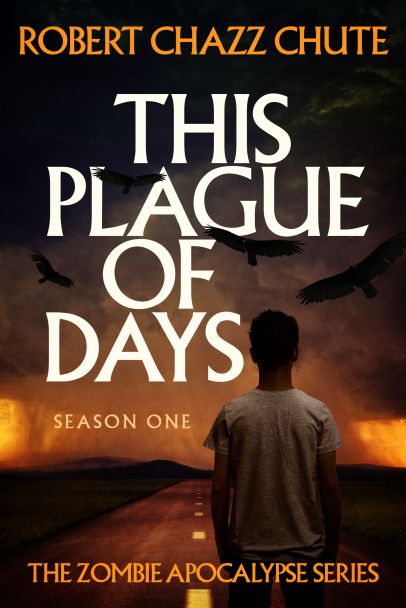
This Plague of Days: Season One arrives in paperback! (Plus stuff for you)

Special thanks to Kit Foster of KitFosterDesign.com for his kick-ass cover skills! 

If you’re looking to get a cover, I always recommend Kit! Plus, he’s Scottish!

Have a look at the beauty below (i.e. buy it) and be sure to check out his portfolio.

Pageflex Persona [document: PRS0000039_00004]

This Plague of Days, Season One teaches Latin proverbs and brings you into the mind of a very unlikely hero on the autistic spectrum. Zombies attack and royal Corgis are in big trouble. Maybe the Queen, too. (That’s my motto: Give the people what they want.)

This book makes a great Halloween gift, Christmas present or something to scare the bejeebers out of friends, family and enemies. If you’ve been waiting for the paperback, here you go. Working on getting Season Two out in print next. 

Serialization pros and cons

Not into my books but want more about publishing in savvy ways?

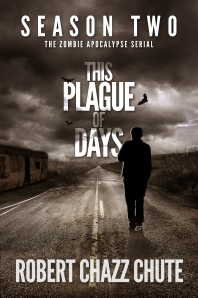
Season 2 is the quest. Expect big trouble in Ireland and Iceland because I think countries beginning with I are narcissistic and need to be taken down a peg or two by bloodthirsty zombies.

Season 2 is the quest. Expect big trouble in Ireland and Iceland because I think countries beginning with I are narcissistic and need to be taken down a peg or two by bloodthirsty zombies.

Okay, if you came for the pithy stuff about the downside of serialization and why I collapsed to the haters and won’t serialize Season Three of This Plague of Days, you’ll want to check out this post: 

Why I won’t do this again

The contest that challenges you to find a secret hidden in plain sight

Yes, there’s also an intriguing contest going on and your immortality is at stake.

Find the secret, win a life everlasting in book and audio form.

I love a mystery wrapped in an enigma concealed in a burrito, don’t you?

~ Robert Chazz Chute is…writing in the third person again. Get your NaNoWriMo inspiration and hope for the publishing future by reading Crack the Indie Author Code in paperback and ebook. Just kidding about the Ireland being narcissistic thing. You know I love the land of my ancestors. But Iceland? Well, you’re on notice for realsies, Icepops!

Filed under: Amazon, Publicity & Promotion, publishing, self-publishing, This Plague of Days, , , , , , , , , , , , , , , , , , , , , , , , , , , , , ,

I like you more when your dog dies: Niches, conversations, dead blogs and a contest.

We don’t sell anything unless we tell stories. To sell stories, we must have stories about our books.

Seth Godin’s blog and books sell because they’re short, pithy, smart and he owns his niche. To own a niche now, you’d do better define a new one. Don’t try to take Seth’s purple cow, tribe or incisive observations about case studies. (Note: “Case studies” is the more scientific word for “stories.”)

Define your own niche and you’ve got a better shot at selling more books.

For instance, my next book is about Romeo in a drug-infested, coming-of-age thriller in New York. Shakespeare plays a role in finding the modern Juliet. Coming-of-age and thriller aren’t normally such cozy neighbors. My last book was a zombie apocalypse with an autistic hero and Latin proverbs. Not a lot of competition in that end of the zombie market.

Season One of This Plague of Days is the siege.

Season One of This Plague of Days is the siege.

Familiarity is overdone. Differences define us in the market. (e.g. Bookstores are still crammed with Harry Potter knock-offs, but there’s only one JK Rowling.) Take something familiar and find a way to make it original again and you’ve got something.

Story is the most important thing. Story works.

Podcasts don’t sell unless they’re rich in content and tell stories. From business success to how-to and gee-whiz science, podcasts don’t work as sales engines unless they tell aspirational stories. From the startlingly different (Welcome to Night Vale) to personal confession (Marc Maron’s WTF) stories must be told and be relatable.

I’ve noticed more authors seem to be shifting their cyber-presence to Facebook and away from Twitter. They’re all Twittered out. Tweets are solid tools of discovery and live-tweeting makes the Oscars watchable, but Twitter tends to be less about story and connection. We need a little more space to achieve resonance.

Facebook offers more opportunity for personal connection. FB’s post length helps, but it’s also subtext. On Facebook, you have friends

Twitter is less friendly and more competitive. On Twitter, people have followers and people pay attention to numbers gained and lost. On Twitter you use ManageFlitter and WhoUnfollowedMe. On Facebook, if crazy Aunt Sadie unfriends you, you’re relieved you can swear again and her abandonment confirms your politics are sane.

Personal stories help us plug into each other’s pleasure centres.

The mind often fails to make distinctions among what’s real and illusory, cyber and real world. On Facebook, Story is the carrier wave of connection: “This is my child, my dog, my life!” we tell each other.

Since we don’t know what the hell we’re doing and we’re all scared, our connections reassure us. “Maybe I’ve screwed everything up, but at least I’m making the same mistakes as everyone else in our journey toward a better tomorrow.”

That’s why your photo catalogue of a glorious tropical vacation on Facebook doesn’t fit into the brain’s three-prong plug of connection. People love shared stories of failure, vulnerability and happiness, but only after that happiness is earned by failure and vulnerability. We root for the underdog and rags-to-riches stories, not Donald Trump. Your new car is nice for you, but I like you more when your dog dies. My dog died. Commonality is currency. Because I want to be loved, I love you when you’re suffering insomnia from worry, too. Misery doesn’t just love company. It insists on it.

Though we are each mysteries, we like to imagine we are each other.

Each of us is just as challenged and sad and lonely, but we hope to be rich some day, too. When the money and success roll in, we tend to forget all this stuff about connection. We blame the poor for their poverty, give luck no credit for our rise and trumpet all our hard work to the exclusion of any variable that does not bow to our big ol’ brains.

No wonder the rich and poor hate each other (except the poor want to join the resented rich, too.) Meanwhile, the rich would rip out their own throats with car keys from their repossessed Lexus if they had to get by on less than $100,000 a year.

Our class boundaries break connections. That’s why celebrities seem so otherworldly in person. They lost their shock collars and passed the invisible electric fence! They made it, so we can, too! Unless they’re the children of celebrities. Those lucky devils get a sneer and a Barry Bonds asterisk beside their fame.

Our stories about who we are become who we are.

That quest for privacy? Quaint. Adorable. Amish.

Jonathan Franzen worries about our attention spans, the death of literature and loss of privacy. He worries about the horrors of the Internet, just about every week it seems, in the Huffington Post. Horrors.

Blogs are dead sales platforms.

You have to have an author site, but you’ll get more juice from connecting on Facebook. Twitter will serve you better than a blog because it serves more people.

A blog is too much of a commitment for the reader. Too few blogs are “appointment reading”. A blog is a magazine at the doctor’s office. You only pick it up when there’s nothing else to do and you’d rather be doing something else.

I am subscribed to many blogs. They’re up there somewhere, forgotten in an RSS reader, added to a long reading list I will never get to. The blogs I actually read daily don’t have to be stuck in my bottomless bookmark bin. I go to them.

Blogs fail because signals go out but they don’t connect. Like this post, a bad blog post pontificates. I’m doing it now, connecting less, to fewer people. Still here? You’re already hoping the meta will stop and I’ll somehow pull out of the dive and land a punch and a point in the final sentence. How will I bring us home after such a depressing, meandering trip? I’ll show you. Indulge, a moment more, before the doctor calls you in to talk about those test results.

There are exceptional blogs, still breathing.

You can tell which blogs still have a heartbeat. They have a large and active comment community who aren’t just there to fight. (The Passive Voice is necessary to indie writers, for instance, as is David Gaughran’s blog.) Their lure is a story of aspirational subtext: Read this and you will succeed as we analyze the mistakes and triumphs of others.

And what are comments but the back from the forth? The best comments are more stories, resonating and rising up in conversation.

Commenting as a sales tool is less effective than it once was, back when people still asked, “What’s a blog?” Commenting doesn’t sell, though it can hurt you if you’re a dick. Some commenters never communicate human warmth. They think their intellect and snark will win people over and drag eyeballs back to their own dead blogs. They’re wrong. We only go back to their blogs to see if they’re rude to everyone (yes, always, yes) and make mental notes of what books not to buy.

Living sales platforms are conversations.

Facebook is a bigger sales engine at the moment, coming at you sideways, fun and friendly and under your defences.  We tell stories in conversation with friends. That’s where the connection lies, even if it’s a lie. We share our failures and hopes and dreams and we don’t look at our watch when we’re on Facebook. (That’s how the wasted hours slip away and books don’t get written, too.)

Facebook falls short in some ways, but that’s where I can talk with Hugh Howey or Chuck Wendig or Robert J. Sawyer. Facebook is alive with conversation. That’s the hot, three-pronged brain plug of connection we crave.

So who cares about this shit? Too long to read. Meet me on Facebook and maybe we’ll connect in a conversation. Blogs are dead. I killed it. Just now. I regret nothing.

Season 2 is the quest.

Season 2 is the quest.

~ There is a secret in This Plague of Days. You’ve already read it. No one has guessed it yet. If you suspect you know, DM me on Facebook or DM me on Twitter. Praise and adulation will be heaped upon those who guess correctly. First prize is a signed paperback. Three winners will appear in my next book. Adulation for all will happen on the All That Chazz podcast.

Filed under: author platform, , , , , , , , , , , , , , , , , ,

Bestseller with over 1,000 reviews!
Winner of the North Street Book Prize, Reader's Favorite, the
Literary Titan Award, the Hollywood Book Festival, and the
New York Book Festival.

http://mybook.to/OurZombieHours
A NEW ZOMBIE ANTHOLOGY

Winner of Writer's Digest's 2014 Honorable Mention in Self-published Ebook Awards in Genre

The first 81 lessons to get your Buffy on

More lessons to help you survive Armageddon

"You will laugh your ass off!" ~ Maxwell Cynn, author of Cybergrrl

Available now!

Fast-paced terror, new threats, more twists.

An autistic boy versus our world in free fall

Suspense to melt your face and play with your brain.

Action like a Guy Ritchie film. Funny like Woody Allen when he was funny.

Jesus: Sexier and even more addicted to love.

You can pick this ebook up for free today at this link: http://bit.ly/TheNightMan

Join my inner circle at AllThatChazz.com

See my books, blogs, links and podcasts.

Enter your email address to follow this blog and receive notifications of new posts by email.

Join 2,063 other subscribers