C h a z z W r i t e s . c o m

See all my books at AllThatChazz.com.

What Birdman got right (and what it says about writing books)

If you haven’t seen Birdman, starring Michael Keaton and Edward Norton, you’ll find no spoilers here. It’s a very unusual film and there is a lot to love in it, not least of which is the cinematography. It’s also one of those rare films I’ll need to see again before I can figure out how much I like it.  Today, I want to talk about what I loved (and how it might apply to writers and books.)

1. The movie is a tutorial in acting without self-consciousness.

Many of us are too self-conscious to try something bold in our writing. That’s too bad, I think. I like bold choices in books. The expected is too ordinary and easy. The expected is…expected. You’ll also love the instruction on the power of motivation, emotion and brevity.

2. The film is comfortable with ambiguity.

As much as I enjoyed the summer romp that was Guardians of the Galaxy, there was no need to discuss it by the time we got to the parking lot. Birdman leaves so much ambiguity, you’ll find a lot of people arguing over clues in the film. What happened and what did it all mean? That could irritate you, or you could decide it’s finally a film worthy of discussion.

3. Birdman is working on several levels.

You can take it for what it is or you can take it for what it might be and, no doubt about it, this is a story that demands some patience from its audience if they decide to try to decode it. I like books that are doing one thing while you think they’re doing something else. That’s the rich depth I look for in my reading and writing, no matter how superficial an entertainment you might expect. (For instance, shocker: This Plague of Days is less about zombies and more about you.)

4. Birdman is Art (capital A) that defines its audience.

If you’re an optimist, you’re going to want to interpret the story one way. If you’re a pessimist, you may have less fun in the movie but you’ll enjoy the discussion over coffee after the movie.

5. Pop culture references.

The movie is front loaded with some contemporary references that are pretty funny. The movie isn’t afraid to define itself by a particular time with those pop culture references. Publishers have long run screaming from books with such references for fear readers won’t get it and the book will be dated too fast. Here’s what I’ve found (especially from feedback about my crime novels): Lots of readers love pop culture references and readers don’t scare off so easily when you’re showing them a good time. Will it get dated? No. That’s just a label and what you call a thing is not the thing. (Don’t buy that? Okay. How about this: eventually, everything is a period piece.)

6. The movie talks a lot about what it means to make Art and struggle with commerce.

What we all do as artists is kind of a brave thing to do. Maybe not storming-the-beaches-at-Normandy brave, but we’re taking risks and putting ourselves out there. It’s nice to see that affirmed somewhere instead of mocking entertainment as an effete thing to do when you could be out drinking and brawling or doing nothing. I believe Art matters. So does Birdman.

7. The movie criticizes and acknowledges the power of social media.

That’s surprisingly evenhanded and grounds for more discussion about what matters and how to get to what matters. Many of us are divided on the power of Twitter and the distracting lure of YouTube. I don’t think the answer is an either/or binary, so, through the ranting, the movie has a very thoughtful core.

8. Any artist will appreciate the critique of the role of the critic: how easy, risk-free and shallow it can be.

I heard a couple of professional critics mock this aspect of Birdman. Clearly, they weren’t listening closely or their egos got in the way. Whatever else you may dislike about this film, if you’ve written a book, you’ll love that exchange.

9. Birdman is, in part, about legacy and relevance and striving.

We can all relate to that, can’t we? If you can’t, get out. You’re taking a squat in my church.

10. By turns, Birdman looks like a French art film somebody dragged you to in college, one of those movies only film students pretend to like while they’re really thinking about Star Wars.

Then Birdman does something different. In other words, if it were a book, it would be cross-genre. It’s a film that isn’t easy to categorize and define. Therefore, it’s harder to sell. They made it anyway.

Filmgoers have been crying out for films that are refreshing and different. Audiences have been moaning at Hollywood for years, “Oh, for God’s sake, give us something besides another empty sequel and come up with an original thought!” Well, you asked for it and Birdman is what the answer to that request looks like.

You know what? I take it back. Now that I’ve written this list, I can see it now. I did like Birdman a lot. I think I might love it.


Filed under: movies, Writers, writing tips, , , , , , , , , , , , ,

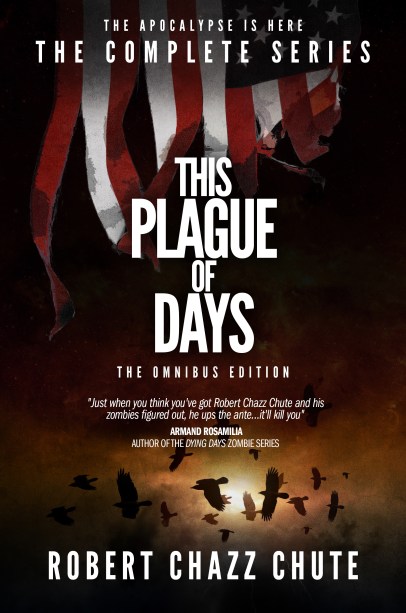
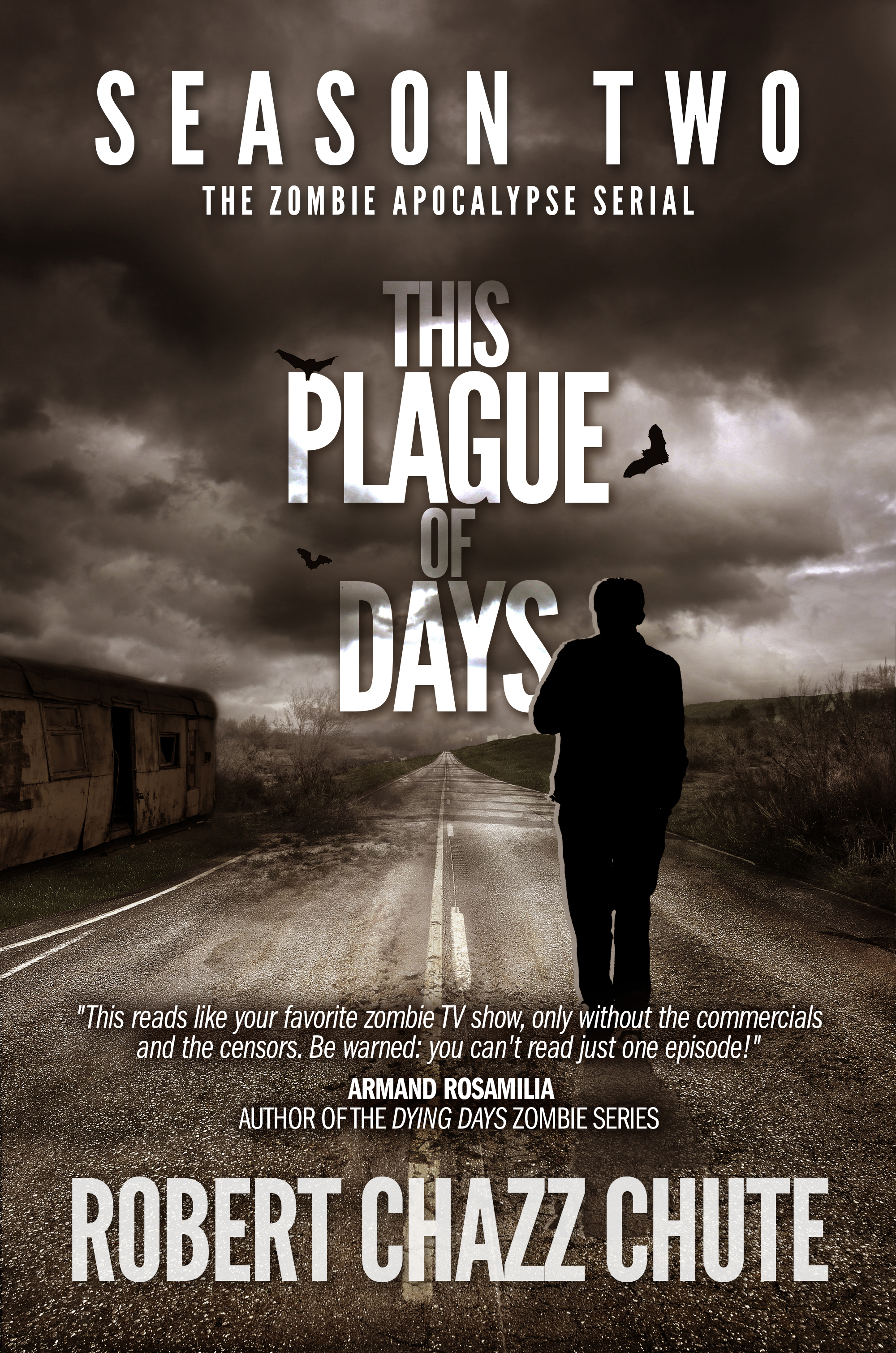
Number One in #SciFi #Free today: All 3 Seasons of This Plague of Days!

This Plague of Days OMNIBUS (Large)

The First Season is The Siege. The Second Season is The Journey. The Third Season is The War.

Think The StandStranger in a Strange Land + The Walking Dead.

That’s the This Plague of Days Omnibus.

Free. 

Today.

You know what to do.

Bravery is not required. Action is.

Filed under: ebooks, , , , , , , , , ,

#NaNoWriMo: How to make writing a novel easier than it looks

I write drafts for my novels at a rate of 1,000 words per hour. I can string more of those hours together if I plan ahead with a general outline, but I usually pants it rather than plot it. 

I think of my writing time in terms of word count and hours. Here’s why:

When I wrote This Plague of Days, I didn’t think in terms of hours then. I didn’t budget my time or work to a word count like it was a job. I just put my head down and wrote and revised many times, stealing time here and there without a real schedule. I can’t tell you how long it took to write that epic saga because I went through so many revisions. Also, because my approach was haphazard, I wrote slower then. Though I worked from an outline, the project took longer than it could have.

I was buying into the meme that slow cooker writing was the only way, despite Stephen King’s suggestion that three months ought to do it (and look at the size of his books!) If I wrote that series now, the first draft would take about 300 hours of actual writing time. That’s less impressive than saying it took me years to write TPOD, but it’s more accurate.

(By the way, I just found out the This Plague of Days, Omnibus Edition has advanced to the second round in the Writer’s Digest Self-published Ebook Awards! Yay!)

When someone says it took them two years to write their first novel, that’s not true.

Two years equals 17,531.62 hours, including time spent sleeping, showering, goofing off, playing with children and pets and holding down a job, and procrastinating etc. Authors can write as fast or as slow as they’d like and each process is unique. However, there is no direct correlation between speed of production and quality. In fact, for the first draft, quality is nigh irrelevant.

Quality comes with subsequent drafts.

I find most of the jokes in the second revision and the plot problems to be fixed become clearer by the third revision.

Take NaNoWriMo, for example…

I’m planning 55,000 words for my current WIP. That means 55 hours for the first draft this month. As my current schedule allows, I’ll be done well before the NaNoWriMo deadline as long as I continue to protect my writing time.

Fifty-five hours sounds much less intimidating and more realistic, doesn’t it? What’s one work week to you? Forty-four hours? I approach my writing like a job. It’s a job I love, but there’s no waiting around for inspiration to come to me. I hunt inspiration down. Inspiration and efficiencies are habits learned by writing more and doing so consistently.

Sometimes the best laid plans go awry.

For my crime novel, Intense Violence, Bizarre Themes, I’d planned on looking for the exit to the book around 50,000 words and topping out at 55,000 words. It took me an extra 17,000 words to wrap it up neatly at 67,000 words. Still, 67 hours to a first draft sounds like much less drama than saying it took me a month. That’s just 16.7 hours per week to come up with a first draft. (For a while in the ’90s, that’s about as much time as I committed to watching television.)

I’d give you a measurement of editing and revision times if I had them, but that varies too widely depending on the book. For instance, I’m putting my time travel novel on hold because I’m not happy enough with it yet to release it. I’ll come back to it in 2015. However, I expect to have my current WIP out in time for Christmas (assuming I still love it when I’m done.) 

Write as slow as you want to or as fast as you can. It doesn’t have to be a job. Hobbies are good, too, so write at the pace you choose.

My point is, we don’t have to be drama kings and queens about the writing process. When you hear of writers putting out a lot of books fast, that’s not really quite as hard as many would lead you to believe. Writing is a time management issue first. The other skills required come into play after we commit to investing the hours.

But it can’t be good because it was written too fast!

Writers who cherish writing slowly have my utmost respect until they insist others write at their pace (and many people write much faster than I do.)

On the Road, Casino Royale, The Gambler, A Clockwork Orange, The Prime of Miss Jean Brodie and As I Lay Dying were written in less than six weeks. I wonder if any of those famous books were actually written in less time than that if the authors had tracked their hours.

Fast writers manage fear because they think about each book project in terms of a formula:

Word count goals + hours x perspiration (divided by distraction)

Prolific writers manage their time, that’s all. No drama. Inspiration usually arrives at the keyboard at about the same time we do.

Write. Revise. Edit. Enjoy throughout. (Now don’t tell anyone how easy it is to get to big word counts or they might start to think that writers aren’t special snowflakes!)

~ I’m Robert Chazz Chute and I just published my 15th book. Imagine how many more I could have written if I hadn’t been sucked into the vortex of “Must See TV” back in the day. 

Filed under: My fiction, publishing, Writers, writing tips, , , , , , , , , , , , , , , , ,

Anti-NaNoWriMo Rants – Shut Up Already

Author Armand Rosamilia is from Jersey.

Armand Rosamilia's avatarARMAND ROSAMILIA

I am a big fan of NaNoWriMo. I do it most years as an added writing exercise because I try to hit the goal each month regardless. I have fun because many of my friends also do it and we encourage one another, I get a chance to go out around town and meet other writers who are doing it, and it is just a fun time. 

Then I read a bunch of posts bitching about how stupid it is and writing is not a race and they wouldn’t be caught dead doing it because they are seemingly too good and write all year and blah blah blah. 

Shut up.

The first year I did NaNoWriMo I was working a full-time 60 hour a week job. I wanted to see if I could do it. I was far from becoming a full-time writer and I just wanted to finish a…

View original post 158 more words

Filed under: publishing

Top Ten: I wasn’t going to do #NaNoWriMo but…

I’ve published three books in the last month.

HJ COVER FINAL LADY IN RED

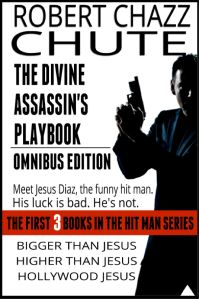
PLAYBOOK COVER FINAL

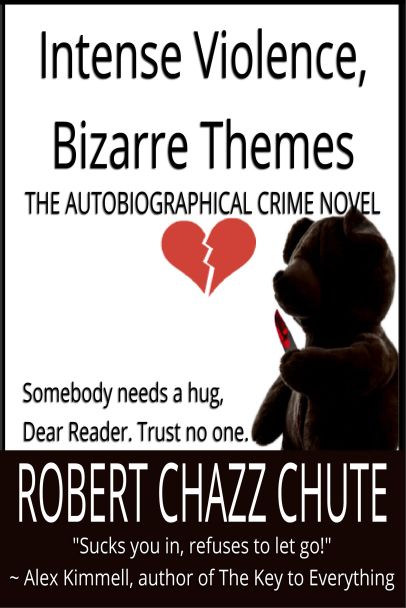
IVBT FINAL 2D cover


I’m revising an ambitious time travel novel that I want to get done in time for Christmas. I already write a couple thousand words a day minimum and edit plenty. Every month is Nano for me, so why National Novel Writing Month?
1. I’m always excited about the next project and I have a new book I was going to work on that is going to gain a lot of visibility. Slowing the process is putting off success for later.

2. I was going to write this new book anyway, but doing it in conjunction with NaNoWriMo will help me speed my timetable.

3. I’ve published fifteen books in three years, so the back catalogue is solid, but I want to reach out to new readers with the next project. When this new one hits, all my work will get more attention.

4. I need to take Ex Parte Press in a new direction. At first I thought the new idea wasn’t for me. Then I realized that, just as happened with This Plague of Days and Intense Violence, Bizarre ThemesI could do something unique with a familiar genre.
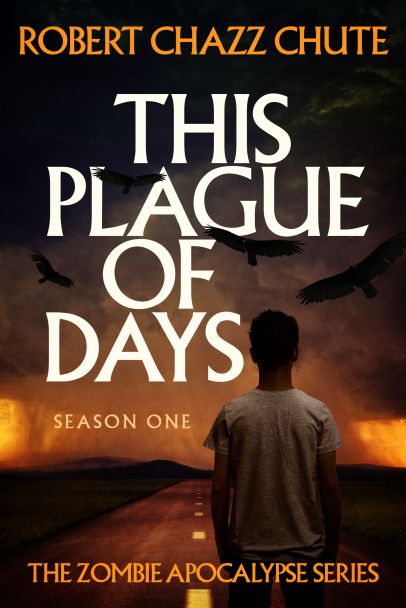
This Plague of Days S3 (2)

5. I have another huge book waiting to be edited. I’m proud of it and it’s going to be strong, but it’s also a stand alone book, more literary and packed with Shakespeare. It has to wait while I do something with wider appeal that is the basis for a series. (Don’t sniff. Literary is just another genre and I love it all.)

6. This new book is an urban paranormal fantasy with a realistic context. It’s still my style of creepy and scary (with jokes), but I want to finally write a story with a female protagonist. My books definitely aren’t for dudes only, but it’s time for a book from me that resonates even more with female readers.

7. As I write this post, all my Internet friends are challenging each other to do writing sprints and get in on the fun of NaNoWriMo. November is the one month of the year when a writer can feel part of a large community of fellow toilers. It doesn’t have to be such a lonesome pursuit.

8. Competition and fun fuels forward motion. I want to harness that power.

9. Spurred to write now instead of wait, I started this morning. My word count on the first draft of the new project is 3,812 words. I just reread it. They are good words. I’ll keep most of them.

10. Most of those people who claim to take years to write a book are counting procrastination time. NaNoWriMo blasts through that mental block and propels us forward so we write now right now. We free ourselves of the perils of the inner hypercritic and finally get the story out. We can perfect it later. Free your mind and commit to the risk of NaNoWriMo. It’s writing, just as it ever was, but this time it’s with friends cheering us on through the process. There’s nothing wrong with that.

Filed under: My fiction, NanNoWriMo, , , , , , , ,

Okay Pirates, You Win

Reblogged for your consideration, eyes open. Though I don’t personally agree with her conclusions, I’m sympathetic to her pain.

TammiePainter's avatarTammie Painter

This week I learned my recent release, The Trials of Hercules, has been pirated. Initially I thought only a couple illegal download sites had it and that the wound could be staunched, but I’ve since learned that old Herc is bleeding out through his femoral artery because the book is on at least 20 pirating websites.

It’s No Big Deal, Right?

pirateFor those of you who don’t think pirating is a big deal, let’s put it in perspective. I’ve worked for over a year on writing, editing, formatting, and promoting this book. An average year’s wages in the U.S. are somewhere around $40,000. Now, $40,000 can buy you a pretty decent car, so let’s say you take a year of your work and buy a car then, the very day you get your car home, it gets stolen.

How pissed off are you? Add to that anger the attitude…

View original post 995 more words

Filed under: publishing

How to twist a psychological thriller into something new and different

If you’ve read This Plague of Days, you know I go for unique takes on familiar genres. This is how I cut new grooves in an old record and made new word music.

IVBT FINAL 2D cover


1. There are no new ideas, but I have novel ideas that play with reader expectations. Always do the unexpected (usually within the confines of the genre, but certainly not always.)

2. Make it meta, commit and have fun with it.

3. Break the fourth wall and talk to the reader. Sure, Italo Calvino did it plenty. Why not you? (But not so much there is no story.)

4. Focus the psychological in psychological thriller on the protagonist. Done right, the reader will share in the pain and therapy.

5. Be the main character (yes, you!) and put ’em through the Poisoned Corridor of Shame and Rusty Carrot Scrapers. 

6. Sift in some weird facts readers won’t think are true (but are.) Realistic context makes fiction feel like non-fiction. Cover your tracks and always let them wonder a bit what and how much to believe. Being a writer is a fine thing. Be a magician, too.

7. Give regular readers some Easter eggs with crossovers from other books. (New readers won’t notice, but the regulars will love it.)

8. Make the confrontations with self and others real and honest. There is underlying truth that’s bigger than mere facts.

9. Stir in plenty of action to push readers along.

10. Add pop culture references, nostalgia and funny dialogue to pull readers along. Make room for jokes. Be different enough to be memorable, but not so different readers hate you. Stay weird, but not for the sake of weirdness. For the sake of the readers who dig doing the daring.

BONUS

Add a secret link and password at the end of the book so readers can find out more about what’s true and what isn’t. Slake their thirst, but don’t tell them everything, either. You don’t want to dispel too much magic in case there’s a sequel.

This is what I did. I called it Intense Violence, Bizarre Themes, The Autobiographical Crime Novel. I hope you like it.


Filed under: Books, My fiction, , , , , , , , , , , , , , ,

#COFFINHOP on ZOMBIEHOLICS: Advice Given in Hindsight…

In case you feel you need it, here’s some warm writing advice from people who write about cold creatures.

Julianne Snow (@CdnZmbiRytr)'s avatarZombieholics Anonymous

There’s a saying – hindsight is always 20/20 – and given that, I wanted to know what advice the authors would give a younger version of themselves. Something they wish they’d known when they first started writing…

Julianne Snow

To go for it. In high school I was guided into the sciences and away from the arts. But then even looking back, what I studied while getting my degrees has helped bring a level of authenticity into my work. But my advice to myself would still stand – in going for it, it doesn’t mean I had to choose between the arts and the sciences. I could have done both without any problem.

Stephen Kozeniewski

“You mustn’t kill time, boy.  You must cherish it.  Can I have some change to go get loaded?”

T.W. Piperbrook

Keep on writing! I wish I hadn’t taken several detours in life, but at the…

View original post 209 more words

Filed under: publishing

#COFFINHOP2014 on ZOMBIEHOLICS: The Zombie Definition…

Authors weigh in on what zombie means to them. What does it mean to you?

Julianne Snow (@CdnZmbiRytr)'s avatarZombieholics Anonymous

What better question to ask those who write about Zombies… What does the word ‘zombie’ mean to you?

Julianne Snow

A zombie to me could take on different forms – from something reanimated that was once dead to people suffering from extreme consumerism to the effects felt from the symbiotic relationship with a space parasite. Essentially, when you’re a zombie you’re focused on thing only; spreading your infection.

Stephen Kozeniewski

Papaya juice.  Some people think what’s important is the brands of rum you use, but those people are wrong.  The key to a good zombie is papaya juice.  I know, I know, that sounds exotic, and, sure, it’s a little hard to find, especially on the mainland, but once you’ve had one, I swear you’ll never go back to just pineapple juice and lime again.

T.W. Piperbrook

A human being stripped of their emotion and humanity.

Robert Chazz Chute

Much like…

View original post 184 more words

Filed under: publishing

The very nearly here, not quite yet, Post-review World

Once upon a time an author named Hale stalked a book reviewer, wrote about it in The Guardian and…well, things got crazy. I haven’t weighed in on this because you’ve no doubt read plenty about this debacle. Besides, I didn’t have anything new to say. I still don’t have anything new to say about that particular incident. It was a bad idea to respond to a negative review and there’s no need to pile on.

I do understand the urge. Oh, yes, every writer knows that urge to respond and demand an apology or…something. Instead, I stay indoors, never go anywhere, and write scary, funny books. It’s a better use of my time and the right thing to do.

So let’s talk about reviews more generally.

We all want them. We can’t promote our books effectively without a minimum number of happy reviews. But there are problems:

1. If you get a lot of happy reviews, someone who didn’t like your book will accuse you of having lots of friends and family shilling for you. Ha! I wish! It’s very difficult to get any reviews on anything and I don’t speak to my family. The point is, some people (I have no idea how many) think five-star reviews shouldn’t be trusted. However, if you didn’t have any five-star reviews, those same people would slay you for it. Crazy, huh?

2. Some people can’t help themselves. They condemn authors for their books and pedophiles for their despicable actions with nigh equal vehemence. Well…I assume so, anyway. I mean, I’ve read some vitriolic reviews where, once you dial it up to eleven, there’s no place to go, is there? But (silver lining) no one really takes one-star reviews seriously anymore, either. They are, with few exceptions, troglodytic. We read them for sick entertainment value, not for direction as to what to read.

3. Some people put spoilers in reviews without warning. That’s not a review anymore. That’s a spoiler and it’s a shitty thing to do. Just because you don’t like it doesn’t mean others won’t and spoiling a work that was years in the making in one ill-considered paragraph? Yes, that’s bad. What’s worse is Amazon lets it happen and allows those spoilers to remain posted without warning.

4. Likewise, authors have been libelled in reviews. Once again, Amazon does nothing if you complain. Unacceptable, and yet we are, at the moment, powerless. It’s the Internet. We’re supposed to shrug and hope the happy reviews drown out the unhappy ones (and eventually, mostly, they do.)

There’s a study somewhere that shows how unreliable reviews can be in an odd way. If the first review that goes up is negative, ensuing reviews tend to be more negative than they would have been otherwise. That’s less about the book, I suppose, and more piling on, hoping to be seen in agreement with whoever spoke up first. Weird.

5. Here’s where it gets weirder: Authors shouldn’t respond to reviews. Goodreads doesn’t even want authors to thank anyone for a nice review. That strikes me as forcing authors to be rude, but it’s their site policy so I abide by it.

Pretty much everyone accepts the No Response to a Bad Review Policy as a given, but no one knows who established this all-encompassing edict. Other industries routinely respond to reviews, hoping to ease their unsatisfied customers’ fury. We don’t. The argument goes that reviews aren’t for authors (true) but we aren’t even supposed to respond when reviews are misleading. We’re supposed to, as Hugh Howey so aptly put it once, “enjoy the burn.”

But wait. If we’re writers who should be thick-skinned and stoic since we put something out in the world…aren’t reviewers putting stuff out in the world, too? How come their writing is exempt from criticism but mine isn’t? Hm. No. Stop thinking about it. Nothing good can come from following the logical conclusion of that reasoning.

I am not arguing for responding to reviews.

The system is broken when reviews allow spoilers, libel authors or when so many people seem to distrust reviews.

Someone at The Passive Voice recommended we tell people, “If you liked it, please tell a friend,” in lieu of reviews. I kind of like that, but that’s what reviews were supposed to be anyway, right? Telling people what you liked so they can share the experience of an interesting, entertaining or enlightening book. I encourage people happy with my books to review them on Amazon. A review anywhere else (except perhaps a busy book blog) doesn’t really get more people to my books.

When I worked in magazines, we rarely gave negative book reviews (or the negative reviews were significantly shorter) because the point was to direct readers to the good stuff. The prevailing opinion was, the good stuff is too hard to find to waste time talking about the stuff we don’t like. I feel the same way. I may find commonality with reviews that tell me what they liked and why. What they dislike often seems more idiosyncratic (and some reviewers can’t seem to bring themselves to like much of anything.)

Maybe hoping for organic discovery through old-fashioned social networks is the way to go. But not quite yet. The apparatus for book discovery is broken. I still need happy reviews to get a Bookbub promotion going. That’s one of the few book promotion services that seems to have muscle and mojo behind it. I also suspect people don’t talk about books enough. I’m unwilling to rely on chats over fences with neighbors to spread word of my literary heights efficiently. Podcasts might be a better answer.

So what to do?

Stop stressing about reviews. Beat up a punching bag. (Reminder from Mom: human beings are not punching bags.)

If necessary, stop reading reviews. Read more books. Write more reviews.

Keep asking for reviews because, hey, that’s all we can do for now.

Don’t stalk book bloggers or book reviewers. Do not go near their homes or places of employment. And if you do (which you definitely shouldn’t!) don’t tell anyone. Jeez!

Cry quietly and not in public.

Treasure the many good reviewers who don’t mistake snark and disrespect for intelligence.

Read your four and five-star reviews obsessively to get your energy and esteem up. Read the negative reviews once, if you feel you’ll have something to gain from them (a murder plot, perhaps?) But never read them twice. That’s just masochism and revenge fantasies.

But there’s a better reason not to respond to negative reviews:

It takes time and energy that you could use to write your next book. And frankly, if someone hates your book, they won’t change their mind. If you try to use your best politician’s smile and the it’s-all-part-of-the-game clap on the shoulder, they won’t buy it. They know. You hate them. They hate your book and therefore they hate you. People will tell you this is wrong. Shit’s about to get real.

Yes, you’ll read lots of crap about how writers should separate themselves from their books. It’s a book, not a baby. Except it is. It’s the product of your mind and anyone who hates the book is calling you feeble in the brain. Be real. People tell you to be thick-skinned, but nobody really is. Many of the most successful writers, actors and entertainers on the planet confess that they remember every word of every bad review. You’d have to be a robot sociopath to be so far above the fray when someone criticizes something you put so much of yourself into.

However…when you write more books and get some success, it does hurt less. You become less invested in each book because you know you will write many. Just like having children, if you make enough of them, a few start to look expendable. (It’s a joke, for Thor’s sake. Relax.) 

Anyway, when the happy reviews drown out the negative reviews, that one-star review starts to look silly. You can also take some solace in knowing that if a reviewer hates you enough, they won’t feel the need to come back for more and you’ll be rid of them…if they actually read books before they review them, of course. Oh, yeah. There’s another reason so many people don’t trust reviews anymore. Sigh.

So, to sum up:

Write books and pretend you don’t bleed.

Don’t be a dick. Be nice. Play nice. Pretend you’re nice. Fake it and kill offenders in your next book. (I did.) Cover your tracks so they’ll never recognize themselves.

Pretend you’re happy all the time, especially when you’re not. Rant to a friend if you must. (Mental note: get a friend.)

Try to keep some perspective. You won’t, but it’s true that a review is merely one person’s opinion. It is not a scary diagnosis from a stone-faced internist.

We’re in the entertainment business. Entertain. Seek out entertainment. Don’t be so damn serious.

Remember that no matter how good your book is, someone will say they don’t like it. Don’t let them discourage you from following your star and writing, though. If that happened, then a bad review would really matter.

Until a new way to discover genius books is found, this is the way we live now.

Keep having fun. Don’t forget, this is supposed to be fun.

~ I forget sometimes.


Filed under: reviews, web reviews, Writers, , , , , , , , , , , ,

Bestseller with over 1,000 reviews!
Winner of the North Street Book Prize, Reader's Favorite, the
Literary Titan Award, the Hollywood Book Festival, and the
New York Book Festival.

http://mybook.to/OurZombieHours
A NEW ZOMBIE ANTHOLOGY

Winner of Writer's Digest's 2014 Honorable Mention in Self-published Ebook Awards in Genre

The first 81 lessons to get your Buffy on

More lessons to help you survive Armageddon

"You will laugh your ass off!" ~ Maxwell Cynn, author of Cybergrrl

Available now!

Fast-paced terror, new threats, more twists.

An autistic boy versus our world in free fall

Suspense to melt your face and play with your brain.

Action like a Guy Ritchie film. Funny like Woody Allen when he was funny.

Jesus: Sexier and even more addicted to love.

You can pick this ebook up for free today at this link: http://bit.ly/TheNightMan

Join my inner circle at AllThatChazz.com

See my books, blogs, links and podcasts.

Enter your email address to follow this blog and receive notifications of new posts by email.

Join 2,063 other subscribers