C h a z z W r i t e s . c o m

See all my books at AllThatChazz.com.

Writing: How to get it done

1. Write what you’ll finish and publish soonest, first. Propulsion increases closer to payoff.

2. Don’t tinker forever. Set a deadline. Stick to it, on penalty of noogies.

3. If you’re a slow writer, outline first so you’ll stay on track. Stop at a place where you know what happens next. You’ll start tomorrow without pausing, stopping or getting stumped.

4. Think of how great it’s going to be once you’ve published. Alert your readers to your progress so they know when to expect the next book launch. You’ll keep your momentum going with a little positive pressure. There are numerous free word count bars you can put on your author site to display your daily progress. That which is measured, improves. That which is not, is rued.

5. Give your graphic designer enough warning so when you’re ready with the manuscript, he’s ready with the cover. You’ll deliver rather than stretch it out past the deadline you set.

6. Give editors, proofreaders and beta readers a deadline so the manuscript gets read, checked and back to you in a timely manner. Write an editorial and production schedule down but put it up where you can see it.

7. Write to a word count or write to a page count or write to a timer. Write. The hardest part is to start. If the story is any good, you won’t want to stop.

8. Don’t wait for inspiration. Go find it by sitting down to write. (My bills, narcissism and terror are all the inspiration I need. What motivates you? Use that.)

9. Don’t count procrastination, marketing, or Internet distractions as writing time. The earlier in the day you get your writing done, the more you’ll get done because your greatest resistance is at the beginning. Start early and you’ll write longer and more.

10. Sleep, exercise and eat well so you don’t rob from your writing time by having to take a nap (due to a gluttonous, glutenous binge.) Naps can be great and rejuvenating, if they’re short and scheduled. (If you’re sleeping to retreat to a safe place, stop reading your bad reviews.)

BONUS:

If you aren’t lost in fun as you write, something’s probably wrong.

Spice it up and twist that plot like you’re wringing out a wet towel.

No one willingly gives time. Take it. Have a schedule and control it.

Write.

Filed under: getting it done, writing tips, , , , , , , , , , , , ,

Writers: Please dare to be different

I’m sick as a very sick dog, so this will be brief and a little truculent. We should try harder. Far be it from me to tell anyone else what to do. However, I want more and better books to read. What am I ranting about? I’m angry at writing “by the numbers.”

I once got into a discussion where a fellow writer challenged me to define what I meant. I replied that he already knew what I meant and he had the grace to say, “Well, yeah.”

However, in case anyone is unclear, I’m talking about books that are too predictable and the tread is gone on their plots.

I’m talking about writing that is too safe. It can race along, but feels like it’s on the Indianapolis oval, always that predictable left turn. Race that car through the woods and duck some trees and crash through the stands!

When I see a cover that looks like all the other covers of a genre and read a sample that seems interchangeable with a dozen other books, I admit, I don’t go in with high expectations (or I don’t look further). Different gets eyeballs, if it’s good different. You don’t find good different without risking bad different.

No one sets out to write a bad book. There aren’t any really bad books because every author can find a raging fan for anything. There are only books that are not to your particular taste. What’s death to art is catering to one bland taste. That’s the lowest common denominator. There’s room for that and lots of people will buy it, sure, but is bland why you wanted to be a writer? It’s certainly not why I’m a reader.

Here’s what isn’t to my taste:

If the title is indistinguishable from six other titles in the genre and the plot sounds too much like all the others, it’s possible the manuscript emerged not from a printer, but from a hamburger grinder.

Take a damn risk!

Make an unpopular or forbidden artistic choice once in a while! Cross a genre boundary. Use poetic language instead of one steady drone of minimalism. Don’t kill someone when it’s the easy way to solve a plot problem. Then kill a beloved character. Do something in your art that isn’t easily defined. Try something new instead of writing the same book over and over. 

Yes, I know many authors write the same book again and again to great success. Yes, I know some (dumb) readers won’t be receptive to you taking chances. They’ll say “I don’t get it,” or “This wasn’t what I expected and I’m uncomfortable with how the story strayed.”

The story never strays. The story goes where it’s supposed to go. It’s where the author wrote it. Maybe the author didn’t write enough small words. Or maybe the author failed to make a satisfying end or a believable context or a dozen other variables that are the author’s fault. But please, dare to be different somehow.

Don’t aspire to be Hemingway or King or anybody else. Strive to develop your unique voice.

My friend, author Shermin Kruse, risks being branded “experimental” by allocating a part of her debut novel, Butterfly Stitching, to the form of a screenplay. It’s not experimental or dense. It’s cool. (I’ll let you know when the book comes out.)

Follow her lead. Do something unexpected. Some writers will say you shouldn’t. Most readers will appreciate that you did.

Now go write. And REACH!

Filed under: Books, writing tips, , , , , , , ,

Top Ten: Renew your readers’ interest between books

As I finish revisions to the finale of This Plague of Days, I’m entering that crazy time between the writing and the publishing. We all go through it. There’s still editing and proofreading to do and you aren’t done until you’re sick of it and not even then. But I am excited!

Today, I had my first back and forth with Kit Foster, my graphic designer. We talked cover designs. Out of context, my description of what I had in mind was pretty dumb or nigh-impossible, but through the magic of his art, Kit will transform that raw material into something awesome that makes browsers into buyers.

But how do you keep the sales going between books?

Sales always drop off. They call Day 30 after your book launch “The Cliff” because you lose attention from readers as you disappear from the bright, shiny new thing list. Interest can be buoyed and sustained, however. You don’t have to try all the strategies from this list (or any), but I do suggest you try at least one. Experiment and let me know what works for you.

Here are some ideas to extend your influence with all your books.

1. Write more than one book because your next book helps promote the last one. At a book event, authors talk about the next book, but readers talk about the last book.

2. Write more books. The bigger the stable, the more horses you have in the race, cross-promoting each other.

3. Write (slightly) shorter books. Sadly, my next tome (after TPOD) will (again!) be more than 100,000 words. I’m writing huge books. Many will see this as over-delivering and they’ll love it. It can also intimidate those less invested. The main problem is it makes you appear less prolific even if you’re very productive. It’s #2’s horse and stable issue.

I’m not saying you should shortchange anyone, but keep it reasonable. Few reviewers complain about a quick read. If you’ve got that much to say in a single book and you can’t make it shorter, make it a series.

The complete series for This Plague of Days will be over 300,000 words. The first draft took ten months and then I doubled its size in another eight months. Down the line, I’ll put out more books by keeping them down around 60,000 – 70,000 words.

My crime novels took 3 months each, for instance, from concept to completion. That length is what I’ll be aiming for in the future. Feeling more productive and hitting more milestones also feeds my excitement between books and keeps energy high. Less time between books also gives readers less time to forget about you.

4. Write in one genre. If you can dominate one list, you’ll be more effective in focussed marketing efforts and provide consistent branding. (I should have done this, but it’s not how my mind works.)

5. Collaborate. Writing with another author can expand your influence to each other’s audience and, if you work it correctly with the right person, you’ll get more done faster. Some people think writing with a partner is more work for half the money, but actually you have more people helping with the load, increasing productivity. The guys at Self-Publishing Podcast have proved it over and over, so there you go.

6. Cooperate. Soon, a new horror anthology will be released and I’m in it. My bit will be a sampler of Episode 1 of This Plague of Days. In joining forces with other authors, we’ll co-promote and raise each other up.

7. Have more to give away. I serialized the first two seasons of This Plague of Days. In the run up to the launch of Season 3 and the stand alone (This Plague of Days, The Complete Series), I’m using KDP Select to give away episodes as samples. Those giveaways always bump up my sales in between books when I would otherwise be in the doldrums. I’m a big believer in pulse sales to help new readers find me.

8. Diversify. To sell more between books, have more to sell in different media. There’s interest in turning This Plague of Days into a TV series. (It helps that I wrote the story like an HBO or Netflix dramatic series in the first place.) However, I’d love to see it as a graphic novel, too. I want to sell it as an audiobook. Each iteration feeds the potential for another opportunity.

9. Repackage. Converting This Plague of Days from serialized episodes into seasons, and then into one, big book that stands alone? That’s one example of repackaging. It’ll also give a new crew of readers what they wanted since quite a few people seem to misunderstand the cliffhangers and twists of a serial or they hate serials on principle. (I don’t know what that principle is, but I recognize it and I’m listening.)

Taking different books and selling them as one bundle is another way to go. (I’ll be doing this with the Hit Man Series by turning three books into a bundled trilogy with a new and better name for the whole.)

10. Stay in touch with readers between books. I don’t have a large mailing list, but I do connect with a lot of readers on Facebook and through podcasts. I also have a blog dedicated to This Plague of Days.

Recently, when I needed to add more beta readers to my team, I went to Facebook first because I knew I’d find people who are already into what I’m doing. I’ve got three new, enthusiastic volunteers now.

Staying in touch with readers keeps projects alive for authors, too. When I get another tweet or email asking when the next book is coming out, it helps drive me to get to the keyboard as fast as I can to oil the roller coaster. I know my readers and I can’t wait to make them scream.

Filed under: author platform, book marketing, writing tips, , , , , , , , , , , , , , , , , , , , , , , , , , , , , , , ,

“Writing a book by committee is a great idea in every way!” said everyone but the writer.

Imagine all the people from all the classes you’ve ever taken in one room. Each group has its own character, but today we’re going to focus on the outliers and oddball characters with whom you’ve gone to school. I’m not talking about those who stand out for their smarts and sweetness. I’m talking about the girl who, just before the last bell rang, reminded the teacher about extra homework for the class just before the long weekend. Remember the annoying guy who always had another question or inane comment to add long after a subject was beaten to death? And don’t forget the person who was really stupid, but for some reason thought he should speak a lot. Worse, he was smug about it.

Now put all those people you didn’t like in school and put them in charge of your work in progress.

That pressure behind your eardrums is your brain trying to escape.

This scenario isn’t entirely theoretical.

Recently, I listened to two different podcasts about two of the most successful television shows that exist. These were true fans…but:

1. On several points, they seemed determined to be confused about plot points even though the answers were readily available on screen, if only they’d looked.

2. Several weenies missed subtleties that weren’t really that subtle. It’s not the fault of the show’s writers if you aren’t paying attention. If you’re missing something, stop tweeting while you watch The Walking Dead

3. Someone objected to issues within the shows that are non-issues. e.g. Is Leonard’s mom on The Big Bang Theory really a licensed psychiatrist? If true, she’s terrible! Answer: it’s a comedy and you aren’t supposed to like that character and it’s a comedy and it’s a comedy and oh, for the love of Thor! Stop!

4. These dedicated amateurs had one or two good suggestions (I’m guessing by accident.) The rest of their requests for changes were objectively terrible, like dumping beloved characters that made the shows work, for instance.

There’s a reason we don’t write by committee.

It’s good that writing is a lonely job. You don’t get book ideas and plot points from other people. The elements develop organically, rising up from character and logic and by answering the question, “What’s next?” And then answering it again and again until you stop writing or die. The writing grows from the act of writing.

Input is helpful after you’ve done the work, sure, but don’t even ask a trusted friend what to do when you’re still in the second draft. He doesn’t know. How can he? You wouldn’t ask if you should turn left or right when all he knows is that you’re somewhere in New Mexico.

“Is this the right direction? Should the Mom die in the middle of the book?” A good friend will tell you to keep writing and hang up on you so you can get back to it. Finish something before you show it to anyone. You’re in command. Steer your ship solo. Lots of people will have their say later.

Everyone has an opinion on everything, even more so when they know less about the subject.

Once upon a time at a writing conference, an author asked me about the book I was writing. I gave him the broad strokes and he said, without hesitation, that my second act was “wrong”. If there’s a high school suicide in the first act, then the main character has to be torn up about it.

“Not if he hated the suicidal kid’s guts to begin with,” I replied. 

“Dude!” he said without a microbe of doubt, “High school kids don’t act that way. They shouldn’t act that way!”

“In my book they do.”

Summarily dismissed, I slunk away and have since dedicated my life to hating Stephen King with the fiery heat of a thousand suns. (No! I’m kidding! The offending author was not Stephen King. I love Steve! Him, I would have believed.)

Here’s the crux:

There are few rules in writing, but one I’m sure of is this, “If it plays, it plays.” You can make anything work in context. You can sell anything if the story sells it.

My luckless hit man is a funny guy in big trouble.

My luckless hit man is a funny guy in big trouble.

People doubted me, but I created a sympathetic hit man named Jesus (in second-person throughout, no less.) I create a lot of anti-heroes and no, I don’t care if readers love and agree with all my characters. Loving and agreeing with characters is overrated. Interesting is more important than loving.

Many of my stories don’t yield an easy happy ending but give unexpected, yet satisfying endings instead. I rarely do happily ever after, but you’ll often find transcendence there.

My main character in This Plague of Days is on the autistic spectrum and hardly ever speaks (and when he does, it’s often in Latin phrases.) When Doubting Tommy asks, “How the heck are you going to make that work?”, the answer is, “Watch me.”

My mission isn’t to write something easy that entertains. My mission is to write something different that entertains. Too much consultation, especially early on, would squelch my process. We don’t write by committee because committees are how most things don’t get done. Committees are where good ideas go to die. Committees are where you’ll find three reasonable, intelligent and helpful people compromising with one insane fascist to arrive at something closer to crazy than good.

Choose your beta readers, editors and allies carefully and don’t show them anything too early in your process. The book is only yours as long as you’re writing it. After that, it goes out to the world and it’s up to thousands of readers to decide if your vision pleases them. 

Make sure that, whatever you write, it pleases you.

~ The latest All That Chazz podcast is up at AllThatChazz.com. You’ll also find helpful affiliate links to my books there so you can buy them, which is quite a happy coincidence, isn’t it? Thanks. For a topic sort of related to this one, you can also get the latest update on Season 3 of This Plague of Days here.

Filed under: All That Chazz, publishing, Writers, writing tips, , , , , , , , , , , , , , , , , , , , , , , , , , ,

What authors should stick in their ears and eyes to succeed

The following is a list of resources for anyone interested in writing and publishing. I’m going to head off any rancour immediately and tell you this is neither meant to be a comprehensive list nor is it in any particular order. Okay? Okay. Read on.

1. Joe Konrath’s blog: Arguments are made. Elucidation ensues. Many writers have become author/publishers after reading Konrath’s blog.

2. Self-Publishing Podcast: The guys behind Write, Publish, Repeat often have great guests, but it’s co-host David Wright who is the soulless soul of the show. Always NSFW. New episodes every Thursday. Joanna Penn appears this coming Thursday. (i.e. week of Valentine’s Day, 2014.)

3. The Creative Penn (podcast): Joanna Penn talks to movers and thumpers in self-publishing. Expect a plethora of brilliant pieces on book marketing. Joanna is very innovative so you’ll no doubt discover resources here you didn’t know you needed. 

4. Dead Robots Society (podcast): They recently had a really good discussion of the business of writing and publishing. Each week when they talk about the word count they’ve achieved (or not) the listener gets the distinct impression these guys are in it for the long haul, head down and bulling their way through no matter what.

5. Kristine Kathryn Rusch’s blog on publishing is a must. She pulls the fire alarm on bad contracts and often pokes holes in the bad thinking going on in publishing big and small.

6. The Passive Voice: A must-read. Sign up for the Passive Guy’s daily picks of stories from around the web about the state of publishing. He’s even featured a couple of my posts from this blog and from ThisPlagueOfDays.com.

7. I Should Be Writing (podcast): Author Mur Lafferty monologues and answers questions from listeners. Honest and no-nonsense.

8. Terribleminds: Chuck Wendig is your fun uncle who swears a lot. He’s informative and just might get you writing if you’ve been coquettish about it thus far. Read his blog.

9. The Self-publishing Roundtable is fun and filled with facts and you can see it on video. It’s a panel with many guests so you get diversity in opinion and experience.

10. The Rocking Self-publishing Podcast: Simon Whistler interviews a new author every Thursday. For the depth of his research and his listening skills, he’s easily the best interviewer among all the podcasts on self-publishing. I’m not sucking up, but yes, I’m scheduled to be on the show in late spring or early summer to coincide with the release of This Plague of Days, Season 3.

11. Renee Pawlish is a bestselling novelist (and, ahem, a former guest on the Cool People Podcast) who does some serious reportage about indie publishing. Don’t miss her analysis of the utility of and pricing at Bookbub.

~ A new episode of the All That Chazz podcast is finally up! First I dealt with an energy vampire and then I had to balance the demands of managing two businesses. I talk about that, exhaustively, for the first 30 minutes or so. Were I you, I’d skip my talk therapy and listen to the reading from my crime novel, Higher Than Jesus. This chapter is Some Like It Hot. Or you could just go ahead and discover the joys of knowing my funny Cuban hit man by buying Bigger Than Jesus and Higher Than Jesus. Yeah. Please do.


Filed under: publishing, writing tips, , , , , , , , , , , , , , , , , , , , , , , , , , , , , , ,

This Plague of Days: How I sold my autistic zombie apocalypse through serialization PART 1

This week, I’m making This Plague of Days a case study for those interested in drilling deep. This will be a series of blog posts about strategies, platforms and book marketing: what worked, what hasn’t worked, what won’t and what might. I hope it helps you to sell your books, if only by avoiding my errors.

Topics will include various format releases, selling in different ways, pricing and publicity. You’ll find out how This Plague of Days became a bestseller (in its teeny-tiny category) and the ways in which I’ve failed miserably. I’ll also hit on how my strategy is changing for the conclusion of This Plague of Days. Season 3 comes out this spring. I’m always experimenting, looking for new and different ways to reach readers and make them happy. Sometimes what I thought was the wide road to glory turned into a goat path into a dead-end. As always, I’ll be honest about it.

On sale now for just $2.99. I mean, c'mon!On sale until Feb. 1, 2014 for just $2.99. I mean, c’mon!

HOW I LAUNCHED THE SERIAL

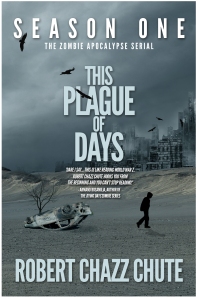
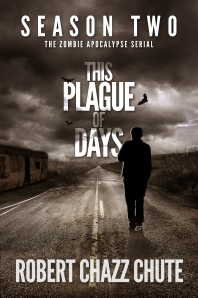
My strategy for launching This Plague of Days, Season One was to put the whole ebook out first. I waited a week. The sky didn’t shatter with raging need for my latest contribution to suspense and horror literature. Then, over the next five weeks, I released the book broken into episodes as a serial. Each episode came one week apart at 99 cents each.

Each section ended on a cliffhanger so readers were given a choice:

Wait another week to find out what happens next, come back to Amazon and download the next episode. (0.99 x 5 = $4.95)

Or, preferably:  forget all that nonsense and just buy the book for less money than it cost to get all the episodes piecemeal. I sold the ebooks at $3.99 with pulsing price dips to $2.99 plus a couple of promotional giveaways at $0.00. (More on that in another post, but hey, Seasons One and Two are at $2.99 until Feb 1. Take a hint and have some fun. It’s too cold to go outside so you might as well read.)

Print has been so little of my income in the past that creating the paperback was a low priority. I did that last. (That’s changing, as you’ll soon see in a post coming later this week.)

HOW TO SERIALIZE CORRECTLY

My nastiest reviewer noted with dismay that I’d written it like a television serial (as if I’d somehow done so by accident.) Most people actually liked the format and appreciated its quirks as added value.

That said, serialization doesn’t work if you break the narrative the wrong way. Take an ongoing television drama. Let’s say, The Walking Dead or House of Cards. Cliffhangers, wit, surprises and reversals are the gears of the engine that give a serial forward momentum. Each transition should scream, “That’s not the end you expected. Now turn the page for more!”

Not all books are suited to the serial format and it’s not just about taking any book, breaking it apart and selling off the chunks. It’s about adding value to the reader and certainly not making more cash off selling episodes at 99 cents. For get-rich-quick ideas, boy, are you on the wrong blog!

ABOUT ADDED VALUE AND STANDING OUT

With an autistic hero who mostly doesn’t speak and a story that spans Europe, America and Canada, my story is unusual. You meet a lot of characters but they don’t meet each other for a long time, if at all. The plagues start off based in reality and later supernatural elements à la The Stand develop as the Sutr virus evolves. I did weird things with how I laid the saga out, too.

The Table of Contents comprises a long, dark poem with clues to what’s coming. Each episode begins with “Notes from The Last Cafe”, which adds to the intrigue. That mystery is not actually solved until late in Season 3. Also, Seasons One and Two contain a secret. The first three readers to guess it correctly will get characters named after them. I’m receiving guesses every week, but so far, no one has won. (Check out ThisPlagueOfDays.com for more on that.)

THE PROS OF SERIALIZATION

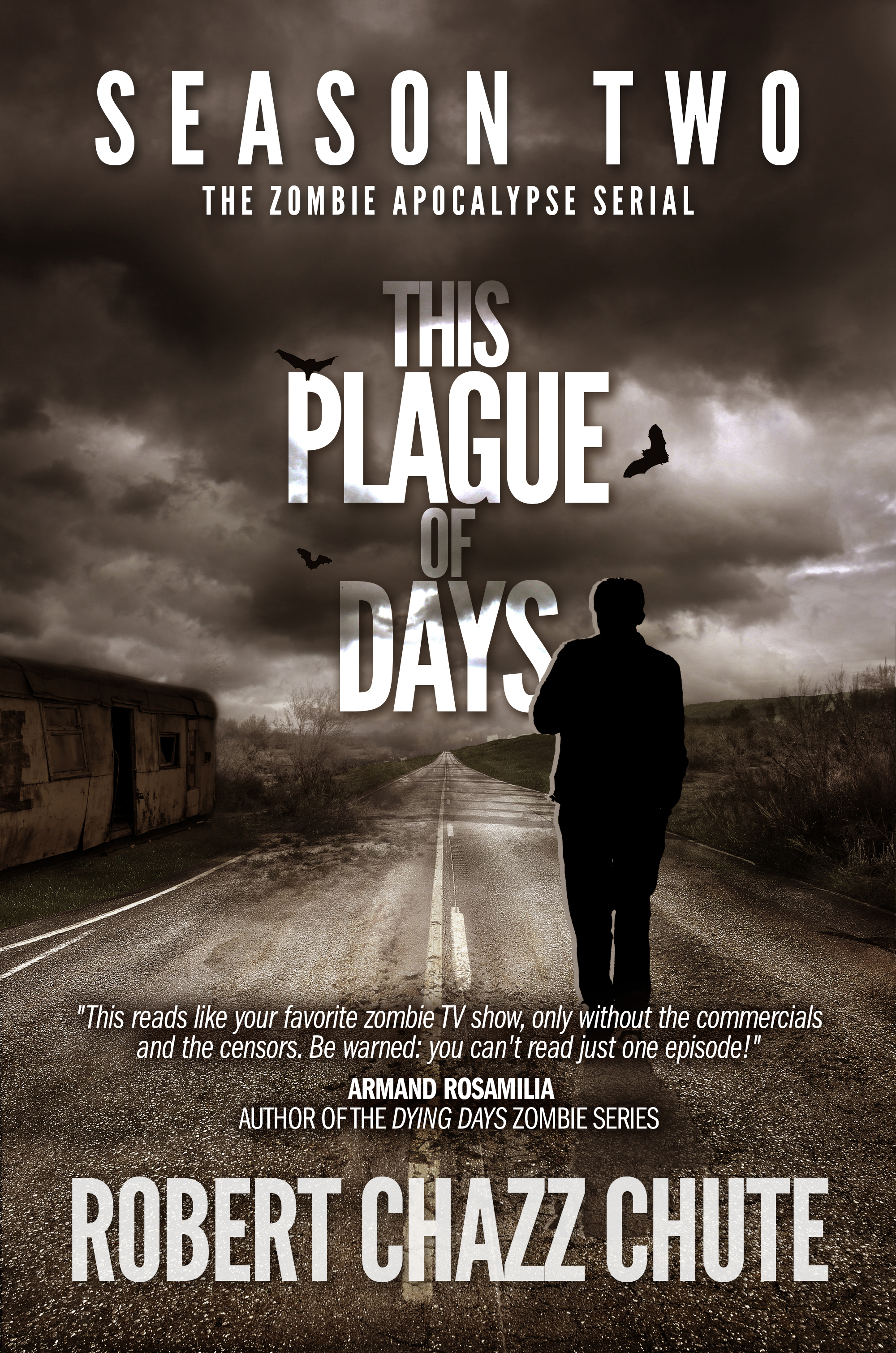
1. My also-boughts proliferated on Amazon so customers saw the work of my brilliant graphic designer, Kit Foster, pepper those lists. They didn’t just see one cover. They saw six, each different, but in keeping with the tone and theme of each season. Repetition and increased exposure got attention to the book it wouldn’t have caught otherwise. Here’s what that looked like:

TPOD 0616 EP 1 cover
The Also-boughts (below) harnessed the power of repetition in advertising.
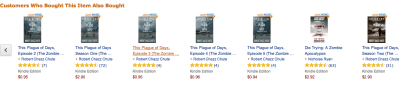
Screen Shot 2014-01-26 at 3.49.28 PM


2. Best of all, readers who dig This Plague of Days went ahead and bought the entire season immediately. Some even took Season One, Episode One as a big, cheap sample and went back to buy both seasons in their entirety.

An important detail that’s a pro and a con

Those people who were tepid on an autistic kid in the zombie apocalypse tended to just try Episode One. Each episode ranges from 15- 25,000 words, so they got a generous read. The zombies don’t actually show up for a while and they aren’t even “true” zombies in the Romero sense. If readers didn’t care for the pace at which I built the tension, early instalments took the hits of less-than-entranced reviews and readers dropped away.

The majority loved it and went on to leave stellar reviews on each season. This somewhat inoculated the books from negative ratings because the non-enthused bailed out. Serialization gave them that easy option.

THE CONS

1. Serials are a harder sell. Some people hate serials and won’t buy them. Others click indiscriminately and then will rank you lower even if they like the book. (Yes, I know that’s crazy, but I’ve seen it. Fortunately, those few are outliers.)

2. Despite going to great lengths to explain and differentiate between seasons and episodes with covers and sales copy warnings, some readers still got confused about what they were buying in what sequence. Each cover was clearly labelled and to some, that didn’t matter. (Too quick to click the one-click buy, I guess.) That got me a couple of bad reviews. I explained to those reviewers in the comment thread of their review that anyone who buys something in error can easily return it to Amazon for a full refund. Still, those negative reviews remain.

3. Episodes that sell for 99 cents make next to no money. Somebody’s going to object to that, but the math on my sales reports says it’s true. I’d have to sell way more episodes to equal the sale of one book/season. In my quest to find 1,000 true fans, this is one of the trade-offs along the way to helping us find each other. I don’t resent the journey.

4. Maybe it’s my sense of price resistance, but I don’t see charging more than 99 cents per episode. You could give less in word count per episode, but you also have to ask yourself, how much and how often do you want to format and upload files? Drag it out with more episodes and other costs rise higher.

5. I can see by my sales stats that The Law of Diminishing Returns has kicked in with respect to sales of each episode. With so many positive reviews on Season One and Two, it makes less sense for me to serialize now. As I move away from serialization in Season 3, those who liked serialization might ding me for it (even though, with the way I priced it, that’s irrational.) 

6. Serialization that’s not hooked up to Amazon’s auto-delivery system is problematic. The customer has to remember to come back each week and download the new episode. I did apply to Amazon to publish this serial with them. I never heard back. Had they gone for it, you might have heard of me before today.

7. Now that my Amazon sales page is populated with all those episodes from Seasons One and Two, it looks too busy. I’d rather just display the seasons (and eventually The Complete This Plague of Days) so it’s easy for readers to zero in on those books and click buy. How long must I wait before I can clean it up? I can’t simply unpublish the episodes in case someone’s still thinking of getting around to finishing the serial episode by episode? Do I wait a year? Two? Three?

CONCLUSIONS

You’ll note that the Pro column has two entries and I list seven disadvantages. I wish the analysis were that simple.

In my final analysis — not necessarily yours — the disadvantages I list are the cost of getting the book known. In this case, any damage was mitigated by moderate success. Serialization helped readers and hardcore fans find This Plague of Days (and in some cases, my other books.) Therefore, the sacrifice of getting roughly 30 cents on the sale of episodes is the cost of experimentation. For advertising so well in the also-boughts on Amazon, it was worth it. Season One has 72 reviews so far. Season Two has 31. That’s much more attention than my other books got. (Shocking because Murders Among Dead Trees is genius, dammit! And only 99 cents until February 1, 2014. I’m trawling for reviews from the bargain bin so…well, you know. Check it out, if only to read my favorite three-star review ever.)

Those two pros carry more tonnage than the feather-light cons. I don’t regret serializing Seasons One and Two. Without serialization, I wouldn’t have those problems. Some problems are the good kind to have. Without serialization, I’d probably be (even more!) anonymous in the literary landscape.

That’s why marketing Season 3 will be interesting. The revolution will not be serialized. Stay tuned.

~ This is a case study which may or may not apply to you. I’m not telling anyone what they should do. This is just my experience and my reasoning on serialization. Next post: Amazon, Bookbub and all those other platforms.


Filed under: author platform, Publicity & Promotion, publishing, self-publishing, writing tips, , , , , , , , , , , , , , , , ,

Top Ten: Some things no one tells you about writing

1. Nobody cares about your book at first, even if you think they should. Even if you think they care about you, they’re indifferent. It’s maddening. For you, each book is a magical dream made real. For them, “Nice hobby, but so what?” 

2. Since typing looks a lot like writing to the casual observer, you don’t get extra respect for being a writer from a lot of people. Anybody can type, so don’t think you’re special. “Who do you think you are, anyway? You think you’re better than me?” Oh, they won’t really say that. That’s silly. But some may as well say that by the way they’ll treat you.

3. A lot of people can read, but don’t. They care even less than the casual observers in Items #1 and #2. I don’t understand these people. Why live? It’s a mystery.

4. Some people do read, but they’re jealous of those who write. Read any one-star review that seethes with the venom usually reserved for a pedophile’s first night in prison or a family reunion. Yeah. Those people.

5. You and your family will make sacrifices for Art. Your kids’ friends will be able to afford nice vacations, cool stuff and the latest technology. Your kids won’t get that stuff, though they will get an in-house example of someone daring to follow their dream and buck conventional expectations. At least cover the basics somehow: food, shelter, clothing and good minds.

6. To paraphrase Kurt Vonnegut, pursuing the arts is a great way to disappoint your parents. Don’t expect them to understand. That’s presumptuous and unfair to them since they (probably) love you. It’s not that they don’t want you to succeed as a writer. They want you to take that accounting job because they don’t want to see you suffer. They don’t understand that the safe job they want you to take will hurt you in ways that last, too.

7. The first book that consumes your energy and attention which you poured your heart into? Odds are, first attempts aren’t that great. But no matter how many books you write and no matter how big you get, someone will say you can’t write. In fact, the bigger you are, the more negative messages you’ll get. (If so, congratulations! You’re reaching a wider audience.) That cost-benefit analysis works in your favor, but at some point you might still consider antidepressants, booze or illegal substances or too many brownies. Avoid self-medicating. Write more instead.

8. Sometimes betrayal arrives from unexpected sources within your circle of friends or family. This will hurt most and saps your creative energies. These incidents often lead to divorce or more heated arguments at family reunions. The alternative is you’ll quit and hate yourself because you are no longer being you. Anyone who forces you to choose between them and your passion is gangrenous. Amputate.

Another thing I learned just today:

If you’re being a dick, that doesn’t mean I’m thin-skinned.

9. Writing is harder than it looks, especially before you start. It’s more fun than it looks after you start. Begin.

10. Somehow, at least some readers will find you. You probably won’t even know what you did right, exactly. But there will be readers and even fans. Super-uber-robo fans that so get you, so love your work? Well…you’ll wish those negative friends and family understood you as well as these strangers. Don’t sweat it. You’re making new friends through your fiction.

Treasure your readers. Love them. Inspire them. Nurture them. Entertain. Make them laugh and cry and hit them with love and surprises. 

When you succeed, make sure everyone who tried to put you down on your way up finds out. You’ll care less about how they hurt you by then, of course, but not so little that your vengeance won’t be delicious.

~ I am Robert Chazz Chute. I write about funny hit men, autistic teens and humans versus zombies versus vampires. But mostly I write about the caprice of vengeful gods. I create gods in my own image.

Filed under: getting it done, publishing, Rant, readers, Writers, writing tips, , , , , , , , , , , ,

Why I no longer swear in my books

Pageflex Persona [document: PRS0000039_00004]When I wrote my crime novels, I wanted verisimilitude. I’d watched Goodfellas repeatedly, The Sopranos religiously and, of course, I’d been through high school. Naturally, I’m acquainted with an impressive list of swear words and they don’t bother me.

Swearing seemed like a good idea at the time.

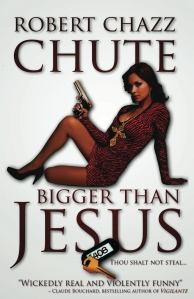
Bigger Than Jesus is about a Cuban hit man who, after a very rough childhood and military service, ends up working for New York’s Spanish mob. The subtext is sad but the jokes and movie references come fast. The language reflects reality. In other words, the characters swear quite a bit.

(And the sex scene in Higher Than Jesus? It’s so steamy and frank, that scene was all my dad wanted to talk about after he read it. Sigh. That’s a different post.)

When I wrote the crime novels, I thought any dialogue that reflected the way people really speak was the only way to go for me. I thought that if readers didn’t accept swear words in fiction, they were reality-impaired. Suck it up or don’t read my books, was my policy.

I don’t feel that way anymore.

Well, I do still think people who don’t accept appropriate use of swear words in fiction (and author autonomy to write what they want to) are reality-impaired and intolerant.

But “Suck it up or be shunned,” made me intolerant, too.

Swearing will alienate some readers.

I knew that, of course, but I thought verisimilitude was more important. Now, after two volumes of This Plague of Days — which is devoid of such strong language — I’ve decided I’ve lost nothing by omitting obscenities. Those who aren’t offended by swearing don’t seem to miss it if it’s not there. There’s just no value added, or at least not enough value added, to keep the swearing in. I think I can attribute many of my happy reviews of This Plague of Days to the fact that I did without (though I do skirt it a bit. More on that in a minute.) 

Is my self-censorship a (possibly pathetic) bid to gain more readers?

The short answer is, yes.

Pageflex Persona [document: PRS0000039_00004]The longer answer is, it didn’t start out that way. Jaimie Spencer, the hero of This Plague of Days, is autistic. He’s seventeen, but he’s a sensitive kid. A book that included a lot of swearing just didn’t feel right for the tone of the piece. Much of the drama happens around the Spencer family in Missouri and somehow, zombies or no zombies, peppering the text with f-bombs just didn’t fit this story or the readers likely to enjoy it. I salted it with Latin phrases, instead.

The really long answer is that it saddens me that some readers are so sensitive to curse words. I hate that they wouldn’t read some of my earlier work because of that sensitivity. However, my writing is about much more than swearing. I can do without it and not hurt the dialogue or the story. This Plague of Days is effective suspense and horror and this stylistic choice doesn’t affect that. Many of the people who love This Plague of Days are related to people on the autistic spectrum. They’re more comfortable spreading the word about the serial and sharing it with family members and friends because I changed my policy on swearing.

The f-word can be a crutch.

Use it too much and dialogue risks a feeling of laziness and sameness. Increase the frequency and the impact suffers. Working around that obstacle has proved so minor, I wish I’d done without cursing from the beginning. “She cursed him as she sliced his throat,” can serve just as well, or better, than a string of expletives.

We all know the words. My kids knew the words when they were quite little. Amazingly, they didn’t learn those words from me. They had to go to school for that. There’s no shock to it and sometimes it just gets in the way and the reader’s eye skips over it. I want all my words to count. I insist on delivering impacts to brainpans and adrenal glands. Swearing doesn’t do the job.

I have not suddenly become a prude.

My daily vocabulary reflects the full range of human experience, though the monologue in my head contains much more swearing. (I get points for holding back, right?)

In This Plague of Days, a “damn” might squeak in from time to time. My mother said that was okay since that was her swear of choice. North Americans tend to find British people saying, “shite” kind of charming. I use that. However, even that little is very sparse in This Plague of Days. 

I’m not claiming that no one could possibly be offended by something I wrote. I’m sure someone will clutch their pearls over the discussions between the religious wife and the atheist husband. That’s sure to annoy both sides, in fact. Reviewers have described the story as “creepy”, “scary” and “terrifying.” Well, I should hope so. Swearing or not, it is still very much horror and suspense.

I haven’t gone soft and I’m not writing children’s books.

This Plague of Days contains many scenes that are descriptive of the gore of war. There are some whimsical touches, but much of the story feels real enough you might worry I’m not a horror writer, but a futurist. However, like Twitter’s 140-character limit, the omission of cursing in my zombie apocalypse has forced me to be more clever. Sometimes the omission of swear words has even opened up new avenues for character expression. By that, I mean that there are some really good jokes in This Plague of Days that hinge on the power of irony and understatement, not f-bombs.

Conclusions

1. This doesn’t mean I’m saying you shouldn’t swear in your books. I’m not here to tell anyone what to do so stop feeling threatened.

2. This doesn’t stop me from writing books with so-called “bad words” in the future, though I think I’ll continue to do without. This bears repeating: Those who aren’t offended by swearing don’t seem to miss it if it’s not there. I don’t miss it. Anybody read any Vonnegut and think, This isn’t bad, but it would be so much better with a bunch more f-bombs? (I did, however, note that Norman Mailer could have cut back by half and helped Tough Guys Don’t Dance.)

3. This doesn’t mean that I think swearing is bad. It might be right for your books and I admit that, when done right, a string of obscenities certainly has its place.

4. I also have to admit that I think doing without swearing (in the text!) has made me a better writer.

5. This isn’t a moral stand. It was a solid artistic choice that stumbled into a good business decision. I confess. I want to be read by a wider audience. This is one of the ways I’m accomplishing that.

Filed under: author platform, book marketing, Horror, readers, writing tips, , , , , , , , , , , , , , ,

The Way of the Hack: Writers, you might be a hack if… (plus death threats from space)

Long before computers, a hack was a worn-out horse used for pulling tourists around parks. You know, because before you propose marriage to your sweetie in Central Park, you need to build up your courage by bathing in elderly equestrian flatulence. Then unimaginative comedians were dubbed hacks in the fifties, after a decade of tired jokes (mostly about hateful mothers-in-law.) I wish it stopped there. Writers get called hacks, too. Let’s dodge that fate (and, as you’ll see, you’ll also get one last chance to avoid dying by giant rock). Those two things seem equally important, so read on.

For writers, “hack” is a pretty bad insult.

Recently, on a podcast I’ll never listen to again, the host asked, “So, do you write about zombies or are you a serious writer?” Dude! Dangers, betrayal, and ordinary people facing grim existences and horrific mortality? That (and rampant, grisly cannibalism in line at the post office) is what we’re all facing every day! A book’s subject matter doesn’t make the author a hack. Failure of execution makes the hack.

To avoid becoming a hack, do not follow The Way of the Hack:

1. Tired subjects with no fresh takes. Ever read a book and somehow you’re reminded of a disappointing salad, measly on the croutons with brown lettuce? You might have been reading a hacky book.

On sale now for just $2.99. I mean, c'mon!

On sale now for just $2.99. I mean, c’mon!

On the other hand, ever read a zombie story with an autistic hero, whales, evolutions of numerous cannibalistic species and Shakespearian trees, all in three books called This Plague of Days? I think you see where I’m going here: this is a blatant plug so you’ll buy This Plague of Days, Seasons One and Two. Season Three, and the conclusion of the serial, hits this spring. Very well, on with the helpful, preachy bits…

2. Don’t write stories that look, feel and sound like a ton of other stories. Sometimes you can spot a hack book by its cover. You want your cover to convey what genre it’s in, but you don’t want potential readers to think they must have already read it. That’s why you should consider the services of my buddy Kit Foster of KitFosterDesign.com. Your book needs a distinctive cover. Okay, no more sweet little commercials for my friends and me (today).

My point is, there are no new stories, but there are still plenty of ways to surprise readers, even the jaded ones. Hit your readers in the brainpan and adrenals. Read any novel by William Goldman if you aren’t sure how. (Okay, that was sort of a plug, but he’s not a friend. I just wish the most underrated, living American novelist was a drinking buddy, that’s all.)

3. Clichés. Hacks love them. Don’t. And why would you? It’s so easy to take a familiar cliché and give it a new twist. Don’t avoid clichés “like the plague.” Avoid them “like a stampede of zombie office workers, oddly indistinguishable from non-zombie office workers.”

4. Hacks lack complexity in plotting. If the story is too easy, the subtle message to the reader is the author is too stupid to create something more interesting. Or possibly the subtext you convey is, the author is a smart, lazy hack who thinks readers are stupid. Either way, readers won’t like the book and they’ll really hate you. So be like Batman — always be Batman — and be complex.

5. Villains who are just bad because they’re bad are hacky. Everybody, even psychos, have reasons and rationalizations and justifications. Don’t be lazy about their motivations. Writers who aren’t hacks take the time to construct origins and context so we understand why they broke bad.

6. Heroes who lack any flaw are hackneyed, boring cartoons. Or Superman. (But I repeat myself.) Protagonists without flaws and weaknesses have it too easy.

For a better example, watch the movie The Rainmaker. It’s about a young lawyer taking on what should be impossible odds and…things go incredibly smoothly for him. You’ll think, that’s it? He just had to show up and obstacle after obstacle falls down and his path is cleared? Really? It may be a good book. I haven’t read it. The movie appeared to be written by a hack who had one eye on the clock and the other on a ham on rye. 

For contrast, a great courtroom drama is 12 Angry Men. You’ve no doubt seen it. Watch it again. Henry Fonda slowly convinces eleven other jurors there is room for doubt. It seems such an unlikely outcome, but every minute of that film is riveting as you watch the dominoes fall.

7. The free online dictionary defines a hack as “One who undertakes unpleasant or distasteful tasks for money or reward; a hireling.” (Whoa! That’s most anybody with a regular job, isn’t it? But I digress.)

If you aren’t finding any joy in the writing, you might be a hack. No fun for you? None for the reader.

8. Some snobs conflate “hack” with “commercial.” Wrong. Those are two separate issues. A book can be commercial and not be the work of a hack. JK RowlingThis Plague of Days Season 2 is one of the most successful writers ever. Who but the most dedicated troll would dare to call her a hack?

Also, just because a book fails commercially doesn’t mean it was hacky writing. Moby Dick was never a commercial success in Herman Melville’s lifetime. Lots of good books fail. Don’t let The Way of the Hack be the reason for your book’s commercial failure.

I’m hoping the reason for my books’ commercial failure is everybody dies when a rogue asteroid hits Earth…but don’t worry, there’s still time. Just click here and buy my books so I can succeed and we avoid the grisly alternative near-future where the world’s population chokes to death in fire as the planet’s oxygen burns away in the ugly celestial calamity to come. Hey, it’s all on you now. Please don’t think of this as an ultimatum. It is, but please don’t think of it that way. And thanks for contributing to the Arts. Congratulations on having children and grandchildren and having another February.

9. Lack of research. If you’re banging out your manuscript to make a word count without care for details, you might be a hack.

10. Lack of humor. When a book has one unrelenting, dour tone, I begin to suspect the author just put his or her head down and said to themselves through gritted teeth, “By all that is unholy, I will get through this and grind it out.” You miss opportunities for non-linear thinking when you’re rushing to a deadline like that. Slow down, Speed Racer! Enjoy the ride more. Give it another read and look for new angles, holes and opportunities to deepen and lighten the tone and give that prose roller coaster more hills and valleys. Take the time to threaten your readers with certain death once in a while. Carpe noctem!

Get this one, too, just to be safe. Post holiday sale: just $4.99.

Get this one, too, just to be safe. Post holiday sale: only $4.99. Shake out the couch change.

~ I’m Robert Chazz Chute. Today I have plugged my books, garishly, but I tried so very hard to be polite about it. Later on I threatened genocide by giant burning rock from space. Clearly, you need to buy Murders Among Dead Trees, The Little Book of Braingasms, Bigger Than Jesus, Higher Than Jesus and, of course, This Plague of Days, Seasons One and Two. They are each on sale at a special low price for January 2014. Now is the time. Or an asteroid kills us all. Those are the only two possible outcomes. But, like I said, It’s up to you, killer. Yeah, let’s just click here, ‘kay? Again, thanks so much.

If more than 70 happy reviews don’t convince you, learn more about This Plague of Days and how a boy on the autism spectrum could possibly fit into the plot, at ThisPlagueOfDays.com.

For podcasts and more about the books and the author, check out AllThatChazz.com. I’m starting to feel needy now, so I’ll stop.

Filed under: Amazon, What about Chazz?, What about you?, Writers, writing tips, , , , , , , , , , , , , , , , , , , , , , , ,

What we aren’t reading that might help our writing most

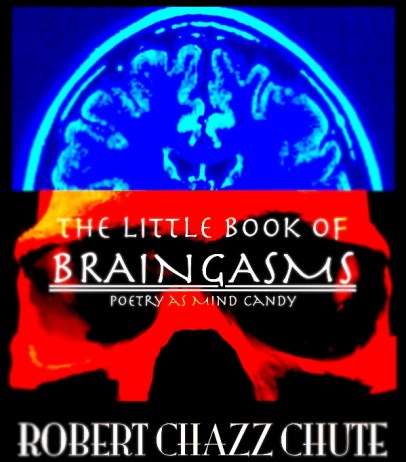
braingasm cover

On sale now for a mere 0.99 cents. Click away!

“Poetry: the best words in the best order.”

~ Samuel Taylor Coleridge

How does poetry help your prose? Why is poetry still important even though so few people buy it? Here’s why:

1. To paraphrase comedian Greg Proops: “Because George Bush and Dick Cheney. That’s why.” Poetry is a salve for our minds and times.

2. To take off on the Coleridge quote: Poetry is the least words in the best order. Capture a scene with fewer brush strokes and the reader will appreciate the efficiency of your storytelling.

3. From “A Late Walk” by Robert Frost: 

And when I come to the garden ground,
The whir of sober birds
Up from the tangle of withered weeds
Is sadder than any words.

To capture images with imaginative language that illuminates the scene in the reader’s mind, practice by reading and writing more poetry. So much prose is linear to the point of telegraphic minimalism. I love a spare writing style, too, but there’s room for art as long as the story remains unobscured. The point is not to make the reader work harder to see the picture you’re painting, but to grasp it all in a pleasing way. Many readers won’t notice how you’re doing it, but they’ll feel what you’re doing. Prose shows, true, but poetry engages.

4. I have a penchant for dark poetry. It’s fun and I found a way to integrate it into my zombie apocalypse. Sure that sounds insane, sure, but here’s what I did:

All the chapter titles in This Plague of Days make up a long, dark poem with clues to the plot. There’s a secret in This Plague of Days no one has yet guessed. I’ve offered to name characters after the first three people who guess right. So far, the secret remains undiscovered. (To see the entire poem for each season, you can find all the verses in the paperbacks. In the ebooks, search “Table of Contents”. If you care to guess, DM me on twitter @rchazzchute and keep the secret so Season 3 remains spoiler-free.) Here’s a piece:

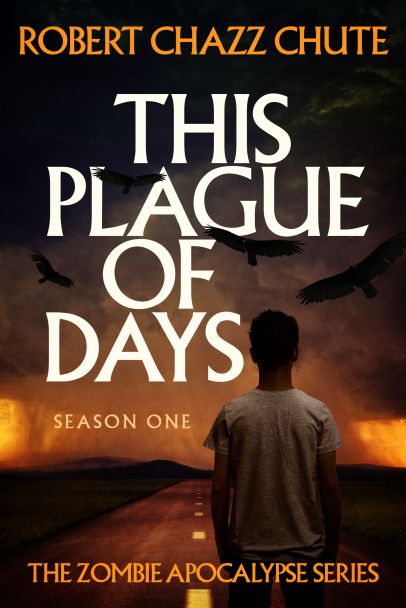
TPOD season 1 ecoverMiles away in the Last Cafe,

We count every cost, each rueful day, 

But knowing will not lessen the surprise

when you see the truth beneath the guise.

The puzzle is not Death, but Life Neverlasting.

The answer is under the stars and moon shadows casting

Now in paperback!

Now in paperback!

Light, revelation and fearful truth

The stuff of old age and disappointed youth.

In dreams we find the connection to what will last, 

what won’t survive and what’s best left in the past.

~ from Season 2, Episode 2 of This Plague of Days

5. Read poetry for the pure love of language.

The more you read, the more sensitive you become to the sound of rhyme and the beat of meter. Power lies where the syllables fall and ring. Poetry doesn’t have to be dense, flowery or meaning-adjacent, communicating only by approximation. Poetry’s gift is in its precision. Poets choose their words carefully. Writers of prose can, and should, choose their words carefully, too. Do it right and even a grisly dismemberment can reach high lyricism.

6. Play with words because it’s fun. Unless you insist, poetry doesn’t have to rhyme.

Work it right and find the time

to light up your readers’ minds.

With a little poetry to your prose,

fans will love the words you chose.

7. Poetry doesn’t have to be dusty and academic.

Check out a poetry slam on YouTube sometime. You’ll see, hear and feel raw emotion communicating points and pictures. When I want to hear a modern poet who writes imaginative rhymes that fit together, tight and smooth as puzzle pieces, I listen to Eminem rap.

That’s the sort of poetry that still sells, but I love it all no less.

~ Robert Chazz Chute is the author of a bunch of horror, a couple of crime novels (so far) and a lot of suspense. To check out all his books (many of which are on sale now, awaiting your anxious clicks and happy reviews), find them all here. For his podcasts, check out AllThatChazz.com and CoolPeoplePodcast.com. For more on This Plague Of Days, go to ThisPlagueOfDays.com.

Filed under: Poetry, writing tips, , , , , , , , , , , , , , , , , ,

Bestseller with over 1,000 reviews!
Winner of the North Street Book Prize, Reader's Favorite, the
Literary Titan Award, the Hollywood Book Festival, and the
New York Book Festival.

http://mybook.to/OurZombieHours
A NEW ZOMBIE ANTHOLOGY

Winner of Writer's Digest's 2014 Honorable Mention in Self-published Ebook Awards in Genre

The first 81 lessons to get your Buffy on

More lessons to help you survive Armageddon

"You will laugh your ass off!" ~ Maxwell Cynn, author of Cybergrrl

Available now!

Fast-paced terror, new threats, more twists.

An autistic boy versus our world in free fall

Suspense to melt your face and play with your brain.

Action like a Guy Ritchie film. Funny like Woody Allen when he was funny.

Jesus: Sexier and even more addicted to love.

You can pick this ebook up for free today at this link: http://bit.ly/TheNightMan

Join my inner circle at AllThatChazz.com

See my books, blogs, links and podcasts.

Enter your email address to follow this blog and receive notifications of new posts by email.

Join 2,063 other subscribers