C h a z z W r i t e s . c o m

See all my books at AllThatChazz.com.

Top Ten for Writers: What matters?

1. Don’t take a paragraph (or a whole post!) to apologize for not posting to your blog recently. They didn’t notice your absence. You have their eyeballs for a few seconds now. Don’t waste their time with throat-clearing or they’ll click away because you don’t have anything to say.

2. “Cover reveals” don’t attract anyone but the people who are already into you. They might not hurt. I’m saying they don’t help. Find a topic that matters to you and your readers instead. To spin an old quote, mere familiarity breeds contempt, but commonality makes friends.

3. Character interviews may be interesting to a few people, but only after they’ve read your book. It gets no new readers. Character is revealed through dialogue and action within the book. In promoting a book, it’s boring without narrative content and context.

A better suggestion:

Soon I’ll interview author Mark Rayner for the Cool People Podcast. When I asked him what he’d like to talk about, he didn’t say his characters, publishing or his writing process. He wants to talk about the themes of his book. I’m looking forward to a cool interview about the singularity and how technology affects all our lives, for good and bad. It’ll be less about him and and his book and more about readers. Then they’ll want to buy The Fridgularity, his funny, smart, entertaining novel.

4. Lose long dedications in ebooks. I’ve done this because I have much for which to be grateful, but it cuts into the online sample. Stick it in the back or put a link to it on your author site. Active links to your websites and other books will expand your circle. Your inner circle will understand.

5. The Table of Contents in your ebook doesn’t have to be in the front. That’s inertial thinking from paper publishing. For fiction, at least, stick it in the rear of the book. They can get to it on their e-reader, if they want it, by hitting “Go to”.

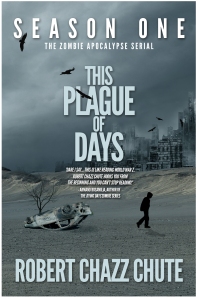
This is especially egregious when you have a long, dark poem as a TOC (as I do in This Plague of Days). It’s something else that cuts into the length of the online sample if it’s up front.

6. Do not complain about the demands of marketing your books. That’s telling readers that trying to reach them is a burden and they are unworthy of your time.

I’m still seeing this. Any potential reader who’s done manual labor, worked retail, been unemployed and/or worked for a boss? Yeah, they all hate you when you complain about being a writer. We have the best job on earth. Even if we aren’t getting paid for it yet, it’s still that awesome.

Instead, do what’s fun for you in otherwise unproductive time, after you’ve hit your word count for the day. If a Twitter account in the voice of your character is fun for you, try that. Unless your character is amazingly funny, profound, unique or wanted for spying by the NSA, it probably won’t pay dividends, but at least you’ll be having fun.

Connect on Facebook with people. My most meaningful interactions probably happen there. Since a reader helped me identify how my Facebook settings shut people out, I’m interacting with more people.

You can even go out and meet people in the real world. I understand non-virtual, human interaction is still a thing. I read about it on the Internet. It sounds dangerous, but you can sell paper books that way.

7. The demands of the work drain our energies so we talk too much about being a writer knocking back coffee. I’ve done it, too, and it’s cliche. Time to say something new. Something about wrestling elementary school teacher-dragons naked maybe. Hm. Gotta work on that metaphor so it sounds less fun.

8. Cramming too much information on your business card doesn’t work. Trying to cram the whole story on your book cover doesn’t work. Any promotional stuff that is too long doesn’t get read. Get your graphic design and white space to do more of the work for you.

The British Special Boat Service’s former motto was “Not by strength but by guile.” Good news! We’re writers! We have the resources to use guile. Writers and small publishers don’t have enough money to attack with strength.

9. Speak with. Engage with readers. Do not talk at readers so much. Talk less about you. Talk more about them. (Nice jammies you’re wearing today, by the way, and I especially like the lacy, red bustier…sir. Better turn off that laptop cam.)

10. Talk more about what you love and less about what you hate.

People enjoy reading about what people hate, but they don’t like the hater or even believe them. For readers to get to know you, they want to know what you’re for and what you read and what you think. Or that you think. Talk about what matters, both to you and to them.

Some writers steer clear of religion and politics for fear of offending.

Sounds like a quick way to be irrelevant and bland.

As a writer, your ability to communicate makes you important to any heavy discussion. You can even contribute as a human being. Your thoughts on violence, poverty and all the ills of the world are far more important than your little writing career. If someone doesn’t read your book because you’re a vegan, for instance, do you really think you’re missing out on a thoughtful and fair review from that person?

Kids are starving and you’re really worried about losing a few reactive sci-fi readers because you’re for X and they’re for Y? Really? Surely the kids are worth losing a few bucks, aren’t they?

I’d rather express my politics on Facebook from time to time. I’d rather win more readers I like. I don’t have to have readers who agree with me about everything. However, I don’t write books for dumb people. Trying to be liked by everyone is chasing a goose into an acid factory that’s on fire. We may be poor and desperate for readers. That doesn’t mean we have to be pathetic.

But yes, it does matter that reasonable readers generally like you. (So follow the Wil Wheaton edict and “Don’t be a dick.”)

I don’t want people to be excited to read the next This Plague of Days. I want them excited to read the next book by Robert Chazz Chute, no matter if I’m writing about zombies or Shakespeare or my funny assassin. Most readers tastes are very genre-specific, but if they like you, they’ll try your other stuff.

I’ve read all of Stephen King’s work except for The Dark Tower stuff. But I did try it. That’s all anyone can ask. After that, it’s down to individual tastes.

So be nice. Be authentic. Be committed to The Good.

And write good stories. Tell the truth through lies. Bypass prejudice and reach their minds by making them laugh first.

Writing good stories will get you more readers. Write great stories and that will come. Or maybe it won’t, but the writing and the stories matter. It matters much less than starving children and nuclear proliferation, but be fully in this world as you create better worlds.

To be heard, we must have something to say that matters to readers.

Filed under: author platform, Writers, writing tips, , , , , , , , , , , , , , , , ,

Are readers changing and what does that mean to writers?

A friend of mine is an old-school, English major sort of guy. He was extolling the virtues of literature as we once knew it: contemplative novels; long treatises on the nature of the human condition; and “serious” novels chosen by a small cabal of unknown gatekeepers. His eyes gleamed for the nostalgia of MFA glories, tiny lit mag aspirations and the New York Times bestseller lists of old world, analog publishing.

This is the sort of conversation that takes me places I didn’t expect to go. Only in talking it out, and writing it out here, have I discovered and understood what I think about New versus Old writing, reading and publishing.

The “issue” is, have readers’ tastes changed?

All generalizations weaken questions and answers, but there’s validity waiting down there in the dark. Let’s delve.

Pre-WWII, many schools in the first world taught Latin and Greek. Long recitations of poetry were valued. My mom was an excellent example of that brand of scholarship. Two days before she died, riddled with cancer and taken low by the drugs meant to ease her pain, she recited, “The Village Blacksmith” by Henry Wadsworth Longfellow. My father listened, tears in his eyes, as her voice came, suddenly strong. “Under the spreading chestnut tree, the village smithy stands…”

Latin’s gone and Greek’s forgotten, unless you’re Greek. Rote recitation has ebbed. Penmanship as a skill is dismissed as obsolete. With the economy what it is and university fees rising, majoring in English is quite a luxury. I’m sure there aren’t as many women’s studies or Medieval studies programs as there were when I was in university. There’s a greater emphasis on job prep now. If you’re some kind of doctor or engineer, you can still make university pay. It seems we have less time to think about big issues, though. Like what happens when the doctor fails and what awaits us in the Abyss?

I guess, for that, there’s idiotic YouTube distractions and warm, fuzzy Facebook memes.

The rest is up to us, the writers.

Some curricula we’ll miss and others we’re glad to let go.

I feel very lucky to have received the one course in university I relished most. The Foundation Year Program at the University of King’s College was the history of philosophy and the philosophy of history. Best course ever. They called it a “programme” because they were the sort of Canadians who aspired to reek of British universities’ plummy pretension. Those Brit professors they emulated would look on us as snow-shoed colonials, but where else in Canada could you ask “what is the soul” and watch duelling professors fight over the answer for half an hour?

It was a great opportunity. Job skills were approached somewhat tangentially for many of us. We don’t know how to weld or split the genes for Monsanto that will kill us. With the death of newspapers, our journalism degrees are largely quaint and useless, but damn, we’re great conversationalists.

But that’s more nostalgia. What about now?

Many high school students and their families are seriously challenging the value of a university degree given that no jobs are waiting. Add  in the costs of paying off that bill for most of the rest of their lives. Or never.

University fees have put on a lot of weight and are suddenly much less sexy. As the middle class shrinks down to the working poor, the dream marriage of career and long, happy retirement is doomed.

The generations who dressed up for air travel and studied Greek laid the groundwork and built the infrastructure for our modern civilization. They were sharp enough to use slide rules to deliver humans to the moon and back and dumb enough to invent the atomic bomb.

From what I’ve observed, “kids today” are probably up for the great and bad challenges, too. However, our politicians suck and so bridges and highways crumble and kids starve.

All civilizations that manage to rise, fall. We’re on the slide. As writers, we can help slow the inevitable, discourage idiots from hastening the collapse and/or entertain everybody on the way down.

What are the “classics” going to be for students now?

To Kill a Mockingbird? The Old Man and the Sea? Romeo and Juliet? Goethe?

I don’t think so. What students across North America and beyond will have in common as adults are these new classics: Breaking Bad, The Walking Dead, and Glee. These are our culture’s touchstones at the moment. 

And get used to a much more transient definition of “classic”.

Lucy crying at Desi for a job at the club is classic comedy for today’s waiting-to-die-on-a-ventilator-in-a-few-minutes generation.

For us? I’m not sure they make funny sit-coms anymore. And I don’t think I’ll be in an old age home some day screaming deafly, “Anybody remember that Frasier episode where Niles had heart surgery?”

This year’s college freshmen aren’t talking about their common love of Tolstoy. Take any pair of well-educated, first year roommates and, if and when they talk culture, they’ll be talking about the good old days of The Sopranos and The Wire. They’ll speak of Hollywood all the way back one decade, when the movie machine didn’t suck like Dyson vacuum cleaners. That’s if they aren’t talking sports.

Pop culture, not Euclid, is our commonality now. When you’re looking to make new friends on a bus trip, don’t ask what your sexy seat-mate loved about Dante’s Inferno. (Trust me, I tried it. It’s not the touchstone I’d hoped for.)

The habit of reading is established (or not) in our early years or in jail. But it’s not all on parents and educators and the prison industry. The market has changed, too. Our attention is fractured by so many choices. Writers are competing with Grand Theft Auto and free Internet porn. Talk about quixotic aspirations!

What does this mean to writers? I’ll tell you what I told my friend about writing and publishing:

1. Authors are expected to produce more books faster to gain readerships and hold them.

2. Series and serials are in. Writing books like a TV season (as someone complained of This Plague of Days recently) is in. No, I mean to say it’s IN! As in, that’s what I meant to do!

3. Pop culture references are in. They light up the cozy familiarity cells of the brain. Trying to make books “eternal” with zero pop references? Out.

4. More genre mash-ups are in. I sure didn’t see zombie erotica coming, so slice that mash as thin as you want. Keywords are relevant. Bookshelf labels are much less relevant.

5. Pulp. We can push back the walls of what readers expect from pulp, too. The Cuban assassin in my crime novels is politically aware and has a lot to say about drug addiction. My latest work tackles global warming, US foreign policy and the nature of God, though the recipe’s nutrients are hidden in the neuro-fudge cake of zombies versus vampires.

6. Niches are in. Appealing to a deep niche is achievable. Trying to appeal to wide audiences is out, or at least it’s something that happens to you. It’s probably not something you can make happen.

7. Ebooks are here to stay. Seems obvious, but there’s still some resistance from publishers on the remote island of Manhattan who don’t know the war is over.

8. Shorter books are in. I once thought that meant short stories are coming back, but by my sales stats, either I was wrong then or I’m impatient now. The economics and timelines of more books, faster, demand shorter books.

9. Intermediators will return with honor. The more books you write, the more you wish you had help. This week I lost four hours of writing to formatting a print book. We, the relentless writers and publishers, need help. We’ll be looking for more minions and partners, though, not publishers. After months of sixteen hour days, I am exhausted. Viva la outsourcing!

10. Hybrid authorship is becoming more appealing, as long as we retain our e-rights and audio rights. Once the Big Five stop chiseling their contracts in stone, call me.

11. Book prices will still be all over the place, charging what the market will bear.

12. Jonathan Franzen will still complain about social media comprising the end of the world, but Huffington Post will give up publishing his rants. The Amish aren’t Huffpo‘s demographic. The irony of complaining about social media on the Internet will swallow itself whole and disappear in a flash of yin quantum, pixelated justice, balancing out Franzen’s Neo-Luddite yang. Gee, I hope media starts ignoring Anne Coulter sometime soon, too.

13. Blog posts like this one won’t survive. Too Long To Read and too snooty by half. Unless you’re deep in my niche, who’s got the time for these presumptuous pronouncements about my betters?

Relax.

Breaking Bad taught as much or more about the dangers of hubris than any Greek tragedy.

Everyone’s reflex to hate the future is just resistance to change away from the comfortable. Nostalgia is not thinking. It supplants thinking. It’s an old blanket that’s getting ratty.

We will adapt until the grid collapses and we start eating rats and insects to survive. Then we’ll have more time to devote to those deep conversations we’re not having. Those end of the world stories around campfires are going to be awesome.

~ Find out more about my books and podcasts at AllThatChazz.com and ThisPlagueOfDays.com. Defy expectations and love me for me, because I miss Heavy D.

Filed under: publishing, Writers, writing tips, , , , , , , , , , , , , ,

One to read. One to hear. One to love.

“This is the post I shouldn’t write. I shouldn’t therefore I must.”

You know that post I just wrote about being contrary? Sometimes something catches fire when you say what you aren’t supposed to say out loud. It just happened on one of my other blogs, ThisPlagueOfDays.com. It was picked up by the Passive Voice and spread hither and thither. So far I’ve received two stern talking-tos (one of which I didn’t understand), appreciative notes and emails and offers of Prozac. The piece is about writing: the frustrations, the joys and the braingasms. You’re invited to have a look at my heart under the klieg lights.

And the All That Chazz podcast is finally back.

Have a listen if you dare. It’s not safe for work. I touch on control issues, the joys of colonoscopies, and get to an overdue reading from my crime novel Higher Than Jesus.

Oh, and Season Two of This Plague of Days is going great. If you’ve read it but haven’t reviewed it yet, please do. Thanks!

October’s mandates are stacked higher than September’s to-do list, but I’m dancing as fast as I can.

“Have you ever danced with the devil in the pale moonlight? I ask that of all my prey.”

Filed under: author platform, Author profiles, ebooks, Useful writing links, Writers, , , , , , , , , , , , , , , , , ,

The Secret Alphabet of Independent Publishing

"You will laugh your ass off!" ~ Author of Cybrgrrl, Maxwell Cynn

“You will laugh your ass off!” ~ Author of Cybrgrrl, Maxwell Cynn

A is for All of it, which is what we want. (A used to stand for Agent.)

B is for Book, of course, and ebooks are “real” books, too. Literature is about the content not the container.

C is for Cutting prices. It would be bad for writers, but at 70%, we’re still getting paid more per unit sold than in traditional publishing. Also, price cuts sure make now a great time to be a reader.

D is for Deadlines. Don’t take forever to write your book. More time procrastinating doesn’t make a better book.

E is for E-books on E-readers. But you know your kindle is a transitional device, right? The phones are getting bigger again and tablets are coming down in price. We don’t want a device to do one thing. We want one device to be a web surfer, camera, phone, app catalogue, music box, GPS, ebook reader and best friend on our hip.

F is for Future. It’s the direction to look. If you don’t like it, you can change it whereas the past requires an annoying child named Sherman, a dog named Mister Peabody and a Wayback machine.

G is for Guidelines, because guidelines are malleable. There really aren’t many unbreakable rules worth obsessing over. You already know the rules because they’re obvious or you ignore common sense or you’re a slave to unthinking tyranny. The cool kids prefer more options.

H is for Hope. It’s good to have some, especially in this business. When there’s no reason to have any, that’s when you need it most.

I is for Intermediator. Have as few of these as possible. Upload your books yourself if you can, or get help from an independent contractor. This will allow you more choices of forks down the road.

J is for Just you. The myth and prejudice against independent publishing is that’s it’s just you. You are alone, except for the editors, graphic artist, beta editorial team, volunteers, publicity teams and whoever else you can hire or cajole into helping you get your book discovered. Sure, other than that little cyclone of industry, it’s all you.

K is for Killing characters. Killing someone readers love who they were sure would make it to the end? Delicious. (Note: killing darlings is overrated.)

L is for Love. It’s why we write. If you have other motivations, that’s fine, but releasing dopamine as you create is, like reading, a very rewarding addiction. The biological pharmacy in your brain simulates love. Endorphins won’t land you in a dirty rehab unit with a roommate who won’t stop telling that story about the time he tried to get high on burnt bananas and smoking his own hair.

M is for Money. It can happen, but probably not so don’t write for money. As above, write for love. If money does happen, people will resent you slightly less when you claim you never expected it.

N is for Naysayers. Most of them will never write near as many books as you will. Just say no to naysayers. If you sleep with your naysayer, someone’s in the wrong bed.

O is for the Obsession to know things. It seeps into the writing so you can drench your fiction with non-fiction and trenchant verisimilitude. For instance, This Plague of Days, Season Two weaves the Apocalypse with interesting tidbits about Irish legends, military history and the mortal wounds inflicted by the blue-ringed octopus. Mine is the only zombie/plague/autism story that teaches you Latin in an entertaining way, guaranteed!

P is for Portent. Warnings that something big is about to happen are especially fun when you give readers an earnest warning and they still don’t see it until it coming. They’ll only see the clues in retrospect. Secret trails to revelation and love of language are why people reread books. Do it well and someone might think your book isn’t just suspense, but maybe even “literary” or (praise Thor) “important”.

Q is for Quitting. If the project is wrong, quit. If it’s right and you’re just whining, quit whining and finish it. If you aren’t excited to write this book, find another you will be excited about all the way through or for our sake, please do stop. 

R is for Ripoffs. It’s a minefield out there: Fake agents who try to make money off reading fees; publishers who won’t pay; people who use disreputable business practices and call them policies. (R is also for Research. It’s how to avoid R is for Ripoffs.)

S is for Sustained Action. Promoting your work need not be an exhausting blitz. Dig in for the long game and promote at a slower pace. Don’t promote the same stuff to the same audience all the time lest you exhaust them. Keep writing new books. Don’t pin your hopes to one book. Sure, you might accidentally hitch your wagon to a star, but chances are excellent you’ll hitch your wagon to a stump, especially if this is your first rodeo.

T is for Trying. You’ll hate yourself if you don’t try. Losers will hate you because you did try. That’s why they’re called losers. They work from a different definition of failure than you and I. They confuse boring with winning.

U is for Unpublish. If something isn’t working, take it off the market and replace it with your tweaked story, new cover or new edition. Unlike traditional publishing, you have more options. You can adapt. Ours is a different, more flexible, business model. Use that advantage.

V is for Victory. There is no victory. Banish the concept from your life. There are only ups and downs and we’re all trying to make more ups.

Victory is very useful in fiction, however. Readers want to escape real life’s mundanity so it makes them happier when the protagonist achieves victory at the end of a story.

To go all Conan and see your enemies driven before you and to hear the lamentation of the Evil Mort from Accounting? That’s fiction. Working in a cubicle farm with no hope of retirement while Mort gets promoted and vacations in Brazil? That’s real. The real-life Mort is why we all crave escape into stories.

W is for Wit. They say brevity is wit’s soul, but I can take a pounding of wit in dialogue all day and all night, Mr. Sorkin.

Please note that snark is not quite wit. That’s a blunt tool meant only for peeling the outer layer of flesh. Meanness is the opposite of wit. That’s a blunt fool’s weapon. Wit’s funny and smart. When that sword cuts, we see light flashing down the steel blade. Wit allows the victim to take the hit and nod, “Touché!” with a smile.

X is for X-ray vision. All writers have this power. I can see into purses and pockets and the lives of strangers at the mall. I can work backward or forward to tell you who they are and their story of heartbreak in their senior year of high school. I diagnose disease at a distance. I know what you did last summer. I can give your life history and your death meaning, so do not screw with me.

Z is for Zero. It’s what we’re paid for writing. We are never paid for writing. We write for love, remember? If the money ever arrives, we’re paid for putting up with dehumanizing reviews, pretending to take them well and staying silent about them forever. We’re paid for the sad paperwork at tax time. We’re paid for the sting when someone sneers with casual cruelty, “So, are you a big deal yet?” We’re paid pennies an hour for the sacrifices our loved ones make so we can keep writing. 

Writing a good book is a happy, selfish act for the writer.

We are addicts, helpless in our defiance and desperate to monetize our work so we can have the freedom 

to score more of Creation’s sweet biochemical cascade.

Escape reality. Get high on a story.

~ I am Robert Chazz Chute, the author of Self-help for Stoners and this was the high I was talking about. This Plague of Days, Season Two scintillates brains October 1. Get Season One and check out all my books here. I hope to be your favorite candy man one day.

Filed under: author platform, Publicity & Promotion, publishing, Writers, writing tips, , , , , , , , , , , , , , , , , ,

The World’s End…and our beginning

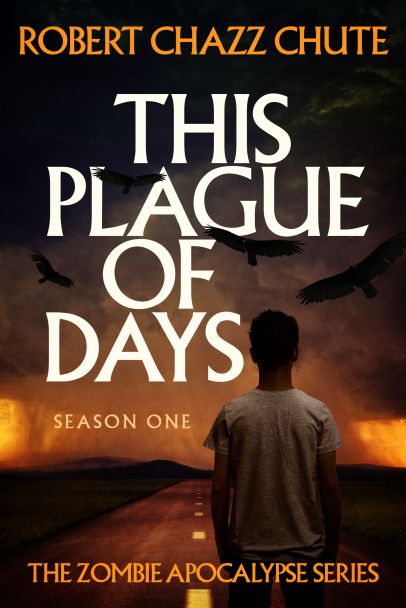
TPOD season 1 ecoverFor most, the last milestone of summer just slipped by. Labor Day’s demise means the end of bikinis, bikini dreams and the return to indoctrination centres. But Time’s notches are  artificial milestones, like New year’s resolutions, your anniversary or waiting to start your new diet on Monday morning. If you need to begin again, now is the time whenever now happens to be.

For instance, don’t wait until it’s your anniversary to send flowers. It’ll mean more because it’s not a special day. Any day can be made special, momentous or mundane. Our choices make it so. Let’s take a moment to think about those important choices and a fun Simon Pegg movie.

I saw The World’s End today.

Mostly, I liked it, especially when it didn’t take itself seriously. However, between that and the trailer for Last Vegas, a depressing theme returns. Last Vegas is old guys “getting the band back together” for one last blowout party before making funeral arrangements.

Even the last Bond movie explored mortality’s dark territory. Note to Hollywood: James Bond getting old is something no Bond movie should ever explore. Bond is timeless, cool and indestructible, just like we wish we were. We want a vicarious thrill ride with babes sporting unlikely names, not a vicarious prostate exam.

Comedies that pound on mortality? That’s a hard target. Getting old and worrying about mortality are what doctor’s appointments are for. When I’m guzzling overpriced popcorn, I don’t want a reminder that my time is limited. If the best is behind us, why go forward unless it’s merely out of habit? (Insert Jack Nicholson impression here: “What if this is as good as it gets?”)

So let’s focus on the positive.  

Defy the forces of Time. Ignore Time’s dictates. Do what you want to do. Often, when we aren’t doing what we want to do, we’re forgetting:

  1. our dreams from childhood.
  2. that our time is limited.
  3. who we are.

Reality check: But most of us can’t do all we want to do.

As per my last post, I have to start another business to shore up Ex Parte Press. But I haven’t forgotten childhood dreams, mortality or who I am. Simon Pegg (whom I love, but geez, man!) wouldn’t let me forget, even as I tried escape into a movie to forget my problems for a couple of hours. It’s not Simon’s fault, though. I identified too much with the film’s immature main character crying out, “We want to be free!” and “They told me when to go to bed!” 

I’m still working toward my dreams and freedom. I’m still writing brain tickles and suspense. I hope you’re undeterred and writing madly, too.

If not, don’t wait.

Begin again.

Now.

Live a life full of new beginnings and you can ignore what happens just before the credits roll.

~ Robert Chazz Chute is the author of a bunch of books. His neural net fires into the dark wildly. He does not wear collars. He eschews ties. If you want an easier, happier life, those are bad bets but a jerk’s gotta do what a jerk’s gotta do.


Filed under: getting it done, publishing, Writers, , , , , , , , , , , , , , , ,

Horror Authors And Religion

See on Scoop.itWriting and reading fiction

This post is a bit more ‘controversial’ than my normal ones, in that I talk about something I swore I’d never talk about… religion. I also will not talk about politics, and will never bring up th…

Robert Chazz Chute‘s insight:

(Sorry! I had to post this again because reblogging it screwed up spacing in WordPress. Scoopit! is superior. Trying this again..)

What a great post from my brother-in-horror, Armand Rosamilia! It’s an important discussion for authors to have. Please read Armand’s nuanced thoughts on the subject and more great contributions in the comment thread. Here are my thoughts on the subject (also posted in Armand’s comment thread but perhaps not so great as self-indulgent):

This is timely. In a recent review, a reader said the serial’s atheism was cringeworthy. That’s interesting to me because in This Plague of Days, the husband is an atheist (with growing doubt as doom is threatened) and the wife is a die-hard believer (with growing doubt as her faith is tested.) Both character’s views are challenged. Considering that their conversations take place in the context of a massive plague, it would strike me as really weird for them *not* to discuss their beliefs and try to resolve them. Surrounded by death and destruction, issues around spirituality come up honestly. When doctors fail, the next visit is from the priest. We are all searching for meaning, through faith or reason. The debate is natural and honest.

I have no doubt that some readers will say I’m preachy when the wife has her say and a raging atheist if they focus on the husband. I’ve been a member of an evangelical church and I’m now an atheist. I try to give both sides their due. We all read through our own lens, so some atheists may think me a traitor to the cause and some believers will be sure I’m evil. I think most readers, because they are readers, are curious and can be entertained by the narrative without feeling threatened. (And if anyone really feels threatened by a work of fiction, perhaps they should spend more time evaluating or shoring up what they believe.)

I believe in readers. I think most will weather that sprinkling of a debate throughout the series. Just as sci-fi isn’t about how to build a warp engine, horror is about the people and how they face mortality.

There are millions of books to read, so readers who don’t agree have lots of other great choices. I’m sorry to see them go, but I don’t write for everybody. I write for me. The likeminded who want to board my crazy train and come along for the ride are for later.

Love this post, Armand. Reblogging!

~RCC

PS I also have a couple of crime novels with titles that appear at first glimpse to mock Jesus. Most Christians who contacted me about that choice had a sense of humour about it and since those novels are (often) funny, it turned out okay. Not all atheists are open-minded and not all Christians are close-minded. It’s just that we hear a lot from a vocal minority. I don’t think writers should censor themselves for a minority who aren’t predisposed to enjoy much of anything anyway. We’re writers. We tickle brains and follow Art where it leads.

See on armandrosamilia.com

Filed under: publishing, Writers, writing tips, , , , , , , ,

Writers: Fantasy, Reality and the Awful Lessons

(Editor’s Note: FYI, release of the Hugh Howey podcast and Episode 5 of This Plague of Days has been a little delayed. But not by much. Explanations  to follow. Some will be somewhat hilarious, especially if you’re a sadist.)

Here’s the writerly fantasy:

Crack the Indie Author CodeYou know that dream you have of being a writer? We all have it with minor variations. Sometimes I picture a tiny writing cabin like Mark Twain had, perhaps by the water so I can watch the paddle steamers push up the river. Clacking away at an old typewriter with black and white ivory keys with a butler to bring scones would be awesome. At tea time, I could retire to an English country garden with a labyrinth and mull the next plot twist. Mm…okay, a Mac with black and white, fake ivory keys and coffee, not tea.

On me mudder’s side all the way back, I’m Irish. Maybe I should be scribbling in a moleskin notebook at the back of a gray pub hiding behind a tall Guinness and romantic, brooding despair. I’d run my hands through my hair a lot.

Analyze that fantasy and you’ll see it’s really about the power to be left alone and fear of people. We want to be at play in the fields of the mind. We don’t want to get retail jobs and interact with humans. We desire the protective distance a cyber interface allows. We crave the fantasy existence so we can do two things: Create Art and Not Deal. (Um, I’m not alone in my agoraphobic misanthropy, right? Right?)

Here’s the reality of writing:

We have to deal.

1. My cell phone just died and I stubbed a toe on my treadmill desk when I got up to charge the battery.

Lesson: Never move.

2. I’m behind schedule writing Season Two of This Plague of Days and I don’t have enough reviews on Season One yet.

Lesson: Kill self.

3. Someone got sick so the cover art for Episode 5 was delayed. (They’ll be okay, though.)

Lesson: Shit happens. Expect delays so you can schedule them.

4. I had technical issues with the Hugh Howey interview so I’m publishing the Cool People Podcast tonight or tomorrow morning.

Lesson: I have to deny my nature and be patient.

5. The cover art arrived but then my computer was attacked by the spinning beach ball of death.

Lesson: Have fewer than dozens of tabs open in the browser at one time. Apparently my mind doesn’t work the same way computer guts function.

6. Then, just as I tried to publish to Kindle this morning, my security software decided that was the perfect time to download a major update.

Lesson: Stab someone in the face with a #2 pencil. I’m not too picky about whom just now.

7. The update slowed everything down so much I knew I was a few minutes away from a heart attack.

Imagine your car is on fire and you’re trapped behind crumpled doors. Now imagine the seatbelt is jammed and cinched tight across your chest. You’re trying to get out but you’re pinned and the car’s filling up with choking, toxic, black smoke and your broken hands scrabble uselessly at the jammed buckle. Somehow, the radio is jammed on and it’s playing Kenny G.

It felt something like that.

Lesson: Get some cardio today. Listen to Stacy’s Mom by Fountains of Wayne. Cheer the #$!! up.

8. While dealing with the computer trying to kill me, I was making my son late for his piano lesson.

Lesson: Make son play video games to the exclusion of everything else all summer so I won’t be alone in my agoraphobic misanthropy.

9. I have no minions to bring me venti skinny vanilla lattes. Taking the boy to his lesson allowed me to go get that indulgence because, by then, I surely deserved it.

Lesson: If things are going badly, I deserve an overpriced sugar fat coffee with healthy pretensions. If things are going well? Same.

10. I’m working on a few hours of sleep and, as I survey my tiny writing bunker…hey! There’s a startling lack of scone butlers, minions, interns and fans begging to slip money through the mail slot!

The mind virus is created. Spread the infection. Each of five episodes is only 99 cents each. Get the whole Season for the discount at $3.99. (And if you already have read it, please review it.) Thanks! ~ Chazz

The mind virus is created. Spread the infection. Each of five episodes is only 99 cents each. Get the whole Season for the discount at $3.99. (And if you already have read it, please review it.) Thanks! ~ Chazz

Lesson: Write more, and faster, until I blur into another dimension where paddle steamers and garden labyrinths are the norm. In this new dimension, I’ll be loved and Guinness will come from the kitchen tap. We’ll never get old and we’ll never die. And no one will ever look like Wilfred Brimley.

So, the awesome Hugh Howey interview is on it’s way (I’ll let you know with the very next post here.)

Episode 5 of This Plague of Days will be up today, as promised.

However, it takes up to twelve hours for books to publish to Amazon so it will arrive later today. 

I’m going to go kill someone in Season Two of This Plague of Days now. With a #2 pencil.

~ To learn more about This Plague of Days, go to ThisPlagueOfDays.com. Subscribe to the Cool People Podcast in iTunes or check it out at CoolPeoplePodcast.com. Follow me on Twitter @rchazzchute so I try to remember what love feels like. Check out all the books and podcasts at AllThatChazz.com or break down and go on a bargain book shopping spree here. Thank you and have a wonderful day.


Related articles


Filed under: publishing, self-publishing, Writers, , , , , , , , , , , , , ,

Fight Club: How 6 Rules of Combat Will Make You a Winning Writer

The mind virus is created. Spread the infection. Each of five episodes is only 99 cents each. Get the whole Season for the discount at $3.99. (And if you already have read it, please review it.) Thanks! ~ Chazz

The mind virus is created. Spread the infection. Each of five episodes is only 99 cents each. Get the whole Season for the discount at $3.99. (And if you already have read it, please review it.) Thanks! ~ Chazz

I’m teaching my son hand-to-hand combat. He’s such a friendly, funny, sweet little guy, I’m sure his character will keep him out of lots of fights. However, there are things to learn that are applicable to the forces you and I combat. For instance, it’s often easy to predict who will win a street fight. Similarly, I can tell you why some authors will win the fight to have their work discovered.

The bigger person usually wins the fight.

The fighting analogy is obvious, but it applies to our book ventures, too. If you have published many books, you’re in more Also boughts. More shelf space means easier discoverability. The longer your book is available, the more sales it will eventually accrue. (My bestseller is still my first book.)

If you aren’t big yet, write more good books.

The person who strikes first usually wins the fight.

I’d rather my son run from any fight, but if threatened with no escape route, hit fast and hit hard and hit first. End it before the drunk gets a head of steam on the courage he got from a bottle.

If you got into self-publishing early (i.e. before the Amazon algorithms changed) or if you were a popular traditionally published author, you have the advantage of experience and legacy. You had a profile. You still have an advantage now. You hit early, hard and first. You’re still feeling the benefits of throwing the first punch.

The person who is better prepared wins the fight.

A trained fighter has an obvious advantage over a novice. The trained fighter will be less likely to panic when things go wrong and will know how to compensate for a temporary reversal of fortune. After losing sparring matches in training, the experienced fighter has knowledge that will allow victory.

Similarly, if a writer has written a long time, he or she will not lose confidence at a temporary setback. Sometimes you have no idea what happens next in your story and you’ve written yourself into a corner. Once you’ve written yourself into a corner many times, you don’t give up so quickly when you meet the problem again. You recognize opportunities or make new ones.

The person who is willing to do what it takes to win, will. 

Most people are unwilling to do the nasty things you do to end a fight decisively. Most fights start when an idiot tries to intimidate someone, but the bully often doesn’t really want to fight. There’s a good reason no one really wants to fight. It hurts. Even if you win, you’ll very likely have tooth marks on your knuckles.

You guessed it. Many people who say they want to write, don’t. Experienced writers get bored when someone complains they don’t have enough time to write or they have writer’s block. In most cases, that’s the sound of someone unwilling to put in the time to write, edit, revise, polish and publish.

Serious writers grapple with issues of craft, marketing and business. Serious writers have much more challenging time management problems than merely beginning to write. We do what we have to do. That always means sacrifice. 

The fighter with more muscle usually wins.

Even a trained, experienced fighter can be taken out by a shot with heft behind it. 

For the writer, skills are our muscle. We know what a gerund is and how it relates to passive voice. We can avoid a lot of problems because we have an ear for dialogue or paid attention to basic grammar rules in school. These skills keep you in the fight for readers’ attention longer.

The first rule of Fight Club is: Do not talk about Fight Club! 

Fighters don’t build up to the fight. That’s macho posturing and a sign of a silly bully, not a fighter. Talking is not where our energies are best employed (unless we’re being kind to each other.)

Fighters fight.

Writers write.

Filed under: author platform, book marketing, publishing, self-publishing, Writers, writing tips, , , , , , , , , , , ,
When editing, search for remnants

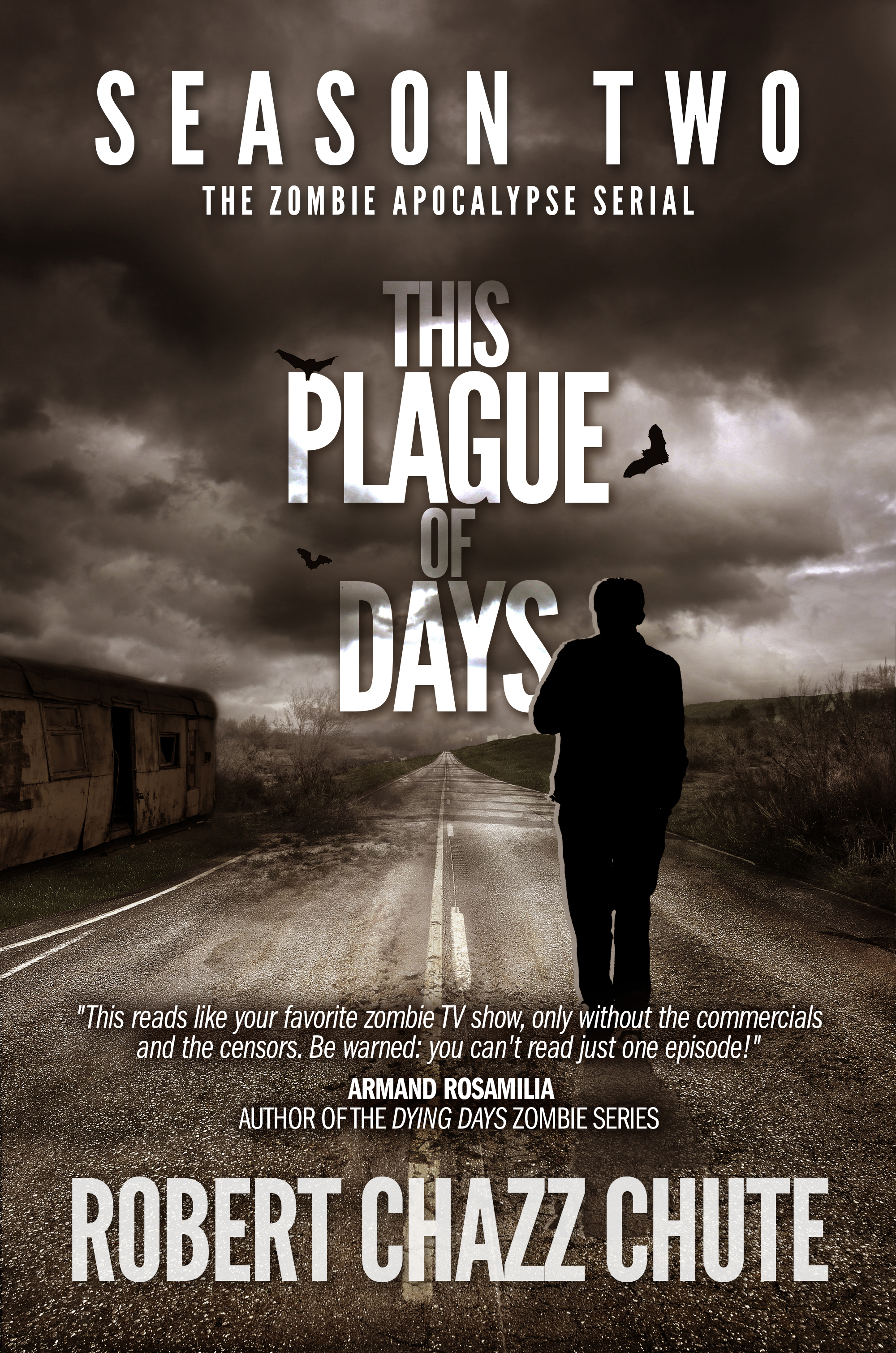
A cross-genre flurry about  society's collapse under the crush of the Sutr Virus combined with a boy's love for odd words, Latin dictionaries and his father.

A cross-genre flurry about society’s collapse under the crush of the Sutr Virus combined with a boy’s love for odd words, Latin dictionaries and his father.

Here’s a secret about the first draft of This Plague of Days:

I started writing it in first person. For dramatic reasons (and other reasons I can’t reveal for fear of spoilers), I switched to third person, limited omniscient.

At the hub of this apocalyptic adventure is a young man who is on the autistic spectrum. We often see the world flu pandemic and the rise of the zombie horde through his eyes. However, to write the whole book that way would be too hard on the reader. Jaimie’s mind is not grounded in our reality. He sees significance in everything and is obsessed with dictionaries, English words and Latin phrases. To give the story a context of verisimilitude, I had to change how I told the story.

The change made for a better story but added more challenges.

Whatever writing choices you make as you revise and polish, remnants show up. Remnants appear in manuscripts when you make changes or corrections. When I edited other people’s manuscripts, I suggested changes for authors, but I also requested back up by proofreaders after my edit.

Corrections introduce new errors.

The manuscript is not done when the edit is done. This is good advice you would think unnecessary. Nevertheless, I was occasionally ignored by some authors and even a small press on that score. We all need a stellar proofing team and/or beta team to help scour the book.

You can always depend on remnants appearing. For instance, in This Plague of Days, the character of the looter named Bentley changed to Bently. This Plague of Days is huge, so I found several examples of the earlier incarnation when I searched for “Bentley.” “The Bentley”  turned up a couple of times, too.

An old man named Douglas Oliver is a major character. I found several remnants from the previous draft that labeled him “The Oliver.” That’s probably a switch from “the old man” to the character’s name.

Look for more corrections after you think you’re done.

Always look for spelling variations even if you haven’t changed the character name. The autistic kid is Jaimie Spencer, but once or twice I lapsed into “Jamie” or “Jaime”.

Search “stood” and “rose”. Consider if you really want the word “up” to follow those words.

Always enter “the the” in the search box. Our brains are trained to skip over that error.

Always enter two spaces in the search box just before you hit “compile”. You’ll find spaces in your manuscript that look like huge gaps in the text when the manuscript is converted into an ebook.

When you correct a typo, reread what you just corrected to make sure you haven’t subtracted one typo and added another.

It will be okay. Don’t get frustrated. The process is worth it.

After your masterpiece is published, alert readers will email you with helpful notes about typos you missed so you can correct them in the next edition. You’ll take solace in the fact that, without all your preparation, the typo onslaught and readers’ annoyance could have been much worse.


Filed under: Books, Editing, Writers, writing tips, , , , , , , , , , , , , , , ,

Set Your Internet to Ignore (Psst! The fun is in the parentheticals)

Comment threads and reviews are interesting windows to the human heart. Well, maybe not always the heart. Sometimes the comments come straight from the toe jam.

If you want to be disillusioned with the future of the human race, read YouTube comments. You won’t have to read much before you actually welcome the massive meteor that will destroy Earth this Friday afternoon around 2 pm EST. (Wear a sweater.)

Recently some fool seemed said anyone who criticized a single Amazon policy was against capitalism. No point worrying about people who conflate one thing with a different thing. (“Brainless communists are behind every rock and tree!” is so ’50s.)

In another thread that was very anti-indie, a snarky commenter replied to an indie’s post by correcting a minor typo. The indie made great points about the industry, but the message from the traditional author was clear: A single typo invalidates your argument. (I almost commented, “Bitch move, traddy.”)

But then it occurred to me, I am not a lone genius. If I see it, everyone sees it.

When you read an illiterate one-star review or when someone slips into a screed about  unrelated topics, everyone sees it for what it is. That’s a good feeling isn’t it? I’m even starting to regret that meteor strike burning up all the planet’s oxygen before the next Game of Thrones. (Perhaps I should cancel the order. Hm.)

This week a person of my acquaintance was criticized because, at the end of his post…wait for it…he dared to point out that he sold stuff for a living. As if that’s a bad thing. (Wait! Maybe Communism is coming back, after all.)

Stop worrying

These comments don’t hurt you as an author or blogger. They hurt the snarker. I’ve gone out of my way to block people who are mean to others. I report abusive reviews that libel the author instead of talk about the book. I know who’s naughty and nice. If the offenders are authors, they are banished and I never buy their books. I’ve gone out of my way to purchase books because of egregious reviews.


Here’s the math:

Idiot reviewer hates book + nastiness + condescension (+ possible libel) – a kind thought =  it’s probably not a book nasty, condescending idiots enjoy < I’d like to think I’m not an idiot, therefore, I give that book a try. (Was that condescending?)

Don’t act like a knob

No, you don’t have to be sunshine and sweet cakes all the time, but if you’re going to be mean, you better be twice as smart and savvy with facts. (For instance, Scalzi, Konrath and Wendig can be cutting, but they’re always smarter than they are savage.)

Act like a knob and you’ll be treated like a knob should be treated:

I won’t give you more thought.

I won’t think you’re clever.

I’ll set the Internet to Ignore.

~ I am Robert Chazz Chute and I sell stuff. 

Filed under: author platform, authors, book reviews, ebooks, publishing, Writers, , , , , , , , , , , , , , , , , , ,

Bestseller with over 1,000 reviews!
Winner of the North Street Book Prize, Reader's Favorite, the
Literary Titan Award, the Hollywood Book Festival, and the
New York Book Festival.

http://mybook.to/OurZombieHours
A NEW ZOMBIE ANTHOLOGY

Winner of Writer's Digest's 2014 Honorable Mention in Self-published Ebook Awards in Genre

The first 81 lessons to get your Buffy on

More lessons to help you survive Armageddon

"You will laugh your ass off!" ~ Maxwell Cynn, author of Cybergrrl

Available now!

Fast-paced terror, new threats, more twists.

An autistic boy versus our world in free fall

Suspense to melt your face and play with your brain.

Action like a Guy Ritchie film. Funny like Woody Allen when he was funny.

Jesus: Sexier and even more addicted to love.

You can pick this ebook up for free today at this link: http://bit.ly/TheNightMan

Join my inner circle at AllThatChazz.com

See my books, blogs, links and podcasts.

Enter your email address to follow this blog and receive notifications of new posts by email.

Join 2,063 other subscribers