C h a z z W r i t e s . c o m

See all my books at AllThatChazz.com.

Since I can’t rock a pencil skirt: My Writing Process

I don’t look good in a pencil skirt, even the neon pink one (dammit!) However, my friend, awesome author Mohanalakshmi Rajakumar (who does look sharp in a pencil skirt), asked me about my writing process. Since my fashion sense sucks, we stuck to talking about writing.

What are you working on, Chazz?

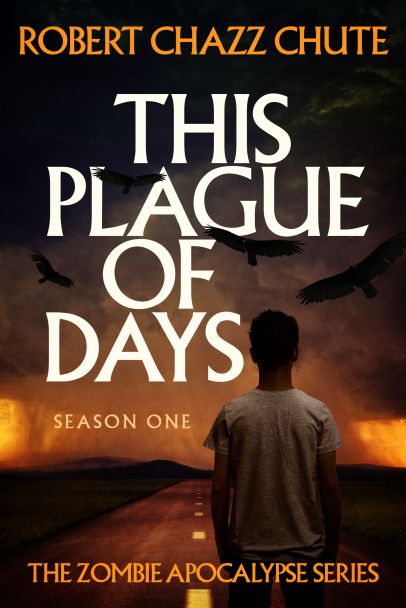
I’m putting the finishing touches to my apocalyptic series, This Plague of Days. It’s about a boy on the autistic spectrum facing the end of the world with his family. He’s our very unlikely champion. This is the third and last book in the series, but I’m putting all three seasons into one big ebook, too. At the moment, I’ve got five other books in the editorial pipeline at various stages of production.

How does your work differ from others of its genre?

I wrote it kind of like a television series. Three seasons (books) with five episodes per season. It’s not your typical shoot ’em up of a zombie story. There are three plagues and a large cast of characters so you see the crisis develop across continents. Lots of seeds and secrets were dropped along the way so the big payoffs and reveals all culminate in a story that builds and builds. It’s ambitious and really takes the reader on unexpected journeys. All the questions are answered in the end. This is my Star Wars.

Why do you write what you do?

I’m not attached to any one genre, but I do love suspense. My obsession is to take the reader on a roller coaster ride with lots of fun twists and turns, hanging off cliffs and chased by dragons and whatnot. You know…imagine the roller coaster at Hell’s amusement park. And just when you’re sure you’re safe, you aren’t.

How does your writing process work?

Typically, I write one chapter a day. That’s usually 1200 to 2500 words. I used to be more nocturnal, but now I find I’m more productive when I work earlier in the day. Since writing This Plague of Days as a serial, I’m really enjoying interacting with readers on Facebook as I write. I’ll finish a chapter and pick out a tidbit I like as a teaser or a taster and post it for some insta-reaction. That’s fun and buoys me through the parts of writing and publishing I enjoy less.

The writing process, for me, is to write myself lost. There I am in a corner. How will I find my way out? At the end of my crime novel, Higher Than Jesus, for instance, I figured a way for Jesus Diaz to kill an armed bad guy, credibly, while Diaz is bound to a chair eight feet away. That was quite a trick and one I’m proud of.

I don’t write by-the-numbers fiction. That bores me. Frequently, the only firm thing I know as I write is what the last line of the book will be. I write to discover what I think and for the joy of creativity and to surprise myself. If I can surprise myself, I’ll definitely surprise the reader.

This Plague of Days will launch in early June. Find out more about This Plague of Days at ThisPlagueOfDays.com. My author site is AllThatChazz.com.

~ Mohanalakshmi Rajakumar included me in her blog hop so a string of writers could share how they approach their writing process. She is a South Asian American who has lived in Qatar since 2005. Moving to the Arabian Desert was fortuitous in many ways since this is where she met her husband, had two sons, and became a writer.

To learn about her writing process and to check out her books, go to www.mohadoha. Follow her on Twitter @moha_doha. Click here for her Amazon author page.

You can also hear my interview with Mohana on the Cool People Podcast. She speaks of her experience in Qatar as a writer whose book has been banned. Why listen? Because she’s cool, of course.

Filed under: What about Chazz?, Writers, , , , , , , , , , , , , , , , , ,

Writing Process: Ten Moments in the Writer’s Life

1. You become a writer.

It’s usually not something you really decide. It happens to you, like disease. It’s a life where you’re either writing or you’re distracted and feeling you should be writing, forever. Like homework, for adults, 24/7. And some of the teachers mark really hard.

2. You escape the life of mortals.

You become so involved in the story that time flies and you don’t care that you’re cursed to do homework for life. In fact, you feel fortunate you’ve found this for yourself. You dream of seeing your name in print. And the accolades! That will be sweet! Finally, self-worth fed to you by strangers!

3. You meet your first dream killer.

Someone scolds you for daring to use an adverb and shrieks that, “A sentence fragment is not a sentence!”, as if you didn’t know. Then they tell you not to bother with writing.

“Perhaps you’ll find animal husbandry more fulfilling,” they’ll say, because they’re full of terrible advice and, oddly, they sound very confident.

This is a critical juncture.

If the person has too much influence over you or you’re young enough, you might quit. If quitting is an option, that’s okay. Writing isn’t for everyone. 

4. You enter the Octagon.

You send out queries and manuscripts and you get rejection slips but you don’t care because it means you’re putting yourself out there and you’re in the game. You’re not talking about writing like it’s a dream in a far off retirement. You’re doing it now. Every moment of it feels important.

5. You get feedback on your writing that’s really useful.

You put away the first bunch of stories or your novella or even your first novel or two and you begin again. You improve.

6. You get your first success.

It might be a writing award or an article in a magazine. Maybe you get $25 or maybe you don’t, but the money’s not important to you. Your parents will ask how much you won or got paid. That dagger in your heart comes from a place of love. Probably.

7. You get your first hater.

I won third place in short story contest and $1000. Someone was offended that my story won and wrote a screed about how it sucked, I sucked and this was what was wrong with the world (and possibly this side of the galaxy.) He didn’t win so, naturally, now we’re all gonna die!

The thing about the Internet is, people will say things on their blog that, if said in person, would lead them on a trip to major reconstructive surgery and not a judge in the land would convict. As far as I know, that dude still hasn’t written anything besides his doctoral thesis in English literature. Poor guy is still unread and still brings joy to no one. If only he’d pursued animal husbandry, we’d all be happier (though that’s a terrible thing to do to innocent animals.)

8. Your finger hovers over the mouse.

You’re about to hit the “publish” button. It’s nerve-wracking. How many mistakes have you missed? How mean will the reviews be? How good might they be? You thought this would be one of the highs moments of your writing career. Instead, hitting publish is remarkably stressful. After you hit that button, birth that book and send it out into the cold air, you might even feel postpartum depression for days or weeks. I do, every time.

9. You get your first true fan.

For some reason, vague to both writer and reader, something you wrote connects viscerally. Someone loves what you wrote and you love them for it. They are invaluable. They are your chief five-star reviewer, defender, cheerleader and advocate. They’re so awesome, you’re pretty sure they don’t poop. Inexplicably, they think the same of you.

Through the simple mechanism of words on the page, you’ve bypassed his or her brain and you have their heart. Then you start to worry that, with your next book, you’ll screw it up and lose them. The thought of losing a die-hard fan? Hello, Insomnia.

10. You go deeper with your writing.

You tell yourself you’re sufficiently seasoned now so the haters should bother you less. Maybe they shouldn’t bother you, but they will. I got a belittling letter at Christmas that knocked me so far down I didn’t write anything for a month.

But then you get back to it and you remember what cartoonist Lynda Barry calls “that floaty feeling” you get as a creative.

Publication per se? That matters less. It’s the writing process itself that is the thing. Yes, you want readers and lots of them, but you write for yourself first. You discover what you think and feel by writing. The writing journey is the reward. You lose yourself in the prose and in a small way, there’s something immortal and divine about that dopamine drip, washing your neocortex as you write and dream and create.

It’s just so darn godlike to kill people…

Um…in fiction. Right. That’s what I meant.

~ I’m Robert Chazz Chute and I poop. I also create worlds. If you create worlds, too, you’d probably enjoy reading this.

If you like to read stories that make you question whether the author may or may not poop, try this.

Also, right now, for a more buck, you can get a box set from me and seven other writers who are so awesome, they definitely don’t poop. Get the Horror Within box set now. 

This is the most I’ve written the word “poop” in one blog post. Or 3,000 blog posts. Why was I denying you this joy for so long? Now I feel bad. Better go kill some people…


Filed under: Writers, writing tips, , , , , , , , , , , , , , ,

Writing Process: How to screw it up

1. Talk about it too much without typing. Lose energy that could go on the page. Talking is so much easier than typing. In fact, maybe you should be in radio.

2. Don’t write notes as soon as great ideas, additions and twists occur to you. Better to stay in bed another few minutes than catch the lightning.

3. Don’t outline at all for fear it will screw up your spontaneity. You’re an artiste, man! Let the muse sing! Planning is for wussies and many successful writers.

4. Even if a new and brilliant scene occurs to you, don’t stray from your outline because letting OCD control you is much more important than writing a better book. Readers will understand. Well, not readers plural….

5. Take all opinions from your writing group and try to accommodate everyone. They must know your story better than you do, or you wouldn’t be asking everybody, right?

6. Write it quickly and keep going no matter what, even if it appears you’re headed for a dead end because your track coach told you to run through the pain (that spring you tore your knee up and were on crutches all summer.)

7. Write it slowly because the longer it takes, the better it will be, even if the process and the manuscript become so long and involved you can’t keep the core of the story straight in your head anymore. It’s okay, you’ll live forever so it doesn’t matter when, or if, you ever finish the book.

8. Don’t bother with taking any notes for a character guide or story bible. Who cares if your heroine’s eye colour changes eight times and her name changes four times in the space of two paragraphs? You can hate yourself forever, sure, but you were going to do that anyway, right?

9. Don’t read any books in your genre. You wouldn’t want to risk being influenced by anyone good or be aware of what clichés to avoid. That sounds like a task for nasty reviewers.

10. Don’t defend your writing time. Everyone’s more important than you and your dreams. If you don’t allow everyone to stomp all over you, how will you be the martyr who never published because…well, life is just too darn hard, isn’t it? But you could have been great! You’ll always have that.

BONUS:

Hate everything you write. There’s no time to improve it later in revisions so everything sucks and always will. Well…that’s a timesaver!

Love everything you write. History will realize your genius after death. It’s just the editors in this epoch who have you all wrong.

Filed under: Writers, writing tips, , , , , , , , , , , ,

The blog and book promotion tool you’ll love (that’s easy, effective and free)

Here's one of my Haiku Decks to start off your writing week right.

Here’s one of my Haiku Decks to start off your writing week right.

Haiku Deck is a free presentation tool that uses royalty-free images so you can make a statement with visual impact. Change up your next blog post or make a slick book trailer in minutes, for instance.

Click this link to ThisPlagueOfDays.com to see how I used Haiku Deck to remind readers that my next book is coming soon (and they better buckle up!) It’s actually quite beautiful and even easier and quicker than a YouTube video. The slideshow at the link was my first experiment with Haiku Deck. It took less time to put my trailer for This Plague of Days together than I needed for this short blog post.

There’s nothing wrong with YouTube, Instagram, Vine, and iMovie etc,…. Video can be useful and powerful if used well (and oooh! Moving pictures!) The advantage of Haiku Deck is that it’s free, fast and fun to play with. Consider adding it to your author platform’s arsenal. 

Want to sign up and start making your own trailers, presentations, charts and messages?

You’ll find the way to sign up at the end of each Haiku Deck presentation above. It’s easy to do and easy to share on multiple platforms, but if you do have trouble sharing on your non-self-hosted WordPress blog, no problem. Do what I did with the slideshows above. Load and link a screen shot and bam, it’s there.

Pretty cool, huh?

If you need tips on using video more effectively to promote your books or business, I wrote a quick book on marketing with Vine that highlights what you should be aware of to make it work better. Click the cover for Six Seconds below, for that chewy goodness (for the princely sum of just 99 cents!)

Six+Seconds+copy

~ Okay. We’ve started Monday morning off right. Let’s keep the healthy and happy vibes going. Pardon my excessive happiness today. It’s not characteristic of me, but I’m all ramped up about entering the final stages of publishing my eleventh book. Progress is being made. BAM! Okay, let’s go get ’em!

Filed under: author platform, Publicity & Promotion, publishing, Writers, , , , , , , , , , , , , , , , , , , , , , , , ,

Writers, Stress and, of course, Iron Man

We’re poor, starving artists. Of course, we’re stressed out. Why wouldn’t we be? I’ve often given lectures on stress management, so I’m going to give you a quick summary of what we’re normally told about getting all zenny. Then I’ll tell you the one useful trick you’ll remember and maybe even use.

Round One: 

Exercise, eat right, manage your time, use positive self-talk, deep breathing, be social with your support network, get lots of sleep, meditate, unplug more and say no more often.

Round Two:

For any stress, there are four responses: avoid it, alter it, accept it or act on it head on and solve that damn problem.

Round Three (and what you can really do, most of the time):

As suggested in Rounds One and Two, we can do everything that’s right for ourselves and go all goop.com and become perfect Gwyneth Paltrows, but you probably don’t have enough time, money and/or servants for that. In fact, trying to be Gwyneth Paltrow would add more stress to my life. I don’t look as good when I go blonde, for one thing. Also, I’m not a top Hollywood actress. I’m not even a bottom Hollywood actress working at Hooters. I confess, I’ll never play Pepper Potts. 

The answer, obviously, is: Be Iron Man.

Many people have the idea that the goal of life is to be relaxed all the time. You know what? Relaxation is great. It’s also bullshit. It comes in fits and spurts. Being relaxed all the time isn’t achievable for most mortals. Relaxation is often fleeting and, when it’s achieved, it can be shattered by a single bill, a phone call or a missile attack by the Mandarin. Not all stress is negative. Some sense of urgency is needed to ever get a book written, for instance. 

Yes, certainly take care of yourself and do the best you can, but stress-free is a high bar. Stress-resistance is armour in a troubled world.

Stress-resistant is more doable.

Think of Robert Downey Jr.’s character, Tony Stark, after he beat the booze (and Robert Downey Jr., the actor, post-drugs). In stressful situations (say…alien invasion) his reaction in the moment is to:

1. Crack a joke.

2. Think his way out of his circumstance.

And how do you Avoid, Alter, Accept or Act? Find the funny (subverting your rage with humor) and think your way out. When we panic or get angry, we get stupid and make things worse for ourselves. Do not catastrophize. Pause. Joke. Attack the problem with your brain. Attacking problems with your heart is a prescription for heart disease.

Thinking about the problem and holding on to your sense of humor might even keep you from strangling the door-to-door con artist who won’t leave your doorstep. That happened to me today and the twerp in question got to slink away without me denting his forehead on my “No soliciting” sign. Why? Because I kept my head and made jokes at his expense until he went away. 

Gee, I hope that jerk reads this. I think I stressed him out.

~ Robert Chazz Chute is nicer in person than you’d expect. Read the suspense and horror here. Listen to the All That Chazz podcast and the Cool People Podcast here. Nah, just buy and read the books. That would be cool. And if you’re Robert Downey Jr? Please have Jarvis contact me. You’d be great as the dad in This Plague of Days.

Filed under: Writers, , , , , , , , , , , , , , , , ,

“Writing a book by committee is a great idea in every way!” said everyone but the writer.

Imagine all the people from all the classes you’ve ever taken in one room. Each group has its own character, but today we’re going to focus on the outliers and oddball characters with whom you’ve gone to school. I’m not talking about those who stand out for their smarts and sweetness. I’m talking about the girl who, just before the last bell rang, reminded the teacher about extra homework for the class just before the long weekend. Remember the annoying guy who always had another question or inane comment to add long after a subject was beaten to death? And don’t forget the person who was really stupid, but for some reason thought he should speak a lot. Worse, he was smug about it.

Now put all those people you didn’t like in school and put them in charge of your work in progress.

That pressure behind your eardrums is your brain trying to escape.

This scenario isn’t entirely theoretical.

Recently, I listened to two different podcasts about two of the most successful television shows that exist. These were true fans…but:

1. On several points, they seemed determined to be confused about plot points even though the answers were readily available on screen, if only they’d looked.

2. Several weenies missed subtleties that weren’t really that subtle. It’s not the fault of the show’s writers if you aren’t paying attention. If you’re missing something, stop tweeting while you watch The Walking Dead

3. Someone objected to issues within the shows that are non-issues. e.g. Is Leonard’s mom on The Big Bang Theory really a licensed psychiatrist? If true, she’s terrible! Answer: it’s a comedy and you aren’t supposed to like that character and it’s a comedy and it’s a comedy and oh, for the love of Thor! Stop!

4. These dedicated amateurs had one or two good suggestions (I’m guessing by accident.) The rest of their requests for changes were objectively terrible, like dumping beloved characters that made the shows work, for instance.

There’s a reason we don’t write by committee.

It’s good that writing is a lonely job. You don’t get book ideas and plot points from other people. The elements develop organically, rising up from character and logic and by answering the question, “What’s next?” And then answering it again and again until you stop writing or die. The writing grows from the act of writing.

Input is helpful after you’ve done the work, sure, but don’t even ask a trusted friend what to do when you’re still in the second draft. He doesn’t know. How can he? You wouldn’t ask if you should turn left or right when all he knows is that you’re somewhere in New Mexico.

“Is this the right direction? Should the Mom die in the middle of the book?” A good friend will tell you to keep writing and hang up on you so you can get back to it. Finish something before you show it to anyone. You’re in command. Steer your ship solo. Lots of people will have their say later.

Everyone has an opinion on everything, even more so when they know less about the subject.

Once upon a time at a writing conference, an author asked me about the book I was writing. I gave him the broad strokes and he said, without hesitation, that my second act was “wrong”. If there’s a high school suicide in the first act, then the main character has to be torn up about it.

“Not if he hated the suicidal kid’s guts to begin with,” I replied. 

“Dude!” he said without a microbe of doubt, “High school kids don’t act that way. They shouldn’t act that way!”

“In my book they do.”

Summarily dismissed, I slunk away and have since dedicated my life to hating Stephen King with the fiery heat of a thousand suns. (No! I’m kidding! The offending author was not Stephen King. I love Steve! Him, I would have believed.)

Here’s the crux:

There are few rules in writing, but one I’m sure of is this, “If it plays, it plays.” You can make anything work in context. You can sell anything if the story sells it.

My luckless hit man is a funny guy in big trouble.

My luckless hit man is a funny guy in big trouble.

People doubted me, but I created a sympathetic hit man named Jesus (in second-person throughout, no less.) I create a lot of anti-heroes and no, I don’t care if readers love and agree with all my characters. Loving and agreeing with characters is overrated. Interesting is more important than loving.

Many of my stories don’t yield an easy happy ending but give unexpected, yet satisfying endings instead. I rarely do happily ever after, but you’ll often find transcendence there.

My main character in This Plague of Days is on the autistic spectrum and hardly ever speaks (and when he does, it’s often in Latin phrases.) When Doubting Tommy asks, “How the heck are you going to make that work?”, the answer is, “Watch me.”

My mission isn’t to write something easy that entertains. My mission is to write something different that entertains. Too much consultation, especially early on, would squelch my process. We don’t write by committee because committees are how most things don’t get done. Committees are where good ideas go to die. Committees are where you’ll find three reasonable, intelligent and helpful people compromising with one insane fascist to arrive at something closer to crazy than good.

Choose your beta readers, editors and allies carefully and don’t show them anything too early in your process. The book is only yours as long as you’re writing it. After that, it goes out to the world and it’s up to thousands of readers to decide if your vision pleases them. 

Make sure that, whatever you write, it pleases you.

~ The latest All That Chazz podcast is up at AllThatChazz.com. You’ll also find helpful affiliate links to my books there so you can buy them, which is quite a happy coincidence, isn’t it? Thanks. For a topic sort of related to this one, you can also get the latest update on Season 3 of This Plague of Days here.

Filed under: All That Chazz, publishing, Writers, writing tips, , , , , , , , , , , , , , , , , , , , , , , , , , ,

The attitude (and the radio show) indie authors need to succeed

This week on a podcast I heard a couple of guys who own a small press quibble over what qualifies as “indie” versus what “self-publishing” is and OH MY THOR! WHO CARES? They don’t understand that any serious self-publisher is a publisher. I know of no one who attacks the challenge alone. We have editors and proofreaders and graphic artists. We recruit volunteers and call on experts. The distinction these podcasters were quibbling about is so two to three years ago and I’m sick of it. We don’t go it alone if we’re to have any chance at succeeding. Truly solitary efforts? Those stinkers sink like lead in a helium sea. They can keep talking. We’ll keep moving forward.

Someone else questioned the use of the word “revolution” in our little make-up-stuff context.

The tagline at ChazzWrites used to be “Join the Publishing Revolution.” I wrote that because the ability to publish and sell directly to readers on a large scale, without traditional gatekeepers, was and remains revolutionary. We’re a young industry, but we keep on proving we’re not as stupid as once accused. We pick ourselves rather than wait for anointment, but no, despite the hype and alarm, we really do understand that publishing is not just a button.

Quite a while ago, I changed the tagline for this blog to: “We are the publishing revolution.”

Since I started this blog, the publishing landscape has changed and we’re getting better. There’s a reason for that growing expertise and success and it’s about you and me and the friends we make.

I’ve never been in a business so firmly entrenched in what Joanna Penn calls “Coopetition.” Writing may be solitary, but publishing is still a team sport. Most indies help other indies. I am not threatened by any author. I’m inspired by them. I read their work. I’m often assisted by them. We’re allies. We have so few resources, we have to band together. The organization is loose and the data flow is more horizontal than vertical. We’re less isolated and we sure aren’t corporate, but you know what?

Banding together is better.

Nobody owes anyone else a helping hand. It’s not about owing. I’m talking about the joy of paying it forward. Sure, there are a few authors who don’t have time to help others. They come off a bit me, me, me. Sometimes that’s a pocket full of earned arrogance and sometimes they were born that way. They’re missing out. Suffering, even. 

Have you ever had the opportunity to help somebody out?

The answer is, of course you have. And when you do help somebody, doesn’t it feel fantastic? It’s a great feeling to pay for a stranger’s coffee at the drive-through. Random acts of kindness aren’t so popular because they help somebody who needs a boost. Random acts of kindness are so popular because they feel just as good (maybe better) for the giver.

As Indies, we need each other. We can’t afford to pay for all the expertise and experience we receive from bloggers, podcasters and fellow authors. But the rising tide of kindness paired with knowledge raises the industry’s boats. I have another recommendation, besides helpful blogs and podcasts.

Here’s a radio show for our revolution:

Friday night (and every Friday night) I listened to Friday Night Writes on Surf 17 on Flagler Beach Radio. Last week, authors Tim Baker and Armand Rosamilia talked about editing with Armand’s editor, Jenny Adams. They laugh a lot on that show and the music’s good, too. The show’s Facebook forum is active, the audience laughs along with them and they answer questions about writing and publishing in a fun way. (So see you all there Friday night. I listen in on the TuneIn Radio app.)

That’s the commercial. Here’s the point:

Writing is fun (or else maybe you’re doing it wrong). Publishing is a serious business populated with fun, intelligent and interesting people. Many of the most generous people I know are growing their readership, blowing up and getting better faster. I don’t think the intersection of generosity and success is a coincidence. Generosity not only feels good. It grows support networks, readers and fans. Energy goes out and comes back, drawing attention, interest and resonance.

We are a generous group. We are writers.

Our revolution is based not on conquering but on love of language and stories. Sharing our love of language and telling stories? It’s not frivolous. Fiction is an important way to keep the darkness at bay. It’s a welcome distraction from what ails us. Each novel is an opportunity to escape reality and a less painful way to better understand life.

We learn and share experiences through our stories. We grow and share and laugh together. We help each other. We entertain strangers from a distance for a long time very inexpensively. We’re givers and that feels awesome. Without cooperation, we would not be here. Generosity is the bedrock of our humanity. 

That’s love. 

We are the revolution we need.


Filed under: author platform, Media, publishing, self-publishing, Writers, , , , , , , , , , , , , , , , , , , ,

The real value of TBR lists (that you hardly ever get to)

Besides the chance at author discoverability through also-boughts, what is the value of all those to-be-read books you and I will probably never get to? (I say this with love and without judgment, as an author and fellow hoarder of books and ebooks.)

To shine a light in the dark, I spoke recently with an author who has her books for sale everywhere but Amazon.

(It matters little why she wasn’t on Amazon, except to say it was a misunderstanding of the platform’s requirements, not a principled, moral stance.)

“But we have to be on Amazon,” I told her. “Exclusive or not is your choice, but if you want to reach more readers, you must be on Amazon.”

“Why?”

“Because that’s where so many readers are. Amazon is out front and will remain so for the foreseeable future.”

“Why?”

“Because their customers are locked in.”

“What do you mean ‘locked in’? Everyone could switch to Kobo tomorrow.”

“But they won’t. Amazon has millions of customers whose first device was a kindle and so their library is on kindle. Kindle devices have come down in price and improved, so those readers will stick with kindle. They’re suffering the delusion that someday they’ll win the lottery, move to the French Riviera and finally have time to read all those hoarded books on a topless beach.”

“That’s not rational,” she sniffed.

“If I switched devices, it would be like burning all my books. And maybe that’s irrational, but we are talking about humans, yes? I have so few Vulcan readers.”

“But devices and companies go away. Look at MySpace and AOL and Kodak.”

“And the not-so-bright future of the Nook,” I added. “Yeah, companies go away if they fail to adapt to competition. But all those free downloads to long TBR lists give Amazon an immense legacy advantage. Kobo might be #2 in the e-reader market, but they’re a distant #2. Amazon’s the greyhound out front chasing the rabbit. The others are three-legged purse dogs running in circles around the starting line.”

“That’s ridiculous. If I wanted to switch, why couldn’t I just port my Kindle downloads over to Kobo?”

“Amazon would have to permit that, I’m guessing. They’re different systems. There are workarounds, but most readers won’t do it. For instance, I’ve got Calibre but I hardly ever use it.”

“Why not?”

“Because it’s harder to use and more time-consuming than the one-click buy that shoots straight to my kindle. People stick with what they know and what’s easy. For instance, everyone complains about Facebook, but they hardly ever leave and a bunch of those who do leave come back for more abuse. They don’t hang out at G+ because all their friends and family are still on Facebook. Their network is locked in, even if they don’t want to be. For Amazon and Facebook to start to worry, they must have a real threat of competition.”

“I heard Instagram is getting even more popular than Facebook with young people,” she said. “Facebook has serious competition there.”

“For that niche and possibly into the future, yeah, which must be why Facebook bought it already. No competition.”

“Oh,” she said.

“To compete with the greyhound, the little yappy dogs have to take steroids and get going in the right direction. But the greyhound will probably eat their steroids. The big dog always has more money for R&D.”

“You’ve lost me in the canine metaphor. I don’t hang out at the dog track.”

“Come up with a new way to reach customers and someone will finance it. If it’s a really good idea, it will probably be the leader of the pack buying you out, making sure they stay the pack leader.”

“But what about all those companies that fail?”

“Nothing lasts forever, sure. Apple seems to have lost some direction since Jobs died and the stock’s down. Mostly, big companies fail because they lower their standards or try to hold on to the old paradigm instead of improving and evolving. Like how the Big Six publishers became the Big Five. Soon to be fewer, probably.”

“Ah. So…you really think I should sell on Amazon?”

“It’s up to you, but for me, it’s the only platform that’s not optional. There are exceptions. Some authors seem to move romance and crime better on B&N and Kobo. If they choose to pull you out of the haystack and promote you, you might have a shot. But mostly, and for me? If I wasn’t selling on Amazon, I wouldn’t be selling books.”

“So all those free ebooks on my TBR cyber-pile is just Amazon insuring customer loyalty?”

“I wouldn’t call it loyalty. No matter what the Supreme Court and Mitt Haircut say, corporations aren’t people, my friend. Companies rarely inspire love. Call it inertia. Also, I’m sure they really do hope you’ll buy somebody’s books and make a ton of money the way they say it was intended. I’m talking more about customer behavior here, not whether Amazon’s packed to the rafters with cynical geniuses who can see into the future.”

“So what do you think of free ebooks as a promotional tool?”

“It’s not the sharpest tool in the shed, but most of the discoverability tools are pretty dull.”

“Sounds like you love Amazon,” she said, her eyes narrowing.

“No. If the little dogs started running faster, I’d bet on them. Until then, I’m riding the big dog. And you know…sometimes…once in a long while, I’ll find an author in that TBR pile I thought I’d never get to. And sometimes, I’m blown away and I want to read more of their books. Then I’m in true buying mode. Free ebooks is fake buying mode. But it does happen that I find someone I like there and spend real dough.”

“Name one,” she said.

“I’ll name three. Alex Kimmell, Jordanna East and Armand Rosamilia.”

“I’ll add them to my TBR pile,” she said.

“Make sure you get to them.”

~ Robert Chazz Chute is an author with ten books in your TBR pile you still haven’t gotten to. How will you ever fall in love? 

Filed under: Amazon, author platform, book marketing, Books, e-reader, ebooks, free ebooks, Publicity & Promotion, publishing, Writers, , , , , , , , , , , , , ,

Top Ten: Some things no one tells you about writing

1. Nobody cares about your book at first, even if you think they should. Even if you think they care about you, they’re indifferent. It’s maddening. For you, each book is a magical dream made real. For them, “Nice hobby, but so what?” 

2. Since typing looks a lot like writing to the casual observer, you don’t get extra respect for being a writer from a lot of people. Anybody can type, so don’t think you’re special. “Who do you think you are, anyway? You think you’re better than me?” Oh, they won’t really say that. That’s silly. But some may as well say that by the way they’ll treat you.

3. A lot of people can read, but don’t. They care even less than the casual observers in Items #1 and #2. I don’t understand these people. Why live? It’s a mystery.

4. Some people do read, but they’re jealous of those who write. Read any one-star review that seethes with the venom usually reserved for a pedophile’s first night in prison or a family reunion. Yeah. Those people.

5. You and your family will make sacrifices for Art. Your kids’ friends will be able to afford nice vacations, cool stuff and the latest technology. Your kids won’t get that stuff, though they will get an in-house example of someone daring to follow their dream and buck conventional expectations. At least cover the basics somehow: food, shelter, clothing and good minds.

6. To paraphrase Kurt Vonnegut, pursuing the arts is a great way to disappoint your parents. Don’t expect them to understand. That’s presumptuous and unfair to them since they (probably) love you. It’s not that they don’t want you to succeed as a writer. They want you to take that accounting job because they don’t want to see you suffer. They don’t understand that the safe job they want you to take will hurt you in ways that last, too.

7. The first book that consumes your energy and attention which you poured your heart into? Odds are, first attempts aren’t that great. But no matter how many books you write and no matter how big you get, someone will say you can’t write. In fact, the bigger you are, the more negative messages you’ll get. (If so, congratulations! You’re reaching a wider audience.) That cost-benefit analysis works in your favor, but at some point you might still consider antidepressants, booze or illegal substances or too many brownies. Avoid self-medicating. Write more instead.

8. Sometimes betrayal arrives from unexpected sources within your circle of friends or family. This will hurt most and saps your creative energies. These incidents often lead to divorce or more heated arguments at family reunions. The alternative is you’ll quit and hate yourself because you are no longer being you. Anyone who forces you to choose between them and your passion is gangrenous. Amputate.

Another thing I learned just today:

If you’re being a dick, that doesn’t mean I’m thin-skinned.

9. Writing is harder than it looks, especially before you start. It’s more fun than it looks after you start. Begin.

10. Somehow, at least some readers will find you. You probably won’t even know what you did right, exactly. But there will be readers and even fans. Super-uber-robo fans that so get you, so love your work? Well…you’ll wish those negative friends and family understood you as well as these strangers. Don’t sweat it. You’re making new friends through your fiction.

Treasure your readers. Love them. Inspire them. Nurture them. Entertain. Make them laugh and cry and hit them with love and surprises. 

When you succeed, make sure everyone who tried to put you down on your way up finds out. You’ll care less about how they hurt you by then, of course, but not so little that your vengeance won’t be delicious.

~ I am Robert Chazz Chute. I write about funny hit men, autistic teens and humans versus zombies versus vampires. But mostly I write about the caprice of vengeful gods. I create gods in my own image.

Filed under: getting it done, publishing, Rant, readers, Writers, writing tips, , , , , , , , , , , ,

The Way of the Hack: Writers, you might be a hack if… (plus death threats from space)

Long before computers, a hack was a worn-out horse used for pulling tourists around parks. You know, because before you propose marriage to your sweetie in Central Park, you need to build up your courage by bathing in elderly equestrian flatulence. Then unimaginative comedians were dubbed hacks in the fifties, after a decade of tired jokes (mostly about hateful mothers-in-law.) I wish it stopped there. Writers get called hacks, too. Let’s dodge that fate (and, as you’ll see, you’ll also get one last chance to avoid dying by giant rock). Those two things seem equally important, so read on.

For writers, “hack” is a pretty bad insult.

Recently, on a podcast I’ll never listen to again, the host asked, “So, do you write about zombies or are you a serious writer?” Dude! Dangers, betrayal, and ordinary people facing grim existences and horrific mortality? That (and rampant, grisly cannibalism in line at the post office) is what we’re all facing every day! A book’s subject matter doesn’t make the author a hack. Failure of execution makes the hack.

To avoid becoming a hack, do not follow The Way of the Hack:

1. Tired subjects with no fresh takes. Ever read a book and somehow you’re reminded of a disappointing salad, measly on the croutons with brown lettuce? You might have been reading a hacky book.

On sale now for just $2.99. I mean, c'mon!

On sale now for just $2.99. I mean, c’mon!

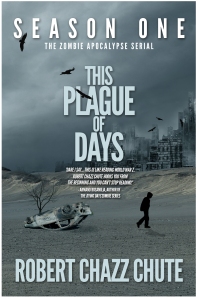
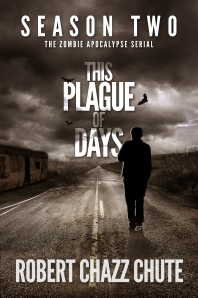
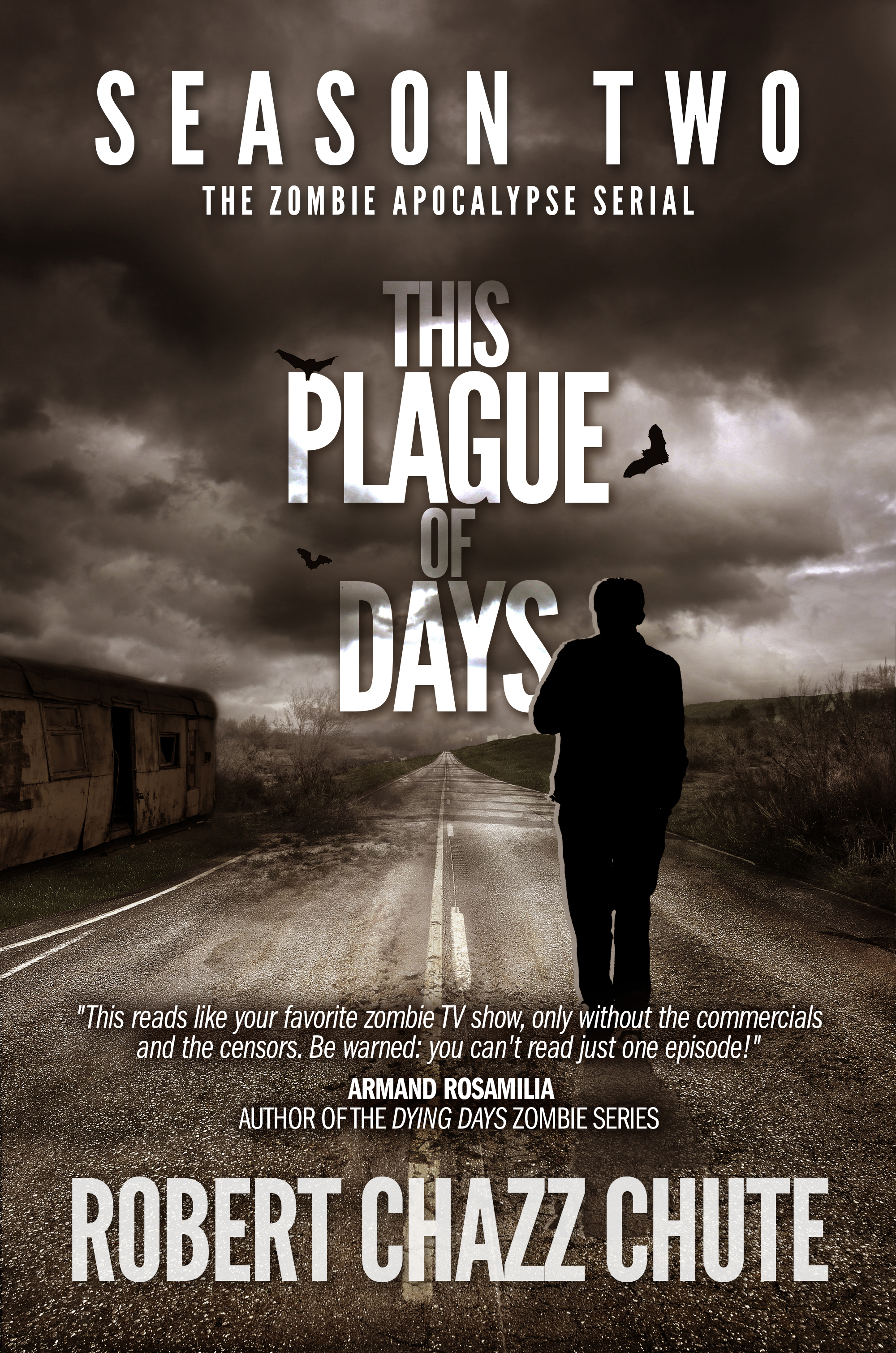
On the other hand, ever read a zombie story with an autistic hero, whales, evolutions of numerous cannibalistic species and Shakespearian trees, all in three books called This Plague of Days? I think you see where I’m going here: this is a blatant plug so you’ll buy This Plague of Days, Seasons One and Two. Season Three, and the conclusion of the serial, hits this spring. Very well, on with the helpful, preachy bits…

2. Don’t write stories that look, feel and sound like a ton of other stories. Sometimes you can spot a hack book by its cover. You want your cover to convey what genre it’s in, but you don’t want potential readers to think they must have already read it. That’s why you should consider the services of my buddy Kit Foster of KitFosterDesign.com. Your book needs a distinctive cover. Okay, no more sweet little commercials for my friends and me (today).

My point is, there are no new stories, but there are still plenty of ways to surprise readers, even the jaded ones. Hit your readers in the brainpan and adrenals. Read any novel by William Goldman if you aren’t sure how. (Okay, that was sort of a plug, but he’s not a friend. I just wish the most underrated, living American novelist was a drinking buddy, that’s all.)

3. Clichés. Hacks love them. Don’t. And why would you? It’s so easy to take a familiar cliché and give it a new twist. Don’t avoid clichés “like the plague.” Avoid them “like a stampede of zombie office workers, oddly indistinguishable from non-zombie office workers.”

4. Hacks lack complexity in plotting. If the story is too easy, the subtle message to the reader is the author is too stupid to create something more interesting. Or possibly the subtext you convey is, the author is a smart, lazy hack who thinks readers are stupid. Either way, readers won’t like the book and they’ll really hate you. So be like Batman — always be Batman — and be complex.

5. Villains who are just bad because they’re bad are hacky. Everybody, even psychos, have reasons and rationalizations and justifications. Don’t be lazy about their motivations. Writers who aren’t hacks take the time to construct origins and context so we understand why they broke bad.

6. Heroes who lack any flaw are hackneyed, boring cartoons. Or Superman. (But I repeat myself.) Protagonists without flaws and weaknesses have it too easy.

For a better example, watch the movie The Rainmaker. It’s about a young lawyer taking on what should be impossible odds and…things go incredibly smoothly for him. You’ll think, that’s it? He just had to show up and obstacle after obstacle falls down and his path is cleared? Really? It may be a good book. I haven’t read it. The movie appeared to be written by a hack who had one eye on the clock and the other on a ham on rye. 

For contrast, a great courtroom drama is 12 Angry Men. You’ve no doubt seen it. Watch it again. Henry Fonda slowly convinces eleven other jurors there is room for doubt. It seems such an unlikely outcome, but every minute of that film is riveting as you watch the dominoes fall.

7. The free online dictionary defines a hack as “One who undertakes unpleasant or distasteful tasks for money or reward; a hireling.” (Whoa! That’s most anybody with a regular job, isn’t it? But I digress.)

If you aren’t finding any joy in the writing, you might be a hack. No fun for you? None for the reader.

8. Some snobs conflate “hack” with “commercial.” Wrong. Those are two separate issues. A book can be commercial and not be the work of a hack. JK RowlingThis Plague of Days Season 2 is one of the most successful writers ever. Who but the most dedicated troll would dare to call her a hack?

Also, just because a book fails commercially doesn’t mean it was hacky writing. Moby Dick was never a commercial success in Herman Melville’s lifetime. Lots of good books fail. Don’t let The Way of the Hack be the reason for your book’s commercial failure.

I’m hoping the reason for my books’ commercial failure is everybody dies when a rogue asteroid hits Earth…but don’t worry, there’s still time. Just click here and buy my books so I can succeed and we avoid the grisly alternative near-future where the world’s population chokes to death in fire as the planet’s oxygen burns away in the ugly celestial calamity to come. Hey, it’s all on you now. Please don’t think of this as an ultimatum. It is, but please don’t think of it that way. And thanks for contributing to the Arts. Congratulations on having children and grandchildren and having another February.

9. Lack of research. If you’re banging out your manuscript to make a word count without care for details, you might be a hack.

10. Lack of humor. When a book has one unrelenting, dour tone, I begin to suspect the author just put his or her head down and said to themselves through gritted teeth, “By all that is unholy, I will get through this and grind it out.” You miss opportunities for non-linear thinking when you’re rushing to a deadline like that. Slow down, Speed Racer! Enjoy the ride more. Give it another read and look for new angles, holes and opportunities to deepen and lighten the tone and give that prose roller coaster more hills and valleys. Take the time to threaten your readers with certain death once in a while. Carpe noctem!

Get this one, too, just to be safe. Post holiday sale: just $4.99.

Get this one, too, just to be safe. Post holiday sale: only $4.99. Shake out the couch change.

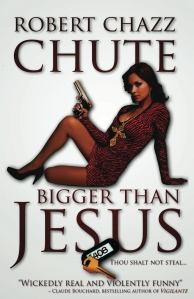
~ I’m Robert Chazz Chute. Today I have plugged my books, garishly, but I tried so very hard to be polite about it. Later on I threatened genocide by giant burning rock from space. Clearly, you need to buy Murders Among Dead Trees, The Little Book of Braingasms, Bigger Than Jesus, Higher Than Jesus and, of course, This Plague of Days, Seasons One and Two. They are each on sale at a special low price for January 2014. Now is the time. Or an asteroid kills us all. Those are the only two possible outcomes. But, like I said, It’s up to you, killer. Yeah, let’s just click here, ‘kay? Again, thanks so much.

If more than 70 happy reviews don’t convince you, learn more about This Plague of Days and how a boy on the autism spectrum could possibly fit into the plot, at ThisPlagueOfDays.com.

For podcasts and more about the books and the author, check out AllThatChazz.com. I’m starting to feel needy now, so I’ll stop.

Filed under: Amazon, What about Chazz?, What about you?, Writers, writing tips, , , , , , , , , , , , , , , , , , , , , , , ,

Bestseller with over 1,000 reviews!
Winner of the North Street Book Prize, Reader's Favorite, the
Literary Titan Award, the Hollywood Book Festival, and the
New York Book Festival.

http://mybook.to/OurZombieHours
A NEW ZOMBIE ANTHOLOGY

Winner of Writer's Digest's 2014 Honorable Mention in Self-published Ebook Awards in Genre

The first 81 lessons to get your Buffy on

More lessons to help you survive Armageddon

"You will laugh your ass off!" ~ Maxwell Cynn, author of Cybergrrl

Available now!

Fast-paced terror, new threats, more twists.

An autistic boy versus our world in free fall

Suspense to melt your face and play with your brain.

Action like a Guy Ritchie film. Funny like Woody Allen when he was funny.

Jesus: Sexier and even more addicted to love.

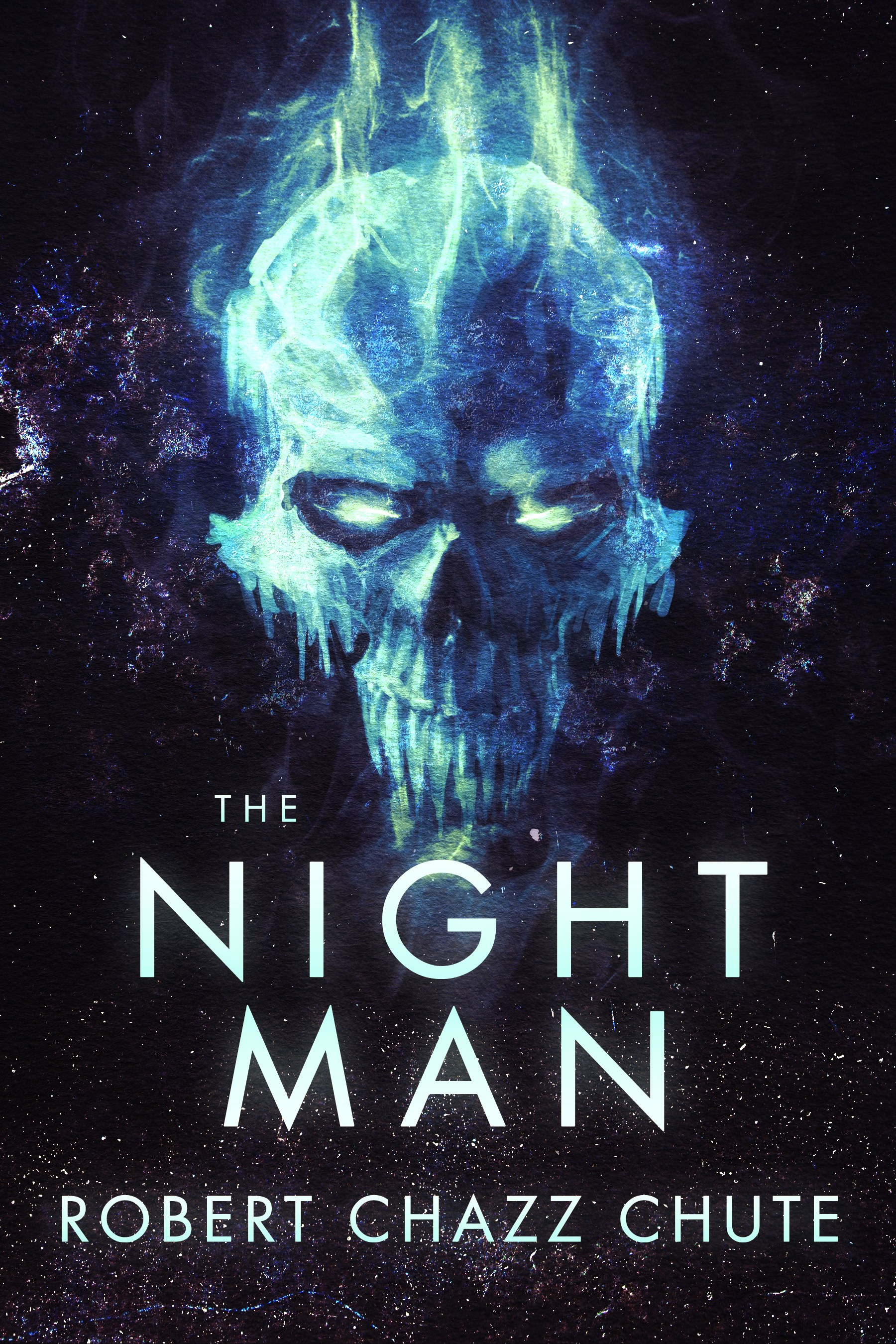
You can pick this ebook up for free today at this link: http://bit.ly/TheNightMan

Join my inner circle at AllThatChazz.com

See my books, blogs, links and podcasts.

Enter your email address to follow this blog and receive notifications of new posts by email.

Join 2,063 other subscribers