C h a z z W r i t e s . c o m

See all my books at AllThatChazz.com.

What did not help me sell This Plague of Days: Publishing problems and solutions PART III

I’ve tried a lot of things to get the word out about my books. Here’s what didn’t work and some things I’d do differently now.

PUBLICITY PROBLEMS

A. There was no detectable return on investment with most of my experiments with book videos from Fiverr.com. Fortunately, I paid little or nothing for them, so call that a reasonable experiment gone awry. Book trailers are generally weak (as I’ve blogged about many times.) If someone ever figures out how to make movie-trailer quality promo videos inexpensively, they’ll have a viable business case. There’s a better way to use video (see Solutions below.)

TPOD T-shirtB. Promises of rewards for spreading the word about This Plague of Days didn’t work. I wasted my time and that of my graphic designer trying to come up with cool t-shirts for the campaign. (Fortunately, Kit at KitFosterDesign.com, is patient and kind.) I ended up ordering two t-shirts of my design. They were way too expensive. I wear them.

C. My podcasts (AllThatChazz.com and CoolPeoplePodcast.com) don’t cause people to read my books…mostly or directly. (Interestingly, I can track stats that show a correlation in sales: I sell the most print books in those areas where my podcast is most popular. ) However, as you’ll see below, I think my podcasts help me most in indirect ways.

PROMOTION SOLUTIONS

1. I do have plans to use video again in different ways. Video can work well if done cheaply and with the right content. For instance, the Jesus video has worked to help me sell my crime novel. It’s on the front page of ChazzWrites.com and I’ll leave that up forever. People love that one because it’s so funny and silly and effective. I like the ink in water video at the top, too. That one does grab attention.

I found both on Fiverr.com. Fiverr offerings can be hit and miss. I’ve mostly used the site for video animation. Some other offerings strike me as ineffective, silly and ineffective or sleazy ploys.

One more detail about video 

Using the Vine app did connect me with new readers as well as help me discover a guest for the Cool People Podcast. In the future, I’ll do more short, informal videos. Video book reviews are very effective.

Any video can work if it’s funny, informational or contains a more personal message. The problem with Fiverr videos is that they’re impersonal. Just like with Twitter accounts, people want to hear from the author, not an intermediary. With Vine, Instagram or a quick video (shorter’s better) posted through your YouTube account and to your blog, video is still powerful. Make it yourself while you’re walking around. Make cheap and DIY work for you instead of against you.

For more tips on using video effectively to promote your book or business, there’s this:

Click it to grab it. On sale now for just 99 cents.

Click it to grab it. On sale now for just 99 cents.

2. For future promotions, I need to reach more people. My goal is to plug into a larger network. I’m working toward it. Over the last week or so I have over 1,000 more followers on Twitter. In the future, I also have to find a local company that can make a decent t-shirt without charging an arm, leg and kidney.

WHAT SAVED ME? YOU.

When word did spread about This Plague of Days, I ended up having little to do with it directly. It happened organically.

People with relatives who were on the autism spectrum fell in love with the protagonist. It began to snowball from there, one tweet, email and review at a time.

When you can’t make it happen immediately, sometimes all you can do is wait patiently. If there is resonance, people will find you. I’m eternally grateful to those who share their love of my books simply because they felt moved to do so. People want to share stuff they love so others can enjoy it. If you can’t do anything else, connect with readers viscerally. When book lovers step up to be heard about book recommendations, they are loud!

3. My podcast helps immensely, but not in the way I expected. Because of my podcasts, I’ve appeared on many other podcasts. That sells books. My podcasts also connect me with great people (especially the Cool People Podcast.) I would never have connected with those great people without getting into podcasting.

I became friends with fellow horror author Armand Rosamilia through the show. He’s blurbed my covers and is a great supporter of my work, including this blog. I’ve made new friends and reconnected with old ones. I’ve appeared on Inverse Delirium twice and I’ve been promoted on The 40-year-old Boy and the School of Podcasting many times. Around the launch of Season 3 of This Plague of Days, I will appear on the Rocking Self-Publishing Podcast. That’s a big deal to me.

Some strategies fail in one way but succeed in ways you didn’t expect. Experiment as much as you can afford. The more shots you take, the more you hit.

And finally:

Spend more time on writing and more money on the books themselves.

Don’t think about marketing and promotion all the time.

Don’t think about it at all if you only have one book to sell.

Write another book instead.

Whatever else you do, the writing must come first.
Tips and inspiration for the writer's journey to publication.

Tips and inspiration for the writer’s journey to publication.

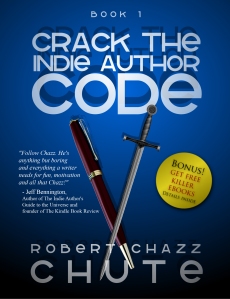
~ Hey did you know I also wrote a couple of books full of inspiration and writing advice that also manage to be funny? Yeah. That’s right. I made it funny instead of writing another of those scolding kinds of writing and publishing books that make you feel like crap. It would be a good idea to go get those now. You’ll learn a lot from my petty successes and catalogue of failures. Crack the Indie Author Code, people!

Filed under: author platform, book marketing, Publicity & Promotion, publishing, , , , , , , , , , , ,

How I sold This Plague of Days, PART II

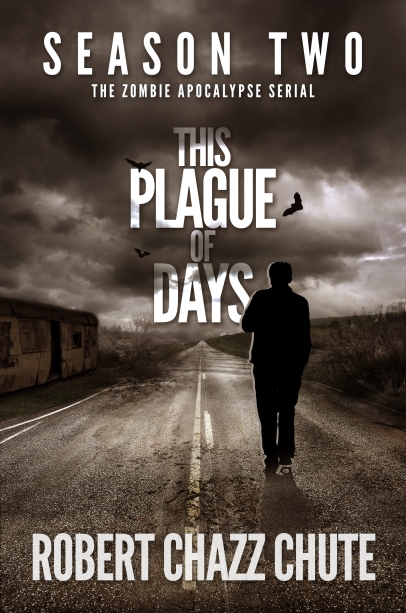
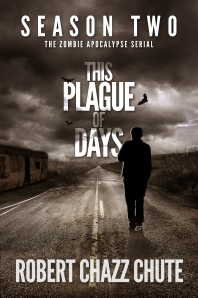
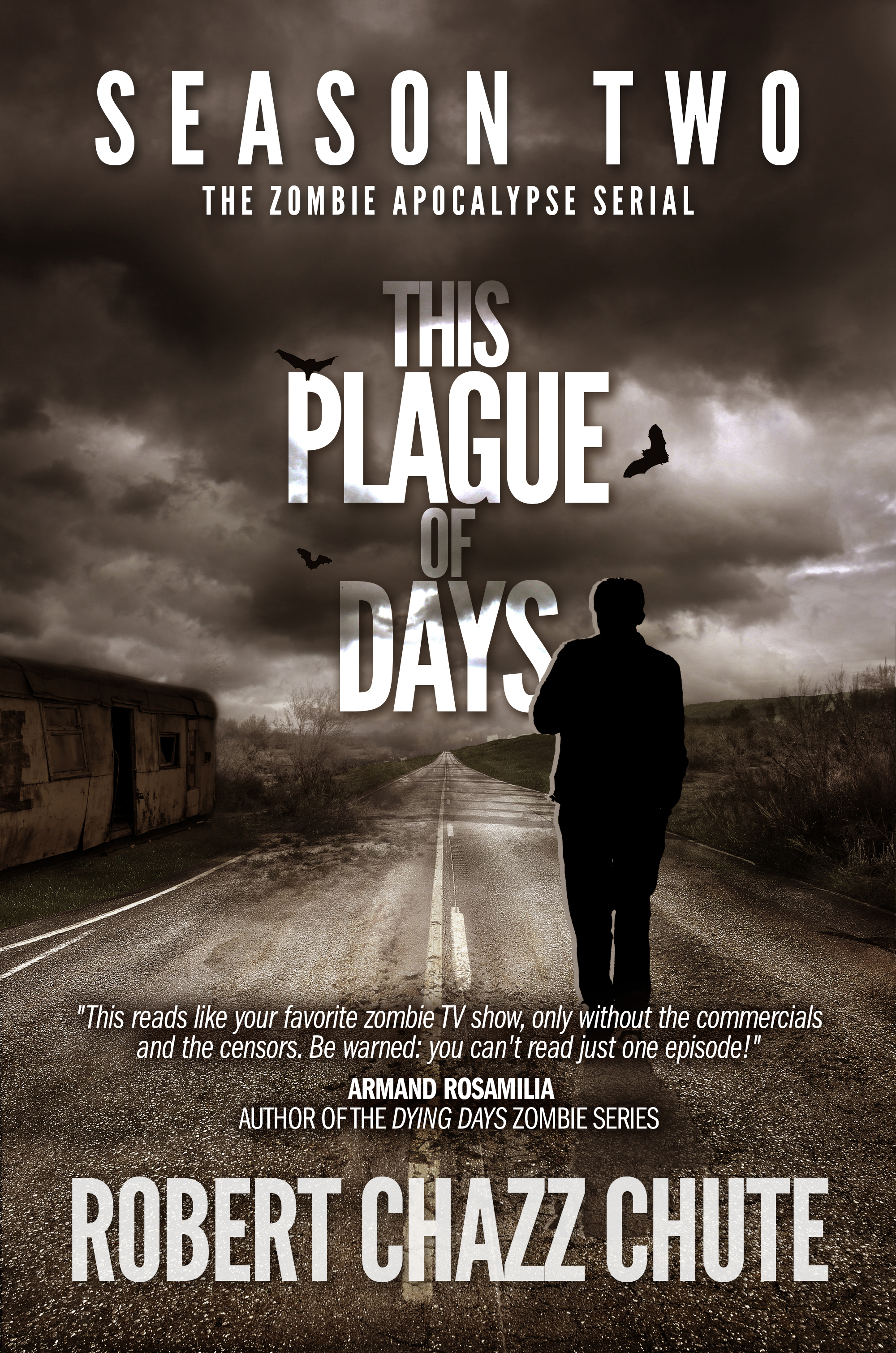
This Plague of Days Season 2

If I had to nail down what strategies worked to sell This Plague of Days, here are the elements that had to come together:

1. Good story. A selective mute on the autistic spectrum versus the Sutr plagues + a CDC virologist’s band of refugees on the run as Europe falls to the infected = Cool.

2. Kit Foster’s great covers. You can have a great story, but without KitFosterDesign.com, who would have bothered to have a look in the first place?

3. Serialization. See yesterday’s post for oh-so-many details on how and why that worked.

4. Bookbub. I got a flood of great reviews from the giveaway. Season One was a bestseller in September because of the free Bookbub giveaway. Season Two became a bestseller two weeks later in October.

5. Amazon exclusivity. This Plague of Days couldn’t have been free for the duration of the Bookbub giveaway if I wasn’t enrolled in the KDP Select program exclusively. (Note that while it is possible to price match down to free on Amazon, it’s not dependable or predictable if or when you’ll get the price down or back up when you want it. Price matching to get to free is not practical for pulse giveaways.)

The Ins and Outs of Bookbub

Bookbub wasn’t very expensive in the horror and science fiction categories, though I believe those fees went up since my promotion. (Click here to see Bookbub fees and stats on ROI.) If I wrote romance, I couldn’t afford their advertising program. I’ve heard some complaints about Bookbub lately, mostly about the fees for service. However, author and Cool People Podcast guest Renee Pawlish also raised questions about its reach on her blog. (Click this link to read Renee’s analysis and be sure to read the comments for a lively discussion and more factors to consider).

It will be interesting to see how prices for advertising change in a more competitive market. I advocated for Bookbub early on. However, while strategies may be long-term, tools are not. As more services like it arise, Bookbub won’t be the only free ebook promotion service on authors’ minds. In fact, many of you may already be using The Fussy Librarian or opting for the multitude of promotional services listed at Author Marketing Club. If you want more options, I suggest you support those services. For instance, The Fussy Librarian’s influence is growing and the operator has pledged to keep fees from authors low.

We don’t have to hit home runs with big services if we percolate into readers’ consciousness by hitting a lot of singles, doubles and triples. (There goes the only baseball analogy I understand.) Book bloggers and smaller, up and coming book promotion companies may be viable options or become more so. Author Marketing Club makes it easy to hit a bunch at once. 

Some book promotion services aren’t very strong, but it’s a new year and our infrastructure is deepening. Other book promotion services that have been around for a while are harder to get into.

If you get onto Pixel of Ink’s offerings, that’s a tribute to luck, your blurb and your cover art. Some services ask for so many reviews before allowing inclusion, the Law of Diminishing Returns kicks in. For instance, it gets to a point where the author thinks, I needed the service more when I had fewer reviews! If a book promotion service demands fifteen to twenty rave reviews to qualify for inclusion, they better deliver sales at a reasonable rate (whatever “reasonable” is will vary by author.) 

The Ups and Downs of Amazon

Over a year ago, several gurus said the advantage of being exclusive with KDP Select was gone. In the last few months, I’ve read several successful writers again report that they’re moving books on other platforms and anyone who doesn’t broaden their reader base with more platforms is an idiot.

I guess I’m an idiot, but I’m a happier idiot than I’d be if I’d diversified as many have advised. I did experiment quite a bit with those other platforms and ended up pulling several books back after good trial runs. They did nothing for me. My books sell on Amazon and, as long as that continues, I’ll stick with it.

In my experience, the other platforms are far behind the Mighty Zon and can’t seem to come up with ways to get my books moving there. Vague terms like “establishing a presence” on other platforms and worries about putting my eggs all in one basket won’t dissuade me as long as I still see returns on my work that the other platforms can’t seem to touch. KDP exclusivity is not as lucrative as it once was, but you don’t torch the car because it’s not as good as when you rolled it off the lot. If I want to escape KDP exclusivity, the worst case scenario is I’m free of the agreement within 90 days.

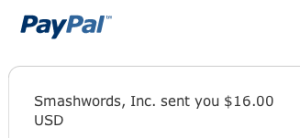
I’ve talked to writers for whom diversification is working. If that’s you, carry on happily. See my screenshot of my latest news from Smashwords?Screen Shot 2014-01-27 at 7.16.53 PM

No, it’s not time for me to diversify yet. When it is time, that jump can be made in pretty short order.

If Kobo were to offer to pluck me out of the rough and promote me, it would be a different story. If Apple weren’t so difficult to deal with, I might go for it. I’m not banning my books from other platforms forever, but I won’t abandon the exclusivity at KDP as long as it’s still working. It’s important to understand that other platforms work differently from Amazon. Other platforms choose what they’ll push at customers much as brick and mortar bookstores do. With Amazon’s algorithms and search engine, the customer’s choices determines what is marketed to them. The readers are the gatekeepers there.

This allegiance to Amazon is not an ideological stand. It’s accounting. The other platform paid me pennies. Amazon still pays me dollars. As soon as I’ve determined I’ve squeezed as much as I can out of Amazon promotional opportunities, I’ll give Kobo et al another try. I hope the other platforms will have stolen the best ideas from other players by then. At the very least, everyone should take something from what Smashwords does best: give us promo codes so we can better publicize out work. Amazon is the industry leader. I’m surprised the other platforms don’t experiment with emulation more.

~ As stated in yesterday’s long treatise, one author’s poison is another author’s chocolate latte birthday cake. Amazon’s still cake for me. 

Next post: What didn’t work for me in promoting This Plague of Days.

Filed under: author platform, book marketing, Publicity & Promotion, publishing, self-publishing, , , , , , , , , , , , , , , , ,

This Plague of Days: How I sold my autistic zombie apocalypse through serialization PART 1

This week, I’m making This Plague of Days a case study for those interested in drilling deep. This will be a series of blog posts about strategies, platforms and book marketing: what worked, what hasn’t worked, what won’t and what might. I hope it helps you to sell your books, if only by avoiding my errors.

Topics will include various format releases, selling in different ways, pricing and publicity. You’ll find out how This Plague of Days became a bestseller (in its teeny-tiny category) and the ways in which I’ve failed miserably. I’ll also hit on how my strategy is changing for the conclusion of This Plague of Days. Season 3 comes out this spring. I’m always experimenting, looking for new and different ways to reach readers and make them happy. Sometimes what I thought was the wide road to glory turned into a goat path into a dead-end. As always, I’ll be honest about it.

On sale now for just $2.99. I mean, c'mon!On sale until Feb. 1, 2014 for just $2.99. I mean, c’mon!

HOW I LAUNCHED THE SERIAL

My strategy for launching This Plague of Days, Season One was to put the whole ebook out first. I waited a week. The sky didn’t shatter with raging need for my latest contribution to suspense and horror literature. Then, over the next five weeks, I released the book broken into episodes as a serial. Each episode came one week apart at 99 cents each.

Each section ended on a cliffhanger so readers were given a choice:

Wait another week to find out what happens next, come back to Amazon and download the next episode. (0.99 x 5 = $4.95)

Or, preferably:  forget all that nonsense and just buy the book for less money than it cost to get all the episodes piecemeal. I sold the ebooks at $3.99 with pulsing price dips to $2.99 plus a couple of promotional giveaways at $0.00. (More on that in another post, but hey, Seasons One and Two are at $2.99 until Feb 1. Take a hint and have some fun. It’s too cold to go outside so you might as well read.)

Print has been so little of my income in the past that creating the paperback was a low priority. I did that last. (That’s changing, as you’ll soon see in a post coming later this week.)

HOW TO SERIALIZE CORRECTLY

My nastiest reviewer noted with dismay that I’d written it like a television serial (as if I’d somehow done so by accident.) Most people actually liked the format and appreciated its quirks as added value.

That said, serialization doesn’t work if you break the narrative the wrong way. Take an ongoing television drama. Let’s say, The Walking Dead or House of Cards. Cliffhangers, wit, surprises and reversals are the gears of the engine that give a serial forward momentum. Each transition should scream, “That’s not the end you expected. Now turn the page for more!”

Not all books are suited to the serial format and it’s not just about taking any book, breaking it apart and selling off the chunks. It’s about adding value to the reader and certainly not making more cash off selling episodes at 99 cents. For get-rich-quick ideas, boy, are you on the wrong blog!

ABOUT ADDED VALUE AND STANDING OUT

With an autistic hero who mostly doesn’t speak and a story that spans Europe, America and Canada, my story is unusual. You meet a lot of characters but they don’t meet each other for a long time, if at all. The plagues start off based in reality and later supernatural elements à la The Stand develop as the Sutr virus evolves. I did weird things with how I laid the saga out, too.

The Table of Contents comprises a long, dark poem with clues to what’s coming. Each episode begins with “Notes from The Last Cafe”, which adds to the intrigue. That mystery is not actually solved until late in Season 3. Also, Seasons One and Two contain a secret. The first three readers to guess it correctly will get characters named after them. I’m receiving guesses every week, but so far, no one has won. (Check out ThisPlagueOfDays.com for more on that.)

THE PROS OF SERIALIZATION

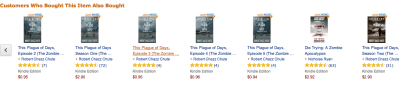
1. My also-boughts proliferated on Amazon so customers saw the work of my brilliant graphic designer, Kit Foster, pepper those lists. They didn’t just see one cover. They saw six, each different, but in keeping with the tone and theme of each season. Repetition and increased exposure got attention to the book it wouldn’t have caught otherwise. Here’s what that looked like:

TPOD 0616 EP 1 cover
The Also-boughts (below) harnessed the power of repetition in advertising.

Screen Shot 2014-01-26 at 3.49.28 PM


2. Best of all, readers who dig This Plague of Days went ahead and bought the entire season immediately. Some even took Season One, Episode One as a big, cheap sample and went back to buy both seasons in their entirety.

An important detail that’s a pro and a con

Those people who were tepid on an autistic kid in the zombie apocalypse tended to just try Episode One. Each episode ranges from 15- 25,000 words, so they got a generous read. The zombies don’t actually show up for a while and they aren’t even “true” zombies in the Romero sense. If readers didn’t care for the pace at which I built the tension, early instalments took the hits of less-than-entranced reviews and readers dropped away.

The majority loved it and went on to leave stellar reviews on each season. This somewhat inoculated the books from negative ratings because the non-enthused bailed out. Serialization gave them that easy option.

THE CONS

1. Serials are a harder sell. Some people hate serials and won’t buy them. Others click indiscriminately and then will rank you lower even if they like the book. (Yes, I know that’s crazy, but I’ve seen it. Fortunately, those few are outliers.)

2. Despite going to great lengths to explain and differentiate between seasons and episodes with covers and sales copy warnings, some readers still got confused about what they were buying in what sequence. Each cover was clearly labelled and to some, that didn’t matter. (Too quick to click the one-click buy, I guess.) That got me a couple of bad reviews. I explained to those reviewers in the comment thread of their review that anyone who buys something in error can easily return it to Amazon for a full refund. Still, those negative reviews remain.

3. Episodes that sell for 99 cents make next to no money. Somebody’s going to object to that, but the math on my sales reports says it’s true. I’d have to sell way more episodes to equal the sale of one book/season. In my quest to find 1,000 true fans, this is one of the trade-offs along the way to helping us find each other. I don’t resent the journey.

4. Maybe it’s my sense of price resistance, but I don’t see charging more than 99 cents per episode. You could give less in word count per episode, but you also have to ask yourself, how much and how often do you want to format and upload files? Drag it out with more episodes and other costs rise higher.

5. I can see by my sales stats that The Law of Diminishing Returns has kicked in with respect to sales of each episode. With so many positive reviews on Season One and Two, it makes less sense for me to serialize now. As I move away from serialization in Season 3, those who liked serialization might ding me for it (even though, with the way I priced it, that’s irrational.) 

6. Serialization that’s not hooked up to Amazon’s auto-delivery system is problematic. The customer has to remember to come back each week and download the new episode. I did apply to Amazon to publish this serial with them. I never heard back. Had they gone for it, you might have heard of me before today.

7. Now that my Amazon sales page is populated with all those episodes from Seasons One and Two, it looks too busy. I’d rather just display the seasons (and eventually The Complete This Plague of Days) so it’s easy for readers to zero in on those books and click buy. How long must I wait before I can clean it up? I can’t simply unpublish the episodes in case someone’s still thinking of getting around to finishing the serial episode by episode? Do I wait a year? Two? Three?

CONCLUSIONS

You’ll note that the Pro column has two entries and I list seven disadvantages. I wish the analysis were that simple.

In my final analysis — not necessarily yours — the disadvantages I list are the cost of getting the book known. In this case, any damage was mitigated by moderate success. Serialization helped readers and hardcore fans find This Plague of Days (and in some cases, my other books.) Therefore, the sacrifice of getting roughly 30 cents on the sale of episodes is the cost of experimentation. For advertising so well in the also-boughts on Amazon, it was worth it. Season One has 72 reviews so far. Season Two has 31. That’s much more attention than my other books got. (Shocking because Murders Among Dead Trees is genius, dammit! And only 99 cents until February 1, 2014. I’m trawling for reviews from the bargain bin so…well, you know. Check it out, if only to read my favorite three-star review ever.)

Those two pros carry more tonnage than the feather-light cons. I don’t regret serializing Seasons One and Two. Without serialization, I wouldn’t have those problems. Some problems are the good kind to have. Without serialization, I’d probably be (even more!) anonymous in the literary landscape.

That’s why marketing Season 3 will be interesting. The revolution will not be serialized. Stay tuned.

~ This is a case study which may or may not apply to you. I’m not telling anyone what they should do. This is just my experience and my reasoning on serialization. Next post: Amazon, Bookbub and all those other platforms.


Filed under: author platform, Publicity & Promotion, publishing, self-publishing, writing tips, , , , , , , , , , , , , , , , ,

Top Ten: Some things no one tells you about writing

1. Nobody cares about your book at first, even if you think they should. Even if you think they care about you, they’re indifferent. It’s maddening. For you, each book is a magical dream made real. For them, “Nice hobby, but so what?” 

2. Since typing looks a lot like writing to the casual observer, you don’t get extra respect for being a writer from a lot of people. Anybody can type, so don’t think you’re special. “Who do you think you are, anyway? You think you’re better than me?” Oh, they won’t really say that. That’s silly. But some may as well say that by the way they’ll treat you.

3. A lot of people can read, but don’t. They care even less than the casual observers in Items #1 and #2. I don’t understand these people. Why live? It’s a mystery.

4. Some people do read, but they’re jealous of those who write. Read any one-star review that seethes with the venom usually reserved for a pedophile’s first night in prison or a family reunion. Yeah. Those people.

5. You and your family will make sacrifices for Art. Your kids’ friends will be able to afford nice vacations, cool stuff and the latest technology. Your kids won’t get that stuff, though they will get an in-house example of someone daring to follow their dream and buck conventional expectations. At least cover the basics somehow: food, shelter, clothing and good minds.

6. To paraphrase Kurt Vonnegut, pursuing the arts is a great way to disappoint your parents. Don’t expect them to understand. That’s presumptuous and unfair to them since they (probably) love you. It’s not that they don’t want you to succeed as a writer. They want you to take that accounting job because they don’t want to see you suffer. They don’t understand that the safe job they want you to take will hurt you in ways that last, too.

7. The first book that consumes your energy and attention which you poured your heart into? Odds are, first attempts aren’t that great. But no matter how many books you write and no matter how big you get, someone will say you can’t write. In fact, the bigger you are, the more negative messages you’ll get. (If so, congratulations! You’re reaching a wider audience.) That cost-benefit analysis works in your favor, but at some point you might still consider antidepressants, booze or illegal substances or too many brownies. Avoid self-medicating. Write more instead.

8. Sometimes betrayal arrives from unexpected sources within your circle of friends or family. This will hurt most and saps your creative energies. These incidents often lead to divorce or more heated arguments at family reunions. The alternative is you’ll quit and hate yourself because you are no longer being you. Anyone who forces you to choose between them and your passion is gangrenous. Amputate.

Another thing I learned just today:

If you’re being a dick, that doesn’t mean I’m thin-skinned.

9. Writing is harder than it looks, especially before you start. It’s more fun than it looks after you start. Begin.

10. Somehow, at least some readers will find you. You probably won’t even know what you did right, exactly. But there will be readers and even fans. Super-uber-robo fans that so get you, so love your work? Well…you’ll wish those negative friends and family understood you as well as these strangers. Don’t sweat it. You’re making new friends through your fiction.

Treasure your readers. Love them. Inspire them. Nurture them. Entertain. Make them laugh and cry and hit them with love and surprises. 

When you succeed, make sure everyone who tried to put you down on your way up finds out. You’ll care less about how they hurt you by then, of course, but not so little that your vengeance won’t be delicious.

~ I am Robert Chazz Chute. I write about funny hit men, autistic teens and humans versus zombies versus vampires. But mostly I write about the caprice of vengeful gods. I create gods in my own image.

Filed under: getting it done, publishing, Rant, readers, Writers, writing tips, , , , , , , , , , , ,

The Way of the Hack: Writers, you might be a hack if… (plus death threats from space)

Long before computers, a hack was a worn-out horse used for pulling tourists around parks. You know, because before you propose marriage to your sweetie in Central Park, you need to build up your courage by bathing in elderly equestrian flatulence. Then unimaginative comedians were dubbed hacks in the fifties, after a decade of tired jokes (mostly about hateful mothers-in-law.) I wish it stopped there. Writers get called hacks, too. Let’s dodge that fate (and, as you’ll see, you’ll also get one last chance to avoid dying by giant rock). Those two things seem equally important, so read on.

For writers, “hack” is a pretty bad insult.

Recently, on a podcast I’ll never listen to again, the host asked, “So, do you write about zombies or are you a serious writer?” Dude! Dangers, betrayal, and ordinary people facing grim existences and horrific mortality? That (and rampant, grisly cannibalism in line at the post office) is what we’re all facing every day! A book’s subject matter doesn’t make the author a hack. Failure of execution makes the hack.

To avoid becoming a hack, do not follow The Way of the Hack:

1. Tired subjects with no fresh takes. Ever read a book and somehow you’re reminded of a disappointing salad, measly on the croutons with brown lettuce? You might have been reading a hacky book.

On sale now for just $2.99. I mean, c'mon!

On sale now for just $2.99. I mean, c’mon!

On the other hand, ever read a zombie story with an autistic hero, whales, evolutions of numerous cannibalistic species and Shakespearian trees, all in three books called This Plague of Days? I think you see where I’m going here: this is a blatant plug so you’ll buy This Plague of Days, Seasons One and Two. Season Three, and the conclusion of the serial, hits this spring. Very well, on with the helpful, preachy bits…

2. Don’t write stories that look, feel and sound like a ton of other stories. Sometimes you can spot a hack book by its cover. You want your cover to convey what genre it’s in, but you don’t want potential readers to think they must have already read it. That’s why you should consider the services of my buddy Kit Foster of KitFosterDesign.com. Your book needs a distinctive cover. Okay, no more sweet little commercials for my friends and me (today).

My point is, there are no new stories, but there are still plenty of ways to surprise readers, even the jaded ones. Hit your readers in the brainpan and adrenals. Read any novel by William Goldman if you aren’t sure how. (Okay, that was sort of a plug, but he’s not a friend. I just wish the most underrated, living American novelist was a drinking buddy, that’s all.)

3. Clichés. Hacks love them. Don’t. And why would you? It’s so easy to take a familiar cliché and give it a new twist. Don’t avoid clichés “like the plague.” Avoid them “like a stampede of zombie office workers, oddly indistinguishable from non-zombie office workers.”

4. Hacks lack complexity in plotting. If the story is too easy, the subtle message to the reader is the author is too stupid to create something more interesting. Or possibly the subtext you convey is, the author is a smart, lazy hack who thinks readers are stupid. Either way, readers won’t like the book and they’ll really hate you. So be like Batman — always be Batman — and be complex.

5. Villains who are just bad because they’re bad are hacky. Everybody, even psychos, have reasons and rationalizations and justifications. Don’t be lazy about their motivations. Writers who aren’t hacks take the time to construct origins and context so we understand why they broke bad.

6. Heroes who lack any flaw are hackneyed, boring cartoons. Or Superman. (But I repeat myself.) Protagonists without flaws and weaknesses have it too easy.

For a better example, watch the movie The Rainmaker. It’s about a young lawyer taking on what should be impossible odds and…things go incredibly smoothly for him. You’ll think, that’s it? He just had to show up and obstacle after obstacle falls down and his path is cleared? Really? It may be a good book. I haven’t read it. The movie appeared to be written by a hack who had one eye on the clock and the other on a ham on rye. 

For contrast, a great courtroom drama is 12 Angry Men. You’ve no doubt seen it. Watch it again. Henry Fonda slowly convinces eleven other jurors there is room for doubt. It seems such an unlikely outcome, but every minute of that film is riveting as you watch the dominoes fall.

7. The free online dictionary defines a hack as “One who undertakes unpleasant or distasteful tasks for money or reward; a hireling.” (Whoa! That’s most anybody with a regular job, isn’t it? But I digress.)

If you aren’t finding any joy in the writing, you might be a hack. No fun for you? None for the reader.

8. Some snobs conflate “hack” with “commercial.” Wrong. Those are two separate issues. A book can be commercial and not be the work of a hack. JK RowlingThis Plague of Days Season 2 is one of the most successful writers ever. Who but the most dedicated troll would dare to call her a hack?

Also, just because a book fails commercially doesn’t mean it was hacky writing. Moby Dick was never a commercial success in Herman Melville’s lifetime. Lots of good books fail. Don’t let The Way of the Hack be the reason for your book’s commercial failure.

I’m hoping the reason for my books’ commercial failure is everybody dies when a rogue asteroid hits Earth…but don’t worry, there’s still time. Just click here and buy my books so I can succeed and we avoid the grisly alternative near-future where the world’s population chokes to death in fire as the planet’s oxygen burns away in the ugly celestial calamity to come. Hey, it’s all on you now. Please don’t think of this as an ultimatum. It is, but please don’t think of it that way. And thanks for contributing to the Arts. Congratulations on having children and grandchildren and having another February.

9. Lack of research. If you’re banging out your manuscript to make a word count without care for details, you might be a hack.

10. Lack of humor. When a book has one unrelenting, dour tone, I begin to suspect the author just put his or her head down and said to themselves through gritted teeth, “By all that is unholy, I will get through this and grind it out.” You miss opportunities for non-linear thinking when you’re rushing to a deadline like that. Slow down, Speed Racer! Enjoy the ride more. Give it another read and look for new angles, holes and opportunities to deepen and lighten the tone and give that prose roller coaster more hills and valleys. Take the time to threaten your readers with certain death once in a while. Carpe noctem!

Get this one, too, just to be safe. Post holiday sale: just $4.99.

Get this one, too, just to be safe. Post holiday sale: only $4.99. Shake out the couch change.

~ I’m Robert Chazz Chute. Today I have plugged my books, garishly, but I tried so very hard to be polite about it. Later on I threatened genocide by giant burning rock from space. Clearly, you need to buy Murders Among Dead Trees, The Little Book of Braingasms, Bigger Than Jesus, Higher Than Jesus and, of course, This Plague of Days, Seasons One and Two. They are each on sale at a special low price for January 2014. Now is the time. Or an asteroid kills us all. Those are the only two possible outcomes. But, like I said, It’s up to you, killer. Yeah, let’s just click here, ‘kay? Again, thanks so much.

If more than 70 happy reviews don’t convince you, learn more about This Plague of Days and how a boy on the autism spectrum could possibly fit into the plot, at ThisPlagueOfDays.com.

For podcasts and more about the books and the author, check out AllThatChazz.com. I’m starting to feel needy now, so I’ll stop.

Filed under: Amazon, What about Chazz?, What about you?, Writers, writing tips, , , , , , , , , , , , , , , , , , , , , , , ,

What we aren’t reading that might help our writing most

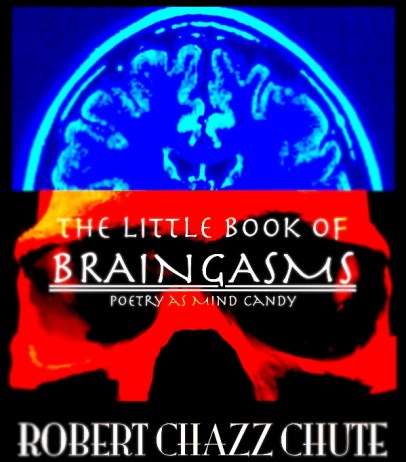
braingasm cover

On sale now for a mere 0.99 cents. Click away!

“Poetry: the best words in the best order.”

~ Samuel Taylor Coleridge

How does poetry help your prose? Why is poetry still important even though so few people buy it? Here’s why:

1. To paraphrase comedian Greg Proops: “Because George Bush and Dick Cheney. That’s why.” Poetry is a salve for our minds and times.

2. To take off on the Coleridge quote: Poetry is the least words in the best order. Capture a scene with fewer brush strokes and the reader will appreciate the efficiency of your storytelling.

3. From “A Late Walk” by Robert Frost: 

And when I come to the garden ground,
The whir of sober birds
Up from the tangle of withered weeds
Is sadder than any words.

To capture images with imaginative language that illuminates the scene in the reader’s mind, practice by reading and writing more poetry. So much prose is linear to the point of telegraphic minimalism. I love a spare writing style, too, but there’s room for art as long as the story remains unobscured. The point is not to make the reader work harder to see the picture you’re painting, but to grasp it all in a pleasing way. Many readers won’t notice how you’re doing it, but they’ll feel what you’re doing. Prose shows, true, but poetry engages.

4. I have a penchant for dark poetry. It’s fun and I found a way to integrate it into my zombie apocalypse. Sure that sounds insane, sure, but here’s what I did:

All the chapter titles in This Plague of Days make up a long, dark poem with clues to the plot. There’s a secret in This Plague of Days no one has yet guessed. I’ve offered to name characters after the first three people who guess right. So far, the secret remains undiscovered. (To see the entire poem for each season, you can find all the verses in the paperbacks. In the ebooks, search “Table of Contents”. If you care to guess, DM me on twitter @rchazzchute and keep the secret so Season 3 remains spoiler-free.) Here’s a piece:

TPOD season 1 ecoverMiles away in the Last Cafe,

We count every cost, each rueful day, 

But knowing will not lessen the surprise

when you see the truth beneath the guise.

The puzzle is not Death, but Life Neverlasting.

The answer is under the stars and moon shadows casting

Now in paperback!

Now in paperback!

Light, revelation and fearful truth

The stuff of old age and disappointed youth.

In dreams we find the connection to what will last, 

what won’t survive and what’s best left in the past.

~ from Season 2, Episode 2 of This Plague of Days

5. Read poetry for the pure love of language.

The more you read, the more sensitive you become to the sound of rhyme and the beat of meter. Power lies where the syllables fall and ring. Poetry doesn’t have to be dense, flowery or meaning-adjacent, communicating only by approximation. Poetry’s gift is in its precision. Poets choose their words carefully. Writers of prose can, and should, choose their words carefully, too. Do it right and even a grisly dismemberment can reach high lyricism.

6. Play with words because it’s fun. Unless you insist, poetry doesn’t have to rhyme.

Work it right and find the time

to light up your readers’ minds.

With a little poetry to your prose,

fans will love the words you chose.

7. Poetry doesn’t have to be dusty and academic.

Check out a poetry slam on YouTube sometime. You’ll see, hear and feel raw emotion communicating points and pictures. When I want to hear a modern poet who writes imaginative rhymes that fit together, tight and smooth as puzzle pieces, I listen to Eminem rap.

That’s the sort of poetry that still sells, but I love it all no less.

~ Robert Chazz Chute is the author of a bunch of horror, a couple of crime novels (so far) and a lot of suspense. To check out all his books (many of which are on sale now, awaiting your anxious clicks and happy reviews), find them all here. For his podcasts, check out AllThatChazz.com and CoolPeoplePodcast.com. For more on This Plague Of Days, go to ThisPlagueOfDays.com.

Filed under: Poetry, writing tips, , , , , , , , , , , , , , , , , ,

Post-holiday sales and writing stronger characters readers will love (and love to hate)

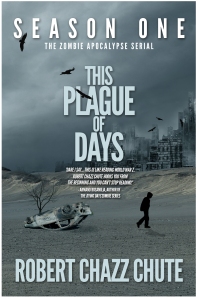
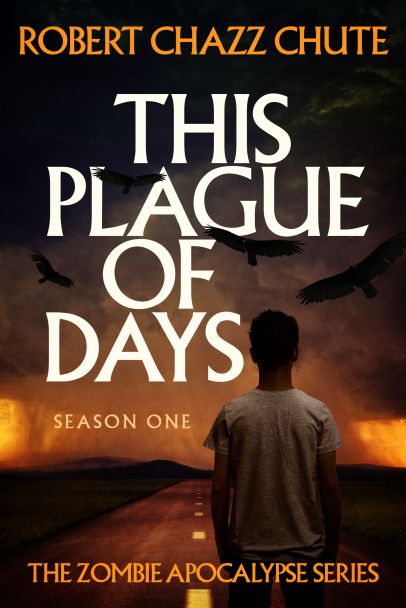
Season One of This Plague of Days is the siege. Sutr-X was the pandemic. Sutr-Z's next and it's coming for you and the Queen's corgis.

Season One of This Plague of Days is the siege. Sutr-X was the pandemic. Sutr-Z’s next and it’s coming for you and the Queen’s corgis.

1. Good characters have secrets they are trying to keep from the other characters. For instance, there is no major character in my zombie apocalypse, This Plague of Days, who does not guard a secret that’s contributing to the hullabaloo. Plenty of room for conflict there. Secrets are hard to keep and the longer they’re kept, the bigger the explosion when the secrets are revealed.

2. Good characters do not get along. In This Plague of Days, the matriarch is a Christian. The patriarch is atheist. They love each other, despite their differences, but it makes for some friction and they cope with problems much differently. They also begin to come closer to the other’s position, so rather than getting preachy, it’s an exploration of how people cope in a crisis. These details make them relatable so readers care about them.

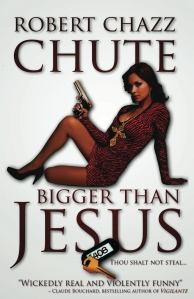
3. Good characters have competing motivations. In Bigger Than Jesus, my Cuban hit man kills for love. Competing characters want power, sex, money and vengeance. All those characters are after the same thing for different reasons, so tension is built as allegiances are broken.

4. Good minor characters don’t know they’re minor characters. Everyone is the star of their own movie. If your henchmen might as well have the labels “Heavy #1 and #2”, give them more life history. I have a bad guy, a drunken marauder, in Season One of This Plague of Days you don’t really get to know. He wears a wedding dress into battle (stolen from the protagonist’s mother.) It’s a brief brush stroke that lets the reader figure out the rest as to where that guy is coming from while fuelling reader outrage.

Now in paperback!

Now in paperback!

5. Good characters are conflicted and can change. Sometimes, real people do in fact do something uncharacteristic. That makes them interesting. To make this believable, give them good reasons to change their behavior. With enough correct and detailed context, you can make the reader believe an out of character choice is logical at the time. Let a bad guy aspire to be a hero. Let a hero do something petty, just for spite (and the joke.) People who are too sure of themselves are often boring, unimaginative, predictable. I hate predictable choices in plots, don’t you?

6. Good characters, even heroes, make bad decisions that make them more interesting. As with #5, context makes this work. The reincarnation of Battlestar Galactica is a perfect example. You were probably rooting for the human heroes in the show, but they made terrible decisions all the time. Overall, that didn’t make them bad per se. It made them less predictable, more interesting and more human.

So, for instance, victims who are chronically bullied are tragic figures. Push that victim too far and they can fight back believably. If the bullied person overcorrects and becomes a bully or a killer, or fights back and fails, that’s even more interesting. The reader will expect them to triumph. You could give them that happy ending, but don’t deliver it too quickly or in a way they can anticipate.

Click it now to get a huge short story collection of dark fun. On sale now for only 99 cents. Love it? Give it a review, please.

Click it now to get a huge short story collection of dark fun. On sale now for only 99 cents. Love it? Give it a review, please.

In The Dangerous Kind (ahem: my novella found in the huge collection of short stories, Murders Among Dead Trees on sale for a short time for just 99 cents) a boy forms a plan to murder his abusive older brother on a hunting trip. Complications ensue and his resolution comes in a way neither he, nor the reader, expects. No spoilers. Just go read it. You’ll love it.

7. Good characters have conversations. I’m already mentioned Tarantino recently as the apex writer of tangential dialogue, but there are many examples. Think of Tony Soprano’s conversations with his therapist or all the geeky arguments about Star Wars and comics stuffed into Kevin Smith movies.

Bigger Than Jesus, for instance, is stuffed with movie references. I didn’t do that just for the jokes. I did it so readers who were uncomfortable rooting for an assassin would discover they shared a lot of common ground with my luckless Cuban hit man. The Hit Man Series works because, despite what he does for a living, Jesus is always trying to escape his life in the Spanish mafia. He’s actually very funny and loveable. Throw in a tragic childhood and all those little conversations really aren’t tangential at all. They’re the key to the character’s choices. That connects him to readers.

8. Good characters have depth. Anybody can write a scene with two hit men disposing of a body. I’d write that scene with the details you’d expect, I suppose, but I’d have the assassins argue over the Obamacare while pouring concrete.

In This Plague of Days, we learn how a deadly octopus leads to Dayo’s migration to England. When the Sutr virus outbreak hits and Buckingham Palace is attacked by zombies. I want you to know who Dayo is and why she got that way. You don’t have to do a ton of research to give every character a rich family history (and if you do, I don’t suggest you use it all.) Give us just enough to make them feel real and just enough for us to feel like we’re witnessing a friend’s death when you murder them horrifically. (Attention Plaguers: I’m not saying Dayo will die in Season 3. I’m not saying she won’t. I’m not saying. You will find out her last name in Season 3, but that’s all I’ll promise.)

My luckless hit man is a funny guy in big trouble.

My luckless hit man is a funny guy in big trouble.

9. Good characters have physical problems. Most heroes in action movies get a scratch high on the forehead, even after a couple of hours of near misses, crashes and mortal combat. Picture wounds in most any old movie with Bruce Willis and Harrison Ford. All that fighting and not one chipped tooth? Really? Not one broken hand after all those haymakers? That’s why everyone remembers Jack Nicholson’s cut nose in Chinatown. He dared to look bad for the camera.

In Bigger Than Jesus, Jesus Diaz has the snot beaten out of him from the beginning. I’m trained in pathology, so physical ills turn up a lot as I give characters more barriers to their goals. I made the hero of This Plague of Days an autistic selective mute. In Vertigo, Jimmy Stewart’s goals wouldn’t be so tough to deal with if he didn’t have…you guessed it…vertigo. In Rear Window, he’s got a leg in a cast when the villain comes to kill him. Mo’ problems = mo’ thrills.

10. Good characters are familiar, but not necessarily archetypal.

Shiva, in This Plague of Days, is the Snidely Whiplash of the story. She’s a big character who, in the movie, will be played by Helena Bonham Carter or some dark beauty from Bollywood who isn’t afraid to chew the scenery. The whole moustache-twirling bit is archetypal. However, when her secret is revealed, we understand why she wiped out a major chunk of the world’s population and why she thinks she’s doing the right thing as a bio-terrorist. Her motivations are pure even though any sane observer sees her as pure evil. Before we’re done with This Plague of Days, you may even feel sorry for her. Sure, she’s a vain bitch, but so’s your sister and deep down, you still love her.

Crack the Indie Author CodeHere’s the thing about familiarity.

I don’t suggest you do as Larry David did, modelling the character of Cosmo Kramer on Seinfeld on an actual person. That sounds like a lawsuit in the making. However, take your crazy Aunt Sadie’s Red Rose Tea figurine collection and make it the fancy of the brutish pro wrestler you saw on TV once. Take information, life experience, Wikipedia and expertise you possess and put it in the blender of your imagination. Find their combinations and permutations. Come up with something new, familiar, yet not clichéd. Don’t make your character recognizable as a family member because Aunt Sadie will sue. She’s crazy, remember?

We are surrounded by fascinating characters. Write them and build something fresh.

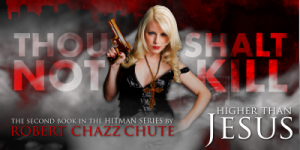
Click here to get Higher Than Jesus, #2 in The Hit Man Series

Click here to get Higher Than Jesus, #2 in The Hit Man Series

~ Robert Chazz Chute is a complex character, better suited to minimal human interaction. However, I’m friendly on Twitter. Follow me @rchazzchute. I tweet about writing, books and publishing.

Filed under: writing tips, , , , , , , , , , , , , , , , , , , , , , , , , , , , , , ,

What to do now that #NaNoWriMo is done

By the way, Crack the Indie Author Code 2nd Edition is out in paperback at $9.99. Smaller format, with jokes.

By the way, Crack the Indie Author Code 2nd Edition is out in paperback at $9.99. Smaller format, but still has lots of jokes.

Start another book. Brainstorm or sketch out another book outline or write a short story or just sit down and see where else you can go at the keyboard. Keep that feather pen scratching. Keep going. 

People will tell you to celebrate. Writers (because we aren’t “people”) will ask, “What else ya got?”

You could take a break, sure. But now that you’ve done NaNoWriMo, don’t you feel you’ve got a good habit going? Habits are hard to break into. To get into the daily writing habit takes practice, just like you’ve been doing all this month. Why stop now? To publish, you must write a lot, rewrite, revise and edit. Good habits are too easy to drop for you to waste all that behavioural inertia you have steaming in your skull engine.

Now isn’t the time to put your feet up.

If you still have some scenes from your NaNoWriMo project that you didn’t fill in right away, you can do those now. Now is the perfect time. The context is still fresh in your mind. Tackle any empty spaces you’ve left behind so when you come back to it, you won’t become perplexed and stymied later. Otherwise, leave your NaNoWriMo manuscript alone.

Why am I telling you to start a new project as quickly as you can?

Because someone might be tempted to dive right back in so they have a novel by Christmas. You know you need some time to cogitate while the manuscript rests for a bit. Otherwise, the Nano haters will run in circles with their hands over their ears screaming, “I told you so!” None of us wants those killjoys to be right.

Besides, if you go back too soon, you might be discouraged at how much work the book needs. Or worse, some might think their rush job is still brilliant. That’s lethal to ever having anyone tell you they’re a fan of your work.

And now for the tough stuff. I’m asking that you hold two contradictory ideas in your mind at one time and act accordingly.

1. Congratulations! You beat NaNo! Good on you! I bet there were days when the words came quickly and days where it felt like your brain was full of molasses. However, you faced down time management problems and got it done anyway. Sometimes it wasn’t easy, yet, you got past 50,000 words! You did it! This is a huge accomplishment!

and

2. Writing a little less than a couple of thousand words a day is no big deal.

Yes, some writers are more precious about their word count and make a great show of how slow they can produce. Mostly? I suspect they’re counting procrastination time as writing time. Screw that. I come from a journalistic background where deadlines are not livelines. We slam it in and knock it out and we’re good.

At least take that attitude with the first draft so you’ll have something to gut and edit. Blank screens have no atoms and pixels bouncing off each other to create new neural pathways and fresh angles to feed reader rapture. The first draft is usually simple, straight narrative. I always find the jokes, dialogue and theme in the second pass.

Professional writers write to deadlines all the time and they do so consistently.

You know that now, so it’s not about what “they”, the writers, do anymore. It’s what you do because you’re a writer. Keep going.

We’re creative. Writing’s what we do to wield god powers and get back at our brothers and sisters. We do it because it’s much cooler at the Christmas party to answer “What do you do?” with, “I write.” Say that and you’ve got a conversation. (Try explaining your wage ape existence in middle management to a hapless stranger and they’ll run for the punch bowl.)

We do it for play, for love and money and hope and for readers. It’s fantastic to find a scene to write that, even as you’re knocking it out, you say, “This! This will melt their faces and make them want to read me for the rest of their lives and tell all their friends! Ta-freakin’-da!

Mostly, writing is what we do because it is who we are.*

*If you didn’t carry out NanoWriMo’s challenge this November, what better testament to your mettle than to do it on your own? Now. You’ll feel more smug and self-righteous this time around. There are twelve months in a year. You don’t have to risk waiting another year for the next party bus to take you to your life’s to-do list.

See you in the trenches in the morning

with 3,000 more words. If it’s a bad day.

Yes, you may stop writing

when you’re out of blood.

Season One of This Plague of Days is the siege. Sutr-X was the pandemic. Sutr-Z's next and it's coming for you and the Queen's corgis.

Season One of This Plague of Days is the siege. Sutr-X was the pandemic. Sutr-Z’s next and it’s coming for you and the Queen’s corgis.

~ Robert Chazz Chute wrote a bunch of beastly books, including This Plague of Days. Season One’s in paperback. If you’re a writer looking for more inspiration, Robert also recommends Crack the Indie Author Code. But he would say that since he is me and we’re all about inspiring writers not to be weak. We’re all about the conquering and hefting the bale and writerly whatnot. And writing about ourselves in the third person apparently.

What? Still waffling? Still? After all that? Holy Jebus! Read this review of Crack the Indie Author Code then, for the love of Thor and for the love of the sweet consumer that is you and your writing career! And your family’s writing career. Don’t forget to get Mom one for Christmas, too.

Filed under: NanNoWriMo, , , , , , , , , , , , , , , , , , ,

#NaNoWriMo: Take a chance. Deliver.

I’ve finally begun reading Stephen King’s 11/22/63: A Novel.

Feeling a bit burnt out, I reached for an old reliable author to get me into relaxed creativity mode. The fire in the wood

Stephen King at the Harvard Book Store.

Stephen King at the Harvard Book Store. (Photo credit: Wikipedia)

stove is burning bright and hot as a cold blizzard’s squalls pull at the house. Under my wool blanket, I’m cozy and this book feels comfortable, too. Different story, same old friend in King. I’m one of his Constant Readers. To my delight, King has an Easter egg for writers right off the top. 

His hero, a teacher grading essays, complains about his students “writing like little old ladies and little old men.” Heh. Yeah, I know exactly what he means: Grammar and spelling correct, but boring. Tried and true narrative, but too safe. I want surprises. The development of the story has to be logical, sure, but please, take a chance! Dare to take the reader by the hand and shove them on the roller coaster they didn’t plan to get on. Give them the adventure they didn’t know they wanted.

For instance, in Season One of This Plague of Days, I did a lot of plausible things with strange characters (and I put the implausible in a context that makes it believable.) In Season One, you see a kid on the autistic spectrum operating in our world (i.e. at the end of it.) That was cool, but to heat up the narrative and quicken the pace, I had to go deeper into the implausible and still attempt to make it as believable as it was fanciful. 

In Season Two, the story takes some new turns and we’re in Jaimie Spencer’s world more than he is in ours. Though many people loved Jaimie in Season One, I wasn’t interested in making Two a copy of One. If One is a siege and Two is basically The Road, I had to take the crazy train to places people hadn’t seen before in an apocalypse. The virus that came to kill humanity keeps evolving and that takes us down unfamiliar roads. The Plaguers and I are happy with it.

People love Same Thing Only Different. Too different is a gamble, but some gambles pay off.

Changing a character people love is uncomfortable at times, but certainly do it if the story demands it. (By the way, nobody loves Jaimie more than I do, but he ends up doing a lot of questionable things for a Christlike figure.) I demanded development and change, so I got dreams, a touch of magic and some big questions for the surviving humans caught in the teeth of the gears of existence. If Sartre could read my apocalypse over a lunch of cold milk, ham sandwiches and angst, I think it would spark an interesting discussion about the existential subtext of ambition versus chaos theory. You know…sliding in the thin spaces amongst the bloody zombie attacks, scary new species and terrorized, grieving humans.

Dare to be wrong and, surprise! You’re right.

Sometimes it’s just simple mechanics where writers wimp out and opt for their grammar book over Art with a capital A. In Higher Than Jesus, for instance, a character uses the non-word “father-in-laws”. The correct plural is “fathers-in-law,” of course. Trust your readers to figure out that you know when you’re wrong. Better to stick with what’s true rather than what’s correct. The speaker of “father-in-laws” is an old, homeless guy whose education isn’t terrific. Talking like a Harvard law professor does not fit, so wrong is right.

Most readers will go along and the very few who will think you’re an idiot were never going to like your work, anyway. Grammar fascists don’t read for the enjoyment of reading, so relax and focus on the readers who are with you for the right reason. That reason is Story (and to forget we’re all going to die, and maybe soon, in Death’s razor claws and unforgiving, crushing jaws.)

I like prose that is edgy. Lots of book lovers love it when we’re gutsy.

I like Chuck Palahniuk a lot, perhaps especially when he cruises the experimental. I like much of Norman Mailer’s work for its simplicity. However, I love Stephen King. The narrative is straight A to B. Snobby readers might call it “muscular” or “workmanlike.” That’s old code for not “literary” enough or too pulpy by half. But who do you want telling you a story? An arid auteur who tells it correctly or a writer who get it across right? The writing I’m talking about is visceral. It affects you. It makes you think but it doesn’t have to call attention to itself too much. Have something to say and mean it. Lofty’s fine if your feet stay on the ground. 

Don’t give me fancy writing tricks. Tell me the story, please.

You know all those New Yorker short stories with the super-opaque endings where it’s so very arty you can’t figure out what the hell the last paragraph is supposed to mean? Where they try to trick you into thinking vague ends equal powerful conclusions? You’ve surely read those stories so bathed in antiseptic that they have no honest feeling or real humor. The words are all in the right order but they can’t make you care. It’s hard to define, but when a book has no heart, you know it. 

I suggest you do the opposite of all that empty scribbling and I’ll try to do the same.

A good short story, or a solid book, should deliver a punch and satisfaction (or at least anticipation of the next book in the series) with its last line. It should not generate a confused look on the face of an intelligent reader. 

A great story can be read aloud in the flicker of a dying campfire. If the story’s solid, your rapt audience will worry about the characters in the book. They will be blissfully unaware of the starving bear watching from the woods behind them, sniffing the air, drooling, and measuring the distance to the fading circle of light.

~ I’m Robert Chazz Chute: author, podcaster, perpetually worried. If you want to learn more about This Plague of Days, go to ThisPlagueOfDays.com. Or just zip over to AllThatChazz.com and buy some books. That would be good. Also, Season One of This Plague of Days is in paperback and Christmas is coming. I’ll let you connect the dots from there. Thanks!

Filed under: NanNoWriMo, Writers, writing tips, , , , , , , , , , , , , , , , , , , , , , , , , , ,

#NaNoWriMo: Story stuck and stalled? Try this.

You’ll probably get stuck from time to time. Most everyone does, so don’t panic.

If you get stuck often, outline more to save writing time and stay on track. Keep in mind that outlines are merely guidelines. You’re just dating your outline casually. It’s not serious and you don’t have to marry it. With the shadow of commitment gone, you still have your free and fun, bright and shiny creative mojo working for you.

I’m a pantser, but I do have an idea where my stories are headed. We may take a winding trip to get to our destination, but we will get there, hoping we won’t get stuck and be forced to back up thirty pages or so before we can move forward again. I’ve had to do that. It sucks, sucks away forward momentum and saps confidence. So let’s crash through that mental block and get unstuck.

Solutions to get out of the ditch

Season One of This Plague of Days is the siege. Sutr-X was the pandemic. Sutr-Z's next and it's coming for you and the Queen's corgis, among others.

Season One of This Plague of Days is the siege. Sutr-X was the pandemic. Sutr-Z’s next and it’s coming for you and the Queen’s corgis, among others.

A random, alluring word, place, fact or event can give spinning wheels traction. For instance, the word “chiroptera” gave me a new direction when I wrote Season 2 of This Plague of Days. Sometimes I choose words, events or facts at random and noodle with them to see how they might fit into the narrative. Or I’ll draw from mythology, philosophy, politics or religion to discover new dimensions in the narrative.

Here’s the surprise: I always find a way to make those intriguing things fit naturally into my story.

I bet you can, too. Don’t load up on $10 words when a nickel word will do, of course…or at least don’t do it for its own sake or to show off. However, if something seemingly random can serve your story, use it (or dump it if it fails.) Readers like learning things as much as you do. They like characters with depth and to discover hidden significance behind meaning.

Get random

Autism, Latin, the Existential Abyss and references to Superman. That's pretty random, but it all fits.

Autism, Latin, the Existential Abyss and references to Superman. That’s pretty random, but it all fits.

This exercise in the writing process is about bouncing new electrical flashes through the writer’s brain, making new connections and getting synapses firing to see nonlinear possibilities. Frequently, you can find something new that influences the story simply by opening a dictionary and pointing. An atlas and a Wikipedia search might give you a random fact that sparks something. I found Gas City, for instance. The name alone captured my imagination and got me thinking about a new track to follow in Season 2. New characters and furious battles evolved from the way that slapped my brain.

If you’ve got an area of interest (baseball, plumbing, woodwork, salmon fishing, animal husbandry, whatever) work it in to give your characters depth. I’ve got a sensitive soldier with expertise in military history who shows up in the zombie apocalypse. I’ve also got an Irish cop from a tiny Irish resort. The place informs the character. These are the sort of factors that make the people on the page real. Jack (Jacqueline) Spencer majored in Elizabethan poetry. That makes her feel pretty useless when society collapses, but her development now has an arc. Up from zero, she gains experience on the road east to a hoped for haven from the apocalypse.

For me? It’s pathology that fascinates.

I studied anatomy first and was awed by our biological complexity. Then I studied Merck’s Manual and I’ve been a hypochondriac ever since. It’s startling how fragile we are, so pathology often finds its way into my books, one way or another. I know a lot about how the body breaks, so I’m sure you can guess how that might play into a crime novel.

I know a lot about migraines (and the many variations of headaches.) His inability to act shows up in one of my WIPs and becomes crucial to the protagonist’s predicament when the cops come calling, asking for an alibi. My protagonist in This Plague of Days is autistic which, naturally, gives him a unique point of view on the end of the world. Another character has Desmoid tumours. This is a rare condition, but it turns out to be very relevant to the story. Her disease saves her from a worse fate than Desmoid tumours (in a way I can’t divulge yet, of course. That’s Season 3 stuff.)

Take a fragment and build your next chapter around it. Make the fragment an element.

These general suggestions are random sparks. If an atlas or a dictionary or a quick Google search can make your story catch fire, and if you can make these new variables seamless, you’ll find their inclusion can get you unstuck.

Therefore:

a summer camp in Columbus, Ohio with too many mosquitoes

the ruins of a castle hidden under heavy snow

a rusted can opener, forgotten in the kitchen’s junk drawer

a tippy chair with one short leg

angina

Captain Cooke’s death

her mother’s wedding ring inscription

Try one of some of those for a start. How might they fit in your narrative? Keep going and don’t worry if you get stuck. The next step will come to you and, if not, go find that next step. Finish your story.

Tips and inspiration for the writer's journey to publication.

Tips and inspiration for the writer’s journey to publication.

~ Hi. I’m Robert Chazz Chute. I wrote a couple of books full of inspiration to get writers to get their books done. I also write about a kid on the autistic spectrum facing the end of the world, zombies who aren’t really zombies and vampires who aren’t really vampires. There are also jokes and Latin proverbs. It’s…oddly engaging and does not suck. See all the books here.
I also host the All That Chazz podcast and the Cool People Podcast. To learn more about This Plague of Days, go to ThisPlagueOfDays.com.

Filed under: NanNoWriMo, Writers, Writing exercise, writing tips, , , , , , , , , , , , , , , , , , , , , , ,

Bestseller with over 1,000 reviews!
Winner of the North Street Book Prize, Reader's Favorite, the
Literary Titan Award, the Hollywood Book Festival, and the
New York Book Festival.

http://mybook.to/OurZombieHours
A NEW ZOMBIE ANTHOLOGY

Winner of Writer's Digest's 2014 Honorable Mention in Self-published Ebook Awards in Genre

The first 81 lessons to get your Buffy on

More lessons to help you survive Armageddon

"You will laugh your ass off!" ~ Maxwell Cynn, author of Cybergrrl

Available now!

Fast-paced terror, new threats, more twists.

An autistic boy versus our world in free fall

Suspense to melt your face and play with your brain.

Action like a Guy Ritchie film. Funny like Woody Allen when he was funny.

Jesus: Sexier and even more addicted to love.

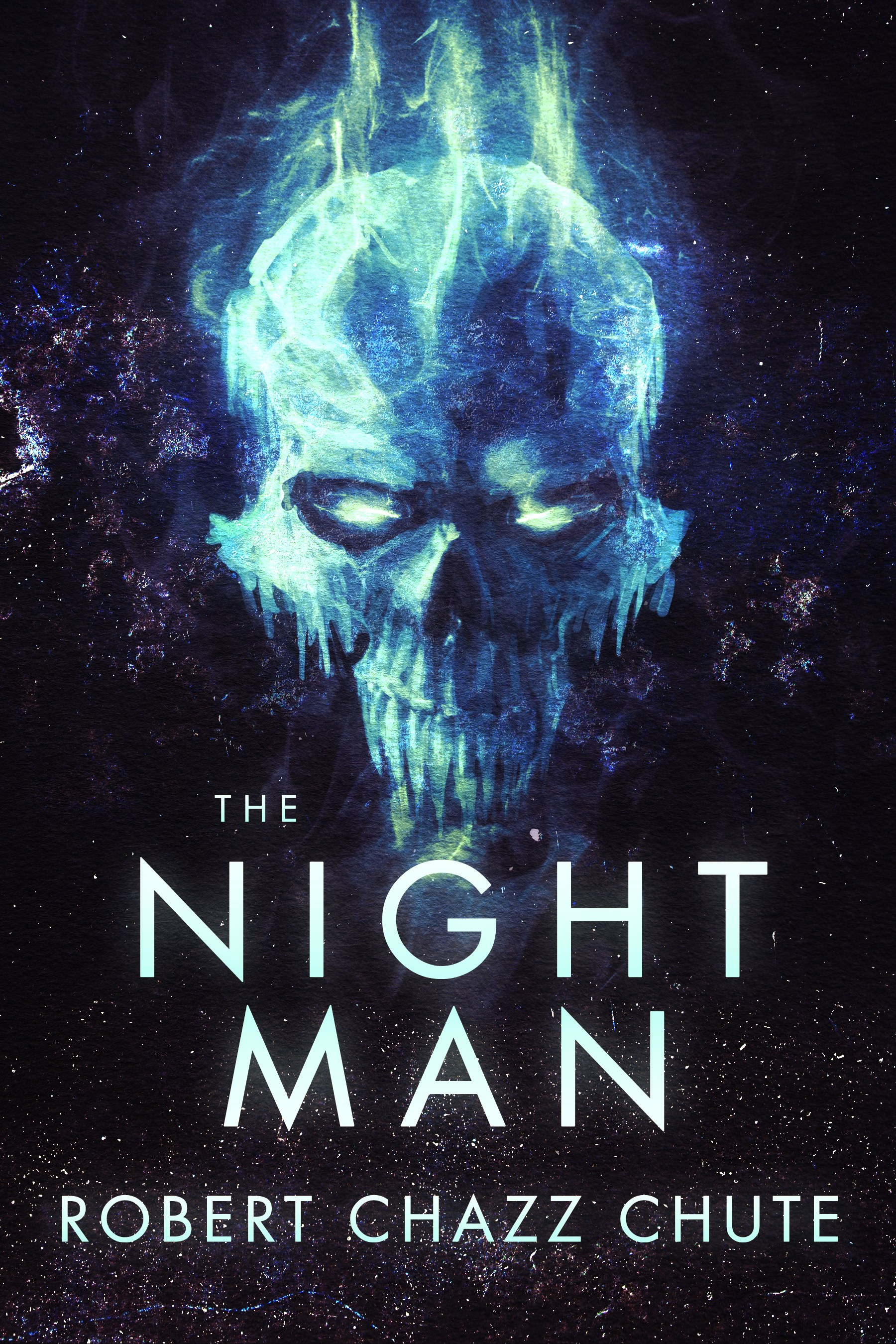
You can pick this ebook up for free today at this link: http://bit.ly/TheNightMan

Join my inner circle at AllThatChazz.com

See my books, blogs, links and podcasts.

Enter your email address to follow this blog and receive notifications of new posts by email.

Join 2,063 other subscribers