C h a z z W r i t e s . c o m

See all my books at AllThatChazz.com.

How to crack writer’s block. No whining. No excuses.

There are many distractions between your bed and your writing desk. Some suggestions to discipline the monkey mind:

1. Well, write in bed then! (Pee bottle or diapers optional.)

2. Work on a computer without Internet access. Unplug the modem or get your pet rat to chew on the wires if necessary.

3. Get your spouse to activate the parental controls (so they have the code). Congratulations! Your distracting porn addiction just vanished. 

4. Commit to scheduling writing time just as you would a doctor’s appointment, the gym or any other important job. You know your writing is important work, too, right?

5. Make your commitments public. Failure yields public humiliation. Success gets you a reward. Make a bet with a writing buddy or do writing sprints in social media. Report your progress, or lack of it, so you’ll do better tomorrow.

6. Defend your writing time. Wield dual ice axes, if necessary. A sign on that door you close marking your designated writing time makes a clear stand. Your writing retreat does not have to be an expensive, remote cabin in the Rockies. It’s as nearby as the word, “No.”

7. Get out of the house and write elsewhere: Starbucks, the library or at your day job. (Write on your lunch hour if the boss keeps close tabs on you.)

8. Wear headphones and use the Brainwave apps that help you focus. Or pump nothing into your headphones. Or be like Stephen King and rock out to Grand Funk Railroad as you compose. Use WriteRoom. Whatever works for you.

9. Unplug and go write the first draft by hand. Some writers feel the words come easier when they’re connecting brain to arm to hand to pen to paper.

10. Work with your biorhythms, but find your sweet spot when your focus is best: late at night or early morning often allows you to work without interruption.

11. Got a writing group? Shape it so you can make it do double duty: make it a day care club. When my kids were little, playdates (and their nap time) were opportunities to get work done. Communal babysitting gets the kids entertaining each other and allows the writing to continue when you organize and rotate the playdates from house to house.

12. Protect your brain. This goes beyond time management. For instance, when you notice you need a nap after eating bread, take the hint. Maybe it’s the gluten making you sleepy. Thanks to a helpful reader, I’m trying a couple of products from Onnit.com and I do feel and think better lately. Exercise doesn’t just get blood to your body’s muscles. Better blood supply revs up brain muscle, too. Since dumping processed foods, losing weight and upping exercise, I’m sharper. The walls are alive, I see into souls and I write harder and longer.

13. Just start. You’re full of resistance and distractions and excuses at first, but once you begin, the words and worlds will begin to flow. Set a timer and tell yourself you’ll write for ten minutes. What? You can’t take ten minutes? Sure you can. Don’t be a weak whiner! Take ten minutes. By the time the timer goes off, you won’t want to stop.

14. Write in short, energetic bursts. Like going to the gym, many people feel they can’t do anything worthwhile unless they have big blocks of time to commit to their projects. For many of us who don’t have that luxury (and hardly anyone has that luxury) we’re actually sabotaging ourselves with that attitude. Consistency works better than bingeing in the long-term.

15. Take a course, go to a conference or read a book to energize yourself and get excited about writing again. We moan too much about writing and forget how fun it is until we’re back to doing it. If you aren’t having fun writing, you must be doing it wrong.

BONUS

Most important, remember why you’re doing this. Hold on to the Why so you’ll overcome obstacles to the How. You are not merely a consumer. You’re a productive writer, pursuing your dreams and telling stories for fun and profit. Don’t put your dreams aside only so others can achieve their goals. You’re important, too.

Filed under: getting it done, Writers, writing tips, , , , , , , , ,

What to do now that #NaNoWriMo is done

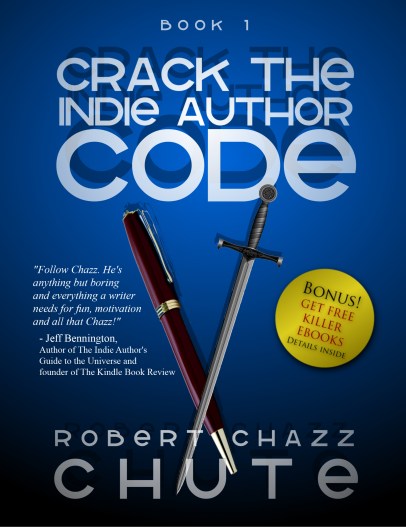
By the way, Crack the Indie Author Code 2nd Edition is out in paperback at $9.99. Smaller format, with jokes.

By the way, Crack the Indie Author Code 2nd Edition is out in paperback at $9.99. Smaller format, but still has lots of jokes.

Start another book. Brainstorm or sketch out another book outline or write a short story or just sit down and see where else you can go at the keyboard. Keep that feather pen scratching. Keep going. 

People will tell you to celebrate. Writers (because we aren’t “people”) will ask, “What else ya got?”

You could take a break, sure. But now that you’ve done NaNoWriMo, don’t you feel you’ve got a good habit going? Habits are hard to break into. To get into the daily writing habit takes practice, just like you’ve been doing all this month. Why stop now? To publish, you must write a lot, rewrite, revise and edit. Good habits are too easy to drop for you to waste all that behavioural inertia you have steaming in your skull engine.

Now isn’t the time to put your feet up.

If you still have some scenes from your NaNoWriMo project that you didn’t fill in right away, you can do those now. Now is the perfect time. The context is still fresh in your mind. Tackle any empty spaces you’ve left behind so when you come back to it, you won’t become perplexed and stymied later. Otherwise, leave your NaNoWriMo manuscript alone.

Why am I telling you to start a new project as quickly as you can?

Because someone might be tempted to dive right back in so they have a novel by Christmas. You know you need some time to cogitate while the manuscript rests for a bit. Otherwise, the Nano haters will run in circles with their hands over their ears screaming, “I told you so!” None of us wants those killjoys to be right.

Besides, if you go back too soon, you might be discouraged at how much work the book needs. Or worse, some might think their rush job is still brilliant. That’s lethal to ever having anyone tell you they’re a fan of your work.

And now for the tough stuff. I’m asking that you hold two contradictory ideas in your mind at one time and act accordingly.

1. Congratulations! You beat NaNo! Good on you! I bet there were days when the words came quickly and days where it felt like your brain was full of molasses. However, you faced down time management problems and got it done anyway. Sometimes it wasn’t easy, yet, you got past 50,000 words! You did it! This is a huge accomplishment!

and

2. Writing a little less than a couple of thousand words a day is no big deal.

Yes, some writers are more precious about their word count and make a great show of how slow they can produce. Mostly? I suspect they’re counting procrastination time as writing time. Screw that. I come from a journalistic background where deadlines are not livelines. We slam it in and knock it out and we’re good.

At least take that attitude with the first draft so you’ll have something to gut and edit. Blank screens have no atoms and pixels bouncing off each other to create new neural pathways and fresh angles to feed reader rapture. The first draft is usually simple, straight narrative. I always find the jokes, dialogue and theme in the second pass.

Professional writers write to deadlines all the time and they do so consistently.

You know that now, so it’s not about what “they”, the writers, do anymore. It’s what you do because you’re a writer. Keep going.

We’re creative. Writing’s what we do to wield god powers and get back at our brothers and sisters. We do it because it’s much cooler at the Christmas party to answer “What do you do?” with, “I write.” Say that and you’ve got a conversation. (Try explaining your wage ape existence in middle management to a hapless stranger and they’ll run for the punch bowl.)

We do it for play, for love and money and hope and for readers. It’s fantastic to find a scene to write that, even as you’re knocking it out, you say, “This! This will melt their faces and make them want to read me for the rest of their lives and tell all their friends! Ta-freakin’-da!

Mostly, writing is what we do because it is who we are.*

*If you didn’t carry out NanoWriMo’s challenge this November, what better testament to your mettle than to do it on your own? Now. You’ll feel more smug and self-righteous this time around. There are twelve months in a year. You don’t have to risk waiting another year for the next party bus to take you to your life’s to-do list.

See you in the trenches in the morning

with 3,000 more words. If it’s a bad day.

Yes, you may stop writing

when you’re out of blood.

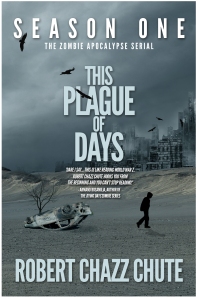
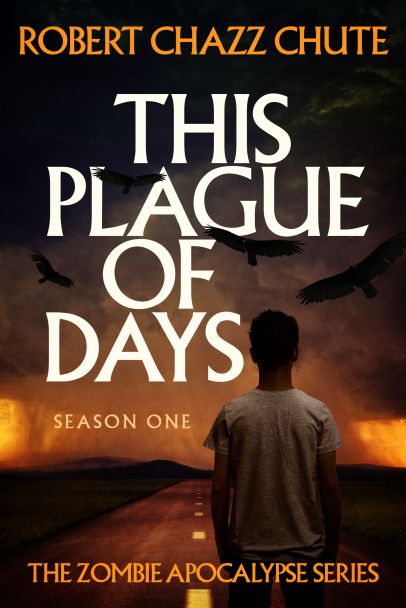
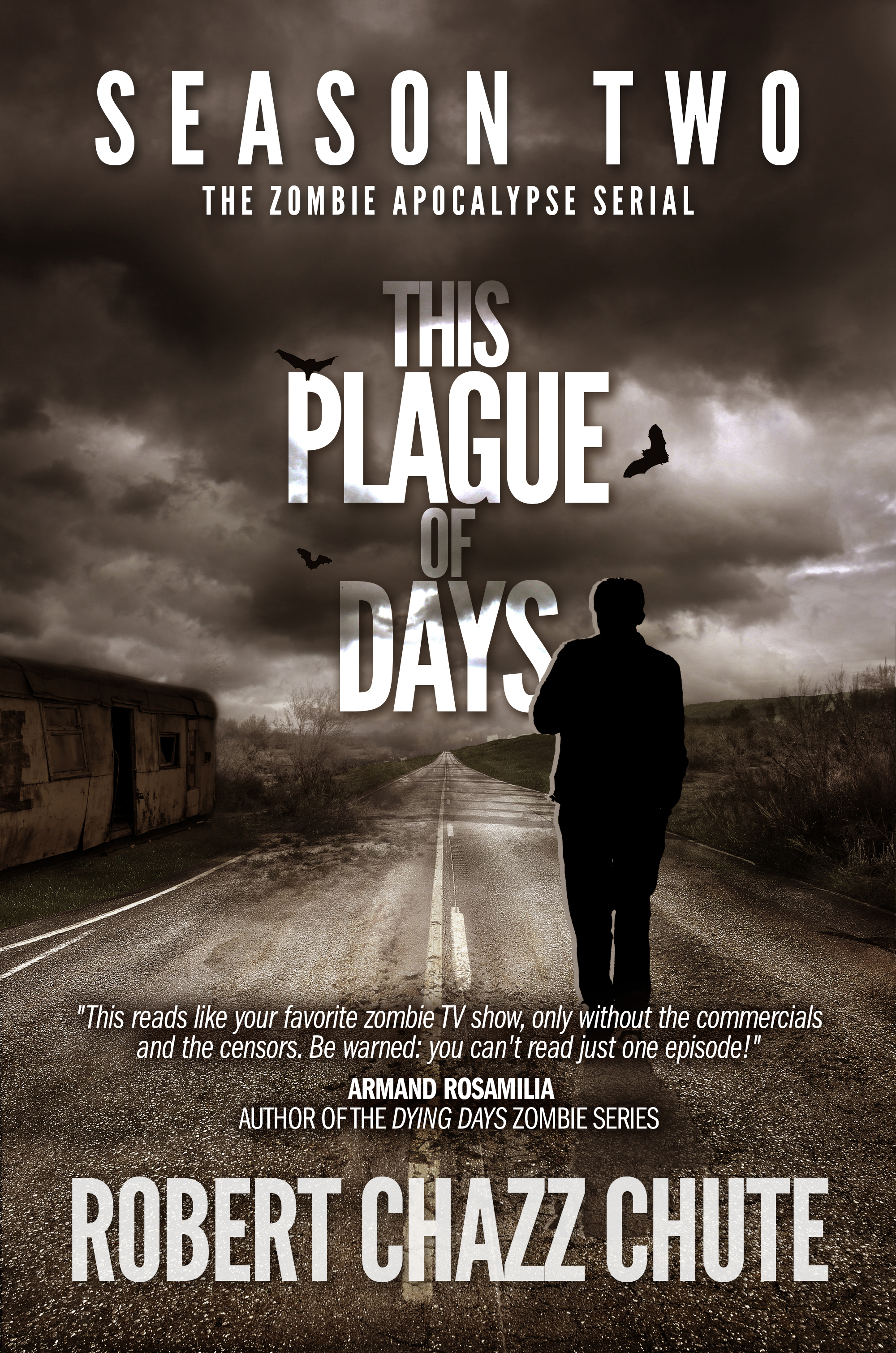
Season One of This Plague of Days is the siege. Sutr-X was the pandemic. Sutr-Z's next and it's coming for you and the Queen's corgis.

Season One of This Plague of Days is the siege. Sutr-X was the pandemic. Sutr-Z’s next and it’s coming for you and the Queen’s corgis.

~ Robert Chazz Chute wrote a bunch of beastly books, including This Plague of Days. Season One’s in paperback. If you’re a writer looking for more inspiration, Robert also recommends Crack the Indie Author Code. But he would say that since he is me and we’re all about inspiring writers not to be weak. We’re all about the conquering and hefting the bale and writerly whatnot. And writing about ourselves in the third person apparently.

What? Still waffling? Still? After all that? Holy Jebus! Read this review of Crack the Indie Author Code then, for the love of Thor and for the love of the sweet consumer that is you and your writing career! And your family’s writing career. Don’t forget to get Mom one for Christmas, too.

Filed under: NanNoWriMo, , , , , , , , , , , , , , , , , , ,

#NaNoWriMo: Take a chance. Deliver.

I’ve finally begun reading Stephen King’s 11/22/63: A Novel.

Feeling a bit burnt out, I reached for an old reliable author to get me into relaxed creativity mode. The fire in the wood

Stephen King at the Harvard Book Store.

Stephen King at the Harvard Book Store. (Photo credit: Wikipedia)

stove is burning bright and hot as a cold blizzard’s squalls pull at the house. Under my wool blanket, I’m cozy and this book feels comfortable, too. Different story, same old friend in King. I’m one of his Constant Readers. To my delight, King has an Easter egg for writers right off the top. 

His hero, a teacher grading essays, complains about his students “writing like little old ladies and little old men.” Heh. Yeah, I know exactly what he means: Grammar and spelling correct, but boring. Tried and true narrative, but too safe. I want surprises. The development of the story has to be logical, sure, but please, take a chance! Dare to take the reader by the hand and shove them on the roller coaster they didn’t plan to get on. Give them the adventure they didn’t know they wanted.

For instance, in Season One of This Plague of Days, I did a lot of plausible things with strange characters (and I put the implausible in a context that makes it believable.) In Season One, you see a kid on the autistic spectrum operating in our world (i.e. at the end of it.) That was cool, but to heat up the narrative and quicken the pace, I had to go deeper into the implausible and still attempt to make it as believable as it was fanciful. 

In Season Two, the story takes some new turns and we’re in Jaimie Spencer’s world more than he is in ours. Though many people loved Jaimie in Season One, I wasn’t interested in making Two a copy of One. If One is a siege and Two is basically The Road, I had to take the crazy train to places people hadn’t seen before in an apocalypse. The virus that came to kill humanity keeps evolving and that takes us down unfamiliar roads. The Plaguers and I are happy with it.

People love Same Thing Only Different. Too different is a gamble, but some gambles pay off.

Changing a character people love is uncomfortable at times, but certainly do it if the story demands it. (By the way, nobody loves Jaimie more than I do, but he ends up doing a lot of questionable things for a Christlike figure.) I demanded development and change, so I got dreams, a touch of magic and some big questions for the surviving humans caught in the teeth of the gears of existence. If Sartre could read my apocalypse over a lunch of cold milk, ham sandwiches and angst, I think it would spark an interesting discussion about the existential subtext of ambition versus chaos theory. You know…sliding in the thin spaces amongst the bloody zombie attacks, scary new species and terrorized, grieving humans.

Dare to be wrong and, surprise! You’re right.

Sometimes it’s just simple mechanics where writers wimp out and opt for their grammar book over Art with a capital A. In Higher Than Jesus, for instance, a character uses the non-word “father-in-laws”. The correct plural is “fathers-in-law,” of course. Trust your readers to figure out that you know when you’re wrong. Better to stick with what’s true rather than what’s correct. The speaker of “father-in-laws” is an old, homeless guy whose education isn’t terrific. Talking like a Harvard law professor does not fit, so wrong is right.

Most readers will go along and the very few who will think you’re an idiot were never going to like your work, anyway. Grammar fascists don’t read for the enjoyment of reading, so relax and focus on the readers who are with you for the right reason. That reason is Story (and to forget we’re all going to die, and maybe soon, in Death’s razor claws and unforgiving, crushing jaws.)

I like prose that is edgy. Lots of book lovers love it when we’re gutsy.

I like Chuck Palahniuk a lot, perhaps especially when he cruises the experimental. I like much of Norman Mailer’s work for its simplicity. However, I love Stephen King. The narrative is straight A to B. Snobby readers might call it “muscular” or “workmanlike.” That’s old code for not “literary” enough or too pulpy by half. But who do you want telling you a story? An arid auteur who tells it correctly or a writer who get it across right? The writing I’m talking about is visceral. It affects you. It makes you think but it doesn’t have to call attention to itself too much. Have something to say and mean it. Lofty’s fine if your feet stay on the ground. 

Don’t give me fancy writing tricks. Tell me the story, please.

You know all those New Yorker short stories with the super-opaque endings where it’s so very arty you can’t figure out what the hell the last paragraph is supposed to mean? Where they try to trick you into thinking vague ends equal powerful conclusions? You’ve surely read those stories so bathed in antiseptic that they have no honest feeling or real humor. The words are all in the right order but they can’t make you care. It’s hard to define, but when a book has no heart, you know it. 

I suggest you do the opposite of all that empty scribbling and I’ll try to do the same.

A good short story, or a solid book, should deliver a punch and satisfaction (or at least anticipation of the next book in the series) with its last line. It should not generate a confused look on the face of an intelligent reader. 

A great story can be read aloud in the flicker of a dying campfire. If the story’s solid, your rapt audience will worry about the characters in the book. They will be blissfully unaware of the starving bear watching from the woods behind them, sniffing the air, drooling, and measuring the distance to the fading circle of light.

~ I’m Robert Chazz Chute: author, podcaster, perpetually worried. If you want to learn more about This Plague of Days, go to ThisPlagueOfDays.com. Or just zip over to AllThatChazz.com and buy some books. That would be good. Also, Season One of This Plague of Days is in paperback and Christmas is coming. I’ll let you connect the dots from there. Thanks!

Filed under: NanNoWriMo, Writers, writing tips, , , , , , , , , , , , , , , , , , , , , , , , , , ,

My Year in Indie Publishing: Lessons learned

Just released! Paranormal, crime, weirdness and murdering Delusion.

Just released! Paranormal, crime, weirdness and murdering Delusion.

Hundreds of mugs of coffee and almond milk later…where am I now? I quit my part-time job to work at writing full-time. It’s been one year, one month and sixteen days. Today, a look back on the first year of Ex Parte Press and lessons learned:

1. I published Self-help for Stoners and Sex, Death & Mind Control first, just before I quit. I went with Bookbaby as the intermediary on those two. In hindsight, not the best choice. To change absolutely anything costs. I should have gone more DIY up front so I’d have more flexibility with those titles. (Also, their responses to my requests for information have been very slow.) Unless things improve with BB, I will pull them eventually and republish without the intermediation.

2. I published some short stories through Smashwords. Smashwords hasn’t paid off, though I think it will the more I publish through that platform. I hurt myself early on with a bad DIY cover. Short stories are a tough sell, but my collections sell better. (Oh, hey! Just published the definitive collection: Murders Among Dead Treeswhich is two previous ebooks plus much more, bonus commentary and a sneak peek. More about that later. Nice cover, huh? No more DIY covers for me! My graphics guy and go-to dude is Kit Foster. Check his portfolio.)

3. In the first few months of the year, I wrote a lot but worked on promotion too much, too soon. I should have allocated my time to get more books done and worry about promotion less on the front end. Writing more books and expanding your bookshelf is the only sure way of grabbing more eyeballs in the long run.

"You will laugh your ass off!" ~ Author of Cybrgrrl, Maxwell Cynn

“You will laugh your ass off!” ~ Author of Cybrgrrl, Maxwell Cynn

4. In May, in a simulcast across North America, I gave director Kevin Smith an autographed copy of  Self-help for Stoners. It now resides in his bathroom. Though I got onstage, I was still too shy about promoting myself and hampered the opportunity by getting offstage too quick. The follow-up press release campaign was a waste of money and time. The appearance on Smodco’s podcast was a better stab at being a publicity monster, but due to a mistake that wasn’t mine, that effort, too, was hobbled because it aired at the very end of the Valentine’s Day podcast. Personally, it was a very positive thing. Professionally, less so. (When I see Self-help for Stoners stats go up, I have to wonder if that’s a delayed positive outcome, though.)

5. I had a disappointing falling out with a publisher in June. Everything was peachy until the promised money didn’t arrive on the timetable agreed upon. I relearned a lesson I should have picked up by now: Don’t work with angry people (and, when they are uncommunicative, that doesn’t mean all’s well.) Good luck to them. I remain righteous.

"Worthy of Elmore Leonard with shades of Thomas Harris..."

“Worthy of Elmore Leonard with shades of Thomas Harris…”

6. By June I’d published another collection, The Dangerous Kind & Other Stories. In July, Bigger Than Jesus, my first crime novel, was ready.

I later discovered that TDK &OS had production issues. I think Scrivener used an earlier draft it shouldn’t have. As soon as I found out about it, we went into whirlwind mode, corrected the text and published a new edition of The Dangerous Kind & Other Stories. (Nonetheless, sales plummeted on that title. Nuts.)

I found some things I want to change in the paperback of Bigger Than Jesus, though the same problems didn’t appear in the ebook. Scrivener is a great program, but there’s still quite a learning curve. Next problem, finding an equally great and affordable program for editing print books. Formatting print books in Scrivener is too hard (at least for me.) 

7. I podcast Bigger Than Jesus through the summer, a chapter at a time. The podcast continues to grow and the last episode of 2012 (airing this week) will be #62. I’m pleased with it, but my mistake was to focus too much on marketing the first book. I’d named the podcast Self-help for Stoners (reasoning that at least I’d have an identifiable and easily entertained audience.) I later switched it to the All That Chazz podcast because my author site is AllThatChazz.com and the new title reflects the variety of whimsies I offer. The podcast has listeners worldwide, but I’m still most popular with the beautiful stoners of California.

A quick-moving plot with lots of surprises and a clear-eyed examination of addiction.

A quick-moving plot with lots of surprises and a clear-eyed examination of addiction.

8. By September, Higher Than Jesus, the second in the Hit Man Series was ready. I need to get more reviews, but the feedback tells me I’m on the right track (i.e. clever twists and reversals, even more funny dialogue, less swearing, more sex.) There’s a prejudice among some authors that a book has to take a long time to write for it to be any good. I don’t agree, if it’s the right book and the right writer. That’s one of the many points I argued in…

9. Crack the Indie Author Code and Write Your Book: Aspire to Inspire released this fall. I drew on years of experience from working in traditional publishing and I’d been writing about writing for years. It was going to be one book, but that proved too big and overwhelming. I made it into two books. Boiled down from more than 1,000 posts on this blog, I revised, revamped and added bonus and updated material. I need more sales and reviews, of course, but in the long-term, these two are a score on the non-fiction side of Ex Parte Press. I’m sure there will be more books in the Writing and Publishing Series in 2014.
Grab Crack the Indie Author Code here.

Grab Crack the Indie Author Code here.

So what was learned? This is Item #9. By now, you’ve no doubt noticed there’s always a kick in the teeth. I learned that when you farm out editing work to an unfamiliar editor who misses deadlines and doesn’t get back to you, don’t be surprised when you’re disappointed. When the manuscript finally arrived, she’d made four or five corrections toward the end (perhaps trying to make me think she’d read the whole thing.) That set production back two months so all that editing had to be accomplished by someone else.  A costly delay.

10. Anxious to publish, I had plans for two more books in 2012. I wanted to get on with revising the big book: my ambitious, dystopian, coming-of-age thriller. I also began writing the third in the Hit Man Series, Hollywood Jesus.
More tips and tricks to steer your authorship. This book is free to you until Saturday, Dec. 15! Please click to get it now.

More tips and tricks to steer your authorship.

Then I learned the most important lesson yet: Balance. My work schedule caused problems with my health. Family obligations were  ignored. You can work nineteen and twenty-hour days. I don’t recommend it for long. I slowed a little and took more time with Murders Among Dead Trees. I got stuck on a couple of the stories and needed to take my time to make them better. The short, “Another Narrow Escape”, flowed out all at once and came easily. Others needed tinkering. I took the time I needed and Murders Among Dead Trees is just out. That’s the last of my short story collections. People buy novels and series much more, so that’s what I will write.

I’ll release the next books in early 2013…but I’ll be more flexible about what “early” means. I’ll also wrestle with the kids more.

So, as 2012 draws to a close, I have eight books up on Amazon (that by February will mostly be available across all platforms, not just Amazon.) ChazzWrites.com is a finalist among the best self-publishing blogs of 2012. This morning, Roger Colby from Writing is Hard Work (say that a little louder, Candy! It sure is hard work!) nominated me for Blog of the Year. John the Aussie never misses an opportunity to hit the “like” button on my posts. The books on writing and publishing will help a lot of people and the Hit Man Series will distract many from their pain and doom as they enjoy hilarious and hardboiled revenge fantasies. Today, I’ve never been more poor, but I don’t think I’ve been happier. 

What did I do right in 2012? I wrote every day and consistently. Then I rewrote. I got Dave Jackson to help me with my podcast and I got Kit Foster to design my covers. I asked for help when I realized I couldn’t do it all. I gathered allies and made a lot of friends through this blog. This is good. This is what beginning again looks like. It’s only my first year in indie publishing, not the last.

Never mind the Mayans. Year Two starts now. Tally-freakin’-ho!

Filed under: publishing, , , , , , , , , , , , , , ,

#NaNoWriMo: Tools to get you back on track & stay inspired

Right about now, if you’re doing National Novel Writing Month, you’re feeling a little tired and you have two complaints: Where do I take my story from here and how can I better manage my time to meet my writing goals?

I can help. First, here’s a link to my guest post on Masquerade Crew today. This excerpt from my book, Crack the Indie Author Code, is an easy, fun and  genuinely intuitive exercise that will turbocharge your NaNoWriMo efforts and make your manuscript fresh. I call the strategy my Trio approach to story creation. You’ll love it and your readers will, too.

And now your free time management tool: The SlimTimer. I found it through The Nerdist Way by Chris Hardwick. (With all those Star Wars jokes and references in my books, you must have guessed my nerd secret, huh?) This tool will help you track your activities and find time. Only what is measured can be improved. Measure your day with this timer.  Then make time you didn’t know you had, get back on track and stay on track.

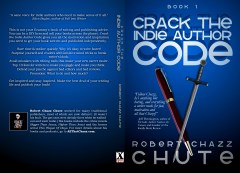
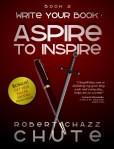
Crack the Indie Author Code is Book One. Write Your Book: Aspire to Inspire is Book Two in my series on writing and publishing. For fresh inspiration, I offer this uber cool image to motivate you to persist with writing your book so you, too, can have a cool ad like this!

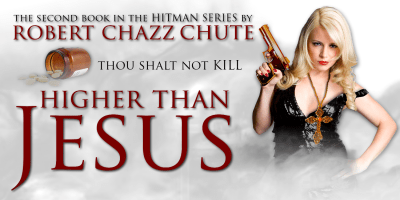
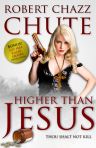
Click the image to get Higher Than Jesus

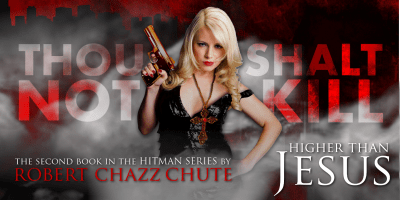
Often when we think of graphic designers, we only think about book covers. Kit Foster from KitFosterDesign.com sent me this ad this morning. I’m using the white variation above in the Orangeberry book tour. Pretty cool, huh? Kit is not only an author and the sponsor of the All That Chazz podcast, he’s also an amazing designer. He does book covers, web banners, Quote Art and much more. If you have a podcast, you need art. If you need an ad, check out Kit’s portfolio and go get help. Great images grab eyeballs.

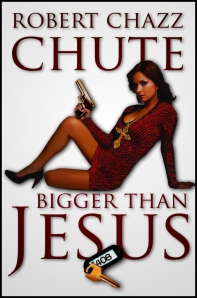
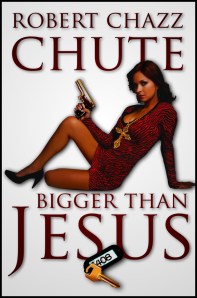
Graphic designers can do more than just book covers. Kit is a great consultant. For instance, it was he who suggested that I add a tag line to my covers using the ten commandments to reflect some aspect of the plots through the series. In Bigger Than Jesus, it was “Thou shalt not steal.” In Higher Than Jesus, it’s “Thou shalt not kill.” In the next book, Hollywood Jesus, it’s “Thou shalt not covet.” That tweak added a lot to the look and tone I wanted to achieve. Tweak your covers. Don’t let them lie there, weak and ugly.

I’m so excited about how my books are turning out (which explains how linktastic I am today), I want you to be excited about your books, too. Go write one.

Filed under: publishing, , , , , , , , , , , , , , , , , , , , , , , , , , , , , ,

#NaNoWriMo Tip: How to blast out of the gate

Find tons more tips and inspiration here.

As you write your manuscript, grab your readers by the eyeballs right away. Here’s how:

Crack the Indie Author Code and Write Your Book: Aspire to Inspire both have bonus offers of free ebooks. Buy two books and you get four!

1. Start late and bait the hook. When writing guides say, “Come in late,” they mean to bring the reader into the action quickly without throat clearing. Stick your media in the res.

2. “Throat clearing” means  focussing the back story and distractions more than the action. (Usually weak first draft paragraphs tarry too long over the weather, flora and fauna.)

3. Instead of taking too long to set the scene, let character be revealed through action and dialogue.

4. Look for the unusual and strong verbs in to give your hook strong bait.

5. Preserve mystery to pull readers in. Don’t give it all away at once. For instance, if your protagonist is chasing someone through a dark warehouse in your opening paragraph, don’t tell me she is FBI right away. Focus on the pursuit and the danger around the next corner. Let the details leak through. It’s much more intriguing to have a woman chasing a bad guy when you don’t know right away that she’s on the righteous side of justice, has a ton of training and resources and her back up is on the way.

Free to download Nov 5 to Nov 9, 2012.

Here’s my opening to Bigger Than Jesus (which, ahem, happens to be free to download here from Monday, November 5 to Friday Nov. 9.)

Water drips from the soot-black gargoyle’s tongue like thin saliva, as if the grotesque statue is mocking you and eager for blood. Panama Bob Lima clings to the gargoyle, using it as a shield. You are on a thin ledge on the side of a very high building and for once you wish you wore your Nikes instead of twelve-hundred dollar Tanino Crisci shoes. So far, this job is not going at all as planned.

Rationale: A mood is set in an unusual situation. Weather (the water through the gargoyle) is mentioned because it’s relevant to the danger the protagonist faces and we get a taste of the crazy to come. The second-person, present tense brings the reader into the middle of the action and provides immediacy. The second-person present tense and reference to the ominous gargoyle is purposely disorienting in the first sentence, just as the threat of the long fall is dizzying. It’s an opening that poses questions: What is the job and why the pricey shoes? The protagonist is probably not there to help since Panama Bob uses the gargoyle as a “shield”. The opening tells the reader they can expect a fast pace and the ironic last line is a clue that the story won’t be told straight. Dry humor is ahead.

6. Open every chapter with a baited hook and action. Give readers action that propels and compels and you’re on your way to a better book.

Higher Than Jesus, the follow-up to Bigger Than Jesus, is available here.

~ Robert Chazz Chute is the author of five books of suspense and two writing guides that, if you’re reading this far into this blog, you obviously need. They are Crack the Indie Author Code and Write Your Book: Aspire to Inspire. Check out all of Chazz’s books here.

Filed under: publishing, , , , , , , , , , , , , , , , , , , , , , , , , , , ,

#NaNoWriMo: The key tip to write a much better book

When we plunge into writing a book, there’s lots of enthusiasm on the front end of the challenge. But how will we fill all those pages, especially in that saggy middle where we really don’t know exactly what’s going to happen? How will we give our story verisimilitude? How will we make readers care about our characters and give the book depth? Where will all the conflict come from? How will we sustain our enthusiasm all the way to the end of NaNoWriMo?

There is a solution that many writers shy away from to their detriment. They want their protagonists to be likeable so they make them Christlike figures. This saps a lot of juice from your book. Here’s why you must make your characters more flawed:

1. With flawed characters, there’s much more to write about. A former writer on Seinfeld said recently that stories that focussed on Jerry were always the hardest to write because he had the fewest flaws. George and Kramer and Elaine had plenty of neuroses and quirks, so that allowed the writers plenty of material with which to play. Give your detective an obsession or a hobby that doesn’t help him. Nero Wolfe had the orchids upstairs. Monk has OCD. Everybody has a blind spot or maybe even a fatal flaw that your plot can turn on.

2. Flawed characters have an interesting past that has a bearing on the present and future. My hit man in Bigger Than Jesus and Higher Then Jesus was abducted and abused as a child. Those scars interfere with his love life now. He wears very expensive suits and can’t stand to have sex without his clothes on because he has emotional scars. He also doesn’t want a lover to see the physical scars across his chest. His psychological quirks go deep, dealing with PTSD, addiction and his relationships with women. He falls in love too quickly always searching for a woman he can idolize and worship. Or is he really looking for mom?One of my favorite chapters in Higher Than Jesus is the one in which my hit man goes to group therapy (and fails miserably at it.)

You don’t want to stop your narrative cold with flashbacks too often, but if you can weave those flashbacks into the story well — and if those flashbacks are compelling enough — you’ve got a tool to give your readers a much richer story.

3. Flawed characters create tension. Your plot should spring from character. For instance, Jesus Diaz is prideful. If there’s a problem, he feels he has to handle it. Other circumstances conspire to make him feel he can’t simply call the police to handle his issues, but his resolve is key to that plot point. Higher Than Jesus would be at least a third shorter if Jesus solved problems the same way normal people solve problems.

4. Flawed characters have more conflict with their world. Jesus has a hard time relating to anyone else as a “boss”, for instance. He’s not a guy who is meant for the 9 – 5 world, especially with his limited skill sets in finding people, his inability to work in law enforcement because of his shady history and the creative uses he finds for super glue. Tension and heat increase from friction so be mean to your protagonist and make at least some of his problems his own damn fault.

Crack the Indie Author Code and Write Your Book: Aspire to Inspire both have bonus offers of free ebooks. Buy two books and you get four!

5. Readers relate to flawed characters. A novice writer asked me to read a chapter from her paranormal romance. The hero was very heroic — blandly so — and had an impossibly heroic name. The heroine was everything you’d expect from a heroine and more. They’d never done anything wrong and never would. They were always right, always predictable and always relatively safe because they were amazingly capable. Meanwhile, most readers think they should get to the gym today and most of us won’t make it. When you write your hero as if he’s Superman, he’s boring and you have a book the length of a comic book with just as much believability. Go Batman. In the ’60s comics, he was written as The World’s Greatest Detective, kind of Sherlock Holmes in a cowl with a cool car. The character’s real surge came when writer Frank Miller tuned into the underlying subtext of Batman’s vibe: He’s a billionaire with Daddy issues who trains himself to become a psychotic badass vigilante who won’t kill, but he’s no boy scout, either. That’s much more interesting than relentless virtue.

My hit man is obsessed with movies (just like me). Movies are our society’s touchstone, so Jesus has seen the same movies you’ve seen and sees the world through that Hollywood prism. He not only wants the Happily Ever After ending; he thinks he deserves it. Through movies, I make readers share a common interest and knowledge base with a hit man.

Consider Elmore Leonard’s characters: They’re often a bunch of criminals doing crazy things you’d never do, but some of their traits remind you of your crazy, racist Uncle Larry or that nutty girl you shared a room with in second semester before she dropped out to go to Art School. Flawed characters are people we know and believe because we’re surrounded by people who are flawed.

Resist the urge to make your characters better than human. In fact, we’ll like and believe them more if they aren’t perfect.

For more tips, inspiration and motivation for National Novel Writing Month, check out Crack the Indie Author Code and Write Your Book: Aspire to Inspire, on sale now.

~ Robert Chazz Chute is the author of Crack the Indie Author Code, Write Your Book: Aspire to Inspire, Self-help for Stoners, The Dangerous Kind & Other Stories, Bigger Than Jesus, Higher Than Jesus and Sex, Death & Mind Control (for fun and profit).

BONUS:

A fresh podcast is up at AllThatChazz.com which explains how you can get free ebooks. 

Filed under: publishing, , , , , , , , , , , , , , , , , , , , , , , , , , , , , ,

#NanoWriMo Tip: How to finish with a flourish

Jodi McMaster asked a great question: Got any tips on how to approach endings? As a matter of fact, I do! I talk about story arcs and related whatnot in the writing guides, but here’s my take:

Crack the Indie Author Code and Write Your Book: Aspire to Inspire both have bonus offers of free ebooks. Buy two books and you get four!

1. Some people think you have to have happy endings. I prefer satisfying endings. A satisfying ending isn’t necessarily a happy one, but it should be generally perceived as an inevitable ending in retrospect. Surprising, yet logical and inevitable when you look back on it. That’s the ticket to reader happiness. It’s a tough order to fill, but it works every time when you do it right.

2. I love surprise endings. Twist endings are shunned in some literary circles, but the readers in those circles are squares. I once read a literary critic sneer at surprise endings as “too, too O. Henry.” Oh, please. “Too” O. Henry? As in the guy who wrote some of the most memorable, popular and enjoyed fiction of his time and beyond? It’s not a cheap ending if it’s logical and entertaining. Do that and nobody minds a surprise ending.

3. No cheap tricks, such as “And then the little girl fell out of bed and realized it was all a dream.” A really bad movie called Wisdom with Emilio Estevez did something like that. It was not wise and that’s why you’ve never heard of that movie, unless some unfortunate movie goer was speaking about lousy films on which to spit.

4. Readers should not be puzzled with your ending. If you’ve read a bunch of winning short story contest entries at some pretentious lit mag, you’ve read this sort of ending. It’s the nebulous ending favored by some very expensive MFA programs. It’s the sort of ending that’s so vague, it’s unsatisfying or downright opaque. You read it and reread and wonder if there’s any meaning behind that poetic last paragraph? Then you wonder if you just had a stroke and that’s why you can’t figure out what the heck the author is trying to say. Annoying. You can have intriguing endings. You can’t have loose ends that read like a quantum physics equation.

For Higher Than Jesus, my first ending was clear-ish. One of my beta team told me to make it more explicit and less poetic because that’s the last impression the reader gets before they go write a review. He was right so I rewrote the last paragraph for more of a punch between the eyes.

5. It should be an ending but you can hint that there’s more to come. I love leaving the door open a little. When readers invest themselves in a character, it kind of hurts to say goodbye to them. Characters should be so rich that the reader feels that the heroine’s and hero’s story will continue beyond the life recorded in the book. Hope for more from your characters in the future is uplifting. It can also uplift your sales when you turn one book into a series.

6. If you’ve got a too-easy ending, think about it longer. At the end of Casablanca — a movie I love — there aren’t any Nazis at the plane checking travel documents, the point the structure of the movie turned on. They could have wrung a little more tension out of that final plot point if there was some question of an external factor keeping Ilsa and Victor from getting on the plane, too.

7. Don’t stay too long saying goodbye. This is the dreaded viscous ending. Think of the last Lord of the Rings movie. It didn’t have one ending. It had five endings that dragged on and on. This was meant to appease lovers of the book. It made my butt numb in the movie theatre. Instead, hit your last power peak in the story and opt for the short dénouement. (Note that the end of the trilogy had a little of Casablanca’s plot niggle, too: Why all the walking when you can ride a giant eagle and zip back to the Shire in no time?)

8. Be very careful about killing off your protagonist. It’s a lot to ask of a reader to go through a whole book cheering for a character and killing them off at the end anyway. (See Point #1 again.) Remember how everybody hated Alien 3? There was lots to hate, but consider (spoiler alert) that after rooting for the little girl to live all through Alien 2, she dies in her cryotube at the beginning of Alien 3. It wasn’t a great start and it did not get better. Why? Because the audience was cheated of their earlier victory. It’s not that you can’t kill off a protagonist, but be smart about it and give the reader a payoff to make the sacrifice worth it. If you’re going to kill off Bruce Willis on an asteroid in Armageddon,  for instance, it better serve the cause of saving the planet from said asteroid. (This was back when Bruce Willis was more popular. We’re okay with killing him off earlier in the show now.)
9. More specifically to Jodi’s question: Great endings and great books spring from character. What does the protagonist want? Are they  worthy of that goal? As we make the reader care and amp up the tension along the way, the story is all about the obstacles in the protagonist’s way. When we’re through the obstacles, failures and reversals of fortune, have they won the day? Does the hero or heroine mourn the sacrifice it took to get them to end of the story but at least reach a higher level (e.g. wiser, stronger, redemption, making the family unit whole, saving the world, saving themselves, vanquishing their enemies, winning love etc.,…)? The protagonist doesn’t have to meet all their goals to provide a satisfying ending, but for the reader to be satisfied, they should feel that the trip was worth the time and the stakes were high enough.

Another example from movies  (and a spoiler alert ahead): Michael Keaton is awesome in the film Clean and Sober. However, as good as Keaton is in the drama, the ending is unsatisfying. It ends with Keaton declaring his first days of sobriety, but it doesn’t feel like he’s really earned the achievement. He goes through a lot, yes, but it seems like he gets sober through an unlikely inability to get his hands on any drugs rather than an act of will and discipline. Sobriety is something that happens to him, not something he went out and did or didn’t do. Heroes own the locus of control. That’s why everyone’s a sucker for a training montage in any sports movie.

10. The clue to a great ending is often hinted at in the beginning of the book. Your opening is a statement of the core problems the protagonist faces. Your ending is the solution to whatever that problem is. At the opening of Higher Than Jesus, I’ve got my hit man, Jesus Diaz, about to kill a guy in a sleazy after-hours joint in Chicago on Christmas Day. Jesus needs money and he has to get rid of the bad guy. I won’t spoil anything, but I will say that at the end of Higher Than Jesus, he’s clearer about his own character and why he does what he does. The payoff is wisdom and growth and…much more I can’t tell you.

My first clues to great endings were in reading Esquire magazine. Any great magazine article saves a little punch at the end. (Newspapers use the inverse pyramid model, so all the good stuff it’s up top and they edit coarsely by cutting from the bottom.) Magazine pieces always end on a strong note. It can be ironic or funny or powerful or triumphant or geared to make you cry. Read a bunch of those articles and then compare that feeling to the feeling you get at the end of your book. If you have a similar tickle in your brain and pull at your heart, you’ve got a memorable ending with punch.

~ Robert Chazz Chute is the author of two writing guides: Crack the Indie Author Code and Write Your Book: Aspire to Inspire. They aren’t your Grampy’s and Grammy’s guides to writing and publishing. Lots more inspiration, zero scolding and tons of ideas and motivation for writing your books to completion. (“To completion” is not an orgasm joke. That’s a terrible euphemism. Don’t use that!)


Filed under: publishing, , , , , , , , , , , , , , , , ,

My crucial brain hack to win #NaNoWriMo

There’s a trick I use for problem-solving, plot twists, brainstorming and inspiration that really works. (I blogged about it long ago, but it’s so powerful, it bears repeating and you probably haven’t seen it.)  This writing tip will be especially useful to you if you’re a pantser, but plotters can use it, too.

I wrote Bigger Than Jesus and Higher Than Jesus (each over 60-some thousand words in about a month for the first drafts) using the hypnogogic state. I wrote these thrillers chapter by chapter, covering at least a couple of thousand words a day. Most nights I went to bed not knowing what adventures and twists my hit man, Jesus Diaz, would face in the morning.

If you’ve read the books, you know  it’s always something surprising. Things go well and things go awry (mostly awry) in clever, unexpected ways. Getting into the hypnogogic state is not hypnosis per se, but this technique does access a state of mind that’s particularly useful for writers, especially during National Novel Writing Month where you need a lot of cool ideas in a short time.

To access the hypnogogic state for greater creativity:

STEP 1: Just before I go to sleep, I plant the seed. What question do I want answered in the morning? (e.g. What will happen to my Cuban hit man in the next chapter? How will he get off that cliff he’s hanging from?)

STEP 2: Go to sleep. No light in the bedroom, no TV. Beds are for sex and sleeping and that’s all. Turn your clock face away so the big glowing red numbers don’t taunt you. Avoid stimulants, alcohol and exercise late in the day. The magnesium in mineral water can help you relax, but don’t drink so much you’re up peeing all night. Do whatever you normally do to achieve a good night’s sleep.

STEP 3: Wake up slow. It’s far preferable if you do not wake to an alarm clock. The time between sleeping and waking is a precious time and you want to prolong it. (That’s what all that great stuff in Step 2 is about, so you don’t need to wake to alarm bells.)

In that time between sleeping, dreaming and waking? That is where you will access your creative genius and, as you slowly swim up to consciousness, ask yourself: What’s the answer? The answer will come to you in that special, relaxed state.

Sounds too simple doesn’t it? It works for me every night and every morning.

~For more writing tips, inspiration and motivation for your journey from keyboard to publishing, pick up Crack the Indie Author Code and Write Your Book: Aspire to Inspire by Robert Chazz Chute. Chazz — a former newspaper journalist, magazine columnist and insider in traditional publishing — now has seven books for sale.

Filed under: publishing, , , , , , , , , , , , , , , , , , ,

NaNoWriMo: My crucial mistake

The first time I tried National Novel Writing Month, I did a lot right but I did one crucial thing wrong. 

What went right:

1. I created a loose outline before NaNoWriMo started so I wouldn’t write myself into too many corners and dead ends.

2. I planned my calendar and even reserved babysitters to make sure I had enough time to write.

3. I wrote more than the bare minimum each day (1,666 words) so I got ahead of my word count goal early. You don’t want to derail your NaNoWriMo challenge just because you had the flu for a few days or other work demands pulled you away unexpectedly. 

The crucial mistake:

It’s okay to paste in the broad strokes to fill in later (e.g. “insert awesome sex scene here” or “this is the chapter where little Bobby discovers he can crush badger skulls with the power of his mind.”)

However, as I reached 50,000 words, I stopped short. I didn’t write the last scene before typing “The End”. Later, when I returned to my manuscript to revise and edit, the magic momentum was gone. The missing end sucked my enthusiasm for the project. NaNoWriMo is a sprint and it feels great to cross that finish line. Fifty-thousand words isn’t the only finish line. Build the skeleton of the entire book and you’ll have something more solid to work with when you’re done.

For more on National Novel Writing Month and brainstorming tips, tricks and inspiration to carry you to the end, get my new book, Crack the Indie Author Code.

Crack the Indie Author Code and Write Your Book: Aspire to Inspire both have bonus offers of free ebooks. Buy two books and you get four!

Filed under: publishing, , , , , , , , , , , , , , , , , ,

Bestseller with over 1,000 reviews!
Winner of the North Street Book Prize, Reader's Favorite, the
Literary Titan Award, the Hollywood Book Festival, and the
New York Book Festival.

http://mybook.to/OurZombieHours
A NEW ZOMBIE ANTHOLOGY

Winner of Writer's Digest's 2014 Honorable Mention in Self-published Ebook Awards in Genre

The first 81 lessons to get your Buffy on

More lessons to help you survive Armageddon

"You will laugh your ass off!" ~ Maxwell Cynn, author of Cybergrrl

Available now!

Fast-paced terror, new threats, more twists.

An autistic boy versus our world in free fall

Suspense to melt your face and play with your brain.

Action like a Guy Ritchie film. Funny like Woody Allen when he was funny.

Jesus: Sexier and even more addicted to love.

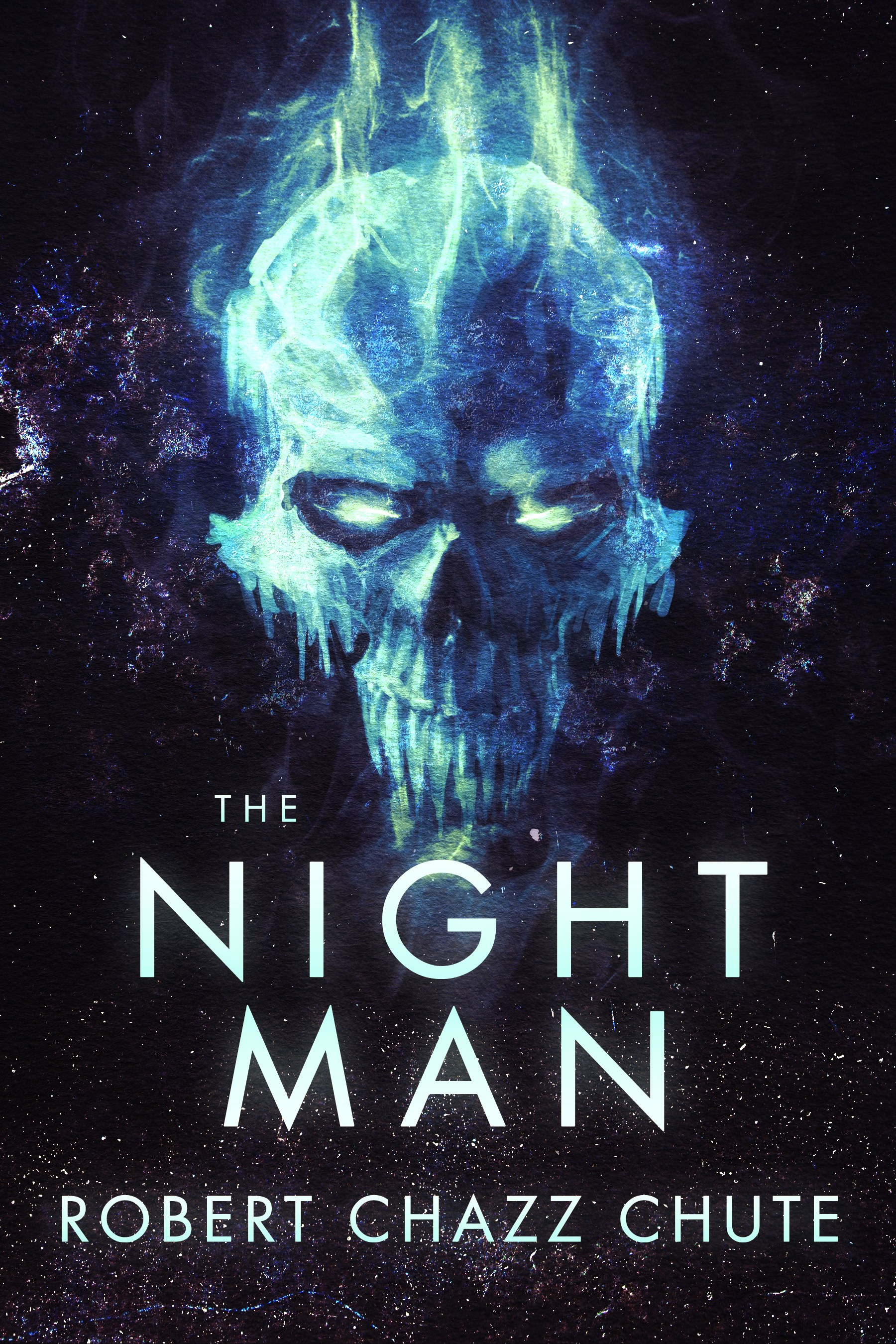
You can pick this ebook up for free today at this link: http://bit.ly/TheNightMan

Join my inner circle at AllThatChazz.com

See my books, blogs, links and podcasts.

Enter your email address to follow this blog and receive notifications of new posts by email.

Join 2,061 other subscribers