C h a z z W r i t e s . c o m

See all my books at AllThatChazz.com.

The Writer Rejection Scam

Stephen King signature.

Image via Wikipedia

Sometimes I hear writers take pride in the number of rejections in their file cabinets. The idea is that they compete with writer friends to pile up the rejection slips. The person with the most number of rejections by a certain date…er…”wins.” Riiiight. I don’t know how this myth got started but it’s a popular one.

It’s not that this is a totally useless strategy (and I’ll review the advantages in a moment) but first, let’s burst the rejection scam bubble:

If you are writing fast without second drafts or third or umpteenth drafts in order to pump up your submission rate, you’re losing. More rejection slips? That’s no measure of how close you are to publication. If that were true, the worst writers in the world submitting the most illiterate crap across the planet are all just on the cusp of bestsellerdom.

If you get a lot of rejection slips that don’t actually include personal notes on how the writing didn’t work for the reviewer, you’re losing.

It’s also very hard to get any personal notes on your work, by the way. Many agents and editors don’t believe in detailing the reasons for rejection. There are so many variables to evaluate writing that are idiosyncratic and peculiar to the editor, it doesn’t profit you to hear they rejected you for subjective reasons.

Neither does it profit them to take the time to give you a heads up that you were a near miss. Many editors have so many submissions on their desk that they really don’t want to encourage more people to resubmit. The mailbox will be full tomorrow regardless and your persistence is expected without free coaching and hand holding. (And just because you submitted a manuscript, no editor owes you free manuscript evaluations, feedback or reasons for rejection.)

If you’re clearing an alley of bad guys, use the twelve gauge with the .00 load. With manuscript submission, however, scatter shot is less effective than picking and aiming at your targets.

Submit everywhere without careful thought on how to target your market? Then you’re losing. It’s time you’re losing primarily, though the loss of confidence and self-esteem can’t be glossed over. It takes a lot of ego to put yourself out there, so choose carefully how you put yourself out there. Artists need all the narcissistic hope and unreasonable aspirations of a lottery player.

If you’re submitting everywhere in the slim hope that an agent or editor will take the time to take you under their wing, build you a nest and show you where you went wrong with your flightless novel, you’re losing. When dealing with mass submissions, editors and agents get impatient with bad writing, or even writing that isn’t bad but doesn’t suit them. I’ve seen it personally. Behind closed doors there’s even a lot of laughter at published writers’ work that’s bound for publication. (Oh, yeah, that’s right! I said it! I’ve seen it and endured it!)

If it’s feedback you’re after, alpha readers, beta readers, hired editors, writing and critique groups will get you more feedback than can be fit on a tiny rejection slip. Plus, you’ll be getting much more careful evaluation.

People going through a slush pile aren’t there to help the writer. They are there to evaluate whether your manuscript is a good bet for a business deal that suits their purposes and interests.

Much is made of Stephen King‘s pile of rejection slips. I think too much has been made of the rejection slips impaled on that spike in King’s attic. It’s not that some magic kicks in once you hit a special number of slips. It is, instead, what the rejection slips symbolize: sweat equity and time invested in improving craft. I’m not suggesting you submit fewer manuscripts per se. I’m saying, offer your work wisely.

A higher number of rejection slips is not an achievement to be celebrated any more than failing to complete every race you enter makes you a better runner. It might make you a noble aspirant. Or maybe you’re too bull-headed to train properly and learn. Either possibility has validity.

It was all the writing and reading King did while the slips piled up that mattered

It was the feedback he got from a newspaper editor that mattered

That editor sat down with King and went over a story about a high school basketball game. He showed King how to tighten his writing. A little mark up, some rearranging and red pen work et voilà!: The magic of editing improved the writer’s craft. (If you haven’t read Stephen King’s On Writing yet…well, just go do that and thank me later.) 

What are the advantages of piling up rejection slips? If you need to compete with a friend to get you to write, I don’t see anything wrong with that. Everybody needs some gentle  motivation (or a kick in the bum) sometimes. (Okay, maybe you don’t ever need a writing crutch, but that makes you an inhuman freak, Trollope!)

If you get personal feedback and encouragement from editors and agents, that’s a good sign you’re on the right track. If you just get a note or two though, that doesn’t constitute a trend you should necessarily heed. Editors and agents have their own agendas that may reflect very little on your writing and you’ll never know what’s in their minds.

Don’t rush to produce writing at the expense of quality. As Truman Capote said of Jack Kerouac‘s On the Road, “That’s not writing. That’s typing!”  (Granted, Capote could be a bitch and lots of people like On the Road.)

Still, getting a big pile of rejection slips is not the end game. Writing extensively (and well), reading broadly (and well) and getting righteous feedback will get you where you want to go.

Yes, I know: Rejection is part of the process. But neither should rejection be fetishized and assumed useful. Some lucky few writers are a hit right out of the gate. Are they still bad writers because they haven’t “paid their dues” and “jumped through hoops”?

That thick skin some say you’re supposed to develop through rejection would be used more effectively if you  got a manuscript evaluation or joined a critique group. (And thick skin is another thing that’s overrated and fetishized. Thick skin helps you take writing advice, yes. But when the reviews come in and someone writes something nasty in a comment about your book —your baby!—on Amazon, veteran author or newbie, you’ll be just as pissed.

Now, how do you target your submissions to likely editors and agents? 

Well, that’s a post for another day. Another day that will come soon.

Stay tuned. 

Filed under: Books, manuscript evaluation, publishing, Writers, writing tips, , , , , , , , , , , , , ,

New mugs for editors at http://www.cafepress.ca/chazzwrites

As I recover from minor surgery, I’m taking it easy today. However, I do have a new product up at the store for editors who want to gently remind writers that it’s not called a liveline. It’s a deadline. Check out the new mugs here.

In fact, check out all the inventory at my store.

Tomorrow, in case you are struggling with a deadline: Top 10 ways to get back your motivation to write. Then, a post on how to edit without reading. Crazy shit, I know! Stay tuned.

Now I’m back to the couch with one more day feeling sorry for myself. I’ll get my groove back tomorrow, Stella.

(I’m okay. Minor injury sustained while defending Gotham from dark forces.)

Filed under: blogs & blogging, Editing, Editors, Shop Happy, writing tips, , , , ,

Publishing is sick. You should quit. Take up knitting.

I attended a lovely writing conference. The best value of these get-togethers is often not in the classes, but in the networking, either by finding an agent, getting  useful feedback or networking with writer allies who can hook you up with what you need (e.g. a graphic designer, beta readers, a photographer, an inexpensive website developer, software you didn’t know existed etc.,…)

A couple of instructors at this conference gave me some really great technical information. Much of the discussion was about stuff you’ll find on this very blog (Shameless plug. Subscribe and send love.) Much of the talk was yet another rehash of commonly known information (e.g. get yourself an editor for your self-published work). A bunch of it was stuff you see spread across the internet endlessly for free (e.g. a rehash of the Amanda Hocking/Barry Eisler unfoldment).

(Heh.Unfoldment. I like that.) 

There was also some bad advice. But today, let’s focus on the health of the publishing industry: It’s sick. Really sick. Especially for the ones upon whose brains and bones rest the cracked foundation: writers.

Of course, it has been thus for a long time. Even when it was healthy, publishers operated on thin margins and predicted imminent doom. Many of those publishing companies anticipating the end were right; I worked for several that are long closed. (I didn’t kill ’em, but I helped hold ’em down. Good times.)

We all know the common complaints today: fewer editors, the corporate profit-push squeezing the midlist, the crash of the bookstore (ask your parents, they’ll tell you what they were), the discount tyranny of the chains and the crush of all that self-publishing pressure and the ennui that sets in when you realize you’re a rusty cog in an old machine that needs a lot of parts replaced.

I’d like to  suggest a new measure of the health of the industry:

How many jobs do the major players have?

A short, relevant aside: I am currently a part-time massage therapist, columnist, feature writer, writer-writer, blogger and editor. Also, I’m a house husband and stay-at-home dad. That’s plenty of hats. Okay, I’m a freak, but not as much as I used to be it seems. And I’m cutting down my number of roles soon (Hint: keeping the sexy wife, brilliant kids and the horror writing that chills my victims’ readers’ blood.) 

Aside over. To business: 

Now watch what happens when we look at instructors at writing conferences:

People at the top of their game aren’t making their living from writing.

Of all the people I encountered at the writing conference, two were at it full-time. Andrew Pyper wrote a book I loved called The Killing Circle and gave a funny, charming and wise speech. Wayson Choi spoke briefly and he’s also plenty charming. (Just read Not Yet, liked it.)

Mr. Choi gave the same encouragement he did last year: You aren’t alone in this. We are all together in this. (As if writing and actually getting published is equal to a struggle with a terrible disease and all caregivers and support for the afflicted must be rallied.) As if the diagnosis is in and it’s not good. The doc is giving you that look that says you might make it, but the treatment is so horrible and there is so much pain to endure, refusing to undergo medical torture is a worthy consideration. Getting better (or published) is sort of like winning the lottery.

(Trivia bonus: Wayson Choi is not only published but once won $100,000 in a lottery. He also survived terrible lung and cardiac problems so he might be the sweetest, luckiest sumbitch you’ve ever heard of. Sure, lots of people win big prizes and survive heart attacks, but to be published? That’s rare!)

But are writing conferences really about getting published? There’s a lot of amateur desperation in that big hall. Nice people, but not all writers. Dilettantes and the terminally confused are also a large component from what I could tell.

I don’t count delusion against people, by the way. To be a writer at all, you must be deluded…well, for fiction writers,  it’s a job requirement.

Are writing conferences helping these people get published, or are they just  another income stream or promotional avenue for poverty-stricken writers? Several presenters used their seminar teaching position to flog their books and editorial services pretty hard (though I didn’t mind the guy who had the grace to be funny about being spammy.) The rest were so fed-up, sad or desperate they were perspiring audibly.

When the “stars” in an industry have to spend a lot of time doing non-writing activity to eat, that’s another indicator of an industry on life support.

If any other industry had this much necessary moonlighting (go ahead, name any one you like), you wouldn’t want your kid on that career path. Imagine if all the civil engineers also had to work as mail carriers and mimes to avoid starvation. Suppose all the doctors were also telemarketers/poets/screenwriters/dog walkers/financial advisors/supply teachers, just so they could cobble together one living income from all their part-time jobs. There’s nothing wrong with any of these jobs but…

But if you have to do it all…well, my point is, sorry…you should quit. 

If you think you can quit, then good. You’re free to move on to something that could give you the security of three squares, dignity, hope for the future and some level of satisfaction.

If you can’t quit, either….

Maybe my writing as a disease analogy wasn’t so inept after all. 

 Related Articles

Filed under: publishing, Rant, Rejection, Useful writing links, Writers, writing tips, , , , , , , ,

The publisher’s temperament

Last week a baby video went viral. Two little twin boys babbled at each other. Back andSelfpublishing forth they went with a lively conversation “Da! Da! Da! Da!” Though unintelligible, they both were excited to talk to each other. I couldn’t hep but think of the conversation that goes back and forth about whether you should publish, or self-publish. There’s a lot of energy but not a lot of signal getting through.

The answer to the question of whether you should self-publish depends on the “you”.

Are you prepared to think of yourself as more than a hobbyist? Are you intimidated by new and unknown practices so much that you’re frozen? Do you prefer that others take care of things for you without you hiring them? Do you have any financial cushion? Are you prepared to take a chance? What is your real tolerance for risk? What is your tolerance for some people underestimating your work’s worth because you went your own way. Are you open to learning what you don’t yet know and ready to be a beginner?

There are a plethora of other factors to consider,  but first and foremost, it’s about you. Some people just aren’t interested in entrepreneurship. That’s not a judgment. Starting a business is not for everyone. You have to have a lot of discipline and interest in things beyond simply writing a good book (and god knows there’s nothing simple about that.)

Ask yourself, do you really want to do this?

We’ll have better self-published books when more authors ask themselves this question first. Why? Because they won’t just be self-publishers and the negative things that currently implies. We’ll have more publishers who happen to be publishing themselves.

Filed under: DIY, getting it done, publishing, self-publishing, Writers, writing tips, , , , , , , ,

Writers and Readers: Heads up! Exciting changes ahead!

I have some really cool changes coming in the near future. I really don’t want to lose anybody as the changes take effect so, against my nature and all that’s holy, brace yourself for a brief commercial:

I’m putting it out there.

Please subscribe to my blog

and please ask your friends and followers to do the same.

What changed? I’ve been making lots of moves in the last year or so, but there’s a lot more to do.

(Here’s what gave me the big push this week. If you need a push, you’ll get one. Hard.)

Since last May, I’ve been posting to Chazz Writes five times a week.

That will soon change to three rocking posts each week:

Monday, Wednesday and Friday.

When is “soon” with the new schedule? Probably after next week.

Nothing but the schedule will change immediately.

  • I’m still putting great information and links out there.
  • I’m still looking for authors to profile.
  • I’m still available for guest blogging opportunities and giving guest blogging opportunities.
  • I’m still editing just as much as ever.
  • Also still looking for (affordable) web developers to help me migrate to a new hosted platform that will become more interactive.

What exactly is coming, Chazz?

Aside from my regular editing duties, I’m editing my novel and its companion e-book.The details are top secret until I’m ready to launch. Subscribers will be in on the ground floor for extras when the books drop like valkyries from the sky attacking to a Wagner soundtrack.

Stay tuned. And seriously, please subscribe so you’ll be in the know.


Filed under: publishing, What about Chazz?, , , , , , , , , , , ,

George Carlin VIDEOS (plus Kick-ass Wake-up Call Questions for Writers on Getting It Done)

Giving up things that hurt you. Hm.

Pause for thought.

What are you keeping, as a writer, that’s hurting you? Are you addicted to distractions (Farmville, mindless surfing, TV, Sheen gossip, vegetating etc.,…)? Are you getting on with what you don’t want to do so you can accomplish what you do want? Are there people in your life who stand in the way of your dreams? I’ve been thinking about what to give up on. When I talk to that agent, is that really my ego and insecurity asking for validation? Do I need to be traditionally published anymore? Should I give up the magazine work  and focus on books exclusively? What am I willing to give and give up to get what I want?

If you don’t have time to write, are you making time to write?

But you know it goes deeper than simple time management issues.

To get to edit your manuscript, you have to edit your life.

There are always things or people who stand in the way of you getting where you want to be. Do you surround yourself with cool people who support you and your writing efforts? Are there people in your life you can do without? Are there energy and time vampires who drain you? The uncool people subtract from your time with the cool ones. And too much distraction is leaking time away from your productivity. Are you your last priority?

Are you calling your martyrdom selflessness or are you just being lazy in the You department? If you allowed yourself to look a little more selfish, could you be the person your loved ones would love and respect more? If your friends don’t like you if you say no, are they your friends? If you take care of everyone else first, who takes care of you? If you became the person you want to be, the one who gets the big things done, couldn’t you take care of others better? Can’t the laundry wait? Can’t you teach the kids to do it?

If you say, “But everyone needs me all the time!” your martyrdom is empty narcissism. If they can’t do without you long enough for you to write, you aren’t letting them grow up. You’re hurting their potential for independence by insisting you’re so important. You’re not being imaginative enough in the How to Deal Department. You’re injecting yourself into the center of their lives, living through them instead of living your life. You aren’t just the sun of your roles. When you became Mommy, Daddy, Wife or Husband, you didn’t give away the right to be you. If someone else is always your focus, you’re dressing up your procrastination in noble rags. And that’s pathetic and needy. You’re a person, not a role. You’re a human, not a god or a robot.

You’re drowning in busywork and busy-ness, not your business. Writing was supposed to be your business. Remember?

What are you doing to yourself? Do you really need more information? Is more research really required or is that procrastination masquerading as productivity? They say time is money. Time is much more important than that. Time is life. But time is spent like money and once it’s gone, it’s gone.

But it’s not too late if you ask yourself the right questions and listen for the real answer.

Not the reflexive answer. I mean the real answer you don’t want to hear.

Is it really encouragement and more education you need? Or is a kick in the ass needed? A wake-up call? A reminder that you are acting like you are immortal? You’re not. A reminder that not only do actions have consequences, inaction has dire consequences, too. (The kind you regret most when you’re lying on coarse white sheets watching another faceless nurse change your IV bag through a fog.)

What did you want to do with your life? Why isn’t it done by now? What can you change today to move you in the right direction? Are you even pointed in the right direction? Is the day ahead going to be filled with joy and potential and stimulation and writing? Is it just another Tuesday on a treadmill to nowhere?

Are you taking care of yourself and pushing your goals forward?

If not, why not?

When did you decide to settle for less?

What made you think that was okay?

What will you do now that you’ve read this?

Your mind can be a sharp tool. Use it now, because your heart is a bomb.

The clock is ticking.

EXERCISE:

READ THE RANT AGAIN. THIS TIME MAKE IT PERSONAL. WHERE YOU SEE YOU, READ I.

EXAMPLE: IF I DON’T HAVE TIME TO WRITE, AM I MAKING TIME TO WRITE?

NOW READ IT ALOUD. AGAIN. YOU’LL GET YOUR ANSWERS.

YOU WON’T LIKE ALL OF THEM.

THE ANSWERS YOU LIKE LEAST ARE MOST TRUE.

Filed under: authors, Books, DIY, ebooks, getting it done, links, publishing, Rant, Writers, writing tips, , , , , , , , ,

Stephen King: On Writing Under the Dome

It helps to be a fast typist. It helps to write fast and edit fast.

The reason is, you have to keep it all in your head. Maybe you’ve written out a plan or maybe you’re writing a day at a time without knowing how the story will twist to its end. Even if you don’t feel you have to know everything ahead of you, you still have to keep the details clear in what’s happening behind you. It’s a lot to track.

If you’re writing your first book, aim for the low end of the acceptable word count. If your first attempt is a vast sprawl of a trilogy, there’s an excellent chance it will suck. Finishing a book at all is an amazing accomplishment. Don’t try to write too long too quickly.

JK Rowling wrote a sprawling series with Harry Potter, but the first book is relatively short compared to the big bricks that came later.

Filed under: Author profiles, authors, getting it done, publishing, Writers, writing tips, , , , , ,

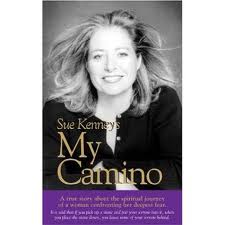
Check out Sue Kenney’s My Camino

In case you missed this morning’s nice comment from the post below, here it is again! Woo-hoo, Sue! That sure made me feel good.Sue_Kenney
Chazz. Glad you got your very own copy of My Camino. Hiring you to do an edit/polish, I felt confident and relieved to have another chance to clean up the grammar, tenses and spelling mistakes before the next printing. Your expertise and attitude made this editing process exciting for me. My Camino came out in 2004 with a small publishing house and I was told it had ‘long legs’ (just like me) and might survive 3 years on the shelf . Who would have thought that 7 years later the book is a national best seller, there is a feature film adaptation in development (I co-wrote the script with Bruce Pirrie) and in the next couple of weeks it will be available on Podiobooks as an audio book. What a journey and now you are a part of it. Thank you so much. It was truly an honour to work with you. See you at the movie première in 2013! (fingers crossed)
Sue

Go to her website here: Sue Kenney

Filed under: Author profiles, authors, Books, Editing, Editors, publishing, Useful writing links, , , , , , ,

Editing Part III: The joy of editing

The Chicago Manual of Style, 16th edition, 3rd...

I just received the gift of a book in the mail. I had already read this book but I was very pleased to receive it. In fact, I’d gone through this particular book in meticulous detail. The author signed the title page for me and graciously thanked me for my advice. The book in hand was a bonus for editing the work.

Editing is such picky work. I zip into and out of the on-line Chicago Manual of Style a lot. I tweak here and economize there. No matter the level of the edit, the key to good editing is asking the right questions.

Here’s a sample of the sorts of questions that run through my mind as I work:

Should that be 18th Century or Eighteenth century? Should I leave a quirky passage alone to keep the author’s voice or is the joke too much of a reach? Should I suggest new elements? Does the material make more sense if it is reorganized? Does this follow logically from that? Is that assertion a fact? Is that translation correct? What design elements could I suggest to make the book pop? What elements could I suggest that would convert a browser into a buyer? Is there an opportunity missed here? What marketing strategy could I suggest to make this a book with real long-tail potential? What’s missing? (That last one can take the work to a new level.)

In short, a good editor or proofreader will question everything.

An experienced editor will pick up on what’s on the page and what’s not there that’s hurting the book.

In the end, I let it go back to the author to decide which of my suggestions to act upon. When it’s done, the author’s name is on the front cover. I always say some variation of: “She’s still your baby. She’s healthy and you’ll recognize her. She wasn’t sick but she’s feeling even better now.” The reader will never know how much or how little I did. The job is to make the author look good. (And sell more books.)

And you know what? It’s fun. I’m not gleeful about it in the way I know some editors are. When I was in journalism school and when I worked for a daily newspaper, I ran into editors who were looking for stuff so they could catch you out. It was a game for them and they acted like it was the only way they could find to feel good about themselves. When they caught something—anything—writers got snarky remarks and not just a little passive aggressive indignation. Editors like that are sad and make me tired.

I find editing fun because it’s an intellectual challenge and the collaborative process makes the book better than it otherwise would have been. Higher quality editorial work translates to more authority to the author, more sales for the current book and more sales for the author’s next book. A helpful edit can morph an experiment that didn’t quite come together into a legacy book that will delight, distract, elevate, educate, provoke, redeem and earn for years to come.

A good edit will pay for itself.

And generally? No, an unedited book doesn’t stand a chance.

Filed under: authors, Books, ebooks, Editing, Editors, grammar, publishing, self-publishing, Writers, writing tips, , , , , , , , , , , , , ,

Writerly link roundup: word counts by genre (& send in the cavalry!)

I’m in the editing basilica today but I wanted to take a moment to lay out three little info-gifts for you, and then, something special.cover_front_soe_gol


Three interesting links:

An Author’s Perspective on Scribd versus Bookbuzzr

What word count fits your manuscript’s genre?

A writer and her hate mail

And finally, an author decides to give away his e-book. What makes this special? No gimmicks, no forms, no following, no email subscriptions, zero ordeal.

JS Chancellor’s book got pirated but he’s turning things around. It will be interesting to see how his strategy works to promote the book.

So let’s help. Pump up his blog. Pump up the volume. Go see if you like his writing and maybe a great experience and reader-writer relationship will begin.

He calls it “a shameless plea for help.” I say we help out because, hey, we’re writers! We can help out other writers! More important, we’re readers! And helping out feels good.

And the dude’s giving you a book! What’s to think about? If you like it, spread his word. Go there, bookmark it and pick it up March 1.

Check here for details:

Free Copy of Son of Ereubus

Filed under: authors, Books, ebooks, links, publishing, Useful writing links, writing tips, , , , , , , , ,

Bestseller with over 1,000 reviews!
Winner of the North Street Book Prize, Reader's Favorite, the
Literary Titan Award, the Hollywood Book Festival, and the
New York Book Festival.

http://mybook.to/OurZombieHours
A NEW ZOMBIE ANTHOLOGY

Winner of Writer's Digest's 2014 Honorable Mention in Self-published Ebook Awards in Genre

The first 81 lessons to get your Buffy on

More lessons to help you survive Armageddon

"You will laugh your ass off!" ~ Maxwell Cynn, author of Cybergrrl

Available now!

Fast-paced terror, new threats, more twists.

An autistic boy versus our world in free fall

Suspense to melt your face and play with your brain.

Action like a Guy Ritchie film. Funny like Woody Allen when he was funny.

Jesus: Sexier and even more addicted to love.

You can pick this ebook up for free today at this link: http://bit.ly/TheNightMan

Join my inner circle at AllThatChazz.com

See my books, blogs, links and podcasts.

Enter your email address to follow this blog and receive notifications of new posts by email.

Join 2,063 other subscribers