C h a z z W r i t e s . c o m

See all my books at AllThatChazz.com.

Breaking Bad and making better storytelling choices

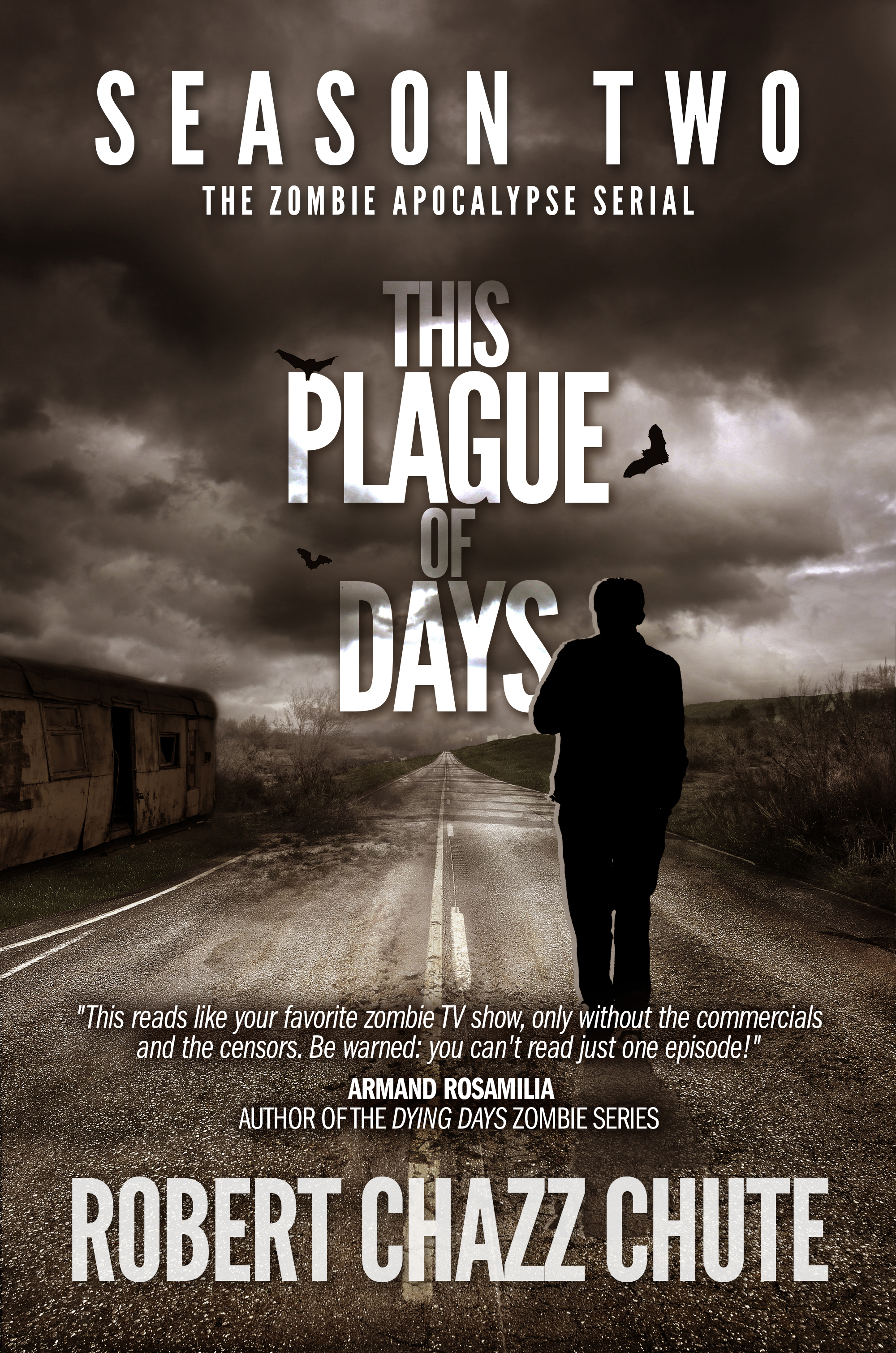
Season One has five episodes. Get each one for 99 cents or get all of Season One at a discount for $3.99.

When you’re in the trenches (and by that I mean when you’re at your keyboard) you must stay true to your vision. There are artistic choices to be made that will challenge some readers’ expectations. Choose more conflict and damn the torpedoes.

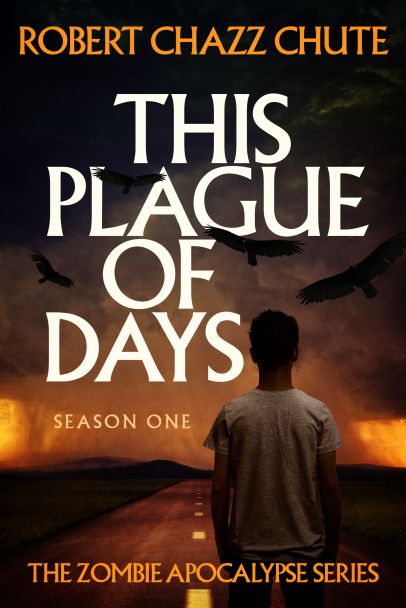
For instance, at the beginning of This Plague of Days, the protagonist’s sister, Anna Spencer, isn’t particularly likeable. She’s not over the top, but she is a hormonal teenager whose brother is on the autism spectrum. She calls him Ears because he has big ears. She loves her brother, but she can be mean. She’s jealous of the extra attention he gets because of his challenges. She treats him the same way many siblings treat each other in their formative years. If you’ve ever had a sister, or been one, you’ll recognize her turmoil as she matures. Now add the plague apocalypse (and later, scary, infected cannibals) and you’ve got tense family relationships facing a storm of trouble raining down evil doers and crazy cakes.

Readers who only read Episode One might not care for Anna much.

Impatient readers will never get to see how badass she gets. (I’m revising Season Two now and she’s nicer, but still working her way to badass.) If they quit reading at Episode One, they’ll never find out how circumstances and time transform her into an interesting, brave and responsible woman. Anna Spencer has an arc. All my characters have arcs and their own stories to tell. To have those stories, and the complexity I insist upon as a storyteller, the characters can’t begin as static, happy stereotypes.

This Plague of Days has nuance. Some characters you think are good now may surprise you with what they’re willing to do later. Characters you assume are bad may have altruistic motives that aren’t clear up front. Some writers say we shouldn’t even write “characters”. We should write people in all their complexity. The people you write about have to transform, and I don’t mean from likeable and nice to slightly more so.

Think how ineffective Breaking Bad would be if you didn’t watch Walter White’s transformation through the show’s seasons.

He starts off as a nebbish who reached for the brass ring and fell short. A cancer diagnosis turns him from an ordinary Chemistry teacher into a cold and calculating drug kingpin desperate for respect and safety. The cool thing about Breaking Bad is, today’s solution is always tomorrow’s problem. His character arc is entirely logical each step of the way. Throw in a fatal flaw and a few reversals and he ends up in an insane place that is believable over time. 

If Walter White had started out evil, you don’t get grim fun and complexity. You get another stupid, failed TV show (starring cast members who used to be on Baywatch) cancelled and forgotten after half a season.

Another example: Points of view must change.

In This Plague of Days, I made choices to introduce more family strain. This Plague of Days isn’t just about viruses, zombies, fires and firepower. It’s about people under pressure.

The mom is a Christian. The father is an atheist.

Faced with mortality, the mom becomes a Christian with doubts and the dad becomes an atheist with doubts. I believe in readers and I follow the story wherever it leads (i.e. toward more conflict.)

Issues of atheism versus faith are not presented all at once. This isn’t a college seminar. Near the beginning of Season One, the atheist has his say. That may repel some readers who won’t stick around for his confession, feelings of abandonment and transcendence. Too bad those same readers won’t hear the mom’s counterpoint, either. Impatient readers might seize on one aspect in the early going (for or against God, depending on when they stop reading.) I feel it’s an honest, necessary exploration woven into the fabric of a much larger story. (Not that it should matter, I’ve been a believer and an atheist but not at the same time.) I’m not pushing an agenda. I’m pushing for brain tickles. If you want to be pulled into warm marshmallow, read Chicken Soup for Something or Other. I write suspense. Not everything is for everybody.

Readers will draw their own conclusions about religion (or ignore that small aspect of the story completely.) Zombies turn some people to God. For others, zombies turns them away from faith. Put a wife and husband at the edge of the end of the world and I guarantee religion’s going to come up. It’s not my job to make up anyone’s mind. It’s my job to tickle brains and make the debate honest and interesting while the struggle for survival gets harder. Context is everything.

Don’t pander. Follow the Art and the Conflict

People will draw conclusions about you from what you write. Don’t be afraid of that or your story will suffer. You’re a writer, so we already know you’re brave and have an unreasonably high estimation and expectation of the human race. Live up to that commitment with every chapter.

Respecting the reader doesn’t mean that you try to make them like everything they read. However, most readers stay longer with stories that challenge them, make them think and make them laugh. Don’t let it come out as an info dump or a teaching moment. Let it come out naturally. Don’t make your story a seminar on your beliefs. Do let characters have strong, conflicting points of view. Have a spine, but don’t force conclusions. Let the reader do that work for themselves. Always leave room for doubt.

For the Readers

I guarantee, when you read This Plague of Days, you’ll read things you’ve never read before. You’ll learn things you probably didn’t know. (I did!) And you don’t have to agree to anything. It’s a book. It’s not a threat to the tenets of your existence.  

A fun book is a ride at the carnival, an exorcism of fears, a voyeuristic pleasure, an extended brain tickle and a happy distraction, first class on the Crazy Train. All aboard to the end of the line.

Filed under: publishing, writing tips, , , , , , , , , , , , , , , , , , , , , ,

Confession to readers: I love sound-sex

Stephen Fry invites us to enjoy literature more.

Filed under: readers, , , , , , , , ,

Writers, Readers and the Blame We Get

Dark Higher Than Jesus banner adI know a couple of erotica authors well enough to tell you that their private lives are not a full schedule of whips, naked gymnastics and ropes with elaborate knots. They’ve never had sex at the top of the Eiffel Tower with multiple hunky Norwegians. They’re ordinary moms who share your concerns about life. They have vivid imaginations that stay busy while they’re stuck in traffic as they chauffeur their children to play dates. Some readers draw conclusions about the character of the writer from the books they write. Unless it’s an autobiography, that’s an annoying habit.

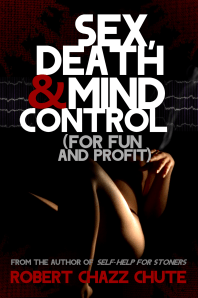
When I wrote Self-help for Stoners, some readers assumed I was a drug addict. Never mind my liberal stance on unwinnable drug wars and the hypocrisy and sadism of sanctions against marijuana users. My addictions are sovereignty, choice and chocolate croissants. The drug I toss back most? Caffeine, just like you. When I wrote Sex, Death & Mind Control, some people thought I dabbled in the occult. Not so. I am not in a cult, either, (though I wouldn’t be averse to leading one for those awesome tax perks.) My work is fiction and my brain makes odd neural connections. Ideas get put together in new and exciting ways. That’s writing and that’s all.

When I gave my dad Higher Than Jesus for Christmas, he felt self-conscious about reading a crime novel written by his son that included sex. I know that because he tried to make me feel self-conscious about it. Yes, there’s a particularly blushworthy chapter, but I told him when I gave it to him that he never complained about the violence in my books, so he didn’t get to object to the sex. Here’s that fun phone conversation:

Me: Merry Christmas, Dad!

Him: I’m almost finished reading Higher Than Jesus. It’s quite the book.

Me (catching the tone): Uh-huh.

Him: I think you have fantasies about long legs —

Me: Stop! It’s fiction, Dad. I’m a writer. You’re an adult. I’m treating you like one.

Him (apparently unconvinced of points one through four): Mm, yeah. Well, I did enjoy it.

Me (deadpan): Imagine my relief.

Worse? Now I’m a bit worried. Since the gut-wrenching horror of the tragedy and loss in Newtown, Connecticut, even I’m becoming concerned that my fiction might intersect with real life. Part of the plot of Higher Than Jesus turns on a gun control issue and the actions of a fanatical group. Real life events have turned since I wrote that novel. Congruence make me think that my fiction and conjecture could actually line up with plots in reality. If something in particular (a very bad thing) happens in January, will some reader try to make that connection to my funny, sexy crime novel? They won’t call me prescient. They’ll wonder if a nut read my book!  

I hope law enforcement officers will foil any real life plots. Jesus Diaz is an interesting character, but I don’t think issues of national security and international peace should be left to my goofy, conflicted, love-obsessed, Vicodin-addicted hit man. He foils plots, too, but never in an easy, linear way. Our world has lots of tough problems, but fiction isn’t the problem. If anything, it’s a solution. Fiction is a safe outlet for revenge fantasies. Art yields entertainment, not sorrow. (Yes, I believe this is true about video games, too. Penn & Teller did an episode about the safety of video games. Here’s a link to that vulgar, NSFW video on my author site. This video is not for the easily offended or anyone who refuses to even consider that video games might not cause horrible school shootings.)

To readers: Please don’t ascribe words on the page to the character of the author. We’re just tap dancing to entertain you and most of us prefer to keep our violence where it can be safely managed: In fiction. Yes, my revenge fantasies are rooted in a deep dark place, but I learned to sublimate my rage with humour. If you’re going to make assumptions about me from my books, please assume I’m better than I am, not worse.

"Worthy of Elmore Leonard with shades of Thomas Harris..."

“Worthy of Elmore Leonard with shades of Thomas Harris…”

~ Robert Chazz Chute writes suspense and crime novels. He’s not Cuban. He’s not a hit man. He’s close to the same height as his Cuban hit man, though, so clearly he’s exactly like his fictional killer. Hear the All That Chazz podcast and check out his books at the links at AllThatChazz.com.

Filed under: publishing, , , , , , , , , , , , , , , , ,

Ultimate Blog Challenge: Top 10 things I wish I didn’t know about readers

Small-town terrors and psychological mayhem in Maine.

1. They get bored too easily. We used to have writers who were flavours of the month. With Amazon rankings, you can be the flavour of the hour and then disappear into obscurity unless you fight the death spiral and/or get lucky.

2. Readers are too busy. With the proliferation of “free” we all have huge To Be Read piles. Sadly, as with to-do lists, many of us never get to the bottom of those piles.

3. Many people prefer a genre I don’t write. Romance is much more popular. I used to read romances professionally when I worked for Harlequin. My books have a key romantic element, but they are not romances, so de facto, I am not on the radar of a large group of very dedicated readers.

4. The readers who love me might get sick of me trying to reach the readers who don’t know me. I’m very careful on Twitter to promote others, not just me. Still, I need to kick back and tweet a little joke here and there and say hello. It’s difficult to find the balance.

Paranormal persuasion and scary stories.

5. I’m not reaching some readers because I made some choices in titles that were challenging. (I almost wrote “unfortunate”, but that would put the onus on me and I’m not ready to own that yet.) The thing is, Sex, Death & Mind Control is one of the best things I’ve written but it has the lowest sales. It’s not sexy enough for those searching for erotica. It’s paranormal suspense (with award winners!), but when you see that always-interesting “What Else Customers Viewed” list, it’s almost all erotica on the Sex, Death & Mind Control sales page. “End of the Line” is probably the best short story I’ve ever written, but it  remains a hidden treasure because I turned readers off with a title I thought would get more attention, not less.

6. Ditto Self-help for Stoners. It was a clue for me when one of the reviewers who loved it added, “Don’t let the title scare you off.” It’s a weird mix of War of Art self-help and suspense. Strange, I know, but not really all that transgressive. (Should have called it Self-help for Surrealists to pull in readers who are also painters!) My strategy going in was to have an identifiable group to market to instead of saying it was for anybody who loved suspenseful fiction. To some extent that worked, but not as well as I’d hoped. (It still outsells Sex, Death & Mind Control four to one. I can’t say the Self-help for Stoners strategy was a failure, just that it could do better.)

You don’t have to be high to enjoy it. Sure, it would make you a better audience but…

7. Readers have less patience now. I changed my plotting and pacing with Bigger Than Jesus to cater to that lack of patience. I see it in myself. Maybe the Internet did it to our brains, I don’t know. That’s not even be a bad thing per se, but expect more Blake Crouch pacing and less Annie Proulx meandering. There used to be more room for both approaches.

8. There are still prejudices against anything labeled “experimental”. I wrote Bigger than Jesus in present tense, second-person. That alone is reason enough for some readers to run screaming. I can tell them all day that it worked. Won’t matter. That’s okay, but it’s still a prejudice.

I wanted to do something that some people thought couldn’t or shouldn’t be done and I wanted to do it so well they’d either quickly forget their prejudice or give me more credit for doing it so well. Blanket pronouncements of “You can’t do that!” are one of the reasons I did it. I don’t like being told what I can’t do. In fact, it makes me want to do it all the more. (I admit this attitude is not something that serves me well all the time. Having a job in the regular world, for instance, is uh…a problem.)

9. Readers look for ties to your real life. This is a byproduct of increased author/reader interaction. However, the Internet isn’t to blame for this one. This was very much the rage in English departments across the world years ago. Students were taught they couldn’t understand the fullness of the fiction without making judgments about the author, his or his gender, origin and life experience. They shouldn’t have done that. No one truly knows the inside of someone else’s skull. (I’ve even opened it up and had a look. Trust me, nobody really knows.) Besides, it’s fiction. Take it on its own merit. Please don’t make assumptions about the author from what you read in a book of fiction. Don’t make me kill again. (See what I mean?)

10. Readers fade. Even if they love your work, they move on. They get hungry for something new and different unless you keep feeding them. I don’t think anyone should race to publication if they aren’t up to the schedule and you do have to build in editorial time to make the book better. However, they are hungry and it is a race. People will tell you it isn’t. They’re wrong. It is. It’s a race against time. We don’t live forever and we have books in us and a readership to find and a readership we hope finds us. William Styron came out with a nice juicy thick book every ten years, but he was William Styron and that was before ebooks and our shiny,  new demand-per-click culture.

I love readers. People who don’t read creep me out. I can say that because how would they know I’ve insulted them? What do non-readers have to contribute? Those dummies!

Ha! Wait. You aren’t reading this aloud to someone are you?

~ Like my flavor? Listen to the first chapter of my crime thriller, Bigger Than Jesus. I’m podcasting the book through the summer. Enjoy! (Or be a hero and just click the cover to grab it. Thanks for reading!)

Filed under: publishing, , , , , , , , , , , , , , , , , ,

Ultimate Blog Challenge: The Warm Chocolate Chip Cookie Exposition

After reading the book descriptions, someone sent me a question:

“What are your books like?” 

“Suspense that’s often funny with lots of twists,” I said.

“Yeah, but what are they like?”

Um…what? I wasn’t sure what they were getting at, so I replied via email.

If you like:

the twists of William (The Princess Bride) Goldman’s plots;

the fast pace of a Blake (Run) Crouch;

the worldview of Chuck (Fight Club) Palahniuk;

the punchy, funny dialogue of Elmore (Get Shorty) Leonard;

and the disappointed humanism of Kurt (I shouldn’t have to name any Kurt Vonnegut books! Read them all!) Vonnegut,

then you’ll love my crime novel Bigger Than Jesus. Enjoy!

My potential reader/interrogator then wrote, “I’m not familiar with any of those books so don’t tell me about them. Tell me what your book is like!”

I sighed and then I fired off another helpful email:

Best chocolate chip cookies I've made in decades.

Best chocolate chip cookies I’ve made in decades. (Photo credit: Wikipedia)

“Don’t you love chocolate chip cookies when they’re straight out of the oven? The chocolate is melting a bit and you risk burning your tongue because you can hardly wait. These are the best-tasting chocolate chip cookies ever. You force yourself to slow down and put one in your mouth. It’s really soft and you just hold it there as long as you can to savour it while you pour a tall, cold glass of milk? Then the kitchen floor falls out from under you and you’re sucked down into quicksand and you’re trying not to die and you can’t figure out why God hates you and all you want is to get away and make the woman of your dreams love you. You only have seconds before the suffocating sludge is over your head and you’re about to find out if what follows this tortured life is hell or oblivion. Your heart is full of regret and if you can just live, you swear you’ll turn your life around. Kind of like that, but with more jokes.”

No reply yet, but I’m guessing he’s not a reader, anyway.

If they do email again, I’ll suggest they consider breaking down and read a sample chapter.


Filed under: publishing, , , , , , , , , , , , , , , , ,

And now for something somewhat different: allthatchazz.com

www.allthatchazz.com

Over a year and a half and 600 plus blog posts, Chazz Writes has been (and will continue to be) free content for writers about the craft and business of writing. Chazz Writes is about grammar, editing, writing advice and the latest self-publishing news. I’ve made a lot of friends and allies and promoted quite a few authors here. It’s a lot of fun. The fun will continue for readers on the companion site. Stop by, subscribe and see what’s cooking.

Someone is already offended because it looks like I’m saying writers aren’t readers. Some people arrive pre-offended, so…can you hear my shrug from there? As a writer, I’m also a power reader: vast library, ten books at a time, two e-readers…the whole smear. But not all readers are writers.  

What will be different? All that Chazz focuses on what readers want: reviews, sneak peeks and more ideas on what to read. On the new site, I write about reading.

Contributors: All That Chazz is open to submissions (just like Chazz Writes). If you’d like to write a guest post about who, what, when, why, where and how you’re reading, please submit your 300-word (max) post and a 25-word bio to me at expartepress@gmail.com.

The Book Review Circle: I haven’t forgotten about Kim Nayyer’s excellent suggestion to establish a book circle. (See the bottom segment for my personal update on what I’ve been doing instead.)

The Review Circle Recap: In the summer, I put out the call for self-published authors who were willing to review a book in exchange for a review of their own book. The reviews, to be published at All that Chazz and promoted on Chazz Writes, can be used by the author and the reviewer for their own blogs and whatever marketing purposes suit them. In the next couple of weeks (as the hither and dither allows) I’ll be contacting all the authors who contacted me to set up the circle.

If you want to participate in the review circle, email me with details of your book, genre and word count at expartepress@gmail.com.

(Don’t wait!)

This looks like a job for me: Wow, have I been busy! My business plan is coming together, though I wish I had a couple of interns and a cappuccino machine to hurry the publishing process along. So much of what I’m working on is new to me (formatting and podcasting, for instance). Some of the learning curve is so steep, I need two Sherpa guides. However, it’s coming together on schedule as long as I continue to try do everything at once. Self-publishing is not, as some claim, the “easy” road to publication. It’s just another path and the terrain is a little different.

I’m enjoying the view from this little goat path. I think I’ll climb higher and see what I can see.

Join me.

Filed under: All That Chazz, book reviews, DIY, e-reader, ebooks, getting it done, publishing, readers, reviews, self-publishing, What about Chazz?, , , , , , , , ,

The price and value of ebooks Part II

A Picture of a eBook

Image via Wikipedia

There’s a lot of talk about ebook pricing. You’ve seen the numbers. Today I’m pointing you to the comments section on a post on this very blog because a great dialogue arose that I haven’t seen elsewhere and I don’t want it lost. A writer and a reader have a very thoughtful point-counterpoint discussion, not just about the numbers, but how they feel about the numbers.

Thanks to both Tracy Poff and Reena Jacobs for both their passion and civility as they had an impressive meeting of the minds about ebook pricing from an author’s and reader’s perspective.

You’ll find the comments under this post: Do readers expect too much of ebooks?

Filed under: author Q&A, authors, ebooks, Guest blog post, publishing, self-publishing, , , , , , , , , , ,

Writers: The mire of conflicting advice & unfair criticism

The hierarchical structure of the autobiograph...

Image via Wikipedia

When I got into the business, there was a criticism meant to shut writers down.

“Too autobiographical” was the kiss of death.

That’s ironic for several reasons:

Biographies and autobiographies are moneymaking books. Sarah Palin‘s ghosts have already published more books than you and possibly more books than she’s read. Okay, that was a cheap shot, but somewhat funny and it has the added bonus of being an Irish fact—that is, something that is a lie, but should be true.

I digress.

Back to the issue of unfair criticisms and misguided advice:

 The mind boggles at Augusten Burroughs work. How much childhood trauma can one man recycle into his fiction and non-fiction? He has enough monsters, addictions and insanity in his past that he’s set for several more books at least.

“Too autobiographical” is now a stale criticism when you consider the movement of the market toward tell-alls, whistleblowing and confessionals. There’s a lot of popular fiction that’s thinly veiled life story, too. In fact, if you’ve been a lion tamer-stripper-celebrity-prostitute, you’re a much easier sale than if you’re just another writer working away at your desk making stuff up.

Diablo Cody is a talented writer, but she had a lot more heat going into the fray because of her tattooed image and history as a stripper. I’m not saying she wouldn’t have sold the brilliant Juno script anyway, but really, how many celebrity screenwriters can you name besides her, McKee and William Goldman? If you came up with a few names, it’s probably because they are famous writer-directors, not just writers.

(And notice that irksome phrase “just writers.” I use it advisedly, as a synonym for “merely,” since that’s the stature writers generally have in film, television and publishing.)

“Too autobiographical” was once a stinging barb. It marked a talent that was undeveloped. It suggested teenage angst worthy of a diary, not of publishable quality.

The worm has turned. Now your tortured history as a brawler helps; Chuck Palahniuk brawled a bit and escorted sick people to support groups long before Fight Club. Your time in seedy bars lends authenticity to your writing and manuscript evaluators may well take you more seriously because of the stuff you don’t want your mom to know. A work can still be too autobiographical, but that criticism doesn’t carry the weight it once did.

Evaluators can be off the mark in what they think qualifies as authentic, anyway. One writer, for instance, was told that her dialogue didn’t ring true for how contemporary teenagers speak. She was advised to hang out with some kids to catch the flavor of the real thing. What the manuscript reader didn’t know was the writer was 17 at the time.

We’re a culture that worships celebrity, so “too autobiographical” isn’t a criticism that comes up as much (unless your life story is deadly dull.)

The true irony is that the same editors who would say “too autobiographical” would also routinely tell aspiring writers to “Write what you know.”

That’s bad, even egregious advice. Don’t write what you know. If you only write what you knew, there wouldn’t be much fantasy, science fiction…or much literature at all, come to think of it.

Instead, write what you care about.

 Your research and the knowledge

flows from caring, anyway.

Filed under: authors, book reviews, Books, Editors, links, manuscript evaluation, Rant, scriptwriting, Useful writing links, writing tips, , , , , , , , , , , , ,

Writers: What is your genre? What do you read?

St. Augustine writing, revising, and re-writin...

Image via Wikipedia

Most of you are writers.

Please let me know the genre in which you write.

Also, what do you read?

Some writers avoid reading fiction from their own genre because they worry it will influence their own writing. I think there’s a difference between a good influence, a bad influence and plagiarism, so I read a lot within my genre (literary fiction and horror.) I also read widely outside my genre.

I usually have ten or so books going at one time. I either have an undiagnosed case of Attention Deficit Disorder or I’m easily bored. Oh, or maybe those two things are de facto the same thing. (I know I’ve hit a really good book when I don’t switch it out with another book. and slow down to savour it.)

I also have an extensive collection of reference books and how-to books on writing, social media and most aspects of publishing. Do you have a favourite book on writing or perhaps you reject the premise? What writing books do you love? Which could you (and the universe) do without?

I’d like to hear from you.

Please leave a comment and let me know your thoughts.

Thanks!

Filed under: book reviews, Writers, , , , , , , , , , , ,

Bestseller with over 1,000 reviews!
Winner of the North Street Book Prize, Reader's Favorite, the
Literary Titan Award, the Hollywood Book Festival, and the
New York Book Festival.

http://mybook.to/OurZombieHours
A NEW ZOMBIE ANTHOLOGY

Winner of Writer's Digest's 2014 Honorable Mention in Self-published Ebook Awards in Genre

The first 81 lessons to get your Buffy on

More lessons to help you survive Armageddon

"You will laugh your ass off!" ~ Maxwell Cynn, author of Cybergrrl

Available now!

Fast-paced terror, new threats, more twists.

An autistic boy versus our world in free fall

Suspense to melt your face and play with your brain.

Action like a Guy Ritchie film. Funny like Woody Allen when he was funny.

Jesus: Sexier and even more addicted to love.

You can pick this ebook up for free today at this link: http://bit.ly/TheNightMan

Join my inner circle at AllThatChazz.com

See my books, blogs, links and podcasts.

Enter your email address to follow this blog and receive notifications of new posts by email.

Join 2,061 other subscribers