C h a z z W r i t e s . c o m

See all my books at AllThatChazz.com.

#NaNoWriMo: 50,000 words isn’t the end. Learn from my mistake.

Free to you Nov. 26 – 30, 2012

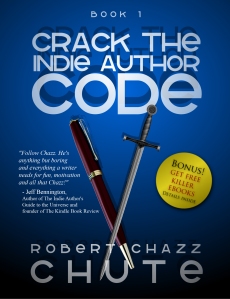
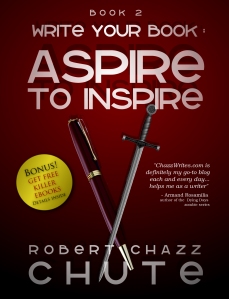
Crack the Indie Author Code is free to you as an ebook, Monday to Friday, Nov. 26 – Nov 30 at midnight. As National Novel Writing Month draws to a close this week, please consider picking up the book and its  follow-up, Write Your Book: Aspire to Inspire. Both books are packed with information and inspiration for what lies ahead, no matter where you are in your writing and publishing journey. That’s the ad, but there’s more you need to know. Learn from my mistake: Don’t stop there.

Some say there are too many books. I’m a huge fan of choice, so I say there are too many books still in drawers and forgotten on thumb drives after NaNoWriMo is complete. Sure, let it sit in a drawer so you can be realistic when you get back to it. (Have a rest and relearn your children’s names.) However, please don’t let your trip to publication end at 50,000 words.

I believe many of the books that languish after NaNoWriMo can be salvaged with revisions and editing. Okay, maybe not all of them, but many. NaNoWriMo is a fun challenge to begin the process, like a hard swim in the ocean. In braving the waves and heading straight out to sea, you complete 50,000 words or more. That’s certainly an achievement, but it’s not the finish line. You have to swim back and make it to shore. Otherwise, all your hard work is written on water. 

An incomplete manuscript niggles, doesn’t it? I know. I have several manuscripts waiting for me. I wrote for years before I began writing full-time, so I built a bank of manuscripts to return to. It’s easier to keep your head in the game when you see one manuscript through to completion. Those big books I’ve written are awfully intimidating when I go back to them to tinker. I’m afraid to lose the thread. It helps my process to be in media res, not just for the characters but for me as I write and rewrite. I will get to those books, of course. I’ll immerse myself again and get back into it, but at first it sure feels like trying to do the butterfly stroke after a long absence from swim practice. I’m always most excited about the newest project, so those books, as worthy as they will be, get pushed farther back in the drawer.

In stopping and starting, I’ve lost energy, time and money. Please learn from my mistake and see NaNoWriMo through to its logical conclusion. Keep swimming.

UPDATES

When I wrote Crack the Indie Author Code, there was a Big Six. Now, with the merger of Penguin and Random House, it’s the Big Five. As
Find tons of tips and inspiration here.

I wrote Write Your Book: Aspire to Inspire, Kindlegraph was the tool to autograph ebooks. Now authors can write inscriptions across publishing platforms using the update, Authorgraph. I mention these two updates not just because I want you to know the latest. I mention it because I published those two books on writing and publishing very recently. Publishing’s landscape is changing so fast, even ebooks updating before anyone can click the “Publish” button. Bookmark ChazzWrites, hit follow and keep coming back for the latest.

Speaking of the latest on changes in the publishing industry, you will certainly want to hear: the latest episode of the podcast, On The Media, from NPR. It’s called Adapt or Die. It’s an excellent summation about the year in publishing. Topics include: The myth of piracy, Amazon versus everyone, getting around Amazon, knockoff books, the bookstore battle over the Tim Ferris’s The 4-Hour Chef and the future of the industry.

~ Robert Chazz Chute was a martial artist when his life was still ruled by macho BS. He writes about writing and publishing, suspense and escape while making jokes to distract readers from the existential abyss that will consume us all. He likes puppies. See his author page and listen to his podcast at AllThatChazz.com.


Filed under: publishing, , , , , , , , , , , , , , , , , , , , , , , ,

#NaNoWriMo:The mission is simple. We are not.

Find tons of tips and inspiration here.

During National Novel Writing Month, you will focus on word counts. It’s about chewing up time by filling up paper. That’s okay. That’s fine. The critics of NaNoWriMo underestimate you. They think you don’t know that this is just the first step. Strange. They know that. Why would they think you don’t know that?

Sure, there are dabblers and dilettantes and outliers who will fire off their manuscript as soon as they’ve written 50,000 lousy words. Any time a lot of people do something, there will always be those misguided people who do it very badly. But they aren’t the majority. Most of us know that first drafts aren’t our best work and we have to try harder than that. You get to make it your best, bravest stab through the work of rewriting. You have to have something to start with, on paper, to have something to revise. We know. We get it. Please don’t condemn us all.

Let’s all lighten up and know the joy of Creation. That’s the closest to godhood I’ll ever get (besides Saturday mornings when I go yell at frogs, proclaiming how much smarter I am than they could hope to be. Uh…long story. Stupid frogs.)

When you’re done, you probably share my mission: 

I want to make people laugh and think. I want to create beauty. That is all I want to do. That is all

High goals. We know it takes more than one draft to get there.

Enjoy the process.


Filed under: publishing, , , , , , , , , ,

#NaNoWriMo: You’re tired. Dream some more.

Crack the Indie Author Code and Write Your Book: Aspire to Inspire both have bonus offers of free ebooks.

Writers are a tribe bound together in loose nomadic groups travelling in the same direction along parallel lines. We are  slathered in poverty and fear and unrealistic hopes. But we are also sharers and people pleasers. We are the dreamers.

If you are a writer, someone in your life is trying to wake you from your dream: You are a child lost and frantic in a busy marketplace and that chasing frenzy will pull you from sleep’s safety. Readers are beautiful objects of desire but your love is unrequited. You have disappointed yourself and fallen into the gap between the great vision you saw from far away and the lesser book you crafted with your hands. Everyone falls short, but nomads keep moving. Writers continue to stretch and reach. Sometimes you will curse your blessing and you will wake, startled and disoriented and blocked. Go back to sleep.

Stay asleep and dream. Burrow down under the blankets. Pull the quilt over your head. Some people — busy but still somehow accomplishing little or nothing — can’t bear to see someone warm and comfortable. Busy people in busyness are blind to your mind. They can’t see that you are happily occupied in Creation, elsewhere and elsewhen. We are Zen masters, actively doing nothing for a larger cause that awaits us in paper and pixels. New futures demand that you be different.

Write and, when you run out of space in your dreams, read to make more room for the next night’s escape. You have the creative virus. Those who would wake you from your dreams can’t understand the compulsion your disease insists upon.

Write and make worlds. Your dreams are important. Never doubt that. Your night work is important because we are the creators of escapes from the waking world and busyness.

Writing, above all, is a kind thing to do.


Filed under: publishing, , , , , , , , , , , , , , ,

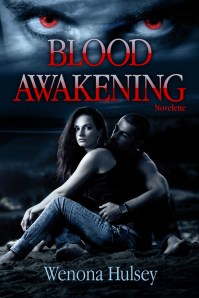
Guest Post: Wenona Hulsey author of the Blood of Burden Series

First off, thanks so much for letting me chat on your site, Chazz! I think your crime thriller readers mixed with my paranormal thriller readers make for some of the best kind of fans.

I’m Wenona Hulsey, author of the Blood Burden series that can be found on Amazon and B&N. Like Chazz, I love to thrill my readers and keep them guessing what will happen next. A great read shouldn’t be predictable so let me start out by telling you what you WILL NOT find in my series: A weak woman waiting for a prince to save her…NO.  A relationship that could be classified as stalking in the court of law…NO. Sparking vampires…ABSOLUTLY NOT.

The Blood Burden Series is about a small town woman with what she thinks is a slightly off kilter mind-reading ability brought on by the stress of losing her mother to cancer. But as time moves on her powers start to evolve, develop and grow into something much, much more. A war is brewing under the surface of the world we know and Nicole is the key weapon. She will have to decide whether she should embrace the powers along with the unusual other-worldly trainers sent to her or try to bury who she is risking all she loves.

Inside the pages of this series you will find mystery, heartbreak, test of loyalty, and romance that will keep you enthralled to the very last word. I mix Irish folklore and southern tradition into a setting with modern day fae and ancient warriors (the smoking hot kilt wearing kind) to take you into a completely new world that I hope you will enjoy.

Thanks you all so much for spending a moment with me.  Be sure to connect with me out in the social networking world after you check out my books.  I love to chat with readers!

Buy Links: B&N & Amazon 

Wenona’s blog  Twitter Facebook

Join my email list for the latest on all my books, contest and much more! 

Filed under: publishing, , , , , , ,

#NaNoWriMo: Tools to get you back on track & stay inspired

Right about now, if you’re doing National Novel Writing Month, you’re feeling a little tired and you have two complaints: Where do I take my story from here and how can I better manage my time to meet my writing goals?

I can help. First, here’s a link to my guest post on Masquerade Crew today. This excerpt from my book, Crack the Indie Author Code, is an easy, fun and  genuinely intuitive exercise that will turbocharge your NaNoWriMo efforts and make your manuscript fresh. I call the strategy my Trio approach to story creation. You’ll love it and your readers will, too.

And now your free time management tool: The SlimTimer. I found it through The Nerdist Way by Chris Hardwick. (With all those Star Wars jokes and references in my books, you must have guessed my nerd secret, huh?) This tool will help you track your activities and find time. Only what is measured can be improved. Measure your day with this timer.  Then make time you didn’t know you had, get back on track and stay on track.

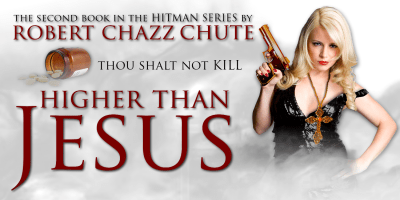
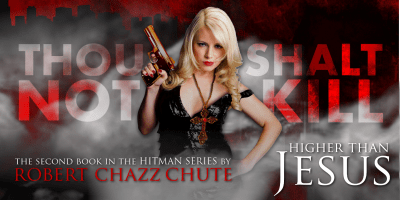
Crack the Indie Author Code is Book One. Write Your Book: Aspire to Inspire is Book Two in my series on writing and publishing. For fresh inspiration, I offer this uber cool image to motivate you to persist with writing your book so you, too, can have a cool ad like this!

Click the image to get Higher Than Jesus

Often when we think of graphic designers, we only think about book covers. Kit Foster from KitFosterDesign.com sent me this ad this morning. I’m using the white variation above in the Orangeberry book tour. Pretty cool, huh? Kit is not only an author and the sponsor of the All That Chazz podcast, he’s also an amazing designer. He does book covers, web banners, Quote Art and much more. If you have a podcast, you need art. If you need an ad, check out Kit’s portfolio and go get help. Great images grab eyeballs.

Graphic designers can do more than just book covers. Kit is a great consultant. For instance, it was he who suggested that I add a tag line to my covers using the ten commandments to reflect some aspect of the plots through the series. In Bigger Than Jesus, it was “Thou shalt not steal.” In Higher Than Jesus, it’s “Thou shalt not kill.” In the next book, Hollywood Jesus, it’s “Thou shalt not covet.” That tweak added a lot to the look and tone I wanted to achieve. Tweak your covers. Don’t let them lie there, weak and ugly.

I’m so excited about how my books are turning out (which explains how linktastic I am today), I want you to be excited about your books, too. Go write one.

Filed under: publishing, , , , , , , , , , , , , , , , , , , , , , , , , , , , , ,

#NanoWriMo Tip: How to finish with a flourish

Jodi McMaster asked a great question: Got any tips on how to approach endings? As a matter of fact, I do! I talk about story arcs and related whatnot in the writing guides, but here’s my take:

Crack the Indie Author Code and Write Your Book: Aspire to Inspire both have bonus offers of free ebooks. Buy two books and you get four!

1. Some people think you have to have happy endings. I prefer satisfying endings. A satisfying ending isn’t necessarily a happy one, but it should be generally perceived as an inevitable ending in retrospect. Surprising, yet logical and inevitable when you look back on it. That’s the ticket to reader happiness. It’s a tough order to fill, but it works every time when you do it right.

2. I love surprise endings. Twist endings are shunned in some literary circles, but the readers in those circles are squares. I once read a literary critic sneer at surprise endings as “too, too O. Henry.” Oh, please. “Too” O. Henry? As in the guy who wrote some of the most memorable, popular and enjoyed fiction of his time and beyond? It’s not a cheap ending if it’s logical and entertaining. Do that and nobody minds a surprise ending.

3. No cheap tricks, such as “And then the little girl fell out of bed and realized it was all a dream.” A really bad movie called Wisdom with Emilio Estevez did something like that. It was not wise and that’s why you’ve never heard of that movie, unless some unfortunate movie goer was speaking about lousy films on which to spit.

4. Readers should not be puzzled with your ending. If you’ve read a bunch of winning short story contest entries at some pretentious lit mag, you’ve read this sort of ending. It’s the nebulous ending favored by some very expensive MFA programs. It’s the sort of ending that’s so vague, it’s unsatisfying or downright opaque. You read it and reread and wonder if there’s any meaning behind that poetic last paragraph? Then you wonder if you just had a stroke and that’s why you can’t figure out what the heck the author is trying to say. Annoying. You can have intriguing endings. You can’t have loose ends that read like a quantum physics equation.

For Higher Than Jesus, my first ending was clear-ish. One of my beta team told me to make it more explicit and less poetic because that’s the last impression the reader gets before they go write a review. He was right so I rewrote the last paragraph for more of a punch between the eyes.

5. It should be an ending but you can hint that there’s more to come. I love leaving the door open a little. When readers invest themselves in a character, it kind of hurts to say goodbye to them. Characters should be so rich that the reader feels that the heroine’s and hero’s story will continue beyond the life recorded in the book. Hope for more from your characters in the future is uplifting. It can also uplift your sales when you turn one book into a series.

6. If you’ve got a too-easy ending, think about it longer. At the end of Casablanca — a movie I love — there aren’t any Nazis at the plane checking travel documents, the point the structure of the movie turned on. They could have wrung a little more tension out of that final plot point if there was some question of an external factor keeping Ilsa and Victor from getting on the plane, too.

7. Don’t stay too long saying goodbye. This is the dreaded viscous ending. Think of the last Lord of the Rings movie. It didn’t have one ending. It had five endings that dragged on and on. This was meant to appease lovers of the book. It made my butt numb in the movie theatre. Instead, hit your last power peak in the story and opt for the short dénouement. (Note that the end of the trilogy had a little of Casablanca’s plot niggle, too: Why all the walking when you can ride a giant eagle and zip back to the Shire in no time?)

8. Be very careful about killing off your protagonist. It’s a lot to ask of a reader to go through a whole book cheering for a character and killing them off at the end anyway. (See Point #1 again.) Remember how everybody hated Alien 3? There was lots to hate, but consider (spoiler alert) that after rooting for the little girl to live all through Alien 2, she dies in her cryotube at the beginning of Alien 3. It wasn’t a great start and it did not get better. Why? Because the audience was cheated of their earlier victory. It’s not that you can’t kill off a protagonist, but be smart about it and give the reader a payoff to make the sacrifice worth it. If you’re going to kill off Bruce Willis on an asteroid in Armageddon,  for instance, it better serve the cause of saving the planet from said asteroid. (This was back when Bruce Willis was more popular. We’re okay with killing him off earlier in the show now.)

9. More specifically to Jodi’s question: Great endings and great books spring from character. What does the protagonist want? Are they  worthy of that goal? As we make the reader care and amp up the tension along the way, the story is all about the obstacles in the protagonist’s way. When we’re through the obstacles, failures and reversals of fortune, have they won the day? Does the hero or heroine mourn the sacrifice it took to get them to end of the story but at least reach a higher level (e.g. wiser, stronger, redemption, making the family unit whole, saving the world, saving themselves, vanquishing their enemies, winning love etc.,…)? The protagonist doesn’t have to meet all their goals to provide a satisfying ending, but for the reader to be satisfied, they should feel that the trip was worth the time and the stakes were high enough.

Another example from movies  (and a spoiler alert ahead): Michael Keaton is awesome in the film Clean and Sober. However, as good as Keaton is in the drama, the ending is unsatisfying. It ends with Keaton declaring his first days of sobriety, but it doesn’t feel like he’s really earned the achievement. He goes through a lot, yes, but it seems like he gets sober through an unlikely inability to get his hands on any drugs rather than an act of will and discipline. Sobriety is something that happens to him, not something he went out and did or didn’t do. Heroes own the locus of control. That’s why everyone’s a sucker for a training montage in any sports movie.

10. The clue to a great ending is often hinted at in the beginning of the book. Your opening is a statement of the core problems the protagonist faces. Your ending is the solution to whatever that problem is. At the opening of Higher Than Jesus, I’ve got my hit man, Jesus Diaz, about to kill a guy in a sleazy after-hours joint in Chicago on Christmas Day. Jesus needs money and he has to get rid of the bad guy. I won’t spoil anything, but I will say that at the end of Higher Than Jesus, he’s clearer about his own character and why he does what he does. The payoff is wisdom and growth and…much more I can’t tell you.

My first clues to great endings were in reading Esquire magazine. Any great magazine article saves a little punch at the end. (Newspapers use the inverse pyramid model, so all the good stuff it’s up top and they edit coarsely by cutting from the bottom.) Magazine pieces always end on a strong note. It can be ironic or funny or powerful or triumphant or geared to make you cry. Read a bunch of those articles and then compare that feeling to the feeling you get at the end of your book. If you have a similar tickle in your brain and pull at your heart, you’ve got a memorable ending with punch.

~ Robert Chazz Chute is the author of two writing guides: Crack the Indie Author Code and Write Your Book: Aspire to Inspire. They aren’t your Grampy’s and Grammy’s guides to writing and publishing. Lots more inspiration, zero scolding and tons of ideas and motivation for writing your books to completion. (“To completion” is not an orgasm joke. That’s a terrible euphemism. Don’t use that!)


Filed under: publishing, , , , , , , , , , , , , , , , ,

Jackie Barbosa: “Devaluation” & Other Pricing Myths

You think your book is too good to go for such a low price? I think so, too…or rather, that’s what I feel. However, author Jackie Barbosa makes a great case for why we shouldn’t listen to those diehards who believe a low price must indicate that we’re trying to fob off a crappy book.

For instance: “…unfortunately, writers can’t make their living by depending solely on the readers who see a higher price point as a sign of quality. We have to appeal to the readers whose impulse buy point is free or 99 cents or “look, it’s under $2 and on a bestseller list so it must be a good book.”

I love this post. It’s tastes vinegary, but it’s good for us to keep in mind when we set prices for our books.  

Read the entire argument by Jackie Barbosa here.

Filed under: publishing, , , , , , , , , , ,

Book cover troubles and solutions

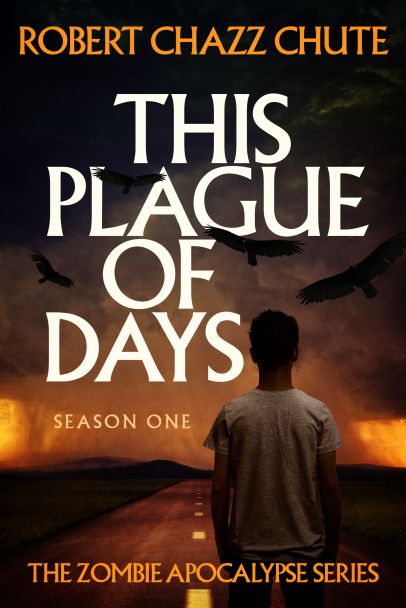
Too many books won’t be read, and not because they aren’t great. They don’t look good enough for a second glance. There are graphic design solutions. I just fired off an email to my solution, author and cover designer Kit Foster of KitFosterDesign.com. He sent me some samples of ideas for the cover of my upcoming plague thriller. One image was particularly strong and we’ll definitely go with some variation of that draft. You want great, not just good. Book covers are not easy. Unless you’re a graphic designer, get professional help with your cover. Maybe even then, you should outsource. Most authors who edit still need editors, so why don’t cover designers need another set of eyes on their book project?

Book art is hard to get right. With his first inkling about my book, Kit has already balanced out two opposing demands: We want readers to be struck by the uniqueness of the image on the one hand (and compelled by graphic design magic to buy, of course). However, the tone of the cover must also be so familiar that the reader will know intuitively and instantly to what genre the book belongs. Unique, yet familiar. Quite a feat, really, isn’t it? I’ve seen some indie authors insist they can do a DIY cover with PowerPoint. Looking at their cover art, I’m sorry, but I can’t agree. I want a cover that’s a delicious chocolate croissant, not a lentil and sewage burrito. I’m glad those writers can succeed despite their covers, but I’m sure they’d sell even more without the self-inflicted handicap of DIY delusion.

My discussion with Kit got me thinking again about what makes a great book cover. A solid title that grabs the

Click to get Bigger Than Jesus here

reader can make a difference. A recognizable name is bigger factor. If you have a bland, soundalike title (change it!) or haven’t broken through (yet), your best hope is a great cover image and hiring a graphic designer create it. As I’ve already confessed in this space, I experimented with DIY and I hurt myself. I’ve sold enough books in trad publishing that I know a good cover when I see one, but actually creating a decent book cover? Ha! No. I’m not the graphic designer. All hail Kit. He’s a book cover solution.

The problem I see with some book covers is they try to do too much at once. Covers are crammed, as if the author hopes the image will tell the whole story instead of giving the reader an intriguing taste and tease. It’s tempting to try that. I’ve almost succumbed myself, which is another reason to have a helmsman with a steady hand on the wheel to keep you from crashing into all those pretty icebergs. It’s tempting because, admit it, we still think we should pull in anybody and everybody who can read. In my opinion, that’s a mistake. I want readers who really love mystery and suspense mixed with witty repartee. All others need not apply because “all others” probably won’t like my books. That’s okay. You don’t like “music”. Our tastes are much more specific than that. You like neo-thrash synth-metal, industrial-Asian jazz fusion and Tom Jones singing It’s Not Unusual in a duet with the ghost of Tupac. Go after whatever your niche is. Instead of taking little bits from all over your plot and compressing them into a graphical soup, more specific, evocative and emotional images make compelling book cover art.

Please avoid a cover that only makes sense after you’ve read the entire book. The purpose of the cover is to seduce innocent virgins. Don’t require Holmesian cryptographic skills from people who aren’t even your readers yet. Before they are your readers, they are disinterested browsers. Convert them to actual readership with book covers that promise a secret revealed, invite them on a journey and make them hope for a braingasm. (Then deliver it when they actually buy it and read it.)

I see a lot of books where the author’s name is too small. That’s not an ego problem. That’s a branding problem. I understand how that happens. Readability is sacrificed so more elements can be crammed on the cover. It’s the Throw Everything at the Wall and Hope Something Sticks Approach. Take that cover down to thumbnail size and it’s not just readability that’s sacrificed, but legibility and sales. Kit goes with powerful, evocative images so we move toward covers that show and sell. I’m proud to be indie, but I want author name recognition in the long term. To do that, the cover has to look like a traditionally published cover. What’s common among trad published covers? Bigger author name tags.

For more on what makes a great cover, check out e-book cover design awards for insightful commentary that helps make better book covers and sells more books. Or just head over to Kit’s website and get going on your new book cover (or revamp an old one that isn’t selling. I did that with my DIY cover.) Kit Foster is a very helpful guy who does so much for authors at very reasonable rates. You’ve put so much work into your book. Give it a fighting chance to be read. Give your book, and all those virgins, a striking cover.

The paperback has arrived. For $9.99. Did you hear that? Distant thunder of the Book Gods mumbling to each other. Oooh, shivers!

Filed under: publishing, , , , , , , , , , , , , , , ,

Ultimate Blog Challenge: Writing Books on Writing

Can writing be taught?Sure, but what most people mean by the question is, can anyone write to a professional level? One

On Writing

On Writing (Photo credit: Wikipedia)

newspaper colleague of mine insisted that it was something you were born with or you weren’t. I think the desire to immerse yourself in writing might spring from a quirk of genetics, but after that it’s up to you.

Certainly, anyone’s writing can be improved. Eliminate excess adverbs and don’t strain a metaphor until it breaks and you’re off to a good start. I’ve taught a couple of writing classes now and I suspect that writing skill is self-selecting anyway. If you aren’t interested in writing to begin with — as it is with anything — you probably won’t improve much. The best training in writing I got was first to read extensively early on. In my childhood home, books were a big deal and they still are now that I’m supposed to be a grown-up. Toward the end of journalism school, I think the best training I got in writing was to write copiously for a daily newspaper with feedback from editors.

There are a ton of books on writing advice and I’m sure I’ve read just about all of them. Reading about writing is often less about learning something new (there’s not really that much new to say about craft, is there?) as it is confirming my thoughts, feelings and biases. Sometimes a unique idea will rise out of that reading. Mostly I read writing advice books to enjoy the voice and the company of likeminded writers and to find inspiration. It’s motivating, yet cozy as a warm blanket, to read a book on writing advice and think, “Yes, I agree. I’m doing that. I could try that. I should go write some more now.” I end up reading writing advice for the same reasons I drink coffee. It’s a stimulant that makes you feel warm inside.

That’s ultimately why I decided I will soon add to the tonnage of writing advice books. Some books are very specific and prescriptive about writing. Others give excellent advice and strategies for marketing for the indie author (like Jeff Bennington’s intrepid Indie Author’s Guide to the Universe.)

Mine will be a softer approach for newer writers, like Bird by BirdI’ve gone back to Stephen King’s On Writing again and again. These are the books that told me I wasn’t alone and this wasn’t so hard or crazy if I just pecked away at it. It was simply craft and there isn’t a secret besides sitting down (or getting on my treadmill desk) and doing the work I knew I could do.

The aspiration for this book is more modest than some who take a step-by-step, flow chart approach. My book on writing will be inspiration for the new indie author, much of it drawn from posts on this blog. Early on I linked to others less and wrote more about craft (instead of focusing on marketing the Indie Author Revolution as I seem to do now.) I selected the best and most useful posts from over 900 articles on ChazzWrites.com, then added to them, wrote some new stuff and edited again.

My book won’t be as ambitious as some who (may Thor bless them) give strict advice on what to do and how to do it. My ideal reader will be a writer like me who wants to grab a steaming coffee, curl up in an armchair and read Crack the Indie Author Code: Aspire to Inspire (yes, that’s what I called it and yes, it’s coming soon). Readers will find an ally, inspiration and company on the journey to publication. For me, the work is about the writing first and foremost. The real fun happens in our heads as we write and nurture that spark of inspiration into a flame that throws light and heat. I’m happiest at my keyboard hooked up to the coffee in the intravenous drip.

Do I think writing can be taught? Sure. If you want it enough to bother to go looking for the education, that’s the cardinal sign and symptom that you’re already infected with the writing bug, anyway.

Filed under: publishing, , , , , , , , , , , , ,

Ultimate Blog Challenge: The Warm Chocolate Chip Cookie Exposition

After reading the book descriptions, someone sent me a question:

“What are your books like?” 

“Suspense that’s often funny with lots of twists,” I said.

“Yeah, but what are they like?”

Um…what? I wasn’t sure what they were getting at, so I replied via email.

If you like:

the twists of William (The Princess Bride) Goldman’s plots;

the fast pace of a Blake (Run) Crouch;

the worldview of Chuck (Fight Club) Palahniuk;

the punchy, funny dialogue of Elmore (Get Shorty) Leonard;

and the disappointed humanism of Kurt (I shouldn’t have to name any Kurt Vonnegut books! Read them all!) Vonnegut,

then you’ll love my crime novel Bigger Than Jesus. Enjoy!

My potential reader/interrogator then wrote, “I’m not familiar with any of those books so don’t tell me about them. Tell me what your book is like!”

I sighed and then I fired off another helpful email:

Best chocolate chip cookies I've made in decades.

Best chocolate chip cookies I’ve made in decades. (Photo credit: Wikipedia)

“Don’t you love chocolate chip cookies when they’re straight out of the oven? The chocolate is melting a bit and you risk burning your tongue because you can hardly wait. These are the best-tasting chocolate chip cookies ever. You force yourself to slow down and put one in your mouth. It’s really soft and you just hold it there as long as you can to savour it while you pour a tall, cold glass of milk? Then the kitchen floor falls out from under you and you’re sucked down into quicksand and you’re trying not to die and you can’t figure out why God hates you and all you want is to get away and make the woman of your dreams love you. You only have seconds before the suffocating sludge is over your head and you’re about to find out if what follows this tortured life is hell or oblivion. Your heart is full of regret and if you can just live, you swear you’ll turn your life around. Kind of like that, but with more jokes.”

No reply yet, but I’m guessing he’s not a reader, anyway.

If they do email again, I’ll suggest they consider breaking down and read a sample chapter.


Filed under: publishing, , , , , , , , , , , , , , , , ,

Bestseller with over 1,000 reviews!
Winner of the North Street Book Prize, Reader's Favorite, the
Literary Titan Award, the Hollywood Book Festival, and the
New York Book Festival.

http://mybook.to/OurZombieHours
A NEW ZOMBIE ANTHOLOGY

Winner of Writer's Digest's 2014 Honorable Mention in Self-published Ebook Awards in Genre

The first 81 lessons to get your Buffy on

More lessons to help you survive Armageddon

"You will laugh your ass off!" ~ Maxwell Cynn, author of Cybergrrl

Available now!

Fast-paced terror, new threats, more twists.

An autistic boy versus our world in free fall

Suspense to melt your face and play with your brain.

Action like a Guy Ritchie film. Funny like Woody Allen when he was funny.

Jesus: Sexier and even more addicted to love.

You can pick this ebook up for free today at this link: http://bit.ly/TheNightMan

Join my inner circle at AllThatChazz.com

See my books, blogs, links and podcasts.

Enter your email address to follow this blog and receive notifications of new posts by email.

Join 2,061 other subscribers