C h a z z W r i t e s . c o m

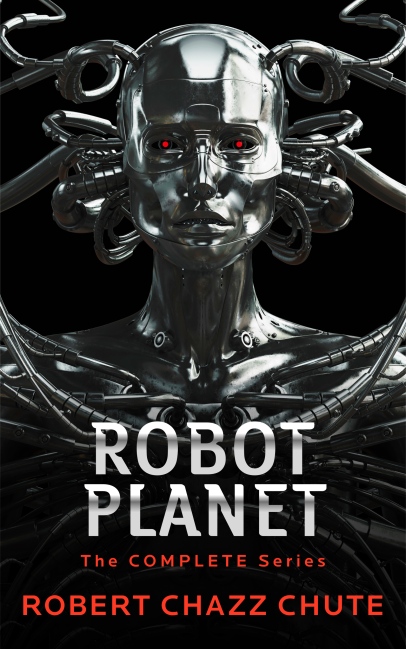
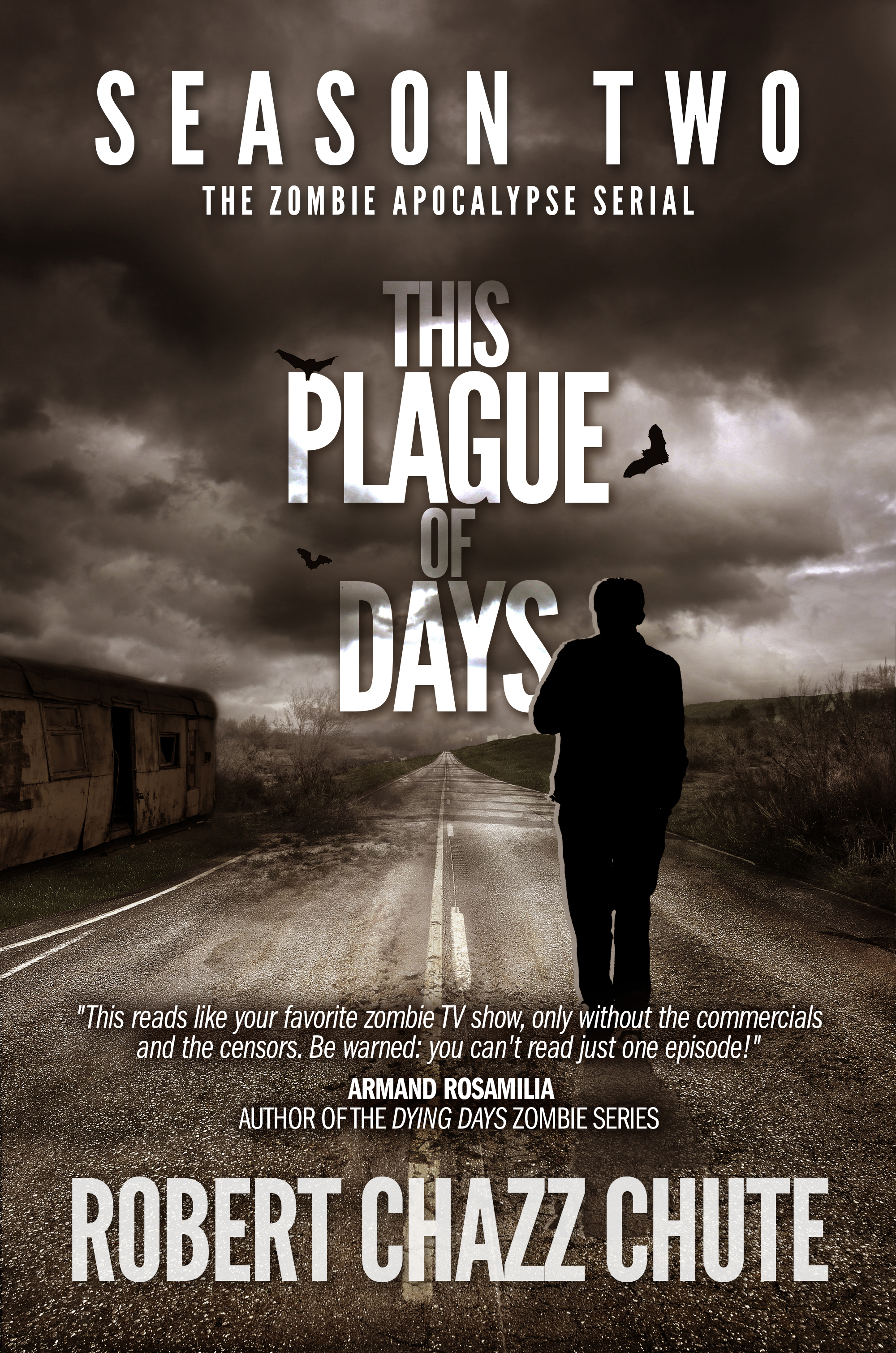
See all my books at AllThatChazz.com.

Ultimate Blog Challenge: Top 10 things I wish I didn’t know about readers

Small-town terrors and psychological mayhem in Maine.

1. They get bored too easily. We used to have writers who were flavours of the month. With Amazon rankings, you can be the flavour of the hour and then disappear into obscurity unless you fight the death spiral and/or get lucky.

2. Readers are too busy. With the proliferation of “free” we all have huge To Be Read piles. Sadly, as with to-do lists, many of us never get to the bottom of those piles.

3. Many people prefer a genre I don’t write. Romance is much more popular. I used to read romances professionally when I worked for Harlequin. My books have a key romantic element, but they are not romances, so de facto, I am not on the radar of a large group of very dedicated readers.

4. The readers who love me might get sick of me trying to reach the readers who don’t know me. I’m very careful on Twitter to promote others, not just me. Still, I need to kick back and tweet a little joke here and there and say hello. It’s difficult to find the balance.
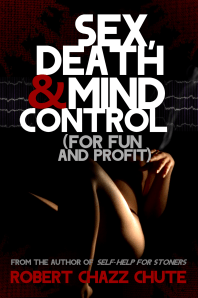
Paranormal persuasion and scary stories.

5. I’m not reaching some readers because I made some choices in titles that were challenging. (I almost wrote “unfortunate”, but that would put the onus on me and I’m not ready to own that yet.) The thing is, Sex, Death & Mind Control is one of the best things I’ve written but it has the lowest sales. It’s not sexy enough for those searching for erotica. It’s paranormal suspense (with award winners!), but when you see that always-interesting “What Else Customers Viewed” list, it’s almost all erotica on the Sex, Death & Mind Control sales page. “End of the Line” is probably the best short story I’ve ever written, but it  remains a hidden treasure because I turned readers off with a title I thought would get more attention, not less.

6. Ditto Self-help for Stoners. It was a clue for me when one of the reviewers who loved it added, “Don’t let the title scare you off.” It’s a weird mix of War of Art self-help and suspense. Strange, I know, but not really all that transgressive. (Should have called it Self-help for Surrealists to pull in readers who are also painters!) My strategy going in was to have an identifiable group to market to instead of saying it was for anybody who loved suspenseful fiction. To some extent that worked, but not as well as I’d hoped. (It still outsells Sex, Death & Mind Control four to one. I can’t say the Self-help for Stoners strategy was a failure, just that it could do better.)

You don’t have to be high to enjoy it. Sure, it would make you a better audience but…

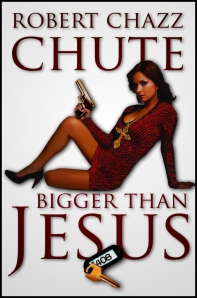
7. Readers have less patience now. I changed my plotting and pacing with Bigger Than Jesus to cater to that lack of patience. I see it in myself. Maybe the Internet did it to our brains, I don’t know. That’s not even be a bad thing per se, but expect more Blake Crouch pacing and less Annie Proulx meandering. There used to be more room for both approaches.

8. There are still prejudices against anything labeled “experimental”. I wrote Bigger than Jesus in present tense, second-person. That alone is reason enough for some readers to run screaming. I can tell them all day that it worked. Won’t matter. That’s okay, but it’s still a prejudice.

I wanted to do something that some people thought couldn’t or shouldn’t be done and I wanted to do it so well they’d either quickly forget their prejudice or give me more credit for doing it so well. Blanket pronouncements of “You can’t do that!” are one of the reasons I did it. I don’t like being told what I can’t do. In fact, it makes me want to do it all the more. (I admit this attitude is not something that serves me well all the time. Having a job in the regular world, for instance, is uh…a problem.)

9. Readers look for ties to your real life. This is a byproduct of increased author/reader interaction. However, the Internet isn’t to blame for this one. This was very much the rage in English departments across the world years ago. Students were taught they couldn’t understand the fullness of the fiction without making judgments about the author, his or his gender, origin and life experience. They shouldn’t have done that. No one truly knows the inside of someone else’s skull. (I’ve even opened it up and had a look. Trust me, nobody really knows.) Besides, it’s fiction. Take it on its own merit. Please don’t make assumptions about the author from what you read in a book of fiction. Don’t make me kill again. (See what I mean?)

10. Readers fade. Even if they love your work, they move on. They get hungry for something new and different unless you keep feeding them. I don’t think anyone should race to publication if they aren’t up to the schedule and you do have to build in editorial time to make the book better. However, they are hungry and it is a race. People will tell you it isn’t. They’re wrong. It is. It’s a race against time. We don’t live forever and we have books in us and a readership to find and a readership we hope finds us. William Styron came out with a nice juicy thick book every ten years, but he was William Styron and that was before ebooks and our shiny,  new demand-per-click culture.

I love readers. People who don’t read creep me out. I can say that because how would they know I’ve insulted them? What do non-readers have to contribute? Those dummies!

Ha! Wait. You aren’t reading this aloud to someone are you?

~ Like my flavor? Listen to the first chapter of my crime thriller, Bigger Than Jesus. I’m podcasting the book through the summer. Enjoy! (Or be a hero and just click the cover to grab it. Thanks for reading!)

Filed under: publishing, , , , , , , , , , , , , , , , , ,

Ultimate Blog Challenge: Top 10 What I’ll soon do differently with my book promotion

1. Last November I started up my podcast to reach out to new readers. I called the podcast Self-help for Stoners

English: Third generation Amazon Kindle

English: Third generation Amazon Kindle (Photo credit: Wikipedia)

after my book of the same name. The podcast was a good idea, but tying the title to one book when I have dozens in me was a tactical error and I’ll change that soon.

2. This, my main blog, focuses on information, both original and curated, for anyone interested in publishing books.  The blog is not geared to readers. That’s what the author site is for. In the future, I think I’ll post to the author site more often than I do, especially as I have more reviews and events to talk about. I don’t regret writing about writing, though. Some people think authors are stupid for doing that, but I went with my passion. If I had tackled something I was less interested in, I wouldn’t be approaching 1,000 blog posts now and I wouldn’t be able to make two books out of it.

3. My two latest books, Bigger Than Jesus and The Dangerous Kind & Other Stories, are both on Amazon and exclusive to KDP Select so they do not appear in retail outlets. That’s fine for now, but eventually I will migrate them to other ebook platforms. Amazon was great at promotion, but with their new algorithms, they aren’t so great for me anymore. (I hope they rectify this and we, collectively, get through the current summer sales slump to see a more energetic autumn.)

4. In the future, I’ll raise the price of my books. They’re all at couch change for $2.99 now. This is the introductory price and will change, which will also make more sense with Amazon’s new price-based (rather than quantity sold) algorithms.

5. I have several books in revisions that reach beyond 120,000 words. If they were shorter they’d be done and available by now. If it makes editorial sense, I may break the longest books up into trilogies.

6. I will write shorter books. As I wrote Bigger Than Jesus, I discovered that I love to write a book with a high momentum. A fast write (and read) energizes me. The paperback will still clock in at 249 pages, so no one will feel I’m shortchanging them.

7. I will write no stand-alones. Bigger than Jesus is the first of The Hit Man Series. The Poeticule Bay Series is in development. The books are meant to stretch out into long series following certain characters. Stand alone novels are a heavy investment of my time that do not develop a following to the same numbers as a series can. To make more art, I have to make that business decision. What will be fun is when I have crossovers, where many of my characters from different books meet.

8. I will write faster. I wrote Bigger Than Jesus in a month. To perfect it, the editorial pipeline was longer than that, but I find I can write effectively and well at speed. My editor and beta team made that possible and, maybe it’s the journalistic training talking, deadlines are my friend.

9. I will have print versions available for all my books going forward. Currently I just have Self-help for Stoners available as a paperback. The other short story collections didn’t have quite the length needed to make for a paperback with heft. Everything I do from now on makes for a great mass market paperback. I just finished all the book design and print formatting on Bigger Than Jesus today so I’ll have the paperbacks on hand pretty soon. (I’m in love with Georgia. She’s a beautiful font.)

10. I will be less shy about contacting other authors for blurbs and book blogger for reviews. This is more of an affirmation than a plan since I have yet to compose those emails. I’ve sent out a few copies for review, but it’s an issue about which I am still an introvert. (I’m only pretending to be an extrovert here so someone will read my books.)

~ Like my flavor? Listen to the first chapter of my crime thriller, Bigger Than Jesus. I’m

Get Bigger Than Jesus

podcasting the book through the summer. Enjoy! (Or be a hero and just click the cover to grab it. Thanks for reading!)

Filed under: publishing, , , , , , , , , , , , , , , , , , , ,

AB Challenge 24: More on Free Books. Moron Free Books.

Yesterday, we talked about free ebooks and me. Now let’s talk about you, too. Recently we said, “Free is the new 99 cents!” Now free is fraught with diminished opportunity and all that lousy freeness. Let’s delve into pricing ebooks for promotions and try to figure out for ourselves if this is a time to rest and recover or should we double down on ebook marketing?

History: Last year, selling at 99 cents still moved some books and gained new readers. The royalty wasn’t great but it was a loss leader. Now 99 cents just seems to be a loss. I had my novella, The Dangerous Kind, up for 99 cents. It’s a great story that slides the steel home at around 10,000 words. After analysing the sales (took two seconds) I’ve taken it down. Later this week it will be back on Amazon for $2.99, bundled in with some Poeticule Bay short stories. My short story collections sell, but offering a deal on a shorter work didn’t attract readers and my short stories on Smashwords (each priced at 99 cents) aren’t moving as is so they’ll all be in one collection: The Dangerous Kind and Other Stories.

Part of the problem was the old cover for my novella. I’ve blogged about this issue before so I won’t rehash it. I’ll only say: Be indie if you want, but make sure your covers don’t look indie. (My graphic designer, Kit Foster can help you with that at a very reasonable price for a very professional look.)

GET BIGGER THAN JESUS

The Loss Leader Pricing Paradox: You’re pricing your work inexpensively to attract new readers. You’re hoping new people will find you, take a chance on you, dig your flavour, buy all your books and spread your holy word. However, going cheap actually repels some browsers because they associate a cheap price with a bad book. So many times I’ve read in comment threads, “If the author values their work so little, why should I?” There’s someone who doesn’t appreciate the indie author’s bind. I’ll save your life for free. Does that make your life worth less? (Ooh, he’s cranky today!)

Which brings us to the Opportunity/Problem Paradox: The same browsers who think 99 cents cheapens the inherent value of the book often think no less of an author who offers their work for free. All ebooks have free samples, of course, but I don’t think very many potential buyers look at them. They go by genre, the author’s rep, the cover and the description (not necessarily in the that order.) Free is easy and no risk and I haven’t seen many people casting aspersions on authors offering free entertainment. Free is so ubiquitous, it’s considered the norm. It’s an opportunity for the reader and the writer. Free is so ubiquitous, it’s a problem because of the glut of free ebooks on e-readers. We’re drowning in free.

The Perceived Value Corollary: There are so many free books filling up e-readers that readers have no commitment to what they download. (Amazon says, “Click to buy”, but if it’s free, it really means “Click to download”, doesn’t it?) Many of those free books will go unread. When you can click and get, click and get, click and get, there’s no investment on the reader’s part in individual books. Instead, the hoarder mentality rises. What this means for writers is, the minute you’ve dared to slow down your narrative, the quicker the reader is to dump you for another free ebook. We’ve already seen evidence of this trend: there’s less of a market for literary fiction that demands more of the reader.

PV Corollary Case study: A buddy of mine was a sales rep for Margaret Atwood and loved her to bits. I told him I couldn’t get into The Handmaid’s Tale. I bailed out after too many slow pages examining the scratchings of previous handmaids in the rear of the bedroom closet. “Chazz,” he said,”What you’ve got to learn to do when a story slows down too much is grab a few pages and flip forward.” I’m a bit OCD about reading every word so I was a bit shocked. Skipping a page  had never occurred to me. “So…” I said, “You haven’t read it, either!”

The Hidden Unintended Consequence: On an e-reader, no one knows what you’re reading on the bus to work. Sales of erotica have risen because we don’t have to hide our actual taste or pay at a bookstore register manned by a silver-haired woman who looks exactly like Baptist Grammy. Only Homeland Security and the computers that record everything know all you really want is Fifty Shades of Grey. However, it’s not just about erotica. The market has ruled and so-called “downmarket” fiction is what people buy. The readers disagree with the historic arbiters of taste about what’s important. (Did you hear that pop? Somebody’s head exploded again. Clean up, aisle three!)

The Value Addition: When you buy a book — not just download it for free — you show commitment. You’re trusting the author to show you a good time and if you throw it aside, you aren’t just tossing the book. You’re throwing away the bucks you put into it, too.

The Cost-benefit Analysis: For readers, free books are great because choice is awesome. For the writer, providing free books is a way to gain the trust of the reader at no risk (to the reader.) It’s about exposure so you get ranked on lists. Many readers don’t trust reviews (often unfairly) so free is one  avenue into their hearts and minds. We’re making a short-term sacrifice to get our work read, to get on “also viewed and also bought lists” and to get our share of that sweet lending pot of gold from Amazon. Giving our precious away for free is an advertising cost that doesn’t show up as a debit in our bank accounts, but it’s still a cost.

The Cost-benefit Caveat: Since Amazon changed their algorithm, it’s not as happy a story as it was last December. Unless you wrote Fifty Shades of Grey, sales have slumped across the board since March and we’re now into the summer doldrums of the book buying year. The market is as cyclical as the sea. The wind will come back in our sails. The readers will return as free diminishes. Some authors are opting out of KDP Select, or opting in for one three-month cycle for the promotion and then opting out to stop the exclusivity clause and give other sales outlets a chance.

The Irrational Variable Conundrum: Does free devalue literature? Will our prices be chronically depressed because of free? As an indie writer, this isn’t a question that affects me. The higher prices traditional publishers charge for ebooks doesn’t mean that their authors are getting more dough. It’s going to the publishers for their high overheads. I only have to pay me so the 70% royalty rate on my books still looks pretty sweet to me. Like they used to say in cheesy, local car commercials on cable, “How do we do it? Volume!” I’m glad traditional publishers keep their ebook prices high. It gives a guy like me a chance at being discovered.

Will these short-term sacrifices mean long-term financial pain? No, yes and maybe. Who knows? I’m suspicious of too much certainty. Your answer may vary because the fulcrum for this heavy conundrum rests of an irrational variable: How high were your expectations to begin with? Is this side money, the size, say, of the little Swiss Chalet side salad? Did you want the comfort of the double leg dinner as an income? Or did you want the richness of the full Swiss Chalet Family pack with the coconut cream pie for desert? Input your variable and solve for X.

Conclusions: Given the free ebook glut, do you market even harder now that we’re into summer’s slow days? I think I’ll just stay the course. It feels like trying to run up the down escalator and I already flog hard enough as it is. Instead, I’m focusing my energies on putting up more of the work I’ve prepared and I’m writing new stuff. I’m giving the market more time to recover so I’ll be ready with more books to sell.

Putting up more books is the only sure way I know of selling more books.

Predictions:  New strategies will emerge, but no one seems sure what The Answer is. It might not be one answer and it might not be as dramatic and sweeping as the free ebook boom that hit the market when Amazon’s KDP Select algorithms benefited us so much back in December. I suspect we’ll be actively spending more money on advertising and promotion for our books in the near future. I’m aware of a few new and clever-sounding strategies, but they are as yet untested by the market’s searing flame. I’ll revisit said strategies in a future post, but today’s post is already too long and don’t we have some serious writing to do?

Filed under: publishing, , , , , , , , , , , , , , , , , ,

Author Blog Challenge 23: Free sex and the value of an ebook

GET BIGGER THAN JESUS

Why should he pay for the cow when he can get the milk for free? If you’re unfamiliar with this distasteful euphemism, it’s meant to control and shame women so they defy their biological needs and get married too young to the first doofus* who comes along so they won’t risk being called sluts by a repressed and repressive patriarchy and said patriarchy’s agents. It’s the same misogyny behind, “For birth control, hold an aspirin between your knees,” and “Good cowgirls keep their calves together!” It’s kind of funny the first time you hear it. Then you realize it’s a power grab meant to squelch the joys of life and your humanness. (I do love a breakdown of social constructs so the deviant subtext in revealed.) What, you ask, does that have to do with ebooks? Everything.

Yesterday began a little after 5 a.m. It continued until 3 a.m. I hasten to add there were distractions. I did stop to shower and eat. There’s a shower hose over my desk chair by the IV pole. The IV bags are full of double espresso. The desk chair is a toilet. It’s like the helpful chairs in WALL-e, before that evil little robot screwed everything up for everybody and made them get up and move around outside. Mostly, I formatted my new book. For all the work, I wonder if people will buy it when they can have it for free?

Crack the Indie Author Code: Aspire to Inspire (by Robert Chazz Chute, coming in early July!) is a book based on the best of this blog. I’m creeping up on 1,000 posts and I thought it was time I made something more concrete of it. It’ll be my favorite posts in one convenient, pithy, humorous, inspirational package. I’m editing again and updating as I go, of course. At over 90,000 words, it will be my comprehensive take on what the newbie needs to know and what the self-publishing veterans’ choir likes to sing. I wrote a note in the front matter about who the book is for. I made sure to say: Hey, if you want the milk for free, feel free to sift through the blog. ChazzWrites is free. All the podcasts at AllThatChazz are free, too. Everything I sell is so close to free in price, you’d tip the pizza guy what you’d pay for my books. Enjoy! I give freely, without remorse or hesitation or hard feelings. Surprising, because, as a cheap writer who can pinch a Canadian quarter until the moose screams (that’s “eagle screams” if you’re in the United States), I’m actually a terrible tipper.

There is a lot of information that’s free on the Internet so I try to keep ChazzWrites.com fresh and a little different — even contrarian. I think I convey that information with a certain flair, but my hairdresser thinks he’s funny, too. Meanwhile, I just wish he’d never learned to speak english. I’m not going deep  into ever-changing information, either. Crack the Indie Author Code isn’t about the latest marketing theory for self-publishing. It’s evergreen stuff — old-fashioned from a new angle —  about writing craft as seen through my lens and as told to any writer who is more eager for cozy inspiration than ebook marketing advice. (With the changes at Amazon, a lot of marketing theory is still up in the air, but if you want a solid marketing book that’s user-friendly, buy my friend Jeff Bennington’s book, The Indie Author’s Guide to the Universe and check his site for updates.)

Since my new book is hidden right here within nigh 1,000 posts, why buy it to put it on your e-reader? What’s the unique selling point? What’s the value to the customer? I’d say: ease of use; improved readability; improved searchability; updates; new content; improved content; my moral support and your grasping consumerism. I make better jokes as I make another pass at the content, too.

As I go through Crack the Indie Author Code, I can see how some of my ideas have changed over time. When I started this blog, I talked a lot more about craft and writing mechanics. Self-publishing needed more cheerleaders then.  Now we need more leaders. Early on there was more, “Rah! Rah! Rah! Those guys in trad pub don’t get it and don’t see what’s coming!” I omitted some of those posts even though I was right. They were appropriate at the time, but it’s time to mature (the jokes are still less than mature.) Self-publishing’s next step is simply to call it publishing. We need to get past hang-ups about trad versus indie. Yes, of course, there’s still value in traditional publishing. It’s not going away. It’s just changing radically. The new paradigm is not necessarily either/or. Depending on business cases, multiple variables and your temperament, you may choose to do both and only the terminally crank y will fault you. Meanwhile, successful revolutions establish regimes.

But, will anyone bother to buy another writing book? Don’t we have enough?  The broad answer is, can you get enough of whatever your passion is? More particular to my writing book, those who like my flavor will buy it. Those who won’t, won’t.  That’s all beside the point, anyway. I know it’s a business, but I don’t write for you because I can’t anticipate all your  variables and idiosyncrasies. I can only write to my taste. I write for your adulation, sure, but first, I write to entertain myself. I’m hoping you’ll say, “Oh, Chazz, how clever you are! I’ll buy umpteen copies for all my friends!” But before you ever get a chance to evaluate, that’s me sitting at my keyboard enjoying the dopamine trickling and tickling my neo-cortex. That’s me saying, “Oh, Chazz, how clever you are!” We write for ourselves first, not the reader. The act of writing is primary, sometimes even primal. The point is to form the thoughts, think through your typing fingers and transcend the blank page until you’re high on the creative rush.

Will Free beat out $3.99 in the cost-benefit analysis? No. You’ll buy my cow for convenience or for other variables, not least of which is, to have and to hold. And, to answer the ugly metaphor that began this piece? Most  people enjoy free premarital sex and yet most people still marry (some to dark and very costly ends.) At $3.99, the risk is microscopic compared to marrying someone.

To win your $3.99, I just have to create something I’ll love.

If you’re of the same mind, I have a sale.

Back to the espresso drip. I’m off to make that dopamine gush!

* Generalizations aren’t fair. Sometimes the first doofus is the right doofus, but most people these days test out several to many doofuses before selecting the one doofus they can love (and be most angry at without opting for murder) for the length of their marriage and possibly the rest of their lives.

Filed under: publishing, , , , , , , , , , , , , , , , , , , , , ,

DAVENPORT DIALOGUES: MARRIED TO THE HIT MAN

See on Scoop.itWriting and reading fiction

A theme is emerging today: Another remarkable story from the trenches. When Kiana Davenport dared to publish a couple of stories on Kindle, things got ugly and Penguin demanded the advance on her novel back. Fascinating post at the link, and frankly, the author comes out the end of the feces storm smelling of roses and lavender. Read on at the link below.

See on kianadavenportdialogues.blogspot.ca

(Tomorrow we’ll go back to being our usual, happy and positive selves in a dimension without conflict, sadness or anxiety. It’s going to be awesome. Of course, we’ll all be on mushrooms, but still…)

Filed under: publishing, , , , ,

Who reviews the reviewers? You could.

The second generation Amazon Kindle, showing t...

The second generation Amazon Kindle, showing the book Alice's Adventures in Wonderland (Photo credit: Wikipedia)

Maybe we need to make a concerted effort to review some reviewers so they’ll either change, cheer up or shut up. Allow me to explain before you give this blog post a one-star review.

I’m in the home stretch in completing my crime novel and after a hard day sweating over a hot keyboard, I dip into my Kindle to unwind. As I search for new books to load up on, I find myself drawn to scan Amazon reviews. The sad truth is, I haven’t been reading the five-star or four-star reviews much. I’ve been clicking on the one-star reviews and reading with horror.

There are several reasons for my self-abusive behavior: 

1. I’m looking for mistakes to avoid. Not all one-star reviews are wrong and I’m trying to glean the honest from the brutally honest. Some books are plain bad.

2. Cranky people can be funny sometimes. Sometimes on purpose. Just as villains can be more interesting to write than heroes, a bad review is often more interesting than a positive one…at least to write, possibly to read and, as far as achieving the purpose reviews are meant for? We’ll get to that in a moment. Hang in for the punch.

3. Five-star reviews tend to sound alike while the one-stars should be more interesting. This is the Anna Karenina/book review version of “Happy families are all alike; every unhappy family is unhappy in its own way.”

Generally, reading one-star reviews has proved a mistake because either it’s depressing or annoying. I should probably quit reading them. Or, we could review the reviewers in the hope they might improve just as they supposedly do for our betterment. That is the purpose, isn’t it? Or is it?

Hm. We’re writers. We should be able to do a better job than many reviewers at reviewing. Shouldn’t we?

With regard to point 1: The one-star reviewers often haven’t finished much of the book they’re reading and their criticisms are often inarticulate, too harsh or too vague. “Yuck” doesn’t inform anyone of anything except the reviewer might be a dim seven-year-old with a limited vocabulary and access to their parents’ Amazon account.

As far as point 2 goes, the hate comes through, but there’s not often a lot of creativity in the funny department. The problem is that too brutal a review isn’t a message conveyance system. It’s just a knife slashing from out of the darkness wielded by a bitter, blind assailant. Some reviewers offer such consistent patterns of hatred, I suspect they don’t enjoy reading but reviews are an outlet for problems that are traditionally worked out on a couch with the aid of powerful psychopharmaceuticals.

As for point 3: I was wrong and Anna Karenina was wrong. The hate sounds more alike than the all-out loving reviews. People love different aspects of a book but they repeat the same stuff that bothers them, often within the same one-paragraph review.

The Internet is mean because it’s anonymous. Some people mistake mean for being intelligent or funny. Nah, it’s often just mean and dumb. We keep hearing the rule “Don’t say anything on the Internet you wouldn’t say within bitch slapping distance.” It’s good advice crazy people don’t take.

Recently one of my books, Self-help for Stoners, got its first three-star review. (The others were four and five stars and wow did those make me happy!) The reviewer who gave that book three stars wasn’t in love with the drug use aspect of the book. Instead, he winced and I don’t think he meant metaphorically. I’m always intrigued how people react to that book because some have told me it’s anti-drug (Get off your ass, stoner!) and most assume it’s pro (What a wonderful world it could be. [insert trill of violins rising here] ) When people ask me straight out, I say it’s anti-censorship and pro-freedom but mostly it’s stories of suspense that challenge readers to draw their own conclusions.

Though it was a three-star review, the reviewer found a lot to love and respected the work enough to give it very thoughtful consideration that I appreciated. It was largely complimentary despite the aspects he disapproved of. That’s pretty decent and open-minded of him, don’t you think? Lots of people have three settings: love, hate and apathy. The mark of a good book review is an appreciation for nuance. Would I prefer unmitigated bouquets and cyber kisses? Of course, but it was still a good review from him and a good review for me. (In retrospect, I wish I’d sent him Sex, Death & Mind Control. He probably would have enjoyed that book more. The style has similarities and the subject matter is still suspenseful fun but there’s nothing there that could be considered advice.)

Which brings us back to those hateful one-star reviews. You know those little boxes that say: x number of y customers found this review helpful? Yes? No? I’ve been clicking “No” a lot lately. Too many of them are just too mean or uninformative or uninformed. If you think a review breaks the bitch-slapping guideline, click No. (Or click Yes if it was disapproving but helpful, funny, clever, civil or anything non-hateful and crazy.)

Suggestions:

If you only gave the book five minutes or a few pages, you aren’t qualified to review it. Move on. (I don’t know how much of a book you have to read before you’re qualified to review it. 50%? 75% 100% including the ISBN? Hence the Question of the Day at the bottom of this post.)

If you couldn’t wait to delete it because it’s somehow digitally sullying your Kindle, okay, but very often these folks are really mad at a book that was free. I’m not suggesting a free book should be bad. I’m saying, let’s keep our rage in check and our world in perspective. You tried something and it cost you nothing but time and you didn’t really give it much of that, did you? I don’t waste time finishing a book that I don’t like. There are too many good books out there and life is too short to get all OCD with, “But I got it so I’m committed to this living hell now!” C’mon. Let it go.

Please read a sample before you buy: “I thought by the title that it would be a summer romance and it turned out to be borderline porn about a war between foot-fetishistic elves and fairy vampires! I’m pissed!” We are all the star of our own movie, but just because you hated it doesn’t mean the extras milling around at the back of your set wouldn’t enjoy it. Leave it for those foot-loving peons and weirdos. Stars should be gracious with the supporting cast.

Nastiness is forever, so please check yourself before you wreck somebody else. An ill-intentioned review could  have real-world consequences. At best, you could dissuade someone from something that they could enjoy or maybe even love though you didn’t. At worst, you’re the one taking money away from some poor sod whose only crime is using too many adverbs. Ease up on the stick and don’t overshoot the runway.

What’s your motivation behind a bad review? A friend of mine has mentioned that once his book hit high rankings on Amazon, the nasty reviewers boiled out of the woodwork as if to make a point of taking him down a peg or two for having the audacity to do something that pleased a lot of other, happier people. Another author got a nasty review on her book which she suspected was payback from a writer who had asked for an honest critique and got one she didn’t like. (Warning to the petty and petulant: You don’t get help or even civility in the future if the word gets around that you’re a nit. This is the Internet. Word will get around.)

When you make a big deal about the book being a sub-standard work from an indie press, you’re smearing all hard-working, low-resource indies and dreamers with the same acid-tipped brush who are providing some grateful people with very inexpensive information and entertainment. That’s an ad hominem argument which is Latin for “Shut the $#@! up.”

Are you counting typos as you read? I recently mentioned a reviewer who said he liked a book but started off his review with the fact that he found five typos. If you can’t handle a book with five typos over 250 pages, we have a tank lined with cotton waiting that will protect you from the world. You’re too fragile for earth’s atmosphere. Once again, ease up, man! Many of us (most?) are doing all we can to prevent typos and as much as it may annoy you to find a mistake in someone else’s work, it kills writers to find it in our own books. (You can read a traditionally published book with as many typos. Lots of people hate that argument, so let’s try this tac: You can have a traditionally published book  with (what you perceive) as no typos! Yay! You will, however, have to pay ten times more money for it. Deal? Deal.)

Authors: Please read the whole review and weigh it with due consideration. Just as we hope book reviewers will be civil, gentle and thoughtful and read enough to have a reasonably informed opinion, we should assess reviews individually before clicking that dismissive “No” button. Let’s not let our egos impair our journey to improvement. (If you figure out how to do this, please write me explaining how. I’ll do anything short of meditation, a word whose language root comes from a Latin phrase meaning “Boring as $#@!”

I do thank people for decent reviews. I don’t encourage anyone replying to a nasty review. We can legitimately use the “Was this review helpful?” buttons as they were intended without getting sucked into a black hole of bitterness. If you find yourself explaining why someone should love your book — my baby! my baby! — either you wrote something incomprehensible or they’re kind of dim. Either way, arguing is a waste of time. Use that time to instead write another (great!) book and accept that no one book is for everyone.

Try this: Take a book you love. Look up the best book you ever read! Read the reviews. See all those one-star reviews? Yeah, that’s what I mean.

Question of the Day: How much of a book do you read before you feel you can honestly review it? I welcome your (helpful) comments.

Filed under: publishing, , , , , , , ,

Indie publishing is getting better

Grammar police

Grammar police (Photo credit: the_munificent_sasquatch)

First bold statement:

The quality of indie books has improved.

We’re maturing. Ludicrously, readers expected the indie ebook revolution to produce immediate perfection, some even demanding a higher quality than they get from trad publishing. As soon as I post this, I expect a deluge of naysayers racing to come up with examples to disprove my assertion. That’s a misguided instinct, by the way. Yes, you could come up with lots of examples both tragic and comedic and I’d counter with a plethora of examples in favour of the indies. So let’s skip that and settle on this: I have over 200 books on my Kindle and my impression is that there aren’t nearly so many grammatical errors or typos as one might expect if you believe all those rabid grammarians moaning over on the Kindle boards.

Recently, I read an Amazon book review where some bonehead’s  first observation was that he’d counted five grammatical errors. Note that this was a book that he liked, but he went straight for that in his review’s first sentence. He criticized not as a book lover interested in story (which most readers are) but as a raging grammarian who couldn’t bear five errors in 250 pages. (I clicked the “non-helpful” button after I read that review.)

Second bold statement:

Most readers aren’t nearly as sensitive to typos as some would have us believe. 

As a writer, I hate errors in my books when they occur.

As a reader, I notice errors but my world doesn’t explode when I see them, either. 

In traditional publishing in the late ’80s, editorial departments were swollen with employees. Mistakes still crept in. They still do, trad or indie. We can’t afford eight levels of defence against errors. No one can hire that many editors and proofreaders. Errors will occur. But you know what?  When I get a book for $2.99 or less (or free), expecting perfection seems petty and silly, like angrily demanding lower taxes yet more services. We do need many eyes on our manuscripts. Everyone tells you to hire an editor and well you should. However, the edit and suggested corrections will also introduce errors, so comb it again. If you’ve gone through a major edit using Track Changes, for instance, you know the maddening confusion of figuring out what’s underlined and what’s not, making the changes and going cross-eyed after a few hours of peering at comma placement and comment boxes.

Most grammatical errors don’t obscure meaning so much you don’t get what the author was going for. No, this is not a call to publish your first draft, damn of consequences to readers’ understanding and comfort and ease up on yourself as a writer. This is a call for us  to celebrate the many authors who are obviously working hard to write well. Many of us are getting help to catch us when we trip.

Don’t mind the naysayers. Most of those rabid grammarians aren’t writers and I’m not even sure a bunch of them even enjoy reading that much. It’s like they take a book as a test and each typo is some kind of moral victory. That’s the Internet for you: perfectionism as a weapon to make haters feel better. But perfection is unreachable. (I just started a sentence with the word “but”! Oh, no! Yes, some people are still clinging to that.)

Perfectionism is a sign of self-loathing. Instead, go for excellence.

And lighten up. We’re getting better!

Filed under: publishing, , , , , , , , ,

The mistake I made with my book cover (and how I fixed it)

Here's the new cover design for my novella. The graphic designer is Kit Foster of kitfosterdesign.com. IF YOU CAN'T SEE THIS IMAGE IN YOUR BROWSER, you can get the new cover image here: https://www.smashwords.com/books/view/83426

The Dangerous Kind is a top-notch, heart-wrenching novella of suspense (and I don’t just say so myself). Happy with the guts of the story, I put a bad cover on a good book. My reasoning at the time was that I didn’t want to spend money on any book that wasn’t a full-length work. I priced The Dangerous Kind at just 99 cents to introduce my flavor  to new readers. I did not consider that you can’t sell a gorgeous mansion if the front of the house looks condemned.

I created the first cover for my novella using picnik and morguefiles.com. I’m actually happy with some of the short story ebook covers I created, but with The Dangerous Kind? I made a mistake. The original cover makes sense to readers only after they’ve read the story. If I were a freakish hybrid with Bones McCoy after an unfortunate transporter accident, I might say, “Dammit, Jim! I’m a writer, not a graphic designer!” I should have asked for professional help instead of trying to do it on the cheap. I can recognize a good cover, but there’s a big gap between flying the plane and riding in back.

I was shortsighted. Once an ebook is for sale, you get to sell it forever. Why not make the best first impression you can? It will make a better return with a pretty face and you have forever to make back the investment. That’s what a good cover is: an investment, not a cost. My graphic designer is Kit Foster of kitfosterdesign.com (great guy!) so the cost was reasonable, too.

The other good move I made (finally!) was to ask for a cover endorsement from a fellow suspense novelist. I got one from a bestselling author: Jeff Bennington, author of Twisted Vengeance (and more). Jeff read The Dangerous Kind and gave me some nice quotes for the cover. Cover endorsements give readers courage to make that first click to buy our work and get sucked into our worlds.

Thanks Kit and Jeff. I may find new mistakes to make, but I don’t think I’ll be repeating this one moving forward.

Filed under: All That Chazz, authors, Books, ebooks, Publicity & Promotion, self-publishing, writing tips, , , , , , , , ,

Ebook sales are being driven by downmarket genre fiction

Via Scoop.itWriting and reading fiction

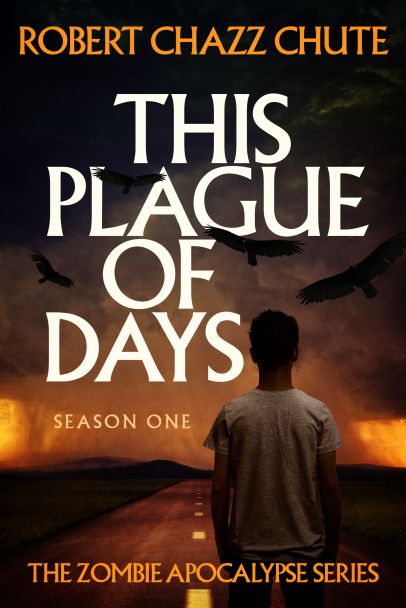
Somebody’s going to find this piece insulting even if it’s right. Especially if it’s right. My favorite quote from this piece from the Guardian is, “The reading public in private is lazy and smutty.”   This article does raise the question, “Am I busting my brains too hard writing a literary apocalyptic novel from the point of view of an autistic child with a fondness for Latin phrases?” Or should I relax my literary aspirations and ape The Road Warrior instead?   Doesn’t matter this time. I’m already in love with my book and it’s almost done. But how much should we consider the market before we start out? I mean, baby’s gotta eat, too. Click the Scoopit! link below to check out the Guardian piece and let the outrage mixed withplacid agreement commence.~ Chazz
Via www.guardian.co.uk

Filed under: publishing, self-publishing, , , , , , , , , , , , ,

Russell Blake’s KDP Select Experiment. Is KDP for you?

Via Scoop.itWriting and reading fiction

(On the downside, I’m late to the party on finding Russell Blake’s blog. On the upside, I have a new boyfri…er…brother in arms. Click the link below for an excellent and evenhanded analysis/update on the KDP Select phenomenon. I’ll continue to follow Mr. Blake’s blog posts with interest. Bookmark it! ~ Chazz)
Via russellblake.com

Filed under: authors, ebooks, Publicity & Promotion, publishing, self-publishing, Useful writing links, , , , , ,

Bestseller with over 1,000 reviews!
Winner of the North Street Book Prize, Reader's Favorite, the
Literary Titan Award, the Hollywood Book Festival, and the
New York Book Festival.

http://mybook.to/OurZombieHours
A NEW ZOMBIE ANTHOLOGY

Winner of Writer's Digest's 2014 Honorable Mention in Self-published Ebook Awards in Genre

The first 81 lessons to get your Buffy on

More lessons to help you survive Armageddon

"You will laugh your ass off!" ~ Maxwell Cynn, author of Cybergrrl

Available now!

Fast-paced terror, new threats, more twists.

An autistic boy versus our world in free fall

Suspense to melt your face and play with your brain.

Action like a Guy Ritchie film. Funny like Woody Allen when he was funny.

Jesus: Sexier and even more addicted to love.

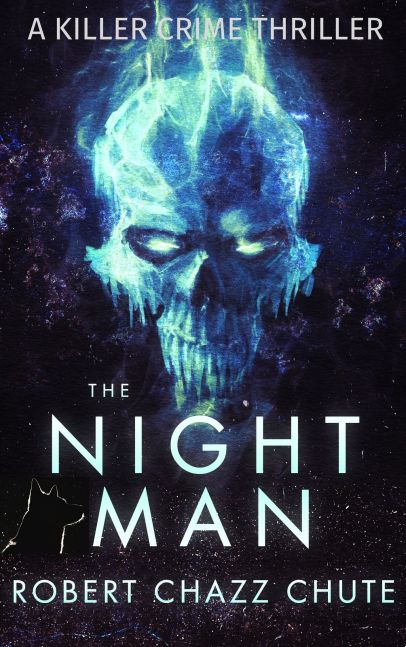
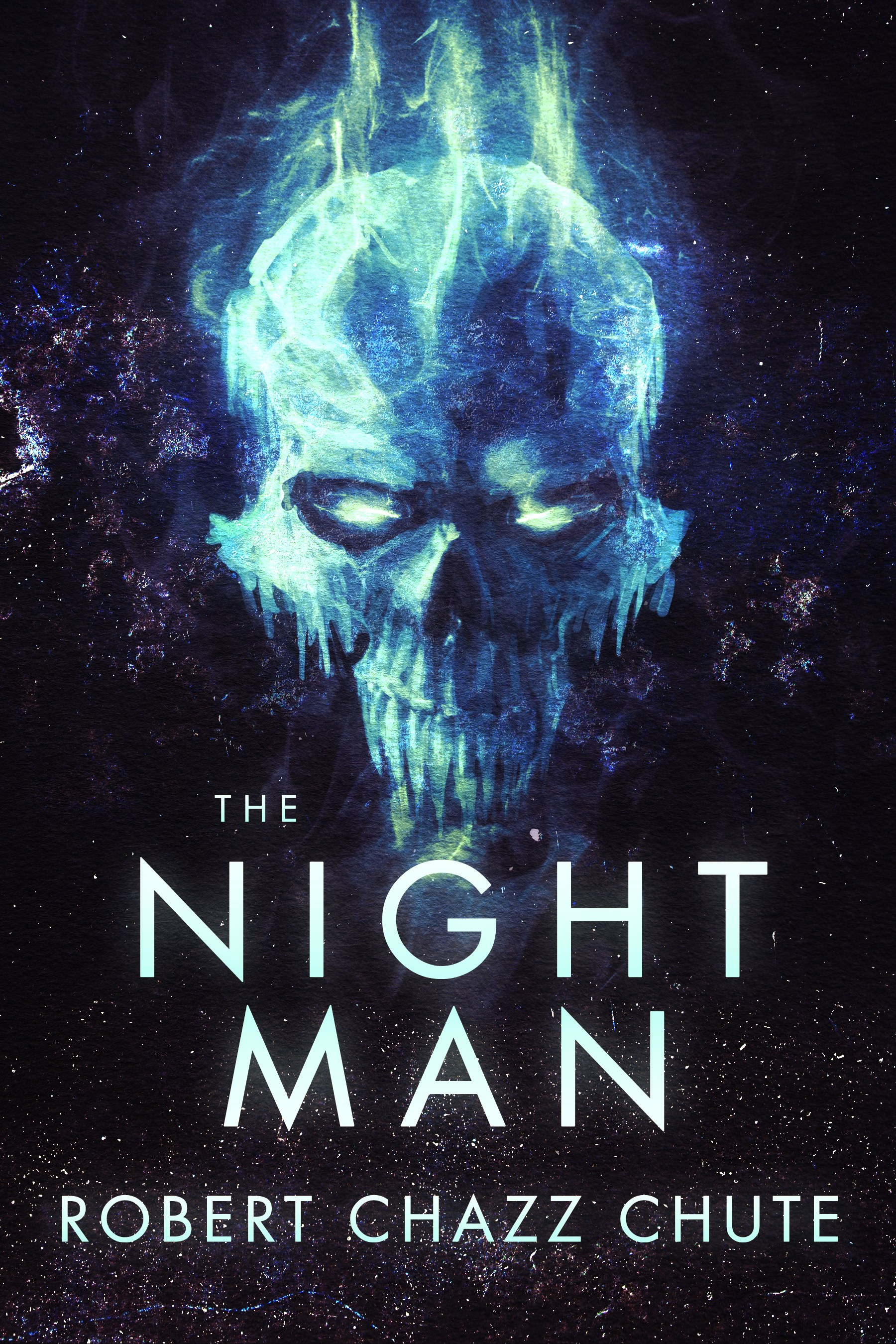
You can pick this ebook up for free today at this link: http://bit.ly/TheNightMan

Join my inner circle at AllThatChazz.com

See my books, blogs, links and podcasts.

Enter your email address to follow this blog and receive notifications of new posts by email.

Join 2,063 other subscribers