C h a z z W r i t e s . c o m

See all my books at AllThatChazz.com.

Author Blog Challenge 11: How I became God

Click the pic for more.

I cried for an old friend today. My daughter asked me about how I proposed to She Who Must Be Obeyed and that meandered back to Johnny, the minister who married us. He died of colon cancer. The tears took me by surprise — again, they always do — and I turned my head and my voice almost broke. I covered up my sorrow as I told my daughter about Johnny. My stomach twisted to think about the loss of this fine man with a young family. Johnny’s presence brought us joy. His untimely, horrible death brought chaos. Johnny wouldn’t approve, but when cancer wrung his life from him, my faith died, too. I found my way back to writing for therapy. Then I cast God aside to become Him. I have more compassion and kindness.

After I dropped my daughter off at school, the headaches and the trapped feeling roared back. I am a small god in a tiny realm. I climbed into my bed to retreat into unconsciousness for a little while. Maybe that’s why there’s so much suffering in the real world. God became bitter and He went back to bed, too.

As deep as the blade went with Johnny’s death, I know I will use this. Everything that happens to you as a writer gets sorted and recycled. That moment where I looked away to cover my tears and my voice cracked just a little? That will show up in one of my books, I’m sure.

Then, tonight at my son’s soccer game, I sat beside Gillian. Our kids hold the same trophies, getting taller together in each year’s team photo. Years ago, on the school playground, she mentioned a grisly moment from her history as a personal support worker. She’d forgotten the anecdote, but I used an aspect of it in a short story, Sidewalkers, that appears in one of my collections, Sex, Death & Mind Control (for fun and profit). I won’t spoil it for you, but maggots are involved. Through fiction I transformed an awful factoid into a larger narrative, the sort of secret we file under “Not Understood” in real life.

Every challenge, met and lost, every story told to me and suffered personally…everything…everything is fodder. I cannibalize my life, my family, my enemies — especially my enemies. Fiction is a mind trick that plays with our human capacity for empathy. Through stories, we experience drama, pain and mistakes without suffering the dreary, fatal consequences. But I write not just in the service of self-expression and the market for fiction. I write to correct reality. Fiction is more neat and clean. Happy endings can happen. I can pick where to stop telling my stories so the good man doesn’t have to die, the happy seeker doesn’t become an atheist and the ugly story about maggots becomes a clever anecdote that serves a purpose. In my realm, I am a conscious god. I have more compassion than the mysterious stranger whose ways no one can know. I rewrite the world so it makes more sense.

The tears can be just as real either way. Tears that rain from Art can keep you up all night, compelled to stay awake and reading. Tears from Life send you to bed with a splitting headache and a bitterness that demands escape into softer dreams.

Related articles

Filed under: publishing, , , , , , , , ,

Indie Authors – We Can Learn From Fifty Shades

See on Scoop.itWriting and reading fiction

Bestselling author Renée Pawlish discusses the phenomenon of Fifty Shades of Grey, and what indie authors can learn from the book’s success.


(My wife’s book club is debating whether to review 50 Shades of Grey. A few of the ladies said they were intrigued but weren’t sure. Are they prudes? Probably not. In fact, I said, “If they have an e-reader, they’re full of crap. They’ve already bought it. The e-reader is a gift to erotica buyers who don’t want people to know what they’re reading on the commute to work. If they actually have to go into a store, look a clerk in the eye and buy the paperback, they want to buy it but they’re shy. Eventually, they’ll read it but don’t want to discuss it in a group. And remember: more conservative vertical, more freaky horozontal. 🙂 ~ Chazz)

See on tobecomeawriter.com

Filed under: publishing

Hollywood snaps up hot ebook titles – Entertainment News, Technology News, Media – Variety

See on Scoop.itWriting and reading fiction

With the “50 Shades of Grey” series hitting 10 million sales this week, ebooks are emerging as a sexy new source of material for Hollywood.


(Just a couple of weeks ago, someone was saying that this would never, ever happen. Surprise! ~ Chazz)

See on www.variety.com

Filed under: publishing

Author Blog Challenge 10: How to make me want to spread your word

English: A pie chart created in Excel 2007 sho...

English: A pie chart created in Excel 2007 showing the content of tweets on Twitter, based on the data gathered by Pear Analytics in 2009. (Photo credit: Wikipedia)

Regular readers know I use the Scoopit! tool to curate helpful stuff about indie publishing I find around the web. I learn a lot researching blogs, link to good content so you can find it and include my comments on the posts I recommend. Sharing and spreading publishing news is a happy bonus. If I believed in karma, helping strangers for free would be the good kind. Today, let’s talk about what makes your articles, posts and tweets attractive nuggets to link to.

But first, a true story: Anguished Author goes to A+ Agent for a meeting about her book. A+ Agent says, “The contract is signed but you need to build your platform more and you’ve got to make a viral video for the book trailer.”

Two thoughts about this story:

Writing helpful blog content and building back links is one way to build a strong platform. Author sites tend to be too much “Me, me, me,” and a more effective  author site is more about “You, you, you, the reader.” Figuring out what helps people will help you build your platform. (For instance, my author site is plastered with information about my books, yes, but it’s also my fountain of free comedy/fiction/narrative/commentary podcasts to extend my reach beyond fellow writers to the reading public.)

and

Sorry, but you don’t get to make a viral video. You make a book trailer. It will go viral or not according to the whims of other people, unless you pay a bunch of kids and robots to pimp it in chatrooms across the Internet. However, since all book trailers (except this fake one) are lame, that won’t work and you’ll fail to dictate the world’s taste. Cute and funny are your best bets since your budget for movie production is not the same as the Prometheus trailer and the audience is jaded by all that amazing acting and CGI.

So what makes me want to retweet and spread the word about your blog? There are some solid rules that are universally applicable and then there’s my capricious, subjective taste. That kind of makes me sound like a prick, but everybody’s got topics that push their buttons. The words: “how to” are probably the most powerful words in a blog headline for anyone. (See the “how to” title at the top of this post? You clicked it.) Self-publishing is a new world and everyone wants a tour guide.

Here’s what’s going through my head as I decide what to link to and promote:

1. I’m reluctant to post something that is time-limited, such as headlines that say, “Final hours of the giveaway” or “Tuesday Only!” My Twitter followers and blog readers might not get the message right away and I don’t want to annoy them with what they missed.

2. (A) Don’t write too many headlines that are too spammy. (No one knows how many “too many” is.) I don’t mind blog posts that reference your books. I do that myself freely and it makes sense to draw from firsthand experience. However, a headline that says “Buy my book” is only for your hardcore fans who will buy it no matter what. That draws no one new into your tent for the revival meeting.

2. (B) But! A major caveat since this book promotion thing is tricky: If you balance the promotional content with free education, entertainment and jokes about your genitals, that’s reasonable. Blogging is a lot of free entertainment and information provision. If you can find a reasonable balance, that’s fine with most people. Ask people to buy your book on your own blog and your own feed as long as that’s not all you do. (And by the way, just because you don’t want to read it, doesn’t make it spam. Someone else may want to whisk it off to Paris and pledge undying love over cheap red wine and croissants.) Fortune does not favour the timid. Take it from a timid person who has resolved to pretend to be an extrovert.

For instance, I auto-tweet a welcome message when anyone follows me on my twitter accounts (@rchazzchute, @thechazzsays, @expartepress). The fun message (of doom!)  provides links to my books. My guess is, people who hate that — and some really do — were never going to buy my books anyway. Others will either appreciate the heads up or suck it up, buttercup! Since adding the auto-tweets, my sales have gone up. So there. (I also don’t cooperate with the twit validation service thing. It’s slow and painful and if you want me in your feed, you want me. If you don’t, don’t. Don’t be a pansy about Twitter.)

3. No poetry. I wrote a book of poetry. I like it, but it’s too small a niche and outside what people expect when they come to ChazzWrites. It’s sad, but there it is. Margaret Atwood has written nine books of poetry last I checked, but even many of her fans would be surprised by the news that she’s one bad rhymin’ mammerjammer. Here it’s all about self-publishing, book marketing, writing craft, how-to, industry news and the occasional flambé of whimsy in your face.

4. Technical advice with specifics is great. Just this past week I linked to a post with step-by-step stuff about publishing to the Kindle. Hold my hand and I might get a crush on you. I’m easy that way. I might even whisk you off to Paris and pledge my undying love. Well, no. I’m borderline agoraphobic and I’m locked behind a hermetically sealed hatch in a subterranean bunker and you’re out in the real world doing…things. Blech! So we’re not going to Paris. However, I love tech advice and admire those tech-oriented authors from afar. Often I link to something I want to hold on to. Sure, I could just bookmark it on a reading list to get lost in the depths of my computer, but on my blog it’s easily searchable and organized.

5. Be a buddy. Long time readers may notice I mention Kit Foster quite a bit. It’s not just because he is a brilliant graphic designer. He’s also my graphic designer. Another ally in the fight is my friend Dave from the School of Podcasting. My podcast wouldn’t exist without Dave Jackson. We stay in touch on Skype and end up mentioning each other on our podcasts from time to time, too. There are certain bloggers and fellow authors who are my go-to people simply because I know them better than others. They consistently offer advice that is honest, positive and fresh.

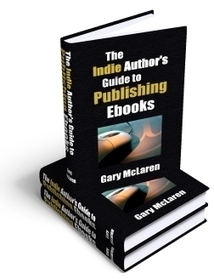
Last week, Jeff Bennington posted a great article about working with ACX to produce audiobooks. That’s something I want to do and Jeff is consistently a trailblazer. And no, it doesn’t hurt that I’ve spoken with Jeff. We’re in touch on Twitter and the odd email. He designed my first paperback, Self-help for Stoners, and I’m quoted a couple of times in his book, The Indie Author’s Guide to the Universe. After he read my novella, The Dangerous Kind, he gave me my first cover blurb, too. I’m a shy people pleaser with an inferiority complex spackled over poorly with bravado, so anybody who’s nice and knowledgable gets links from me.

6. Be a thought leader in the industry. I often point my readers to Russell Blake, Dean Wesley Smith, Kathryn Rusch and JA Konrath. They talk real sales numbers and how scary the industry is. They say things I don’t want to hear, but argue their points well. (Also, please allow comments on your blog if you don’t already. I do not always agree with articles I link to, but if the comment thread is lively and informational, I’ll often point readers that way for the instructive debate.)

7. Join Triberr. I retweet my tribe on Triberr. Last week, I liked Caleb Pirtle’s blog post so much I linked to it from here, too. Triberr is one way I become aware of useful stuff.

8. Join a Tweet Team at World Literary Cafe. Book promotion is more effective when someone else is doing it for you and I’ve found great people that way.

9. Write a great book and be a great interview. Occasionally I run interviews with authors. Sometimes I discover authors through their books first, not through their blogs. Somehow Blake Crouch had been merrily successful for some time but, sadly, I didn’t know about him until I stumbled across Run. I subscribed and will be watching his feed for something useful that you’d enjoy. Through a mutual friend, I also just discovered Scott Bakker, author of Disciple of the Dog. It’s a brilliant book. He’s in my home town and we know the same people so I’m sure I’ll meet him at some point. I’ve promoted him on Twitter already and I hope he’ll show up here or on my podcast or both at some point.

10. Reciprocate. (This is #5 with a different angle.) Eden Baylee did a great thing in organizing Indies Unite for Joshua. I supported the campaign and Eden consistently supports my efforts as I support hers. She even interviewed me for her blog (Go ahead and check out that interview. It’s X-rated, fun and wow! I was way took honest!) Eden is a constant friend on Twitter, too, and sometime we’ll chat over coffee when next  I escape the bunker for Toronto. I don’t forget people who are kind. Sadly, I also have an eidetic memory for pinheads, too, but the point is I especially try to help people who help me.

Sometimes I point to a kind of obscure blog. Other times, I say the obvious with, “Have you seen what Joanna Penn is saying?”

Sometimes it’s all “Me! Me! Me!” I try to find the reasonable balance, though.

Filed under: publishing, , , , , , , , , , , , , , , , ,

Top Twitter Hashtags for Ebook Publishers | Publish Your Own Ebooks

See on Scoop.itWriting and reading fiction

Whether you’re talking about your writing or marketing ebooks, using the right hashtags on Twitter helps spread the word so people find you. You’ll find two useful lists of hashtags through this link. ~ Chazz

See on www.publishyourownebooks.com

Filed under: publishing

Author Blog Challenge 9: The key to a great critique group is… (plus a funny bonus)

English: Smith & Wesson 686 6" .357 Magnum

English: Smith & Wesson 686 6″ .357 Magnum (Photo credit: Wikipedia)

*If you’ve just popped in for the funny (and insightful!) bonus, you’ll find the link to the Writing Critique Group Decoder at the bottom of this post. Thanks for visiting ChazzWrites.com and please do subscribe.

Today’s Author Blog Challenge writing prompt is: Have you participated in a critique groups? If so, how did it work out for you? If not, why have you avoided them to this point?

True story:

I visited a writing group and much of the discussion was dominated by an imperious woman who was keen to get a critiquing group started. Only she pronounced it: “Kr-eye-teaking.” Then she said, “Kudos to you!” But she pronounced it “KA-doos“.

I didn’t want to be part of her critique group.

Then another writing group invited new members and I checked it out.
Nice folks, but they were light on writing experience and didn’t read the genres in which I write. Worse, one guy (who would have been 25% of the group) spoke at great length about the book he would someday write. It was sci-fi, which was fine, but he was too invested in theory and he didn’t have a story. He had a wacky setting which took half an hour to explain. It would be hard to get invested in a story where the characters were inert alien rods…unless we’re talking about the aliens behind Third Rock from the Sun. (That’s kind of funny if you remember the details of that sit com.)

I didn’t join that group, either. We didn’t have enough in common in what we liked to read and write and if I had to hear another word about this amazing civilization living in the rings of Saturn, I would have had to shoot myself in the face.

But I do have a critique group and that’s working out great. Well, not exactly. They’re my beta team.

For my crime novel, Bigger Than Jesus, I needed a beta team to proof my manuscript and find bugs. It was the betas that reminded me that Dirty Harry didn’t carry a .357 Magnum. It was a .44. The beta team caught that the Coen brothers of movie fame don’t spell their name with an h. (I guess I was thinking of the Cohen brothers of legal fame.)

The key to finding your critique group, or beta team, is: Choose wisely. Say no. Don’t settle.

I found a great team in a SWAT trainer, an ex-military buddy, a teacher, a psychologist, two fellow writers and the funniest woman I know who also happens to be a voracious reader. They’re all getting signed copies of the paperback with a spot in the Acknowledgements section and help with their books when they decide to write them. And lollipops.

*BONUS:

A while back I wrote The Critique Group Decoder as a service to writers uninitiated in the dance. Click for the laughs. Stay for the reality.

 Related articles

Filed under: publishing, , , , , , , , , ,

How To Get Your Self-Published Books Into Bookstores | How To Self Publish and Sell Your Books

See on Scoop.itWriting and reading fiction

Ben Galley, ALLi member, describes how he does regular book tours of Waterstones, the largest UK bookstore chain…

See on selfpublishingadvice.org

Filed under: publishing

Day 8 of the Author Blog Challenge: Indie Self-defence

English: Rock Paper Scissors Lizard Spock - &q...

English: Rock Paper Scissors Lizard Spock – “The Big Bang Theory”. Español: Un diagrama de la resolución del juego «Piedra, papel, tijera, lagarto, Spock.» (Photo credit: Wikipedia)

When indie authors rock so hard they succeed after traditional publishers have turned them down, they sometimes get news coverage or, naturally, blog about it. Then some people accuse said authors of gloating. I recently read a complaint that the tone of those indie author success stories are always, “Neener! Neener! Neener!” Here’s…the truth? Well, here’s what no one else is saying anyway that I think needs to be said: 

1. When you’ve been turned down and kept down and toiled for little or no money and then you win, some gloating is in order! You get to be happy when you prove your doubters and detractors wrong. No need to name names or burn down anybody’s house, but we inspire others to aspire when we tell them the truth of our success stories, defy the status quo and flip the power differential from institutions to individuals. Some people get pissed at Konrath for his aggressive tone, for instance. I notice the people who get really angry at him often lack facts to back their complaints. It appears they are mad, not because he is wrong, but because he is right. You don’t have to be Mr. Spock to see that’s a bad reason to be angry.

2. Consider: Not everyone who is supposed to be an expert is; not everyone wants you to keep trying; not everyone acts professionally when they reject a writers’ work; and there are a lot of people who aren’t happy when you’re doing well. A friend began a pitch to a famous New York agent. Nearby diners were startled when, not one sentence into the pitch, the agent shouted, “Spare me!” That author found success with that same book elsewhere, and continues to, with his subsequent books. The big New York agent isn’t so big anymore. In fact, I don’t think he’s in the business anymore. What a loss.

3. What? We don’t get to celebrate our successes but you, in traditional publishing, do? There’s an appropriate two-word response to that assertion. The second word is “you”. The first word is not “thank”. Of course, not all of trad publishing hates indies. When I hear people in traditional publishing trash successful indies, I suspect that’s a vocal minority who are wary of change. It’s not even about the indies, per se. According to a recent survey, most traditionally published authors aren’t happy with their publishers and many plan to self-publish in the future. Only 37% of authors want the status quo of 2007. That’s okay. Entrepreneurship is not for everyone and doing it all by yourself is often a drag. (You will figure out who is bitter or behind the times pretty quick when you hear the words “vanity press”, though.) Many indies would still take a traditional book deal if the terms were sane. It doesn’t have to be either/or. It can be both. I hope traditional publishing not only survives but perseveres. Book proliferation is good for the human race.

4. As a newspaper and magazine reporter, I looked for the interesting angle on any story. You have a new book coming out? So what? So do lots of people. You have a new book coming out that agents and editors all turned down several dozen times and now it’s a bestselling series? And an editor and an agent was abysmally rude to you along the way? Bonus! Now there’s a story people will read. The “Neener-neener!” tone may well have been determined long before the reporter called up the indie novelist for the interview. That’s not the novelist’s fault. (And if you turned down the bestselling book and were rude about it, that’s your fault.)

5. If you begrudge indies their success after you turned down their work, you didn’t just make one, forgivable error in judgment in a subjective business. Now you’re revealing yourself to be a petty person, as well. Doubters will note a defiant tone in this post, but I’m not pushing. I’m pushing back. I do value civil discourse and keeping exchanges classy (Caveat: Except in self-defence where humour disarms and on those occasions when mean is funny and the target deserves it.) What I’m reacting to is the flack indies get for choosing independence. Amazon changed the equation and we’ve all got to get used to the new math.

So here’s a link to a happy self-publishing story. If you are of a certain mindset, you’ll read it as a bitter tale of “Vengeance is mine!” If you’re of another mindset, you may well think, here’s an inspiring story of self-determination, self-reliance, perseverance and success. This is a test.

Filed under: publishing, , , , , , , , ,

Author Blog Challenge (plus a sneak peek podcast*): Outlining, pantsing, spilling & sprinting

If you just popped in for the suspenseful sneak peek podcast, click here to hear The First Fiction Friday Edition of my podcast.

The Author Blog Challenge prompt asked how I stay organized as I write. My methods have changed over time. I used to come up with plots on the fly early on. Then I got scared off from that strategy when I got deep into a dreadfully long novel and found I had to backtrack fifty pages. Hitting a dead end is, well, death. It’s a waste of time and energy and I hate it.

I started outlining because I was writing big books and I didn’t want to lose whole sections of my book in which I was already invested. When you write 80 – 100,000 words or (ye gods!) more, an outline helps. I didn’t write an outline with Roman numerals and all that formal, high school nonsense. Instead, I planned the book one cogent sentence at a time. I described the actions in each chapter to plot the arcs of A and B stories. I looked for where those paths would logically cross, discover the beats and suss out the high and low points. Index cards got to be too much to keep track of, so in the end my outline was just three pages with a numbered list. I read and reread the outline and then I didn’t look at it again. That got me through the big books pretty well.

Recently I read Run by Blake Crouch, and as Blair Warner used to say on The Facts of Life,

“I just had another one of my brilliant ideas!”

It’s about speed. I resolved to write a crime novel with the same furious pace as Run — a book I couldn’t put down. Yeah. I know it’s a cliché, but this cliché is both apt and true in the case of Run. (Great book. Buy it.)

I resolved to do the thing I love with stories. The chapters would be relatively short. They would skip along. There would be lots of twists and turns to my racetrack. I wrote Bigger Than Jesus in about a month, one chapter a day, roughly 2,000 words each. There was no outline. Instead, I wrote with the expectation that I’d get my hero into a troubling cliffhanger at the end of each chapter. If I wrote myself into a corner in the process, too bad. I’d be clever and write my way out of it and keep moving forward. Writing like this is as fresh and as exciting as walking a tightrope naked in a high wind over a crowd of angry TSA agents with a new shipment of polar mint rubber gloves.

Many nights I went to bed thinking that I had no idea what I would write in the morning, but I trusted that I could figure it out. I believed in lightning strikes. The juice kept flowing and with it came a high level of complexity. It’s a crime novel so people lie a lot. If I’d taken longer to write it, it would have necessarily been less complex because I’d be afraid of losing track of the threads. There’s shocking emotional depth, too. Nobody, including me, foresaw the strange and sad angle on my main character’s childhood. It sneaks up.

Why did this work?

1. I knew the opening chapter and the last line so I had a target at which to aim. I’m also a more confident writer than I was with those early attempts, I suppose.

2. If I didn’t know what was going to happen next, the reader wouldn’t be able to guess, either.

3. Speed. The book is not especially long and I wrote it all in a short space of time so I could keep it all in my head at once without getting lost.

How else do I keep organized? 

In the Point File, I note things like street names I’ll use twice and aspects like eye colour so they don’t change from the beginning of the book to the end. I did mess up in having twin brothers as bad guys with names that were awfully similar. I had to go back to make sure I was talking about the right brother at the correct stage of the book.

I always have a Spill File handy so if I do write something that I end up dumping, I save it for later. I might change my mind about how useless it is or I might use it another time in another story. In Bigger Than Jesus, the writing went so quickly and breezily that I never had anything to pour much into the Spill File. I wrote fast and then went back to the stage of writing where I’m always sure I’m a deluded idiot: revisions. I cut, prune and delve. More of the jokes come clear on the second pass, too. Typically, by the third pass, I begin to feel good about the book again. Bigger Than Jesus was just about as easy as writing a blog post a day, actually. Maybe easier sometimes because what dictated the action was logic and surprise. When in doubt, surprise!

Some writers labor under a notion that I once shared: To be good, you must write slowly, perhaps even at a glacial pace, and the serifs are where your heart and soul get squeezed in and choked for blood. There are books I have tinkered with for years. One short story went through many incarnations over a year before I felt I nailed the landing and deserved 10s from all the judges. However, Self-help for Stoners came together quickly and everything worked out well with that.

Bigger Than Jesus will be released in the next week or so and all the feedback I’m getting from the editorial team tells me I’m glad I didn’t buy into the idea that it had to come slowly to be worthy. I think that’s true sometimes, but not always — not for every book and not for every writer. That’s good news because I’m using the same strategy with the next book in the series. It’s coming fast and well and I do enjoy the danger of not knowing what happens in the next chapter. Those angry TSA agents are actually spurring me to succeed.

*BONUS:

Please take a few minutes to enjoy my latest podcast on the author site. It’s The First Fiction Friday Edition! 

It’s a sneak peek at Chapter 8 from my first novel in the Poeticule Bay Series:

An old woman is lost with her tiny dog in the Maine woods and snow is on the way.

Related articles

Filed under: publishing, , , , , , , , , , , , , , , , , , , ,

The Writing Bomb: Creating Audio Books is Easy Peasy Lemon Squeezy

See on Scoop.itWriting and reading fiction

My buddy Jeff Bennington has some great news about creating audiobooks over at his blog. This is something I’m actually looking forward to doing. The tech aspect would have intimidated me before, but after about 30 podcast episodes, I’m comfortable with it. The beauty of ACX.com, as Jeff describes it, is that you really don’t have to do much if you don’t want to. You can be more or less involved depending on how much you can do, want to do and how much of the royalties you want. Click the link and read on for the details. ~ Chazz


See on thewritingbomb.blogspot.ca

Filed under: publishing

Bestseller with over 1,000 reviews!
Winner of the North Street Book Prize, Reader's Favorite, the
Literary Titan Award, the Hollywood Book Festival, and the
New York Book Festival.

http://mybook.to/OurZombieHours
A NEW ZOMBIE ANTHOLOGY

Winner of Writer's Digest's 2014 Honorable Mention in Self-published Ebook Awards in Genre

The first 81 lessons to get your Buffy on

More lessons to help you survive Armageddon

"You will laugh your ass off!" ~ Maxwell Cynn, author of Cybergrrl

Available now!

Fast-paced terror, new threats, more twists.

An autistic boy versus our world in free fall

Suspense to melt your face and play with your brain.

Action like a Guy Ritchie film. Funny like Woody Allen when he was funny.

Jesus: Sexier and even more addicted to love.

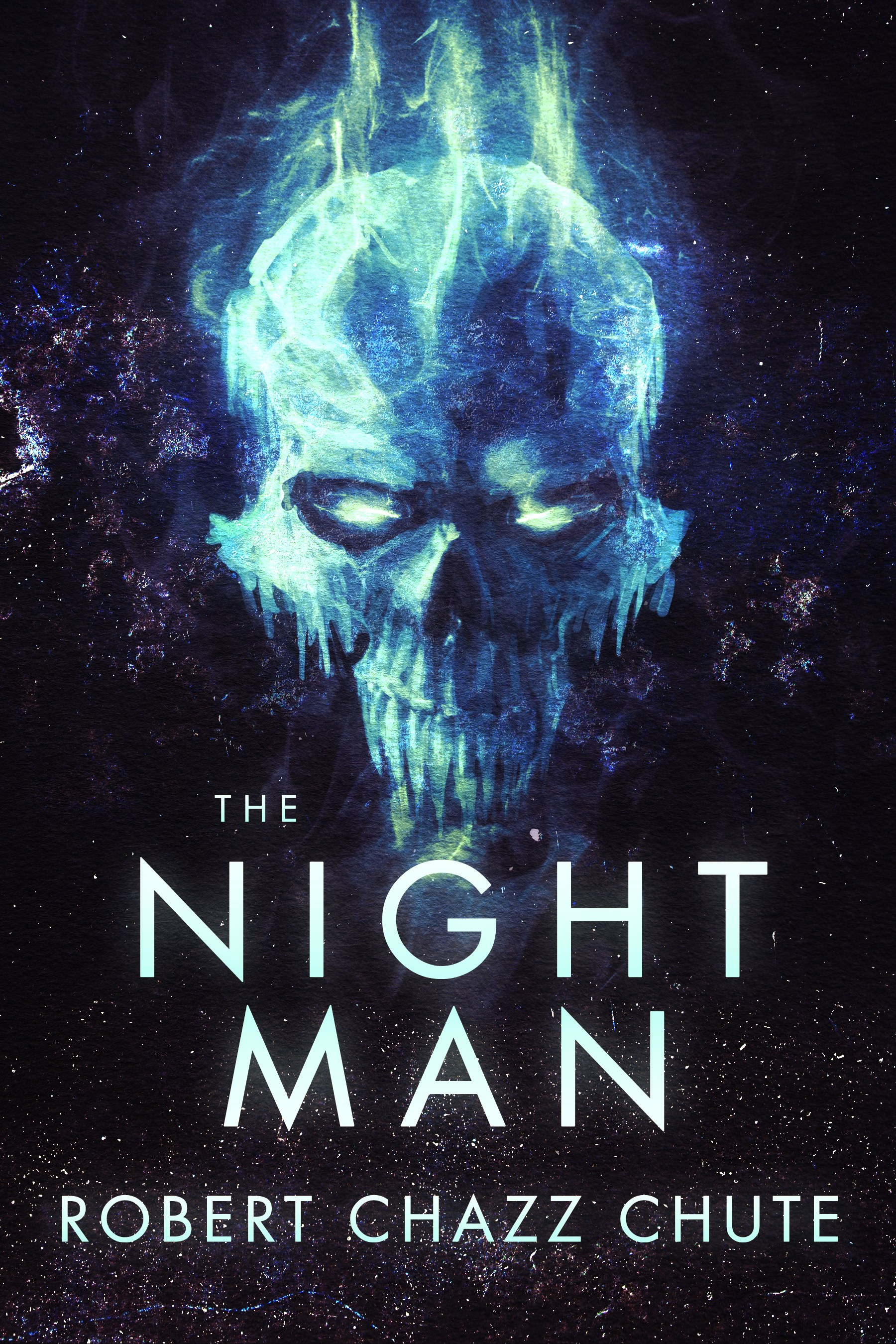
You can pick this ebook up for free today at this link: http://bit.ly/TheNightMan

Join my inner circle at AllThatChazz.com

See my books, blogs, links and podcasts.

Enter your email address to follow this blog and receive notifications of new posts by email.

Join 2,063 other subscribers