C h a z z W r i t e s . c o m

See all my books at AllThatChazz.com.

#Writers: Strengthen your e-marketing with these links

Thank God It's Friday

Image via Wikipedia

23 Websites that Make Your Writing Stronger

Top Book Sales, Book Marketing and Self-Publishing Articles‏:Does What’s On Your Website Convey Trust?

The Official BookBuzzr Blog‏, TGIF Book Marketing Tips: Your 10 Point Website Check Up

Filed under: links, Publicity & Promotion, Top Ten, Useful writing links, web reviews, Writers, writing tips, , ,

What books are you buying this Christmas?

Victorian Style III | The Library

The New York Times has some suggestions:

100 Notable Books of 2010 – Holiday Gift Guide

Do you have any recommendations? Must-haves? I’m especially interested to hear if you have a little-known book that hasn’t received the attention it deserves. Also, since they can be the most difficult to shop for, what gift ideas do you have for young adult and children’s books?

Filed under: book reviews, Books, links, web reviews, , , , , , , , , ,

AJ Jacobs: Non-fiction to love


I’ve read The Know-It-All, The Year of Living Biblically and The Guinea Pig Diaries. I enjoyed them all (and even interviewed the author once for a story.)

This is research as performance art that manages to be both funny and educational. I suspect AJ has OCD, so diligent is he in his life experiments.

I’ll also add what everybody says after reading his books: His wife has the patience of a saint.

Filed under: book reviews, Books, Writers, , , ,

Neil Gaiman and another helpful editing link

Hey everyone. I’m still in rehab for a bum shoulder but things are improving and it appears it won’t kill me through the magic of ultrasound, chiropractic, exercise and scapular manipulation. I am taking it a little easier this week since the keyboard has made the pain worse in the last week. That said, I’m still blogging through the magic of curation.

I can still read and I’ve been reading a lot, mostly with an ice pack crammed under my shoulder blade.  I finally got around to reading Neil Gaiman‘s American Gods. The work impressed me. I’ve been a Gaiman fan since the Sandman comics. What’s more, the author impressed me. His artistic vision was broad (as usual) and his plot choices were bold. (Though it did leave me wondering where the Presbyterian God and Allah were on the battlefield.) I’m getting to Anansi Boys next. It’s been waiting for me, sitting on the shelf for a long time.

Finally, when I blog about editing, the topic is a sure bet to pump up the number of visitors. Yesterday’s post (immediately below) was no different. Here’s a more positive take:

Wordplay: Helping Writers Become Authors: 7 Tips for Editing Your Way to the Best Story on the Planet

Filed under: blogs & blogging, book reviews, Books, Editing, Editors, Useful writing links, web reviews, Writers, , , , , ,

How to be a Bad Editor

The phrase that pays.

Image by pirateyjoe via Flickr

Most editors are pretty good to great. Then there are the others. Here’s how to be one of those bad editors:

1. Edit without being asked. A copy editor I knew came up with a detailed critique of small advertisement I had for one of my businesses. I hadn’t asked and his manner was that he had caught me out at something. He hadn’t, actually. He didn’t like the paragraph’s wording but everyone else was okay with it. At best, his editorial suggestion was a lateral move. Worse, when I gently brushed him off, he didn’t have the grace to shut up. Then I had to brush him off with force.

2. Treat catches like a moral victory. A newspaper editor descended on me because, on my first day, I wrote Sidney instead of Sydney, Nova Scotia. I thanked her for catching my error. “This is not a minor error!” she said. “I said thanks,” I replied. “Were you looking for? Blood? I’m fresh out.” Mistakes happen. It was her job to catch my errors. I owed her my gratitude, not an apology.

3. Be very sure, and pissy about it, even when you’re wrong. A teacher, who was presumably responsible for helping generations of students, circled a word in a business document. She used her red pen as if I were one of her unfortunate, young charges (though I was about 30 at the time.) “You got this wrong!” she said with delight. (See #2) By that time I’d already edited and/or proofread hundreds of books. I knew what I was talking about and here’s the rule: You affect the effect. This is a common mistake. She stayed sure I was wrong. It was just too delightful to think she was right, I guess. That’s another common mistake.

4. Treat your writers like crap. (And refer to them as “your” writers, as if we’re owned.) Working in a big daily’s newsroom was an intense environment, sometimes unnecessarily so. For some reason, the air was also very dry. You’d think all those tears would be humidifying. Anyway, I had a nosebleed and some assignment editor (who was all of a year or two my senior) walked up and dropped an assignment on the keyboard upon which I was trying not to bleed. He didn’t say a word about my hemorrhage and went on about his work. A year later I was working in publishing with someone who had worked at the Toronto Star and she told me she’d experienced the exact same story with a person who was just as uncaring about her welfare. Weird.

5. Be a strict grammarian. Insist on obsolete rules. Insist the legendary “to boldly go where no one has gone before” was a mistake in two Star Trek series, a crime worthy of beheading. And never allow anyone to start a sentence with “And.” Also, grow visibly nauseous when anyone dares to end a sentence with a preposition. That’s something up with which you will not put.

6. Insist that new word usage is the cause of all our economic, political and moral woes. Insist we should freeze the language at some arbitrary point that makes you comfortable. Verbing nouns particularly irks you. Exclaim your objections and try not to faint with the vapours when someone says, “I’ll google that.” Civilization began to end when we started using “impact” as a verb and texting abbreviations are not analogous to a new language. Texting is a sign of End Times.

7. Be a tyrant. Change your mind. A lot. This is particularly fun for assignment editors. Expect writers to read your mind about how you want the story to go. Don’t tell them what you want. That would ruin your fun. Instead, get angry when they guess wrong. For extra bonus douche points, decree that you loathe simultaneous submissions and take forever to answer queries (or don’t answer them at all.) Pay a pittance on publication. Better, pay in bird-cage liners and tell seasoned writers they should be grateful you’re allowing them to “pay their dues.”

8. Be cruel in your rejections. When work you’ve turned down succeeds elsewhere, never doubt your judgment. Sniff at the plebian tastes of the masses instead. Better, put up examples of queries you find execrable and hilarious on your website. Mock it mercilessly. Sure, you’re a ball breaker and a soul crusher, but if you call what you do helping, it’s okay.

9. When you edit, don’t focus on making the text better. Focus on making yourself feel better. It’s that kind of prioritizing that can make you a famous infamous editor. Be sure to crow to everyone how x,y, and z author owes everything to you because you gave them their big break. Act as if you did them a favour (instead of the business decision it really was.) When your fledgling authors come to their senses and flee to work with someone sane, declare them a bunch of ingrates and try to have them banned from ever making a living or even having lunch in your town again. (Yes, these legends aren’t just in New York. I’ve met a couple of these demons in Toronto’s publishing houses,too. They’re people who never figured out that it’s not how you treat your superiors and your supposed equals that defines you. How people see you is determined by how you treat your assistant and those lowly writers.)

10. Be a frustrated writer. I once knew an editor who worked in educational publishing. She was a nice person, or at least I thought so until I saw an example of her work. While it’s true, particularly of educational publishing, that there is a style to follow, her changes to copy were gratuitous. She wanted to write, not edit. It showed. 

Follow these ten examples and you will soon be recognized as an editor to fear, loathe and avoid. Congratulations!

Filed under: Editing, Editors, grammar, Horror, publishing, Rant, Top Ten, , , , , , ,

Introductions: Sending your manuscript the right way. Meeting editors and agents.

Fragment of M. Lomonosov's manuscript "Ph...

Image via Wikipedia

Do you have a manuscript you want to submit? Here’s your check list. Do not try to stand out by breaking these industry conventions.

Now suppose you’ve sent off your manuscripts but you haven’t had any luck yet (and yes, luck is part of the process.)

You decide to head off to a writers’ conference and actually meet agents and editors personally. If you can meet them in person, you reason, you can turn them on to your work. Slow down on that plan. The Kill Zone gives you tips so you’re ready to meet those industry professional as equals.

The power differential in the agent/editor/author relationship drives writers crazy. There’s much more drama around meeting editors and agents than there needs to be.

You are an equal. You’re a human being, neither above nor below. Don’t go hat in hand.

It’s a friendly business meeting. Think of it that way.

Filed under: agents, Editing, manuscript evaluation, publishing, queries, Writing Conferences, writing tips, , , , , , , ,

#Twitter mistakes (Sorry, I didn’t mean to break your crazy rules)

Free twitter bar

Image via Wikipedia

You know what I learned from 20 Reasons People Unfollow You On Twitter? I learned people can be really cranky about why they dump you from Twitter. And yes, I’m guilty of some of these offences.

Meanwhile, Rachelle Gardner, literary agent extraordinaire, offers A Few Hints on Twitter. And yes, I’m guilty of messing up my manners in some regard according to these standards as well.

My God! I’m a Twitter monster!

Filed under: Twitter, , , , , , ,

Can an artist produce too much?

Close up of Allen's statue in Oviedo (Asturias...

Image via Wikipedia

When comedy screenwriter superstar Ken Levine wrote An Open Letter to Woody Allen‏, he got a lot of feedback, positive and negative, on his blog. I encourage you to read his post, but basically he told Woody Allen to slow down and take a break in the hope Allen will make fewer movies, but better movies.

Here we have one artist telling another, I used to love your stuff, but your recent work disappoints me, so stop. I’m a bit sympathetic to that sentiment in that I’ve expressed some frustration here over the work of Jeff Lindsay, creator of the Dexter character.

The first Dexter book was great. Then the series went downhill (though I have yet to read the very latest so I’m hoping for the author’s redemption.) My objection in a long ago post was that in book three of the series, the lovable serial killer was doing very dumb, unbelievable things. The protagonist was sucked into a supernatural story and taking his elementary school-age kids to gory crime scenes as little serial killer apprentices.

I suspected that, since the Showtime series Dexter is such a hit (and well-deserved), maybe Lindsay’s agent and publisher were pushing him to make hay while the sun shone and pump out those books to the ravenous masses! (The reviews on Amazon backed me up on this. I wasn’t the only one who felt the author lost his way.)

So, while I understand Mr. Levine’s plea, ultimately, writers write for themselves first. If Woody Allen is happy with his script (and is still making money, employing people, finding financiers etc.,…) then he can do what he wants. I heard a rare interview with Woody Allen recently. He was shooting in London and having a great time doing it. He writes and directs to suit himself first and, if you want to play, follow along, too. Otherwise, go enjoy something else. No one’s forcing you to go to a Woody Allen movie. A lot of people don’t go now who used to, but I’ve read that most of Allen’s movies make the majority of their box office outside the United States. (There is a hint of Americanocentrism in Mr. Levine’s post, so perhaps that’s what informs his stance.) 

When I saw one artist tell another to produce less, I realized that I was guilty of the same thing with Jeff Lindsay. I love the Dexter character. I mistook that emotional investment for ownership of the character and its author. As long as the books are still making money and Mr. Lindsay is enjoying himself, it’s not up to me or anyone else to tell him to stop or slow down. It’s up to me to say, “Well, sadly, that’s not for me anymore. Too bad. Fortunately, there are millions of other books to read so I’ll go check those out…and console myself with the excellent TV show Jeff Lindsay’s work spawned, Sunday nights on Showtime at 10 p.m. EST.” 

Filed under: book reviews, Books, getting it done, Media, movies, , , , ,

The High Concept Book Becomes the High Concept Movie

The zombie rage rages on and Pride and Prejudice and Zombies caught the vampire-backlash-zombie-wave at just the right time.

It’s interesting to me how, when first introduced, a terrible idea and a brilliant one are often indistinguishable. Finding just the right editor or agent to recognize an opportunity wrapped in an unsolicited manuscript at just the right time? It can be an amazingly long and difficult process.

As I think back on many of the publishers I’ve worked for, I can guarantee that many of them would have looked at the manuscript for Pride and Prejudice and Zombies and cringed. I can hear them say, “You’re not going to believe this! Look at the kind of tripe we get in the slush pile!”

Of course, it’s a subjective business, but it is a business. Someone spotted opportunity in this book and now they’re making a boatload of money off of it. If you’ve a bit snooty, you may still look askance at books like this, but reading is a wide spectrum. There’s lots to read and fortunately, you get to choose.

Slush Pile Short Story

I once knew a publisher who, on our first meeting, wanted to impress upon me that his publishing house only printed “important” books. And he did. There were some literary gems on the list.

But the publisher had a narrow spectrum of books he was interested in. I asked several times if it would kill him to publish a popular cookbook and make some real money. I learned instead that he wanted to publish one kind of book. It had to be Canadian literature (and all that reputation entails) so he would have a list that wouldn’t make him blush at his next cocktail party in Rosedale. 

High standards are laudable, but decreeing what the market should read while remaining deaf to what people do read is a formula for failure.

The moral of the story is this:

Gov. Sarah Palin has breakfast and visits with...

That hockey book that bores you, the vapid Sarah Palin book you loathe and that gardening book that’s a staple for three generations? Those sell. Slush pile submissions that publisher sneered at would have financed all those “important” books he’s not publishing anymore. He’s long since out of the business and many important books have gone unpublished for that sad loss.

I love important books. But, like most people, I like varied tastes to entertain my palate. 

Filed under: Books, publishing, Useful writing links, , , , , , ,

Are you closer to publishing your own books yet?

A section of the Egyptian Book of the Dead, wh...

Image via Wikipedia

Ex-agent Nathan Bransford wrote a nice piece on his blog entitled Why I’m Still Optimistic about the Future of Books. That headline caught my attention because, viscerally, my reaction was, “Still?!” His post goes deeper than that, but what I noticed first was my own urge to chuckle.

No, I’m not predicting the death of books. My view is more nuanced than that. I think paper books will be published 100 years from now (assuming we aren’t all killed by nukes, bioweapons, supergerms, climate catastrophe or armies of the undead) but in small numbers and as a premium item. 

Early this summer I attended a writers’ conference in which I saw the e-book future laid out. Many of the publishers and writers I met at the Canadian Authors Association conference in Victoria were already on board the train to the future. I met my first person there who doesn’t buy paper books anymore, for instance. Her bookshelves grow no heavier because her reading is now exclusively electronic. 

When I came back, I shared that worldview with everyone I knew. I encountered resistance, incredulity and resignation. Personally, I’m excited about the DIY opportunities ahead of us. We still need writers and those writers still need editors. Publishers and agents are becoming optional. For some authors—especially if they already have an audience—publishers are in their rearview mirrors.

Where are you on this issue now? Has your opinion changed in the last year? Do you see e-books as another expression of rage and frustration by the talentless hacks rightly trapped in the slush pile? Or are e-books a way for independent authors to steer their own course to larger percentages and greater control of their books?

If you’re an independent writer, here’s a link to a comparison of self-publishing services you definitely need to consider:

Self-Publishing Company Comparison: Amazon CreateSpace, Lulu or Lightning Source? : Blogthority‏

If you’re a traditional publisher or are monogamous about the Gutenberg press, here’s an article about how e-books might be integrated tree book marketing:

E-books need print books, IPG hears | theBookseller.com‏

 Please let me know your thoughts.

I’m staring at my comment box,

quivering in anticipation.

Filed under: Books, publishing, self-publishing, Useful writing links, web reviews, , , , , , , ,

Bestseller with over 1,000 reviews!
Winner of the North Street Book Prize, Reader's Favorite, the
Literary Titan Award, the Hollywood Book Festival, and the
New York Book Festival.

http://mybook.to/OurZombieHours
A NEW ZOMBIE ANTHOLOGY

Winner of Writer's Digest's 2014 Honorable Mention in Self-published Ebook Awards in Genre

The first 81 lessons to get your Buffy on

More lessons to help you survive Armageddon

"You will laugh your ass off!" ~ Maxwell Cynn, author of Cybergrrl

Available now!

Fast-paced terror, new threats, more twists.

An autistic boy versus our world in free fall

Suspense to melt your face and play with your brain.

Action like a Guy Ritchie film. Funny like Woody Allen when he was funny.

Jesus: Sexier and even more addicted to love.

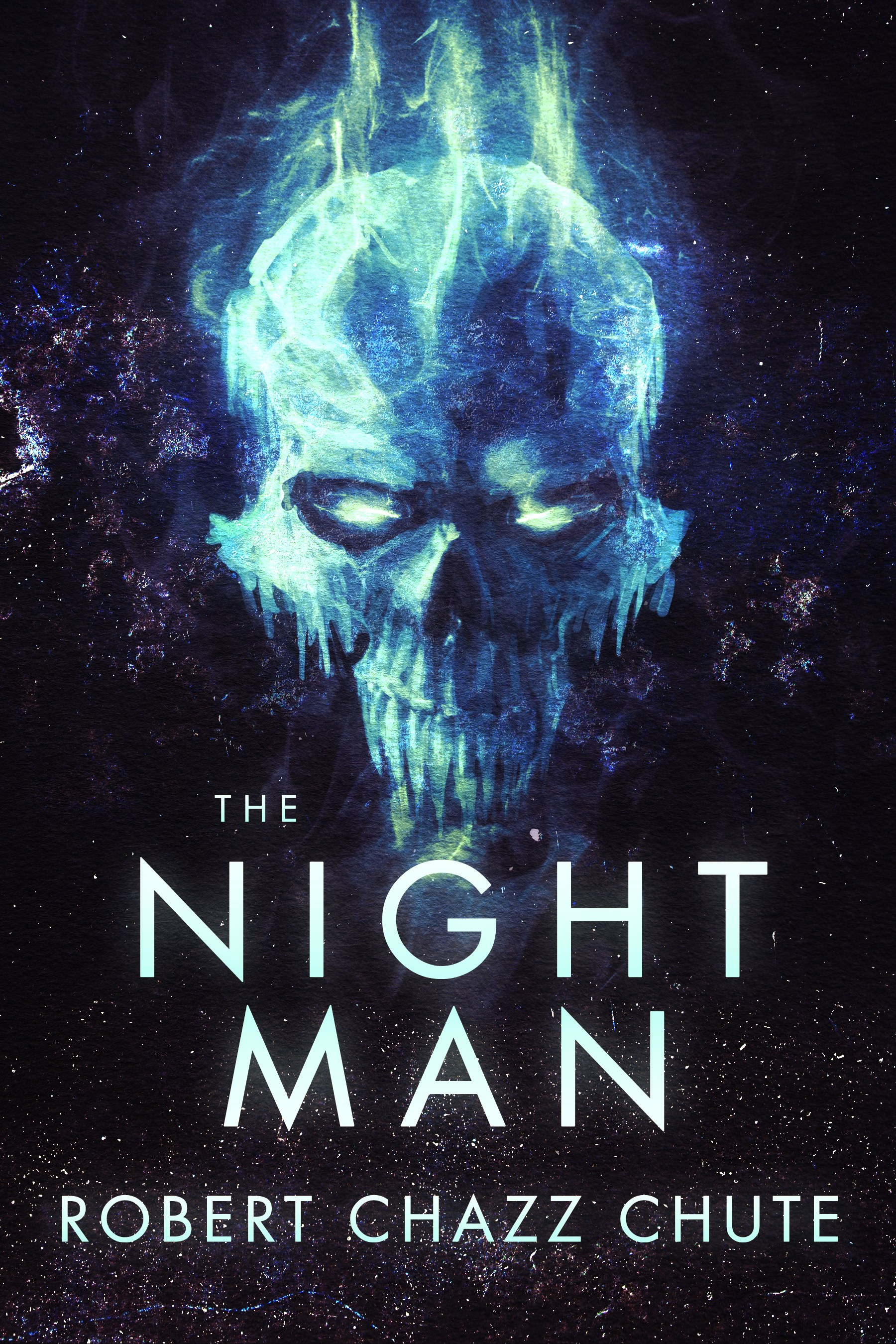
You can pick this ebook up for free today at this link: http://bit.ly/TheNightMan

Join my inner circle at AllThatChazz.com

See my books, blogs, links and podcasts.

Enter your email address to follow this blog and receive notifications of new posts by email.

Join 2,063 other subscribers