C h a z z W r i t e s . c o m

See all my books at AllThatChazz.com.

Writing: The Rule of Three & the peril of semi-colons

Massey Hall, Toronto

Image via Wikipedia

Saturday night I saw Bill Maher at Massey Hall in Toronto. Good show, fun time. Bill is known for Real time with Bill Maher, his documentary Religulous, his comedy and his New Rules books. Watching him perform, I noticed he never breaks the Rule of Three. It is a good rule, an effective rule and a memorable rule that I just demonstrated with this very sentence.

Wikipedia puts it like this: The “Rule of Three” is a principle in writing that suggests that things that come in threes are inherently funnier, more satisfying, or more effective than other numbers of things.”

Of course, you will write longer lists, but when you use a colon, do so sparingly unless you’re composing a scientific paper. Semi-colons can be very useful in separating elements in a list after a colon. However, if you use the semi-colon to separate related clauses, please do so sparingly. Wikipedia says, “According to the British writer on grammar, Lynne Truss, many non writers avoid the colon and semicolon…”

I disagree. It’s not just non-writers who avoid the semi-colon to separate interdependent clauses. 

The semi-colon can be a useful device occasionally, but as a punctuation mark, it is often either misused or has fallen out of favor.

When Lynne Truss refers to “non-writers”, does she not also mean people who are readers? Shouldn’t it be the common reader who sets the standard for what’s easily read and understood? I invoke the common usage rule here. When something has fallen out of common use, it’s too rusty to use without a lot of irritating squeaking. For instance, if a writer uses the word “behooves,” he sounds like he’s trying to be Charles Dickens. You just aren’t old enough for that.

Similarly, the semi-colon has fallen so far out of common use that when a reader encounters one, it pulls them out of the narrative to think, “Hey, look! A semi-colon! Why did the author feel it was necessary to separate related thoughts with a semi-colon, instead of separating those ideas with a simple period? Anything that stops me from breezing along through a novel is a speed bump that I would prefer shaved down so I can speed along and focus on content instead of transmission static.

I have never read a sentence with a semi-colon that I did not reread at least twice.

I’m not saying  you shouldn’t use semi-colons, if they suit you; I am saying, I won’t use the semi-colon.

Anymore.

Filed under: Editing, Editors, grammar, , , , , , , , , , ,

Editing tools and typo tips

Book cover (Dust jacket) for the 15th edition ...

Image via Wikipedia

Write_your_book
EDIT YOUR BOOK!

When you’re checking your manuscript, use your word processor’s Spellcheck. Some editors turn up their snobby little noses at Spellcheck, but it can flag problems you might otherwise miss. Nobody’s perfect and problems will always appear once you’ve published your book (yes, in both traditional and self-published books). Don’t take every suggestion; Spellcheck isn’t always right. It’s a tool, not a panacea. You can also use Find and Replace to look for problems Spellcheck misses: its, it’s, there, their and so on. Spellcheck doesn’t replace editors and they don’t replace thinking. But you’ll catch more using it.

To the rude editor I met at the conference who said she never used Spellcheck: Yes, I’m saying that was arrogant and, just like the rest of us, you’re not nearly as smart as you think you are. Or funny. And you need to work on your social skills. (Now I’m worried that I’m projecting.)

I don’t edit blog posts obsessively, but when I’m working on a book, I have several websites up on my browser: Chicago Manual of Style, Wikipedia, and dictionary.com. I also use Autocrit for more input.

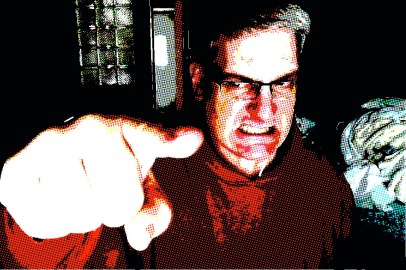
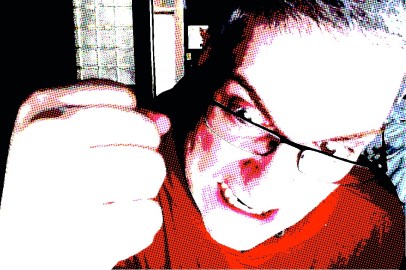
For me, yesterday was single quote day. I wrote parts of my books with Open Office, so I had to go through the manuscript and make all my single quotes curly…and curly in the right direction. I was cross-eyed and HULK ANGRY by 5 pm.

PentecostSelf-publishing guru and author of Pentecost, Joanna Penn, has a great suggestion to deal with typos: Publish your ebook first. Your readers will let you know (politely or not) about your book’s typos. Corrections to the ebook are easier than correcting your printed book. Corrections to print books are called “second editions.” Great tip! For more information from Joanna, check out this very useful interview. I loved this inspiring interview and it helped me calm down after Curly Quote Day. Well…much later, after the photo below.

Me after Curly Quote Day

Filed under: Books, DIY, Editing, Editors, getting it done, grammar, writing tips, , , , , , , , , , , , ,

Book Promotion: To spam, or not to spam

no spam!

Image via Wikipedia

Yesterday I posted a too-long comment in reply to a post at The Taleist. (I recommend The Taleist heartily. Love his blog and bought his Kindle formatting kit, too.) However, I felt some despair at a guest post that seemed to imply it was awfully easy to offend people. The guest blogger, Norman W Wilson, is a Professor Emeritus, so what do I know? Still, my heart cried out, “What would you have us do?” Zip over here for the original post and below is my reply from the comment thread, reposted for your consideration. (Yes, I might very well be in the minority on this one.)

Often these strategies are not effective with many people. But they are effective with some people. I often get phone calls and email solicitations etc.,… and I, too, wonder, who would be interested in that, or who would fall for that? But spam must work in some small percentage of cases or the strategy would have been abandoned long ago.

My concern is that all that hectoring gives rise to cynicism. So an author asked you to buy his or her book in a place that offends you. I get that it offends you, but “inexcusable”? That’s an overcorrection. We excuse many offences that are far less egregious. Similarly, anyone with a new book is excited about bringing their baby out into the world. It’s the most natural thing in the world to make your cover into your avatar. What’s the real harm in that (except for a sensitive minority)? I skim right past that if I’m not interested. Are you offended for yourself or is this a perception that we just can’t take any more advertising? Some people really do like the taste of spam.

I’m not advocating tantrums and sedition in your forums. I’m saying let’s keep perspective and have some compassion for our fellow artists. When I get spam, I don’t get offended. I just ignore it as most people do. My book isn’t pollution in your space. It’s an option and an invitation you are welcome to ignore. (Who knows? You might love it.) I agree that aggression isn’t the answer for book promotion, but neither is obsequious timidity. No one ever succeeded hiding their artistic  lights under bushels of shame.

I especially worry that new authors who could have been helped are getting scolded instead. One example cited: Typical lines go something like this: “I just finished signing a contract for my new novel No Name with XYZ Publishing and would like to know how to set up a book signing.” That could easily be a genuine request for input from an excited, nervous newbie who looked to her more experienced peers for assistance.

I have no doubt your heart is pure, sir. However, too wide a net and too dim a view can catch  up innocent authors and batch them with the rabid spammers. It is not spam that has turned me off several Linked In groups (where I lurked but never posted, by the way.) I clicked “leave group” because of what I perceived as chronic incivility from veterans in the field who posted with their own sense of entitlement. Not all posters were impolite, of course, but enough were so cranky and cynical that I turned to bloggers because they have a vested interest in being sweeter to the less informed. I believe that’s how the less informed become better informed.

Filed under: blogs & blogging, Books, Publicity & Promotion, Rant, , , ,

Post #600: Half a league, half a league, half a league onward

© is the copyright symbol in a copyright notice

Image via Wikipedia

I can’t believe it! Six-hundred posts! Of course, I’ve had other blogs and written for decades, so I know 600 is just a number. Still, Chazz Writes is finally taking off in the way I hoped it would. More comments, more love and more links (you have followed my topic, Writing and Reading Fiction on ScoopIt! too, right?)

I have promoted a dozen authors and their books. I’ve reviewed books and hope to (this fall) get a reviewing circle going so I and other authors can review more self-published books. Recently I went through old posts and found that, over the last year and a half, I’ve delved into a lot of tricky bits about writing and editing. Most important, I’ve made friends who have helped me. I’ve learned so much from Reena Jacobs and Jeff Bennington and Lorina Stephens and Roz Morris and Rebecca Senese and a dozen others. As I read the big guns, like Konrath and Eisler and Wendig, I learn more and then, through writing this blog, discover what I think about ebooks, publication and the widening digital world. In writing for you, I come back to myself.

Pretty much everything, with few exceptions, has been very well received. (The complainers have been located, tagged and marked for death by tiny ninja chips implanted in their rectums [recti?] which are programmed to explode as they read this word: churlishness. KA-BLAM!*) Also, there’s been some interesting civil debate and difference of opinion which added spice and substance (See two posts ago, for instance).

Ah, but what about the future? There will be more of the same advice-based blogging mixed with a little spirited ranting. The site that’s linked to this blog will be deleted and a new and improved one will take its place. My books will be available soon from Ex Parte Press (Motto: All of the fun, far less bullshit).

And, as I write full-time, I’ll continue to commiserate and share with you, my fellow artists and travellers on the journey to literature, independence, free expression and reading bliss.

Publishing is a tough business.

Let’s be tougher than publishing.

Let’s be gentle with each other.

*Please note: If you complained churlishly about free content and did not die, the microchip malfunctioned. Damn low-rate ninjas! But that was a wicked fart, huh?

Filed under: blogs & blogging, , ,

Emma Stone movies & embracing cliches

We’re often told to avoid clichés like the plague.

That’s good advice, except when it’s not. 

I was thinking about clichés after seeing two Emma Stone movies in quick succession: Crazy Stupid Love and Easy A. I have to say, I enjoyed both films and they did one thing the same way: Namely, they called attention to rom-com and John Hughesian clichés and made fun of them. The screenwriter  pointed at them (some call this writing technique “hanging a lantern on it”) to let us know, proudly, we know this is cliché and we aren’t apologizing. It’s not dumb if you know what you’re doing.
In Crazy Stupid Love, Steve Carell gets into an argument that destroys him. As soon as it’s over, he’s left alone to sulk and it begins to rain in buckets. “How cliché,” he says. Wink!

Easy A is a witty story with smart people saying funny things (so it’s the opposite of reality TV.) Stanley Tucci and Emma Stone are father and daughter and, in wordplay, are the same smart, funny person. The jokes are often about clichés that the protagonist recognizes are worn out repetitions, but she longs for them anyway. She wants her life to be like an ’80s high school movie. (Is Emma Stone old enough to get the reference to John Cusack with a boom box outside the dream girl’s window in Say Anything?)

Easy A is fun because of the clichés. I haven’t enjoyed a high school movie this much since Ten Things I Hate About You, so all those hanging lanterns didn’t hurt the movie a bit.

It’s okay to use clichés as long as you do so consciously and cleverly. In a rom-com, the couple are going to get together in the end. You know it. I know it. Everybody knows it. A few self-deprecating nods to the demands of the form (mixed in with original surprises and charming characters we care about) can make a rom-com much less cloying than it might otherwise be.

When forced to succumb to cliché, you can use the opportunity for wry dialogue and a wink at your audience through the fourth wall. Do so clumsily and your second draft will have a bunch of strokes through the too familiar and the repetitious.

Filed under: movies, writing tips, , , , , , , , , ,

The price and value of ebooks Part II

A Picture of a eBook

Image via Wikipedia

There’s a lot of talk about ebook pricing. You’ve seen the numbers. Today I’m pointing you to the comments section on a post on this very blog because a great dialogue arose that I haven’t seen elsewhere and I don’t want it lost. A writer and a reader have a very thoughtful point-counterpoint discussion, not just about the numbers, but how they feel about the numbers.

Thanks to both Tracy Poff and Reena Jacobs for both their passion and civility as they had an impressive meeting of the minds about ebook pricing from an author’s and reader’s perspective.

You’ll find the comments under this post: Do readers expect too much of ebooks?

Filed under: author Q&A, authors, ebooks, Guest blog post, publishing, self-publishing, , , , , , , , , , ,

Is your fiction “just made up”?

Recently I heard an author complain about a poet because she hadn’t done any research. The poetry was about prostitutes, their struggles and how they reacted to being raped. No interviews! No research! Worse, the poet had made the (hyper)critical error of not actually being a raped prostitute herself. The poet simply made up a story for her poem based on her own imagination. No, I haven’t read the poems, but I don’t think I need to know the details of particular human tragedy to extrapolate the feelings of violation that must entail. I’ve read a lot of fiction that was clearly “just made up”, but the writers I love still strike a common chord of humanity that spur me to cry, get angry and get engaged.

The writer was disgusted with the poet because she “just made up” her fictive poetry.

“Beyond the pale!” she said.

I’m skeptical of proponents of research, especially if it falls into the category of “exhaustive.” It’s not that knowing your stuff is a bad thing. It’s that knowing your stuff can often lead to recording instead of creation. (Sometimes military thrillers beat you over the head with the research so hard, you’d think the serial numbers on the missile casing is more important than the nuclear warhead exploding over Miami.) For me, the authenticity of the enjoyment of the writing — the feelings stirred — trump the details of the particular brand of cigarette available in certain cities at certain times. Which is a fancy way of saying I don’t give a shit as long as the story is plausible within its own world. For instance, do all prostitutes read Proust? It’s probably not required reading, but you could easily convince me one prostitute reads Proust if you can write a convincing context.

Is it necessarily better fiction because it springs directly from the real world? Kevin Bacon went back to high school for a day before filming Footloose, for instance. Do you think that was crucial to performing what was already in the script? And if the writer of the script hadn’t grown up in a repressed town that outlawed dancing, would Footloose be any less awesome? (I refer here, of course, to the original Footloose. There’s a remake, but I decree it shall not be discussed and anyone associated with that abomination can go shoot themselves in the face…I digress.)

There is a dangerous trend in fiction that many writers think is required. It goes like this: If you’re going to have anything to write about, you have to go have a lot of experiences, many of them bad. That’s the dry, sterilized version. In practice, it’s more like this: You can’t write about rehab unless you’re an alcoholic or a junkie first. Terrible life choices make for great writing, assuming you don’t kill yourself in stage one of the writing process in which you’re actively pursuing bar brawls each night. Unless you’ve experienced what you’re writing about, it’s not authentic enough.

And I call bullshit. It’s fiction. Make it up but make it seem real enough that I can suspend my disbelief. We all have human experiences and we can imagine pain and transfer it to the page. You’re experience doesn’t have to be exactly what you’re writing about. Otherwise, you’re not even writing fiction. That’s memoir.

About fictive memoir (since this case inevitably springs to mind): Some people bought into the overhyped nonsense around A Million Little Pieces because James Frey fictionalized some of his “memoir” of addiction (after first shopping it around as a novel.) Nobody gives David Sedaris a hard time for doing the same thing to very humorous effect. Also, a lot of people also said that A Million Little Pieces helped them kick their addictions, even though some of it wasn’t real. Placebos often work on people, even when they know it’s a placebo, so what’s the harm in a book that’s 80% correct to the facts of one junkie’s life and 100% true to the feelings of thousands?

I have censored myself when my fiction didn’t pass my personal standard for believability. I admit I have recently dumped two short stories involving military personnel because, though I grew up around the military, I’ve never been in the military. I just wasn’t confident enough that I had the details quite right. I was writing about people, but I didn’t think the environment they swam in was there to deftly suspend disbelief. However, I have written stories from the perspective of old Asian men, a little girl, an autistic boy, adult women and a gay dinosaur.

For the record, I have never been a gay dinosaur

(not that there’s anything wrong with that.)

A few years ago a group within PEN Canada insisted no one could write about the minority female experience except minority female authors. I think that idea kind of fizzled because of the unrealistic limits (and ghettoization) such a policy could lead to. First, it was censorship, which most writers are against and (Thank Zeus!) there wasn’t a way to enforce the decree, anyway. Second, its logical conclusion was that black women could never write about white men. We would all have to conform to our stereotypes and human beings are way more variable than our stereotypes. After a short hullabaloo, the idea lost traction. Shakespeare, after all, was not Italian and never saw Verona.

We’re often told “write what you know.” That would leave a lot of sci-fi and fantasy out of our lives. Instead, I suggest you write what you care about. Write what you can make me believe. If someone doesn’t think you did a good job of recreating their real experience, they can go ahead and write their memoir so the heroine smokes the authentic brand of cigarette (good for Writer 1, but I’m fairly certain I still won’t give a shit.)

Fiction is a work of the imagination.

It’s our job as writers to make it believable.

It’s our job as readers to get into the spirit of the art instead of looking for things to bitch about.

Filed under: authors, censors, censorship, movies, Poetry, publishing, Rant, Rejection, writing tips, , , , , , , , ,

Your No Apologies Tour: What’s your Twitter ratio?

Follow me on Twitter logo

Image via Wikipedia

Many people on Twitter make a big deal about unfollowing anyone who tries to sell them something.

That’s screwed up.

I wish I could remember where I saw it so I could give the glory to the Google+ person who came up with this powerful observation:

“I’m amazed at the number of people who don’t understand what spam is,” she said. “The definition seems to have expanded to include anything you don’t want to read.”

Some people have a problem with being asked for something (even when there’s no obligation to read, to buy or even to acknowledge the attempt to sell a product or service.) It’s not enough for some people to simply refuse to read the commercial link. They get self-righteous and announce they are unfollowing anyone who dares try to sell them something.

That attitude casts aspersions on my intent. The first salesperson who trained me told me two things I’ll never forget: He said “ZZ Top is right. Girls do go crazy for a sharp-dressed man,” and “I’m not here to sell anyone anything. I’m here to help them buy.”

Okay, let’s grant that I’m a pig if all I do is pester you to buy, buy, buy! Agreed. But what’s the corollary? What’s your responsibility? I propose that you’re an ungracious snot if you can’t tolerate anyone who gives you the opportunity to check out something you might like (or even love.) 

If you say you value reading but get pissed if an author tries to get you to look at their book, that’s unfair. Not interested? Just don’t read it. Why get angry that someone tried to share their work with you? No one’s polluting your timeline. Just choose what you pay attention to without the drama. I don’t care for Carrot Top’s comedy. That doesn’t mean I have to hate his guts and declare a fatwa. I just change the channel (quickly!)

Does that mean Twitter should only be commercials? No, that wouldn’t be effective. Eventually you’ll tire everyone out. Some misguided fools use trickery or even make the mistake of trying to extort attention through Twitter and alienate people who could have helped them (see Eden Baylee’s weird experience below.) But if we can find a reasonable Twitter ratio of fun/information/helping others/even shameless self-promotion, there will be no need to apologize. Unless you’re royalty or a lottery winner, everybody serves somebody and we’re all selling something.

If you’re such a delicate doily that you can’t handle the mention of a blog post, a book or a service, just unfollow…just about everybody. Use Twitter as quick email among your friends and leave it at that (or don’t use it at all.) Don’t feel you have to announce you’re going, just go. The rest of us will take part in the world and try to feed ourselves off the proceeds of our labors.

What’s your Twitter Ratio?

How often do you tweet your blog link before you let it go? How much of your feed is commercials versus fun and informational? How often are you tweeting about other people’s work to help them meet their dreams? We give  and we get. If you resent it when someone asks for your attention, maybe your expectations are screwy. 

Maybe those people you despise aren’t pigs. Maybe you’re just dealing with reality poorly.

Filed under: Rant, Rejection, self-publishing, Social Media, Twitter, , , , ,

Do readers expect too much of ebooks?

I love people who wisely challenge authority and the status quo.

They question the way things are to make them better.

Recently I pointed the way to a post by the insightful Derek Haines over at The Vandal. The discussion evolved from talk about how low, low, low ebook prices don’t match up with many readers’ expectations of perfection. I promoted Mr. Haines’ blog post, but too clumsily since I just mentioned it in a comment reply. Mr. Haine’s thoughts need more attention than I gave them so I’m remedying that today. Derek Haines was one of the first people to  welcome me to Twitter. I often find his blog posts eye-opening (e.g. Free e-books, do they get read? and The Self-publishing Money Trap). His thoughts on ebook pricing, value and quality, What did you expect for 99 cents?, are in need of a good, solid ponder. 

To freshen and deepen the discussion, novelist Reena Jacobs wrote in with something very thoughtful and heartfelt. I didn’t want her contribution lost down in the bottom of the comments. I asked her if I could repost. The first link takes you to the original post by the great Derek Haines and here’s Reena’s comment again as a guest post:

Derek Haines makes an excellent point. It broke my shriveled blackened heart to offer my full-length novel at $0.99, considering all the work I put into it. To think I toiled over the book for months…over a year with no pay, and folks didn’t even want to shell out $0.99…and forget $2.99.

Indie authors aren’t asking much but I think some readers expect perfection when they’re not willing to pay an asking price which is less than fair to the author to begin with. Some seem to forget the money used from sales is not only necessary to earn back the money already spent, but also to invest in future publications.

I don’t go to people’s place of businesses and demand freebies. Or worse, insult them with comments like, this should have been free or I’m glad I didn’t pay for this. If it’s free, folks should be happy they even had an opportunity to try it. Someone took time out of their life to offer readers a gift. It may not be to the readers’ liking or meet their personal set of standards, but it was still a gift. It has value.

Anyway, my wee little heart couldn’t take it anymore. If people want a $0.99 work from me, they’re welcome to my short story. I’d rather hoard all my works and never publish another title again than beg for $0.99 ($0.35 royalty) for a work I put months of my heart and soul into. Every time I read about someone complaining about a $0.99-2.99 work, it makes me want to bump my prices again. It’s gotten to the point I don’t even care if folks buy my books (kinda…’cause let’s be serious, sales matter to all authors) as long as I don’t feel like people are taking advantage of me and implying my work is worth less than it is.

Like Derek said, it doesn’t make sense to invest big money into a product that yields little return. In my opinion, that’s bad business.

I’ve already made a goal not to spend more money on publishing books than I make in sales. If that means no more full-length works, then so be it. Short stories are quick, dirty, and can be edited entirely through a critique group. I can part with one for $0.99 and not feel ripped off.

Reena Jacobs is just your typical writer who loves to see her words in print. As an avid reader, she’s known to hoard books and begs her husband regularly for “just one more purchase.” Her home life is filled with days chasing her preschooler and nights harassing her husband. Between it all, she squeezes in time for writing and growling at the dog. You can find Reena on Ramblings of an Amateur Writer, Amazon, Goodreads, Barnes & Nobles, and Smashwords

www.reenajacobs.com

www.reenajacobs.com/blog

http://twitter.com/ReenaJacobs

Alexandria (Alex) Carmichael guards two secrets close to her heart.

One–she’s in love with her best friend, Seth. Two–he’s gay.

 Add I Loved You First to your Goodreads list!

 I Loved You First

Filed under: blogs & blogging, Books, DIY, ebooks, Guest blog post, publishing, self-publishing, , , , , , , ,

A question for you

Today I noticed that somebody found my blog by googling “Cheryll Ladd’s nipples”, “Charlie’s Angles” and, more mysterious, “Cheryll Ladd and jim nipples.”

Um…what?! Gee, I hope that’s one guy and not several people arriving here from those searches.

So I’m curious:

How did you come to Chazz Writes…or how do you know me or what brought you here today?

Filed under: What about Chazz?, , , , , ,

Bestseller with over 1,000 reviews!
Winner of the North Street Book Prize, Reader's Favorite, the
Literary Titan Award, the Hollywood Book Festival, and the
New York Book Festival.

http://mybook.to/OurZombieHours
A NEW ZOMBIE ANTHOLOGY

Winner of Writer's Digest's 2014 Honorable Mention in Self-published Ebook Awards in Genre

The first 81 lessons to get your Buffy on

More lessons to help you survive Armageddon

"You will laugh your ass off!" ~ Maxwell Cynn, author of Cybergrrl

Available now!

Fast-paced terror, new threats, more twists.

An autistic boy versus our world in free fall

Suspense to melt your face and play with your brain.

Action like a Guy Ritchie film. Funny like Woody Allen when he was funny.

Jesus: Sexier and even more addicted to love.

You can pick this ebook up for free today at this link: http://bit.ly/TheNightMan

Join my inner circle at AllThatChazz.com

See my books, blogs, links and podcasts.

Enter your email address to follow this blog and receive notifications of new posts by email.

Join 2,063 other subscribers