C h a z z W r i t e s . c o m

See all my books at AllThatChazz.com.

In each chest a clock, its spring wearing

Tonight I thanked a friend and said goodbye for the last time.

It is a grim ritual, this business of the last goodbye. My friend didn’t look like the man I knew. He appeared as a sleeping wax figure, an ill-conceived doll imitating the man, the fingers too long and too thin. He was a poor approximation of the funny, vibrant, fit fellow named Wayne. He brought joy wherever he went and now he is dead at 56. Fifty-six used to seem old, but I was very young then.

I write horror that is an escape and a distraction. This is real life and it is often horrific in the end. When such good people disappear from our lives so suddenly and unexpectedly, this is the Slow Rapture of the Taken Too Soon. I’d be furious if I didn’t feel so empty.

By now you’re wondering why on Earth I’m telling you this.

Wayne was a bucket list man. Beside his open casket, there were many pictures: Wayne in marathons; Wayne playing golf, canoeing, cycling; Wayne with his loved ones on trips and fishing with his boys. He was immune to stress. He laughed easily. He made others laugh often and strangers soon became friends.

The visitation was a huge crowd as impressive and varied as the photos from his short life. I was privileged to know Wayne well. He was a positive force for good in the universe whose heart suddenly shut down without warning a couple of days ago and I am utterly devastated.

When I’m stuck for a plot point or searching for the hidden joke, I close my eyes and I wait for the right question. When I have that, the right answer will appear. So…why am I telling you this? Does this belong here? Maybe not…

But then the answers flood in:

Because I wish Wayne was a writer so I could open a book and still have his cheery voice in my head.

Because Wayne did a lot of good things with the time he had.

Because my friend knew the power of the bucket list.

Because if you’re waiting to do something, like fulfilling your dream of writing and publishing a book, I need to ask you to stop waiting. Please.

When I told Wayne I was taking a leave from my day job to dedicate all my time to writing, he smiled and said, “It’s your bucket list.” Wayne knew men in his family often didn’t make it out of their 50s. He knew the value of time.

There isn’t time to procrastinate. That’s why I’m telling you this. Do what you need to do. Your life is more important than your writer’s block. Push through. Every clock is ticking down, some fast, some slow, but there is always less time.

This is not a threat or useless fury or powerless sympathy card verse. This is me, in grief, searching for the meaning and the inspiration to move forward. Last night, I wept for the loss of my friend. I did not write. Wayne would not have approved.

Tonight, I’m back to writing my book about a guy with a time machine trying to correct the mess he’s made of his life. Sadly, it’s fiction. We can’t go back. The clock ticks in one direction. Wayne’s clock has wound down, but if he were here, he’d tell me to get on with my obsession. He’d smile again. I so wish I could see his easy smile again.

Each book we write is that time machine, taking us closer to what and when and where we need to be. That’s one place we can often make strangers smile. Through intelligence and imagination and creativity, together we’ll find the answers to all those desperate wishes, whether it’s writing stories to distract readers from pain or breaking cruel diseases’ grip on our mortality.

Today, for you, do more than the dishes. Work in the bucket list. Work on your bucket list.

Goodbye, Wayne. Thank you so much for being you. I’m changed because you came this way. I won’t forget.

My screen is a watery blur now.

And we write on.


Filed under: Books, What about Chazz?, What about you?, Writers, writing tips, , , , , , , , ,

So you want to be the next big thing?

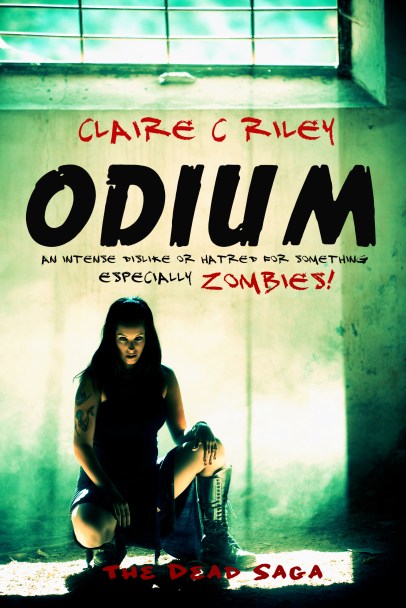
Odium The Dead Saga cover

~ Guest post by Claire C Riley

Most writers start out on this crazy train wreck of a journey with one thing in their mind: to tell a story. Okay, so maybe they have two things on their mind.

Tell a story, and have people read it.

Oh, wait. Maybe three things if they are feeling especially ambitious.

Tell a story, have people read it, and maybe, if they dare to dream…earn a living doing it.

Throughout my journey, I’ve met many different types of writers, all with different ambitions when it comes to their words/books/stories/novels whatever. Some dream big. They write a great novel and wait for it to be snapped up and make them their millions. Others write a great novel, work their socks off to get it traditionally published, and sit back and wait for their millions to roll in.

And then there are those who are more realistic about it all.

They write a great book. They want it to be read by people, and maybe they pimp it out to the big five, maybe they don’t, either way, that book gets published. And then they…write the next damn book!

Because to be a writer, that’s what it takes. Not one great book, but several. Readers don’t like investing in one book, because that’s a shoddy investment, and it’s not the book that they are investing in—it’s you, the author. They want to know that if they fall in love with your work that there is more to come. More ready for them to buy, more for them to look forward to. Just more.

I’ve met a lot of authors who are waiting.

Waiting for sales, waiting for fans, waiting for…who the hell knows what they’re waiting for, and there’s nothing wrong with that, but don’t sit up at night wondering when the big bucks are going to roll in.

As a reader I like to know that there’s more after I turn that final page—or slide the final page if I’m reading with my kindle. And I hate waiting for a year for a sequel.

So as a writer, I don’t. I try to get out several novels a year, both full length and novellas, and in between I like to write short stories in anthologies. That way I get to keep drip-feeding my readers my words, to keep them interested and hungry for more, and yes, invested in me. Because surely I owe them that much? After all, they took a punt on me by reading my book. And in return the more they read my stories, the more they talk about them, and the more word spreads, thus increasing my reach to potential new readers.

So for me being the next big thing isn’t about that traditional publishing contract, or making a million on my first book (though, of course that would have been nice.) It’s about continuously moving forwards, listening to feedback and improving with each book, making my readers happy, and maybe, just maybe, the next book will be the next big thing.

But I’m not waiting around to see, I’m too busy writing my next book.

Claire C Riley profile photo~ Claire C Riley is the author of “Limerence,” “Odium. The Dead Saga,” “Odium Origins. A Dead Saga Novella Part One,” “Odium II The Dead Saga” “Odium Origins A Dead Saga Novella Part Two” a contributor to several zombie apocalypse anthologies, including the upcoming ‘Fading Hope’, ‘State of Horror Illinois’ and a proud contributor to the charity anthology “Let’s Scare Cancer to Death.”

Odium. The Dead Saga is a top #100 dystopian selling book on Amazon.com for 2013, ‘Indie book of the day’ winner December 2013 and ‘Indie Author Land 50 best self-published books worth reading 2013/14’

Limerence was a featured book in the ‘Guardian newspaper for best Indie novel 2013’ and is currently a finalist for the eFestival of Words ‘best novel’ category.

Odium II The Dead Saga is a #1 Best Selling British Horror book.

She can be stalked at any of the following.

http://www.clairecriley.com

https://www.facebook.com/ClaireCRileyAuthor

http://bit.ly/clairecrileyamazon/

https://twitter.com/ClaireCRiley

https://www.google.com/+ClaireCRiley

Filed under: author platform, Books, publishing, Writers, writing tips, , , , , , , ,

Ha-ha-ha-nope! This post is about you.

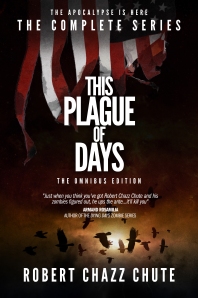
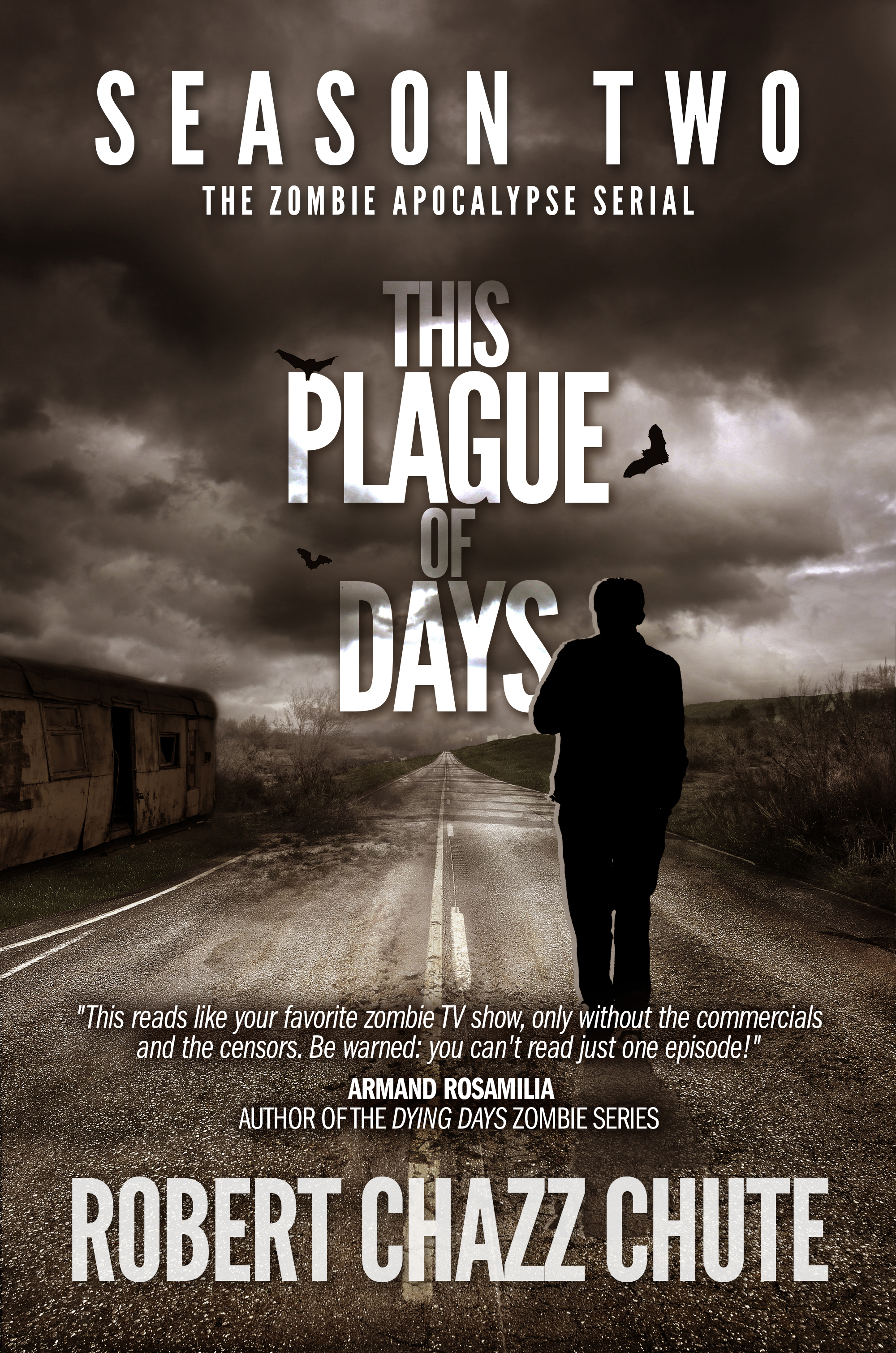
This Plague of Days OMNIBUS (Large)It is easy to be cynical and you can spot the practice everywhere. In watching the unfolding developments of the Hachette versus Amazon dispute, some people ascribe motivations to actions even though we’re still working in a low information environment. Support Amazon? Somebody’s going to call you a moron. Support Hachette? Someone will call you a shill.

  • As if you’re saying what they said you said.
  • As if you can’t think critically and everyone must align with one ideology (forever).
  • As if the only choice is a binary, up/down, yes/no.
  • As if standing up and stating your opinion is wrong.
  • As if our opinions will affect the negotiation’s outcome. (Ha-ha-ha-nope!)

Both sides arrive at the same conclusion: Writers will be hurt if the other side wins.

We tend to see the world as we are. We project. People who think, do and say nasty things expect others to react the same way they’d react. Same is true of many optimists. (I don’t have a lot of experience with optimism, but I have seen that happen.)

So let’s consider who we are as writers. I invite you into my warm pool of quiet reflection…

Do you believe in the power of Art?

Do you believe in your Art?

Do you believe you can change people’s minds with your Art and grow a base of readers?

Do you believe readers will find you or are they only interested in hot authors in other genres?

Do you believe in your capacity to improve your chances of success, learn new skills and change the future?

Do you think you can change yourself and your future?

Does your success depend on you or is it only luck? Or is it some luck but you’re the only variable you can control?

Are you hoping one corporation or one business model will make or break your career?

Or do you own the company that will make or break your career?

Do you believe that mistakes are forever or are situations fluid and correctable?

Does the universe arc toward or away from justice?

Are you a helpless leaf on a current or are you prepared to go find your ideal readers? A little bit of both or neither?

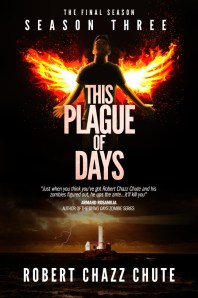
Robert Chazz Chute This Plague of Days: Season 3Where are you on this continuum?:

Adapting to change is a

  • catastrophic problem or
  • an inconvenience or
  • possibly an opportunity? 

This post isn’t about supplying answers. Only you can do that. However, I hope you find your answers reflect a confidence in yourself, your books and your readership. Artists should be bold. Writers should feel committed to the fun of what they do, forsaking all others and rejecting panic. Isn’t our work too big for us to act small?

Don’t let an Internet storm blow your authorship off course. Storms rock the boat. Be the writer who rocks harder. 

Robert Chazz Chute Bio Picture~ I’m Robert Chazz Chute. I’m a suspense novelist. Last night I saw my mother for the first time in several years. She’s been dead a while so I was somewhat surprised by the encounter. When I was a teenager, it drove me crazy that she frequently used the word “kooky.” I thought that was terminally uncool and embarrassing.

Last night, I held her and asked her to say the dreaded word. She kept her unblinking gaze fixed on the horizon and refused to even acknowledge me. I begged her to smile and say it one more time. She remained stiff and silent and unmoved.

And I wept.

Kooky.


Filed under: author platform, publishing, Writers, , , , , , , , , ,

Why you’re going to make it

As indie authors, we’re all encouraged to work harder. That’s frustrating to hear because I don’t know any indie authors who aren’t working hard. But I’ve got good news. Your chances of achieving some measure of success are better than we’ve been led to believe. Here’s why:

1. Businesses fail all the time, big and small. But our overhead is so low, we can continue after we fail! When your hardware store goes out of business, you’re done. We get a few kicks in the ass, but authors also get more kicks at the can.

2. Every business that ever made it to sustainable got there because the boss/producer didn’t quit. Many of the biggest success stories come from people who failed and failed and failed at their chosen path but were too dumb to quit. Stubborn is our advantage.

Being a writer isn’t just a job. It’s an identity. It’s a compulsion. How often do you really consider quitting? For many of us, we never seriously consider stepping on the brake. We’re writers and we always will be.

3. We have the right attitude and mindset about what we do. When a software engineer keeps his head down through seventy days straight of boring coding to come up with an amazing game, he’s applauded. Wow! Look at the art he created after all the boring stuff he did! Imagine all the fun stuff he went without to produce all that work!

Coding relentlessly may sound boring to us, but he’s probably into it precisely the same way we’re into books. Everyone has parts of their job they don’t like, of course, but could coding be any more boring than your eighth round of edits on a 100,000 word manuscript where the timeline and logistics still don’t quite work? 

What we admire in entrepreneurs is true of authorpreneurs. We make things happen in our business because we have passion for detail and it never occurs to us to quit. People who don’t quit write more books.

4. People who write more books have a greater chance at rewards, monetary and otherwise. 

Years ago, I met Dick #1 who asked Guy #1 what he did for a living. “I’m into convenience stores,” Guy #1 said.

Later, after Guy #1 walked away, Dick #1 said something disparaging about how little money anyone could make out of a convenience store. 

“You’re a fraction right,” I said. “How much do you think somebody could make out of a convenience store in a year?”

Dick #1 sneered. “Not much. $10,000. $15,000, maybe.”

“Well,” I said, “don’t get too judgy. He makes a lot more than you think he does.”

“Impossible!”

“Guy #1 owns ten convenience stores,” I explained. “And stop being a #1 Dick.”

So it is with books. Publish and somebody will dig your flavor and spread the word. Put a lot out there (improving with each book.) We can do okay in the long run. This isn’t an all or nothing game. It’s just a really long game.

5. The path to success is linear. You know what to do or you can learn what to do. All you have to do is continue.

Years ago, it seemed like the biggest topic was writer’s block and finding time to write. Finding time is still a challenge, but people whine less about writer’s block and I think I know why. They know they will be published now. Your destiny is in your hands and it’s not in anyone else’s. 

We aren’t worried about gatekeepers now. We’re anxious for many reasons, but our entrails don’t go into knots because we could spend years writing a book that no one will have a chance to read. We know we are spending energy toward a realizable goal that will happen: publication. If you knew you were going to the Olympics to stand before the world no matter what, you’d train every day. That’s us. To get to the big show, all we have to do is get on with it. 

6. There is a low bar to success. I’m not talking about becoming a millionaire. Not necessarily, anyway (though that indicates a high level of achievement.) Success is different for everyone, but you’ve got a much better shot at success than anybody daring to open a new yoga studio, hardware store or any other endeavour that requires employees, rent and huge bank loans. So cheer up. Authorpreneur is actually a pretty safe business venture.

Like many businesses, it starts off as a hobby and grows or it doesn’t, but you probably aren’t risking everything to do it. Plus, you get to do what you love. A lot of people are stuck in frustrating businesses where they feel thwarted. I often feel thwarted as a writer. I’m often envious of other people’s success. But I don’t love what I do any less. Loving what you do is perhaps the only immediate success, but it’s powerful.

7. Does finding 1,000 true fans really feel that intimidating? Many gurus say (as a general rule) 1,000 true fans is all we really need to reach sustainability. That’s less than the number of people in the tiny village I’m from. My goal is eventually to find 10,000 true fans. I can picture that. It doesn’t seem unreasonable.

The Staples Centre in Toronto has 19,000 seats and that’s just one city showing up to watch the Raptors play! (Sure, a Canadian invented basketball, but few are that excited about the Raptors. Still, they have enough die hard fans to keep the lights on and the refreshment stands busy.)

Getting half as big as the Raptors at the the writing game seems doable if I live long enough. That’s why I’m drinking more green smoothies, working out and eating less sugar. And writing my ass off.

8. Remember the statistic about how most indies make less than $500? Sure. That’s depressing. But I look at it like mortality stats. We used to die a lot younger, but that was because of the infant mortality rate. It’s a myth that people only lived to thirty a few hundred years ago. Many people lived longer but the infant mortality rate dragged down the average age.

You’ve just read all the way down to Item #8 on a blog post about writing that’s more than a 1,000 words. I’d say you’re pretty serious about this writing thing. Lots of people aren’t. Lots of people weren’t and they could imagine doing something else besides writing. For them it was TL; DR (Too Long; Didn’t Read.) They’re off pornsurfing while you stayed to hear me out to the end. You are not going to let your writing perish due to crib death. You’re in the survivors club and you know what I’m talking about when I talk about the writing life. Your chances of doing better than average are better than average. That’s why you are going to make it.

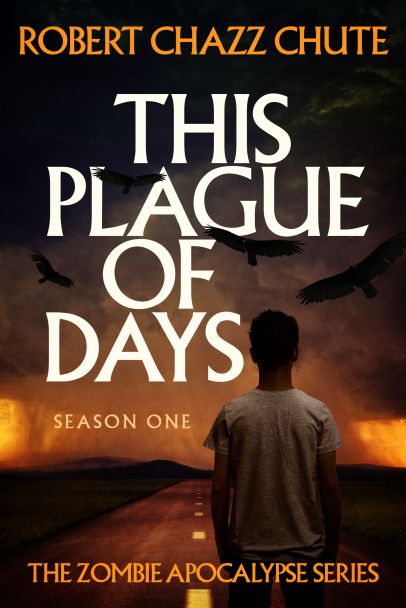
This Plague of Days OMNIBUS (Large)~ I am Robert Chazz Chute and I’ve written eleven books. I’ll write at least three more this year and they are going to be awesome. I am your happy warrior of the word. Check out my books at the author site, AllThatChazz.com. Find out more about my doomsday book with the autistic hero at ThisPlagueOfDays.com.

If you’ve read, This Plague of Days, Omnibus Edition (pictured and clickable, above), please review it. That would be awesome. Thanks!


Filed under: publishing, self-publishing, What about Chazz?, What about you?, Writers, , , , , , , , , , , , , ,

You are not an idiot Part II

“Nobody ever went broke underestimating the intelligence of the American public.”

~ H. L. Mencken

“Still! Don’t be that guy!”

~ Robert Chazz Chute

This part is about writing.

If you’re as cynical (or perhaps as realistic) as H.L. Mencken, you’ll dumb down your books to appeal to a wider audience. As Chris Rock observed, “Most people are B and C students.” A critic once told Sly Stallone his movies were for dumb people. Sly’s brilliant answer? “That’s okay. There are lots of them.”

It would be snobby to suggest every book should be “literature”, whatever that means. I like lots of dumb things. (For instance, I’ve seen every ninja movie ever made.) What I write, a lot of people would call “pulp.” They wouldn’t be wrong, either. (Check this link to The Vintage Library to read what pulp was really about. It’s not the pejorative some critics think it is!)

I’m not demanding that anyone write “up” or “down” to their audience. I’m not in the tell-you-what-to-do business. I’m in the brain-tickle business. I will tell you a quick story, though.

I just got a positive review of This Plague of Days by a person who identified themselves as autistic. My protagonist for those books is on the spectrum and, for that reader at least, the hero passed muster. That review is very precious to me for obvious reasons. I wouldn’t have received it if I didn’t reach a little.

This Plague of Days plays with language and expectations. It’s got a lot of Latin proverbs and a tiny bit of poetry amid the evolving carnage. It’s soft sci-fi with zombies and vampires and family dynamics amid disaster. The plot ventures into dark fantasy. Though readers may come in with low expectations because it’s essentially an end of the world dystopian saga about ordinary people facing infected monsters, the narrative never assumes the reader is an idiot. Escapist ≠ dumb.

The problem with stretching out and reaching as a writer is that someone, as a reviewer, will slap your hand for trying too hard. It’s true that some readers won’t read as closely as you’d like. They won’t “get it.” But few one-star reviews are worthy of serious consideration anyway, right?

Those who do grok it will love your work more.

What can I tell you about aiming higher versus what H.L. Mencken would consider “playing it safe”?

This is my 1336th post on this blog. Sift through and you’ll find I’ve frequently implored my fellow writers to “Follow the Art.” By that I mean, write what serves the story.

Today, I’m asking that when you write, be you. Be unique. Whether your goal is to write something fun and silly or earth shattering in its literary aspirations, be real. Whatever we do, our goal is to entertain. I write to entertain myself first, though. If readers dig my trip, cool. I try not to let reviews influence my game.

I’m taking the question away from a debate about whether to aim lower to achieve higher commercial success. I’m suggesting, as always, that we follow the Art. Be you because there’s only one of you. Don’t try to write like other people. Please don’t envy other writers’ success because envy is irrelevant. Please write what only you could write. Ultimately, it’s not about what seems smart and what’s really dumb. It’s about story.

All stories say something about the world and the writer who is the lens to that world.

Be a true lens that delivers clarity. The sights we point to may please the eye and ear and heart. Often the mind, but not necessarily. Lots of Charles Bukowski’s work is pretty dumb, but his lens was honest and I love his stuff. Though I admire their capacity for terrible vengeance, ninjas don’t say much about today’s world. They don’t say much at all. However, American Ninja 2 is still more fun for me than trying to stuff Ulysses in my head. Ooh! And Sho Kusugi in Pray for Death? Genius! Especially the execution with the buzz saw.

Robert Chazz Chute Bio Picture~ Hi. I’m Chazz. I write my variety of suspense. You can find all that stuff on Amazon here.

And now, some of it’s on Kobo.


Filed under: author platform, publishing, What about Chazz?, What about you?, Writers, writing tips, , , , , , , , , , , , , , , , , , , , , ,

You are not an idiot Part I

“Nobody ever went broke underestimating the intelligence of the American public.”

~ H. L. Mencken

“Don’t be that guy.”

~ Robert Chazz Chute

Part 1 is about gurus.

I heard a podcast today in which the hosts underestimated their audience’s ability to think.

They worried their guest was giving advice that was wrong, which is fine. Then they worried the advice was too nuanced. Someone, the hosts worried, might be so stupid they’d misinterpret said advice. It made me angry because they ended up mocking, berating and talking over their guest. Eventually they hashed their way through to arrive at what the guest was really suggesting.

As Hannibal suggested, “Eat the rude.”

The show also irritated me because it implied I was too stupid to “get it.” I got it. I bet most people did. Yes, someone will always misinterpret whatever you say. But we don’t run the world catering to the lowest common denominator. If we did, no one would be allowed to drive.

If you somehow become a guru of wide reputation and stellar success, please try to remember that not everyone is stupid just because they haven’t reached your heights…yet.

Advice is not for idiots.

It wastes the breath of the advisor. Idiots aren’t interested in advice. Advice makes idiots talk more. No one wants that.

The hosts of the podcast (which I will not name because it’s unnecessary) are certainly not idiots. I wish they thought we were smarter, though.

~ My name is Robert Chazz Chute and the only guru I put full faith in is Kurt Vonnegut. He was a great writer and a constantly disappointed humanist.


Filed under: author platform, Writers, writing tips, , , , , , , , ,

Guest Post: Ian McClellan’s One Undead Step

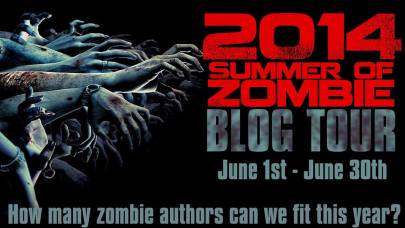
SoZBanner


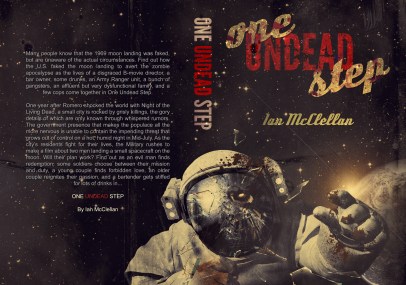
One Undead Step full cover

Today, as part of the Summer of Zombie 2014 Blog Tour, we get a peek at Ian McClellan’s work:

Many people know that the 1969 moon landing was faked, but are unaware of the actual circumstances surrounding the event. Find out how the United States faked the moon landing to avert the zombie apocalypse as the lives of a disgraced B-movie director, a bar owner, some drunks, an Army Ranger unit, a bunch of gangsters, an affluent but very dysfunctional family, and a few cops come together in One Undead Step.

Just one year after George Romero shocked the world with his masterpiece Night of the Living Dead, a small city in the Midwest is rocked by grisly, random killings, the gory details of which are only known through hushed whispers and secondhand rumors. The government presence that makes the populace all the more nervous is unable to contain the impending threat that grows out of control on a hot, humid night in Mid-July. As the city’s residents barricade their doors and fight for their lives, the American Military rushes to make a film about two men landing a small spacecraft on the moon. Will their plan work? Will the infection spread throughout the rest of the country? Will it be enough to save the world from the burgeoning threat of the undead? Find out as an evil man finds redemption, some special forces soldiers choose between their mission and their duty, a young couple finds a forbidden love, an older couple reignites their passion, and a bartender gets stiffed for a lot of drinks in One Undead Step.

One Undead Step contains some bad language, many scenes of violence and gore, and a graphic but oddly amusing sex scene.

One Undead Step: A Zombie Novel

Ian McClellan

Excerpt (Explicit language follows.)

1. On the Set

Saturday, 19 July 1969

Christ, Mark Mathews thought to himself, how the hell did I ever get myself into this mess?

Drugs and statutory rape, his know-it-all subconscious answered. Mark was a fun guy, but his subconscious was kind of a blunt asshole. Of course it was right. If he hadn’t gotten obliterated that night and slept with that sixteen year old girl he wouldn’t be on a poorly constructed set on a military base in Nevada filming the greatest hoax in history with a bunch of guys who may be able to shoot rifles really well, but were total amateurs when it came to making movies.

When the detectives came to arrest him they’d found a smorgasbord of drugs in his home. Pot, uppers, downers, cocaine, L.S.D., mushrooms, and even some heroin. He never touched the smack, but there was a girl who came by from time to time who loved the stuff, and she made it worth his while to always keep a little on hand. The cops knew about the drugs. They knew about the parties, too. A successful b-movie director could get away with a lot in Hollywood, but you had to be A-list with a capital A to go deflowering underage girls and not see the inside of a prison.

It had been a typical hot and sunny summer day in southern California when the police came to his door. The two detectives in their cheap, off-the-rack suits and ties were sweating bullets, as were the officers donned in dark, city-issued uniforms who’d accompanied them. Mark had begged and pleaded with them and tried to state his case. “I’m not a bad guy, really. I just like to have a little fun. Who doesn’t? How the hell was I supposed to know that little slut was only sixteen? She had no business being at that party. You guys oughtta go arrest her parents!” He was told to tell it to the judge. He should have seen that one coming- he’d thrown the old cliché into a couple of his movies.

Bribery didn’t work, either. “Look, I’ve got ten grand in a bag upstairs. Take it. There’s more where that came from.” The detectives exchanged odd smiles that Mark would come to understand later, but they didn’t bite on his offer. What they did do was handcuff him and take him downtown in the back of a police car.

Mark was thinking of that car ride- the only time he’d ever been in the back of a police car- and how frightened and humiliated he was at the time, when something on the set got his attention.

“That’s one tiny step for a man…” the one fellow was saying. Nick or Neil or whatever the hell his name was. The one who just had to be the star despite the fact that he couldn’t take direction for shit. He just had to be the first one out. He just had to have the big line in the script. Of course he wanted it so badly, but couldn’t say it right for all the whiskey in Ireland.

Mark rubbed his temples and looked back beyond the “lunar module” that the fellow had just stepped out of. There was a hand emerging from one of the craters. His first thought was that it was some drunk key grip or janitor (it happens more than you’d think) until his brain registered the decay of the skin. “Christ Almighty!” he yelled. “Cut! Cut, God damn it. One of those fucking things is in here. Is this a military base or a fucking public library?”

A young man with a rifle ran up and shot the zombie between the eyes as it was hoisting itself out of the crater. It fell back in the hole and landed with a thud. He got on a radio and informed someone of a ‘security breach’ that was now ‘code eleven’ which Mark assumed meant that its brains were now scattered all over his set.

“Get that shit cleaned off my set,” Mark told his assistant as he rubbed his temples. “And get me a damn drink.”

About the author: Ian McClellan was born in a small harbor town in southwest Ireland. In an effort to be cliché his parents moved the family to New York when he was thirteen. Once a promising up-and-comer in the world of competitive eating, his career was cut short by an ACL injury. He now resides in Florida with his dogs and drives a truck for a living, but is crossing his fingers and hoping his writing career will earn him enough money that he can tell his boss where to stick it.

Digital Camera

http://politicalhorrorstory.weebly.com/

https://www.facebook.com/politicalhorrorstory

https://twitter.com/@ianmcc2010

The stench of rotting flesh is in the air! Welcome to the Summer of Zombie Blog Tour 2014, with 33 of the best zombie authors spreading the disease in the month of June.

Stop by the event page on Facebook so you don’t miss an interview, guest post or teaser… and pick up some great swag as well! Giveaways galore from most of the authors as well as interaction with them! #SummerZombie

https://www.facebook.com/events/286215754875261/?ref_newsfeed_story_type=regular&source=1

AND so you don’t miss any of the posts in June, here’s the complete list, updated daily:

http://armandrosamilia.com/2014/06/01/summer-of-zombie-blog-tour-2014-post-links/


Filed under: Author profiles, Writers, , , , , , , , , , , , , , , ,

How to write more, faster, now

After I publish a book, I tend to fall into a mild bout of postpartum depression. To head that off, I’m writing a new crime novel as I prepare to launch the finale to This Plague of Days. This new one has a very fast pace and I’m also writing it fast. This isn’t going to fall into a plotting versus pantsing discussion because, Thor knows, we’ve all hit that gong plenty hard already. Today, let’s talk about how to discover your story.

Here’s four writers to pay attention to, in case you don’t care what I think:

1. Anthony Burgess had a cool trick I’ve used. Pick three words at random. Those words will appear in your next chapter.

Go! You’ll find gooey, fudge brownie richness with that one tool alone.

2. E.L. Doctorow said writing a book is, “like driving a car at night. You never see further than your headlights, but you can make the whole trip that way.”

When I wrote my first crime novel, Bigger Than Jesus, I knew the last line of the book, but I had no idea from one night to the next what tomorrow’s chapter might bring. It worked out in a really peachy way.

3. Stephen King talks about excavating the story, discovering and unearthing dinosaur bones.

Some people start with character. I often find my brush and trowel to dig the dirt away is conflict. Everybody wants something. It’s more interesting if everyone’s competing for the same thing but use different methods to get what they want. (Game of Thrones, anyone?) Through conflict, character and snappy dialogue often emerge. Direction and velocity will reveal themselves as you discover how the story evolves. It may divert from your outline. That’s okay. Follow the drama. It might lead you off the map to a beautiful place.

4. Chuck Palahniuk suggests writing each chapter as a short story.

As each story connects to the next until the end, this process cuts down on a lot of intimidation. It also lessens the danger of a saggy middle because you’re demanding more of each story element instead of relying on the reader’s patience. Each chapter is a pillar. Don’t build a weak one and depend on it to hold up the structure.

I’m going to suggest the writing process as an exercise in free association.

Free association emerged as a counselling approach in Freudian analysis. The core of the therapy was to let the mind wander and for the patient to tell his or her own story rather than take on the worldview of the therapist. This was resolution by exploration.

The key is to let ideas bubble up and connect unhampered by the choke valve of self-criticism. Criticism is for later. In the creative process, let it go and flow. You’ll go faster and arrive in places that aren’t mundane and expected. Using these methods, you’re going to cut down on procrastination, too. You’ll write more because you’re having more fun. Stop agonizing. This is entertaining fiction you’re writing, not a eulogy.

In This Plague of Days, the autistic hero of my zompoc epic (Season 3 coming June 15!) is Jaimie Spencer. He’s obsessed with the dictionary. That’s me. I collect odd factoids. I let one Wikipedia entry lead me to another and to another until I free associate my way to new plot developments. The world is made of details and small components build bigger things. That’s also true if your world is fictional. The dictionary and Wikipedia are full of the atoms of your next story.

For instance, take a swig of Doctorow.

In my current WIP, I know the destination and I have a hastily drawn outline of how to get there. It’s not deep in details. I came up with most of it while watching my son’s soccer game. The first atom was a small conceit. The idea exploded when I had my hook. More on this later this summer.

Enjoy a tall, cold glass of Burgess.

Take a random fact from Wikipedia and see where that leads you. Your foundation is already getting poured.

In the crime story I’m working on, I needed to show the love interest’s character. She’s an underdog determined to win. That led me to a story from Wikipedia she could identify with. By showing the tragic, yet heroic story that guided her life, we understand her better and we like her immediately. (Me? I’m big on pathology. Give a character a medical problem and I can use that, for them and against them. Desmoid tumors saved the life of one character in This Plague of Days, for instance. Read the books. You’ll get that reference.)

Free association comes faster from good questions.

Quick! What are the hits playing on the radio in 1974? Which manager was first to get kicked out of a baseball game twice in the same day? What was happening to your protagonist that day in 1974 when he was thinking about baseball and listening to the radio? What song titles spoke to his state of mind? These are the connections I made to write a chapter (a pillar, if you will) that could stand on its own as a short story. Hello, Mr. Palahniuk!

As the factoids build and scenes connect into a river of stories that collect and flow into one ocean of words, new connections are made. New developments float to the surface. You’ll discover new intersections in the network of your story you didn’t suspect were there when you began to write.

That’s Stephen King’s story archeology.

Good stories aren’t written. They are discovered. It is the nuance we find in the depths of free association that contribute to verisimilitude and character interplay. It’s nuance that builds, not just a book, but a believable world.

Those details you’ll use through free association? It’s not the only key to Creativity’s lock, but it’s a good one. Try it.

~ I wrote Crack the Indie Author Code and Write Your Book, Aspire to inspire. Check out AllThatChazz.com for affiliate links to all my fiction. That would be double plus cool. Thanks.

Filed under: Writers, Writing exercise, writing tips, , , , , , , , , , , , , , , , , , , , , , , ,

Publishing Advice: Don’t Believe a Word

The writing and publishing business is full of, “On the one hand, this. Oh, yeah, but on the other foot, what about this BS?” Here’s the conflicting advice on my mind this week, to and fro, pro and con:

1. People complain about marketing on Twitter, “What can I say of value in 140 characters?”

It gets worse. It’s better if you say it in 100 characters. Say more with less and it’s more likely to be read and retweeted. Leaving more room allows for additions, links and commentary from enthusiastic retweeters. So be pithier. You’re a writer. You can handle that. 

2. More blog posts, daily, equals more traffic to your blog.

Unless you’re blogging a book, you’re losing time you could be using to write your next book. There are still many writers who struggle with time management and discipline. The writing — the book writing — has to come first. Promotion is secondary because you aren’t in the promotion business. You’re in the writing business. Promotion is for the stolen time that would otherwise be unproductive.

Hint: If you’re still flogging the same book, and you only have one book, and that was published over a year ago? You aren’t in the writing business. Finish something new.

3. Some people say we should begin promoting the book as soon we conceptualize what it will be….someday.

However, you’re going to change the title before you publish it at the very least and if you take too long, someone will steal that great title. Promoting too soon is an exercise in chicken counting that could just as easily wear out potential readers if you talk about the potential book, too much, forever. 

Corollary: Don’t write your blog or push your book until you have something solid to say.

And don’t repeat yourself too often, please. If I see one more blog post with the title proclaiming “Content is king!” I might have to shoot somebody with a water pistol full of skunk juice. And then kill them. (Note: Don’t swing sledgehammers in small rooms. Ice picks to brain stems are efficient. A disposable raincoat and a friend who gives alibis without asking questions is essential. Ask a mystery writer for best strategies…though you might have to wipe them out, too, just to cover your tracks.)

4. We all look forward to being discovered by a huge audience.

That’s where the negative reviews come from, too. Brace yourself.

My quest isn’t for a huge audience. It’s for 50,000 true fans. Yes, I know people usually say 1,000 true fans, but I’m ambitious and we all need to stretch and reach. (Plus 50,000 true fans fits my budget better. Daddy’s got bills!)

5. We aren’t supposed to respond to reviews.

It is a bad idea, generally….which means the false and misleading reviews stay up, uncorrected. This one isn’t about the conflict in the advice. It’s about the conflict that arises in you. You crave justice for your innocent book babies.

This one? Live with it. It’s not worth it. It’s annoying, but the Authors Behaving Badly meme is much stronger than the Reviewers Behaving Badly meme. We’re outnumbered.

Unless they’re threatening you physically, forget it. If they are threatening you physically, revisit #3 for helpful, murderous suggestions if you’re not into dialling 911. And click the Report Abuse button with gusto.

6. Everybody wants to write the great American novel.

It’s been written and it’s probably The Great Gatsby. The problem here is some writers get caught up in what they think they should write and how that ideal should look and sound. Don’t be the serious guy who takes himself too seriously. He is tiring to be around and his shoulds are misplaced.

Originate, do not emulate. If someone else did it better, we’ll go read the original. Of the hundred Harry Potter clones, how many do you really want to read? Do not chase trends. A trend is so fast, it runs you over and leaves you far behind at the same time.

7. Everyone says social media marketing is about having Internet “presence.”

Presence is weak. It says, “I’m here. I hope you find me.” Hunters don’t wait for deer to come to their house, knock on the door, peel some potatoes and conveniently slip into the oven. Hunters go hunting.

We’ll find more readers if we’re active and proactive. Go find book bloggers. Go where readers are. Make a list and follow people on Twitter as a planned approach. There are people out there who already proclaim their love of Steampunk in their Twitter profiles. If you write Steampunk, why haven’t you introduced yourself already? Stop waiting for them to come to you.

8. Gurus say, “Be everywhere.”

Maybe “everywhere” isn’t for you. Is LinkedIn really helping you as an author or is that medium best built for job searches? Unless there are forums there you love, maybe that’s wasted energy. What about Tumblr? It might be an excellent spot for you, but Tumblr’s users tend to be young, hip and artistic. Is pushing historical fiction about railway trains of the Klondike really the best use of your time there? Choose a platform or two or three you love. Focus.

Almost everyone says we should dump the exclusivity of KDP Select and be on all sales platforms. Maybe not or maybe not yet. I’ve written extensively on this issue in the past so I won’t beat that zebra into a coma again. However, when you do make that decision, don’t jump (or not jump) because someone told you to do so. Have a plan how you’re going to move those books on those other platforms (because, with few exceptions, those platforms don’t have tools you can use to raise that crop of readers.)

Don’t believe a word. Test suggestions instead.

9. When publishing gurus have nothing else to offer, they say, “Work harder.”

I don’t know a single author who isn’t working hard. Writing despite kids, day jobs, lost sleep, and long hours? Check, check, check, check. “Work harder,” for most of us, does not add value. It’s a bad math teacher telling a student staring, clueless, at an algebraic equation on the blackboard: “Stare harder and you’ll solve for X.”

Excuse me, sir, but your pants are on fire. With napalm.

“I will work harder,” is the horse that gets carted off for meat and glue in Animal Farm. What we need is to test strategies, first on a small scale. If Slideshare works for you and gets more clicks to your author site and conversions to your newsletter, do more of that. If one lure to your mailing list doesn’t work, add value and try again. Always focus on what works instead of trying everything at once. Eighty percent of results come from twenty percent of your efforts. Find your twenty percent.

Also, please, please, don’t work harder. We’re already sitting too much and worrying ourselves into an early grave while some consultants are actually making money off poor writers by yelling, “Work harder!” That damn whip arm never seems to tire. Screw those guys. We’re already putting in the time. We need smarter tools, not louder barking from the water boys.

Instead of working harder, when you’re writing, please write more joyously. Take chances. Have more fun. You can even enjoy the creative aspects of marketing, believe it or not. Joy translates to all your work. Readers won’t necessarily know why they love the joyous writer more, but they’ll feel it and respond.

10. We’re told to market to readers only.

Don’t bother writing a writing blog. There’s too much of that already and writers don’t buy books. They’re too busy writing them. Forget writers!

Hm. If true, that’s worrisome. Writers should read a lot. I think, generally, we do read plenty. I’m a voracious reader. I wrote two books about writing that emerged from this blog, so there’s that. But more important, the friends I’ve made through blogging to writers and podcasting with writers? They’ve been an immense help to me. I’ve connected with allies who’ve blurbed my books and been my beta readers and helped me expand my reach in many ways. The indie writing community is a very supportive group.

Through this blog and my podcasts, there are literally dozens of people who have helped me publish and publicize. I started to write a list of helpful fellow authors and fans, but the list got too long and I worried I’d forget somebody. Connecting with allies here, not aiming exclusively at readers, has delivered great opportunities. 

I hope I’ve helped my allies plenty, too.

Thank you all. Much love.

~ Robert Chazz Chute isn’t as mean as he sometimes sounds. His next books are This Plague of Days, Season 3 and This Plague of Days, The Complete Series. They’ll launch June 15th. For more on This Plague of Days, the international zombie thriller with an autistic hero, go to ThisPlagueOfDays.com.

Filed under: author platform, Publicity & Promotion, publishing, Writers, writing tips, , , , , , , , , , , , , , ,

Helpful Mother’s Day Advice plus what’s tiring me out in publishing this week

At the end of this post, we’re going to find the happy. You’ll feel the height and breadth of the contrast to the rest of the article when we bring this post in for a landing. Also, at the bottom, you’ll get some excellent Mother’s Day advice. Now, here’s ten things that suck:

1. Relentless Facebook group “marketing.”

How can I miss you if you don’t go away? Spread that stuff out! Give me some space instead of pummeling me with spam. I am begging you.

2. Publishing gurus saying (smugly) that ebook sales are slowing down.

Slowing down from a rocket launch still gets us to high orbit. Nobody said we’d grow 800% every year. Slow down from that a bit and the growth curve still exceeds any reasonable expectations. E-publishing is a young industry and it’s doing great.

3. Certain players in traditional publishing complaining about Amazon’s “monopoly.”

It is not, by any definition, a monopoly. Amazon dominates the market because in most areas of marketing and innovation, they’re ahead of their competitors. I want Amazon to have healthy competition. If other platforms happen to suck, that’s not Amazon’s fault. Attention other platforms: up your game. Complaining about Amazon is not solving your problems. Consider emulating best practices instead of bitching about them.

4. Bagging on box sets.

I’m in on a box set with seven other awesome horror authors. Together, we’re amping up our discoverability and finding new readers with what Joanna Penn calls “coopetition.” It doesn’t devalue my books to charge 99 cents. It’s a valuable investment in new readers. It’s one strategy that says, “I value readers.” Generosity is one worthwhile strategy for any author who isn’t out to make a quick buck. We’re in this for the long game and we stand proud.

5. Libel in book reviews.

A friend of mine, whom I shall not name so she draws no further ire, has been insulted personally, maligned and called a fraud on Amazon. Her bio has been questioned. Go ahead and hit the “Report abuse” button. Many people have done so and pointed out to Amazon that this is libel. The review remains. Still! That sucks.

6. Spoilers in reviews.

Please don’t tell the whole story in a review. That’s what reading the book is for. I was further outraged recently to find that a review of a new author’s book (which is great) contained a spoiler. Worse, that three-star spoiler was ranked “most helpful.”

7. The fun police.

Popularity, and pendulums, swing back and forth. Today’s fans can have a strange propensity to turn into tomorrow’s haters if an artist dares to change. It’s not selling out, dude. It’s growing. If you now hate a superstar author you used to love, please examine why you’d venture into “hate” territory over a piece of entertainment. Maybe this book isn’t you. That doesn’t mean it’s bad. It means it’s not to your taste. Everybody’s had food poisoning a few times but we all keep eating. Chill.

8. All or nothing.

Don’t quit after one book because that book didn’t win the sales lottery. We focus too much on rare outliers and not enough on the people who are merely doing well. As if good isn’t good enough. This life is about the journey, not the dead stop at the end. It’s about the writing and the joy of creation. If someone else finds joy in your creation, fantastic! (Be assured, no matter how bad your early attempts are, someone will love it.) Relax.

People ask why billionaires keep trying to make money after so many millions or billions are already in the bank. How many homes do you need? But I think it’s more than just smelly greed. There’s a clue in the mentality of the writer: this is simply what we do. That’s where the fun is. We would do this for free. Many of us already write for free or are in debt because of our obsession for the written word. Enjoy the process and stop thinking in terms of winning and losing.

Think in terms of doing.

9. Fake outrage.

Despite the tone of this post, I’m a nice guy. But when one writer calls another a “hack” on the Internet, I have to ask a question or two: You do realize the object of your casual derision is a human being doing the best they can, right? Do you think you’d walk away unbloodied if you treated people in person the way you do when you’re safe behind a keyboard? Right.

So don’t be a troll. And if you’re trying to sabotage another author to make yourself look or feel good, you know that won’t work, right? We know the truth and you know trashing other authors with fake reviews doesn’t advance your books, right? You want fan love? Earn it. You aren’t climbing over anybody’s body any other way. And what if those nasty tactics actually did work? You’d always know you earned nothing. That angry, fake review from a fake account just makes you look angry and dumb and we all know it’s not real. Be real.

10. “It’s been done.”

Everything has been done. However, not everything has been explored in quite the unique way only you, Mr./Ms./Mrs./Dr./Whatever Author, can write it.

“It’s been done,” is a lazy agent’s way of saying no. “It’s been done,” is the dismissive wave of a critic who doesn’t bother to look deeper. “It’s been done,” is the casual cruelty of a dream crusher. These people aren’t your readers. They’re incurious, boring people. Don’t believe them. You can make anything fresh. Some will say there are only twelve plots, or ten, or five. I say there are two: Good versus Evil (and variations thereof) and Boy gets Girl (and variations thereof.)

Maybe the next trend will be westerns. These things go in cycles and westerns haven’t been hot for a while. Maybe you will be the pioneer to break new ground in the genre and spawn a thousand vacuous imitators who will spur critics to, once again, proclaim the genre dead. All genres are proclaimed dead at some point and every critic who says so is (almost) always proven wrong. Genres get resurrected and everything runs how and cold. Don’t chase these trends. Heat them up again in new ways.

You be you. Have a blast. We’ve stepped through the darkness with this post. Now let’s go be lights. Blow them away with what you can do. Let’s flounce out on to the field, put ourselves out there, karma-positive and ready to write amazing fiction so hot we melt fans’ faces.

I already love you. Know why? Because you aren’t done. You’re a writer. You’ll always be a writer and nobody’s pulling down your flag.

~ To find out more about my books, go to AllThatChazz.com. To see Spiderman 2, go to a theater. For a nice, cool drink, squeeze some limes into some cold water from the fridge. To hear cool interviews with cool people, try CoolPeoplePodcast.com. To stay in the will, call you Mom on Sunday. It’s Mother’s Day. Forgive her for what she said about your boobs in front of your friends that time in grade 9.


Filed under: Amazon, Writers, , , , , , ,

Bestseller with over 1,000 reviews!
Winner of the North Street Book Prize, Reader's Favorite, the
Literary Titan Award, the Hollywood Book Festival, and the
New York Book Festival.

http://mybook.to/OurZombieHours
A NEW ZOMBIE ANTHOLOGY

Winner of Writer's Digest's 2014 Honorable Mention in Self-published Ebook Awards in Genre

The first 81 lessons to get your Buffy on

More lessons to help you survive Armageddon

"You will laugh your ass off!" ~ Maxwell Cynn, author of Cybergrrl

Available now!

Fast-paced terror, new threats, more twists.

An autistic boy versus our world in free fall

Suspense to melt your face and play with your brain.

Action like a Guy Ritchie film. Funny like Woody Allen when he was funny.

Jesus: Sexier and even more addicted to love.

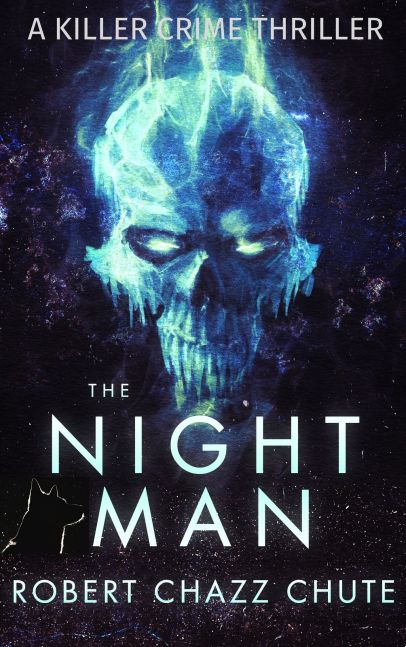
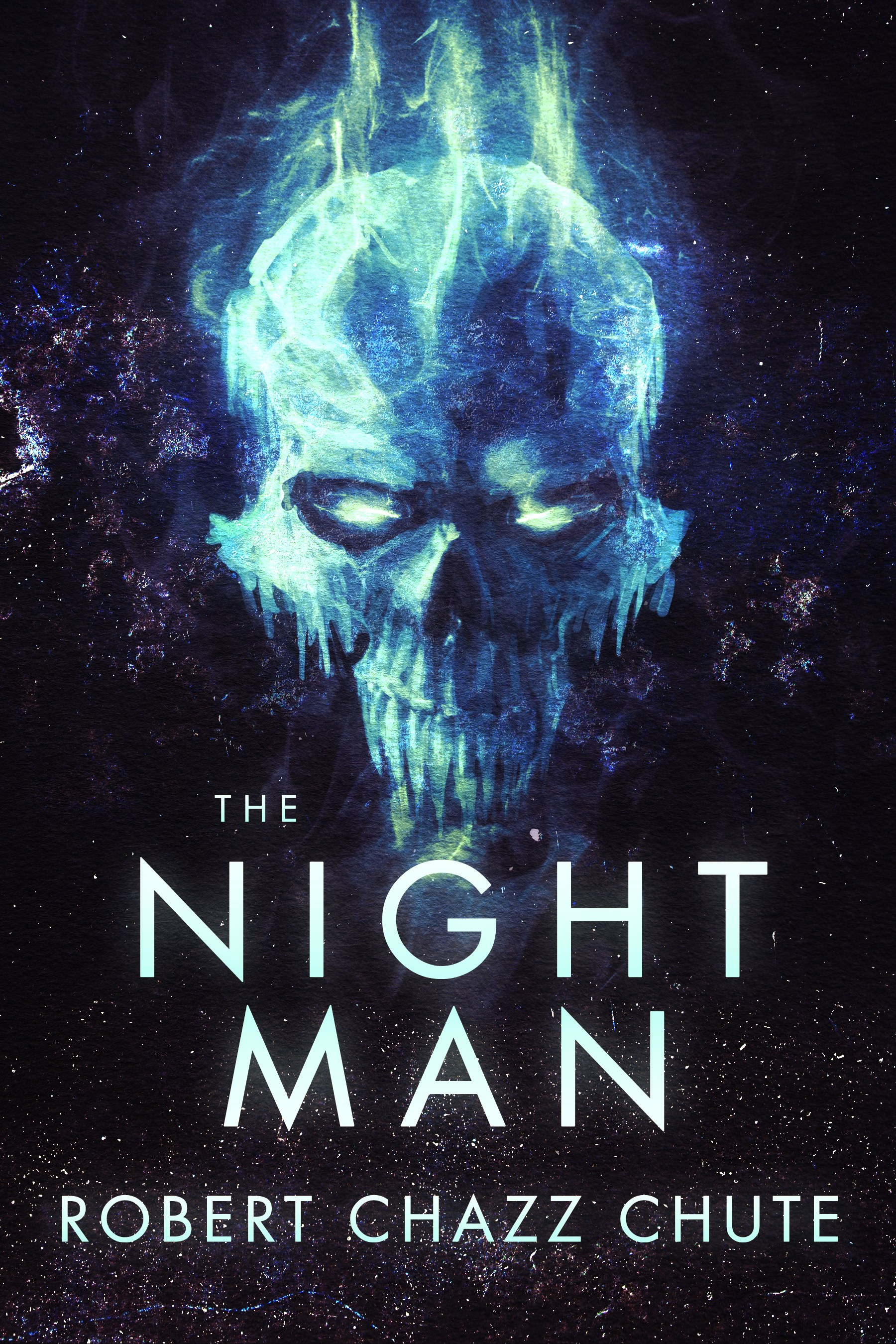
You can pick this ebook up for free today at this link: http://bit.ly/TheNightMan

Join my inner circle at AllThatChazz.com

See my books, blogs, links and podcasts.

Enter your email address to follow this blog and receive notifications of new posts by email.

Join 2,063 other subscribers