
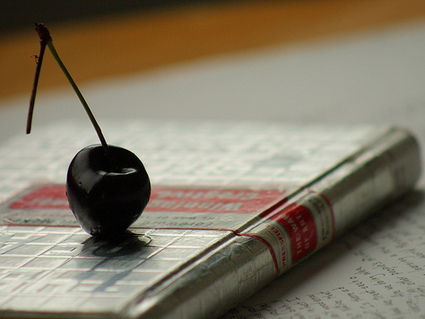
Grammar police (Photo credit: the_munificent_sasquatch)
First bold statement:
The quality of indie books has improved.
We’re maturing. Ludicrously, readers expected the indie ebook revolution to produce immediate perfection, some even demanding a higher quality than they get from trad publishing. As soon as I post this, I expect a deluge of naysayers racing to come up with examples to disprove my assertion. That’s a misguided instinct, by the way. Yes, you could come up with lots of examples both tragic and comedic and I’d counter with a plethora of examples in favour of the indies. So let’s skip that and settle on this: I have over 200 books on my Kindle and my impression is that there aren’t nearly so many grammatical errors or typos as one might expect if you believe all those rabid grammarians moaning over on the Kindle boards.
Recently, I read an Amazon book review where some bonehead’s first observation was that he’d counted five grammatical errors. Note that this was a book that he liked, but he went straight for that in his review’s first sentence. He criticized not as a book lover interested in story (which most readers are) but as a raging grammarian who couldn’t bear five errors in 250 pages. (I clicked the “non-helpful” button after I read that review.)
Second bold statement:
Most readers aren’t nearly as sensitive to typos as some would have us believe.
As a writer, I hate errors in my books when they occur.
As a reader, I notice errors but my world doesn’t explode when I see them, either.
In traditional publishing in the late ’80s, editorial departments were swollen with employees. Mistakes still crept in. They still do, trad or indie. We can’t afford eight levels of defence against errors. No one can hire that many editors and proofreaders. Errors will occur. But you know what? When I get a book for $2.99 or less (or free), expecting perfection seems petty and silly, like angrily demanding lower taxes yet more services. We do need many eyes on our manuscripts. Everyone tells you to hire an editor and well you should. However, the edit and suggested corrections will also introduce errors, so comb it again. If you’ve gone through a major edit using Track Changes, for instance, you know the maddening confusion of figuring out what’s underlined and what’s not, making the changes and going cross-eyed after a few hours of peering at comma placement and comment boxes.
Most grammatical errors don’t obscure meaning so much you don’t get what the author was going for. No, this is not a call to publish your first draft, damn of consequences to readers’ understanding and comfort and ease up on yourself as a writer. This is a call for us to celebrate the many authors who are obviously working hard to write well. Many of us are getting help to catch us when we trip.
Don’t mind the naysayers. Most of those rabid grammarians aren’t writers and I’m not even sure a bunch of them even enjoy reading that much. It’s like they take a book as a test and each typo is some kind of moral victory. That’s the Internet for you: perfectionism as a weapon to make haters feel better. But perfection is unreachable. (I just started a sentence with the word “but”! Oh, no! Yes, some people are still clinging to that.)
Perfectionism is a sign of self-loathing. Instead, go for excellence.
And lighten up. We’re getting better!
Filed under: publishing, Amazon, Amazon Kindle, book, book review, E-book, grammar, indie, Kindle, publishing














 C h a z z W r i t e s . c o m