C h a z z W r i t e s . c o m

See all my books at AllThatChazz.com.

Editing tools and typo tips

Book cover (Dust jacket) for the 15th edition ...

Image via Wikipedia

Write_your_book
EDIT YOUR BOOK!

When you’re checking your manuscript, use your word processor’s Spellcheck. Some editors turn up their snobby little noses at Spellcheck, but it can flag problems you might otherwise miss. Nobody’s perfect and problems will always appear once you’ve published your book (yes, in both traditional and self-published books). Don’t take every suggestion; Spellcheck isn’t always right. It’s a tool, not a panacea. You can also use Find and Replace to look for problems Spellcheck misses: its, it’s, there, their and so on. Spellcheck doesn’t replace editors and they don’t replace thinking. But you’ll catch more using it.

To the rude editor I met at the conference who said she never used Spellcheck: Yes, I’m saying that was arrogant and, just like the rest of us, you’re not nearly as smart as you think you are. Or funny. And you need to work on your social skills. (Now I’m worried that I’m projecting.)

I don’t edit blog posts obsessively, but when I’m working on a book, I have several websites up on my browser: Chicago Manual of Style, Wikipedia, and dictionary.com. I also use Autocrit for more input.

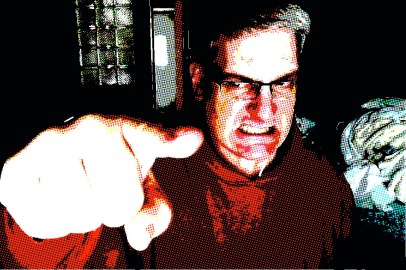
For me, yesterday was single quote day. I wrote parts of my books with Open Office, so I had to go through the manuscript and make all my single quotes curly…and curly in the right direction. I was cross-eyed and HULK ANGRY by 5 pm.

PentecostSelf-publishing guru and author of Pentecost, Joanna Penn, has a great suggestion to deal with typos: Publish your ebook first. Your readers will let you know (politely or not) about your book’s typos. Corrections to the ebook are easier than correcting your printed book. Corrections to print books are called “second editions.” Great tip! For more information from Joanna, check out this very useful interview. I loved this inspiring interview and it helped me calm down after Curly Quote Day. Well…much later, after the photo below.
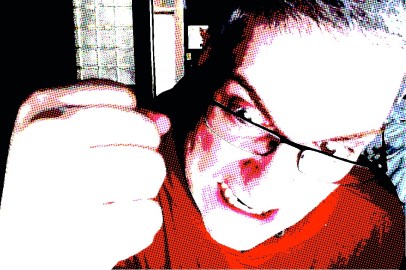

Me after Curly Quote Day

Filed under: Books, DIY, Editing, Editors, getting it done, grammar, writing tips, , , , , , , , , , , , ,

Book Promotion: To spam, or not to spam

no spam!

Image via Wikipedia

Yesterday I posted a too-long comment in reply to a post at The Taleist. (I recommend The Taleist heartily. Love his blog and bought his Kindle formatting kit, too.) However, I felt some despair at a guest post that seemed to imply it was awfully easy to offend people. The guest blogger, Norman W Wilson, is a Professor Emeritus, so what do I know? Still, my heart cried out, “What would you have us do?” Zip over here for the original post and below is my reply from the comment thread, reposted for your consideration. (Yes, I might very well be in the minority on this one.)

Often these strategies are not effective with many people. But they are effective with some people. I often get phone calls and email solicitations etc.,… and I, too, wonder, who would be interested in that, or who would fall for that? But spam must work in some small percentage of cases or the strategy would have been abandoned long ago.

My concern is that all that hectoring gives rise to cynicism. So an author asked you to buy his or her book in a place that offends you. I get that it offends you, but “inexcusable”? That’s an overcorrection. We excuse many offences that are far less egregious. Similarly, anyone with a new book is excited about bringing their baby out into the world. It’s the most natural thing in the world to make your cover into your avatar. What’s the real harm in that (except for a sensitive minority)? I skim right past that if I’m not interested. Are you offended for yourself or is this a perception that we just can’t take any more advertising? Some people really do like the taste of spam.

I’m not advocating tantrums and sedition in your forums. I’m saying let’s keep perspective and have some compassion for our fellow artists. When I get spam, I don’t get offended. I just ignore it as most people do. My book isn’t pollution in your space. It’s an option and an invitation you are welcome to ignore. (Who knows? You might love it.) I agree that aggression isn’t the answer for book promotion, but neither is obsequious timidity. No one ever succeeded hiding their artistic  lights under bushels of shame.

I especially worry that new authors who could have been helped are getting scolded instead. One example cited: Typical lines go something like this: “I just finished signing a contract for my new novel No Name with XYZ Publishing and would like to know how to set up a book signing.” That could easily be a genuine request for input from an excited, nervous newbie who looked to her more experienced peers for assistance.

I have no doubt your heart is pure, sir. However, too wide a net and too dim a view can catch  up innocent authors and batch them with the rabid spammers. It is not spam that has turned me off several Linked In groups (where I lurked but never posted, by the way.) I clicked “leave group” because of what I perceived as chronic incivility from veterans in the field who posted with their own sense of entitlement. Not all posters were impolite, of course, but enough were so cranky and cynical that I turned to bloggers because they have a vested interest in being sweeter to the less informed. I believe that’s how the less informed become better informed.

Filed under: blogs & blogging, Books, Publicity & Promotion, Rant, , , ,

Do readers expect too much of ebooks?

I love people who wisely challenge authority and the status quo.

They question the way things are to make them better.

Recently I pointed the way to a post by the insightful Derek Haines over at The Vandal. The discussion evolved from talk about how low, low, low ebook prices don’t match up with many readers’ expectations of perfection. I promoted Mr. Haines’ blog post, but too clumsily since I just mentioned it in a comment reply. Mr. Haine’s thoughts need more attention than I gave them so I’m remedying that today. Derek Haines was one of the first people to  welcome me to Twitter. I often find his blog posts eye-opening (e.g. Free e-books, do they get read? and The Self-publishing Money Trap). His thoughts on ebook pricing, value and quality, What did you expect for 99 cents?, are in need of a good, solid ponder. 

To freshen and deepen the discussion, novelist Reena Jacobs wrote in with something very thoughtful and heartfelt. I didn’t want her contribution lost down in the bottom of the comments. I asked her if I could repost. The first link takes you to the original post by the great Derek Haines and here’s Reena’s comment again as a guest post:

Derek Haines makes an excellent point. It broke my shriveled blackened heart to offer my full-length novel at $0.99, considering all the work I put into it. To think I toiled over the book for months…over a year with no pay, and folks didn’t even want to shell out $0.99…and forget $2.99.

Indie authors aren’t asking much but I think some readers expect perfection when they’re not willing to pay an asking price which is less than fair to the author to begin with. Some seem to forget the money used from sales is not only necessary to earn back the money already spent, but also to invest in future publications.

I don’t go to people’s place of businesses and demand freebies. Or worse, insult them with comments like, this should have been free or I’m glad I didn’t pay for this. If it’s free, folks should be happy they even had an opportunity to try it. Someone took time out of their life to offer readers a gift. It may not be to the readers’ liking or meet their personal set of standards, but it was still a gift. It has value.

Anyway, my wee little heart couldn’t take it anymore. If people want a $0.99 work from me, they’re welcome to my short story. I’d rather hoard all my works and never publish another title again than beg for $0.99 ($0.35 royalty) for a work I put months of my heart and soul into. Every time I read about someone complaining about a $0.99-2.99 work, it makes me want to bump my prices again. It’s gotten to the point I don’t even care if folks buy my books (kinda…’cause let’s be serious, sales matter to all authors) as long as I don’t feel like people are taking advantage of me and implying my work is worth less than it is.

Like Derek said, it doesn’t make sense to invest big money into a product that yields little return. In my opinion, that’s bad business.

I’ve already made a goal not to spend more money on publishing books than I make in sales. If that means no more full-length works, then so be it. Short stories are quick, dirty, and can be edited entirely through a critique group. I can part with one for $0.99 and not feel ripped off.

Reena Jacobs is just your typical writer who loves to see her words in print. As an avid reader, she’s known to hoard books and begs her husband regularly for “just one more purchase.” Her home life is filled with days chasing her preschooler and nights harassing her husband. Between it all, she squeezes in time for writing and growling at the dog. You can find Reena on Ramblings of an Amateur Writer, Amazon, Goodreads, Barnes & Nobles, and Smashwords

www.reenajacobs.com

www.reenajacobs.com/blog

http://twitter.com/ReenaJacobs

Alexandria (Alex) Carmichael guards two secrets close to her heart.

One–she’s in love with her best friend, Seth. Two–he’s gay.

 Add I Loved You First to your Goodreads list!

 I Loved You First

Filed under: blogs & blogging, Books, DIY, ebooks, Guest blog post, publishing, self-publishing, , , , , , , ,

We only have one book in us

To increase sales, one winning strategy is to write a series. Readers like to get invested in characters they know and travel along with them to vast reaches. If readers like one of your books, there’s a good chance they will like them all.

The reason for this is that many authors write the same book over and over.

This is not a criticism. It’s a common observation. For instance, Kurt Vonnegut’s books could be one long book of varying characters but of unified theme and voice. Vonnegut searches for humanism and usually fails to find it so instead he settles for acceptance of the gap between human potential and reality. With each book, Hemingway and Mailer tried to define their manhood. Palahniuk can’t hide his fascination with how weird we are, and weird is all we are.

There is nothing wrong with writing the same book again and again as long as each excursion seems fresh. The boat gets redecorated for each trip. The destination is always the same. Not only do readers not mind, real fans prefer sameness. I like Stephen King stories, for instance. Everyman confronts his fears and loses some and wins some in a harsh world. But the Dark Tower series? Not for me. Give me more of what I like, the familiar unfamiliar.

As I edit my own stories I see the same story emerge repeatedly: Escape is required and losses will be incurred and it’s up to the reader to decide if the escape was worth the price of freedom. That’s probably all I’ll ever write, whether the novel takes place in a New York high school today or in tomorrow’s post-apocalyptic North America.

I know where that comes from: I escaped home.

Every turning point in my life has been a narrow escape.

Happily, there’s enough there to fill all the books I could ever write.

Filed under: Books, publishing, Writers, writing tips, , , , , , ,

Book trailers: Problems and solutions

1. Book trailers are often done poorly. You’re a writer so you probably aren’t bubbling over with a ton of film skills. You could learn, but how many hats can you wear and is this really where you want to put your energy?

2. To make a book trailer well costs time and energy. Oh, and some money, though smart and funny buys more eyes than money. (Want to see examples of cheap videos that work and get eyeballs? Go to YouTube and search Nigahiga and Ray William Johnson, or click this Harry Potter parody brilliance or this crazy Michael Buble/Dexter parody. These guys go longer than a minute, yes, but they deserve it. You probably don’t.) If you still want a book trailer, don’t spend a whack on it. Try not to spend anything at all because it probably won’t work at all. Really.

3. Book trailers can make an author feel great, but readers aren’t necessarily watchers. Love of one medium doesn’t translate to another.

4. The main problem with book trailers is that almost all of them are way too long! It’s an ad. A thirty-second commercial is plenty. Most seem to clock in at over a minute or more and that’s the wrong way to go. How often do you enjoy a long advertisement?

If you did spend a whack of money and saw no return on your investment, at least making a book trailer is fun. You had fun, right? Geez, I hope so.

Unless…How can you turn that frown upside down and twist the book trailer problem around?

You could make your next book trailer a contest among your readers (and potential readers.)

This turns the work over to budding film students and enthusiastic fans. While you were writing your short stories, they were dreaming of buying a new lens for two-shots and becoming the next Tarantino.

1. Turn an advertising problem into a challenge for your readership. Give a couple of months of lead time before the contest closes.

2. Come up with a prize that will motivate your people.

3. Be sure to give them all the information they need to sell the book and make a little movie. Every director gets a free copy or a good-sized sample. The trailer should intrigue, excite and sell without spoiling.

4. Ask the contestants to make their trailer, put it on YouTube and then everyone will vote to decide which book trailer is the winner.

One book trailer is chosen, but they are all up on YouTube.

You don’t just have one book trailer working for you. You have a bunch out there.

I’m still not convinced that you’ll sell a lot of books with book trailers per se. If it adds to your web presence, however, people could be more aware of your existence than they would otherwise be. So don’t make one book trailer that’s perfect and expensive. Have a bunch of them out there that are less than perfect…and still get one you love.

It’s a great way to engage your readership, spread the word and get help.

You can’t do it all. Well…maybe you can, you genius you.

But you don’t have to. Also, it sounds like fun, doesn’t it?

Filed under: book trailer, Books, Publicity & Promotion, web reviews, Writers, , , , , , , , ,

Improving ourselves: Bruce Lee, Reading self-help, writing horror

I’ve been trying to improve myself to make me worthy of your love. I’m not eating sugar so I’ll lose more weight (after gaining some back.) I’ll get to the gym. I’ll keep slogging on making my ebooks. I’ve been reading a time management book by the Bruce Lee of Time Management.

I’d tell you more about the book, but it turns out the author and Bruce Lee have something in common:

good at what they do, sure, but jerks.

Bruce Lee was a kung fu legend who made some interesting movies for 14-year-old boys and those with chronically arrested development. (Yes, I was so afflicted until quite recently.) But Bruce Lee also picked a lot of fights just so he could beat up his physical lessors . (You didn’t see that much in the biopic Dragon, but getting into too much trouble and buying too deeply into his macho bullshit was one of the reasons he had to flee Hong Kong for the United States.) Bruce Lee was also (struggling for a kind euphemism here) an intense individual. He had a thing about staring into people’s eyes as he spoke, even when he was driving. He got into several fender benders because of that macho man/genius policy. Bruce was an amazing innovator and there is much about him that is enviable. He’s inspired people far beyond the bailiwick of kung fu. The legend obscures the flawed person who stands behind the fiction.

Then there’s the time management guru: He started off with some good points, though his unexpected obsession with making more time for sex hit kind of a weird note. I’m sex positive, so I didn’t write him off quickly. Making more time for sex is a good thing rarely spoken, so good on him for speaking it. Then, for some reason (no editor or an editor who got overruled) he veered off into a narrative ditch. People in China die without healthcare because they don’t have money, he said, and that’s the way it should be. If you want to be able to afford healthcare and not die horribly, get off your lazy ass. Surgery is for closers!

Whoa.

His vision of getting the best out of life seems to be scheduling your time properly in an Ayn Rand hellscape where only the strong survive as you drive your enemies before you, crush them and hear the lamentation of their women. Okay, I’m paraphrasing Conan the Barbarian there, but seriously, the author crammed some pretty ugly beyond-far-right politics into his time management book and derailed his book.

I’ll learn to manage my time from someone else. I admit it, I’m not reading the whole thing. This isn’t a book review. It’s a warning to keep your inner disregard for fellow humans tucked away when you write a self-help book. Unless you’re a horror writer. I don’t want to read more and share a mind meld with someone whose concept of compassion for the sick is to cackle while he watches the poor die, drinking from a gold goblet while scheduling a spa treatment on his oh-so-organized Blackberry.

Hey, come to think of it…I am writing a book that has “self-help” in the title and there is a lot of horror in it.

Hm. I’m complex. And I’m trying to do better.

In my horror stories, I hint at a high regard for the worth of humanity.

There’s no horror at the loss of a life if you’re just losing another nosey neighbour you never liked anyway.

Filed under: book reviews, Books, writing tips, , , ,

How do you like me now?

It occurred to me this evening that the big book I’m betting on heavily to put me on the map is…unconventional. By that I mean it’s a mongrel of a book that breaks a book full of rules. It mixes stories of horror and erotica, philosophy and thought experiments with a sprinkling of non-fiction. It’s got a marketing hook that better be strong enough to overcome the “traditional” liabilities of stories told in second-person present.

Either I’m an evil genius or an idiot, but I keep flashing on Keanu Reeves in The Matrix when  he’s about to rescue Morpheus:

Trinity: “No one’s ever done anything like this before.”

Neo: “That’s why it’s going to work.”

November 1 will be my Indie-pendance Day.

More to come.

Filed under: Books, DIY, self-publishing, What about Chazz?, Writers, writing tips, , , , , , , , ,

TOP TEN: What used to be cool

I used to think people don’t change, but we do, around the edges.

Here’s my list of what used to impress me…overly.

1. Movie memory: My wife remembers where we were on vacations. She recalls the restaurants, the sights and the good times. I can’t remember any of that. My memory box is stuffed with movie dialogue. In fact, that’s my super power. My parents owned a video store and I watched at least two movies a day for years. If you’re watching a movie with me and I feel the urge to show off —a sad, dependable occurrence — I’ll jump in and tell you the next line before the  actor can deliver it. It doesn’t have to be a great movie like The Karate Kid. It could even be The Karate Kid 3.

I’m briefly, ridiculously, proud when this happens and She Who Must Be Obeyed smiles tolerantly. But it’s not a super power that saves babies from house fires. I can’t monetize it. Any memory that’s at all useful, and much that isn’t, can be found on the web. Every time I hear a podcast where the host and guest speculate about what happened, which movie was what and who was Miss October 1993, I think: Look it up! We don’t need our pitiful brains anymore for trivia!We’ve got Wikipedia and the hive mind! Google it!

If our experience makes us what we are and all I’ve got is movie dialogue?

I. Am. Screwed.

2. Unguarded moment memory: Yesterday I chatted with a college buddy on Facebook. We have a strange friendship because: on the political spectrum, I’m Lefty Lefterson, he’s to the right; he loves debate and I love people who agree with me too easily; and we weren’t that tight in college. We even came close to getting into fisticuffs once. And what’s more? He doesn’t remember it. I have joked with him, somewhat passive aggressively, that I remember all his unguarded moments. We spent very little time together at school, but for some reason, as soon as I was around him, my brain box was wired in to his every utterance as if he were on film. (See #1)

One incident in particular became a source of hilarity: In the journalism school newsroom, he looked at me and then he ogled my girlfriend (who years later became my wife.) “How could a guy like you get a girl like that?” he asked, genuinely dumbfounded. I was a tad sandpapered by that at the time. Now, as I write this, I’m suppressing a giggle. He’s a supportive, funny guy who manages to think and smile, often at the same time. I don’t have that capacity and I admire it. But my wife’s still hot.

When I bring up unguarded moments from the past, my buddy has a certain lopsided smile of chagrin. I confessed to him yesterday that I have an eidetic memory for everything he said or did in college whenever I was within ten feet of him. (No, Marvel Studios won’t be making a superhero movie about this mutant power, either.) I told him that if I were him, I’d kill me.

But we’ve found transcendence. We laugh a lot. And I’d rather laugh than remember #2 sandpaper moments from the dead past.

(I’m an asshole for carnivoring yesterday’s conversation and bringing this up at all, so this was the last time.)

3. Domination: I used to watch Bruce Lee, Chuck Norris, Jackie Chan and a host of Hong Kong martial arts movies obsessively. The idea that one man could dominate others with precise kicking skills was attractive. Now it strikes me as silly, simplistic and repetitive. Back then, I aspired to — this is really embarrassing — a whole whack of macho bullshit. As I edit my books, the theme that macho doesn’t mean mucho comes up a lot. Many of my stories explore how men relate to men, how men relate to women and how to be a man without devolving into a bully or a pussy.

I’ve figured out that my need for domination wasn’t rooted in strength.

That bullshit was all about fear.

4. Being a loner: I grew up in the ’70s and ’80s, so I wasn’t brought up by parents, but by movies. And what do all cool movie gods have in common? They’re alone.

Dirty Harry didn’t have to pick up the kids from daycare. Except for Casablanca, even bulldog-faced Bogey got the girl. The movie was about the getting, never about enjoying the having. Bachelors are available and open to romantic and adventurous opportunity. They don’t have to arrange a babysitter before they go on safari or take up a mission. Martin Sheen wasn’t on screen debating about who left a ring in the tub after the crazy caper to tunnel into the bank vault in Loophole. Heroes were alone and liked it until they chose, at the end of the story, to start a new, more mundane, domestic story. The few female heroes of that era were largely  indistinguishable from men. The glamorous life was not a life that included children. All movie heroes (who aren’t superheroes) were, and are, marvellously egocentric.

Since I’m not-so-marvellously egocentric, emulating The Loner with a Mysterious Past or The Last Honest Man seemed a good thing. I need space and a buffer zone and time to myself, too! I’m a writer. Of course being a loner was the key to happiness!

But I was confusing fiction and reality. 

Being a loner in real life isn’t glamorous. It’s lonely. 

5. My library: I’ve been getting rid of a lot of books, but I still have a lot of books. My collection not only conveys to visitors that I’m bookish. It says, I’ve found an alternative way to further insulate my home. Look at all those books! See? I must be smart. Please love me! Respect me even though I prefer books to interacting with people!

SAT question:

A doughy guy in a midlife crisis is to an expensive red sports car

as you are to…?

Choose one:

A. The hypotenuse of the square

B. John Adams

C. the Bill of Rights

or D. books.

Yes, D was the correct answer.

As my e-readers fill up, the walls of books look less like a personal statement of integrity and more like (Krom forgive me) clutter.

My new policy with paper books is to sell them or give them away once I’m done with them.

If all that macho bullshit was about fear,

my hoarding is about low self-esteem.

6. Anger: I mistake self-righteousness for being right. Often.

I always loved that line from Dr. Bruce Banner just before he turned into the Hulk: “Don’t make me angry. You wouldn’t like me when I’m angry.”

You know what I’ve figured out about readership with all the blogging I do?

People don’t like me when I’m angry.

People like me when I’m honest and authentic.

Well…most people. Fuck those trolls.

(See what I mean?)

7. Heroes: My daughter asked me who my heroes are. Her first guess was, “Kevin Smith, right?” A few glib, funny answers sprang to mind, but she had that earnest look on her face, so I went serious and gave her the true, complicated answer.

I like Kevin Smith a lot for his independent spirit, wit and smarts. We agree on a lot. He’s definitely Top 10 material, though I get the feeling he’s also a mercurial god who can be moody. Maybe that’s why I relate to him. But I’m lucky because I know my top heroes personally. They aren’t nationally known, but they should be.

My heroes are celebrities in small circles who lead by example:

Anne is the bravest woman I’ve ever known. She suffered greatly from a terrible disease, nearly died several times, and overcame it all to rise again from her electric wheelchair and walk again. She remade her life long after most of us would have given up.

The late, great Reverend Johnny T. Collins was the single best Christian I’ve ever known. My love and respect for him hasn’t changed a bit though I became an atheist after his death. It would grieve him enormously to discover that I became an atheist largely because of his death.

One of my best friends (I’ve mentioned several times in this blog) is Peter. He has a super power that’s much more useful than mine: Peter makes friends easily and unselfconsciously. Few people have so deep a capacity for joie de vivre. He’s forever the Big Man on Campus no one can hate. (As opposed to the other Big Man on Campus, the smug bastard who led the football team and everyone secretly hoped would get leprosy.) Everyone is richer who has Pete in their lives.

And number one? I’m a very lucky man because my wife is hero number one. She’s the single most kind and generous person I know. (Also, as previously, pervilly mentioned, hot. Really can’t go without mentioning that.) It makes sense that the woman I’m married to must be a paragon of patience.

The heroes I know as individuals are beyond cool. But heroes as a class of people to look up to? No. Heroes as a group are overrated. Kevin Smith, for instance, idolized Brice Willis until he worked with him. I’ll never forget Kevin’s look of regret and disappointment when he stared at the floor and said, “Never meet your heroes, man.”

My heroes are stellar people who are my friends and family. They are people I can rise to be among and still belong. Any hero worth the title empowers you, assuring you that you can be a hero, too.

Don’t just watch heroes. Be one. 


8. Greatness: Perfectionism is self-hatred or, as writer Mur Lafferty says, “It’s okay to suck.” I write books. I’ll begin making them available to the universe this fall. The universe may or may not notice. That’s okay because this is what I do now, whether it goes big or stays small. Of course I want all my books to be made into movies and checks in the mail, but that sort of all-or-nothing thinking will hurt and hold me back. Last night I was up until two finishing a draft of my third book. I had stamina because I was excited about what I was creating. I wasn’t living in the future, thinking about accolades from strangers from whom I desperately want love, respect and money. I do want those things. But writing is about how to make the story more clever, more funny and more surprising. I get brain tickles from the dopamine kick of doing my thing.

Enjoying the journey is the only way to get to the destination.

BONUS:

We learned in The Matrix “There is no spoon.” There’s also no destination. It’s all a journey.

CHAZZ PARADOX:

Knowing there is no destination allows you the chance to get to the destination

(Yup, I have a minor in philosophy, studied Zen and yes, that was annoying!)

9. Ego: When I started out as a therapist, I put on my ID badge and my shoulders went up and my chest went out, much the same way Erik Estrada always substituted posing for acting on CHIPS. I walked into my clinic, “The Expert.” I didn’t know it at the time, but this was self-aggrandizing bullshit I used to meet challenges I wasn’t sure I equal to.

Ego can make you do stupid things. Longer. Everybody needs self-esteem, but too much ego pushes people away and makes you a prick. As a prick in rehab, I know.

Ego leads to stupid shit, like planking. All over the web you can see pictures of people doing the latest thing: Somebody had the balls to stand up and call it planking. Or, as we used to call it, “Lying down.”

Too much ego betrays the truth about ourselves:

NOT. ENOUGH. SUBSTANCE.

10. Certainty: I used to want to know exactly how things will turn out. That’s part of the whole, living-in-the-future disease. I thought that if I could just get this one thing right, everything else would fall into place and success would be mine. Certainty is poison, though. Success comes from doing a lot of little things right along the way, not from sweeping mission statements (like this.) A need for certainty can lead you to avoid tackling those little things.

For instance, I don’t know how to format my manuscripts for ebook formats. Yet. If I had to know it all before I could start, I’d never get it done. Instead I’m learning as I go and nibbling away at it. I’ll never know it all and get it “perfect”, but eventually I’ll be able to digest enough to get my ebooks done and out there.

Recently I listened to a podcast about how to podcast. There is a staggering amount of trivia to know about podcasting. But you don’t have to know it all to begin. You just have to begin. A need for certainty can give you paralysis by analysis (a confident, oft-spouted aphorisms which must be true because it rhymes.)

George Bush elevated certainty as a virtue over intelligence. (Obama doesn’t convey any certainty, so the culture may have over-corrected on that one. Oops.)

Certainty is a conceptual synonym to dangerous things like patriotism and zero tolerance. When someone comes at me with too much certainty, my bullshit detector rings an alarm. Absolute certainty tells me there’s a loss of nuance, somebody’s a quart low on compassion and probably suffering a dearth of thinking.

And I’m sure of that.

Filed under: Books, ebooks, self-publishing, What about Chazz?, , , , , , , , , , , , ,

Stats on literacy & the literary: Books aren’t that important

42% of university graduates never read another book after they graduate.

Whoa! Wh-wh-what now?!

Yes, you read that correctly. When it comes down to it, books aren’t all that important to a staggering number of people. 

I’ve found several scary statistics for this post, but that 42% bugs me most. Those are people who can read, but choose not to.

I used to think that once you made someone a reader, you had them for life. Not so!

Like you, I’m a big fan of books, of course. But this post is about perspective and where we stand in the flood of things to do.

1. Market fragmentation: There’s a lot going on. Literally. I don’t watch TV much anymore. I used to schedule my life around television programming. I could read more books in a week, but I don’t because I also make time to listen to a lot of podcasts. So many websites call my name. Plus, I have a lot to do. With so many demands on my time, a lot gets curated. I use the word curation here as a synonym for “flushed.” I filter out a lot of things I don’t have time to read, watch and listen to. (Also, I’m on Team Coco, so Leno’s banished and cursed.) There are only so many waking hours in a day, and, frankly? I’ve got more free time than most people do.

2. Market skew: You only think you love all books. But you really love a small fraction of books, no matter how much you read. How many readers do you meet who say, “I read everything”? (Sarah Palin who was lying and has officially “authored” more books than she’s read.) My point is, niches are narrow. For instance, I love Chuck Palahniuk’s work and have read all of his books. I wouldn’t have to look very far to find someone who has read Fight Club. But I’d have to travel far to find someone else who has read them all. Chuck’s very successful, but he’ll just never have the market penetration of Hemingway because Hemingway is taught in schools. (In other words, a lot of high school and college kids are forced to read Hemingway. Snuff, a book about a porn shoot,  won’t make it into many curricula.)

As an author, you’re going to meet a lot of readers, but sadly, they won’t be your market because you’re into A, B, and C and they’re into X, Y, Z.

Worse? They’ll sneer at you for it because people don’t make any distinction between what’s to their taste and what’s good.

3. We say we’re a society that values reading and education. But we don’t. Here’s a few illiteracy statistics to blow your brain around: About three in five of America’s prison inmates are illiterate. The cost of illiteracy to business and the US taxpayer is $20 billion per year. More than 20 percent of adults read at or below a fifth-grade level – far below the level needed to earn a living wage. 44 million adults in the U.S. can’t read well enough to read a simple story to a child. Nearly half of America’s adults are poor readers, or “functionally illiterate.” They can’t carry out simple tasks like balancing check books, reading drug labels or writing essays for a job. 21 million Americans can’t read at all. 45 million are marginally illiterate and one-fifth of high school graduates can’t read their diplomas.

4. Number 3? That’s about people who can’t read. But many people just don’t: The average reader spends about 1/6th of the time they spend reading actually rereading words.* One-third of high school graduates never read another book for the rest of their lives. 80 percent of U.S. families did not buy or read a book last year. 70 percent of U.S. adults have not been in a bookstore in the last five years. 57 percent of new books are not read to completion. 70 percent of books published do not earn back their advance. 70 percent of the books published do not make a profit. (Source: http://www.JenkinsGroupInc.com)

5. If you’re self-published, a lot of people won’t read your stuff, perhaps because of prejudice fueled by bad experiences with the previous generation of self-publishing. Traditional publishers aren’t generally that much further ahead anymore, either. (See #3 and #4.) Bookstores (remember them?) are reluctant to stock the self-published. They don’t even have space for traditionally published midlist authors anymore, let alone the indie unwashed masses. And newspapers? (They used to be on paper and very profitable. Ask your parents.) Newspapers still don’t review the self-published. We’re also shut out of many literary awards so there’s not much notoriety gained there. That situation will change, but not soon. We may have to wait for a bunch of old school book critics to die.

Great, now your depressed. So what do we do about it? Well, first, think about these stats and honestly evaluate your chances as an author. This post is essentially a test. If you think about your chances (for realsies!) and are still undeterred, congratulations! There is no hope for you. You’re doomed to take your shot at a life in letters. This choice is, for most writers, really no choice at all. Many of us will fail. A few of us would have been great at something else. Some are a great loss to the fields of animal husbandry and the manufacture of novelty chattering teeth toys.

We choose to write books despite the scary stats. Somewhat perversely, we may choose to write books because of those scary stats! If we can write books people want to read, maybe we can save humanity and turn things around. (I think JK Rowling got not a few kids reading who otherwise might not have.)

Kurt Vonnegut wrote in A Man Without a Country:

“If you really want to hurt your parents, and you don’t have the nerve to be gay, the least you can do is go into the arts.

I’m not kidding. The arts are not a way to make a living. They are a very human way to make life more bearable.”

(Kurt was the kind of wise-ass I love.)


I’ll leave you with something else positive to think about. I heard Red State director Kevin Smith say this on a podcast recently:

“Surround yourself with Why Not? people.”

Too often you try to do your art and people say why? Forget them and go do your thing. 

I mean…why not? 

*All the stats above the asterisk can be found at readfaster.com.

Filed under: Books, publishing, self-publishing, , , , , , , ,

New Feature: Scoop it!

Scoop it! allows me to grab a bunch of articles to quickly curate an on-line magazine for your pleasure. My focus, of course, is writing and reading and publishing news, particularly indie publishing. It’s more great stuffing for my juicy and delicious info-turkey that will complement the Chazz Writes potatoes, mashed, potatoes and gravy you’ll find on this blog.

In other news, I think I need to go get some lunch.

Shoot on over to check it out.

Filed under: authors, blogs & blogging, Books, publishing, self-publishing, web reviews, Writers, , , , , , , ,

Bestseller with over 1,000 reviews!
Winner of the North Street Book Prize, Reader's Favorite, the
Literary Titan Award, the Hollywood Book Festival, and the
New York Book Festival.

http://mybook.to/OurZombieHours
A NEW ZOMBIE ANTHOLOGY

Winner of Writer's Digest's 2014 Honorable Mention in Self-published Ebook Awards in Genre

The first 81 lessons to get your Buffy on

More lessons to help you survive Armageddon

"You will laugh your ass off!" ~ Maxwell Cynn, author of Cybergrrl

Available now!

Fast-paced terror, new threats, more twists.

An autistic boy versus our world in free fall

Suspense to melt your face and play with your brain.

Action like a Guy Ritchie film. Funny like Woody Allen when he was funny.

Jesus: Sexier and even more addicted to love.

You can pick this ebook up for free today at this link: http://bit.ly/TheNightMan

Join my inner circle at AllThatChazz.com

See my books, blogs, links and podcasts.

Enter your email address to follow this blog and receive notifications of new posts by email.

Join 2,061 other subscribers