C h a z z W r i t e s . c o m

See all my books at AllThatChazz.com.

Author Blog Challenge: The Writing Mistake You Might be Making

English: The main character in the comic serie...

English: The main character in the comic series “Lame Strips” (Photo credit: Wikipedia)

I sat at the front of the writing class, giving a reading from Self-help for Stoners. The story, “Another Day at the Office” is  about a guy with a skunk talking his way out of search, seizure, jail and worse at the hands of a policeman in Texas during a traffic stop.

When I finished, I looked up and asked, “How old is the main character?”

I pointed around the classroom. “22! 28! 35! 40!” they answered.

“What colour was his hair?”

“Red! Blonde! Bald! Black! Brown! Wispy Comb over!” (Good for you. I never would have thought of wispy combover for that character.)

There you go. Too much description limits your readers’ imaginations and puts their visions in little boxes that belong only to you. Be more generous and don’t assume your reader is an idiot. They’ve seen people in their lives. They’ll fill in the blanks. The readers want some ownership of the story in the theatre of their minds, too. Don’t describe too much. Was it Dashiell Hammet who said his hero was “knuckly” and left it at that? Too much description has  become a cliche that often opens a lot of books: the main character inspects himself in the mirror before heading off for work. They preen and describes themselves to the reader. Don’t. Instead, please let the action and dialogue carry me along. Let me insert my own vision of your characters. I’ll have a picture in my mind before long and I might even be annoyed if the author’s description differs with my own.

Even then, be sparing. My hit man in Bigger Than Jesus has a thing for expensive suits. It comes up as it pertains to the action and as it pertains to character. It is not there just to make up an arbitrary word count. In fact, it’s crucial to the character. No campfire story starts with a long description of what everyone is wearing unless there’s a point or a clue to character. Be just as judicious, whether you’re telling ghost stories to a bunch of kids around a campfire on their first trip into the woods or writing books for the masses.
BONUS:

Tuesdays and Fridays, I do a little podcast from my author site at AllThatChazz.com. A fresh episode (#29!) is up now in which I tackle letters from Republicans, creep out my twelve-year-old and worry, too late, about my blood pressure.

Filed under: publishing, , , , , , , , , , ,

Traditional vs. self publishing. Which would you choose?

See on Scoop.itWriting and reading fiction

You know what I love about this post? Mr. Ing doesn’t have an agenda. He’s asking an honest question and I love the cost-benefit analysis he’s offering us here. Given the variables, which would you choose? More at the Scoopit! link. ~ Chazz

See on www.graemeing.com

Filed under: publishing, , , , , , , , ,

Author Blog Challenge: Writing to Love

Wikipedia

Wikipedia (Photo credit: Octavio Rojas)

The latest prompt for the Author Blog Challenge asks what we love to read and how does that feed our writing? Good question. I read voraciously, and the resource that feeds my writing most these days is…wait for it…Wikipedia. How did writers write before Wikipedia? I think they actually had to go out the front door and into the  world and, let’s face it, no one wants that. At least I don’t and I don’t understand those who do. I’m cozy in my fortified writing bunker, thank you very much.

I’m one of those weirdos who gets lost in dictionaries and encyclopedias. (If you read this blog, you probably are, too.) I look up one thing and get distracted by all the other delicious stuff in there. As I was researching my crime novel, Bigger Than Jesus, I consulted The Mob Dictionary, documentaries, a friend who trains SWAT, an ex-military friend and various books on the mob. It was Wikipedia that yielded my main character’s background and contributed to the verisimilitude the story demanded.

I wanted Jesus to be an enforcer who wants out of  the mob.  I had to give him a back story that made the reader understand why he is the way he is. I needed him to be an outsider, so he’s a Cuban among native hispanic New Yorkers. His journey to Florida is sad and, once he arrives, his story becomes more tragic. The key to the character was his childhood and it was Wikipedia where I happened upon more information about the Cuban migration to the United States. Truth gave rise to more believable lies as Fate (um, I am Fate) dumped Jesus from the roaster into the (mostly) proverbial fire. He’s a smart ass, but not as smart as he thinks. He’s more funny, clever and desperate than he is tough. Wikipedia was the seed that led me to understand why the character worships the love of his life the way he does. Like dominoes, one idea leads to another idea which leads to another idea which reveals a pattern which gives rise to a plot. Powered by curiosity, simply traipsing through Wikipedia gave me a book that will be a series I’m really excited about. The last edits are arriving and the graphic designer is working on the cover as I write this. Hoo-bloody-ha!

If you’re stuck, blocked or just noodling, use non-fiction to amp up your fiction and go wander Wikipedia.

Filed under: publishing, , , , , , , , , , ,

The Author Blog Challenge: My Earliest Memory of Writing is the Typebrighter

The "QWERTY" layout of typewriter ke...

The “QWERTY” layout of typewriter keys became a de facto standard and continues to be used long after the reasons for its adoption (including reduction of key/lever entanglements) have ceased to apply. (Photo credit: Wikipedia)

I’ve accepted Marcie Brock’s Author Blog Challenge to write a fresh post from now until the end of June. The first writing prompt asked what my earliest memory of writing was. It started with my sister’s manual typewriter, an old Underwood. When my sister Cathy went off to college, she left her typewriter behind. As a loner, I’d found something I could do besides playing with little green plastic army men, drawing superheroes and army men and reading books about army men. (How’d I turn out to be such a peacenik, anyway?)

I don’t remember a time when I couldn’t read, but I do remember spelling typewriter the same way I pronounced it:

T-Y-P-E-B-R-I-G-H-T-E-R

(You just said that out loud to test it out, didn’t you?)

I also had a fondness for cliches that would give me hives now. Check out this from when I first spidered my fingers across the Underwood’s keys:

“Meanwhile, back on the ranch, while searching for a needle in a haystack…”

(At least my comma placement was correct.)

I came up with my own system for typing that isn’t nearly as good as working from the home keys on the QWERTY keyboard and typing properly. Typing class would have been the single most useful thing I could have gotten out of high school, but I couldn’t take it because it wasn’t considered an academic credit (Stupid! Stupid! Stupid!). However, my crappy typing method got me through journalism school and didn’t deter me from working in newspapers, mags and publishing. The (somewhat) great Canadian journalist Pierre Berton was a two-finger, hunt and peck guy who could type pretty fast. Yes, that’s how I rationalized being lame. Still do.

I have taken keyboarding courses (online and in person). When I practice, I do speed up and get more accurate. However, in the heat of composition, I fall back on the habits of that little kid who discovered his sister’s typebrighter. The thing she left behind was her greatest gift to me.

Filed under: publishing, , , , , , , , ,

Writing in the Second Person, Present Tense (Like a Boss!)

A defiant update: I am 7,650 words into writing the second book in my crime series as I await fresh edits on the first book. It’s going well after a little convo with one of my weapons experts. It’s a love story, a suspense story, a funny story and a tragic story that’s all told in the second-person, present tense. Yes, yes, I know. That’s usually only reserved for experimental fiction.

Tonight as I went for my story-thinking walk and listened to my Kindle babble at me in that text-to-speech voice best used for listening to A Brief History of Time (geek joke), I just heard advice that, again, said, “DON’T DO THAT!” And so, of course I am compelled to do it. I do not wear a collar and I am on no one’s leash. What’s the point of freedom if you don’t air it out and let it run?

The one piece of writing advice that trumps all others is, Image“If it works, it works.” This works.

Filed under: publishing, , , , , ,

Why Authors Should ALWAYS Respond To Negative Reviews | Digital Book World

See on Scoop.itWriting and reading fiction

At Digital Book World, Elle Lothlorien lays the foundation for her argument that authors should respond to bad reviews as other businesses do, in an attempt to rectify a bad customer experience. This is a very interesting blog post for a number of reasons, and you may find the comment thread even more compelling. You may even find it disturbing. The post appeals to my affinity for the contrarian viewpoint, but it was the comment thread that had me thinking, “Whoa! Whoa! Whoa! Slow down! Save this level of vitriol and nuclear response for really serious problems, like family reunions!”

This is just Part 1 of her argument and that’s where the disturbing subtext emerges in the comment thread. Some commenters rise up, prematurely, I think, to condemn Lothlorien’s advice before she’s given a chance to lay out her strategy. They attribute motivations and actions to the author and reviewers before she’s had a chance to show what steps she takes and recommends. Condemnation before full presentation sounds like a trait you don’t want in a book reviewer.

Since the reaction in some cases (in the comment thread) is very defensive so far, I’ll be very interested to see how Lothlorien defuses her critics, one of whom goes so far as to threaten her with a bad review now that the author has dared to express an opinion. Wow. It’s ironic that Lothlorien is accused of intimidating reviewers to bump up the stars in her reviews in the same thread. Are we so cynical we can’t imagine that a listening ear and being nice might actually change a reviewer’s perspective? Are all opinions set in granite? Some objectors to the article assume their initial reaction is the best and purest one. Maybe not.

I don’t respond to negative reviews because I have accepted dogma (yes, I’m saying I haven’t really thought about it past “Don’t do it!”) and I’ve seen where it goes awry. As soon as I read the headline, I thought of The Greek Seaman debacle, which Lothlorien even mentions as an example of how not to do what she’s recommending. I have to concede that Lothlorien makes some good points.

“Anecdotal evidence!” someone cried. Well, what other evidence might there be? No one is studying this problem wearing a lab coat and clicking on a calculator. That said, I’m not (yet?) convinced responding to bad reviews is ever a good idea. I am willing to hear her out and in the meantime, I’ll reserve judgment until the follow-up installments.

Even if by some miracle of business pschology she manages to convince me otherwise, I’m sure it’s something I’ll never want to do. No one wants to be on the wrong end of the 1-800 line dealing with complaints, though as Lothlorien would point out, that is what businesses do.

There’s a fundamental question about ourselves that bubbles up through the cracks in the subtext: Do we have to get so angry about this stuff? We can change, can’t we? Flexibility in mind doesn’t necessarily equate to flip flopping. Mental agility means intelligence. I’m scared Lothlorien might be right and I hope she’s not. If I end up thinking she’s right, though, I won’t be mad at her. Click the link below for the article and read on.

See on www.digitalbookworld.com

UPDATE:

Today’s podcast, The Unintended Consequences Edition, covers this issue, as well, in case your prefer your commentary in audio.

Filed under: publishing, , , , , , ,

PODCAST: To err is human. To forgive is unprecedented.

As the story of the zombie story writer versus the undead anthology creator emerged this week, lines were drawn in concrete, barricades were built and razor wire was erected around the dignity of being a writer. The writing community was inflamed and things have turned around for the writer. But is there a resolution in sight?

In today’s Self-help for Stoners podcast, I wonder about healing, forgiveness and our capacity to get over the bad stuff. When the world disagrees with us, do we still dig in our heels and somehow convince ourselves the world is wrong? When we’ve won, in our anger, do we keep kicking? Can we move forward, or are all judgments permanent? Are we as good as we can be? And could we, possibly, ever be as good as Batman? After dealing out a savage beating, can we forgive?

Have a listen at my author site, AllThatChazz.com.

Filed under: publishing, , , , , , , , , ,

Get heard: Podcast Your Book

Twenty-three episodes ago, I started a podcast to help market my short story collection, Self-help for Stoners. The Self-help for Stoners weekly podcast evolved in directions that surprised me. At first I thought I would just talk a little and read a lot of my fiction. I did that, but then I ended up doing a lot more. I found that podcasting was as creative an outlet as writing is, and in many ways it’s a similar process. Since last November, I’ve talked ancient personal history, TV shows, odds, ends, trivia, movies and ranted  about all the ills of the world. I appeared on seven other podcasts, played around with a few skits and scenario (writing some out at first and later, improv). Often I delivered a word spew in my accursed, stilted, Shatnerian delivery. I’ve gone on too long, repeated myself and sometimes I went too far and got boring, just like real public radio! I’ve done it all for free and for fun. It’s still fun. Before I started, I saw it in the cold terms of a marketing device. What I didn’t expect was to have so much fun doing it. I even got a bit better.

Now it’s time to change it up. What’s past is prelude.

I looked at my stats and, unlike stats you study in school, podcast stats are fascinating. You learn geography lessons looking at podcast stats because the breakdowns are so detailed. I could see where people downloaded my nonsense and conscience from around the world. California (especially San Francisco) loves me. My family back east aren’t too keen. I’m guessing 129 people in Beijing are using my podcast to help them learn English. (God help them.)

All podcasts drop off in terms of how long listeners can stand to listen. There’s a formula (no one knows what the formula is) that correlates how interesting your podcast is/listening time/length of commute and/or how long people can stay on a treadmill while listening to an angry man rant and ramble. I looked at my drop off and decided shorter, punchier podcasts with only the best, high energy stuff was the way to go. As fun as podcasting is, I can’t let it cut too much into writing and revising time, so shorter is better for me and for listeners. I’ll take the time to be more brief and more frequent.

What’s coming:

1. Shorter podcasts will arrive twice a week starting immediately (first new one’s Tuesday and, by the way, MITT ROMNEY IS GOING TO GET IT! GIRD YOUR LOINS WITH THAT SPECIAL UNDERWEAR AND COVER YOUR EARS, WOULD-BE PRESIDENT MITTENS! PREPARE FOR A STERN TALKING TO!) A note to people who are very easily offended: I don’t care for you. I’m not trying to piss anybody off, but weak opinions are boring just as opinions without facts are stupid. Some people think authors should never say anything controversial that might offend and avoid any discussion of religion or politics. On the other hand, those same people believe in paint-on hair for bald guys. I do not hold with being weak on opinions. You wind up making friends with people who’d hate you if they knew the truth instead of being honest and gathering friends you understand and who understand you. Readers and listeners want authenticity more than they want bland and stupid. People who want bland aren’t my readers, anyway, so they can move elsewhere. Via con dios.

2. I will podcast my new crime thriller (coming soon!) one chapter at a time, on Fridays.

3. The new book will be available free as a podcast, but for those who can’t take the rising tension and tearing suspense, they’ll be able to purchase it as a download from Audible.com, in paperback or, of course, as an ebook. The crime thriller will be a series.

4. Surprise! An instructional book is coming this summer.

5. I’m writing The Poeticule Bay series (suspense in rural Maine) and another, apocalyptic book, is on its way.

6. I’ll be going with Amazon’s KDP Select, at least at first.

7. I’m really excited about publishing with Audible. Had I not got into podcasting, the prospect would be intimidating. After experimenting with 23 podcast episodes, recording a book isn’t scary at all.

8. If you aren’t podcasting, choose a niche, get a friend and consider how you can make podcasting part of your book promotion. You might even find you enjoy it. As an indie author, you love creativity, so the mic might have allure you never suspected. 2011 was the year comedians took over podcasting. Maybe this is the year many more of us podcast our books into earbuds worldwide.

Here’s what I announced on my author website today:

Hi fellow babies, as Dr. Johnny Fever used to say. I’m going to be taking the Self-help for Stoners podcast in new directions soon. Hm. That sounds like corporate-speak uttered by a soulless robot in a suit at a vast corporation easily parodied on The Simpsons, so let’s put it this way: I’m changing the format for the Self-help for Stoners podcast starting this week.

I was shooting the wild crapola on the Skype serengeti with my buddy Dave Jackson from The School of Podcasting the other night and he mentioned he likes the variety I present here weekly. Another way of putting it is that I’m all over the road, ranting one minute and doing a skit the next and reading short stories from my collections here and there. I podcast like a chimp with ADD.

So here’s my nefarious plan for world domination: I’m going to podcast twice weekly, but with shorter episodes. I will podcast my new crime thriller, one chapter at a time, once a week, as soon as it’s ready. That’s just a few weeks away as I finish revisions etc.,…. The full version of the book will be available as an ebook, paperback and with Audible.com so if you can’t wait to get your suspense doled out a week at a time, you can go get the whole thing in one fell swoop (or one foul swoop if you don’t care for my peculiar brand of whimsy.)

In the meantime, expect a couple of episodes of ranty fun each week as I go off on my lefty liberal rants, confusing an Ought with an Is and suffering from I Wish I Were King of the Universe Syndrome. There are lots more goodies to come as I ramp up my book and podcast production, my web presence, my readership, my listenership and my army of ninja monkey clones. Stay tuned.

If you like the podcasts, please leave a happy review on iTunes or hit the thumbs-up button on Stitcher. It really helps with the ranking so more happy people can join in the fun, too. And your grudging approval keeps me from jumping off this high, thin ledge. Thanks for listening.

Filed under: publishing, , , , , , , , , , ,

The Jerry Maguire Moment: What is your blog’s mission statement?

I had my Jerry Maguire moment

Mission Statement

Mission Statement (Photo credit: Wikipedia)

(and yes, I know that didn’t go well for him in the short-term).

Ask yourself:

What are you trying to achieve with your blog?

Is it a blog or a blahg?

My mission at ChazzWrites.com is:

1? To inform readers of this blog about self-publishing, to the point where we and others think of self-publishers simply as publishers.

2? To make you chuckle here and there as you read so you’ll keep reading. (Failing that, we’ll murder a mime, which is always good for a chuckle.)

3? To raise all indie author boats, I promote fellow authors and spread the word about their books, their links and their awesomeness.

4? To swell the how-to tide of practical knowledge about writing, marketing, and promotion for success in independent publishing.

5? To bring the obscure but deserving into the light so they may be found by a happy readership. (Yes, damn right I’m obscure but deserving, too!) 

You ask yourself: Why the question marks after the five points of the mission statement? Is that a strangely persistent typo? No. I did that because Number 1 is not always going to be Priority 1. Sometimes I just provide an informative link and shoo you away elsewhere to gulp down factoids, nuggets and precious how-to wisdom. Sometimes I want you to curl up closer to my fire and feel the warmth of my heated rants. Often, I try to combine these five elements in one post. Sometimes I’ll just kill a mime for the heck of it.

The only thing that’s continuous through every blog post is this:

I try to do what Spike Lee requires of all of us in the movie Do the Right Thing.

I try to do the right thing.

Filed under: publishing, , , , , , , , , , , , , , , ,

The Myth of the Writer’s Thick Skin

I wrote about rating the dreaded one-star review last week (Scan down the page for that). Now let’s delve into the thin-skinned versus the thick-skinned as we deal with genuinely nasty and undeserved critiques. When you put yourself out there, it’s going to happen. People disagree about what’s good and some of them think that if they don’t like it, you should stop what you’re doing and stop breathing, too. (Read some of the uglier one-star reviews on Amazon or the plethora of terrible, even racist, comments on popular YouTube videos and you’ll see what I mean. I’m not talking about the thoughtful critiques you should take seriously to improve. I’m talking boneheads, here.)

Writers are often told that rejection itself is good for them. Somehow, all the bad news from agents and editors is supposed to toughen you for when you earn your right to stand among the pros and get bad reviews. What a buttload that is. Seasoned pros feel anguish over their detractors, too. You’ve heard it gets better? It doesn’t. It gets worse. Unless you have the self-possession of a serial killer, almost all of us are thin-skinned when it comes to nasty reviews. Not that it will necessarily matter to them, but one-star reviewers should know that their unkind words are burned into our brains forever. The Pulitzer and the Nobel prizes? We’ll have to dig out the letters to remember the positive stuff but our memories for nasty is eidetic and forever.

Comedian Jimmy Pardo related a great story on a podcast called The Myoclonic Jerk this week. (Download it from iTunes or Stitcher. There are some great segments on writers dealing with rejection, dejection and writer’s block.) Pardo opens up about his first and last disastrous appearance on The Tonight Show. For reasons that aren’t on him, the set did not go well and it took him years to get over it. “And this,” he points out, ” was before the Internet!” It’s a great point. The same experience today would have been vivisected across the Internet by thousands of snarky, anonymous nasties, critiqued barbarically on YouTube and would live on even now. As it was? It still took him years before he got over the trauma.

Director Kevin Smith has a cult for a fan club. He also has people waiting for him to do anything just so they can pull it apart, sometimes sight unseen. They criticize his weight and his appearance. Some people wouldn’t give him credit for making a smart artistic choice even by accident. Surprise! Surprise! Growing up fat and criticized doesn’t make you any less sensitive to the nasty comments when you grow to adulthood, especially when you get kicked off a plane for being a person of size. Hurtful comments remain hurtful because words matter, even when the losers and wannabes making said comments don’t.

Performer Penn Jillette has some really interesting things to say about criticism. His show, Penn & Teller, actually gets very few criticisms in the run of a year, but he remembers every single ugly one. The unfair critiques still bother him, but he did come to the realization that they shouldn’t. Jillette points out that every snarky criticism he takes too seriously is an insult to all the thousands of fans who take the time to send him praise. He’s right! We should focus on the reviews that can help us. Those won’t all be the five-star kind, but a healthy ego and confidence serves any writer in moving forward. Again, I’m not campaigning for worship, here. Respect will do.

Now if only we could figure out how to not let the bad reviews bother us. As I pointed out in last week’s posts about reviews, the higher you climb in Amazon’s rankings, the more likely you are to attract people who wouldn’t like your work no matter what. As author Russell Blake suggested on his blog, that could be because the one-star reviewers are grabbing up free copies to fill their Kindles indiscriminately and getting books that are outside their preferred genre. Those reviews that say, “This is crap because it isn’t at all what I expected,” are annoying. (As I suggested to all reviewers, both naughty and nice, please check the  sample before clicking the buy button.)

We can try to accentuate the positive and focus on the good. I don’t know how to do that, do you? Really? Do tell! (Seriously, we all want to know. Leave a comment on how you deal with particularly nasty reviews. One idea from last week was simply to look at the nasty reviews for the books you love and recognize you share a commonality with your most favorite writers: doofuses.)

We can grin and bear it, but not many of us can do that without a lot of pretending while we simmer inside, plot our enemies destruction and, in the end, allow a nasty review to ruin an entire morning of what would otherwise be productive time. (Hell, I got into a scuffle over politics on Facebook which slowed me down for an hour and that was with a great friend!)

We can tell ourselves to consider the source and dismiss it. It might be a good idea. It’s never actually been tried in recorded history. That’s just something people tell victims of bullies. We get hung up on that mysterious “dismissing” part of the plan.

We could meditate, which someone once said is better than sitting and doing nothing. I meditated for a long time. I learned something powerful about meditation: It’s boring and not for me.

We could tell ourselves that any critic is only talking about your book, not you. That’s might be right. Maybe it’s more like when a stranger insults your child. We all take that well.

We can theoretically just avoid reading reviews, but no one will do that and even if you did, your mom would call to read the bad review to you over the phone.

We could exercise out stress away. That’s really good advice I’m keep telling myself I should take.

There is one thing that seasoned pros do that’s different from overly delicate dilettantes: Writers keep writing. A nasty review can put a speed bump in your day, but the only remedy I know to assuage the pain of adversity is to pull my WIP up on the screen, put my head a few inches above the keyboard and write. Furiously. Move on to the next. “Next” is a powerful word. “Begin again” are two powerful words. Your people are out there. Your readers will appreciate you. And the ugly one-star reviewers writing undeserved vituperation? Nasty reviews are probably the extent of all the writing they’ll ever do.

Swear under your breath and keep writing, just like the seasoned pros! 

Continuing to write despite it all, not thick skin, is the mark of a professional writer.

If you’ve got thick skin, try a loofah.

Thin skin? That’s okay. If you look closely, writers are almost human, too.

Filed under: publishing, , , , , , , , ,

Bestseller with over 1,000 reviews!
Winner of the North Street Book Prize, Reader's Favorite, the
Literary Titan Award, the Hollywood Book Festival, and the
New York Book Festival.

http://mybook.to/OurZombieHours
A NEW ZOMBIE ANTHOLOGY

Winner of Writer's Digest's 2014 Honorable Mention in Self-published Ebook Awards in Genre

The first 81 lessons to get your Buffy on

More lessons to help you survive Armageddon

"You will laugh your ass off!" ~ Maxwell Cynn, author of Cybergrrl

Available now!

Fast-paced terror, new threats, more twists.

An autistic boy versus our world in free fall

Suspense to melt your face and play with your brain.

Action like a Guy Ritchie film. Funny like Woody Allen when he was funny.

Jesus: Sexier and even more addicted to love.

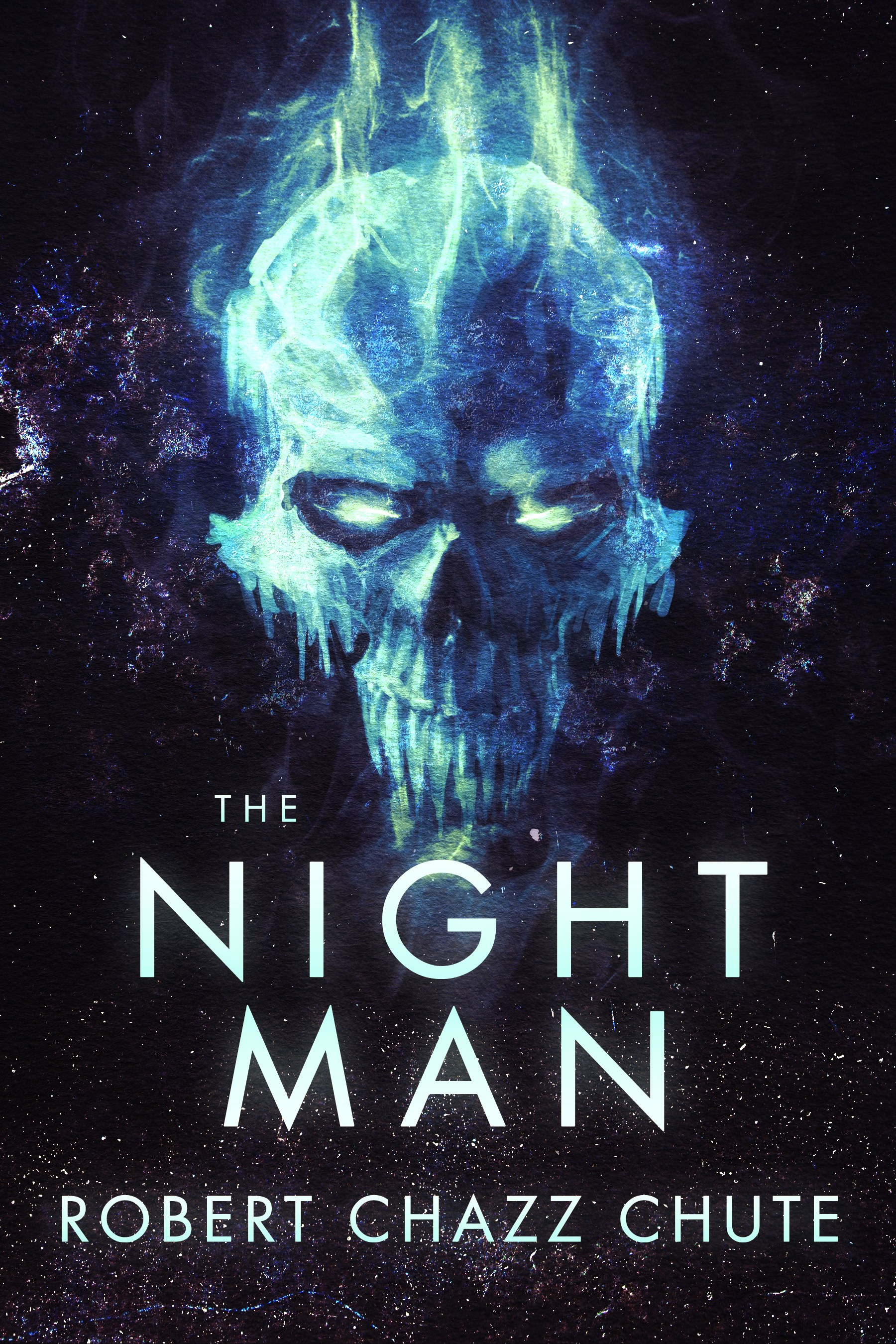
You can pick this ebook up for free today at this link: http://bit.ly/TheNightMan

Join my inner circle at AllThatChazz.com

See my books, blogs, links and podcasts.

Enter your email address to follow this blog and receive notifications of new posts by email.

Join 2,063 other subscribers